
PHJE 5030 - Juicer Philco - Free user manual and instructions
Find the device manual for free PHJE 5030 Philco in PDF.


| Product Type | Centrifugal Juicer |
| Brand | Philco |
| Model | PHJE 5030 |
| Dimensions (H x W x D) | 40 x 25 x 20 cm |
| Weight | 3.2 kg |
| Housing Material | Plastic (ABS) |
| Pulp Container Capacity | 1.5 L |
| Juice Jug Capacity | 0.8 L |
| Feed Chute Diameter | 52 mm |
| Power Supply | 220-240V~, 50-60 Hz |
| Power Consumption | 700 W |
| Motor Type | Induction Motor |
| Speed Settings | 2 speeds (low/high) |
| Pulp Ejection | Automatic into container |
| Anti-Drip Function | Yes |
| Safety Lock | Arm locking mechanism |
| Non-Slip Feet | Yes (4 suction cups) |
| Overload Protection | Thermal cut-off |
| Filter Material | Stainless steel micro-mesh |
| Dishwasher Safe Parts | Juice jug, pulp container, lid, pusher |
| Accessories Included | Juice jug, pulp container, cleaning brush |
| Cord Length | 1.2 m |
Frequently Asked Questions - PHJE 5030 Philco
User questions about PHJE 5030 Philco
0 question about this device. Answer the ones you know or ask your own.
Ask a new question about this device
Download the instructions for your Juicer in PDF format for free! Find your manual PHJE 5030 - Philco and take your electronic device back in hand. On this page are published all the documents necessary for the use of your device. PHJE 5030 by Philco.
USER MANUAL PHJE 5030 Philco
Famous for Quality the World Over

natural_image
Exterior view of a modern kitchen blender with clear glass and black casing (no visible text or symbols)PHJE 5030
User's Manual Návod k obsluze Návod na obsluhu Instrukcja obsługi Használati útmutató
PHILCO®

Famous for Quality the World Over
SLOW JUICER
PHJE 5030
User's Manual
Dear customer, thank you for buying a PHILCO brand product. So that your appliance serves you well, please read all the instructions in this user's manual.
CONTENTS
PART 1: IMPORTANT SAFEGUARDS....3
PART 2: PARTS NAME AND ACCESSORIES....6
PART 3: CAUTIONS BEFORE USE 7
PART 4: ASSEMBLY METHOD....7
PART 5: FUNCTIONAL DESCRIPTION ....10
PART 6: USAGE....10
PART 7: DISASSEMBLY METHOD....12
PART 8: ICE CREAM MAKING METHOD ....14
PART 9: CARE AND CLEANING ....15
PART 10: PRODUCT TECHNICAL PARAMETERS....17
PART 1: IMPORTANT SAFEGUARDS
Read the instructions, keep them safe, pass them on if you pass the appliance on. Remove all packaging before use.
Follow basic safety precautions, including:
- Don't put the main unit in liquid, don't use it in a bathroom, near water, or outdoors.
- Unplug before fitting or removing an attachment.
- Household use only.
- Don't use the appliance unless the lid is in place.
- Don't fill with anything hotter than you can comfortably handle (i.e. below 40^ C ).
- Don't put spoons, spatulas, or any other object into the jug while the appliance is plugged in.
- Don't leave the appliance unattended while plugged in.
- Sit the main unit on a dry , firm, level surface.
- Route the cable so it doesn't overhang, and can't be tripped over or caught.
-
Don't let the jug overflow. If liquid gets under the main unit, it may be sucked into the motor, damaging it.
-
Don't use the appliance for any purpose other than those described in these instructions.
- Don't use the appliance if it's damaged or malfunctions.
- Children should be supervised to ensure that they do not play with the appliance.
- When the machine has overload protection, do not touch the machine, to stay in continue to use when machine is back to normal.
- This appliance shall not be used by children. Keep the appliance and its cord out of reach of children.
- Appliances can be used by persons with reduced physical, sensory or mental capabilities or lack of experience and knowledge if they have been given supervision or instruction concerning use of the appliance in a safe way and if they understand the hazards involved.
- Children shall not play with the appliance. Cleaning and user maintenance shall not be made by children without supervision.
-
Always disconnect the appliance from the supply if it is left unattended and before assembling, disassembling or cleaning.
-
Do not use the appliance if the rotating sieve is damaged.
- If the supply cord is damaged, it must be replaced by the manufacturer, its service agent or similarly qualified persons in order to avoid a hazard.
- Switch off the appliance and disconnect from supply before changing accessories or approaching parts that move in use.
PART 2: PARTS NAME AND ACCESSORIES
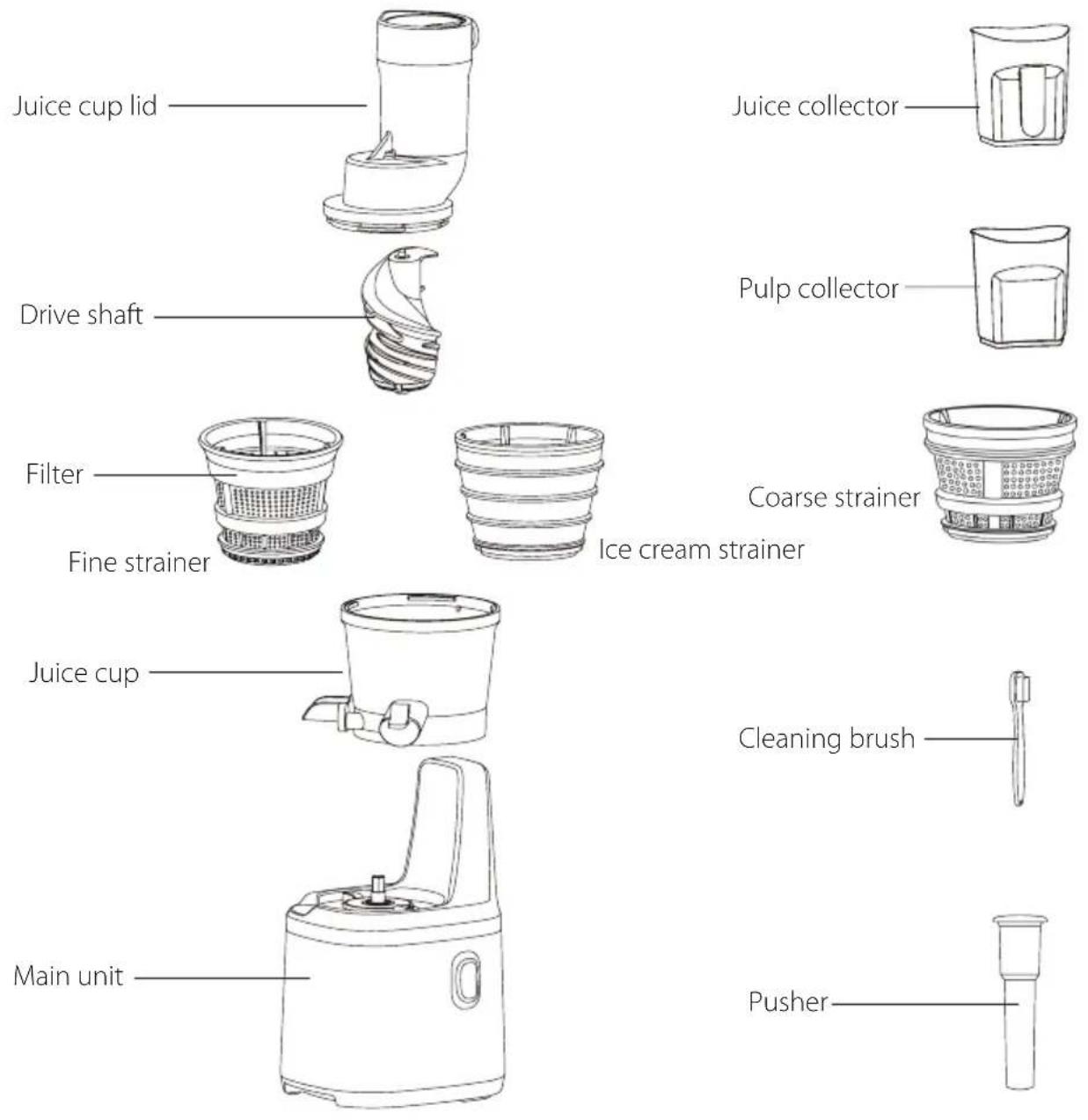
Note: The above picture is only for reference since the appearance of the product has lightly difference, please see the real product in the package.
- Please do not operate the product continuously. If It exceeds 20 minutes, please stop and cool for 20 minutes before continuing juicing to prevent damage to the product.
- For ingredients with high fibre content (celery, etc.), please cut into pieces around 5 to 10 cm long and 1.5 to 2.5 cm width before putting into the machine. (For fibre rich ingredients, it is best to cut into pieces no more than 3 cm long, then slowly put into the machine.)
- Extremely hard ingredients such as cereals, sugar cane and ginger are not suitable for juicing.
- For hard seed ingredients such as cherries, grapefruit, etc., please make sure to deseed; For lemon, orange and other fruits, it is best to be peeled and deseeded, so as it will not affect the fruit juice taste.
- When processing harder fruits and vegetables, the machine will experience "squeaky" fricative sounds, and the product may experience slight shaking. This situation is normal and please uses it with confidence.
- Please use fresh fruits and vegetables for juicing, for fruits and vegetables stored in the refrigerator, soak in water for more than 10 minutes before processing, the effect will be better.
- When processing fruits and vegetables with deeper pigments, such as carrots, beetroots, etc., there will be mild staining of the juice cups and other parts, which is a normal situation.
- Before starting the machine, please confirm that the juice cup lid is installed in place.
- When putting in ingredients, it should be put in slowly one by one; the ingredients must be processed before putting in the next ingredients.
PART 4: ASSEMBLY METHOD
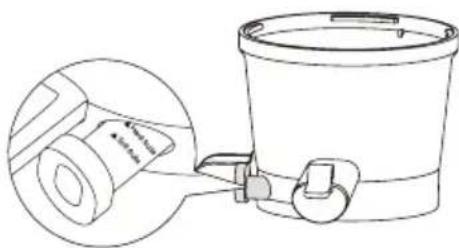
- How to assemble the seasoning valve at the bottom of the juicing cup.
Push the seasoning valve at the bottom of the juicing cup into the "Hard fruits" position in the direction shown.
Note: The seasoning valve must be installed in place; otherwise there will be leakage problems.

natural_image
Technical line drawing of a mechanical component with no visible text or symbolsSeasoning valve
natural_image
Line drawing of a water dispenser with a paper label and handle, shown in two views: one close-up of a cylindrical container (no text or symbols on the diagram itself)Complete installation in position
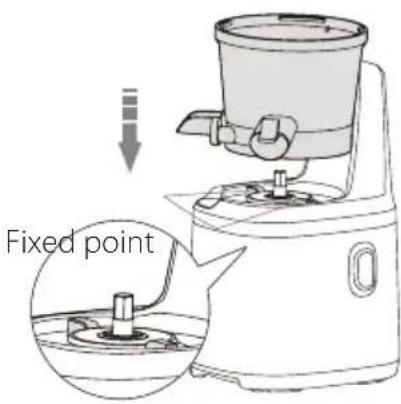
- Install the juice cup onto the main unit.
Align the juicing cup to the fixed point on the main unit and push down, and rotate the juicing cup lightly until it is installed in place.
- Install the filter Into the juicing cup.

natural_image
Line drawing of a small white blender with a lid and handle, showing no text or symbols.- Install the drive shaft Into the middle of the filter and press down until It stops.

natural_image
Line drawing of a blender with a spiral-shaped top, showing no text or symbols- Install the juice cup lid.
Align on the juice cup lid with "A" on the juicing cup, turn the juice cup lid clockwise so that the juice cup cover "fl" could align with „A „on the juicing cup.

natural_image
Line drawing of a blender with a handle and lid, showing internal components and a downward arrow indicating motion (no text or symbols)- As shown in the figure, place the juice collector and pulp collector.

natural_image
Line drawing of a modern kitchen brush with a side arm and handle (no text or symbols)PART 5: FUNCTIONAL DESCRIPTION
On (I): For squeezing fresh juice and making ice cream.
Off (O): Stop the machine after the juicing process is completed.
Reverse (R): Lifts the fruits and vegetables upwards, solve the stuck issue when juicing; the stuck issue occurs during the process of juicing or making ice cream; the machine reverses to protect the machine from overloading of ingredients or hardened ingredients, and corrects the juice extraction process.
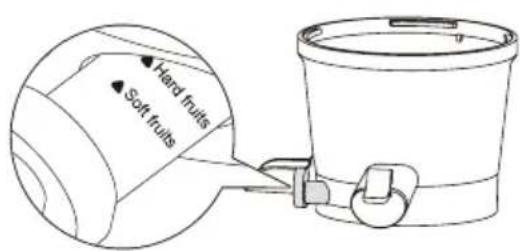
The respective fruits correspond to seasoning valve:
Soft fruits: soft fruit: orange, watermelon, red grape, pineapple, cucumber, tomato, ice cream
Hard fruits: hard fruit + fibre rich Ingredients: apple, pear, celery, carrot, pomegranate
Warning
-
Please do not press the button with wet hands. It is prohibited to idling products for a long period of time before putting in fruits and vegetables.
-
Please do not adjust the seasoning valve frequently during the juicing process.
Hard fruits Soft fruits

PART 6: USAGE
Hard fruits
- Put the washed large pieces of fruits and vegetables into the feeding chute, turn the knob to pour the fruits and vegetables into the feeding chute, and put the small pieces of fruit and vegetables from the small feeding chute. After putting the material, push the material with a pushing rod.
Note:
Please use fresh fruits and vegetables for juicing, for fruits and vegetables stored in the refrigerator, soak in water for more than 10 minutes before processing, the effect will be better.
Warning
1 This product is not suitable for crushing cereals, sugarcane and other hard fruits.
2 For fruits with hard cores, remove cores before juicing.
3 For celery and other coarse fiber fruit, washing after juicing 0.5Kg.

- When the machine suddenly stops during operation, first press the button to the "Off (O)" position, then press to the "Reverse (R)" position, so that the ingredients held in the drive shaft would be pushed up, and then presses the button to the "On (I)" position. (Repeat three times or so).
Warning
1 When the machine is in the "Reverse (R)" mode, please hold the juice cup lid gently with your hand (to prevent the juice cup lid getting loose).
2 After the above operation, if it still does not operate, please remove the juice cup and wash completely.
- You may keep the juice outlet lid closed during juicing. When the juice output reaches a certain quantity, open the lid and receive the juice with the juice collector.
Benefits:
- Reduce the exposure to air and slow down the oxidization process.
2 A variety of fruits and vegetables can be used to extract the mixed fruit juice.

natural_image
Two-step diagram showing a tool interacting with a mechanical component, no text or symbols presentJuice outlet is closed
Juice outlet is open
- After the juicing process, press the button to the „Off (O)” position and unplug the power cord.
Recommendations:
Please do not store the squeezed juice for long time.

natural_image
Line drawing of a toilet with handle and side panel (no text or symbols)PART 7: DISASSEMBLY METHOD
- Press the button to stop the machine and unplug the power cord.
Recommendations:
After the juicing process, press the button to the „Reverse (R)” position and hold for few seconds for easy disassembly and cleaning.
- Grasp the juice cup lid by hand, and rotate the juice cup cover counter-clockwise as shown in Fig. 1, rotate to the position shown in Fig. 2 and pull up the juice cup lid to disassemble.

- Grab the juice outlet on the juicing cup and lift it upwards to disassemble (see Figure 3).

natural_image
Line drawing of a modern kitchen brush with a side panel and upward arrow indicator (no text or symbols)- Take out the drive shaft and filter assembly (as shown in Fig. 4).

natural_image
Diagram of a hand-painted ice creamer with a spiral blade and base, showing internal structure (no text or symbols)- Disassemble the drive shaft and filter separately (as shown in Fig. 5).

natural_image
Diagram showing a spiral-shaped object above a container with an upward arrow, labeled with number 5 (no text or symbols on the diagram itself)PART 8: ICE CREAM MAKING METHOD
Please put fruits such as bananas (peeled), durian (deseeded), and strawberries (capped) in the freezer for more than 8 hours. Place the special ice cream filter into the juicer. Thaw the frozen fruits for 15 minutes before making, start the machine, and slowly put the fruits into the juicer to make authentic fruit-flavoured ice cream.
Operating steps
- Put the juice cup on the slag outlet and pick up the ice cream;
- Push the seasoning valve to "Soft fruits";
- Press the button to "Forward";
- Ice cream will be discharged from the slag outlet.
Tips
When making fruit ice cream, you may add frozen milk according to personal taste (the frozen ingredient needs to be thawed at room temperature until the surface slightly soften (more than 20 minutes of thawing in winter and more than 15 minutes in summer), and slowly mix it into the juice machine to make a delicious ice cream.
Winter: Thawing time is more than 20 minutes; Summer: Thawing time is more than 15 minutes.
Put the frozen ingredients slowly into the feeding chute, the feeding interval has to be more than 5 seconds.
Mango and Banana Ice cream
1 Cut the mango meat and banana into small cubes, and freeze for 8-12 hours in freezer.
2 Remove from freezer and thaw the frozen fruits for few minutes under room temperature to relieve the hardness;
3 Place the special ice cream filter into the juicer, start the machine, put the frozen mango and banana pieces in the feeding chute.
4 The ice cream could be consumed directly.
Reminder: the banana ice cream should be consumed as soon as possible.
Dragon fruit ice cream (May add in yoghurt or milk a cording to personal taste)
1 Peel the dragon fruit, cut into small cubes, and freeze for 8-12 hours in freezer.
2 Remove from freezer and thaw the frozen fruits for few minutes under room temperature to relieve the hardness;
3 Place the special ice cream filter into the juicer, start the machine, put the frozen dragon fruit pieces in the feeding chute.
4 Use a push rod to gently press the fruit cubes, place the ice cream container under the slag outlet, the dragon fruit ice cream is ready;
5 Remove the filling from the biscuits, place it in a zip lock bag and close it tightly, break the biscuits and serve with the ice cream.
Reminder: the dragon fruit ice cream should be consumed as soon as possible.
Peach ice cream
1 Wash and peel the peach, take the peach meat cut into small cubes, and freeze for 8-12 hours in freezer.
2 Put fresh milk into refrigerator;
3 Remove the prepared peach from freezer and thaw for few minutes under room temperature to relieve the hardness;
4 Put the frozen peach cubes in the feeding chute, add fresh milk according to personal taste;
5 Use a push rod to gently press the fruit cubes, place the ice cream container under the slag outlet, the peach ice cream is ready;
6 Add in the favourite jam to make peach fresh milk ice cream.
Reminder: the peach ice cream should be consumed as soon as possible.
PART 9: CARE AND CLEANING
Cleaning
- Wash each disassembled part with running water. If residues plug the filter mesh, please wash the filter with a cleaning brush.
Note: please do not wash by using iron brush and sharp washing tool.

natural_image
Line drawings of various kitchen appliances including a blender, spiral sweater, filter, and sink (no text or labels)Special reminder:
When washing, push the seasoning valve back and forth for easier cleaning.

natural_image
Diagram of a mechanical valve assembly with no visible text or symbols- Do not immerse the main unit into water, only use damped soft cloth to wipe clean.
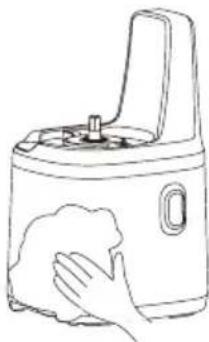
natural_image
Line drawing of a hand cleaning a cloth inside a portable device (no text or symbols)- After cleaning, dry the washed parts and store them in a clean and well-ventilated place.
Note:
1 As the dried slag may affect the disassembly and cleaning, and it may also cause deterioration of performance. Therefore, it should be washed in time after each use.
2 The rubber gasket below the juice cup is removable and washable.
3 No part of the juice extractor is meant to be washed in a dishwasher.
Maintenance
-
This product shall be used frequently to keep the motor dry.
-
For prolonged storage, keep it in a dry and ventilated place to prevent the motor from moisture and affecting normal usage.
PART 10: PRODUCT TECHNICAL PARAMETERS
| Product name Slow Juicer | |
| Model PHJE 5030 | |
| Voltage 220 - 240 V | |
| Frequency 50/60HZ | |
| Power 200 W | |
| Capacity 1,0 L |
INSTRUCTIONS AND INFORMATION REGARDING THE DISPOSAL OF USED PACKAGING MATERIALS
Dispose of packaging material at a public waste disposal site.
DISPOSAL OF USED ELECTRICAL AND ELECTRONIC APPLIANCES
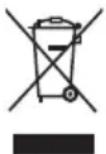
The meaning of the symbol on the product, its accessory or packaging indicates that this product shall not be treated as household waste. Please, dispose of this product at your applicable collection point for the recycling of electrical & electronic equipment waste. Alternatively in some states of the European Union or other European states you may return your products to your local retailer when buying an equivalent new product. The correct disposal of this product will help save valuable natural resources and help in preventing the potential negative impact on the environment and human health, which could be caused as a result of improper liquidation of waste. Please ask your local authorities or the nearest waste collection centre for further details. The improper disposal of this type of waste may fall subject to national regulations for fines.
For business entities in the European Union
If you wish to dispose of an electrical or electronic device, request the necessary information from your seller or supplier.
Disposal in other countries outside the European Union
If you wish to dispose of this product, request the necessary information about the correct disposal method from local government departments or from your seller.

This product meets all the basic EU regulation requirements that relate to it.
Changes to the text, design and technical specifications may occur without prior notice and we reserve the right to make these changes.
PHILCO®

Famous for Quality the World Over
ŠNEKOVÝ ODŠŤAVŇOVAČ
PHJE 5030
Návod k obsluze
Vážený zákazníku,
natural_image
Mechanical assembly diagram showing a rotating component with mounting flanges and a central hub (no text or symbols)Ventil tvrdosti

natural_image
Line drawing of a water dispenser with a paper label and handle, shown in two views: one close-up of a cylindrical container (no text or symbols on the diagram itself)natural_image
Line drawing of a small kitchen blender with a lid and handle, showing no text or symbols.natural_image
Line drawing of a blender with spiral-shaped top and side ports, no text or symbols presentnatural_image
Line drawing of a kitchen blender with a downward arrow indicating compression or shift (no text or symbols)natural_image
Line drawing of a modern kitchen brush with a side arm and handle (no text or symbols)ČÁST 5: FUNKČNÍ POPIS
natural_image
Two technical line drawings showing a tool interacting with a mechanical component, no text or symbols present.natural_image
Line drawing of a modern kitchen appliance with handle and side panel (no text or symbols)ČÁST 7: ZPŮSOB DEMONTÁŽE SPOTŘEBIČE
natural_image
Line drawing of a modern kitchen brush with a side panel and upward arrow indicator (no text or symbols)natural_image
Diagram of a hand-painted ice creamer with a spiral blade and base, showing internal structure (no text or symbols)natural_image
Diagram showing a spiral-shaped object above a container with an upward arrow, labeled with number 5 (no text or symbols on the diagram itself)ČÁST 8: ZPŮSOB PŘÍPRAVY ZMRZLINY
natural_image
Line drawings of various kitchen appliances including a blender, spiral sweater, filter, and sink (no text or labels)natural_image
Diagram of a mechanical valve assembly with rotating components and directional arrows (no text or labels)natural_image
Line drawing of a hand cleaning a cloth inside a portable device (no text or symbols)Famous for Quality the World Over
ŠNEKOVÝ ODŠŤAVOVAČ
PHJE 5030
Návod na obsluhu
Vážený zákazník,
natural_image
Mechanical assembly diagram showing a central rotating component with mounting flanges and a directional arrow (no text or labels)Ventil tvrdosti

natural_image
Line drawing of a water dispenser with a paper label and handle, shown in two views: one close-up of a cylindrical container (no text or symbols on the diagram itself)natural_image
Line drawing of a small kitchen blender with a lid and handle, showing no text or symbols.natural_image
Line drawing of a blender with spiral-shaped top and side ports, no text or symbols presentnatural_image
Line drawing of a kitchen blender with a downward arrow indicating compression or shift (no text or symbols)natural_image
Line drawing of a modern kitchen brush with a side arm and handle (no text or symbols)ČASŤ 5: FUNKČNÝ POPIS
natural_image
Two-step diagram showing a tool interacting with a mechanical component, no text or symbols presentnatural_image
Line drawing of a modern kitchen appliance with handle and side panel (no text or symbols)ČASŤ 7: SPÔSOB DEMONTÁŽE SPOTREBIČA
- Uchopte výtok šťavy z nádoby odšťavovača a nadvihnite ho, aby ste ho tak demontovali (ako je znázornené na obr. 3).

natural_image
Line drawing of a modern kitchen brush with a side panel and upward arrow indicator (no text or symbols)natural_image
Diagram of a hand-painted ice creamer with a spiral blade and base, showing internal structure (no text or symbols)natural_image
Diagram showing a spiral-shaped object above a container with an upward arrow, labeled with number 5 (no text or symbols on the diagram itself)ČASŤ 8: SPÕSOB PRÍPRAVY ZMRZLINY
natural_image
Line drawings of various kitchen appliances including a blender, screwdriver, filter, and sink (no text or labels)natural_image
Diagram of a mechanical valve assembly with rotating components (no text or labels)natural_image
Line drawing of a hand cleaning a cloth inside a portable device (no text or symbols)Famous for Quality the World Over
SOKOWIRÓWKA ŚRUBOWA
PHJE 5030
Instrukcja obsługi
Szanowny kliencie,
natural_image
Technical line drawing of a mechanical assembly with no visible text or symbolsZawór twardości

natural_image
Line drawing of a water dispenser with a paper label and handle, shown in two views: one close-up of a cylindrical container (no text or symbols on the diagram itself)natural_image
Line drawing of a small kitchen blender with a lid and handle, showing no text or symbols.natural_image
Line drawing of a blender with spiral-shaped top and side ports, no text or symbols presentnatural_image
Line drawing of a kitchen blender with a downward arrow indicating compression or shift (no text or symbols)natural_image
Line drawing of a modern kitchen brush with a side arm and handle (no text or symbols)CZEŚĆ 5: OPIS FUNKCJONALNY
natural_image
Two-panel line drawing showing a tool interacting with a bracket, no text or symbols presentnatural_image
Line drawing of a modern kitchen appliance with handle and side panel (no text or symbols)CZEŚĆ 7: SPOSÓB DEMONTAŻU URZĄDZENIA
natural_image
Line drawing of a modern kitchen brush with a side panel and upward arrow indicator (no text or symbols)natural_image
Diagram of a hand-painted ice creamer with a spiral top and base, showing internal structure and motion indicator (no text or symbols)natural_image
Diagram showing a spiral-shaped object above a container with an upward arrow, labeled with number 5 (no text or symbols on the diagram itself)CZEŚĆ 8: SPOSÓB PRZYGOTOWANIA LODÓW
natural_image
Diagram of a mechanical valve assembly with no visible text or symbolsnatural_image
Line drawing of a hand cleaning a cloth inside a portable device (no text or symbols)Famous for Quality the World Over
CSIGÁS GYÜMÖLCSPRÉS
PHJE 5030
Használati útmutató
TARTALOM
natural_image
Technical line drawing of a mechanical component with no visible text or symbolsKeménységi szelep

natural_image
Line drawing of a water dispenser with a paper label and handle, shown in two views: one close-up of a cylindrical container (no text or symbols on the diagram itself)natural_image
Line drawing of a small kitchen blender with a lid and handle, showing no text or symbols.natural_image
Line drawing of a blender with a spiral-shaped top, showing blade and handle (no text or symbols)natural_image
Line drawing of a kitchen blender with a downward arrow indicating compression or shift (no text or symbols)natural_image
Line drawing of a modern kitchen brush with a side-mounted stand (no text or symbols)5. RÉSZ: A FUNKCIÓK ISMERTETÉSE
natural_image
Two technical line drawings showing a tool interacting with a mechanical component, no text or symbols present.Zárt kifolyónyílás
natural_image
Line drawing of a mechanical device with handle and side panel (no text or symbols)natural_image
Line drawing of a modern kitchen brush with a side panel and upward arrow indicator (no text or symbols)natural_image
Diagram of a hand-painted ice creamer with a spiral blade and base, showing internal structure (no text or symbols)natural_image
Diagram showing a spiral-shaped object above a container with an upward arrow, labeled with number 5 (no text or symbols on the diagram itself)8. RÉSZ: FAGYLALTKÉSZÍTÉS
natural_image
Line drawings of various kitchen appliances including a blender, spiral sweater, and filter (no text or labels)natural_image
Diagram of a mechanical device with a central pipe and three arms, showing rotational flow arrows (no text or labels)natural_image
Line drawing of a hand cleaning a cloth inside a portable device (no text or symbols)is a pending or registered trademark of Electrolux Home Products, Inc. and used under a license from Electrolux Home Products, Inc.

- PHJE 5030
- PHILCO®
- SLOW JUICER
- CONTENTS
- PART 1: IMPORTANT SAFEGUARDS
- PART 4: ASSEMBLY METHOD
- PART 5: FUNCTIONAL DESCRIPTION
- Warning
- PART 6: USAGE
- Hard fruits
- Note:
- Benefits:
- Recommendations:
- PART 7: DISASSEMBLY METHOD
- PART 8: ICE CREAM MAKING METHOD
- Operating steps
- Tips
- Mango and Banana Ice cream
- Dragon fruit ice cream (May add in yoghurt or milk a cording to personal taste)
- Peach ice cream
- PART 9: CARE AND CLEANING
- Cleaning
- Special reminder:
- Maintenance
- INSTRUCTIONS AND INFORMATION REGARDING THE DISPOSAL OF USED PACKAGING MATERIALS
- DISPOSAL OF USED ELECTRICAL AND ELECTRONIC APPLIANCES
- For business entities in the European Union
- Disposal in other countries outside the European Union
- ŠNEKOVÝ ODŠŤAVŇOVAČ
- ČÁST 5: FUNKČNÍ POPIS
- ČÁST 7: ZPŮSOB DEMONTÁŽE SPOTŘEBIČE
- ČÁST 8: ZPŮSOB PŘÍPRAVY ZMRZLINY
- ŠNEKOVÝ ODŠŤAVOVAČ
- ČASŤ 5: FUNKČNÝ POPIS
- ČASŤ 7: SPÔSOB DEMONTÁŽE SPOTREBIČA
- ČASŤ 8: SPÕSOB PRÍPRAVY ZMRZLINY
- SOKOWIRÓWKA ŚRUBOWA
- CZEŚĆ 5: OPIS FUNKCJONALNY
- CZEŚĆ 7: SPOSÓB DEMONTAŻU URZĄDZENIA
- CZEŚĆ 8: SPOSÓB PRZYGOTOWANIA LODÓW
- CSIGÁS GYÜMÖLCSPRÉS
- TARTALOM
- RÉSZ: A FUNKCIÓK ISMERTETÉSE
- RÉSZ: FAGYLALTKÉSZÍTÉS
Brand : Philco
Model : PHJE 5030
Category : Juicer