M-RMF150/6 - Smoke detector Mumbi - Free user manual and instructions
Find the device manual for free M-RMF150/6 Mumbi in PDF.


| Product Type | Wireless Optical Smoke Detector |
| Brand | Mumbi |
| Model | M-RMF150/6 |
| Power Source | 9V DC battery (included) or optional AC adapter |
| Dimensions | Diameter 10.5 cm, height 4.2 cm |
| Weight | Approx. 150 g (with battery) |
| Detection Principle | Optical (photoelectric) sensor |
| Alarm Volume | 85 dB at 3 meters |
| Operating Temperature | 0 °C to 40 °C |
| Humidity Range | 10% to 85% non-condensing |
| Lifespan | 10 years from date of manufacture |
| Battery Life | Approx. 1 year (standard alkaline) |
| Low Battery Warning | Beep every 30 seconds |
| Test Button | Yes, for functional check |
| Hush/Silence Feature | Yes, temporarily silences false alarms |
| Installation | Ceiling or wall mounting with included bracket |
| Compliance | CE, EN 14604 |
| Maintenance | Vacuum dust from vents monthly; test weekly |
| Spare Parts | Replacement battery (9V) readily available |
| Warranty | 2 years (EU) |
Frequently Asked Questions - M-RMF150/6 Mumbi
User questions about M-RMF150/6 Mumbi
0 question about this device. Answer the ones you know or ask your own.
Ask a new question about this device
Download the instructions for your Smoke detector in PDF format for free! Find your manual M-RMF150/6 - Mumbi and take your electronic device back in hand. On this page are published all the documents necessary for the use of your device. M-RMF150/6 by Mumbi.
USER MANUAL M-RMF150/6 Mumbi
4x Electronic Smoke Detector
m-RMF150/6
6x Funk Rauchmelder
6x Electronic Smoke Detector
DE
BEDIENUNGSANLEITUNG
GB
USER MANUAL
text_image
DO NOT BEAT TEST TO TEST TEST LEARN
|
DE
BEDIENUNGSANLEITUNG
natural_image
Top-down view of a white circular device with internal components and directional arrows indicating rotation (no text or symbols)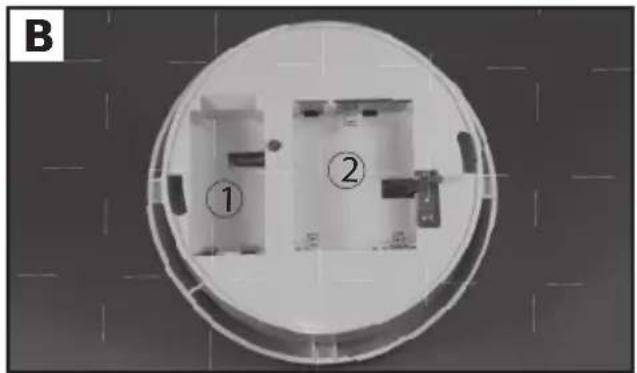
natural_image
Top-down view of a circular mechanical or electronic component with internal compartments and labeled parts (no text or symbols beyond labels)Installation
natural_image
Hand pointing at a white smokestack with three vertical lines and three dots, no visible text or symbols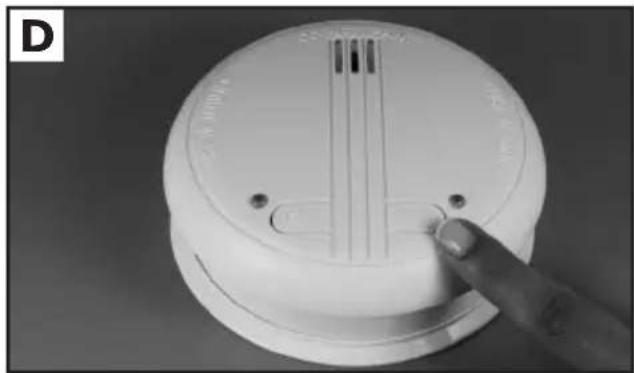
natural_image
Close-up of a white smokestack with a finger pointing to the base (no visible text or symbols)Manufactured by Smartwares Safety & Lighting BV, Broekakkerweg 15, 5126BD Gilze The Netherlands, +49(0)1805010762, www.smartwares.eu
EN14604:2005/AC:2008

Service-Hotline 0201 99999-439
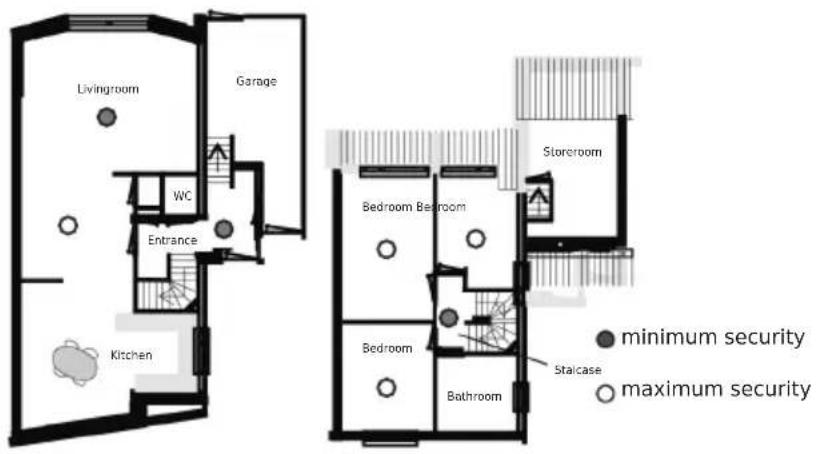
Recommended mounting of smoke detectors: 1 smoke detector in each room.
text_image
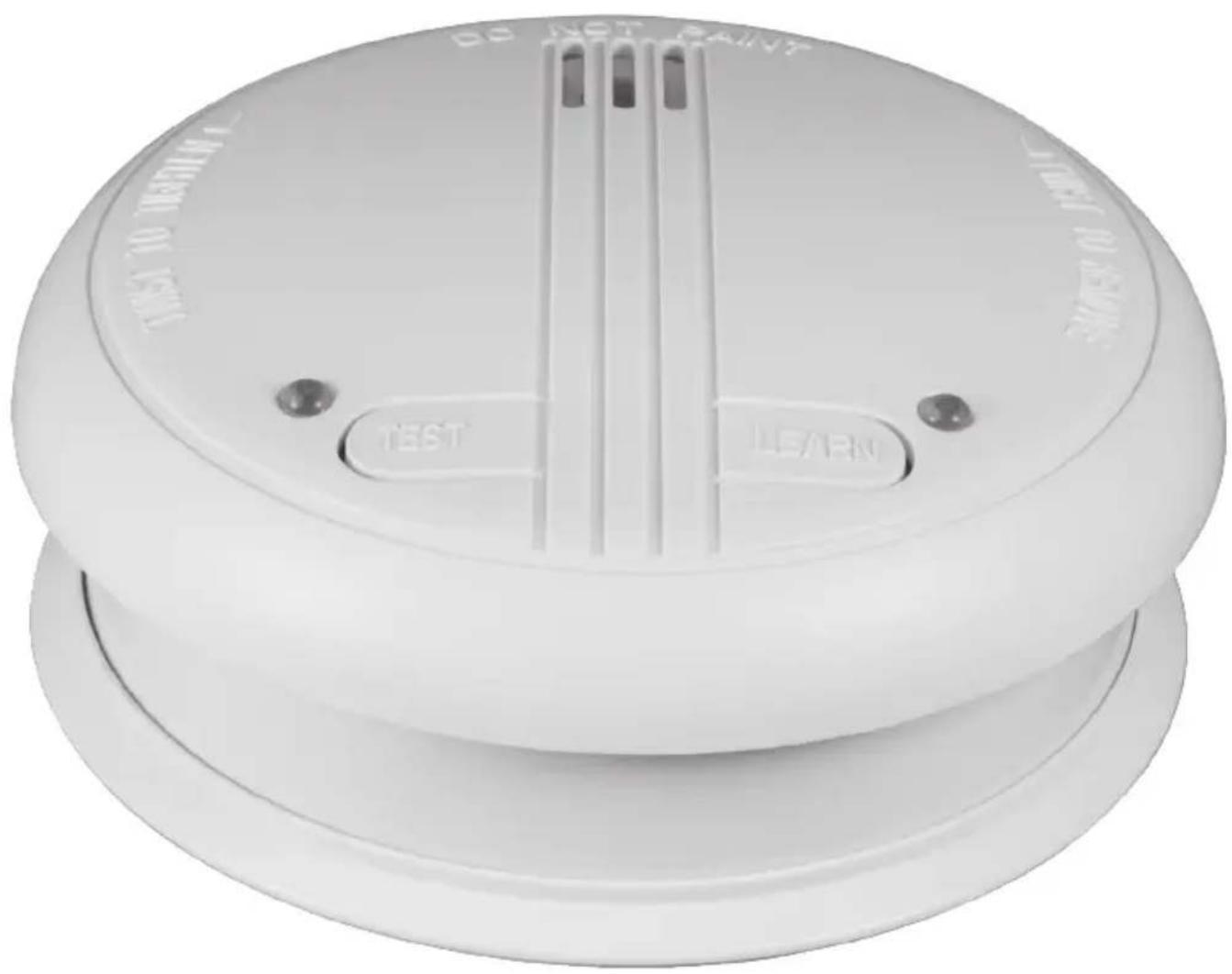
Livingroom Garage WC Entrance Kitchen Storeroom Bedroom Bedroom Bedroom Bathroom Stalcase minimum security maximum securityThe m-RMF is an optical smoke detector combined with a transmitter-receiver unit. When installed with several other smoke detectors, the units communicate with each other via wireless technology.
In the event of smoke being detected in any of the secured rooms, ALL the smoke detectors installed will be simultaneously activated. A conventional detector triggering an alarm in an upper room cannot always be heard in rooms on the ground floor. This problem is resolved with linked smoke detectors.
General information
Smoke located under the ceiling is sensed through openings on the underside of the detector. The correct functioning of the smoke detector can be checked using the TEST-button.
LED display
The LED flashes briefly every 30 seconds during the measurement cycle. When the LED flashes quickly, smoke has been detected and an alarm is triggered.
Scope of delivery
- Smoke detector
- 1 x 9 volt battery + 3 x 1.5 AA batteries (per smoke detector)
- Assembly set per smoke detector
- Instructions
IMPORTANT INFORMATION
- Linked smoke detectors have a communication range of up to 40 m.
- Smoke detectors respond to smoke, not heat, gas or fire.
- Only test the smoke detector with the TEST-button or use a commercially available test spray. Under no circumstances should you use other materials to generate smoke for testing, since these can be harmful to your health and cause damage to the smoke detector.
- Cigarette smoke does not normally trigger the smoke detector, except when present in very large amounts and blown directly into the detector' sensors.
- Use high-quality batteries, not rechargeable batteries.
- Do not paint the detector and do not cover the openings for the siren.
Principles of an escape plan
Draw up a plan which shows all doors, windows and at least two escape routes from each room. Rooms on upper floors may require a rope or ladder for this purpose. Discuss the escape routes and what needs to be done in the case of fire with your family. Select a meeting place outside of the house in case of fire. Familiarise all members of the household with the alarm system and ensure that everybody understands that is necessary to leave the house as soon as the alarm is heard. Identify children's rooms with a red label on the upper left corner of the window pane. These labels are available at your local fire department. Practise the fire alarm drill at least once every 6 months. Such exercises help test the escape routes used in the event of an emergency. As it is possible that in the case of a fire you will not be able to reach your children, it is important they understand what they have to do.
What to do when the alarm is triggered?
Leave the house by the escape routes. Every second counts, so do not waste time getting dressed or taking valuables with you. When leaving the house, before you open any door feel its surface. If the surface is hot or if you see smoke streaming in under the door, then do not open the door! Instead, use an alternate escape route. If the surface is cool then press your shoulder against it and open the door slightly, while remaining prepared to close it again in case heat and smoke come in. If smoke is in the room stay close to the floor. If possible, use a damp towel to breathe through. As soon as you are outside, go immediately to the meeting place. Check that all persons are present. A list of people can help in this regard. Then call the fire department using your mobile phone or a phone at your neighbours. Do not return to the building until the fire department gives you permission to do so.
Assembly location
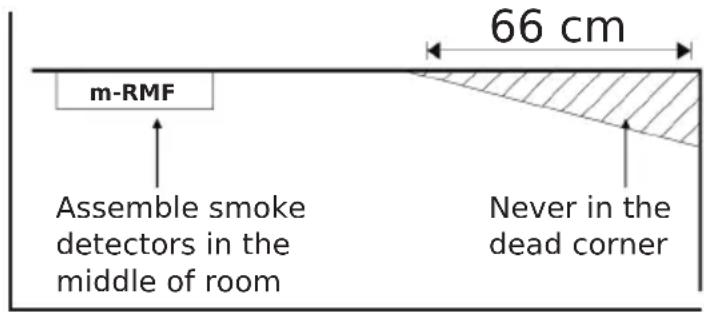
- The smoke detector must be mounted on the ceiling with a minimum distance of 66 cm from the nearest corner or wall.
- The smoke detector must be positioned at least 30 cm from any junction box and at least 150 cm from fluorescent lamps.
- Install at least two smoke detectors, one per floor and (for additional safety) one in each room.
- Do not install the smoke detectors in any area susceptible to draughts (e.g. near air-conditioners or ventilators).
- Do not install the detectors in rooms with high humidity (shower rooms, baths, kitchens or laundry rooms), rooms with large temperature fluctuations (over 40°C or under -5°C) or where the detectors can be contaminated by vehicle exhaust gases, dust and dirt (garage, furnace room, etc.) → in these cases use a heat detector.
- Do not install the detector in the top of a roof, because clear air can collect there in the event of fire.
- Install smoke detectors along the escape routes for additional safety.
- Ensure that the smoke detectors are easily accessible for testing and repair purposes.
text_image
m-RMF Assemble smoke detectors in the middle of room 66 cm Never in the dead cornerSafety and maintenance information
- Ensure that all electrical connections (including cable connections) to other devices meet their related guidelines and conform to the operating instructions.
- Ensure that sockets and extension cables are not overloaded due to the risk of fire and electric shock.
- In the case of any doubt concerning the operation, safety or the connection of the devices, please contact a specialist.
- Keep all parts in a safe place out of the reach of children.
- Please do not keep them in moist, very cold or hot areas; this can lead to damage of the electronic circuits.
- Avoid hard shocks to the equipment; this can also lead to electronic circuit damage.
- Only authorized specialists should be allowed to open and repair the equipment.
- Wireless systems are subject to interference from wireless telephones, microwave ovens as well as other electrical equipment operating in the 433 MHz range.
Ensure a MINIMUM DISTANCE OF 3 METRES during installation and operation.
Maintenance

As the smoke detectors are maintenance-free, please do not open them. Your warranty will expire if you open the devices. Clean the outside of the devices with a dry, soft towel or a brush.
Do not use any cleaning materials containing carboxylic acid, petrol, alcohol or similar substances. These materials attack the surfaces of the devices and their vapours are both harmful to health and are explosive. Do not use any pointed tools, such as screwdrivers, wire brushes, to clean the devices.
Specifications
Alarm signal: ≥ 85dB
Working frequency: 433.92 MHz
Operating temperature: -5^ C to +40^ C
Operating distance: 40m
Transmitter / Receiver batteries: 3x 1.5V LR6/AA Pair Deer
Smoke detector battery: 1x 9V 6F22 Pair Deer
Networked devices: max. 15 devices per group
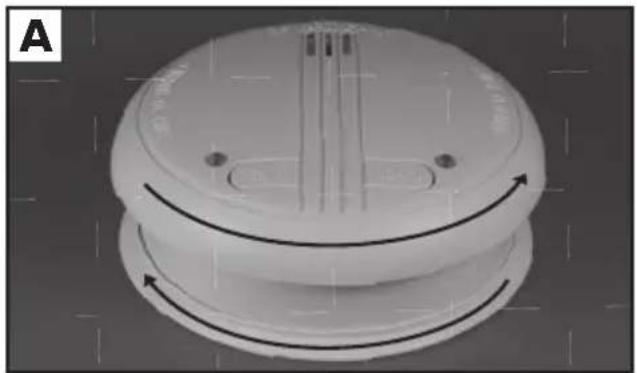
natural_image
Top-down view of a white circular device with internal components and directional arrows indicating rotation (no text or symbols)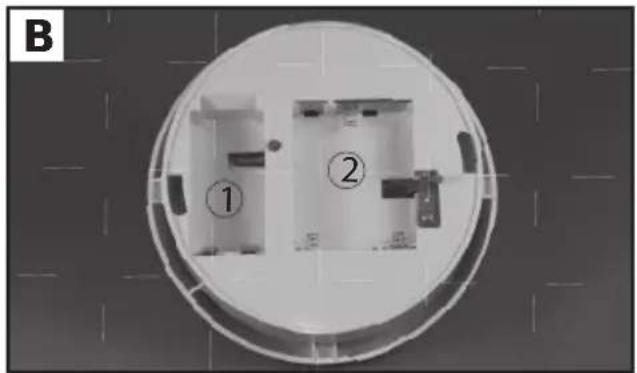
natural_image
Top-down view of a circular mechanical or electronic component with internal compartments and labeled parts (no text or symbols beyond labels)Installation
- Twist off the assembly plate from the smoke detector. (A)
- Install the assembly plate to the assembly location (wall or ceiling).
- Insert a 9V battery into the battery compartment (B) ① for the smoke detector.
- Insert three AA batteries for the linking up into the large battery compartment (B) ② Before inserting the final AA battery, press first the red notch and then the final battery down.
- Place the smoke detector with the openings on the clips of the assembly plate and twist until it locks in place.
Note: The smoke detector cannot be fastened to the assembly plate without batteries.
Installation test
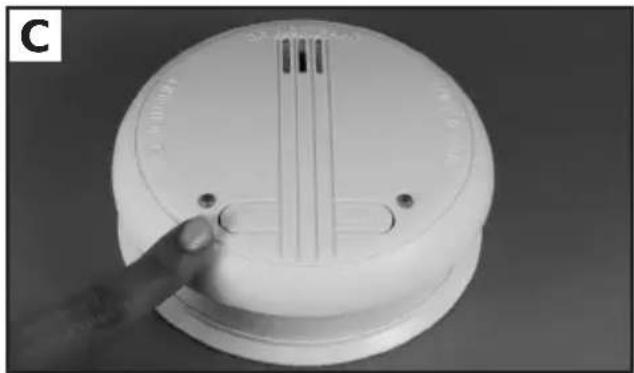
Check all the installed devices by pressing the TEST-button (C) for a few seconds. Release the button as soon as the alarm is triggered. The alarm will continue sounding for a few seconds and then automatically stops. Now you can be sure that the device functions properly.
natural_image
Hand pointing at a white smokestack with three vertical lines and three dots, no visible text or symbols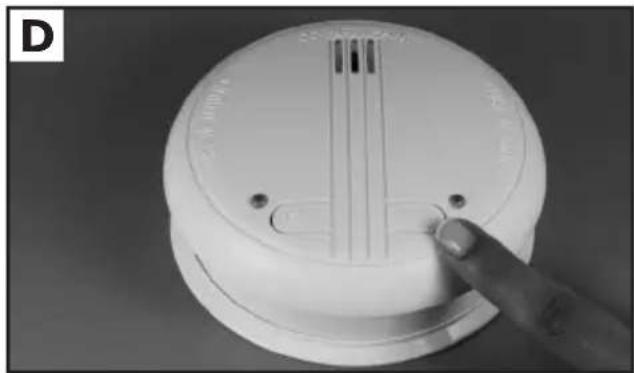
natural_image
Close-up of a white smokestack with a finger pointing to the base (no visible text or symbols)Linking up the smoke detectors
We recommend performing the registration of all smoke detectors on a table. The following steps must be carried out within 20 seconds. Please read the instructions before performing the individual steps.
- Take a smoke detector from the group and designate it as the "master". The remaining detectors are all assigned to be secondary detectors ("slaves").
- Press the LEARN-button on the "master" detector several times until it lights up green. (D)
- Now press the LEARN-button on all the secondary "slave" detectors until they light up red. (D)
- Test: press the TEST-button (C) on the "master" detector until all the smoke detectors emit a signal. At this point, the LED on the "master" detector will flash red and the LEDs on the secondary detectors will flash green. After a few seconds the alarm signal will stop. The smoke detectors are now linked.
Creating a large group
If the required number of number of devices cannot register within 20 seconds, then a smaller group can be created first.
This group can then be expanded by adding additional “slave” detectors. For each detector in the existing group, the TEST-button (C) can be pressed down until all the other detectors react and the additional detectors are added to the group.
Creating single groups
Single groups can also be created in a house. For this purpose, it is first necessary to delete the memory of each smoke detector.
- Remove all batteries from the smoke detectors and re-insert after 3 minutes.
- Register each detector as a "slave", repeatedly press the LEARN-button (D) (the red LED must light up) and press the TEST-button (C). This will only trigger the alarm on this unit.
If, after creating the first group (refer to the installation test) you want to create a second group, wait at least 5 minutes and then perform the same learning process for the new group. If a detector is to be added to the other group, then this detector can only be set up as a new “slave” to the “master” of the group. Only “slave” detectors can be swapped within the group.
Note: If an alarm is triggered in one group, the green LEDs in the other group will flash (as a display) — but no alarm signal will sound.
Maintenance test
- Test your smoke detectors at least once a month by pressing the test button (C); all the devices will sound the alarm.
- Blow the sensors with a commercially available compressed air spray at least once every 6 months to remove dust and dirt.
Battery
The detector works with one 9V block battery and three 1.5V AA batteries. The 9V block battery is responsible for the signaling and the three AA batteries are needed to link the smoke detectors. Under normal circumstances, the batteries will run for about 1 year. The low battery indicator will emit a short warning signal. Replace all the batteries of the affected detector simultaneously.
False alarm
- Foreign particles can block the optical sensor. Blow them free using a compressed air spray.
- Do not install the detectors too close to light fixtures and/or other electronic devices.
- Use high-quality batteries — not rechargeable batteries.
Environmental protection information

At the end of its service life, this product must not be disposed of in normal household waste. Instead, take it to a recycling centre for electrical and electronic equipment.
This is indicated by the symbol on the product, the instruction manual and the packaging. The materials are recyclable in accordance with their labelling.
Recycling the materials of used devices contributes greatly to the preservation of the environment. Please contact your local authorities to find out the location of the appropriate disposal centres. Always dispose of batteries at the appropriate collection points.
Manufactured by Smartwares Safety & Lighting BV, Broekakkerweg 15, 5126BD Gilze The Netherlands, +49(0)1805010762, www.smartwares.eu
EU DECLARATION OF CONFORMITY
Company Address, City Country
Smartwares Safety & Lighting B.V. Broekøkkenweg 15, 5126 BD Gitze The Netherlands
smartwares safety & lighting
This declaration of conformity is issued under the sole responsibility of the manufacturer.
Object of the declaration
Description: M-RMF150 MUMBI CONNECTABLE SMOKE ALARM Product name: m-RMF150 Trade mark: PL MUMBI
The object of the declaration described above is in conformity with the relevant Union harmonisation legislation
Electro Magnetic Compatibility Directive (2004/10/EC) OPD Directive, CPR Regulation (EU) (89/106/EEC, 93/68/EEC, (EU): 305/2011) RSTTE Directive (1999/5/EC) RoHS Directive (2011/65/EU)
References to the relevant harmonised standards used or references to the other technical specifications in relation to which conformity is declared:
EN 301 489-01 V1.8.2 EN 301 489-03 V1.4.1
EN 14604:2005/AC:2006 EN 50581:2012
EN 300 220-2 V2.4.1: 2012 EN 62479:2010
Authorized representative: Mr. Ad Netten Quality Manager
Place and date of issue: G20.21/05/2015
CE
R&TTE APPROVED
433 MHz
CE 0832
m-RMF150-001CPR 14 N14604:2005/AC:2008

Service-Hotline 0201 99999-439