AWV 465/IG - Washing machine IGNIS - Free user manual and instructions
Find the device manual for free AWV 465/IG IGNIS in PDF.


| Product Type | Washing machine |
| Brand | Ignis |
| Model | AWV 465/IG |
| Water Supply | Cold water only, 3/4" threaded hose connector |
| Water Pressure | 10-100 N/cm² (1-10 bar) |
| Drain Hose Minimum Height | 60 cm |
| Drain Hose Maximum Height (U-bend) | 90 cm |
| Maximum Drain Hose Extension Length | 2.5 m |
| Voltage | 230 V, 50 Hz (typical) |
| Fuse Rating | 10 A (typical) |
| Detergent Drawer Chambers | 3 (prewash, main wash, softener) |
| Transit Screws | 2 screws + 1 transit bar (must be removed before use) |
| Filter Cleaning Frequency | Every 2-3 times per year |
| Drain Residual Water | Possible before transport or in freezing conditions |
| Freeze Protection | Drain water after each wash if in freezing room |
| Installation Surface | Solid, level floor; wooden floor requires 60x60 cm plywood |
| Adjustable Feet | Yes, with locknut |
| Max Load | Refer to programme chart (model dependent) |
| Safety Standards | EC directive 93/68/EWG, EN 60555 |
| Door Handle | Pull to open; press firmly to lock |
| Accessories Supplied | Transit screws and bar, inlet hose, drain hose |
Frequently Asked Questions - AWV 465/IG IGNIS
User questions about AWV 465/IG IGNIS
0 question about this device. Answer the ones you know or ask your own.
Ask a new question about this device
Download the instructions for your Washing machine in PDF format for free! Find your manual AWV 465/IG - IGNIS and take your electronic device back in hand. On this page are published all the documents necessary for the use of your device. AWV 465/IG by IGNIS.
USER MANUAL AWV 465/IG IGNIS
natural_image
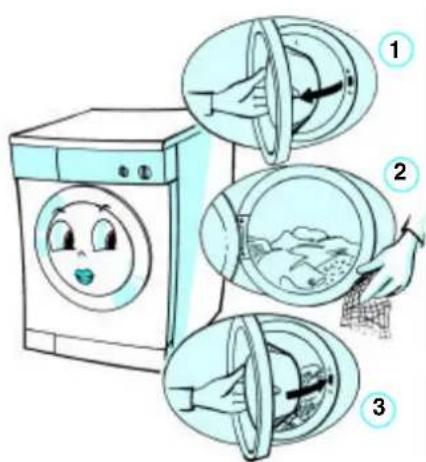
Cartoon illustration of a washing machine with a sad face on its side, being clothed by hands (no text or symbols)BEFORE USING THE APPLIANCE FOR THE FIRST TIME:
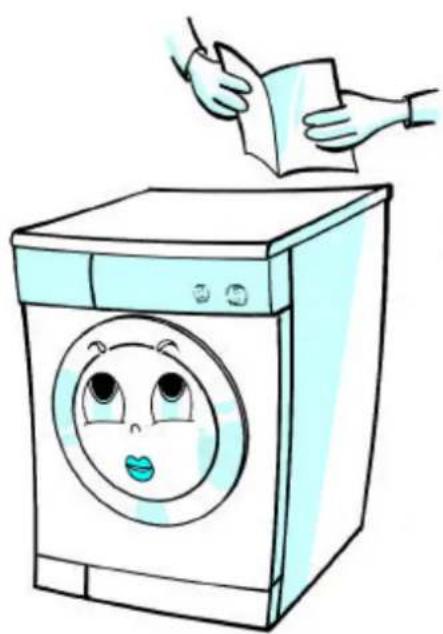
• IMPORTANT: MAKE SURE YOU HAVE READ THE INSTALLATION.
- REMOVE THE TRANSIT SCREWS AND TRANSIT BAR BEFORE USING THE MACHINE FOR THE FIRST TIME.
- First wash cycle without laundry:
- Open the tap.
- Close the door.
- Pour a little detergent (about 100 ml) into the detergent compartment ☐.
- Select a short wash programme (see programme chart).
- Switch on the appliance.
This will remove any water remaining in the machine from the manufacturer's test run.
ROUTINE WASHES:
- Open the tap.
- Sort the laundry according to fabric type and colour and load the machine.
- Close the door.
- Add detergent and any additives required.
- Select the programme, temperature and special options (depending on model).
- Switch on the appliance.
CONTENTS
GB
APPLIANCE AND ACCESSORIES PAGE 4
INSTALLATION PAGE 5
PROTECTING THE ENVIRONMENT PAGE 7
SAFETY INSTRUCTIONS PAGE 7
MOVING AND TRANSPORTING THE APPLIANCE PAGE 7
SORTING THE WASH PAGE 8
DETERGENT AND ADDITIVES PAGE 9
LIQUID DETERGENTS PAGE 10
LIQUID BLEACH (HYPOCHLORITE) PAGE 11
DYEING PAGE 11
REMOVING THE FILTER PAGE 11
DRAINING RESIDUAL WATER PAGE 12
WASHING MACHINE INSTALLED IN ROOM EXPOSED TO FREEZING TEMPERATURES
PAGE 12
CARE AND MAINTENANCE PAGE 13
TROUBLESHOOTING GUIDE PAGE 14
AFTER-SALES SERVICE PAGE 14
APPLIANCE AND ACCESSORIES
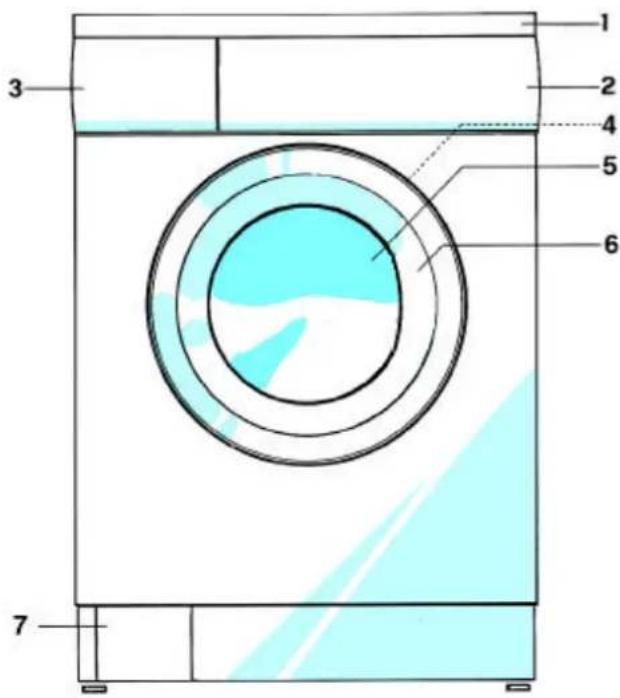
- Worktop
- Control panel
- Detergent drawer
- After-Sales Service sticker (inside door)
- Door
- Door handle
- To open: pull handle
- To lock: press the door firmly (the lock will click into place)
- Filter (inside compartment door).
INSTALLATION
TRANSIT SCREWS
The appliance is fitted with two transit screws and a transit bar to prevent internal damage while it is being moved.
Before using the appliance the transit screws and transit bar MUST be removed.
The appliance is fitted with two screws and a transit bar.
- Remove the black screw (A) with a screwdriver.
- Unscrew the screw (B) on the red transit bar with a screwdriver.
- Completely withdraw and remove the transit bar (C) by pulling firmly on the red handle
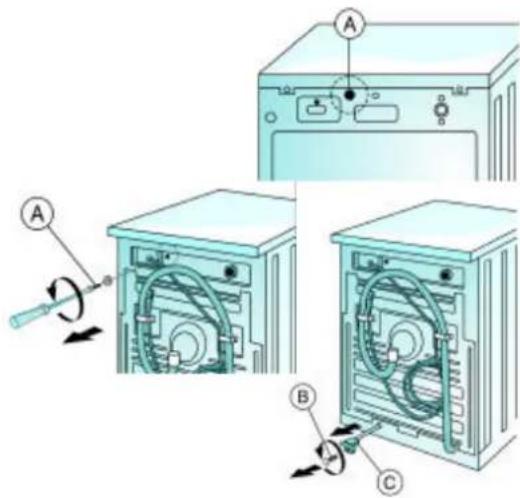
Keep the screws and the bar for future use.
Note: Refit the transit screws and transit bar before transporting the appliance by repeating the above steps in reverse order. In order to locate the screws and bar correctly, it will be necessary to remove the appliance top, having first made sure that the appliance is disconnected from water and electricity supplies.
INSTALLATION
• Install the appliance on a solid and level floor surface, preferably in a corner of the room.
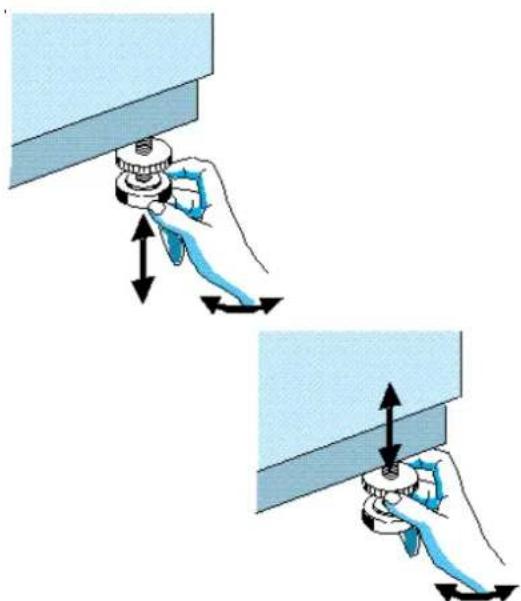
• Make sure that all four feet are resting firmly on the floor and check that the appliance is perfectly level (use a spirit level).
- If the floor is uneven, adjust the levelling feet as required (do not insert pieces of wood, cardboard etc. under the feet).
- Slacken the locknut.
- Adjust the height of the foot, turning it by hand.
- Tighten the locknut anticlockwise towards the washing machine.
If the appliance is to be installed on a wooden floor, distribute the weight by placing it on a 60x60 cm sheet of plywood at least 3 cm in thickness. Secure the plywood sheet to the floor.
WATER SUPPLY
• Water supply: only cold water.
- Tap: 3/4" threaded hose connector.
• Water pressure (mains pressure): 10-100 N/cm ^2 (1-10 bar).
INLET HOSE
- Carefully screw the inlet hose to the tap by hand.
- Turn the tap on fully and check that the joints at the washing machine and the tap are watertight.
natural_image
Illustration of two hands holding a mechanical component with directional arrows indicating movement (no text or symbols)- If the hose is not long enough, replace it with a suitable length of pressure-resistant hose (approved under EN 500 65 to withstand a minimum of 10 bar).
- Check the hose regularly for brittleness and cracks and replace if necessary.
- The washing machine may be connected without a non-return valve.
- Observe any special local regulations regarding connection to the water supply.
INSTALLATION
DRAIN HOSE
- Drain hose connection to water outlet.
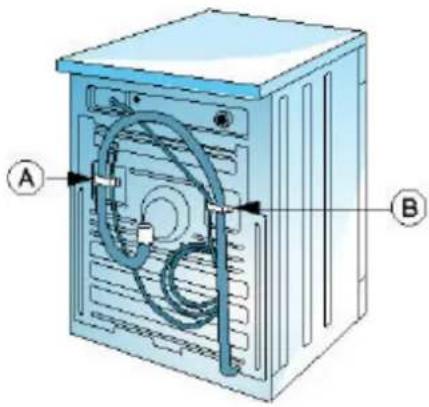
- Unhook the drain hose from the left clip; see arrow (A).
Important:
Do NOT loosen the drain hose connection; see arrow (B), otherwise there is the risk of leakage (danger of scalding with hot water).
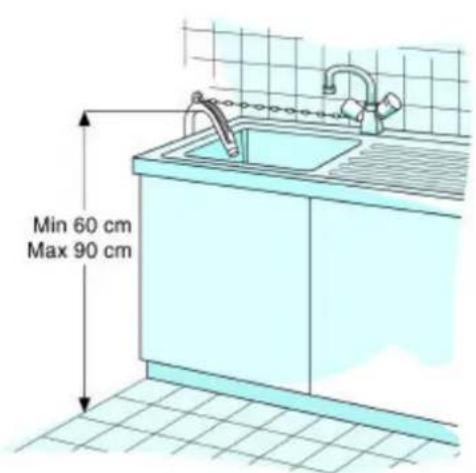
- Fit the drain hose either to the siphon or hook it over the edge of a sink or bath tub with the "U" bend. Small hand basins are not suitable.
- Minimum drain height: 60 cm. Maximum U-bend drain height: 90 cm.
- If you need to add an extension, use a flexible hose of the same type and secure the union with screw-on hose clips. Maximum overall drain hose length 2.5 m.
Important:
Make sure that there are no kinks in the drain hose run and take precautions against it falling while the appliance is running.
CONNECTION TO THE MAINS
- Observe local utility company regulations.
• The connection must be made with a correctly installed, earthed and insulated socket.
• The system must be earthed. The manufacturer declines all responsibility for injury to persons or pets and damage to property caused by disregarding the above instructions.
• The data concerning voltage, consumption and necessary fuse are supplied on the inside of the appliance door.
• The mains connection cable may only be replaced by a qualified electrician.
• The appliance conforms to European safety regulations, EC directive 93/68/EWG and EN 60555. - Do not use extension leads or multiplugs.
PROTECTING THE ENVIRONMENT
- Packing
The packaging is marked with the recycling symbol △signifying that it can be 100% recycled.
- Appliance
The appliance is made of recyclable materials. Dispose of the appliance in conformity with environmental regulations. Make it inoperable: pull out the plug and cut off the power cable so that the appliance cannot be connected to the mains.
- Eco-tips
- A full load (depending on the programme selected) gives the best energy and water consumption.
- Laundry which is lightly to moderately soiled does not require a prewash.
- Lightly soiled laundry should be washed at a low temperature or with a short programme.
- When washing small loads press the "Lightly Soiled" / "Half load" button (if present) and use less detergent.
- Do not exceed the recommended dosages on the detergent packet.
- Only use bleach or stain remover if absolutely necessary.
SAFETY INSTRUCTIONS
- The appliance must only be used in the household for the prescribed uses.
- All connections to the water and electrical mains must be made in accordance with the manufacturer's instructions and following local utility company safety regulations (see "Installation").
- Before any cleaning and maintenance, switch off the machine or disconnect it from the mains.
-
Switch off the washing machine and turn off the tap whenever the machine is not in use.
-
Never use excessive force to open the door.
- Children must not be allowed to play with or inside the machine. Do not rest any weight on the door.
- Packaging materials can be dangerous for children. Keep the packaging material (plastic bags, polystyrene, etc.) well out of their reach.
- The appliance conforms to European safety regulations, EC directive 93/68/EWG and EN 60555.
MOVING AND TRANSPORTING THE APPLIANCE
- Pull out the mains plug.
- Shut off the water tap.
- Disconnect the inlet and drain hoses.
- Drain residual water from the appliance and hoses (see "Draining Residual Water").
- Fit the transit screws and transit bar (see "Installation").
SORTING THE WASH
1. Sort the load according to:
• Fabric type / care label symbol
Cotton, mixed fibres, synthetics, wool.
- Colours
Separate coloured and white articles. Wash new coloured articles separately.
- Article size
Washing articles of different sizes together improves wash efficiency and distributes the load better in the drum.
- Fabric delicacy
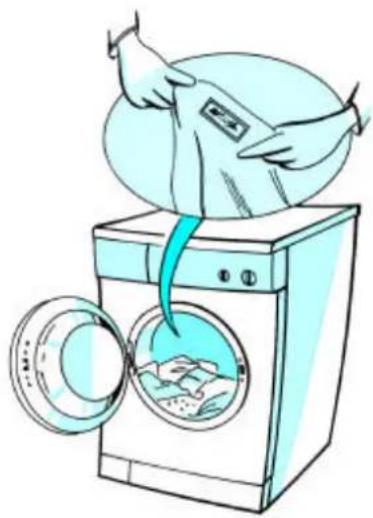
Wash delicates separately. Select the appropriate special programme for machine - washable wool curtains or delicates. Either remove curtain hooks or tie into a cloth bag. Only wash machine-washable fabrics. Wash small articles (e.g. nylon stockings, belts etc.) and articles with hooks (e.g. bras) in a cloth bag or pillow case with zip.
2. Empty all pockets
Coins, safety pins etc. can damage the laundry, drum and tub.
- Closures
Close zips and hooks and eyes. Loose belts or ribbons should be tied together.
STAIN REMOVAL
• Blood, milk, egg, and other organic substances are generally removed by the enzyme phase of the programme.
• To remove red wine, coffee, tea, grass and fruit stains, etc. add a biological stain removing agent to the main wash in chamber of the detergent drawer (depending on the model).
• Particularly stubborn stains can be treated with stain remover before the wash.
LOADING THE WASH
- Open the door.
- Load the articles one at a time loosely into the drum, without overfilling.
- Close the door.
LOAD CAPACITY
See the programme overview.
Note: Overloading the machine reduces the wash efficiency and encourages creasing.
natural_image
Illustration of hands washing a laundry machine with a bag attached (no text or symbols)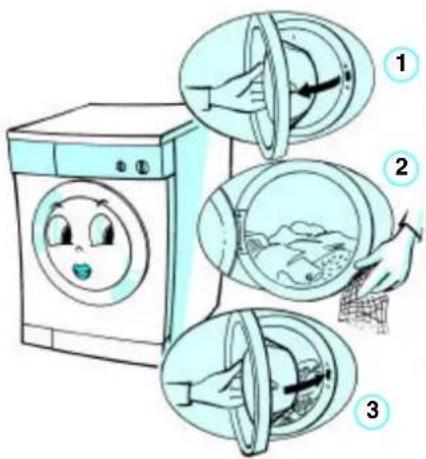
DETERGENT AND ADDITIVES
CHOOSING THE RIGHT DETERGENT
The type of detergent depends on:
• the type of fabric (cottons, synthetics, delicates, wool); Note: Use only specific detergents for washing wool.
- colour;
- wash temperature;
• degree and type of soiling.
Note:
- Whitish residues on dark fabrics are due to the insoluble water softeners in modern phosphate-free detergents. If this occurs, shake or brush out the fabric or use liquid detergents.
- Keep detergents and additives in a safe, dry place out of the reach of children.
- Use only detergent and fabric conditioner specifically produced for automatic domestic washing machines.
- When using water softeners, descaling agents, dyes or bleaches, make sure that they are suitable for use in domestic washing machines.
- Do not use solvents in the machine (e.g. turpentine, benzine, etc.). Do not wash fabrics in the machine which have been treated with solvents or flammable liquids.
DETERGENT DOSAGES
Do not exceed manufacturers' recommended dosages as shown on the detergent package. The amounts depend on:
• degree and type of soiling;
- size of wash;
- full load: according to manufacturers' instructions;
- half load: 3/4 of the normal amount;
- minimum load (about 1 kg): 1/2 the amount used for full load;
• water hardness in your area (request information from the water company): soft water requires less detergent than hard water.
Note:
• Overdosing the detergent results in excessive foaming and reduces the wash efficiency. If the washing machine detects too much foam, it may prevent spinning.
- Using insufficient detergent results in grey laundry. The heating elements and drum also build up scale.
- If using chlorine bleach, follow the bleach instructions carefully. Overdosing the bleach can damage the wash.
WATER HARDNESS
| WATER HARDNESS CATEGORY | CHARACTERISTICS | GERMAN°dH | FRENCH°fH | ENGLISH°eH |
| 1 | soft | 0-7 | 0-12 | 0-9 |
| 2 | medium | 7-14 | 12-25 | 9-17 |
| 3 | hard | 14-21 | 25-37 | 17-26 |
| 4 | very hard | over 21 | over 37 | over 26 |
DETERGENT AND ADDITIVES
FILLING THE DETERGENT AND ADDITIVES
-
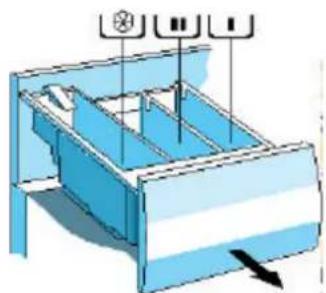
Pull out the detergent drawer. The drawer has three chambers.
-
Filling the detergent.
- Programmes with pre- and main wash.
山
- Main wash programme without prewash.
山
- Add fabric softeners and conditioners no further than the "Max" mark.
图
- Stain remover.
山
• Water softener (water hardness class 4).
山
- Starching. Dissolve/dilute the starch, powder or liquid, in approximately 1 litre of water in a container. Load the machine, close the door, select "Rinse and Spin" and start. Once the machine has started filling, pour the dissolved starch into detergent dispenser chamber Flush the chamber straight away by adding about half a litre of water.
- Slide the drawer in until it clicks shut.
Notes:
- When using highly concentrated detergents, use the detergent ball provided with the detergent and place it directly in the drum to avoid dispensing problems (for programmes without pre-wash only).
- For programmes with prewash: liquid detergents can be used for the prewash. For the main wash then a powder detergent has to be used.
- Dose the correct amount of concentrated fabric softener and dilute with water up to the maximum level marked in the softener compartment.
natural_image
3D diagram of a blue mechanical or structural component with internal channels and mounting points (no text or symbols)Detergent drawer with 3 chambers.
LIQUID DETERGENTS
Some machines are supplied with a detachable insert for the use of these products. This insert should be inserted into the main wash chamber ☐ of the detergent drawer. Fill the insert with detergent no further than the "Max" mark and run the programme in the normal way.
LIQUID BLEACH (HYPOCHLORITE)
Laundry with heavy stains may be PRE-BLEACHED in the machine prior to carrying out a normal wash programme. Proceed by diluting the bleach in approximately 1l water outside of the washing machine in a small container.
For a machine with temperature selector:
• Turn the programme selector to programme 4.
- Turn the temperature selector to Min.
Warning: Bleaching is only possible in a cold wash, otherwise your laundry and your appliance will be damaged.
For a machine without temperature selector:
• Turn the programme selector to programme 5.
- Press the special option button "cold wash" (if available).
Warning: Bleaching is only possible in a cold wash, otherwise your laundry and your appliance will be damaged.
Poor the diluted bleach into chamber and start the machine.
After this prebleach wash, do a normal wash, in which more not bleachable laundry can be added. Add detergent into chamber (W) and start a wash programme. For this subsequent wash a lower temperature wash programme (for example 40°C) can be sufficient because of the pre-bleach treatment. In this way energy can be saved.
Note:
Bleach should only be used with bleachable fabrics.
DYEING
Commercially available products usually consist of a dye colour, fixing agent and salt.
Pour the dye colour, fixing agent and salt directly into the empty drum, and only then load the laundry.
- Only use products designed for use in washing machines.
- Follow the manufacturer's instructions.
- Plastic and rubber components of the machine can be stained by dyes.
REMOVING THE FILTER
WHEN TO REMOVE THE FILTER
- Check and clean the filter at least 2 or 3 times a year.
- When the appliance does not drain or spin properly.
- When the pump is blocked by an object (buttons, coins, safety pins).
Important: Make sure that the water has cooled before draining.
REMOVING THE FILTER
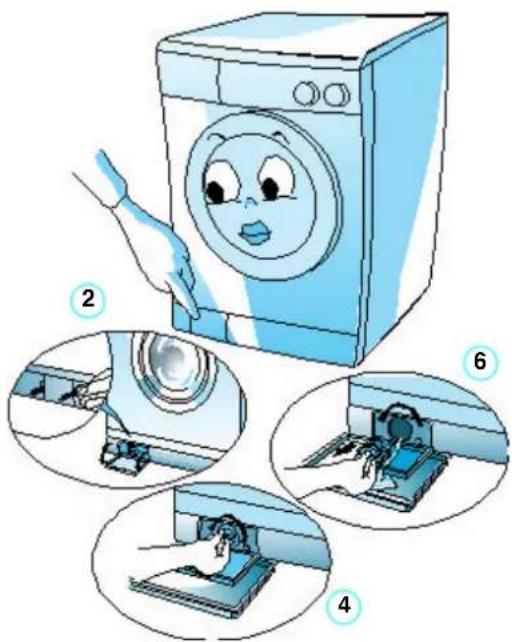
- Switch off the appliance.
- Open the filter cover with a coin.
- Place a tray or container beneath the cover.
-
Slowly turn the filter anticlockwise without unscrewing it completely.
-
Wait until all the water has drained off.
-
Now unscrew the filter completely and remove it.
-
Remove any foreign material from the filter.
-
Check that the pump rotor moves freely.
-
Insert the filter and screw it in clockwise until it locks.
-
Pour 1/2 litre of water into the detergent drawer and check that water does not leak from the filter.
-
Close the cover.
DRAINING RESIDUAL WATER
WHEN TO DRAIN RESIDUAL WATER
- If the filter needs to be cleaned during a programme.
Note: Make sure that the water has cooled before draining.
Note: There can be up to 20 litres of water in the machine.
- When transporting or moving the machine.
- If there is danger of freezing in the installation room. In this case the machine and the hoses should be drained after every wash.
DRAINING RESIDUAL WATER
- Switch off the appliance.
- Unplug the machine from the mains.
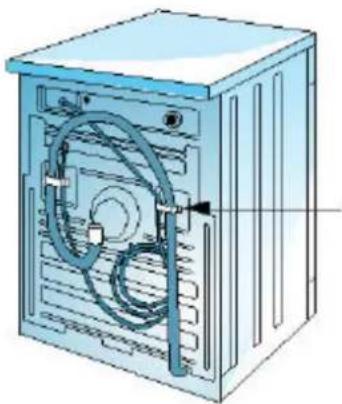
- Unclip the drain hose connection on the rear part of the machine (see arrow).
- Lower the drain hose into a container and let the water drain.
Note: Make sure that the water has cooled before draining.
- Wait until the flow stops.
Note: There can be up to 20 litres of water in the machine during a programme. - Clip the drain hose again on the rear part of the machine.
- Replace the drain hose with the "U" bend and fix it.
natural_image
Technical illustration of a server rack unit with visible internal tubing and ventilation slots (no text or symbols)WASHING MACHINE INSTALLED IN ROOM EXPOSED TO FREEZING TEMPERATURES
Drain residual water from the machine, and the inlet hose after every wash cycle.
- Switch off the appliance.
- Unplug the machine from the mains.
- Close the tap, loosen the inlet hose from the machine and let the water drain out.
- Open the filter, let the water drain out and close it again.
Note: Before a new wash cycle screw the inlet hose to the machine by hand. Check water-tightness of washing machine connections by turning the tap completely on.
CARE AND MAINTENANCE
APPLIANCE EXTERIOR AND CONTROL PANEL
- Clean using normal household detergent (do not use abrasive products).
- Dry with a soft cloth.
Do not use petrol or petroleum products to clean plastic parts.
DETERGENT DRAWER
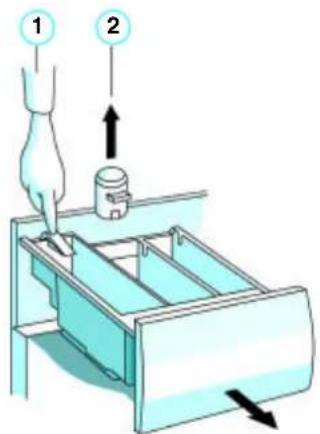
- Disengage the drawer by pressing down the release lever and extract it.
- Remove the inserts (the siphon from the softener compartment and the insert for liquid detergent).
- Wash all the parts under running water.
- Reposition the inserts, fit in the drawer until it locks.
DOOR SEAL
- Clean with a damp cloth when necessary.
- Check the seal folds for foreign bodies periodically.
WATER HOSE MESH FILTER
- Check and clean periodically
- Turn off the tap.
- Unscrew the hose from the tap.
- Remove the mesh filter and clean it.
- Refit the filter and screw the hose connection to the tap.
- Unscrew the hose from the machine.
- Remove the filter from the washing machine with pliers and clean it.
- Replace the filter and screw the hose connection back on to the machine.
- Turn on the tap and ensure that the connections are completely water-tight.
APPLIANCE FILTER
- Check the filter at least two or three times a year and clean if necessary (see "Removing the Filter").
TROUBLESHOOTING GUIDE
The appliance will not switch on.
• Power plug properly inserted in mains socket?
- Mains fuse OK?
- Power failure?
• Tap turned on? Is water coming through?
- Door closed?
• Programme selected?
• Appliance switched on?
No water or insufficient water supply.
• Tap turned on completely?
- Kink in water hose?
- Water hose filter clogged? (See "Care and Maintenance").
• Water hose frozen up?
Waste water not pumped out.
- Drain hose installed correctly? (See "Installation").
- Filter clogged? (See "Removing the filter"/"Draining residual water").
- Drain hose frozen up?
• Is the rinse hold button pressed?
Detergent and additive product residues in detergent drawer at end of wash.
• Siphon installed correctly?
- Siphon clogged?
- Not enough water delivered? (See above).
- Also see "Detergent and Additives" and "Care and Maintenance".
Machine vibrates during spin cycle.
- Machine perfectly horizontal with all four feet on ground? (See "Installation").
- Transit screws and bar removed? The transit screws and bar must be removed before the machine is used (see "Installation").
Final spin results are poor.
- Pump impeller obstructed? (See "Removing the filter"/"Draining residual water").
AFTER-SALES SERVICE
Before contacting After-Sales Service:
- Try to remedy the problem (see "TroubleShooting Guide").
- Restart the programme to see if the fault is repeated.
- If the malfunction persists, call After-Sales Service and specify:
• The nature of the problem.
• The exact model of the appliance.
• The service code
(number after the word SERVICE).
natural_image
Cartoon illustration of a man in a suit holding a briefcase (no text or symbols)The After-Sales Service sticker is on the inside of the door.
SERVICE
- Your full address.
- Your telephone number and area code.
• The After-Sales Service telephone number and address can be found in the warranty or on application to the retailer.
PRONTUARIO D'USO
I
natural_image
Cartoon illustration of a washing machine with a sad face on its side, being clothed by hands (no text or symbols)PRIMA DI USARE LA LAVATRICE:
natural_image
Illustration of a hand using a tool to press or install a component, with directional arrows indicating movement (no text or symbols)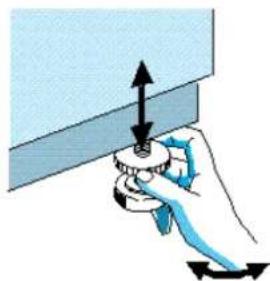
natural_image
Illustration of a hand holding a screwdriver with directional arrows indicating motion (no text or symbols)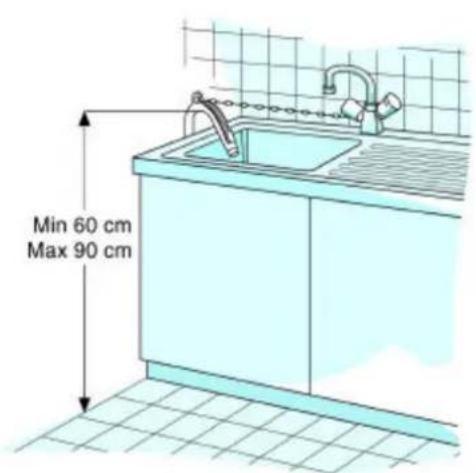
natural_image
Illustration of hands washing a washing machine with a bag being placed on top (no text or symbols)