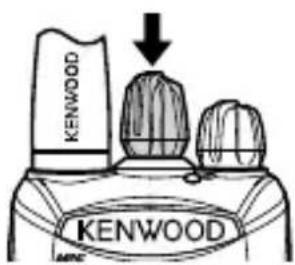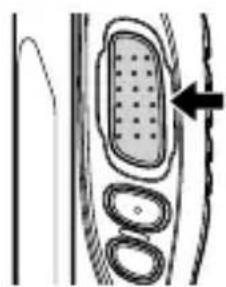
TK-2400 - Talkie Walkie KENWOOD - Free user manual and instructions
Find the device manual for free TK-2400 KENWOOD in PDF.


| Product Type | Two-way radio transceiver (Talkie Walkie) |
| Brand | Kenwood |
| Model | TK-2400 |
| Frequency Band | VHF (27 operating frequencies) |
| Channels | 4 (K type) or 16 (K2 type) user-programmable |
| Power Source | Rechargeable Li-ion battery pack (KNB-45L) |
| Battery Life | Approximately 17 hours (5% TX, 5% RX, 90% standby) |
| Charging Time | Approximately 3 hours |
| Operating Range (Open Areas) | Up to 6 miles (9.6 km) |
| Operating Range (Reinforced Buildings) | Up to 220,000 square feet (20,440 m²) |
| Operating Range (High Rises) | Up to 13 floors |
| Main Features | Voice scrambler, VOX hands-free, voice announcement, QT/DQT signaling, programmable side keys, scanning, low transmit power |
| Safety Features | Low battery warning, time-out timer (60s), key lock |
| Supplied Accessories | Antenna, charger (KSC-35S), Li-ion battery (KNB-45L), belt clip, speaker/microphone jack cover, locking bracket, warranty card, manual |
| Water Resistance | With jack cover installed; not fully water resistant when using speaker/microphone |
| FCC License Required | Yes, for operation on Private Land Mobile frequencies |
| Maintenance | Keep dry, clean contacts, use only specified charger, recycle battery per RBRC program |
Frequently Asked Questions - TK-2400 KENWOOD
User questions about TK-2400 KENWOOD
0 question about this device. Answer the ones you know or ask your own.
Ask a new question about this device
Download the instructions for your Talkie Walkie in PDF format for free! Find your manual TK-2400 - KENWOOD and take your electronic device back in hand. On this page are published all the documents necessary for the use of your device. TK-2400 by KENWOOD.
USER MANUAL TK-2400 KENWOOD
We are grateful for your purchase of this KENWOOD product and welcome you to the Business Radio Service (BRS).
Your KENWOOD 2-way Business Radio is called a “transceiver”, meaning “transmitter & receiver”. We believe this easy-to-use transceiver will provide you with dependable and reliable communications. This KENWOOD transceiver is a precision device. Treat it with care, and you will enjoy years of reliable operation.
FEATURES
- 4 (K type) or 16 (K2 type) channels with 27 VHF (TK-2400) or 90 UHF (TK-3400) operating frequencies and each channel can be set up with a QT tone or DQT code allowing you to ignore unwanted calls.
- Built in voice scrambler gives you complete privacy for your conversations.
- Hands free operation when using an optional headset.
- Voice announcement lets you know which channel you have selected and which settings you have made when reassigning key functions and channel settings.
OPERATING CONDITIONS
| ConditionTK-2400TK-3400 | ||
| Open locations(no obstructions) | Up to 6 miles (9.6 km) | |
| In steel/ concrete reinforced buildings | Up to 220,000 square feet (20,440 m^2 ) | Up to 250,000 square feet (23,220 m^2 ) |
| In high rises Up to 13 fl oors | Up to 20 fl oors | |
Note: The listed ranges are based on fi eld testing and may vary with your operating conditions and individual transceiver.
FCC LICENSE INFORMATION
Your KENWOOD transceiver operates on communications frequencies which are subject to FCC (Federal Communications Commission) Rules & Regulations. FCC Rules require that all operators using Private Land Mobile radio frequencies obtain a radio license before operating their equipment. Application for license must be made on FCC form 601, schedules D and H, and Remittance form 159.
FAX: Forms can be obtained by fax from the FCC Fax-On-Demand system. Call 1-202-418-0177 from your fax machine and request document number 000601 for the form, schedules, and instructions.
MAIL: Forms can be ordered by telephone, and will be sent to you by first class mail. Call the FCC Forms Hotline at 1-800-418-FORM (1-800-418-3676).
INTERNET: Form 601 and instructions can be downloaded from the FCC Forms website at http://www.fcc.gov/formpage.html
Before fi lling out your Form 601 application Technical Data section, you must decide on which frequencies you will operate. See the frequency charts on pages 14 and 15.
QUESTIONS? Call the FCC for license application questions at 1-888-CALL-FCC (1-888-225-5322).
One or more of the following statements may be applicable:
FCC WARNING
This equipment generates or uses radio frequency energy. Changes or modifi cations to this equipment may cause harmful interference unless the modifi cations are expressly approved in the instruction manual. The user could lose the authority to operate this equipment if an unauthorized change or modifi cation is made.
INFORMATION TO THE DIGITAL DEVICE USER REQUIRED BY THE FCC
This equipment has been tested and found to comply with the limits for a Class B digital device, pursuant to Part 15 of the FCC Rules. These limits are designed to provide reasonable protection against harmful interference in a residential installation.
This equipment generates, uses and can generate radio frequency energy and, if not installed and used in accordance with the instructions, may cause harmful interference to radio communications. However, there is no guarantee that the interference will not occur in a particular installation. If this equipment does cause harmful interference to radio or television reception, which can be determined by turning the equipment off and on, the user is encouraged to try to correct the interference by one or more of the following measures:
- Reorient or relocate the receiving antenna.
- Increase the separation between the equipment and receiver.
- Connect the equipment to an outlet on a circuit different from that to which the receiver is connected.
- Consult the dealer for technical assistance.

ATTENTION:
The RBRC Recycle seal found on KENWOOD lithium-ion (Li-ion) battery packs indicates KENWOOD's voluntary participation in an industry program to collect and recycle Li-ion batteries after their operating life has expired. The RBRC program is an alternative to disposing Li-ion batteries with your regular refuse or in municipal waste streams, which is illegal in some areas.
For information on Li-ion battery recycling in your area, call (toll free) 1-800-8-BATTERY (1-800-822-8837).
KENWOOD's involvement in this program is part of our commitment to preserve our environment and conserve our natural resources.
Terminal Descriptions
Speaker/ Microphone Jacks
It is possible to use a resin-based cover for the Speaker/ Microphone jacks.
| NO. | Name Description | Impedance I/O | ||
| 1 | PTT / RXD | External PTT Input / Serial Data Input | CMOS I | |
| 2 | MIC External MIC | Input 1.8 k | Ω | I |
| 3 | MICIN Internal MIC | Output 1.8 k | Ω | O |
| 4 | OPTDET External | Option Detect High Impedance I | ||
| 5 | 5M 5V Output 100 | Ω | O | |
| 6 | AE GND | GND | - | |
| 7 | TXD Serial Data Output CMOS | O | ||
| 8 | NC No Connection | - | - | |
| 9 | SPO Audio Input 8 | Ω | I | |
| 10 | SPI | Received Audio Output | 8Ω | O |
Antenna Terminal
50 Ω impedance
Battery Terminal
The battery terminal uses a spring plate.
The negative terminal connects to the chassis ground.
The battery is mounted on the rear side of the transceiver using a latch mounting method.
Firmware Copyrights
The title to and ownership of copyrights for firmware embedded in KENWOOD product memories are reserved for JVC KENWOOD Corporation.
NOTICES TO THE USER
◆ Government law prohibits the operation of unlicensed radio transmitters within the territories under government control.
◆ Illegal operation is punishable by fi ne and/or imprisonment.
◆ Refer service to qualified technicians only.
Safety: It is important that the operator is aware of, and understands, hazards common to the operation of any transceiver.
PRECAUTIONS
- Do not charge the transceiver and battery pack when they are wet.
- Ensure that there are no metallic items located between the transceiver and the battery pack.
- Do not use options not specified by KENWOOD.
- If the die-cast chassis or other transceiver part is damaged, do not touch the damaged parts.
- If a headset or headphone is connected to the transceiver, reduce the transceiver volume. Pay attention to the volume level when turning the squelch off.
- Do not place the microphone cable around your neck while near machinery that may catch the cable.
- Do not place the transceiver on unstable surfaces.
- Ensure that the end of the antenna does not touch your eyes.
- When the transceiver is used for transmission for many hours, the radiator and chassis will become hot. Do not touch these locations when replacing the battery pack.
- Do not immerse the transceiver in water.
- Always switch the transceiver power off before installing optional accessories.
- The charger is the device that disconnects the unit from the AC mains line. The AC plug should be readily accessible.
- To dispose of batteries, be sure to comply with the laws and regulations in your country or region.

WARNING
Turn the transceiver power off in the following locations:
- In explosive atmospheres (infl ammable gas, dust particles, metallic powders, grain powders, etc.).
- While taking on fuel or while parked at gasoline service stations.
• Near explosives or blasting sites. - In aircrafts. (Any use of the transceiver must follow the instructions and regulations provided by the airline crew.)
- Where restrictions or warnings are posted regarding the use of radio devices, including but not limited to medical facilities.
• Near persons using pacemakers.

CAUTION
- Do not disassemble or modify the transceiver for any reason.
- Do not place the transceiver on or near airbag equipment while the vehicle is running. When the airbag inflates, the transceiver may be ejected and strike the driver or passengers.
- Do not transmit while touching the antenna terminal or if any metallic parts are exposed from the antenna covering. Transmitting at such a time may result in a high-frequency burn.
- If an abnormal odor or smoke is detected coming from the transceiver, switch the transceiver power off immediately, remove the battery pack from the transceiver, and contact your KENWOOD dealer.
- Use of the transceiver while you are driving may be against traffic laws. Please check and observe the vehicle regulations in your area.
- Do not expose the transceiver to extremely hot or cold conditions.
- Do not carry the battery pack (or battery case) with metal objects, as they may short the battery terminals.
- Danger of explosion if the battery is incorrectly replaced; replace only with the same type.
- When operating the transceiver in areas where the air is dry, it is easy to build up an electric charge (static electricity). When using an earphone accessory in such conditions, it is possible for the transceiver to send an electric shock through the earphone and to your ear. We recommend you use only a speaker/microphone in these conditions, to avoid electric shocks.
Information concerning the battery pack:
The battery pack includes fl ammable objects such as organic solvent. Mishandling may cause the battery to rupture producing fl ames or extreme heat, deteriorate, or cause other forms of damage to the battery. Please observe the following prohibitive matters.

DANGER
- Do not disassemble or reconstruct battery!
The battery pack has a safety function and protection circuit to avoid danger. If they suffer serious damage, the battery may generate heat or smoke, rupture, or burst into flame.
- Do not short-circuit the battery!
Do not join the + and – terminals using any form of metal (such as a paper clip or wire). Do not carry or store the battery pack in containers holding metal objects (such as wires, chain-necklace or hairpins). If the battery pack is short-circuited, excessive current will flow and the battery may generate heat or smoke, rupture, or burst into flame. It will also cause metal objects to heat up.
- Do not incinerate or apply heat to the battery!
If the insulator is melted, the gas release vent or safety function is damaged, or the electrolyte is ignited, the battery may generate heat or smoke, rupture, or burst into flame.
- Do not leave the battery near fi re, stoves, or other heat generators (areas reaching over 80°C/176°F)!
If the polymer separator is melted due to high temperature, an internal short-circuit may occur in the individual cells and the battery may generate heat or smoke, rupture, or burst into flame.
- Do not immerse the battery in water or get it wet by other means!
If the battery's protection circuit is damaged, the battery may charge at extreme current (or voltage) and an abnormal chemical reaction may occur. The battery may generate heat or smoke, rupture, or burst into flame.
- Do not charge the battery near fi re or under direct sunlight!
If the battery's protection circuit is damaged, the battery may charge at extreme current (or voltage) and an abnormal chemical reaction may occur. The battery may generate heat or smoke, rupture, or burst into flame.

DANGER
- Use only the specified charger and observe charging requirements!
If the battery is charged in unspecified conditions (under high temperature over the regulated value, excessive high voltage or current over regulated value, or with a remodeled charger), it may overcharge or an abnormal chemical reaction may occur. The battery may generate heat or smoke, rupture, or burst into flame.
- Do not pierce the battery with any object, strike it with an instrument, or step on it!
This may break or deform the battery, causing a short-circuit. The battery may generate heat or smoke, rupture, or burst into flame.
- Do not jar or throw the battery!
An impact may cause the battery to leak, generate heat or smoke, rupture, and/or burst into flame. If the battery's protection circuit is damaged, the battery may charge at an abnormal current (or voltage), and an abnormal chemical reaction may occur. The battery may generate heat or smoke, rupture, or burst into flame.
- Do not use the battery pack if it is damaged in any way!
The battery may generate heat or smoke, rupture, or burst into flame.
- Do not solder directly onto the battery!
If the insulator is melted or the gas release vent or safety function is damaged, the battery may generate heat or smoke, rupture, or burst into flame.
- Do not reverse the battery polarity (and terminals)!
When charging a reversed battery, an abnormal chemical reaction may occur. In some cases, an unexpected large amount of current may flow upon discharging. The battery may generate heat or smoke, rupture, or burst into flame.
- Do not reverse-charge or reverse-connect the battery!
The battery pack has positive and negative poles. If the battery pack does not smoothly connect with a charger or operating equipment, do not force it; check the polarity of the battery. If the battery pack is reverse-connected to the charger, it will be reverse-charged and an abnormal chemical reaction may occur. The battery may generate heat or smoke, rupture, or burst into flame.

DANGER
- Do not touch a ruptured and leaking battery!
If the electrolyte liquid from the battery gets into your eyes, wash your eyes with fresh water as soon as possible, without rubbing your eyes. Go to the hospital immediately. If left untreated, it may cause eye-problems.

WARNING
- Do not charge the battery for longer than the specified time!
If the battery pack has not fi nished charging even after the regulated time has passed, stop it. The battery may generate heat or smoke, rupture, or burst into fl ame.
- Do not place the battery pack into a microwave or high pressure container!
The battery may generate heat or smoke, rupture, or burst into flame.
- Keep ruptured and leaking battery packs away from fi re!
If the battery pack is leaking (or the battery emits a bad odor), immediately remove it from fl ammable areas. Electrolyte leaking from battery can easily catch on fi re and may cause the battery to generate smoke or burst into fl ame.
- Do not use an abnormal battery!
If the battery pack emits a bad odor, appears to have different coloring, is deformed, or seems abnormal for any other reason, remove it from the charger or operating equipment and do not use it. The battery may generate heat or smoke, rupture, or burst into flame.
CONTENTS
UNPACKING AND CHECKING EQUIPMENT .... 1
PREPARATION 2
ORIENTATION 6
BASIC OPERATIONS 8
VOICE OPERATED TRANSMISSION (VOX) 9
BACKGROUND OPERATIONS ....10
CHANNEL SETUP MODE ....11
KEY ASSIGNMENT MODE ....20
TROUBLESHOOTING GUIDE ......25
ALL RESET MODE ....26
UNPACKING AND CHECKING EQUIPMENT
Carefully unpack the transceiver. If any of the items listed below are missing or damaged, fi le a claim with the carrier immediately.
SUPPLIED ACCESSORIES
- Antenna ....1
- Battery charger/ AC adapter (KSC-35S) ....1
- Li-ion Battery pack (KNB-45L) ....1
- Speaker/ microphone jack cover ....1
- Speaker/ microphone locking bracket ....1
- Belt clip (KBH-10) .... 1
- Screw M(3 x 8 mm)....2
- Warranty card ....1
- Instruction manual ....1
Note: Refer to "PREPARATION" for accessory installation instructions.
PREPARATION
INSTALLING THE ANTENNA
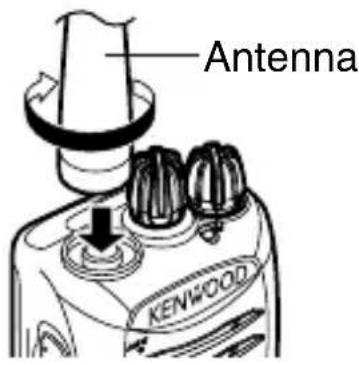
Screw the antenna into the connector on the top of the transceiver by holding the antenna at its base and turning it clockwise until secure.
Note: The antenna is neither a handle, a key ring retainer, nor a speaker/ microphone attachment point. Using the antenna in these ways may damage the antenna and degrade your transceiver's performance
INSTALLING/ REMOVING THE BATTERY PACK

CAUTION
◆ Do not short the battery terminals or dispose of the battery by fire.
◆ Never attempt to remove the casing from the battery pack.
natural_image
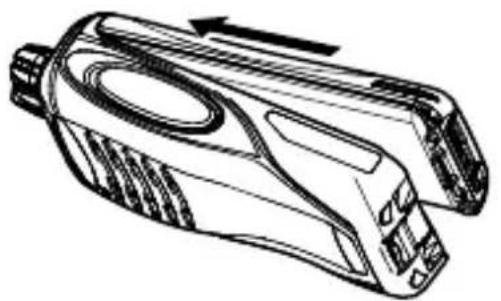
Technical line drawing of a handheld device with internal components and a directional arrow (no text or symbols)1 Align the battery pack with the back of the transceiver, then press the battery pack and transceiver firmly together until the release latch on the base of the transceiver locks.
natural_image
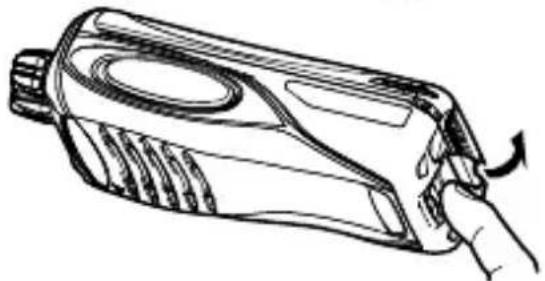
Line drawing of a handheld device with a hand inserting a button (no text or symbols)2 To remove the battery pack, lift the safety catch on the base of the transceiver, then press the release latch underneath the safety catch.
natural_image
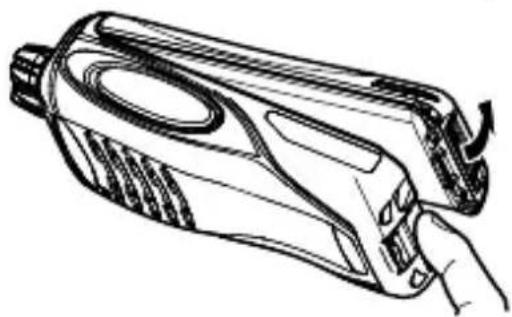
Line drawing of a handheld device with handle and internal components (no text or symbols)3 While pressing the release latch, pull the battery pack away from the transceiver.
CHARGING THE BATTERY PACK
The battery pack is not charged at the factory; charge it before use. Average battery pack life (calculated using 5% transmit time, 5% receive time, and 90% standby time) is 17 hours.
ATTENTION: Always switch OFF a transceiver equipped with a battery pack before inserting the transceiver into the charger.
1 Plug the AC adapter cable into the jack located on the rear of the charger.
2 Plug the AC adapter into an AC outlet.
3 Slide a battery pack or a transceiver equipped with a battery pack into the charging slot of the charger.
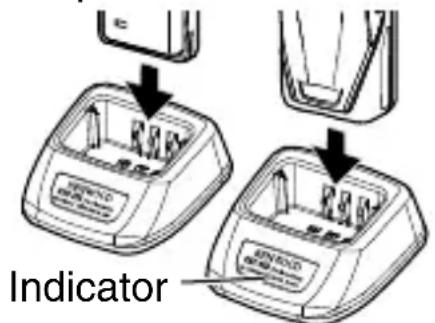
- Make sure the metal contacts of the battery pack mate securely with the charger terminals.
- The indicator lights red and charging begins.
4 When charging is completed, the indicator lights green. Remove the battery pack or the transceiver from the charging slot of the charger.
- It takes approximately 3 hours to charge the battery pack.
- When the charger will not be used for a long time, unplug the AC adapter from the AC outlet.
Note:
- When the indicator blinks red, the battery pack is either defective or the battery pack contacts are not properly mated with those of the charger.
When the indicator fl ashes green and orange, the battery pack has not satisfied the charging start temperature. Remove the battery pack from the charger and wait until it reaches a normal temperature before charging it again.
◆ The ambient temperature should be between 41°F and 104°F (5°C and 40°C) while charging is in progress. Charging outside this range may not fully charge the battery.
◆ The battery pack life is over when its operating time decreases even though it is fully and correctly charged. Replace the battery pack.
INSTALLING THE BELT CLIP
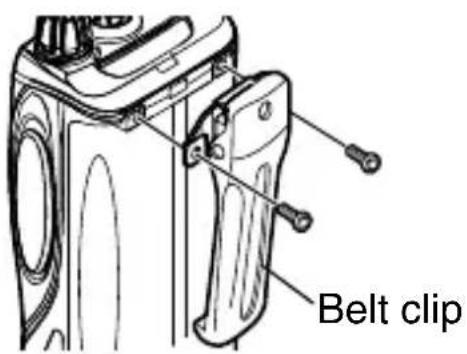
If necessary, attach the belt clip using the two supplied M3 x 8 mm screws.
Note: If the belt clip is not installed, its mounting location may get hot during continuous transmission or when left sitting in a hot environment.
CAUTION
Do not use glue which is designed to prevent screw loosening when installing the belt clip, as it may cause damage to the transceiver. Acrylic ester, which is contained in these glues, may crack the transceiver's back panel.
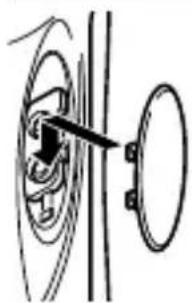
Install the cap over the speaker/ microphone jacks when not using an optional speaker/ microphone.
Note: To keep the transceiver water resistant, you must cover the speaker/ microphone jacks with the supplied cap.
natural_image
Diagram showing a mechanical or electrical component with concentric circular layers and a separate circular housing (no text or symbols)1 Place the cap over the jacks so that the locking tabs insert into the transceiver grooves.
2 While holding the cap in place, push it towards the bottom of the transceiver until the tabs on the cap click into place.
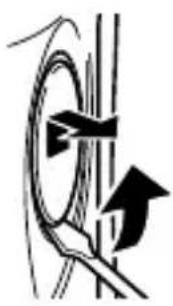
- To remove the cap, hold the top of the cap in place with your finger while inserting a 2 mm or smaller fl at blade screwdriver under the bottom of the cap. Slowly slide the screwdriver in until its tip touches the tab inside the cap, then gently pry the cap up (handle of screwdriver moving away from the transceiver) to remove the cap.
natural_image
Diagram of a mechanical or fluidic system with directional arrows indicating flow or movement (no text or symbols)INSTALLING THE OPTIONAL SPEAKER/ MICROPHONE (OR HEADSET)
Note: The transceiver is not fully water resistant when using a speaker/ microphone or headset.
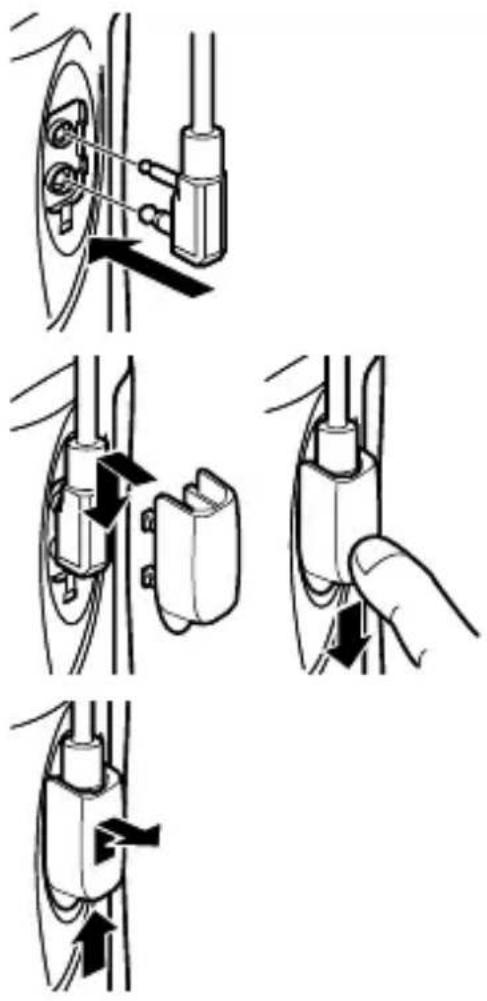
1 Insert the speaker/ microphone (or headset) plugs into the speaker/microphone jacks of the transceiver.
2 Place the locking bracket over the speaker/ microphone (or headset) plugs so that the locking tabs insert into the transceiver grooves.
- Push down on the locking bracket to slide it into place.
3 While holding the locking bracket in place, push it towards the bottom of the transceiver until the tabs on the bracket click into place.
- To remove the locking bracket, push the bracket up from the base.
ORIENTATION
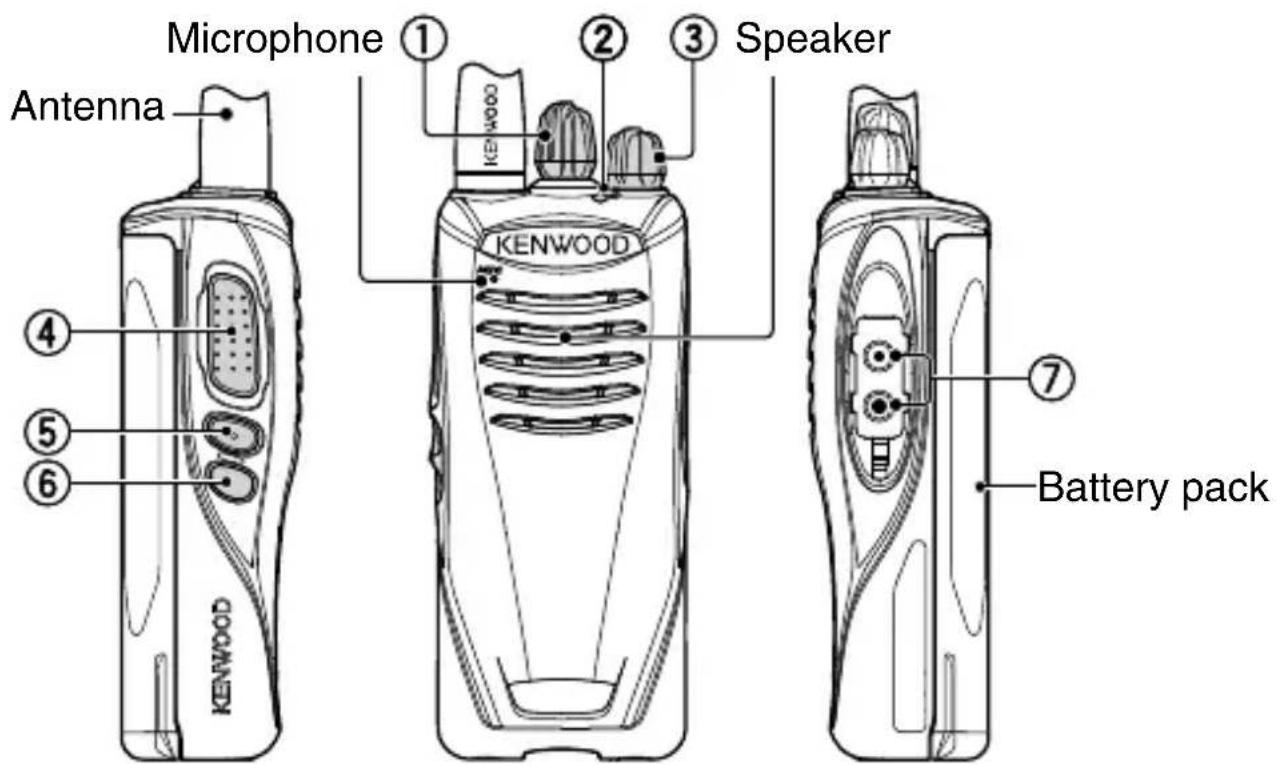
① Channel selector
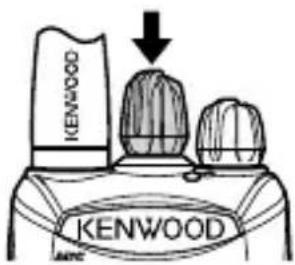
Rotate to change the operating channel.
- To change the operating frequency or QT/DQT settings of a channel, refer to “CHANNEL SETUP MODE” on page 11.
② LED indicator
For the LED indicator status, refer to page 8.
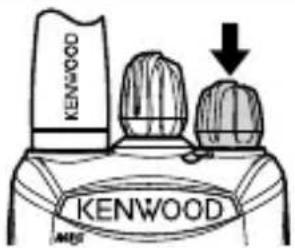
③ Power switch/ Volume control
Turn clockwise to switch the transceiver ON. To switch the transceiver OFF, turn counterclockwise until a click sounds. Rotate to adjust the volume level.
④ PTT (Push to Talk) switch
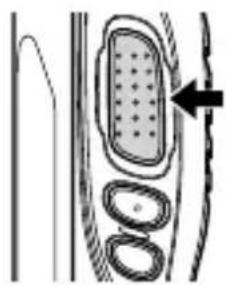
Press and hold, then speak around the microphone area to transmit.
⑤ Side 1 key
Press to activate its programmable function.
The default setting is [None] (no function).
- For function descriptions and details on how to change the function of the Side 1 key, refer to “KEY ASSIGNMENT MODE” on page 20.
⑥ Side 2 key
Press to activate its programmable function.
The default setting is [None] (no function).
- For function descriptions and details on how to change the function of the Side 2 key, refer to “KEY ASSIGNMENT MODE” on page 20.
⑦ Speaker/ microphone jacks
Insert the Speaker/ microphone or Headset plug into this jack.
BASIC OPERATIONS
1 Turn the Power switch/Volume control clockwise to switch the transceiver power ON.
- The LED indicator lights blue for 1 second when turning the Power ON.
2 Rotate the Channel selector to select your desired channel.
- When you receive an appropriate signal, you will hear audio from the speaker. Adjust the volume as necessary.
3 To make a call, press and hold the PTT switch, then speak around the microphone area using your normal speaking voice.
- Hold the microphone approximately 1.5 inches (3 to 4 cm) from your lips.
4 Release the PTT switch to receive.
Note: When the battery pack voltage becomes too low, the Low Battery Warning sounds an alert tone every 30 seconds and the LED indicator blinks red.
natural_image
Diagram of plant cell structures with a highlighted cell wall and an arrow indicating a specific region (no text or labels present)LED Indicator Status
| Indicator Color Meaning | |
| Lights red Transmitting | |
| Lights green Receiving a call | |
| Blinks red Battery power is low while transmitting | |
| Blinks green Scanning | |
| Blinks red/orange | The selected channel has not been programmed and cannot be used. |
VOICE OPERATED TRANSMISSION (VOX)
VOX operation allows you to transmit hands-free. VOX can only be used if you are using a supported headset. This function can be turned off for specific channels.
To activate VOX and set the VOX Gain level, perform the following steps:
1 Connect the headset to the transceiver.
- The VOX function does not activate when a headset is not connected to the accessory terminal of the transceiver.
2 With the transceiver power OFF, press and hold the Side 1 key while turning the transceiver power ON.
3 Continue to hold the Side 1 key until a beep sounds.
- The LED indicator lights turn orange.
- When the Side 1 key is released, the transceiver will announce the VOX Gain level (the default level is OFF, so, a double beep sounds).
4 Press the Side 1 key to select the VOX Gain level of the radio (from 1\~10 or Off).
- Press the Side 2 key to enable or disable the VOX function for the current channel (you can change this setting for each channel by selecting a channel with the Channel selector). When turned ON, a beep sounds. When turned OFF, a double beep sounds.
5 Press the PTT switch to save the setting.
- A beep will sound.
- The transceiver announces the new VOX Gain level.
6 Turn the transceiver power OFF and then ON again to activate VOX.
Note:
◆ The transceiver will automatically return to normal operation if no action is performed for 20 seconds.
◆ VOX Gain level 1 is the least sensitive and VOX Gain level 10 is the most sensitive.
◆ If a headset is connected to the transceiver while the VOX function is switched ON and the VOX Gain level is configured to a higher, more sensitive level, louder received signals may cause the transceiver to start transmission.
The Time-out Timer prevent callers from using a channel for an extended duration (60 seconds). If you continuously transmit for the duration, transmission will stop and an alert tone will sound. To stop the tone, release the PTT switch.
LOW BATTERY WARNING
While operating the transceiver, the Low Battery Warning sounds an alert tone every 30 seconds and the LED indicator blinks red when the battery needs recharged or replaced.
CHANNEL SETUP MODE
This transceiver allows you to reprogram each of the channels with different frequencies and QT (Quiet Talk)/ DQT (Digital Quiet Talk) settings. The table below lists the default channel settings.
| Channel Number | Table Number | Frequency (MHz) QT/DQT Setting |
| TK-2400 (K) 4 channel model | ||
| 1 20 154.4900 67.0 Hz | ||
| 2 21 154.5150 67.0 Hz | ||
| 3 1 151.6250 67.0 Hz | ||
| 4 2 151.9550 67.0 Hz | ||
| TK-2400 (K2) 16 channel model | ||
| 1 20 154.4900 67.0 Hz | ||
| 2 21 154.5150 67.0 Hz | ||
| 3 1 151.6250 67.0 Hz | ||
| 4 2 151.9550 67.0 Hz | ||
| TK-3400 (K) 4 channel model | ||
| 1 2 464.5500 67.0 | Hz | |
| 2 8 467.9250 67.0 | Hz | |
| 3 9 461.0375 67.0 | Hz | |
| 4 10 461.0625 67.0 | Hz | |
| TK-3400 (K2) 16 channel model | ||
| 1 2 464.5500 67.0 | Hz | |
| 2 8 467.9250 67.0 | Hz | |
| 3 9 461.0375 67.0 | Hz | |
| 4 10 461.0625 67.0 | Hz | |
| 5 11 461.0875 67.0 | Hz | |
| 6 12 461.1125 67.0 | Hz | |
| 7 13 461.1375 67.0 | Hz | |
| 8 14 461.1625 67.0 | Hz | |
| 9 1 464.5000 67.0 | Hz | |
| 10 3 467.7625 67.0 | Hz | |
| 11 4 467.8125 67.0 | Hz | |
| 12 5 467.8500 67.0 | Hz | |
| 13 6 467.8750 67.0 | Hz | |
| 14 7 467.9000 67.0 | Hz | |
| 15 15 461.1875 67 | 0 Hz | |
| 16 16 461.2125 67 | 0 Hz | |
Note: Due to FCC regulations, the default values of TK-2400/TK-2300 (VHF) are different from TK-2200 (VHF) series. Make sure to choose a compatible frequency to interoperate with each other.
To change the operating frequency of a channel:
1 With the transceiver power OFF, press and hold the PTT switch and Side 1 key while turning the transceiver power ON.
- Continue to hold the PTT switch and Side 1 key until the LED lights orange and the transceiver announces “Self”.
2 Release the PTT switch and Side 1 key.
- The transceiver announces "Channel".
- Pressing the Side 1 key or Side 2 key will toggle between QT, DQT, and Channel setup.
3 Press and release the PTT switch, then rotate the Channel selector to your desired channel.
- Upon pressing and releasing the PTT switch, a beep will sound and the transceiver announces “Table zero”.
4 Press the Side 1 or Side 2 key to increment/ decrement the Table number, to select the new channel frequency.
- Press and hold the Side 1 or Side 2 key to increment/decrement the number by 5 at a time.
- Table numbers and their corresponding operating frequencies are provided in the table on page 14.
- A voice announcement will inform you of the currently selected Table number.
5 Press the PTT switch to save the setting.
- A beep will sound.
- Repeat steps 3 to 5 to set up another channel.
6 Turn the transceiver power OFF and then ON again to activate the new settings.
Note: The transceiver will automatically return to normal operation if no action is performed for 20 seconds.
| TK-2400 Table Number | Operating Frequency (MHz) | TK-2400 Table Number | Operating Frequency (MHz) |
| 0 OFF 1 | 4 151.7450 | ||
| 1 151.62 | 50 15 151.7750 | ||
| 2 151.95 | 50 16 151.8650 | ||
| 3 152.88 | 50 17 151.8950 | ||
| 4 152.91 | 50 18 151.9250 | ||
| 5 151.70 | 00 19 152.9000 | ||
| 6 151.76 | 00 20 154.4900 | ||
| 7 152.94 | 50 21 154.5150 | ||
| 8 151.83 | 50 22 154.5275 | ||
| 9 151.80 | 50 23 154.5400 | ||
| 10 151.5 | 125 24 153.0050 | ||
| 11 151.6 | 550 25 154.5475 | ||
| 12 151.6 | 850 26 158.4000 | ||
| 13 151.7 | 150 27 158.4075 |
| TK-3400 Table Number | Operating Frequency (MHz) | TK-3400 Table Number | Operating Frequency (MHz) |
| 0 OFF 15 | 461.1875 | ||
| 1 464.5000 | 16 461.2125 | ||
| 2 464.5500 | 17 461.2375 | ||
| 3 467.7625 | 18 461.2625 | ||
| 4 467.8125 | 19 461.2875 | ||
| 5 467.8500 | 20 461.3125 | ||
| 6 467.8750 | 21 461.3375 | ||
| 7 467.9000 | 22 461.3625 | ||
| 8 467.9250 | 23 462.7625 | ||
| 9 461.0375 | 24 462.7875 | ||
| 10 461.0625 | 25 462.8125 | ||
| 11 461.0875 | 26 462.8375 | ||
| 12 461.1125 | 27 462.8625 | ||
| 13 461.1375 | 28 462.8875 | ||
| 14 461.1625 | 29 462.9125 | ||
| 30 464.4 | 875 61 467.1875 | ||
| 31 464.5 | 125 62 467.4625 | ||
| 32 464.5 | 375 63 467.4875 | ||
| 33 464.5 | 625 64 467.5125 | ||
| 34 466.0 | 375 65 451.1875 | ||
| 35 466.0 | 625 66 451.2375 | ||
| 36 466.0 | 875 67 451.2875 | ||
| 37 466.1 | 125 68 451.3375 | ||
| 38 466.1 | 375 69 451.4375 | ||
| 39 466.1 | 625 70 451.5375 | ||
| 40 466.1 | 875 71 451.6375 | ||
| 41 466.2 | 125 72 452.3125 | ||
| 42 466.2 | 375 73 452.5375 | ||
| 43 466.2 | 625 74 452.4125 | ||
| 44 466.2 | 875 75 452.5125 | ||
| 45 466.3 | 125 76 452.7625 | ||
| 46 466.3 | 375 77 452.8625 | ||
| 47 466.3 | 625 78 456.1875 | ||
| 48 467.7 | 875 79 456.2375 | ||
| 49 467.8 | 375 80 456.2875 | ||
| 50 467.8 | 625 81 468.2125 | ||
| 51 467.8 | 875 82 468.2625 | ||
| 52 467.9 | 125 83 468.3125 | ||
| 53 469.4 | 875 84 468.3625 | ||
| 54 469.5 | 125 85 468.4125 | ||
| 55 | 469.5375 86 468.4625 | ||
| 56 469.5 | 625 87 468.5125 | ||
| 57 462.1 | 875 88 468.5625 | ||
| 58 462.4 | 625 89 468.6125 | ||
| 59 462.4 | 875 90 468.6625 | ||
| 60 462.5 | 125 |
QT/ DQT SETTINGS
Quiet Talk (QT) and Digital Quiet Talk (DQT) are functions that reject undesired signals on your channel. You will hear a call only when you receive a signal that contains a matching QT tone or DQT code. If a call containing a different tone or code is received, squelch will not open and you will not hear the call. Likewise, when transmitting using QT or DQT, the receiving station must have a matching tone or code to hear your call.
Be aware that other parties can still hear your calls if they set up their transceiver with the same tone or code.
To change the QT/DQT settings of a channel:
1 With the transceiver power OFF, press and hold the PTT switch and Side 1 key while turning the transceiver power ON.
- Continue to hold the PTT switch and Side 1 key until the LED lights orange and the transceiver announces "Self".
2 Release the PTT switch and Side 1 key.
- The transceiver announces "Channel".
- Pressing the Side 1 key or Side 2 key will toggle between QT, DQT, and Channel setup.
- The transceiver announces “QT” or “DQT”, depending on your selection.
4 Press and release the PTT switch, then rotate the Channel selector to your desired channel.
- Upon releasing the PTT switch, the transceiver announces “QT One” or “DQT One”, depending on your selection.
5 Press the Side 1 or Side 2 key to increment/ decrement the Tone number, to select the new tone or code.
- Tone numbers and their corresponding tones/ codes are provided in the table on pages 17 and 18.
- Press and hold the Side 1 or Side 2 key to increment/decrement the QT or DQT number by 5 at a time.
- A voice announcement will inform you of the currently selected QT or DQT number.
6 Press the PTT switch to save the setting.
- A beep will sound.
- Repeat steps 3 to 6 to set up another channel.
7 Turn the transceiver power OFF and then ON again to activate the new settings.
Note: The transceiver will automatically return to normal operation if no action is performed for 20 seconds.
QT Channel Settings:
| QT Number | QT Frequency | QT Number | QT Frequency | QT Number | QT Frequency |
| 1 67.0 Hz 17 118.8 | Hz 33 2 | 10.7 Hz | |||
| 2 71.9 Hz 18 123.0 | Hz 34 2 | 18.1 Hz | |||
| 3 74.4 Hz 19 127.3 | Hz 35 2 | 25.7 Hz | |||
| 4 77.0 Hz 20 131.8 | Hz 36 2 | 33.6 Hz | |||
| 5 79.7 Hz 21 136.5 | Hz 37 2 | 41.8 Hz | |||
| 6 82.5 Hz 22 141.3 | Hz 38 2 | 50.3 Hz | |||
| 7 85.4 Hz 23 146.2 | Hz 39 6 | 9.3 Hz | |||
| 8 88.5 Hz 24 151.4 | Hz 40 6 | 7.0 Hz | |||
| 9 91.5 Hz 25 156.7 | Hz 41 6 | 7.0 Hz | |||
| 10 94.8 Hz 26 162.2 | Hz 42 6 | 7.0 Hz | |||
| 11 97.4 Hz 27 167.9 | Hz 43 6 | 7.0 Hz | |||
| 12 100.0 Hz 28 173.8 | Hz 44 6 | 7.0 Hz | |||
| 13 103.5 Hz 29 179.9 | Hz 45 6 | 7.0 Hz | |||
| 14 107.2 Hz 30 186.2 | Hz off | OFF | |||
| 15 110.9 Hz 31 192.8 Hz | |||||
| 16 114.8 Hz 32 203.5 Hz | |||||
To confirm your channel settings:
1 With the transceiver power OFF, press and hold the PTT switch while turning the transceiver power ON.
- Continue to hold the PTT switch until the LED lights orange and the transceiver announces “Confi rm”.
2 Release the PTT switch.
- Transceiver announces the channel table number, tone number, scrambler and VOX settings of the selected channel.
3 Rotate the Channel selector to your desired channel within 20 seconds, otherwise the operation will cancel.
- Transceiver announces the channel table number, tone number, scrambler and VOX settings of the selected channel.
Note: The transceiver will automatically return to normal operation if no action is performed for 20 seconds.
KEY ASSIGNMENT MODE
This transceiver allows you to reprogram the Side 1 and Side 2 keys with any of the functions listed in the table below. Explanations on the use of each function are provided under “PROGRAMMABLE FUNCTIONS”, on page 22.
| Table Number Function Name | |
| 0 None (no function) | |
| 1 Calling Alert | |
| 2 Key Lock | |
| 3 Key Lock with Status Memory | |
| 4 Monitor | |
| 5 Monitor Momentary | |
| 6 Scan | |
| 7 Scan + Temporary Delete | |
| 8 Scrambler | |
| 9 Squelch Off | |
| 10 Squelch Off Momentary | |
| 11 Super Lock | |
| 12 Low Transmit Power | |
| 13 RX/TX Frequency Scan * | |
| 14 Speaker Switch | |
* To use this function, the Repeater Mode must be activated by Programming Software.
To change the functions of the Side 1 and Side 2 keys:
1 With the transceiver power OFF, press and hold the Side 1 and Side 2 keys while turning the transceiver power ON.
- Continue to hold the Side 1 and Side 2 keys until the LED lights orange and the transceiver announces “Setup”.
2 Continue to press and hold the key to be reprogrammed (either the Side 1 or Side 2 key), while releasing the remaining key.
- The transceiver will announce "Table zero".
- If you continue to hold both keys, or if you release both keys, the operation will cancel in 20 seconds.
3 Release the key.
4 Press the Side 1 or Side 2 key to increment/ decrement the number, to select the new key function.
- Table numbers and their corresponding functions are provided in the table on page 20.
- A voice announcement will inform you of the currently selected Table number.
5 Press the PTT switch to save the setting.
- A beep will sound and the transceiver will announce the new Table number.
6 Turn the transceiver power OFF and then ON again to activate the new settings.
Note: The transceiver will automatically return to normal operation if no action is performed for 20 seconds.
PROGRAMMABLE FUNCTIONS
■ Calling Alert
Calling alert tone helps alerting party members that you are calling. To make a call, press the key programmed as Calling Alert.
- Release the key to end the tone, and press and hold the PTT switch to transmit and speak into the microphone.
■ Key Lock
Press and hold this key for 1 second to lock/ unlock the transceiver keys.
The following keys/ functions can still be used when Key Lock is active:
Calling Alert, Key Lock, Monitor, Monitor Momentary, PTT, Squelch Off, Squelch Off Momentary, Channel selector, Super Lock, Key Lock with Status Memory, and Volume Control.
- When the transceiver power is turned OFF and then ON again, the Key Lock function will be cancelled.
■ Key Lock with Status Memory
This operates the same as Key Lock except that when the transceiver power is turned OFF and then ON again, the keys remain locked.
Monitor
Momentarily press this key to deactivate QT or DQT signaling. Press the key again to return to normal operation.
■ Monitor Momentary
Press and hold this key to deactivate QT or DQT signaling. Release the key to return to normal operation.
Scan
Scan is useful for monitoring signals on the transceiver channels. When scanning, the transceiver checks for a signal on each channel and only stops if a signal is present. If the QT/DQT matches, the transceiver stops at the channel and opens the squelch so you can listen to the call. If the QT/DQT does not match, the call is ignored and scanning continues.
■ Scan + Temporary Delete
Press this key to start scanning the transceiver channels. When Scan pauses at an undesired channel, you can remove that channel from the scanning sequence by pressing and holding this key for 3 seconds.
■ Scrambler
Press this key to activate (a single beep sounds) and deactivate (a double beep sounds) the scrambler function of the selected channel.
The Scrambler function allows you to hold a conversation in complete privacy. When the Scrambler function is activated, any other party that is listening to your channel will be unable to understand your conversation.
■ Squelch Off
Press this key to hear background noise. Press the key again to return to normal operation.
■ Squelch Off Momentary
Press and hold this key to hear background noise. Release the key to return to normal operation.
Super Lock
Super Lock locks the same keys as Key Lock. Press and hold this key for 4 seconds to lock the transceiver keys. To deactivate Super Lock, with the transceiver power OFF, press and hold the Side 2 key for 2 seconds while turning the transceiver power ON.
- When the LED lights orange, release the Side 2 key.
A confirmation tone will sound.
■ Low Transmit Power
Press this key to change the transmit power to low power. Each time you press this key, the transmit power toggles between high and low.
■ Speaker Switch
Use this key to switch between the external speaker (earpiece speaker) or internal speaker (transceiver speaker). Press this key to activate the external speaker. Press again to deactivate.
TROUBLESHOOTING GUIDE
| Problem Solution | |
| Cannot turn the transceiver power ON. | The battery pack may be dead. Recharge or replace the battery pack.The battery pack may not be installed correctly. Remove the battery pack and install again. |
| Battery power dies shortly after charging. | The battery pack life is fi nished. Replace the battery pack with a new one. |
| Cannot talk to or hear other members in your group. | Make sure you are using the same frequency and QT/DQT settings as the other members in your group.Other group members may be using the Scrambler function. Turn on your transceiver's Scrambler.Other group members may be too far away. Make sure you are within range of the other transceivers. |
| Other voices (besides group members') are present on the channel. | Change the QT/DQT settings. Make sure all group members change the settings on their transceivers to match the new QT/ DQT setting. |
ALL RESET MODE
At some point in time, you may desire to reset the transceiver settings to their default values. This function will reset all channels to their default frequencies and QT/DQT, the VOX function to its default status, and all keys to their default functions.
To reset the transceiver:
1 With the transceiver power OFF, press and hold the PTT switch, the Side 1 key, and the Side 2 key while turning the transceiver power ON.
- Continue to hold the keys for 2 seconds, until the LED lights orange.
2 Release the keys.
- The transceiver announces “Confir rm” and returns to normal operation.
- If the keys are released before the LED lights orange, All Reset Mode will cancel.
natural_image
Line drawing of a handheld device with internal components and a directional arrow (no text or symbols)natural_image
Line drawing of a cylindrical device with internal components and a hand inserting a button (no text or symbols)natural_image
Line drawing of a handheld device with handle and internal components (no text or symbols)Note: If the belt clip is not installed, its mounting location may get hot during continuous transmission or when left sitting in a hot environment.
PRECAUCIÓN
natural_image
Diagram showing mechanical assembly with arrows indicating motion or force direction (no text or symbols)