
EWF 1062 DA+++ - Washing machine ECG - Free user manual and instructions
Find the device manual for free EWF 1062 DA+++ ECG in PDF.


| Product Type | Freestanding Washing Machine |
| Brand | ECG |
| Model | EWF 1062 DA+++ |
| Energy Class | A+++ |
| Capacity (kg) | 6 kg |
| Maximum Spin Speed (rpm) | 1200 |
| Dimensions (H x W x D) | 85 cm x 59.5 cm x 56 cm |
| Weight | 65 kg |
| Power Supply | 220-240 V, 50 Hz |
| Water Connection | Cold water only |
| Number of Programs | 15 |
| Key Programs | Cotton, Synthetics, Delicates, Wool, Quick 15 min, Eco 40-60 |
| Additional Functions | Delay Start, Pre-wash, Extra Rinse, Spin Speed Adjustment, Temperature Selection |
| Display | LED Digital Display |
| Control Type | Electronic with Rotary Knob |
| Drum Material | Stainless Steel |
| Noise Level (Wash/Spin) | 58 dB / 76 dB |
| Safety Features | Child Lock, Overflow Protection, Unbalanced Load Detection |
| Maintenance | Clean lint filter monthly, run drum clean cycle every 2 months, clean detergent drawer |
| Spare Parts Availability | Door seal, belt, pump filter, drain hose, inlet hose available from ECG service centers |
| Repairability Index | 7.5/10 (based on common parts availability and design) |
Frequently Asked Questions - EWF 1062 DA+++ ECG
User questions about EWF 1062 DA+++ ECG
0 question about this device. Answer the ones you know or ask your own.
Ask a new question about this device
Download the instructions for your Washing machine in PDF format for free! Find your manual EWF 1062 DA+++ - ECG and take your electronic device back in hand. On this page are published all the documents necessary for the use of your device. EWF 1062 DA+++ by ECG.
USER MANUAL EWF 1062 DA+++ ECG
natural_image
Front view of a white ECG washing machine with black dome and control panel (no visible text or symbols on the device body)EWF 1062 DA+++
CZ
AUTOMATICKÁ PRAČKA
NÁVOD K OBSLUZE
SK
AUTOMATICKÁ PRÁČKA
NÁVOD NA OBSLUHU
GB
AUTOMATIC WASHING MACHINE
INSTRUCTION MANUAL
natural_image
Diagram of a refrigerator interior with a magnified view showing internal components (no text or labels)natural_image
Two-step diagram showing a power outlet installation and a hand using a tool to clean electrical wiring (no text or symbols)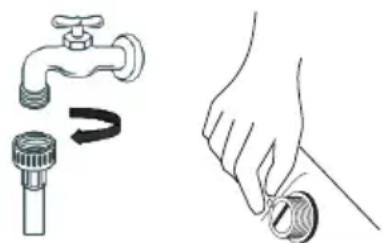
natural_image
Illustration showing a hand holding a circular knob next to a faucet and a valve (no text or symbols)
Upozornění:
POKYNY NA POUŽÍVANIE....32
Zásuvka pracieho prostriedku 32
OVLÁDANIE....33
Prepínač programov....33
Ovládací panel 33
SK
natural_image
Diagram of a refrigerator with an inset showing a circular component (no text or symbols present)- Priehradka pracieho prostriedku na predpranie

natural_image
Illustration showing a hand holding a circular knob next to a faucet and a valve (no text or symbols)
Upozornenie:
WASHING MACHINE INSTALLATION....53
Removal of the packaging material 53
Removal of the locking screws 53
Setting the adjustable feet....53
Power connection....54
Connecting the water supply 54
Connecting the drain hose....54
OPERATING INSTRUCTIONS....55
Detergent drawer 55
CONTROL....56
Programs switch....56
Control panel....56
Preparation before washing 56
Starting washing....57
Program selection....58
CLEANING AND MAINTENANCE....62
Filters for water supply 63
Pump filter....63
Detergent drawer 63
PRACTICAL INFORMATION....64
Clothing care symbols 64
Removing stains....64
TROUBLESHOOTING....66
Diagnostic system messages....68
ENERGY LABEL DESCRIPTION AND ENERGY SAVING 69
TECHNICAL SPECIFICATIONS....69
INFORMATION SHEET OF THE WASHING MACHINE....71
SAFETY INSTRUCTIONS
Please read carefully and keep for future reference.
Warning: The safety measures and instructions contained in this manual do not include all potential conditions and scenarios. The user must understand that common sense, caution and care are factors that cannot be integrated into a product. Therefore, the user is responsible for these factors when using and operating this appliance. We are not liable for any damages caused during shipping, by incorrect use, voltage fluctuation or the modification or adjustment of any part of the appliance.
To protect against the risk of fire or electric shock, basic precautions must be taken while using electrical appliances, including the following:
-
Make sure the voltage in your outlet corresponds to the voltage provided on the appliance label and that the socket is correctly grounded. The outlet must be installed in accordance with applicable electrical codes according to EN.
-
Do not operate device with a damaged cord. All repairs or adjustments including cord replacements shall be performed by a professional service centre! Do not remove the protective covers from the appliance; there is a risk of electric shock!
-
Do not plug and unplug the power cord from the outlet using wet hands. You will avoid risk of electric shock.
-
Do not touch the appliance with wet hands or feet.
-
The power cord must remain accessible once the device is installed. Do not shorten the cable or use a power strip or extension cord. Do not allow the cord to touch hot surfaces or lead the cord over sharp edges.
-
Do not turn the device on or off by plugging or unplugging the power cord. Do not remove the power cord from the outlet by yanking the cord. Unplug the power cord from the outlet by grasping the plug.
-
Do not place the machine on carpets or similar surface that could block the ventilation openings in the base.
-
Do not insert any objects into the device, do not place any objects on the device (e.g. vases, cups, etc.).
-
Do not place the drain hose of your machine in the sink, buckets or basins.
-
Do not allow children to play with the appliance. Protect access to the machine from children and animals.
-
Remember that packaging materials can be dangerous to your children. Keep packaging materials out of the reach of children or dispose of them ecologically in accordance with the instructions.
-
Keep away from children the small parts supplied in the bag with documentation.
-
Do not expose the appliance to direct sunlight, do not use it outside and do not expose it to rain.
-
Do not keep flammable liquids close to the appliance.
-
Do not touch the washing machine with wet hands when in operation. Never open the detergent drawer or washing machine door during washing and spinning.
-
During discharge, do not touch the drain hose and the discharged water. Water may reach high temperatures during the operation of the washing machine.
-
In case of malfunction first unplug it from power and then close the water tap. Do not try to repair the appliance by yourself, contact an authorized service center.
-
Before first use, remember to REMOVE THE LOCKING SCREWS securing the drum during transport. Damage cause by starting the washing machine with installed locking screws is not covered by the warranty.
-
The appliance is intended for household use. Commercial use will void the warranty.
-
This appliance can be used by children aged eight and older and by the physically and mentally impaired or by individuals with insufficient experience and knowledge, if supervised or trained to use the appliance in a safe manner and understand potential dangers. Cleaning and maintenance operations performed by the user shall not be carried out by children, if they are not older than 8 years and under supervision. Children under the age of 8 must be kept away from the appliance and its power supply.
-
Any intervention in the appliance by a person other than an authorized service provider results in loss of warranty.
-
The warranty does not cover damage caused by outside effects (flood, chemicals, fire, etc.).
-
The manufacturer is not liable for damages caused by improper grounding/use.
- Before using your new washing machine, ask for help with the installation and putting in operation a qualified plumber or an authorized service center.
• Install the washing machine in a well ventilated area with adequate air circulation. Place the appliance so that it can fully open the washing machine door.
- The ideal ambient temperature for the washing machine operation is 15 °C to 25 °C.
- Frozen hoses can rot and break. In areas where the temperature drops below freezing, the temperature may jeopardize the safe operation of electronic circuits.
• We recommend that the first washing cycle be undergone without laundry for „90° white cotton“ so that you pour in the second compartment of the detergent drawer 12 measuring cup of detergent.
- Since long term contact with air can lead to deposition of detergent or fabric softener, pour the detergent and fabric softener into the compartment until just before the intended wash.
- We recommend to use the prewash program only for a heavily soiled laundry.
- The amount of laundry loaded into the washing machine must not exceed the maximum permitted amount. Otherwise, the washing machine will run in the safe mode.
- Use the washing machine only for laundry that is labelled by the manufacturer as suitable for machine washing.
- When using fabric softener and similar products in your machine, follow the manufacturer's recommendations for detergent/fabric softener.
• Make sure that there are no foreign objects in the pockets of the laundry pieces put in the washing machine (nails, needles, coins, lighters, matches, clips, etc). These foreign objects could damage the washing machine.
- Washing very dusty clothing damages your washing machine. Shake heavily disted clothing before placing it in the washing machine.
- Never open the detergent drawer while the machine is running.
- Never force open the door of the washing machine while it is running.
- Sulphur in decolourants may cause corrosion. Therefore never use decolourants in the washing machine. Never use substances containing solvents (e.g. benzine) in the washing machine.
- If you are not using the washing machine for longer time, unplug it, close the water supply and leave the door open. The interior of your machine will stay dry and free of odours.
• After testing at the end of the manufacturing process in the machine might remain a small amount of water, which does not constitute a risk of damage to your machine.
Danger of flooding
- Before placing the drain hose in the sink or wash basin, make sure that the water drains quickly.
• Take necessary measures to prevent slippage of the hose. - Recoil of an incorrectly placed hose could cause its slippage. Make sure that the plug cannot close the sink drain opening.
Danger of fall or injury
- Do not stand on the washing machine. The top plate could break and you could injure yourself.
- Arrange safely the hoses and power cable after installation. Trip and fall could cause injuries.
- Do not turn the washing machine upside down or on its side.
- Do not lift the washing machine by its protruding parts (detergent drawer, door). They could be damaged and cause injury.
- Handling the washing machine requires cooperation of at least two people.
Children's safety
- Do not leave children without supervision close to the washing machine. Children might lock themselves in the machine, with fatal consequences.
- During the operation the glass door and the washing machine surfaces can be very hot. Protect small children from touching these surfaces.
- Keep the packaging materials away from the children.
- Ingestion of detergents can cause poisoning and contact with skin or eyes can cause irritation. Keep detergents away from the children.
DESCRIPTION
GB
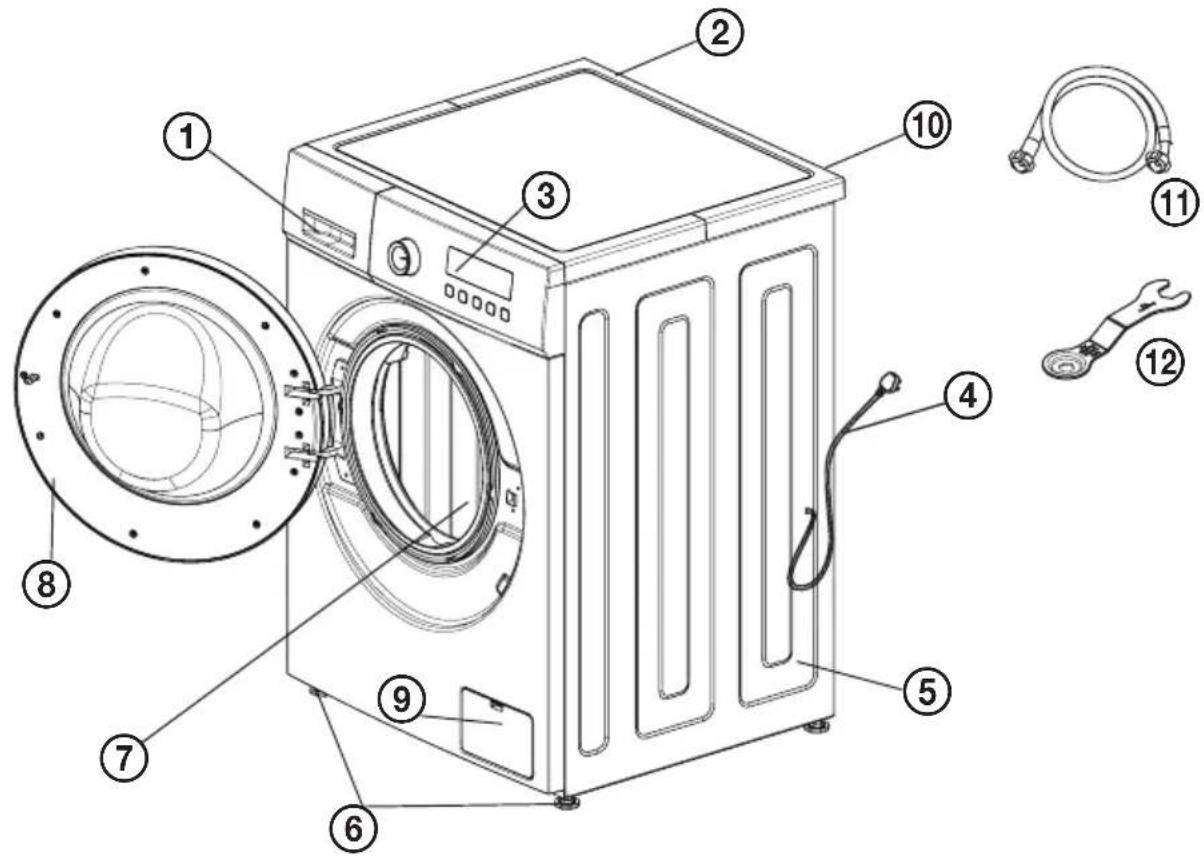
- Detergent drawer
- Water supply
- Control panel
- Power cable
- Side cover
-
Adjustable legs
-
Drum
- Drum door
- Door of the washing machine filter
- Drain outlet with 187 cm hose
- Inlet 100 cm hose
- Key for removing locking bolts
Front panel and controls
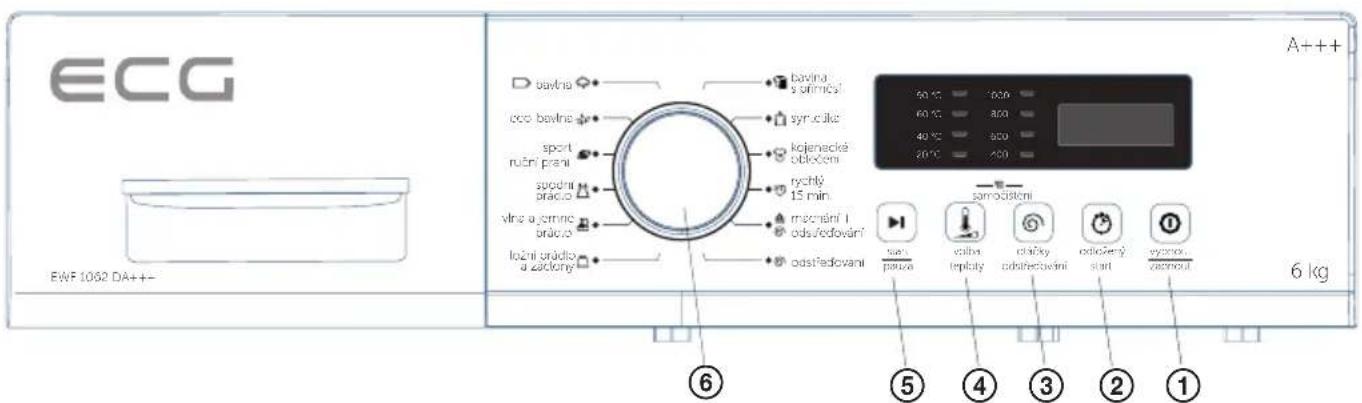
Press together ③ + ④: to activate self-cleaning
- Start/Pause button
- Programs switch
WASHING MACHINE INSTALLATION
Removal of the packaging material
Packaging material protects your washing machine during transportation. Packaging materials are environmentally friendly and recyclable. Recycling saves raw material resources and protect the environment.
Removal of the locking screws
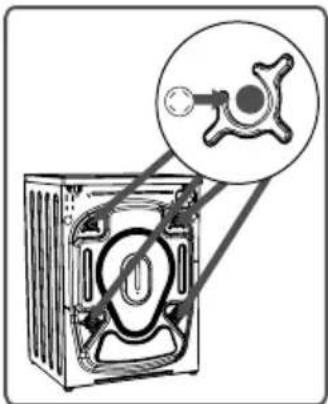
Before you start using the machine, it is ESSENTIAL that you remove the locking screws at the rear of the machine which protect the drum during transport. Damage caused by running the washing machine with the locking screws is not covered under warranty
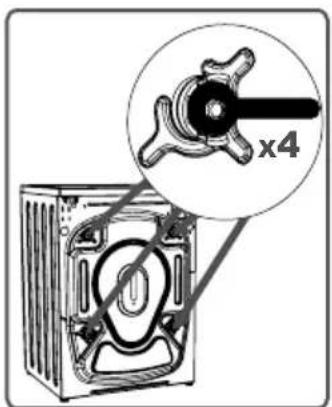
Using the supplied key, loosen the lock screws by turning counterclockwise.
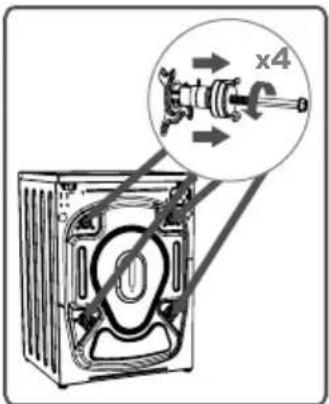
Remove the loosened locking screws.
natural_image
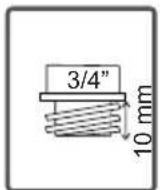
Diagram of a refrigerator internal structure with an inset showing a circular component (no text or symbols)Insert the supplied plugs in the holes from the locking screws.
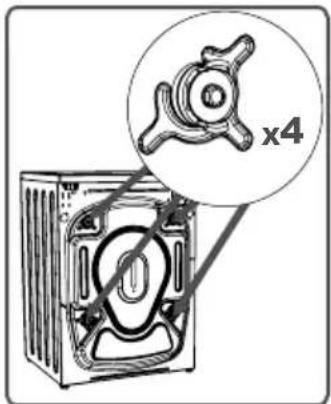
Keep the locking screws for possible future transportation.
Setting the adjustable feet
- Do not place the machine on carpets or similar surface that would prevent ventilation beneath the washing machine.
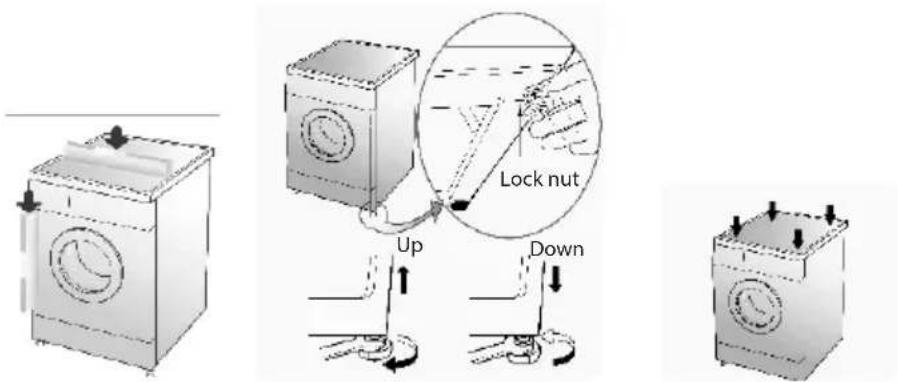
• To ensure quiet operation vibration-free, position the machine on a firm non-slip surface. - You can level the machine using the adjustable feet.
- Turn to adjust the feet up or down.
- Never compensate for uneven floor by inserting cardboard, wood or similar materials under the washing machine.
- Diagonal check: When you push on the washing machine corners, it should not sway. Check both diagonals. If the washing machine sways, adjust the feet length.
- When cleaning the floor under the machine, be careful not to change the level of the washing machine.
Power connection
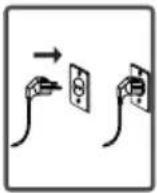
- This appliance is designed for power supply 220\~240V/50Hz.
- The power cable of your washing machine is equipped with special plug with grounding pin. This plug should only be connected to a grounded outlet in an outlet circuit with a 10 A fuse. If you do not have such an outlet with 10 A fuse, ask a qualified electrician for the installation.
• We are not liable for damages caused by use without proper grounding.
Note: Use of the appliance at low voltage will result in shortening the service life and lower efficiency.
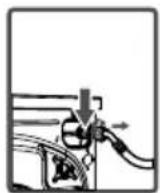
Connecting the water supply
- Your washing machine is equipped with a cold water inlet.
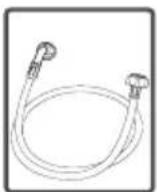
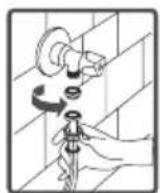
- In order to avoid water leakage at the joining points, a nut is supplied with the hose, which has to be fitted on the water inlet hose on the side of the water tap.
- Screw on the new water inlet hose onto the tap with thread 34 inches.
- Connect the white end of the supply hose, equipped with an elbow, to the white inlet with filter on the back of the machine. Tighten the plastic connecting nuts manually. If you are unsure about the connection, entrust it to a qualified installer.
- The water inlet pressure should be in the range 0.03 1.0 MPa . If the water pressure is higher, install the pressure reducer into the line.
• After connecting, open the tap fully and check that there are no leaks at joints. - Ensure that the new supply hose is not folded, cracked or pinched and that it is of the original length.
Note: When connecting the washing machine use exclusively new hoses, supplied with the washing machine. Never use old, used or damaged water hoses.
Connecting the drain hose
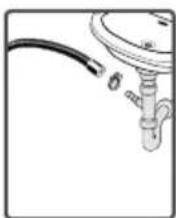
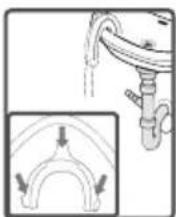
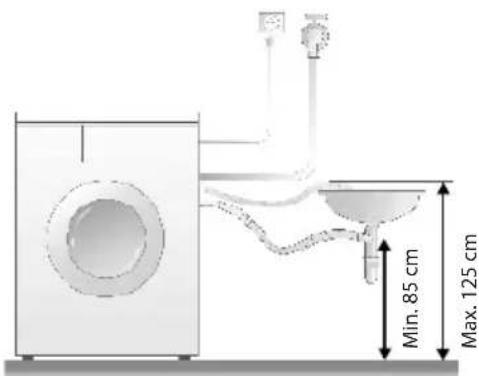
• End of the drain hose can be attached to a special facility for sewage drain or a special outlet on the sink siphon.
- Never try to extend the length of the drain hose using clamps.
• Make sure that the drain hose is not folded, twisted, pinched and that it has the original length.
- Fix the drain hose to a height of 85 \~ 125 cm above the floor.
- Do not put the drain hose into the sink, bucket or basin with no outlet.
OPERATING INSTRUCTIONS
Detergent drawer
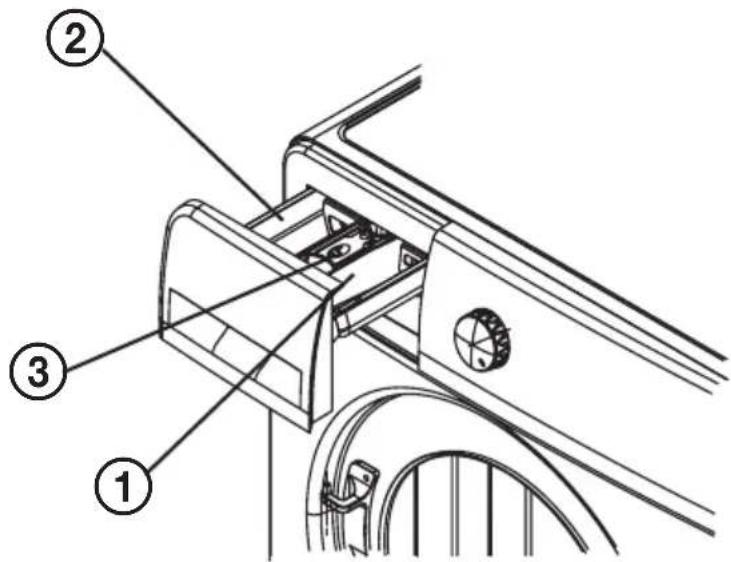

- Detergent compartment for prewash
- Detergent compartment for the main wash
- Fabric softener compartment


Individual compartments of the drawer

Detergent compartment for the main wash:
In this compartment you can only use detergent (powder or liquid) product against limescale and the like.

Compartment for fabric softener, starch, detergent:
When washing laundry, you can use fabric softener (observe the quantity and type of laundry, as recommended by the manufacturer). Sometimes the residue of the fabric softener remains in the compartment. The cause is unsuitable viscosity of the fabric softener. To avoid this, we recommend using more liquid fabric softener or dilute the softener prior to use.

Prewash compartment:
Use this compartment only if you are using a program with prewash. We recommend to use the prewash only for heavily soiled laundry.
(*) Specifications may vary according to the purchased product.
Recommendations on the type of detergent and the washing temperature
- When washing heavily soiled laundry, we recommend using cotton programs of 60^ C and above and a normal washing powder containing bleach additives that provide excellent results at medium to higher temperatures.
- When washing in the temperature range 40°C to 60°C select the appropriate detergent type for the type of fabric and the degree of soiling. Conventional washing powders are suitable for heavily soiled "white" and colourfast fabrics, while liquid detergents or powders which are "colour-friendly to fabrics" are suitable for lightly soiled colored fabrics.
- When washing at temperatures below 40°C, we recommend using liquid detergents specifically labelled as suitable for low temperature washing.
CONTROL

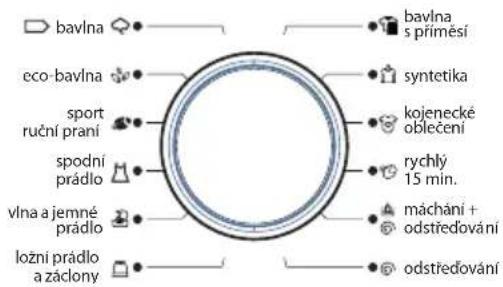
- With this switch, you can select the program you want to use for laundry.
- You can select the program by turning the knob in both directions.
- Make sure that the switch is precisely in position for the desired program.
Control panel
- Switch button
- Delay start button (Long press ② = child lock)
- Speed button
- Temperature button (Long press together ③ and ④ = self-cleaning function)
- Start/Pause button
Preparation before washing
Sorting laundry
- Garments are labeled, with the indication of the recommended maintenance procedures (see "Useful information"). Follow these recommendations when washing and drying the laundry.
- Sort the laundry according to type (cotton, synthetics, delicates, wool, etc.), the washing temperature (cold, 30°C, 40°C, 60°C or 90°C) and the degree of soiling (slightly soiled, stained, heavily soiled).
- Do not wash the white and the coloured laundry together.
- Wash coloured laundry separately at first wash, it could bleed colour.
- Make sure there are no metal objects in the pockets.
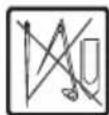
Warning: Malfunctions caused by foreign objects in the washing machine are not covered by warranty.
- Close all the zippers and button up all the buttons of the clothing.
- Remove the plastic or metal hooks of the curtains and drapes, or place them in a washing net or bag and lace up.
- Turn the garments like pants, knitwear, T-shirts and tracksuits inside out.
- Wash socks, handkerchiefs and similar small pieces in the washing net.
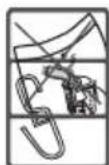
Putting the laundry in the washing machine
-
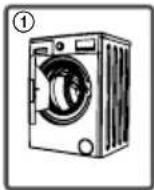
Open the washing machine door.
-
Arrange the laundry in the drum.
Note: Maximum capacity may vary according to the type of laundry to be washed, degree of soiling and the selected program. Do not exceed the maximum capacity of dry clothes for the program, see the table of programs.
The following approximate table may serve as an example:
| Towel 200 | |
| Bedding 500 | |
| Bathrobe 1200 | |
| Blanket 700 | |
| Pillow case 200 | |
| Underwear 100 | |
| Tablecloth 250 |
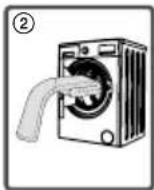
- Place the laundry in individually.
- When closing the appliance door, make sure that the laundry does not get caught between the door and sealing.
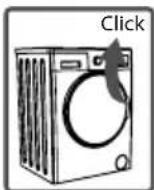
- Push to close the door so that it clicks into place.
- Close the door properly. If the door is not properly closed, the washing machine will not start.
Adding detergent
The amount of detergent will depend on the following factors:
- Use of detergent is determined by the degree of soiling. Do not prewash lightly soiled laundry and put in the compartment, in the detergent drawer smaller dose of detergent.
- In the case of heavily soiled laundry choose a program including prewash and place quarter of the detergent used in the drawer compartment I, the remaining three quarters in compartment II.
- Use detergents intended for automatic washing machines. A suitable amount of detergent is indicated on the detergent packaging.
• Heavier soiled laundry and harder water require larger amounts of detergent.
• The necessary amount of detergent increases with the amount of laundry to be washed. - Add softener to the softener compartment. Do not exceed the MAX mark so that the softener would not overflow in the wash when the machine uses washing detergent.
- It is necessary to dilute very thick softeners before adding them in the compartment. Too thick fabric softener could clogg the opening and could prevent softener from flowing from the compartment.
- For all programs without prewash you can use your favorite liquid detergent.
Starting washing
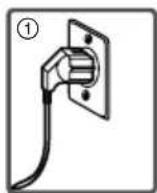
- Plug the washing machine in the outlet.
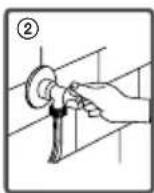
- Open the water tap.
- Put the washing detergent into the appropriate drawer compartments according to the selected washing program.
- Open the washing machine door.
- Place the laundry evenly in the washing machine.
- Close the door and push until it clicks.
- Turn on by pressing the button ①.
Program selection
Select the appropriate program for the type of laundry; see "Table of programs".
Programs table
The duration of the program may vary depending on the type and weight of the laundry, the inlet water temperature and the ambient temperature.
| Programme Temperature (°C) Rinse Speed | Time (min) | Max. load Type of laundry | |||
| Cotton | cold (40°C, 20°C, 60°C, 90°C) | 2 | 800(0, 400, 600, 1000) | 88 6 kg | Regular cotton fabrics |
| Eco cotton | 20°C (cold, 40°C, 60°C) | 2 | 1000(0, 400, 600, 800) | 69 ≤ 2 kg | Regular cotton fabrics |
| Sportswear and handwash | 20°C (cold, 40°C) 2 | 800(0, 400, 600) | 79 ≤ 4 kg | For sportswear marked with symbol "handwash" | |
| Underwear | 40°C (cold, 20°C) 2 | 800(0, 400, 600) | 71 ≤ 3 kg | kg cotton/synthetics underwear | |
| Wool and fine fabrics | cold (20°C, 40°C) 2 | 600(0, 400, 800) | 56 ≤ 2 kg | For fine fabrics labelled with symbol "handwash" and woollen wear | |
| Bedding | 60°C (cold, 20°C, 40°C, 90°C) | 2 | 1000(0, 400, 600, 800) | 119 1 pc | Bed linen/curtains |
| Spin -- | 800(0, 400, 600, 1000) | 14 6 kg | If you want to spin the clothes after washing again, you can use this program for any type of laundry. | ||
| Rinse + spin | -- | 2 | 800(0, 400, 600, 1000) | 34 6 kg | If you want to rinse and spin the laundry once more after washing, you can use this program for any type of laundry. |
| Fast 15min | cold (20°C, 40°C) 2 | 600(0, 400, 800) | 15 ≤ 2 kg | Lightly soiled clothing for daily use | |
| Infant | 60°C (40°C, 90°C) | 3 | 800(0, 400, 600) | 107 ≤ 2 kg | Infant clothing that needs to be cleaned from germs. |
| Synthetics | 40°C (water, 20°C, 60°C) | 2 | 800(0, 400, 600) | 73 ≤ 3 kg | Clothes made of synthetic fibres |
| Cotton blend | cold (20°C, 40°C) 2 | 800(0, 400, 600) | 66 ≤ 4 kg | Cotton fabrics / with synthetics | |
Note: Program "☐Cotton" is designed for regular cotton clothing.
Energy class is A++. Program used for power consumption test: Cotton 60/40°C, 1000 rpm
Start the program by pressing Start/Pause
- Press Start/Pause button to start a selected program or to pause a running program.
- When the washing program is finished, a beep sounds and the message "END" appears on the display.
- Open the washing machine door, remove the laundry. Switch off the washing machine and close the water supply.
Customization of standard programs
- Perform points 1 to 7 as described in "Starting Wash".
- When you press the button Temperature selection, Spin speed and Delayed start you can set the water temperature, spin speed and delayed start.
- Then start the program by pressing Start/Pause.
- When the washing program is finished, a beep sounds and the message "END" appears on the display.
- Open the washing machine door, remove the laundry. Turn off the washing machine and shut off the water supply.
Using the program Cotton
The program is suitable for lightly or moderately dirty clothes, such as cotton clothing, linen, towels, t-shirts, and the like.
- Perform the steps described in the section "Starting wash", using the control knob to select "Cotton" program.
- Set the required temperature and the spin speed.
- Then start the program by pressing Start/Pause.
- When the washing program is finished, a beep sounds and the message "END" appears on the display.
-
Open the washing machine door, remove the laundry. Switch off the washing machine and close the water supply.
-
If you want to change the program setting during the wash, cancel the program by pressing Start/Pause and select the required program.
- When washing towels, you can use a softener that prevents the cotton yarn from wrinkling and ensures the softness of the washed laundry.
Using the program ECO cotton
When washing lightly soiled laundry, this program can save time and energy.
- Perform the steps described in the "Starting wash" section and select the "ECO Cotton" program using the control knob.
- Set the required temperature and the spin speed.
- Then start the program by pressing Start/Pause.
- When the washing program is finished, a beep sounds and the message "END" appears on the display.
- Open the washing machine door, remove the laundry. Switch off the washing machine and close the water supply.
- If you want to change the program setting during the wash, cancel the program by pressing Start/Pause and select the required program.
Using the program Sportswear and Handwash
The program is designed for the washing of sports clothes and delicate washing of fine garments intended for hand washing.
- Perform the steps described in the "Starting wash" section, select the "Sportswear and Handwash" program using the control knob.
- Set the required temperature and the spin speed.
- Then start the program by pressing Start/Pause.
- When the washing program is finished, a beep sounds and the message "END" appears on the display.
-
Open the washing machine door, remove the laundry. Switch off the washing machine and close the water supply.
-
If you want to change the program setting during the wash, cancel the program by pressing Start/Pause and select the required program.
- To avoid damage to the laundry, you cannot set the highest spin speed and set the temperature higher than 90°C.
Using the program Wool and Delicates
The program is designed for woollen and felt clothing. Please, check the symbol on the clothes' label before washing.
- Perform the steps described in the "Starting wash" section and select the "Wool and Delicates" program using the control knob.
- Set the required temperature and the spin speed.
- Then start the program by pressing Start/Pause.
- When the washing program is finished, a beep sounds and the message "END" appears on the display.
-
Open the washing machine door, remove the laundry. Switch off the washing machine and close the water supply.
-
The amount of laundry should not be more than 2 kg.
• After completing the program, remove the laundry from the machine as soon as possible to prevent it from wrinkling. - You cannot set delayed start for this program.
- To avoid damage to the laundry, the temperature should not exceed 40^ .
- Please, separate the whites from colored and dark items and wash separately.
- Use detergent specifically designed for wool clothing to avoid damage.
GB
Using the program Bed linen and curtains
The program is designed to wash bed linen, curtains, bedding and similar textiles marked with a machine wash symbol.
- Perform the steps described in the "Starting wash" section, select the "Bed linen and Curtains" program using the control knob.
- Set the required temperature and the spin speed.
- Then start the program by pressing Start/Pause.
- When the washing program is finished, a beep sounds and the message "END" appears on the display.
-
Open the washing machine door, remove the laundry. Switch off the washing machine and close the water supply.
-
If you want to change the program setting during the wash, cancel the program by pressing Start/Pause and select the required program.
- Electric blankets and other blankets can not be washed in the washing machine, they could be damaged as well as cause damage to the washing machine.
- Try to load your laundry evenly in the washing machine, so that it does not cause excessive shaking during spin. Uneven distribution of laundry may prevent spinning, display shows the error code "UE". In this case, remove the laundry and try to distribute it more evenly in the drum.
- Heavy and bulky laundry items should not be tangled together, try to separate and shake them before loading them into the washing machine.
Using the Cotton blend program
In this program you can wash clothing made of cotton, clothing with admixture of synthetics, etc. (do not wash together clothing that easily bleeds colour).
- Perform the steps described in the "Starting wash", section and select the "Cotton blend" program using the control knob.
- Set the required temperature and the spin speed.
- Then start the program by pressing Start/Pause.
- When the washing program is finished, a beep sounds and the message "END" appears on the display.
-
Open the washing machine door, remove the laundry. Switch off the washing machine and close the water supply.
-
If you want to change the program setting during the wash, cancel the program by pressing Start/Pause and select the required program.
- To avoid damage to the laundry, do not set the highest spin speed and you cannot set the temperature higher than 60°C and 90°C.
- Separate whites and coloured items before wahsing.
Using the Synthetics program
The program is designed for washing clothing made of synthetic fabrics.
- Perform the steps described in the "Starting wash" section and select the "Synthetics" program using the control knob.
- Set the required temperature and the spin speed.
- Then start the program by pressing Start/Pause.
-
When the washing program is finished, a beep sounds and the message "END" appears on the display.
-
Open the washing machine door, remove the laundry. Switch off the washing machine and close the water supply.
-
If you want to change the program setting during the wash, cancel the program by pressing Start/Pause and select the required program.
- To avoid damage to the laundry, you cannot set the highest spin speed and set the temperature higher than 90°C.
Using the Infant wear program
GB
This program can sterilize the laundry and get rid of mites using high temperature.
- Perform the steps described in the "Starting wash" section and select "Infant wear" program using the control knob.
- Set the required temperature and the spin speed.
- Then start the program by pressing Start/Pause.
- When the washing program is finished, a beep sounds and the message "END" appears on the display.
- Open the washing machine door, remove the laundry. Switch off the washing machine and close the water supply.
Using the program Fast 15 min.
Program for washing of daily worn, only slightly soiled clothing and thin garments.
- Perform the steps described in the "Starting wash" section and select the program "Fast 15 min." using the control knob.
- Set the required temperature and the spin speed.
- Then start the program by pressing Start/Pause.
- When the washing program is finished, a beep sounds and the message "END" appears on the display.
-
Open the washing machine door, remove the laundry. Switch off the washing machine and close the water supply.
-
If you want to change the program setting during the wash, cancel the program by pressing Start/Pause and select the required program.
- To prevent damage to the clothing you cannot set the highest spin speed and the water temperature can be set only to "cold", 20°C, 40°C.
- Weight of the laundry should not exceed 2 kg in order to provide good quality wash.
Using the program Spin
This program allows extra wringing out of the laundry.
- Perform the steps described in the "Starting wash" section and select the "Spin" program using the control knob.
- The default setting is 800 rpm. Press the button Spin speed to set the required rotations of the spin.
- Start the spin by pressing the button Start/Pause.
- The draining and spinning starts. A beep sounds when program is finished.
- Open the washing machine door, remove the laundry. Switch off the washing machine and close the water supply.
• Make sure there are no foreign objects in the drum before spinning to avoid damaging the washing machine.
- The spin speed does not have to match the set value during the course of the program. The washing machine adjusts the speed during spinning in order to achieve optimum balance of the laundry.
- Rhythmic humming may sound during spinning. This sound is a normal feature of the drain pump, it is not a malfunction.
Other washing machine functions
Self-cleaning function
High water levels, high temperature and high spin speed allow this function to disinfect the inside of the washing machine and kill germs.
- Make sure that the drum of the washing machine is empty before cleaning.
- Open the detergent drawer and pour bleach into the main wash compartment. Do not add a detergent or soap to avoid excessive foaming. Close the detergent drawer
- Make sure that the washing machine is connected to the power supply and the water inlet is open.
- Turn on by pressing the button ①.
- Press for at least 3 seconds together the buttons Spin speed and Temperature selection. This activates the self-cleaning program.
- Press the button Start/Pause, when you close the door, the self-cleaning program starts. A beep sounds when program is finished. Once the program ends, dry the interior of the washing machine.
Child lock
The washing machine is equipped with child lock function, which prevents change to the currently run program by an unintended pressing of a button or by turning the control knob.
- When the washing machine is running press for at least 3 seconds the button Delayed start. The child lock is activated and the washing machine settings can not be changed now, all except the power switch are inactive. Deactivate the child lock by long pressing again the button Delayed start.
- If you want to change the washing program when the child lock is active, deactivate the child lock first and restart the washing machine so that a new program can be selected. If you want to change temperature or spin speed, deactivate the child lock, press the button Start/Pause and then change the temperature setting or spin speed.
Automatic door lock
When a program is selected, the washing machine door are automatically locked. Release the lock two minutes after the program ends.
Restoring the program after a power failure
When power is restored the program continues from the point where it was interrupted.
Delayed start
Press the button Delayed start to select the time when the program should start. The display shows time, which you can change by repeated pressing of the button Delayed start.
Adding laundry function
If you decide to add laundry after starting the program, stop the machine by pressing the "Start/Pause" button. After 5 seconds you will hear an unlocking sound and the door lock symbol will disappear. Then you can open the door and add the required laundry items. Do not attempt to open the door by force, since this may cause damage. If there is too much foam and water in the drum, water may leak out when it is opened.
The door can not be opened when the drum is in motion, the water temperature is higher than 45^ C, and there is plenty of water inside.
In the event of a power failure longer than 2 minutes, the door can be opened provided the above conditions are met (water level below drum seal, water temperature below 45^ C, zero speed).
Restart the washing machine by pressing the button "Start/Pause". A click sounds, the door lock relocks. If a "dE" error message appears, check that the door is properly closed.
CLEANING AND MAINTENANCE
- Unplug the machine before maintenance or cleaning.
- Close the water tap before starting maintenance or cleaning.
Warning: If you use cleaners containing solvents, you could damage parts of the washing machine. Do not use agents containing solvents for cleaning.
natural_image
Two technical diagrams showing a wall-mounted power outlet and a hand using a tool to clean or adjust equipment (no text or symbols present)Filters for water supply
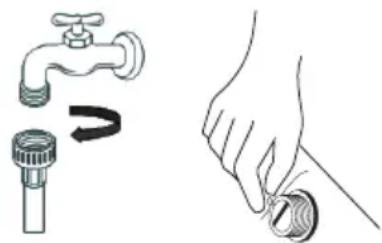
The inlet hose is at both ends provided with a filter to prevent entry of foreign substances from the water into the machine.
If the washing machine does not receive sufficient water although your water tap is opened, these filters should be cleaned. (We recommend cleaning the filters once in six months)
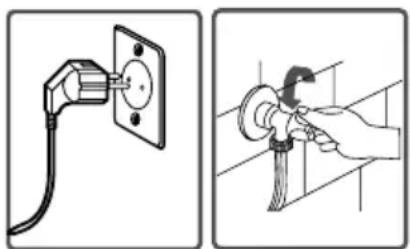
- Disconnect the water supply hose.
- Clean the hose inlet at the tap.
- Remove the filter at the inlet valve and clean thoroughly with a brush.
• After cleaning, return the filters back the same way.
natural_image
Illustration showing a hand adjusting a faucet and a button with a curved arrow (no text or symbols)GB

Warning:
Polluted water supply or inadequate maintenance may cause clogging of the inlet valves or their damage and prevent subsequent continuous flow of water into the washing machine. Such causes of damage are not covered by the warranty.
Pump filter
Pump filtration system prevents penetration of textile fibres and small objects from water discharged into the pump and thus prolongs its lifespan. We recommend that you clean the pump filter once a month.
Pump filter cleaning:
- Open the door of the pump filter (note: if there is hot water in the washing machine wait until it cools down.)
- Turn the filter counterclockwise to remove it from the washing machine.
- Rinse the filter thoroughly.
- Replace the filter and tighten it by turning clockwise. Then close the pump filter door.
Notes:
- Before opening the filter cover, place in front of the lid a container to avoid leaking any water from the washing machine on the floor. Depending on the amount of water in the washing machine you might have to empty the container several times.
- Tighten the filter thoroughly after cleaning to prevent water leakage.
- Do not perform cleaning while the washing machine is running.

WARNING!
The water in the pump may be hot, wait until it cools down.
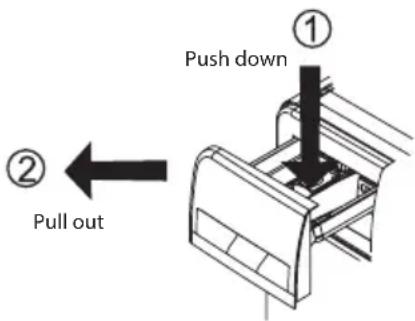
Detergent drawer
Unused detergent may collect in the detergent drawer or its cover. Remove the detergent drawer from time to time and rinse it with clean water.
- Do not wash the detergent drawer in the dishwasher!
Washing machine cover
Clean the outside of the machine with warm water and mild detergent that will not damage the surface finish of the washing machine. After rinsing with clean water, wipe the washing machine with a soft dry cloth.
Drum
Do not leave any metal objects, such as needles, staples or coins etc. in the washing machine. These objects may cause rust stains on the drum. If you want to eliminate these stains, use a cleaner without chlorine and follow the instructions of the cleaner's manufacturer. Never use pot scourers or similar abrasives to clean the rust stains. You can also use the self-cleaning function described above to clean. During the cleaning procedure, no clothes or detergent must be in the drum.
Door seal
Remove dirt that sticks to the door seal after each wash and dry the space between the seals.
PRACTICAL INFORMATION
Clothing care symbols
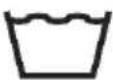  Normal wash Maximum washing temperature is 90°C Normal wash Maximum washing temperature is 90°C | 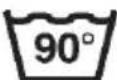 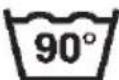 | 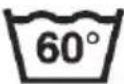 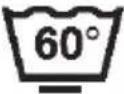 Maximum washing temperature is 60°C Maximum washing temperature is 60°C | |
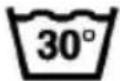  Maximum washing temperature is 30°C Maximum washing temperature is 30°C |  Manual washing Manual washing |  Washing prohibition Washing prohibition | |
 Can be bleached Can be bleached | 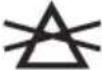 No bleach No bleach |  Maximum ironing temperature 110°C Maximum ironing temperature 110°C | |
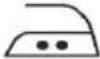 Maximum ironing temperature 150 °C Maximum ironing temperature 150 °C |  |  | |
 Can be dry cleaned Can be dry cleaned |  Dry cleaning prohibition Dry cleaning prohibition |  Unfold flat Unfold flat | |
 Hang when wet Hang when wet |  Hang to dry Do not dry in the dryer Hang to dry Do not dry in the dryer |  | |
 Can be cleaned with benzene, alcohol and trifluorochloretane Can be cleaned with benzene, alcohol and trifluorochloretane |  Can be cleaned with benzene, perchlorethylene Can be cleaned with benzene, perchlorethylene |  Can be cleaned with perchlorinetylene, R11, R113 and benzene Can be cleaned with perchlorinetylene, R11, R113 and benzene | |
Removing stains
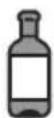
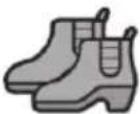
Alcoholic beverages: The stain should first be washed with cold water, then rubbed with glycerine and water and rinse it in water with vinegar.
Shoe polish: Scrape the stain gently, without damaging the fabric, rub in water with detergent and rinse. If it persists, rub it in 1 unit of pure alcohol (96 %) mixed with 2 units of water and then wash with lukewarm water.
Tea and coffee: Stretch the stained portion on top of a container and pour over it water as hot as the type of fabric allows. If the fabric can withstand it, wash it with a bleaching agent.
Chocolate and cocoa: Soak in cold water and rub it in water and soap or detergent, then wash at as high a temperature as the fabric allows. If there is still greasy stain on the fabric, wipe it with oxide (3%).
Ketchup: After scraping the dried pieces without damaging the fabric, leave in cold water for about 30 minutes and wash in water with detergent.
Meat broth, egg: Remove the dried stain and wipe with a sponge or soft cloth dipped in cold water. Wash manually with detergent and wash with diluted bleach.
Grease and oil stains: First wipe the residue. Rub the stain in water and detergent and then wash it in warm soapy water.
Mustard: First apply glycerine on the stain. Rub with cleaning agent and then wash it. If the stain has not disappeared, wipe with alcohol (for synthetic and colored fabrics mixture of 1 unit alcohol, 2 units of water).
Blood: Soak the laundry in cold water for 30 minutes. If the stain has not disappeared, soak for 30 minutes in a solution of water and ammonia (3 spoons of ammonia in 4 litres of water).
Cream, ice cream and milk: Soak the clothes in cold water and rub the part with the stain with water and detergent. If the stain has not disappeared, use bleach in the correct concentration (Do not use bleach on colored fabrics).
Soil: Soil stains must be removed as soon as possible. Stains must be washed in detergent, if they do not disappear, it is necessary to wipe them with oxide (3%).
Ink: Hold the part of the stained area under cold water and wait until inky water stops flowing. Then rub with water with lemon juice and detergent, wash after 5 minutes.
Fruit: Stretch the stained portion on top of a container and pour cold water over it. Do not pour hot water over it. Wipe with cold water and apply glycerine. Wait 1-2 hours, wipe with a few drops of white vinegar and rinse.
Grass: Rub the stain with water with detergent. If the fabric can withstand it, wash it with a bleaching agent. Rub woollen clothes with alcohol (for colored fabrics mixture of 1 unit alcohol, 2 units of water).
Oil paints: Stains must be removed by applying a solvent before they dry. The rub with water with detergent and wash it.
Burn: If the fabric can withstand it, wash it with bleach, you can add it into the washing machine. For woollen fabrics, spread over the satins cloth dampened in water with oxide and iron over a dry cloth. Rinse and wash thoroughly.
TROUBLESHOOTING
GB
All repairs must be performed by authorized service centre only. When the washing machine requires repair in the warranty period or when you are unable to remove the malfunction with the following instructions:
- Unplug the washing machine.
- Close the water tap.
- Contact the closest authorized service.
(*) See section on maintenance and cleaning of the washing machine.
(**) See section on installation of the washing machine.
| Problem Possible cause Troubleshooting | ||
| The washing machine does not start. | The washing machine is not plugged in. | Plug the washing machine in the outlet. |
| Blown fuse. Replace fuse. | ||
| There was power outage. Check the power status. | ||
| You did not press the button Start/Pause. | Press the button Start/Pause. | |
| The program selector is in the “Stop” position. | Switch the program selector to the required program. | |
| The door is not properly closed. Close carefully the washing machine door. | ||
| No water is coming in the washing machine. | The water tap is closed. Open the water tap. | |
| The inlet hose may be twisted. Check the inlet hose. | ||
| Clogged inlet hose. Clean the filters of the inlet hose. (*) | ||
| The inlet filter is clogged. Clean the filter of the inlet valve. (*) | ||
| The door is not properly closed. Close carefully the washing machine door. | ||
| The washing machine does not drain water. | The drain hose is clogged or twisted. Check the drain hose. | |
| Pump filter is clogged. Clean the pump filter. (*) | ||
| The laundry is not distributed evenly in the washing machine. | Distribute the laundry evenly. | |
| The washing machine vibrates. | The feet of the washing machine are not adjusted. | Adjust the feet. (**) |
| You did not remove the lock screws. Remove the lock screws. (**) | ||
| There is small amount of laundry in the washing machine. | Does not prevent washing machine operation. | |
| Overloading the washing machine or uneven distribution of laundry. | Do not exceed the recommended quantity of laundry and spread it in the washing machine evenly. | |
| The washing machine touches surrounding surfaces. | Install the machine so that it does not touch the surrounding surfaces. Allow at least 2 cm between the washing machine and wall or other surfaces. | |
| Excessive foam in the detergent drawer. | You used too much detergent. Press | Start/Pause To prevent foam, mix one teaspoon of softener with half a litre of water and pour it into the detergent drawer. After 5–10 minutes press Start/Pause button. Use correct amount of detergent in the next washing. |
| Unsuitable detergent. Use only detergents intended for automatic washing machines. | ||
| Unsatisfactory washing results. | Your laundry was too soiled for the selected program. | Select suitable program (see Program table). |
| Insufficient amount of detergent. Use more laundry detergent. | ||
| Load size exceeds the maximum capacity of your washing machine. | Do not exceed the maximum load capacity of your washing machine. | |
| The water may be too hard. Dispense the detergent in accordance with the recommendation of the detergent manufacturer. | ||
| Uneven distribution of the laundry in the washing machine. | Distribute the laundry in the washing machine evenly. | |
| The water is discharged immediately after filling. | The end of the drain hose is too low. Place the drain hose in correct height (**). | |
| There is no water visible during washing in the drum. | This is not a malfunction. The water is in the bottom part of the drum. | |
| There is detergent residue on the laundry. | Undissolved powder residues in the form of white dots may appear on the clothing. | Rinse the laundry again using the “Rinse” or after drying the laundry, clean the spots from clothing using a brush. |
| There are gray spots on the laundry. | These stains may be caused by oil, cream or ointment. | The next time you wash, use the maximum amount of detergent recommended by the detergent manufacturer. |
| The spin did not start or started belatedly. | This is not a malfunction. The control system of even distribution of laundry was activated. | The control system tries to achieve a more even distribution of laundry. The spin starts after rearranging the laundry. The next time you wash, load the laundry evenly. |
| The drum door cannot be opened. | Wash program is running. Wait until the | program ends or stop the program. |
| A garment was caught between the door and the seal. | Release the caught garment. | |
Diagnostic system messages
| Display Control Solution | ||
| "UE" (spin) • Are the | locking screws removed?Is the washing machine in stable position?Are the garments too small or too light?Are the lock nuts of the adjustable feet tightened? | Remove the lock screws.Place the washing machine on a stable surface.Add more laundry.Tighten the lock nuts. |
| "IE" (water supply) | Is the supply tap closed?Is the water supply closed or the water pressure too low?Are the supply water pipes frozen?Are the filters clogged? | Open the water tap.Wait until the water supply is restored.Defrost the water pipes using hot water.Remove the filters and clean them. |
| "OE" (water drainage) | Is the waste water hose placed too high?Is the drain hose frozen?Is the drain hose clogged?Is the drain opening clogged? | Make sure that the connection of the waste water hose is not higher than 1 m.Defrost the hose using hot water.Remove foreign objects clogging the hose.Clean the drain opening. |
| "DE" (door) Make sure before starting that the door is properly closed. | ||
| "tE" (heating element) | Unplug the power cable from the outlet and contact service center. | |
| "FE" (continuous water inflow) | Close the water inlet, disconnect the washing machine from the power supply and contact service center. | |
| "LE" or "CE" | When "LE" or "CE" is displayed when the drum is not rotating, close the water inlet, disconnect the washing machine from the power supply and contact service center. | |
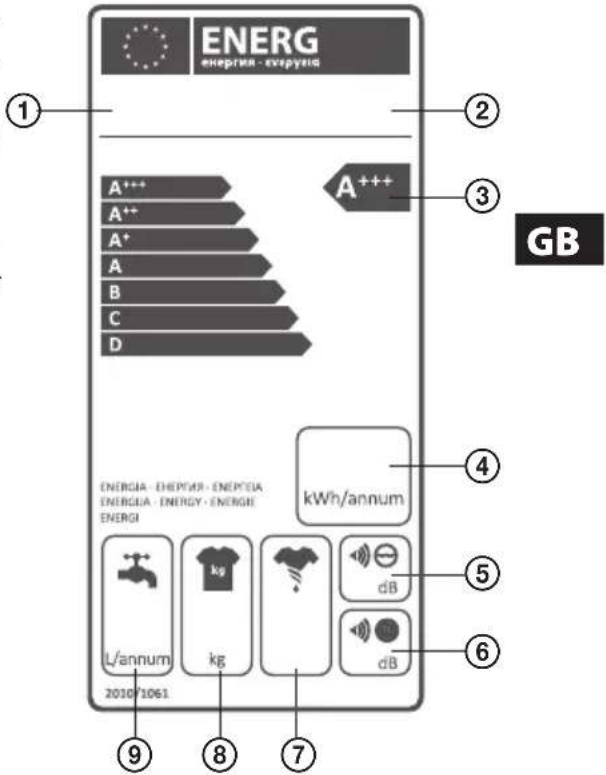
ENERGY LABEL DESCRIPTION AND ENERGY SAVING
Water and energy consumption may vary depending on the water temperature and water hardness, ambient temperature, load size, the additional features and voltage fluctuations.
You can reduce the costs of water and energy if you will always wash in the washing machine the recommended load for the selected program, wash the less soiled and daily laundry using short programs, if you will regularly carry out cleaning and maintenance and if you will wash in the hours when you pay a lower rate for electricity.
- Model
- Brand
- Energy class
- Energy consumption
- Noise during washing
- Noise during spin
- Spin efficiency class
- Dry laundry capacity
- Annual water consumption
TECHNICAL SPECIFICATIONS
| Manufacturer ECG | |
| Model EWF 1062 DA+++ | |
| EAN 8592131238800 | |
| Type Free standing - front loading | |
| Energy class A+++ | |
| Max. spin 1000 rev. / min | |
| Water pressure Max: 1 MPa | Min: 0,03 MPa |
| Load capacity 6 kg | |
| Spinning efficiency class C | |
| Water consumption/cycle 48 l | |
| Water consumption/annual(**) 10560 l | |
| Energy consumption/cycle | 0.78 kWh |
| Energy consumption/annual | 152 kWh |
| Noise during washing | 60 dB (A) |
| Noise during spinning | 74 dB (A) |
| Residual moisture *** | 55 % |
| Voltage/Frequency | 220-240 V~ / 50 Hz |
| Lid latch | 10 A |
| Power input | 1750 W |
| Product Dimensions (H x W x D) | 850 × 595 × 480 mm |
| Dimensions with packaging (H × W × D) | 885 × 657 × 535 mm |
| Product weight | 53 kg |
| Product weight including packaging | 57 kg |
| Accessories | |
| Drum volume | 42 l |
| Motor type AC | |
| Eco-Logic system NO | |
| Control of foam formation YES | |
| Stability balancing system NO | |
| Anti-wrinkle system NO | |
| System control type electronic | |
| Malfunction detector YES | |
| Child safety lock YES | |
| Water supply type cold | |
| Large opening angle of the loading door YES 150° | |
| Door diameter 47.2 cm | |
| Pump- with filter YES | |
| Drum material Stainless steel | |
| Tank material PCM | |
| The number of compartments in the detergent drawer 3 | |
| Replaceable top cover | YES |
| Adjustable feet | YES |
| Number of programs | 12 |
USE AND DISPOSAL OF WASTE
Wrapping paper and corrugated paperboard – deliver to scrapyard. Packing foil, PE bags, plastic elements – throw into plastic recycling containers.
DISPOSAL OF PRODUCTS AT THE END OF LIFETIME
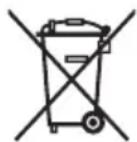
Disposal of electric and electronic equipment (valid in EU member countries and other European countries with an implemented recycling system)
The represented symbol on the product or package means the product shall not be treated as domestic waste. Hand over the product to the specified location for recycling electric and electronic equipment. Prevent negative impacts on human health and the environment by properly recycling your product.
Recycling contributes to preserving natural resources. For more information on the recycling of this product, refer to your local authority, domestic waste processing organization or store, where you purchased the product.
This product complies with EU directive requirements on electromagnetic compatibility and electrical safety.

08/05

The instruction manual is available at website www.ecg-electro.eu.
Changes in text and technical parameters reserved.
INFORMATION SHEET OF THE WASHING MACHINE
| Manufacturer | ECG |
| Model | EWF 1062 DA+++ |
| Load capacity (cotton 60°C full load) | 6 kg |
| Energy class | A+++ |
| Energy consumption/annual* | 152 kWh |
| Energy/water consumption (cotton 60°C full load) / cycle | 0,73 kWh / 48 l |
| Energy/ water consumption (60°C cotton lesser load) / cycle | 0,71 kWh / 35 l |
| Energy/ water consumption (40 °C cotton lesser load) / cycle | 0,68 kWh / 35 l |
| Energy consumption in standby mode | 0.44 W |
| Energy consumption in off mode | 0.4 W |
| Water consumption/annual** | 10560 l |
| Spinning efficiency class | C |
| Max. spin speed | 1000 rev. / min |
| Residual moisture *** | 55 % |
| Duration of the reference program (cotton 60°C full load) | 272 min |
| Duration of the reference program (cotton 60°C lesser load) | 272 min |
| Duration of the reference program (cotton 40 °C lesser load) | 254 min |
| Noise during washing | 60 dB(A) |
| Noise during spinning | 74 dB(A) |
- Program No. 3 (Standard 60°C cotton program) and the program number 4 (Standard 40°C cotton program) are the standard washing programs, which correspond to the information on the labels; these programs are suitable for washing cotton clothing and are the most efficient in energy and water consumption. - The actual water temperature may differ from the temperature declared in the program title. - Program length, energy and water consumption may vary depending on the wash load, the weight and type, choice of extra functions, water and ambient temperature.
- When using wash programs with lower temperature we recommend to use liquid detergents. - A suitable amount of detergent will depend on the degree of soiling and the amount of laundry. Please follow the instructions of the detergent manufacturer. * Based on 220 standard washing cycles using programs cotton 60°C and 40°C at full and half load, and using cheaper energy rates. Actual power consumption depends on how you use the appliance. ** Based on 220 standard washing cycles and programs of cotton 60°C and 40°C at full and lesser load. Actual water consumption depends on how you use the appliance.
*** Based on the results of tests using standard program at 60°C cotton at full load and smaller load and using standard program 40°C Cotton with lesser load.
www.ecg-electro.eu
CZ
K+B Progres, a.s.
U Expertu 91 tel.: +420 272 122 111
250 69 Kličany e-mail: ECG@kbexpert.cz
SK



- EWF 1062 DA+++
- Upozornění:
- Upozornenie:
- SAFETY INSTRUCTIONS
- Please read carefully and keep for future reference.
- Danger of flooding
- Danger of fall or injury
- Children's safety
- WASHING MACHINE INSTALLATION
- Removal of the packaging material
- Removal of the locking screws
- Setting the adjustable feet
- Power connection
- Connecting the water supply
- Connecting the drain hose
- OPERATING INSTRUCTIONS
- Detergent drawer
- Individual compartments of the drawer
- Detergent compartment for the main wash:
- Compartment for fabric softener, starch, detergent:
- Prewash compartment:
- Recommendations on the type of detergent and the washing temperature
- CONTROL
- Control panel
- Preparation before washing
- Sorting laundry
- Putting the laundry in the washing machine
- Adding detergent
- Starting washing
- Program selection
- Programs table
- Start the program by pressing Start/Pause
- Customization of standard programs
- Using the program Cotton
- Using the program ECO cotton
- Using the program Sportswear and Handwash
- Using the program Wool and Delicates
- GB
- Using the program Bed linen and curtains
- Using the Cotton blend program
- Using the Synthetics program
- Using the Infant wear program
- Using the program Fast 15 min.
- Using the program Spin
- Other washing machine functions
- Self-cleaning function
- Child lock
- Automatic door lock
- Restoring the program after a power failure
- Delayed start
- Adding laundry function
- CLEANING AND MAINTENANCE
- Filters for water supply
- Warning:
- Pump filter
- Notes:
- WARNING!
- Washing machine cover
- Drum
- Door seal
- PRACTICAL INFORMATION
- Removing stains
- TROUBLESHOOTING
- ENERGY LABEL DESCRIPTION AND ENERGY SAVING
- USE AND DISPOSAL OF WASTE
- DISPOSAL OF PRODUCTS AT THE END OF LIFETIME
- www.ecg-electro.eu
- CZ
- SK
Brand : ECG
Model : EWF 1062 DA+++
Category : Washing machine