
RT2134W - Refrigerator Romo - Free user manual and instructions
Find the device manual for free RT2134W Romo in PDF.


| Brand | Romo |
| Model | RT2134W |
| Product Type | Refrigerator (no freezer compartment) |
| Power Supply | 220-240 V ~ 50 Hz |
| Plug Type | Grounded 16 A socket |
| Refrigerant | R600a (flammable, environmentally friendly) |
| Climate Class | T / ST / N / SN (10°C to 43°C) |
| Temperature Range (Fridge) | 0°C to 8°C (recommended +4°C) |
| Thermostat Control | Rotary knob, positions 1-5 |
| Super Switch | Yes, for rapid cooling |
| Defrosting | Automatic in fridge compartment |
| Interior Light | Replaceable bulb (max 15 W) or LED (contact service) |
| Shelves | Adjustable glass shelves (qty varies by model) |
| Door Shelves | Yes, for bottles and jars |
| Crisper Drawer | Yes, for fruits and vegetables |
| Egg Holder | Yes |
| Levelling Feet | Adjustable front legs |
| Door Reversibility | Not possible with handle; contact service for models without handle |
| Cleaning | Regular cleaning with bicarbonate solution; condenser cleaning every 6 months |
| Safety Warnings | Keep ventilation clear; do not use mechanical defrost; avoid extension cords |
| Energy Saving Tips | Place away from heat sources; keep doors closed; cover liquids |
Frequently Asked Questions - RT2134W Romo
User questions about RT2134W Romo
0 question about this device. Answer the ones you know or ask your own.
Ask a new question about this device
Download the instructions for your Refrigerator in PDF format for free! Find your manual RT2134W - Romo and take your electronic device back in hand. On this page are published all the documents necessary for the use of your device. RT2134W by Romo.
USER MANUAL RT2134W Romo
F5,' * ( / User Manual
EN FIRE! Warning; Risk of fire / flammable materials
CONTENTS
BEFORE USING THE APPLIANCE 4
General warnings ....4
Old and out-of-order fridges or freezer 7
Safety warnings....7
Installing and operating your fridge 8
Before Using your Fridge....9
USING THE APPLIANCE 9
Thermostat Setting 9
Temperature Settings Warnings 10
FOOD STORAGE 11
Refrigerator Compartment.... 11
CLEANING AND MAINTENANCE 13
Defrosting 14
Replacing the Light Bulb....14
SHIPMENT AND REPOSITIONING.... 15
Repositioning the Door 15
BEFORE CALLING AFTER-SALES SERVICE....15
Tips For Saving Energy 17
DESCRIPTION OF THE APPLIANCE 18
The operating instructions apply to several models. Differences may therefore occur.
BEFORE USING THE APPLIANCE
General warnings
WARNING: Keep ventilation openings, in the appliance enclosure or in the built-in structure, clear of obstruction.
WARNING: Do not use mechanical devices or other means to accelerate the defrosting process, other than those recommended by the manufacturer.
WARNING: Do not use electrical appliances inside the food storage compartments of the appliance, unless they are of the type recommended by the manufacturer.
WARNING: Do not damage the refrigerant circuit.
WARNING: When positioning the appliance, ensure the supply cord is not trapped or damaged.
WARNING: Do not locate multiple portable socket-outlets or portable power supplies at the rear of the appliance.
WARNING: In order to avoid any hazards resulting from the instability of the appliance, it must be ☐xed in accordance with the following instructions:
If your appliance uses R600a as a refrigerant (this information will be provided on the label of the cooler) you should take care during transportation and installation to prevent the cooler elements from being damaged. R600a is an environmentally friendly and natural gas, but it is explosive. In the event of a leak due to damage of the cooler elements, move your fridge away from open ☐ames or heat sources and ventilate the room where the appliance is located for a few minutes.
- While carrying and positioning the fridge, do not damage the cooler gas circuit.
- Do not store explosive substances such as aerosol cans with a ammable propellant in this appliance.
- This appliance is intended to be used in household and domestic applications such as:
- staff kitchen areas in shops, offices and other working environments.
- farm houses and by clients in hotels, motels and other residential type environments.
- bed and breakfast type environments;
- catering and similar non-retail applications.
- If the socket does not match the refrigerator plug, it must be replaced by the manufacturer, a service agent or similarly qualified persons in order to avoid a hazard.
- A specially grounded plug has been connected to the power cable of your refrigerator. This plug should be used with a specially grounded socket of 16 amperes. If there is no such socket in your house, please have one installed by an authorised electrician.
- This appliance can be used by children aged from 8 years and above and persons with reduced physical, sensory or mental capabilities or lack of experience and knowledge if they have been given supervision or instruction concerning use of the appliance in a safe way and understand the hazards involved. Children shall not play with the appliance. Cleaning and user maintenance shall not be made by children without supervision.
- Children aged from 3 to 8 years are allowed to load and unload refrigerating appliances. Children are not expected to perform cleaning or user maintenance of the appliance, very young children (0-3 years old) are not expected to use appliances, young children (3-8 years old) are not expected to use appliances safely unless continuous supervision is given, older children (8-14 years old) and vulnerable people can use appliances safely after they have been given appropriate supervision or instruction concerning use of the appliance.
Very vulnerable people are not expected to use appliances safely unless continuous supervision is given.
- If the supply cord is damaged, it must be replaced by the manufacturer, an authorised service agent or similar qualified persons, in order to avoid a hazard.
- This appliance is not intended for use at altitudes exceeding 2000 m.
To avoid contamination of food, please respect the following instructions:
- Opening the door for long periods can cause a significant increase of the temperature in the compartments of the appliance.
- Clean regularly surfaces that can come in contact with food and accessible drainage systems.
- Store raw meat and fish in suitable containers in the refrigerator, so that it is not in contact with or drip onto other food.
- Two-star frozen-food compartments are suitable for storing pre-frozen food, storing or making ice cream and making ice cubes.
- One-, two- and three-star compartments are not suitable for the freezing of fresh food.
- If the refrigerating appliance is left empty for long periods, switch off, defrost, clean, dry, and leave the door open to prevent mould developing within the appliance.
Old and out-of-order fridges or freezer
- If your old fridge or freezer has a lock, break or remove the lock before discarding it, because children may get trapped inside it and may cause an accident.
- Old fridges and freezers contain isolation material and refrigerant with CFC. Therefore, take care not to harm environment when you are discarding your old fridges.
Disposal of your old appliance
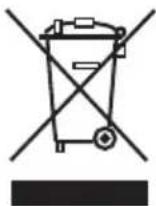
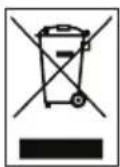
The symbol on the product or on its packaging indicates that this product may not be treated as household waste. Instead it shall be handed over to the applicable collection point for the recycling of electrical and electronic equipment. By ensuring this product is disposed of correctly, you will help prevent potential negative consequences for the environment and human health, which could otherwise be caused by inappropriate waste handling of this product. For more detailed information about recycling of this product, please contact your local city office, your household waste disposal service or the shop where you purchased the product.
Notes:
- Please read the instruction manual carefully before installing and using your appliance. We are not responsible for the damage occurred due to misuse.
- Follow all instructions on your appliance and instruction manual, and keep this manual in a safe place to resolve the problems that may occur in the future.
- This appliance is produced to be used in homes and it can only be used in domestic environments and for the specified purposes. It is not suitable for commercial or common use. Such use will cause the guarantee of the appliance to be cancelled and our company will not be responsible for the losses to be occurred.
- This appliance is produced to be used in houses and it is only suitable for cooling / storing foods. It is not suitable for commercial or common use and/or for storing substances except for food. Our company is not responsible for the losses to be occurred in the contrary case.
Safety warnings
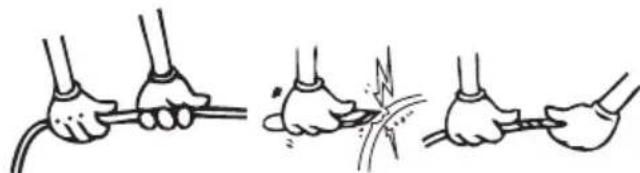
- Do not connect your fridge freezer to the mains electricity supply using an extension lead.
- Do not use damaged, torn or old plugs.
- Do not pull, bend or damage the cord.
natural_image
Illustration of three hands performing a manual cable manipulation technique (no text or symbols present)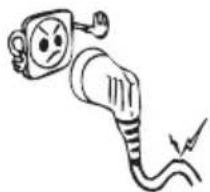
natural_image
Cartoon illustration of a charging plug with an angry face and warning symbol (no text or labels)- Do not use plug adapter.
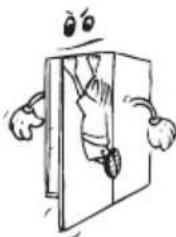
- This appliance is designed for use by adults. Do not allow children to play with the appliance or hang off the door.
- Never touch the power cord/plug with wet hands. This may cause a short circuit or electric shock.
natural_image
Cartoon illustration of a character peeking out of a door, with arms and legs visible (no text or symbols)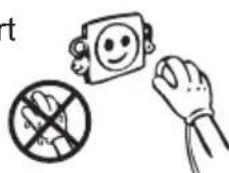
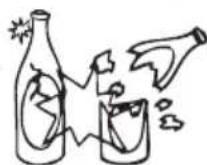
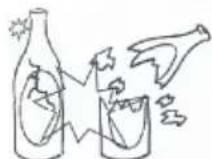
- Do not place explosive or flammable material in your fridge. Place drinks with high alcohol content vertically in the fridge compartment and make sure their tops are tightly closed.
Installing and operating your fridge
Before using your fridge for the first time, please pay attention to the following points:
- The operating voltage for your fridge is 220-240 V at 50Hz.
- The plug must be accessible after installation.
- Your fridge may have an odour when it is operated for the first time. This is normal and the odour will fade when your fridge starts to cool.
- Before connecting your fridge, ensure that the information on the data plate (voltage and connected load) matches that of the mains electricity supply. If in doubt, consult a qualified electrician.
- Insert the plug into a socket with an efficient ground connection. If the socket has no ground contact or the plug does not match, we recommend you consult a qualified electrician for assistance.
- The appliance must be connected with a properly installed fused socket. The power supply (AC) and voltage at the operating point must match with the details on the name plate of the appliance (the name plate is located on the inside left of the appliance).
- We do not accept responsibility for any damages that occur due to ungrounded usage.
- Place your fridge where it will not be exposed to direct sunlight.
- Your fridge must never be used outdoors or exposed to rain.
- Your appliance must be at least 50 cm away from stoves, gas ovens and heater cores, and at least 5 cm away from electrical ovens.
- If your fridge is placed next to a deep freezer, there must be at least 2 cm between them to prevent humidity forming on the outer surface.
- Do not cover the body or top of fridge with lace. This will affect the performance of your fridge.
- Clearance of at least 150 mm is required at the top of your appliance. Do not place anything on top of your appliance.
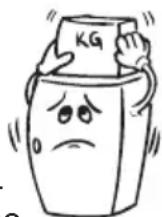
- Do not place heavy items on the appliance.
- Use the adjustable front legs to make sure your appliance is level and stable. You can adjust the legs by turning them in either direction. This must be done before placing food in the appliance.
- Clean the appliance thoroughly before use (see Cleaning and Maintenance).
- Before using your fridge, wipe all parts with a solution of warm water and a teaspoon of sodium bicarbonate. Then, rinse with clean water and dry. Return all parts to the fridge after cleaning.
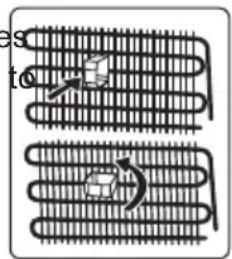
- Install the two plastic distance guides (the parts on the black vane -condenser- at the rear) by turning it 90^ (as shown in the figure) prevent the condenser from touching the wall.
- The distance between the appliance and back wall must be a maximum of 75 mm.
natural_image
Diagram of a coiled heat exchanger with two chambers and a valve, no text or symbols presentBefore Using your Fridge
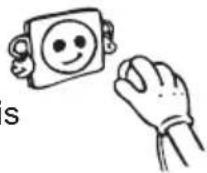
- When using your fridge for the first time, or after transportation, keep it in an upright position for at least 3 hours before plugging into the mains. This allows efficient operation and prevents damage to the compressor.
- Your fridge may have a smell when it is operated for the first time. This is normal and the smell will fade away when your fridge starts to cool.
PART - 2. USING THE APPLIANCE
Thermostat Setting
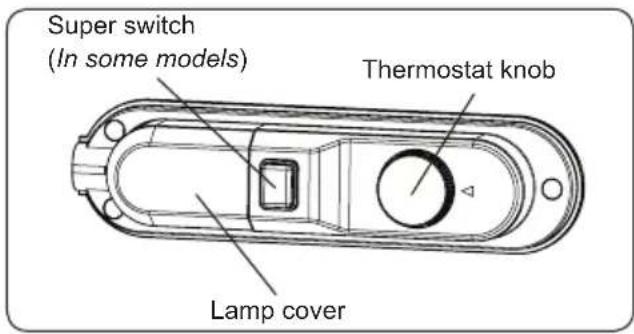
The fridge thermostat automatically regulates the temperature of the compartment. Fridge temperatures can be obtained by rotating the knob to higher numbers, 1 to 5.

Important note: Do not try to rotate the knob beyond position 1, it will stop your stance from working.
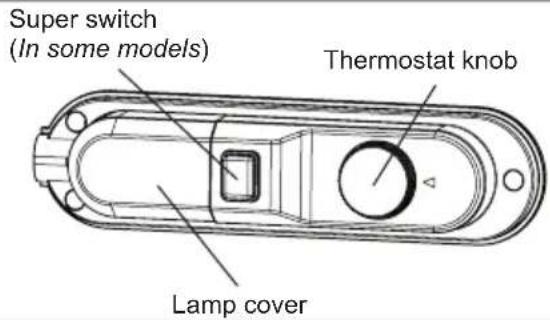
Thermostat Settings
- Set the knob to a low/medium position, up to 3, for short-term storage of food in the appliance.
- Set the knob to a medium position, 3 or 4, for long-term storage of food in the appliance.
- For long-term storage of food in the refrigerator, you can set knop maximum position (4 - 5).

Larders (coolers) have not any freezer compartment but can cool up to 4 - 6 °C.
Super freezing: This switch shall be used as superfreeze switch. For maximum freezing capacity, please turn on this switch before 24 hours placing fresh food. After placing fresh food in the freezer, 24 hours ON position is generally sufficient. In order to save energy, please turn off this switch after 24 hours from placingfresh food.
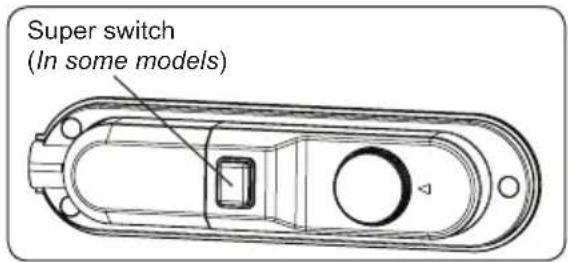
Temperature Settings Warnings
- The ambient temperature, temperature of the freshly stored food and how often the door is opened affects the temperature in the fridge. If required, change the temperature setting.
- It is not recommended that you operate your fridge in environments colder than 10^ in terms of its efficiency.
- When setting the thermostat, take into consideration how often the appliance door is opened and closed, how much food is stored in the refrigerator, and the environment in which the refrigerator is located.
- When the appliance is first switched on, allow it to run for 24 hours in order to reach operating temperature. During this time, do not open the door and do not keep a large quantity of food inside.
- Unplug your appliance during a power cut to prevent damage to the compressor. Once power is restored, delay plugging in your appliance for 5 to 10 minutes. This will help prevent damage to the appliance's components.
- Your appliance is designed to operate in the ambient temperature ranges stated in the standards, according to the climate class stated in the information label. It is not recommended that your fridge is operated in the environments which are outside of the stated temperature ranges. This will reduce the cooling efficiency of the appliance.
- Your appliance is designed to operate in the ambient temperature (T/SN = 10°C - 43°C) intervals stated in the standards, according to the climate class displayed on the information label. We do not recommend operating your appliance out of the stated temperature limits in terms of cooling effectiveness.
Climate class and meaning:
T (tropical): This refrigerating appliance is intended to be used at ambient temperatures ranging from 16 °C to 43 °C.
ST (subtropical): This refrigerating appliance is intended to be used at ambient temperatures ranging from 16 °C to 38 °C.
N (temperate): This refrigerating appliance is intended to be used at ambient temperatures ranging from 16 °C to 32 °C.
SN (extended temperate): This refrigerating appliance is intended to be used at ambient temperatures ranging from 10 °C to 32 °C.
| Climate Class | Ambient Temperature°C |
| T Between 16 and 43 (°C) | |
| ST Between 16 and 38 (°C) | |
| N Between 16 and 32 (°C) | |
| SN Between 10 and 32 (°C) | |
FOOD STORAGE
Refrigerator Compartment
- To reduce humidity and avoid the consequent formation of frost, always store liquids in sealed containers in the refrigerator. Frost tends to concentrate in the coldest parts of the evaporating liquid and, in time, your appliance will require more frequent defrosting.
- Never place warm food in the refrigerator. Warm food should be allowed to cool at room temperature and should be arranged to ensure adequate air circulation in the refrigerator compartment.
- Make sure no items are in direct contact with the rear wall of the appliance as frost will develop and packaging will stick to it. Do not open the refrigerator door frequently.
- We recommend that meat and clean fish are loosely wrapped and stored on the glass shelf just above the vegetable bin where the air is cooler, as this provides the best storage conditions.
- Store loose fruit and vegetable items in the crisper containers.
- Store loose fruit and vegetables in the crisper.
- Storing fruit and vegetables separately helps prevent ethylene-sensitive vegetables (green leaves, broccoli, carrot, etc.) being affected by ethylene-releaser fruits (banana, peach, apricot, fig etc.).
- Do not put wet vegetables into the refrigerator.
- Storage time for all food products depends on the initial quality of the food and an uninterrupted refrigeration cycle before refrigerator storage.
- To avoid cross-contamination do not store meat products with fruit and vegetables. Water leaking from meat may contaminate other products in the refrigerator. You should package meat products and clean any leakages on the shelves.
- Do not put food in front of the air flow passage.
- Consume packaged foods before the recommended expiry date.
- For normal working conditions, it will be sufficient to adjust the temperature setting of your refrigerator to +4^ .
- The temperature of the fridge compartment should be in the range of 0-8 °C, fresh foods below 0 °C are iced and rotted, bacterial load increases above 8 °C, and spoils.
- Do not put hot food in the refrigerator immediately, wait for the temperature to pass outside. Hot foods increase the degree of your refrigerator and cause food poisoning and unnecessary spoiling of the food.
- Meat, fish, etc. should be store in the chiller compartment of the food, and the vegetable compartment is preferred for vegetables. (if available)
• To prevent cross contamination, meat products and fruit vegetables are not stored together.
- Foods should be placed in the refrigerator in closed containers or covered to prevent moisture and odors.

NOTE: Potatoes, onions and garlic should not be stored in the refrigerator.
The table below is a quick guide to show you the most efficient way to store the major food groups in your refrigerator compartment.
| Food Maximum storage time How and where to store | ||
| Vegetables and fruits 1 week Vegetable bin | ||
| Meat and fish 2 - 3 Days | Wrap in plastic foil, bags, or in a meat container and store on the glass shelf | |
| Fresh cheese 3 - 4 Days On the designated door shelf | ||
| Butter and margarine 1 week On the designated door shelf | ||
| Bottled products e.g. milk and yoghurt | Until the expiry date recommended by the producer | On the designated door shelf |
| Eggs 1 month On the designated egg shelf | ||
| Cooked food 2 Days All shelves | ||
CLEANING AND MAINTENANCE

Disconnect the unit from the power supply before cleaning.
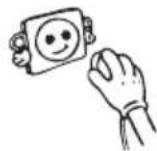

Do not wash your appliance by pouring water on it.
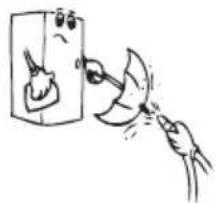
natural_image
Cartoon illustration of a hand using a tool to interact with a box (no text or symbols present)Do not use abrasive products, detergents or soaps for cleaning the appliance. After washing, rinse with clean water and dry carefully. When you have finished cleaning, reconnect the plug to the mains supply with dry hands.
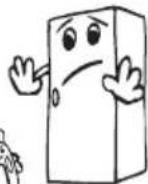
- Make sure that no water enters the lamp housing and other electrical components.
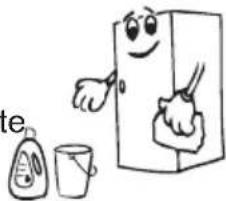
- The appliance should be cleaned regularly using a solution of bicarbonate, of soda and lukewarm water.
natural_image
Cartoon illustration of a smiling refrigerator with a hand, accompanied by a small bag and a cup (no text or symbols)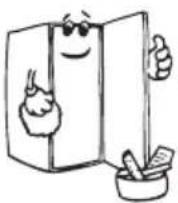
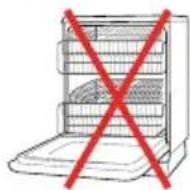
- Clean the accessories separately by hand with soap and water. Do not wash accessories in a dish washer.
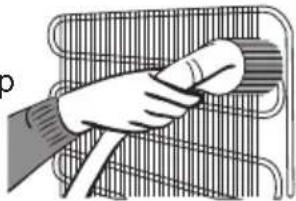
- Clean the condenser with a brush at least twice a year. This will help you to save on energy costs and increase productivity.
natural_image
Illustration of a hand cleaning a mesh structure with a circular object on top (no text or symbols)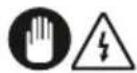
The power supply must be disconnected during cleaning.
Defrosting
natural_image
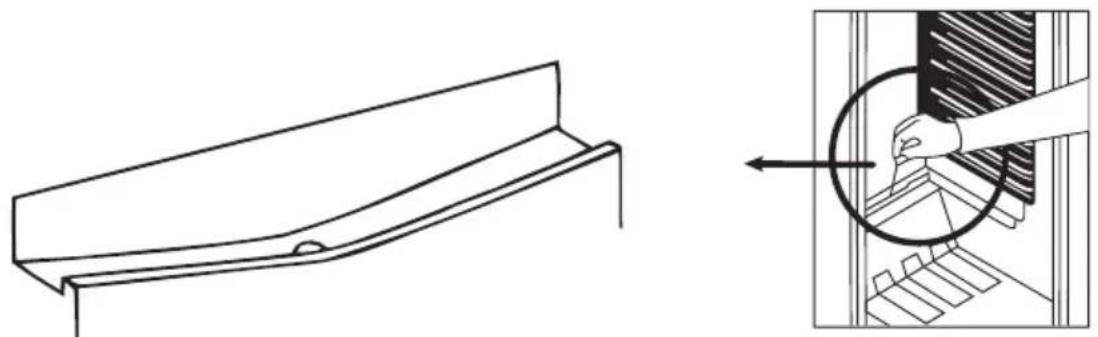
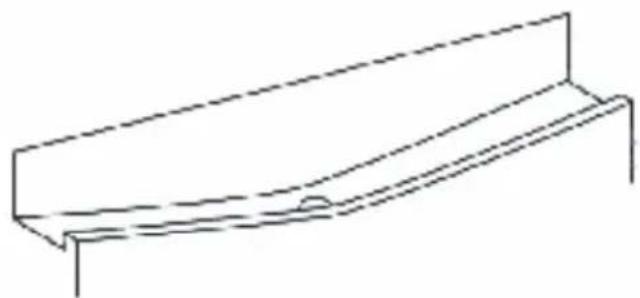
Technical line drawing of a mechanical component with an inset showing a magnified view of a hand holding a circular object (no text or symbols present)- Defrosting occurs automatically in the refrigerator compartment during operation. The water is collected by the evaporation tray and evaporates automatically.
- The evaporation tray and the water drain hole should be cleaned periodically with the defrost drain plug to prevent the water from collecting at the bottom of the refrigerator instead of flowing out.
- You can also clean the drain hole by pouring half a glass of water down it.
Replacing the Light Bulb
When replacing the light of the refrigerator compartment;
-
- Unplug the unit from the power supply,
2.2. Press the hooks on the sides of the light cover top and remove the light cover
-
- Change the present light bulb with a new one of not more than 15 W.
-
- Replace the light cover and after waiting
-
5 minutes plug the unit.
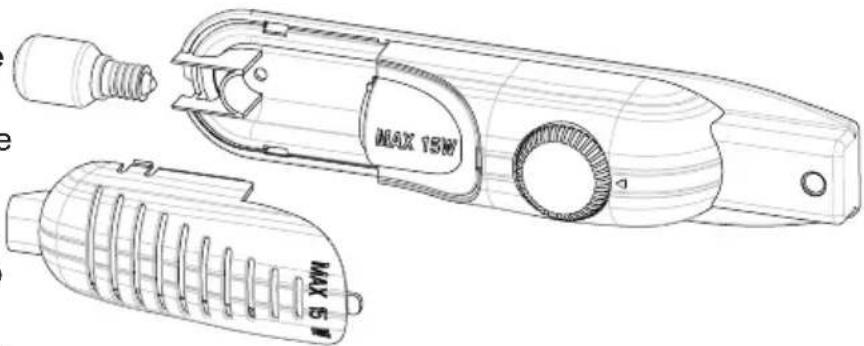
Replacing LED Lighting

If your appliance has LED lighting contact the help desk as this should be changed by authorized personnel only.
SHIPMENT AND REPOSITIONING
Transportation and Changing Positioning
- The original packaging and foam may be kept for re-transportation (optional).
- Fasten your appliance with thick packaging, bands or strong cords and follow the instructions for transportation on the packaging.
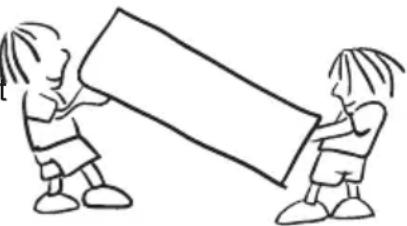
- Remove all movable parts (shelves, accessories, vegetable bins, and so on) or fix them into the appliance against shocks using bands when re-positioning or transporting.
natural_image
Simple line drawing of two children holding a blank rectangular object (no text or symbols)
Always carry your appliance in the upright position.
Repositioning the Door
- It is not possible to change the opening direction of your appliance door if door handle is installed on the front surface of the appliance door.
- It is possible to change the opening direction of the door on models without handle.
- If the door-opening direction of your appliance can be changed, contact the nearest Authorised Service Centre to change the opening direction.
PART - 6. BEFORE CALLING AFTER-SALES SERVICE
If your refrigerator is not working properly, there may be a minor problem. Check the following.
The appliance does not operate
Check if:
- Your fridge is plugged in and switched on
- The fuse has blown
• Is the temperature adjustment right? - The socket is faulty. To check this, plug another working appliance into the same socket.
The appliance performs poorly
Check if:
• Is the temperature adjustment right?
- Is the door of your fridge opened frequently and left open for a long while?
• The appliance is overloaded
• The door is closed properly
• Is your fridge filled excessively?
- There is an adequate distance between the appliance and surrounding walls
- Is the ambient temperature within the range of values specified in the operating manual?
The appliance is noisy
The cooling gas which circulates in the refrigerator circuit may make a slight noise (bubbling sound) even when the compressor is not running. Do not worry, this is normal. If you hear a different sound, check whether:
• The appliance is level
- Anything is touching the rear of the appliance
- Objects in the appliance are vibrating.
Your refrigerator is operating noisily
The following noises can be heard during normal operation of the appliance.
Clicking noise occurs: When the thermostat switches the compressor on/off.
Motor noise: Indicates the compressor is operating normally. The compressor may cause more noise for a short time when it is first activated.
Bubbling noise and splashing occurs: Due to the flow of the refrigerant in the tubes of the system.
Water flowing noise occurs: Due to water flowing to the evaporation container. This noise is normal during defrosting.
There is water in the lower part of the refrigerator
Check if:
The drain hole for the water is not clogged (use defrost drain plug to clean the drain hole).
There is a build-up of humidity inside the fridge
Check if:
- All food is packed properly. Containers must be dry before being placed in the fridge.
- The fridge doors are opened frequently. Humidity of the room will enter the fridge each time the doors are opened. Humidity increases faster if the doors are opened frequently, especially if the humidity of the room is high.
The door is not opening or closing properly
Check if:
- There is food or packaging preventing the door from closing
• The door compartments, shelves and drawers are placed properly
• The door gaskets are broken or torn - Your fridge is level.
Recommendations
- If the appliance is switched off or unplugged, wait at least 5 minutes before plugging the appliance in or restarting it in order to prevent damage to the compressor.
- The cooling unit of your refrigerator is located at the rear of the appliance. Therefore, water droplets or ice may form on the rear surface of your fridge due to the operation of the compressor at specified intervals. This is normal, there is no need to perform a defrosting operation unless there is excessive ice.
- If you do not intend to use your fridge for a long period of time (such as during the summer holidays), disconnect the appliance from the mains, defrost and clean your fridge, leaving the door open to prevent the formation of mildew and odour.
- If a problem persists after you have followed all the above instructions, please consult the nearest authorised service centre.
- The appliance you have purchased is designed for domestic use only. It is not suitable for commercial or common use. If the consumer uses the appliance in a way that does not comply with this, we emphasise that the manufacturer and the dealer will not be responsible for any repair and failure within the guarantee period.
Tips For Saving Energy
- Install the appliance in a cool, well-ventilated room, but not in direct sunlight and not near a heat source (such as a radiator or oven) otherwise an insulating plate should be used.
- Allow warm food and drinks to cool before placing them inside the appliance.
- Drinks or other liquids should be covered when inside the appliance. If left uncovered, the humidity inside the appliance will increase, therefore the appliance uses more energy. Keeping drinks and other liquids covered helps preserve their smell and taste.
- Avoid keeping the doors open for long periods and opening the doors too frequently as warm air will enter the appliance and cause the compressor to switch on unnecessarily often.
- Keep the covers of the different temperature compartments (such as the crisper and chiller) closed.
- The door gasket must be clean and pliable. In case of wear, if your gasket is detachable, replace the gasket. If not detachable, you have to replace the door.
DESCRIPTION OF THE APPLIANCE
This appliance is not intended to be used as a built-in appliance.
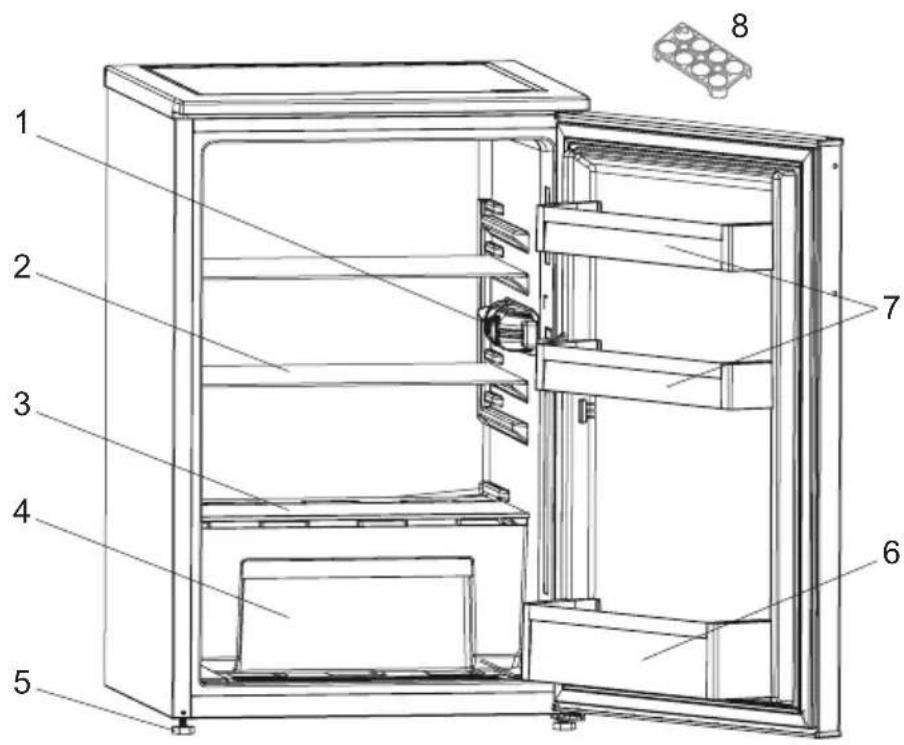
This presentation is only for information about the parts of the appliance. Parts may vary according to the appliance model.
1) Thermostat box
2) Refrigerator shelves
3) Crisper cover
4) Crisper
5) Levelling feet
6) Bottle shelf
7) Door shelves
8) Egg holder
General notes:
Fresh Food Compartment (Fridge): Most efficient use of energy is ensured in the configuration with the drawers in the bottom part of the appliance, and shelves evenly distributed, position of door bins does not affect energy consumption.
Freezer Compartment (Freezer): Most Efficient use of energy is ensured in the configuration with the drawers and bins are on stock position.
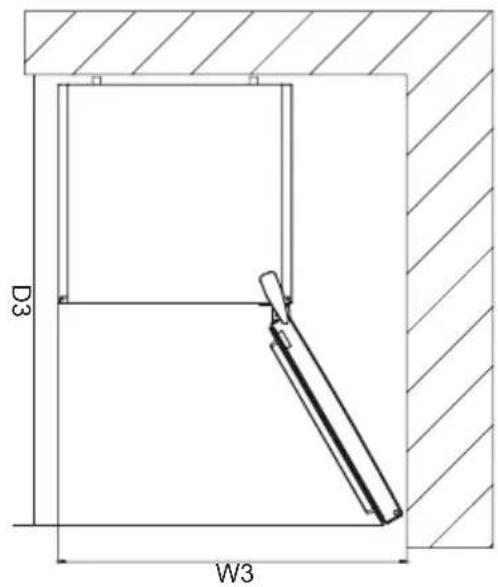
1.1 Dimensions
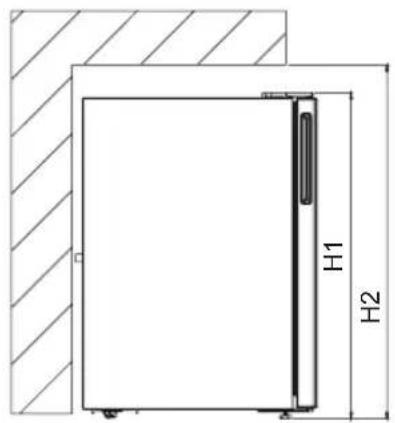
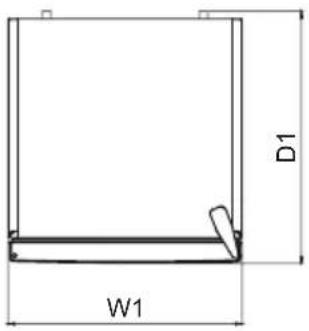
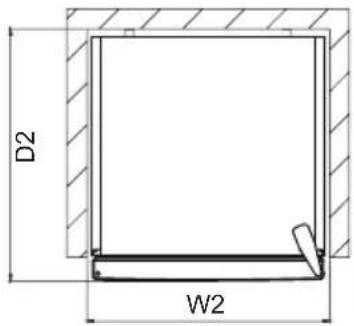
| Overall dimensions1 |
| H1 mm |
| W1 mm |
| D1 mm |
| Space required in use2 |
| H2 mm |
| W2 mm |
| D2 mm |
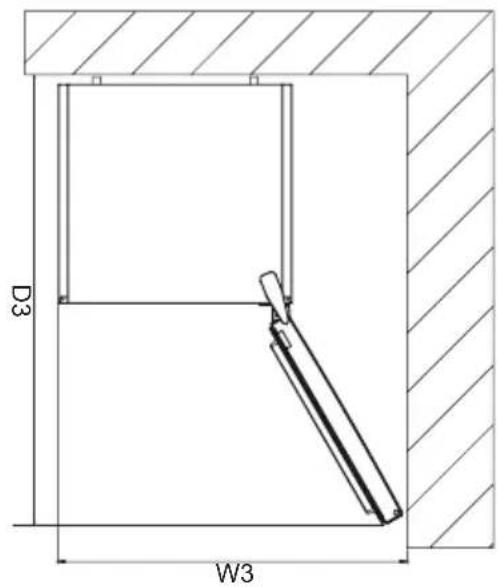
| Overall space required in use3 |
| W3 mm |
| D3 mm |
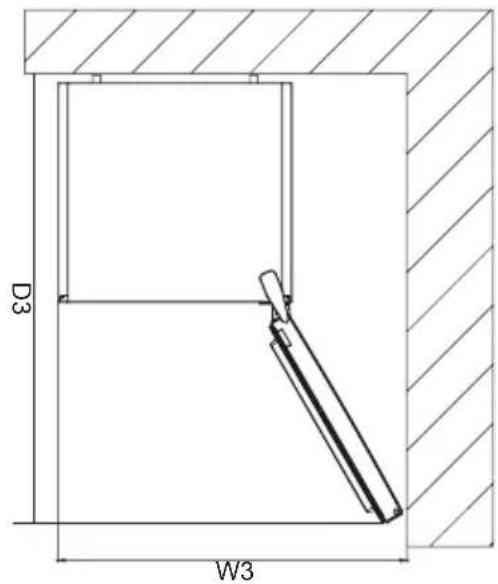
Obsah
PŘED POUŽITÍM SPOTŘEBIČE 21
natural_image
Illustration of three hands performing a manual tool manipulation technique (no text or symbols present)natural_image
Cartoon illustration of an angry plug with a fuse and lightning bolt (no text or symbols)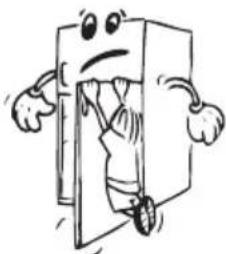
natural_image
Cartoon illustration of a character peeking out of a door (no text or symbols)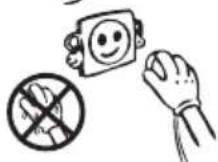
natural_image
Cartoon illustration of a smiling refrigerator with sunglasses and a bowl of food (no text or symbols)natural_image
Cartoon illustration of a smiling refrigerator with two baby dolls beside it (no text or symbols)natural_image
Illustration of a hand holding a circular object over a wire rack (no text or symbols)NAPÁJENÍ MUSÍ BÝT VŽDY ODPOJENO
natural_image
Simple line drawing of a structural beam or support component (no text or symbols)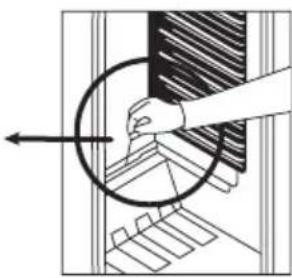
natural_image
Diagram showing a hand holding a mechanical component with a circular arrow indicating direction (no text or symbols present)natural_image
Technical line drawing of a hairbrush with two views: one showing internal components and the other showing internal structure (no text or symbols)natural_image
Simple line drawing of two children playing a game with a large block (no text or symbols)| Overall dimensions1 |
| H1 mm |
| W1 mm |
| D1 mm |
| Space required in use2 |
| H2 mm |
| W2 mm |
| D2 mm |
| Overall space required in use3 |
| W3 mm |
| D3 mm |
Obsah
VŠEOBECNÉ UPOZORNENIA....39
Odporúčania 43
Inštalácia a zapnutie spotrebiča....44
Skôr než zapnete spotrebič....44
RÔZNE FUNKCIE A MOŽNOSTI 45
Nastavenie termostatu 45
ČISTENIE A ÚDRŽBA....49
Odleđivanje 49
Odmrazovanie chladiaceho oddelenia; 49
natural_image
Illustration of three hands performing a rope knotting technique (no text or symbols present)natural_image
Cartoon character holding a book, no text or symbols present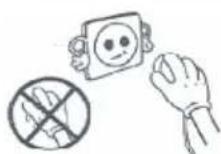
natural_image
Cartoon illustration of a sad container with a frowning face and a broken lid, alongside two separate heat exchanger-like diagrams (no text or symbols)
natural_image
Cartoon illustration of a smiling refrigerator with sunglasses and thumbs up, accompanied by a bowl of food (no text or symbols)natural_image
Simple line drawing of a hand holding a smiling square emoji (no text or symbols)RÔZNE FUNKCIE A MOŽNOSTI
Nastavenie termostatu
Climate class and meaning:
T (tropical): This refrigerating appliance is intended to be used at ambient temperatures ranging from 16 °C to 43 °C.
ST (subtropical): This refrigerating appliance is intended to be used at ambient temperatures ranging from 16 °C to 38 °C.
N (temperate): This refrigerating appliance is intended to be used at ambient temperatures ranging from 16 °C to 32 °C.
SN (extended temperate): This refrigerating appliance is intended to be used at ambient temperatures ranging from 10 °C to 32 °C
| Klimatická trieda | Okolná teplota °C | |
| T Medzi | 16 - 43 | °C |
| ST Medzi | 16 - 38 | °C |
| N Medzi | 16 - 32 | °C |
| SN Medzi | 10 - 32 | °C |
ROZLOŽENIE POTRAVÍN V SPOTREBIČI
Chladiaci priestor
- Pre redukciu vlhkosti a následnej námrazy nikdy nevkladajte do chladničky tekutiny v neutesnených obaloch. Námraza má tendenciu koncentrovať sa v najchladnejších častiach výparníka, čo spôsobuje častejšie alebo dlhšie trvajúce odmrazovanie.
- Do chladničky nikdy nevkladajte teplé potraviny. Teplé potraviny by mali vychladnút pri izbovej teplote a mali by byt uskladnené tak, aby bola zaistená adekvátna cirkulácia vzduchu v chladničke.
- Nič by sa nemalo dotýkat' zadnej steny, mohlo by dôjst' k nalepeniu obalov na zadnú stenu. Dvere chladničky neotvárajte veľmi často.
- Umiestňujte mäso a očistené ryby (zabalené v obaloch alebo fólii), ktoré budete konzumovať v priebehu 1-2 dní.
- Ovocie a zeleninu môžete ukladať do časti určenej pre čerstvú zeleninu a ovocie bez obalov.
- For normal working conditions, it will be sufficient to adjust the temperature setting of your refrigerator to +4 °C.
- The temperature of the fridge compartment should be in the range of 0-8 °C, fresh foods below 0 °C are iced and rotted, bacterial load increases above 8 °C, and spoils.
- Do not put hot food in the refrigerator immediately, wait for the temperature to pass outside. Hot foods increase the degree of your refrigerator and cause food poisoning and unnecessary spoiling of the food.
- Meat, fish, etc. should be store in the chiller compartment of the food, and the vegetable compartment is preferred for vegetables. (if available)
- To prevent cross contamination, meat products and fruit vegetables are not stored together.
- Foods should be placed in the refrigerator in closed containers or covered to prevent moisture and odors.
natural_image
Cartoon illustration of a smiling refrigerator with arms, accompanied by two small objects: a teacup and a cup (no text or symbols)
natural_image
Cartoon illustration of a smiling rectangular character with arms and facial features, accompanied by two baby bottles (no text or symbols)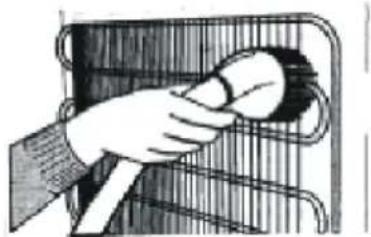
natural_image
Illustration of a hand holding a baby near a metal rack (no text or symbols)Odleđivanje
Odmrazovanie chladiaceho oddelenia;
natural_image
Simple line drawing of a structural beam or support frame (no text or symbols)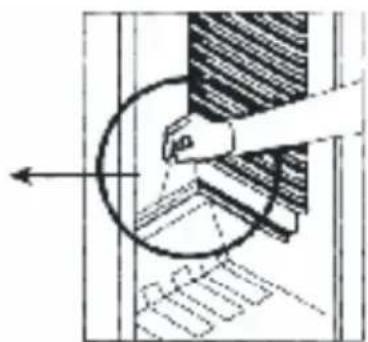
natural_image
Technical diagram showing a mechanical assembly with a circular component and directional arrow (no text or labels)• V chladiacom oddelení sa odmrazovanie uskutočňuje automaticky počas chodu spotrebiča, odmrazená voda sa zhromažďuje v odparovacej miske a automaticky vyparuje.
- výparník a otvor pre odvod vody z odmrazovania by mali byť periodicky čistené spolu so zátkou pre odtok vody z odmrazovania. Predídete nahromadeniu vody na dne chladničky namiesto jej odtoku.
- Do odvodňovacieho otvoru možno pre čistenie naliat' 12 pohára vody
natural_image
Line drawing of a mechanical device with internal components and mounting holes (no text or symbols)natural_image
Simple line drawing of two children playing a game with a long block (no text or symbols)| Overall dimensions1 |
| H1 mm |
| W1 mm |
| D1 mm |
| Space required in use ^2 |
| H2 mm |
| W2 mm |
| D2 mm |
| Overall space required in use3 |
| W3 mm |
| D3 mm |
5224xxxx


- CONTENTS
- BEFORE USING THE APPLIANCE 4
- USING THE APPLIANCE 9
- FOOD STORAGE 11
- CLEANING AND MAINTENANCE 13
- SHIPMENT AND REPOSITIONING.... 15
- BEFORE CALLING AFTER-SALES SERVICE....15
- DESCRIPTION OF THE APPLIANCE 18
- BEFORE USING THE APPLIANCE
- General warnings
- To avoid contamination of food, please respect the following instructions:
- Old and out-of-order fridges or freezer
- Disposal of your old appliance
- Notes:
- Safety warnings
- Installing and operating your fridge
- Before Using your Fridge
- PART - 2. USING THE APPLIANCE
- Thermostat Setting
- Thermostat Settings
- Temperature Settings Warnings
- Climate class and meaning:
- FOOD STORAGE
- Refrigerator Compartment
- CLEANING AND MAINTENANCE
- Defrosting
- Replacing the Light Bulb
- When replacing the light of the refrigerator compartment;
- Replacing LED Lighting
- SHIPMENT AND REPOSITIONING
- Transportation and Changing Positioning
- Repositioning the Door
- PART - 6. BEFORE CALLING AFTER-SALES SERVICE
- The appliance does not operate
- Check if:
- The appliance performs poorly
- The appliance is noisy
- Your refrigerator is operating noisily
- There is water in the lower part of the refrigerator
- There is a build-up of humidity inside the fridge
- The door is not opening or closing properly
- Recommendations
- Tips For Saving Energy
- DESCRIPTION OF THE APPLIANCE
- General notes:
- Dimensions
- Obsah
- PŘED POUŽITÍM SPOTŘEBIČE 21
- NAPÁJENÍ MUSÍ BÝT VŽDY ODPOJENO
- VŠEOBECNÉ UPOZORNENIA....39
- RÔZNE FUNKCIE A MOŽNOSTI 45
- ČISTENIE A ÚDRŽBA....49
- RÔZNE FUNKCIE A MOŽNOSTI
- Nastavenie termostatu
- ROZLOŽENIE POTRAVÍN V SPOTREBIČI
- Chladiaci priestor
- Odleđivanje
Brand : Romo
Model : RT2134W
Category : Refrigerator