
XM-3046 - Car Speaker SONY - Free user manual and instructions
Find the device manual for free XM-3046 SONY in PDF.


| Product Type | Car Speaker |
| Brand | Sony |
| Model | XM-3046 |
| Speaker Size | 6.5 inches (165 mm) |
| Speaker Type | Coaxial 2-way |
| Peak Power | 200 Watts |
| RMS Power | 50 Watts |
| Impedance | 4 Ohms |
| Frequency Response | 40 Hz – 20 kHz |
| Sensitivity | 90 dB |
| Magnet Material | Ferrite |
| Cone Material | Polypropylene |
| Tweeter Size | 0.75 inches (19 mm) |
| Tweeter Type | Soft dome |
| Mounting Depth | 1.8 inches (45 mm) |
| Mounting Cutout | 5.6 inches (142 mm) |
| Weight | 1.1 kg (2.4 lbs) |
| Included Accessories | Mounting screws, wire harness, manual |
| Compatibility | 4 Ohm stereo car audio systems |
| Installation | Flush or surface mount |
| Maintenance | Wipe with dry cloth; avoid moisture |
| Safety | Use insulated tools; disconnect battery before installation |
| Spare Parts & Repairability | Replaceable screws; consult authorized service center |
Frequently Asked Questions - XM-3046 SONY
User questions about XM-3046 SONY
0 question about this device. Answer the ones you know or ask your own.
Ask a new question about this device
Download the instructions for your Car Speaker in PDF format for free! Find your manual XM-3046 - SONY and take your electronic device back in hand. On this page are published all the documents necessary for the use of your device. XM-3046 by SONY.
USER MANUAL XM-3046 SONY
Stereo Power Amplifier
Operating Instructions
Mode d'emploi
Owner's Record
The model and serial numbers are located on the bottom of the unit.
Record the serial number in the space provided below.
Refer to these numbers whenever you call upon your Sony dealer regarding this product.
Model No. XM-5046 Serial No.
Model No. XM-3046 Serial No.
This instruction manual covers the XM-5046 and XM-3046. The illustrations on the manual are of the XM-5046. When differences occur, they are clearly described in the corresponding sections.
Sony Corporation ©1996 Printed in Japan
Features
- Rated power output of 50 (30)* watts per channel (at 4 ohms, supply voltage at 12.5 V).
- Rated power outputs of 60 (40)* watts per channel (at 4 ohms, supply voltage at 14.4 V).
- The XM-5046/3046 can be used as a 2 channels amplifier with a maximum outputs of 360 (240)* watts at 4 ohms (when used as a bridging amplifier). • Protection circuit provided.
- Pulse power supply** for stable, regulated output power.
- New circuit which removes the source resistance from the final MOS FET output stage, and drives the speaker directly.
* (XM-3046)
** Pulse power supply
This unit has a built-in power regulator which converts the power supplied by the DC 12 V car battery into high speed pulses using a semiconductor switch. These pulses are stepped up by the built-in pulse transformer and separated into both positive and negative power supplies before being converted into direct current again. This is to regulate fluctuating voltage from the car battery. This light weight power supply system provides a highly efficient power supply with a low impedance output.
Features
- Mount the unit either inside the trunk or under a seat.
- Choose the mounting location carefully so that the unit will not interfere with the normal movements of the driver and it will not be exposed to direct sunlight or hot air from the heater.
- Do not install the unit under the floor carpet, where the heat dissipation from the unit will be considerably impaired.
Firstly, place the unit where you plan to install it, and mark the positions of the four screw holes on the surface of the mounting board (not supplied). Then drill the holes whose diameter should be approximately 3 millimeters (mm) and mount the unit onto the board with the supplied mounting screws. The supplied mounting screws are 15 mm long. Therefore, make sure that the mounting board is thicker than 15 mm.
After all the connections are completed, place the cover on the unit with the supplied screws as shown below.
Connections
Connections
Caution
- Before making any connections, disconnect the ground terminal of the car battery to avoid short circuits.
- Be sure to use speakers with an adequate power rating. If you use small capacity speakers, they may be damaged.
- Do not connect the − terminal of the speaker system to the car chassis, and do not connect the − terminal of the right speaker with that of the left speaker. • Install the input and output cords away from the power supply lead as running them close together can generate some interference noise.
- This unit is a high powered amplifier. Therefore, it may not perform to its full potential if used with the speaker cords supplied with the car.
- If your car is equipped with a computer system for navigation or some other purpose, do not remove the ground wire from the car battery. If you disconnect the wire, the computer memory may be erased. To avoid short circuits when making connections, disconnect the +12 V power supply lead until all the other leads have been connected.
Attention
Make the terminal connections as illustrated below.
Note
When you tighten the screw, be careful not to apply too much torque* as doing so may damage the screw.
* The torque value should be less than 1 N•m
Note
** If you have the factory original or some other car audio without a remote output, connect the remote input terminal (REMOTE) of this unit to the accessory power supply.
Notes on the power supply
- Connect the +12 V power supply lead only after all the other leads have been connected.
- Be sure to connect the ground lead of the unit securely to a metal point of the car. A loose connection may cause a malfunction of the amplifier.
- Be sure to connect the remote control lead of the car audio to the remote terminal.
- When using a car audio without a remote output, connect the remote input terminal (REMOTE) to the accessory power supply.
- Use the power supply lead with a fuse attached (at least 60 (40)* A).
- Place the fuse in the power supply lead as close as possible to the car battery.
- Make sure that the leads to be connected to the +12 V and GND terminals of this unit respectively must be larger than 8 (10)* -Gauge (AWG-8 (10*) or with a sectional area of more than 8 (5)* mm².
* (XM-3046)
The A, B, C, and D INPUT jacks correspond with the SPEAKER OUT terminals. Make sure the car audio LINE OUT cable connects to the correct speaker.
- In this system, the volume of the subwoofer will be controlled by the car audio fader control.
- In this system, the output signals to the subwoofer are a combination of both the C and D INPUT jack signals.
Level Adjustment Control
The input level can be adjusted with this control when using source equipment of other manufacturers. Turn it to MAX when the output level of the car audio seems low. The A/B level adjustment control and FILTER switch control the A and B signal paths (the INPUT jacks and SPEAKER OUT terminals). The C/D level adjustment control and FILTER switch control the C and D signal paths (the INPUT jacks and SPEAKER OUT terminals).
- This unit is designed for negative ground 12 V DC operation only.
- Use speakers with an impedance of 1 to 8 ohms (2 to 8 ohms when used as a bridging amplifier).
- Do not connect any active speakers (with built-in amplifiers) to the speaker terminals of the unit. Doing so may damage the active speakers.
- Avoid installing the unit where: — it would be subject to high temperatures such as from direct sunlight or hot air from the heater
— it would be exposed to rain or moisture — it would be subject to dust or dirt.
- If your car is parked in direct sunlight and there is a considerable rise in temperature inside the car, allow the unit to cool down before use.
- When installing the unit horizontally, be sure not to cover the fins with the floor carpet etc.
- If this unit is placed too close to the car radio, interference may occur. In this case, relocate the amplifier away from the car radio.
- If no power is being supplied to the cassette player or tuner, check the connections.
- This power amplifier employs a protection circuit* to protect the transistors and speakers if the amplifier malfunctions. Do not attempt to test the protection circuits by covering the heat sink or connecting improper loads.
- Do not use the unit on a weak battery as its optimum performance depends on a good power supply.
- For safety reasons, keep your car audio volume moderate so that you can still hear sounds outside your car.
Fuse Replacement
If the fuse blows, check the power connection and replace the fuse. If the fuse blows again after replacement, there may be an internal malfunction. In such a case, consult your nearest Sony dealer.
Warning
When replacing the fuse, be sure to use one matching the amperage stated above the fuse holder. Never use a fuse with an amperage rating exceeding the one supplied with the unit as this could damage the unit.
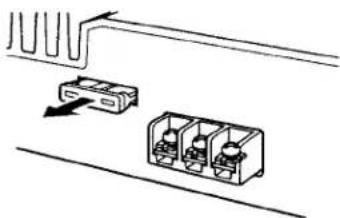
*Protection circuit
This amplifier is provided with a protection circuit that operates in the following cases:
— when the unit is overheated
— when a DC current is generated
— when the speaker terminals are short circuited.
The color of the POWER/PROTECTOR indicator will change from green to red, and the unit will shut down.
If this happens, turn off the connected equipment, take out the cassette tape or disc, and determine the cause of the malfunction. If the amplifier has overheated, wait until the unit cools down before use.
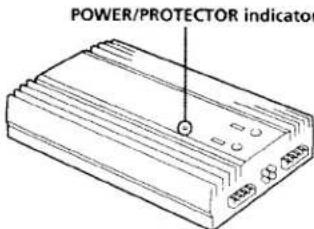
If you have any questions or problems concerning your unit that are not covered in this manual, please consult your nearest Sony dealer.
Precautions
* Protection circuit
The following checklist will assist in the correction of most problems which you may encounter with your unit. Before going through the checklist below, refer to the connection and operating procedures.
| Problem | Cause/Solution |
| The POWER/PROTECTOR indicator does not light up. | The fuse is blown. → Replace the fuse with a new one. |
| The ground lead is not securely connected. → Fasten the ground lead securely to a metal point of the car. | |
| The voltage going into the remote terminal is too low. | |
| • The connected master unit is not turned on. → Turn on the master unit. | |
| • The system employs too many amplifiers. → Use a relay. | |
| Check the battery voltage (10.5 - 16 V). | |
| • The POWER/PROTECTOR indicator flashes. | Use speakers with suitable impedance. |
| • Stereo operation: 1 - 8 Ω | |
| • Bridging operation: 2 - 8 Ω | |
| The speaker outputs are short-circuited. → Rectify the cause of the short-circuit. | |
| • Alternator noise is heard. | The power connecting leads are installed too close to the RCA pin cables. → Keep the leads away from the cables. |
| The RCA pin cords are run too close to other electrical cables of the car. → Keep the cords away from the cables. | |
| The ground lead is not securely connected. → Fasten the ground lead securely to a metal point of the car. | |
| Negative speaker leads are touching the car chassis. → Keep the leads away from the car chassis. | |
| The sound is muffled. | The filter switch is set to the “LPF” position. |
| The sound is too low. | The level adjustment control is set to the “MIN” position. |
Troubleshooting Guide
60 (40)* watts per channel minimum continuous average power into 4 ohms, both channels driven from 20 Hz to 20 kHz with no more than 0.04% total harmonic distortion per Car Audio Ad Hoc Committee standards.
Other Specifications
| Circuit system | OTL (output transformerless) circuit Pulse power supply | Frequency response Harmonic distortion | 5 Hz - 100kHz( * % dB) 0.005 % or less (at 1kHz,4ohms ) |
| Inputs Outputs | RCA pin jacks Speaker terminals | Input level adjustment range | |
| Speaker impedance | 1 - 8 ohms (stereo) | High-pass filter | 80 Hz, - 12 dB/oct |
| 2 - 8 ohms (when used as a bridging amplifier) | Low-pass filter | 50 Hz,80 Hz, - 18 dB/oct | |
| Maximum outputs | Four speakers : 120 (90)* watts per channel (at 4 ohms) | Power requirements | 12 V DC car battery (negative ground) 10.5 - 16 V |
| 180 (120)* watts per channel (at 2 ohms) | Power supply voltage Current drain | at rated output: 36 (24)* A Remote input: 1 mA | |
| Two speakers : 360 (240)* watts per channel (at 4 ohms) | Dimensions | Approx. 181 × 62 × 430( 360) * mm (w/h/d) ( 71/4 × 21/2 × 17. (14 1/4)* in.) include terminal protect cover | |
| Rated outputs (supply voltage at 12.5 V) Four speakers : 50 (30)* watts per channel (20 Hz - 20 kHz, 0.04 % THD, at 4 ohms) 75 (45)* watts per channel (20 Hz - 20 kHz, 0.1 % THD, at 2 ohms) 75 (45)* watts per channel (20 Hz - 20 kHz, 0.1 % THD, at 1 ohms) Two speakers : 150 (90)* watts per channel (20 Hz - 20 kHz, 0.1 % THD, at 4 ohms) | 50 (30)* watts per channel (20 Hz - 20 kHz, 0.04 % THD, at 4 ohms) | Mass | Approx. 3.1 (2.5)* kg (6 lb. 13 oz. (5 lb. 8 oz.)* ) not incl. accessories |
| 75 (45)* watts per channel (20 Hz - 20 kHz, 0.1 % THD, at 2 ohms) | Supplied accessories | Mounting screws (4) Terminal protect cover (2) (Fuse 40 A (1))* | |
| 75 (45)* watts per channel (20 Hz - 20 kHz, 0.1 % THD, at 1 ohms) | Optional accessories | Connecting cord for power amplifier RC-46 RCA pin cord RC-64 (2 m) RCA pin cord RC-65 (5 m) | |
| Rated outputs (supply voltage at 14.4 V) Four speakers : 60 (40)* watts per channel (20 Hz - 20 kHz, 0.04 % TH D, at 4 ohms) 90 (60)* watts per channel (20 Hz - 20 kHz, 0.1 % THD, at 2 ohms) 90 (60)* watts per channel (20 Hz - 20 kHz, 0.1 % THD, at 1 ohms) Two speakers : 180 (120)* watts per channel (20 Hz - 20 kHz, 0.1 % THD, at 4 ohms) | 75 (45)* watts per channel (20 Hz - 20 kHz, 0.1 % THD, at 1 ohms) | *(XM-3046) Design and specifications are subject to change without notice. | |
Specifications
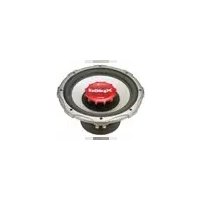


Brand : SONY
Model : XM-3046
Category : Car Speaker