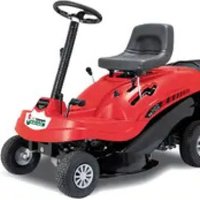
RPLM224 - Lawn mower Powertec - Free user manual and instructions
Find the device manual for free RPLM224 Powertec in PDF.


| Product type | Ride-on lawn mower |
| Brand | Powertec |
| Model | RPLM224 |
| Engine | 4-stroke, air-cooled |
| Displacement | 224 cm³ |
| Power | 5 kW / 6.8 HP |
| Fuel | Regular unleaded gasoline, max 10% bioethanol |
| Fuel tank capacity | 1.4 L |
| Engine oil | SAE 30 / 10W40, capacity 0.6 L |
| Cutting width | 61 cm |
| Cutting height | 35 to 75 mm (5 levels) |
| Grass catcher capacity | 150 L |
| Weight | 111 kg |
| Forward speed | 1.5 / 2.0 / 3.0 / 4.6 km/h |
| Reverse speed | 2.3 km/h |
| Front wheels | 10x4.00-4, pressure 1.3 bar |
| Rear wheels | 13x5.00-6, pressure 1.8 bar |
| Battery | Lead-acid, 12 V, 7 Ah |
| Sound pressure level (L_PA) | 80.4 dB |
| Guaranteed sound power level (L_WA) | 95.4 dB |
| Vibration (body) | 1.466 m/s² |
| Vibration (hand-arm) | 5.40 m/s² |
| Maximum permissible slope | 10° (17.6%) |
Frequently Asked Questions - RPLM224 Powertec
User questions about RPLM224 Powertec
0 question about this device. Answer the ones you know or ask your own.
Ask a new question about this device
Download the instructions for your Lawn mower in PDF format for free! Find your manual RPLM224 - Powertec and take your electronic device back in hand. On this page are published all the documents necessary for the use of your device. RPLM224 by Powertec.
USER MANUAL RPLM224 Powertec
natural_image
Exterior view of a power patrol vehicle with visible branding and wheels (no text or symbols on the vehicle itself)

www.jnl.com ID:1111280975
RPLM224
| DE | Benzin-AufsitzrasenmäherOriginalbedienungsanleitung | 6 |
| GB | Petrol ride-on lawn mowerTranslation of original instruction manual | 33 |
| FR | Tondeuse autoportéeTraduction des instructions d'origine | 57 |
2
natural_image
Technical line drawings of a mechanical component, including a housing, internal casing, and threaded shaft (no text or symbols)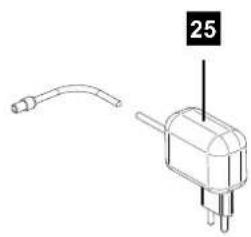
natural_image
Technical line drawing of a mechanical component with a curved arm and a numbered label (25), no readable text or symbols present.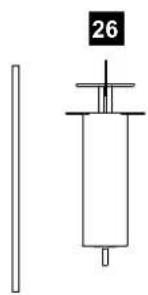
natural_image
Pure mechanical component diagram without any text, numbers, or symbols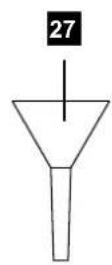
natural_image
Pure diagram of two curved lines with a vertical marker labeled '28' (no text or symbols beyond the number)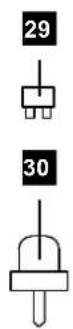
natural_image
Simple line drawing of a vertical cylindrical object with a small rectangular component and a separate vertical bar (no text or symbols)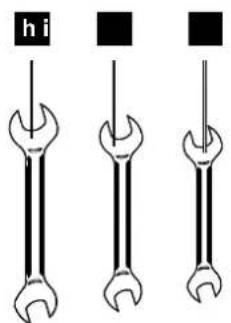
natural_image
Three simple line drawings of test tubes with different shapes and colors, no text or symbols present.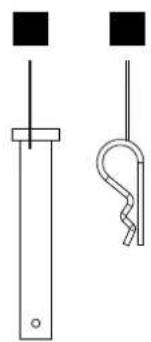
natural_image
Pure electrical circuit lines without any symbols


natural_image
Mechanical assembly diagram showing a car's internal components with labeled parts (16 and 5), no readable text or symbols beyond labels.Inhaltsverzeichnis:
Günzburger Straße 69
D-89335 Ichenhausen
VEREHRTER KUNDE,
Table of contents: Page:
- Explanation of the symbols on the device.... 34
- Introduction....37
- Device description....37
- Scope of delivery (fig. 2)......37
- Proper use....38
- Safety information 39
- Technical data 42
- Unpacking 42
- Assembly 43
- Before commissioning....43
- Operation....45
- Transport 49
- Cleaning and maintenance....49
- Storage....53
- Disposal and recycling 54
- Troubleshooting....55
- Declaration of conformity 87
1. Explanation of the symbols on the device
 | Observe all safety instructions before use. |
 | Read and understand all text in the operating instructions before start up. |
 | Risk of injury! Do not drive or mow on slopes steeper than 10° (17%) inclination. Do not drive or mow in the lengthwise direction. Tipping hazard! |
 | Never operate the device without the catch bucket. |
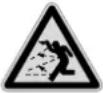 | Danger due to parts flying off while the engine is running. The safety distance must be observed. |
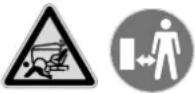 | Make sure that other persons maintain a sufficient safety distance. Keep uninvolved persons away from the device. |
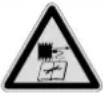 | Remove the spark plug connector prior to all maintenance work. |
 | Keep your hands and feet away from the rotating mowing blades. |
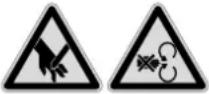 | Keep your hands and feet away from the rotating mowing blades. |
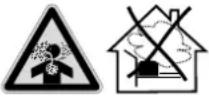 | Important. The exhaust gases are toxic. Do not operate the engine in areas that are not ventilated. |
 | Attention: hot surface - danger of burning. |
 | Use hearing and eye protection! |
 | Wear safety shoes, safety gloves, close-fitting clothes. |
 | ATTENTION! Operating materials are flammable and explosive - danger of burning. |
 | Tank contents |
 | Power |
 | Displacement |
 | Speed |
 | Catch basket volume |
 | Min. - max. cutting height adjustment |
 | Max. speed |
 | Max. slope angle |
 | Max. width |
 | Weight |
 | Engine oil |
 | Do not fill with fuel while the engine is hot or running. |
 | Mowing blade length. Max. cutting width. |
 | Guaranteed sound power level |
 | Warning against hazardous electrical voltage. |
 | The product complies with the applicable European directives. |
 | Before working on the device, remove the ignition key and observe the instructions in this manual. |
 | Charging socket 12V direct voltage |
| STOPZONSTART | STOP: Shut off engineON: OperationSTART: Start |
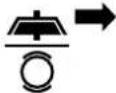 | Brake and clutch pedal |
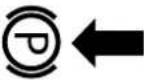 | Locking brake |
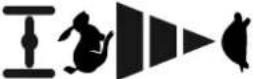 | Choke/speed controller |
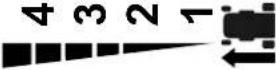 | Forwards gear shift |
 | Neutral |
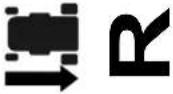 | Reverse gear |
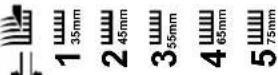 | 5-level cutting height adjustment |
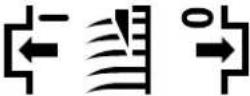 | Mower on/off |
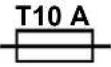 | Device fuse |
 | Protection class II |
 | Do not throw old equipment away with household waste. |
| GEFAHR! | Signal word to indicate an imminently hazardous situation which, if not avoided, will result in death or serious injury. |
| WARNUNG! | Signal word to indicate a potentially hazardous situation which, if not avoided, could result in death or serious injury. |
| VORSICHT! | Signal word to indicate a potentially hazardous situation which, if not avoided, could result in minor or moderate injury. |
| HINWEIS | Signal word to indicate a potentially hazardous situation which, if not avoided, could result in product or property damage. |
2. Introduction
MANUFACTURER:
Scheppach GmbH
Günzburger Straße 69
D-89335 Ichenhausen
DEAR CUSTOMER,
We hope your new tool brings you much enjoyment and success.
NOTE:
In accordance with the applicable product liability laws, the manufacturer of this device assumes no liability for damage to the device or caused by the device arising from:
- Improper handling,
• Non-compliance with the operating manual,
• Repairs carried out by third parties, unauthorised specialists. - Installing and replacing non-original spare parts,
• Application other than specified, - Failure of the electrical system in the event of the electrical regulations and VDE provisions 0100, DIN 13 / VDE0113 not being observed.
Please consider:
Read through the complete text in the operating manual before installing and commissioning the device.
The operating manual is intended to help the user to become familiar with the machine and take advantage of its application possibilities in accordance with the recommendations.
The operating manual includes important instructions for safe, proper and economic operation of the device, for avoiding danger, for minimising repair costs and downtimes, and for increasing the reliability and extending the service life of the device.
In addition to the safety instructions in this operating manual, you must also observe the regulations applicable to the operation of the device in your country.
Keep the operating manual package with the machine at all times and store it in a plastic cover to protect it from dirt and moisture. They must be read and carefully observed by all operating personnel before starting the work.
The device may only be used by personnel who have been trained to use it and who have been instructed with respect to the associated hazards. The required minimum age must be observed.
In addition to the safety instructions in this operating manual and the separate regulations of your country, the generally recognised technical rules relating to the operation of such machines must also be observed.
We accept no liability for accidents or damage that occur due to a failure to observe this manual and the safety instructions.
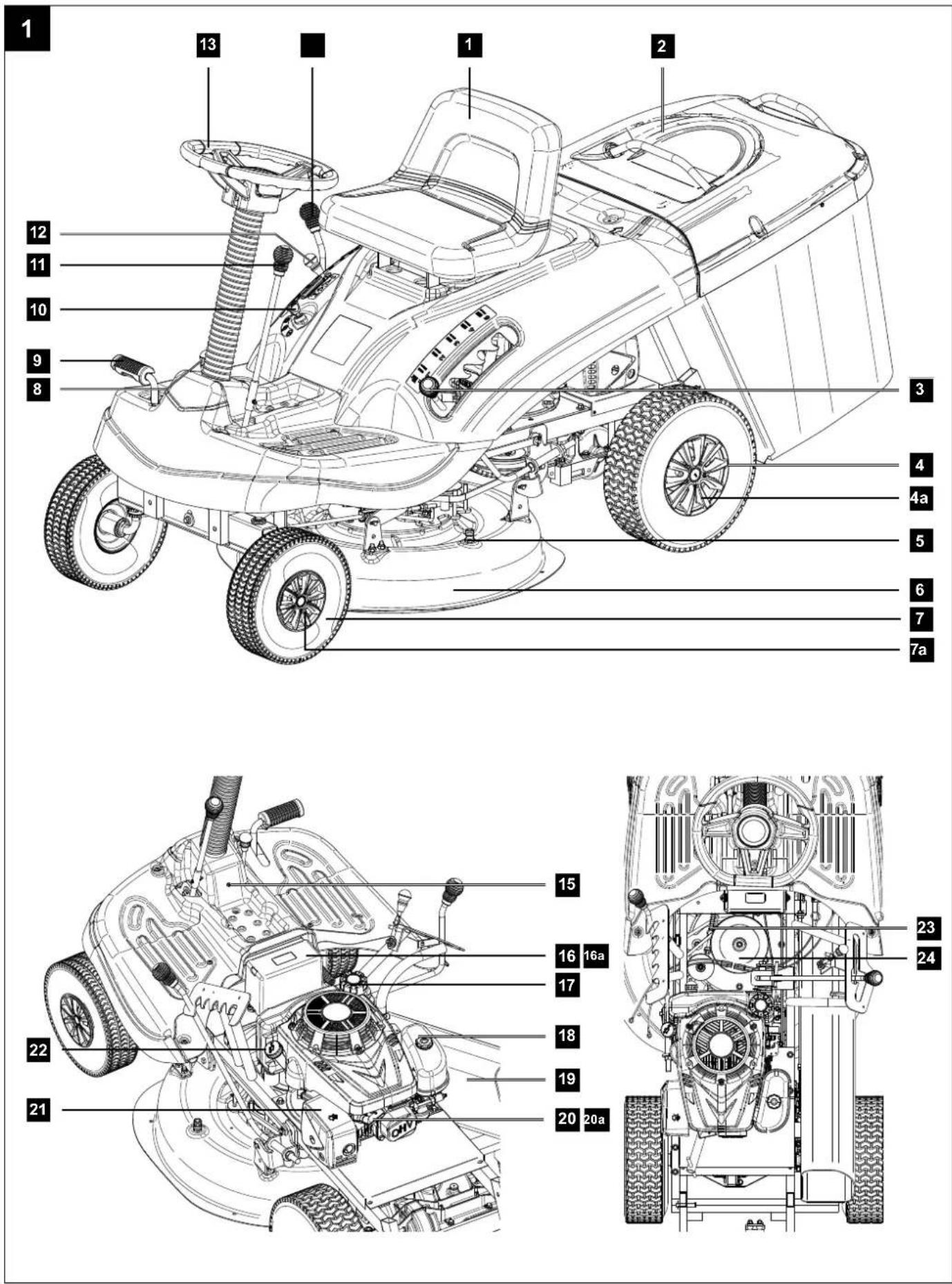
3. Device description
- Driver's seat
- Catch basket
- Cutting height setting
- Rear wheels
4a Wheel caps, rear - Water connection
- Mower (protection)
6a. Mowing blade - Wheels, front
7a Wheel caps, front - Locking brake
- Brake/clutch pedal
- Ignition lock
- Mower on/off
- Speed lever
- Steering wheel
- Gear switching
- Battery charging socket
- Battery cover
16a Battery
16b Screws (battery) - Tank cover
- Air filter housing
18a Air filter - Ejector chute
- Spark plug connector
20a Spark plug - Exhaust pipe
- Oil tank cover with dipstick
- V-belt
- Battery connection cable
24a Engine connection cable - Battery charger
- Injector needle
- Funnel
- Charging cable for car charging device
- Fuse 10 A
29a Holder retainer - Ignition key
- Fastening hooks
- Steering connection piece
- Screws (catch basket)
- Reinforcement struts
- Screw (belt pulley)
- Screw (air filter)
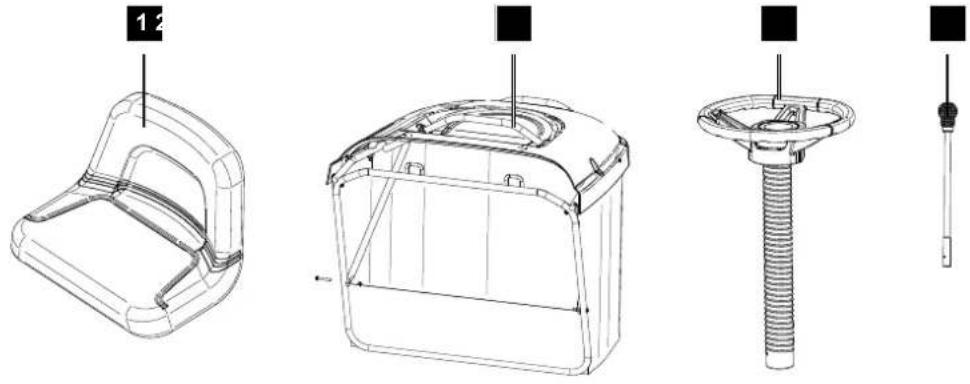
4. Scope of delivery (fig. 2)
• Petrol ride-on lawnmower
- Seat (1)
- Catch basket (2)
• Steering column with steering wheel (13)
• Mowing unit shift lever (11)
- Charging unit (25)
- Battery (16a)
- 100 ml injector needle for extracting oil with hose (26)
- Funnel (27)
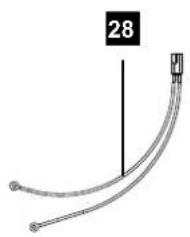
- Charging cable for car charging unit (28)
- Fuse 10A (29)
- Ignition key 2x (30)
- Operating manual
Tools:
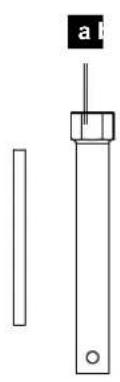
a) Spark plug wrench (a)
b) Open-end spanner 16/13 (b)
c) Open-end spanner 12/10 (c)
d) Open-end spanner 10/8 (d)
Assembly material:
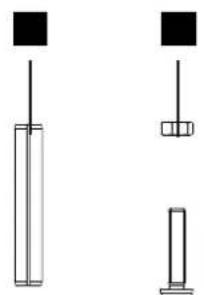
e) 1x clamping sleeve ∅6 x 35 for steering column (e)
f) 1x fillister head screw M4x20 with nut M4 for mowing unit shift lever (f)
g) 1x pin ∅ 8 mm for tilt protection (g)
h) Safety splint (h)
i) 4x hexagonal bolts M8x16 with washers for seat attachment (i)
5. Proper use
The machine complies with the applicable EC machinery directive.
Attention – Danger of accident!
The petrol ride-on lawnmower is intended for lawn mowing only, no other use is permitted.
Before starting any work, all protective and safety devices must be in place.
- The operator is responsible for third parties in the area of operations.
- The machine has been designed to be operated by one person.
- Observe all safety information and danger notices on the machine.
- Ensure that all of the safety information and danger notices on the machine are complete and in legible condition.
- Only use the machine when in a technically faultless condition, appropriately and in compliance with the operating manual and with full knowledge of safety and hazards!
- In particular, rectify malfunctions that could impair safety immediately (or commission rectification works accordingly)!
- The manufacturer's safety, operating and maintenance specifications as well as the dimensions given in the technical data must be observed.
-
Relevant accident prevention regulations and other generally recognized safety and technical rules must also be observed.
-
The machine may only be used, maintained or repaired by trained persons who are familiar with it and have been informed of the dangers. Any liability of the manufacturer for damages resulting from arbitrary changes to the machine is excluded.
- The machine may only be operated with original accessories and original tools from the manufacturer.
- Any use beyond this is improper use. The manufacturer is not responsible for the resultant damages, the user bears this risk alone.
- If you are not sure whether working conditions are safe or unsafe, do not work with the machine.
- The petrol lawn mower is intended for private use i.e. for use in home and gardening environments. Private use of the lawn mower refers an annual operating time generally not exceeding that of 50 hours, during which time the machine is primarily used to maintain small-scale, residential lawns and home/hobby gardens. Public facilities, sporting halls, and agricultural/forestry applications are excluded.
Due to physical danger to the user or other persons, the device must not be used, for example:
• for cutting climbing plants,
• for chipping and shredding tree and hedge cuttings,
• for cleaning pavements (vacuuming, blowing away),
- for clearing snow with the aid of the mowing unit,
• for lawn care on roof plantings,
- for levelling ground elevations, such as molehills,
- for transporting cuttings, except in the catch basket provided.
- The device is not permitted for public highways.
- The carriage of persons (especially children) and animals is not permitted.
- Never climb onto the mowing unit.
- For safety reasons, the lawn mower may not be used as a drive unit for other work tools or toolkits of any kind.
⚠ WARNING
For your own safety, please thoroughly read this manual and the general safety instructions before turning the machine on. If you give the machine to third parties, always include these instructions.
Please observe that our equipment was not designed with the intention of use for commercial or industrial purposes. We assume no guarantee if the equipment is used in commercial or industrial applications, or for equivalent work.
6. Safety information
⚠ Attention!
When using equipment, several safety warnings must be observed to prevent injuries and damage. For this reason, please carefully read this operating manual / safety instructions. Keep them in a safe place so that the information is available at all times. If you hand the device over to another person, please hand over this operating manual / safety instructions as well. We accept no liability for accidents or damage that occur due to a failure to observe this manual and the safety instructions.
Who is not permitted to use the device:
- Children, persons with reduced physical, sensory or mental capabilities or insufficient experience and knowledge or persons who are not familiar with the instructions must never be allowed to use the device.
- Never allow children or young people under the age of 16 to use the device. Contact your local governmental agency for information regarding minimum age requirements for operating the mower.
- Only use the device when you are rested and in a good physical and mental state. If you have health problems, you should ask your doctor whether it is possible to work with the device.
Do not operate the device after taking alcohol, drugs or medication that impairs the ability to react.
⚠️ Personal safety
Attention! Risk to health due to vibrations!
Excessive exposure to vibrations can cause circulatory or nerve damage, especially in people with circulatory problems. Consult a doctor if symptoms occur that may have been triggered by exposure to vibration.
Such symptoms, which mainly occur in the fingers, hands or wrists, are for example:
- Numbness.
- Pain.
- Muscle weakness.
• Skin discolourations.
• Unpleasant tingling sensation.
Hold the handlebars firmly but not tensely with both hands at the designated points during operation. Plan working hours in such a way that higher stress levels are avoided over an extended period of time.
Warning! This power tool generates an electromagnetic field during operation. This field can impair active or passive medical implants under certain conditions.
In order to prevent the risk of serious or deadly injuries, we recommend that persons with medical implants consult with their physician and the manufacturer of the medical implant prior to operating the power tool.
Clothing and equipment
• Always wear sturdy footwear with non-slip soles during work. Never work barefoot or in sandals, for example.
- The device may only be operated with long trousers and tight-fitting clothing.
- Never wear loose clothing that can get caught on moving parts (control levers) – also no jewellery, no ties and no scarves.
- When carrying out maintenance and cleaning work, as well as when transporting the device, always wear sturdy gloves and tie up and secure long hair (bandana, cap, etc.).
- Suitable safety goggles must be worn when sharpening the mowing blade.
During work
- Never work while people, especially children, or animals are nearby. Make sure that grass is never ejected towards third parties.
- Do not work with the device during rain, thunderstorms and especially when there is a risk of lightning.
Exhaust gases:
- Danger to life due to poisoning! Stop work immediately in case of nausea, headache, visual disturbance (e.g. diminishing field of vision), hearing disturbance, dizziness, loss of concentration. These symptoms can be caused, among other things, by excessive exhaust gas concentrations.
- The device produces toxic exhaust gases as soon as the combustion engine is running. These gases contain toxic carbon monoxide, a colourless and odourless gas, as well as other pollutants. The combustion engine must never be operated in enclosed or poorly ventilated spaces.
- The exhaust gases of the combustion engine are released into the open in front of the left rear wheel. When working with the device, ensure that this area is kept clean at all times and is never covered so that exhaust gases do not build up.
⚠️ Work area safety
- Completely check the terrain where the device will be used and remove all stones, sticks, wires, bones and other foreign objects that may be thrown up by the device. Obstacles (e.g. tree stumps, roots) can easily be overlooked in the tall grass.
- Therefore, before working with the device, mark all foreign objects (obstacles) hidden in the lawn that cannot be removed.
- Look out for depressions (holes) in the terrain and other non-visible danger spots. Obstacles can easily be overlooked in the tall grass.
- Use the device with special care when working near slopes, terrain edges, ditches and dykes. In particular, ensure that there is sufficient distance to such danger points.
• Take special care at blind spots, bushes, trees and other obstacles behind which there may be people, especially children, or animals. - Stop the petrol ride-on lawnmower immediately and turn off the mowing blades if anyone enters the mowing area.
- Always keep an eye on the area in front of the vehicle. Watch out for obstacles so that you can avoid them in time.
- Before reversing, always check the area behind the petrol ride-on lawnmower and disengage the attachment device if fitted. Never mow backwards unless absolutely necessary. When mowing in reverse, take extra care and thoroughly check the entire area behind the petrol ride-on lawnmower before starting to mow.
- When working within a group, you must always let others know in good time what you intend to do. Observe the safety distance!
- Before any change of direction, reduce the driving speed so that the user remains in control of the device at all times and also so that the petrol ride-on lawnmower cannot tip over.
- When operating near roads and when crossing traffic routes, attention must be paid to other road users.
- Special care is needed when mowing near roads, cycle paths and footpaths. Ejected parts can cause serious injuries and damage.
⚠ Use of petrol
⚠ Danger to life! Petrol is toxic and highly flammable.
- Only store petrol in containers (canisters) designed and tested for this purpose. The tank caps must always be properly screwed on and tightened. Defective caps must be replaced for safety reasons.
-
Keep petrol away from sparks, open flames, permanent flames, heat sources and other sources of ignition. Do not smoke!
-
Refuel outdoors only and do not smoke while refuelling.
- Before refuelling, switch off the combustion engine and let it cool down.
- Petrol must be filled before starting the combustion engine. While the combustion engine runs or if the machine is hot, the tank plug must not be opened and petrol must not be filled.
- Open the tank plug carefully and slowly. Wait for the pressure to equalise and only then remove the tank cover completely.
- Use a suitable funnel or filler pipe for refuelling so that no fuel can spill onto the combustion engine and housing or lawn.
Do not overfill the fuel tank!
- To leave room for the fuel to expand, never fill the fuel tank beyond the lower edge of the filling nozzle. Observe additional information in the combustion engine user manual.
- If petrol has overflowed, do not start the combustion engine until the petrol-contaminated area has been cleaned. Avoid starting the engine until the fuel vapours have evaporated (wipe dry).
• Always wipe up spilled fuel immediately. - If petrol has got on clothing, it must be changed.
- The tank cover must be properly screwed on and tightened after each refuelling operation. The device must not be put into operation without the original tank cover screwed on.
- For safety reasons, check fuel line, fuel tank, tank plug and connections regularly for damage, ageing (brittleness), tight fit and leaks and replace if necessary.
- Only empty the tank outdoors.
- Never use beverage bottles or similar to dispose of or store operating materials, such as fuel. People, especially children, could be tempted to drink from it.
- Never store the device with petrol in the tank inside a building. Any fuel vapours produced can come into contact with naked flames or sparks and ignite.
- Do not place the device and fuel tank near heaters, radiant heaters, welding machines or other sources of heat.
Risk of explosion!
If a defect is detected on the tank, the tank cover or on fuel-carrying parts (fuel lines) during operation, the combustion engine must be switched off immediately. Then consult a specialist dealer.
Battery safety
- To avoid spark formation due to a short circuit, always disconnect the negative cable (−) from the battery first and reconnect it last.
- Never smoke during any work on the battery. Always keep sparks, naked flames and other heat sources away from the battery.
- Special care must be taken when using jumper cables. Follow relevant instructions to avoid damage to the petrol ride-on lawnmower (in particular, do not operate the starter for more than 10 seconds).
- Never open the battery and do not drop it.
• Always charge the battery in a closed room with good ventilation, dry and protected against the weather. - Do not short-circuit battery connections.
- Deformed or defective (leaking) batteries must not be used and must be replaced and disposed of in an environmentally friendly manner. Observe the country-specific regulations.
- If the batteries are defective, liquid may leak out. Avoid contact! In case of accidental contact, rinse with water. If the liquid gets into your eyes, seek additional medical attention. Leaking battery fluid can cause skin irritation, burns and chemical burns.
- Regularly visually inspect the connection cables on the battery for damage. Have damaged cables replaced by a specialist.
- Never bypass the fuses. Never use a fuse with a rating other than the prescribed rating (amperes).
⚠ Safety instructions for petrol ride-on lawn-mowers
Starting up:
- The device may only be started from the driver's seat.
- Start the device on a level surface, not on a slope.
- The combustion engine may only be started in a well ventilated work area, especially in garages care must be taken to ensure sufficient ventilation.
- Before starting the combustion engine, disengage the cutting tool, attachment devices and drive and firmly depress the brake pedal.
- When starting, make sure that there is sufficient distance between the feet and the cutting tool.
- Do not start the engine if you are standing in front of the ejector chute.
- Never lift or carry a lawnmower while the motor is running.
- Operating the machine with excessive speed can increase the risk of accidents.
- Never start the combustion engine by short-circuiting the starter terminal. If the normal starter circuit is bypassed, the petrol ride-on lawnmower may suddenly start moving.
- Never start the combustion engine if you notice the smell of petrol. – Danger of explosion!
Work deployment:
⚠ Warning – Danger of injury!
- Note the working range of the mowing blade. Never out hands and feet on or under rotating parts. Never touch the rotating mowing blade. Always keep clear of the discharge opening. A sufficient safety distance must always be maintained.
- Only work in daylight or with good, artificial lighting.
- When driving outside the lawn or when not mowing, disengage the mowing blade and move the mowing unit to the highest cutting position.
- Objects hidden in the turf (lawn sprinkler systems, piles, water valves, foundations, electrical lines, etc.) must be bypassed. Never drive over such foreign objects.
- While driving, the steering wheel should always be held firmly with both hands.
- Special care should be taken when driving on lawns and other uneven surfaces, as the steering wheel can turn on its own due to holes, hills, bumps, etc.
• Danger of injury to hands and fingers!
• Always drive at an appropriate speed. - Only empty the catch basket from the driver's seat.
- Before emptying the catch basket, always disengage the mowing blade and wait until it has come to a standstill.
Switch off the drive, stop the combustion engine and wait until the mowing blade comes to a complete stop, engage the locking brake and remove the ignition key:
- before releasing blockages or rectifying obstructions in the ejector chute.
- before checking, cleaning or working on the petrol ride-on lawnmower.
- if the mowing blade encounters a foreign object. Look for damage to the machine and cutting tool and have the necessary repairs carried out before starting again,
- if the device starts to vibrate unusually strongly. Immediate review is required.
- when leaving or transporting the device.
Residual risks and accident prevention standards
Neglect of ergonomic principles
Negligent use of personal protective equipment (PPE)
Careless use or omission of personal protective equipment may result in serious injury.
- Wear prescribed protective equipment.
Human behaviour, misconduct
- Always concentrate fully on all work.
⚠️ Residual risk can never be ruled out.
Danger from noise
Hearing damage
Prelonged unprotected work with the device may cause hearing damage.
- Always wear hearing protection as a matter of principle.
Behaviour in an emergency
In case of an accident, initiate the necessary first aid measures and seek medical assistance as quickly as possible.
7. Technical data
Type of engine......4-Stroke engine / air cooled
Displacement 224 cm ^3
Rotation speed 3000 min ^-1
Power 5 kW/6.8 HP
Fuel.....Regular grade petrol/lead-free max. 10% bioethanol
Tank contents 1.4
Engine oil.... SAE 30 / 10W40
Oil tank capacity....0.6 l
Cutting height adjustment 5-level
Catch basket capacity 150 l
Cutting width 61 cm
Cut height....35-75 mm
Weight 111 kg
Driving speed V....1.5, 2.0, 3.0, 4.6 km/h
Driving speed R....2.3 km/h
Front wheels.... 10x4,00-4
Air pressure front wheels 1.3 bar
Rear wheels 13x5,00-6
Air pressure rear wheels....1.8 bar
Battery type....Lead
Rated voltage 12V
Capacity 7 Ah
Technical changes reserved!
Information about noise level measured in accordance with applicable standards:
measured according to ISO 5395-1:2013
Sound pressure L_PA 80,4 dB
Measurement uncertainty K....3,0 dB
Sound pressure L_WA 95.4 dB
Measurement uncertainty K.... 1,23 dB
Wear hearing protection.
Excessive noise can result in a loss of hearing.
measured according to ISO 5395-1:
Vibration a_h (body).....1,466 m/s ^2
Vibration a_h (Hand-Arm - Steering Wheel)..5,40 m/s ^2
Measurement uncertainty K.... 1,5 m/s ^2
Keep the noise level and vibration to a minimum!
- Only use faultless products.
- Maintain and clean the product at regular intervals.
- Adapt your working methods to the product.
- Do not overload the product.
- Have the product checked if necessary.
- Switch the product off if it is not in use.
- Wear protective gloves.
Use of the petrol ride-on lawnmower over a long period can lead to vibration-related circulatory disorders (Raynaud syndrome).
Information about the duration of use cannot be provided in this case, since this can vary from person to person.
The following factors can influence the condition:
- Circulatory problems in the user's hands
- Low outdoor temperatures
- Long periods of use
We therefore recommend you wear warm work gloves and take regular breaks.
8. Unpacking
- Open the packaging and remove the packaging material.
- Check whether the scope of delivery is complete.
- Check the device and accessory parts for transport damage.
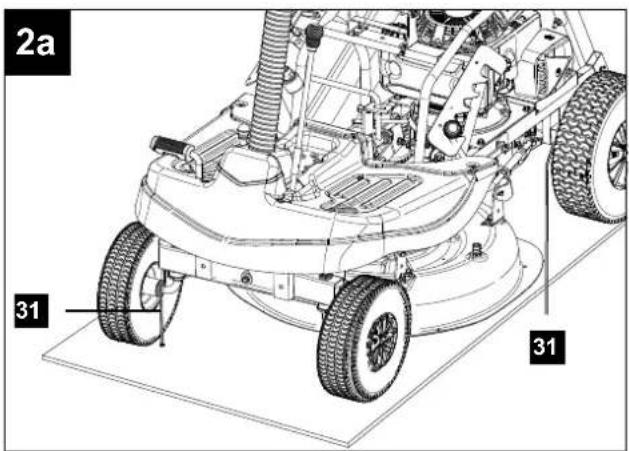
- Remove the two fastening hooks (31) using the open-end spanner 16/13 (b). (Fig. 2a)
- Inflate all 4 tyres (4 + 7) with a commercially available foot pump (not included in the scope of delivery) by first pulling the wheel caps (4a + 7a) off the rim and removing the cap of the valve. Tum the wheel cap anticlockwise and pull it off the rim. The correct tyre pressure is 1.3 bar in the front wheels (7) and 1.8 bar in the rear wheels (4).
- Attention - Danger of cutting! Wear protective gloves!
- Carefully remove the petrol ride-on lawnmower from the pallet with 3 other people.
- Grip the device by the frame - not by the plastic casing!
- If possible, keep the packaging until the expiry of the warranty period.
DANGER
The device and the packaging are not children's toys! Do not let children play with plastic bags, films or small parts! There is a danger of choking or suffocating!
9. Assembly
⚠ WARNING!
Risk of injury and damage!
The use of incorrect spare parts and accessories can lead to injuries and damage. These could come loose and be flung away. They can also reduce the power of the product.
- Only use original spare parts and accessories from the manufacturer. Original spare parts or accessories can be obtained from your dealer.
- Failure to do so may reduce the power of the product and parts may come loose.
- Failure to observe this will invalidate the manufacturer's warranty.
Some parts of the mower come disassembled. For quick and easy assembly, read and follow the instructions below.
Note!
During assembly and/or for maintenance work, the following additional tools will be required, which are not included in the scope of delivery:
- a 1 litre measuring beaker (oil / petrol-proof)
- a petrol canister (5 litres are sufficient for approx. 5 operating hours)
- A funnel (suitable for the tank's petrol filler neck)
- Household wipes (to wipe up oil/petrol residue; dispose of these at a filling station)
- A petrol suction pump (plastic, available from DIY stores)
• 0.6 I SAE 30 engine oil - Small hammer
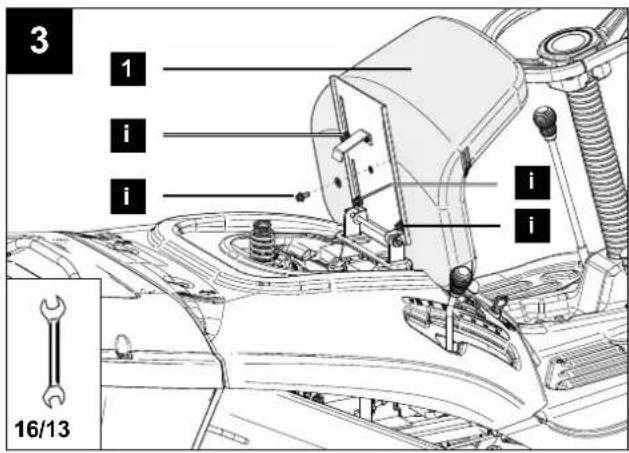
9.1 Fitting the seat (fig. 3)
- Mount the seat (1) by first tightening the 4 hexagonal bolts M8x16 incl. washers (i) by hand using the open-end spanner 16/13 (b).
- Adjust the desired seating position by moving the seat. Make sure that you can reach the control levers and the pedal safely.
- Now tighten the 4 hexagonal bolts (i) using the open-end spanner 16/13 (b).
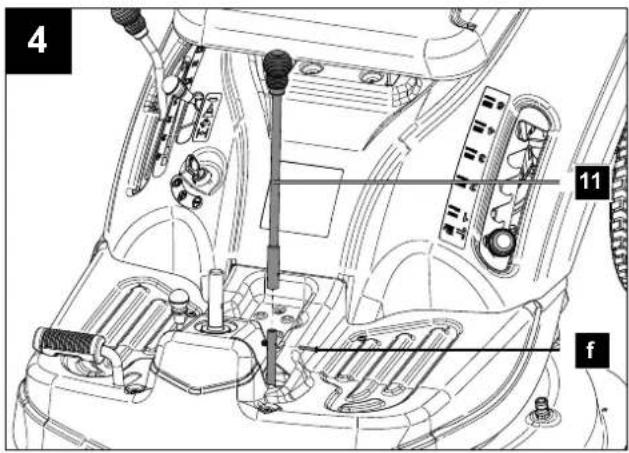
9.2 Fitting the lever for the mowing unit (fig. 4)
- Fit the lever (11) for the mowing unit using the M4x20 filler head screw (f) supplied and a Phillips screwdriver and open-end spanner (7 mm) (not included in the scope of delivery).
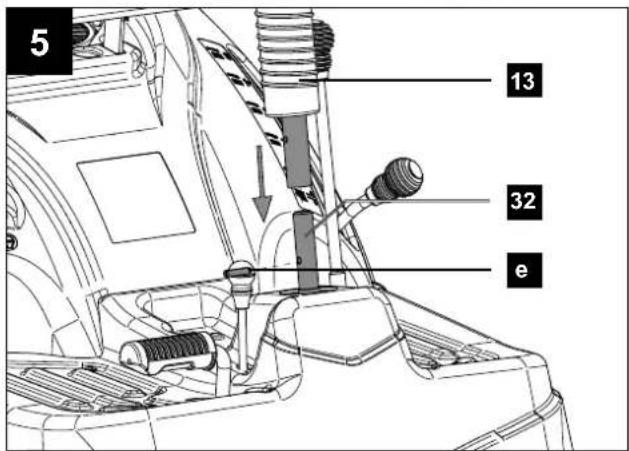
9.3 Fitting the steering column (fig. 5)
- Insert the steering column with the steering wheel (13) into the steering socket (32).
-
Make sure that the drill holes are on top of each other.
-
Then knock in the clamping sleeve (e) with a hammer (not included in the scope of delivery).
9.4 Fitting and hooking in the catch basket (fig. 6)
- Using a Phillips screwdriver (not included in the scope of delivery) and the 10/8 open-ended spanner (d) supplied, first remove the screws (33) on the catch basket (2).
- Then screw the reinforcement struts (34) to the catch basket (2).
- Hold the catch basket (2) with one hand on the catch basket handle and with the other hand on the holding hole at the back.
- Place the catch basket (2) symmetrically on the guide. When doing so, align the catch basket (2) with the petrol ride-on lawnmower.
- Tilt the catch basket (2) slightly forwards with the other hand so that the front part of the catch basket (2) engages.
- Now swivel the catch basket (2) back down.
- Check that the catch basket (2) is correctly seated.
9.5 Checking the ejector chute (fig. 9)
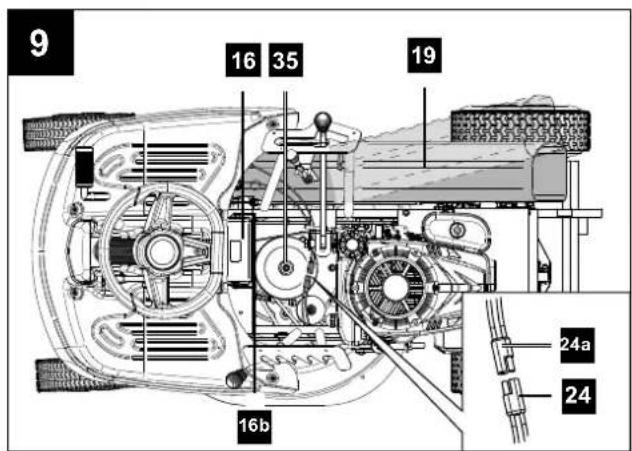
Check the ejector chute (19) for damage and remove grass cuttings if necessary.
In case of damage, have it replaced by a specialist.
10. Before commissioning
⚠ WARNING!
Risk to health!
Inhalation of petrol/lubricating oil vapours and exhaust gases can cause serious damage to health, unconsciousness and in extreme cases death.
- Do not breathe petrol/lubricating oil vapours and exhaust gases.
- Only use the product outdoors.
Before each commissioning, check the product for the following:
- Check the fuel system for leakage.
- Faultless condition and completeness of the guards and the cutting device
- Tight fit of all screw connections
- Smooth running of all moving parts.
Check before each commissioning,
- whether the cutting tool and the entire cutting unit (mowing blade, blade coupling, blade brake, mounting bolts, mowing unit housing) are in perfect condition. Particular attention must be paid to secure seating, damage and wear.
- whether the tank cover is screwed on tightly.
- whether the tank and fuel-carrying parts as well as the tank cover are in perfect condition.
- whether the safety devices are in perfect condition and function properly.
- whether tyres (air pressure, damage, wear) and frame are in perfect condition. Screw connections must be checked for tightness. In particular, all maintenance work listed in the maintenance schedule under the heading “Before each commissioning” must be carried out.
Replace defective parts and all other worn and damaged parts before using the device. Illegible or damaged danger and warning information on the device must be renewed.
If necessary, consult a specialist dealer.
Fuel and oil
NOTE!
Risk of damage!
If incorrectly stored or undrained fuel is used, the carburettor may become clogged or engine operation may be affected.
- Put unused fuel in an airtight vessel and store it in a dark, cool room.
- Use only designated and approved vessels for the transport and storage of fuel.
10.1 Folding the body up (fig. 7)
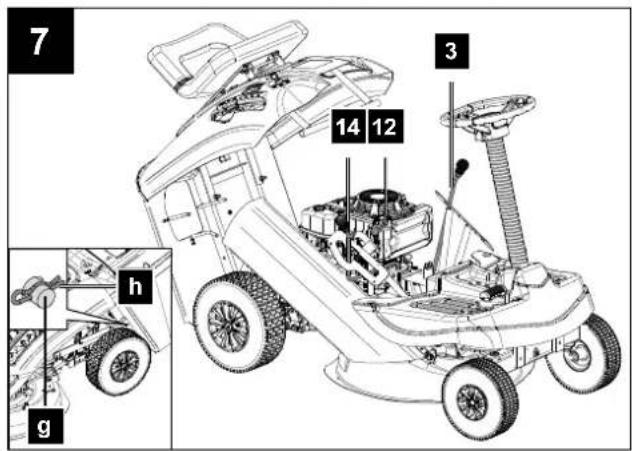
- Move the gear shift (14) to position N, the speed lever (12) to the tortoise position and the cutting height adjustment (3) to position 5.
- Remove the plastic handles.
- Remove the anti-tilt pin (g). To do this, you must remove the safety splint (h).
- Fold the body upwards.
10.2. Fill up with engine oil and connect battery cables (fig. 8 + 9)
⚠ Attention!
The engine does not come with oil in it. Therefore, ensure that you add oil before starting it up. Use multigrade oil (SAE 30) for this purpose. The oil level in the engine must be checked each time before mowing.
- Fold up the body as described in 10.1.
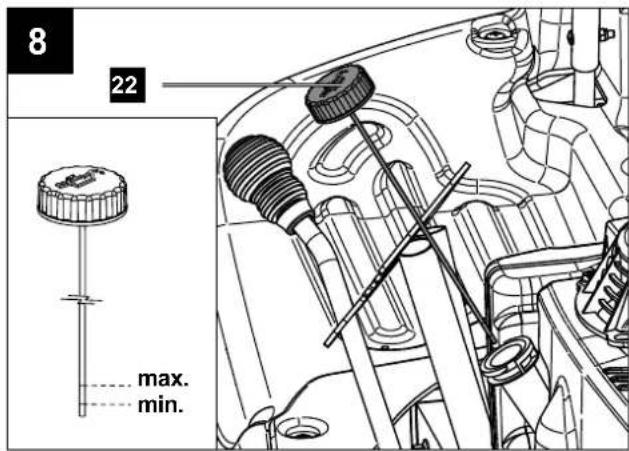
- Open the oil tank cover (22) and fill the tank with oil (SAE 30) using the funnel (27). Note the max. filling capacity.
- Then close the oil tank cover (22) again.
- Connect the battery connection cable (24) to the engine connection cable (24a) (fig. 9).
- Fold the body back down and screw the plastic handles (14), (12) and (3) back on. When folding down, pay attention to the positioning of the ejector chute (19), the gear shift (14), the speed lever (12) and the cutting height adjustment (3) (see fig. 7).
- Insert the anti-tilt pin (g) and secure it with the safety splint (h).
- Engage the catch basket (2).
⚠️ DANGER!
Risk of fire and explosion!
When filling, fuel may ignite and even explode. This leads to severe burns or death.
- Switch off the engine and let it cool down.
- Keep heat, flames and sparks away.
- Only fill up with fuel outdoors.
- Wear protective gloves.
- Avoid contact with skin and eyes.
- Start the product at a distance of at least 3 m from the fuel filling point.
- Watch out for leaks. If petrol is leaking, do not start the engine.
⚠ WARNING!
Risk to health!
Inhaling petrol/lubricant vapours may lead to severe health damage, loss of consciousness and, in extreme cases, to death.
- Do not inhale petrol/lubricant vapours.
- Only use the product outdoors.
NOTE!
Product damage
Using the product without or with too little engine and gear oil can result in engine damage.
- Fill with petrol and oil before commissioning. The product is supplied without engine and gear oil.
NOTE!
Environmental damage!
Spilled oil can pollute the environment permanently. The liquid is highly toxic and can quickly lead to water pollution.
- Fill/empty oil only on level, paved surfaces.
- Use a filling nozzle or funnel.
- Collect drained oil in a suitable container.
- Immediately wipe up any spilled oil carefully and dispose it according to local regulations.
- Dispose of oil as per local regulations.
10.3 Filling up with petrol (fig. 1)
⚠ Attention!
The petrol ride-on lawnmower is delivered without petrol. It is therefore essential to fill with petrol before commissioning. Use Super E5 / E10 petrol for this purpose.
- Fold the seat (1) over.
- Clean the area surrounding the filling area. Impurities in the tank lead to operational faults.
- Carefully open the tank cap (17) so that any possible overpressure can be relieved.
- Fill the tank with petrol (Super E5 / E10) using a funnel (not included in scope of delivery). Note the max. filling capacity. Carefully fill the petrol up to the lower edge of the filler neck.
- Close the tank cover (17) again. Ensure that the tank cap is tightly sealed.
-
Clean the tank cap and the surroundings.
-
Check the tank and fuel lines for leaks.
-
Move at least three meters away from the refueling area before starting the engine.
10.4 Checking tyre pressure
The correct tyre pressure is the essential prerequisite for a perfectly balanced cutting tool and thus also for an evenly mown lawn.
-
Check the tyre pressure with a commercially available foot pump at regular intervals.
-
If necessary, top up with air using a commercially available foot air pump (not included in the scope of delivery) by first pulling the wheel caps (4a + 7a) off the rim and removing the cap of the valve. The correct tyre pressure is 1.3 bar in the front wheels (7) and 1.8 bar in the rear wheels (4).
Note: If you notice that the tyres or wheels are damaged, please contact the customer service or a specialist workshop.
10.5 Check locking brake contact switch (fig. 1)
The locking brake contact switch ensures that the engine can only be started when the locking brake is applied.
Prerequisite: The engine is off.
-
Sit on the driver's seat (1).
-
Release the locking brake (8) by pressing the brake pedal (9).
-
Try to start the engine (rotate ignition key (30) to "Start" position).
-
The engine must not start!
Note: If you notice that the contact switch is not working correctly, please contact the customer service or a specialist workshop.
10.6 Checking the mowing unit contact switch (fig. 1)
The mowing unit contact switch ensures that the engine cannot be started when the mowing unit is engaged.
-
Engine is off.
-
Sit on the driver's seat (1).
-
Press the brake pedal (9) down completely and actuate the locking brake (8).
-
Engage the mowing unit by pushing the lever for the mowing unit (11) forward and pressing it to the right until it engages.
-
Try to start the engine (ignition key (30) in "Start" position).
-
The engine must not start!
Note: If you notice that the contact switch is not working correctly, please contact the customer service or a specialist workshop.
10.7 Checking the seat contact switch (fig. 1)
The seat contact switch ensures that the engine switches off as soon as there is no one in the driver's seat when the mowing unit is switched on.
-
Sit on the driver's seat (1).
-
Depress the brake pedal (9) and activate the locking brake (8).
-
Start the engine and let it run.
-
Engage the mowing unit (11) by pushing the lever for the mowing unit (11) forward and pressing it to the right until it engages.
-
Take the weight off the driver's seat (1) by standing up (do not get off!)
-
The engine must switch off!
Note: If you notice that the contact switch is not working correctly, please contact the customer service or a specialist workshop.
10.8 Checking the catch basket contact switch (fig. 1)
The catch basket contact switch (2) ensures that the engine switches off as soon as the catch basket is not correctly hooked in when the mowing unit is switched on.
-
Sit on the driver's seat (1).
-
Depress the brake pedal (9) and activate the locking brake (8).
-
Start the engine and let it run.
-
Engage the mowing unit (11) by pushing the lever for the mowing unit (11) forward and pressing it to the right until it engages.
-
Lift the empty catch basket (2) slightly.
-
The engine must switch off!
Note: If you notice that the contact switch is not working correctly, please contact the customer service or a specialist workshop.
10.9 Checking the blade stopping device
When the mowing unit is released, a braking process is triggered automatically and simultaneously, bringing the mowing blade to a standstill within a few seconds.
A running blade produces clearly perceptible wind noises. The running of the blade is signalled by the wind noise generated and can thus be controlled.
Note: If you notice that the blade stopping device is not working correctly, please contact the customer service or a specialist workshop.
11. Operation
11.1. Operating times
Please comply with statutory regulations to lawnmower operating times, which may vary from location to location.
Familiarise yourself with the controls and the control parts as well as with the use of the device. In particular, the user must know how to stop the device's working tool and combustion engine quickly.
The device may only be used by persons who have read the user manual and who are familiar with the handling of the device. Prior to initial commissioning, the user must seek expert and practical instruction. The user must be told by the seller or another qualified person how to use the device safely.
During this instruction, the user should be made aware in particular,
- that extreme care and concentration are necessary when working with the device.
- that a petrol ride-on lawnmower that slides down a slope cannot be controlled by applying the brake.
The main causes of loss of control of the petrol ride-on lawnmower may include:
- lack of wheel grip,
- driving too fast,
- inappropriate braking,
- improper use (sporting events, etc.),
- lack of knowledge about effects related to soil conditions, especially on slopes (see under point 11.6.3 "Working on slopes"),
- incorrect attachment of loads and poor load distribution.
11.2 Preparing the mowing area
- Before mowing, carefully examine the area.
- Remove stones, sticks, bones, wires, toys and other objects that may be ejected.
- Ensure that no other people are present on the surface to be mowed.
11.3 Checking the mowing blade (fig. 9)
⚠ WARNING!
Risk of injury!
After switching off the engine, the mowing blade continues to run for a few seconds. If you touch the rotating parts, you may cut yourself.
- Wait until the mowing blade comes to a standstill.
- Do not stop the cutting tool with your hand.
- Wear protective gloves.
-
Keep the cutting tool away from your feet.
-
Before carrying out any check of the mowing blade, stop the engine and remove the ignition key (30) from the ignition switch (11).
-
Fold up the body as described in 10.1.
- Lift the ejector chute (19) slightly and rotate it outwards. Now the mowing blade is accessible.
- Place a socket spanner 12 mm (not included in the scope of delivery) on the screw (35).
- Now rotate the mowing blade (6a) clockwise into view and check it.
-
Regularly check that the mowing blade (6a) is properly fastened, in good condition and sharpened.
-
If this is not the case, have the mowing blade (34) sharpened or replaced by a specialist workshop.
11.4 Starting the engine (fig. 10 + 11)
- Check the engine oil level. See section 13.3.3.
- Engage the catch basket (2). See section 9.4.
- Sit on the driver's seat (1).
- The mowing unit (11) must now be shut off.
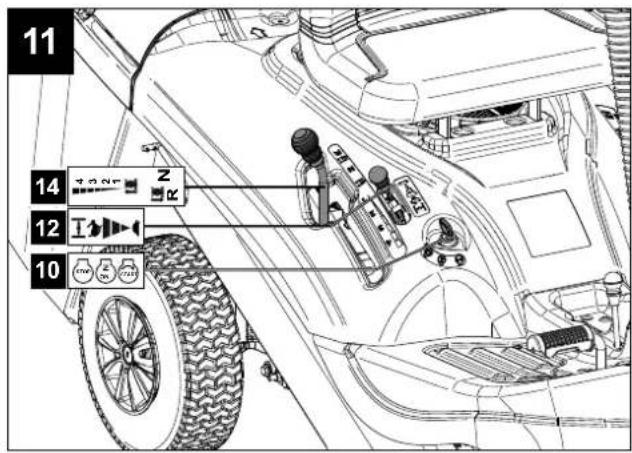
- Depress the brake and clutch pedals (9) and apply the locking brake (8). Set the desired cutting height (3). See section 11.6.1.
- Set the gear shift (14) to neutral "N".
- Set the speed lever (12) to the "choke" position in colder temperatures. And set it to maximum speed when the temperature is warmer or the engine is warm.
- Rotate the ignition key (30) in the ignition lock (11) to "Start" until the engine starts and leave it in the "On" position.
- If necessary, take the speed lever (12) back from the "Choke" position and set the desired speed.
11.5 Starting with the mowing unit switched off Attention! Only change gear when the vehicle is at a standstill.
- With the "tortoise" low engine speed, depress the brake pedal (9) all the way. This unlocks the locking brake (9).
- Put in the desired gear.
- Slowly release the brake pedal (9) so that the petrol ride-on lawnmower starts moving.
- Push the speed lever (12) in the direction of the "Hare" to accelerate.
- To stop the device, depress the brake pedal (9).
11.6 Mowing
⚠ WARNING!
Danger of accident when reversing!
Be aware of the rear environment when reversing!
- Reverse only if necessary!
- Reverse gear cannot be engaged when the mowing unit is switched on.
Hints for mowing
- Before each mowing operation, check that the mowing blade (34) is correctly attached, in good condition and well sharpened. Always wear protective gloves when doing this!
- Check the mower, mowing blade and other parts if you have driven into a foreign object or if the device vibrates more than normal.
- A hot engine, exhaust pipe or drive unit can burn the skin. Thus, do not touch these parts.
- Only mow when there is sufficient light.
- Watch out for traffic on or near a road. Keep the ejector chute (19) away from the road.
-
Avoid mowing in places where the wheels have trouble gripping or mowing is unsafe in any other way.
-
Before reversing, make sure there are no small children behind you.
- Only cut with sharp, flawless mowing blades so that the blades of grass do not fray and the lawn does not turn yellow.
- To achieve a clean cut, guide the lawnmower in the straightest possible paths. These strips should always overlap by a few centimetres so that no patches remain.
- Keep the underside of the mower housing clean and be sure to remove grass debris. Grass deposits make the starting process more difficult, impair cutting quality and grass discharge.
11.6.1 Adjusting the cutting height (fig. 10)
⚠ Attention! The cutting height may only be adjusted when the mower is shut off.
Set the cutting height depending on the actual length of the lawn. Carry out several passes so that a maximum of 4 cm of lawn is removed at a time.
- Engage the cutting height adjustment lever (3) to the desired cutting height.
- 5 different cutting heights can be set.
IMPORTANT: For transport, the cutting tool must always be placed in the highest position (level 5).
11.6.2 Mowing / starting with the mowing unit switched on (fig. 10, 11 + 12)
⚠ WARNING!
Risk of injury and damage!
Objects can be ejected and may hit and injure persons. Solid objects can damage the product.
In addition, small stones or other objects can be ejected at least 15 meters. This can damage cars, houses, and windows.
- When mowing, keep a distance of 30 metres between bystanders or animals.
- Do not remove objects from footpaths etc. with the product.
NOTE!
Risk of damage!
If the product is not cleaned on a regular basis, grass/weed residues may become trapped below the protection shield and may block the product. This can impair the performance of the product and damage it in the long run.
- Clean the product thoroughly after each use.
Attention! Only change gears when the vehicle is at a standstill.
- With the "tortoise" low engine speed, depress the brake pedal (9) all the way. The locking brake (8) must be activated in position P (fig. 10).
-
Slowly push the mowing unit shift lever (11) forward until it engages to switch on the mowing unit.
-
With the "tortoise" low engine speed, depress the brake pedal (9) all the way. This unlocks the locking brake (8).
- Put in the desired gear (14).
- Release the brake pedal (9) slowly to mobilise the petrol ride-on lawnmower slowly.
- Push the speed lever (12) in the direction of the "Hare" to accelerate.
- To stop the device, depress the brake pedal (9).
11.6.3 Working on slopes
⚠ WARNING!
Danger due to errors when driving on slopes!
Take special care when driving on slopes! There is no "safe" slope. Pay particular attention to the following safety instructions!
- If the wheels should spin or if the vehicle gets stuck when climbing a slope, disengage the mowing unit and attachment devices. Then slowly descend and leave the slope in a straight direction!
-
A full catch basket increases the risk of the petrol ride-on lawnmower tipping over due to its weight!
-
On slopes, the cutting path should be made perpendicular to the slope. It is possible to prevent the lawnmower from slipping by lifting it upwards at an angle.
- Slopes are one of the main causes of accidents where control of the petrol ride-on lawnmower is lost and the device tips over. This can cause serious or even fatal injuries.
- For safety reasons, the device must not be used on slopes steeper than 10^ (17.6%).
- 10^ slope corresponds to a vertical rise of 17.6 cm at 100 cm horizontal length.
- Avoid starting or stopping on a slope.
- Do not use the device in places such as slopes or ditches where it may tip over or slip. The danger of tipping over or slipping is greater if the surface is loose or damp.
• Always drive on slopes in the longitudinal direction. There is an increased risk of tipping over when driving sideways. - When driving on slopes, do not make abrupt changes in speed or direction. Working in such situations requires careful, calm and steady operation of the petrol ride-on lawnmower.
- Avoid changes of direction on slopes. Turn around on slopes only if this is unavoidable; if possible, drive slowly and in a wide arc in the downward direction.
- Do not mow wet grass, especially on slopes, as grip is reduced on wet grass. The petrol ride-on lawnmower could slip and therefore no longer be controlled by the user.
-
When driving on slopes, the transmission must not be unlocked by means of the gear freewheel.
-
Special care must be taken when operating attachment devices on slopes (altered weight distribution on the device).
- If the wheels should spin or if the vehicle gets stuck when travelling up a slope, disengage the mowing blade or attachment device. Afterwards, the slope is to be left in a slow downward and straight direction.
- Never try to stabilise the petrol ride-on lawnmower by supporting it with your foot on the ground.
- The weight of the catch basket increases the risk of tipping, especially when it is full.
- Never empty or lift the catch basket on an inclined plane.
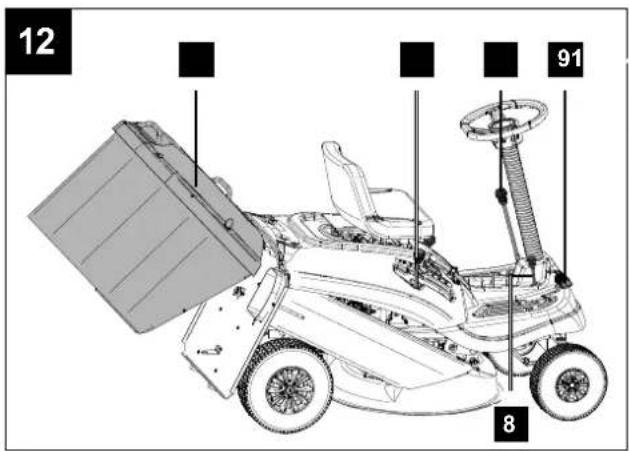
11.6.4 Emptying the catch basket while sitting down (fig. 12)
If cuttings remain on the ground, the catch basket is full and must be emptied.
- Switch off the mowing unit (11) by pushing the lever for the mowing unit (11) backwards and to the left.
- Drive to the location where you would like to empty the catch basket (2).
- Press the brake pedal (9) completely and activate the locking brake (8).
- Set the gear shift (14) to neutral "N".
- Lift the catch basket (2) by the handle so that it empties.
- Lower the catch basket (2) again.
Attention: If the catch basket (2) is not properly engaged, the mowing unit (11) cannot be engaged.
11.6.5 Disengage the catch basket for emptying (fig. 12)
If cuttings remain on the ground, the catch basket is full and must be emptied.
⚠ WARNING!
Risk of injury!
Unintended and unexpected start-up of the product may lead to injuries.
- Always switch off the engine before emptying.
- Press the brake pedal (9) completely and activate the locking brake (8).
- Switch off the mowing unit (11) by pushing the lever for the mowing unit (11) backwards and to the left.
- Set the gear shift (14) to neutral "N".
- Stop the engine by turning the ignition key (30) to the "Stop" position. Then remove the ignition key (30) from the ignition lock (10).
- Disengage the catch basket (2) and empty it.
- Engage the catch basket (2) again.
- If the catch basket (2) is not properly engaged, the mowing unit (11) cannot be engaged.
11.7 Parking the petrol ride-on lawnmower
⚠ WARNING!
Danger of injury and burning!
A hot engine, exhaust pipe or drive unit can burn the skin.
- Do not touch any hot parts of the petrol ride-on lawnmower
- When turning off the engine, make sure that hot parts cannot ignite any nearby objects or materials.
⚠ WARNING!
Danger of injury and tipping!
The petrol ride-on lawnmower may tip over if it has not been parked on a level surface.
- The danger of tipping over or slipping is greater if the surface is loose or damp.
- When stopping, pay attention to the overrun of the cutting tool, which is a few seconds until it comes to a standstill.
Turn off the device as follows:
- Press the brake pedal (9) down completely and actuate the locking brake (8).
- Before leaving the driver's seat, switch off the mowing unit (11).
- Set the cutting height (3) to the lowest position.
- Slide the gear shift (14) to position "N".
- Stop the engine by turning the ignition key (30) in the ignition lock (10) to the "Stop" position. Then remove the ignition key (30) from the ignition lock (10).
- Store the ignition key (30) so that only authorised persons have access to it.
- Make sure that the petrol ride-on lawnmower has come to a complete stop before dismounting.
11.8. After mowing
- Always allow the engine to cool down before parking the petrol ride-on lawnmower in an enclosed space.
- Remove grass, leaves, grease, and oil before storage. Do not place any other objects on the mower.
- Check all screws and nuts before the next use. Tighten up the loose screws.
- Empty the catch basket (2) before the next use.
- Remove the ignition key (30) from the ignition lock (10).
- Make sure that the petrol ride-on lawnmower is not parked next to a source of danger. Escaping gas can cause explosions.
- When the petrol ride-on lawnmower is not in use for an extended period of time, empty the fuel tank with a petrol suction pump (not included in the scope of delivery).
- Oil and maintain the device.
12. Transport
⚠ WARNING!
Risk of injury!
Unintended and unexpected start-up of the product may lead to injuries.
- After loading, switch off the engine and, after the engine has cooled down, remove the spark plug connector from the spark plug.
- The product can cause severe crushing injuries due to its own weight.
Special care must be taken when loading and unloading the petrol ride-on lawnmower for transport in a vehicle or trailer.
Always engage the locking brake (8) and disengage the drive to the mowing unit (11) or attachments.
When transporting the petrol ride-on lawnmower, observe regional legal regulations, especially with regard to load safety and the transport of objects on loading areas.
This petrol ride-on lawnmower must not be towed. A suitable vehicle or trailer must be used for transport on public roads. When transporting, ensure that the transport device has sufficient payload-bearing capacity and that the petrol ride-on lawnmower is suitably safeguarded.
Keep the loading area and the area around the silencer and combustion engine free of combustible materials such as straw, leaves or dry grass cuttings during transport.
Always remove the ignition key (30) from the ignition lock (10) after loading!
13. Cleaning and maintenance
⚠ WARNING!
Danger of injury and burning!
The product can start unexpectedly and cause injuries. In addition, temperatures of 80^ C and more can be reached.
- Switch off the motor before carrying out any cleaning or maintenance work.
- Allow the device to cool down before working in the area of the combustion engine, exhaust manifold and silencer – in particular, this also applies to all maintenance work on the mowing unit.
- Disconnect the spark plug connector from the spark plug.
⚠ WARNING!
Risk to health!
Inhaling petrol/lubricant vapours may lead to severe health damage, loss of consciousness and, in extreme cases, to death.
- Do not inhale petrol/lubricant vapours.
- Only use the product outdoors.
NOTE!
Risk of damage!
Water entering the housing can cause engine damages. In addition, the jet of a high-pressure cleaner can damage parts of the product.
- Clean the product with a cloth, a hand brush, etc.
- Do not immerse the product in water or any other liquid and do not wash it with a high-pressure cleaner.
| Maintenance plan | |||
| After 10 operating hours | After 25 operating hours | Every 50 operating hours | |
| Air filter Clean Replace | |||
| Spark plug Check Clean Replace | |||
Expert inspection required:
- when the petrol ride-on lawnmower passes over a large object,
- if the engine suddenly stops.
- if the cutting blade is bent (do not straighten it yourself!).
• if the transmission is damaged.
13.1 Cleaning work:
⚠ WARNING!
Risk of injury!
Unintended and unexpected start-up of the product may lead to injuries.
- Switch off the engine before carrying out any cleaning or maintenance work and after the engine has cooled down, disconnect the spark plug connector from the spark plug.
NOTE!
Risk of damage!
If the product and its attachment devices are not cleaned regularly, grass/weed debris may become trapped underneath the petrol ride-on lawnmower. This can impair the performance of the product and damage it in the long run.
- Clean the product with a cloth or a hand brush, etc.
- Do not immerse the product in water or any other liquid and do not wash it with a high-pressure cleaner.
- Keep the handles free of oil so that you always have a secure grip.
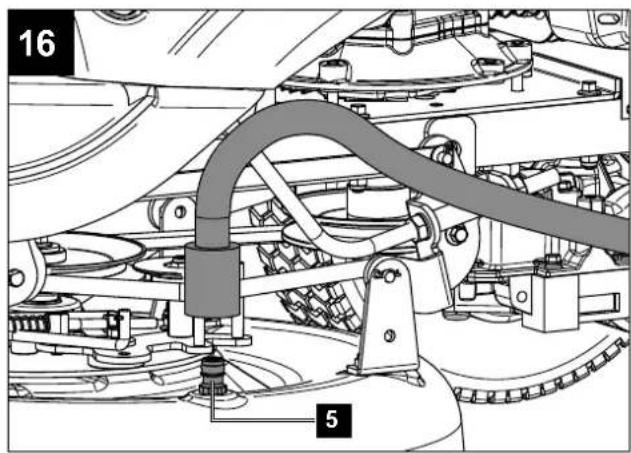
13.2 Cleaning the device with water (fig. 16)
- Place the hose connector on the water connection (5) of the petrol ride-on lawnmower and open the water tap.
- Start the petrol ride-on lawnmower and switch on the mowing unit (11) by pushing the lever for the mowing unit (11) forward and to the right until it engages. The rotating cutter bar dashes the water against the underside of the petrol ride-on lawnmower and in doing so cleans it.
- After approx. 30 seconds, switch off the petrol ride-on lawnmower and the mowing unit (11) again.
- Close the water tap and pull off the hose connector.
- Clean the top side with a cloth (do not use any sharp objects!, e.g. measuring tools).
Note: It is easiest to remove the dirt and grass immediately after mowing. Grass residues and dirt that have dried on can impair mowing. Check that the grass ejection channel is clear of grass residues and remove these if necessary.
Never clean the mower with a water jet or high pressure cleaner. The motor should remain dry.
Do not use aggressive cleaning products such as cold cleaners or white spirit.
Never drive close to an edge or ditch for cleaning work (e.g. on the frame of the petrol ride-on lawn-mower).
To avoid fire hazard, keep combustion engine, cooling fins, battery compartment, area around fuel tank and exhaust pipe free from grass, leaves or leaking oil (grease).
Always clean the catch basket.
13.3 Maintenance work
Only maintenance work described in this operating manual may be carried out; have all other work carried out by a specialist dealer. If you lack the necessary knowledge and tools, always consult a specialist dealer.
We recommend that maintenance work and repairs be carried out only by a specialist dealer.
Only use tools, accessories or attachment devices which are permitted by the manufacturer of this device or technically similar parts, otherwise there may be a danger of accidents resulting in personal injury or damage to the device. If you have any questions, you should contact a specialist dealer.
Original tools, accessories and spare parts are optimally matched to the device and the user's requirements.
The petrol ride-on lawnmower should be checked by the specialist dealer once a year.
Keep warning and instruction labels clean and legible at all times. Damaged or lost stickers must be replaced with new original ones. If a component is replaced by a new part, make sure that the new part has the same stickers.
For safety reasons, fuel-carrying components (fuel line, fuel valve, fuel tank, tank plug, connections, etc.) must be checked regularly for damage and leaks and replaced by a specialist if necessary.
Before starting work on or near electrical components, disconnect the battery connection cable (24) from the engine connection cable (24a).
The device is equipped with numerous safety features. These devices must not be removed or modified (bypassed, etc.) and must be checked at regular intervals. Work on the safety devices may only be carried out by a specialist.
Keep all nuts, pins and screws, especially the blade fixing screw, firmly tightened so that the device is in a safe operating status.
Worn or damaged parts must be replaced immediately for safety reasons.
Regularly check the catcher (e.g. catch basket, ejector chute) for wear, damage or loss of functionality.
Working under the machine requires special care due to the weight of the petrol ride-on lawnmower. Contact your specialist dealer for this.
Check that the front and rear wheels are secured.
Always keep the petrol ride-on lawnmower and attachment devices in good working order; all safety devices must be in place and in good working order.
Check the function of the brake regularly (every 25 operating hours) and have the necessary settings or maintenance work carried out by a specialist workshop if necessary.
13.3.1 Wheel axles and hubs
To ensure the smooth running of the wheels, we recommend cleaning and lightly greasing the wheel axles and wheel hubs at least once per season.
NOTE:
The front and rear wheels (7 + 4) must be disassembled to grease the axles and hubs.
13.3.2 Changing the mowing blade
For safety reasons, only have your mowing blade replaced, sharpened, balanced and fitted by an authorised specialist workshop. To achieve an optimal working result, it is recommended to have the mowing blade checked once a year.
13.3.3 Checking the oil level (fig. 8)
⚠ DANGER!
Risk of fire and explosion!
When filling, fuel may ignite and even explode. This leads to severe burns or death.
- Switch off the engine and let it cool down.
- Keep heat, flames and sparks away.
- Only fill up with fuel outdoors.
- Wear protective gloves.
- Avoid contact with skin and eyes.
- Start the product at a distance of at least 3 m from the fuel filling point.
- Watch out for leaks. If petrol is leaking, do not start the engine.
⚠ WARNING!
Risk to health!
Inhaling petrol/lubricant vapours may lead to severe health damage, loss of consciousness and, in extreme cases, to death.
- Do not inhale petrol/lubricant vapours.
- Only use the product outdoors.
NOTE!
Product damage
Using the product without or with too little engine and gear oil can result in engine damage.
- Fill with petrol and oil before commissioning. The product is supplied without engine and gear oil.
- Only use SAE 30 engine oil.
NOTE!
Environmental damage!
Spilled oil can pollute the environment permanently. The liquid is highly toxic and can quickly lead to water pollution.
- Fill/empty oil only on level, paved surfaces.
- Use a filling nozzle or funnel.
- Collect drained oil in a suitable container.
- Immediately wipe up any spilled oil carefully and dispose it according to local regulations.
-
Dispose of oil as per local regulations.
-
Place the petrol ride-on lawnmower on a level, even surface.
- Remove the ignition key (30) from the ignition lock (10).
- Fold up the body as described in 10.1 (fig. 7).
-
Unscrew the oil tank cover with dipstick (22) by turning it anticlockwise and wipe it off.
-
Screw the oil tank cover with dipstick (22) back into the filling nozzle as far as it will go.
- Pull out the oil tank cover with dipstick (22) and read the oil level in the horizontal position. The oil level must be positioned between the max. and min. of the oil dipstick (22).
13.3.4 Changing oil
The engine oil change should be completed annually before the start of the season while the engine is at operating temperature and shut off.
Only use engine oil (SAE 30).
- Place the petrol ride-on lawnmower on a level, even surface.
- Fold up the body as described in 10.1 (fig. 7).
- Unscrew the oil tank cover with dipstick (22) by turning it anticlockwise.
- Use the included injector needle (26) and the hose to suck out the engine oil through the filling nozzle.
- Fill up with fresh engine oil and check the oil level (see 13.3.3).
Dispose of the used oil in accordance with applicable regulations.
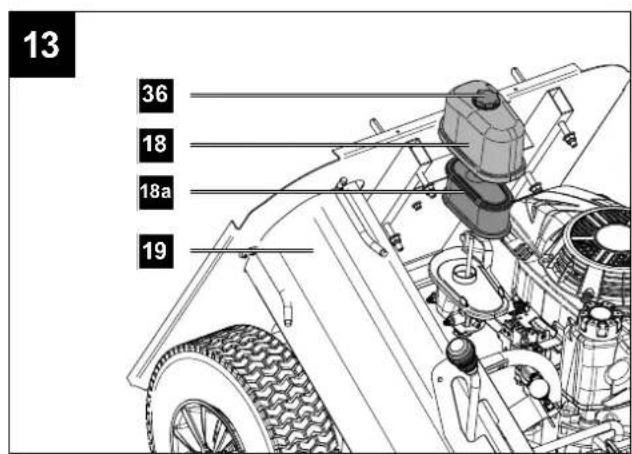
13.3.5 Maintenance of the air filter (fig. 13)
⚠️ DANGER!
Risk of fire and explosion!
If not cleaned correctly, fuel may ignite and even explode. This leads to severe burns or death.
- Clean the air filter only by knocking it out.
- Never use petrol or flammable solvents to clean the air filter.
NOTE!
Risk of damage!
Operating the engine without the filter element in place can cause engine damage.
- Never run the engine without the air filter element in place.
Fouled air filters (18a) diminish the engine output due to reduced air supply to the carburettor. Regular inspection is therefore essential.
The air filter should be checked every 25 operating hours and cleaned as required. The air filter must be checked more often in case of very dusty air.
- Fold up the body as described at 10.1.
- Open the screw (36) of the air filter housing (18) and lift off the housing.
- Clean the air filter (18a) only by knocking it out.
- Assemble the air filter housing (18) and the air filter (18a) in reverse order.
13.3.6 Spark plug maintenance (fig. 1)
Check the spark plug for dirt and grime after 10 operating hours and if necessary, clean it with a copper wire brush. Thereafter, replace the spark plug every 50 operating hours if necessary.
- Pull off the spark plug connector (20) with a twisting motion.
- Remove the spark plug (20a) with a spark plug wrench (a).
Use a feeler gauge to set the gap to 0.75 mm(0.030"). Replace the spark plug (20a) and take care not to pull it too firmly.
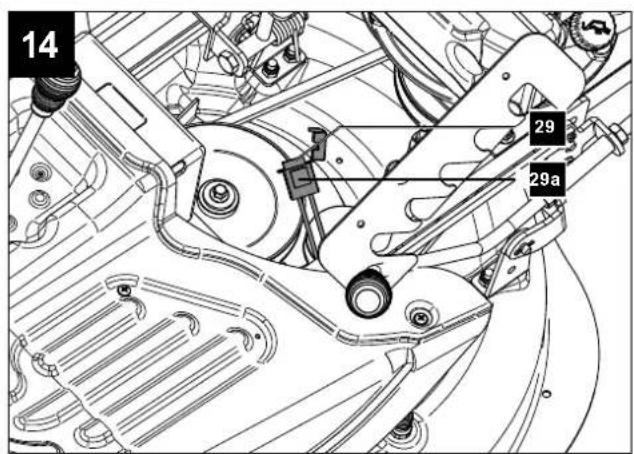
13.3.7 Replacing the fuse (fig. 14)
The electric start is protected by a 10A fuse (29).
Never use another fuse and never bypass it.
- Fold up the body as described in 10.1 (fig. 7).
- Open the fuse holder (29a)
- Remove the defective fuse (29) from the holder (29a).
- Insert a new 10A fuse (29).
- Close the fuse holder (29a).
13.3.8 Charging the battery
The battery is charged during operation. In any case, frequent starting may make it necessary to charge the battery with the included charging unit (25):
- Plug the connector into the charging socket (15) and the charging unit (25) into a plug socket. 230V\~/50Hz
- Charge the battery for min. 5 hours.
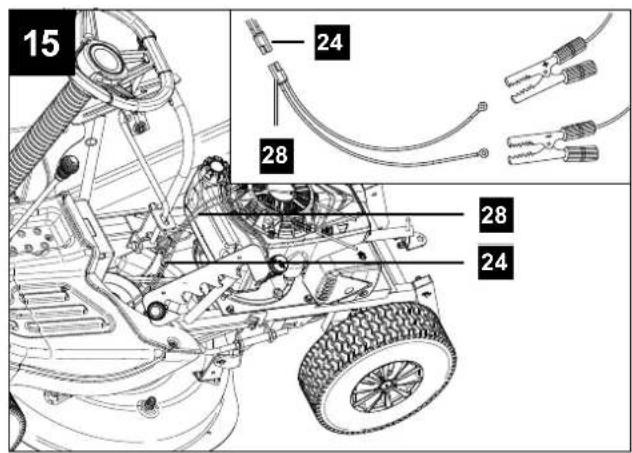
13.3.9 Charging the battery with a car charging unit (fig. 15)
⚠️ DANGER!
Danger due to incorrect charging of the starter battery!
If the charging voltage is too high, there is a danger of the starter battery exploding.
- The charging current of the charging unit must not exceed 5 A and the charging voltage must not exceed 14.4 V.
- Always remove the ignition key (30) from the ignition lock (10) when working on the battery.
Attention!
Danger of short circuit!
To avoid a short circuit, always disconnect the negative cable (-) from the battery (16a) first and reconnect it last.
- Always remove the ignition key (30) from the ignition lock (10) when working on the battery (16a).
- Observe the polarity.
You may also charge the battery with the included charging cable (28) on an industry-standard car charging unit for 12V lead batteries.
- To do this, disconnect the battery connection cable (24) and the engine connection cable (24a). (Fig. 9)
- Connect the supplied charging cable (28) to the battery (16a). Connect the black cable to the negative terminal (-) and the red cable to the positive terminal (+) of the charging unit.
Attention!
Danger of short circuit!
When connecting/disconnecting the battery connection cable (24), make sure that the poles (+/-) do not touch each other and/or the frame.
To avoid a short circuit, always disconnect the negative (-) cable from the charging unit first and reconnect it last.
Always store the petrol ride-on lawnmower with the battery (16a) fully charged.
13.3.10 Checking tyre pressure
- Check the tyre pressure before starting (see also 10.4)!
- Check the tyre pressure with a commercially available foot pump (not included in the scope of delivery) at regular intervals.
- If necessary, top up with air using a commercially available foot air pump (not included in the scope of delivery) by first removing the wheel caps (4a + 7a) and the cap of the valve. The correct tyre pressure is 1.3 bar in the front wheels (7) and 1.8 bar in the rear wheels (4).
- Important: If the tyre pressure is too low, the risk of damage to the valves and therefore the hoses increases.
Note: If you notice that the tyres or wheels are damaged, please contact the customer service or a specialist workshop.
13.3.11 Repair
After any repair or maintenance work, check that all safety-related parts are in place and in perfect condition. All parts which may cause injury must be kept where they are inaccessible to children or others.
Attention: According to the German Product Liability Act, no liability is accepted for damage caused by improper repairs or by not using original spare parts. Such work should be performed by a customer service centre or an authorised specialist. The same applies to accessory parts.
Important note in the case of repairs:
When returning the device for repair, please ensure for safety reasons that it is free of oil and petrol when it is sent to the service centre.
13.3.12 Ordering spare parts
Please provide the following information when ordering replacement parts:
- Device type
• Device article number
Spare parts / accessories
Lawnmower blade - article no.: 7911200616
Battery - Article no: 5911235066
13.3.13 Service information
With this product, it is necessary to note that the following parts are subject to natural or usage-related wear, or that the following parts are required as consumables.
Wearing parts*: Spark plug, air filter, fuel filter, mowing blade, v-belt, battery, blade, tyres
* may not be included in the scope of supply!
Spare parts and accessories can be obtained from our service centre. To do this, scan the QR code on the cover page.
14. Storage
⚠️ DANGER!
Risk of fire and explosion!
Storing the product near potential sources of ignition can result in a fire or an explosion. This leads to severe burns or death.
- Eliminate possible sources of ignition, such as furnaces, hot water boilers with gas, gas dryers, etc.
NOTE!
Risk of damage!
If the product is not stored properly, the engine can be damaged.
- Store the product protected against dirt, dust and moisture.
14.1 Storage during extended breaks in operation
Allow the engine to cool down before parking the device in an enclosed space.
Store the petrol ride-on lawnmower with the tank emptied and also store the fuel supply in a lockable and well-ventilated area.
Never store the device with petrol in the fuel tank inside a building in which fuel vapours may come into contact with naked flames or sparks. If the tank has to be emptied (e.g. decommissioning before winter break), the fuel tank should only be emptied outdoors (e.g. empty the tank by running the combustion engine outdoors).
Store the petrol ride-on lawnmower in a safe condition.
The ignition key (30) must always be removed from the ignition lock (10) and stored securely to prevent unauthorised or improper use by children and other persons.
Clean the petrol ride-on lawnmower thoroughly before storing it (e.g. winter break). Dry grass cuttings and leaves near the silencer can catch fire. Danger of ignition!
Allow the device to cool down completely before covering it.
Before storage, carry out all necessary maintenance work.
When the petrol ride-on lawnmower is taken out of service for an extended period of time, before starting work on or near electrical components, disconnect the battery connection cable (24) from the engine connection cable (24a). We recommend removing the battery (16a) and storing it fully charged in a dry and locked room.
14.1.1 Removing the battery (fig. 9)
- To do this, disconnect the battery connection cable (24) and the engine connection cable (24a). (Fig. 9).
- Then loosen the two screws (16b) from the battery cover (16) using a Phillips screwdriver (not included in the scope of delivery).
- Remove the battery (16a) including the battery cover (16).
Ensure that batteries are secured against unauthorised use (e.g. by children).
Charge the battery (16a) during the winter 1-2 times to ensure that the full charging capacity is maintained. Incorrect storage can damage the battery (16a) and is excluded from the guarantee.
14.2 Drain petrol with a petrol extraction pump
- Hold a collection container under the hose of the petrol extraction pump (not included in the scope of delivery).
- Unscrew and remove the tank cover (17).
- Push the hose of the petrol suction pump into the fuel tank and drain the petrol completely using the petrol suction pump.
- Re-tighten the tank cover (17).
15. Disposal and recycling
Notes for packaging


The packaging materials are recyclable. Please dispose of packaging in an environmentally friendly manner.
Notes on the electrical and electronic equipment act [ElektroG]
![Powertec RPLM224 - Notes on the electrical and electronic equipment act [ElektroG] - 1](/content/2026/05/756184/images/ee7bccf7eb692444d09c0bc13cfdb466ddeacbc2ca3f8f92716990f1a9be8d08.jpg)
Waste electrical and electronic equipment does not belong in household waste, but must be collected and disposed of separately!
- Used batteries or rechargeable batteries that are not installed permanently in the old appliance must be removed non-destructively before disposal. Their disposal is regulated by the battery law.
- Owners or users of electrical and electronic devices are legally obliged to return them after use.
- The end user is responsible for deleting their personal data from the old device being disposed of!
- The symbol of the crossed-out dustbin means that waste electrical and electronic equipment must not be disposed of with household waste.
-
Waste electrical and electronic equipment can be handed in free of charge at the following places:
-
Public disposal or collection points (e.g. municipal works yards)
- Points of sale of electrical appliances (stationary and online), provided that dealers are obliged to take them back or offer to do so voluntarily.
- Up to three waste electrical devices per type of device, with an edge length of no more than 25 centimetres, can be returned free of charge to the manufacturer without prior purchase of a new device from the manufacturer or taken to another authorised collection point in your vicinity.
-
Further supplementary take-back conditions of the manufacturers and distributors can be obtained from the respective customer service.
-
If the manufacturer delivers a new electrical appliance to a private household, the manufacturer can arrange for the free collection of the old electrical appliance upon request from the end user. Please contact the manufacturer's customer service for this.
- These statements only apply to devices installed and sold in the countries of the European Union and which are subject to the European Directive 2012/19/EU. In countries outside the European Union, different regulations may apply to the disposal of waste electrical and electronic equipment.
Information on the battery act [BattG]
![Powertec RPLM224 - Information on the battery act [BattG] - 1](/content/2026/05/756184/images/0ddc712eee6005b34924d008ffe8d2b0f3e67ca95671fffca5f9636b9ed47371.jpg)
Old batteries and rechargeable batteries do not belong in household waste, but must be collected or disposed of separately!
- For safe removal of primary batteries or rechargeable batteries from the electrical appliance and for information on their type or chemical system, please refer to the additional information in the operating or assembly instructions.
- Owners or users of primary batteries and rechargeable batteries are legally obliged to return them after use. The return is limited to household quantities.
- Old batteries may contain pollutants or heavy metals that can harm the environment or human health. Recycling old batteries and using the resources they contain helps to protect these two important issues.
- The symbol of the crossed-out dustbin means that primary batteries and rechargeable batteries must not be disposed of with household waste.
-
If the signs Hg, Cd or Pb are also located below the dustbin symbol, this stands for the following:
-
Hg: Battery contains more than 0.0005% mercury
- Cd: Battery contains more than 0.002% cadmium
- Pb: Battery contains more than 0.004% lead
- Rechargeable batteries and primary batteries can be returned free of charge to the following places:
- Public disposal or collection points (e.g. municipal works yards)
- Sales points for primary batteries and rechargeable batteries
- Take-back points of the common take-back system for old device batteries
- Take-back point of the manufacturer (if not a member of the common take-back system)
- These statements are only valid for rechargeable batteries and primary batteries sold in the countries of the European Union and subject to the European Directive 2006/66/EC. In countries outside the European Union, different regulations may apply to the disposal of rechargeable batteries and primary batteries.
You can find out how to dispose of the disused device from your local authority or city administration.
Fuels and oils
- Before disposing of the unit, the fuel tank and the engine oil tank must be emptied!
- Fuel and engine oil do not belong in household waste or drains, but must be collected or disposed of separately!
- Empty oil and fuel tanks must be disposed of in an environmentally friendly manner.
16. Troubleshooting
Troubleshooting
The table shows potential failures, their possible cause and solutions. However, if you are unable to solve the problem, contact a professional to assist you.
CAUTION!
Always switch off the engine and disconnect the ignition cable before starting any inspection or adjustment work.
CAUTION!
If, after making an adjustment or repair to the engine, you let it run for a few minutes, remember that the exhaust pipe and other parts will become hot. Thus, do not touch the parts that emanate heat, as these may burn you.
| Fault Possible cause Remedy | ||
| Unsteady running, strong vibration of the device | Screws are looseMowing blade attachment looseMowing blade not balancedV-belt damagedEjector chute blocked | Check screwsCheck mowing blade attachmentReplace mowing blade by specialist workshopReplace V-beltClean the ejector chute |
| Motor does not run | Incorrect start sequenceChoke setting incorrectEngine brake lever not pressedThrottle in wrong positionSpark plug is defectiveFuel tank is emptyBowden cables too longpoor fuel, storage without emptying the petrol tank, incorrect petrol typespark plug fouled (carbon residue on the electrodes), electrode distance too largeThe spark plug is wet from the petrol (motor flooded).Engine defective | Check start processCheck choke settingPress engine brake leverCheck settingReplace spark plugRefill with fuelAdjust the Bowden cables using the union nuts.Empty the fuel tank and carburettor. Fill with fresh fuel.Clean the plug, check the heat value of the plug, replace the spark plug as required, set to 0.6 - 0.8 mmDry the spark plug and insert it again.Contact authorised customer service |
| Combustion engine gets very hot. | Cooling fins are dirty.Engine oil level too low.V-belt worn out | Clean the cooling fins.Check fill level of engine oil and top up engine oil.Replace V-belt |
| Device does not move. | Transmission disengagedV-belt (transmission) unhookedV-belt (transmission) worn or damagedMissing parallel key between rear axle and rear wheels | Engaging the gear (transmission free-wheel bow)Hook in the V-belt (transmission)Replace the V-belt (transmission)Fitting the parallel key |
| Engine runs unsteadily | Air filter dirty.Spark plug dirty | Clean the air filterClean the spark plug |
| Lawn turns yellow, uneven mowing results | Mowing blade is not sharpCutting height is too low | Sharpen the mowing bladeSet the correct height |
| The discharge of grass clippings is unclean | Cutting height is too lowMowing blade worn outCatch basket is cloggedChute blockedGrass too wetDriving speed too high | Set heightReplace the mowing bladeEmpty the catch basket or remove the blockageClean the ejector chuteMow during dry weatherChoose a lower gear |
| The mower does not start with the electrical start | Battery has dischargedFuse burnt out | Charge the batteryReplace the fuse |
| Motor output drops during mowing | The driving speed in relation to the cutting height is too high | Reduce the driving speed and increase the cutting height |
| Braking power insufficient | The brake is no longer set correctly | Contact the specialist merchant/customer service |
Table des matières: Page:
Günzburger Straße 69
D-89335 Ichenhausen
CHER CLIENT,
B
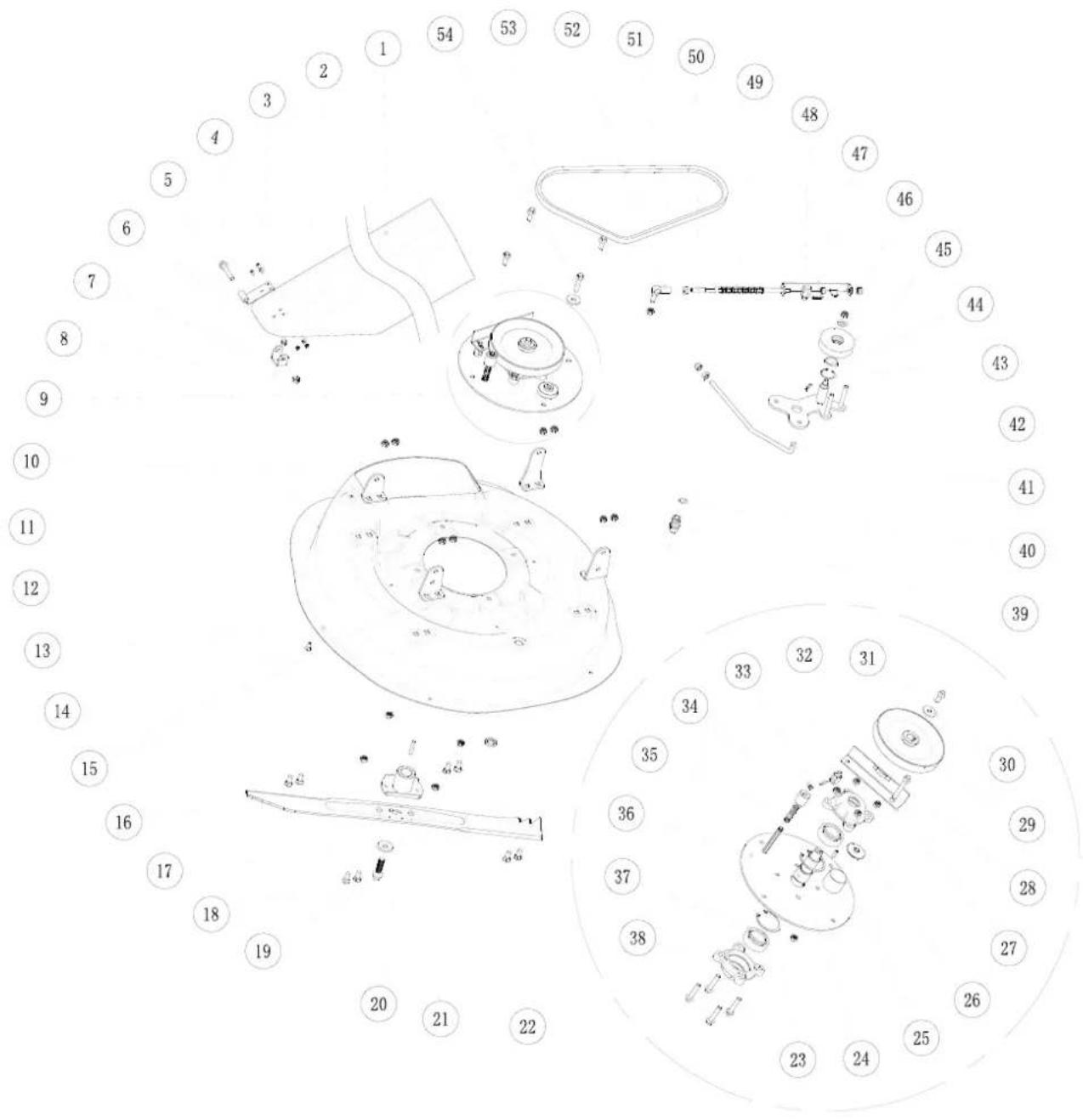
C
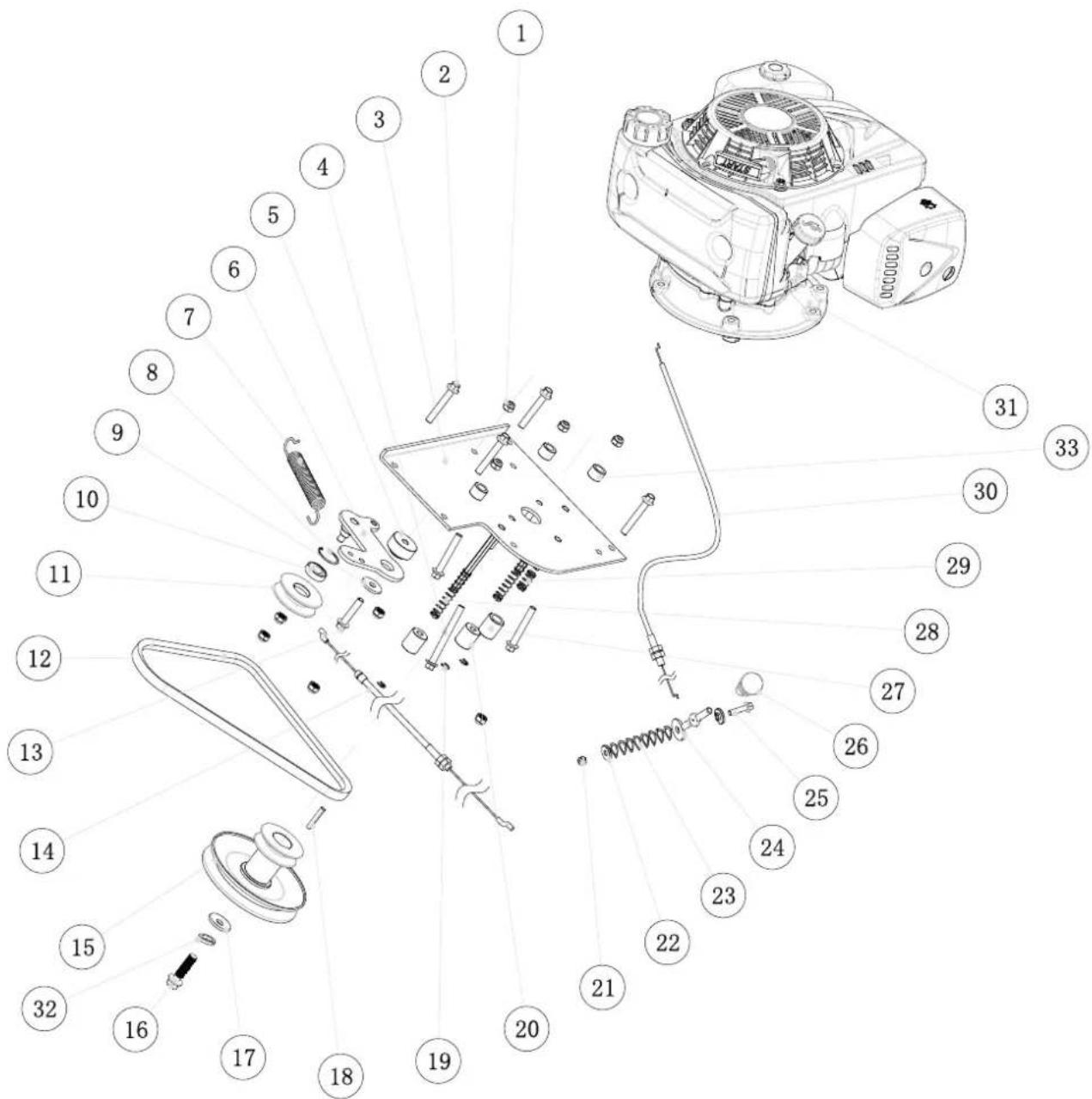
D
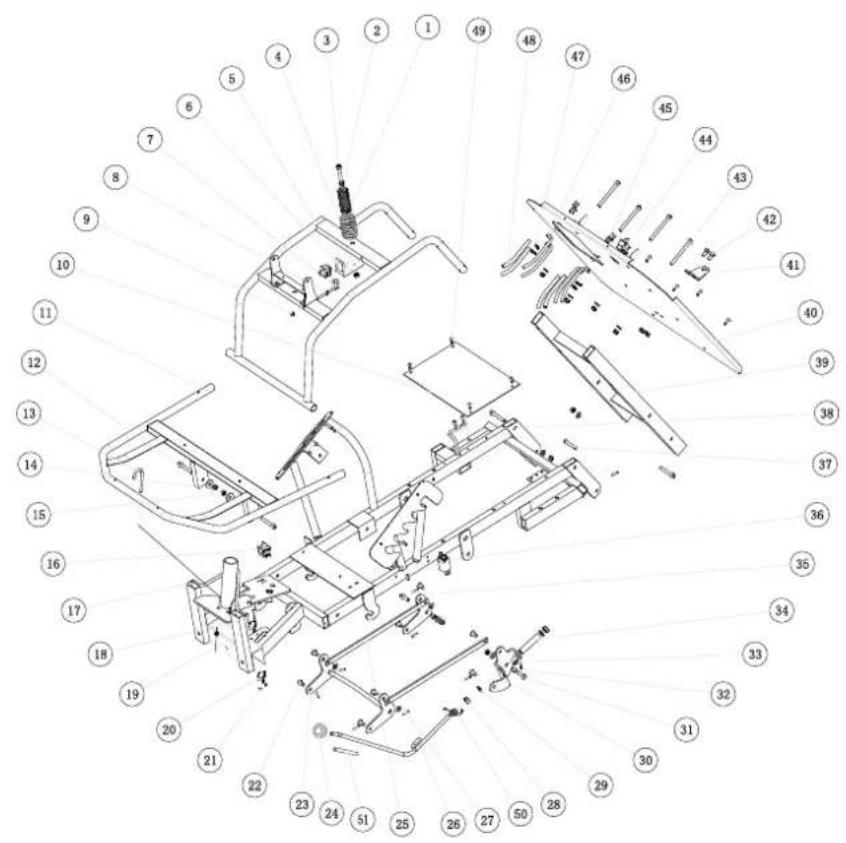
E
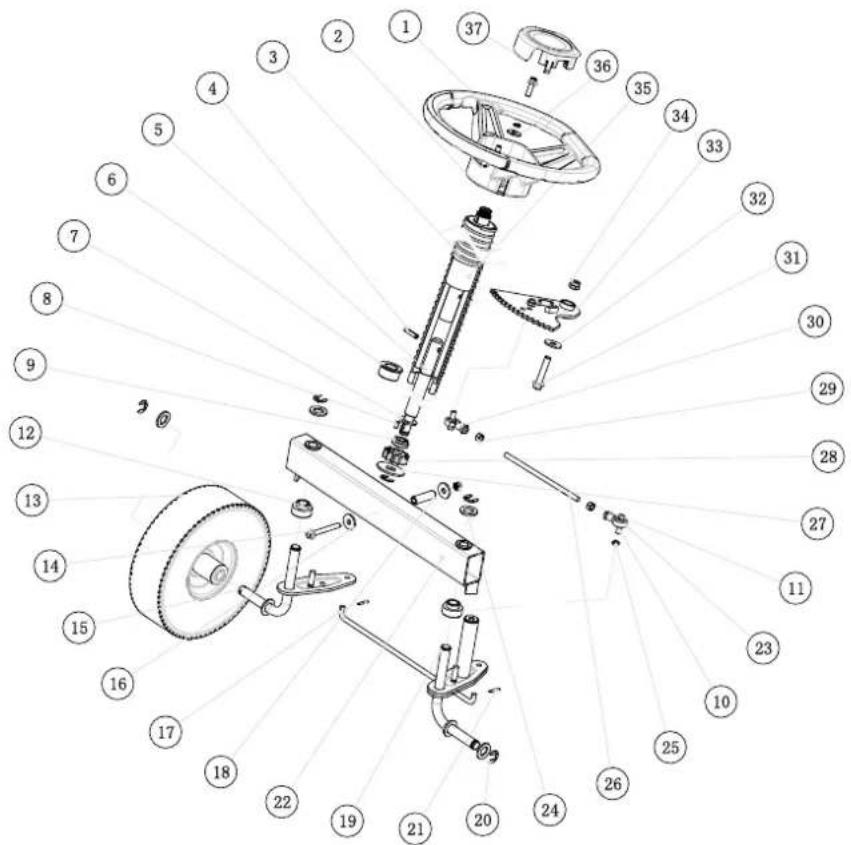
F
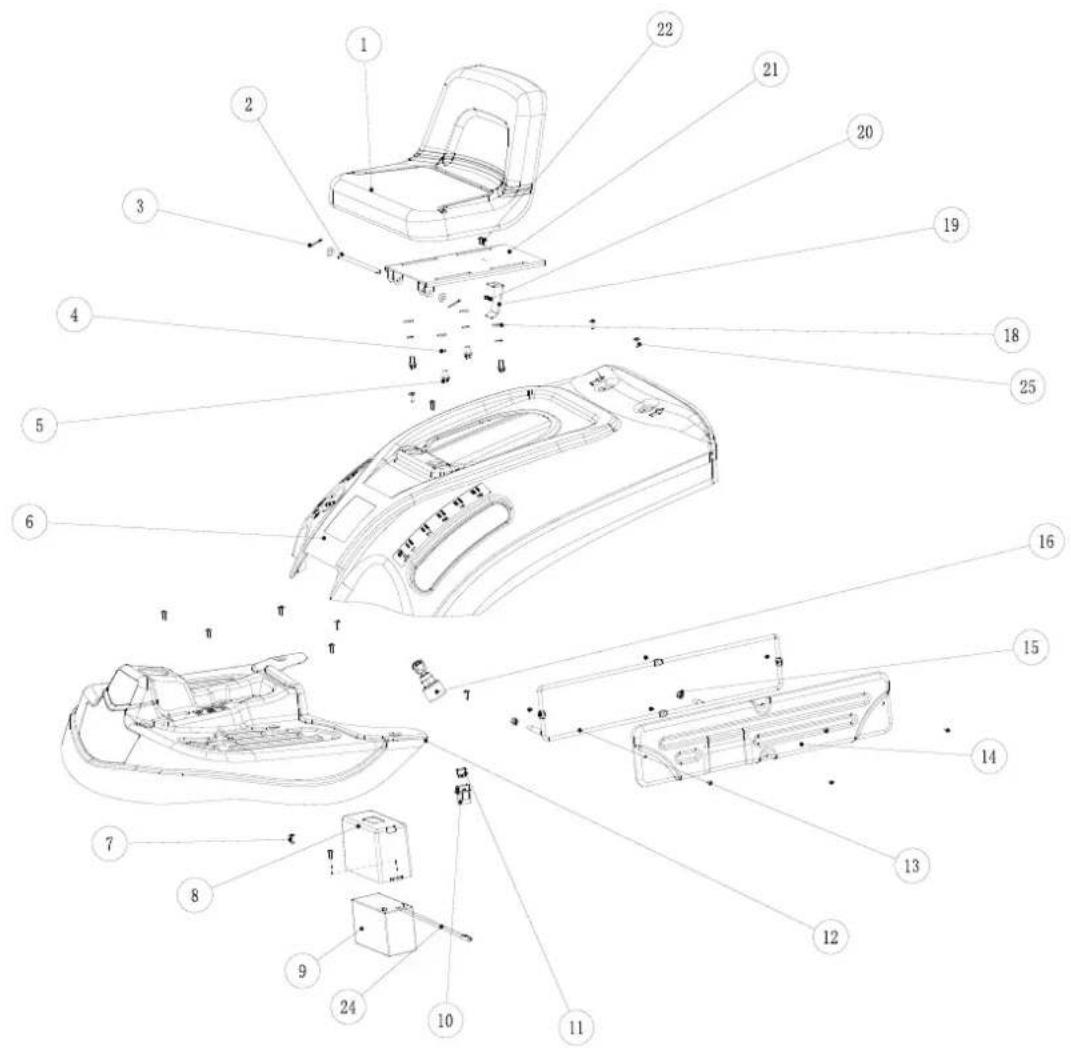
G
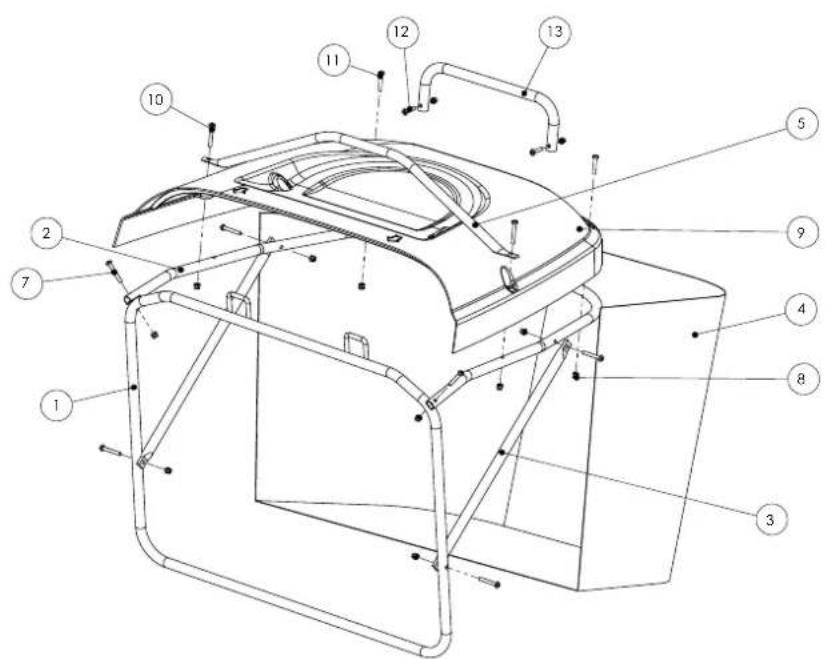
EC Declaration of Conformity
Petrol ride-on lawn mower
Tondeuse autoportée
3911220917
0237-01001 - 0237-01289
RPLM224
RPLM224
RPLM224
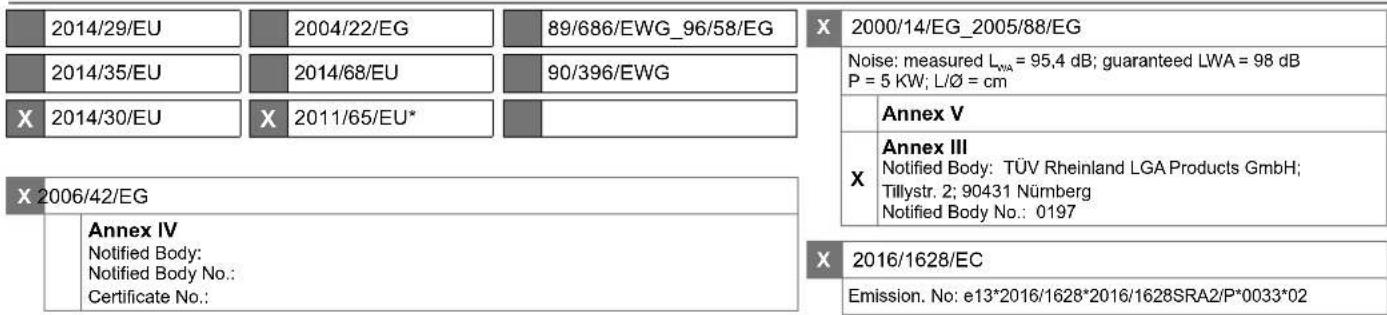
Standard references:
EN ISO 5395-1:2013+A1, EN ISO 5395-3:2013+A1+A2, EN ISO 14982:2009
This declaration of conformity is issued under the sole responsibility of the manufacturer.
The object of the declaration described above fulfils the regulations of the directive 2011/65/EU of the European Parliament and Council from 8th June 2011, on the restriction of the use of certain hazardous substances in electrical and electronic equipment.
Apparent defects must be notified within 8 days from the receipt of the goods. Otherwise, the buyer's rights of claim due to such defects are invalidated. We guarantee for our machines in case of proper treatment for the time of the statutory warranty period from delivery in such a way that we replace any machine part free of charge which provably becomes unusable due to faulty material
or defects of fabrication within such period of time. With respect to parts not manufactured by us we only warrant insofar as we are entitled to warranty claims against the upstream suppliers. The costs for the installation of the new parts shall be borne by the buyer. The cancellation of sale or the reduction of purchase price as well as any other claims for damages shall be excluded.
Garantie FR
- RPLM224
- Inhaltsverzeichnis:
- VEREHRTER KUNDE,
- Table of contents: Page:
- Explanation of the symbols on the device
- Introduction
- MANUFACTURER:
- DEAR CUSTOMER,
- NOTE:
- Please consider:
- Device description
- Scope of delivery (fig. 2)
- Tools:
- Assembly material:
- Proper use
- Attention – Danger of accident!
- ⚠ WARNING
- Safety information
- ⚠ Attention!
- Who is not permitted to use the device:
- ⚠️ Personal safety
- Attention! Risk to health due to vibrations!
- Clothing and equipment
- During work
- Exhaust gases:
- ⚠️ Work area safety
- ⚠ Use of petrol
- Do not overfill the fuel tank!
- Risk of explosion!
- Battery safety
- ⚠ Safety instructions for petrol ride-on lawn-mowers
- Starting up:
- Work deployment:
- ⚠ Warning – Danger of injury!
- Residual risks and accident prevention standards
- Neglect of ergonomic principles
- Negligent use of personal protective equipment (PPE)
- Human behaviour, misconduct
- Danger from noise
- Hearing damage
- Behaviour in an emergency
- Technical data
- Technical changes reserved!
- Unpacking
- DANGER
- Assembly
- ⚠ WARNING!
- Risk of injury and damage!
- Note!
- Fitting the seat (fig. 3)
- Fitting the lever for the mowing unit (fig. 4)
- Fitting the steering column (fig. 5)
- Fitting and hooking in the catch basket (fig. 6)
- Checking the ejector chute (fig. 9)
- Before commissioning
- Risk to health!
- Fuel and oil
- Risk of damage!
- Folding the body up (fig. 7)
- Fill up with engine oil and connect battery cables (fig. 8 + 9)
- ⚠️ DANGER!
- Risk of fire and explosion!
- Product damage
- Environmental damage!
- Filling up with petrol (fig. 1)
- Checking tyre pressure
- Check locking brake contact switch (fig. 1)
- Checking the mowing unit contact switch (fig. 1)
- Checking the seat contact switch (fig. 1)
- Checking the catch basket contact switch (fig. 1)
- Checking the blade stopping device
- Operation
- Operating times
- Preparing the mowing area
- Checking the mowing blade (fig. 9)
- Risk of injury!
- Starting the engine (fig. 10 + 11)
- Starting with the mowing unit switched off Attention! Only change gear when the vehicle is at a standstill.
- Mowing
- Danger of accident when reversing!
- Hints for mowing
- Adjusting the cutting height (fig. 10)
- ⚠ Attention! The cutting height may only be adjusted when the mower is shut off.
- Mowing / starting with the mowing unit switched on (fig. 10, 11 + 12)
- Attention! Only change gears when the vehicle is at a standstill.
- Working on slopes
- Danger due to errors when driving on slopes!
- Emptying the catch basket while sitting down (fig. 12)
- Disengage the catch basket for emptying (fig. 12)
- Parking the petrol ride-on lawnmower
- Danger of injury and burning!
- Danger of injury and tipping!
- After mowing
- Transport
- Cleaning and maintenance
- Expert inspection required:
- Cleaning work:
- Cleaning the device with water (fig. 16)
- Maintenance work
- Wheel axles and hubs
- Changing the mowing blade
- Checking the oil level (fig. 8)
- ⚠ DANGER!
- Changing oil
- Maintenance of the air filter (fig. 13)
- Spark plug maintenance (fig. 1)
- Replacing the fuse (fig. 14)
- Never use another fuse and never bypass it.
- Charging the battery
- Charging the battery with a car charging unit (fig. 15)
- Danger due to incorrect charging of the starter battery!
- Attention!
- Danger of short circuit!
- Checking tyre pressure
- Repair
- Important note in the case of repairs:
- Ordering spare parts
- Spare parts / accessories
- Service information
- Storage
- Storage during extended breaks in operation
- Removing the battery (fig. 9)
- Drain petrol with a petrol extraction pump
- Disposal and recycling
- Notes for packaging
- Notes on the electrical and electronic equipment act [ElektroG]
- Information on the battery act [BattG]
- Fuels and oils
- Troubleshooting
- Troubleshooting
- CAUTION!
- Table des matières: Page:
- CHER CLIENT,
- C
- EC Declaration of Conformity
- Standard references:
- Garantie FR
Brand : Powertec
Model : RPLM224
Category : Lawn mower