
DH650001AV - Paint gun Campbell Hausfeld - Free user manual and instructions
Find the device manual for free DH650001AV Campbell Hausfeld in PDF.


| Product Type | Air Paint Spray Gun |
| Brand | Campbell Hausfeld |
| Model | DH650001AV |
| Power Source | Compressed Air |
| Operating Pressure | 276 to 414 kPa |
| Feed Types | Siphon, pressure, gravity |
| Spray Pattern Adjustment | Yes, via pattern adjustment knob |
| Fluid Flow Adjustment | Yes, via fluid adjustment knob |
| Adjustable Air Cap | Yes |
| Compatible Materials | Paint, primer, finishes (non-flammable) |
| Maintenance | Solvent cleaning, silicone-free oil on moving parts |
| Safety | Mask, goggles, ventilation; avoid flames |
| Warranty | 1 year |
| Spare Parts | Nozzle, needle, air cap, seals, packing gland |
| Repairability | Disassemblable for cleaning; replacement of worn parts |
Frequently Asked Questions - DH650001AV Campbell Hausfeld
User questions about DH650001AV Campbell Hausfeld
0 question about this device. Answer the ones you know or ask your own.
Ask a new question about this device
Download the instructions for your Paint gun in PDF format for free! Find your manual DH650001AV - Campbell Hausfeld and take your electronic device back in hand. On this page are published all the documents necessary for the use of your device. DH650001AV by Campbell Hausfeld.
USER MANUAL DH650001AV Campbell Hausfeld
Operating Instructions Air Operated Models
Please read and save these instructions. Read carefully before attempting to assemble, install, operate or maintain the product described. Protect yourself and others by observing all safety information. Failure to comply with instructions could result in personal injury and/or property damage! Retain instructions for future reference.

CAMPBELL HAUSFELD
Spray Guns
Description
Air operated spray guns are designed to perform a variety of painting, coating, and finishing applications using the power of compressed air.
Safety Guidelines
This manual contains information that is very important to know and understand. This information is provided for SAFETY and to PREVENT EQUIPMENT PROBLEMS. To help recognize this information, observe the following symbols.
DANGER
an imminently
hazardous situation which, if not avoided, WILL result in death or serious injury.
WAPPNING
a potentially
hazardous situation which, if not avoided, COULD result in death or serious injury.
CAUTION
Caution indicates a potentially
hazardous situation which, if not avoided, MAY result in minor or moderate injury.
NOTICEINDICATES
important
information, that if not followed, may cause damage to equipment.
Unpacking
After unpacking the product, inspect carefully for any damage that may have occurred during transit. Make sure to tighten fittings, bolts, etc., before putting unit into service.
Pwatakins
tool if damaged
during shipping, handling or use. Damage could result in bursting and cause injury or property damage.
General Safety Information
- Read all manuals included with this product carefully. Be thoroughly familiar with the controls and the proper use of the equip
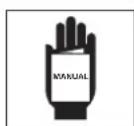
- Follow all local electrical and safety codes as well as in the United States, the National Electrical Codes (NEC) and Occupational Safety and Health Act (OSHA).
CALIFORNIA PROPOSITION 65
AWARNING
You
dust when you cut, sand, drill or grind materials such as wood, paint, metal, concrete, cement, or other masonry. This dust often co chemicals known to cause c defects, or other reproductive Wear protective gear.

WORK AREA
DANGER
- Never spray closer than 25 feet to the compressor! If possible, locate compressor in separate room. Never spray into the compress controls or the motor.
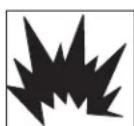
Do not spray flammable materials in vicinity of open flame or near ignition sources. Motors, electrical equipment and controls can cause electrical arcs that will ignite flammable gas or vapor. flammable liquids or gas vicinity of the compressor
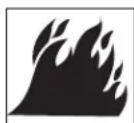
Do not smoke or eat when spraying paint, insecticides, or other flammable substances.
CAUTION
- Keep hose away from sharp objects. Bursting air hoses may cause injury. Examine air hoses regularly and replace if damaged.
NOTICE
Always work in a clean environment. To avoid injury or damage to the workpiece, do not aim the spray gun at any dust or debris.
- Keep visitors away and NEVER allow children or pets in the work area. can
PERSONAL SAFETY
WARNING
Use a face mask/respirator, non-skid shoes, and protective clothing when spraying. Always spray in a well ventilated area to prevent fire hazards. Refer to MSDS data sheets (MSDS) material for details.

Always wear eye protection

- Never use oxygen, carbon dioxide, combustible gases or any bottled gas as an air source for the spray gun. Such gases are capable of explosion and serious injury to persons.
Do not misuse this product. Excessive exposure to vibration, work in awkward positions, and repetitive work motions can cause injury to hands and arms. Stop using any tool if discomfort, numbness, tingling, or pain occur, and consult a physician. - Never aim or spray at yourself or anyone else or serious injury could occur.
REmINDER: Keep your dated proof of purchase for warranty purposes! Attach it to this manual or file it for safekeeping.
General Safety Information (Continued)
- Do not spray acids, corrosive materials, toxic chemicals, fertilizers or pesticides. Using these materials could result in death or serious injury.
CAUTION
- When spraying and cleaning, always follow the instructions and safety precautions provided by the material manufacturer (Refer to MSDS).
- Do not overreach. Keep proper footing and balance at all times. Proper footing and balance enables better control of the spray gun in unexpected situations.
- Stay alert. Watch what you are doing and use common sense when operating the spray gun. Do not use the spray gun while tired or under the influence of drugs, alcohol, or medication. A moment of inattention while operating the spray gun increases the risk of injury to persons.
TOOL USE AND CARE
WARNING
Do not use pressure that exceeds operating pressure of the spray gun or any of the parts (hoses, fittings, etc.) in the painting system.
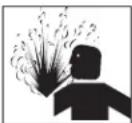
Over pressurizing the spray gun is able to result in bursting, abnormal operation, breakage of the spray gun or serious injury to persons.
Always verify prior to using the spray gun that the air source has been adjusted to the rated air pressure or within the rated air-pressure range.
- Check for misalignment or binding of moving parts, breakage of parts, and any other condition that affects the spray gun's operation. If damaged, have the spray gun serviced before using. Many accidents are caused by poorly maintained spray guns. There is a risk of bursting if the spray gun is damaged.
CAUTION
- Avoid unintentional starting. Be sure the trigger is off before connecting to the air supply. Do not carry the spray gun with your finger on the trigger or connect the spray gun to the air supply with the trigger on.
- Disconnect the spray gun from the air source before, changing accessories, cleaning, servicing or storing the
spray gun. Such preventive safety measures reduce the risk of starting the spray gun unintentionally.
NOTICE
- Failure to install appropriate water/ oil removal equipment may result in damage to machinery or workpiece.
Always use a pressure regulator on the air supply to the spray gun.
Introduction
The spray gun is a vital link in any finishing application. In addition to operating the spray gun properly, techniques of surface preparation and paint preparation must be understood. These instructions will explain the differences among various spray technologies and serve as a guide in the proper operation and techniques of spray painting. Refer to the Replacement Parts Manual for model specific information.
Currently, there are three basic types of spray guns: Siphon, Pressure, and Gravity feed (See Figures 2-5). The spray gun type used depends primarily on the application and the size of the project. These types of spray guns can be either conventional air spray or High Volume Low Pressure (HVLP).
SPRAY GUN TERMS
FEED - Method used to bring paint into the gun for spraying.
PRESSURE FEED - Method of paint feed where a canister or paint tank is pressurized to force paint to the gun. Either internal or external mix air caps are used with this method. Pressure feed is generally used for spraying heavy bodied paints or for large size projects.
SIPHON FEED - Method of paint feed where atmospheric pressure creates a partial vacuum to siphon paint to the gun. Only external mix air caps are used with this method. Siphon feed is used with light bodied paints.
GRAVITY FEED - Method of paint feed similar to the siphon feed method. However, the cup is inverted to create a positive fluid pressure at the nozzle.
MIX - The mixing of paint and air when spraying.
INTERNAL MIX - Process where the air and paint are mixed inside the air cap just before being sprayed. This method is best for heavy bodied, slow drying paints and can only be used with the pressure feed method. Do not use fast drying paints with internal mix. The paint will dry inside and quickly clog the air cap.
EXTERNAL MIX - Process where the air and paint are mixed just after leaving the nozzle. This type of mix should be used for fast drying paints and when a high quality finish is needed.
BLEEDER/NON-BLEEDER - Indicates whether air flows through the gun continuously or as the trigger is pulled.
BLEEDER - In this mode, air passes continuously through the gun whether spraying or not. This mode is generally used when the air is supplied by a continuously running compressor that does not have a tank.
NON-BLEEDER-In this mode, air flows only when the trigger is pulled. This type of operation is used with a compressor equipped with a tank or with a large factory air system.
VISCOSITY - A measurement of the resistance of the flow of a liquid.
ATOMIZATION - Conversion of liquid to spray droplets (mist).
PATTERN CONTROL KNOB - Used to form the proper pattern (size and shape) of paint as it is sprayed from the gun to the work piece.
FLUID CONTROL KNOB - Used to control the amount of paint being mixed with air.
PAINT TANK - An auxiliary pressurized paint reservoir that allows continuous spraying of large amounts of paint without stopping for refills as with a canister. It also allows using the spray gun at any angle or orientation.
Introduction (Continued)
CONVENTIONAL VS. HVLP
Conventional spray guns use a much higher air cap pressure to atomize paint than HVLP spray guns. This results in more overspray and a lower transfer efficiency.
HVLP, electrostatic and airless processes are currently the only compliant spray methods that meet the strict 65% transfer efficiency criteria required by some air quality management districts. This enhanced transfer efficiency results in a significant material savings compared to conventional spraying. Check local, state and national regulations that may be in effect before performing any spraying operations.
HVLP spraying is a growing trend in the finishing industry due to its environmental friendliness. By definition, dynamic air pressures in the air cap must be 10 psi or less to qualify as HVLP.

Figure 1
A soft, low velocity pattern is produced which increases control and reduces "bounceback" and overspray (See Figure 1). For these reasons, HVLP is also well suited for spraying parts with recessed areas.
Types of Spray Gun Set-Ups
(CONVENTIONAL AND HVLP)
SIPHON FEED CUP SET-UP
The air pressure for atomization is controlled by the regulator on the air source. The amount of fluid is adjusted by the fluid control knob, the paint viscosity, and the air pressure (See Figure 2). The siphon cup must be vented to the atmosphere.
WATER/OIL IN COMPRESSED AIR
All compressor pumps discharge some condensed water, oil or contaminates with the compressed air.
IMPORTANT: This condensation will cause "fish eyes" to appear in the paint job. Install appropriate water/oil removal equipment and controls as necessary for the intended application.
NOTICE
Failure to install appropriate water/ol removal equipment may result in damage to machinery or workpiece.
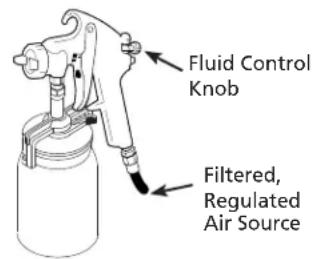
Figure 2 - Siphon Feed Cup Set-up
PRESSURE FEED CUP SET-UP
Air pressure for atomization is controlled by the regulator on the air source. The fluid pressure is set by adjusting the cup regulator. The amount of fluid is also adjusted by the fluid control knob (See Figure 3). This method is required for heavy fluids and when using internal mix nozzle spraying. This method generally requires a special fluid tip, needle and air cap set.
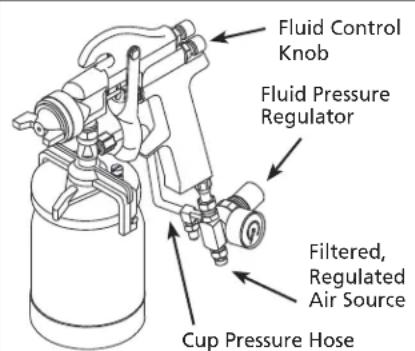
Figure 3 - Pressure Feed Cup Set-up
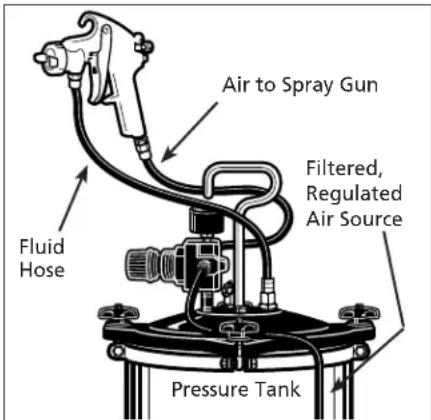
Figure 4 - Pressure Feed Tank Set-up
GRAVITY FEED CUP SET-UP
This method is similar to the siphon feed with cup except that the cup is positioned above the spray gun body (See Figure 5). This creates a positive fluid pressure in the fluid nozzle.
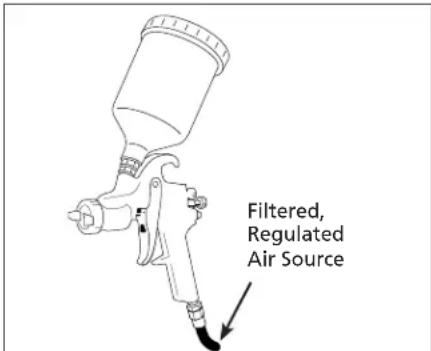
Figure 5 - Gravity Feed Cup Set-up
PRESSURE FEED TANK SET-UP
This method is the same as the pressure feed cup set-up except that the gun can be oriented in any position independent of the tank (See Figure 4). This method is useful for medium production or large scale spraying applications.
Preparation
- Thoroughly mix the paint in accordance with the manufacturer's instructions, adding thinner where necessary. Most materials will spray readily if thinned properly. Strain material through cheese cloth or a paint strainer. Test the consistency of the material by making a few strokes on a cardboard target. If material still appears too thick, add a small amount of thinner. THIN WITH CARE!!
- Fill the canister about 3/4 full and start the air compressor.
- Set up a piece of cardboard or other scrap material to use as a target and adjust for best spray pattern.
FAN DIRECTION
The direction of the fan (horizontal or vertical) can be changed by loosening the lock ring and turning the air cap 90 degrees (See Figure 6). Hand tighten lock ring after adjustment.
Air Cap
Horizontal Fan
Lock Ring
Vertical Fan
Figure 6
PATTERN ADJUSTMENT
SIPHON AND GRAVITY FEED
- Adjust air pressure to the spray gun according to the recommendations supplied with spray material. This air pressure usually falls between 40 - 60 psi. Adjust air pressure with trigger pulled and air control knob (if applicable) fully open. If reduced air pressure is desired for some areas of spray job, use air control knob to reduce pressure as necessary (See Figure 7).
Air Control
Knob
Increase
Air Flow
Decrease
Air Flow
Figure 7 - Air Adjustment on Spray Gun
- Set pattern size to desired shape. For full pattern, open pattern control knob by turning counterclockwise. For a round pattern, turn pattern control knob clockwise (See Figure 8).
Pattern control knob
Fluid control knob
Figure 8 - Pattern Size
- Turn fluid control knob fully clockwise until closed (See Figure 8).
- Trigger a short burst while turning fluid control knob counterclockwise. Observe the spray pattern on the target and adjust the fluid control knob until the desired pattern (atomization) is obtained (See Figure 9).
Paint too.
Correct
Paint too
fine
coarse
Figure 9 - Pattern Consistency (Atomization)
If the spray is too fine (excessive overspray), caused by too much air for the amount of paint being sprayed, reduce the air pressure or open the fluid control to spray more material.
If the spray is too coarse (spitting globs), reduce the amount of material with the fluid control knob or thin the paint.
PRESSURE FEED SET-UP
- Adjust air pressure to the spray gun according to the recommendations supplied with the spray material. This air pressure usually falls between 40 - 60 psi. Adjust air pressure with the trigger pulled and air control knob (if applicable) fully open. If reduced air pressure is desired for some areas of the spray job, use air control knob to reduce pressure as necessary (See Figure 7).
-
Set pattern size to desired shape. For full pattern, open pattern control knob by turning counterclockwise. For a round pattern, turn pattern control knob clockwise (See Figure 8).
-
Open the fluid control knob by turning counterclockwise about three turns.
- Start the tank pressure at 0 psi and turn the tank regulator slowly to increase fluid delivery until the desired pattern consistency (atomization) is reached.
- If the atomization is too coarse, reduce the tank pressure with the tank regulator. Trigger a short burst or open relief valve to relieve the pressure, then increase pressure slowly to obtain proper pattern consistency (See Figure 9).
- The fluid control knob can be used to finely adjust pattern consistency.
Before spraying the workpiece, practice a few minutes on a cardboard target to ensure the pattern size and consistency are set correctly.
Operation
- Begin spraying. 6-9 in. Always keep the gun at right angles to the work (See Figure 10).
Keep the nozzle about 6 to 9 inches from the work
surface throughout the stroke and
always keep the gun in motion while spraying.
Stopping gun movement in mid-stroke will cause a build up of paint and result in "runs." Do not "fan" the gun from side to side while painting. This will cause a build-up of paint in the center of the stroke and an insufficient coating at each end (See Figure 11).
Thin coat Thin heavy coat
INCORRECT
Figure 11
Operation (cont.)
- "Trigger" the gun properly. Start the gun moving at the beginning of the stroke BEFORE SQUEEZING THE TRIGGER and release the trigger BEFORE STOPPING GUN MOVEMENT at the end of the stroke. This procedure will "feather" (blend) each stroke with the next without showing overlap or unevenness (See Figure 12).
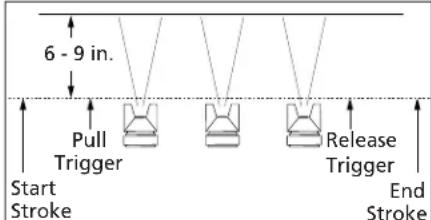
Figure 12
- The amount of paint being applied can be varied by the speed of the stroke, distance from the surface and adjustment of the fluid control knob.
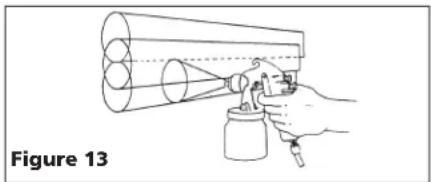
- Overlap strokes just enough to obtain an even coat (See Figure 13). NOTE: Two thin coats of paint will yield better results and have less chance of runs than one heavy layer.
- Use a piece of cardboard as a shield to catch overspray at the edges of the work to protect other surfaces. Use masking tape to cover other areas if needed.
Maintenance
DAILY CLEAN-UP
Local codes may require specific cleaning methods and equipment. Follow local codes and manufacturer's recommendations for the use and disposal of spray materials and solvent.
immediately after
use. Paint and other material dry quickly in the small passages rendering gun useless due to the difficulty of removing hardened paint from the passages inside the gun.
NOTE: In the instructions below, the use of the word "solvent" refers to the specific solvent for the material used (eg: lacquer thinner for lacquer, etc).
1. Spray guns with canister—Remove and empty the canister; then rinse with a solvent recommended for the paint or other material used.
2. Refill canister with clean solvent and attach to the gun. Spray solvent through the gun while shaking the gun vigorously. Wipe the gun exterior with a solvent soaked rag. Repeat until the gun is clean.
3. Remove the air cap and soak in solvent until clean. Use a small brush for stubborn stains if necessary. Toothpicks or small brushes may be used to clean air passages; however, NEVER USE METAL OBJECTS TO CLEAN PRECISELY DRILLED PASSAGES. DAMAGED PASSAGES WILL CAUSE IMPROPER SPRAYING.
4. Clean gaskets with a solvent soaked rag. To prevent equipment damage, Do not immerse gaskets or spray gun body in solvents.
5. After using water to clean out water based paints or materials, spray mineral spirits through the gun to prevent corrosion.
- Use a non-silicone oil on all moving parts when reassembling. Use Vaseline® or light grease on all threaded connections prior to storage.
- Clean and flush gun thoroughly to neutralize any contaminants corrosive to the spray gun.
CLEANING A GUN USED WITH A PAINT TANK
WARNING
Shut off the
air supply to the tank and release the pressure in the tank.
- Open the vent on the paint tank. If using an external mix air cap, loosen the cap slightly.
- Reduce air pressure to 10-20 psi. Hold a piece of cloth, wadded in the hand, tightly around the air cap opening(s) and pull the trigger. The air will back up through the fluid tip and force the paint out of the hose and back into the tank.
- Pour the paint from tank and use solvent and rags to clean.
- Put enough solvent into the tank to wash the hose and gun thoroughly. Close the tank and spray from the gun until the solvent comes out clean.
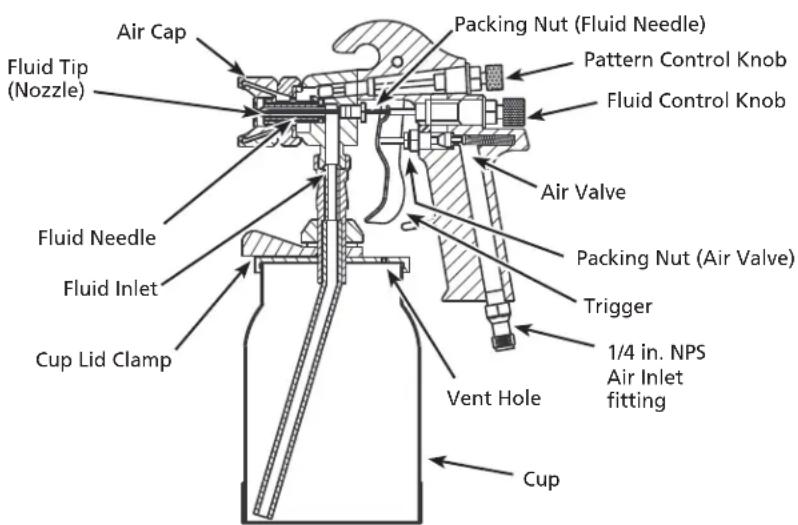
Figure 14 - Conventional Siphon Spray Gun
Maintenance (Continued)
- Remove and blow out the material hose with compressed air to get rid of any trace of solvent in the hose.
the hose, the open
end should be aimed away from any person to avoid blowing solvent into the eyes or on the skin causing possible injury.
PERIODIC CLEAN-UP
Due to improper cleaning and paint it may be necessary to inspect and clean the internal parts and the gun body.
- Examine openings in air cap and fluid tip. If clogged, remove any o-rings and soak the air cap or fluid tip in solvent.
- A brush or toothpick or something similar may be used to dislodge the dried paint from holes and passages.
NEVER USE METAL OBJECTS TO CLEAN PRECISELY DRILLED PASSAGES. DAMAGED PASSAGES WILL CAUSE IMPROPER SPRAYING.
- Remove and check the adjusting needle for excessive wear at the tip and straightness.
IMPORTANT: If the needle tip is worn more on one side than the other, either the needle is bent or the gun body has been dropped or knocked out-of-line. There are no adjustments that can be made to a bent gun body. Test the needle by rolling on a flat surface. Replace if necessary. -
Check and replace any damaged o-rings and seals. O-rings and seals can be wiped clean but not soaked in solvent.
-
Unscrew packing nuts and replace the packing ONLY if a leak will not stop when the nut is tightened (See Figure 14). Do not over-tighten a packing nut because this will restrict movement of the needle.
- Re-assemble in reverse order of above and use a non-silicone oil on moving parts. Apply Vaseline or light grease on threaded joints and hose connections.
STORING
- When not using spray gun, turn the fluid adjustment knob counterclockwise to open which will reduce spring tension on needle fluid tip.
- Spray gun MUST BE well cleaned and lightly lubricated.
Troubleshooting Chart
| Symptom | Possible Cause(s) | Corrective Action | |
| Right or left heavy spray pattern | 1. Holes in left or right side of the air cap are plugged | 1. Clean. Use only non-metallic pick | |
| 2. Dirt on left or right side of fluid tip | 2. Clean | ||
| Top or bottom heavy spray pattern | 1. Dried material at top or bottom of fluid tip | 1. Clean | |
| 2. Loose air cap or dirty seat | 2. Clean and tighten | ||
| 3. Air cap plugged | 3. Clean. Use only non-metallic pick | ||
| Split spray pattern | 1. Fan pattern open too far | 1. Partially close the pattern adjustment | |
| 2. Fluid turned in too far | 2. Increase fluid | ||
| 3. Atomization air too high | 3. Reduce atomization air pressure | ||
| 4. Fluid pressure too low (pressure feed only) | 4. Increase fluid pressure | ||
| Center heavy spray pattern | 1. Fan adjustment partially closed | 1. Open fan pattern adjustment | |
| 2. Material too thick | 2. Thin to proper viscosity | ||
| 3. Atomization pressure too low | 3. Increase atomization pressure | ||
| 4. Fluid pressure too high (pressure feed) | 4. Reduce fluid pressure or turn in fluid control knob | ||
| Sputtering spray | 1. Material level too low | 1. Refill | |
| 2. Container tipped too far | 2. Hold more upright | ||
| 3. Loose fluid inlet connection | 3. Tighten | ||
| 4. Loose or damaged fluid tip/seat | 4. Adjust or replace | ||
| 5. Dry or loose fluid needle packing nut | 5. Lubricate and or tighten | ||
| 6. Air vent clogged (siphon only) | 6. Clear vent hole | ||
| Symptom Possible Cause(s) | Corrective Action | ||
| Fluid leaking from pack- ing nut | 1. Packing nut loose | 1. Tighten, but do not restrict needle | |
| 2. Packing worn or dry | 2. Replace or lubricate (non-silicone oil) | ||
| Air leaking from air cap without pulling trigger | 1. Sticking air valve stem | 1. Lubricate | |
| 2. Contaminate on air valve or seat | 2. Clean | ||
| 3. Worn or damaged air valve or seat | 3. Replace | ||
| 4. Broken air valve spring | 4. Replace | ||
| 5. Bent valve stem | 5. Replace | ||
| Fluid leaking from fluid tip of pressure feed spray gun | 1. Packing nut too tight | 1. Adjust | |
| 2. Fluid tip worn or damaged | 2. Replace tip and/or needle | ||
| 3. Foreign matter on tip | 3. Clean | ||
| 4. Fluid needle spring broken | 4. Replace | ||
| Excessive overspray | 1. Too high atomization pressure | 1. Reduce pressure | |
| 2. Too far from work surface | 2. Adjust to proper distance | ||
| 3. Improper stroking (arcing, gun motion too fast.) | 3. Move at moderate pace, parallel to surface | ||
| Will not spray | 1. No pressure at gun | 1. Check air lines | |
| 2. Fluid control not open enough | 2. Open fluid control | ||
| 3. Fluid too heavy (siphon) | 3. Thin fluid or change to pressure feed system | ||
| 4. Fluid pressure too low (pressure feed) | 4. Increase fluid pressure | ||
| No pressure in tank | 1. Regulator damaged or defective | 1. Replace regulator | |
| 2. Check valve stuck | 2. Clean or replace check valve | ||
Notes
Limited Warranty
- DURATION: From the date of purchase by the original purchaser as follows: One Year.
- WHO GIVES THIS WARRANTY (WARRANTOR): Campbell Hausfeld, a Marmor/Berkshire Hathaway Company, 100 Production Drive, Harrison, Ohio, 45030. Visit www.campbellhausfeld.com
- WHO RECEIVES THIS WARRANTY (PURCHASER): The original purchaser (other than for purposes of resale) of the Campbell Hausfeld product.
- WHAT PRODUCTS ARE COVERED BY THIS WARRANTY: This Campbell Hausfeld spray gun.
- WHAT IS COVERED UNDER THIS WARRANTY: Substantial defects in material and workmanship which occur within the duration of the warranty period with the exceptions below.
- WHAT IS NOT COVERED UNDER THIS WARRANTY:
A. Implied warranties, including those of merchantability and FITNESS FOR A PARTICULAR PURPOSE ARE LIMITED FROM THE DATE OF ORIGINAL PURCHASE AS STATED IN THE DURATION. If this product is used for commercial, industrial or rental purposes, the warranty will apply for ninety (90) days from the date of purchase. Some States do not allow limitation on how long an implied warranty lasts, so the above limitations may not apply to you.
B. ANY INCIDENTAL, INDIRECT, OR CONSEQUENTIAL LOSS, DAMAGE, OR EXPENSE THAT MAY RESULT FROM ANY DEFECT, FAILURE, OR MALFUNCTION OF THE CAMPBELL HAUSFELD PRODUCT. Some States do not allow the exclusion or limitation of incidental or consequential damages, so the above limitation or exclusion may not apply to you.
C. Any failure that results from an accident, purchaser's abuse, neglect or failure to operate products in accordance with instructions provided in the owner's manual(s) supplied with product. Accident, purchaser's abuse, neglect or failure to operate products in accordance with instructions shall also include the removal or alteration of any safety devices. If such safety devices are removed or altered, this warranty is void.
D. Normal adjustments which are explained in the owner's manual(s) provided with the product.
E. Items or service that are normally required to maintain the product, e.g. o-rings, springs, gaskets, packings or seals, fluid nozzles, needles, filter elements, or any other expendable part not specifically listed. These items will only be covered for ninety (90) days from date of original purchase. Underlined items are warranted for defects in material and workmanship only.
- RESPONSIBILITIES OF WARRANTYOR UNDER THIS WARRANTY: Repair or replace, at Warrantor's option, products or components which are defective, have malfunctioned and/or failed to conform within the duration of the specific warranty period.
- RESPONSIBILITIES OF PURCHASER UNDER THIS WARRANTY:
A. Provide dated proof of purchase and maintenance records.
B. Visit www.campbellhausfeld.com to obtain your warranty service options. Freight costs must be borne by the purchaser.
C. Use reasonable care in the operation and maintenance of the products as described in the owner's manual(s).
- WHEN WARRANTYOR WILL PERFORM REPAIR OR REPLACEMENT UNDER THIS WARRANTY: Repair or replacement will be scheduled and serviced according to the normal work flow at the servicing location, and depending on the availability of replacement parts.
This Limited Warranty applies in the United States, Canada and Mexico only and gives you specific legal rights. You may also have other rights which vary from state to state or country to country.


- Operating Instructions Air Operated Models
- CAMPBELL HAUSFELD
- Spray Guns
- Description
- Safety Guidelines
- DANGER
- WAPPNING
- CAUTION
- NOTICEINDICATES
- Unpacking
- Pwatakins
- General Safety Information
- CALIFORNIA PROPOSITION 65
- AWARNING
- WORK AREA
- NOTICE
- PERSONAL SAFETY
- WARNING
- General Safety Information (Continued)
- TOOL USE AND CARE
- Introduction
- SPRAY GUN TERMS
- Introduction (Continued)
- CONVENTIONAL VS. HVLP
- Types of Spray Gun Set-Ups
- (CONVENTIONAL AND HVLP)
- WATER/OIL IN COMPRESSED AIR
- PRESSURE FEED CUP SET-UP
- GRAVITY FEED CUP SET-UP
- PRESSURE FEED TANK SET-UP
- Preparation
- FAN DIRECTION
- Figure 6
- PATTERN ADJUSTMENT
- SIPHON AND GRAVITY FEED
- Figure 8 - Pattern Size
- Figure 9 - Pattern Consistency (Atomization)
- PRESSURE FEED SET-UP
- Operation
- Operation (cont.)
- Maintenance
- DAILY CLEAN-UP
- Maintenance (Continued)
- PERIODIC CLEAN-UP
- NEVER USE METAL OBJECTS TO CLEAN PRECISELY DRILLED PASSAGES. DAMAGED PASSAGES WILL CAUSE IMPROPER SPRAYING.
- STORING
- Troubleshooting Chart
- Notes
- Limited Warranty
Brand : Campbell Hausfeld
Model : DH650001AV
Category : Paint gun