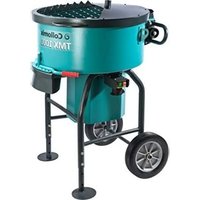
TMX 1000 - Mixer Collomix - Free user manual and instructions
Find the device manual for free TMX 1000 Collomix in PDF.


| Product type | Compact mixer |
| Brand | Collomix |
| Model | TMX 1000 |
| Nominal container capacity | 115 liters |
| Maximum load per batch | 80 liters |
| Power | 2 kW |
| Power supply | 230 V~, 50 Hz, 8.1 A |
| Mixing tool speed (idle) | 30 min⁻¹ |
| Weight (empty) | 131 kg |
| Dimensions (L x W x H) | 840 x 755 x 1170 mm |
| Protection type | IP 44 |
| Sound level (LWA) | 86 dB(A) |
| Article number | 37080 (230V - EU) |
| Delivery contents | Machine with mixing tool, instruction manual |
| Main functions | Mixing mortar, screed, concrete (aggregates up to 16 mm), cement glues, loose insulation; lever discharge; vibrating device to facilitate ejection |
| Maintenance and cleaning | Clean immediately after use; do not use high-pressure cleaner; lubricate moving parts; replace worn parts |
| Safety | Lockable protective grid cover; emergency stop; thermal overload protection; must be connected to a 30 mA residual current device |
| Spare parts and repairability | TMX 1000 mixing tool (ref. 37250); electrical repairs by qualified personnel only; use original Collomix parts |
| Warranty | According to legal provisions; excludes wear, overload, improper use; requires proof of purchase |
| Intended use | Mixing dry or moist building materials, non-liquid, non-flammable, non-electrically conductive |
Frequently Asked Questions - TMX 1000 Collomix
User questions about TMX 1000 Collomix
0 question about this device. Answer the ones you know or ask your own.
Ask a new question about this device
Download the instructions for your Mixer in PDF format for free! Find your manual TMX 1000 - Collomix and take your electronic device back in hand. On this page are published all the documents necessary for the use of your device. TMX 1000 by Collomix.
USER MANUAL TMX 1000 Collomix
natural_image
Blue circular icon with a white human figure holding an open book (no text or symbols)EU 230 V (TMX 1000: 37080 / TMX 1500: 37081)
Keep for future use!
natural_image
Close-up of a mechanical component with a highlighted section showing a curved pipe or valve (no text or symbols visible)Zeichen und Symbole
Warnhinweise
natural_image
Worker inspecting a large industrial machine outdoors (no visible text or symbols)Montage
1 x Gabelschlüssel SW 10; 2 x Gabelschlüssel SW 16
natural_image
Technical line drawings of two industrial mixing machines with no visible text or symbolsnatural_image
Close-up of a hand holding a blue and black plastic component with coiled rings (no visible text or symbols)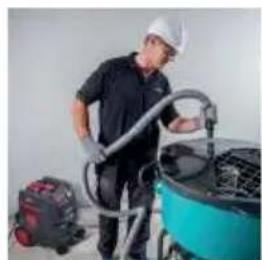
natural_image
Worker in hard hat and mask operating a large industrial machine (no visible text or symbols)Betrieb
WARNUNG
natural_image
Technical line drawing of a mechanical assembly with a component and directional arrow (no text or symbols)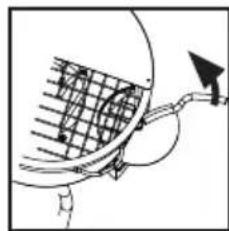
natural_image
Diagram of a mechanical or electrical component with grid pattern and directional arrow (no text or symbols)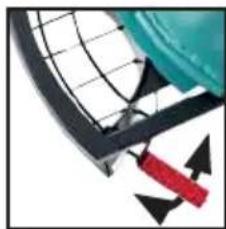
natural_image
Close-up of a car wheel rim with a red tool inserted, showing black arrows indicating motion (no text or symbols)
natural_image
Person pouring liquid into a large teal container with a mesh net nearby (no visible text or symbols)natural_image
Close-up of a person wearing a blue helmet and white shirt, handling a large object near a metal frame (no visible text or symbols)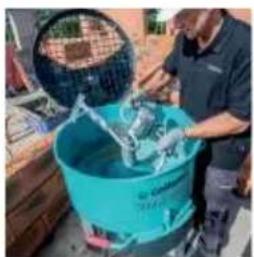
natural_image
Man handling a large blue industrial container with metal components, outdoors (no visible text or symbols)
Reparatur
Overview of machine elements
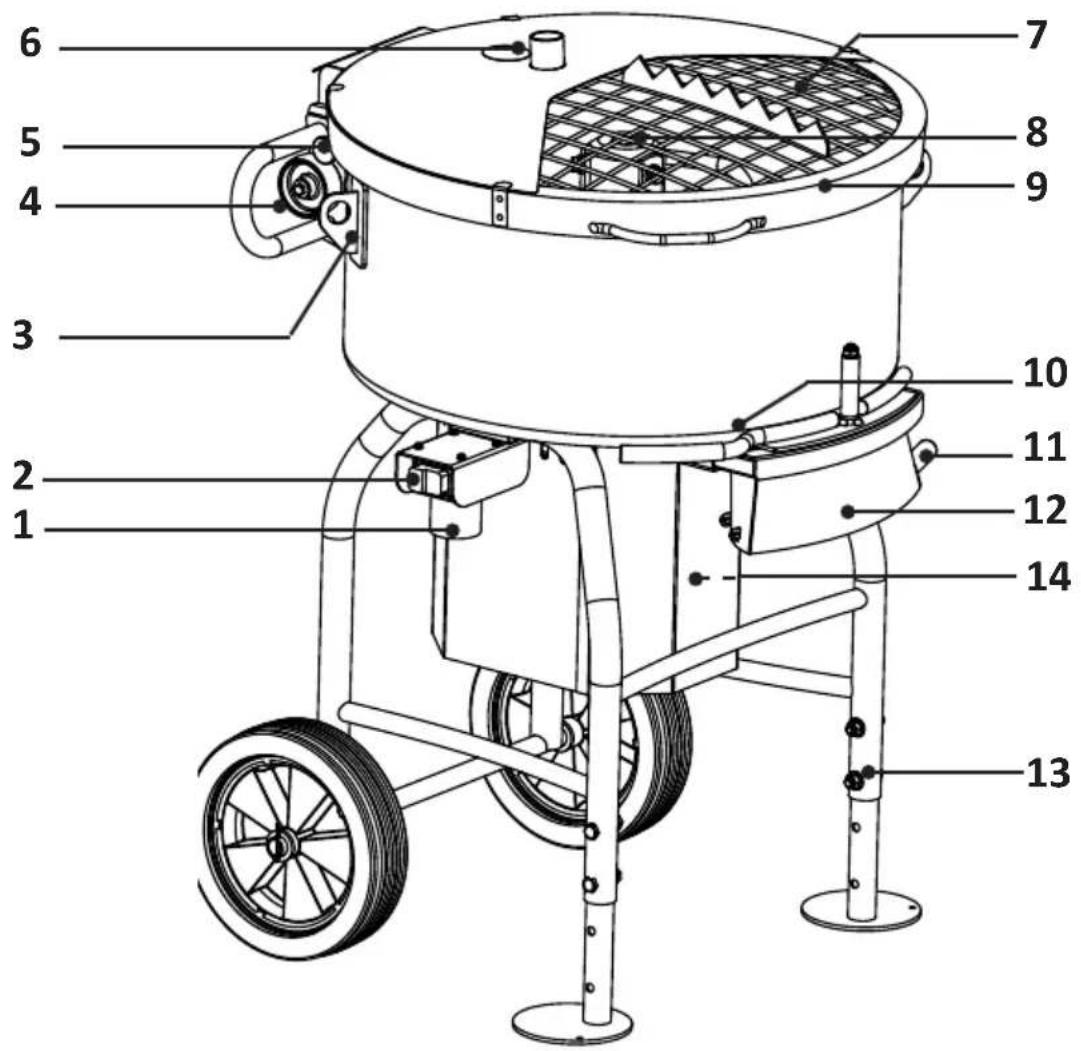
1 Mains plug 8 Mixing tool
2 ON/OFF switch 9 Lid with protecti ve grati ng
3 Lashing eyes 10 Lever for emptying
4 Transport rollers 11 Vibrating device
5 Unlocking mechanism for lid 12 Discharge chute
6 Connecti on for vacuum cleaner 13 Foot
7 Bag ripper 14 Thermal overload protection (only TMX 1500)
natural_image
Close-up of a mechanical component with a highlighted section showing a pipe fitting and a circular detail (no text or symbols visible)Signs and symbols
Warnings
The following symbols and signal words are used in this documentation.
| Symbol Meaning | |
DANGER | If this signal word is used, death or serious injuries will occur if the respective precautionary measures are not observed. |
WARNING | If this signal word is used, death or serious injuries may occur if the respective precautionary measures are not observed. |
CAUTION | If this signal word is used, minor injuries may occur if the respective precautionary measures are not observed. |
| ATTENTION | If this signal word is used, malfunctions or material damage may occur if the respective precautionary measures are not observed. |
| IMPORTANT | If this signal word is used, operating tips or cross-references will follow. |
Structure of warnings
DANGER
The first line describes the type and source of the danger
The second line describes the consequences if no danger prevention measures are taken.
→ The last line describes danger prevention measures.
WARNING
Risk of injuries due to non-observance of the safety symbols
Non-observance of the warnings on the device and in the operating instructions can lead to injuries and further dangers.
→ Observe the warnings on the device and in the operating instructions.


The following special safety symbols are used in respective passages in these operating instructions:
Mandatory signs
| Symbol Explanation Symbol Explanation | ||
 | Observe information Pull the main |  er every use.Pull the mains plug prior to opening the housing. er every use.Pull the mains plug prior to opening the housing. |
| Symbol Explanation Symbol Explanation | |||
 | Warning against a danger point Wa inst  | G5DY] | dangerous electrical voltage |
Technical data
Model TMX 1000 TMX 1500
Capacity, mixing bucket, nominal 115 litres 150 litres
Maximum mixing volume 80 litres 120 litres
Output 2 kW /230 V\~ 50 Hz / 8.1 A 2,8 kW /230 V\~ 50 Hz / 12.5 A
Speed, mixing tool 30 rpm (no load) 30 rpm (no load)
Weight (empty) 131 kg 138 kg
Protection class IP 44 IP 44
| Dimensions | 840 x 755 x 1170 mm | 840 x 755 x 1260 mm |
| Article number TMX | 37080 (230V - EU) | 37081 (230 V-EU) |
Noise emission according to 2006/42/EC
| Sound power L_WA / Guaranteed sound level | 86 dB (A) | 85 dB (A) |
| Measuring inaccuracy K_pA+WA | 1,2 dB (A) | 1,2 dB (A) |
Declaration of EC Conformity
We hereby declare on our sole authority that this product complies with the following standards or normative documents:
EN 12151:2007 (withdrawn, informative); EN 60204-1:2018/+A1:2021; EN 61000-3-2:2014; EN 61000-3-3:2013; EN
55014-1:2006/+A1: 2009/+A2:2011; EN 55012-2:2015; EN ISO 3744:2010
as per the provisions of Directives 2014/30/EU, 2006/42 EC, 2011/65/EU; 2000/14/EC
CE
Gaimersheim, 2025-05-28
A. Essing, Executive Management
Technical documentation to be requested from"
Collomix GmbH
Technical Development Department
Daimlerstr. 9, 85080 Gaimersheim
Germany
Scope of delivery
1 Machine with mixing tool
1 Operating instructions
About this document
These instructions use symbols and labels that help you in finding information quickly. Read the respective explanations in the following section. Read the safety and warning information in these instructions particularly thoroughly. You can find the safety information starting from page 14. Refer to the chapter introductions and passages leading up to instructions for warnings.
The copyright for images and texts remains with Collomix GmbH.
You must read the operating instructions prior to initial commissioning. Observe the safety information. Keep for future use. This documentation is not monitored by a change service.
For your safety
The TMX mixer was developed, produced and tested complying with the fundamental safety requirements. Despite that, there are residual risks.
- For this reason, read the operating instructions prior to operating the machine.
- Store the operating instructions readily available at the machine.
• Pass on the operating instructions to any subsequent owners. - Despite all precautions taken, non-obvious residual risks may exist. Residual risks can be reduced by observing the safety information, the intended use and the operating instructions overall.
Consideration and caution reduce the risk of personal injuries and damage.
- Electrical hazard if improper connection lines are used.
- Contact with live parts if electrical components are open.
Operating hours (Outdoor Directive)
According to the German Machine Noise Prevention Regulation dated September 2002, concrete mixers may not be operated between the hours of 8:00 pm to 7:00 am in pure, general and special residential areas, small housing estates, special areas for recreational purposes, treatment and clinic areas, and areas for the accommodation of foreigners and tourists, as well as on hospital and hospice premises on Sundays and holidays as well as on workdays.
- Please also observe any regional noise protection regulations.
Safety information
Read and observe this information prior to using the device! Non-observance can result in direct consequences for your health and physical integrity, as well as for the health and physical integrity of third parties.
The machine may only be used and maintained by persons familiar with the operating instructions and the applicable regulations regarding occupational safety and accident prevention.
The machine may only be used in proper technical conditions as well as for the intended purpose and in a safety- and danger-conscious manner. In particular, damage that can impact the safety must be corrected immediately. Do not put the machine into operation!
Repairs may only be carried out by recognised expert personnel or the manufacturer.
Do not operate the device in rooms with flammable atmosphere. Risk of explosion!
Do not mix any solvent-containing substances with a flash point below 21 °C.
Do not reach with your hand or objects into the mixing device during ongoing mixing operation. Risk of crushing!
▶ Wear tight-fitting clothes, safety shoes and no jewellery during work. Wear a hairnet for long hair.
The use of a dust extraction and wearing a dust mask are recommended as protection against health-hazardous dusts in the area of the machine.
▶ Wear safety gloves and safety shoes wile working with the machine.
▶ Ensure a firm and level location. Make sure that the device cannot tilt.
Observe the electrical regulation at the usage location when setting up the device.
▶ Make sure that the voltage indicated on the rating plate matches the mains voltage.
Realisation of the connection lines according to IEC 60245 (H 07 RN-F) with a wire cross-section of at least 3 x 1.5 mm ^2 for a cable length of up to maximum 25 m, or 3 x 2.5 mm ^2 for a cable length greater than 25 m
▶ Only use connection lines with a splash-proof rubber plug connection for difficult conditions.







RCD 30mA


Do not connect the device to standard electrical sockets. Always connect the devices via a residual current device (RCD) with a response current of 30 mA or less.
If a cable reel is used, the cable must be fully unwound. There is a risk of a cable fire due to heating. A loss of power may occur as well, leading to the undervoltage protection being triggered.
Repairs on electrical components may only be carried out by a recognised electrician, complying with the local regulations.
Electrical operating equipment must be subjected to a regular inspection by an electrician (according to German Social Accident Insurance DGUV 3).
▶ Keep the device away from rain and moisture. Water penetration into an electrically operated machine increases the risk of an electric shock.
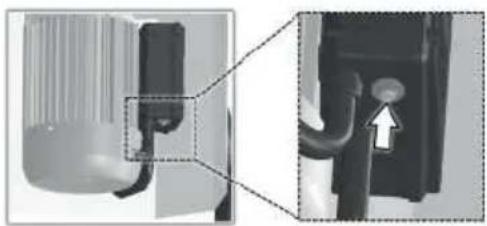
▶ Always pull the mains plug during non-operation, maintenance or when replacing the mixing tool.
Do not disconnect the plug from the socket by pulling on the cord. Protect the cable against heat, oil, bending and sharp edges.
▶ Check the cable for damage or defects prior to use.
▶ Wait, until the device and/or tool comes to a complete standstill. Rotating tools can get stuck and cause injuries or damage.
▶ Only remove material samples with the device at standstill.
Acute risk of accidents and injuries if the safety functions are disabled on purpose. In this case, the warranty shall become void.
▶ Check the machine regularly for flawless function and damage. Do not put the machine in operation with damaged or defective safety components.
Do not clean the machine using a high-pressure cleaner or hose – risk of electric shock!
Do not expose the machine to any rain, not even during transportation.
Observe the processing and safety information of the manufacturer for the material to be mixed.
The machine must be firmly lashed in at least three directions for vehicle transport.
▶ Only operate the machine with the TMX mixing tool that is suitable for the machine.
Only use original spare parts. The use of third-party spare parts may lead to accidents of the user. The manufacturer shall not be liable for any resulting damage.

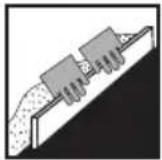
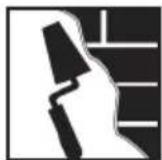
Intended use
The TMX model is a mixing device that is suitable for mixing soft to viscoplastic material as well as hard and granular material. Examples include:
- All types of mortar
- Soft to plastic screeds and concretes with additives up to 16 mm
- Lime-cement plaster
• Different cement-based adhesives
• Heavy epoxy resin mortar
• Terrazzo (TMX 1000 with additional available rubber lips) - Dry fill materials
as they are used in the construction industry.
The recommended mixing capacity amounts to a maximum of 80 litres per mixture (material-dependent). It is recommended to test the necessary material mixing time at the beginning of your work.
Observe the processing information of the material manufacturer regarding the used material.
Any other use of the machine or any use beyond this scope is considered unintended and thus improper. Safety and its protection can be impacted in this case. Collomix GmbH shall not be liable for any resulting damage. Intended use also includes:
• Compliance with all information in the operating instructions
• Compliance with all safety information
- Compliance with inspection and maintenance work.
The user shall be liable for damage resulting from non-intended use.
Foreseeable misuse
Reasonably foreseeable misuse that could result in danger for the user, third parties or the machine includes:
- Use of the machine and its accessories contrary to the intended use.
• Operation of the machine using a mixing tool different from the specified one. - Use of damaged containers or containers not suitable for the mixer.
- Mixing of liquid and runny materials.
- Mixing of flammable or explosive substances.
- Mixing of electrically conducting substances.
- Mixing of chemically aggressive substances and corrosive liquids.
- Mixing of food items.
- Operation of the machine outside of the physical usage limits described in chapter "Commissioning/operation".
- Bucket overfilling
- Use of water jets or high-pressure cleaners for cleaning
- Changes to the mixer as well as add-ons or retrofits without previous agreement with Colomix GmbH.
- Operation of the machine contrary to the provisions of the operating instructions with respect to safety information, installation, operation, maintenance, setup and malfunctions.
- Bypassing, removal or disabling of safety and protection devices of the machine.
• Operation of the machine in the case/with obvious malfunctions
- Repair, cleaning and maintenance work without disconnecting the mixer from the power supply
Functionality
The machine consists of a mobile frame with a permanently mounted mixing bucket made of steel sheet. A 3-arm mixing tool rotates in the mixing drum around a central drive axis.
Ideally, the mixer is first filled with the dry material and then the necessary amount of water is added to the running machine
The materials are usually mixed and ready for use within three to five minutes. Observe the information of the material manufacturer and check the mixing quality using a test mixture.
Open the segment slidegate at the bottom of the bucket to empty the mixer during operation. The rotating mixing tool conveys the material to the discharge chute.
Transport information
The machine is delivered on a pallet without wheels. Observe the assembly instructions.
The empty weight of the machine amounts to 131 kg (TMX 1000) / 138 kg (TMX 1500).
ATTENTION!
The machine must always be sufficiently secured against tilting and rolling away using several transport straps for vehicle transport. Non-secured loads can result in serious personal injury and material damage.
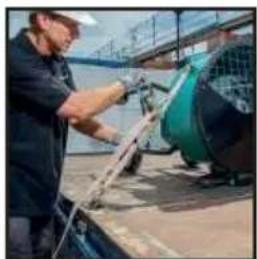
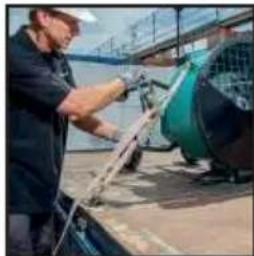
Lash the machine via the lashing eyes with lashing strips of a sufficient size.
The lashing eyes are not suitable for transportation by crane.

natural_image
Worker inspecting a large industrial machine outdoors (no visible text or symbols)Assembly
The following tools are required for initial assembly:
1 x open-end wrench SW 10; 2 x open-end wrench SW 17
Removal of the transport lock:
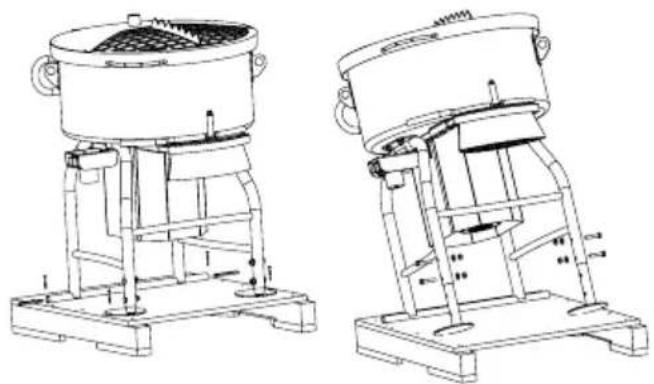
Loosen the screw connections of the four feet on the pallet. (Open-end wrench SW 10)
Adjusting the height:
ATTENTION!
Risk of tipping! Seek the assistance of a second person in this regard.
Loosen the 4 screws on the two front feet using two open-end wrenches SW 17. Tilt the machine until it becomes possible to insert the 4 screws into the upper bores. Then tighten the screws again.

natural_image
Technical line drawings of two industrial mixing machines (no text or symbols visible)Mounting the wheels:
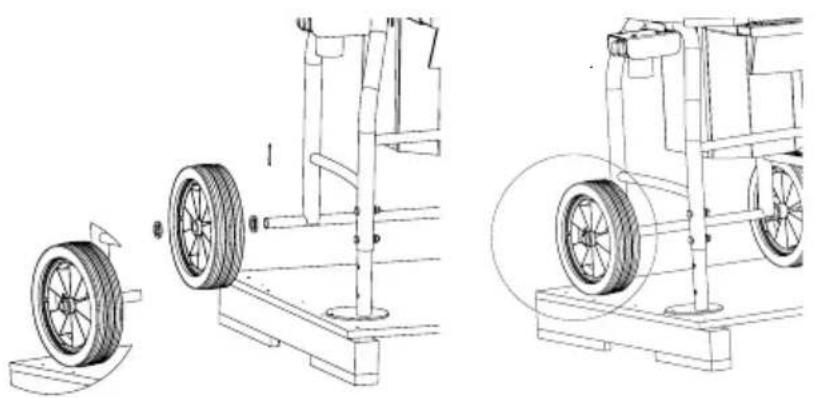
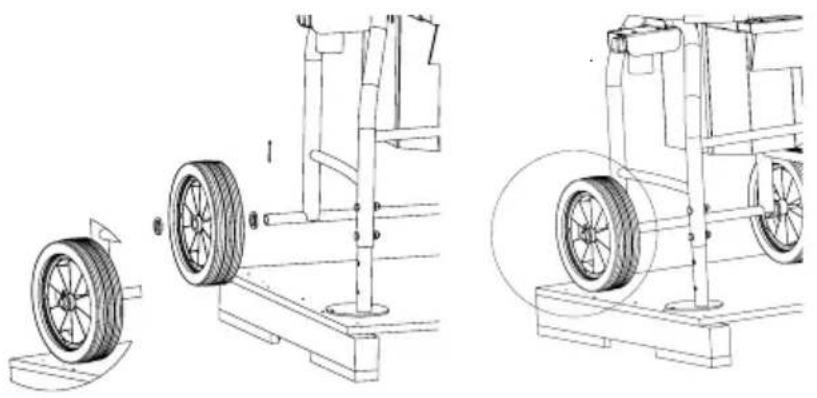
Pay attention to the correct installation of the wheels. The inside of the wheels is marked with an adhesive label.
Before you put the wheel on the relevant axle, one of the accompanying washers needs to be inserted. Once this has been done, attach the wheel and one further washer to conclude. Secure the wheels with the accompanying cotters as well.
natural_image
Technical line drawings of three different bicycle wheel assembly configurations (no text or symbols)Prior to commissioning
The machine must always be checked for damage prior to each commissioning.
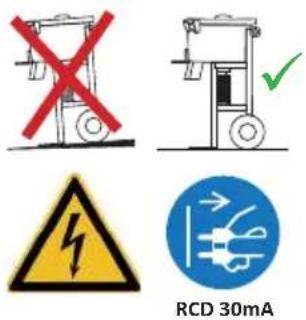
Make sure that the machine is standing securely on a firm and level surface. Risk of tipping!
Electrical installation
Check that the voltage indicated on the type plate matches the available mains voltage.
Connect the mains plug of the machine to the power supply socket using a suitable extension cord (type H07 RN-F, at least 1.5). This socket must feature a residual current device (RCD). Do not connect to standard electrical sockets.
Opening the lid
Pull the release knob with one hand and lift the lid at the same time with the second hand. The lid is locked when in open state. The release knob needs to be pulled again to close the lid.
Connecting the vacuum cleaner
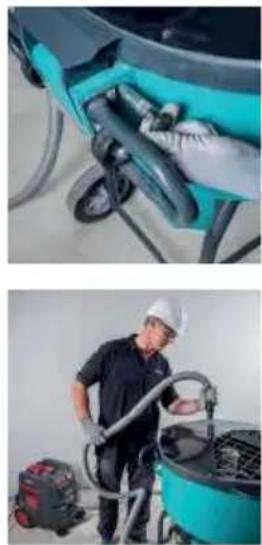
In order to significantly reduce the dust load when filling the material and at the start of the mixing process, we recommend connecting a deduster to the hose supports ( 35 mm) of the lid. The deduster used must comply with dust class "M".
Mixing tool
Check whether the mixing tool is correctly mounted and fully seated on the shaft.
If necessary, you can adjust the individual mixing paddles.
natural_image
Two-panel image showing a person in protective gear operating a vacuum cleaner next to a blue industrial machine (no visible text or symbols)Operation
WARNING
Risk of injuries due to rotating mixing tool.
Do not reach into the mixing drum or handle tools in the mixing drum during mixing.
ATTENTION
Only use the mixer for the tasks listed in chapter "Intended use". Observe the safety information respectively.
▶ Close the protective grating and make sure that it is locked.
▶ Switch on the mixer. Press the green start button.
▶ If installed, switch on the vacuum cleaner.
Place the material bag with its broad side on the grid cover with the bag ripper and move it back and forth slightly until the sack is fully open. Gradually fill the content of the bag into the drum.
▶ Fill the necessary amount of water into the mixing drum.
Pay attention during the mixing process to determine whether the material is mixed to a sufficient extent.
To empty the mixing drum, open the bottom segment slide using the lever. If the material comes to a standstill in the discharge chute, emptying can be accelerated by vibrating movements with the lever attached on the right.
To empty the mixing drum, open the bottom segment slide using the lever.
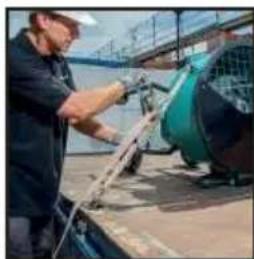
▶ Empty the mixed material into a bucket or wheelbarrow.
Press the red OFF button "0" to switch off the machine. The machine comes to a stop.
The machine is fitted with a protection switch. It switches the machine off in the event of overloading/overheating. Let the motor cool down and restart the machine.
The machine is fitted with an undervoltage trigger. If it triggers, the machine is stopped. This may occur due to the following reasons:
• Voltage drop in the mains supply
• Supply cable too long
• Power supply disconnected
Restart after the malfunction is corrected.
IMPORTANT:
Observe the information in the technical data sheets of the material manufacturers.
The necessary mixing time depends on the quantity and viscosity of the material.
Removing the mixing tool
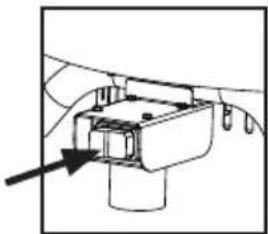
Unlock and open the cover with the protective grating.
The mixing tool rests on the hexagonal pin of the drive shaft without additional attachment.
You can easily lift the mixing tool off of the shaft. It may happen that you need to move the tool back and forth a little if it has strutted apart.
The individual mixing shovels can be replaced. To do this, loosen the screw connections on the arms of the mixing tool.

natural_image
Technical line drawing of a mechanical assembly with a highlighted component (no text or symbols)
natural_image
Simple line drawing of a mechanical or electrical component with no visible text, numbers, or symbols.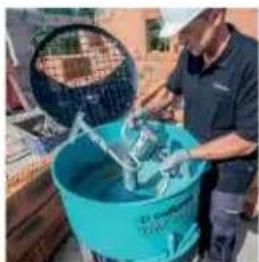
natural_image
Man washing a large blue industrial container with metal fittings (no visible text or symbols)Troubleshooti ng
| Malfunction Cause Remedy | |
| Machine does not start | ·Supply cable too long and/or cable cross-section too small·Plug not inserted·No mains voltage present·Capacitor defective |
| Machine switches off after a short time, cannot be switched on again | ·Thermal overload protection triggered (overload of the machine) - - only for TMX 1500 |
| ·Supply cable too long and/or cable cross-section too small·Cable was pulled from the mains plug·Voltage drop in the power supply·Capacitor defective | |
| Machine does not start up when filled, remains at a standstill | ·Mixing quantity too high·Mixed material too stiff |
* Work on live components may only be carried out by a qualified electrician!
Care and maintenance
The mixer must always be disconnected from the power supply by pulling the mains plug prior to any maintenance and cleaning work.
Always ensure ease of movement for all moving parts.
The mixer is largely maintenance-free. The drive shaft is supported by ball bearings with permanent lubrication.
Clean the machine immediately after use. Do not let material deposits dry.
Remove the mixing tool from the hexagon shaft and clean it outside of the mixer.
Do not tap the mixing tool and mixing tub using a hammer. Bent mixing tools can lead to damage to the device and poor mixing results.
Replace damaged, bent or worn machine parts.
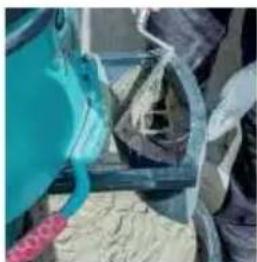
Treat moving parts, such as the bott om segment slidegate, extendable discharge chute and hexagons shaft from ti me to ti me with spray oil.
natural_image
Close-up of a mechanical component with blue and pink cleaning tool, no visible text or symbols
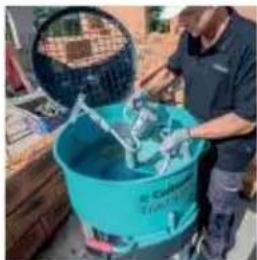
natural_image
Person handling a large blue industrial container with metal fittings, outdoors (no visible text or symbols)Repair
Have repairs on the electrical system only performed by expert personnel or Collomix Factory Service.
Only use original Collomix accessories and spare parts.
Service instructions and the current list of spare parts can be found on our homepage:
www.collomix.com
DANGER
Danger to life due to dangerous electrical voltage
Never open the covers or safety devices of the machine. Repairs may only be performed by trained expert personnel. After repair completion, verify and document the proper condition of all safety devices and the electrical equipment.
Do not reconstruct, change or remove safety-relevant parts!
Additional add-ons may not impact safety and must be approved by the manufacturer.
Consumables
The following consumables are available:
Part Art. no.
Mixing tool TMX 1000 37250
Mixing tool TMX 1500 37251
Disposal
Recycle the device, accessories and packaging in an environmental friendly manner. Do not dispose of in household waste.
Non-functional electrical equipment can be recycled at public collection centres for electrical waste.
Warranty
The manufacturer offers a product warranty within the scope of the delivery terms and in accordance with legal / country-specific regulations. Please include your payment receipt or delivery note with any warranty claims.
Please return the device to us if you detect any irregularities. Complaints / claims can only be considered if the device is delivered to the Collomix Service department in a complete and undismantled state.
Any damage resulting from normal wear, overload, improper handling, non-approved accessories or insufficient maintenance shall be exempt from the warranty.
Any repairs carried out by third parties shall release us from any warranty obligation.
Any structural or functional changes to the device not authorised by us shall result in the invalidation of the warranty as well as the declaration of conformity.
Please enclose a proof of purchase with a warranty claim.
Any warranty and liability claims are excluded in the case of personal injuries and/or material damage, if they are caused by one or several of the following causes:
- Unintended use of the machine
- Improper commissioning, operation and maintenance of the machine
- Damage due to excessive contamination and/or insufficient cleaning.
- Unauthorised structural changes of the machine
- Improperly performed repairs and/or use of third-party spare parts.



natural_image
Close-up of a mechanical component with a highlighted section showing a circular feature and an arrow pointing to it (no text or symbols visible)Dessins et symboles
Avertissements
A. Essing, Direction
natural_image
Worker operating machinery outdoors, handling a large green component (no visible text or symbols)Montage
natural_image
Technical line drawings of two industrial mixing machines with no visible text or symbolsMontage des roues :
natural_image
Technical line drawings of three different mechanical components: a wheel, a tire, and a pallet jack (no text or symbols present)natural_image
Close-up of a hand securing a car wheel with visible tire rings and wheels (no text or symbols)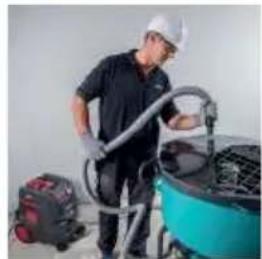
natural_image
Worker in hard hat and mask operating a large industrial machine (no visible text or symbols)Fonctionnement
AVERTISSEMENT
natural_image
Technical line drawing of a mechanical assembly with a component and directional arrow (no text or symbols)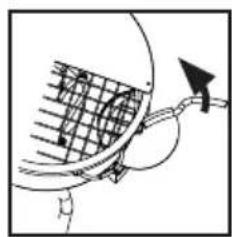
natural_image
Simple line drawing of a curved structure with a handle and arrow, no text or symbols present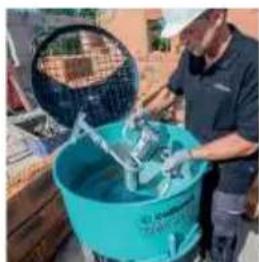
natural_image
Man operating a large blue industrial container with metal fittings, outdoors (no visible text or symbols)natural_image
Close-up of hands pouring white powder into a container with blue gloves (no visible text or symbols)
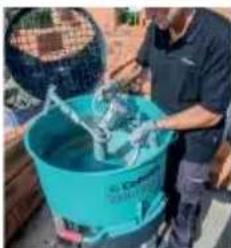
natural_image
Person pouring water from a large teal bucket outdoors (no visible text or symbols)
Réparation
natural_image
Close-up of a mechanical component with a highlighted section showing a circular feature and an arrow pointing to it (no text or symbols visible)Tekens en symbolen
Waarschuwing

RCD 30mA


natural_image
Technical line drawings of two industrial mixing machines (no text or symbols visible)
natural_image
Worker inspecting a large industrial machine outdoors (no visible text or symbols)
natural_image
Technical line drawings of a three-step mechanical assembly with wheels and mounting base (no text or symbols)Voor ingebruikname
natural_image
Close-up of a hand securing a car tire with a blue and black component (no visible text or symbols)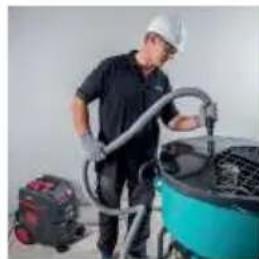
natural_image
Worker in hard hat and mask operating a vacuum cleaner on a construction site (no visible text or symbols)Gebruik
WAARSCHUWING
natural_image
Technical line drawing of a mechanical assembly with a highlighted component (no text or symbols)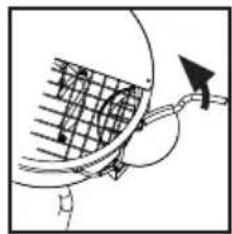
natural_image
Simple line drawing of a curved pipe or channel with a grid pattern and an arrow pointing upward (no text or symbols)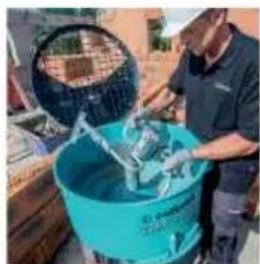
natural_image
Person pouring water from a large blue bucket into a net outdoors (no visible text or symbols)Storingen oplossen
natural_image
Close-up of mechanical components with no visible text or symbols
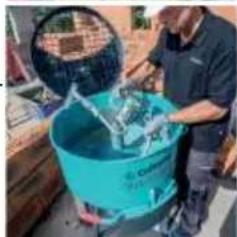
natural_image
Person operating a large blue industrial container with a lid, no visible text or symbols
Reparaties
natural_image
Close-up of a mechanical component with a highlighted section showing a circular feature and an arrow pointing to it (no text or symbols visible)Tecken och symboler
Varningar
natural_image
Worker inspecting a large industrial machine outdoors (no visible text or symbols)Montering
natural_image
Technical line drawings of two industrial mixing machines with no visible text or symbolsMontera däcken:
natural_image
Technical line drawings of three different mechanical components with no visible text or symbolsInnan idrifttagningen
natural_image
Close-up of a teal-colored mechanical component with attached black components and wheels (no visible text or symbols)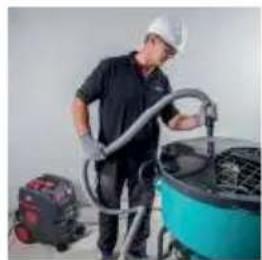
natural_image
Person in black shirt and white hard hat operating a vacuum cleaner with hoses and equipment (no visible text or symbols)Drift
WARNING
natural_image
Technical line drawing of a mechanical assembly with a component and directional arrow (no text or symbols)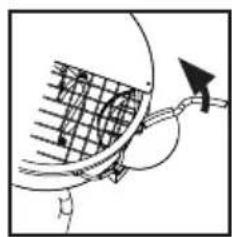
natural_image
Simple line drawing of a mechanical or electrical component with no visible text, numbers, or symbols.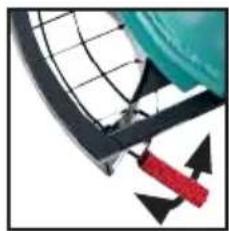
natural_image
Close-up of a tennis racket with black mesh and red trigger, no visible text or symbols
natural_image
Man operating a large blue bucket containing a metal rod, with a netting structure visible nearby (no text or symbols)Avlägsna störningar
natural_image
Close-up of a mechanical component with a blue handle and gray material, no visible text or symbols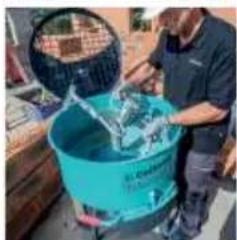
natural_image
Person pouring water from a large bucket into a net (no visible text or symbols)Reparation
natural_image
Close-up of a mechanical component with a highlighted section showing a circular feature (no text or symbols visible)Tegn og symboler
Advarselsmerknader
natural_image
Worker inspecting a large industrial machine outdoors (no visible text or symbols)Montering
natural_image
Technical line drawings of two industrial mixing machines (no text or symbols visible)Montering av hjulene:
Før du plasserer hjulet på den respektive akselen, må du sette på en av de vedlagte underlagsskivene. Deretter setter du på hjulet og til slutt en bredere underlagsskive. Sikre hjulene med splintene som følger med.
natural_image
Technical line drawings of three different mechanical components with no visible text or symbolsFør igangsetting
natural_image
Close-up of a teal-colored mechanical component with attached black components and wheels (no visible text or symbols)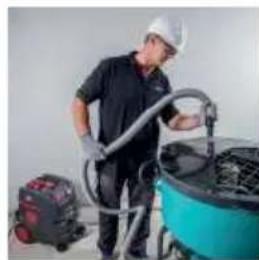
natural_image
Worker in hard hat and mask operating a large industrial machine (no visible text or symbols)Bruk
ADVARSEL
natural_image
Technical line drawing of a mechanical assembly with a component and directional arrow (no text or symbols)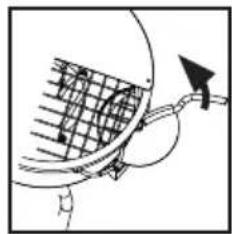
natural_image
Simple line drawing of a curved pipe or channel with a grid pattern and an arrow pointing to the right side (no text or symbols)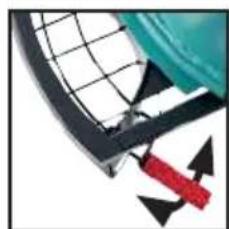
natural_image
Close-up of a tennis racket with mesh and red-handled tool (no visible text or symbols)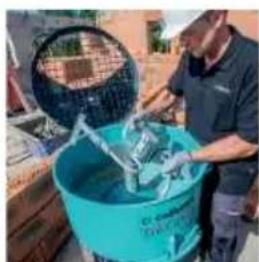
natural_image
Man operating a large blue bucket filled with plastic bottles, outdoors (no visible text or symbols)Eliminering av feil
natural_image
Close-up of a mechanical component with a highlighted section showing a circular feature and an arrow pointing to it (no text or symbols visible)Znaki i symbole
Ostrzeżenia
natural_image
Technical line drawings of two industrial mixing machines (no text or symbols visible)
natural_image
Worker operating machinery on a construction site (no visible text or symbols)
Montaż kółek:
natural_image
Technical line drawings of a three-step mechanical assembly with wheels and mounting base (no text or symbols)Przed uruchomieniem
natural_image
Close-up of a hand adjusting a teal-colored mechanical component with attached wires (no visible text or symbols)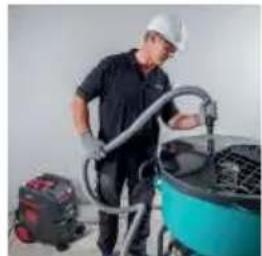
natural_image
Worker in hard hat and mask operating a large industrial machine with a pump bag (no visible text or symbols)Eksploatacja
OSTRZEŻENIE
natural_image
Man collecting water from a large blue bucket with a net, no visible text or symbolsUsuwanie usterek
natural_image
Close-up of a person pouring liquid from a blue container into a white material, with no visible text or symbols.Naprawa
www.collomix.com

Manufacturer:
Collomix GmbH
Daimlerstraße 9
85080 Gaimersheim
Germany
Tel. +49 (0)8458 3298-0
Fax +49 (0)8458 3298-30
info@collomix.de
www.collomix.com

Collomix


- Zeichen und Symbole
- Warnhinweise
- Montage
- Betrieb
- WARNUNG
- Reparatur
- Overview of machine elements
- Signs and symbols
- Warnings
- Structure of warnings
- DANGER
- WARNING
- Mandatory signs
- Technical data
- Declaration of EC Conformity
- CE
- Scope of delivery
- About this document
- For your safety
- Operating hours (Outdoor Directive)
- Safety information
- Intended use
- Foreseeable misuse
- Functionality
- Transport information
- ATTENTION!
- Assembly
- Mounting the wheels:
- Prior to commissioning
- Electrical installation
- Opening the lid
- Connecting the vacuum cleaner
- Mixing tool
- Operation
- ATTENTION
- IMPORTANT:
- Removing the mixing tool
- Care and maintenance
- Repair
- Danger to life due to dangerous electrical voltage
- Consumables
- Disposal
- Warranty
- Dessins et symboles
- Avertissements
- Montage des roues :
- Fonctionnement
- AVERTISSEMENT
- Réparation
- Tekens en symbolen
- Waarschuwing
- Voor ingebruikname
- Gebruik
- Reparaties
- Tecken och symboler
- Varningar
- Montering
- Montera däcken:
- Innan idrifttagningen
- Drift
- Reparation
- Tegn og symboler
- Advarselsmerknader
- Montering av hjulene:
- Før igangsetting
- Bruk
- ADVARSEL
- Znaki i symbole
- Ostrzeżenia
- Montaż kółek:
- Przed uruchomieniem
- Eksploatacja
- OSTRZEŻENIE
- Naprawa
- Manufacturer:
- Collomix
Brand : Collomix
Model : TMX 1000
Category : Mixer