S1256 PC - Water pump Nibe - Free user manual and instructions
Find the device manual for free S1256 PC Nibe in PDF.


User questions about S1256 PC Nibe
0 question about this device. Answer the ones you know or ask your own.
Ask a new question about this device
Download the instructions for your Water pump in PDF format for free! Find your manual S1256 PC - Nibe and take your electronic device back in hand. On this page are published all the documents necessary for the use of your device. S1256 PC by Nibe.
USER MANUAL S1256 PC Nibe
S1156/S1256/S1156PC/S1256PC
ES Información sobre seguridad
FR Informations relatives à la sécurité
NL Veiligheidsinformatie
EN Safety information
natural_image
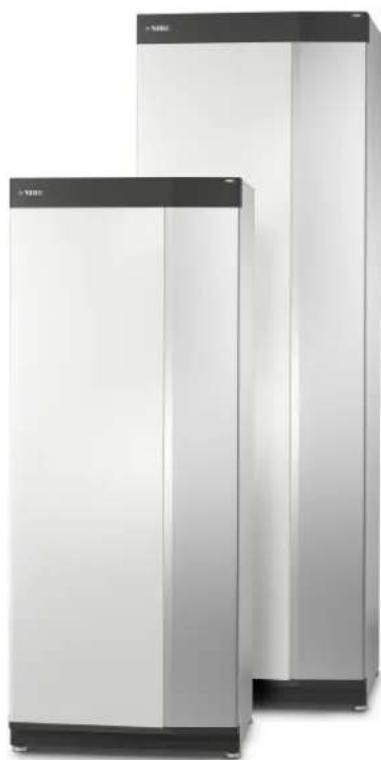
Two large white industrial refrigerators with black lids, displayed against a white background (no visible text or symbols)
natural_image
Blue hexagonal icon with an exclamation mark symbol (no text or numbers)SHB 2246-1
531712
Español
ABSENCEDESOURCESD'INFLAMMATION
This appliance can be used by children aged from 8 years and above and persons with reduced physical, sensory or mental capabilities or lack of experience and knowledge if they have been given supervision or instruction concerning us of the appliance in a safe way and understand the hazards involved. Children should not play with the appliance. Cleaning a user maintenance shall not be made to children without supervision.
This is an original manual. It may not translated without the approval of NIE Rights to make any design or technical modifications are reserved.
©NIBE 2023.
water splashes from causing harm. The overow pipe must be inclined along its entire length to prevent pockets where water can accumulate, and must be frost-proof. The overow pipe must be at least the same size as the safety valve. The overflow pipe must be visible and its mouth must be open and not placed close to electrical components.
hall The safety valves must be actuated regularly to remove dirt and to check that they by are not blocked.
Electrical installation and wiring must be carried out in accordance with national provisions.
S1156/S1256/S1156PC/S1256PC must be installed via an isolator switch. The cable area has to be dimensioned based on the fuse rating used.
If the supply cable is damaged, only NIBE, its service representative or similar authorised person may replace it to prevent any danger and damage.
| MaxMi | |||
| System pressure | |||
| Heating medium | MPa(bar) | 0.05(0.5) | 0.45(4.5) |
| Brine | MPa(bar) | 0.05(0.5) | 0.45(4.5) |
| Domestic water | MPa(bar) | 0.01(0.1) | 1.0 (10) |
| Temperature | |||
| um^2 | 703°0 | ||
| 30-8° | |||
| 2 | 703°0 | ||
1 UK: 0.6 (6.0 bar)
2 Compressor and additional heat
Do not start
S1156/S1256/S1156PC/S1256PC if there is a risk that the water in the system has frozen.
Water may drip from the safety valve's overow pipe. The overow pipe must be routed to a suitable drain, to prevent hot
General
EU
NIBE hereby declares that this type of radio equipment M0001-A-XXX, M0002-A-XXX conforms with Directive 2014/53/EU. The full text of the EU Declaration of Conformity can be found at nibe.eu.
UKCA
Heating media Nibe hereby declares that this type of radio equipment M0001-A-XXX, M0002-A-XXX conforms with Directive The Radio Equipment Regulations 2017. The full text of the UKCA Declaration of Conformity can be found at nibe.co.uk.
omestic water
Recovery
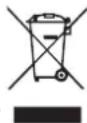
Leave the disposal of the packaging to the installer who installed the product or to special waste stations.
Do not dispose of used products with normal household waste. It must be disposed of at a special waste station or dealer who provides this type of service.
Improper disposal of the product by the user results in administrative penalties in accordance with current legislation.
Open source code
This product contains software covered by an open source code licence. For more information as well as access to the source code, visit opensource.nibe.eu.
Fixed pipe connection
S1156/S1256/S1156PC/S1256PC is intended for a xed pipe connection to heating and/or the hot water system.
Handling
The heat pump contains highly ammable refrigerant. Special care should be exercised during handling, installation, service cleaning and scrapping to prevent damage to the refrigerant system and thus reduce the risk of leakage.

NOTE
Work on refrigerant systems must be carried out by personnel who have knowledge and experience of working with flammable refrigerants.
Environmental information
F-GAS REGULATION (EU) NO. 517/2014
This unit contains a uorinated greenhouse gas that is covered by the Kyoto agreement.
The equipment contains R454B, a uorinated greenhouse gas with a GWP value (Global Warming Potential) of 466 not release R454B into the atmosphere.
Safety precautions

WARNING!
Do not use agents to speed up the defrosting process or for cleaning, other than those recommended by the manufacturer.
The apparatus must be stored in a room with no continuous ignition sources (e.g. naked ame, an active gas installation or an active electric heater).
Must not be punctured or burned. Be aware that the refrigerant may be odourless
GENERAL
- Pipe installation should be kept to a minimum.
AREA CHECKS
Before work is started on systems that recontains combustible refrigerants, safety checks must be performed to ensure that the ignition risk is kept to a minimum.
WORKING METHOD
The work must be carried out in a controlled way to minimise the risk of contact with combustible gas or liquid during the work.
GENERAL FOR THE WORKING RANGE
All maintenance sta and those who work in close proximity to the product must be instructed which type of work is to be carried out. Avoid carrying out work in enclosed spaces. The area surrounding the worksite must be cordoned off. Ensure that the area is made safe by removing combustible material.
CHECK FOR THE PRESENCE OF REFRIGERANT
Check whether there is refrigerant in the area using a suitable refrigerant detector prior to and during work, to notify the service technician whether there is a possible ammable atmosphere or not. Ensure that the refrigerant detector is suitable for combustible refrigerant, i.e. does not generate sparks or cause ignition in any other way.
PRESENCE OF FIRE EXTINGUISHERS
If hot work is carried out on the heat pump, a powder or carbon dioxide fire extinguisher must be to hand.
ABSENCE OF IGNITION SOURCES
Pipes connected to the unit must not con- tain potential sources of ignition.
Those who carry out work with refrigerant system connections, including exposing pipes that contain or have contained combustible refrigerant, may not use potential ignition sources in such a way that can lead to risks of re or explosions.
All potential ignition sources, including ci-CHECKING ELECTRICAL EQUIPMENT garette smoking, should be kept at a safe repair and maintenance of electrical com-distance from the service work area whenponents must include initial safety checks combustible refrigerant can leak out. Before and procedures for component inspection. carrying out work, the area surrounding the event of a fault, which can cause a equipment must be checked to ensure that safety risk, do not supply any power to the there are no ignition risks. "No smoking" circuit until the fault has been rectied. If signs must be displayed. the fault cannot be rectied immediately,
VENTILATED AREA
Ensure that the work is carried out outdoors or that the work area is ventilated before the system is opened and before any hot work is carried out. The area must be ventilated whilst the work is being carried out. There must be ventilation around any refa gerant that comes out, which should be routed outdoors.
CHECKING COOLING EQUIPMENT
If electrical components are replaced, the replacement parts must be t for purpose and have the correct technical specifications. Always follow the manufacturer's guidelines regarding maintenance and servicing. Contact the manufacturer's technical department in the event of any doubt
The following checks must be carried out for installations that use combustible refrigerants.
- The actual lling quantity is appropriate for the magnitude of the space where parts containing refrigerant are installed
- Ventilation equipment and outlet work correctly and without obstructions.
- If an indirect refrigerant circuit is used, check whether the secondary circuit contains refrigerant.
- All markings of equipment are visible at clear. Markings, signs and similar that a not clear must be replaced.
- Refrigerant pipes and components are positioned in such a way that it is not likely that they be subjected to substances that can corrode components containing refrigerant, if these components are not made of material that is distant against corrosion, or not appropriately protected against such corrosion.
temporary solution must be implemented. This must be reported to the equipment owner, so that all parties have been informed.
The following checks must be carried out at the initial safety checks.
That the capacitors are discharged. Discharging must be done safely, to prevent the risk of sparking.
That no powered electrical components or live cables are exposed when lling or collecting refrigerant or when the system is ushered.
That the system is continually earthed.
REPAIRING SEALED COMPONENTS
When repairing sealed components, all electrical supply must be disconnected from the equipment that is being repaired before any sealed covers or similar are removed. If it is absolutely necessary to have the electricity supply to the equipment during the service, continuously activated leak tracing must be performed at the most critical points in order to warn of any dangerous situations.
Pay particular attention to the following so that the sheath is not changed in a way that acts the protection level when working with electrical components. This means damage to cables, unnecessary amounts of connections, terminals that do not follow the original specifications, damaged gaskets, incorrect grommets etc.
Ensure that the apparatus is secured properly.
Check that seals or sealing materials have a leak that requires brazing is detected, not deteriorated to a degree that they can refrigerant must be removed from the no longer prevent combustible gases from system and stored in a separate container. entering. Replacement parts must meet the alternatively, the refrigerant can be stored manufacturer's specifications. separated from the brazing area in a part

NOTE
Use of silicone seals can hamper eciency of certain types of leak-tracing equipment. Components with built in safety do not need be isolated before starting work.
th
separated from the brazing area in a part of the system at a safe distance from the leak, if this part of the system can be disconnected safely with shut-o valves. The system must be emptied in accordance with the section "Removal and draining".
to
REMOVAL AND DRAINING
When a cooling circuit is opened for repairs - or for another reason- work must be carried out in a conventional manner. Due to the risk of re it is important that best practice is applied. Follow the procedure below.
WIRING
Check that cabling will not be subject to wear, corrosion, excessive pressure, vibration, sharp edges or any other adverse environmental eects. The check shall also take into account the eects of aging or continual vibration from sources such as compressors or fans.
- Remove the refrigerant
- Open the circuit by cutting or brazing.
Collect the refrigerant in the intended cylinders.
LEAK TESTING
The following leak detection methods are deemed acceptable for systems containing ammable refrigerants.
Ensure that the vacuum pump's outlet is not near to any potential ignition sources and that there is satisfactory ventilation by the outlet.
Electronic leak tracers must be used to detect combustible refrigerant; but the leak tracer may not be sufficiently sensitive or may need to be recalibrated (the leak tracing equipment must be calibrated in an area completely free from refrigerant).
FILLING
In addition to the conventional lling procedures, the following actions must be taken.
leak tracer must not be a potential source. Ensure that dierent refrigerants are not of ignition and must be suitable for the re-mixed when lling equipment is used. evant refrigerant. The leak tracing equip- Hoses and lines must be as short as pos-ment must be set and calibrated for the sible to minimise the enclosed refrigerant relevant refrigerant, to ensure that the gas volume.
concentration is a maximum of 25% of the containers must be stored in a suitable lowest combustible concentration (Lower position in accordance with the instruc-Flammability Limit, LFL) of the relevant retions. frigerant. • Ensure that the cooling system is group
Leak detection uids are suitable for use with most refrigerants but the use of de
- Ensure that the cooling system is grounded before the system is lled with refritegerant.
gents containing chlorine shall be avoided as the chlorine may react with the refrigerant and corrode the copper pipe-work.
Mark the system once lling is complete (if not already marked). If the amount differs from the pre-installed amount, the marking must include the pre-installed amount, the added extra amount and the total amount.
If a leak is suspected, all naked ames sh be removed/extinguished.
- Take extra care not to overll the cooling system.
Before relling the system, pressure test it with oxygen-free nitrogen. Leak test the ^10 . system after lling but before using the system. Perform an additional leak test before leaving the installation.
DECOMMISSIONING
Before the device is taken out of operation the technician must without exception be very familiar with the equipment and all its component parts. Good practice prescribes that all refrigerant is collected safely. Be before the collected refrigerant can be reused, oil and refrigerant samples must be taken if analysis is required. There must be a power supply when this task is started.
- Familiarise yourself with the equipment and its use.
- Isolate the system electrically.
-
Before starting the procedure, ensure that:
-
necessary equipment for mechanical handling of the refrigerant container is available
- all necessary personal safety equipment is available and used correctly
- the collection process is continuous supervised by an authorised person
-
the collection equipment and containers meet appropriate standards.
-
Pump the refrigerant system to vacuum if possible.
- If it is not possible to pump to vacuum manufacture a branch, so that the regerant can be retrieved from dierent parts of the system.
- Check that the refrigerant container is on the scales before starting to collect
- Start the collection device and collect according to the manufacturer's instructions.
- Do not overll the containers (max. 80 % (volume) liquid content).
Do not exceed the containers' maximum permitted working pressure - not even temporarily.
When the containers have been lled correctly and the process is complete, close all shut-o valves in the equipment and remove and containers and equipment from the installation immediately.
The collected refrigerant must not be lled in any other system before being cleaned and checked.
Marking
The equipment must be marked stating that it has been taken out of operation and drained of refrigerant. The marking must be dated and signed. Check that the
equipment is marked indicating that it contains combustible refrigerant.
Collection
Best practice prescribes that all refrigerant is collected safely when the refrigerant is drained from a system, either for servicing or for decommissioning.
The refrigerant must only be collected in suitable refrigerant containers. Ensure that the required number of containers, which can hold the entire volume of the system, are available. All containers that are to be used must be intended for the collection of the refrigerant and marked for this refrigerant (specifically designed for the collection of refrigerant). The containers have to be equipped with correctly functioning pressure relief valves and shut-o valves.
Empty collection containers must be drained and, if possible, chilled before collection.
The collection equipment must function correctly and instructions for the equipment must be to hand. The equipment must be suitable for the collection of combustible refrigerant.
Fully functioning and calibrated scales must also be to hand.
Hoses must be in good condition and be equipped with leak-proof quick couplings. Before using the collecting machine, check that it is working correctly and has been properly maintained. Associated electrical components must be sealed, to prevent ignition if any refrigerant should leak out. Contact the manufacturer if you are in any doubt.
Return the collected refrigerant to the refrigerant supplier in the correct collection container and with the relevant Waste Transfer Note. Do not mix refrigerants in collection devices or containers.
If compressors/compressor oil are/is to be removed ensure that the aected device is drained to an acceptable level to ensure that no combustible refrigerant remains in the lubricant. Compressors must be drained before being returned to the supplier. Only electrical heating of the compressor housing may be used to quicken draining. Drain oil from the system in a safe manner.
MISCELLANEOUS
Maximum amount of refrigerant: See Technical Specifications in the Installer Manual.
- Everyone who works with or opens a refrigerant circuit must have a current, valid certificate from an accredited industry issuing body, which states that, according to the industry's recognised assessment standard, they have the authority to safely handle refrigerants.
- Servicing must only be performed according to the equipment manufacturer's recommendations.
Maintenance and repairs that require the assistance of another trained person must be carried out under the supervision of person with the authority to handle combustible refrigerants.
Maintenance and repair that requires the skill of another person must be carried out under the supervision of someone with the above expertise.
Kontaktinformation
DENMARKCZECH REPUBLICAUSTRIA
NIBE Energy Systems France SAS
Zone industrielle RD 28
NIBE Energy Systems Ltd
3C Broom Business Park,
Bridge Way, S41 9QG Chestereld
Tel: +44 (0)330 311 2201
info@nibe.co.uk
nibe.co.uk
NIBE-BIAWAR Sp. z o.o.
Al. Jana Pawla II 57, 15-703 BialystoBox 14
Tel: +48 (0)85 66 28 490 Hannabadsvägen 5, 285 21 MarkarydTel. +41 (0)58 252 21 00
biawar.com.pl Tel: +46 (0)info@nibe.se
Tel: +46 (0)433-27 30 00 info@nibe.ch
info@nibe.se nibe.ch
nibe.se