0063820 - Camera Generac - Free user manual and instructions
Find the device manual for free 0063820 Generac in PDF.


| Brand | Generac |
| Model | 0063820 (6382) |
| Product Type | Manual transfer switch with distribution panel |
| Rated Voltage | 125/250 V (single-phase) |
| Utility Main Breaker Rating | 200 A |
| Generator Main Breaker Rating | 30 A (model 6382) |
| Maximum Number of 1-Pole Circuits | 12 |
| Maximum Number of 2-Pole Circuits | 6 |
| Power Inlet Configuration | NEMA L14-30 |
| NEMA Enclosure Type | 3R (outdoor) |
| Enclosure Material | 12-gauge aluminum |
| Main Functions | Manual utility/generator switching, mechanical anti-backfeed interlock, branch circuit protection, secondary lugs for downstream loads |
| Compatible Breakers | Siemens/Murray QT, QPH, etc.; Cutler-Hammer BD, BR; Challenger Type A; Square D HOM; GE THQL |
| Safety | Mechanical interlock preventing simultaneous utility and generator breaker operation; backfeed protection |
| Maintenance and Cleaning | Keep area clean, inspect regularly, do not use carbon tetrachloride fire extinguishers |
| General Information | Indoor/outdoor use for safe connection of portable generator to distribution panel; requires installation by a qualified electrician |
Frequently Asked Questions - 0063820 Generac
User questions about 0063820 Generac
0 question about this device. Answer the ones you know or ask your own.
Ask a new question about this device
Download the instructions for your Camera in PDF format for free! Find your manual 0063820 - Generac and take your electronic device back in hand. On this page are published all the documents necessary for the use of your device. 0063820 by Generac.
USER MANUAL 0063820 Generac
Installation Guidelines
For
Manual Transfer Switches 6335 / 6382
DANGER!

NOT INTENDED FOR USE IN CRITICAL LIFE SUPPORT APPLICATIONS.

ONLY QUALIFIED ELECTRICIANS OR CONTRACTORS SHOULD ATTEMPT INSTALLATION!
This manual should remain with the unit.
This manual must be used in conjunction with the appropriate owner's manual.
Forward
INTRODUCTION: Thank you for purchasing a Generac Transfer Switch to safely connect a portable generator to the load center in your home or business (single phase only) for standby power applications. Product features include:
- Generator and Utility Mains mechanically interlocked preventing utility or generator power back feed.
• Full branch circuit protection with Siemens circuit breakers.
• 12 gauge High Corrosion-resistant aluminum cabinet. - Ample ground and neutral termination positions for all branch circuits.
- Extra spaces for branch circuit breakers.
- Subfeed lugs provided to feed additional downstream panels or to expand beyond 16 circuits.
- Accepts a Switched Neutral Kit (Model 6297). See Note on Neutral Bonded Generators found on page 5.
Description
This unit is a combination indoor/outdoor transfer switch and distribution panel. It can be used as service entrance equipment for 200 Amp services. In addition to being a transfer switch, this unit provides additional circuits for outdoor applications such as air conditioner compressors, sewage lift pumps, boat docks, outbuildings, garages, pump houses, barns and the like. These 200 amp series models will accommodate 12 single pole circuits.
This transfer switch is made up of five basic elements:
- 200 amp rated Utility Main Breaker
- Generator Main Breaker
- A 30 or 50 amp 125/250 volt inlet pre-wired to the generator breaker
- A mechanical safety interlock that prevents both Mains from being "ON" at the same time
- A set of sub-feed lugs to handle cable up to 4/0 AWG to feed the house Main panel.
READ THIS MANUAL THOROUGHLY. This manual has been prepared to familiarize personnel involved with the installation of transfer switches with the manufacturer's installation requirements. Information and instructions contained herein are not intended to replace or supersede, local, state, or national safety, electrical, and building codes pertaining to such installations. Applicable laws, codes, and standards must always take precedence over the recommendations contained herein. Always check with the local Authority Having Jurisdiction (AHJ) for the codes or standards that apply.
Only authorized dealers or qualified, competent installation contractors or electricians thoroughly familiar with applicable codes, standards, and regulations should install this standby electric power system. The installation must be in strict compliance with all codes, standards, and regulations.
It is not intended that this manual be used by any unqualified person for the purpose of installing a transfer switch. Installation, inspection, and testing of the system must be attempted only by competent, qualified electricians or installation contractors who are familiar with the equipment and with all installation codes and requirements.
It would be impossible to provide details for every installation configuration. For this reason, much of the information in this manual is general in nature. Illustrations of typical installations are not intended to serve as specific installation plans, but may be used in the planning and design process when considering the selection and purchase of a generator set for standby power applications. Always have the unit specific drawings and manuals on hand before beginning any installation.
▲ CAUTION!

If a portable generator is used to power electrical load circuits normally powered by a utility power source, it is required by code to install a transfer switch. The transfer switch must effectively isolate the electrical system from the utility distribution system when the generator is operating. Failure to isolate an electrical system by such means may result in damage to the generator and may also result in injury or even death to utility power workers due to backfeed of electrical energy.

After the transfer switch has been installed, do nothing that might render the installation in non-compliance with such codes, standards, and regulations. Every effort was made to ensure that the information in this manual was both accurate and complete at the time it was released. However, the manufacturer reserves the right to change, alter, or otherwise improve this product at any time without notice.
Table of Contents
Forward ....ii
Section 1 Safety
1.1 Introduction ...... 1
1.2 Safety Rules .... 1
1.3 General Hazards .... 1
1.4 Electrical Hazards ...... 2
1.5 Fire Hazards 2
1.6 Explosion Hazards ...... 2
1.7 Standards Index ...... 2
Section 2 Installation
2.1 Required Tools ....3
2.2 Compatible Circuit Breakers Types ....3
2.3 Specifications ....4
2.4 Transfer Switch Installation .... 4
Section 3 Operation
3.1 Transferring from Utility Power to Generator Power 7
3.2 Transferring from Generator Power to Utility Power 7
WARNING!
California Proposition 65
Engine exhaust and some of its constituents are known to the state of California to cause cancer, birth defects, and other reproductive harm.
WARNING!
California Proposition 65
This product contains or emits chemicals known to the state of California to cause cancer, birth defects, and other reproductive harm.
This page intentionally left blank.
1.1 — Introduction
Thank you for purchasing a Generac Transfer Switch to safely connect a portable generator to your home or business (single phase only). Use where the main electrical panel is located indoors. This product is suitable for service entrance equipment
1.2 — Safety Rules
Throughout this publication, DANGER, WARNING, CAUTION, and NOTE boxes are used to alert personnel to special instructions about a particular operation that may be hazardous if performed incorrectly or carelessly. Observe them carefully. They indicate:
⚠️ DANGER!
Indicates a hazardous situation or action that, if not avoided, will result in death or serious injury.
WARNING!
Indicates a hazardous situation or action that, if not avoided, could result in death or serious injury.
▲ CAUTION!
Indicates a hazardous situation or action that, if not avoided, could result in minor or moderate injury.
NOTE: Notes provide additional information important to a procedure or component.
These safety warnings cannot eliminate the hazards they indicate. Observing safety precautions and strict compliance with the special instructions while performing the action or service are essential to preventing accidents.
Four commonly used safety symbols accompany DANGER, WARNING, and CAUTION boxes and the type of information each indicates:

This symbol points out important safety information that, if not followed, could endanger personnel and/or property.

This symbol represents the potential for an Explosion Hazard.

This symbol represents the potential for a Fire Hazard.

This symbol represents the potential for an Electrical Shock Hazard.

SAVE THESE INSTRUCTIONS. This manual contains important instructions that should be followed during installation of the transfer switch. The manufacturer suggests that these safety rules be copied and posted in potential hazard areas. Safety should be stressed to all installers, operators, potential operators, and service and repair technicians for this equipment.
The manufacturer cannot anticipate every possible circumstance that might involve a hazard. The warnings in this manual, and on tags and decals affixed to the unit, are not all-inclusive. If using a procedure, work method, or operating technique the manufacturer does not specifically recommend, ensure that it is safe for others. Also make sure the procedure, work method, or operating technique used does not result in unsafe conditions.
1.3 — General Hazards
- For safety reasons, the manufacturer recommends that this equipment be installed, serviced, and repaired by an Authorized Service Dealer or other competent, qualified electrician or installation technician who is familiar with all applicable codes, standards, and regulations.
-
Ensure that the transfer switch is installed, operated, and serviced in accordance with the manufacturer's instructions. Following installation, do nothing that might render the unit unsafe or in noncompliance.
-
Keep the area around the transfer switch clean and uncluttered.
- When working on this equipment, remain alert at all times. Never work on the equipment when physically or mentally fatigued.
- Inspect the portable generator regularly, and promptly repair or replace any worn or damaged components using only factory approved parts and procedures.
1.4 — Electrical Hazards
- All generators produce dangerous electrical voltages and can cause fatal electrical shock. Utility power delivers extremely high and dangerous voltages to the transfer switch as well as the generator when it is in operation. Avoid contact with bare wires, terminals and other connections. Ensure all covers, guards, and barriers are in place, and that they are properly secured and/or locked before operation. If work must be done around an operating unit, stand on an insulated, dry surface to reduce potential shock hazard.
- Do not handle any kind of electrical device while standing in water, while barefoot, or while hands or feet are wet. DANGEROUS ELECTRICAL SHOCK MAY RESULT.
- If it is necessary to stand on metal or concrete while installing, operating, servicing, or repairing this equipment, lay down a dry wooden platform and cover with insulated mats before beginning.
- Verify that the portable generator is properly grounded.
- Wire gauge sizes of electrical wiring, cables, and cord sets must be adequate to handle the maximum electrical current (ampacity) to which it will be subjected.
- Before installing or servicing equipment, verify that all power voltage supplies are positively turned off at their sources. Failure to do so can result in hazardous and possibly fatal electrical shock.
- Connecting a portable generator to an electrical system normally supplied by an electric utility is by means of the transfer switch so as to isolate the generator's electric system from the electric utility distribution system when the portable generator is operating. Failure to isolate the two electric system power sources from each other by such means will result in damage to the portable generator and may also result in injury or death to utility power workers due to backfeed of electrical energy.
- In case of accident caused by electric shock, immediately shut down the source of electrical power. If this is not possible, attempt to free the victim from the live conductor. AVOID DIRECT CONTACT WITH THE VICTIM. Use a nonconducting implement, such as a dry rope or board, to free the victim from the live conductor. If the victim is unconscious, apply first aid and get immediate medical help.
- Do not wear jewelry when working on this equipment. Jewelry can conduct electricity resulting in electric shock, or may get caught in moving parts resulting in injury.
1.5 — Fire Hazards
- Keep a fire extinguisher near the portable generator and transfer switch at all times. Keep the extinguisher properly charged and be familiar with its use. Direct any questions to the local fire department.
NOTE: DO NOT use any carbon tetra-chloride type fire extinguishers. These fire extinguishers emit toxic fumes and the liquid can damage wiring insulation.
1.6 — Explosion Hazards
- Do not smoke around the generator. Immediately wipe up any fuel or oil spills. Ensure that no combustible materials are left in the generator compartment, or on or near the generator, as FIRE or EXPLOSION may result. Keep the area surrounding the generator clean and free of debris.
- All types of fuels are potentially FLAMMABLE and/or EXPLOSIVE and must be handled with care. Inspect the fuel system frequently and correct any leaks immediately. Be sure fuel supply lines are properly installed, purged, and leak tested before placing the generator set into service.
1.7 — Standards Index
Be sure the transfer switch is in strict compliance with all applicable local, state, and federal laws, codes, and regulations pertaining to such installations. Always use the current version or edition of the applicable law, code, and regulation as it applies to the local jurisdiction.
2.1 — Required Tools
Tools and Items Needed for Installation:
- 1/4" and 11/32" nut drivers
• Straight blade and Phillips screwdriver
• Large Allen wrench Set
• Electric drill - Wire cutter/stripper
- Anchors and screws to mount switch to wall
• Power Cord to connect generator to switch
2.2 — Compatible Circuit Breaker Types
• Siemens/Murray QT, QPH, HQP, QPF (GFCI), QPHF, QFP, QE, QEH, QAF (Arc Fault), QP (Surge Protector)
• Cutler-Hammer Series BD, BR, BQ, GFC
- Challenger Type A, C, HAGF
• Square D Series HOM (Homeline)
- GE Series THQL
WARNING!

If this transfer switch is used as the main service disconnect, it is imperative that all circuit breakers in the transfer switch AND the Main Load Center in the house be turned OFF when running the system from the generator. Then, turn on only the breakers that the generator can handle at any one time. Check the generator “continuous” wattage rating to determine the total wattage of connected load. It may be necessary as well as desirable to turn ON and OFF different loads/breakers as needed during an actual power outage.
NOTE: ON NEUTRAL BONDED GENERATORS: Some portable generators are intended for use on jobsites and are subject to OSHA regulations for GFCI protection on all receptacles. These "contractor grade" generators have their neutral wire bonded to the ground wire to pass OSHA inspection. When connected to a transfer switch, this may cause nuisance tripping of the generator GFCI breaker. When using a neutral bonded generator to power a house or building through a transfer switch, consult the generator manufacturer or local authorized service dealer to determine if the neutral bond wire on the generator can be disabled without voiding the warranty. If it can be disabled, then no modifications to your transfer switch installation are needed. If the neutral bond cannot be removed or voids the warranty, you must install a Switched Neutral Kit (SNK, Generac model 6297) 30 Amp accessory with your transfer switch 6382. NOTE: A Switched Neutral Kit for transfer switch 6335 is not available.
NOTE: Removal of the neutral bond should be performed by an authorized generator service dealer or qualified electrician. If the neutral bond is removed, the generator will no longer pass OSHA inspection for job sites.
2.3 — Specifications
Table 1: SPECIFICATIONS
| Model 6382 6335 | ||
| UTILITY MAIN breaker, Included 200 Amp 200 Amp | ||
| GEN MAIN breaker, included 30 Amp 50 Amp | ||
| Max Load per Circuit As marked As marked | ||
| Max Load on Generator 30 Amp 50 Amp | ||
| Max Watts @ 250 Volt 7500 12,500 | ||
| Max Watts @ 125 Volt 7500 12,500 | ||
| Max 1-pole Circuits * | 12 | 12 |
| Max 2-pole Circuits * | 6 | 6 |
| NEMA Configuration of Power Inlet | L14-30 | CS6365 |
| Voltage | 125/250 Volts | 125/250 Volts |
| NEMA Type Enclosure | 3R – Outdoor | 3R – Outdoor |
| Phase | 1 | 1 |
| Minimum Gauge / Cord Size | 10/4 | 6/4 |
NOTE: If Ground Fault Circuit Interrupting (GFCI) breakers, Arc-Fault breaker or surge protecting circuit breakers are used in the transfer switch, they will reduce the maximum number of circuits from the number shown in the table above. Also if circuit breakers larger than 50 amps are used as sub-feed breakers, the maximum number of circuit breakers will also be reduced. Contact your local installer or dealer for more information on GFCI, Arc-Fault and Surge Protecting circuit breakers. Because GFCI and AFCI circuit breakers can take up more than one space, the overall maximum number of circuits may be reduced from the number shown.
2.4 — Installation Procedure
WARNING!

HAZARDOUS VOLTAGES ARE PRESENT INSIDE TRANSFER SWITCH ENCLOSURES THAT CAN CAUSE DEATH OR SEVERE PERSONAL INJURY. FOLLOW PROPER INSTALLATION, OPERATION AND MAINTENANCE PROCEDURES TO AVOID HAZARDOUS VOLTAGES.
WARNING!

TURN OFF THE MAIN CIRCUIT BREAKER IN THE LOAD CENTER BEFORE STARTING INSTALLATION.
I. TRANSFER SWITCH INSTALLATION:
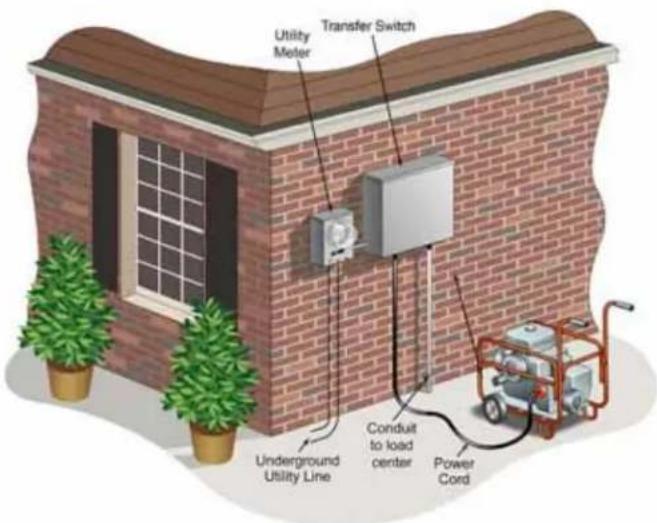
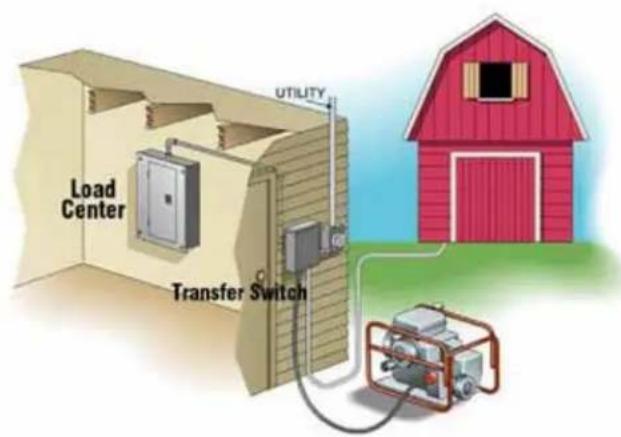
- Although this transfer switch can be installed above, below or on either side of the utility meter socket, the preferred location is to the RIGHT of the meter socket since the location of the lugs for the Utility Main are on the Left side of the transfer switch. Knockouts (KO) are provided only in the bottom of the enclosure. However, since the enclosure is aluminum, it is easy to cut in the desired knockout. If the KO is cut in above the live terminals of the circuit breakers, a watertight hub should be used. NOTE: If a 2" KO is cut in the side of the Transfer switch enclosure, the dead front panel may need to be "notched" to clear the 2" fittings. The back of the KO must be 3/8" from the rear of the enclosure.
- Loosen the thumb screw from the cover of the transfer switch, and slide the cover down to remove. The thumb screw stays attached to the cover.
- Remove the two screws from the bottom of the dead front. When the cover is pulled forward, the snap-in closing plates will fall out. Set the front cover and dead front aside for re-installation after wiring.
- The mounting holes in the back of the transfer switch are on 16" centers so they could line up on your studs if desired. We recommend using all four holes to mount the enclosure.
- Select the bottom center 2" KO to exit to the Main distribution panel. Terminate the LOAD wires in the landing lugs on the bottom of the bus assembly, one to the Neutral lug and one to the Ground lug on the right side of the enclosure.
- Terminate wires from the meter socket into the utility Main breaker on the left side, and the Neutral into the unused lug on the insulated neutral bar.
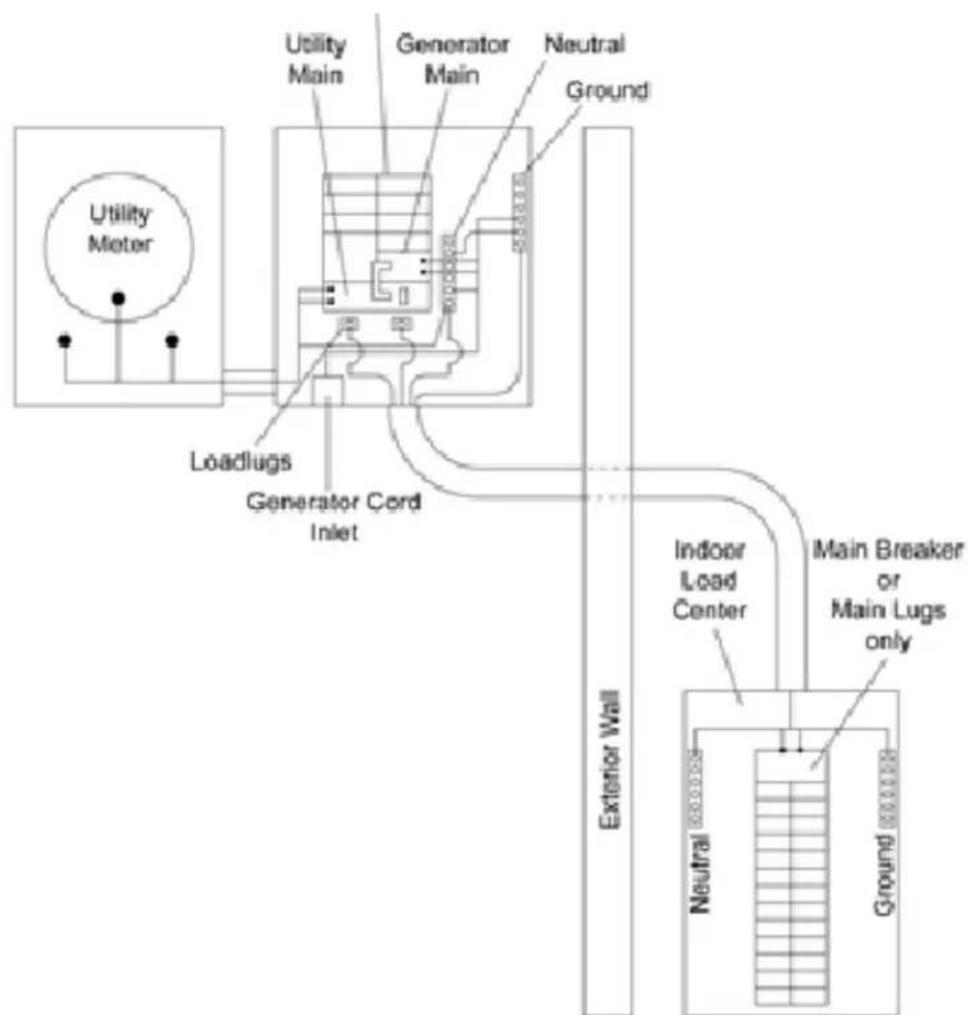
- Plug in and wire any additional branch circuit breakers in the spaces provided. Installer will need to remove any hold-down strap to insert additional circuit breakers. Re-install hold-down strap after breakers are inserted.
- Reinstall dead front cover and interlock mechanism if removed earlier. Fill any unused spaces in the dead front with the closing plates provided.
- Reinstall cover.
3.1 — Transferring From Utility Power to Generator Power
⚠️ DANGER!
NEVER run portable generators indoors or in garages, basements, or sheds. Portable generators should always be used at least 5 feet away from windows, doors, vents, or any other opening. Carbon Monoxide (CO) from a generator is deadly and can kill you in minutes. Read and follow all generator directions before use.
- Move generator outdoors. Be sure your generator is located at least 5 feet from windows, doors or other openings to prevent dangerous carbon monoxide fumes from entering your home.
- Insert the male plug of the power cord into the correct outlet on the generator.
- Plug in the female connector of the power cord to the inlet (if provided) located on the bottom of the transfer switch.
- Turn OFF all circuit breakers in the transfer switch and main load center.
- Start the generator outdoors, following the procedures described in the generator's Owner's Manual furnished by the manufacturer.
- Turn ON the generator main circuit breaker in the transfer switch.
- Turn ON individual circuit breakers in the transfer switch and the main load center up to the continuous wattage rating of your generator. If the generator main breaker trips, you have overloaded the generator. Some circuit breakers must be turned OFF to avoid damage to the generator or loads being connected.
DANGER
Using a generator indoors CAN KILL YOU IN MINUTES.
Generator exhaust contains carbon monoxide. This is a poison you cannot see or smell.
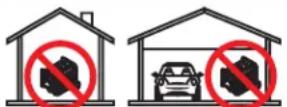
NEVER use inside a home or garage, EVEN IF doors and windows are open.
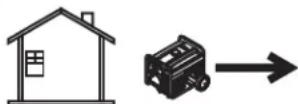
Only use OUTSIDE and far away from windows, doors, and vents.
3.2 — Transferring from Generator Power to Utility Power:
- On the transfer switch, turn OFF generator main breaker and turn ON utility main breaker. To do this, slide the interlock mechanism up with the left hand while turning ON the 200 amp circuit breaker.
- Turn ON any branch circuit breakers in the transfer switch and main load center that are OFF.
- Shut down the generator, following the procedures in the generator Owner's Manual.
- Unplug the power cord from the transfer switch and then the generator.
- Let the generator cool down before storing in a dry, secured location.
- To ensure that your generator will work properly when you need it, it is important to start and run your generator under load regularly and keep the tank filled with fresh fuel. Perform the above steps at least ONCE A MONTH to keep the generator properly “exercised.”
GENERAC®
Part No. 0K4450 Rev. C 08/02/13 Printed in USA
© Generac Power Systems, Inc. All rights reserved
Specifications are subject to change without notice.
No reproduction allowed in any form without prior written consent from Generac Power Systems, Inc.
Generac Power Systems, Inc.
S45 W29290 Hwy. 59
Waukesha, WI 53189
1-888-GENERAC (1-888-436-3722)
generac.com
Section 2 Installation
California Proposition 65
California Proposition 65
- Installation Guidelines
- For
- Manual Transfer Switches 6335 / 6382
- DANGER!
- Forward
- Description
- ▲ CAUTION!
- Table of Contents
- Forward ....ii
- Section 1 Safety
- Section 2 Installation
- Section 3 Operation
- WARNING!
- This page intentionally left blank.
- — Introduction
- — Safety Rules
- ⚠️ DANGER!
- — General Hazards
- — Electrical Hazards
- — Fire Hazards
- — Explosion Hazards
- — Standards Index
- — Required Tools
- Tools and Items Needed for Installation:
- — Compatible Circuit Breaker Types
- — Specifications
- — Installation Procedure
- TRANSFER SWITCH INSTALLATION:
- — Transferring From Utility Power to Generator Power
- DANGER
- — Transferring from Generator Power to Utility Power:
- GENERAC®
Brand : Generac
Model : 0063820
Category : Camera