
CoolMatic CRX 65D - Refrigerator DOMETIC - Free user manual and instructions
Find the device manual for free CoolMatic CRX 65D DOMETIC in PDF.
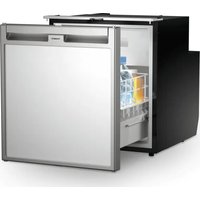


| Product type | Compression refrigerator |
| Brand | Dometic |
| Model | CoolMatic CRX 65D |
| Total capacity | 50.5 L |
| Refrigerator compartment capacity | 43.5 L |
| Freezer compartment capacity | 7.0 L |
| Dimensions (W x H x D) | 515 x 555 x 500 mm |
| Weight | 20 kg |
| Power supply | 12 V or 24 V DC (DC version); 100-240 V~ (ACDC version with optional rectifier) |
| Refrigerator temperature range | +3 °C to +12 °C |
| Freezer temperature range | -15 °C to -5 °C |
| Rapid cooling function | Yes (down to -6 °C ± 2 °C without partition) |
| Refrigerant | R134a (42 g) |
| Climate class | T (ambient temperature +16 °C to +43 °C) |
| Max tilt angle | 30° (short term) |
| Protection | Against polarity reversal, short circuit, battery discharge |
| Lighting | Interior LED with IR sensor |
| Locking | Yes (Lock and Vent positions) |
| Cleaning | Damp cloth, manual defrosting, condenser cleaning |
| Installation | In alcove, for caravans, motorhomes, boats |
| Optional accessories | MPS35 rectifier, drain tube |
| Warranty | Legal (refer to manual) |
Frequently Asked Questions - CoolMatic CRX 65D DOMETIC
User questions about CoolMatic CRX 65D DOMETIC
0 question about this device. Answer the ones you know or ask your own.
Ask a new question about this device
Download the instructions for your Refrigerator in PDF format for free! Find your manual CoolMatic CRX 65D - DOMETIC and take your electronic device back in hand. On this page are published all the documents necessary for the use of your device. CoolMatic CRX 65D by DOMETIC.
USER MANUAL CoolMatic CRX 65D DOMETIC
CRX1065D, CRX0065D
EN
Compressor refrigerator
Installation and Operating Manual.....10
DE
© 2020 Dometic Group. The visual appearance of the contents of this manual is protected by copyright and design law. The underlying technical design and the products contained herein may be protected by design, patent or be patent pending. The trademarks mentioned in this manual belong to Dometic Sweden AB. All rights are reserved.
3 A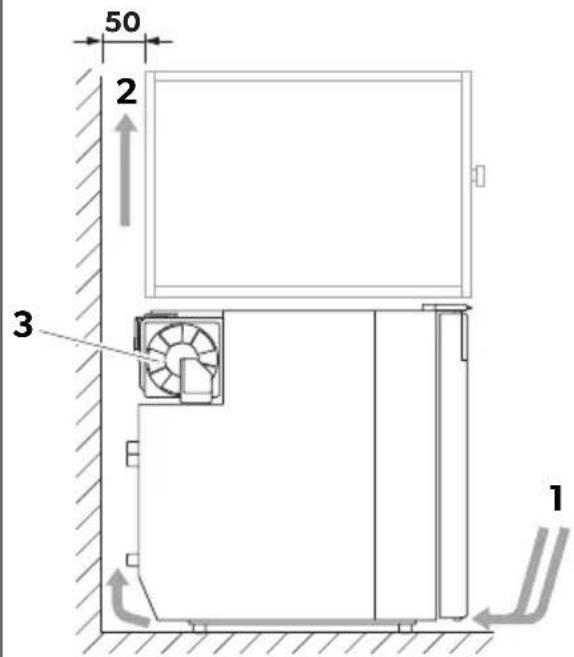
B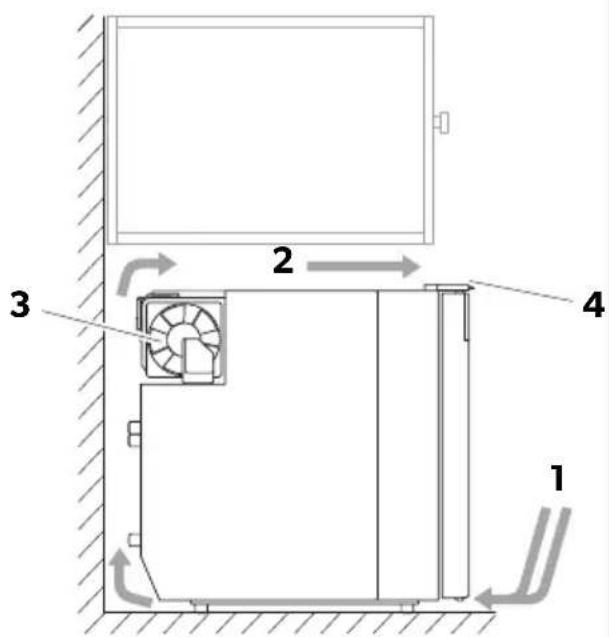
4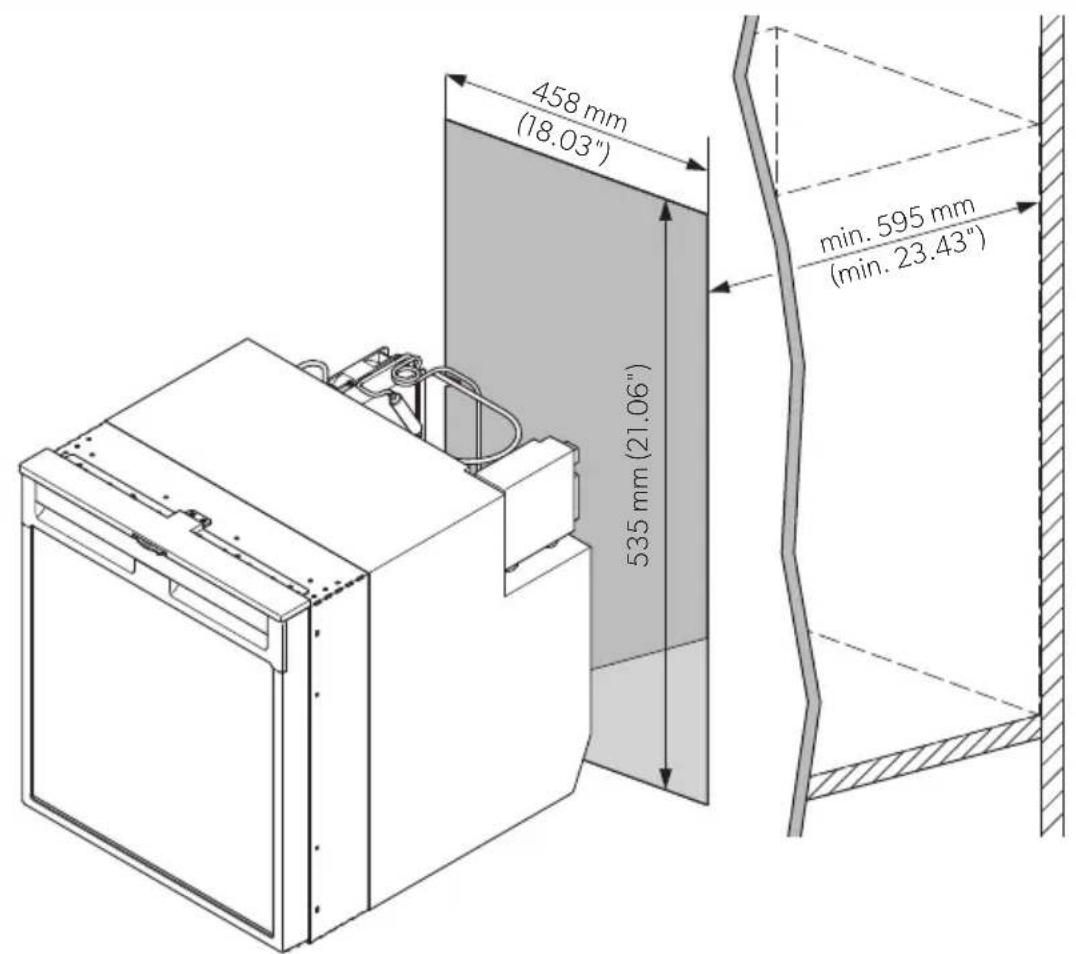
Please read this instruction manual carefully before installation and first use, and store it in a safe place. If you pass on the product to another person, hand over this instruction manual along with it.
Table of contents
1 Explanation of symbols....10 2 Safety instructions....11 3 Scope of delivery .....14 4 Accessories....14 5 Intended use....15 6 Technical description ....15 7 Installing and connecting the refrigerator .....17 8 Using the refrigerator .....21 9 Cleaning and maintenance. 25 10 Troubleshooting 25 11 Warranty 28 12 Disposal.... 29 13 Technical data 29
1 Explanation of symbols

DANGER!
Safety instruction: Indicates a hazardous situation that, if not avoided, will result in death or serious injury.

WARNING!
Safety instruction: Indicates a hazardous situation that, if not avoided, could result in death or serious injury.

CAUTION!
Safety instruction: Indicates a hazardous situation that, if not avoided, could result in minor or moderate injury.

NOTICE!
Indicates a situation that, if not avoided, can result in property damage.

NOTE
Supplementary information for operating the product.
2 Safety instructions
The manufacturer accepts no liability for damage in the following cases:
- Faulty assembly or connection
- Damage to the product resulting from mechanical influences and incorrect connection voltage • Alterations to the product without express permission from the manufacturer
- Use for purposes other than those described in the operating manual
2.1 General safety

DANGER! Failure to obey these warnings will result in death or serious injury.
Electrocution hazard
- On boats: If the device is powered by the mains, ensure that the power supply has a residual current circuit breaker.

WARNING! Failure to obey these warnings could result in death or serious injury.
Electrocution hazard
- Installations in washrooms and areas exposed to water must be performed by a qualified technician. - Do not operate the device if it is visibly damaged. - If this device's power cable is damaged, it must be replaced by the manufacturer, customer service, or a similarly qualified person in order to prevent safety hazards.
- This device may only be repaired by qualified personnel. Inadequate repairs may cause serious hazards.
Health hazard
- This device can be used by children aged from 8 years and above and persons with reduced physical, sensory or mental capabilities or lack of experience and knowledge if they have been given supervision or instruction concerning use of the device in a safe way and understand the hazards involved. Children shall not play with the device.
- Cleaning and user maintenance shall not be made by children without supervision.
- Children aged from 3 to 8 years are allowed to load and unload refrigerating devices.
Explosion hazard
- Do not store any explosive substances, such as spray cans with propellants, in the device.

CAUTION! Failure to obey these cautions could result in minor or moderate injury.
Risk of crushing
- Do not put your fingers into the hinge.
Health hazard
- Foodstuff may only be stored in its original packaging or in suitable containers.

NOTICE! Damage hazard
- Check that the voltage specification on the type plate is the same as that of the power supply.
- Never pull the plug out of the socket by the connection cable.
- If the device is connected to the DC socket: Disconnect the device and other electric consumers from the battery before connecting the quick charging device.
- If the device is connected to the DC socket: Disconnect the device or switch it off when you turn off the engine. Otherwise you may discharge the battery.
- The device is not suitable for storing substances which are caustic or contain solvents.
- Keep the drainage outlet clean at all times.
- Do not open the refrigerant circuit under any circumstances.
- Never transport the device in a horizontal position, so that no oil can leak out of the compressor.
- Make sure that the refrigerant circuit is not damaged during transportation. The refrigerant in the refrigerant circuit is highly flammable. In the event of any damage to the refrigerant circuit:
- Avoid naked flames and sparks.
- Air the room well.
- Set up the device in a dry location where it is protected against splashing water.
2.2 Operating the device safely

DANGER! Failure to obey these warnings will result in death or serious injury.
Electrocution hazard
- Do not touch exposed cables with your bare hands. This applies especially when operating the device from the AC mains.

CAUTION! Failure to obey these cautions could result in minor or moderate injury.
Electrocution hazard
- Before starting the device, ensure that the power supply line and the plug are dry.
Health hazard
- Opening the door for long periods can cause significant increase of the temperature in the compartments of the device.
- Clean regularly surfaces that can come in contact with food and accessible drainage systems.
- Store raw meat and fish in suitable containers in the device, so that it is not in contact with or can drip onto other food.
- If the device is left empty for long periods:
- Switch off the device.
- Defrost the device. – Clean and dry the device.
- Leave the door open to prevent mould developing within the device.

NOTICE! Damage hazard
- Do not use electrical devices inside the cooling device unless they are recommended by the manufacturer for that purpose.
- Do not place it near naked flames or other heat sources (heaters, direct sunlight, gas ovens etc.) • Danger of overheating!
Always ensure sufficient ventilation so that the heat generated during operation can dissipate. Make sure that the device is sufficiently far away from walls and other objects so that the air can circulate.
- Ensure that the ventilation vents are not covered.
- Do not fill the inner container with ice or fluid.
- Never immerse the device in water.
- Protect the device and the cable against heat and moisture.
- Make sure that foodstuffs do not touch the walls of the cooling area.
3 Scope of delivery
Quantity Description
1 Refrigerator with shelves 1 Outlet port 1 Installation and operating manual
4 Accessories
Available as accessories (not included in the scope of delivery):
Description Explanation Ref. no.
Rectifier: Transforms an input voltage of 100 - 240 V~ to 24 V--- 9600000445 so that the refrigerator can be connected to an AC power supply.
All accessories are available from your specialist dealer. If you have any questions, consult your specialist dealer or your service partner.
5 Intended use
The refrigerator is designed for installation in caravans and motorhomes and on boats. It is only suitable for installation in a fitted niche. Once it is installed, only the front of the appliance may be accessible.
The refrigerator is only suitable for cooling, freezing and storing foodstuffs. The refrigerator is not intended for the proper storage of medicine.

CAUTION! Health hazard
Please check if the cooling capacity of the refrigerator is suitable for storing the food you wish to cool.
Two-star frozen-food compartments are suitable for storing pre-frozen food, storing or making icecream and making ice cubes.
The refrigerator is suitable for use with a DC voltage.
6 Technical description
The CoolMatic cooling appliances can cool products and keep them cool. Products can be deep-frozen in the freezer compartment. If the refrigerator is operated without a freezer compartment, frozen products can be stored in the short term using the fast-cooling function.
The refrigerant circuit is maintenance-free.
CRX0065D
The DC version can be operated with the rectifier MPS 35 (accessory) on an AC network.
CRX1065D
The ACDC version can be connected directly to the AC network using the AC plug.
The temperature is set using the control panel on the inside left of the refrigerator. Four temperature ranges from +3 °C to +12 °C, and a fast-cooling function, are available for selection.
6.1 Components
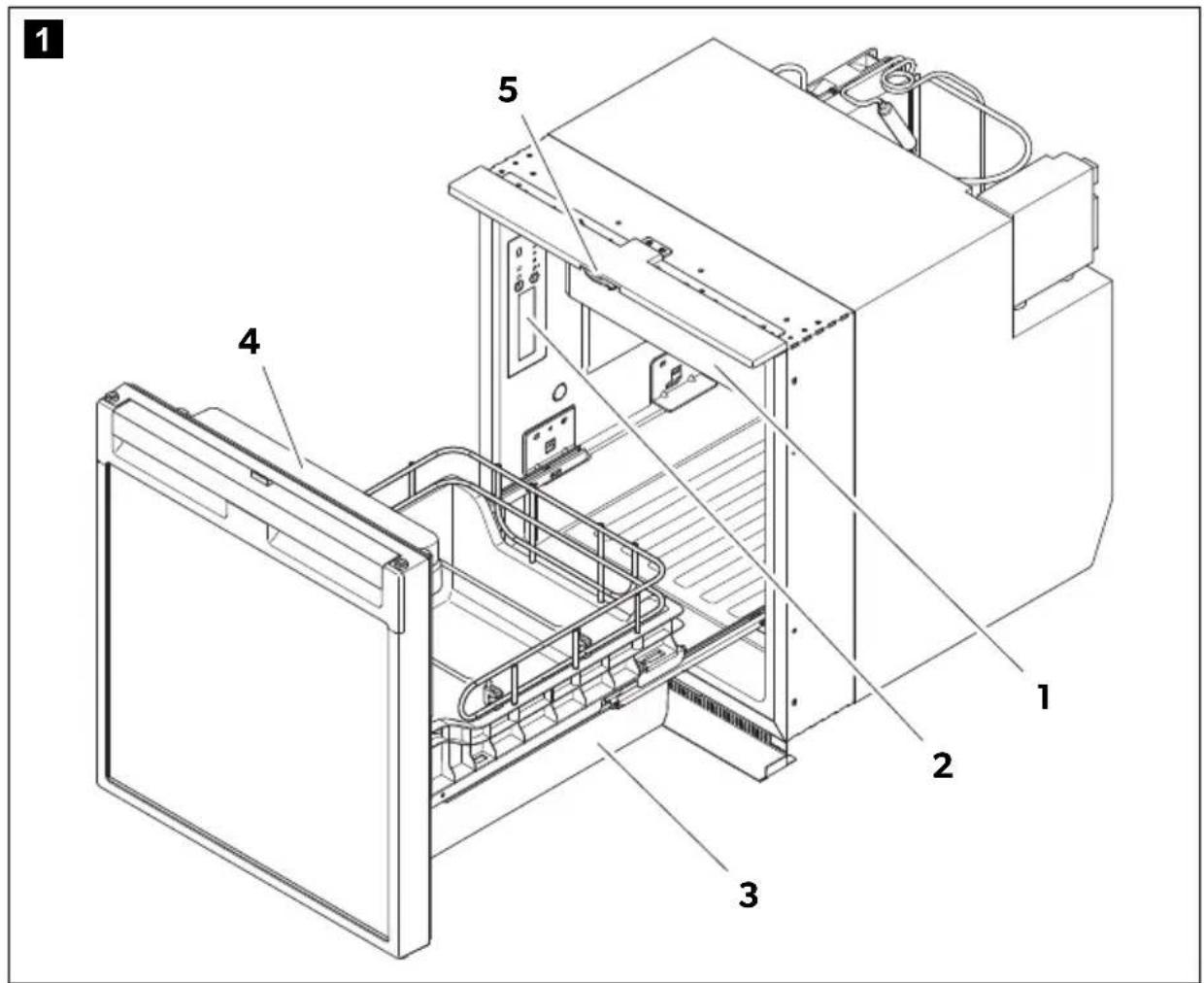
No. in fig. 1, page 3
Explanation
1 Freezer compartment (detachable) 2 Control panel 3 Refrigerator drawer 4 Compartment with lid (hinged) 5 Lock
6.2 Control elements
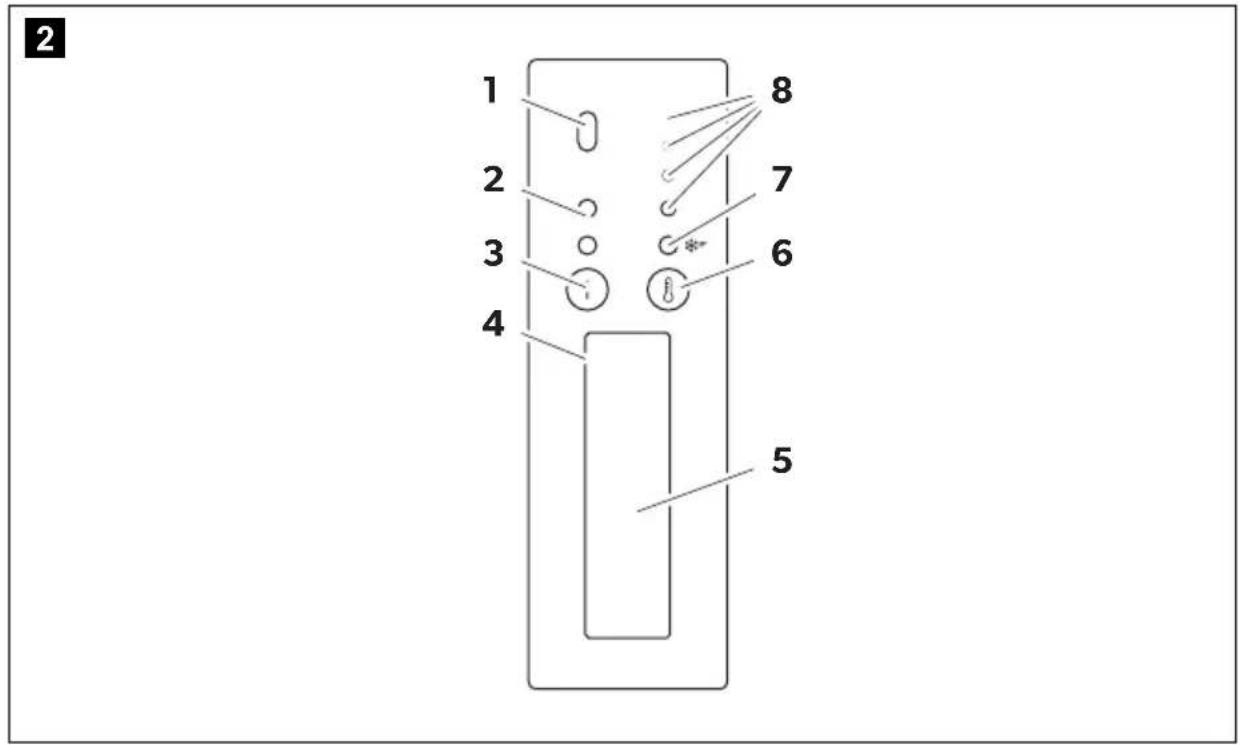
No. in fig. 2, page 3 Explanation
1 IR sensor for switching the interior light 2 LED Service display 3 LED Blue: Compressor is running LED Orange: Compressor is off 4 On/off button 5 Inner lighting 6 Temperature selection button 7 LED: Fast cooling function on 8 LEDs: Temperature levels 1 to 4
7 Installing and connecting the refrigerator
7.1 Safety instructions for installation on boats
Please note the following instructions for installation on boats:

DANGER! Electrocution hazard
If the appliance is powered by the mains, ensure that the voltage supply has a residual current circuit breaker.

NOTICE! Damage hazard
- The refrigerator is designed for short-term heeling of up to 30° . When setting up the refrigerator, note that it must be fastened to take account of this. If you have any questions regarding installation, consult your specialist dealer.
- The appliance is designed for ambient temperatures between +16°C and +43°C .
7.2 Notes on installing the refrigerator

WARNING! Fire hazard!
- When positioning the device, ensure the supply cord is not trapped or damaged.
- Do not locate multiple portable socket-outlets or portable power supplies at the rear of the device.
Observe the following when installing the refrigerator:
- Install the refrigerator so that the warm air produced can easily flow away (either upwards or to the sides, fig. 3, page 4).
Key to fig. 3, page 4
No. Explanation
1 Cold intake air
2 Hot waste air
3 Condenser
4 Spacing above the refrigerator if there is not sufficient air to circulate above or at the side.
- Observe the installation dimensions in fig. 4, page 4.
- Keep objects clear of openings in the housing or installation structure (such as ventilation slots, etc.).
- Condensate is produced when the refrigerator is operating normally. You can either wipe up the condensate on the floor of the refrigerator in regular intervals, or drain it through an outlet in the floor of the refrigerator (see chapter "Mounting the outlet port (optional)" on page 18).
7.3 Mounting the outlet port (optional)
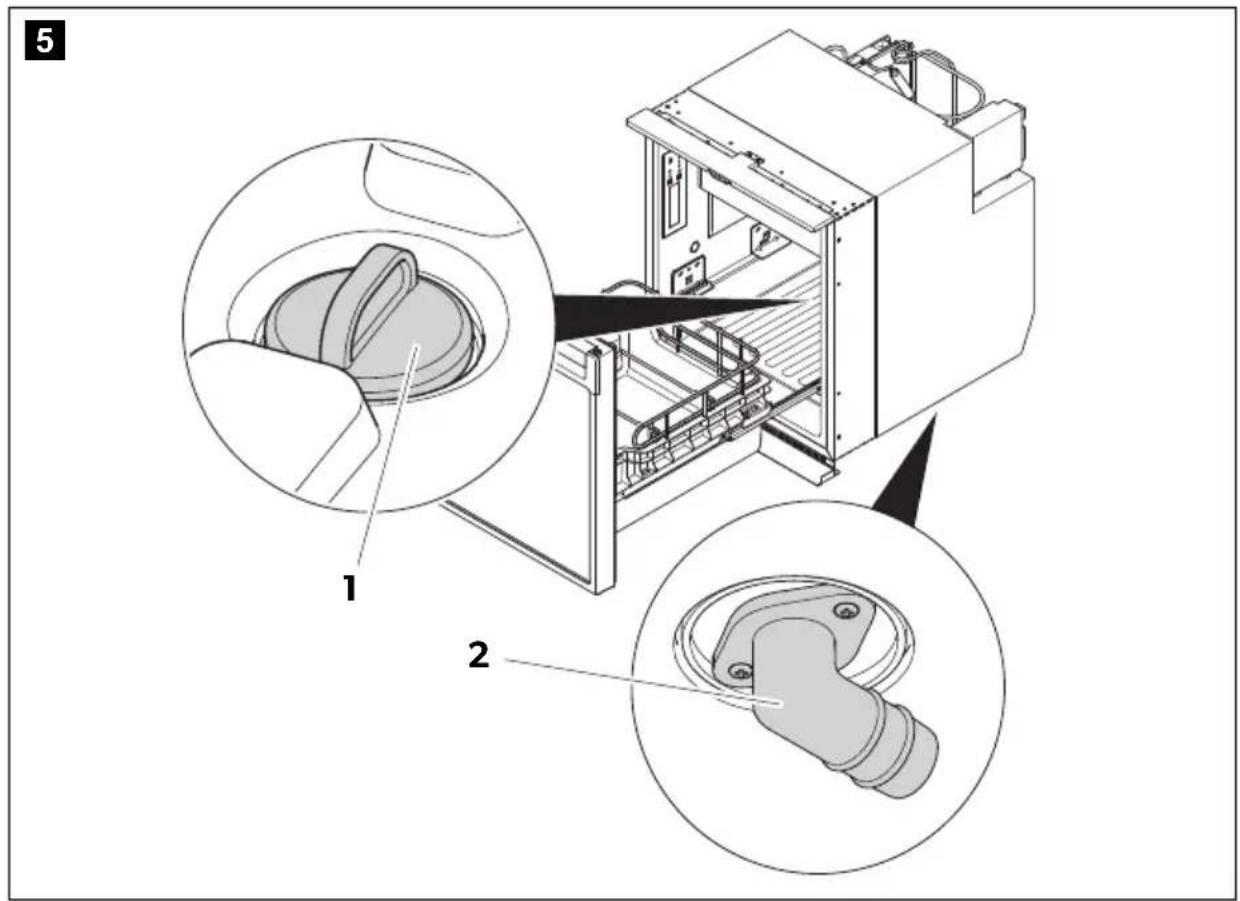
▶Connect a hose with an inside diameter of 10 mm (not included) to the outlet port. ▶Lay the refrigerator on its side in order to access the bottom side. ▶ Mount the outlet port (fig. 5 2, page 5) aligned to the front or to the back according to the desired outlet direction. ▶ Remove the drain plug (fig. 5 1, page 5) inside the refrigerator.
7.4 Installing the refrigerator
Proceed as follows to install the refrigerator:
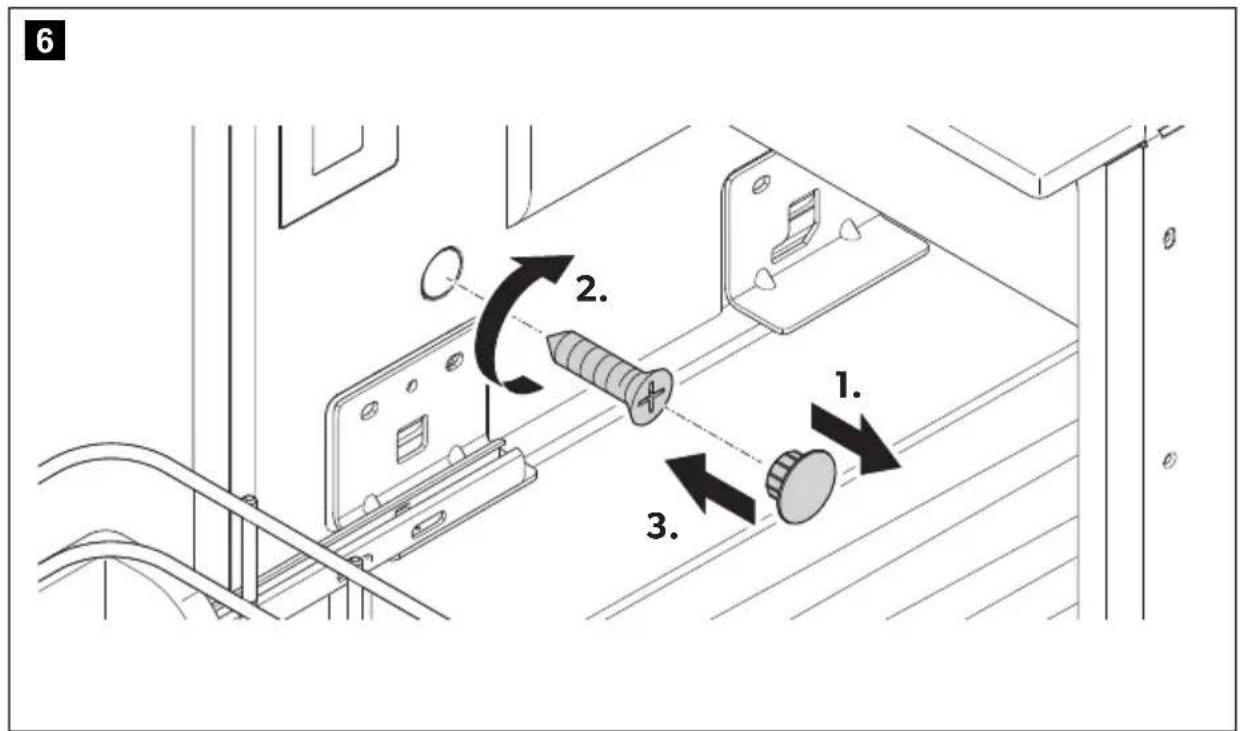
▶If you wish to drain the condensate through a hose: Mount the outlet port (see chapter "Mounting the outlet port (optional)" on page 18). ▶ Undo the transport lock (chapter "Releasing the lock" on page 24). ▶Open the refrigerator drawer. ▶ Remove the blanking plugs (fig. 6, page 5). ▶Push the refrigerator into the recess. ▶ Fix the refrigerator in place using suitable screws (fig. 6, page 5). ▶ Press the blanking plugs (fig. 6, page 5) into the openings.
7.5 Connecting the refrigerator to DC voltage

NOTICE! Damage hazard
- To avoid voltage drops and loss of performance, keep the connection cable as short as possible and not be interrupted. Therefore avoid additional switches, plugs or power strips.
- Disconnect the cooling device and other electric consumers from the battery before you connect the battery to a quick charging device. Overvoltage can damage the electronics of the device.
The refrigerator can be operated with a 12 V or a 24 V DC voltage supply.
For safety reasons, the refrigerator is equipped with an electronic system to prevent the polarity being reversed. This protects the refrigerator against reversed polarity when connecting to a battery and against short circuiting.
To protect the battery, the refrigerator switches off automatically if the voltage is insufficient (see table below).
| 12 V 24 V | |
| Cut-off voltage | 10.4 V 22.8 V |
| Cut-in voltage | 11.7 V 24.2 V |
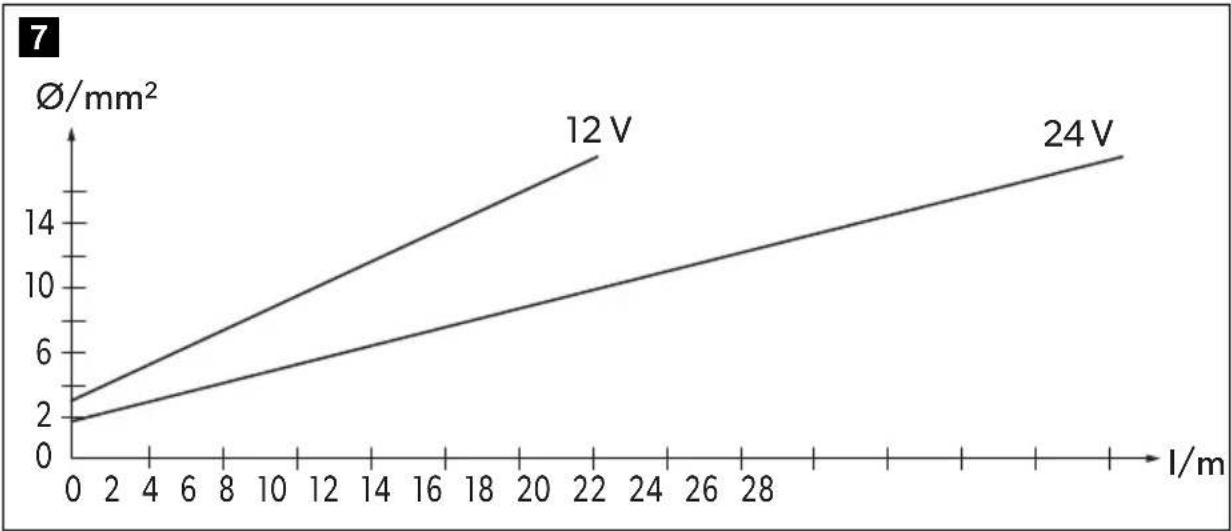
Determine the required cross section of the cable in relation to the cable length according to fig. 7, page 6.
Key to fig. 7, page 6:
Coordinate axis Meaning Unit
| I Cable length | m | ||
| Cable cross section | mm2 | ||

NOTICE! Damage hazard
Make sure the polarity is correct.
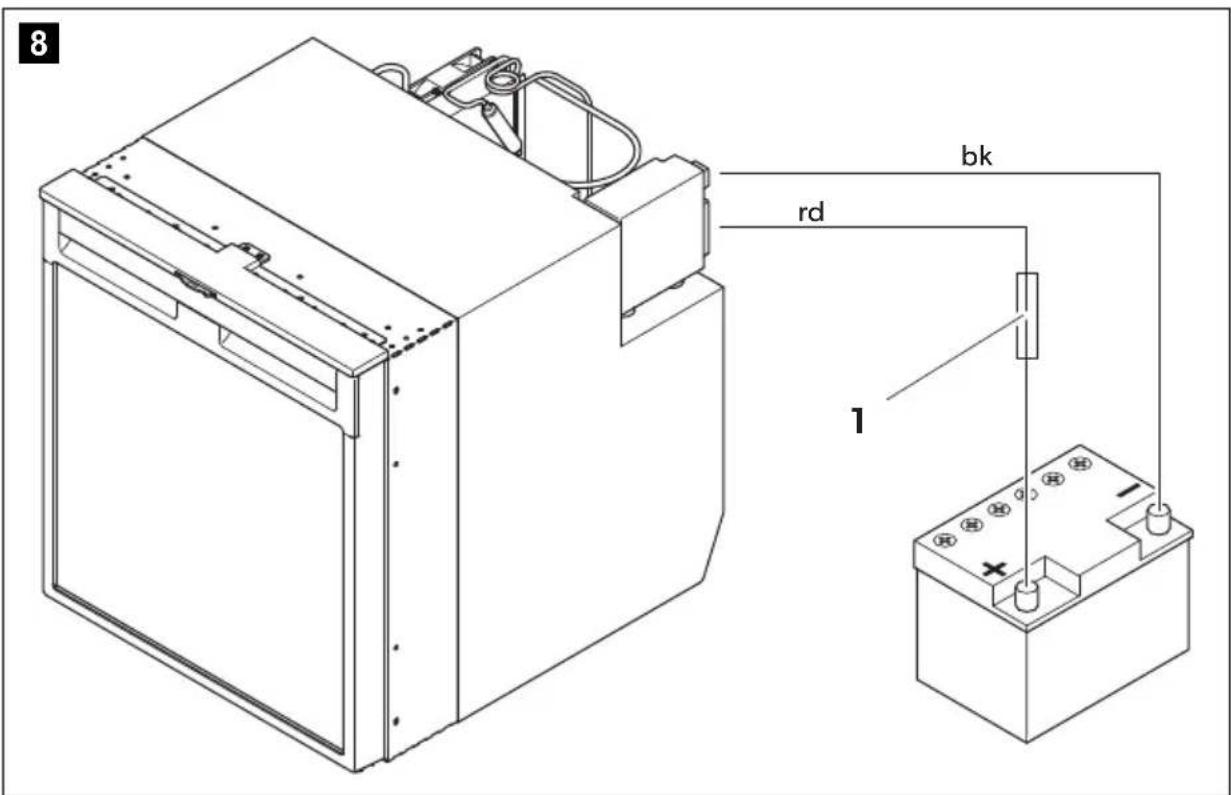
Connect your refrigerator to a plug socket which is fuse-protected with at least 15 A (at 12 V---) or 7.5 A (at 24 V---) (fig. 8 1, page 6). Connect the red cable (fig. 8 rd, page 6) to the positive terminal of the battery. Connect the black cable (fig. 8 bk, page 6) to the negative terminal of the battery.
7.6 Connecting the refrigerator to AC voltage

DANGER! Electrocution hazard
- Never handle plugs and switches with wet hands or if you are standing on a wet surface.
- If you are operating your refrigerator on board a boat with an AC mains connection using a shore connection, you must install a residual current circuit breaker between the AC mains supply and the refrigerator. Seek advice from a trained technician.
Connecting the ACDC version to AC voltage
Proceed as follows when you connect the refrigerator to the AC supply:
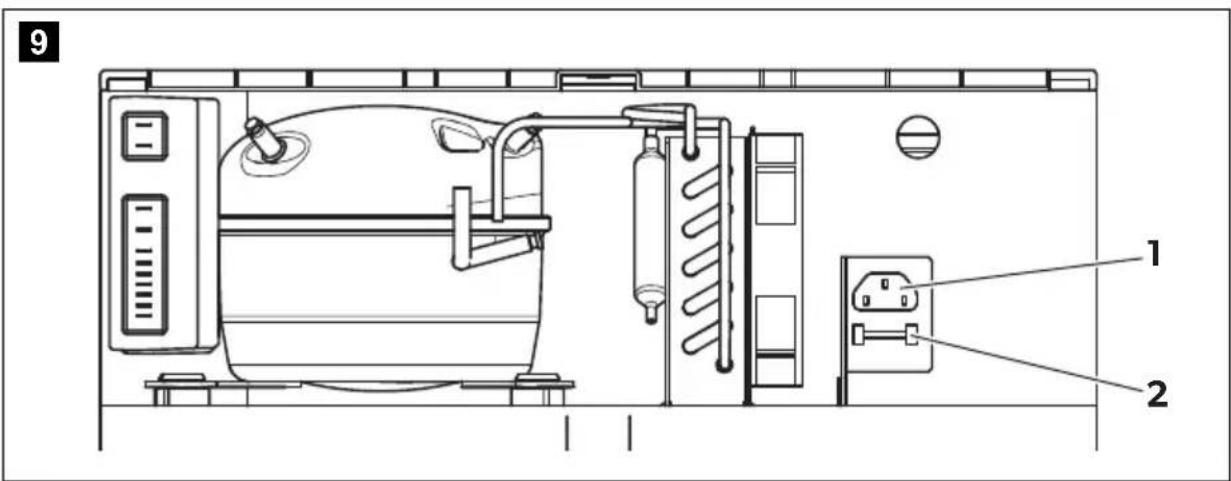
Plug the connector into the AC socket (fig. 9 1, page 6).
Connecting the DC version to AC voltage
You can connect the refrigerator to 100 – 240 V~ AC power if you use the MPS 35 rectifier (accessory).
The MPS 35 rectifier features a priority circuit which conserves the battery connected. When an AC mains connection is used, the rectifier automatically switches from battery to mains operation.
When disconnected from the AC supply, the rectifier automatically switches back to battery operation. Mains operation via the rectifier always takes priority over battery operation.
In mains operation the output voltage of the rectifier will always be 24 V. When the rectifier is in 12 V or 24 V battery operation, the input voltage will be passed through so that the output voltage equals the input voltage.
Proceed as follows when you connect the refrigerator to the AC supply:
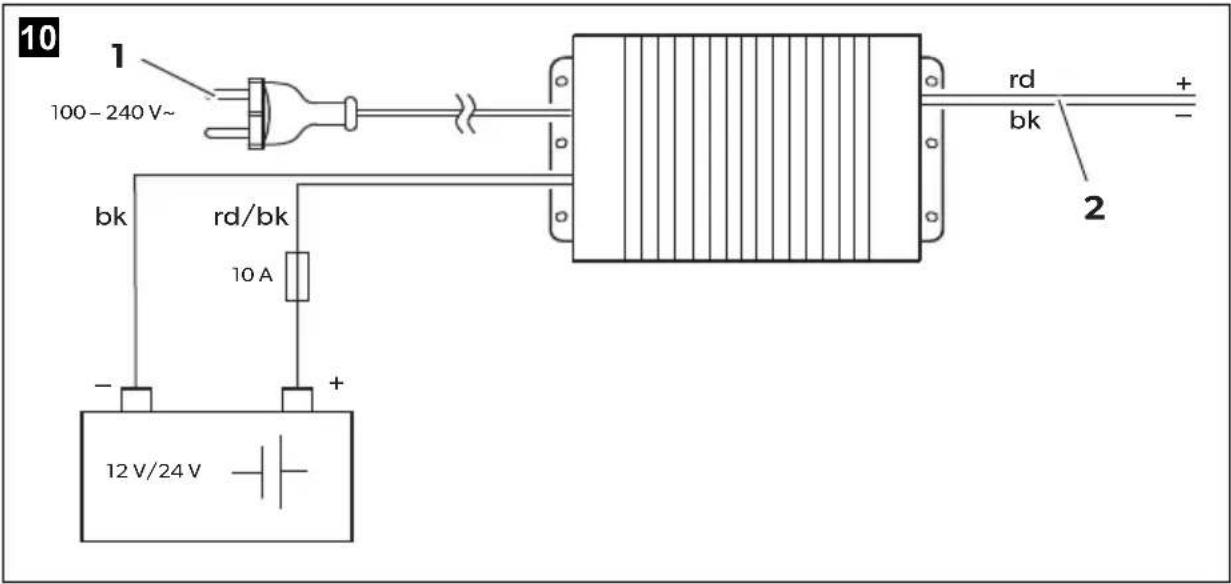
▶ Attach the rectifier on the back of the refrigerator. ▶ Connect the rectifier as shown (fig. 10, page 7). ▶ Connect the refrigerator to the rectifier (fig. 10 2, page 7):
- Red cable: positive battery terminal
- Black cable: negative battery terminal
▶ Plug the connector into the AC socket (fig. 10 1, page 7).
8 Using the refrigerator
The refrigerator conserves fresh foodstuffs. The freezer compartment conserves frozen foodstuffs and freezes fresh foodstuffs.

NOTICE! Damage hazard
- Do not place any electrical devices inside the cooler. The only exceptions are devices approved for the purpose by the manufacturer.
- Ensure that food or liquids in glass containers are not excessively refrigerated. Liquids expand when they freeze and can therefore destroy glass containers.
- Food may only be stored in its original packaging or in suitable containers.
- Make sure that you only put items in the cooler which may be kept at the selected temperature.
- The lamp can only be replaced by the manufacturer, service agent or similarly qualified person to avoid hazard.

NOTE
- Before starting your new refrigerator for the first time, you should clean it inside and outside with a damp cloth for hygienic reasons (please also refer to the chapter “Cleaning and maintenance” on page 25).
- When using the refrigerator for the first time, there may be a mild odour which will disappear after a few hours. Air the living space well.
- Park the vehicle so that it is level, especially when starting up and filling the refrigerator before setting off on a journey.
- Do not use force to press the flap of the freezer.
- Do not pull out the dividing wall if there is ice in the freezer.
- Do not remove the panel sticker when operating the refrigerator.
8.1 Energy saving tips
- Choose a well ventilated location which is protected from direct sunlight.
- Allow hot food to cool down first before you put it in the refrigerator.
- Do not open the refrigerator more often than necessary.
- Do not leave the refrigerator drawer open for longer than necessary. If the drawer is left open for more than 5 minutes, the light starts to flash.
- Defrost your refrigerator as soon as a layer of ice forms.
- Avoid unnecessarily low temperature settings.
- Clean dust and dirt from the condenser at regular intervals.
8.2 Switching on the refrigerator

NOTE
Start the refrigerator only if you are using a battery monitor or if the alternator in your vehicle provides sufficient voltage.
Switch the refrigerator on by pressing the button.

NOTE
After switching on, the refrigerator needs some time before the compressor starts up.
8.3 Setting the temperature
Press the button repeatedly until the desired temperature level is set. The more LEDs light up above the button the lower is the temperature level. To switch from the last level to the first level press the button again.

NOTE
The cooling performance can be affected by:
• The ambient temperature • The amount of food to be conserved • The frequency with which the drawer is opened.
If the ambient temperature is between 16 °C and 20 °C, set the refrigerator to at least level 2.
8.4 Setting the fast cooling function

NOTICE! Damage hazard
- Only use the fast-cooling function when the removable freezer compartment is not being used. Otherwise, there is a risk that the freezer compartment becomes too cold and condensate cannot be prevented from forming on the outside of the refrigerator. The energy consumption will also increase dramatically.
- Note that bottles and other containers can burst when frozen.
- Note that it is difficult to open the refrigerator directly after closing it.
The option of operating the refrigerator using a fast-cooling function allows temperatures suitable for freezing foods to be reached.
Press the button for longer than 3 seconds. The LED above the button lights up. Press the ⏻ button again for longer than 3 seconds to operate the refrigerator in normal mode.
8.5 Conserving foodstuffs

NOTICE! Damage hazard
- Do not conserve warm foodstuffs in the refrigerator.
- Do not place glass containers containing liquid in the freezer compartment.

NOTE
Food which can easily absorb tastes and odours, as well as liquids and products with a high alcohol content, should be conserved in air-tight containers.
You can conserve foodstuffs in the refrigerator. The time for which the food can be conserved in this way is usually stated on the package.
The refrigerator is divided into different zones with different temperatures:
- The colder zones are near the back wall.
- Observe the temperature information and best-before date on the food packaging.
- Observe the following when using the refrigerator:
- Never re-freeze products which have started defrosting or have been defrosted; consume them as soon as possible.
- Wrap food in aluminium foil or cling film and shut in a suitable box with a lid. This ensures that aromas, the shape and the freshness will be better conserved.
8.6 Defrosting the freezer

NOTICE! Damage hazard
Never use mechanical tools to remove ice or to loosen objects stuck to the device. The only exceptions are devices approved for the purpose by the manufacturer.
This is how to defrost the refrigerator:
▶ Empty the contents. ▶ If necessary, put them in another cooling device to keep them chilled. ▶ Press the button until the refrigerator switches off. ▶ Close the door properly.
8.7 Releasing the lock

NOTICE! Damage hazard
Only adjust the locking mechanism when the door is open. If you use it with the door closed, you will damage the device.
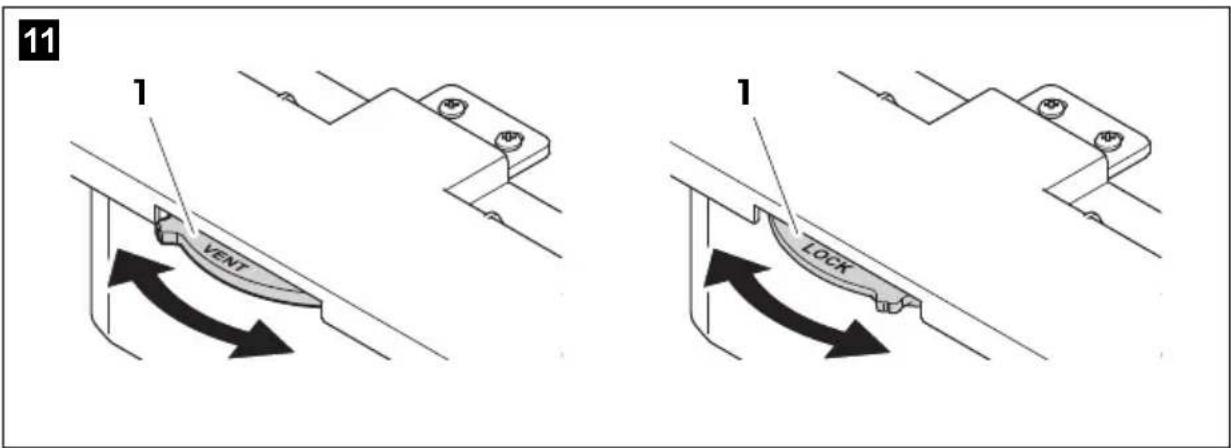
The refrigerator has a locking mechanism (fig. 11 1, page 7), which is also used to protect it during transport. The following settings are possible:
- Lock (turn wheel clockwise to the end stop): the drawer is locked and secured. To open the drawer, lift the handle up and pull the drawer out.
- Vent (turn wheel anti-clockwise to the end stop): The drawer is slightly open, but fixed in position. Use this position if you are not going to use the unit for a long time.
8.8 Switching off and storing the refrigerator
If you do not intend to use the refrigerator for a long time, proceed as follows:
Press the button until the refrigerator switches off. Disconnect the connection cable from the battery or disconnect the plug on the AC cable plug from the rectifier. Clean the refrigerator (see chapter "Cleaning and maintenance" on page 25). Turn the locking wheel (fig. 11 1, page 7) anti-clockwise to the end stop ("Vent"). Close the drawer until it latches in. The drawer stays open thus preventing smells from arising.
8.9 Detaching the refrigerator drawer
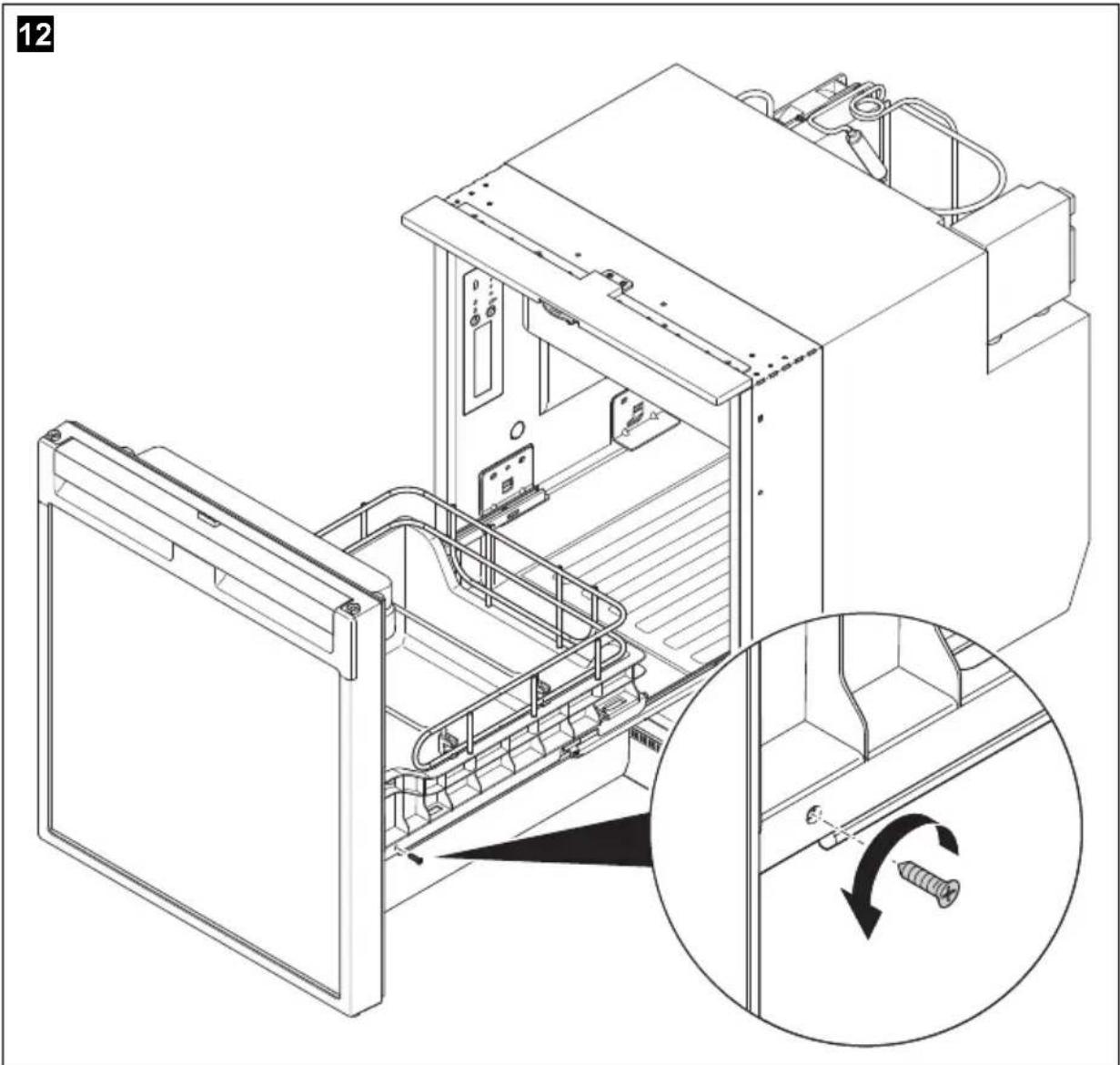
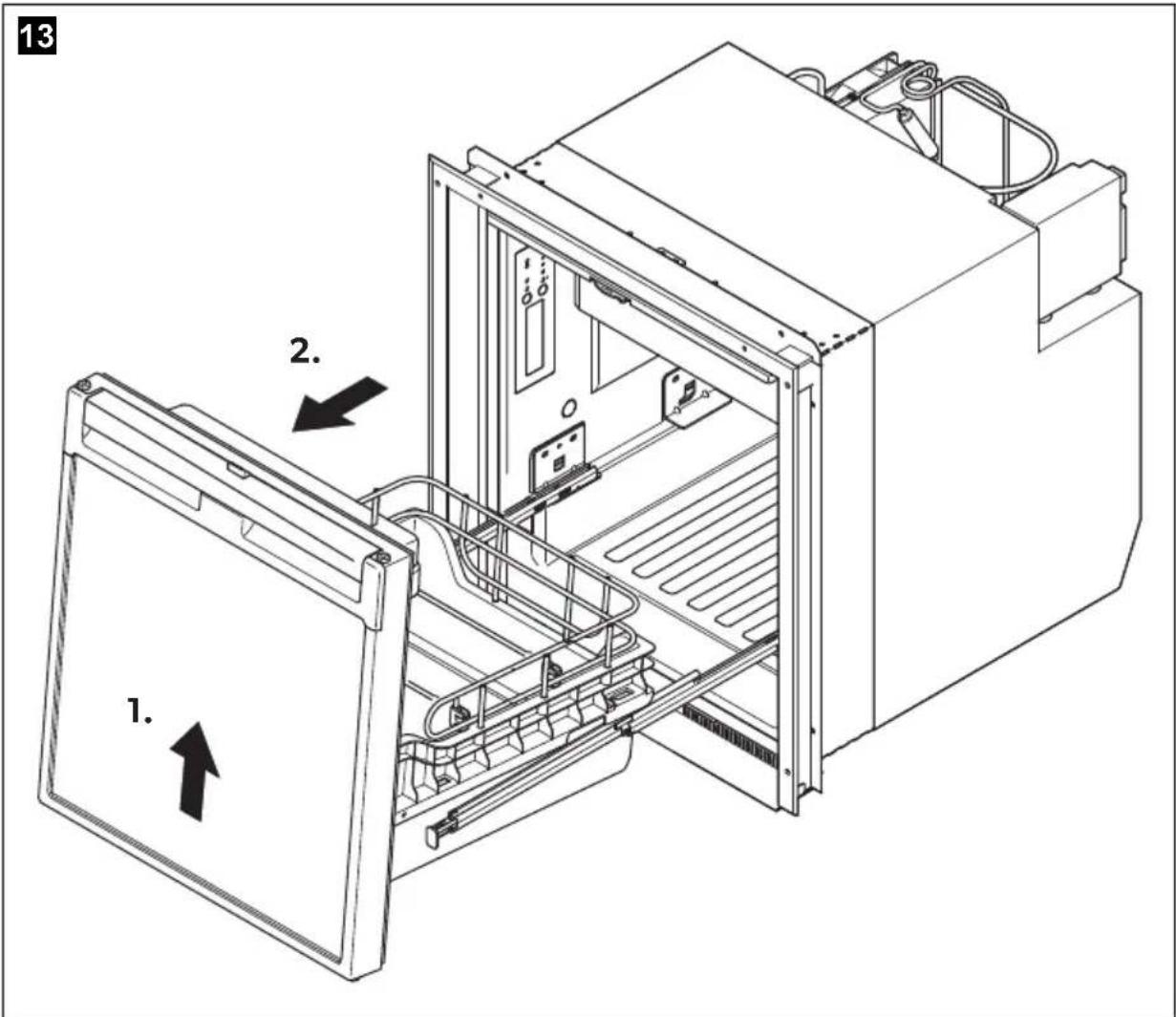
Unscrew both screws (fig. 12, page 8). Lift the drawer slightly at the front (fig. 13, page 9). Pull out the drawer all the way (fig. 13, page 9).
8.10 Change the fuse (ACDC version only)
If the fuse in the AC socket is faulty, it can be replaced.
Lever the fuse compartment (fig. 9 2, page 6) open with a screwdriver. Replace the fuse (250 V/4 A). Close the fuse compartment again.
9 Cleaning and maintenance

NOTICE! Damage hazard
- Do not use abrasive cleaning agents or hard objects during cleaning as these can damage the refrigerator.
- Do not use hard or pointed tools to speed up the defrosting process.
Always disconnect the device from the power supply before you clean and service it. Clean the refrigerator regularly and as soon as it becomes dirty with a damp cloth. Make sure that no water drips into the seals. This can damage the electronics. Wipe the refrigerator dry with a cloth after cleaning. Clean dust and dirt from the condenser at regular intervals.
10 Troubleshooting
The significance of the red LED (fig. 2 2, page 3)
For operational faults it illuminates several times. The number of pulses depends on the type of fault.
Each flash lasts for one quarter of a second. After the series of impulses a pause follows. The sequence for the fault is repeated every four seconds.
| Number of flashes | Fault Possible cause | |
| 1 Line Voltage The supply voltage is outside of the set range. | ||
| 2 Excessive fan current The fan load on the electronic unit is more than 1 A. | ||
| 3 The motor doesn't start The rotor is jammed. The pressure difference in the cooling system is too high (>5 bar). | ||
| 4 Speed too low If the cooling system is overload, the minimum speed of the motor of 1,850 rpm cannot be maintained. | ||
| 5 Overheating of the electronics unit | If the cooling system is loaded too heavily or the temperature is set too high, the electronics can overheat. | |
| flashes constantly T emperatur sensor errors | Temperatur sensor is defective. | |
Compressor does not run (battery connection)
| Problem Possible cause | Remedy | |
| UTerm=0V | There is an interruption in the battery - electronics connection | Establish a connection |
| Main switch faulty (if installed) | Replace the main switch | |
| Additional supply line fuse has blown (if installed) | Replace the supply line fuse | |
| UTerm≤UON | Battery voltage is too low | Charge the battery |
| Start attempt with UTerm≤UOFF | Loose cablesPoor contact (corrosion) | Establish a connection |
| Battery capacity too low | Replacing the battery | |
| Cable cross section too small | Replace the cable (fig. 7, page 6) | |
| Start attempt with UTerm ≥ UON | Ambient temperature too high – | |
| Insufficient ventilation Move the refrigerator to another location | ||
| Condenser is dirty Clean the condenser | ||
| Electric circuit between the pins in the compressor interrupted | Defective compressor Replace the compressor |
UTerm Voltage between the positive and negative terminals of the electronics
UON Cut-in voltage of the electronics
UOFF Cut-off voltage of the electronics
Compressor is not running (connected to AC supply)
| Problem Possible cause | Remedy | |
| No voltage Connection | supply line interrupted Establish a connection | |
| Main switch faulty (if installed) Replace the main switch | ||
| Additional supply line fuse has blown (if installed) | Replace the supply line fuse | |
| Voltage is present but the compressor doesn't run | Ambient temperature too high – | |
| Insufficient ventilation Move the refrigerator to another location | ||
| Condenser is dirty Clean the condenser | ||
| Electric circuit between the pins in the compressor interrupted | Defective compressor Replace the compressor | |
Poor cooling, increase in interior temperature
| Problem Possible cause | Remedy | |
| Compressor runs for a long time/continuously | Ambient temperature too high – | |
| Insufficient ventilation Move the refrigerator to another location | ||
| Condenser is dirty Clean the condenser | ||
| Faulty fan Replace the fan | ||
| Compressor does not run often | Battery capacity exhausted Charge the battery |
Unusual noises
| Problem Possible cause | Remedy | |
| Loud humming A component | not of the refrigerant circuit cannot move freely (touching the wall) | Bend the component carefully away from the obstruction |
| There is a foreign object stuck between the cooling unit and the wall | Remove the foreign object | |
| Fan noise – |
11 Warranty
The statutory warranty period applies. If the product is defective, please contact the manufacturer's branch in your country (see dometic.com/dealer) or your retailer.
For repair and warranty processing, please include the following documents when you send in the device:
• A copy of the receipt with purchasing date - A reason for the claim or description of the fault
12 Disposal
WARNING! Children beware
Before disposing of your old refrigerator:
- Detach the refrigerator drawer.
- Leave storage surfaces in the refrigerator so that children cannot climb inside.
Place the packaging material in the appropriate recycling waste bins wherever possible.

If you wish to finally dispose of the product, ask your local recycling centre or specialist dealer for details about how to do this in accordance with the applicable disposal regulations.
13 Technical data
| CRX1065D / CRX0065D | |
| Refrigerator compartment capacity: 43.5 lFreezer compartment capacity: 7.0 l | |
| Capacity: 50.5 l | |
| Voltage: | 12 Vg or 24 Vg100 – 240 Vw (ACDC model only) |
| Power consumption (AC)(ACDC model only): 45 W | |
| Rated current12 Vg:24 Vg:100 Vw (ACDC model only):240 Vw (ACDC model only): | 5,5 A2,8 A1.22 A0.58 A |
| Cooling temperature rangeRefrigerator:Freezer:Fast cooling (without dividing wall): | +3 °C to +12 °C-15 °C to -5 °Cmaximum -6 °C ± 2 °C |
| Climatic class: T | |
| Relative humidity: | maximum 90 % |
| Short term inclination: maximum 30° | |
| Max. pressure: | LP 11 bar/HP 25 bar |
| Propellant: C | 5H10 |
| Refrigerant: R134a | |
| Refrigerant quantity: 42 g | |
| CO2equivalent: 0.06 t | |
| Global warming potential (GWP): 1430 | |
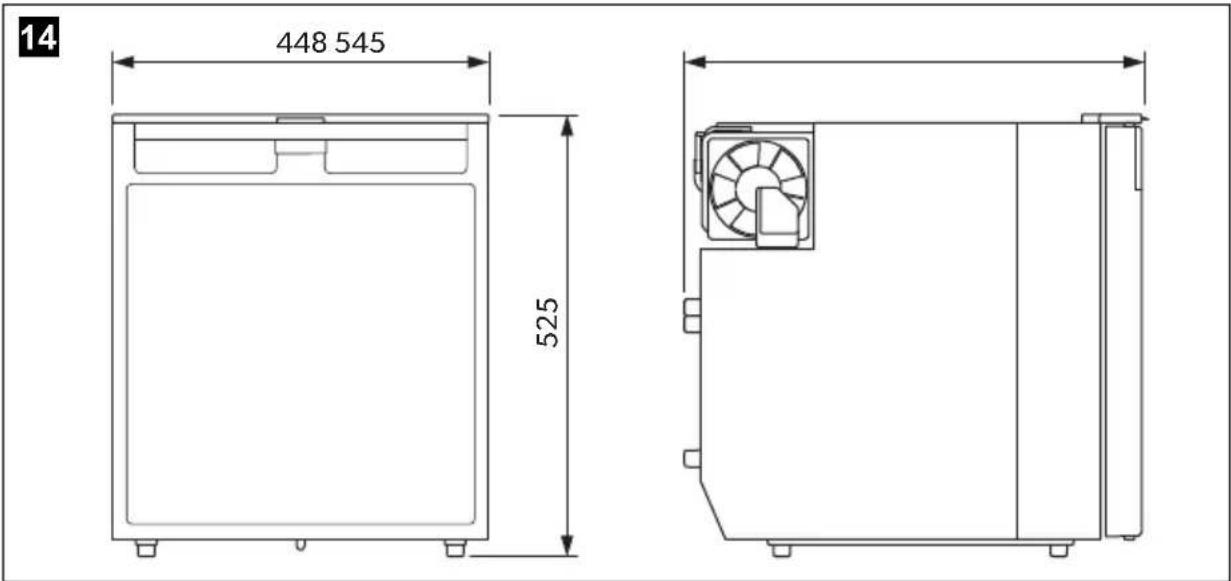
| Dimensions: | fig. 14, page 9 |
| Weight: 20 kg | |
| Inspection/certification: |  |
Contains fluorinated greenhouse gases
Hermetically sealed equipment
6 Description technique
WARNING! Fire hazard
CAUTION! Risk of injury
CAUTION! Risk of injury
- Risk of overheating!
CAUTION! Risk of injury
CAUTION! Risk of injury
CAUTION! Risk of injury
CAUTION! Risk of injury
CAUTION! Risk of injury
CAUTION! Risk of injury
CAUTION! Risk of injury
CAUTION! Risk of injury
Adjust the locking mechanism only when the refrigerator drawer is open. The refrigerator can be damaged if operated with the drawer closed.
CAUTION! Risk of injury
WARNING! Dangerous for children
Before disposing of your old refrigerator:
dometic.com/sales-offices
- COMPRESSOR REFRIGERATOR
- TABLE OF CONTENTS
- EXPLANATION OF SYMBOLS
- DANGER
- WARNING
- CAUTION
- NOTICE
- NOTE
- SAFETY INSTRUCTIONS
- GENERAL SAFETY
- DANGER! FAILURE TO OBEY THESE WARNINGS WILL RESULT IN DEATH OR SERIOUS INJURY
- ELECTROCUTION HAZARD
- WARNING! FAILURE TO OBEY THESE WARNINGS COULD RESULT IN DEATH OR SERIOUS INJURY
- HEALTH HAZARD
- EXPLOSION HAZARD
- CAUTION! FAILURE TO OBEY THESE CAUTIONS COULD RESULT IN MINOR OR MODERATE INJURY
- RISK OF CRUSHING
- NOTICE! DAMAGE HAZARD
- OPERATING THE DEVICE SAFELY
- SCOPE OF DELIVERY
- QUANTITY DESCRIPTION
- ACCESSORIES
- DESCRIPTION EXPLANATION REF. NO
- INTENDED USE
- CAUTION! HEALTH HAZARD
- TECHNICAL DESCRIPTION
- CRX0065D
- CRX1065D
- COMPONENTS
- EXPLANATION
- CONTROL ELEMENTS
- INSTALLING AND CONNECTING THE REFRIGERATOR
- SAFETY INSTRUCTIONS FOR INSTALLATION ON BOATS
- DANGER! ELECTROCUTION HAZARD
- NOTES ON INSTALLING THE REFRIGERATOR
- WARNING! FIRE HAZARD
- NO. EXPLANATION
- MOUNTING THE OUTLET PORT (OPTIONAL)
- INSTALLING THE REFRIGERATOR
- CONNECTING THE REFRIGERATOR TO DC VOLTAGE
- CONNECTING THE REFRIGERATOR TO AC VOLTAGE
- CONNECTING THE ACDC VERSION TO AC VOLTAGE
- CONNECTING THE DC VERSION TO AC VOLTAGE
- USING THE REFRIGERATOR
- ENERGY SAVING TIPS
- SWITCHING ON THE REFRIGERATOR
- SETTING THE TEMPERATURE
- SETTING THE FAST COOLING FUNCTION
- CONSERVING FOODSTUFFS
- DEFROSTING THE FREEZER
- RELEASING THE LOCK
- SWITCHING OFF AND STORING THE REFRIGERATOR
- DETACHING THE REFRIGERATOR DRAWER
- CHANGE THE FUSE (ACDC VERSION ONLY)
- CLEANING AND MAINTENANCE
- TROUBLESHOOTING
- THE SIGNIFICANCE OF THE RED LED (FIG. 2 2, PAGE 3)
- COMPRESSOR IS NOT RUNNING (CONNECTED TO AC SUPPLY)
- POOR COOLING, INCREASE IN INTERIOR TEMPERATURE
- UNUSUAL NOISES
- WARRANTY
- DISPOSAL
- WARNING! CHILDREN BEWARE
- TECHNICAL DATA
- DESCRIPTION TECHNIQUE
- CAUTION! RISK OF INJURY
- RISK OF OVERHEATING
- WARNING! DANGEROUS FOR CHILDREN
Brand : DOMETIC
Model : CoolMatic CRX 65D
Category : Refrigerator