G-561H - Sandblasting gun Abac - Free user manual and instructions
Find the device manual for free G-561H Abac in PDF.


User questions about G-561H Abac
0 question about this device. Answer the ones you know or ask your own.
Ask a new question about this device
Download the instructions for your Sandblasting gun in PDF format for free! Find your manual G-561H - Abac and take your electronic device back in hand. On this page are published all the documents necessary for the use of your device. G-561H by Abac.
USER MANUAL G-561H Abac
natural_image
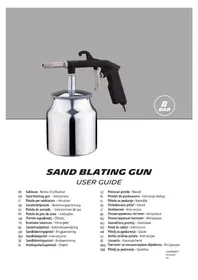
Product photo of a black fuel nozzle with a circular ring and metal fittings, no visible text or symbols on the main subject.SAND BLASTING GUN
USER GUIDE
FR Sableuse à tuyau d'alimentation - Notice d'utilisation
EN Sand blasting gun with feed hose - Instructions
IT Pistola sabbiatrice con flessibile di alimentazione - Istruzioni
DE Sandstrahlpistole mit Versorgungsschlauch - Bedienungsanleitung
ES Pistola de arenado con manguera de alimentación - Instrucciones de uso
PT Pistola de jato de areia com mangueira de alimentação - Instruções
GR Πιστόλι αμμοβολής με εύκαμπτο σωλήνα τροφοδότησης- Οδηγίες
TR Besleme hortumlu kumlama tabancası - Yönergeler
NL Zandstraalpistool met aanvoerslang - Gebruiksaanwijzing
DK Sandblæsningspistol med indføringsslange - Brugsanvisning
NO Sandblåsepistol med mateslange - Instruksjoner
SE Sandblästerpistol med matningsslang - Bruksanvisning
FI Syöttöletkulla varustettu hiekkapuhalluspistooli - Ohjeet
CZ Pískovací pistole s přívodní hadicí - Návod
PL Pistolet do piaskowania z wężem zasilającym - Instrukcja obsługi
SI Pištola za peskanje z dovajalno cevjo - Navodila
SK Pieskovacia pištol's plniacou hadicou - Návod
LT Smėliasrovė su tiekimo žarna - Instrukcijos
ВЕ Пескаструменны пісталет з сілкавальным шлангам - Інструкцыя
RU Пескоструйный пистолет с подающим шлангом- Инструкции
HU Homokfúvó pisztoly adagolótömlővel - Utasítások
RO Pistol de sablat cu furtun de alimentare - Instructiuni
HR Pištolj za pjeskarenje s opskrbnim crijevom - Upute
LV Smilšu strūklas pistole ar padeves šlūteni - Instrukcijas
ΕΕ Πιστόλι αμμοβολής με εύκαμπτο σωλήνα τροφοδότησης - Kasutusjuhend
BRG Пистолет за пясъкоструйна обработка с подаващ маркуч - Инструкции
SRB Pištolj za peskarenje sa crevom za dopremanje - Uputstva
| FR | NOTICE D'UTILISATION ET D'ENTRETIEN 12 | |
| EN | USE AND MAINTENANCE MANUAL 14 | |
| IT | MANUALE D'USO E MANUTENZIONE 16 | |
| DE | BEDIENUNGS- UND WARTUNGSANLEITUNG 18 | |
| ES | MANUAL DE USO Y MANTENIMIENTO 20 | |
| PT | MANUAL DE USO E MANUTENÇÃO 22 | |
| GR | ODHΓIEΣ XPHΣΗΣ KAI ΣYNTHPHΣΗΣ | 24 |
| TR | KULLANIM VE BAKIM KILAVUZU 26 | |
| NL | GEBRUIKS- EN ONDERHOUDSHANDLEIDING 28 | |
| DK | BRUGS- OG VEDLIGEHOLDELSESVEJLEDNING 30 | |
| NO | HÄNDBOK FOR BRUK OG VEDLIKEHOLD 32 | |
| SE | HANDBOK FÖR DRIFT OCH UNDERHÅLL 34 | |
| FI | KÄYTTÖ- JA HUOLTO-OHJEKIRJA 36 | |
| CZ | NÁVOD K POUŽITÍ A ÚDRŽBĚ 38 | |
| PL | INSTRUKCJA OBSŁUGI I KONSERWACJI | 40 |
| SI | NAVODILA ZA UPORABO IN VZDRŽEVANJE | 42 |
| SK | NÁVOD NA POUŽITIE A ÚDRŽBU | 44 |
| LT | EKSPLOATAVIMO IR PRIEŽIŪROS VADOVAS | 46 |
| BE | ИНСТРУКЦЫЯ ВЫКАРЫСТАННЯ I ТЭХАБСЛУГОЎВАННЯ | 48 |
| RU | ИНСТРУКЦИЯ ПО ПРИМЕНЕНИЮ И ОБСЛУЖИВАНИЮ | 50 |
| HU | HASZNÁLATI ÉS KARBANTARTÁSI KÉZIKÖNYV | 52 |
| RO | MANUAL DE UTILIZARE ŞI ÎNTRETINERE | 54 |
| HR | PRIRUČNIK ZA UPORABU I ODRŽAVANJE 56 | |
| LV | LIETOŠANAS UN TEHNISKĀS APKOPES ROKASGRĀMATA | 58 |
| EE | KASUTUSJUHEND JA HOOLDUS | 60 |
| BRG | РЪКОВОДСТВО ЗА ЕКСПЛОАТАЦИЯ И ПОДДРЪЖКА | 62 |
| SRB | PRIRUČNIK ZA KORIŠĆENJE I ODRŽAVANJE | 64 |
natural_image
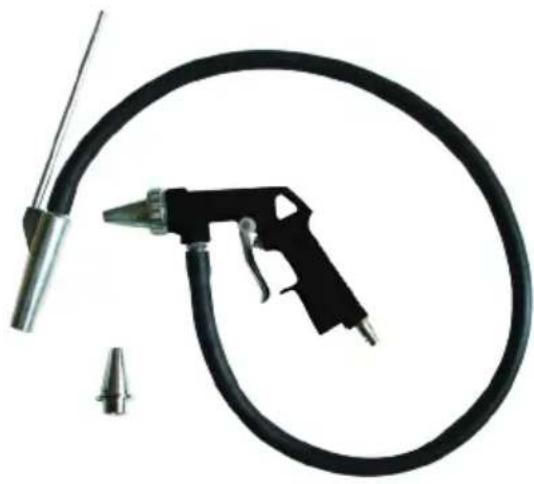
Close-up of a black industrial welding torch and pipe fitting (no text or symbols visible)SAND BLASTING GUN WITH FEED HOSE
| Air pressure max, Pressione pneumatica max., Maximaler Luftdruck, Pression d'air max, Presión de aire máx., Pressão de ar máx., Max. luchtdruk, Maks. lufttryk, Lufttryck max, Ilman enimmäispaine, Max. ciśnienie, Mėy. niešn aėpo, Maks. tlak zraka, Zračni tlak maks., Max. sūrītett levegő nyomás, Max. tlak vzduchu, Max. tlak vzduchu, Maks. давление воздуха, Maks. lufttrykk, Hava basinci maks., Presiune de aer max., Максимално налягане на въздуха, Maks. radni pritisak, Oro slėgis maks., Maksimaalne ōhusurve, Maks. gaisa spiediens. | bar 8 | ||
| Nozzle diameter, Nozzle diameter, Nozzle diameter, Nozzle diameter, Diámetro de la boquilla, Nozzle diameter, Diąμετρος ακροφυσίου, Nozul çapı, Mondstukdiameter, Dyse diameter, Diameter munnstykke, Munstyckets diameter, Suuttimen halkaisija, Průměr trysky, Nozzle diameter, Premer šobe, Nozzle diameter, Antgalio skersmuo, Дьяметр выпускной адтуліны, Диаметр сопла, Nozzle diameter, Diametru dužă, Promjer mlaznice, Sprauslas diametr, Diąμετρος ακροφυσίου, Диаметър на дюзата, Prečnik mlaznice. | [mm] 6 | ||
| Diamètre du tuyau, Hose diameter, Diametro flessibile, Schlauchdurchmesser, Diámetro de la manguera Diâmetro da mangueira, Diąμετρος εὐκαμπτου σωλήνα, Hortum çapı, Slangdiameter, Slangdiameter, Diameter slange, Slangdiameter, Letkun halkaisija, Průměr hadice, Šrednica weža, Premer cevi, Priemer hadice, Žarnos skersmuo, Дьяметр шланга, Диаметр шланга, Tömlő átmérője, Diametru furtun, Promjer crijeva, Šlūtenes diametr, Diąμετρος εὐκαμπτου σωλήνα, Диаметър на маркуча, Prečnik creva. | [mm] 10.5x18 | ||
| Air consumption, Consumo d'aria, Luftverbrauch, Consommation d'air, Consumo de aire, Consumo de Luchtverbruik, Luftforbrug, Luftförbrukning, Ilman kulutus, Zużycie powietrza, Kataváλωση aėpo, Potrošnja zraka, Poraba zraka, Sūrītettlevegő-igény, Spotřeba vzduchu, Spotreba vzduchu, Потребление воздуха, Luftforbruk, Hava tüketimi, Consum de aer, Разход на въздух, Potrošnja vazduha, Oras sąnaudos, Ōhutarve, Gaisa patēriņš. | [a]/min] 160 | ||
| weight, peso, Gewicht, poids, Peso, peso, Gewicht, vægt, vikt, paino, waga, βὰρος, težina, teža, tömejkg) hmotnost, Hmotnost', Macca, vekt, ağırlık, greutate, Maca, težina, svoris, kaal, svars. | 1.0 | ||
| Air inlet (BSP), Ingresso aria (BSP), Lufteinlass (BSP), Entrée d'air (BSP), Entrada de aire (BSP), Entrada de ar (BSP), Luchtinlaat (BSP), Lufttindtag (BSP), Lufttintag (BSP), Ilmantulo (BSP), Wlot powietrza (BSP), Eișođoç aėpo (BSP), Ulaz zraka (BSP), Vhod za zrak (BSP), Levegőbemenet (BSP), Přívod vzduchu (BSP), Prívod vzduchu (BSP), Воздухозаборник (BSP), Luftinntak (BSP), Hava girisi (BSP), Admisie a aerului (BSP), Размер на отвора за въздух (BSP), Ulaz vazduha (BSP), Oras jleidimo anga (BSP), Ōhu sisselase (BSP), Gaisa ievade (BSP). | [inch] 1/4" i |

| FR | Lire attentivement la notice et les étiquettes de l’outil. Lire et suivre toutes les instructions. |
| EN | Read the manual and tool labels carefully. Read and follow all the instructions. |
| IT | Leggere attentamente il manuale e le etichette dell’utensile. Leggere e seguire tutte le istruzioni. |
| DE | Die Bedienungsanleitung und die Etiketten des Geräts aufmerksam durchlesen. Alle Anweisungen lesen und befolgen. |
| ES | Lea atentamente el manual y las etiquetas de la herramienta. Lea y siga todas las instrucciones. |
| PT | Ler atentamente o manual e as etiquetas da ferramenta. Ler e seguir todas as instruções. |
| GR | Διαβάστε προσεκτικά τις οδηγίες και τις ετικέτες του εργαλείου. Διαβάστε και ακολουθήστε όλες τις οδηγίες. |
| TR | Aletin kılavuzunu ve etiketlerini dikkatlice okuyun. Yönergelerin tümünü okuyun ve uygulayın. |
| NL | Lees de handleiding en de etiketten van het gereedschap aandachtig door. Lees alle instructies en volg deze op. |
| DK | Læs vejledningen og mærkaterne på redskabet grundigt. Læs og følg alle instruktionerne. |
| NO | Les nøye verktøyets etiketter og håndbok Les og følg alle instruksjoner. |
| SE | Läs noggrant igenom verktygets handbok och etiketter. Läs igenom och följ alla instruktioner. |
| FI | Lue huolellisesti ohjekirja ja työkalun merkinnät. Lue ja noudata kaikkia ohjeita. |
| CZ | Pozorně si přečtěte návod a štítky na nástroji. Přečtěte si a dodržujte všechny pokyny. |
| PL | Należy zapoznać się z treścią instrukcji obsługi oraz etykiety umieszczonej na urządzeniu. Należy zapoznać się z wszystkimi zaleceniami i uważnie ich przestrzegać. |
| SI | Natančno preberite navodila in etikete orodja Vsa navodila preberite in upoštevajte. |
| SK | Pozorne si prečítajte návod a štítky na nástroji. Prečítajte si a dodržiavajte všetky pokyny. |
| LT | Atidžiai perskaitykite įrankio vadovą ir etiketes. Perskaitykite ir laikykitės visų nurodymų. |
| BE | Уважліва прачытайце інструкцыю выкарыстання і этикетку інструмента. Азнаёмцеся і выконвайце ўсе ůказанні. |
| RU | Внимательно прочитайте инструкцию и этикетки на инструменте. Прочитайте и выполняйте все инструкции. |
| HU | Figyelmesen olvassa el a kézikönyvet és a szerszámon lévő címkét! Olvassa el és kövesse az utasításokat! |
| RO | Citiți cu atenție manualul și etichetele instrumentului. Citiți și respectați toate instrucțiunile. |
| HR | Pažljivo pročitajte ovaj priručnik i naljepnice na alatu. Pročitajte i pridržavajte se svih uputa. |
| LV | Uzmanīgi izlasīt ierīces rokasgrāmatu un etiketes. Izlasīt visas instrukcijas un sekot tām. |
| EE | Kasutusjuhend ja etiketid hoolikalt läbi lugeda. Lugeda läbi ja järgida köiki instruktsioone. |
| BGR | Прочетете внимателно ръководството и етикетите на инструмента. Прочетете и следвайте инструкциите. |
| SRB | Pažljivo pročitajte priručnik i nalepnice na alatu. Pročitajte i sledite sva uputstva. |

| FR | L'opérateur et les préposés dans la zone de travail DOIVENT porter des lunettes de sécurité avec protections latérales. Ces lunettes de sécurité doivent être conformes aux normes et réglementations locales. |
| EN | The operator and the workers in the work area MUST wear safety goggles with side guards. These safety goggles must comply with local standards and regulations. |
| IT | L'operatore e gli addetti nell'area di lavoro DEVONO indossare occhiali di sicurezza dotati di protezioni laterali. Questi occhiali di sicurezza devono essere conformi alle norme e regolamenti locali. |
| DE | Bediener und Mitarbeiter im Arbeitsbereich MÜSSEN eine Schutzbrille tragen, die das Auge auch an der Seite schützt. Diese Schutzbrille muss den örtlichen Normen und Vorschriften entsprechen. |
| ES | El operador y las personas presentes en el área de trabajo DEBEN usar gafas de seguridad con protecciones laterales. Estas gafas de seguridad deberán ser conformes con las normas y los reglamentos locales. |
| PT | O operador e os responsáveis na área de trabalho DEVEM utilizar óculos de segurança com proteções laterais. Estes óculos de segurança devem estar em conformidade com as normas e regulamentos locais. |
| GR | O χειριστής και οι υπεύθυνοι της ζώνης εργασίας ΠΡΕΠΕΙ να φορούν γυαλιά ασφαλείας με πλευρική προστασία. Τα γυαλιά ασφαλείας πρέπει να πληρούν τους τοπικούς κανονισμούς και τα ισχύοντα πρότυπα. |
| TR | Çalışma alanında bulunan operatör ve görevliler, yan siperlere sahip güvenlik gözlükleri KULLANMALIDIR. Bahse konu güvenlik gözlükleri, yerel norm ve yönetmeliklere uygun olmalıdır. |
| NL | De operator en de werknemers in het werkgebied MOETEN een veiligheidsbril met zijkleppen dragen. Deze veiligheidsbril moet voldoen aan de lokale regels en voorschriften. |
| DK | Brugeren og andre medarbejdere i arbejdsområdet SKAL være iført beskyttelsesbriller med beskyttelse i siden. Beskyttelsesbrillerne skal overholde gældende lokale standarder og regler. |
| NO | Operatøren og andre personer i arbeidsområdet MÅ bruke vernebriller med sidebeskyttelse. Disse vernebrillene må være i samsvar med lokale regler og forskrifter. |
| SE | Operatøren och anställda SKA bära skyddsglasögon med sidoskydd. Säkerhetsglasögonen ska överensstämma med lokala standarder och förordningar. |
| FI | Käyttäjän ja työskentelyalueella olevien henkilöiden ON käytettävä suojalaseja, joissa on sivusuojukset. Kyseisten suojalasien on täytettävä standardien ja paikallisten määräysten vaatimukset. |
| CZ | Operátor a pověření pracovníci v daném pracovním prostoru MUSÍ mít nasazeny ochranné brýle s boční ochranou. Tyto brýle musí být ve shodě s normami a s místními předpisy. |
| PL | Operator obsługujący oraz pozostali operatorzy obecni w strefie pracy POWINNI nosić okulary ochronne z boczną osłoną. Okulary ochronne powinny spełniać wymogi lokalnych przepisów i rozporządzeń. |
| SI | Operater in delavci v delovnem območju MORAJO nositi varnostna očala z zaščito ob straneh. Varnostna očala morajo biti skladna z lokalnimi predpisi in standardi. |
| SK | Operátor a poverení pracovníci v danom pracovnom priestore MUSIA mať nasadené ochranné okuliare s bočnou ochranou. Tieto okuliare musia byť v zhode s normami a s miestnymi predpismi. |
| LT | Operatorius ir darbo zonoje paskirti dirbti asmenys PRIVALO mūvėti duotus apsauginius akinius su šoniniais apsaugais. Šie apsauginiai akiniai privalo atitikti vietinius standartus ir reglamentus. |
| BE | Супраçoўнік і людзі, якія знаходзяцца ў праçoўнай зоне, ПАВІННЫ Інасіць ахоўныя акуляры з бакавымі шчытками. Ахоўныя акуляры павінны адпавядаць мясцовым правілам і нормам. |
| RU | Оператор или работающие поблизости люди ДОЛЖНЫ надевать защитные очки с боковыми экранами. Эти защитные очки должны соответствовать местным нормам и правилам. |
| HU | A kezelő és a munkaterületen tartózkodó személyek számára oldalsó védőelemmel ellátott védőszemüveg használata KÖTELEZÓ! A védőszemüveg a helyi szabályoknak és előírásoknak meg kell feleljen. |
| RO | Operatorul și personalul din zona de lucru TREBUIE să poarte ochelari de protecție cu protecții laterale. Acești ochelari de siguranță trebuie să respecte regulile și reglementările locale. |
| HR | Rukovatelj i osoblje u području rada MORAJU nositi zaštitne naočale s bočnim štitnicima. Ove zaštitne naočale moraju biti usklađene s normama i lokalnim odredbama. |
| LV | Operatoram un strădniekiem darba zonă IR jānēsā drošības brilles, kas ir aprikotas ar sānu aizsargiem. Ším drošības brillēm ir jāatbilst vietējiem standartiem un regulām. |
| EE | Seadme kasutaja ja tööpiirkonnas tegevad isikud ON KOHUSTATUD kandma külgkaitsetega kaitseprille. Need kaitseprillid peavad vastama kohalikele seadustele ja ohutusnõuetele. |
| BGR | Операторът и работещите в зоната за работа ТРЯБВА да носят предпазни очила със странични протектори. Тези предпазни очила трябва да отговарят на местните стандарти и нормативната уредба. |
| SRB | Operater i radnici u oblasti rada MORAJU da nose zaštitne naočare sa bočnim štitnicima. Ove zaštitne naočari moraju da budu u skladu sa lokalnim standardima i propisima. |

| FR | Portez un masque qui protège les voies respiratoires, risque d'inhalation de poussières dangereuses. Vérifiez si le dispositif de filtrage est adapté aux poussières qui peuvent être émises, notamment lors de travaux sur des pièces recouvertes de peinture pouvant contenir du plomb. Ne JAMAIS travailler sur des matériaux contenant de l'amiante. |
| EN | Wear a mask that protects the respiratory track, hazard of inhaling hazardous dust. Check if the filtering device is suitable for the dust that can be released, in particular when working on parts covered in paint that could potentially contain lead. NEVER work on material containing asbestos. |
| IT | Indossare una mascherina di protezione per le vie respiratorie, pericolo di inalazione polveri pericolose. Verificire l'idoneità del dispositivo di filtrazione alle polveri che possono sprigionarsi, in particolare nel caso si operi su parti ricoperte da vernici potenzialmente contenenti piombo. MAI operare su materiali contenenti asbesto. |
| DE | Tragen Sie eine Maske, welche die Atemwege schützt. Gefahr des Einatmens gefährlicher Stäube. Prüfen Sie, ob die Filtervorrichtung für den freigesetzten Staub geeignet ist, insbesondere, wenn an mit Farbe gestrichenen Teilen gearbeitet wird, die möglicherweise Blei enthalten könnte. Arbeiten Sie NIE an asbesthältigen Werkstoffen. |
| ES | Utilice una máscara que proteja las vías respiratorias; peligro de inhalar polvo nocivo. Compruebe si el dispositivo de filtrado es adecuado para el polvo que puede emitirse, en particular, cuando se trabaja en piezas cubiertas de pintura que podrían potencialmente contener plomo. NUNCA trabaje en material que contenga amianto. |
| PT | Utilize uma máscara que proteja as vías respiratórias, perigo de inalar poeira perigosa. Verifique se o dispositivo de filtragem é adequado para a poeira que pode ser gerada, nomeadamente ao trabalhar com peças cobertas com tinta que poderiam conter chumbo. NUNCA trabalhe em materiais que contenham amianto. |
| GR | Форáte máška nou prostatéúei tyn avaníveustikň oðó, unápxei kívůuvoc eistinvoňs ekinkívůvných skóvných. Eléyřete eáv n úsokenuň philtrapiómuatos eivai katállánlý via týn skóvný pou μπορεί va aneleuθερωθεί, idiaíterpa ótan evrýáčeste se třímjátata pou kalúntovtai me βαφή pou ενδέχεται va periěxει μόλυβάο. ПОТЕ myn evrýáčeste se uliká pou periěxouv aμιαντο. |
| TR | Solunum yolunu koruyan bir maske takin, zararlı tozlari soluma tehlikesi. Özellikle kurşun içermesi muhtemel olabilecek boyalarla kaplı parcalar üzerinde çalışırken, serbest kalabilecek tozlár için filtreleme cihazının uygun olup olmadığını kontrol edin. Asbest içeren malzemeler üzerinde KESÍNLÍKLE calışmayin. |
| NL | Draag een masker dat de luchtwegen beschermt, gevaar voor het inademen van gevaarlijk stof. Controleer of het filterapparaat geschikt is voor het stof dat kan vrijkomen, in het bijzonder bij het bewerken van onderdelen die bedekt zijn met verf die mogelijk lood bevat. Bewerk NOOT material dat asbest bevat. |
| DK | Anvend en maske der beskytter luftvejene, fare for indhalering af farligt stov. Kontroller om filtreringsenheden er passende for det stov der kan frigives, i særdeleshed når der arbejdes på dele der er dækket med maling, der muligvis kan indeholde bly. Arbejd ALDRIG på materialer der indeholder asbest. |
| NO | Bruk en maske som beskytter luftveiene, fare for å inhalere farlig stov. Kontroller om filtreringshenheten passer for støvet som kan frigjøres, spesielt når du jobber med deler dekket i maling som potensielt kan inneholde bly. ALDRI arbeid med materialer som inneholder asbest. |
| SE | Använd en mask som skyddar andningsvägarna, risk för inandning av farligt damm. Kontrollera om filtreringsanordningen är lämplig för det damm som kan uppkomma, särskilt när du arbetar med delar täckta med färg som kan innehålla bly. Arbeta ALDRIG med material som innehåller asbest. |
| FI | Käytä hengityksensuojainta, joka suojaa hengityselimiä – vaarallisen pölyn sisään hengityksen vaara. Tarkista, että suodatin soveltuu mandollisesti vapautuvalle pöylle ; erityisesti silloin, kun työskentelet sellaisten maalipintojen kanssa, jotka saattavat sisältää lyijyä. ÁLÄ koskaan työstä asbestia sisältäviä materiaaleja. |
| CZ | Noste masku na ochranu dýchacích cest, nebezpečí inhalace škodlivého prachu. Zkontrolujte, zda je filtrační zařízení vhodné pro prach, který se může uvolňovat, zejména při práci na dilech pokrytych barvou, která může potenciálné obsahovat olovo. NIKDY nepracuje na materiálu obsahujícim azbest. |
| PL | Nosić maske, która chroni drogi oddechowe, ryzyko wdychania niebezpiecznego pyłu. Sprawdzić, czy urządzenie filtrujące jest odpowiednie da plyu, który može zostać uwolniony podczas pracy na częściach pokrytych farbą, które mogą zawierać ółów. NIGDY nie pracować na materialach zawierających azbest. |
| SI | Nosite masko, ki ščiti dihalne poti; nevarnost vdihavanja nevarnega prahu. Preverite, ali je filtrirna naprava primerna za prah, ki se lahko sprošča zlasti pri delu na delih, prevlečenih z barvo, ki bi lahko vsebovala svinec. NIKOLI ne izvajajte del na materialu, ki vsebuje azbest. |
| SK | Noste masku, ktorá chrání dýchacie cesty, nebezpečenstvo vdýchnutia nebezpečného prachu. Skontrolujte, či je filtrovacie zariadenie vhodné na prach, ktorý sa môže uvol'nit', najmä pri práci s dielcami natretými farbou, ktorá môže obsahovat olovo. NIKDY nepracujte s materiálom, ktorý obsahuje azbest. |
| LT | Dévékite kvépavimo takus apsaugančia kauke, nes yra pavojus jkvépti pavojingu dulkių. Patikrinkite, ar filtravimo jrenginys apsaugo nuo dulkių, kurios gali susidaryti, ypač tuo atveju, jei apdorojate dažytas detalles, kurių dažuose gali būti svino. NIEKADA nedirbkite su medziagomis, kurių sudětyje yra asbesto. |
| BE | Апрайайе маску, якая abараняе дыхальныя шляхі, небяспека ўдыхання шкоднага пылу. Праверце, ці падыходзіца фільтрующая прыпада для пылу, які можа вылучацца, асабліва пры працы з здталямі, якія пакрыты фарбай, яны могуçь утрымліваць свінец. НИКОЛА не працуйце з матэрылам, які їтрымліває ў sabе азбест. |
| RU | Одевайте маску для защиты дыхательных путей, опасность вдыхання вредной пыли. Проверьте пригодность фильтрующ устройства пыли, которая может возникнуть, в особенности, при выполнении работ с деталями, покрытыми красками, которые могут содержать свінец. НИКОГДА не выполняйте работы на асбестосодержащих материалах. |
| HU | Viseljen olyan maszkot, amely védi a légutakat, veszélyes por belélegzésének veszélye. Ellenőrizze, hogy a szürőberendezés megfelel-e a kibocsátott porhoz, különösen amikor olyan részeken dolgozik, ahol a festék potenciálisan ólmot tartalmazhat. SOHA ne dolgozzon azbesztartalmú anyaggal. |
| RO | Purtați o mască care protejează tractul respirator, pericol de inhalare a prafului periculos. Verificați dacă dispozitivul de filtrare este potrivit pentru praful care poate fi eliberat, in special atunci când lucrați la piese acoperite cu vopsea care ar putea conține plumb. Nu lucrați NICIODATA pe materiale care contin azbest. |
| HR | Nosite masku koja štiti dišni sustav, opasnost od udisanja opasne prašine. Provjerite prikladnost uređaja za filtriranje za prašinu koja se može oslobadati, osobito prilikom rada s dijelovima prekrivenima bojom koja može sadržavati olovo. NIKADA nemojte raditi s materijalima koji sadrže azbest. |
| LV | Izmantojiet sejas masku, kas aizsargā elpcelus, jo pastāv bistamu puteklu ieelpošanas risks. Pârbaudiet, vai filtrēšanas iekärta ir piemērota putekliem, kas var tik tizplatiti, it ipaši strādājot uz krāsotām dalām, kuru krāsa var saturēt svinu. NEKAD nestedrādājiet uz materialāla, kas satur azbestu. |
| EE | Форáte máška pou prostatéúei tyn avaníveustikň oðó, unápxei kívůuvoc eistinvońç epiikívůvných skóvných. Éléyřete eáv n úsokenuň filtrapiómuatos eivai katállánlý via týn skóvný pou μπορεί va aneleuθερωθεί, idiaíterpa ótan evrýáčeste se třímjátata pou kalúntovtai me βαφή pou ενδέχεται va periěxει μόλυβάο. ПОТЕ μην εργάčeste se uliká pou periěxouv aμιαντο. |
| BGR | Проверете дали филтриращото устройство е подходящо за праха, който може да се освободи, по-конкретно при работа по части, покрити с боя, която може потенциално да съдържа олово. НИКОГА не работете по съдържащ азбест материал. |
| SRB | Nosite masku koja štiti respiratorni trakt, opasnost od udisanja opasne prašine. Proverite da li je uređaj za filtriranje pogodan za prašinu koja se može otpustiti, posebno prilikom rada na delovima prekrivenim farbom koja potencijalno može da sadrži olovo. NIKADA ne radite na materijalu koji sadrži azbest. |

| FR | Porter des coiffes de protection contre le bruit pour éviter des dommages à l'ouïe. |
| EN | Wear noise protection earmuffs to prevent possible hearing damage. |
| IT | Indossare cuffie di protezione contro il rumore per evitare possibili danni all'udito. |
| DE | Persönlichen Gehörschutz tragen, um mögliche Gehörschäden zu vermeiden. |
| ES | Use cascos de protección contra los ruidos para evitar posibles daños al oído. |
| PT | Utilizar auriculares de proteção contra o ruído para evitar danos ao ouvido. |
| GR | Na φοράτε ωτοασπίδες για να αποφύγετε βλάβες στην ακοή |
| TR | Işitme duyusunun zarar görmesini önlemek amacı ile gürültüye karşı koruyucu kulaklıklar takın |
| NL | Draag gehoorbescherming om mogelijke gehoorschade te voorkomen |
| DK | Bær høreværn for at forhindre mulig høreskade |
| NO | Bruk hørselsvern for å forhindre hørselsskader |
| SE | Bär hörselskydd för att undvika hörselskador. |
| FI | Käytä kuulonsuojaimia melua vastaan, jotta vältetään mahdolliset kuulovauriot. |
| CZ | Nasad'te si chrániče sluchu na ochranu proti hluku a zabránění možnému poškození sluchu. |
| PL | W celu uniknięcia ewentualnego uszkodzenia słuchu należy nosić ochronne nauszniki. |
| SI | Uporabljajte zaščito pred hrupom, da preprečite morebitne poškodbe sluha. |
| SK | Nasad'te si chrániče sluchu na ochranu proti hluku a zabránenie možnému poškodeniu sluchu. |
| LT | Mūvėkite nuo triukšmo saugančias ausines, kad nepakenktumėte klausai. |
| BE | Апранайце навушнікі, якія абараняюць ад шуму, каб пазбегнуць пашкоджання слыху |
| RU | Надевайте шумозащитные наушники, чтобы не допустить повреждения органов слуха |
| HU | A halláskárosodás elkerülése érdekében viseljen fülvédöt a zaj ellen! |
| RO | Purtați căști de protectie împotriva zgomotului pentru a preveni posibile deteriorări ale auzului |
| HR | Nosite slušalice za zaštitu od buke kako biste izbjegli moguća oštećenja sluha. |
| LV | Nēsāt aizsardzības austiņas pret troksni, lai izvairitos no iespējamiem dzirdes bojājumiem |
| EE | Kuulmiskahjustuse vältimiseks kasutage mūrakindlaid kuulmekaitseid. |
| BGR | Hocete предпазни тапи за уши, за да избегнете евентуално увреждане на слуха. |
| SRB | Nosite naušnice za zaštitu od buke da biste sprečili moguće oštećenje sluha. |

MAX. WORKING PRESSURE
| FR | Utilisez de l'air comprimé propre jusqu'à 8 bar (maxi) |
| EN | Use clean and regulated compressed to 8 bar (max) |
| IT | Utilizzare aria compressa pulita e regolata a 8 bar (max) |
| DE | Verwenden Sie saubere und bis auf (max.) 8 bar geregelte Druckluft |
| ES | Utilice aire comprimido limpio y regulado a 8 bar (máx.). |
| PT | Utilize ar comprimido limpo e regulado até 8 bar (máx) |
| GR | Χρησιμοποιήστε καθαρό και ρυθμιζόμενο συμπιεσμένο αέρα 8 bar (μέγιστο) |
| TR | 8 bar (maks.) basıncında temiz ve ayarlı basınçlı hava kullanın |
| NL | Gebruik propere en geregelde perslucht tot en met 8 bar (max.) |
| DK | Brug ren og reguleret trykluft op til 8 bar (maks.) |
| NO | Bruk ren og regulert trykkuft opptil 8 bar (maks) |
| SE | Använd ren och regulerad tryckluft upp till 8 bar (max) |
| FI | Kāytā puhdasta ja säädeltyä 8 baarin (enint.) paineilmaa |
| CZ | Použijte čistý a regulovaný stlačený vzduch s tlakem do 8 bar (max.) |
| PL | Używać czystego i regulowanego sprężonego powietrza o ciśnieniu do 8 bara (maks.) |
| SI | Uporabite čist in reguliran zrak, stisnjen na 8 bara (največ) |
| SK | Používajte čistý a regulovaný vzduch stlačený na 8 bar (max.) |
| LT | Naudokite švarų reguliuojamą suspausto oro srautą iki 8 barų (maks.) |
| BE | Выкарыстоўвайце чыстае i рэгуляванае сціснутае паветра да 8 бар (макс) |
| RU | Используйте чистый и отрегулированный до 8 бар сжатый воздух (макс.) |
| HU | Használjon tiszta és legfeljebb 8 bar-ra (max) beállított sűrített levegőt |
| RO | Utilizați aer comprimat curat și reglat până la 8 bari (max) |
| HR | Upotrebljavajte čisti zrak komprimiran na 8 bara (maks.) |
| LV | Izmantojiet tīru un regulētu saspiestu gaisu līdz 8 bar (maksimāli) |
| EE | Χρησιμοποιήστε καθαρό και ρυθμιζόμενο συμπιεσμένο αέρα 8 bar (μέγιστο) |
| BGR | Използвайте чист и регулиран сгъстен въздух до 8 bar (макс) |
| SRB | Koristite čist i regulisan komprimovan vazduh od 8 bara (maks) |

| FR | Toujours porter l’outil sur le lieu de travail en le tenant par la poignée. Ne pas porter l’outil par le tuyau. Ne pas tirer sur le tuyau pour déplacer l’outil. |
| EN | Always carry the tool to the workplace holding it by the handle. Do not carry the tool by the tube. Do not pull on the the tube to move the tool. |
| IT | Trasportare sempre manualmente l’utensile sul luogo di lavoro. Non trasportare mai l’utensile sorreggendolo dal tubo. Non tirare il tubo per spostare l’utensile. |
| DE | Halten Sie das Werkzeug stets am Griff, wenn Sie es zum Arbeitsplatz tragen. Tragen Sie das Werkzeug nicht am Schlauch. Ziehen Sie nicht am Schlauch, um das Werkzeug zu bewegen. |
| ES | Cuando lleve la herramienta al lugar de trabajo, agárrela siempre por el mango. No lleve la herramienta cogiéndola por el tubo. No tire del tubo para mover la herramienta. |
| PT | Transporte a ferramenta no local de trabalho sempre segurando-a pela pega. Não transporte a ferramenta pelo tubo. Não puxe o tubo para deslocar a ferramenta. |
| GR | Пáντοτε να μεταφέρετε το εργαλείο στο χώρο εργασίας κρατώντας το από τη λαβή. Μην μεταφέρετε το εργαλείο από τον σωλήνα. Μην τραβάτε τον σωλήνα για να μετακινήσετε το εργαλείο. |
| TR | Aleti iş yerine her zaman kolundan tutarak taşiyin. Aleti borudan tutarak taşimayin. Aleti hareket ettirmek için borusundan çekmeyin. |
| NL | Draag het gereedschap altijd naar de werkplaats door het bij de handgreep vast te houden. Draag het gereedschap niet door de slang vast te houden. Trek niet aan de slang om het gereedschap te verplaatsen. |
| DK | Bær altid værktøjet til arbejdsstedet, ved at holde det i håndtaget. Bær ikke værktøjet via røret. Du må ikke trække i røret for at flytte værktøjet. |
| NO | Alltid bær verktyet til arbeidsplassen ved å holde det i håndtaket. Ikke bær verktyet etter slangen. Ikke dra i slangen for å flytte verktyet. |
| SE | Bär alltid verktyget till arbetsplatsen och håll det i handtaget. Bär inte verktyget i slangen. Dra inte i slangen för att flytta verktyget. |
| FI | Kanna työkalua työpaikalla aina kahvasta. Älä kanna työkalua putkesta. Älä siirrä työkalua vetämällä putkesta. |
| CZ | Nářadí přenášejte na pracoviště vždy za rukojeť. Nenoste nářadí za trubku. Nepřesouvejte nářadí tahem za trubku. |
| PL | Zawsze przenosić narzędzie do miejsca pracy, trzymając je za uchwyt. Nie przenosić narzędzia za rurkę. Nie ciągnąć za rurkę, aby przesunąć narzędzie. |
| SI | Za prenašanje orodja na delovno območje vedno uporabljajte ročaj. Orodja pri prenašanju ne držite za cev. Za premikanje orodja ne vlecite cevi. |
| SK | Pri nosení držte náradie vždy za rukovát. Nedržte náradie za rúrku. Pri premiestňovaní náradia neťahajte za rúrku. |
| LT | Jrankj visada neškite laikydami jí už rankenos. Neneškite įrankio laikydami už vamzdžio. Norėdami patraukti įrankj, netempkite jo už vamzdžio. |
| BE | Заўсёды пераносыце інструмент на праçoўнае месца, трымаючы яго за ручку. Не пераносьце інструмент за трубку. Для перасоўвання інструмента не цягніце за трубку. |
| RU | Всегда подносите инструмент к рабочей поверхности, удерживая его за рукоятку. Не переносите инструмент за шланг. Не натягивайте шланг для перемещения инструмента. |
| HU | A szerszámot a munkavégzés helyére mindig a fogantyúnál fogva vigye. Ne szállítsa a szerszámot a csővel. A szerszám mozgatásához ne húzza a csövet. |
| RO | Transportați întotdeauna unealta la locul de muncă ținându-o de mâner. Nu transportați unealta ținând-o de tub. Nu tragęți de tub pentru a muta unealta. |
| HR | Uvijek nosite alat na radno mjesto držeći ga za dršku. Nemojte nositi alat držeći ga za cijev. Nemojte vući cijev da biste pomaknuli alat. |
| LV | Vienmër nesiet darbarīku uz darba vietu, to turot aiz roktura. Nenesiet darbarīku, to turot aiz caurules. Nevelciet cauruli, lai pārvietotu darbarīku. |
| EE | Пáντοτε να μεταφέρετε το εργαλείο στο χώρο εργασίας κρατώντας το από τη λαβή. Μην μεταφέρετε το εργαλείο από τον σωлήνα. Μην τραβάτε τον σωлήνα για να μετακινήσετε το εργαλείο. |
| BGR | Винаги носете инструмента към мястото на работа за дръжката. Не носете инструмента за маркуча. Не дърпайте маркуча, за да преместите инструмента. |
| SRB | Alat uvek prenosite do mesta za rad držeći ga za ručicu. Nikada ne nosite alat držeći ga za cev. Ne povlačite cev da biste pomerili alat. |

| FR | Ne jamais utiliser de bouteilles contenant de l'oxygène ou d'autres gaz, car des explosions pourraient se produire. Ne jamais utiliser de gaz combustibles ou d'autres gaz réactifs comme source d'énergie pour cet outil. Des explosions et des blessures graves peuvent survenir. |
| EN | Never use cylinders containing oxygen or other gases as explosions may occur. Never use combustible gases or other reactive gases as an energy source for this tool. Explosions and serious injuries may occur. |
| IT | Non usare mai bombole contenenti ossigeno o altri gas poiché possono verificarsi delle esplosioni. Non usare mai gas combustibili o altri gas reagenti come sorgente di energia per questo utensile. Potrebbero verificarsi esplosioni e gravi infortuni. |
| DE | Verwenden Sie niemals Gasflaschen mit Sauerstoff oder anderen Gasen. Explosionsgefahr! Verwenden Sie niemals brennbare Gase oder andere Gase als Energiequelle für dieses Gerät. Sonst könnte es zu Explosionen und schweren Unfällen kommen. |
| ES | No use nunca bombonas que contengan oxígeno u otros gases porque pueden producirse explosiones. No use nunca gases combustibles ni otros gases reactivos como fuente de energía para esta herramienta. Podrian producirse explosiones y graves accidentes. |
| PT | Nunca utilizar botijas com oxigénio ou outros gases pois podem verificar-se explosões. Nunca utilizar gases combustíveis ou outros gases reagentes como fonte de energia para esta ferramenta. Podem ocorrer explosões e lesões graves. |
| GR | Mnv хрησιμοποιείτε ποτέ φιάλες οξυγόνου ή άλλων αερίων προκειμένου να αποφύγετε τις εκρήξεις. Mnv хрησιμοποιείτε ποτέ καύσιμα αέρια ή άλλα αντιδραστικά αέρια ως πηγή ενέργειας για αυτό το εργαλείο. Μπορούν να προκαλέσουν έκρηξη ή σοβαρά ατυχήματα. |
| TR | Patlamalara sebebiyet verebileceğinden oksijen ya da diğer gazları ihtiva eden tüpleri asla kullanmayın. İşbu alet için yanıcı gazları ya da diğer tepkime gazlarını asla enerji kaynağı olarak kullanmayın. Patlamalar ve ciddi yaralanmalar meydana gelebilir. |
| NL | Gebruik nooit flessen die zuurstof of andere gassen bevatten, omdat er explosies kunnen optreden. Gebruik nooit brandbare gassen of andere reactiegassen als energiebron voor dit gereedschap. Dit kan explosies en ernstig letsel veroorzaken. |
| DK | Anvend aldrig gasflasker der indeholder ilt eller andre gasser, da der kan opstå eksplosioner. Brug aldrig brændbare gasser eller andre reagensgasser som en energikilde til dette redskab. Eksplosioner og alvorlige kvæstelser kan forekomme. |
| NO | Bruk aldri oksygenflasker eller andre gasser da det kan oppstå eksplosjoner. Bruk aldri forbrenningsgasser eller andre reagensgasser som energikilde til dette verktøyet. Det kan oppstå eksplosjoner og alvorlige skader. |
| SE | Använd aldrig sprejflaskor med syre eller annan gas eftersom de kan explodera. Använd aldrig brandfarliga gaser eller andra gaser som reagerar med verktygets energilällor. Det kan orsaka explosioner och allvarliga olyckor. |
| FI | Älä koskaan käytä habpea tai muita kaasuja sisältäviä pulloja, koska tällöin on olemassa räjähdysvaara. Älä koskaan käytä palavia kaasuja tai muita reagoivia kaasuja tämän tyókalun energianlähteenä. Ne voivat aiheuttaa räjähdyksiä tai vakavia onnettomuuksia. |
| CZ | Nikdy nepouživejte tlakové láhve s kyslíkem nebo jinými plyny, protože by mohlo dojít k výbuchu. Nikdy nepouživejte hořlavé nebo jiné reakční plyny jako zdroj energie pro tento nástroj. Mohlo by dojít k výbuchu a vážnému úrazu. |
| PL | Nie należy nigdy używać butli z tlenem lub innym gazem, gdyż mogłoby dojść do wybuchu. Nie należy nigdy używać paliwa gazowego lub innych odczynników gazowych jako źródła energii dla niniejszego przyrządu. Mogłoby dojść do powstania grożnych wybuchów lub wypadków. |
| SI | Nikoli ne uporabljajte jeklenk, ki vsebujejo kisik ali drug plin, ker bi lahko eksplodirale. Kot vir energije za to orodje nikoli ne uporabljajte gorljivih plinov ali drugih plinskih reaktantov. Lahko pride do eksplozij in hudih nezgod. |
| SK | Nikdy nepouživajte tlakové fłaše s kyslíkom alebo inými plynmi, pretože by mohlo dôjst k výbuchu. Nikdy nepouživajte hořlavé alebo iné reakčné plyny ako zdroj energie pre tento nástroj. Mohlo by dôjst k výbuchu a vážnemu úrazu. |
| LT | Niekada nenaudokite balionų su deguonimi arba kitomis dujomis, nes gali kilti sprogimų. Niekada nenaudokite degių dujų arba kitokių dujų kaip šio įrankio energijos šaltinio. Gali kilti sprogimų arba rimtų sužalojimų. |
| BE | Не выкарыстоўвайце балоны з кіслародам ці іншымі газамі, каб пазбегнучь выбухаў. Забараняещца выкарыстоўваць гаручыя ці іншыя рэактыўныя газы ў якасці крыніцы сілкавання для інструмента. Могуць адбыцца выбухі і сур’ёзнае траўмаванне. |
| RU | Никогда не используйте балоны с кислородом или же другими газами, так как это может привести к взрыву. Никогда не используйте горючие газы или же другие реактивные газы в качестве источника энергии для данного инструмента. Это может стать причиной взрыва и серьезных несчастных случаев. |
| HU | Soha ne használjon oxigént vagy egyéb gázokat tartalmazó palackokat, mert azok robbanást okozhatnak! A szerszám energiaellátásához ne használjon üzemanyagot vagy más reagens gázt, mert az robbanásveszélyt és súlyos balesetot okozhat! |
| RO | Nu folosiți niciodată butelii care conțin oxigen sau alte gaze, deoarece pot avea loc explozii. Nu folosiți niciodată gaze combustibile sau alte gaze reactive ca sursă de energie pentru acest instrument. Pot avea loc explozii și răniri grave. |
| HR | Nikada ne koristite boce koje sadrže kisik ili druge plinove jer bi moglo doći do eksplozije. Nikada ne koristite zapaljive plinove ili druge reaktivne plinove kao izvor energije za ovaj alat. Moglo bi doći do eksplozija i teških nesreća. |
| LV | Nekad neizmantot balonus, kas satur skäbekli vai citas gãzes, jo var notikt sprädzieni. Nekad neizmantot degošas gãzes vai citas reagentu gãzes, kã energijas avotu šai ierīcei. Varētu notikt sprädzieni un nopietni negadijumi. |
| EE | Võimalike plahvatuste vältimiseks ärge kasutage hapnikku või muid gaase sisaldavaid balloone. Selle tööriista puhul ärge kunagi kasutage energiaallikana gaaskütust või muid reageerivaid gaase. Esineb plahvatuse või raskete önnetusjuhtumite oht. |
| BGR | Никога не използвайте бутилки с кислород или друг газ, тъй като това може да доведе до експлозия. Никога не използвайте запалими или други реактивни газове като източник на захранване за този инструмент. Това може да доведе до експлозия и сериозни наранявания. |
| SRB | Nikada ne koristite cilindre koji sadrže kiseonik ili druge gasove, jer može doći do eksplozije. Nikada ne koristite zapaljive gasove ili druge reaktivne gasove kao izvor energije za ovaj alat. Može doći do eksplozija i ozbiljnih povreda. |

ATTENTION:
- Since this manual refers to international standards, we recommend to previously obtain information on local safety regulations and to make sure they are observed.
- Compressed air is a potentially powerful power source, therefore use extreme caution when using the compressor or the accessory kit.
• Using compressed air requires knowing and observing any applicable regulation. - Do not allow unattended use by non-experienced staff. Keep children and animals out of the work area.
- Assume a stable position to properly make use of the tool and grip it firmly.
- Accidental and unexpected tool movement may represent a serious hazard.
- Do not employ the tools in premises that have a potentially explosive atmosphere, or where there are dust deposits, gas pipelines or electric duct-lines.
- Operate the tool in a suitably ventilated environment only.
- Pay special attention for processed materials that are highly flammable or to their potential explosion.
GENERAL SAFETY REGULATIONS
- Do not use the equipment without the required safety devices.
- Never hold the tool from the compressed air hose when carrying it.
- Do not let other people approach the work area.
- Do not aim the air jet or the tool in your direction or towards any other third party.
- By all means, avoid direct contact with the tool engaged immediately after having used it, as its surface may be very hot.
- Do not touch the equipment moving parts during its operation.
- Do not open nor modify in any way the tool or its accessories. Any repair should be carried out only by trained staff.
WHAT YOU SHOULD DO
- Read and understand the contents of this manual before installing, operating, repairing, maintaining, changing accessories this tool.
- Only qualified and trained operators should install, adjust or use the tool.
- Connect compressed air only when the equipment is shut down.
- For tool optimum performance, make sure hose and connection size are those required.
- Before starting up the tool, check its connection and make sure the compressed air hose is not damaged.
- Before connecting the hose to the tool please check, whether the hose and the quick coupler are clean. Do this by letting air run freely through hose and quick coupler.
- Choose and replace the engaged accessory according to the instructions in the manual, in order to prevent unnecessary noise.
- Use accessories that are suitable for the application and that are in compliance with the device, and connect them properly. Check that they are being used as per instructions and that they are correctly installed.
EN
- Check the wear status of the tools and accessories before every use. Replace them if necessary.
- In case of tool replacement, during maintenance operations and when finished working disconnect compressed air connection.
- Disconnect the tool only when the hose is NOT pressurized in order to avoid its uncontrolled motion.
- Keep the work area neat.
- Make sure the tool has come to a full stop before you lay it on the ground
- Store the pneumatic tool clean and in a dry place
• Always make sure the work station is steady. - Firmly hold the work piece with a clamp or a fixing tool.
- Use the tool only for its original application. The manufacturer waives any liability for damages arising out of the non observation of safety regulations or for tool misuse.
- Use only accessories that are suitable for the tool in use.
- The quality of the compressed air must be good, which means clean, dry and this is best assured by means of an air filter. We advise the use of a complete FRL (filter, regulator, lubricator) unit. The oiler has to be adjusted to approx. 3 to 6 droplets per minute. The air hose between oiler and tool should never exceed a length of 6 to 8 meters.
- Pneumatic tool generate vibrations. An extended use and a wrong posture may cause damage to hands, fingers and elbows. Immediately pause using the product as soon as you feel any pain, tingling sensations or any other disorder. Should the problem persist, seek a physician's advice before resuming your work.

ATTENZIONE:
GENERAL SAFETY REGULATIONS
ÜLDISED OHUTUSJUHISED
Do not spray oil or other inflammable liquids over naked flames or hot surface to avoid possible fire hazards.
Sand blasting gun with feed hose

Before connecting accessories make sure the compressor is shut down.
Do not spray oil or other inflammable liquids over naked flames or hot surface to avoid possible fire hazards.
Do not spray food or medical products.
The abrasive material, usually silica sand, can cause serious diseases (silicosis), cancer and death.
Metal and/or painting particles removed from objects can be toxic and/or irritating.
Always protect your eyes, lungs and skin with proper protective devices. When possible use a vacuum system to remove the dusts from working place. Provide periodic medical examinations for all workers who may be exposed to crystalline silica. Inform the personnel using the tool about risk concerned to the crystalline silica.
ACCESSORIES
Only use accessories and consumables that are designed for the use with this tool.
Select the best available inserted/mounted accessories/consumables for the lowest possible noise level and vibration. Replace them in case of an increased noise level and/or vibration.
Make sure that the inserted/mounted tool/accessory is properly held by the retainer and make sure that the retainer is in good condition. Never use the tool without a retainer as this may cause high speed projectiles.
Use the inserted/mounted accessory/tool according the manufacturer specifications.
USING A PNEUMATIC TOOL
Before start using the tool, make sure that you are familiar with the workplace and surrounding area.
Always obey the safety regulations for the work area you are working in.
Hold the tool always firmly with both hands.
During operating the tool, the operator may be exposed to hazards as crushing, impacts, heat, vibration, cuts, abrasions, etc: Wear suitable gloves.
Any person handling the tool must be able to handle the size, weight and power of the tool.
Always be prepared for normal/abnormal movements/forces generated by the tool.
Keep your body in balance, place your feet safe and secure.
In case of interruption of the air supply, release the lever/trigger.
When using a power tool, you may experience discomfort in your hands, arms, shoulders, neck and other parts of your body.
If you experience symptoms such as persistent or recurring discomfort, pain, throbbing, aching, tingling, numbness,
EN
burning sensation, or stiffness: Do not ignore these warning signs. Stop using the tool, tell your employer and consult a qualified health professional.
USING THE SAND BLASTING GUN WITH FEED HOSE
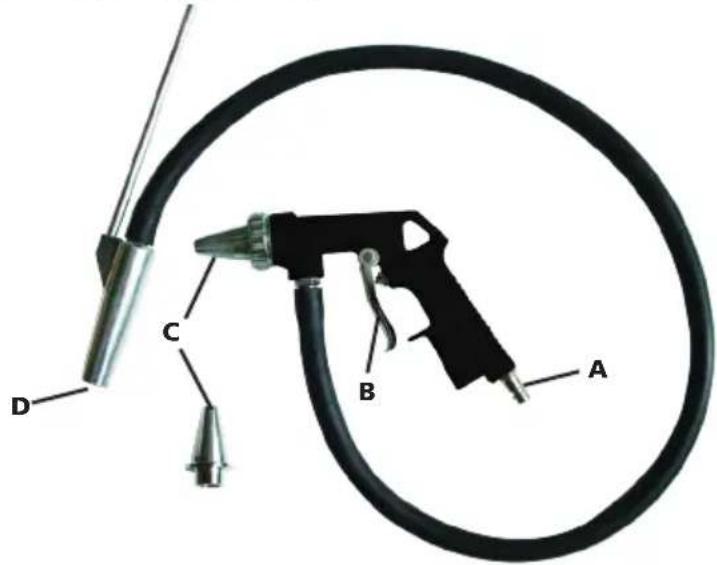
Before operating the equipment, put some oil drops in the air inlet opening (A) of the pneumatic tool.
Insert the sand feeding hose (D) inside the box containing the abrasive dust.
Choose the correct nozzle (C) and mount it onto the gun. While directing the sand flow towards a scrap piece, depress the trigger (B) to start the tool and adjust the compressor flow in order to obtain the desired pattern.
For better results the noozle must be in contact with the object surface, or at least very close (2-3 centimenters).
MAINTENANCE

Disconnect the air supply during maintenance on the tool.
Regularly clean and dry the filter in the system and the pneumatic tool air inlet opening.
Lubricate any quick-disconnect coupling on the system to prevent jamming.
Drain condensation from air filter and from the compressor on a daily basis.
In order to avoid rust formation and to minimize wear, clean and lubricate the tool after each use.
Check the tool regularly on loose bolts/screws or parts.
In case of power loss: have the tool repaired.
Only trained and qualified engineers are allowed to adjust or repair the tool.
In case the tool is equipped with a silencer, make sure that this silencer is working properly, a damaged silencer has to be replaced.
The tool should be maintained regularly to minimize the noise emission and occurring vibration.
If you intend not to use the tool for a longer period of time, it has to be oiled. Please fill some droplets of resin and acid free oil into the air inlet and let the tool run free for a couple of seconds.
Maintain the tool at least yearly.
INTENDED USE
The user or the user's employer shall assess the specific use that can be present as a result of each use.
Never use the tool otherwise than the tool is designed for and as explained in this manual.
Damages as a consequence of not following this manual, or caused by incorrect use or incorrect repairs, will never be covered by our warranty and we will have no responsibility for it. We reserve the right for technical improvements, without prior notification.
This tool is designed for spraying abrasive dusts. If used otherwise a risk assessment has to be made by the employer/user.
POSSIBLE FAULTS
Immediately shut down the equipment in case you hear unusual noises, or if a sudden power drop occurs. Check the pneumatic tool and the compressed air supply system.
Pneumatic tool
- lubrication is insufficient
- worn tool/accessory, not suitable for use or faulted
- tool or feeding hose clogged: carefully check and remove any obstructing clump
Compressed air supply system
- compressor pressure is insufficient
- pressure regulator not set on the correct pressure level, suitable to the tool being used.
-
there is a leak from the connection hose or from the connections (use Teflon tape or sealant paste)
-
leaks in the pneumatic system
- filter or lubricator cogged
- hose is crushed, pierced or too long (loss of pressure)
DISPOSAL
The tool MUST BE DISPOSED OF so as not to pollute the environment and in compliance with the applicable law.
Any warranty is expressly waved in case of damages arising out of regular wear, overload, handling or use not suitable for the tool. For this warranty to be applicable, the tool should not be dismantled when returned to your retailer.
This warranty covers replaced parts and labor for a period of 12 months from the date of purchase (a proof of purchase such as invoice or receipt is required).
Any defect may be removed by replacing the tool or repairing it, as the case may be.
Do not spray oil or other inflammable liquids over naked flames or hot surface to avoid possible fire hazards.
The abrasive material, usually silica sand, can cause serious diseases (silicosis), cancer and death.
Metal and/or painting particles removed from objects can be toxic and/or irritating.
Always protect your eyes, lungs and skin with proper protective devices. When possible use a vacuum system to remove the dusts from working place. Provide periodic medical examinations for all workers who may be exposed to crystalline silica. Inform the personnel using the tool about risk concerned to the crystalline silica.
ZUBEHÖR
Before operating the equipment, put some oil drops in the air inlet opening (A) of the pneumatic tool.
USING THE SAND BLASTING GUN WITH FEED HOSE
Before operating the equipment, put some oil drops in the air inlet opening (A) of the pneumatic tool.
Insert the sand feeding hose (D) inside the box containing the abrasive dust.
Choose the correct nozzle (C) and mount it onto the gun. While directing the sand flow towards a scrap piece, depress the trigger (B) to start the tool and adjust the compressor flow in order to obtain the desired pattern. For better results the noozle must be in contact with the object surface, or at least very close (2-3 centimenters).
MAINTENANCE

Disconnect the air supply during maintenance on the tool.
Regularly clean and dry the filter in the system and the pneumatic tool air inlet opening.
Lubricate any quick-disconnect coupling on the system to prevent jamming.
Drain condensation from air filter and from the compressor on a daily basis.
In order to avoid rust formation and to minimize wear, clean and lubricate the tool after each use.
Check the tool regularly on loose bolts/screws or parts.
In case of power loss: have the tool repaired.
Only trained and qualified engineers are allowed to adjust or repair the tool.
In case the tool is equipped with a silencer, make sure that this silencer is working properly, a damaged silencer has to be replaced.
The tool should be maintained regularly to minimize the noise emission and occurring vibration.
If you intend not to use the tool for a longer period of time, it has to be oiled. Please fill some droplets of resin and acid free oil into the air inlet and let the tool run free for a couple of seconds.
Maintain the tool at least yearly.
INTENDED USE
The user or the user's employer shall assess the specific use that can be present as a result of each use.
Never use the tool otherwise than the tool is designed for and as explained in this manual.
Damages as a consequence of not following this manual, or caused by incorrect use or incorrect repairs, will never be covered by our warranty and we will have no responsibility for it. We reserve the right for technical improvements, without prior notification.
This tool is designed for spraying abrasive dusts. If used otherwise a risk assessment has to be made by the employer/user.
POSSIBLE FAULTS
Immediately shut down the equipment in case you hear unusual noises, or if a sudden power drop occurs. Check the pneumatic tool and the compressed air supply system.
Pneumatic tool
- lubrication is insufficient
- worn tool/accessory, not suitable for use or faulted
- tool or feeding hose clogged: carefully check and remove any obstructing clump
Compressed air supply system
- compressor pressure is insufficient
-
pressure regulator not set on the correct pressure level, suitable to the tool being used.
-
there is a leak from the connection hose or from the connections (use Teflon tape or sealant paste)
- leaks in the pneumatic system
- filter or lubricator cogged
- hose is crushed, pierced or too long (loss of pressure)
DISPOSAL
The tool MUST BE DISPOSED OF so as not to pollute the environment and in compliance with the applicable law.
Any warranty is expressly waved in case of damages arising out of regular wear, overload, handling or use not suitable for the tool. For this warranty to be applicable, the tool should not be dismantled when returned to your retailer.
This warranty covers replaced parts and labor for a period of 12 months from the date of purchase (a proof of purchase such as invoice or receipt is required).
Any defect may be removed by replacing the tool or repairing it, as the case may be.
Do not spray oil or other inflammable liquids over naked flames or hot surface to avoid possible fire hazards.
The abrasive material, usually silica sand, can cause serious diseases (silicosis), cancer and death.
Metal and/or painting particles removed from objects can be toxic and/or irritating.
Always protect your eyes, lungs and skin with proper protective devices. When possible use a vacuum system to remove the dusts from working place. Provide periodic medical examinations for all workers who may be exposed to crystalline silica. Inform the personnel using the tool about risk concerned to the crystalline silica.
WYPOSAŻENIE DODATKOWE
Before operating the equipment, put some oil drops in the air inlet opening (A) of the pneumatic tool.
Do not spray oil or other inflammable liquids over naked flames or hot surface to avoid possible fire hazards.
The abrasive material, usually silica sand, can cause serious diseases (silicosis), cancer and death.
Metal and/or painting particles removed from objects can be toxic and/or irritating.
Always protect your eyes, lungs and skin with proper protective devices. When possible use a vacuum system to remove the dusts from working place. Provide periodic medical examinations for all workers who may be exposed to crystalline silica. Inform the personnel using the tool about risk concerned to the crystalline silica.
TARTOZÉKOK
Before operating the equipment, put some oil drops in the air inlet opening (A) of the pneumatic tool.


- SAND BLASTING GUN
- USER GUIDE
- SAND BLASTING GUN WITH FEED HOSE
- ATTENTION:
- GENERAL SAFETY REGULATIONS
- WHAT YOU SHOULD DO
- EN
- ATTENZIONE:
- ÜLDISED OHUTUSJUHISED
- ACCESSORIES
- USING A PNEUMATIC TOOL
- USING THE SAND BLASTING GUN WITH FEED HOSE
- MAINTENANCE
- INTENDED USE
- POSSIBLE FAULTS
- Pneumatic tool
- Compressed air supply system
- DISPOSAL
- The tool MUST BE DISPOSED OF so as not to pollute the environment and in compliance with the applicable law.
- ZUBEHÖR
- WYPOSAŻENIE DODATKOWE
- TARTOZÉKOK
Brand : Abac
Model : G-561H
Category : Sandblasting gun