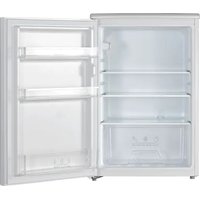
ART130ETU - Fridge AYA - Free user manual and instructions
Find the device manual for free ART130ETU AYA in PDF.


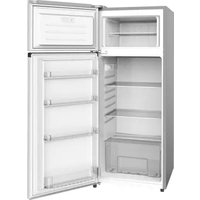
| Product type | Single door refrigerator, freestanding |
| Brand | AYA |
| Model | ART130ETU / ART130TUS/E |
| Dimensions (H x W x D) | 845 x 553 x 574 mm |
| Total volume | 131 L |
| Energy class | E |
| Annual consumption | 90 kWh/year |
| Noise level | 39 dB(A), class C |
| Power supply | 220-240 V ~ 50 Hz, 0.36 A |
| Climate class | ST/N/SN (10 °C to 38 °C) |
| Refrigerant | R600a (24 g) |
| Insulating foam | Cyclopentane |
| Interior lighting | LED (non-replaceable by user) |
| Defrost | Automatic in the refrigerator compartment |
| Door reversibility | Yes, possible |
| Thermostat | Adjustable from Min (1) to Max (6), OFF position |
| Supplied accessories | 1 glass shelf, 1 vegetable bin, 1 plastic tray, adjustable feet |
| Legal warranty | 2 years |
| Availability of spare parts | 10 years |
| After-sales service | BUT, 09 78 97 97 97 (Monday-Saturday 8am-8pm) |
Frequently Asked Questions - ART130ETU AYA
User questions about ART130ETU AYA
0 question about this device. Answer the ones you know or ask your own.
Ask a new question about this device
Download the instructions for your Fridge in PDF format for free! Find your manual ART130ETU - AYA and take your electronic device back in hand. On this page are published all the documents necessary for the use of your device. ART130ETU by AYA.
USER MANUAL ART130ETU AYA
natural_image
Front view line drawing of a rectangular container with a top shelf and side supports (no text or symbols)Information technique
natural_image
Symbol of a trash bin with crossed lines indicating no waste or discharge, and a solid rectangle below (no text or labels)natural_image
Pure technical line drawing of a rectangular frame with no text, numbers, or symbols1 door fridge
CONTENTS
IMPORTANTSAFEGUARDS - 25 -
INSTALLING YOUR REFRIGERATOR - 32 -
DESCRIPTION OF YOUR REFRIGERATOR - 34 -
USING YOUR REFRIGERATOR - 35 -
MAINTAINNG YOUR REFRIGERATOR - 37 -
REVERSE DOOR - 39 -
TROUBLE SHOOTING - 40 -
COLDEST ZONE IN THE REFRIGERATOR - 42 -
TECHNICAL INFORMATION - 43 -
DISPOSAL OF THE APPLIANCE - 46 -

THIS PRODUCT IS FOR HOUSEHOLD USE ONLY!
Please read these instructions carefully before the first use of this product and save this manual for your future reference.
1. IMPORTANT SAFEGUARDS
- This appliance can be used by children aged from 8 years and above and persons with reduced physical, sensory or mental capabilities or lack of experience and knowledge if they have been given supervision or instruction concerning use of the appliance in a safe way and understand the hazards involved. Children shall not play with the appliance. Cleaning and user maintenance shall not be madeby children without supervision.
-
If the supply cord is damaged, it must be replaced by the manufacturer, its service agent or similarly qualified persons in order to avoid a hazard.
-
This product is not intended for use by young children or infirm persons, without supervision. Young children must be supervised to ensure they do not play with the appliance.
-
Ensure the refrigerator is unplugged before cleaning or if the product is not in use.
-
To clean the appliance use only mild detergents or glass cleaning products. Never use harsh detergents or solvents.
-
It is not recommended to use this refrigerator with an extension cord or power board. Please ensure that the appliance is plugged directly into the electrical outlet.
-
Do not place hot food or drink into the refrigerator before it cools down to room temperature.
-
Close the door imm ediately after putting in any items so the inside temperature will not rise dramatically.
-
Keep appliance away from any heat source or direct sunlight.
-
Do not store explosive substances such as aerosol cans with a flammable propellant in this appliance.
-
Never pull the cord to disconnect it from the outlet. Grasp the plug and pull it from the outlet.
-
Check that the voltage of the power supply in your home is the same as the voltage shown on the rating label of this product.
-
Connect your refrigerator to an independent electrical socket and use a safe ground wire.
-
Turn on electricity only 5 minutes later after electricity goes off. Otherwise, the compressor may be damaged.
-
The appliance is not intended to be operated by means of an external timer or a separate remote-control system.
-
This appliance has been incorporated with a grounded plug. Please ensure the wall outlet in your house is well earthed.
-
It is recommended to check regularly the supply cord for any sign of possible deterioration, and the appliance should not be used if the cable is damaged.
-
WARNING: Keep ventilation opening, in the appliance enclosure or in the built-in structure, clear of obstruction.
-
WARNING: Do not use mechanical devices or other means to accelerate the defrosting process, other than those recommended by the manufacturer.
20.WARNING: Do not damage the refrigerant circuit.
-
WARNING: Do not use electrical appliances inside the food storage appliances inside the food storage compartments of the appliance, unless they are of the type recommended by the manufacturer.
-
Disposal of the appliance to prevent possible harm to the environment or human health from uncontrolled waste disposal, recycle it responsibly to promote the sustainable reuse of material resources. And the disposal should only be done through public collection points. Old refrigerators can contain CFC that destroy the ozone;contact the waste treatment center nearest your home for more details on the correct procedures for disposal.
- This appliance is intended to be used in household and similar applications such as:
- staff kitchen areas in shops, offices and other working environments;
- farm houses and by clients in hotels, motels and other residential type environments;
- bed and breakfast type environments;
- catering and similar non-retail applications.
24.
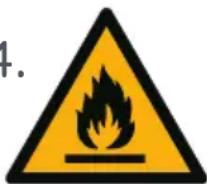
Warning; Risk of fire/flammable materials.
- WARNING: When positioning the appliance, ensure the supply cord is not trapped or damaged.
- WARNING: Do not locate multiple portable socket-outlets or portable power supplies at the rear of the appliance.
- Children aged from 3 to 8 years are allowed to load and unload refrigerating appliances.
-
If the refrigerant circuit is damaged:
-
Avoid naked flames and sources of ignition.
- Thoroughly ventilate the room in which the appliance is situated.
To avoid contamination of food, please respect the following instructions:
- Opening the door for long periods can cause a significant increase of the temperature in the compartments of the appliance.
- Clean regularly surfaces that can come in contact with food and accessible drainage systems.
- Store raw meat and fish in suitable containers in the refrigerator, so that it is not in contact with or drip onto other food.
- Two-star frozen-food compartments are suitable for storing pre-frozen food, storing or making ice-cream and making ice cubes.
- One-, two- and three-star compartments are not suitable for the freezing of fresh food.
- If the refrigerating appliance is left empty for long periods, switch off, defrost, clean, dry, and leave the door open to prevent mould developing within the appliance.
-
This refrigerating appliance is not intended to be used as a built-in appliance.
-
This refrigerating appliance is not suitable for freezing foodstuffs.
-
Please according to local regulations regarding disposal of the appliance for its flammable blowing gas. Before you scrap the appliance, please take off the doors to prevent children trapped.
2. INSTALLING YOUR REFRIGERATOR
User should take out the door handle in the plastic bag, and install it into the door. Then take out the two handle stopples and cover the installed screws with them. The handle stopple and screw stopple in the plastic bag can be used when the user wants the door to be opened from left.
UNPACKING YOUR REFRIGERATOR
WARNING: Use two or more people to move refrigerator.
Failure to do so can result in back or other injury.
- Remove tape and any labels from your refrigerator before using(except the rating label).
To remove any remaining tape or glue, rub the area briskly with your thumb.
Tape or glue residue can also be easily removed by rubbing a small amount of liquid-dish soap over the adhesive with your fingers. Wipe with warm water and dry.
- Do not use sharp instruments, rubbing alcohol, flammable fluids, or abrasive cleaners to remove tape or glue. These products can damage the surface of your refrigerator.
- When moving the refrigerator, do not tilt the refrigerator beyond 45^ from upright position.
CLEANING BEFORE USE
After you remove all of the packaging materials, (in particular, the foam between the outside condenser and cabinet should be taken off) clean the inside of your refrigerator before using it.
SPACE REQUIREMENTS
WARNING: Keep flammable materials and vapors, such as gasoline, away form refrigerator. Failure to do so can result in death, explosion, fine or burns.
• To ensure proper ventilation for your refrigerator, allow for 200mm space on each side between walls, 100mm space between back of your refrigerator and the wall, and 300mm space between counter top and the roof or ceiling.
- If you are installing your refrigerator next to a fixed wall, leave sufficient space on the hinge side to allow for the door to swing open.
- Never install your refrigerator near heat source and direction to shine.
ELECTRICAL REQUIREMENT
WARNING: DO NOT REMOVE GROUND PRONG.
DO NOT USE AN ADAPTOR.
DO NOT USE EXTENSION CORD.
Failure to follow these instructions can result in death, fire or electrical shock.
Before you move your refrigerator into its final location, it is important to make sure you have the proper electrical connection.
RECOMMENDED EARTHING METHOD
A 220\~240 Volt /50 Hz AC only 10 ampere fused and properly earthed electrical supply is required. It is recommended that a separate circuit serving only this appliance be provided. Use arreceptacle which cannot be turned off with a switch or pull chain. Do not use an extension cord.
NOTE: Before performing any type of installation, cleaning, or removing a light bulb, turn the refrigerator control to OFF and then disconnect the refrigerator from the electrical source. When you are finished, connect the refrigerator to the electrical source and reset the control to the desired setting.
LEVELING
If the refrigerator is not leveled during installation. The doors may not close or seal properly, causing cooling, frost, or moisture problems. It is very important of the refrigerator to be level in order to function properly.
To level your refrigerator, you may either turn the level leg clockwise to raise that side to the refrigerator or turn counter – clockwise to lower that side.
NOTE: Having someone push against the top of the refrigerator take some weight off the leveling leg. This makes it easier to adjust the leveling leg.
3. DESCRIPTION OF YOUR REFRIGERATOR
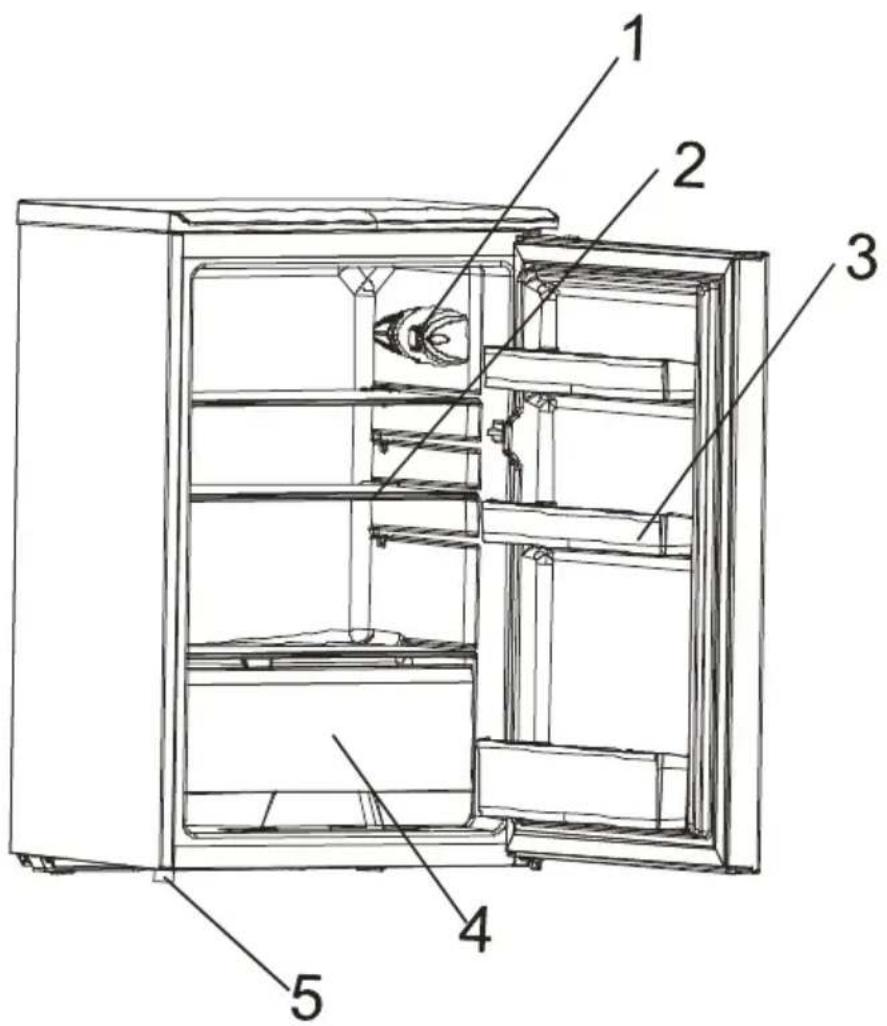
- Thermostat
- Glass shelf
- Plastic pallet
- Crisper
- Leveler leg
4. USING YOUR REFRIGERATOR
To obtain the best possible results form your refrigerator, it is important that you operate it properly.
Temperature Control
The temperature selector knob is located on the right hand side wall of the refrigerator interior
Setting"Off": UnitOff
Setting"Min" or "1": Less Cool Temperature
Setting“Med” or “3”: Normal Operation(adequate for most situations)
Setting“Max” or “6”: Coolest Temperature
- During high ambient temperatures e.g. on hot summer days. It may be necessary to set the thermostat to the Coolest setting(position "Max" or "6").This may cause the compressor running continuously in order to maintain a low temperature in the cabinet.
- For the first time you install your refrigerator, set the thermostat knob at “Med” or “3”. Give your refrigerator time to cool down completely before adding food. It is the best to wait 24 hours before adding food. The thermostat knob controls the temperature. When the thermostat control knob is set to OFF, the refrigerator will not be running.
Fresh Food Storage
Wrap or store food in the refrigerator in airtight and moisture - proof material. This prevents food odor and taste transfer throughout refrigerator.
- Fruit - wash, let dry and store in refrigerator in plastic bags or crisper.
- Leafy vegetables— Remove wrapping and trim or tear off bruised and discolored areas, wash in cold water and drain. Place in plastic bag or plastic container and store in crisper.
- Fish – Use fresh fish the same day as purchased.
- Meat - Store most meat in original wrapping as long as it is airtight and moisture - proof. Re - wrap if necessary.
- Leftovers - Cover leftovers with plastic wrap or aluminum foil.
| Refrigerating chamber | Type of food |
| Door or balconies of fridge compartment | · Foods with natural preservatives, such as jams, juices, drinks, condiments.· Do not store perishable foods.· Use within 1-2 days. |
| Crisper drawer (salad drawer) | · Fruits, herbs and vegetables should be placed separately in the crisper bin.· Do not store bananas, onions, potatoes, garlic in the refrigerator.· Use within 1-2 days. |
| · Fridge shelf - bottom· Chiller (box/drawer) | Raw meat, poultry, fish (for short-term storage) |
| Fridge shelf - middle | Dairy products, eggsUse witjin the recommended time |
| Fridge shelf - top | Foods that do not need cooking, such as ready-to-eat foods, deli meats, leftovers. keep for only 1-2 days. |
- The Refrigerating Chamber is suitable for storage of a variety of fruits, vegetables, beverages and other food consume in the short term. Suggested storage time 3 days to 5 days.
5. MAINTAINNG YOUR REFRIGERATOR
The refrigerator should be clean at least once a month to prevent odors form building up. Wipe up spills immediately.
To clean your refrigerator:
- Unplug it.
- Remove all movable parts from inside, such as shelves and crisper. Etc.
- Use a clean sponge or soft and a mild detergent in warm water. Do not use abrasive or harsh cleaners.
- Hand wash, rinse and dry all surfaces thoroughly.
- Do not use cleaning waxes, concentrated detergents, bleaches or cleaners containing petroleum on plastics and rubber parts.
- Never use paper towels, window sprays, scouring cleansers or flammable fluids on plastic parts as these can scratch or damage material.
Cleaning
• Unplug the appliance.
- Remove all substances.
- Clean the inside and outside walls with a clean sponge or soft cloth using warm water or 1 teaspoon of bicarbonate of soda to 1.2 liters of water.
- Rinse well and wipe dry with a clean soft cloth. If the appliance is not to be used for a long period of time then it is recommended to remove all the food stuff, clean the inside of appliance and leave the door open to allow the air to circulate thus avoiding unpleasant odors.
Changing the light bulb
• ]e light for this device is an LED unit which rarely fails and cannot be changed by the user. However, in the event of a malfunction, contact the after-sales service or a repair centre for its replacement.
Power Interruptions
If the electricity in your house goes off for a shorter period, keep both doors closed to help foods stay cold and frozen.
If the power will be out for a longer period, remove foods from the freezer and stored it in a frozen food locker.
Defrosting
Refrigerator compartment -Defrosting process is automatic by thermostat knob Melted frost flow into drip tray and automatic evaporating.
6. REVERSE DOOR
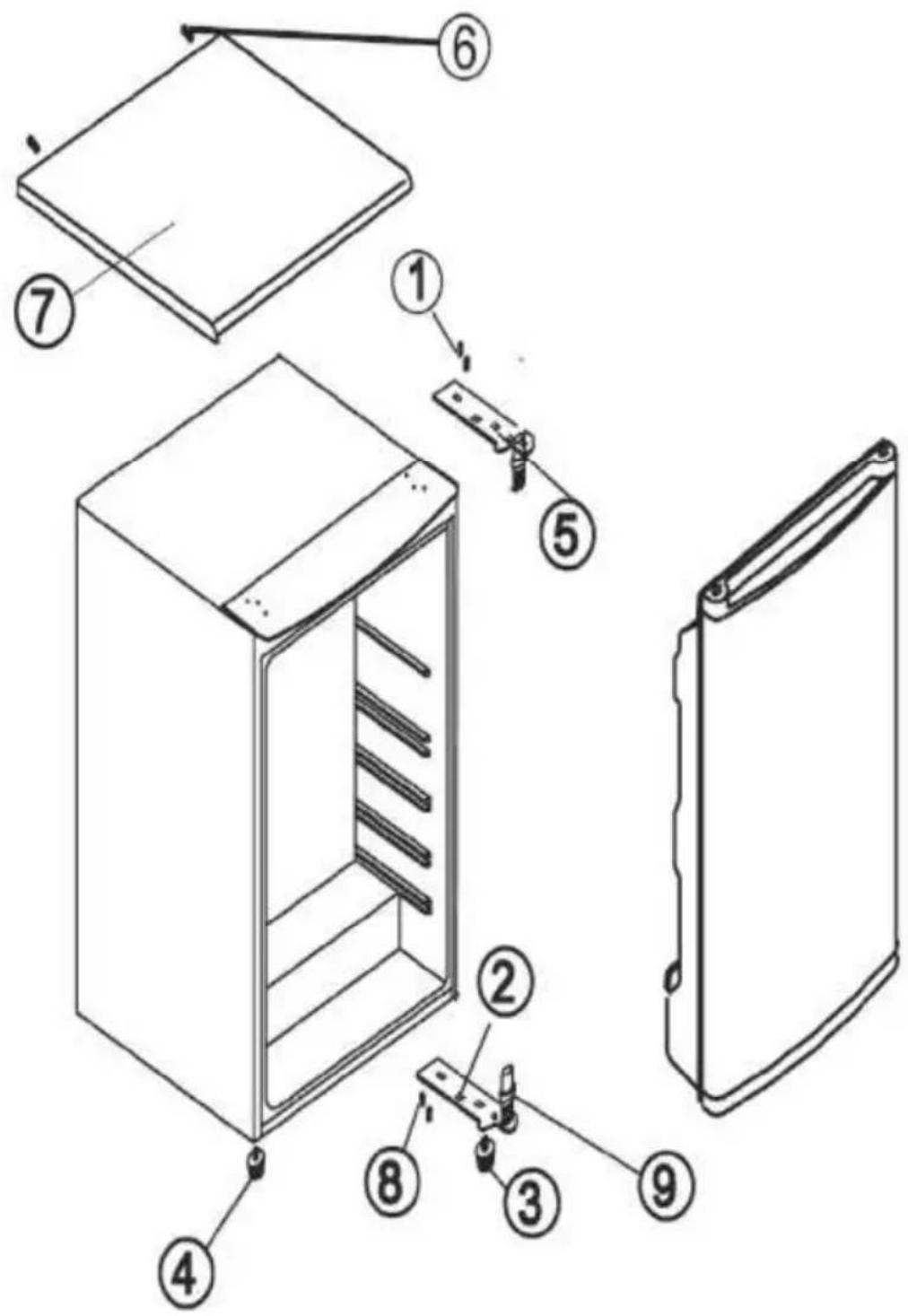
- Remove the two screws. (6) securing the top. Remove the top (7)
- Remove the 2 screws holding the top hinge (5) on the body.
- Remove the top hinge (5).
- Lift and remove the refrigerator door. Store it on an area without the risk of damage.
- Remove the 2 screws (8) holding the bottom hinge (2). Remove the bottom hinge (2).
- Unscrew the left foot (4) and screw it on the right side.
- Then position the lower hinge (2) on the opposite side and attach it with 2 screws (8).
- Reset the rod (8) on the bottom hinge (2).
- Position the refrigerator door on the bottom hinge.
- Then position the top hinge (5) in the freezer door, place the whole assembly on the opposite side. Position the refrigerator door in the condition 'closed' and fix the top hinge (5) with 2 screws (1).
- Attention, before tightening the screws (1 and 8), check that the door is properly aligned on the body.
- Install the top, screw it the screws (6).
7.TROUBLE SHOOTING
In case of malfunction, you can solve many common problems easily.
-
Your refrigerator will not operate...Check if
-- The power supply cord is unplugged.
-- The thermostat knob is set to OFF position. -
The light so not work...Check if
-- The power supply cord is unplugged.
-- A household fuse or circuit breaker has tripped.
-- A light bulb is loose in the socket.
-- A light bulb has burned out.
- Food in the refrigerator compartment freezing...Check if
-- The thermostat knob is set too cold.
-- The position of food stored touches the refrigerant power of refrigerator back wall.
- Food in the refrigerator compartment is not cold...Check if
-- The air vents are blocked in the compartment. This prevents the movement of cold air.
-- The door(s) are opened too often of not close properly.
-- A large amount of food has just been added to the refrigerator or freezer compartment.
-- The position of thermostat knob is adjusted too low.
- Melted frost Leak over compartment inside or on floor...Check if
-- The drain - off mouth entrance is blocked.
-- Evaporator pan is in place.
- The refrigerator seems to make unusual noise...Check if
-- The refrigerator is leveled on the floor.
-- The body of the refrigerator touches the wall.
-- The drip tray is not placed properly.
- There is interior moisture build - up...Check if
-- The air vents are blocked in the refrigerator.
-- The door is opened often.
-- The room is humid.
-- The food is not packaged correctly.
-- The control is not set correctly of the surrounding conditions.
- The doors will not close completely...Check if
-- The shelves are out of position
-- The gaskets are dirty.
-- The fridge is not level.
REQUESTING ASSISTANCE OR SERVICE
If the problem is not due to one of the items listed in Troubleshooting, Contact the dealer or authorized Service Company.
8. COLDEST ZONE IN THE REFRIGERATOR
This symbol indicates the location of the coldest zone of the refrigerator, The area is near the fan, and above by the symbol or the rack positioned at the same height.

natural_image
Pure warning symbol with exclamation mark and thermometer icon (no text)To ensure the temperatures in this area, do not change the positioning of the shelf.
TEMPERATURE INDICATOR SETTING
To help you set your refrigerator well, it is equipped with a temperature indicator that will monitor the average temperature in the coldest zone. WARNING: This indicator is intended to work only with your refrigerator, do not use it in another refrigerator (in fact, the coldest zone is not the same), or for any other use.
CHECKING THE TEMPERATURE IN THE COLDEST ZONE
With the temperature indicator, you can check regularly that the temperature of the coldest zone is correct. Indeed, the internal temperature of the refrigerator depends on several factors such as the ambient temperature of the room, the amount of food stored and the frequency of door opening. Take these factors into consideration when setting the device.
When the indicator shows « OK », this means that your thermostat is well adjusted and the internal temperature correct.
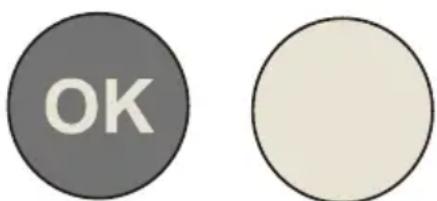
If the indicator of temperature turns WHITE, this means that the temperature is too high; in this case, increase the refrigerator temperature control setting and wait for 12 hours before performing a new visual inspection of the indicator. When fresh food has been introduced or the door has been left open, it is possible for the indicator of temperature to turn WHITE after a while.
| Product Information SheetCOMMISSION DELEGATED REGULATION (EU) 2019/2016 | ||||
| Supplier's name or trademark: AYA | ||||
| Supplier's address: BUT INTERNATIONAL, 1 AVENUE SPINOZA 77184 EMERAINVILLE, FRANCE | ||||
| Model identifier:ART130TUS/E | ||||
| Type of refrigerating appliance: | ||||
| Low-noise appliance: | No | Design type: | freestanding | |
| Wine storage appliance: | No | Other refrigerating appliance: | yes | |
| General product parameters: | ||||
| Parameter | Value | Parameter | Value | |
| Overall dimensions (millimetre) | Height | 845 | Total volume ( dm^3 or l) | 131 |
| Width | 553 | |||
| Depth | 574 | |||
| EEI | 100% | Energy efficiency class | E | |
| Airborne acoustical noise emissions (dB(A) re 1 pW) | 39 | Airborne acoustical noise emission class | C | |
| Annual energy consumption (kWh/a) | 90 | Climate class: | Extended temperateTemperateSubtropical | |
| Minimum ambient temperature (°C), for which the refrigerating appliance is suitable | 10 | Maximum ambient temperature (°C), for which the refrigerating appliance is suitable | 38 | |
| Winter setting | No | |||
9. TECHNICAL INFORMATION
| Compartment Parameters: | |||||
| Compartment type | Compartment parameters and values | ||||
| Compartment volume (dm3 or l) | Recommended temperature setting for optimised food storage (°C) These settings shall not contradict the storage conditions set out in Annex IV, Table 3l'Annexe IV, Tableau 3 | Freezing capacity (kg/24h) | Defrosting type (auto-defrost=A, manual defrost=M) | ||
| Pantry | No | - | - | - | - |
| Wine storage | No | - | - | - | - |
| Cellar | No | - | - | - | - |
| Fresh food | Yes | 131 | 4 | - | M |
| Chill | No | - | - | - | - |
| 0-star or icemaking | No | - | - | - | - |
| 1-star | No | - | - | - | - |
| 2-star | No | - | - | - | - |
| 3-star | No | - | - | - | - |
| 4-star | No | - | - | - | - |
| 2-star section | No | - | - | - | - |
| Variable temperature compartment | - | - | - | - | - |
| For 4-star compartments | |||||
| Fast freeze facility | No | ||||
| Light source parameters: | |||||
| Type of light source | LED | ||||
| Energy efficiency class | - | ||||
| Minimum duration of the guarantee offered by the manufacturer: 2 YEARS | |||||
| Additional information: | |||||
| Weblink to the manufacturer's website, where the information in point 4(a) Annex of Commission Regulation (EU) 2019/2019 is found: www.but.fr | |||||
9. TECHNICAL INFORMATION
Technical information
| Reference: | ART130TUS/E |
| Rated voltage: | 220-240V~ |
| Ampere: | 0.36A |
| Rated frequency: | 50Hz |
| Climate class: | ST/N/SN |
| Refrigerant: | R600a(24g) |
| Protection against electrical shock: | I |
| Insulation foam: | CYCLOPENTANE |
Climate classes
-Extended temperate: 'this refrigerating appliance is intended to be used at ambient temperatures ranging from 10 °C to 32 °C';
-Temperate: 'this refrigerating appliance is intended to be used at ambient temperatures ranging from 16 °C to 32 °C';
-Subtropical: 'this refrigerating appliance is intended to be used at ambient temperatures ranging from 16 °C to 38 °C';
Note: More data information, please scan the QR code on the energy label.
10. DISPOSAL OF THE APPLIANCE
It is prohibited to dispose of this appliance in domestic household waste.
For disposal there are several possibilities:
a) The municipality has established collection systems, where electronic waste can be disposed of at least free of charge to the user.
b) The manufacturer will take back the old appliance for disposal at least free of charge to the user.
c) As old products contain valuable resources, they can be sold be scrap metal dealers. Wild disposal of waste in forests and landscapes endangers your health when hazardous substances leak into the ground-water and fin their way into the food chain.
CORRECT DISPOSAL OF THIS PRODUCT
natural_image
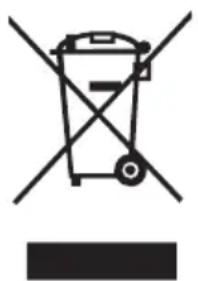
Symbol of a trash bin crossed with no text or numbers, representing waste sorting or disposal (no text present)European directive 2012/19/EU on Waste from Electrical and Electronic Equipment (WEEE), requires that used household appliances are not thrown into the normal municipal waste stream.
Used appliances must be collected separately in order to optimize the rate of recovery and recycling of materials that compose them, and to reduce the impact on human health and on the environment.
The crossed bin symbol is affixed to all the products to remind you of the obligations of separated collection.
We decline liability for any damage or accident derived from any use of this product which is not in conformity with the instructions contained in this booklet.
About your product service :
To contact our After-Sales Service, before going to BUT store, call 09 78 97 97 97
From Monday to Saturday from 8:00 a.m. to 8:00 p.m. (Price of a local call).
Period of availability of repair spare parts: 10 years
In accordance with Article L. 217 of the Consumer Code, your product has 2 year legal guarantee of conformity.


- CONTENTS
- IMPORTANT SAFEGUARDS
- INSTALLING YOUR REFRIGERATOR
- UNPACKING YOUR REFRIGERATOR
- CLEANING BEFORE USE
- SPACE REQUIREMENTS
- ELECTRICAL REQUIREMENT
- RECOMMENDED EARTHING METHOD
- LEVELING
- DESCRIPTION OF YOUR REFRIGERATOR
- USING YOUR REFRIGERATOR
- Temperature Control
- Fresh Food Storage
- MAINTAINNG YOUR REFRIGERATOR
- Cleaning
- Changing the light bulb
- Power Interruptions
- Defrosting
- REVERSE DOOR
- 7.TROUBLE SHOOTING
- COLDEST ZONE IN THE REFRIGERATOR
- TEMPERATURE INDICATOR SETTING
- CHECKING THE TEMPERATURE IN THE COLDEST ZONE
- TECHNICAL INFORMATION
- Climate classes
- DISPOSAL OF THE APPLIANCE
- CORRECT DISPOSAL OF THIS PRODUCT
- About your product service :
Brand : AYA
Model : ART130ETU
Category : Fridge