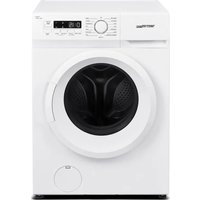
FT8WH - Washing machine TECNOLEC - Free user manual and instructions
Find the device manual for free FT8WH TECNOLEC in PDF.


User questions about FT8WH TECNOLEC
0 question about this device. Answer the ones you know or ask your own.
Ask a new question about this device
Download the instructions for your Washing machine in PDF format for free! Find your manual FT8WH - TECNOLEC and take your electronic device back in hand. On this page are published all the documents necessary for the use of your device. FT8WH by TECNOLEC.
USER MANUAL FT8WH TECNOLEC
natural_image
Diagram showing a 3D box with an arrow pointing upward and a magnified inset of a ship labeled 'a' (no text or symbols on the diagram itself)natural_image
Close-up of a mechanical component with a wrench and circular head (no text or symbols visible)natural_image
Close-up of a mechanical component with a blue arrow pointing to a small metallic part (no visible text or symbols)natural_image
Close-up of a white object with a dark circular feature and a blue arrow pointing to it, no visible text or symbols.natural_image
Simple line drawing of a washing machine with a crossed X mark on its side (no text or symbols)natural_image
Close-up of a white mechanical component with a blue circular arrow indicating rotation (no text or symbols)natural_image
Illustration of a person standing next to a wall-mounted device with blue arrows indicating rotation or movement (no text or symbols)natural_image
Close-up of a faucet with a blue arrow indicating clockwise motion (no text or symbols)text_image
Max.100cm Min.60cmnatural_image
Line drawing of a sweater with a tag and tie, no text or symbols presentnatural_image
Simple line drawing of a bag being folded into a basket, with arrows indicating motion (no text or symbols)text_image
Illustration showing a garment with labeled parts and directional arrows indicating process flow or movement.natural_image
Line drawing of two fabric bags with circular designs and ribbon handles (no text or symbols)natural_image
Simple line drawing of a bag with a hand holding a small object inside, no text or symbols present.natural_image
Line drawing of a mechanical component with textured surfaces and cylindrical ends (no text or symbols)natural_image
Technical line drawing of a mechanical component with internal compartments and mounting holes (no text or symbols)natural_image
Illustration of hands cleaning a window with a red arrow indicating rotation (no text or symbols)natural_image
Diagram of a mechanical device with internal compartments and a red arrow indicating direction (no text or symbols)natural_image
Line drawing of a hand holding a curved object (no text or symbols)natural_image
Diagram of a mechanical valve mechanism with rotating components (no text or symbols)natural_image
Line drawing of a hand holding a tool with a textured cap and handle (no text or symbols)natural_image
Hand holding a tool with a magnified inset showing the mechanical component (no text or symbols visible)natural_image
Illustration showing a hand using a tool to clean or inspect a component, with an inset magnified view of the device (no text or symbols present)text_image
Technical diagram showing a mechanical component with an arrow pointing to a circular feature labeled 'AB' and a small inset detail.natural_image
Line drawing of a mechanical device with a lever and internal compartments (no text or symbols)natural_image
Line drawing of a hand inserting a plug into a device (no text or symbols)natural_image
Line drawing of a mechanical component with internal channels and a bracket (no text or symbols)natural_image
Simple diagram showing a hand pointing at the center of a circle with directional arrows, no text or symbols present.natural_image
Illustration of a hand holding a ring with a circular motion arrow, no text or symbols presentnatural_image
Illustration of a mechanical device with a circular component and a tool, no text or symbols presentnatural_image
Mechanical diagram showing a rotating component with directional arrows indicating motion (no text or symbols)https://eprel.ec.europa.eu/screen/product/washingmachines2019/1620676
VOOR ELKE WASBEURT 9
WASSEN....12
PROGRAMMATABEL 16
EXTRA FUNCTIES 18
Kinderslot.... 18
Zoemer 19
Trommel reinigen 19
PROBLEEMOPLOSSING 24
PRODUCTINFORMATIEBLAD 25
SERVICE VOOR REPARATIES EN RESERVEONDERDELEN 29
VERWIJDERING 30
LEES DE VOLGENDE VEILIGHEIDSWAARSCHUWINGEN EN DE INSTRUCTIES AANDACHTIG DOOR VOORDAT U HET APPARAAT GEBRUIKT EN BEWAAR ZE VOOR LATERE RAADPLEGING.
Waarschuwingen
natural_image
Diagram of a mechanical device with an inset showing a ship silhouette and labeled point 'a' (no text or symbols on the diagram itself)natural_image
Close-up of a mechanical component with a wrench and circular knob, no visible text or symbolsnatural_image
Close-up of a mechanical component with a blue arrow pointing to a small metallic part (no visible text or symbols)natural_image
Close-up of a white object with a dark circular hole and a blue arrow pointing to it, partially overlaid by a striped pattern (no text or symbols)natural_image
Simple line drawing of a washing machine with a black X mark on its side (no text or symbols)natural_image
Close-up of a mechanical component with a blue curved arrow indicating rotation or motion (no text or symbols)natural_image
Illustration of a white rabbit head with blue arrows indicating motion or movement (no text or symbols)natural_image
Illustration of a faucet with a valve and blue arrows indicating fluid flow (no text or symbols)text_image
Max.100cm Min.60cmnatural_image
Line drawing of a sweater with a tag and tie, no text or symbols presentnatural_image
Simple line drawing of a box with folded paper and a bag, showing a process with arrows indicating rotation (no text or symbols)text_image
Illustration showing a garment with labeled parts and directional arrows indicating process flow or movement.natural_image
Line drawing of two fabric bags with circular designs and ribbon handles (no text or symbols)natural_image
Line drawing of a money bag with a hand holding a small object inside (no text or symbols)natural_image
Line drawing of a mechanical component with textured surfaces and no visible text or symbolsnatural_image
Illustration of hands cleaning a window with a red arrow indicating the process (no text or symbols present)natural_image
Diagram of a mechanical device with internal compartments and a red arrow indicating direction (no text or symbols)text_image
Nettoyage [Tambour]natural_image
Line drawing of a hand gripping a curved object (no text or symbols)natural_image
Diagram of a valve mechanism with rotating arrows indicating flow direction (no text or symbols)Draai de waterkraan dicht.
natural_image
Line drawing of a hand holding a small object with a tool, no text or symbols presentnatural_image
Illustration of a hand holding a small object with a magnified inset showing a mechanical component (no text or symbols)natural_image
Illustration showing a hand using a tool to clean or remove a component, with an inset magnified view of the device inside (no text or symbols)text_image
Technical diagram showing a mechanical component with an arrow pointing to a circular feature labeled 'AB' and a small inset detail.natural_image
Line drawing of a mechanical device with a lever and internal compartments (no text or symbols)natural_image
Line drawing of a hand inserting a plug into a device (no text or symbols)natural_image
Line drawing of a mechanical component with internal parts and an arrow indicating direction (no text or symbols)natural_image
Simple diagram of a hand pointing at the center of a circle with directional arrows (no text or symbols)natural_image
Illustration of a hand holding a circular object with arrows indicating rotation or movement (no text or symbols)natural_image
Mechanical diagram showing a rotating shaft and flange with directional arrows indicating motion (no text or symbols)https://eprel.ec.europa.eu/screen/product/washingmachines2019/1620676
IMPORTANT SAFETY INSTRUCTIONS .... 1
PRODUCT OVERVIEW 3
INSTALLATION 4
BEFORE EACH WASHING....7
WASHING 10
PROGRAMME CHART....14
ADDITIONAL FUNCTIONS....16
Child Lock....16
Buzzer....17
Drum Clean....17
Power-off Memory Function....17
CLEANING AND MAINTENANCE....17
TROUBLESHOOTING....20
PRODUCT INFORMATION SHEET 21
REPAIR AND SPARE PARTS SERVICE 25
DISPOSAL....26
PLEASE READ THE FOLLOWING SAFETY WARNINGS AND THE INSTRUCTIONS CAREFULLY BEFORE USING THE APPLIANCE AND KEEP FOR FUTURE REFERENCE.
Warnings
- This appliance is intended to be used in household and similar applications such as:
- staff kitchen areas in shops, offices and other working environments;
-
farm houses;
— by clients in hotels, motels and other residential type environments;
— bed and breakfast type environments;
– areas for communal use in blocks of flats. -
If the supply cord is damaged, it must be replaced by the manufacturer, its service agent or similarly qualified persons in order to avoid a hazard.
- This appliance can be used by children aged from 8 years and above and persons with reduced physical, sensory or mental capabilities or lack of experience and knowledge if they have been given supervision or instruction concerning use of the appliance in a safe way and understand the hazards involved.
Children shall not play with the appliance.
Cleaning and user maintenance shall not be made by children without supervision.
• CAUTION: Do not connect to the hot water supply.
• The openings must not be obstructed by a carpet.
- The water pressure must not be less than 0.05 MPa and not greater than 1 MPa.
- The new hose-sets supplied with the appliance are to be used; old hose-sets should not be reused.
• Children of less than 3 years should be kept away unless continuously supervised.
- Regarding the detailed instructions concerning the method of cleaning, please see section "CLEANING AND MAINTENANCE" on pages 17-20.
- The maximum mass of dry textile material that to be used in this appliance is 8 kg.
Safety Precautions
• The appliance is for indoor use only.
- Keep the packing materials of the appliance away from children to avoid hazards.
- Do not plug the appliance to the power supply with wet hands.
- Never touch the appliance with wet hands or feet.
- In the event of any failure, first unplug the appliance and close the water tap. Do not attempt to repair by yourself. Please contact your authorised service agent.
- Do not exceed the maximum loading capacity.
- The glass door becomes very hot during the washing cycle. Keep children and pets away from the appliance whilst it is in operation.
- Never force the door to open when the appliance is running. The door will unlock shortly after the end of a cycle.
- Do not close the door with excessive force. If it is found difficult to close the door, please check if the clothes are properly inserted and distributed.
- Do not leave children unattended near the appliance since they might lock themselves up into it.
• Always unplug the appliance and turn off the water supply after use. - Animals and children may climb into the machine. Check the machine before every operation.
- The plug must be remained easily accessible after installation of the appliance.
- Do not wash articles that have been cleaned in, washed in, soaked in, or dabbed with combustible or explosive substances (such as wax, oil, paint, gasoline, degreasers, dry-cleaning solvents, kerosene, etc.). This may result in fire or explosion.
- The appliance shall not be installed in bath room or very wet rooms as well in the rooms with explosive or caustic gases.
- Do not operate the appliance at temperatures below 5°C.
- Before Transport:
— Bolts shall be reinstalled to the machine by a specialized person.
— Accumulated water shall be drained out of the machine. - This appliance is heavy. Transport with care. Never hold any protruding part of the machine when lifting. The machine door cannot be used as a handle.
- Do not install the machine on a carpet floor. The obstruction of the openings by a carpet can damage the machine.
- Do not use the appliance in humid environments or rooms containing explosive or caustic gas. In case of water leakage or water splashes let the appliance dry in the open air.
- The appliance must not be installed behind a lockable door, a sliding door or a door with a hinge on the opposite side to that of the washer.
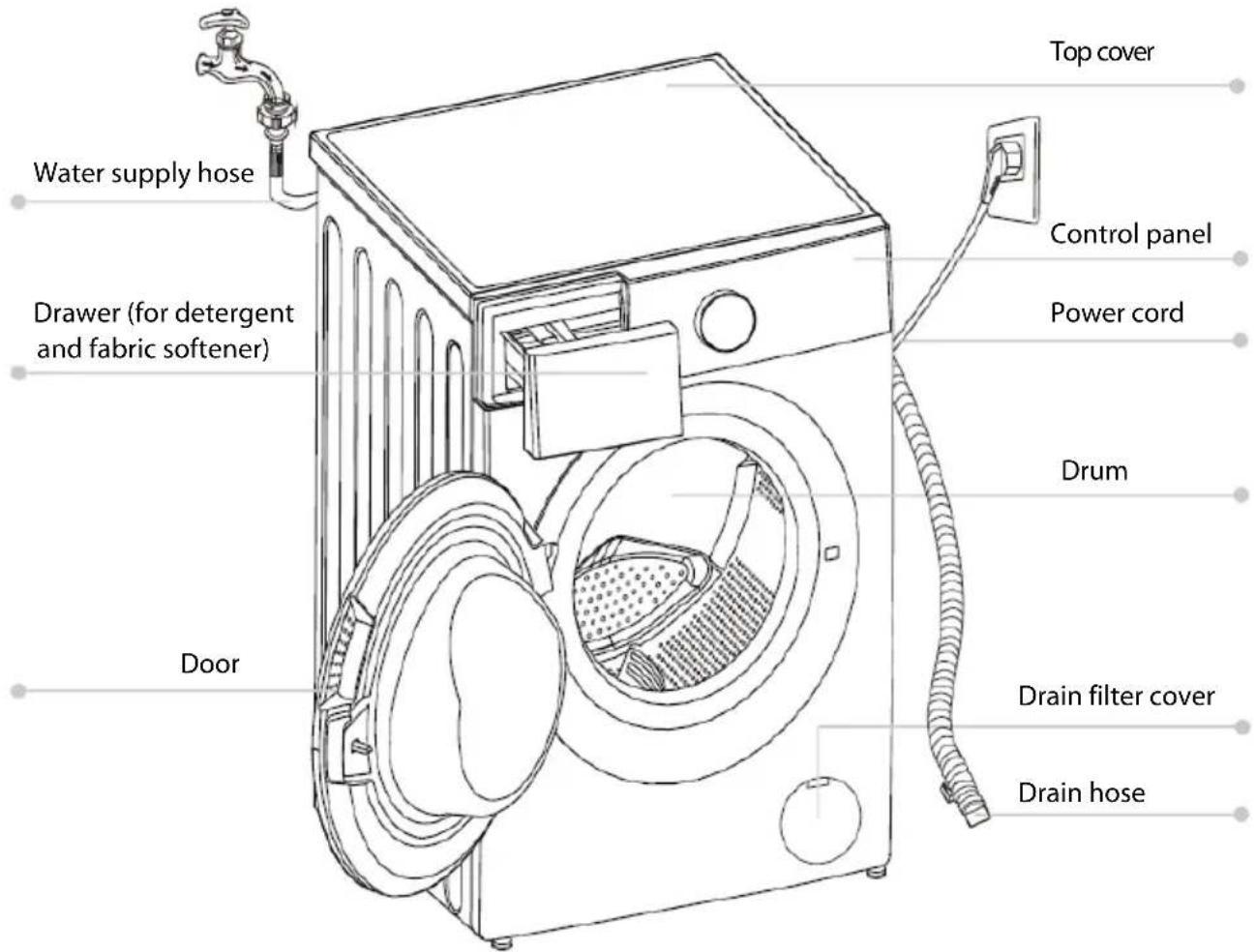
text_image
Water supply hose Drawer (for detergent and fabric softener) Door Top cover Control panel Power cord Drum Drain filter cover Drain hose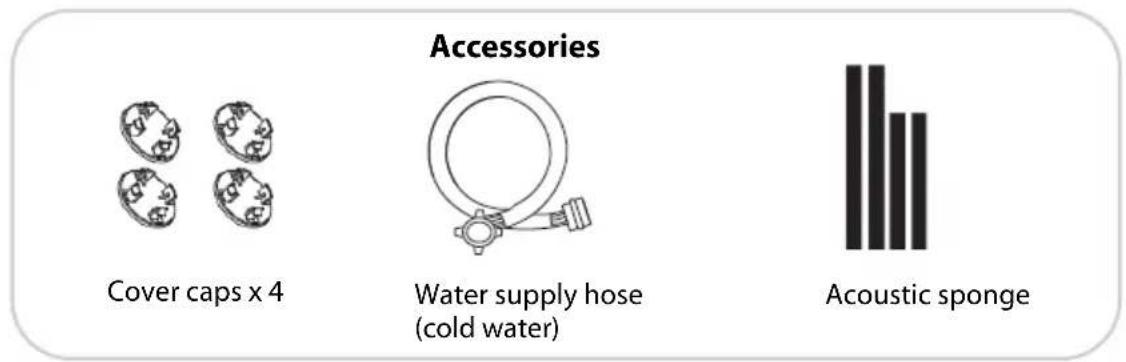
text_image
Accessories Cover caps x 4 Water supply hose (cold water) Acoustic sponge■ Removing packing
-
Remove the cardboard box and styrofoam packing.
-
Lift the washing machine and remove the base packing. This will require 2 or more people.
Make sure the small triangle foam (a) is removed with the bottom packaging together. If not, lay the unit down on the side surface and remove it manually.
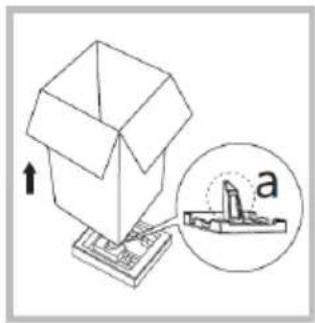
natural_image
Diagram showing a 3D box with an upward arrow and a magnified inset of a mechanical component labeled 'a' (no text or symbols present)-
Remove the tape securing the power supply cord and drain hose.
-
Remove the inlet hose from the drum.

WARNING :
Packaging material (e.g. Films, Styrofoam) can be dangerous for children. There is a risk of suffocation! Keep all packaging away from children.
■ Removing transit bolts
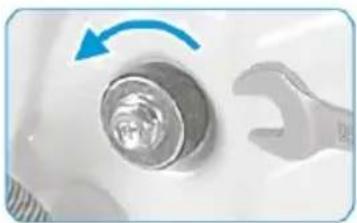
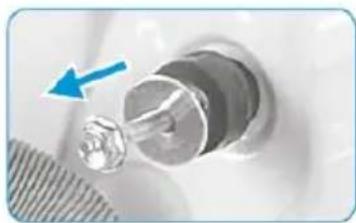
To prevent internal damage during transport, the 4 special bolts are locked. Before operating the washing machine, remove the bolts along with the rubber bungs. If they are not removed, it may cause heavy vibration, noise and malfunction.
natural_image
Close-up of a mechanical component with a wrench and circular knob, no visible text or symbols1 Unscrew the bolts with a spanner.
natural_image
Close-up of a mechanical component with a blue arrow pointing to a small metallic part (no visible text or symbols)2 Take out the bolts along with the rubber bungs by slightly twisting the bung. Keep the transit bolts for future use.
natural_image
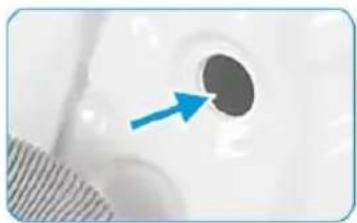
Close-up of a white object with a dark circular hole and a blue arrow pointing to it, partially overlaid by a textured surface (no text or symbols)3 Close the holes with the caps supplied.
■ Positioning
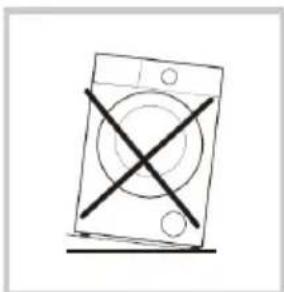
Install the appliance on a flat hard floor.
Make sure that air circulation around the appliance is not impeded by carpets, rugs, etc.
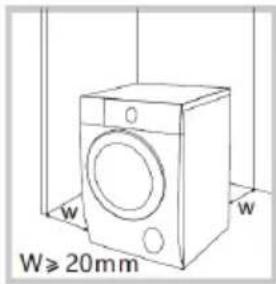
Allow at least 2 cm of clearance at each side of the appliance.
Make sure that the appliance does not stand onto the power cord.
text_image
W ≥ 20mm■ Installation location requirements
Before installing the appliance, the location characterised as follows shall be selected:
- Rigid, dry, and level surface
- Avoid direct sunlight
– Sufficient ventilation
- Room temperature is above 0°C.
- Keep far away from heat resources such as coal or gas burning appliances.
natural_image
Simple line drawing of a washing machine with a crossed X mark on its side (no text or symbols)The ambient temperature of the washer should be 5-40°C. If used under 0°C, the inlet valve and draining system may be damaged. If the machine is installed under freezing conditions, it should be transferred to normal ambient temperature to ensure the water supply hose and drain hose can unfreeze before use.
■ Levelling the appliance
Levelling the washing machine properly prevents excessive noise and vibration. Install the appliance on a solid and level floor surface.
If the floor is uneven, turn the adjustable feet as required.
- Never put cartons, wooden blocks or similar materials under the feet.
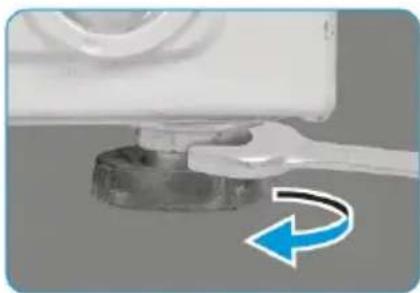
natural_image
Close-up of a mechanical component with a blue circular arrow indicating rotational motion (no text or symbols)-
Loosen the lock nuts with a spanner.
-
Turn the adjustable feet to adjust the height.
- Make sure that all four feet are stable and resting on the floor and then check that the appliance is perfectly level using a spirit level.
- Tighten the lock nuts.
■ Electrical connection
Your washing machine works with 220-240V and 50Hz.
Electrical connections must be carried out by a qualified technician in compliance with the local safety regulations.
Your washing machine must be properly earthed. We will not be held responsible for any damage that may occur as a result of usage without correct earth connection.
Do not use extension leads or multi-sockets.
The appliance must not have an external switching device such as a timer or connected to a circuit that is regularly switched on and off.
Do not pull the plug out of the mains outlet if there is flammable gas around.
■ Connecting the hoses
Connecting the water supply hose
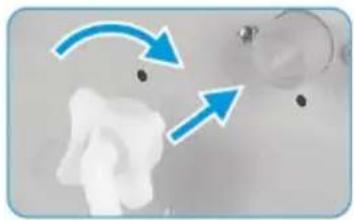
natural_image
Close-up of a white object with blue arrows indicating motion or direction, next to a metallic component (no text or symbols visible)- Attach one end of the hose to the water inlet on the appliance and tighten by hand.
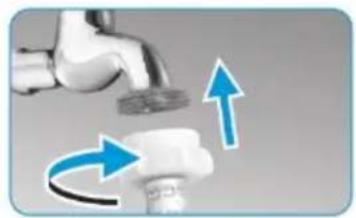
natural_image
Close-up of a faucet with a blue upward arrow indicating fluid flow or movement (no text or symbols)- Attach the other end of the hose to the tap and tighten by hand.

TE :
After completing connection, turn on the tap slowly and make sure there are no leak. Do not twist, squash, modify or cut the hose.
Connecting the drain hose
To connect the drain hose, please use one of the following methods.
Make sure that the drain hose is not bent, crushed or extended.
- Put the hose into a drain hole.
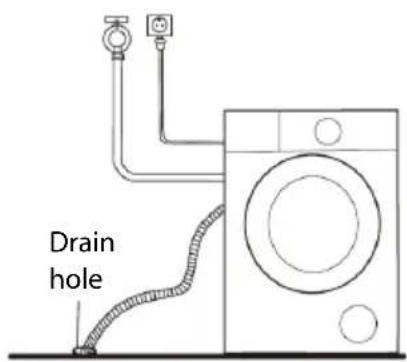
text_image
Drain hole- Connect the drain hose onto a sink outlet spigot securely.
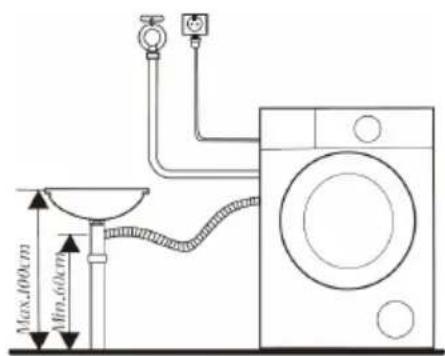
text_image
Max.100km Min.60kmThe drain hose should not be placed higher than 100 cm above the floor.
Water in the appliance does not drain or drains slowly if above this height.
Acoustic Sponge

TE :
Please make sure to assemble the acoustic sponges, which can effectively reduce the noise caused by the machine while working, in order to provide you with a more peaceful and quiet living environment.
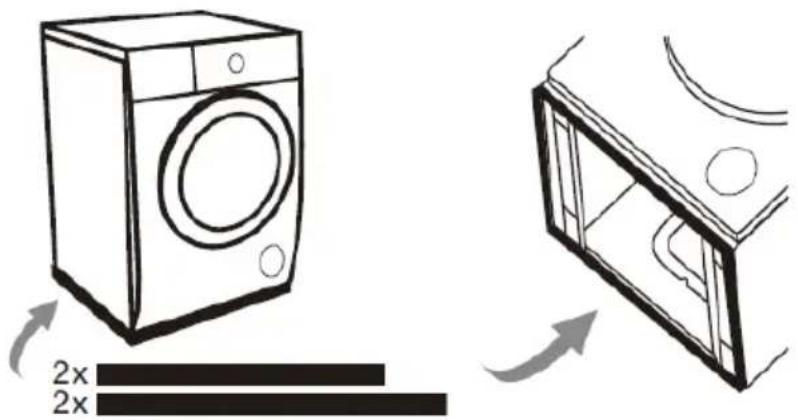
text_image
2x 2x-
Get the machine laid on the floor, using some soft material like foam or clothes between the machine and floor for a protection.
-
Stick the 2x longer sponges to the longer bottom edges of machine, and the 2x shorter sponges to the shorter bottom edges.
BEFORE EACH WASHING
Please check your laundry care labels and the detergent use instructions before wash. Use non-foaming or less-foaming detergent suitable for machine washing properly.
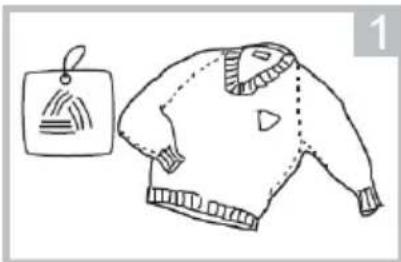
natural_image
Line drawing of a sweater jacket with a tag and tie, no text or symbols presentRead the care label of clothes.
This will tell you about the fabric content of your garment and how it should be washed.
natural_image
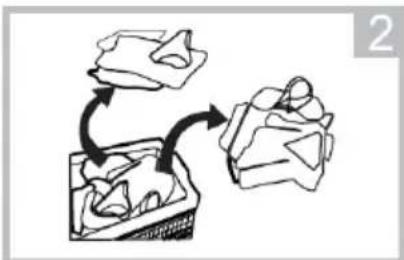
Simple line drawing of a box with two boxes and one box, showing a folding or lifting process (no text or symbols)Sort laundry according to colour, textile type, soiling and washing temperature.
Always sort dark colours from pale colours and whites.
Separate white fabrics from coloured fabrics.
Separate clothes according to amount of soil.
text_image
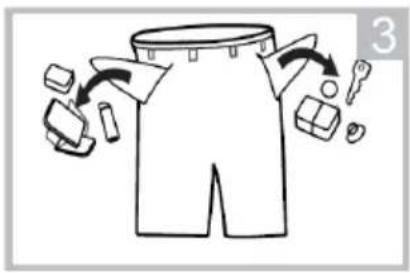
Illustration showing a garment with labeled parts and directional arrows indicating process flow or movement.Check all pockets to make sure that they are empty. Items such as nails, hair clip, matches, coins and keys can damage both your clothes and washing machine.
natural_image
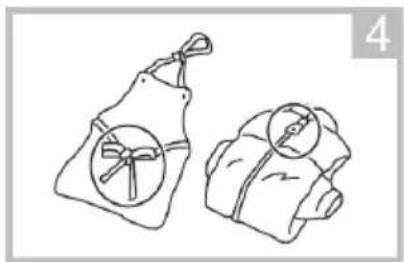
Two handbags with circular designs, one tied with a ribbon and the other wrapped in a blanket (no text or symbols)Tie strings on aprons, etc.
Close zippers, hooks and strings to make sure that these items don't snag on other clothes.
natural_image
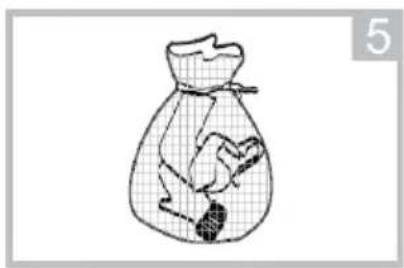
Simple line drawing of a bag with a hand holding a small object inside, no text or symbols present.Put small size clothes such as bras, nylon stockings and lace items in a laundry bag.
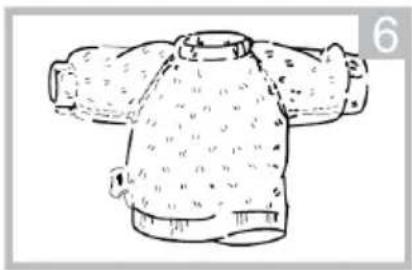
natural_image
Line drawing of a knitted garment with textured fabric and side connectors (no text or symbols)Turn easy-pilling and long-pile fabric inside out.
NOTE:
Combine large and small items in a load. Load large items first. Large items should not be more than half the total wash load.
Do not wash single items. This may cause an out-of-balance load. Add one or two similar items.
Detergent
Read instructions on the packet of detergent or other agent, for correct quantity depending on the amount of laundry, degree of soiling, and water hardness.
Detergent for main wash

oric softener
Detergent for pre-wash
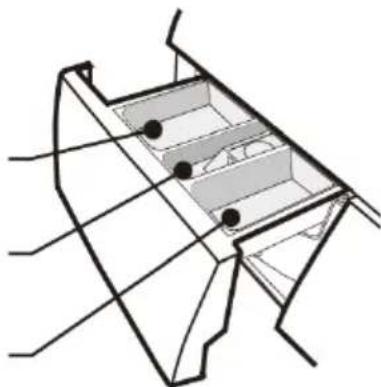
natural_image
Technical line drawing of a mechanical component with internal compartments and mounting holes (no text or symbols)Following symptoms are a sign of detergent overdosing:
- heavy foam formation - poor washing and rinsing result
Following symptoms are a sign of detergent underdosing: - laundry turns grey - built-up of limescale deposits on the drum, the heating element and/or the laundry
Detergent recommendation
| Recommended washing detergent | Wash cycles | Washing temp. | Type of laundry and textile |
| Heavy-duty detergent with bleaching agents and optical brighteners | Cotton, 40°C / ECO 40-60 | 60°C | White laundry made from boil-proof cotton or linen |
| Colour detergent without bleaching agent and optical brighteners | Cotton | 20°C / 40°C | Coloured laundry made from cotton or linen |
| Color or mild detergent without optical brighteners | Cotton, Synthetic | 20°C / 40°C | Coloured laundry made from easy care fibres or synthetic materials |
| Mild washing detergent Synthetic | 20°C | Delicate textiles, silk, viscose | |
| Special wool detergent Wool | 20°C / 40°C | Wool |

TE:
- Agglomerating or ropy detergent or additive can be diluted in some water before pouring it into the detergent dispenser, to avoid its inlet to get blocked and thus cause a water overflow.
- Please choose the suitable type of detergent to get a maximum of washing performance and a minimum of water and energy consumption.
- To achieve the best cleaning result a proper detergent dosing is important.
- If too many suds occur, please reduce the detergent amount.
- Always adjust the amount of detergent according to the water hardness, if your tap water is soft, use less detergent.
- Dose according to how dirty your laundry is, less dirty clothes require less detergent.
- Highly concentrated (compact detergent) requires particularly accurate dosing.

TE :
■ Before washing, please make sure the washing machine is installed properly.
- Your appliance is thoroughly checked before it leaves the factory. To remove any residual water and to neutralize potential odors, it is recommended to clean your appliance before first use. For this reason, start the Cotton program at 90°C without laundry and detergent.

ibration :
It's recommended to calibrate the washing machine, so that provide the best performance. The appliance is able to detect the amount of laundry loaded. This function is optimizing the product performance by minimizing energy and water consumption, saving you money and time. For this reason it's recommended to calibrate the appliance for best use.
- Remove all accessories from the drum and close the door.
- Plug in the appliance.
- Switch on the washing machine and press Départ Différé and Température simultaneously for 10 seconds until "t19" is displayed.
- Press Départ Pause to start the appliance and wait till “****” is displayed.

1 Turn on the tap.

2 Plug in the appliance.
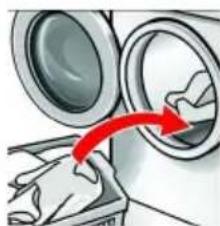
natural_image
Illustration of a hand pressing down on a fan or vent, with a red arrow indicating the motion (no text or symbols present)3 Sort the laundry and put it into the drum.
Do not get laundry caught in the door. It can cause damage to the door seal. Do not put too much laundry into the drum. It can cause excessive vibration or damage to the appliance.
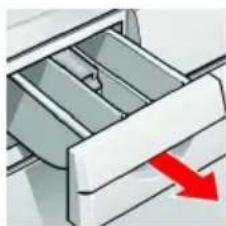
natural_image
Diagram of a drawer with arrows indicating direction (no text or symbols)4 Add the detergent according to the amount of laundry, degree of soiling, water hardness and manufacturer's instructions.
Pour liquid detergent into the appropriate dispenser drawer and push in the appliance.
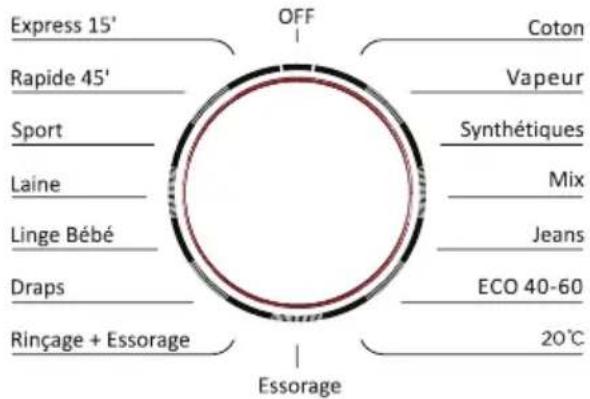
5 Select a programme by turning the programme selector. The required time will be displayed.
text_image
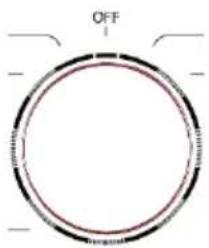
Express 15' Rapide 45' Sport Laine Linge Bébé Draps Rinçage + Essorage OFF Coton Vapeur Synthétiques Mix Jeans ECO 40-60 20°C EssorageThe programme selector is also used for switching the machine on or off. It can be rotated in either direction.
For detailed overview of programmes, see Programme Chart.
6 Temperature and spin speed can be selected individually. The selected temperature and spin speed will be displayed.

Repeatedly press this button to select the temperature. (Cold, 20°C, 40°C, 60°C, 90°C)
Température

Repeatedly press this button to select the spin speed. (0-400-600-800-1000-1200-1400 rpm)
Essorage
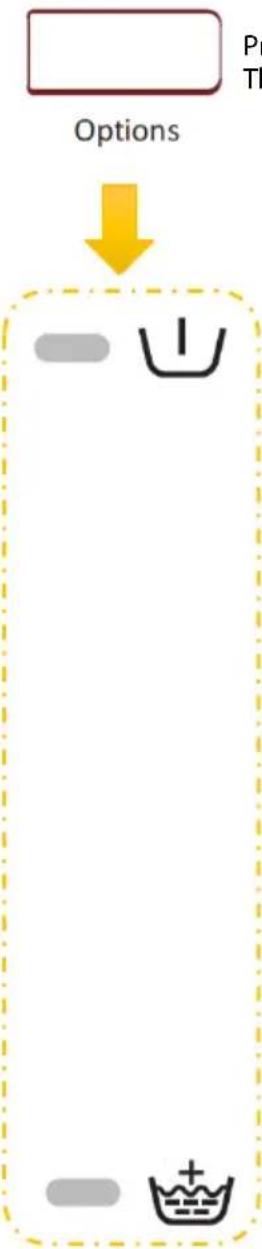
7 After selecting a programme, you can add the following optional functions.
flowchart
graph TD
    A["Pr"] --> B["Options"]
    B --> C["Switch Icon"]
    C --> D["Plus/minus Symbol"]
Press this button to select the optional functions. The corresponding function indicator light will illuminate.
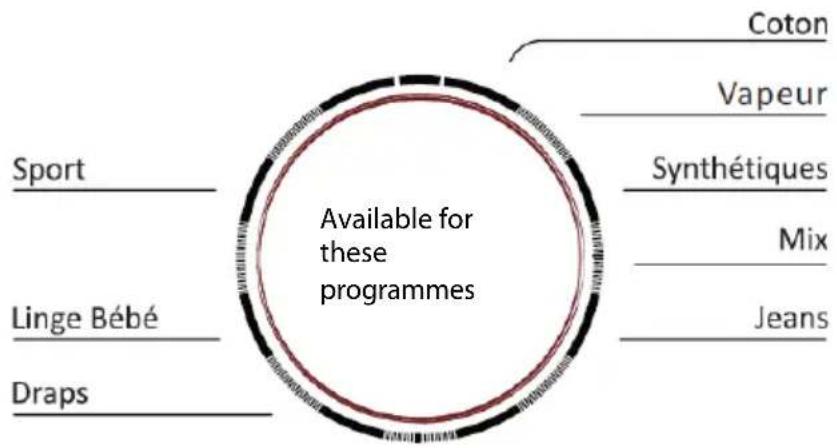
Prewash
You can use this function to wash laundry twice before main wash and it is suitable for heavily soiled, hard-wearing washing, e.g. made of cotton or linen.
When selecting this function, put detergent in the detergent compartment I.
text_image
Available for these programmes Sport Linge Bébé Draps Coton Vapeur Synthétiques Mix JeansExtra rinse
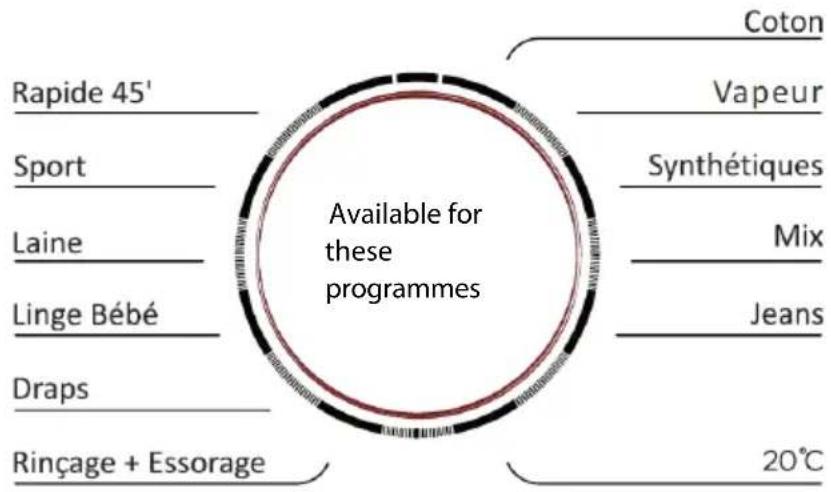
If you can concerned that some detergent may remain in your laundry, you can add an extra rinse process.
text_image
Available for these programmes Rapide 45' Sport Laine Linge Bébé Draps Rinçage + Essorage Coton Vapeur Synthétiques Mix Jeans 20°C8 You can use the delay start function to set the machine to start a cycle at a set time.

Départ Différé
Repeatedly press this button to set the desired delay start time up to 24 hours (in increments of 1 hour).
The set time will be displayed.
To cancel the setting, repeatedly press this button until the display shows "0H".
If the programme is already started, switch off the machine by turning the programme selector to the OFF position. Then turn the programme selector to select a desired programme.
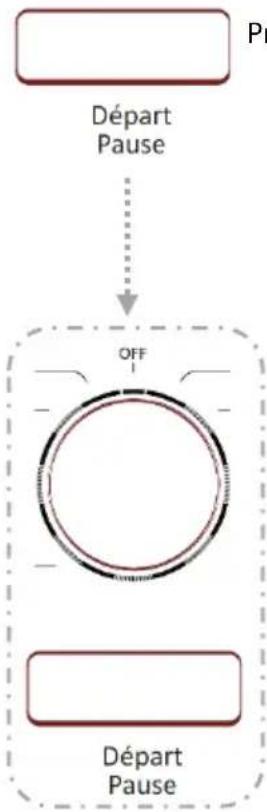
9 Start a programme.
flowchart
graph TD
    A["Pr"] --> B["Départ Pause"]
    B --> C["OFF"]
    C --> D["Départ Pause"]
Press this button to start operation.
- If you set the delay start function, this function will be activated. When the set time has elapsed, the machine will automatically start running a cycle.
Change a programme
If you have mistakenly selected a wrong programme, please follow steps below to reselect a programme.
- Turn the programme selector to the O FF position.
- Turn the programme selector to select a programme.
- Press the Start/Pause button to start the programme.

Door lock
For safety reasons, the door will lock while the machine is in operation and this door lock indicator light will illuminate.
10
At the end of a programme, the machine will beep and the display will show "End".
text_image
OFF -Switch off the machine by turning the programme selector to the OFF position.

Turn off the tap.

When the door lock indicator light goes out, you can open the machine door and remove laundry.
● = dosing required / ○ = optional
PROGRAMME CHART
| Programme | Load (kg) | Default Temp. | Default spin speed (r/min) | Display time | Detergents and Additives | ||
| Pre-wash I | Main wash II | Softener | |||||
| Coton Cotton | 8.0 | 40°C | 1400 | 3:39 | ○ | ● ○ | |
| Vapeur Steam wash | 4.0 | 40°C | 1000 | 1:48 | ○ | ● ○ | |
| Synthétiques Synthetic | 4.0 | 40°C | 1200 | 3:18 | ○ | ● ○ | |
| Mix | 8.0 | 40°C | 1000 | 1:20 | ○ | ● ○ | |
| Jeans | 8.0 | 60°C | 1000 | 1:45 | ○ | ● ○ | |
| ECO 40-60 | 8.0 | — | 1400 | 3:38 | ● ○ | ||
| 20°C | 4.0 | 20°C | 1000 | 1:01 | ● ○ | ||
| Essorage Spin Only | 8.0 | — | 1000 0:12 | ||||
| Rinçage + Essorage Rinse & Spin | 8.0 | — | 1000 0:20 | ○ | |||
| Draps Bulky/Bedlinen | 4.0 | 40°C | 1000 | 1:48 | ○ | ● ○ | |
| Linge Bébé Baby care | 8.0 | 60°C | 1000 | 1:42 | ○ | ● ○ | |
| Laine Wool | 2.0 | 40°C | 600 | 1:07 | ● ○ | ||
| SportSport Wear | 4.0 | 20°C | 800 | 0:47 | ○ | ● ○ | |
| Rapide 45'Rapid 45' | 2.0 | 20°C | 800 | 0:45 | ● ○ | ||
| Express 15'Quick 15' | 2.0 | Cold | 800 | 0:15 | ● ○ | ||
| NettoyageTambourDrum clean | — | 90°C | — | 1:18 | |||
| Programme Description | |
| Coton Cotton | Hard-wearing textiles, heat-resistant textiles made of cotton or linen. |
| Vapeur Steam wash | Programme to effectively extinguish bacteria in textiles. |
| Synthétiques Synthetic | Wash synthetic articles, for example: shirts, coats, blending.When washing the knitting textiles, detergent quantity shall be reduced due to its loose string construction and easily forming bubbles. |
| Mix | Mixed load consisting of textiles made of cotton and synthetics |
| Jeans | Select this programme when washing jeans. |
| ECO 40-60 | A washing cycle which is able to clean normally soiled cotton laundry declared to be washable at 40 °C or 60 °C, together in the same cycle |
| 20°C | A washing cycle which is able to clean lightly soiled cotton laundry, at a nominal temperature of 20 °C |
| Essorage Spin Only | Extra spin with selectable spin speed |
| Rinçage + Essorage Rinse & Spin | Extra rinse with spin |
| Draps Bulky/Bedlinen | Select this programme when washing bulky items / bedlinen. |
| Linge Bébé Baby care | When washing the baby's clothes, you can select this programme.This programme helps make the baby's clothing cleaner and make the rinse performance better to protect the baby skin. |
| Laine Wool | This programme is specially for washing hand or machine-washable wool or rich-wool textiles.You can select this particularly gentle wash programme to prevent laundry from shrinking, with longer pauses in the programme (during which the items rest in the water). |
| Sport Sport Wear | Select this programme when washing the activewear. |
| Rapide 45'Rapid 45' | Select this programme when quickly washing few clothes which are not very dirty. |
| Express 15'Quick 15' | Select this programme when washing lightly soiled clothes for a short period of time. |
ADDITIONAL FUNCTIONS
Child Lock
You can lock the buttons and programme selector to prevent children from tampering the washing cycle settings.
Activating this function

Température
Options
Pres. 3sec
Press and hold the two buttons simultaneously for 3 seconds.

Beeps will sound and the child lock indicator light will illuminate.
The remaining time and "CL" will flash alternately on the display.

When the child lock is set, all buttons are locked except the programme selector off position.
Deactivating this function

Température
Options
Pres. 3sec

Beeps will sound and the child lock indicator light will go out.
Press and hold the two buttons simultaneously for 3 seconds.

Switching off the machine will not reset the child lock function. You must deactivate child lock before you can access any other functions.
Buzzer

Essorage
Pres. 3sec
Press this button for 3 seconds. Beeps will sound and the buzzer is cancelled. To activate the buzzer, press this button for 3 seconds again. Beeps will sound and the buzzer is activated.
■ Drum Clean
It is important that you regularly clean the inside of your washing machine using the 'Drum Clean' cycle.
text_image
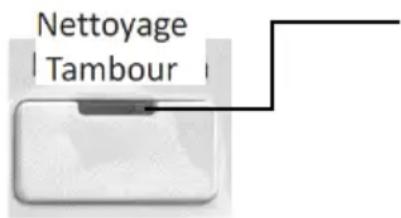
Nettoyage / TambourAfter about 25 cycles, the indicator light on the Drum Clean button will flash to remind you to perform the drum clean cycle.
Press and hold this button for 3 seconds to cancel the remind. The indicator light will go out.
- Remove any clothing or items from the washing machine and close the door.
- Open the dispenser drawer and place drum cleaning detergent to the main wash compartment II.
- Follow the instructions of the drum cleaning detergent.
- Press the Drum Clean button and then press the Start/Pause button to start the cycle.
■ Power-off Memory Function
Your washing machine has a memory function to ensure the smooth running of the washing programme by automatically resuming the last wash cycle when power is restored after a power-cut.
CLEANING AND MAINTENANCE

WARNING :
Always unplug the appliance and turn off the water tap before cleaning and maintenance.
■ Cleaning the Machine Housing
Wipe with a soft, damp cloth.
Do not use chemical or abrasive cleaning agents.
Immediately remove washing and cleaning agent residue.
■ Cleaning the Drum
Any rust stains left inside the drum by metal articles must be removed immediately using chlorine-free detergents. Never use steel wool for cleaning the drum!
To descale the drum, run the Drum Clean cycle with the descaling agent according to the manufacturer's instructions for correct detergent dosage.
■ Cleaning the Door Seal and Glass
natural_image
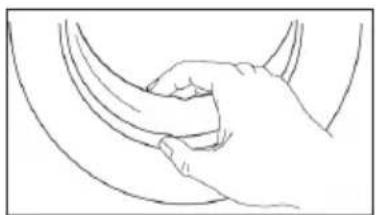
Line drawing of a hand holding a curved object, possibly a tool or device (no text or symbols present)Wipe the glass and seal after each wash to remove lint and stains. If lint builds up it can cause leakages.
Remove any coins, buttons and other objects from the seal after each wash.
Clean the Door Seal and Glass every month to ensure the normal operation of the machine.
■ Cleaning the Inlet Filter

Clean the inlet filter if water is not supplied properly.
If water is very hard or contains traces of lime deposit, the water inlet filter may become clogged. It is recommended to clean the inlet filter from time to time.
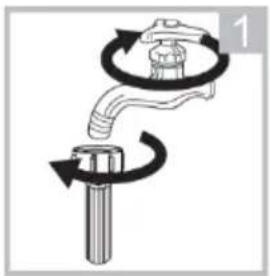
natural_image
Diagram showing a valve mechanism with rotating components and directional arrows (no text or symbols)Turn off the water tap. Remove the hose from the tap.
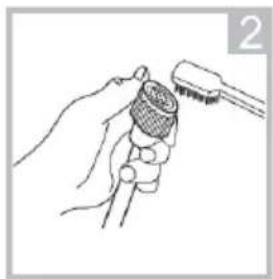
natural_image
Line drawing of a hand holding a microphone with a tool inserted (no text or symbols)Clean the filter using a brush.
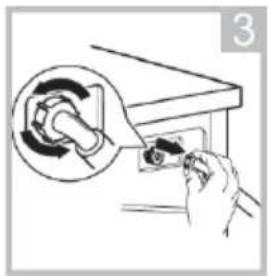
natural_image
Hand holding a small object with a magnified inset showing a mechanical component (no text or symbols visible)Unscrew the water supply hose.
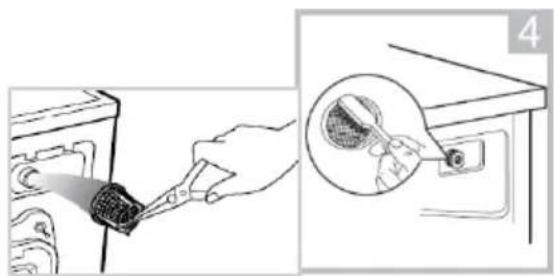
natural_image
Illustration showing a hand inserting a plug into a washing machine and a magnified view of the internal component (no text or symbols)Pull out the filter with long nose pliers. Clean the filter using a brush.
Reinstall the filter to the water inlet and reconnect the water supply hose. Reconnect the hose onto the tap.
■ Cleaning the Detergent Drawer

TE:
It is recommended to clean the detergent drawer from time to time.
Never use chemical or abrasive cleaning agents.
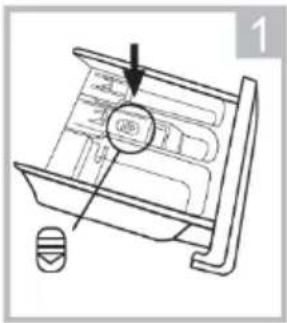
text_image
Technical diagram showing a mechanical component with an arrow pointing to a circular feature labeled 'AB' and a small inset detail.Press the release button to pull the detergent drawer out of the machine.
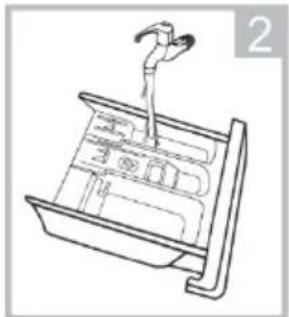
natural_image
Line drawing of a mechanical component with a lever and handle (no text or symbols)Clean the dispenser drawer under water.
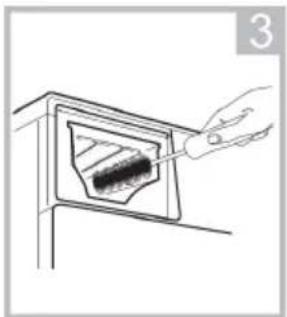
natural_image
Line drawing of a hand inserting a dark object into a rectangular frame (no text or symbols)Clean inside the recess with a brush.
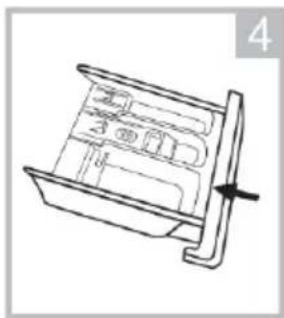
natural_image
Technical line drawing of a mechanical component with no visible text or symbolsInsert the dispenser drawer into the machine.
■ Cleaning the Drain Pump Filter
The drain pump filter collects threads and small objects left in the laundry.
Check regularly that the filter is clean to ensure smooth running of your machine.

WARNING :
Be careful when draining if the water is hot. Allow the water to cool down before
cleaning the drain pump filter. Risk of scalding!
Clean the filter periodically every 3 months to ensure the normal operation of the appliance.
natural_image
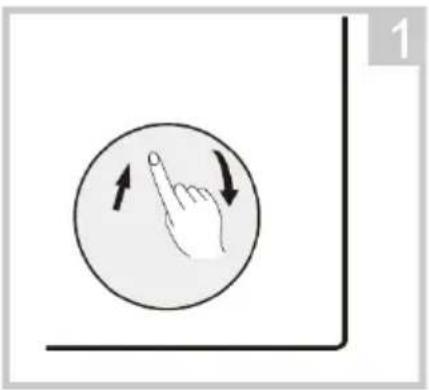
Simple diagram showing a hand pointing at the center of a circle with directional arrows, no text or symbols present.Press the tab on the cover to open the cover.
natural_image
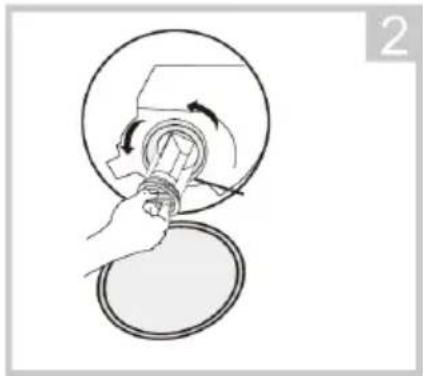
Illustration of a hand holding a circular object with arrows indicating motion or rotation (no text or symbols)Remove the filter by turning it anticlockwise.
natural_image
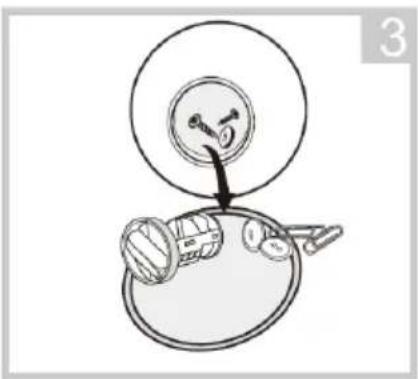
Illustration of a medical or laboratory procedure with a magnified view of a device and tool (no text or symbols)Remove any extraneous matter from the filter.
natural_image
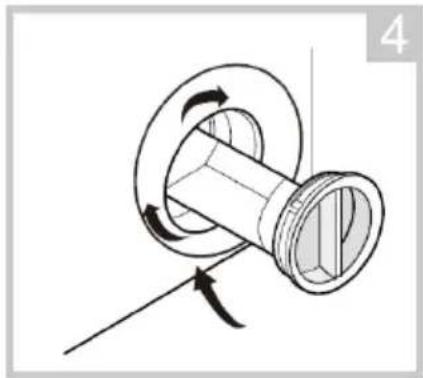
Mechanical diagram showing a rotating shaft and flange with directional arrows indicating motion (no text or symbols)After cleaning, replace the filter by turning it clockwise until it is in place. Close the cover until a click is heard.
TROUBLESHOOTING
| Problem | Possible Cause | Solution |
| Appliance does not start. | Door is not closed properly. | Close the door properly and restart. |
| Clothes are stuck. | Check the laundry. | |
| Door cannot be opened. | Safety protection is activated. | Disconnect the power and restart. |
| Water leakage | Connections are not tight enough. | Check and fasten the water inlet hose. Check and clean the outlet hose. |
| Detergent residues in the detergent drawer | Detergent is damp and/or clotted. | Clean and wipe the detergent drawer dry. |
| Indicator or display does not work. | PC board or harness have connection problems. | Switch off the power and check if the mains plug is connected properly. |
| Abnormal noise | Transit bolts are still in place. | Check if the transit bolts have been removed. |
| Floor is not solid or level. | Make sure the appliance is installed on a solid and level floor. |
Error codes
| Display | Possible Cause | Solution |
| E30 | Door is not closed properly. Close the door properly and restart. | |
| E10 | Water injecting problem during wash cycle. | Check if the water pressure is high enough.Straighten the water pipe.Clean the inlet valve filter. |
| E21 | Overtime water draining | Check the drain hose for blockage. |
| E12 | Water overflow Restart the appliance. | |
| EXX | Others | Restart the appliance. If problem persists, please contact the customer service. |
| Product Information Sheet | ||||
| COMMISSION DELEGATED REGULATION (EU) 2019/2014 with regard to energy labelling of household washing machines and household washer-dryers | ||||
| Supplier's name or trade mark: Etablissements Darty & fils © | Tecnolec | ||||
| Supplier's address: 9 Rue des Bateaux-Lavoirs, 94200 Ivry-sur-Seine, France | ||||
| Model identifier: FT8WH | ||||
| General product parameters: | ||||
| Parameter | Value | Parameter | Value | |
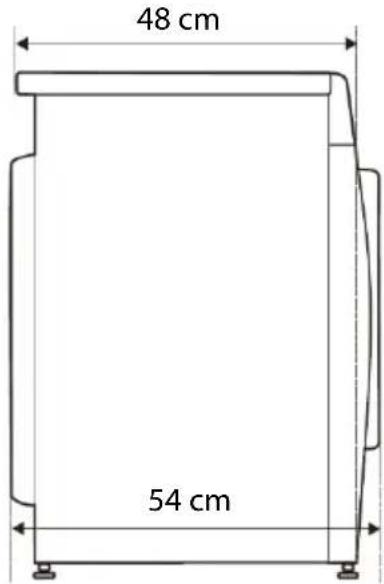
| Rated capacity (a) (kg) 8,0 Dimensions in cm | Height 85 | |||
| Width 60 | ||||
| Depth 54 | ||||
| Energy Efficiency Index (a) (EEIw) | 51,9 | Energy efficiency class (a) | A | |
| Washing efficiency index (a) | 1,031 | Rinsing effectiveness (g/kg) (a) | 5,0 | |
| Energy consumption in kWh per cycle, based on the eco 40-60 programme at a combination of full and partial loads. Actual energy consumption will depend on how the appliance is used. | 0,472 | Water consumption in litre per cycle, based on the eco 40-60 programme at a combination of full and partial loads. Actual water consumption will depend on how the appliance is used and on the hardness of the water. | 48 | |
| Maximum temperature inside the treated textile (a) (°C) | Rated capacity | 33 | Weighted remaining moisture content (a) (%) | 53,9 |
| Half | 28 | |||
| Quarter | 24 | |||
| Spin speed (a)(rpm) | Rated capacity | 1350 | Spin-drying efficiency class (a) | B |
| Half | 1350 | |||
| Quarter | 1350 | |||
| Programme duration (a) (h:min) | Rated capacity | 3:38 | Type | free-standing |
| Half | 2:48 | |||
| Quarter | 2:48 | |||
| Airborne acoustical noise emissions in the spinning phase (a) (dB(A) re 1 pW) | 76 | Airborne acoustical noise emission class (a) (spinning phase) | B |
| Off-mode (W) (if applicable) | 0,50 | Standby mode (W) (if applicable) | 1,00 |
| Delay start (W) (if applicable) | 4,00 | Networked standby (W) (if applicable) | - |
| Minimum duration of the guarantee offered by the supplier: 24 months | |||
| This product has been designed to release silver ions during the washing cycle | NO | ||
| Additional information: | |||
| Weblink to the supplier's website, where the information in point 9 of Annex II to Commission Regulation (EU) 2019/2023 is found: www.darty.com | |||
(a) for the eco 40-60 programme.
To find the model information in the product database:
Click the link
https://eprel.ec.europa.eu/screen/product/washingmachines2019/1620676
Values for the following programmes:
| The eco 40-60 programme at the rated capacity | |
| (a) rated capacity in kg: | 8,0 kg |
| (b) programme duration, expressed in hours and minutes: | 3:38 |
| (c) energy consumption, expressed in kWh/cycle: | 0,760 kWh/cycle |
| (d) water consumption, expressed in litres/cycle: | 61,0 L/cycle |
| (e) maximum temperature reached for minimum 5 minutes inside the laundry being treated in the washing cycle, expressed in degrees centigrade: | 33°C |
| (f) remaining moisture content after the washing cycle, expressed in percentage of water content,and spinning speed at which this was achieved: | 53,9%1350 rpm |
| The eco 40-60 programme at half of the rated capacity | |
| (a) rated capacity in kg: | 4,0 kg |
| (b) programme duration, expressed in hours and minutes: | 2:48 |
| (c) energy consumption, expressed in kWh/cycle: | 0,412 kWh/cycle |
| (d) water consumption, expressed in litres/cycle: | 45,0 L/cycle |
| (e) maximum temperature reached for minimum 5 minutes inside the laundry being treated in the washing cycle, expressed in degrees centigrade: | 28°C |
| (f) remaining moisture content after the washing cycle, expressed in percentage of water content,and spinning speed at which this was achieved: | 53,9%1350 rpm |
| The eco 40-60 programme at a quarter of the rated capacity | |
| (a) rated capacity in kg: | 2,0 kg |
| (b) programme duration, expressed in hours and minutes: | 2:48 |
| (c) energy consumption, expressed in kWh/cycle: | 0,208 kWh/cycle |
| (d) water consumption, expressed in litres/cycle: | 36,0 L/cycle |
| (e) maximum temperature reached for minimum 5 minutes inside the laundry being treated in the washing cycle, expressed in degrees centigrade: | 24°C |
| (f) remaining moisture content after the washing cycle, expressed in percentage of water content,and spinning speed at which this was achieved: | 53,9%1350 rpm |
| The 20 °C programme at the rated capacity for this programme | |
| (a) rated capacity in kg: | 4,0 kg |
| (b) programme duration, expressed in hours and minutes: | 1:01 |
| (c) energy consumption, expressed in kWh/cycle: | 0,183 kWh/cycle |
| (d) water consumption, expressed in litres/cycle: | 44 L/cycle |
| (e) maximum temperature reached for minimum 5 minutes inside the laundry being treated in the washing cycle, expressed in degrees centigrade: | 20°C |
| (f) remaining moisture content after the washing cycle, expressed in percentage of water content,and spinning speed at which this was achieved: | 65 %1000 rpm |
| One cotton programme at nominal temperature higher than or equal to 60 °C (if present) at the rated capacity for this programme Coton | |
| (a) rated capacity in kg: | 8,0 kg |
| (b) programme duration, expressed in hours and minutes: | 3:44 |
| (c) energy consumption, expressed in kWh/cycle: | 1,498 kWh/cycle |
| (d) water consumption, expressed in litres/cycle: | 71 L/cycle |
| (e) maximum temperature reached for minimum 5 minutes inside the laundry being treated in the washing cycle, expressed in degrees centigrade: | 60°C |
| (f) remaining moisture content after the washing cycle, expressed in percentage of water content,and spinning speed at which this was achieved: | 53%1400 rpm |
| One programme for other textiles than cotton or a mix of textiles (if present) at the rated capacity for this programme Mix | |
| (a) rated capacity in kg: | 8,0 kg |
| (b) programme duration, expressed in hours and minutes: | 1:20 |
| (c) energy consumption, expressed in kWh/cycle: | 0,754 kWh/cycle |
| (d) water consumption, expressed in litres/cycle: | 71 L/cycle |
| (e) maximum temperature reached for minimum 5 minutes inside the laundry being treated in the washing cycle, expressed in degrees centigrade: | 40°C |
| (f) remaining moisture content after the washing cycle, expressed in percentage of water content,and spinning speed at which this was achieved: | 65%1000 rpm |
| One programme for the quick washing of lightly soiled laundry (if present) at the rated capacity for this programme Express 15' | |
| (a) rated capacity in kg: | 2,0 kg |
| (b) programme duration, expressed in hours and minutes: | 0:15 |
| (c) energy consumption, expressed in kWh/cycle: | 0,030 kWh/cycle |
| (d) water consumption, expressed in litres/cycle: | 31 L/cycle |
| (e) maximum temperature reached for minimum 5 minutes inside the laundry being treated in the washing cycle, expressed in degrees centigrade: | Cold |
| (f) remaining moisture content after the washing cycle, expressed in | 70% |
| percentage of water content, and spinning speed at which this was achieved: | 800 rpm |
| One programme for heavily soiled textiles (if present) at the rated capacity for this programme Synthétiques | |
| (a) rated capacity in kg: | 4,0 kg |
| (b) programme duration, expressed in hours and minutes: | 3:18 |
| (c) energy consumption, expressed in kWh/cycle: | 0,727 kWh/cycle |
| (d) water consumption, expressed in litres/cycle: | 44 L/cycle |
| (e) maximum temperature reached for minimum 5 minutes inside the laundry being treated in the washing cycle, expressed in degrees centigrade: | 40°C |
| (f) remaining moisture content after the washing cycle, expressed in percentage of water content,and spinning speed at which this was achieved: | 60%1200 rpm |
NOTES :
- The eco 40-60 programme is able to clean normally soiled cotton laundry declared to be washable at 40^ or 60^ , together in the same cycle.
- This programme is used to assess the compliance with the EU ecodesign legislation.
- The most efficient programmes in terms of energy consumption are generally those that perform at lower temperatures and longer duration.
- Loading the household washing machine up to the capacity indicated by the manufacturer for the respective programmes will contribute to energy and water savings.
- Noise and remaining moisture content are influenced by the spinning speed: the higher the spinning speed in the spinning phase, the higher the noise and the lower the remaining moisture content.
- The values given for programmes other than the eco 40-60 programme and the wash cycle are indicative only.
| Ratings | 220-240V~, 50Hz | 1950W |
| Max. current | 10A | |
| Water pressure | 0,05 – 1 MPa | |
| Grade of waterproof | IPX4 |
text_image
48 cm 54 cmREPAIR AND SPARE PARTS SERVICE

Do not disassemble or repair the appliance by yourself. Failure to do so may result in an electric shock or personal injury.
To access to professional repair and order spare parts, please get the support from FNAC DARTY after-sales service.
Spare parts for your appliances will be delivered within 15 working days after having received the order.
Please Note!
All appliances have a 2-year warranty.
Warranty does not cover damages caused due to improper installation, unauthorized modification, self-repair or non-professional repair.
Contact us at :
 www.darty.com240978 970 97024 Hours7 Days a week9 Rue des Bateaux-Lavoirs,94200 Ivry-sur-Seine,France www.darty.com240978 970 97024 Hours7 Days a week9 Rue des Bateaux-Lavoirs,94200 Ivry-sur-Seine,France | Vanden Borrein alle vertrouwenwww.vandenborre.be 02 334 00 008 AM – 6 PMMon to Sat[0001]Slesbroekstraat 1011600 Sint-Pieters-LeeuwBelgium 02 334 00 008 AM – 6 PMMon to Sat[0001]Slesbroekstraat 1011600 Sint-Pieters-LeeuwBelgium |
Vanden Borre
DISPOSAL
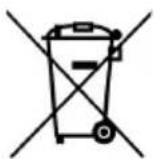
As a responsible retailer we care about the environment. As such we urge you to follow the correct disposal procedure for the appliance and packaging materials. This will help conserve natural resources and ensure that it is recycled in a manner that protects health and the environment.
You must dispose of this appliance and its packaging according to local laws and regulations. Because this appliance contains electronic components, the appliance and its accessories must be disposed of separately from household waste when the appliance reaches its end of life.
Contact your local authority to learn about disposal and recycling. The appliance should be taken to your local collection point for recycling. Some collection points accept appliance free of charge.
We apologise for any inconvenience caused by minor inconsistencies in these instructions, which may occur as a result of product improvement and development.
EU Declaration of Conformity
Product Description:
DRUM WASHING MACHINE
natural_image
White washing machine with black door and control panel (no visible text or symbols)Marque -
Brand /Merk /Marca:
Tecnolec
The object of the declaration described above is in conformity with the relevant Union
harmonisation legislation:
Low Voltage Directive (LVD)
Eco design requirements for energy-related products (ErP)
RoHS
EMC:
EN IEC 55014-1:2021
EN IEC 55014-2:2021
EN IEC 61000-3-2:2019/A1:2021
EN 61000-3-3:2013/A2:2021
LVD :
EN 60335-1:2012+A11:2014+ A13:2017+A1:2019+A14:2019+ A2:2019+A15:2021
EN 60335-2-7:2010+A1:2013+A11:2013+A2:2019
EN 62233:2008
ErP :
(EU) 2019/2014
(EU) 2019/2023
(EU) 2021/340
(EU) 2021/341
EN 60456:2016/A11:2020
EN 60704-1:2010+A11:2012
EN 60704-2-4:2012+A11:2020
This declaration of conformity is drawn up under the sole responsibility of the manufacturer.
The person responsible for this declaration is:
Place, Date / Lieu :
