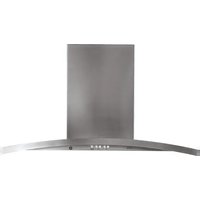
UVI7361SWSS - Basket GE - Free user manual and instructions
Find the device manual for free UVI7361SWSS GE in PDF.


| Product Type | Wall Mount Range Hood |
| Brand | GE |
| Model | UVI7361SWSS |
| Width | 91.4 cm (36 in) |
| Power Supply | 120 V, 60 Hz, 15/20 A, dedicated grounded circuit |
| Lighting Power | LED (replaceable by a technician) |
| Lighting Levels | 2 levels (low, high) + off |
| Ventilation Speeds | 4 speeds (low, medium, high, boost) + off |
| Memory Function | Yes, with MEMORY/OFF button |
| Heat Sensor | Yes, automatically turns on fan at medium speed if temp > 70°C |
| Main Filter Type | Metal Grease Filter (dishwasher safe) |
| Optional Recirculation Filter | Charcoal Filter ref. WB02X11348 (not washable) |
| Filter Maintenance | Metal filter: clean every 6 months; charcoal: replace every 6-12 months |
| Exterior Surface | Stainless steel - clean with soapy water or non-abrasive cleaner |
| Exhaust Duct | 8 in (20.3 cm) round metal duct required; adaptable to 3 1/4 x 12 in |
| Installation Height | Between 24 in (61 cm) min. and 36 in (91 cm) max. above cooking surface |
| Installation Type | Wall mount, with ceiling support (2x4 framing); two persons required |
| Warranty | 1 year parts and labor (see terms) |
| Replacement Parts | Charcoal Filter WB02X11348; LED bulbs (technical service) |
Frequently Asked Questions - UVI7361SWSS GE
User questions about UVI7361SWSS GE
0 question about this device. Answer the ones you know or ask your own.
Ask a new question about this device
Download the instructions for your Basket in PDF format for free! Find your manual UVI7361SWSS - GE and take your electronic device back in hand. On this page are published all the documents necessary for the use of your device. UVI7361SWSS by GE.
USER MANUAL UVI7361SWSS GE
Stainless Steel Surfaces 7
LED Lights 7
INSTALLATION INSTRUCTIONS .. 8
Installation Preparation 9
Vented to the Outside ..... 16
TROUBLESHOOTING TIPS....21
LIMITED WARRANTY 23
CONSUMER SUPPORT .... 24
Write the model and serial numbers here:
Model # ____
Serial # ____
You can find them on a label on the inside of the hood.
OWNER'S MANUAL & INSTALLATION INSTRUCTIONS
UVI7361
ESPAÑOL
For a Spanish version of this manual, visit our Website at www.GEAppliances.com.
For a French version of this manual, visit our Website at www.GEAppliances.ca.
THANK YOU FOR MAKING GE APPLIANCES A PART OF YOUR HOME.
Whether you grew up with GE Appliances, or this is your first, we're happy to have you in the family.
We take pride in the craftsmanship, innovation and design that goes into every GE Appliances product, and we think you will too. Among other things, registration of your appliance ensures that we can deliver important product information and warranty details when you need them.
Register your GE appliance now online. Helpful websites and phone numbers are available in the Consumer Support section of this Owner's Manual. You may also mail in the pre-printed registration card included in the packing material.

GE APPLIANCES
IMPORTANT SAFETY INFORMATION READ ALL INSTRUCTIONS BEFORE USING THE APPLIANCE
WARNING
TO REDUCE THE RISK OF FIRE,
ELECTRIC SHOCK OR INJURY TO PERSONS, OBSERVE THE FOLLOWING:
A. Use this unit only in the manner intended by the manufacturer. If you have questions, contact the manufacturer.
B. Before servicing or cleaning unit, switch power off at service panel and lock the service disconnecting means to prevent power from being switched on accidentally. When the service disconnecting means cannot be locked, securely fasten a prominent warning device, such as a tag, to the service panel.
C. Do not use this unit with any solid-state speed control device.
D. This unit must be grounded.
CAUTION
For general ventilating use only. Do
not use to exhaust hazardous or explosive materials and vapors.
CAUTION
To reduce risk of fire and to properly
exhaust air, be sure to duct air outside. Do not vent exhaust air into spaces within walls or ceilings or into attics, crawl spaces or garages.
WARNING
TO REDUCE THE RISK OF INJURY
TO PERSONS IN THE EVENT OF A RANGE TOP GREASE FIRE, OBSERVE THE FOLLOWING*:
A. SMOTHER FLAMES with a close-fitting lid, cookie sheet or metal tray, then turn off the burner. BE CAREFUL TO PREVENT BURNS. If the flames do not go out immediately, EVACUATE AND CALL THE FIRE DEPARTMENT.
B. NEVER PICK UP A FLAMING PAN— You may be burned.
C. DO NOT USE WATER, including wet dishcloths or towels - a violent steam explosion will result.
D. Use an extinguisher ONLY if:
- You know you have a Class ABC extinguisher, and you already know how to operate it.
- The fire is small and contained in the area where it started.
- The fire department is being called.
- You can fight the fire with your back to an exit.
* Based on “Kitchen Fire Safety Tips” published by NFPA.
READ AND SAVE THESE INSTRUCTIONS
IMPORTANT SAFETY INFORMATION READ ALL INSTRUCTIONS BEFORE USING THE APPLIANCE
WARNING
TO REDUCE THE RISK OF A
RANGE TOP GREASE FIRE:
A. Never leave surface units unattended at high settings. Boilovers cause smoking and greasy spillovers that may ignite. Heat oils slowly on low or medium settings.
B. Always turn hood ON when cooking on high heat or when flambéing food (i.e. Crepes Suzette, Cherries Jubilee, Peppercorn Beef Flambé).
C. Clean ventilating fans frequently. Grease should not be allowed to accumulate on fan or filter.
D. Use proper pan size. Always use cookware appropriate for the size of the surface element.
WARNING
TO REDUCE THE RISK OF FIRE,
ELECTRIC SHOCK OR INJURY TO PERSONS, OBSERVE THE FOLLOWING:
A. Installation work and electrical wiring must be done by qualified person(s) in accordance with all applicable codes and standards, including fire-rated construction.
B. Sufficient air is needed for proper combustion and exhausting of gases through the flue (chimney) of fuel burning equipment to prevent back drafting.
Follow the heating equipment manufacturer's guidelines and safety standards, such as those published by the National Fire Protection Association (NFPA), the American Society for Heating, Refrigeration and Air Conditioning Engineers (ASHRAE) and the local code authorities. When applicable, install any makeup (replacement) air system in accordance with local building code requirements. Visit GEAppliances.com for available makeup air solutions.
C. When cutting or drilling into wall or ceiling, do not damage electrical wiring and other hidden utilities.
D. Ducted fans must always be vented to the outdoors.
F. Turn off breaker to adjacent rooms while working.
WARNING
TO REDUCE THE RISK OF FIRE,
USE ONLY METAL DUCTWORK.
■ Do not attempt to repair or replace any part of your hood unless it is specifically recommended in this manual. All other servicing should be referred to a qualified technician.
READ AND SAVE THESE INSTRUCTIONS
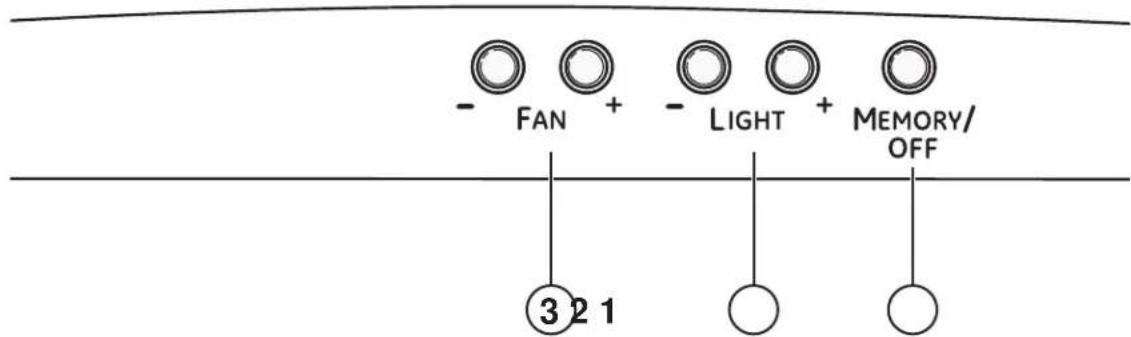
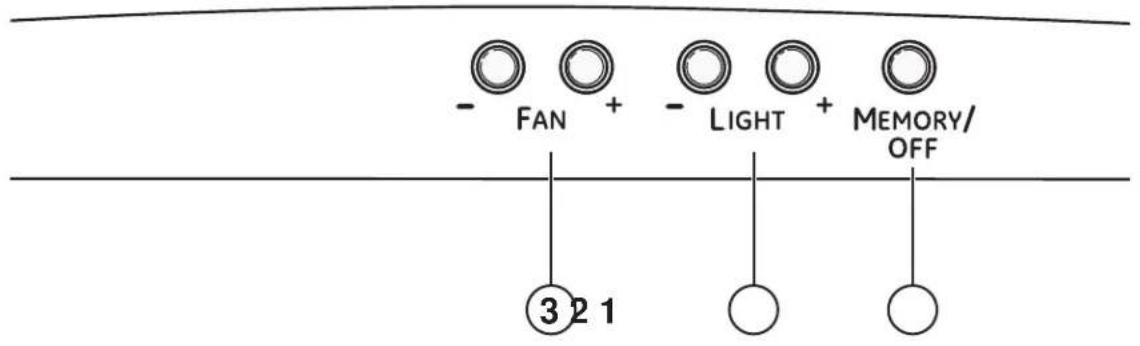
- MEMORY/OFF: To set the memory:
A. Press the MEMORY/OFF button.
B. Set your desired fan and light settings.
C. Press the MEMORY/OFF button again to save these settings.
With your desired settings in memory, press the MEMORY/OFF button to restore the fan and light levels to their saved settings. These settings will remain in memory until they are changed or loss of power occurs.
To turn off the hood, press the MEMORY/OFF button.
- LIGHT: Press + or - to increase or decrease light level to desired setting. There are 2 light levels (LOW, HIGH) and OFF. If you continue to press the + or - buttons, the light will cycle back through the settings.
- FAN. Press + or - to increase or decrease fan level to your desired setting. There are 4 fan levels (LOW, MED, HIGH, BOOST) and OFF. If you continue to press the + or - buttons, the fan will cycle back through the settings.
NOTE: There is an audible "beep" each time a button is pressed. This is normal.
NOTE: The collars around the buttons will illuminate when pressed. This is normal. The collars will automatically turn off if the hood is turned off.
HEAT SENSOR:
This hood is equipped with a heat sensor that will turn on the fan if excessive temperatures are detected (over 70^ C/158°F) above the cooking surface. The hood will return to its normal operation once the heat sensor detects temperatures below 60^ C/140°F.
NOTE: If the hood is OFF or on LOW fan speed, the temperatures above 70^ C/158°F are detected; then the fan will automatically adjust to MED speed. You may adjust the fan speed to HIGH or BOOST, but you will not be able to adjust the fan speed to LOW or OFF until temperatures below 60^ C/140°F are detected.
NOTE: The collars around the buttons may not illuminate if the heat sensor is activated. This is normal.
Filters
Be sure electrical power is off and all surfaces are cool before cleaning or servicing any part of the vent hood.
Metal Grease Filter
The metal filter traps grease released by foods from the cooktop. The filter also helps prevent flames (from food, grease) from damaging the inside of the hood.
For this reason, the filter must ALWAYS be in place when the hood is in use. The grease filter is dishwasher-safe and should be cleaned every 6 months, or as needed.
natural_image
Diagram showing a ceiling-mounted rack with a panel inserted, and a separate flatboard with grid pattern (no text or symbols)To remove:
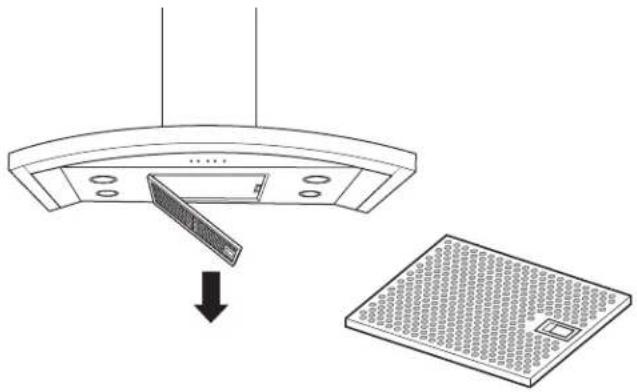
Pull downward on the filter lock to release the filter.
To replace:
Fit the tabs at the end of the filter into the slots in left side of the filter opening. Lift up the right side of the filter and push gently until the filter locks into place. Make sure the filter lock is in the closed position to secure the filter.
To clean, swish the filter in hot soapy water and rinse in clean water or wash it in the dishwasher. Do not use abrasive cleansers.
NOTE: Some discoloration will occur in the dishwasher.
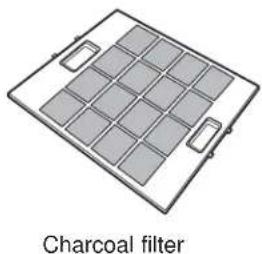
Charcoal Filter
For recirculating installation only
If the model is not vented to the outside, the air will be recirculated through a disposable charcoal filter that helps remove smoke and odors.
The charcoal filter should be replaced when it is noticeably dirty or discolored (usually after 6 to 12 months, depending on hood usage).
NOTE: DO NOT rinse, or put charcoal filter in an automatic dishwasher.
The charcoal filter cannot be cleaned. It must be replaced.
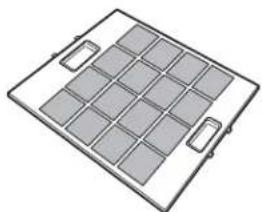
Order Charcoal Filter WB02X11348.
To inquire about purchasing replacement charcoal filters or to find the location of a dealer nearest you, please call our toll-free number:
National Parts Center: 800.626.2002
To remove:
- Remove the metal filter—see Metal grease filter section.
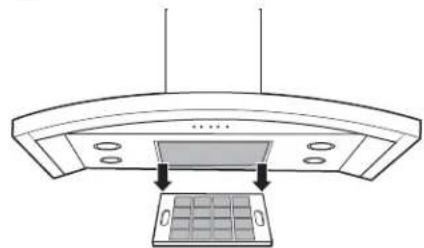
- Remove the charcoal filter by pushing in on both locking tab handles to release.
To replace:
- Insert the charcoal filter into the opening. Push the locking tab handles toward the center and release to engage the locking tabs.
- Replace the metal filter—see Metal grease filter section.
natural_image
Diagram of a ceiling-mounted kitchen appliance with a grid base and ventilation duct (no text or symbols)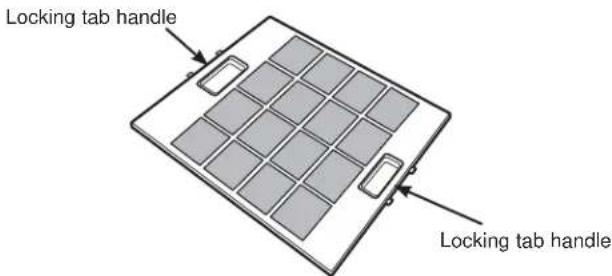
Care and Cleaning
Stainless Steel Surfaces
Do not use a steel wool pad; it will scratch the surface.
To clean the stainless steel surface, use warm sudsy water or a stainless steel cleaner or polish. Always wipe the surface in the direction of the brush line. Follow the cleaner instructions for cleaning the stainless steel surface. Cleaners with oxalic acid such as Bar Keepers Friend Soft Cleanser™ will remove surface rust, tarnish, and small blemishes. To receive a \$2.00 coupon for a trial sample of Bar Keepers Friend Soft Cleanser™ follow the link below or scan the QR Code.
barkeepersfriend.com/ge

Use only a liquid cleanser free of grit and rub in the direction of the brush lines with a damp soft sponge.
To inquire about purchasing stainless steel appliance cleaner or polish, or to find the location of a dealer nearest you, please call our toll-free number: 800.626.2002
GEApplianceParts.com
LED Lights
The LED lights are replaceable by a service technician only. See the Limited Warranty section for service contact information.
Installation Instructions
Island Chimney Vent Hood
If you have questions, call GE Appliances at 800.GE.CARES (800.432.2737) or visit our website at: GEAppliances.com
BEFORE YOU BEGIN
Read these instructions completely and carefully.
- IMPORTANT – Save these instructions for local inspector's use.
- IMPORTANT – Observe all governing codes and ordinances.
■ Note to Installer – Be sure to leave these instructions with the Consumer.
■ Note to Consumer – Keep these instructions for future reference.
■ Skill level – Installation of this vent hood requires basic mechanical and electrical skills.
■ Completion time – Approximately 4 to 6 hours
■ Proper installation is the responsibility of the installer.
■ Product failure due to improper installation is not covered under the Limited Warranty.
CAUTION
Due to the weight and size of
these vent hoods and to reduce the risk of personal injury or damage to the product, TWO PEOPLE ARE REQUIRED FOR PROPER INSTALLATION.
FOR YOUR SAFETY:
WARNING
Before beginning the installation,
switch power off at service panel and lock the service disconnecting means to prevent power from being switched on accidentally. When the service disconnecting means cannot be locked, securely fasten a prominent warning device, such as a tag, to the service panel.
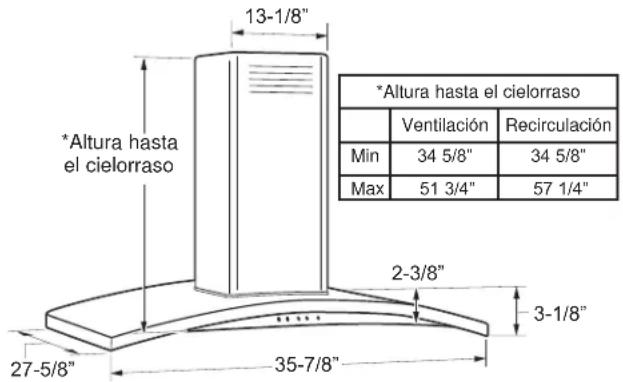
PRODUCT DIMENSIONS
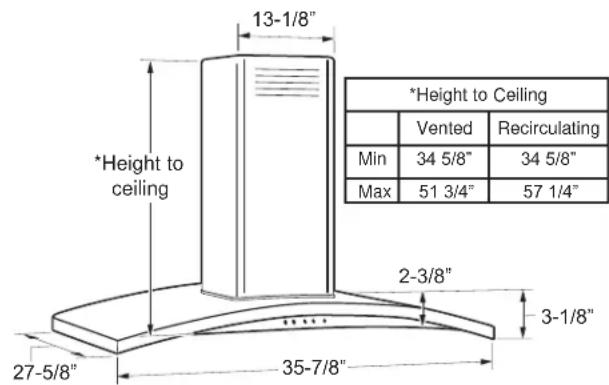
* For supplied duct cover ceiling height for vented installation and recirculating installation, refer to the table on page 12.
INSTALLATION CLEARANCES
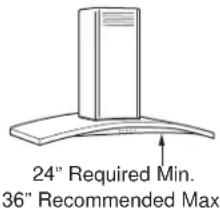
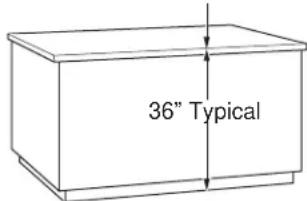
These vent hoods are designed to be installed onto a wall with no above cabinets.
- Install these hoods between the required 24" minimum and 36" recommended maximum above the cooking surface.
The vent hood must be installed between the required 24" minimum
and 36" recommended maximum above the cooking surface. The hood installation height above the cooking surface depends upon ceiling height and duct cover limitations. The telescopic duct cover conceals the ductwork running from the top of the hood to the ceiling.
NOTE: Installation height should be measured from the cooking surface to the lowest part of the hood. This hood must be installed onto a wall. It can be vented to the outdoors, or it can be installed for recirculating operation. Recirculating Kit included with hood.
PREPARE TO INSTALL THE HOOD
ADVANCE PLANNING
Duct Install Planning
■ Determine the exact location of the vent hood.
■ Use rigid metal ductwork only.
■ Plan the route for venting exhaust to the outdoors. To maximize the ventilation performance of the vent system:
1. Minimize the duct run length and number of transitions and elbows.
2. Maintain a constant duct size.
3. Seal all joints with duct tape to prevent any leaks.
4. Do not use any type of flexible ducting.
■ Use the shortest and straightest duct route possible.
■ Install a roof cap with damper at the exterior opening. Order the cap and any transitions and length of duct needed in advance.
■ When applicable, install any makeup (replacement) air system in accordance with local building code requirements. Visit GEAppliances.com for available makeup air solutions.
Ceiling Framing for Adequate Support
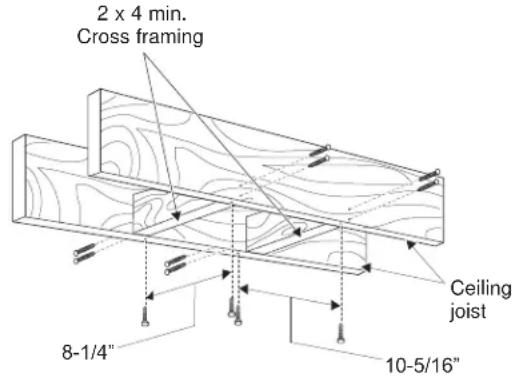
These vent hoods are heavy. Adequate structural support must be provided. The ceiling structure must be capable of supporting the weight of the hood and any inadvertent user contact loads (approximately 200 pounds). The hood support frame will be supported by 2 x 4 cross framing.
■ Installation will be easier if the vent hood is installed before the cooktop or countertop below is installed.
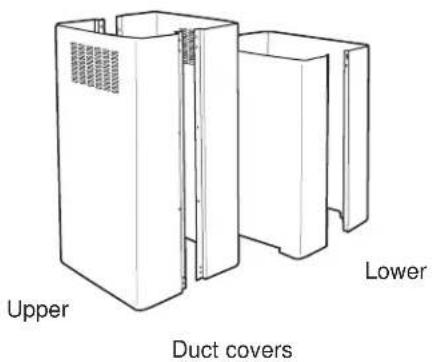
Duct Covers
■ All models are shipped with duct covers. For supplied duct cover ceiling heights for vented installation and recirculating installation, refer to table on page 12.
POWER SUPPLY
IMPORTANT—(Please read carefully)
WARNING
FOR PERSONAL SAFETY, THIS APPLIANCE MUST BE PROPERLY GROUNDED.
Remove house fuse or open circuit breaker before beginning installation.
Do not use an extension cord or adapter plug with this appliance. Follow National Electrical Codes or prevailing local codes and ordinances.
Electrical Supply
This vent hood must be supplied with 120V, 60Hz, and connected to an individual, properly grounded branch circuit, and protected by a 15 or 20 amp circuit breaker or time delay fuse.
■ Wiring must be 2 wire with ground.
■ If the electrical supply does not meet the above requirements, call a licensed electrician before proceeding.
■ Route house wiring in the ceiling, as close to the installation location as possible. Allow additional length from ceiling joists to reach the junction box on the bottom of the hood support frame.
■ Connect the wiring to the house wiring in accordance with local codes.
Grounding Instructions
The grounding conductor must be connected to a ground metal, permanent wiring system, or an equipment-grounding terminal or lead on the hood.
WARNING
The improper connection of equipment-grounding conductor can result in a risk of electric shock. Check with a qualified electrician or service representative if you are in doubt whether the appliance is properly grounded.
This Hood MUST Use an 8" Round Duct. It Can Transition to a 3-1/4" x 12" Duct.
DO NOT use flexible plastic ducting.
NOTE: Any home ventilation system, such as a ventilation hood, may interrupt the proper flow of combustion air and exhaust required by fireplaces, gas furnaces, gas water heaters and other naturally vented systems. To minimize the chance of interruption of such naturally vented systems, follow the heating equipment manufacturer's guidelines and safety standards such as those published by NFPA and ASHRAE. When applicable, install any makeup (replacement) air system in accordance with local building code requirements. Visit GEAppliances.com for available makeup air solutions.
Installation Preparation
TOOLS AND MATERIALS REQUIRED (NOT SUPPLIED)
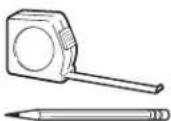
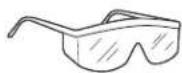
Safety glasses
Pencil and tape measure

Spirit level
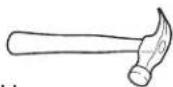
Hammer
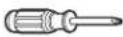
Phillips screwdriver
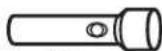
Flashlight
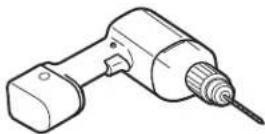
Electric drill with 3/16" bits, #2 Phillips head
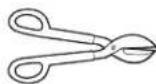
Metal snips
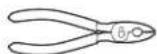
Pliers
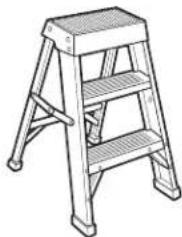
natural_image
Line drawing of a four-tiered ladder structure (no text or symbols)Step ladder
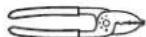
Wire cutter/stripper
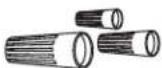
UL listed wire nuts

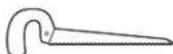
Saber saw or Key Hole saw

Aluminized Duct tape
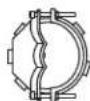
Strain relief for junction box
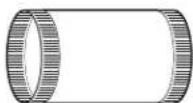
8" Round metal duct, length to suit installation
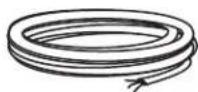
120V 60Hz. 15 or 20 Amp, 2-wire with ground, properly grounded branch circuit
REMOVE THE PACKAGING
CAUTION
Wear gloves to protect against
sharp edges.
■ Remove the duct covers.
■ Remove the hardware bag, literature package and other boxed parts.
■ Remove and properly discard the protective plastic wrapping and other packaging materials.
CHECK INSTALLATION HARDWARE
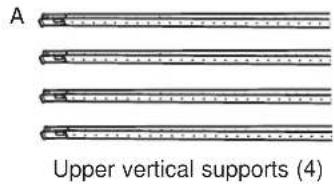
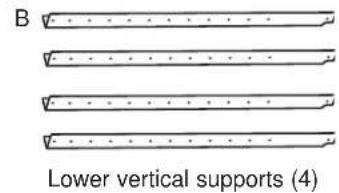
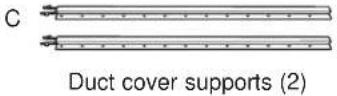
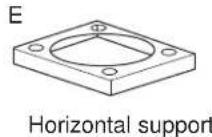
Locate the hardware package packed with the hood and check contents.
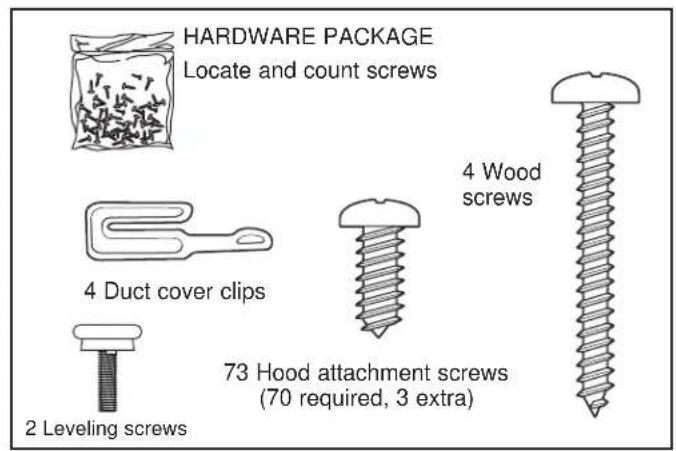
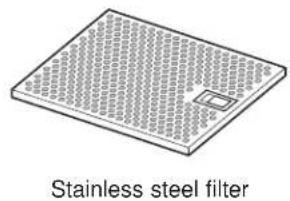
natural_image
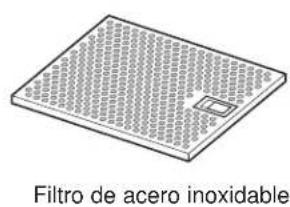
Illustration of a stainless steel filter with grid pattern (no text or symbols on the filter itself)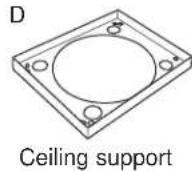
RECIRCULATING KIT (Included)
natural_image
Diagram of a gray charcoal filter with grid layout and two side handles (no text or symbols on the diagram itself)Installation Preparation
INSTALLATION CLEARANCES
These vent hoods are designed to be installed onto a wall with no above cabinets.
- Install these hoods between the required 24" minimum and 36" recommended maximum above the cooking surface.
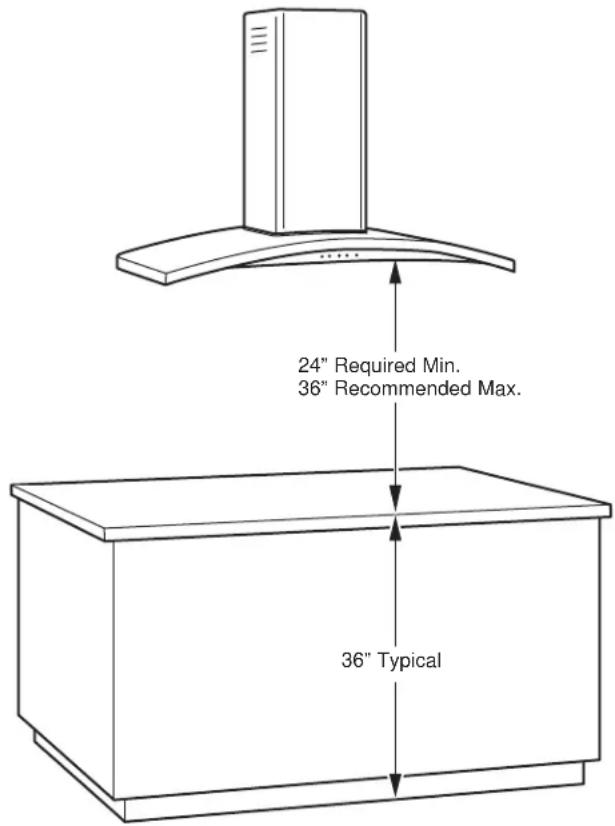
The vent hood must be installed between the required 24" minimum and 36" recommended maximum above the cooking surface. The hood installation height above the cooking surface depends upon ceiling height and duct cover limitations. The telescopic duct cover conceals the ductwork running from the top of the hood to the ceiling.
NOTE: Installation height should be measured from the cooking surface to the lowest part of the hood. This hood must be installed onto a wall. It can be vented to the outdoors, or it can be installed for recirculating operation. Recirculating Kit included with hood.
| UVI7361 | ||
| Upper Duct Cover 29.92 | ||
| Lower Duct Cover 25.98 | ||
| Counter to Hood Height | ||
| Actual Ceiling Height | *Possible VENTED Installation Height | *Possible RECIRCULATING Installation Height |
| 7' 11" 24" 24" | ||
| 8' 0" 24" to 25" 24" to 25" | ||
| 8' 1" 24" to 26" 24" to 26" | ||
| 8' 2" 24" to 27" 24" to 27" | ||
| 8' 3" 24" to 28" 24" to 28" | ||
| 8' 4" 24" to 29" 24" to 29" | ||
| 8' 5" 24" to 30" 24" to 30" | ||
| 8' 6" 24" to 31" 24" to 31" | ||
| 8' 7" 24" to 32" 24" to 32" | ||
| 8' 8" 24" to 33" 24" to 33" | ||
| 8' 9" 24" to 34" 24" to 34" | ||
| 8' 10" 24" to 35" 24" to 35" | ||
| 8' 11" 24" to 36" 24" to 36" | ||
| 9' 0" 24" to 36" 24" to 36" | ||
| 9' 1" 24" to 36" 24" to 36" | ||
| 9' 2" 24" to 36" 24" to 36" | ||
| 9' 3" 24" to 36" 24" to 36" | ||
| 9' 4" 24" to 36" 24" to 36" | ||
| 9' 5" 25" to 36" 24" to 36" | ||
| 9' 6" 26" to 36" 24" to 36" | ||
| 9' 7" 27" to 36" 24" to 36" | ||
| 9' 8" 28" to 36" 24" to 36" | ||
| 9' 9" 29" to 36" 24" to 36" | ||
| 9' 10" 30" to 36" 25" to 36" | ||
| 9' 11" 31" to 36" 26" to 36" | ||
| 10' 0" 32" to 36" 27" to 36" | ||
| 10' 1" 33" to 36" 28" to 36" | ||
| 10' 2" 34" to 36" 29" to 36" | ||
| 10' 3" 35" to 36" 30" to 36" | ||
| 10' 4" 36" 31" to 36" | ||
| 10' 5" 32" to 36" | ||
| 10' 6" 33" to 36" | ||
| 10' 7" 34" to 36" | ||
| 10' 8" 35" to 36" | ||
| 10' 9" | 36" | |
* based on 36" countertop height
CONSTRUCT CEILING SUPPORT
Plan the Location of the Hood and Ductwork
■ Use a plumb bob to check the location. The countertop/cooktop below the hood must be centered with the hood.
■ The hood should extend beyond the front and rear edge of the cooking appliance.
■ The duct in the ceiling must be centered over the cooktop.
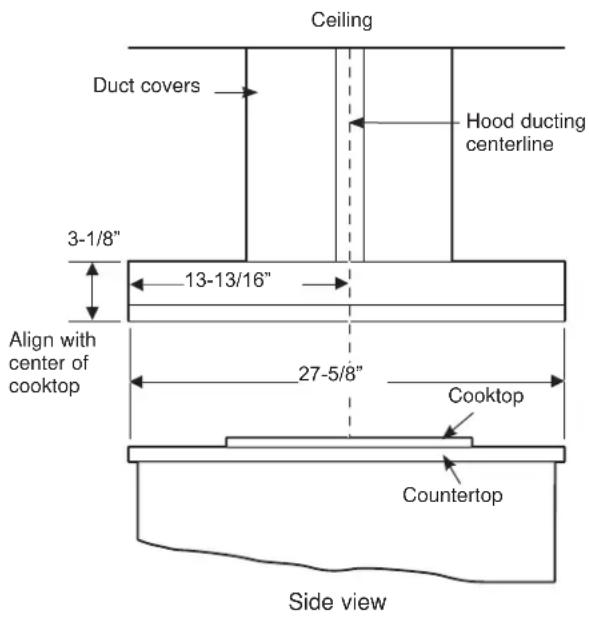
Ceiling Support Structure
■ At the hood location, install cross framing between ceiling joists as shown. (2x4 wood supports are required to support the weight of the hood.)
- Arrange cross framing in the ceiling to suit the existing structure.
- Your ceiling joists will be like one of the following examples.
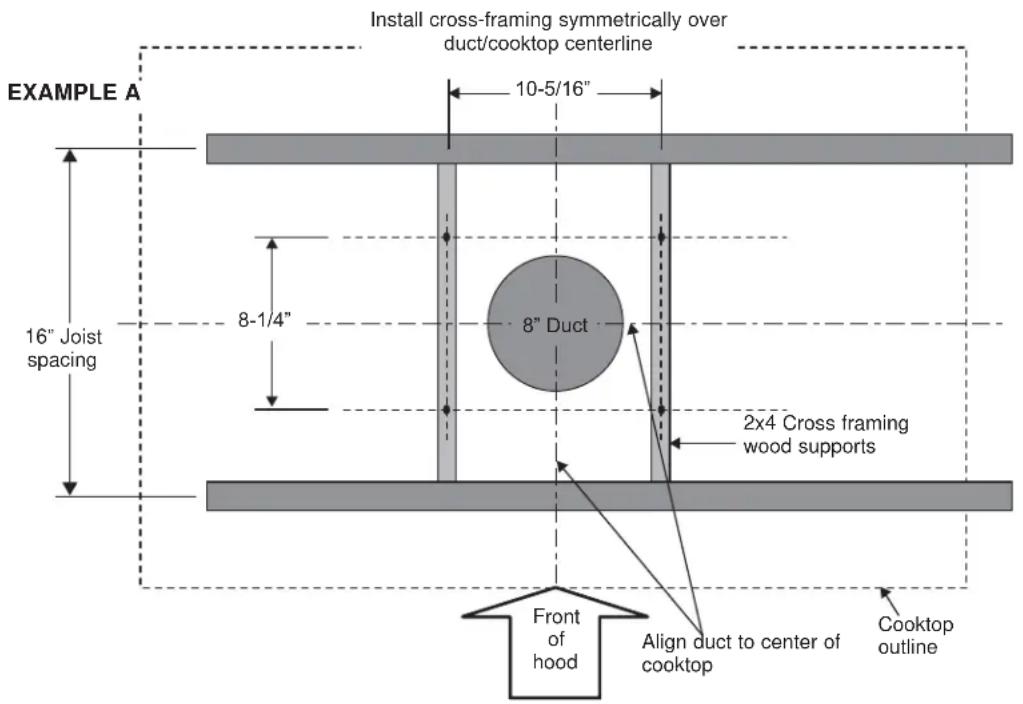
Top view – ceiling joists parallel to front of hood
CONSTRUCT CEILING SUPPORT (Cont.)
EXAMPLE B
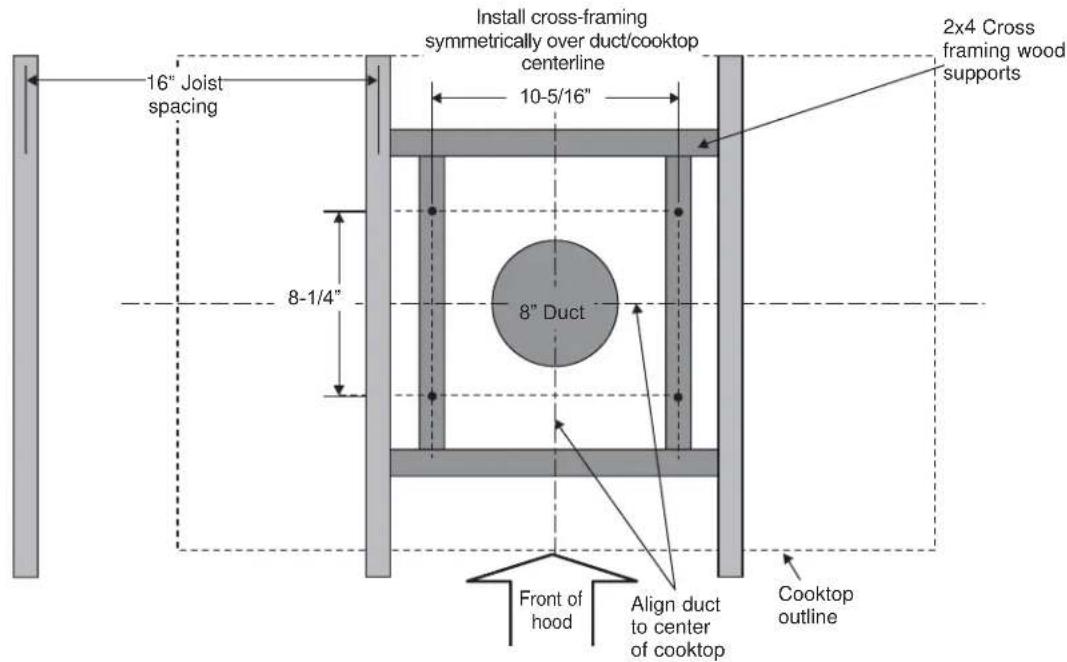
Top view – ceiling joists run perpendicular to front of hood
EXAMPLE C
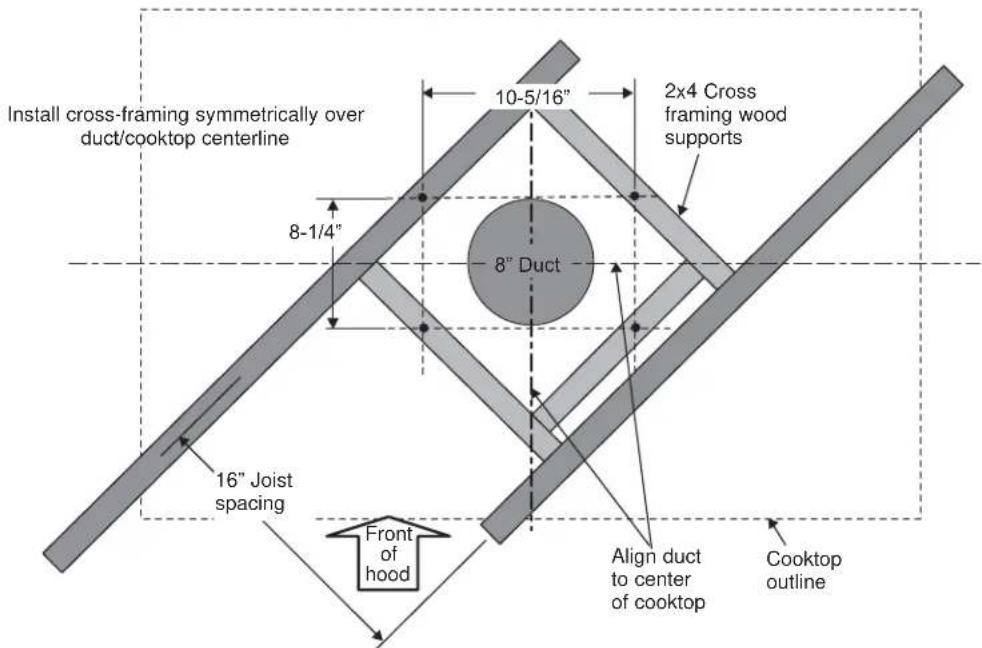
Top view – ceiling joists at angle to front of hood
CONSTRUCT CEILING SUPPORT (Cont.)
- Secure each 2 x 4 block with at least four (4), #10 wood screws, 3" long (not supplied). Use 8 wood screws total for the two supports.
■ The cross framing must be accurately aligned to assure correct positioning of the hood.
■ The cross framing must be level in all directions. Check with a spirit level and adjust if necessary.
IMPORTANT: The ceiling structure must be capable of supporting the weight of the hood (approximately 200 pounds) and any inadvertent user contact loads. The hood support frame will be supported by the 2 x 4 cross framing.
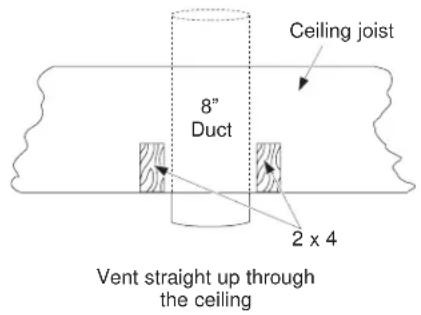
Ductwork for Installations Vented to the Outdoors
■ Use the shortest and straightest duct route for satisfactory performance.
■ This vent hood must use 8" round rigid duct.
■ Install the house ductwork to run horizontally between ceiling joists or straight up through the roof.
Finish the Ceiling
■ Finish the ceiling surface. Be sure to mark location of the ceiling joists and cross framing. Check to be sure the ceiling is level; use shims if necessary.
INSTALLATION - VENTED TO THE OUTSIDE
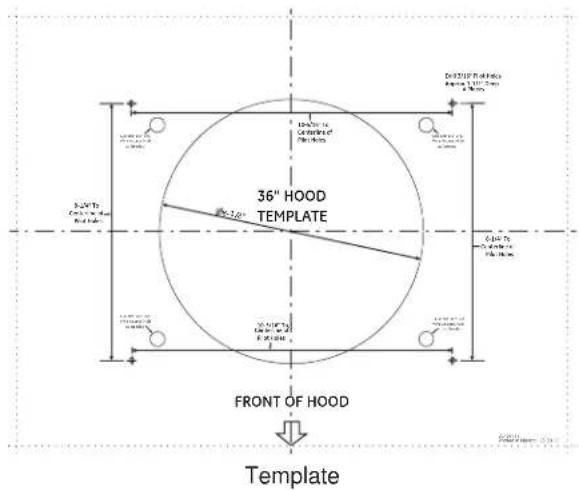
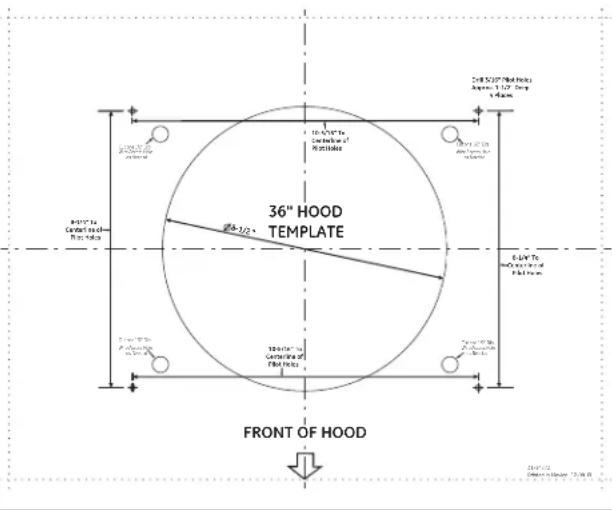
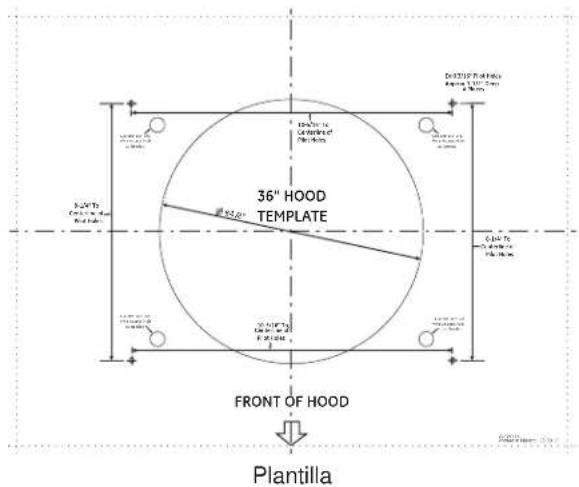
STEP 1: MOUNT TEMPLATE
■ Align the template with the marks on the ceiling and tape in place.
- Be sure the template is oriented correctly with the front of the hood.
■ Use a plumb bob to be sure the mounting holes will provide parallel alignment with the countertop below.
■ Determine wire access hole location.
■ Center punch all screw and determined wire hole locations.
- Drill pilot holes in the 4 screw locations. Use a 3/16" bit and drill approximately 1-1/2" deep.
■ Drill one 1/2" hole for wires.
- Cut the 8-1/2" duct opening through the ceiling.
NOTE: Only for recirculating version, air deflector not included.
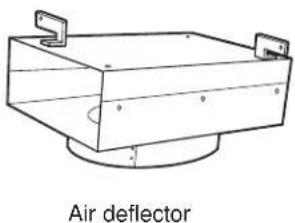
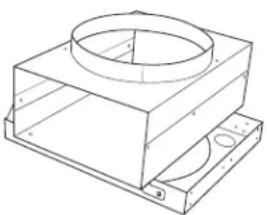
INSTALL AIR DEFLECTOR INTO CEILING SUPPORT
■ Lay ceiling support on a firm surface.
■ Position the air deflector onto the ceiling support, duct opening up and one of the open sides to what will be the front of the hood assembly. The tabs on the deflector will be to the outside of the ceiling support.
natural_image
Technical line drawing of a mechanical housing or enclosure with a circular top component and mounting base (no text or symbols)■ Using 2 screws provided, secure the tabs on the deflector to the ceiling support.
STEP 2: INSTALL CEILING SUPPORT
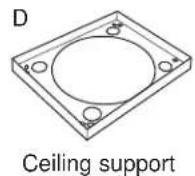
■ Using 4 wood screws provided, attach the ceiling support to the ceiling over duct opening hole using pilot holes drilled in step 1.
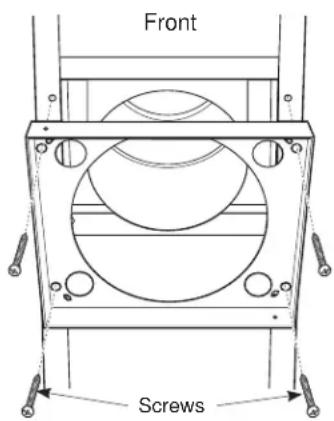
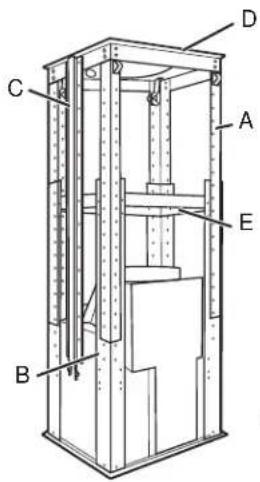
STEP 3: INSTALL LOWER HORIZONTAL SUPPORTS TO HOOD ASSEMBLY
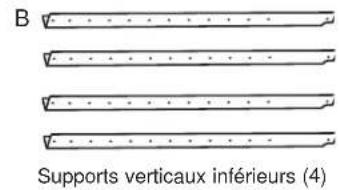
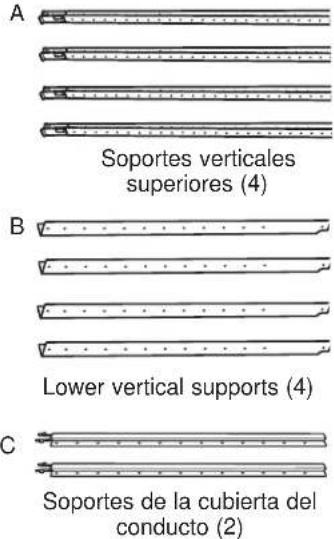
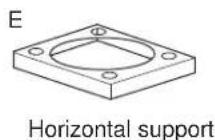
- Install the lower horizontal support to 4 lower vertical supports with 8 - 4.2x8 mm screws.
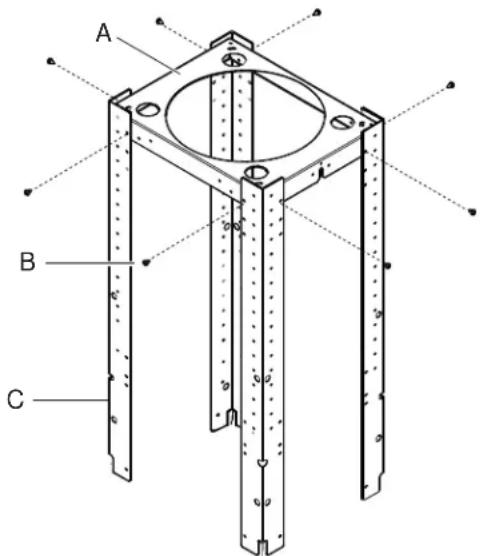
A. Lower horizontal support
B. 8 - 4.2x8 mm screws
C. 4 - Lower vertical supports
INSTALLATION - VENTED TO THE OUTSIDE (Cont.)
STEP 4: INSTALL UPPER VERTICAL SUPPORTS TO HOOD ASSEMBLY
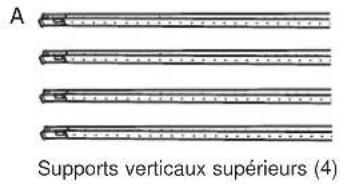
- Install 4 upper vertical supports to the lower horizontal support with 16 - 4.2x8 mm screws.
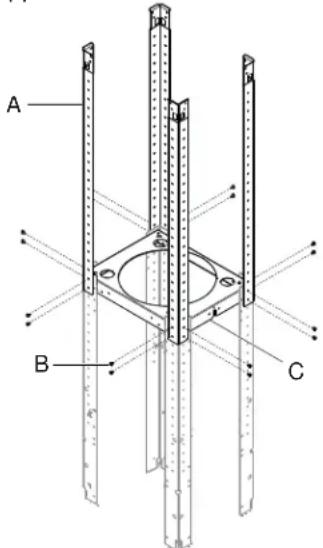
A. 4 - Upper vertical supports
B. 16 - 4.2x8 mm screws
C. Lower horizontal support
STEP 6: INSTALL HOOD ASSEMBLY TO SUPPORT
- Using 2 or more people, lift the range hood assembly under the structure.
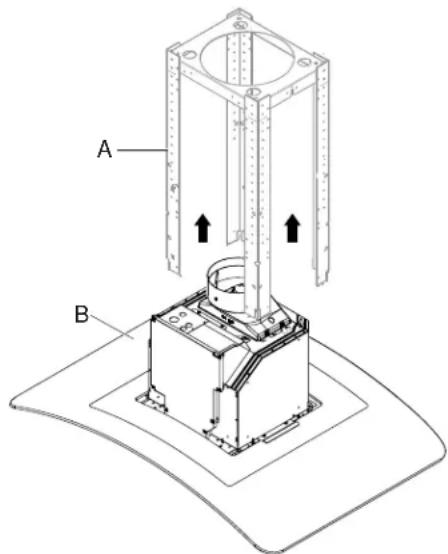
A. Lower vertical supports
B. Range hood assembly
STEP 5: INSTALL TO UPPER SUPPORT
- Install the structure to the upper horizontal support with 16 - 4.2 x 8 mm screws.
NOTE: Attach the structure to the previously installed upper horizontal support.
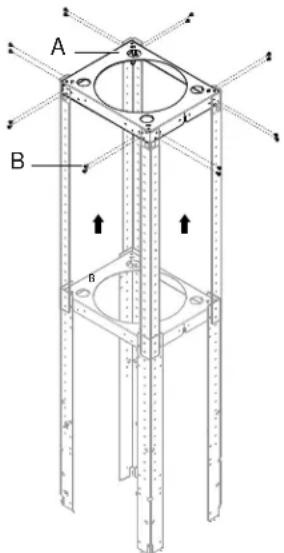
A. Upper horizontal support
B. 16 - 4.2x8 mm screws
STEP 7: INSTALL TO LOWER SUPPORT
- Attach the range hood assembly to the lower vertical supports with 2 leveling screws and 2 nuts.
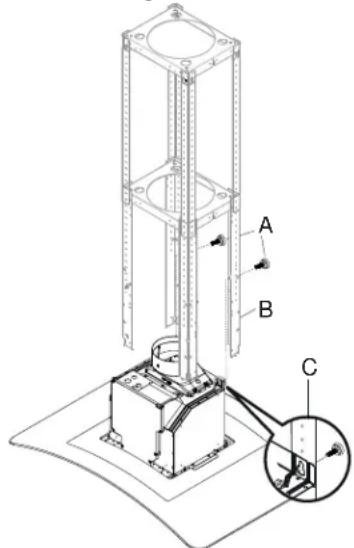
A. 2 - Leveling screws
B. Lower vertical support
C. Place leveling screws through the structure
INSTALLATION - VENTED TO THE OUTSIDE (Cont.)
STEP 8: INSTALL VERTICAL SUPPORTS
- Install the 4 vertical supports with 16 - 4.2x8 mm screws. Make sure all screws are securely tightened.
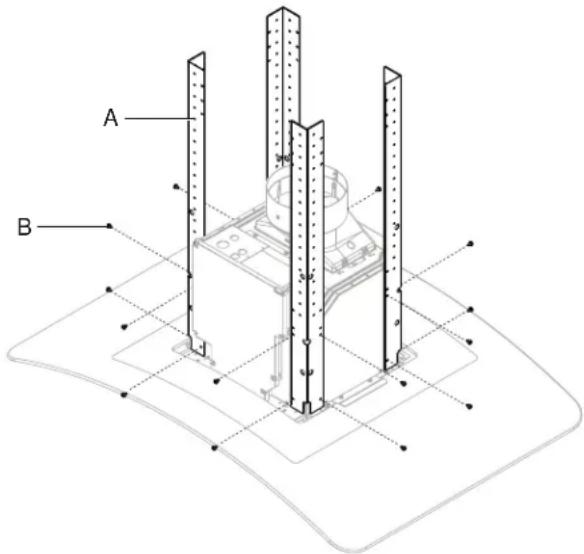
A. 4 - Lower vertical supports B. 16 - 4.2x8 mm screws
STEP 9: CONNECT ELECTRICAL
Verify that power is turned off at the source.
WARNING
If house wiring is not 2-wire with
a ground wire, a ground must be provided by the installer. When house wiring is aluminum, be sure to use U.L. approved anti-oxidant compound and aluminum-to-copper connectors.
■ Remove the 6 screws on the junction box cover and the knockout on the top left side.

- Secure the house wiring to the junction box with a strain relief (not provided).
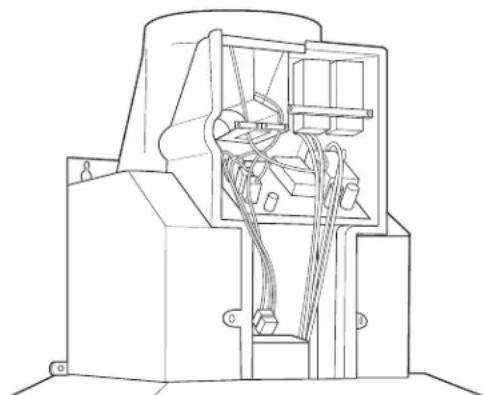
natural_image
Technical line drawing of an internal electrical enclosure or machine (no text or symbols visible)■ Connect the white lead to the branch circuit white lead.
■ Connect the black lead to the branch circuit black lead.
■ Connect the green/yellow lead to the branch circuit green lead or bare ground lead.
- Secure all the connections with wire nuts on each electrical connector.
■ Push the wires into the junction box and replace the cover. Be sure the wires are not pinched.
- Secure the junction box cover with the 6 original screws.
INSTALLATION - VENTED TO THE OUTSIDE (Cont.)
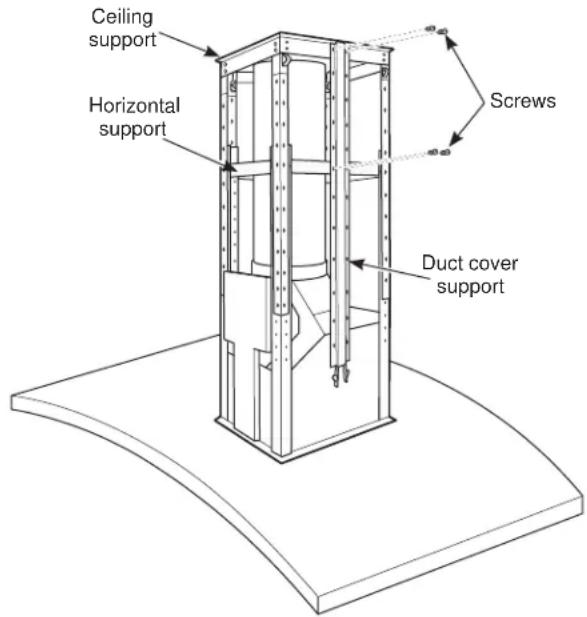
STEP 10: INSTALL DUCT COVER SUPPORTS
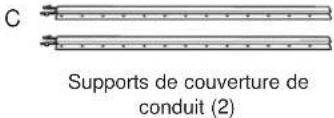
■ Attach the duct cover supports to the sides of the horizontal and ceiling supports using 4 screws per duct cover support.
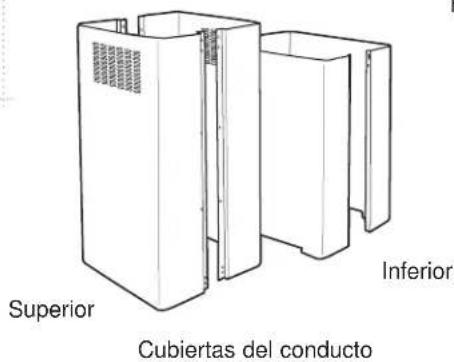
STEP 11: INSTALL DUCT COVERS
IMPORTANT: Two people are required to install the duct covers.
NOTE: If you are installing this hood for recirculating operation, place the duct covers onto the hood with the venting slots at the top. If the hood is vented to the outside, the holes should be positioned on the bottom.
■ Remove the protective film from all duct covers.
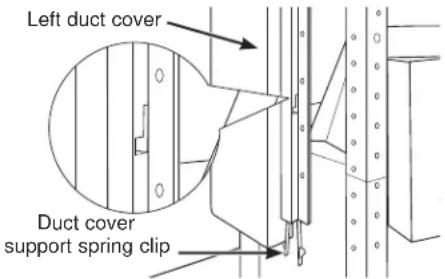
■ Place one upper duct cover over the rear of the support assembly. The tabs on the edges of the duct cover will slide into a notch on the duct cover support. When all 6 tabs on the duct cover are in the notches on both of the duct cover supports, slide the duct cover up so it sits on the duct cover support spring clip.
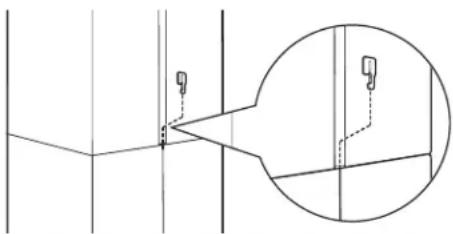
■ Place a duct cover clip onto the bottom of the rear lower duct cover locking the clip into place. Repeat on the other side.
■ Lower the duct cover into the
recess on the hood, being careful to hold the clip in place while lowering the duct cover onto the hood assembly.
■ Place the front lower duct cover into the recess of the hood locking it onto the duct cover clip on the rear cover.
■ Place a duct cover clip at the top on each side where the front and rear duct covers meet. This will hold the rear and front covers together.
natural_image
Pure technical line drawing of a mechanical or architectural component with no text, numbers, or symbols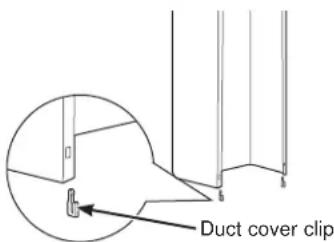
INSTALLATION - VENTED TO THE OUTSIDE (Cont.)
STEP 11: INSTALL DUCT COVERS (Cont.)
■ Using screws provided, secure the lower duct covers to the hood assembly from the underside of the hood.
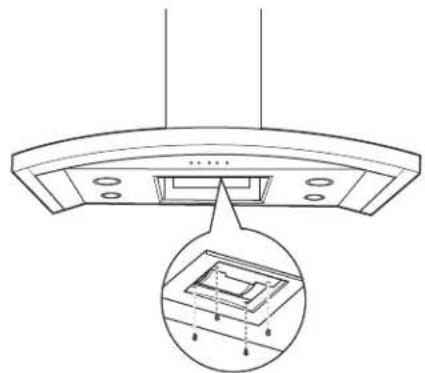
natural_image
Technical line drawing of a ceiling fixture with an inset showing internal components (no text or symbols)STEP 12: INSTALL METAL GREASE FILTER
■ Remove protective film on the grease filter.
NOTE: The charcoal filter is not required for this installation.
■ Fit the tabs at the end of the filter into the slots in left side of the filter opening. Lift up the right side of the filter and push gently until the filter locks into place. Make sure the filter lock is in the closed position to secure the filter.
■ To remove the filter, pull downward on the filter lock to release.
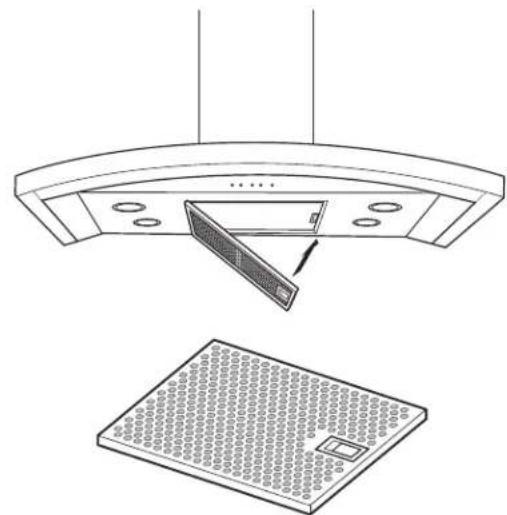
natural_image
Technical line drawing of a ceiling-mounted device with a mounted panel and a separate baseplate (no text or symbols)NOTE: Only for recirculating version, air deflector not included.
INSTALL FILTER
Charcoal Filter
Insert the charcoal filter into the opening. Push the latch on both sides toward the center and engage the flange.
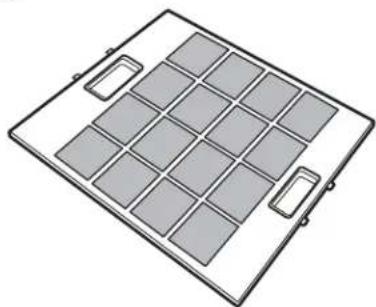
natural_image
Diagram of a solar panel array with 16 grid cells and two side slots (no text or symbols)Troubleshooting tips ... Before you call for service
Save time and money! Review the charts on the following pages first and you may not need to call for service.
| Problem Possible Cause | What To Do | |
| Fan/Light does not operate when either button is pressed | A house fuse may be blown or a circuit breaker tripped. | Replace fuse or reset circuit breaker. |
| Fan does not operate when fan + or - buttonor MEMORY/OFF button is pressed | The blower connector is loose or not plugged into its mating connector. | Disconnect power to the unit. Remove the filters and look up at the blower. If the blower connector plug is loose or you see the connector dangling, the installer failed to plug it in securely. See the Installation Instructions for the plug location and how to plug in the connector. |
| Loud or abnormal airflow noise | Wrong duct size used in installation. | This hood requires 8" minimum ducting to perform optimally. Using smaller duct pipe will cause improper venting. GE Appliances service technicians cannot correct this issue if installed improperly. |
| Fan fails to circulate air or moves air slower than normal and/or fan is making loud or abnormal airflow noise | Obstructions in duct work. Make sure nothing is blocking the vent. Make sure flip over and will not fully open when this happens. Adjust to original position. | |
| Damper blade on wall or roof cap may not be open. | Make sure damper swings freely. Damper blades may flip over and will not fully open when this happens. Adjust to original position. | |
| Metal grease filter and charcoal filter (if present) may be dirty. | Clean the metal grease filter and replace charcoal filter (if present). See Care and Cleaning of the Vent Hood. | |
| Insufficient makeup (replacement) air | Sufficient makeup (replacement) air is required for exhausting appliances to operate to rating. Check with local building codes, which may require or strongly advise the use of makeup air. Visit GEAppliances.com for available makeup air solutions. | |
| The hood controls are not operating correctly | Control logic confused. Disconnect power to the hood by resetting the circuit breaker. Wait 30 seconds to allow controls to reset. | |
| Hood does not appear to operate when the MEMORY/OFF button is pressed. All collars around the push buttons are illuminated. | The memory feature of this hood has not been set. This is normal. | Follow procedures for setting the MEMORY/OFF button. Adjust the Fan and Light settings to your preference. |
| Fan turned on by itself and is in MED setting. The fan setting can be adjusted but not to OFF. | The heat sensor is activated. This is normal when temperatures below the hood are exceeding the heat sensor limits. Remove the heat source under the hood or wait until the hood cools to appropriate levels. The hood will automatically turn itself off or return to its original setting once the heat sensor detects the temperature has reached a safe condition. | |
| A collar around a push button is not illuminating when pressed. | Push button may be stuck. Check affected push button and ensure that it is not stuck. Call for service if problem persists. | |
| Two or more collars around the push buttons are not illuminating when pressed. | Two or more push buttons may be stuck. | Check affected push buttons and ensure that they are not stuck. Call for service if problem persists. |
| Sequential presses of the LIGHT or FAN buttons will change the setting from lowest setting to OFF, to highest setting, to OFF, to the lowest setting. | This is normal. It is a feature of the hood that the LIGHT and FAN buttons will cycle around through the settings so that you can easily set the controls to your desired setting. | No action required. |
Limited Warranty
GEAppliances.com
All warranty service is provided by our Factory Service Centers, or an authorized Customer Care® technician. To schedule service online, visit us at geappliances.com/service, or call GE Appliances at 800.GE.CARES (800.432.2737). Please have your serial number and your model number available when calling for service.
Servicing your appliance may require the use of the onboard data port for diagnostics. This gives a GE Appliances factory service technician the ability to quickly diagnose any issues with your appliance and helps GE Appliances improve its products by providing GE Appliances with information on your appliance. If you do not want your appliance data to be sent to GE Appliances, please advise your technician not to submit the data to GE Appliances at the time of service.
| For the period of GE Appliances will replace | |
| One yearFrom the dateof the originalpurchase | Any part of the cooking product which fails due to a defect in materials or workmanship.During this limited one-year warranty, GE Appliances will provide, free of charge, all laborand related service costs to replace the defective part. |
What GE Appliances will not cover:
■ Service trips to your home to teach you how to use the product.
■ Improper installation, delivery, or maintenance.
■ Failure of the product if it is abused, misused, modified, or used for other than the intended purpose or used commercially.
■ Replacement of house fuses or resetting of circuit breakers.
■ Damage to the product caused by accident, fire, floods, or acts of God.
■ Damage to finish, such as surface rust, tarnish, or small blemishes not reported within 48 hours of delivery.
■ Incidental or consequential damage caused by possible defects with this appliance.
■ Damage caused after delivery.
■ Product not accessible to provide required service.
■ Service to repair or replace light bulbs, except for LED lamps.
EXCLUSION OF IMPLIED WARRANTIES
Your sole and exclusive remedy is product repair as provided in this Limited Warranty. Any implied warranties, including the implied warranties of merchantability or fitness for a particular purpose, are limited to one year or the shortest period allowed by law.
This limited warranty is extended to the original purchaser and any succeeding owner for products purchased for home use within the USA. If the product is located in an area where service by a GE Appliances Authorized Servicer is not available, you may be responsible for a trip charge or you may be required to bring the product to an Authorized GE Appliances Service location for service. In Alaska, the limited warranty excludes the cost of shipping or service calls to your home.
Some states do not allow the exclusion or limitation of incidental or consequential damages. This limited warranty gives you specific legal rights, and you may also have other rights which vary from state to state. To know what your legal rights are, consult your local or state consumer affairs office or your state's Attorney General.
Warrantor: GE Appliances, a Haier company Louisville, KY 40225
Extended Warranties: Purchase a GE Appliances extended warranty and learn about special discounts that are available while your warranty is still in effect. You can purchase it online anytime at
geappliances.com/extended-warranty
or call 800.626.2224 during normal business hours. GE Appliances Service will still be there after your warranty expires.
Consumer Support
GE Appliances Website
Have a question or need assistance with your appliance? Try the GE Appliances Website 24 hours a day, any day of the year! You can also shop for more great GE Appliances products and take advantage of all our on-line support services designed for your convenience. In the US: GEAppliances.com
Register Your Appliance
Register your new appliance on-line at your convenience! Timely product registration will allow for enhanced communication and prompt service under the terms of your warranty, should the need arise. You may also mail in the pre-printed registration card included in the packing material.
In the US: GEAppliances.com/register
Schedule Service
Expert GE Appliances repair service is only one step away from your door. Get on-line and schedule your service at your convenience any day of the year.
In the US: GEAppliances.com/service or call 800.432.2737 during normal business hours.
Extended Warranties
Purchase a GE Appliances extended warranty and learn about special discounts that are available while your warranty is still in effect. You can purchase it on-line anytime. GE Appliances Services will still be there after your warranty expires.
In the US: GEAppliances.com/extended-warranty or call 800.626.2224 during normal business hours.
Parts and Accessories
Individuals qualified to service their own appliances can have parts or accessories sent directly to their homes (VISA, MasterCard and Discover cards are accepted). Order on-line today 24 hours every day.
In the US: GEApplianceparts.com or by phone at 877.959.8688 during normal business hours.
Instructions contained in this manual cover procedures to be performed by any user. Other servicing generally should be referred to qualified service personnel. Caution must be exercised, since improper servicing may cause unsafe operation.
Contact Us
If you are not satisfied with the service you receive from GE Appliances, contact us on our Website with all the details including your phone number, or write to:
In the US: General Manager, Customer Relations | GE Appliances, Appliance Park | Louisville, KY 40225
GEAppliances.com/contact
CHEMINÉE DE L'ÎLOT HOTTES SE DENIMEN
CONSIGNES DE SÉCURITÉ ..... 3
UTILISATION DE LA HOTTE
Commandes.... 5
ENTRETIEN ET NETTOYAGE
Filtres 6
Surfaces 7
Ampoules 7
INSTRUCTIONS
D'INSTALLATION......8
natural_image
Diagram showing a ceiling-mounted device with a panel and a separate panel, no text or symbols presentFiltre à charbon
natural_image
Diagram of a ceiling-mounted kitchen appliance with a grid-patterned base and ventilation slots (no text or symbols)Lampes DEL
DIMENSIONS DU PRODUIT
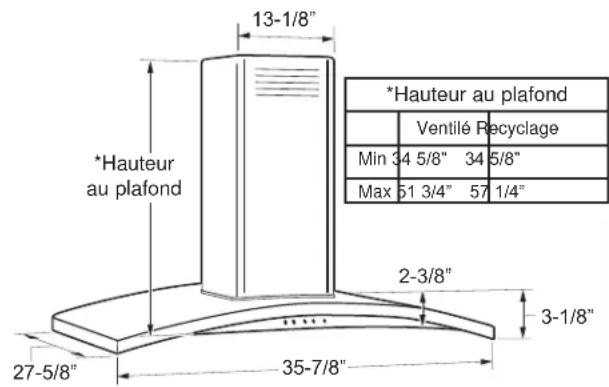
natural_image
Line drawing of a wooden double-leg ladder (no text or symbols)Escabeau
natural_image
Line drawing of a two-tiered electronic device with no visible text or symbolsnatural_image
Technical line drawing of a mechanical component with mounting flanges and a central circular base (no text or symbols)Déflecteur d'air
natural_image
3D diagram of a solar panel with grid layout and two side handles (no text or symbols)Filtre à charbon
| UVI7361 | ||
| Upper Duct Cover 29.92 | ||
| Lower Duct Cover 25.98 | ||
| Counter to Hood Height | ||
| Actual Ceiling Height | *Possible VENTED Installation Height | *Possible RECIRCULATING Installation Height |
| 7' 11" 24" | 24" | |
| 8' 0" 24" | to 25" 24" to 25" | |
| 8' 1" 24" | to 26" 24" to 26" | |
| 8' 2" 24" | to 27" 24" to 27" | |
| 8' 3" 24" | to 28" 24" to 28" | |
| 8' 4" 24" | to 29" 24" to 29" | |
| 8' 5" 24" | to 30" 24" to 30" | |
| 8' 6" 24" | to 31" 24" to 31" | |
| 8' 7" 24" | to 32" 24" to 32" | |
| 8' 8" 24" | to 33" 24" to 33" | |
| 8' 9" 24" | to 34" 24" to 34" | |
| 8' 10" 24" | to 35" 24" to 35" | |
| 8' 11" 24" | to 36" 24" to 36" | |
| 9' 0" 24" | to 36" 24" to 36" | |
| 9' 1" 24" | to 36" 24" to 36" | |
| 9' 2" 24" | to 36" 24" to 36" | |
| 9' 3" 24" | to 36" 24" to 36" | |
| 9' 4" 24" | to 36" 24" to 36" | |
| 9' 5" 25" | to 36" 24" to 36" | |
| 9' 6" 26" | to 36" 24" to 36" | |
| 9' 7" 27" | to 36" 24" to 36" | |
| 9' 8" 28" | to 36" 24" to 36" | |
| 9' 9" 29" | to 36" 24" to 36" | |
| 9' 10" 30" | to 36" 25" to 36" | |
| 9' 11" 31" | to 36" 26" to 36" | |
| 10' 0" 32" | to 36" 27" to 36" | |
| 10' 1" 33" | to 36" 28" to 36" | |
| 10' 2" 34" | to 36" 29" to 36" | |
| 10' 3" 35" | to 36" 30" to 36" | |
| 10' 4" 36" | 31" to 36" | |
| 10' 5" 32" | to 36" | |
| 10' 6" 33" | to 36" | |
| 10' 7" 34" | to 36" | |
| 10' 8" 35" | to 36" | |
| 10' 9" 36" | ||
* based on 36" countertop height
CONSTRUIRE UN SUPPORT DE PLAFOND
natural_image
Technical line drawing of a mechanical housing or enclosure with a circular top component and mounting base (no text or symbols)natural_image
Technical line drawing of an internal electrical enclosure or machine (no text or symbols visible)natural_image
Pure technical line drawing of a mechanical or architectural component with no text, numbers, or symbolsInstallation Instructions
INSTALLATION - VENTILATION À L'EXTÉRIEUR (suite)
ÉTAPE 11 : INSTALLER LES COUVERCLES DE CONDUITS (suite)
natural_image
Technical line drawing of a ceiling-mounted appliance with an inset showing internal components (no text or symbols)natural_image
Line drawing of a ceiling-mounted device with a rack-mounted unit and ventilation slots (no text or symbols)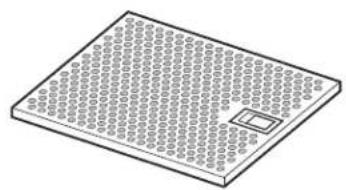
natural_image
Isometric view of a rectangular electronic component with grid pattern and a small rectangular slot (no text or symbols)natural_image
Diagram of a rectangular solar panel with grid layout and two side slots (no text or symbols)Garante : GE Appliances, a Haier company Louisville, KY 40225
GEAppliances.com/extended-warranty
Au Canada : Prodsupport.mabe.ca/crm/Products/ProductRegistration.aspx
Au Canada : GEAppliances.ca/en/support/service-request ou composez le 800.561.3344
Prolongation de garantie
GEAppliances.com/contact
Au Canada : Director, Consumer Relations, Mabe Canada Inc. | Suite 310, 1 Factory Lane | Moncton, N.B. E1C 9M3 Electromenagersge.ca/fr/contactez-nous
READ AND SAVE THESE INSTRUCTIONS
1. MEMORY/OFF (memoria/apagado)
Para configurar la memoria:
natural_image
Diagram showing a ceiling-mounted air conditioner unit being lowered into a gridded metal panel (no text or symbols present)Para quitar:
natural_image
Line drawing of a ceiling-mounted kitchen appliance with a tray and ventilation slots (no text or symbols)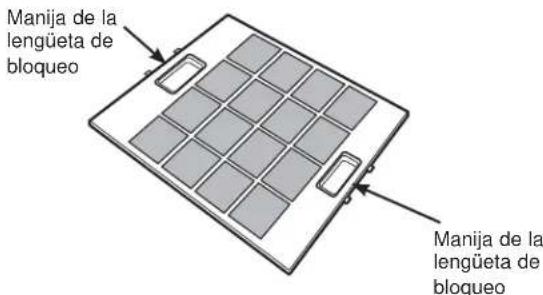
Luces LED
DIMENSIONES DEL PRODUCTO
natural_image
Line drawing of a wooden double ladder with adjustable legs and feet (no text or symbols)Escalera
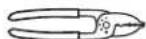
Alicate pelacables
| UVI7361 | ||
| Cubierta de conducto superior 29.92 | ||
| Cubierta de conducto inferior 25.98 | ||
| Mostrador hasta la altura de la campana | ||
| Altura real del cielorraso | *Altura de instalación posible CON VENTILACIÓN | *Altura de instalación posible CON RECIRCULACIÓN |
| 7' 11" 24" 24" | ||
| 8' 0" 24" to 25" 24" to 25" | ||
| 8' 1" 24" to 26" 24" to 26" | ||
| 8' 2" 24" to 27" 24" to 27" | ||
| 8' 3" 24" to 28" 24" to 28" | ||
| 8' 4" 24" to 29" 24" to 29" | ||
| 8' 5" 24" to 30" 24" to 30" | ||
| 8' 6" 24" to 31" 24" to 31" | ||
| 8' 7" 24" to 32" 24" to 32" | ||
| 8' 8" 24" to 33" 24" to 33" | ||
| 8' 9" 24" to 34" 24" to 34" | ||
| 8' 10" 24" to 35" 24" to 35" | ||
| 8' 11" 24" to 36" 24" to 36" | ||
| 9' 0" 24" to 36" 24" to 36" | ||
| 9' 1" 24" to 36" 24" to 36" | ||
| 9' 2" 24" to 36" 24" to 36" | ||
| 9' 3" 24" to 36" 24" to 36" | ||
| 9' 4" 24" to 36" 24" to 36" | ||
| 9' 5" 25" to 36" 24" to 36" | ||
| 9' 6" 26" to 36" 24" to 36" | ||
| 9' 7" 27" to 36" 24" to 36" | ||
| 9' 8" 28" to 36" 24" to 36" | ||
| 9' 9" 29" to 36" 24" to 36" | ||
| 9' 10" 30" to 36" 25" to 36" | ||
| 9' 11" 31" to 36" 26" to 36" | ||
| 10' 0" 32" to 36" 27" to 36" | ||
| 10' 1" 33" to 36" 28" to 36" | ||
| 10' 2" 34" to 36" 29" to 36" | ||
| 10' 3" 35" to 36" 30" to 36" | ||
| 10' 4" 36" 31" to 36" | ||
| 10' 5" 32" to 36" | ||
| 10' 6" 33" to 36" | ||
| 10' 7" 34" to 36" | ||
| 10' 8" 35" to 36" | ||
| 10' 9" | 36" | |
Top view – ceiling joists at angle to front of hood
natural_image
Technical line drawing of a mechanical housing or enclosure with a circular top component and mounting base (no text or symbols)PASO 2: INSTALE EL SOPORTE DEL CIELORRASO
natural_image
Technical line drawing of an industrial machine with internal components and wiring (no text or labels)natural_image
Pure technical line drawing of a vertical pipe or pipe with a magnified inset showing internal structure (no text or symbols)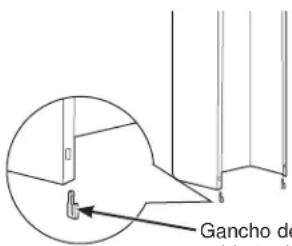
natural_image
Technical line drawing of a ceiling-mounted appliance with an inset showing internal components (no text or symbols)PASO 12: INSTALE EL FILTRO DE GRASA METÁLICO
natural_image
Technical line drawing of a ceiling-mounted device with a mounted panel and a separate display unit (no text or symbols)natural_image
Diagram of a rectangular solar panel with grid layout and two side slots (no text or symbols)Garante: GE Appliances, a Haier company Louisville, KY 40225
geappliances.com/extended-warranty

- INSTALLATION INSTRUCTIONS .. 8
- TROUBLESHOOTING TIPS....21
- LIMITED WARRANTY 23
- CONSUMER SUPPORT .... 24
- OWNER'S MANUAL & INSTALLATION INSTRUCTIONS
- ESPAÑOL
- THANK YOU FOR MAKING GE APPLIANCES A PART OF YOUR HOME.
- IMPORTANT SAFETY INFORMATION READ ALL INSTRUCTIONS BEFORE USING THE APPLIANCE
- WARNING
- CAUTION
- READ AND SAVE THESE INSTRUCTIONS
- TO REDUCE THE RISK OF A
- RANGE TOP GREASE FIRE:
- TO REDUCE THE RISK OF FIRE,
- ELECTRIC SHOCK OR INJURY TO PERSONS, OBSERVE THE FOLLOWING:
- USE ONLY METAL DUCTWORK.
- HEAT SENSOR:
- Filters
- Metal Grease Filter
- To remove:
- To replace:
- Charcoal Filter
- Care and Cleaning
- Stainless Steel Surfaces
- LED Lights
- Installation Instructions
- Island Chimney Vent Hood
- BEFORE YOU BEGIN
- FOR YOUR SAFETY:
- INSTALLATION CLEARANCES
- PREPARE TO INSTALL THE HOOD
- ADVANCE PLANNING
- Duct Install Planning
- Ceiling Framing for Adequate Support
- Duct Covers
- POWER SUPPLY
- IMPORTANT—(Please read carefully)
- FOR PERSONAL SAFETY, THIS APPLIANCE MUST BE PROPERLY GROUNDED.
- Electrical Supply
- Grounding Instructions
- This Hood MUST Use an 8" Round Duct. It Can Transition to a 3-1/4" x 12" Duct.
- Installation Preparation
- TOOLS AND MATERIALS REQUIRED (NOT SUPPLIED)
- REMOVE THE PACKAGING
- CHECK INSTALLATION HARDWARE
- CONSTRUCT CEILING SUPPORT
- Ceiling Support Structure
- CONSTRUCT CEILING SUPPORT (Cont.)
- Ductwork for Installations Vented to the Outdoors
- Finish the Ceiling
- INSTALLATION - VENTED TO THE OUTSIDE
- STEP 1: MOUNT TEMPLATE
- INSTALL AIR DEFLECTOR INTO CEILING SUPPORT
- STEP 2: INSTALL CEILING SUPPORT
- STEP 3: INSTALL LOWER HORIZONTAL SUPPORTS TO HOOD ASSEMBLY
- INSTALLATION - VENTED TO THE OUTSIDE (Cont.)
- STEP 4: INSTALL UPPER VERTICAL SUPPORTS TO HOOD ASSEMBLY
- STEP 6: INSTALL HOOD ASSEMBLY TO SUPPORT
- STEP 5: INSTALL TO UPPER SUPPORT
- STEP 7: INSTALL TO LOWER SUPPORT
- STEP 8: INSTALL VERTICAL SUPPORTS
- STEP 9: CONNECT ELECTRICAL
- STEP 10: INSTALL DUCT COVER SUPPORTS
- STEP 11: INSTALL DUCT COVERS
- STEP 11: INSTALL DUCT COVERS (Cont.)
- STEP 12: INSTALL METAL GREASE FILTER
- INSTALL FILTER
- Troubleshooting tips ... Before you call for service
- Limited Warranty
- GEAppliances.com
- What GE Appliances will not cover:
- EXCLUSION OF IMPLIED WARRANTIES
- Consumer Support
- GE Appliances Website
- Register Your Appliance
- Schedule Service
- Extended Warranties
- Parts and Accessories
- Contact Us
- CHEMINÉE DE L'ÎLOT HOTTES SE DENIMEN
- Filtre à charbon
- Lampes DEL
- CONSTRUIRE UN SUPPORT DE PLAFOND
- INSTALLATION - VENTILATION À L'EXTÉRIEUR (suite)
- ÉTAPE 11 : INSTALLER LES COUVERCLES DE CONDUITS (suite)
- GEAppliances.com/extended-warranty
- Prolongation de garantie
- GEAppliances.com/contact
- MEMORY/OFF (memoria/apagado)
- Para quitar:
- Luces LED
- PASO 2: INSTALE EL SOPORTE DEL CIELORRASO
- PASO 12: INSTALE EL FILTRO DE GRASA METÁLICO
- Garante: GE Appliances, a Haier company Louisville, KY 40225
Brand : GE
Model : UVI7361SWSS
Category : Basket