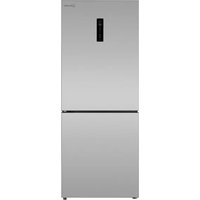
VFC417NFEX - Refrigerator VEDETTE - Free user manual and instructions
Find the device manual for free VFC417NFEX VEDETTE in PDF.


| Product type | Free-standing fridge-freezer |
| Brand | Vedette |
| Model | VFC417NFEX |
| Dimensions (H x W x D) | 1850 x 703 x 670 mm |
| Total volume | 417 liters (refrigerator 276 L, freezer 141 L) |
| Energy class | E (consumption 278 kWh/year) |
| Noise level | 37 dB(A) – class C |
| Power supply | 220-240 V ~ 50 Hz, 1.6 A |
| Refrigerant | R600a (68 g) |
| Climate class | SN/N/ST/T (10 °C to 43 °C) |
| Defrost | Automatic (refrigerator and freezer) |
| Freezing capacity | 6.5 kg/24h |
| Lighting | LED (class G, replacement by professional) |
| Main functions | Power Cool, Power Freeze, Holiday, child lock, door alarm |
| Temperature setting | Refrigerator 2-8 °C, freezer -24 to -15 °C |
| Maintenance and cleaning | Monthly cleaning with neutral detergent; automatic defrost |
| Safety | Child lock, door alarm, overheat protection, delayed restart 5 min |
| Spare parts and repairability | Legal warranty 2 years, parts availability 10 years |
| Coldest zone | Indicated by a symbol; check with the "OK" indicator |
Frequently Asked Questions - VFC417NFEX VEDETTE
User questions about VFC417NFEX VEDETTE
0 question about this device. Answer the ones you know or ask your own.
Ask a new question about this device
Download the instructions for your Refrigerator in PDF format for free! Find your manual VFC417NFEX - VEDETTE and take your electronic device back in hand. On this page are published all the documents necessary for the use of your device. VFC417NFEX by VEDETTE.
USER MANUAL VFC417NFEX VEDETTE
natural_image
Simple line drawing of a refrigerator with a vertical handle and two horizontal legs (no text or symbols)VFC417NFEX
Sommaire
natural_image
Cartoon illustration of a smiling rectangular character standing on a tiled floor with arrows indicating direction (no text or symbols)natural_image
Cartoon illustration of a smiling face inside a box with hands clasped, surrounded by snowflakes and decorative elements (no text or symbols)natural_image
Cartoon illustration of a smiling cube with steam rising, placed on a base with steam lines (no text or symbols)Remarques:
natural_image
Illustration of hands holding a grid-based object with directional arrows indicating rotation (no text or symbols)flowchart
graph LR
    A["LED"] --> B["Sensor Icon"]
    B --> C["LED"]
natural_image
Line drawing of a mechanical assembly with a base and lever mechanism (no text or symbols)natural_image
Diagram showing a hand holding a rectangular object with an upward arrow, no text or symbols presentnatural_image
Line drawing of a plug and a wall-mounted electrical socket with a switch (no text or symbols)EN Refrigerator Combi Operating Instructions
natural_image
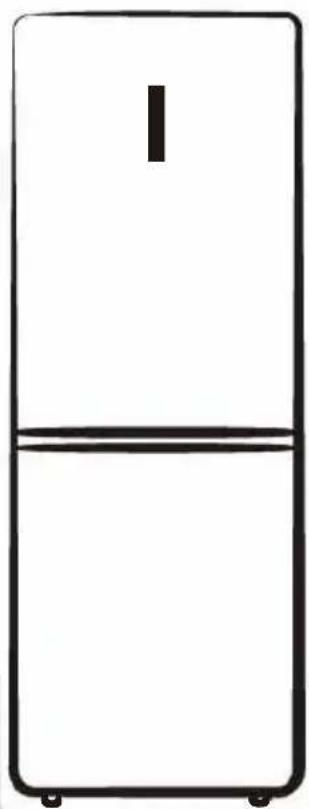
Simple line drawing of a refrigerator with a vertical handle and front panel (no text or symbols)VFC417NFEX
Contents
Safety instructions -3-
Product introduction - 8 -
Handling and placement -9-
Preparations prior to use - 10 -
Operation notes -11-
Ice-making - 17 -
Cleaning and care - 18 -
Coldest zone in the refrigerator - 19 -
Technical parameter - 23 -
Trouble shooting - 24 -
Explanation of specific phenomena - 24 -
Correct disposal of this product - 25 -

This product is for household use only!
Please read these instructions carefully before the first use of this product and save this manual for your future reference.
Contents
-
If the supply cord is damaged, it must be replaced by the manufacturer, its service agent or similarly qualified persons in order to avoid a hazard.
-
This appliance can be used by children aged from 8 years and above and persons with reduced physical, sensory or mental capabilities or lack of experience and knowledge if they have been given supervision or instruction concerning use of the appliance in a safe way and understand the hazards involved. Children shall not play with the appliance. Cleaning and user maintenance shall not be made by children without supervision.
3.WARNING: Keep ventilation openings, in the appliance enclosure or in the built-in structure, clear of obstruction.
4.WARNING: Do not use mechanical devices or other means to accelerate the defrosting process, other than those recommended by the manufacturer.
5.WARNING: Do not damage the refrigerant circuit.
6.WARNING: Do not use electrical appliances inside the food storage compartments of the appliance, unless they are of the type recommended by the manufacturer
7. Do not store explosive substances such as aerosol cans with a flammable propellant in this appliance.
8. This appliance is intended to be used in household and similar applications such as
— Staff kitchen areas in shops, offices and other working environments;
— Farm houses and by clients in hotels, motels and other residential type environments;
— Bed and breakfast type environments;
— Catering and similar non-retail applications.
- Regarding the details for safe storage of food, installation and maintenance, Please refer to the relevant sections of the manual.
- Please according to local regulations regarding disposal of the appliance for its flammable blowing gas. Before you scrap the appliance, please take off the doors to prevent children trapped.
Safety instructions
1. Warning
Warning: No barrier is allowed around the appliance or in the embedded structure in order to ensure the free ventilation.
Warning: It is forbidden to speed up the defrosting process with any mechanical equipment or by other method except for the method recommended by the manufacturer.
Warning: Never damage the refrigerating circuit.
Warning: Never use any electric apparatus in the food chamber of the appliance except for the type recommended by the manufacturer.
Warning: Never place the liquid beverage or food contained with glass container in the freezing chamber for fear of cracking.
Warning: If powered off, the refrigerator shall be powered on 5min later for fear of damaging the compressor.
Warning: If any live part, abnormal noise, smell, smoke or other abnormality is found during use, it is necessary to power off the appliance immediately and contact the after-sales service department of the Company timely.
Warning: Never place your finger or hand under the refrigerator, especially rear bottom of refrigerator; otherwise, you may be hurt by the sharp matter.
Warning: The children must not play or climb the refrigerator. The operation by the children must be supervised by their parents for fear of danger.
Warning: Never place your hand between the doors to open or close door for fear of jamming your finger.
The door handle shall be used to open or close the door.
Warning: Under the rated climate types SN, N and ST, the operating ambient range of the appliance is 10°C\~38°C; under the climate types SN, N, ST and T, the operating ambient range of the appliance is 10°C\~43°C. If the appliance operates outside the rated climate type (ambient temperature range), the appliance may not maintain the satisfying interior temperature.
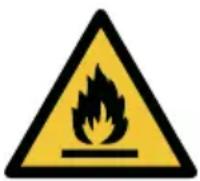
Warning: Risk of ire / flammable materials
Warning: When positioning the appliance, ensure the supply cord is not trapped or damaged.
Warning: Do not locate multiple portable
socket-outlets or portable power supplies at the rear of the appliance.
Children aged from 3 to 8 years are allowed to load and unload refrigerating appliances.
To avoid contamination of food, please respect the following instructions:
- Opening the door for long periods can cause a significant increase of the temperature in the compartments of the appliance.
- Clean regularly surfaces that can come in contact with food and accessible drainage systems.
- Store raw meat and fish in suitable containers in the refrigerator, so that it is not in contact with or drip onto other food.
- Two-star frozen-food compartments are suitable for storing pre-frozen food, storing or making ice-cream and making ice cubes.
- One-, two- and three-star compartments are not suitable for the freezing of fresh food.
- If the refrigerating appliance is left empty for long periods, switch off, defrost, clean, dry, and leave the door open to prevent mould developing within the appliance.
This refrigerating appliance is not intended to be used as a built-in appliance.
2. Attention
Cautions: The power supply of this product must be uniform with the power supply
mentioned on the nameplate, and the standard independent 3-hole socket shall be used (above 10A, and reliably grounded). One socket must not be shared by more than one appliance; otherwise, ire may be caused due to overheat.
Cautions: Never pull the power wire by hand. It is necessary to hold and unplug the power connector from the socket to disconnect the power supply. The power wire or connector must not be touched by the wet hand for fear of electric shock.
Cautions: The power wire must not be squeezed by the refrigerator or any heavyload, and the power wire shall not be bent extremely. The damage or peeling of power wire may result in ire or electric shock. If the power wire is broken or cut, please contact the after-sales service department immediately.
Cautions: No flammable or explosive matter or corrosive acid or alkaline matter is allowed in the refrigerator.
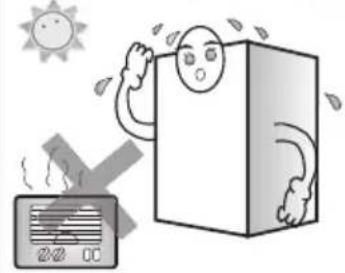
Cautions: The refrigerator must not be used in the rain or under the sunshine.
Cautions: It is forbidden to place the container with fluid on the refrigerator because the breakage or turnover of the container may affect the electrical insulation of refrigerator and result in electric shock or fire.
Cautions: The refrigerator must not be disassembled or modified without permission. The repair of refrigerator must be performed by the specialist.
Cautions: In case of leakage of any flammable gas such as coal gas, it is necessary to close the leaking valve first and then open the window for ventilation, and forbidden to unplug the refrigerator connector immediately for fear of fire or explosion due to electric spark.
Cautions: Refrigerating appliances - in particular a refrigerator-freezer Type I- might not operate consistently (possibility of defrosting of contents or temperature becoming too warm in the frozen food compartment) when sited for an extended period of time below the cold end of the range of temperatures for which the refrigerating appliance is designed;
Cautions: The fact that effervescent drinks should not be stored in food freezer compartments or cabinets or in low-temperature compartments or cabinets, and that some products such as water ices should not be consumed too cold.
Cautions: The need to not exceed the storage time(s) recommended by the food manufacturers for any kind of food.
Cautions: The precautions necessary to prevent an undue rise in the temperature of the frozen food while defrosting the refrigerating appliance, such as
wrapping the frozen food in several layers of newspaper.
Cautions: The fact that a rise in temperature of the frozen food during manual defrosting, maintenance or cleaning could shorten the storage life.
Cautions: The care required with regard to frozen food in storage in the event of an extended non-running of the refrigerating appliance (interruption of power supply or failure of the refrigerating system).
Cautions: The action to be taken when the refrigerating appliance is switched off and taken out of service temporarily or for an extended period (e.g. emptied, cleaned and dried, and the door(s) or lid(s) propped ajar).
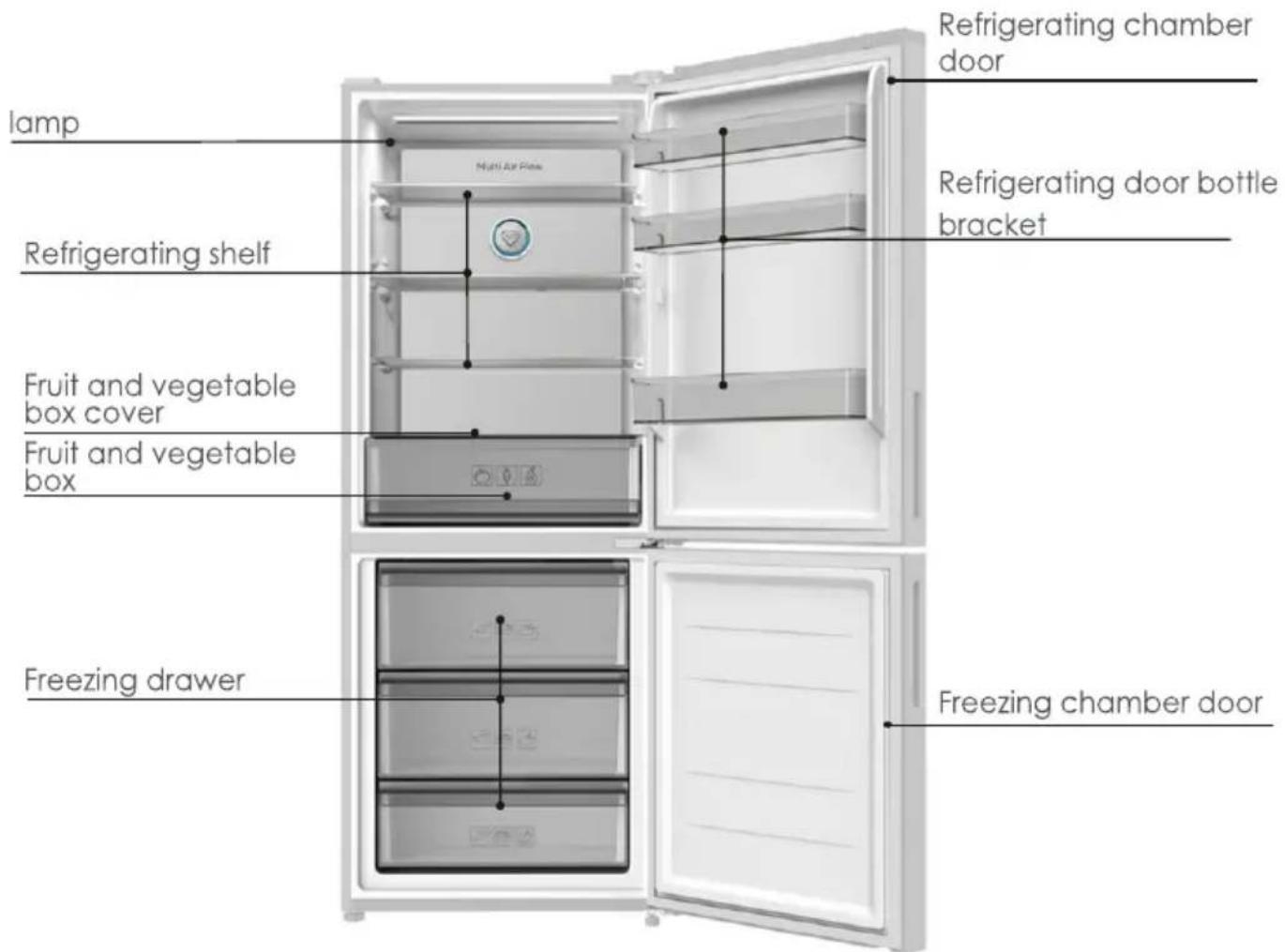
Product introduction
Handling and placement
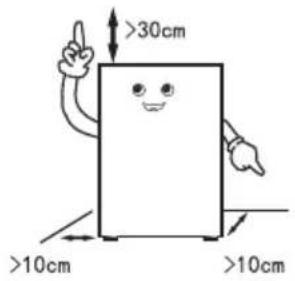
Certain space shall be left around the refrigerator, shown in the figure.
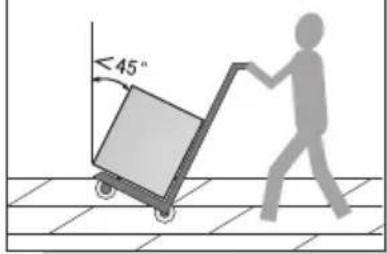
During handling, the door side of the refrigerator shall not contact with the handling tools
The refrigerator shall be placed in an environment which is dry, has good ventilation, far from direct sunshine and heat source.
natural_image
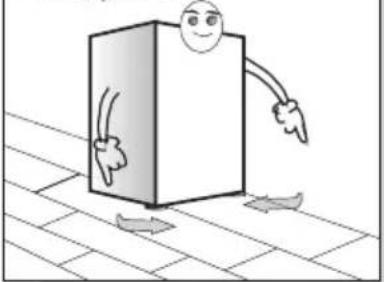
Illustration of a cartoon character standing beside a box with steam rising, under a sun and no text or symbols present.The refrigerator shall be placed on the flat and firm surface. If the ground is not flat, adjust the adjusting leg to keep it level.
natural_image
Cartoon illustration of a smiling rectangular box with arms and legs, standing on a tiled floor with directional arrows (no text or symbols)Never place the refrigerator into a too cold environment that may get frozen.
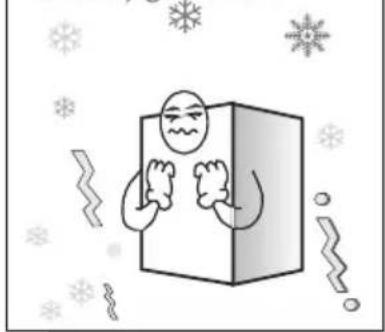
natural_image
Cartoon illustration of a distressed character inside a box surrounded by snowflakes and decorative elements (no text or symbols)Removing the foam base is beneficial for bottom heat dissipation and can avoid fire.
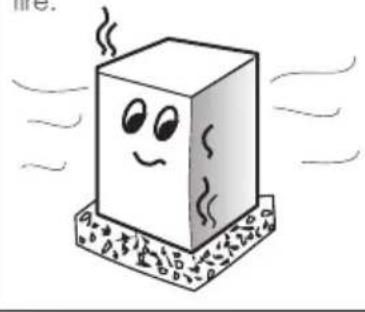
natural_image
Cartoon illustration of a smiling cube on a steaming platform (no text or symbols)Warm prompt:
- When handling the refrigerator, at least two persons are required – one lifts the top of rear part, the other one handles the bottom (if one part is clamped, it is quite dangerous and may cause accident).
--When moving the refrigerator, the lower runner may damage and scratch the floor. If you need to move the refrigerator for a long distance, the internal accessories shall be fixed using adhesive tape. Otherwise, the accessories may get damaged due to crashing each other.
--Please place the refrigerator in the position with small vibration or little exposed to vibration. For users in the area where earthquake often occurs, please fix the refrigerator against the wall or pole. Otherwise, the falling of refrigerator will cause accident.
--Sufficient clearance shall be left around. If the clearance is too small or place goods on the top or close to the side, or paste on the sides, the heat dissipation of refrigerator will be affected, and thus to cause unnecessary electric energy waste as well as burn out of the wall and other goods; the contact between the back and wall will cause vibration and noise;
-Adjust the front part and adjusting leg of the refrigerator to level it. Unlevel of the refrigerator will cause vibration and noise.
This refrigerating appliance is not intended to be used as a built-in appliance
The outline dimension of the product and the space needed by the use of product are shown in the following.
pictures:
Outline dimension of product
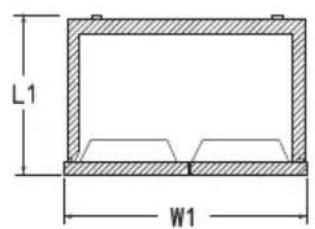
Space needed by the use of product
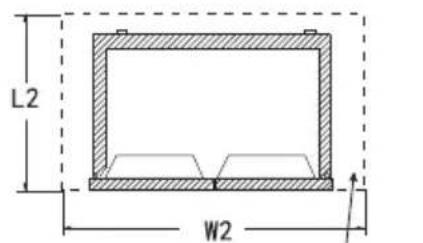
Total space needed by the use of product
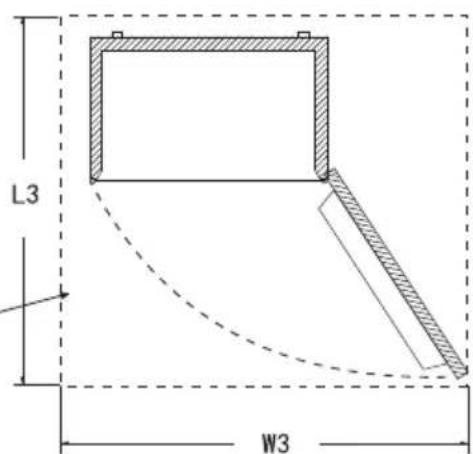
Unit:mm
| Outline dimension of product | Space needed by the use of product | Total space needed by the use of product | |||
| L1 | W1 | L2 | W2 | L3 | W3 |
| 670 | 703 | >L1+100 | >W1+200 | >L1+670 | >W1+600 |
Preparations prior to use
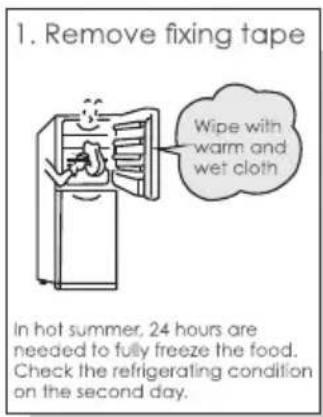
- Remove all packing assemblies such as case fixing tape etc., especially the foam base.
- Use warm wet cloth to clean both interior and exterior of the refrigerator, (neutral detergent can be added in warm water).
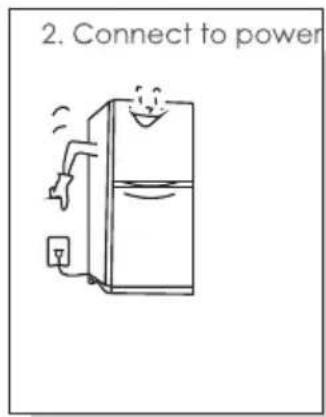
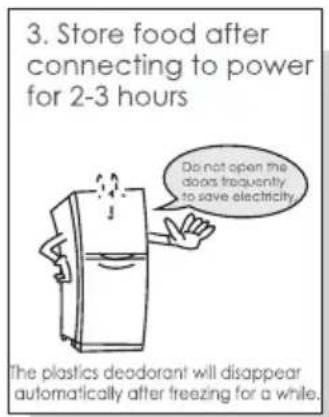
- After leveling and cleaning the refrigerator, stand it for about 5 hours before plugging the power plug for powering on, and cool the refrigerator for 2 to 3 hours before storing foods.
Operation notes
Operation and diagram of display board
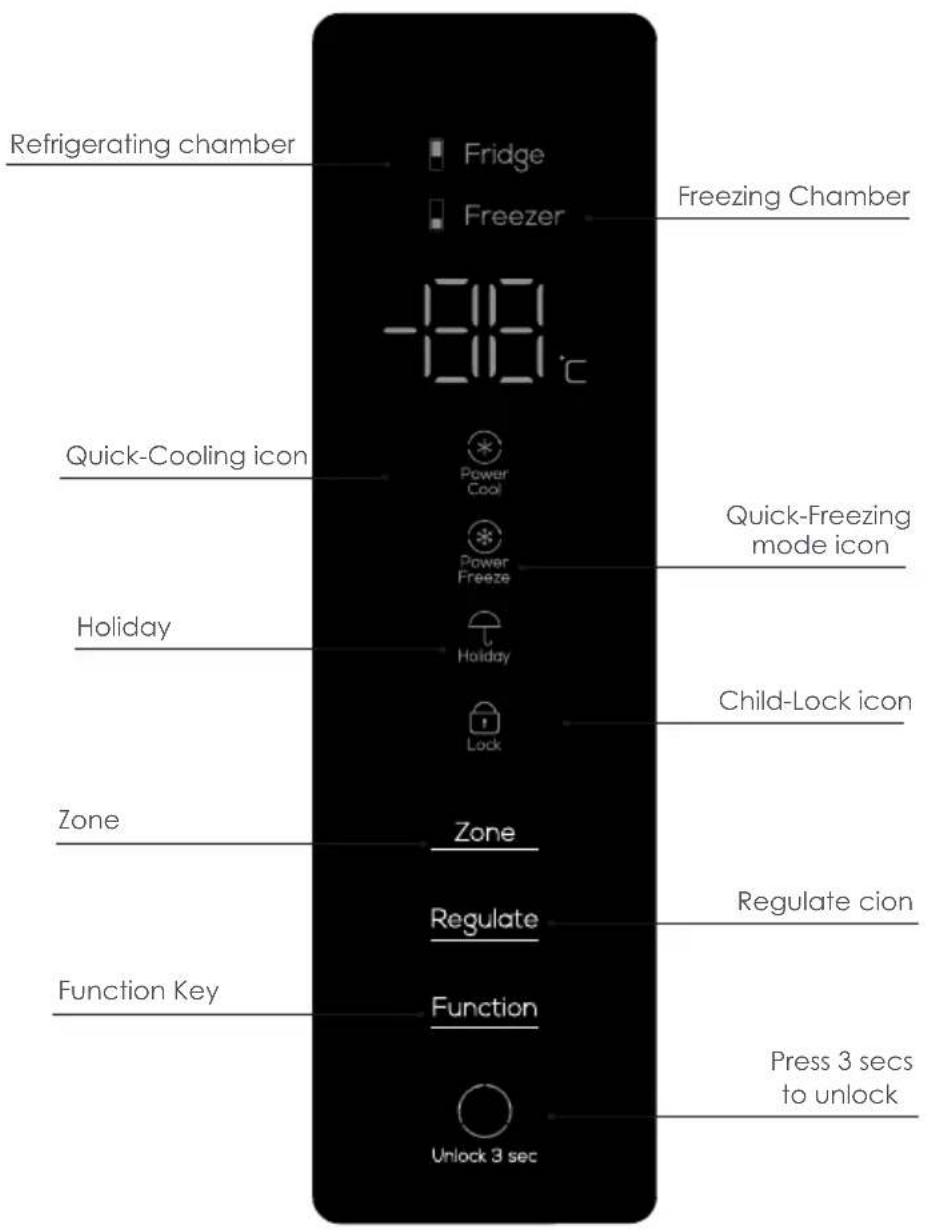
The above is the computer control board of the product
Powered on for the first time
When it is powered on for the first time, the refrigerator will start the intelligent mode and run at 5°C for the refrigerator chamber and-18C for the freezer chamber.
Child lock function Turn
on: when there is no key operation on the display screen, after 30 seconds, the keyboard is automatically locked and the child lock function is turned on; Turn off: when the display screen is in the locked state, press the “unlock 3 sec” key and hold it for 3 seconds to unlock, and the child lock function is turned off.
Manual temperature adjustment
When there is no key operation on the display within 30 seconds, the display will go out automatically, and the keyboard will be automatically locked. When the display is off, press the button for the first time to wake up the display; press and hold the “unlock 3 sec” button for 3 seconds to unlock, and then press the button again to make the button function effective.
Refrigerator chamber temperature adjustment (2°C\~8°C)
In the unlocked state, repeatedly press the “Zone” button until the refrigerated storage temperature area is lit, and then presses the “Regulate” button to adjust the temperature of the refrigerator chamber. The temperature of the refrigerator chamber should be set between “02” - “03” - “04” - “05” - “06” - “07” - “08” - “02”. Select the appropriate temperature to stop the key operation, and then set the temperature range for confirmation.
Freezer chamber temperature adjustment (-24°C\~- 15°C) In the unlocked
state, repeatedly press the “Zone” button until the freeze storage temperature area is lit, and then presses the “Regulate button to adjust the temperature of the freezer chamber. The temperature of the freezer chamber should be set between “-24”-“-23”-“-22”_“-21”-“-20”-“-19”-“-18”-“-17”...“-16”-“-15”-“-24”. Select the
appropriate temperature to stop the key operation, and then set the temperature range for confirmation.
Power Cool function
When the refrigerator is under unlock state, press" Function" button repeatedly till the "Power Cool" icon blinks, after that, stop the key operation and wait for 3 seconds to enter refrigerator chamber power cool function. You can quit the power cool function with the same operation. Once entering" Power Cool", The Refrigerator will automatically quit the power cool function after entering it for 2 hours." Power Cool" Under "Power Cool" state, the setting temperature for the refrigerator chamber is displayed by 2°C till quitting the function. Under" Power Cool" state when setting other functions, you may automatically quit the power cool function. Under "Power Cool" state you will automatically quit the power cool function when the refrigerating door is opened over 3 minutes. (Under "Power Cool" state, when setting other functions, you may automatically quit the power cool function)
Power Freeze function
When the refrigerator is under unlock state, press" Function" button repeatedly till the "Power Freeze" icon blinks, after that, stop the key operation and wait for 3 seconds to enter freezer chamber power freezing function. You can quit the power freezing function with the same operation. Once entering" Power Freeze, After the fast freezing function is activated the refrigerator will start the strong freezing for 4h, and then stop the fast freezing automatically. Under "Power Freeze" state the setting temperature for the freezer chamber is displayed by -32°C till quitting the function. Under" Power Freeze" state when setting other functions, you may automatically quit the power freezing function. Under "Power Freeze" state, you will automatically quit the power freezing function when the freezing door is opened over 3 minutes.
Operation notes
(Under "Power Freeze" state, when setting other functions, you may automatically quit the power freezing function)
Holiday functionIn
the unlocked state, press the “Function” key repeatedly until the “Holiday” icon lashes, stop the key operation and wait for 3 seconds to enter the holiday function. In holiday mode, the position of refrigerator refrigerating chamber shows” OF, and the refrigerating chamber enters the closed state. (In the “Holiday” state, when other functions are set the holiday function maybe automatically exited) Note: Before activating the holiday function, please take out the food in the refrigerating chamber.
Power off memory
When power goes off, the instantaneous working state at the time of power off will be locked. After power on, it will still work according to the setting before power off.
Door alarm
If the refrigerator or freezer door is not closed tightly or stays open for more than 1 minute, beep issue “Di, Di, Di”. Press any key to pause the alarm; send an alarm again after 1 minute close the refrigerator or freezer door tightly to stop the alarm.
Over temperature warning of freezer chamber
When the power is switched on, the temperature of the freezer chamber is higher than -12^ . Cthe schematic box corresponding to the temperature zone of the freezer chamber is on and the digital zone fashes. Press any key to display the temperature of the freezer chamber when it is powered on press the key again or 10seconds later, it will return to the normal display state.
Display protection function
If there is no any key operation within 30 seconds, the refrigerator will enter the display protection function, and the keyboard will be automatically locked. In the display protection mode, press any key to exit the display protection function.
Foods storage
Refrigerating chamber (2 \~8°C)
--The refrigerating chamber is mainly used for storing short-term foods, like milk, eggs and bottled drink.
--Vegetables, melons and fruits shall be put into the fruit and vegetable box to prevent water loss.
--The cooked foods shall be put into the refrigerator after packaging with the preservative bags, to prevent the back from frosting and the power from increasing.
Refrigerated food
For optimized storage, please refer to the storage time shown in the table below.
| Food | Location | Storage time |
| Butter, cheese | Upper door rack | 2 week |
| Eggs | Door rack | 2 - 3 week |
| Fruit, vegetables, salad | Crisper | 5 - 7 day |
| Meat, sausage, cheese, milk | Lower area (lowest shelf / crisper cover) | 2 day |
| Dairy products, canned food, cans | Upper area or door rack | 5 - 7 day |
| Drinks, bottles, tubes | Door rack | Opened: 2 dayUnopened: can be drink during sell-by date |
Freezing chamber (-22 \~ -15°C)
--The freezing chamber is used for the foods to be stored for long-term.
--Fish and meat to be frozen shall be cut into small pieces, packaged with preservative bags separately and then put into the frozen drawer. --The glass container or the sealed container filled with liquid shall not be stored in the freezing chamber, to prevent the risk of burst due to freezing.
--The fresh foods shall not be stored together with the frozen foods.
--Do not place food close to inside wall in freezer lest food and wall should be frozen together.
| Food | Storage time |
| Bacon, casseroles, milk | 1 month |
| Bread, ice cream, sausages, pies, prepared shellfish, oily fish | 2 month |
| Non-oily fish, shellfish, pizza, scones and muffins | 3 month |
| Ham, cakes, biscuits, beef and lamb chops, poultry pieces | 4 month |
| Butter, vegetables (blanched), eggs whole and yolks, cooked crayfish, minced meat (raw), pork (raw) | 6 month |
| Fruit (dry or in syrup), egg whites, beef (raw), whole chicken, lamb (raw), fruit cakes | 12 month |
The temperature will impact the storage time of food. Too Warm or too cold will both speed up the spoilage of food.
Ice-making
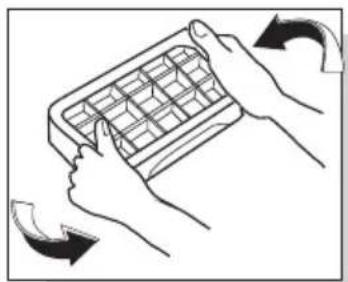
Fill the ice-making box with 4/5 water and put the box into the freezing chamber. After the water in the box turns into ice, twist the box slightly to separate the ice from the box. However, don't bend the box. When separating the ice, wrap the box with dry box to avoid finger frostbite.
natural_image
Illustration of hands holding a grid-based object with directional arrows indicating rotation (no text or symbols)LED light replacement
flowchart
graph LR
    A["LED"] --> B["Sensor Icon"]
    B --> C["LED"]
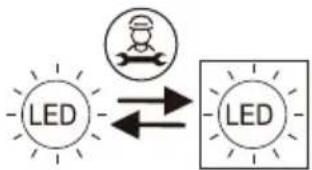
LED lighting source Replaceable by professional
Warning: the LED light must not be replaced by the user! If the LED light is damaged, contact an authorized service representative for repairing. The product contains a light source of energy efficiency class G.
Operation notes
Disassembly and assembly method of accessory
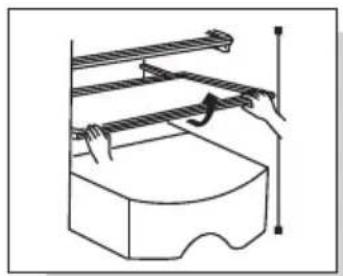
--Glass shelf in the refrigerating chamber: the height of the shelf is adjustable, which facilitates the storage of articles with different volumes. Pull the shelf outwardly and upwardly in a slight way to take out.
--Fruit and vegetable box: for storing vegetables and fruits. It can be taken out by pulling outwardly.
--Drawer in the freezing chamber: storing foods to be preserved for long-term, such as meat and fish. It can be taken out by pulling outwardly and lifting upwardly.
Kindly tips: It is recommended to put into the large piece of meat after being cut into small pieces, to avoid difficult cutting after being frozen. The quick-freezing foods shall be distributed uniformly and stored together after being frozen.
--Bottle pedestal at the refrigerating door: storing eggs, various bottled drinks and other sundries. It can be taken out by being lifted up slightly.
Note: Don't pull out the bottle pedestal at the refrigerating door forcibly during disassembly, to avoid damaging the refrigerator.
natural_image
Technical line drawing of a mechanical assembly with no visible text or symbolsTake out by pulling upwardly and outwardly in a slight way
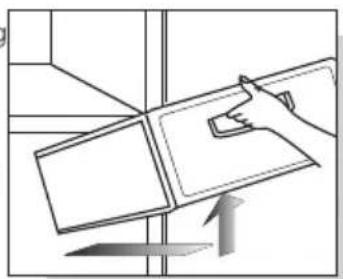
natural_image
Simple line drawing of a hand pressing down on a wooden panel with an upward arrow (no text or symbols)Take out by pulling outwardly and upwardly in a slight way
Maintenance
It is suggested to maintain the refrigerator once per month;
--Unplug the power plug to prevent from electric shock;
--Use wet cloth or neutral detergent (cleanser essence) to wipe off the oil contamination and other dirt. Then completely wipe off the detergent.
--Do not use alkaline detergent, soap powder, gasoline and alcohol, talcum powder etc.; otherwise the coats or plastics may be damaged;
--Regularly clean the refrigerator body and clear the ground dusts to keep the refrigerator clean.
Inspections after maintenance:
- Whether there are damages to the power line and plug; 2. Whether there are dusts on the power plug; 3. Whether there is abnormal heat on the plug; 4. Whether the socket is loose; 5. Whether the plug is totally inserted.
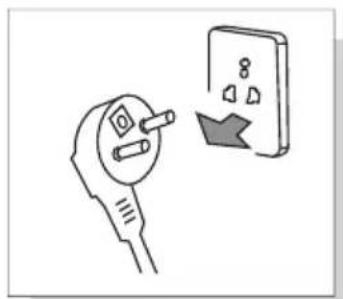
natural_image
Line drawing of a plug and electrical outlet with a switch, showing an arrow indicating power or current direction (no text or symbols)Unplug the refrigerator plug before cleaning
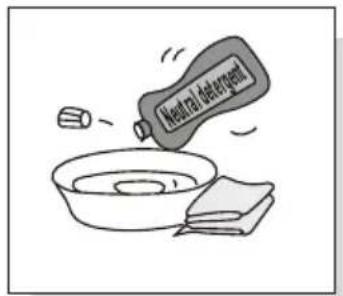
Please use neutral detergent
Note:
If the power line and plug is damaged and there exist dusts, electric shock or fire may occur;
After unplugging the plug, 5 minutes must pass before re-plugging it;
Do not put your hands under the refrigerator to avoid getting hurt.
COLDEST ZONE IN THE REFRIGERATOR
This symbol indicates the location of the coldest zone of the refrigerator. The area is bounded below by the glass crisper, and above by the symbol or the rack positioned at the same height.
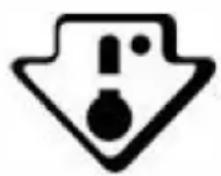
To ensure the temperature in this area, do not change the positioning of the shelf. In forced air refrigerators (equipped with a fan or No Frost models), the symbol of the coldest zone is not represented because the temperature inside is homogeneous.
Temperature indicator setting
To help you set your refrigerator well, it is equipped with a temperature indicator that will monitor the average temperature in the coldest zone.
WARNING: This indicator is intended to work only with your refrigerator, do not use it in another refrigerator (in fact, the coldest zone is not the same), or for any other use.
Checking the temperature in the coldest zone
With the temperature indicator, you can check regularly that the temperature of the coldest zone is correct. Indeed, the internal temperature of the refrigerator depends on several factors such as the ambient temperature of the room, the amount of food stored and
the frequency of door opening. Take these factors into consideration when setting the device. When the indicator shows « OK », this means that your thermostat is well adjusted and the internal temperature correct.


If the indicator of temperature turns WHITE, this means that the temperature is too high; in this case, increase the refrigerator temperature control setting and wait for 12 hours before performing a new visual inspection of the indicator.
When fresh food has been introduced or the door has been left open, it is possible for the indicator of temperature to turn WHITE after a while.
| General information cooling | |||||
| Supplier's name or trademark: Vedette | |||||
| Supplier's address: BUT INTERNATIONAL, 1 AVENUE SPINOZA 77184 EMERAINVILLE, FRANCE | |||||
| Model reflitnedi: VFC417NFEX | |||||
| Type of refrigerating appliance: | |||||
| Low-noise appliance: | no | Design type: | freestanding | ||
| Wine storage appliance: | no | Other refrigerating appliance: | yes | ||
| General product parameters: | |||||
| Parameter | Value | Parameter | Value | ||
| Overall dimensions | Height | 1850 | Total volume(dm3ou l) | 417 | |
| Width | 703 | ||||
| Depth | 670 | ||||
| EEI | 100 | Energy efficiencyclass | E | ||
| Airborne acoustical noise emissions (dB(A) pW)re l | 37 | Airborne acoustical noise emission class | C | ||
| Annual energy consumption | 278 | Climate class: | SN/N/ST/T | ||
| Minimum ambient temperature(°C), for which therefrigerating appliance is suitable | 10 | Maximum ambient temperature(°C), for which the | 43 | ||
| Winter setting | no | ||||
| Compartment Parameters: | |||||
| Compartment type | Compartment parameters and values | ||||
| Compartment Volume (dm3 orl) | Recommended temperature setting for optimized food storage (°C)These settings shall not contradict he storage | Freezing capacity | Defrosting type (auto-defrost = A, manual defrost=M) | ||
| Pantry | no | — | — | — | — |
| Wine | no | — | — | — | — |
| Cellar | no | — | — | — | — |
| Fresh food | yes | 276 | 4 | — | A |
| Chill | non | — | — | — | — |
| Compartment type | Compartment parameters and values | |||||
| Compartment Volume | Recommended temperature setting for optimised food storage (°C)These settings shall not contradict the storage | Freezing capacity (kg/24h) | Defrosting type (auto-defrost=A, manual defrost | |||
| 0-stapricice-making | non | - - | - - | |||
| 1-star | non | - - | - - | |||
| 2-star | non | - - | - - | |||
| 3-star | non | - - | - | - | ||
| 4-star | oui | 141 -18 | 6.5 | A | ||
| 2-star | non | - - | - - | |||
| Variable temperature | non | - - | - | |||
| For 4-star compartments | ||||||
| Fast freeze facility | Yes | |||||
| Light source parameters: | ||||||
| Type of lightsource | LED | |||||
| Energy efficiency class | G | |||||
| Minimum duration of the guarantee offered by the manufacturer: | ||||||
| Additional information:Weblink to the manufacturer's website, where the information in point 4(a) Annex of Commission Regulation (EU) 2019/2019 is found: www.but.fr | ||||||
Technical Information
| Reference: | VFC417NFEX |
| Rated voltage: | 220-240V~ |
| Ampere: | 1.6A |
| Defrost power input: | 185W |
| Rated frequency: | 50Hz |
| Climate class: | SN/N/ST/T |
| Refrigerant: | R600a(68g) |
| Protection against electrical shock: | I |
| Insulation foam: | Cyclopentane |
Climate class:
-Extended temperate (SN): 'this refrigerating appliance is intended to be used at ambient temperatures ranging from 10°C to 32°C';
-Temperate (N): ‘this refrigerating appliance is intended to be used at ambient temperatures ranging from 16°C to 32°C ’;
-Subtropical (ST): 'this refrigerating appliance is intended to be used at ambient temperatures ranging from 16°C to 38°C';
-Tropical (T): 'this refrigerating appliance is intended to be used at ambient temperatures ranging from 16°C to 43°C';
Note: More data information, please scan the QR code on the energy label.
Trouble shooting
The following items shall be inspected before occurring failures which require maintenance:
Failures: Refrigerator does not work, The refrigeration effect is poor
Causes:1. Check the connection of power supply. 2. Check whether the refrigerator is exposed to direct sunlight or whether there is heat source nearby. 3. Check whether there is heat dissipation space around refrigerator.
Remedies:1. Connect the power supply. 2. Move the refrigerator to a place without direct sunlight and heat source. 3. Leave sufficient space between refrigerator and wall.
Failures: Foods in refrigerating chamber are frozen
Causes:1. Check whether the setting temperature is too low. 2. Check whether foods with too much water are too close to the rear wall.
Remedies: 1. Adequately increase the temperature. 2. Move the foods with too much water to the door side of glass shelf
Failures: There is abnormal sound in refrigerator
Causes: 1. Check whether the bottom of refrigerator is stable. 2. Check whether the refrigerator is too close to the wall. 3. Check whether the refrigerator touches other objects.
Remedies: 1. Adjust the bottom adjusting leg to stabilize the refrigerator. 2. Leave sufficient space around refrigerator. 3. Remove the obstacles.
Failures: There is abnormal odor in refrigerator
Causes: 1. Check whether the foods are sealed for storage. 2. Check whether the refrigerator is clean. 3. Check whether the foods are stored for too long time.
Remedies: 1. Sealed foods for storage. 2. Regularly clean the refrigerator. 3. Do not store foods for too long time.
Explanation of specific phenomena
Phenomenon: Fever or hot on two sides and spacing part surface between refrigerating chamber and freezing chamber.
Cause: Refrigerator pipes (condenser, anti-fog pipes) are on two sides and front part of refrigerator for heat dissipation and to prevent from condensation.
Phenomenon: The door is too tight and not easy to open
Cause: Reopening of the door immediately after closing it is hard because hot air enters the refrigerator and contracts to produce pressure difference. It is easy to open the door after a while.
Phenomenon: There is water ripple in refrigerator
Cause: When starting or stopping the compressor, the refrigerant will make such sound; Water produced after defrosting will also make such sound.
Phenomenon: There is "Click" sound or tick sound in refrigerator
Cause: Shrinkage and swelling of case will make such sound; When the case is cold or the door is opened, this sound will occur; Phenomenon: There is hum sound in refrigerator Cause: Running of compressor will make such sound (if the refrigerator is not leveled, this sound will be louder)
Phenomenon: There is condensation or frosting freezing chamber door surface or food surface
Cause: Temperature or humidity around the refrigerator is high; The door is opened for too long time; The foods with too much water are not sealed or tightly wrapped
Phenomenon: There is condensation on the built-in light surface
Cause: Light will produce heat after being lit, and the door is opened for too long time. So there is temperature difference, and thus the light case will have condensation.
Phenomenon: There is condensation and water mist on body
Cause: Humidity around refrigerator is high, and the moisture in the air will gather in the case to form condensation.
Correct disposal of this product
We decline liability for any damage or accident derived from any use of this product which is not in conformity with the instructions contained in this booklet.
| Correct disposal of this product | |
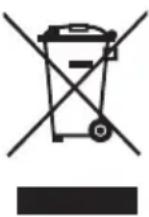 | European directive 2012/19/EU on Waste from Electrical and Electronic Equipment (WEEE), requires that used household appliances are not thrown into the normal municipal waste stream. Used appliances must be collected separately in order to optimize the rate of recovery and recycling of materials that compose them, and to reduce the impact on human health and on the environment. The crossed bin symbol is affixed to all the products to remind you of the obligations of separated collection. |
Note:
• In accordance with Article L 217 of the Consumer Code, your product benefits from a legal guarantee of conformity of 2 years
• Duration of availability of spare parts: 10 years.
• To contact our After-Sales Service, before going to your BUT store, call 09 78 97 97 97, from Monday to Saturday from 8:00 am to 8:00 pm (local call price).

LE TRI

FACILE

- Sommaire
- Remarques:
- Contents
- This product is for household use only!
- Safety instructions
- Warning
- Attention
- Product introduction
- Handling and placement
- Warm prompt:
- This refrigerating appliance is not intended to be used as a built-in appliance
- pictures:
- Preparations prior to use
- Operation notes
- Powered on for the first time
- Child lock function Turn
- Manual temperature adjustment
- Refrigerator chamber temperature adjustment (2°C\~8°C)
- Freezer chamber temperature adjustment (-24°C\~- 15°C) In the unlocked
- Power Cool function
- Power Freeze function
- Holiday functionIn
- Power off memory
- Door alarm
- Over temperature warning of freezer chamber
- Display protection function
- Foods storage
- Refrigerating chamber (2 \~8°C)
- Refrigerated food
- Freezing chamber (-22 \~ -15°C)
- Ice-making
- LED light replacement
- LED lighting source Replaceable by professional
- Disassembly and assembly method of accessory
- Maintenance
- Note:
- COLDEST ZONE IN THE REFRIGERATOR
- Temperature indicator setting
- Checking the temperature in the coldest zone
- Climate class:
- Trouble shooting
- Explanation of specific phenomena
- Correct disposal of this product
Brand : VEDETTE
Model : VFC417NFEX
Category : Refrigerator