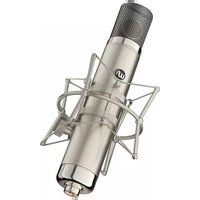
WA-CX12 - Microphone Warm Audio - Free user manual and instructions
Find the device manual for free WA-CX12 Warm Audio in PDF.


| Product Type | Large Diaphragm Tube Condenser Microphone |
| Brand | Warm Audio |
| Model | WA-CX12 |
| Capsule | CK12 solid brass, dual backplate, 24k gold-sputtered PET NOS 6 µm diaphragm |
| Vacuum Tube | 12AY7 Premium |
| Transformer | Custom TAB-Funkenwerk (AMI) USA |
| Polar Patterns | 9 (cardioid, omnidirectional, figure-8, 6 intermediate) |
| Maximum SPL | 149 dB |
| Frequency Response | 30 Hz - 20 kHz |
| Output Impedance | 200 Ohms |
| Signal-to-Noise Ratio | 73 dB |
| Self Noise (EIN) | 22 dBA |
| Power Supply | External, IEC socket with 115/230 V selector |
| Cable | Gotham GAC-7, 7-pin, 5 meters |
| Output | 3-pin XLR male |
| Microphone Dimensions | 29.5 x 5 cm (11 5/8 x 2 inches) |
| Microphone Weight | 1.1 kg (2 lbs 7 oz) |
| Total Weight | 7.7 kg (17 lbs) |
| Includes | Microphone, power supply, IEC cable, shock mount, 7-pin cable, tweed storage case |
| Warranty | 1 year (registration within 14 days of purchase) |
| Maintenance | Clean with a soft, dry cloth; avoid moisture |
| Safety | Check voltage before connection; do not open the device |
| Repairability | Repair possible through Warm Audio after-sales service |
| Spare Parts | Some parts (tube, transformer) available via after-sales service |
Frequently Asked Questions - WA-CX12 Warm Audio
User questions about WA-CX12 Warm Audio
0 question about this device. Answer the ones you know or ask your own.
Ask a new question about this device
Download the instructions for your Microphone in PDF format for free! Find your manual WA-CX12 - Warm Audio and take your electronic device back in hand. On this page are published all the documents necessary for the use of your device. WA-CX12 by Warm Audio.
USER MANUAL WA-CX12 Warm Audio
natural_image
Close-up of a metallic studio microphone with adjustable stand (no visible text or symbols)THANK YOU!
Thank you for purchasing the Warm Audio WA-CX12 condenser microphone. We feel this product offers the best in terms of sound, function, and vibe from the classic era of analog recording. We don't cut corners when it comes to what goes into our products, and the WA-CX12 is no exception. The WA-CX12 is a vacuum tube, large diaphragm, transformer balanced, 9-pattern condenser microphone based on the iconic '12 style microphone. Reimagined based on the original production run of '12 microphones from 1953-1963, the sound of the WA-CX12 can be heard on countless hit records of the last 50+ years. We at Warm Audio are very excited to bring this classic recreation to you at such an affordable price. We are confident you will enjoy creating a lifetime of beautiful recordings with the WA-CX12.
Bryce Young
President
Warm Audio
Leander, Texas USA
REGISTER YOUR WA-CX12!
Before we begin, please take the time to visit www.warmaudio.com to register your product. To ensure you receive proper and uninterrupted warranty support for your product, please register your unit within 14 days from purchase.
WARRANTY STATEMENT
Warm Audio warranties this product to be free from defect in materials and workmanship for one year from the date of purchase, for the original purchaser to whom this equipment is registered. This warranty is non-transferrable.
This warranty is void in the event of damage incurred from unauthorized service to this unit, or from electrical or mechanical modification to this unit. This warranty does not cover damage resulting from abuse, accidental damage, misuse, improper electrical conditions such as mis-wiring, incorrect voltage or frequency, unstable power, disconnection from earth ground (for products requiring a 3 pin, grounded power cable), or from exposure to hostile environmental conditions such as moisture, humidity, smoke, fire, sand or other debris, and extreme temperatures.
Warm Audio will, at its sole discretion, repair or replace this product in a timely manner. This limited warranty extends only to products determined to be defective and does not cover incidental costs such as equipment rental, loss of revenue, etc. Please visit us at www.warmaudio.com for more information on your warranty, or to request warranty service.
This warranty applies to products sold in the United States of America. For warranty information in any other country, please refer to your local Warm Audio distributor. This warranty provides specific legal rights, which may vary from state to state. Depending on the state in which you live, you may have rights in addition to those covered in this statement. Please refer to your state laws or see your local Warm Audio retailer for more information.
NON-WARRANTY SERVICE
If you have a defective unit that is outside of our warranty period or conditions; we are still here for you and can get your unit working again for a modest service fee. Please visit us at www.warmaudio.com to contact us about setting up a repair or for more information.
With the proper care, your Warm Audio gear should last a lifetime and provide a lifetime of enjoyment. We believe the best advertisement we can have is a properly working unit being put to great use. Let's work together to make it happen.
NOW LET'S GET STARTED!
INTRODUCTION
A faithful recreation of one of the most natural and balanced tube condenser microphones of all time, the WA-CX12 captures the true sound of sources and rooms with extreme accuracy. Used over and over again by some of the world's most recognized engineers and artists, the original microphone stands out as open, airy, and natural, making this unattainable classic a staple in any world class recording studio. With no-compromise components and elite build quality, the WA-CX12 delivers that iconic sound that no personal or professional mic locker is complete without.
With possibly the most natural sound profile in tube microphones, the WA-CX12 delivers the go-to sound when you need to capture natural, open audio. While the original is primarily celebrated for its use as a lead vocal mic, experienced engineers also cite defined bass, organic mids, and polished high end. Making the sound profile of the WA-CX12 a fantastic choice for several instruments and room-miking techniques. The organic tones from the WA-CX12 come from precise design methods pairing the CK12-style capsule with the custom large-core TAB-Funkenwerk USA output transformer.
Designing our WA-CX12 to sound like the classic '12 was no easy task, especially since some of the vintage components are no longer manufactured or available. We are thrilled to release such a gorgeous sounding, reborn classic to the market at a price that finally puts a once unattainable sound within reach.
A LOOK INSIDE THE WA-CX12
Solid Brass CK12-Style Capsule
Our carefully engineered CX-12 capsule is an all-brass, edge-terminated capsule that captures all the smoothness, rich top end, and warm vintage sonics of the original CK12 capsule. The CX12 uses a variant CEK-12 back plate as a basis, which overcomes manufacturing limitations of the original CK12 capsule. The O-ring and housing of the CX12 are all machined from solid brass and the diaphragm is 24k gold sputtered 6 micron, NOS PET film (mylar). The end result is a very consistent, reliable capsule which matches the frequency response and tonality of the classically spec'd 50s-60s capsule.
The Transformer
The WA-CX12 utilizes a custom, American-made TAB-Funkenwerk Output Transformer. This transformer helps provide the natural balance in the midrange with just a bit of top-end polish that one would hope to get from a 12-style condenser microphone.
The Cable
One component of a tube microphone that is often overlooked is the 7 pin cable that connects the microphone to its power supply. When Warm first started building and auditioning our tube microphones, we learned quite a bit about 7 pin cables and how the shielding and wire gauge size can drastically change the sonics of a tube microphone. We have partnered with Gotham Audio in Switzerland to use their very carefully built high-end 7 pin "GAC-7 cable". Using this cable increases top end presence and the overall size of the recorded image in the stereo field by reducing phase shift and the parasitic effect often experienced in poorly built cables. Gotham Cabling is a premium addition and manufactured to exacting standards. The additional durability and improved sound quality is no small addition to the overall value of the WA-CX12.
FEATURES
1. Contents
Your WA-CX12 package includes; the WA-CX12 microphone, power supply, IEC power cable, shock mount, 7 pin Gotham cable, and premium tweed storage box.
2. Power Switch
The power switch is located on the power supply.
3. IEC Power Inlet
The IEC power inlet is located on the rear side of the power supply and allows for a standard IEC cable to connect the power supply to your wall power outlet.
4. 115V/230v Voltage Selector Switch
A voltage selector switch is located near the IEC inlet on the power supply and allows for the user to set the appropriate voltage for the country they are located. We advise you to be careful with this switch because plugging in the unit at the wrong voltage setting will likely damage the WA-CX12 and its power supply. Plugging in the WA-CX12 power supply at the incorrect voltage could even cause injury or death. Typically the voltage selector switch will be pre-set to the proper voltage for the country where the product was purchased and should not be changed.
5. Polar Pattern Select Switch
The polar-pattern selection switch is located on the power supply and provides 9 pattern options. Patterns are: Cardioid, Omni, and Figure-of eight, and 6 intermediate stages.
6. 7 pin microphone cable connector (female)
A 7 pin female microphone cable connector is located on the power supply. The 7 pin Gotham branded cable included in the WA-CX12 box is connected to this connector on one end and to the WA-CX12 microphone on the other.
7. 7 pin microphone cable connector (male)
A 7 pin male microphone cable connector is located at the base of the WA-CX12 microphone. This connection pairs the WA-CX12 microphone to its power supply.
8. XLR Output
A standard 3 pin XLR male connector is located on the power supply. The microphone's signal will exit this connector. Connect this connector to a preamp via a standard 3 pin XLR microphone cable.
SPECIFICATIONS
- Custom edge terminated, dual-backplate, all-brass vintage CK12-style capsule
- Custom TAB-Funkenwerk (AMI) USA Output Transformer
• Premium 12AY7 vacuum tube - Premium Capacitors
- Polar Patterns: 9 Patterns - Cardioid, Omnidirectional, Figure-8, +6 additional mixed patterns
- Max SPL: 149dB
• Frequency Response: 30Hz-20kHz
• Output Impedance: 200 ohms
• Signal-to-Noise Ratio: 73dB
• EIN / Self-noise: 22dBA
• Power Source: External IEC grounded PSU - Cable: Gotham 5 meter GAC-7, premium 7-pin tube microphone cable
• Total Weight: 17 lbs, Mic only: 2lbs 7oz - Mic Dimensions: 11 5/8" x 2" (29.5cm x 5cm)
TIPS AND INSTRUCTIONS
GENERAL USES IN CARDIOID MODE
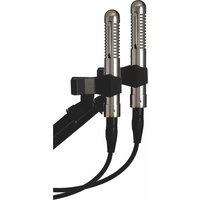
The classic '12-style microphone is known first and foremost as a lead and backing vocal microphone. It has been used to capture powerful vocal performances in rock, country, hip-hop, gospel, blues, metal, voiceover/spoken word, and just about every other genre out there. Two '12-style microphones for drum overhead recording, either in an X-Y configuration, or as a spaced pair, is a classic choice as well. Likewise, a pair of '12-style microphones in an X-Y configuration is a great way to achieve a big acoustic guitar sound. A single '12-style microphone is a good choice for capturing many guitar amps, either alone or in conjunction with additional dynamic or ribbon microphones.
USES IN OMNIDIRECTIONAL MODE
The omnidirectional pattern is most often associated with room mic recording, be it a room mic on a drum kit or an ambience mic placed farther out from a guitar or bass cabinet, or other instrument. Omnidirectional stereo recording is also sometimes associated with 'live' recording techniques and classical recording. Additionally, an omnidirectional mic can be one ingredient, along with a figure-of-eight microphone, in creating a Mid/Side stereo recording array. It is also worth noting that most condenser microphone capsules are, by nature, designed to be omnidirectional devices. For this reason, omnidirectional patterns tend to yield the most linear frequency response and suffer the least from proximity effect.
USES IN FIGURE-OF-EIGHT MODE
Figure-of-eight pattern recording is often used with pairs of the same microphone for advanced recording techniques such as the Blumlein Pair array; but has several more common practical applications as well, some of which only require a single microphone. One figure-of-eight application is to record a 'duet' or group vocal with a single microphone. Two or even four vocalists can stand on either side of the microphone, each getting the full attention of one side of the mic capsule. A variant of the duet application is when someone plays an instrument, such as acoustic guitar, into one side of the microphone while a partner sings into the other side. One of the more famous uses of the '12 style microphone is as a bass amplifier microphone. Setting the mic between 4 and 8 feet away from the bass amp and occasionally adding a second mic a few feet further combine for a noticeably pleasant round sound.
TIPS AND INSTRUCTIONS
MICROPHONE PLACEMENT & SPACING
When it comes to distancing a microphone from its sound source, one may think of this process, among other things, as choosing a desired ratio of original sound source to reflections and acoustic space. The closer to the source, the less space and ambience will be captured. In some cases, this is fully desirable; and ambience will be added in later via the magic of digital delay and reverb. In other cases, natural acoustics are critical. A great illustration of this is the recording of a gunshot or cannon fire: at very close range, the sound is surprisingly thin; however, at a distance, the sound becomes more full and explosive. This is a great reference to keep in mind; because to some degree, this phenomenon holds true with anything where natural acoustics is an important part of the sound, most notably with percussion. Beware that all processes do have boundaries and microphones do have a maximum SPL level they can be subjected to without distortion. Both microphones and preamps have a signal to noise ratio that tends to get poor in cases where more gain is required to make up for a distant signal. It's generally good advice to place a microphone about 12 inches from a source, and to fine-tune it from there until you have exactly what you are looking for.
A BRIEF WORD ON ROOM TREATMENT
Room acoustics can be just as important as the microphone you choose. Even the best microphone won't sound great if you are picking up unwanted reflections that can smear or comb-filter the sound you are recording. Just because a microphone is set to the cardioid pattern, does not mean that it is not picking up unwanted room reflections or outside noises such as street traffic, footsteps, or air conditioning vents. Though a walk-in vocal booth is hardly necessary for most situations; a good quality 'vocal shield' type product can make an enormous difference, often making the difference between a demo quality and a professional quality recording. Likewise, when recording combo amps and other instruments, using gobos or other acoustic isolation products can be hugely beneficial. Getting proper isolation, and just the right amount, but not too much room ambience is some thing that really cannot be effectively corrected later in the process. It is of the utmost importance to put in the extra time to set things up well in the beginning.
TIPS AND INSTRUCTIONS
SIGNAL INTEGRITY
In professional audio a chain is only as strong as its weakest link. When it comes to microphone cabling, a quality cable can make a big difference. Though not as critical as with instruments or dynamic microphones, a thin, poor quality, or worn XLR cable can affect the sound of a microphone. With extreme age or wear, gaps can form in the foil or spiral shield of a microphone cable, allowing RFI and EMI to leak through, or shield wiring can begin to make intermittent contact with the signal wire. XLR pins can corrode after many years of exposure, or solder joints break at the stress points inside an XLR barrel. Occasional cable testing and maintenance is good practice, and worn XLR pins can often be given new life (pending they are still salvageable) by spraying liberally with a contact cleaner such as DeOxit and worked thoroughly for several iterations. Generally speaking, it's best to stick to the minimum cable length required for your recording application. For example, if a 20 ft. cable will work, little good can come from using a 35 ft. cable. Though condenser microphones are far better equipped to survive longer or lesser quality cable runs than dynamic and ribbon mics, audio can begin to attenuate (perceived as lower volume/weakened signal) or become contaminated beyond a certain threshold.
When recording vocals, it's a good idea to use the highest quality pop filter you can acquire. This not only protects the microphone; it protects the recorded tracks by keeping plosives (a clipping that occurs from sudden air pressure on the capsule) to a minimum. Pop filters can also be creatively used in other situations where sudden air pressure changes can occur, which include large loudspeaker movement, the sound hole of a kick drum, or the gap between the two brass pieces of a hi-hat cymbal. As a general rule, a higher quality pop filter will have less audible impact on the sounds passing through them; while less expensive, improvised, or foam windscreen type filters can sometimes have a muffling effect on high frequencies.
Microphone placement is as much an art as it is a science. Placement takes a great deal of patience, attentive listening, and of course - experimentation. The more music you record, the greater instinct you will have for knowing which microphones to first try for given situations, and how to place them.
One thing to keep in mind is that what a microphone "hears" will often be radically different from what a casual observer hears when standing several feet back from where a microphone is. It's good practice to get down and put one's ear close to a speaker cabinet or right in front of a bass drum's resonator head, and hear what that microphone is hearing from its position. Get a sense for how different your source sounds close up, farther back, and from different angles. Begin to move a microphone around very slowly and listen for the changes in sound that you get. Notice how a small change in mic position can make an under-snare microphone go from bad to good.
Notice how moving a guitar cabinet mic further to the side of the center cone, or further off axis will affect the sound.
FRANÇAIS
MERCI!
© 2022 Warm Audio™ LLC.
Leander, Texas USA | www.warmaudio.com


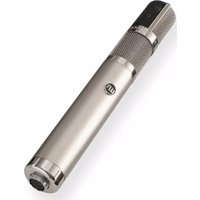
- THANK YOU!
- REGISTER YOUR WA-CX12!
- WARRANTY STATEMENT
- NON-WARRANTY SERVICE
- NOW LET'S GET STARTED!
- INTRODUCTION
- A LOOK INSIDE THE WA-CX12
- Solid Brass CK12-Style Capsule
- The Transformer
- The Cable
- FEATURES
- Contents
- Power Switch
- IEC Power Inlet
- 115V/230v Voltage Selector Switch
- Polar Pattern Select Switch
- 7 pin microphone cable connector (female)
- 7 pin microphone cable connector (male)
- XLR Output
- SPECIFICATIONS
- TIPS AND INSTRUCTIONS
- GENERAL USES IN CARDIOID MODE
- USES IN OMNIDIRECTIONAL MODE
- USES IN FIGURE-OF-EIGHT MODE
- MICROPHONE PLACEMENT & SPACING
- A BRIEF WORD ON ROOM TREATMENT
- SIGNAL INTEGRITY
- FRANÇAIS
- MERCI!
Brand : Warm Audio
Model : WA-CX12
Category : Microphone