KS37102B - Fridge Atag - Free user manual and instructions
Find the device manual for free KS37102B Atag in PDF.


User questions about KS37102B Atag
0 question about this device. Answer the ones you know or ask your own.
Ask a new question about this device
Download the instructions for your Fridge in PDF format for free! Find your manual KS37102B - Atag and take your electronic device back in hand. On this page are published all the documents necessary for the use of your device. KS37102B by Atag.
USER MANUAL KS37102B Atag
Instructions for use
Refrigerator
ATAG
KS33102B
KS37102B
KS33088B
KD63122B
KD67122B
KS13102B
KS17102B
NL
VEILIGHEIDSVOORSCHRIFTEN
BELANGRIJK MOET WORDEN GELEZEN EN IN ACHT GENOMEN
- Koelkastcompartiment:
1)
- Diepvriescompartiment:
The Gulf Conformity Marking on the product indicates the conformity with all the requirements of the Gulf Technical Regulation for Low Voltage Electrical Equipment and Appliances BD-142004-01.
WIJ DANKEN U OM ONS PRODUCT TE HEBBEN GEKOCHT.

natural_image
Five horizontal black bars with white rectangular cutouts, arranged in a row (no text or symbols)Hoog (minder koud)
Gemiddeld hoog
Gemiddeld
Gemiddeld laag
Laag (kouder)


natural_image
Diagram of a double-door refrigerator with labeled compartments and one hatched bottom panel (no text or symbols)KOELKASTCOMPARTIMENT
Ventilator\*
natural_image
Line drawing of a wavy container with a plastic bottle on top, enclosed in a wire cage (no text or symbols)Lichtsysteem
natural_image
Diagram of a cylindrical device with internal components and a curved arrow indicating direction (no text or symbols)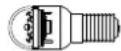
Lamptype 2)
natural_image
Line drawings of three different household appliances or storage units, shown from different angles (front, side, and top), with no visible text or symbols.Schappen
natural_image
Front view diagram of a multi-level storage cabinet or rack unit with no visible text or symbolsLegenda
natural_image
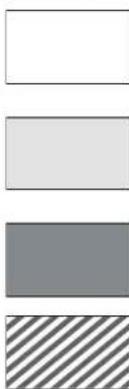
Three horizontal gray bars of varying shades and patterns, no text or symbols present**
GEMATIGDE ZONE
text_image
Diagram of a refrigerator interior with labeled compartments and door indicatorsLegenda
natural_image
Illustration of three industrial devices: a tree growing from a globe, a storage unit, and a paper feeding machine (no text or symbols)text_image
Gurale GuraleThe Gulf Conformity Marking on the product indicates the conformity with all the requirements of the Gulf Technical Regulation for Low Voltage Electrical Equipment and Appliances BD-142004-01.
NOUS VOUS REMERCIONS D'AVOIR CHOISI L'UN DE NOS PRODUITS.

natural_image
Pure electrical circuit lines without any symbolsnatural_image
Diagram of a double-door refrigerator with doors, shelves, and a patterned drawer (no text or labels)COMPARTIMENT RÉFRIGÉRATEUR
Ventilateur\*
natural_image
Line drawing of a wavy container with a plastic bottle attached, enclosed in a wire cage (no text or symbols)Système d'éclairage
natural_image
Diagram of a cylindrical device with internal components and a curved arrow indicating direction (no text or symbols)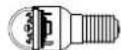
Ampoule de type 2)
natural_image
Line drawings of three different household appliances or storage units, shown from different angles (front, side, and top) with no visible text or symbols.Étagères
natural_image
Front view of a vertical storage cabinet with open doors and internal compartments (no visible text or symbols)Légende
natural_image
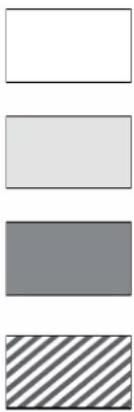
Four horizontal rectangular blocks in grayscale shades, no text or symbols present**
ZONE TEMPÉRÉE
natural_image
Diagram of a multi-chamber refrigerator with labeled panel (no text or symbols beyond basic labels)Légende
The Gulf Conformity Marking on the product indicates the conformity with all the requirements of the Gulf Technical Regulation for Low Voltage Electrical Equipment and Appliances BD-142004-01.
DANKE, DASS SIE SICH FÜR UNSER PRODUKT ENTSCHIEDEN HABEN.

natural_image
Five horizontal black bars with white rectangular cutouts, arranged in a row (no text or symbols)Hoch (weniger kalt)
Mittel-hoch
Mittel
Mittel-niedrig
Niedrig (kälter)


natural_image
Diagram of a double-door refrigerator with doors, shelves, and a patterned drawer (no text or labels)Zeichenerklärung
GEMÄSSIGTE ZONE
natural_image
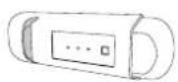
Line drawing of a wavy container with a cylindrical object inside, no text or symbols presentLichtsystem
natural_image
Illustration of a cylindrical device with internal components and a curved arrow indicating rotation (no text or symbols)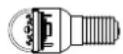
Lichttyp 2)
natural_image
Line drawings of three different household appliances or storage units, shown from different angles (no text or symbols present)Ablageflächen
natural_image
Front view diagram of a multi-level storage cabinet with labeled compartments and control panel (no text or symbols)Zeichenerklärung
**
TEMPERATURBEREICH
natural_image
Diagram of a multi-chamber refrigerator with labeled panel (A), showing internal compartments and doorways (no text or symbols beyond labels)Zeichenerklärung
A. GEFRIERFACH(falls vorhanden)
IMPORTANT TO BE READ AND
Before using the appliance, read these safety instructions. Keep them nearby for future reference.
These instructions and the appliance itself provide important safety warnings, to be observed at a time. The manufacturer declines any liability for failure to observe these safety instructions, for inappropriate use of the appliance or incorrect setting of controls.
⚠️ Very young children (0-3 years) should be kept away from the appliance. Young children (3-8 years) should be kept away from the appliance unless continuously supervised. Children from 8 years old and above and persons with reduced physical, sensory or mental capabilities or lack of experience and knowledge can use this appliance only if they are supervised or have been given instructions on safe use and understand the hazards involved. Children must not play with a appliance. Cleaning and user maintenance must not be carried out by children without supervision. Children aged from 3 to 8 years are allowed to load and unload refrigerating appliances.
PERMITTED USE
⚠️ CAUTION: The appliance is not intended to be operated by means of an external switching device, such as a timer, or separate remote controlled system.
This appliance is intended to be used in household and similar applications such as: staff kitchen areas in shops, offices and other working environments; farm houses; by clients in hotels, motels, bed & breakfast and other residential environments.
This appliance is not for professional use. Do not use the appliance outdoors.
The bulb used inside the appliance is specifically designed for domestic appliances and is not suitable for general room lighting within home (EC Regulation 244/2009).
The appliance is designed for operation in places where the ambient temperature comes within the following ranges, according to the climatic class given on the rating plate. The appliance may not work properly if it is left for a long time at a temperature outside the specified range.
Climatic class ambient temperatures:
SN: From 10^ C to 32^ C; N: From 16^ C to 32^ C
ST: From 16^ C to 38^ C; T: From 16^ C to 43^ C

This appliance does not contain CFCs. The refrigerant circuit contains R600a (HC).
Appliances with Isobutane (R600a): isobutane is a natural gas without environmental impact, but is flammable. Therefore, make sure the refrigerant circuit pipes are not damaged, especially when emptying the refrigerant circuit.
WARNING: Do not damage the appliance refrigerant circuit pipes.
WARNING: Keep ventilation openings, in the appliance enclosure or in the built-in structure, clear of obstruction.
WARNING: Do not use mechanical, electric or chemical means other than those recommended by the Manufacturer to speed up the defrost ept process.
WARNING: Do not use or place electrical devices inside the appliance compartments if they are not of the type expressly authorised by the Manufacturer.
WARNING: Ice makers and/or water dispensers not directly connected to the water supply must be filled with potable water only.
the WARNING: Automatic ice-makers and/or water dispensers must be connected to a water supply that delivers potable water only, with mains water pressure between 0.17 and 0.81 MPa (1.7 and 8 bar).
Do not store explosive substances such as aerosol cans and do not place or use gasoline or other flammable materials in or near the appliance.
Do not swallow the contents (non-toxic) of t ice packs (provided with some models). Do not eat ice cubes or ice lollies immediately after tak them out of the freezer since they may cause cold burns.
⚠ For products designed to use an air filter in an accessible fan cover, the filter must always be in position when the refrigerator is in function.
Do not store glass containers with liquids in the freezer compartment since they may break. Do not obstruct the fan (if included) with food items.
After placing the food check that the door of compartments closes properly, especially the freezer door.
⚠️ Damaged gaskets must be replaced as soon a possible.
⚠️ Use the refrigerator compartment only for storing fresh food and the freezer compartment only for storing frozen food, freezing fresh food and making ice cubes.
Avoid storing unwrapped food in direct contact with internal surfaces of the refrigerator or freezer compartments.
Appliances could have special compartments (Fresh Food Compartment, Zero Degree Box,...). Unless differently specified in the specific book
of product, they can be removed, maintaining equivalent performances.

C-Pentane is used as blowing agent in the
insulation foam and it is a flammable gas.
The most appropriate compartments of the appliance where specific types of food are to be stored, taking into account different temperature distribution in different compartments in the appliance, are as follows:
- Refrigerator compartment:
1) Upper area of the refrigerator compartment door - temperature zone: Store tropical fruit, can drinks, eggs, sauces, pickles, butter, jam
2) Middle area of the refrigerator compartment cool zone: Store cheese, milk, dairy food, deli f yoghurt
3) Lower area of the refrigerator compartment - coldest zone: Store cold cuts, desserts, meat and fish, cheesecake, fresh pasta, sour cream, pesto/salsa, home-cooked food, pastry cream, pudding and cream cheese
4) Fruit & vegetable drawer at the bottom of refrigerator compartment: Store vegetables and fruits (excluding tropical fruits)
5) Chiller compartment: Only store meat and fis in the coldest drawer
- Freezer compartment:
4 star zone (****) compartment is suitable for freezing foodstuffs from ambient temperature and for storing frozen food as the temperature is evenly distributed throughout the entire compartment.
Purchased frozen food has the storage expiration date stated on the packaging. This date takes into account the type of food being stored and therefore this date should be respected. Fresh food should be stored for the following time periods: 1-3 months for cheese, shellfish, ice cream, ham/sausage, milk, fresh liquids; 4 months for steak or chops (beef, lamb, pork); 6 months for butter or margarine, poultry (chicken, turkey 8-12 months for fruits (except citrus), roast meat (beef, pork, lamb), vegetables. Expiration dates (
the packaging of foods in the 2-star zone must respected.
To avoid food contamination, please observe the following:
- Opening the door for long periods can cause a significant increase of the temperature in the compartments of the appliance.
- Regularly clean surfaces that may come into contact with food and accessible drainage systems.
- Clean water tanks if they have not been used 48 h; flush the water system connected to a w
supply if water has not been drawn for 5 days – Store raw meat and fish in suitable container in the refrigerator, so that it does not come in contact with or drip onto other food.
- Two-star frozen food compartments are suitable for storing pre-frozen food, storing or making ice cream and ice cubes.
- Do not freeze fresh food in one, two or three-compartments.
If the refrigerating appliance is left empty for long periods, switch off, defrost, clean, dry, and leave the door open to prevent mould developing inside the appliance.
INSTALLATION
The appliance must be handled and installed by two or more persons - risk of injury. Use protective gloves to unpack and install - risk of cuts.
Installation, including water supply (if any), electrical connections and repairs must be carried out by a qualified technician. Do not repair or replace any part of the appliance unless specifically stated in the user manual. Keep children away from the installation site. After unpacking the appliance, make sure that it has not been damaged during transport. In the event of problems, contact the dealer or your nearest After-sales Service. Once installed, packaging waste (plastic, styrofoam parts etc.) must be stored out of reach of children at risk of suffocation. The appliance must be disconnected from the power supply before any installation operation - risk of electrical shock. During installation, make sure the appliance does not damage the power cable - risk of fire or electrical shock. Only activate the appliance when the installation has been completed.
Be careful not to damage the floors (e.g. parquet) when moving the appliance. Install the appliance on a floor or support strong enough to take its weight and in a place suitable for its size and use. Make sure the appliance is not near a heat source and that the four feet are stable and resting on the floor, adjusting them as required, and check that the appliance is perfectly level using a spirit level. Wait at least two hours before switching the appliance on, to ensure that the refrigerant circuit is fully efficient.
WARNING: When positioning the appliance, ensure the supply cord is not trapped or damaged. WARNING: To avoid a hazard due to instability, positioning or fixing of the appliance must be done in accordance with the manufacturer instructions. It's forbidden to place the refrigerator in such way that the metal hose of gas stove, metal gas or water pipes, or electrical wires are in contact with the refrigerator back wall (condenser coil).
All dimensions and spacing needed for installation of the appliance are in the Installation Instruction booklet.
Please remove the power cord from condenser book during installation before connecting to product to power supply.
ELECTRICAL WARNINGS
⚠ It must be possible to disconnect the appliance from the power supply by unplugging it if plug is accessible, or by a multi-pole switch installed upstream of the socket in accordance with the wiring rules and the appliance must be earthed in conformity with national electrical safety standards.
Do not use extension leads, multiple socket or adapters. The electrical components must not be accessible to the user after installation. Do not use the appliance when you are wet or barefoot. Do not operate this appliance if it has a damage power cable or plug, if it is not working proper or if it has been damaged or dropped.
⚠️ If the supply cord is damaged, it must be replaced with an identical one by the manufacturer, its service agent or similarly qualified persons in order to avoid a hazard - risk of electrical shock.
⚠ WARNING: Do not locate multiple portable socket-outlets or portable power supplies at the rear of the appliance.
CLEANING AND MAINTENANCE
⚠ WARNING: Ensure that the appliance is switched off and disconnected from the power supply before performing any maintenance operation. To avoid risk of personal injury use protective gloves (risk of laceration) and safety shoes (risk of contusion); be sure to handle by two persons (reduce load); never use steam cleaning equipment (risk of electric shock). Non-professional repairs not authorised by the manufacturer could result in a risk to health and safety, for which the manufacturer cannot be held liable. Any defect or damage caused from non-professional repairs or maintenance will not be covered by the guarantee, the terms of which are outlined in the document delivered with the unit.
Do not use abrasive or harsh cleaners such as window sprays, scouring cleansers, flammable fluids, cleaning waxes, concentrated detergents, bleaches or cleansers containing petroleum products on plastic parts, interior and door liners or gaskets. Do not use paper towels, scouring pads, or other harsh cleaning tools.
DISPOSAL OF PACKAGING MATERIALS
The packaging material is 100% recyclable and is marked with the recycle symbol. The various parts of the packaging must therefore be disposed of responsibly and in full compliance with local authority regulations governing waste disposal.
DISPOSAL OF HOUSEHOLD APPLIANCES
This appliance is manufactured with recyclable or reusable materials. Dispose of it in accordance with local waste disposal regulations. For further information on the treatment, recovery and recycling of household electrical appliances, contact your local authority, the collection service for household waste or the store where you purchased the appliance. This appliance is marked in compliance with European Directive 2012/19/EU, Waste Electrical and Electronic Equipment (WEEE) and with the Waste Electrical and Electronic Equipment regulations 2013 (as amended). By ensuring this product is disposed of correctly, you will help prevent negative consequences for the environment and
human health. The symbol on the product or on the accompanying documentation indicates that it should not be treated as domestic waste but must be taken to an appropriate collection center for the recycling of electrical and electronic equipment.
ENERGY SAVING TIPS
To guarantee adequate ventilation follow installation instructions. Insufficient ventilation at the back of the product increases energy consumption and decreases cooling efficiency.
Frequent door opening might cause an increase in Energy Consumption.
The internal temperature of the appliance and the Energy Consumption may be affected also by the ambient temperature, as well as location the appliance. Temperature setting should take into consideration these factors. Reduce door opening to minimum.
noten thawing frozen food, place it in the refrigerator. The low temperature of the frozen products cools the food in the refrigerator. Allow warm food and drinks to cool down before placing in the appliance.
Positioning of the shelves in the refrigerator has no impact on the efficient usage of energy. Food should be placed on the shelves in a way to ensure proper air circulation (food should not touch each other and distance between food and rear wall should be kept).
You can increase storage capacity of frozen food by removing basket and, if present, Stop Frost shelf.
Do not worry about noises coming from the compressor which are normal operation noises.

The Gulf Conformity Marking on the product indicates the conformity with all the requirements of the Gulf Technical Regulation for Low Voltage Electrical Equipment and Appliances BD-142004-01.
FIRST TIME USE
Wait at least two hours, after the installation, before connecting the appliance to the power supply. Connect the appliance to the power supply it starts the operation automatically. The ideal storage temperatures for the food are preset in the factory.
After turning the appliance on, you must wait for 4-6 hours for the correct storage temperature to be reached for a normally filled appliance. Position the antibacterial anti-odour filter in the fan as demonstrated in the filter packaging (if available). If the audible signal sounds, it means that the temperature alarm has intervened: press the button to switch off the acoustic alarms.
CONTROL PANEL
text_image
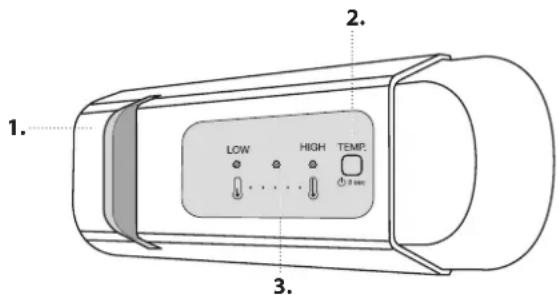
1. 2. 3.- LED Light
- On/Stand-by
- Freezer and refrigerator compartment temperature button

ON/STAND-BY
Press the button for 3 seconds to turn the appliance off. In
Stand-by mode the light in the refrigerator compartment does not turn on. Press the button again briefly to reactivate the appliance.
Note: this does not disconnect the appliance from the power supply.
FREEZER AND REFRIGERATOR COMPARTMENT TEMPERATURE
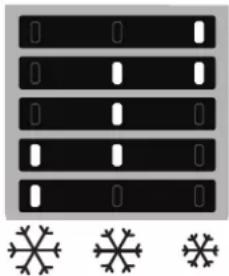
The three LED indicators indicate the refrigerator compartment set temperature.
It is possible to set a different temperature of the appliance with the button.

The following adjustments are possible:
LEDs lit Set temperature
natural_image
Pure diagram of stacked rectangular blocks with white vertical bars and three snowflake symbols below (no text or labels)High (less cold)
Medium-high
Medium
Medium-low
Low (colder)
Recommended setting: MEDIUM
To avoid food waste, please refer to the recommended setting and storage times found in the online user manual.
FREEZING FRESH FOOD
Place the fresh food to be frozen in the FREEZING ZONE in the freezer compartment avoiding the direct contact with the food that is already frozen. To optimize the freezing speed, the lower drawer can be removed and the food can be placed directly on the bottom of the compartment.
HOW TO STORE FRESH FOOD AND BEVERAGES
natural_image
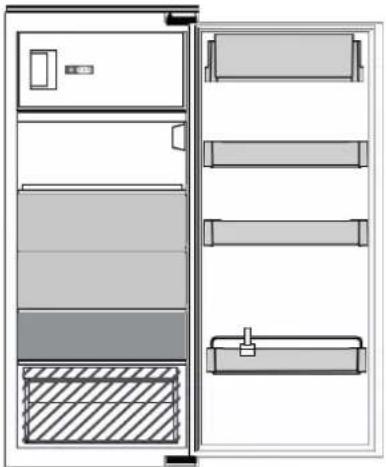
Diagram of a double-door refrigerator with doors, shelves, and a patterned seat (no text or labels)REFRIGERATOR COMPARTMENT
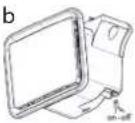
Fan\*
You can turn the Fan on/off by pressing the button on the b shown in the figure). If the ambient temperature exceeds 27°C, or if drops of water are present on the glass shelves, it is essential that the fan is on to ensure the proper preservation of the food. Deactivation of the fan allows energy consumption to be optimised.
ACCESSORIES \*
BOTTLE RACK
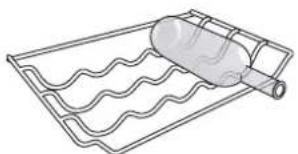
natural_image
Line drawing of a wavy surface next to a rolled roller on a rectangular plate (no text or symbols)Light system
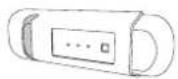
This product contains a light source of energy efficiency class G
* Available only on certain models
Legend
TEMPERATE ZONE Suggested for storage of tropical fruit, cans, drink, eggs, sauces, pickles, butter, jam
COOL ZONE Suggested for storage of cheese, milk, daily food, elicatessen, yoghurt
COOLEST AREA Suggested for storage of cold cuts, desserts, meat and fish
FREEZER COMPARTMENT
Freezing fresh food
- It is advisable to set the temperature colder or turn on the Fast Freeze/Fast Cool* at least four hours before removing the food from the freezer compartment, to prolong the preservation of the food during the defrosting phase.
-
To defrost, unplug the appliance and remove the drawers. Leave the door open to allow the frost to melt. To prevent the water from escaping during the defrost, it is advised that you place an absorbent cloth on the bottom of the freezer compartment and wring it out regularly.
-
Clean the inside of the freezer compartment and dry it carefully.
- Turn the appliance back on and put the food back inside.
Ice cubes\*
Fill 2/3 of the ice tray with water and put it back in the freezer compartment. Do not, under any circumstances, use sharp or pointed objects to remove the ice.
The quantity of fresh food that can be frozen in a specific time period is indicated on the rating plate.
Load limits are determined by baskets, flaps, drawers, shelves etc. Make sure that these components can still close easily after loading.
GENERAL INFORMATION
The drawers, baskets and shelves should be kept in their current position unless otherwise specified in this quick guide. The light system inside the refrigerator compartment uses LED lights, allowing for better lighting than with traditional light bulbs, as well as for very low energy consumption.
Doors and lids of the refrigeration appliance should be removed before disposal in the landfill, to avoid children or animals getting trapped inside.
TROUBLESHOOTING
What to do if... Possible reasons Solutions
| The control panel is switched off, the appliance does not work. | There may be an appliance power supply problem. | Check that:there is not a power outage;the plug is properly inserted in the power socket and the mains double-pole switch (if present) is in the correct position (i.e. allows the appliance to be powered);the household electrical system protection devices are efficient;the power cable is not damaged. |
| The appliance could be in On/stand by mode. | Turn the appliance on by briefly pressing the "Temp." button (see On/ Stand-by function). | |
| The inside light does not work. | The light may need to be replace.Malfunction of a technical component. | Disconnect the appliance from the power supply and contact the Technical Assistance Service if you need a replacement. |
| The inside light flashes. Door alarm active. | It is activated when the refrigerator compartment door remains open for a prolonged period of time. | To stop the alarm, close the refrigerator door.On reopening the door, check the light works. |
| The temperature inside the compartments is not low enough. | There could be various causes (see "Solutions"). | Check that:the doors close properly;the appliance is not installed near a heat source;the set temperature is adequate;the circulation of air through the vents at the bottom of the appliance is not obstructed (see installation section). |
| There is water on the bottom of the refrigerator compartment. | The defrost water drain is blocked. | Clean the defrosting water drain (see section "Cleaning and Maintenance"). |
| Excessive amount of frost in the freezer compartment | The door of the freezer compartment does not close properly. | Check that there is nothing preventing the door from closing properly.Defrost the freezer compartment.Make sure the appliance has been correctly installed. |
| The front edge of the appliance, at the door striker seal, is hot. | This is not a defect. It prevents condensation from forming. | No solution is necessary. |
What to do if... Possible reasons Solutions
| One or more green symbols are flashing continuously and it is not possible to change the temperature set. | Malfunction alarm.The alarm indicates a fault in a technical component. | Contact Technical Assistance Service. |
| The temperature of the refrigerator compartment is too cold. | The set temperature is too cold.A large amount of fresh food may have been placed in the freezer compartment. | Try to set a less cold temperature.If fresh food has been placed in the freezer compartment, wait until it has fully frozen.Turn off the fan (if present) following the procedure described in the paragraph “FAN”. |
* Available only on certain models
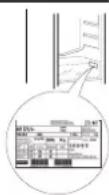
Note: If the chiller declaration is present in the rating plate (see image below), the declaration applies only to standard EN 62552:2013 valid until February 28th, 2021.
Policies, standard documentation and additional product information can be found by:
- Visiting our website www.atag.nl, www.atag.be
- Contacting our After-sales Service (See phone number in the warranty booklet).
When contacting our After-sales Service, please state the codes provided on your product's identification plate.
The model information can be retrieved using the QR-Code indicated on the energy label.
The label also includes the model identifier that can be used to consult the https://eprel.ec.europa.eu database portal.
Refrigerator light
The light system inside the refrigerator compartment uses LEDs light, allowing a better lighting than traditional light bulbs as well as a very low energy consumption. Contact the Technical Assistance Service if you need a replacement. Important: The refrigerator compartment light switches on when the refrigerator door is opened.
Replacing the led light bulb (depending on model)
Always disconnect the appliance from the power supply before replacing the light bulb. Then follow the instruction based on the type of light bulb for your product. Replace the light bulb with one with the same features, available from the Technical Assistance Service and authorised sellers.
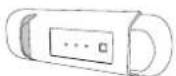
Light type 1)
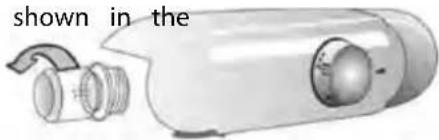
To remove the light bulb, unscrew it in an anti-clockwise direction, as shown in the figure. Wait 5 minutes before reconnecting the appliance.
LED light bulb (max 25W)
natural_image
Diagram of a mechanical component with two ports and a central knob, labeled 'shown in the' (no other text or symbols)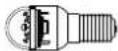
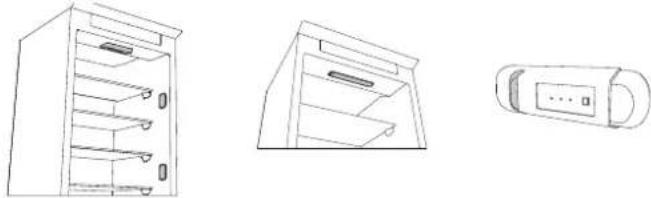
Light type 2)
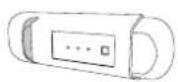
If the product has LED lights, as demonstrated in the figures below, contact the Technical Assistance Service if you need a replacement. LEDs last longer than traditional light bulbs, improve internal visibility and are environmentally-friendly.
natural_image
Line drawings of three different household appliances or storage units, no text or symbols presentShelves
All of the drawers, door shelves and shelves can be removed.
Door
Door reversibility
Note: The direction of door opening can be changed. If this operation is performed by After-sales Service it is not covered by the warranty. Follow instruction in Installation Guide.
How to use the appliance
First time use
Wait at least two hours, after the installation, before connecting the appliance to the power supply. Connect the appliance to the power supply it starts the operation automatically. The ideal storage temperatures for the food are preset in the factory.
After turning the appliance on, you must wait for 4-6 hours for the correct storage temperature to be reached for a normally filled appliance. Position the antibacterial anti-odour filter in the fan as demonstrated in the filter packaging (if available). If the audible signal sounds, it means that the temperature alarm has intervened: press the button to switch off the acoustic alarms.
Refrigerator compartment and food storage
The refrigerator compartment allows for the storage of fresh food and drink. The refrigerator compartment defrosts completely automatically. The occasional presence of drops of water on the internal back wall of the compartment is a sign of the automatic defrosting phase. The defrosting water is channelled into a drain and then collected in a container, where it evaporates.
Note: the ambient temperature, how often the doors are opened and the position of the appliance may affect the internal temperatures in the two compartments. Set the temperatures depending on these factors. In very humid conditions, condensation may form in the refrigerator compartment, especially on the glass shelves. In this case, it is recommended that you close containers with liquids in (e.g. a pot of stock), wrap up food with a high water content (e.g. vegetables) and turn on the fan, if there is one. All of the drawers, door shelves and shelves can be removed.
Air ventilation
The ventilation air allows a better distribution of the temperatures inside the compartments and, consequently, be preservation of the food and reduction of excess humidity. Do not obstruct the ventilation area.
How to store fresh food and beverages
Foods which give off a large amount ethylene gas (apples, apricots, pears, peaches, avocado, figs, prunes, blueberries, mellons, beans) and those that are sensitive to this gas, such as fruit vegetables and salad, should always be separated or wrapped so as not to reduce the storage life; for example do not store tomatoes together with kiwi fruits or cabbage. Do not store food too close together to enable sufficient air circulation. Use recyclable plastic, metal, aluminum and glass containers and cling film to wrap foods.
If you have a little quantity of food to store in the refrigerator, we recommend to use the shelves above the crisper for fruits and vegetables since this is the coolest area of the compartment. Always use closed containers for liquids and for food that may give off or be tainted by odor or flavor transfer or cover them. To avoid bottles falling over, you can use the bottle holder (available on selected models).

natural_image
Front view of a multi-level storage cabinet with shelves, doors, and control panel (no text or symbols visible)Legend
**
TEMPERATE ZONE
Suggested for storage of tropical fruit, cans, drinks, eggs, sauces, pickles, butter, jam
COOL ZONE
Suggested for the storage of cheese, milk, daily food, delicatessen, yogur
COOLEST AREA
Suggested for storage of cold cuts, desserts, meat and fish
FRUIT AND VEGETABLE DRAWER
For models with "0 ° ZONE" COMPARTMENT the "coolest area" is the one highlighted in the legend
\* Freezer compartment food storage (Depending on model)
*** The frozen compartment allow long time storage for frozen food. You can only use the "Storage" comp maintaining frozen food BUT IT IS NOT CAPABLE TO FREEZE NEW FRESH FOOD.
The freezer compartment allows long time storage of frozen food and freezing of fresh food. The qua food that can be frozen in 24 hours is written on the rating plate. Arrange the fresh food in the freezing area inside the freezer compartment, leaving enough space around the food packages to allow air to circulate freely. It is advisable that you do not re-freeze food that has partially defrosted. It is important to wrap the food in a way that prevents the ingress of water, humidity or condensation.
Ice cubes
Fill 2/3 of the ice tray with water and put it back in the freezer compartment. Do not use sharp or pointed objects to remove the ice under any circumstances.
Removing the drawers
Pull the drawers outwards as far as they will go, lift them up and remove them. To get more volume, the freezer compartment can be used without the drawers. Make sure that the door is closed properly after putting the food back on the grilles/shelves.
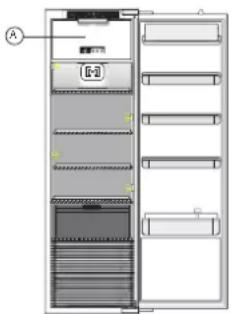
text_image
Diagram of a vertical storage unit with labeled components and an arrow pointing to component ALegend
A. FREEZER COMPARTMENT(If the refrigerator has one)
Food shelf life at different temperatures
| FROZEN COMPARTMENT | |||
| Product Storage period (-12°C) | Recommended Storage period (-18°C) | Storage period (-24°C) | |
| Butter or margarine 1 month | 6 months 9 months | ||
| Fish 1 month 1-3 months | 6 months | ||
| Fruits (except citrus) & Vegetables | 1 month 8-12 months | 12 months | |
| Meat- Ham- sausage Roasts (beef-pork- lamb) Steaks or chops (beef-lamb-pork) | 1 month 2 months | 8-12 months4 months | 12 months |
| Milk, Fresh fluid, Cheese, Ice cream or sherbet | 1 month 1-3 months | 5 months (not recommended for ice cream) | |
| Poultry (chicken-turkey) | 1 month 5-7 months | 9 months | |
Food shelf life at different temperatures
| UNFROZEN COMPARTMENT | |||
| Product | Storage period 0-3°C | Storage period (3-6°C) | Storage period 6-8°C |
| Cans, drinks, eggs, sauces, pickles, butter, jam | 3-4 weeks | 3-4 weeks | 3-4 weeks |
| Tropical fruit | Not recommended 2-4 weeks | 3-4 weeks | |
| Cheese, milk, dairy food, deli-5 daysfood, yoghurt | 2-5 days | 2-5 days | 2-5 days |
| Cold cuts, desserts, meat and fish and home-cooked food | 1-2 days | Not recommended | |
| Store vegetables and fruits (excluding tropical fruits and citrus) | 15 days | 10-12 days | 4-7 days |
\* How to defrost the freezer compartment (Depending on model)
- It is advisable to set the temperature colder or turn on the Fast Freeze/Fast Cool* at least four hours before removing the food from the freezer compartment, to prolong the preservation of the food during the defrosting phase.
- To defrost, turn the appliance off and remove the drawers. Put the frozen food in a cool place. Leave the door open to allow the frost to melt. To prevent the water from escaping during the defrost, it is advised that you place an absorbent cloth on the bottom of the freezer compartment and wring it out regularly.
- Clean the inside of the freezer compartment and dry it carefully.
- Turn the appliance back on and put the food back inside.
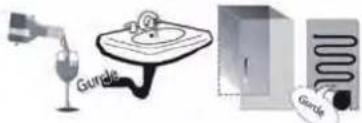
Functional sounds
- A buzz generated by the compressor is normal while the product is working.
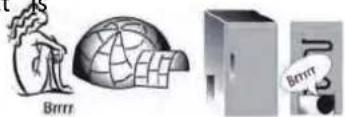
natural_image
Illustration of a person, globe, and server unit (no text or symbols)- Gurgling and crackles are generated by the passage of the refrigerant gas inside the cooling circuit, therefore these are normal noises.
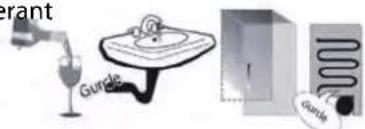
text_image
Gurle Gurle- It's possible to "hear" creaks when the compressor is active and inactive: it is a normal sound of the product's structure.
text_image
Girdle Girdle- Check that the balconies on the inside of the refrigerator door, the shelves and the drawers in the refrigerator compartment are attached and positioned properly, to avoid possible vibrations.
- Don't place glass containers (bottles, jars, etc.) in direct contact with each other, to avoid vibrations.
- This device is equipped with a compressor that operates at an optimum speed to minimize energy consumption. So it may happen that in certain situations (in summer or if large quantities of food are introduced) that the increases the speed and therefore it is more noisy than usual.
Recommendation in case of no use of the appliance
In the event of non-use of the applicance
Disconnect the appliance from the power supply, empty it, defrost it (if necessary) and clean it.
Keep the doors slightly ajar to let air circulate inside the compartments. By doing this, you avoid the development of mould and bad odours.
In the event of an interruption to the power supply
Keep the doors closed so the food stays cold for as long as possible. Do not re-freeze food that has partially defrosted. If there is a prolonged power cut, the black out alarm may also activate (in products with electronics).
Cleaning and maintenance
Before any cleaning or maintenance operation, unplug the appliance from the mains or disconnect the electric power supply.
Never use abrasives. Never clean refrigerator parts with flammable fluids.
Do not use steam cleaners.
The buttons and control panel display must not be cleaned with alcohol or alcohol-derived substances, but v cloth.
Clean the appliance occasionally with a cloth and a solution of warm water and neutral cleaning agents specifically for cleaning the inside of the refrigerator.
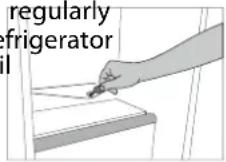
To ensure the constant and correct flow of the defrosting water, regularly clean the inside of the drain situated in the back wall of the refrigerator compartment near the fruit and vegetable drawer using the utensil provided.
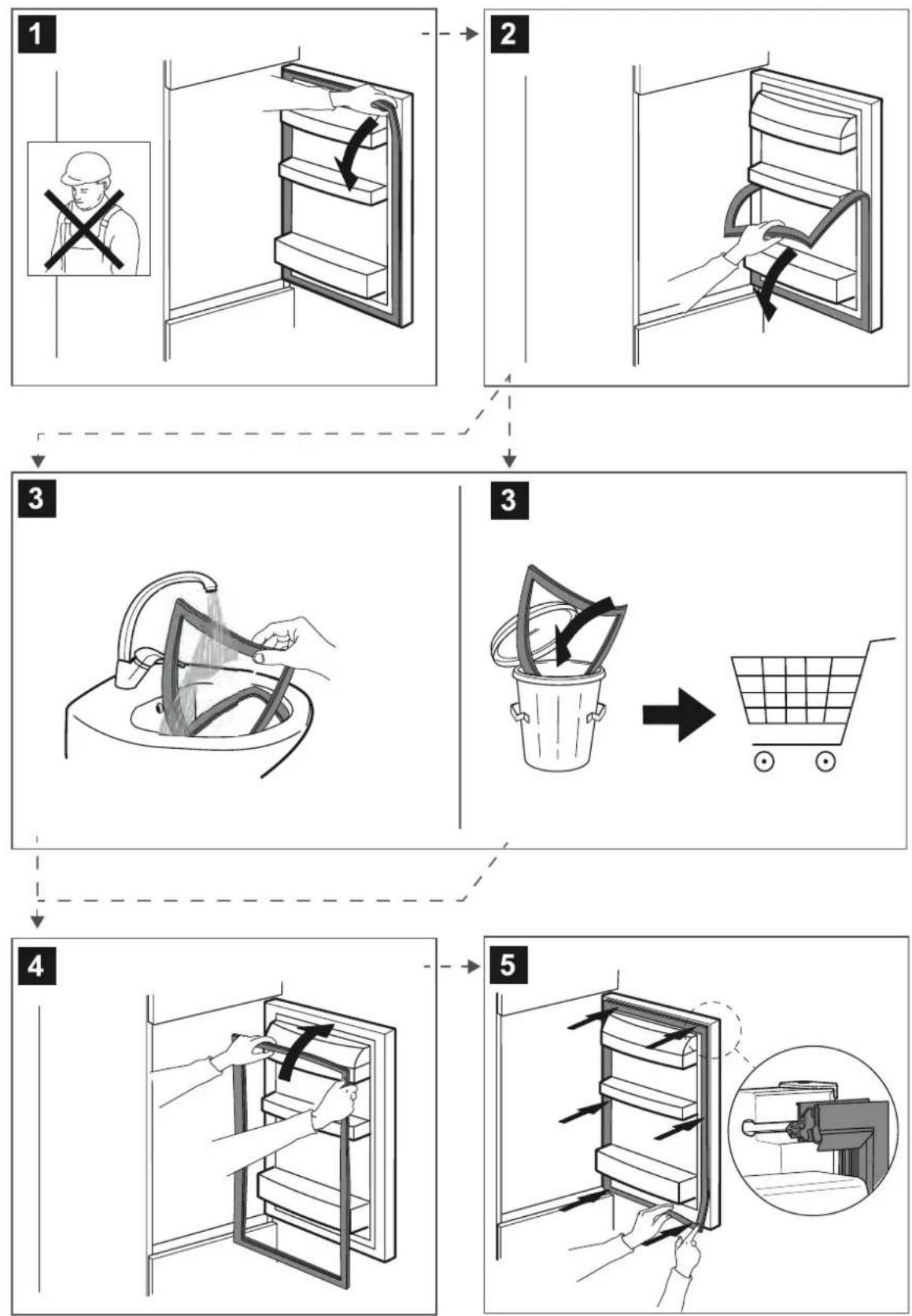
Gasket replacement