
KS 500-62 - Saw Güde - Free user manual and instructions
Find the device manual for free KS 500-62 Güde in PDF.

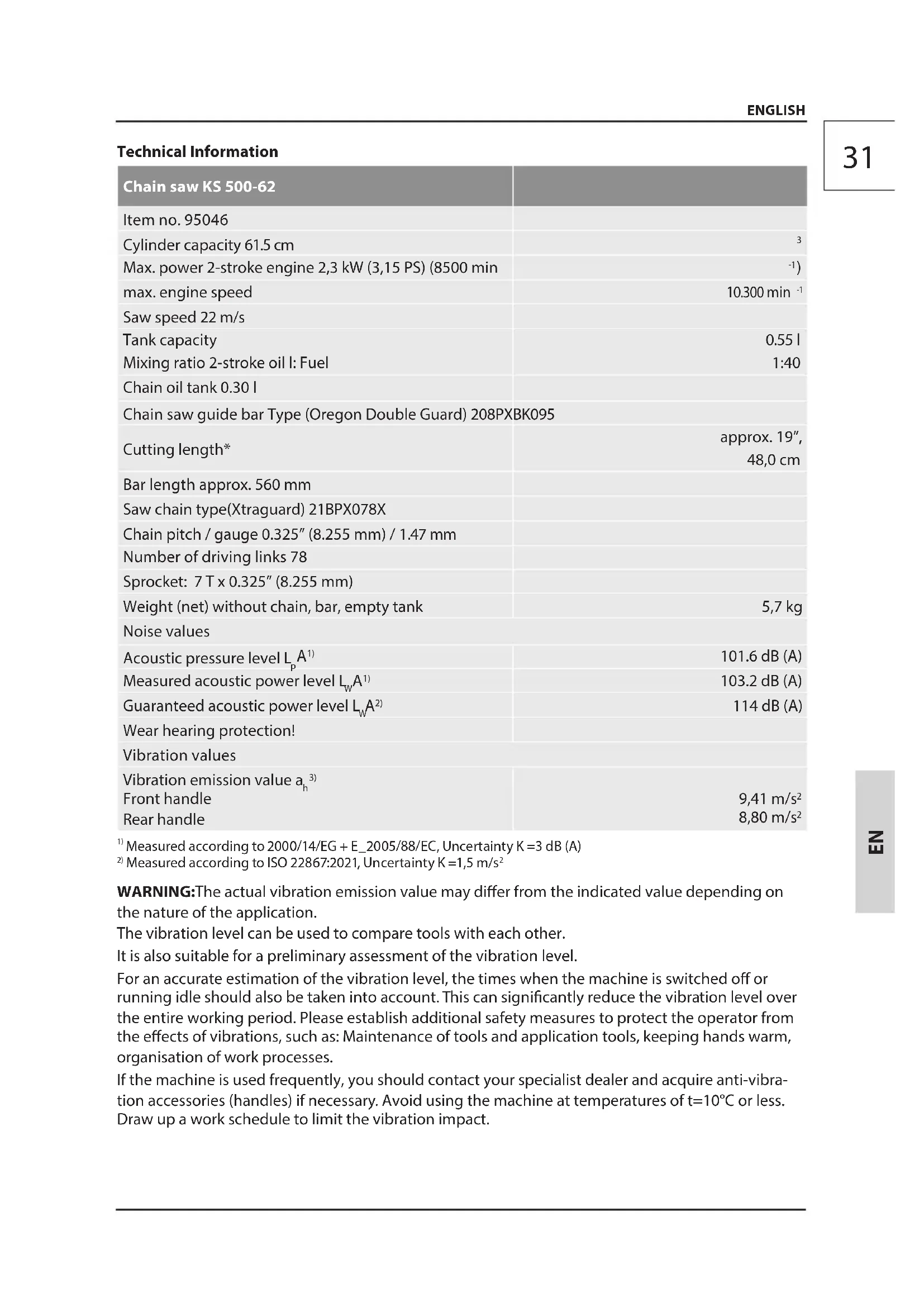


| Product type | Chain saw |
| Brand | Güde |
| Model | KS 500-62 |
| Article number | 95046 |
| Displacement | 61.5 cm³ |
| Max. engine power | 2.3 kW (3.15 PS) at 8500 min⁻¹ |
| Max. rotation speed | 10 300 min⁻¹ |
| Chain speed | 22 m/s |
| Fuel tank capacity | 0.55 L |
| Oil/fuel mixture ratio | 1:40 |
| Chain oil tank capacity | 0.30 L |
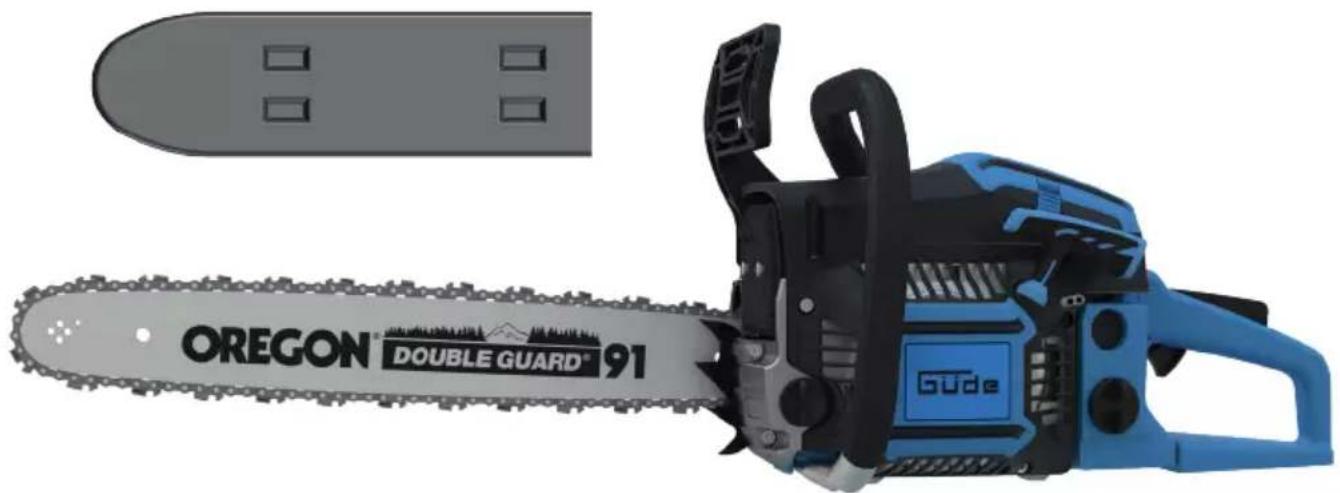
| Guide bar type | Oregon Double Guard 208PXBK095 |
| Cutting length | 480 mm (approx. 19") |
| Guide bar length | 560 mm |
| Chain type | Xtraguard 21BPX078X |
| Chain pitch / link thickness | 0.325" (8.255 mm) / 1.47 mm |
| Number of links | 78 |
| Chain sprocket | 7 teeth x 0.325" (8.255 mm) |
| Weight (net, without chain or bar, empty tanks) | 5.7 kg |
| Sound pressure level (LpA) | 101.6 dB(A) |
| Guaranteed sound power level | 117 dB(A) |
| Front handle vibration (ah) | 9.41 m/s² |
| Rear handle vibration (ah) | 8.80 m/s² |
| Chain brake | Yes, inertia |
| Protective equipment | Front and rear hand guards, chain guard |
| Intended use | Cross-cutting wood |
| Warranty (consumer) | 24 months |
Frequently Asked Questions - KS 500-62 Güde
User questions about KS 500-62 Güde
0 question about this device. Answer the ones you know or ask your own.
Ask a new question about this device
Download the instructions for your Saw in PDF format for free! Find your manual KS 500-62 - Güde and take your electronic device back in hand. On this page are published all the documents necessary for the use of your device. KS 500-62 by Güde.
USER MANUAL KS 500-62 Güde
Translation of the original operating instructions
natural_image
Blue and black OREGON DOUBLE GUARD 91 chain presser with gear mechanism, displayed against a plain background (no text or symbols on the device itself)KS 500-62 Benzin Kettensäge
95046
GÜDE GmbH & Co. KG
Birkichstrasse 6
74549 Wolpertshausen
Deutschland

Güde
®

ENGLISH Please read the instructions carefully before starting the machine.
English Technical Data /Device description / Safety Warnings / Specified Conditions of Use / Emergency procedure / Symbols / Maintenance / Disposal / Guarantee / Service 30
natural_image
Blue double-guard motorcycle with 'OREGON DOUBLE GUARD 91' branding, shown from front and side (no additional text or symbols)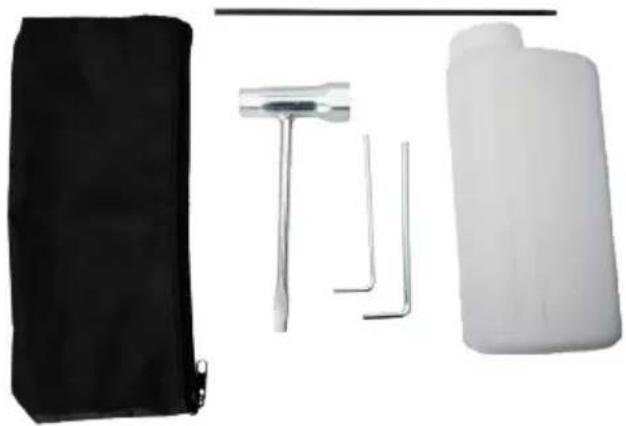
natural_image
Product photo showing a black plastic bag, a white plastic bottle with metal handles, and a small metallic tool (no text or symbols visible)Montage
EN Operation FR Fonctionnement IT Esercizio ES Operação
EN starting-up the device FR Mise en service IT Messa in funzione
ES Puesta en marcha NL Toestel in gebruik nemen cz Uvedení do provozu
natural_image
Blue silhouette of a chain saw cutting through a circular cutter, with motion arrows indicating cutting path (no text or symbols)RÜCKSCHLAG
EN KICK BACK FR REBOND IT CONTRACOLPO
ES CONTRAGOLPE NL TERUGSLAG CZ ZPĚTNÝ NÁRAZ
SK SPÄTNÝ NÁRAZ PL ODRZUT HU VISSZACSAPÓDÁS






natural_image
Illustration of a person using a baton to cut a baton with a starburst graphic, showing no text or symbols.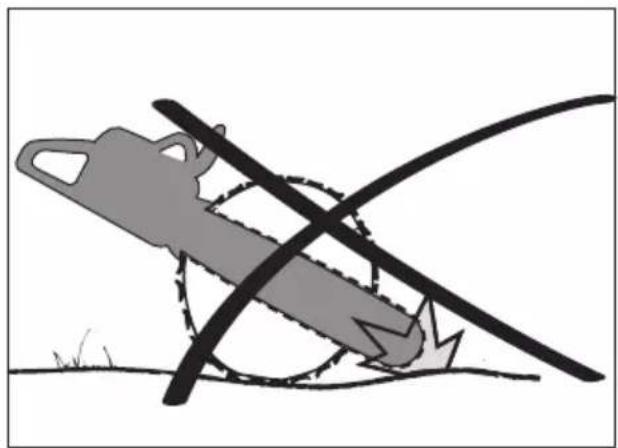
natural_image
Illustration of a saw cutting through a pipe with a curved blade, no text or symbols present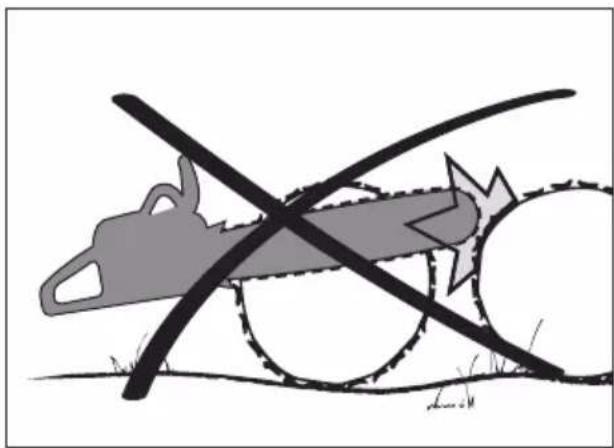
natural_image
Diagram of a mechanical device with crossed blades and a gear-like component, no text or symbols present
BAUM FÄLLEN
EN TREE LOGGING FR ABATTAGE D'ARBRES IT TAGLIO DELL'ALBERO
ES TALA DE ÁRBOLES NL BOOM KAPPEN CZ KÁCENÍ STROMU
SK KÁLANIE STROMU PL ŚCINANIE DRZEWA HU FA KIVÁGÁS

natural_image
Six blue circular icons representing different workplace safety symbols (hand, boot, helmet, person, shirt, head) without any text or labels.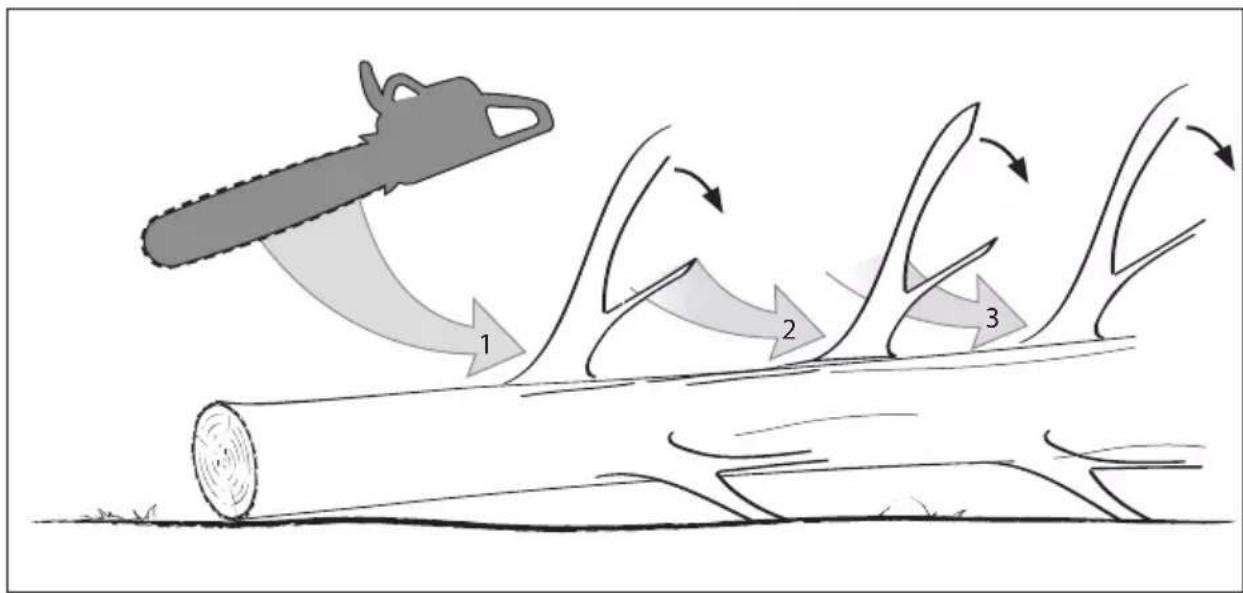
flowchart
graph TD
    A["Step 1: Cutting"] --> B["Step 2: Moving a chain"]
    B --> C["Step 3: Moving a tree"]
natural_image
Two-panel illustration showing a saw cutting through water with arrows indicating flow direction (no text or symbols)BAUMSTAMM ABLÄNGEN
EN TRUNK TRIMMING FR COUPAGE DE SOUCHES IT TAGLIO DEL TRONCO
ES TRONZARTRONCOS DE ÁRBOL NL BOOMSTAM AFKORTEN CZ PŘIŘEZÁVÁNÍ KMENU
SK PRIREZÁVANIE KMEŇA PL PRZYCINANIE PNIA NA DŁUGOŚĆ HU A FATÖRZS FELVÁGÁSA






natural_image
Illustration of a wooden log rolling down with a chainsaw and moving a ball, showing motion direction (no text or symbols)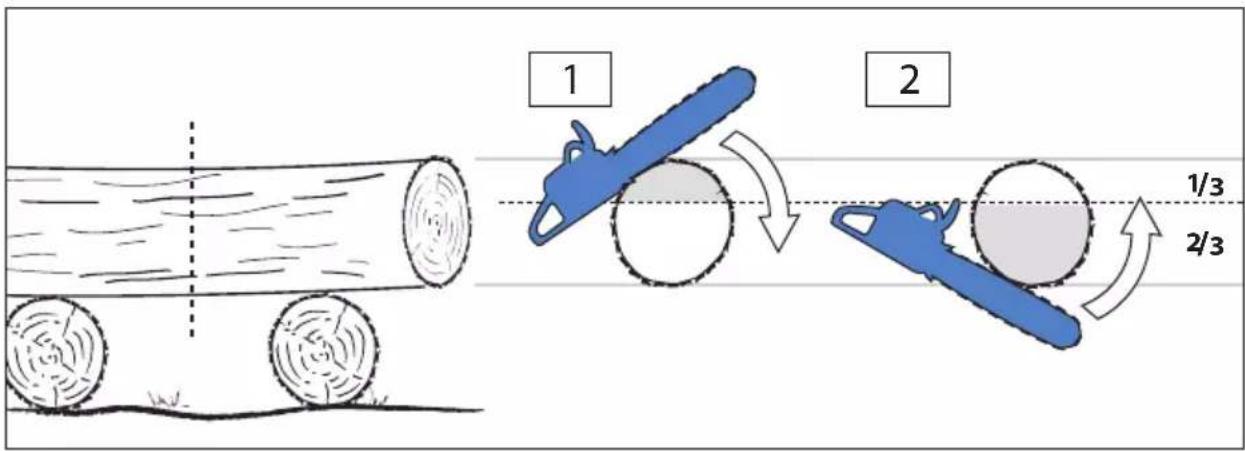
natural_image
Blue chain-linking machine with mechanical components and a circular arrow symbol (no text or labels)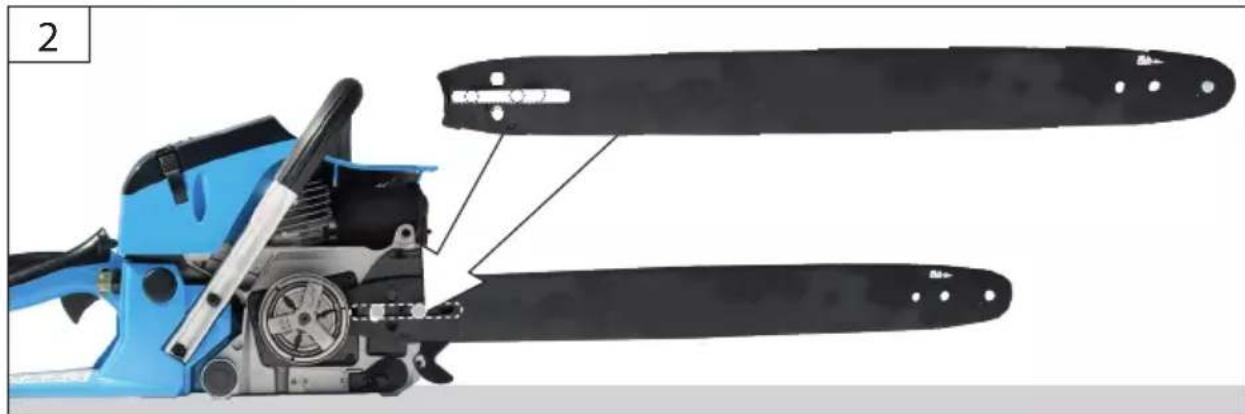
natural_image
Blue manual power tool with attached black blade assembly (no text or symbols visible)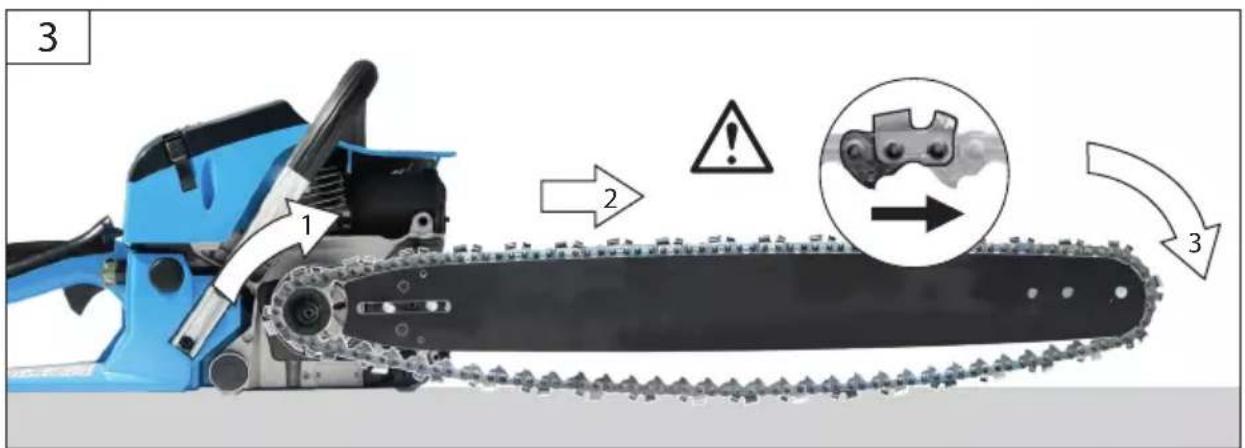
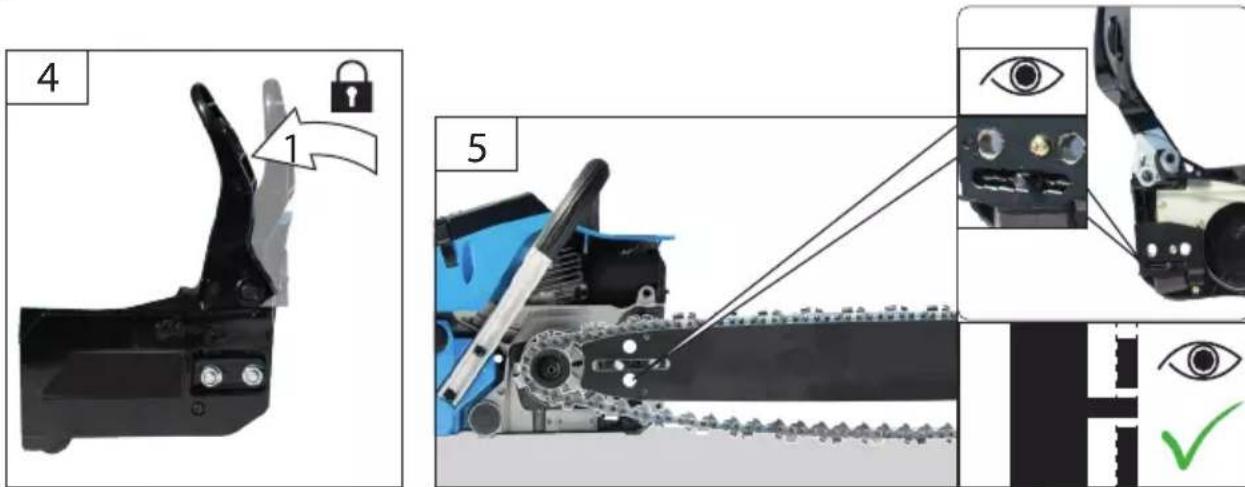
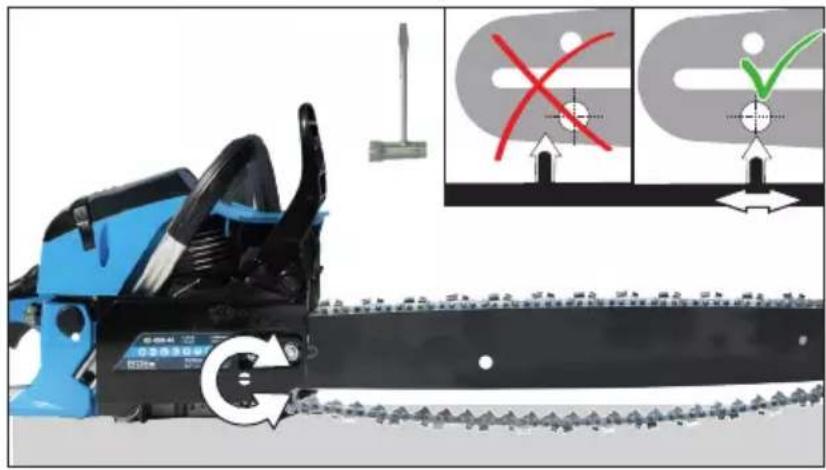
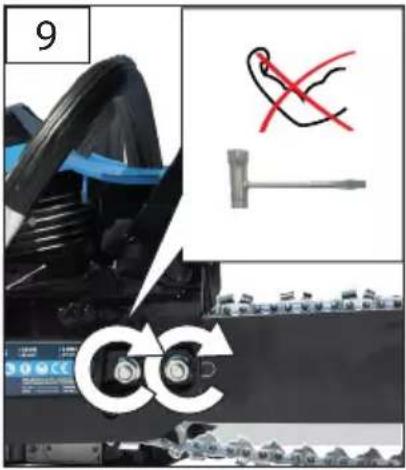
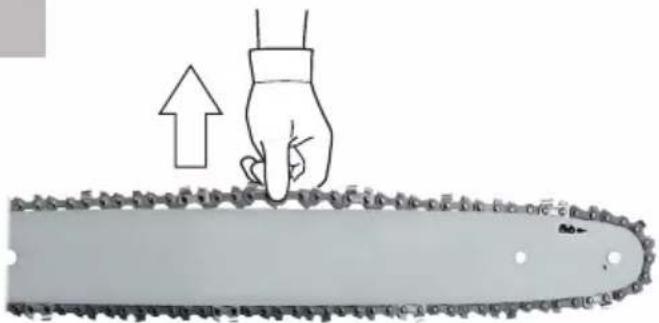
TIP
natural_image
Illustration of a hand pressing down on a chain with an upward arrow indicating motion (no text or symbols)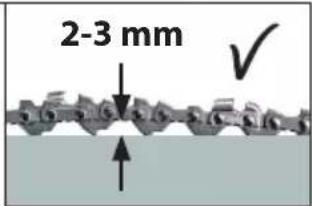
EN Repeat tensioning of new chain after approx. 5 cuts. With the engine off, check and adjust the chain tension after every 50 cuttings.






DE KALTSTART
EN COLD START
FR DÉMARRAGE À FROID
IT START A FREDDO
NL KOUDE START
CZ STUDENÝ START
SK STUDENÝ ŠTART
HU HIDEG STARTOLÁS
PL ROZRUCH NA ZIMNO
ES ARRANQUE EN FRÍO






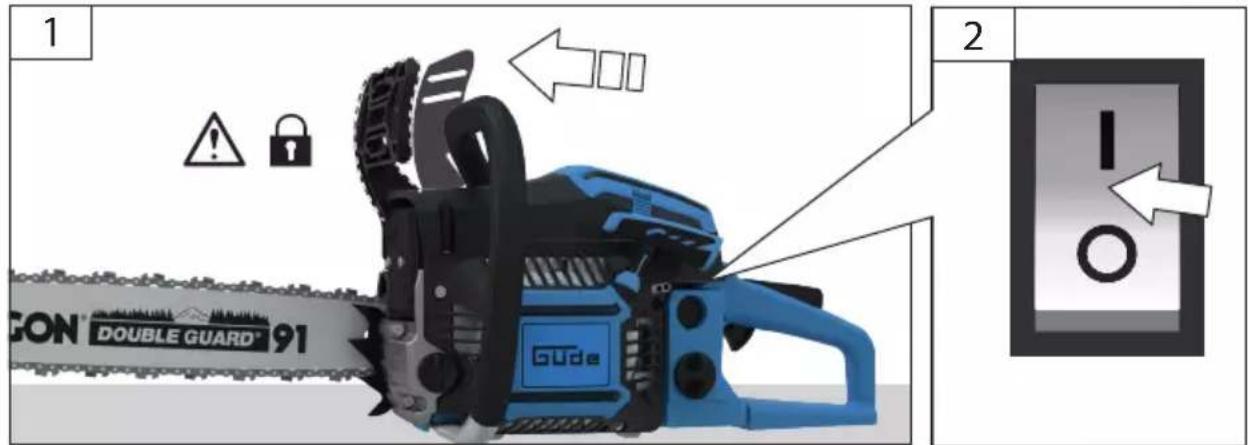
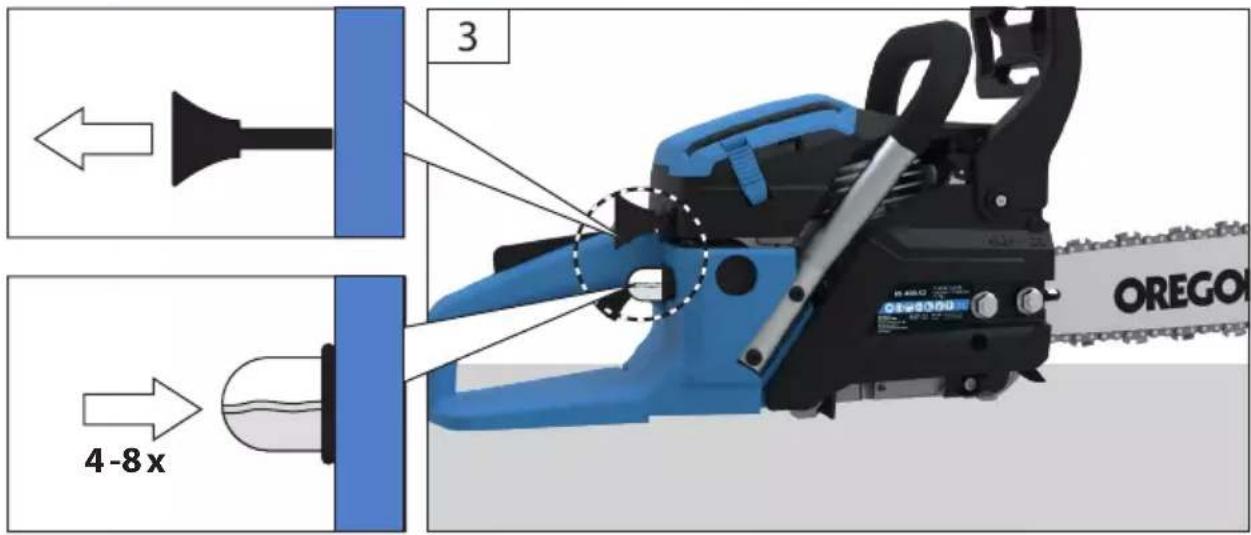
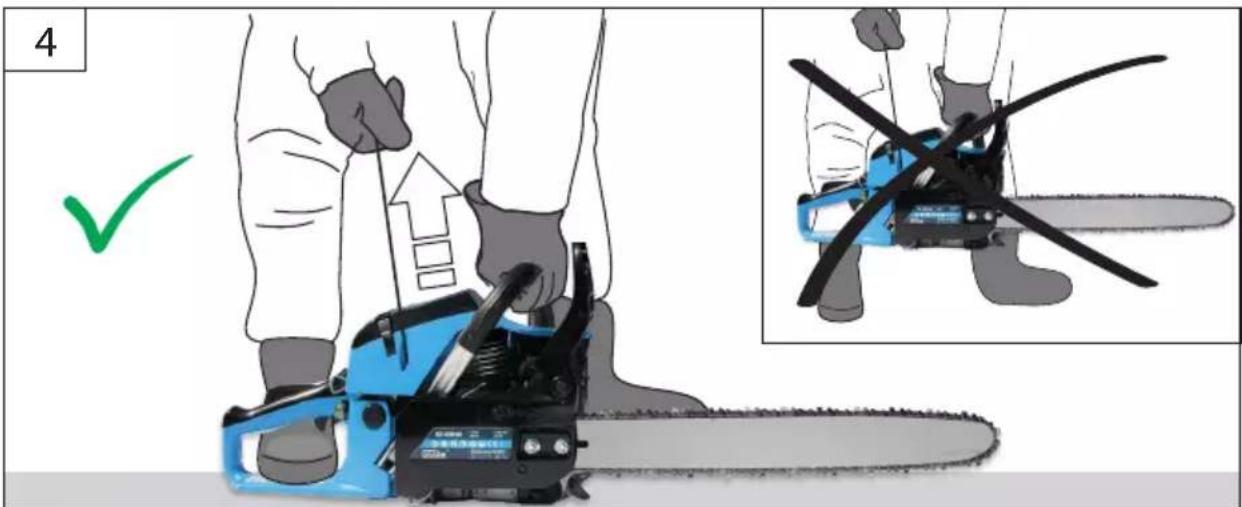
GB Pull firmly the starting rope approx. 3-5 times till the first noise of running is evident.
EN Start-up of warm engine.
Start-up of cool engine.
natural_image
Illustration of a person using a Double Guard 91 chain to lift a power jack (no text or symbols on the diagram itself)7
EN If the engine does not start after first 2-3 attempts, repeat completely the cold start-up procedure.

EN Chain runs out briefly after switching off!
EN CHAIN LUBRICATION ADJUSTMENT
FR RÉGLAGE DU GRAISSAGE DE LA CHAÎNE
natural_image
Blue and pink industrial cutting machine with a red ball on the side (no visible text or symbols)
flowchart
graph TD
    A["Lock Icon"] --> B["Arrow Up"]
    A --> C["Arrow Down"]
    B --> D["Down Arrow"]
    C --> E["Down Arrow"]
natural_image
Close-up of a blue and black mechanical clamp device with no visible text or symbols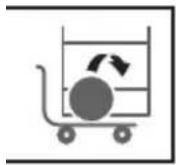

Technische Daten
| Chain saw KS 500-62 | |
| Item no. 95046 | |
| Cylinder capacity 61.5 cm | 3 |
| Max. power 2-stroke engine 2,3 kW (3,15 PS) (8500 min | -1) |
| max. engine speed | 10.300 min -1 |
| Saw speed 22 m/s | |
| Tank capacity | 0.55 l |
| Mixing ratio 2-stroke oil l: Fuel | 1:40 |
| Chain oil tank 0.30 l | |
| Chain saw guide bar Type (Oregon Double Guard) 208PXBK095 | |
| Cutting length* | approx. 19", 48,0 cm |
| Bar length approx. 560 mm | |
| Saw chain type(Xtraguard) 21BPX078X | |
| Chain pitch / gauge 0.325" (8.255 mm) / 1.47 mm | |
| Number of driving links 78 | |
| Sprocket: 7 T x 0.325" (8.255 mm) | |
| Weight (net) without chain, bar, empty tank | 5,7 kg |
| Noise values | |
| Acoustic pressure level Lp A1) | 101.6 dB (A) |
| Measured acoustic power level LW A1) | 103.2 dB (A) |
| Guaranteed acoustic power level LW A2) | 114 dB (A) |
| Wear hearing protection! | |
| Vibration values | |
| Vibration emission value ah3) | |
| Front handle | 9,41 m/ s2 |
| Rear handle | 8,80 m/ s2 |
1) Measured according to 2000/14/EG + E_2005/88/EC, Uncertainty K = 3 dB (A)
2) Measured according to ISO 22867:2021, Uncertainty K=1,5 m/s 2
WARNING: The actual vibration emission value may differ from the indicated value depending on the nature of the application.
The vibration level can be used to compare tools with each other.
It is also suitable for a preliminary assessment of the vibration level.
For an accurate estimation of the vibration level, the times when the machine is switched off or running idle should also be taken into account. This can significantly reduce the vibration level over the entire working period. Please establish additional safety measures to protect the operator from the effects of vibrations, such as: Maintenance of tools and application tools, keeping hands warm, organisation of work processes.
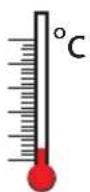
If the machine is used frequently, you should contact your specialist dealer and acquire anti-vibration accessories (handles) if necessary. Avoid using the machine at temperatures of t=10ircC or less. Draw up a work schedule to limit the vibration impact.


Use the machine only after you have carefully read and understood the operating
instructions. Familiarise yourself with the operating elements and the proper use of the machine. Observe all safety instructions contained in these operating instructions. Act responsibly towards other people.
The operator is responsible for accidents or hazards affecting third parties.
The machine may be operated only by persons who are 18 years of age or older. An exception is made for use by a minor if the saw is used in the course of vocational training to acquire the skill under the supervision of a trainer.
If there is any doubt about connecting and operating the machine, contact customer service.
You should familiarise yourself with your new chain saw by making simple cuts in securely braced wood. Always do this if you have not used the chain saw for a long time.
Some regions may have regulations restricting the use of this machine. Refer to your local authority for advice. Never allow children or anyone unfamiliar with these instructions to use this machine. The minimum age of the user is regulated by local legislation.
WARNING!
The safety guidelines must be followed when using this chain saw. For your own safety and that of bystanders, read these instructions before using the chain saw. You should attend a professional safety course on the use, accident prevention measures, first aid and maintenance of the chain saw. Please keep the instructions for future reference.
WARNING! Do not use the machine if you are tired or ill or under the influence of drugs, alcohol or medication.
Intended use
The chain saw may only be used for sawing wood across the direction of the grain, taking into account the technical data and safety instructions. Do not use the chain saw for purposes other than those listed above.
The chain saw must not be used by children or persons who do not wear the necessary personal protective equipment and clothing.
This machine may only be used as directed. The manufacturer cannot be held responsible for any damage resulting from non-compliance with the provisions of the generally applicable regulations and the provisions of these operating instructions.

Only use the machine outdoors and over in closed or poorly ventilated rooms.
Residual risks

Damage to health resulting from end-arm vibrations if the device is used for a long period of time or is not properly guided and evaluated. Never use the machine to the point of exhaustion or for longer than your capabilities allow.
Vibration damping systems are not a guaranteed protection against white finger disease or carpal tunnel syndrome.
Therefore, if the machine is used continuously on a regular basis, the condition of the fingers and carpus should be monitored thoroughly. If symptoms of the above-mentioned diseases occur, consult a doctor immediately. To reduce the risk of “white finger disease”, keep your hands warm while working and take breaks at regular intervals.

Auditory impairments
A certain amount of noise from this machine cannot be avoided. Schedule noisy work during permitted and designated times. If necessary, keep to rest periods and limit the duration of work to what is required. For your personal protection and the protection of persons in the vicinity, suitable hearing protection must be worn. Prolonged exposure in the immediate vicinity of the running machine may cause hearing damage. Please be sure to use hearing protection approved for work with chainsaws, 110-140 dB(A).

Risk of poisoning!!
Exhaust gases, fuels and lubricants are toxic and breathing in exhaust gases can be life-threatening!
Do not operate the machine in an enclosed area where dangerous carbon monoxide gases may collect.

Risk of burns!
The chain and the guide bar heat up during operation.

Fire hazard!!
Do not operate the machine in the vicinity of flammable materials.
Fuel is highly flammable.
Store fuel only in approved containers.
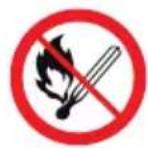
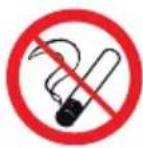
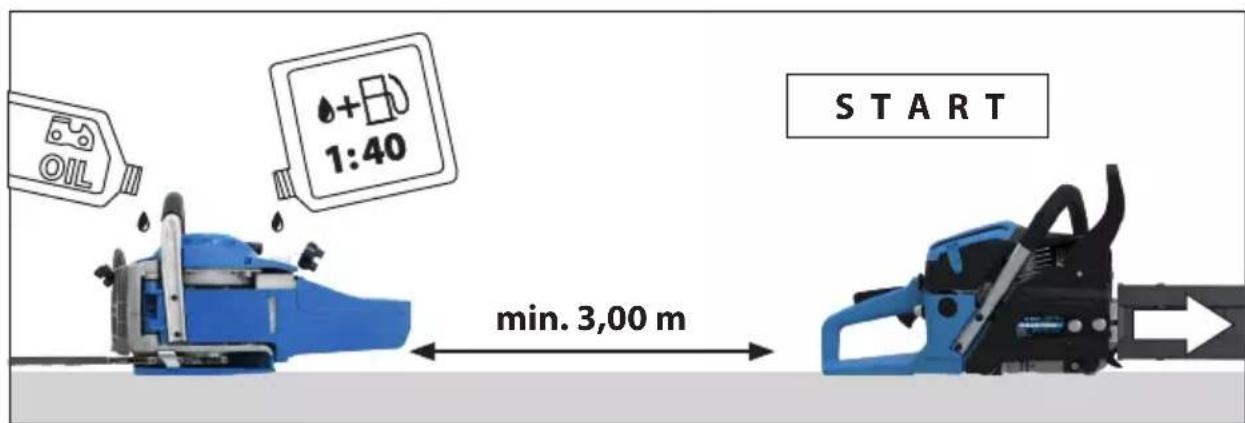
Only refuel the machine outdoors and not near open flames or burning cigarettes.
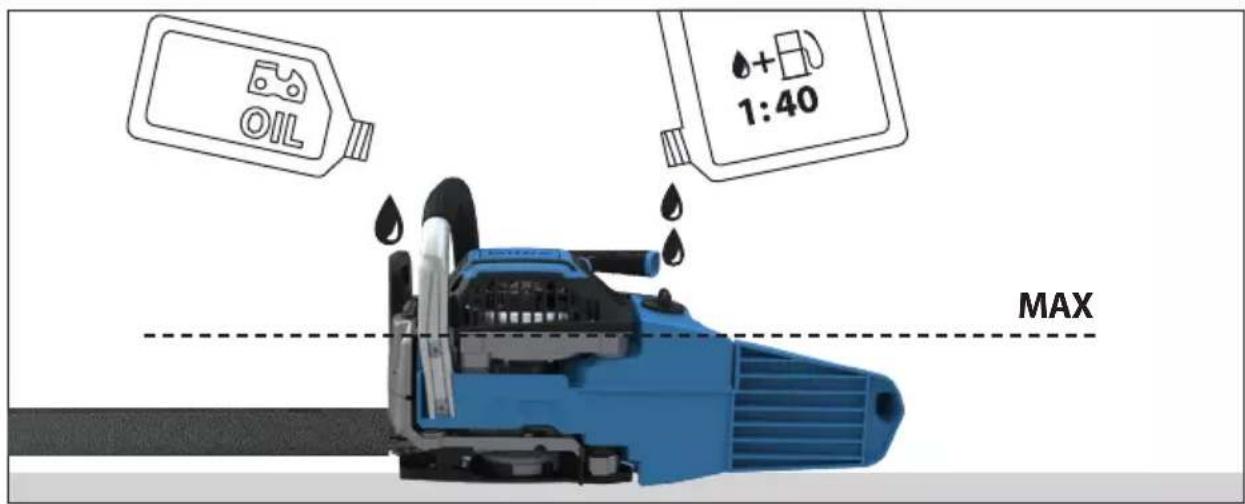
Refuel the engine only when it is switched off. Refuel before starting the engine. Do not refuel or open the tank cap while the engine is running or still hot.
Allow the machine to cool for at least 10 minutes after use before refilling.
Make sure that no fuel is spilled. If fuel has spilled over, do not start the engine. Remove the machine from the area of the spillage and do not attempt to ignite until the fuel vapours have evaporated. Replace all caps firmly on fuel tanks and fuel reservoirs.
Empty the fuel tank outdoors only.
Do not allow fuel to come into contact with clothing. If your clothing does come into contact with fuel, change it immediately.

Explosion hazard!
Petrol and petrol vapours are highly flammable or explosive. Do not work with the machine in a potentially explosive environment where flammable liquids, gases or dust are present. Refuel the engine only when it is switched off. Do not store fuel near the machine.
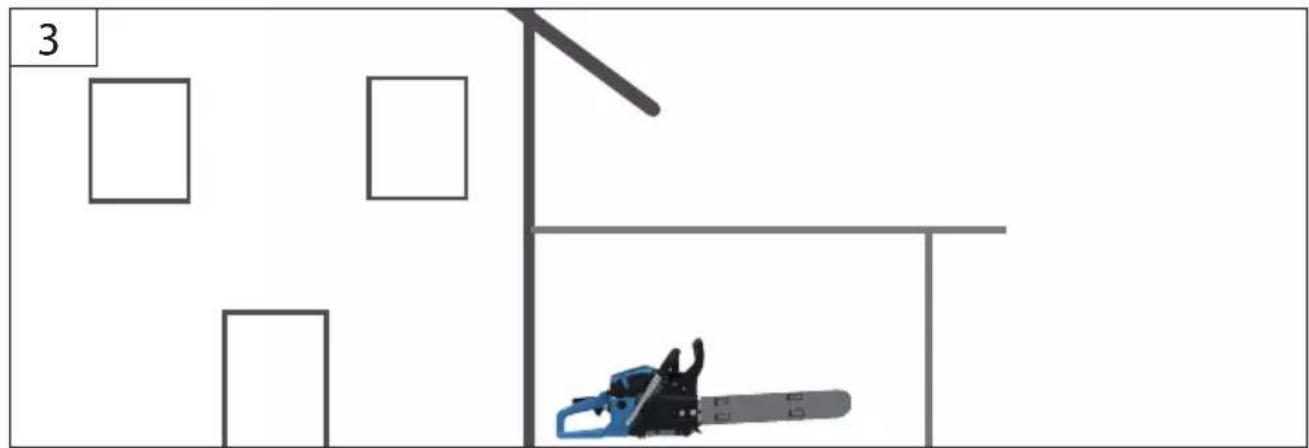
Never store the machine with petrol in the tank inside a building where petrol vapours may come into contact with open flames or sparks.

Risk of injury!
Contact with the saw chain can lead to life-threatening cuts. Never reach into the running saw chain with your hands.

Kickback hazard!
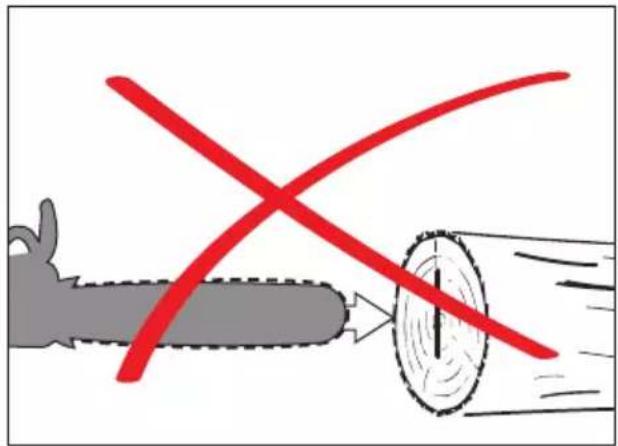
Kickback can lead to life-threatening cuts.
In case of emergency
Initiate the first aid measures necessary for the injury and request qualified medical assistance as soon as possible. Safeguard the injured person from further injury and keep them calm. If you request help, please provide the following
information
- Location of the accident, 2. Type of accident, 3. Number of injured persons, 4. Type of injuries
Symbols

WARNING/Caution!

To reduce the risk of injury, read the operating instructions.



Wear safety goggles! Wear hearing protection!
Wear a safety helmet!
Wear safety gloves!
Wear safety boots with cut protection, non-slip sole and steel toe cap!
Wear protective clothing with cut-protection inlay!
Warning of dangerous kickback
Distance from persons (especially children and animals) at least 15 m! Ensure that there are no persons in the danger zone.
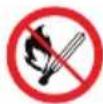
Fire hazard! Smoking and open flames are prohibited.
Switch off the engine before carrying out any maintenance work on the machine.
Warning of dangerous electrical voltage
Warning of flammable substances
CE conformity mark

Switch symbol
Turning the motor switch to the "0" (STOP) position stops the motor

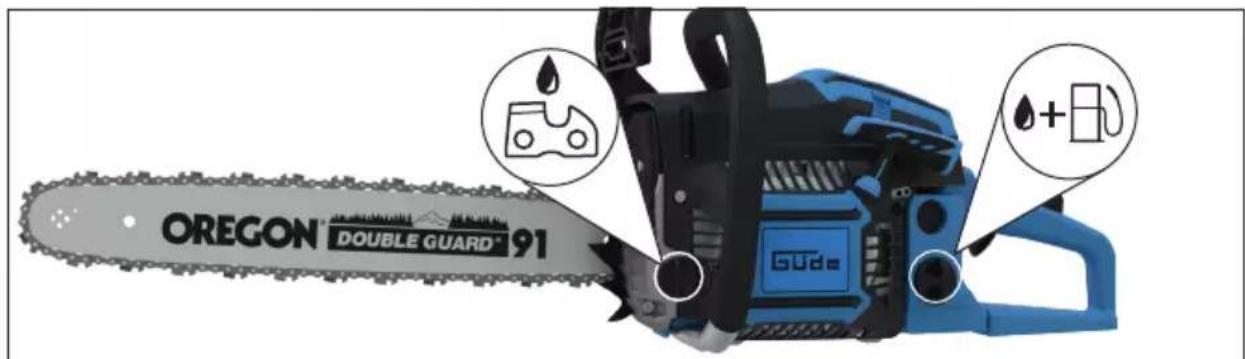
Opening for filling with the "fuel mixture"
Location: Fuel cap

Use the saw with both hands; single-handed operation of the saw can be hazardous.

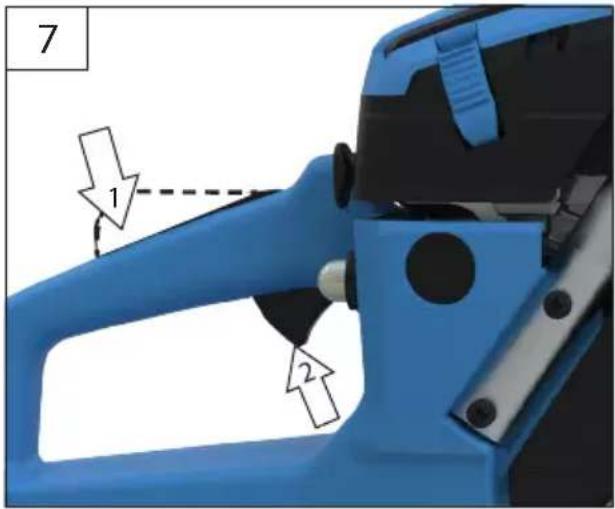
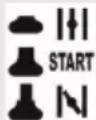
If the choke knob (in the rear part of the handle on the right side) is pulled to the arrow, the start mode can be set as follows: Position 1 with warm motor Position 2 with cold motor
Location: Above the air filter on the right side
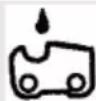
Opening for filling the "chain oil" Location: Oil cap
The symbol for the adjusting nut for the chain oil. "MAX" position – Oil flow increases "MIN" position – Oil flow decreases Location: Starter enclosure of the device

Indication of noise level

TÜV / GS conformity mark
Safety instructions

WARNING
Read all safety instructions and precautions.
Failure to follow the safety instructions and precautions may result in electric shock, fire and/or serious injury.
Keep all safety instructions and precautions for future reference.
- Keep all body parts away from the saw chain while the saw is running. Before starting the saw, make sure that the saw chain is not touching anything. When working with a chain saw, a moment of negligence can lead to clothing or body parts being caught by the saw chain.
• Always hold the chain saw with your right hand on the rear handle and your left hand
on the front handle. Holding the chain saw in the reverse working position increases the risk of injury and it should not be used in this way.
- Wear safety goggles and hearing protection. Additional protective equipment for head, hands, legs and feet is recommended. Suitable protective clothing reduces the risk of injury from ejected chips and accidental contact with the saw chain.
- Do not work on trees with the chain saw. There is a risk of injury when using a chain saw on a tree.
- Always make sure your footing is secure and only use the chain saw when standing on firm, safe and level ground. Slippery ground or unstable surfaces such as a ladder can lead to loss of balance or control over the chain saw.
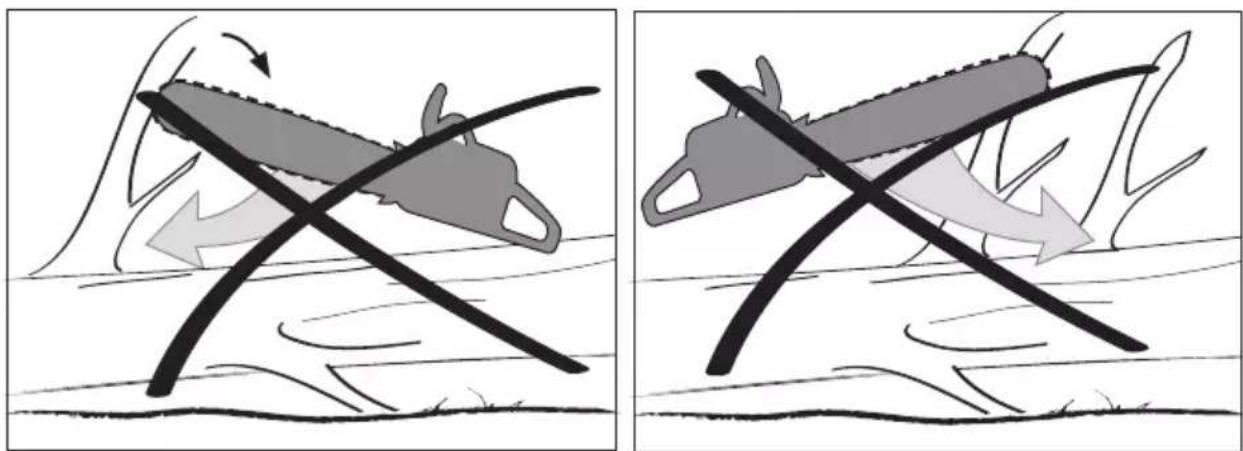
- When cutting a branch that is under tension, expect it to spring back. If the tension in the wood fibres is released, the tensioned branch can hit the operator and/or force the chain saw out of control.
- Be especially careful when cutting under-growth and young trees. The thin material can get caught in the saw chain and hit you or upset your balance.
- Carry the chain saw using the front handle when switched off, with the chain facing away from your body. Always attach the protective cover when transporting or storing the chain saw. Careful handling of the chain saw reduces the likelihood of accidental contact with the running saw chain.
- Follow instructions for lubrication, chain tension and changing accessories. An improperly tensioned or lubricated chain can either break or increase the risk of kickback.
- Keep handles dry, clean and free of oil and grease. Greasy, oily handles are slippery and lead to loss of control.
- Only saw wood. Do not use the chain saw for work for which it is not intended, for example: Do not use the chain saw to saw plastic, masonry, or construction materials that are not made of wood. Using the chain saw for work other than that for
which it was intended can lead to hazardous situations.
- Be careful when reaching the end of the cut. The weight of the product may change unexpectedly as it cuts free from the wood. This can cause accidents to the legs and feet. Always remove the product from a wood cut while the product is running.
- When bucking on a slope always stand on the uphill side of the log. When „cutting through“, to maintain complete control release the cutting pressure near the end of the cut without relaxing your grip on the product handles. Do not let the chain contact the ground. After completing the cut, wait for the saw chain to stop before you move the product. Always stop the engine before moving from tree to tree.

WARNING
- Please consider that the exhaust jet and the muffler is getting very hot during working. Therefore it is required to avoid catching fire by direct contact of dry leaves and gras with hot sufaces.
Causes and avoidance of kickback, bouncing and skating:
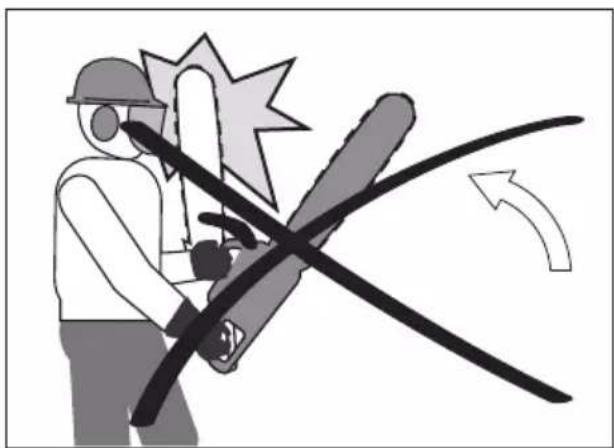
Do not operate the product with one hand! This product is intended for two handed use only. Place right hand on the rear handle and left hand on the front handle. You cannot control reactive forces and you lose control of the product, which may result in the skating or bouncing of the bar and chain along the limb or log.
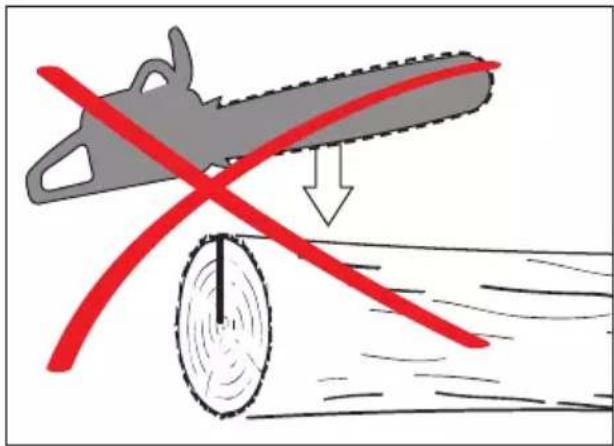
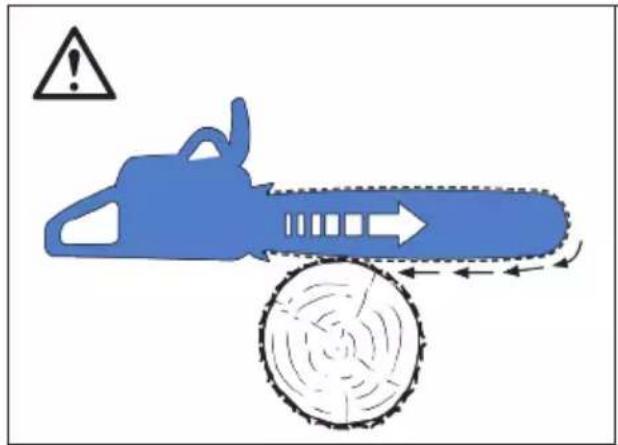
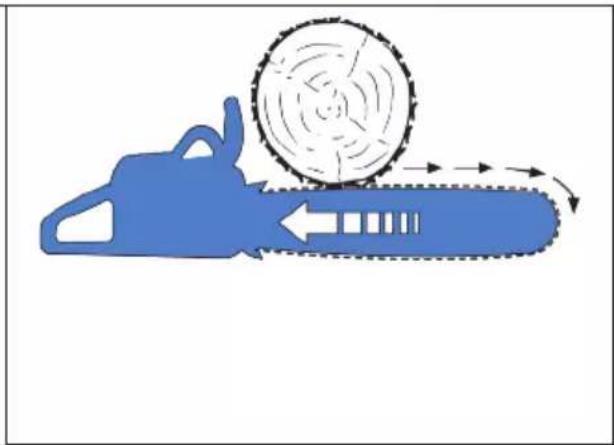
Pinching the saw chain along the bottom of the guide bar may pull the product forward away from the operator ("skating").
Pinching the saw chain along the top of the guide bar may push the guide bar rapidly back toward the operator ("bouncing").
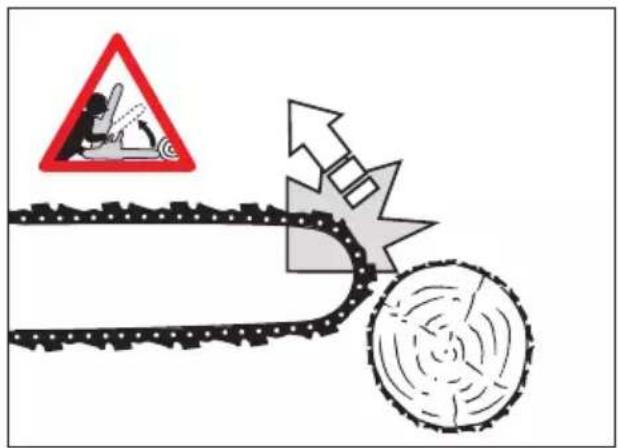
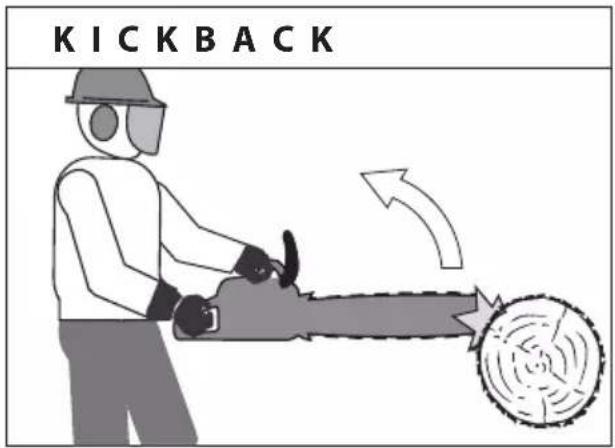
Kickback may occur if the tip of the guide bar touches an object or if the wood bends and the saw chain gets stuck in the slit.
In some cases, contact with the bar tip may result in an unexpected backwards reaction where the guide bar is knocked upwards and in the direction of the operator.
Jamming of the saw chain at the top edge of the guide bar can force the bar backwards in the direction of the operator.
Any of these reactions can cause you to lose control of the saw and may result in serious injury. Do not rely exclusively on the safety devices installed in the chain saw. As a chain saw user, you should take various measures to ensure that you can work without accidents or injuries.
Kickback is the result of incorrect or incorrect use of the tool. It can be prevented by taking appropriate
precautions as described below.
- Hold the saw firmly with both hands, with thumb and finger enclosing the chain saw handles. Bring your body and arms into a position where you can withstand the kickback forces. If suitable measures are taken, the operator can control the kickback forces. Never let go of the chain saw.
- Avoid adopting an abnormal posture and do not saw above shoulder height. This prevents accidental contact with the bar tip and allows better control of the chain saw in unexpected situations.
- Always use replacement bars and saw chains specified by the manufacturer. Incorrect replacement bars and saw chains can cause the chain to break and/or cause kickback. The manufacturer recommends:
Oregon replacement guide bar, Güde item number: 94891
Oregon replacement chain, Güde item number: 94890
- Follow the manufacturer's instructions for sharpening and maintaining the saw chain. Setting depth limiters too low increase the tendency to kickback.
It is necessary to inspect daily before use and after dropping or other shocks to detect significant damage or defects.
-Always apply the chain brake before starting the engine and release the starting throttle lock immediately after starting the engine. Make sure that the engine speed has returned to idle before releasing the chain brake.
-Only engage the starting throttle lock when starting. Insert a starting throttle lock before using the machine.
-It is necessary to keep the chainsaw in good working condition
Warning:
There may be national regulations (occupational health and safety, environment) which may restrict the use of the chain saw.
Ensure that no fuel or oil can leak during transport. Dust generated during work is often harmful to health and should not enter the body. Wear a suitable dust mask.
Check the chain tension regularly. An incorrectly tensioned chain can bounce off the guide bar and lead to serious injury or death. The length of the chain depends on the temperature.
Checking the chain brake
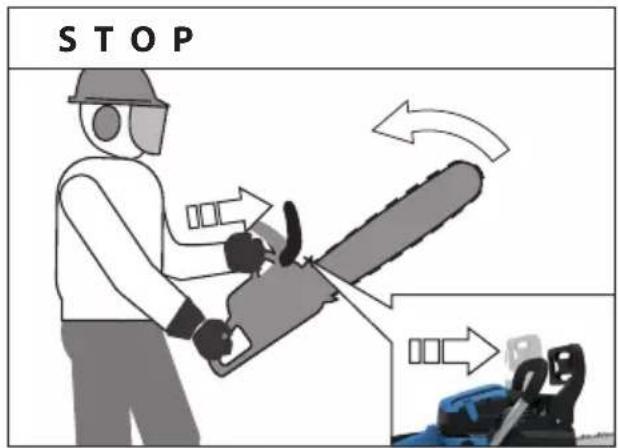
Operate the chain brake by turning your left hand around the front handle. Push the chain brake lever / hand guard with the back of your hand towards the guide bar while the chain is moving quickly. Make sure that both hands are always on the handles.
WARNING! If the chain brake does not stop the chain immediately, or if the chain brake does not remain in the running position without assistance, arrange for the chain saw to be repaired before further use.
⚠️ Before each start-up, check all screw and plug connections and protective devices for strength and correct seating and to ensure that all moving parts are turning smoothly.
⚠ It is strictly forbidden to dismantle, modify or remove the protective devices located on the machine or to install other protective devices.
The machine must not be used if it is damaged or if the safety devices are defective. Replace worn and damaged parts.
⚠️ Check the saw for damage or other defects before each start-up, especially if the saw has been dropped, and make sure that no significant damage has occurred.
Always ensure adequate lighting or good light conditions when working with the machine. After starting, release the throttle lever to ensure that the engine speed assumes the idle speed, only then can the chain brake be released.
⚠ Attention when walking backwards, danger of tripping! Remove cut branches immediately from the work area to prevent injury. The on/off switch and the safety switch must not be locked.
Safety devices of a chain saw:
Rear hand guard:
The wide plate at the bottom of the handle protects the operator's hand from operator's hand from injuries caused by a chain that may break and strike.
Chain catcher:
The chain catcher in the chainsaw housing "catches" the chains in the event of a breakage and Prevents the chain from hitting the operator or being thrown out.
Chain brake:
The chain brake stops the saw chain within a few milliseconds in the event of a kickback triggered by the back of the user's hand, thus preventing serious injuries.
Working instructions
The operating instructions contain important information on how to work safely and professionally with the chain saw and how to avoid hazards. Should a blockage nevertheless occur between the cut material and the saw chain, then switch it off immediately. Wait until the saw chain has come to a standstill. Remove the spark plug connector and put on cut-resistant gloves to remove the blockage. If it is necessary to remove the guide bar (guide bar), follow the instructions given in the Installation chapter. After removing the blockage and reassembling, a test run must be carried out. If vibrations or mechanical noises are detected, stop work and contact an authorized service center. If this hazard occurs frequently, we recommend training. Felling a tree
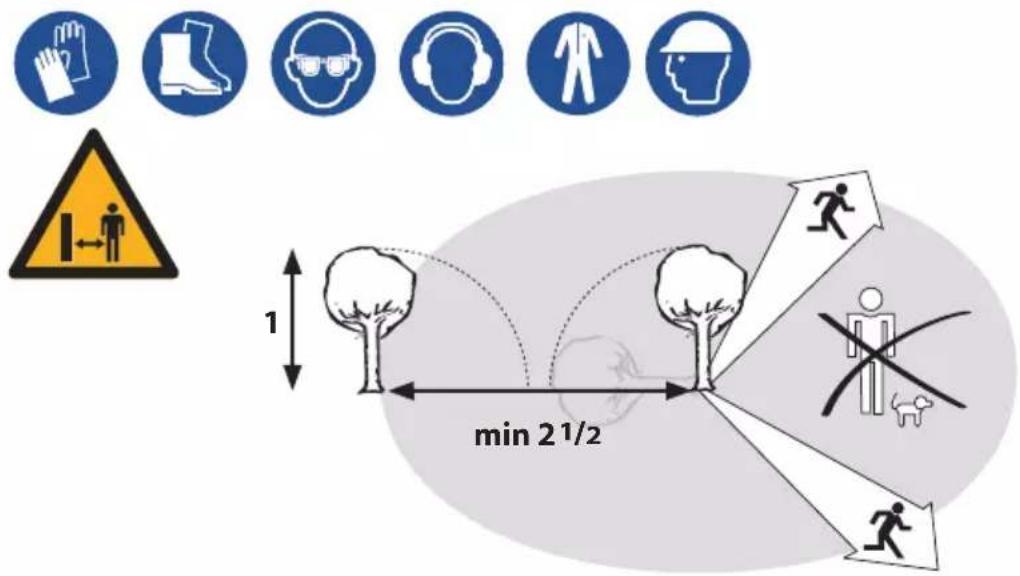
If two or more persons cut and fell at the same time, the distance between the fellers and the cutters should be at least twice the height of the tree to be felled. When felling trees, care must be taken to ensure that other persons are not exposed to danger, that no utility lines are in the way and that no material damage can be caused. If a tree comes into contact with a utility line, the utility company must be informed immediately. When sawing on slopes, the chain saw operator should be on the ground above the tree to be felled, as the tree is likely to roll or slide downhill after felling.
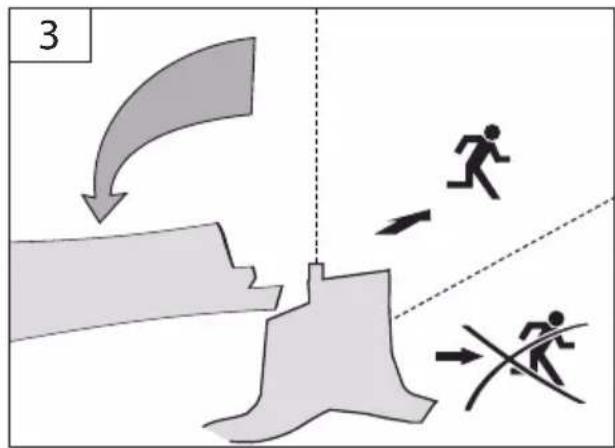
An escape route should be planned and, if necessary, cleared prior to the commencement of felling operations. The escape route should lead diagonally backwards from the expected fall line.
Before you start felling, consider the natural inclination of the tree, the position of larger branches and the direction of the wind in order to estimate the direction in which the tree will fall.
Remove dirt, stones, loose bark, nails, staples and wire from the tree.
Do not try to cut trees that have rotted or been damaged by wind, fire, lightning, etc. This is extremely dangerous and should be done by professional tree surgeons.
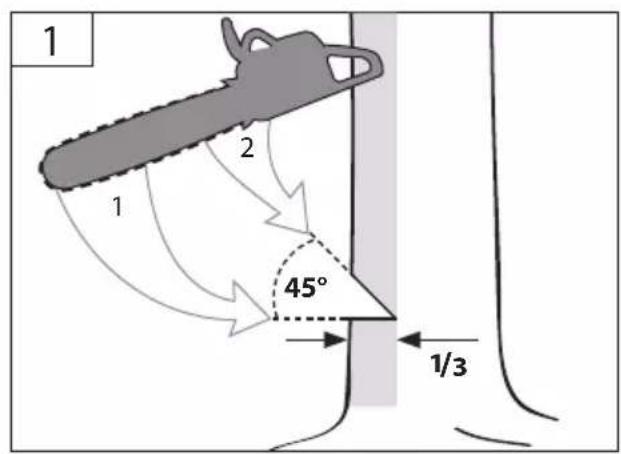
1. Notch cut
At right angles to the direction of fall, saw a notch with a depth of 1/3 of the tree diameter. First make the lower horizontal cut. This avoids jamming the saw chain or guide bar when making the second cut.
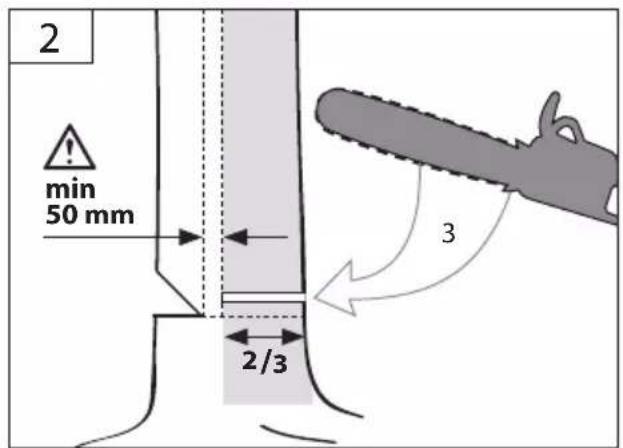
2. Felling cut
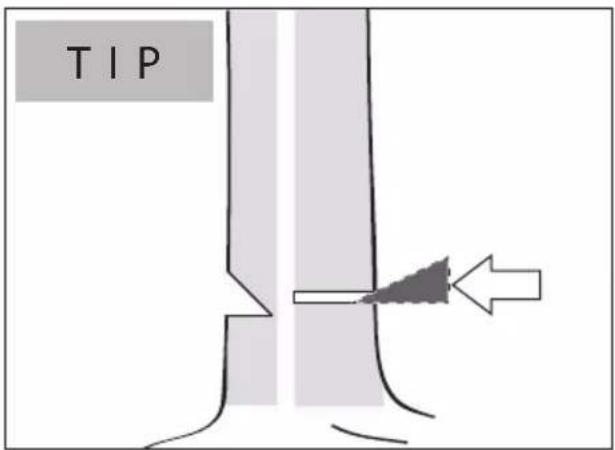
Make the felling cut at least 50 mm higher than the horizontal notch cut. Make the felling cut parallel to the horizontal notch cut. Make the felling cut so that a strip (felling strip) remains, which can act as a hinge. The strip prevents the tree from turning and falling in the wrong direction. Do not saw through the strip. As the felling cut approaches the strip, the tree should begin to fall. If there is a danger that the tree will not fall in the desired direction or it swings back and the saw chain jams, stop cutting before the felling cut is complete and use wooden, plastic or aluminium wedges to expand the cut and make the tree fall in the desired direction. When the tree begins to fall, pull the chain saw out of the cut, turn off the engine, turn off the chain saw and follow the planned escape route. Pay attention to falling branches and do not trip. Removing woody roots. Woody roots are large roots that protrude above the soil from the trunk of the tree. Large woody roots must be removed before felling. First cut the woody root horizontally and then vertically. Remove the loose root piece from the working area. Follow the correct procedure for felling the tree after removing the large woody roots.
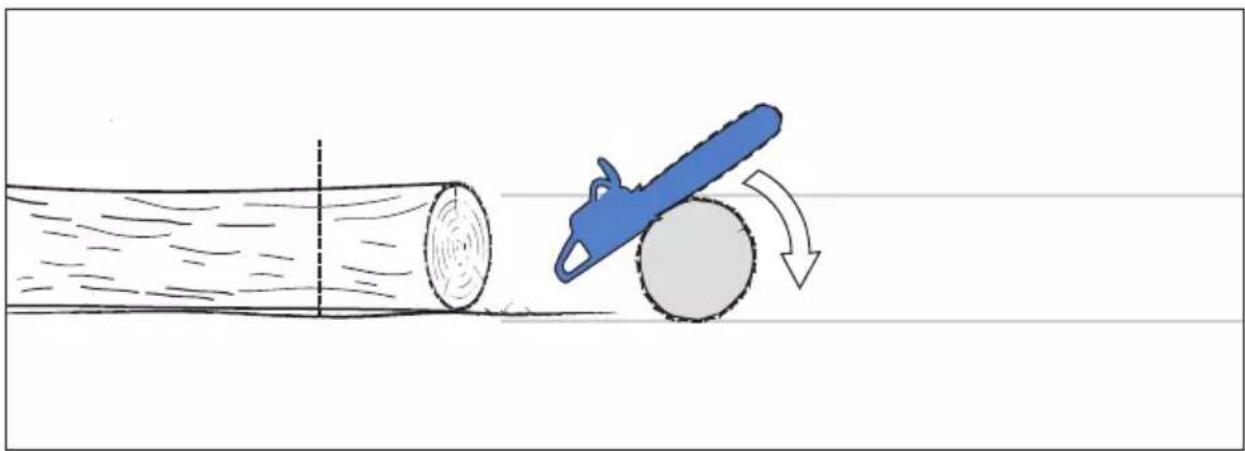
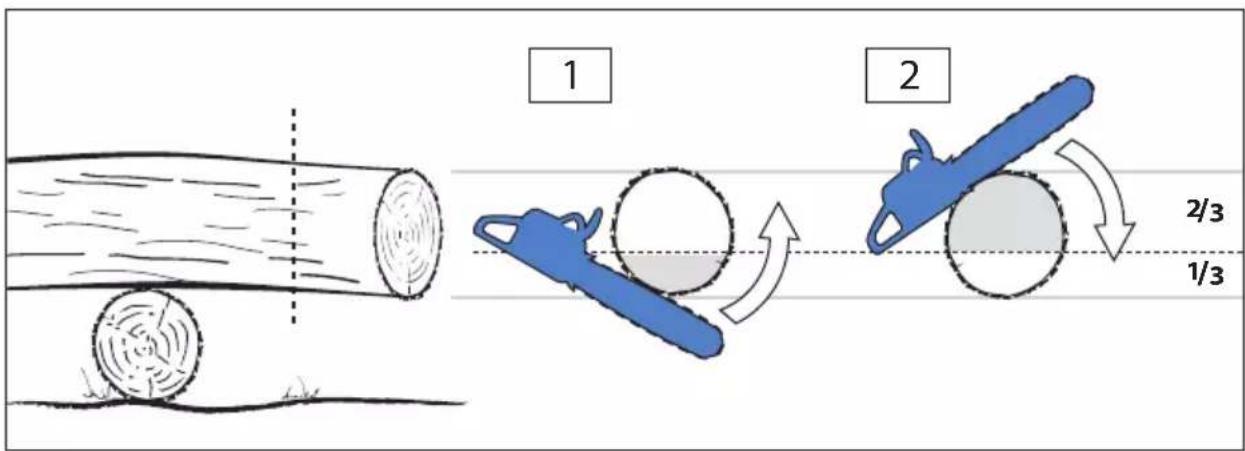
Cutting a tree trunk to length
Cutting to length involves cutting a tree trunk into pieces. It is important that you have a firm footing and that your weight is evenly distrib-
uted on both feet. Where possible, the trunk should be elevated and supported by branches, trunks or wooden wedges. Follow the instructions below to facilitate cutting: If the trunk is supported over its entire length, cut it from above (top cut). If the trunk is supported at one end, cut through a third of the diameter from the bottom (undercut). Then make the final cut as a top cut, which meets the first cut.
If the trunk is supported at both ends, cut through a third of the diameter from the top (top cut). Then make the final cut as an undercut over the lower 2/3, which meets the first cut. When cutting to length on slopes, always stand on the higher side of the trunk. To maintain complete control at the end of the cut, reduce the cutting pressure towards the end of the cut without loosening your firm grip on the handles of the chain saw. Do not let the chain come into contact with the floor. Wait until the saw chain has stopped before moving the chain saw. Always switch off the engine before moving from tree to tree.
Delimbing a tree
The process of delimbing involves removal of branches from a felled tree. When delimbing, leave larger lower branches as supports to keep the tree above the ground. Remove smaller branches in one cut. Branches under tension should be cut from bottom to top to avoid jamming the chain saw.
Sawing tensioned wood
Tensioned wood is a trunk, branch, rooted stump or sapling bent under tension by other wood and which rebounds when the other wood is cut or removed. For a felled tree, it is very likely that a rooted stump will return to its upright position when the trunk is separated from the stump when it is being cut to length. Pay attention to tensioned wood, as this is very dangerous. Bumper spike 10
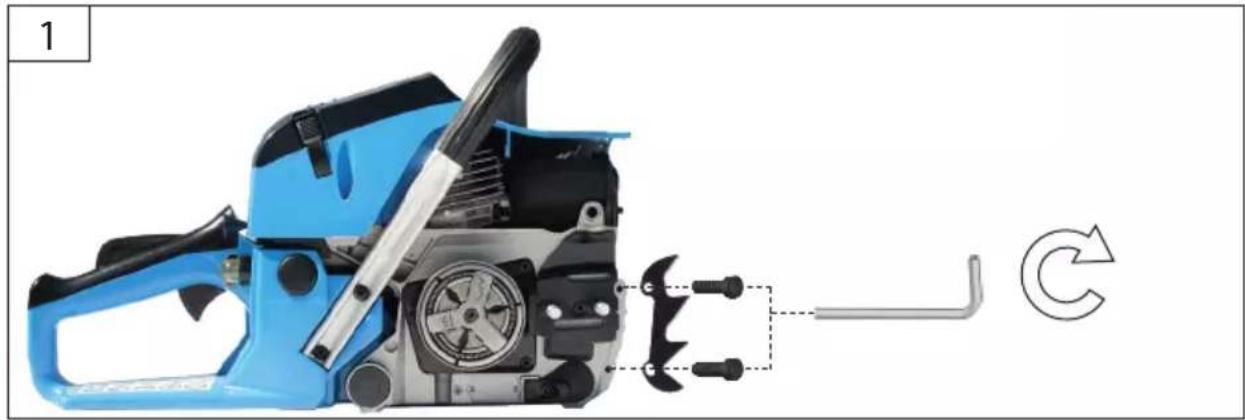
The integrated bumper spike can be used as a pivot point when making a cut. It is helpful to keep the body of the saw stable when sawing. When sawing, push the machine forward until the metal pins penetrate the wood edge, then lift the rear handle up or down in the direction of the cut to reduce the physical strain on sawing.
Maintenance and transport
⚠️ Before carrying out any work on the machine, switch off the engine and pull out the spark plug connector. Wait until the unit has cooled down.
Repairs and work not described in this manual should only be carried out by qualified personnel. Only use original accessories and original spare parts. Allow the engine to cool down; empty the fuel tank and secure the machine from slipping before transporting it in a vehicle. This ensures prevention of petrol leakage, damage or injury.
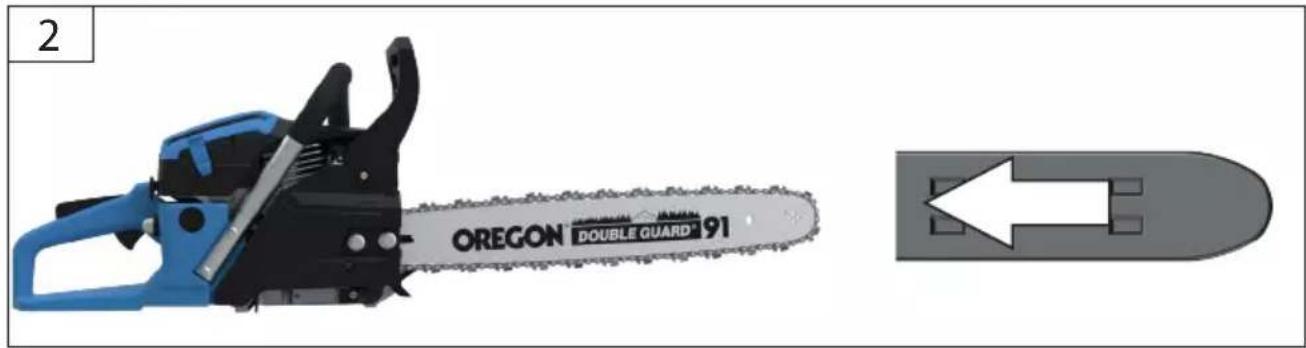
Always transport a chain saw with the scabbard attached.
Only use biodegradable chain oil
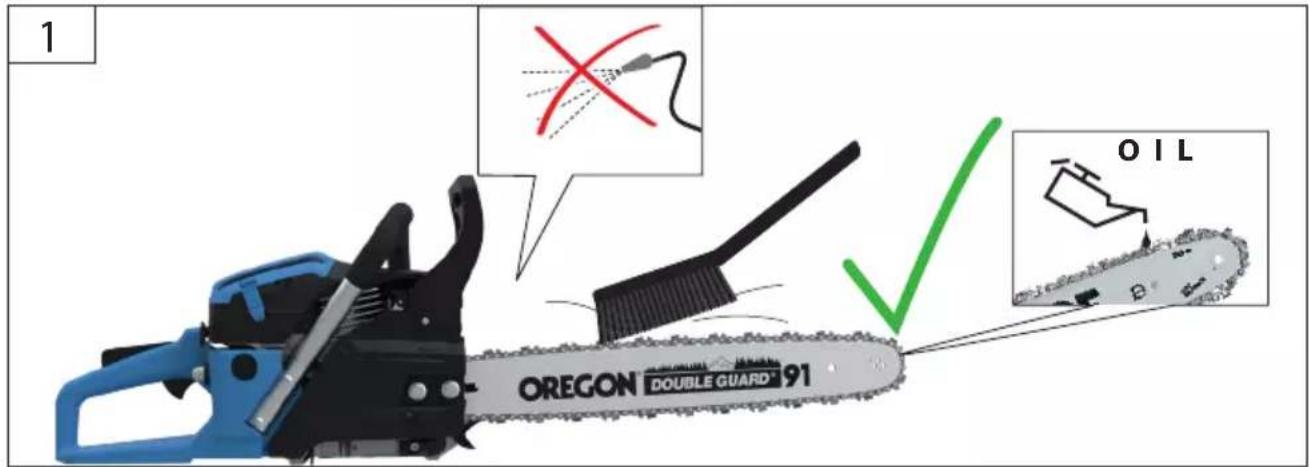
Always keep the machine clean, especially the ventilation slots. Never spray the unit body with water!
Do not clean the machine and its components with solvents, flammable or toxic liquids. Only use a damp cloth for cleaning.
Use an environmentally friendly oil for all moving parts.
Clean the saw chain and the guide bar carefully after each use. Rub it with an oily cloth or spray it with a metal maintenance spray.
Blunt, bent or damaged chains and guide bars must be replaced.
Use a chain guard during transport and storage. Clean and maintain the machine before storage.
Only a regularly serviced and well-maintained machine can be a useful tool. Lack of maintenance and care can lead to unforeseeable accidents and injuries.
If required, you can find the spare parts list online at www.guede.com.
Store the machine in a dry place.
Warranty
The warranty period is 12 months for commercial use, 24 months for consumers, and begins with the date of purchase of the machine. The warranty exclusively covers defects attributable to material or manufacturing defects. In the event of the assertion of a defect within the meaning of the warranty, the original proof of purchase must be enclosed with the date of sale.
The warranty does not cover improper use, e.g. overloading the machine, use of excessive force, damage caused by external influences or foreign objects. Non-observance of the operating instructions and normal wear and tear are also excluded from the warranty
Important customer information Please note that returns within or outside the warranty period should always be in the original packaging. This measure effectively avoids unnecessary transport damage and any associated disputes. Your equipment is optimally protected only in the original box and this will ensure smooth processing.
Service
Do you have a technical question? A complaint? Do you need spare parts or operating instructions? We can help you quickly and easily in the Service section of the homepage of Güde GmbH & Co. KG (www.guede.com). Please help us to help you. In order to be able to identify your machine in the event of a complaint, we need
the serial number, the item number and year of manufacture. All this data can be found on the rating plate.
Tel.: +49 (0) 79 04 / 700-360 Fax: +49 (0) 79 04 / 700-51999 Email: support@ts.guede.com
Disposal
When the machine is finally taken out of service at the end of its service life, please dispose of it in an environmentally friendly manner at a recycling centre or dismantle the machine into its metal and plastic components and dispose of them in accordance with the material. Follow local recycling requirements and applicable regulations. Dispose of all chemicals, e.g. engine oil or fuel, at a service workshop or at a suitable waste disposal point.
Inspection and maintenance schedule
| General | Entire sawPlastic bodySaw chainSaw guide barSprocketChain brakeClutch | Regularly clean the exterior.Have them checked regularly by a specialist workshop.Check for breaks and cracks.Re-sharpen regularly.Clean regularly.Check proper functioning regularly.Check proper functioning regularly. (Chain must not move when idling). |
| Before starting each job | Saw chainSaw guide barChain lubricationChain brakeDeceleration brakeOn-off switchOil tank cap | Check for damage and sharpness.Check chain tension.Function test.Check for leaks.If there is any damage, arrange for repair in a specialist workshop. |
| After each job | Saw guide barGuide bar mount | Clean oil inlet bore.Clean, especially the oil guide groove. |
| Storage | Chain oil tankSaw chain / saw guide barEntire saw | Empty.Dismantle, clean and lightly oil. Clean the guide groove of the saw guide bar and attach the scabbard.Store cleaned and serviced saws safely in a dry room out of the reach of children.After prolonged storage, have the saw checked in a specialist workshop (residual oil can become waxy and clog the oil pump valve) |
Fault finding
| Problem Cause Troubleshooting | ||
| The engine doesn't start | 1. Operating switch set to "OFF"2. Tank empty3. Engine flooded4. Spark plug dirty (carbon residue on the electrodes), electrode gap too large5. Carburettor, nozzles dirty6. Spark plug connection, defective ignition cable7. No ignition spark | 1. Set operating switch to "ON"2. Fill up the tank3. Remove fuel, start several times if necessary, remove spark plug, clean and dry4. Clean spark plug, check heat value of spark plug and replace spark plug if necessary, adjust to 0.6-0.8 mm5. Clean the carburettor in a specialist workshop, have it blown out6. Have it replaced in a specialist workshop.7. Check short circuit button, cable, check ignition module, and if necessary have them replaced in a specialist workshop and have the gap dimension (0.3-0.4 mm) adjusted. |
| The engine runs too fast when idling | 1. Engine is cold | 1. Slowly warm up, and, if necessary, close the choke a little. |
| The engine does not give maximum power | 1. Spark plug dirty (carbon residue on the electrodes), electrode gap too large2. Carburettor, nozzles dirty3. Carburettor, nozzles dirty4. Exhaust, cylinder exhaust port5. Sealing ring leaking in the crankcase6. Worn cylinders, pistons/rings7. Incorrect fuel mixture (too much oil)8. Incorrect ignition | 1. Clean spark plug, check heat value of spark plug and replace spark plug, if necessary, adjust to 0.6-0.8 mm2. Clean the carburettor in a specialist workshop, have it blown out3. Clean4. Dismantle and clean the exhaust at a specialist workshop and have any carbon residue removed.5. Have it replaced in a specialist workshop.6. Replace cylinder, piston or piston rings in a specialist workshop, grind cylinder and have excess piston size fitted.7. Refuel according to instructions8. Have the gap dimension of the ignition module (0.3-0.4 mm) adjusted in a specialist workshop. |
| The engine does not come to a complete stop | 1. Spark plug light grey with signs of glow (melting beads)2. Carbon residues in the combustion chamber | 1. Install a spark plug with a higher heat value.2. Have the cylinder head, piston crown and cylinder ducts cleaned in a specialist workshop. |
| The chain runs despite idling | 1. Idle speed too high | 1. Have the idle speed adjusted/reduced by a specialist workshop |
Données techniques



- KS 500-62 Benzin Kettensäge
- Montage
- RÜCKSCHLAG
- BAUM FÄLLEN
- BAUMSTAMM ABLÄNGEN
- TIP
- DE KALTSTART
- 7
- WARNING!
- Intended use
- Residual risks
- Auditory impairments
- Risk of poisoning!!
- Risk of burns!
- Fire hazard!!
- Explosion hazard!
- Risk of injury!
- Kickback hazard!
- In case of emergency
- information
- Symbols
- Safety instructions
- WARNING
- Causes and avoidance of kickback, bouncing and skating:
- Warning:
- Safety devices of a chain saw:
- Chain brake:
- Working instructions
- Notch cut
- Felling cut
- Cutting a tree trunk to length
- Delimbing a tree
- Sawing tensioned wood
- Maintenance and transport
- Warranty
- Service
- Disposal
Brand : Güde
Model : KS 500-62
Category : Saw