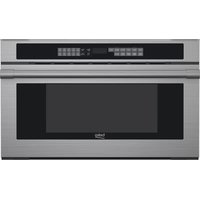
WOSP30100SS - Microwaves BEKO - Free user manual and instructions
Find the device manual for free WOSP30100SS BEKO in PDF.


| Product Type | Built-in microwave with convection function |
| Brand | Beko |
| Model | WOSP30100SS |
| External Dimensions (W x H x D) | 755.6 x 454.02 x 631.8 mm |
| Cavity Dimensions (W x H x D) | 433.4 x 239.7 x 430.2 mm |
| Capacity | 45 liters (1.6 cubic feet) |
| Power Supply | Single phase, 240 V / 220 V, 60 Hz, 11.5 A |
| Microwave Output Power | 900 watts |
| Convection Output Power | 1600 watts |
| Frequency | 2450 MHz |
| Rotation System | Turntable, diameter 340.6 mm |
| Microwave Power Levels | 11 levels (0% to 100%) |
| Cooking Functions | Microwave, convection (baking, roasting, grilling), Speed Bake, Speed Roast, auto defrost, sensor cooking |
| Multi-sequence Programming | Up to 4 sequences in microwave mode, 2 in Speed mode |
| Timer and Clock | Timer up to 99 min 99 sec, 12-hour clock |
| Safety | Control lock, door locks, mandatory grounding |
| Exterior Materials | Stainless steel and pre-coated plastic |
| Cleaning | Exterior: mild soap and water; interior: warm water, avoid abrasives; turntable and racks dishwasher safe |
| Included Accessories | 2 oven racks, lower and upper rack for turntable |
| Repairability | Repairs by authorized service center only |
| Warranty | Refer to manual or Beko customer service |
Frequently Asked Questions - WOSP30100SS BEKO
User questions about WOSP30100SS BEKO
0 question about this device. Answer the ones you know or ask your own.
Ask a new question about this device
Download the instructions for your Microwaves in PDF format for free! Find your manual WOSP30100SS - BEKO and take your electronic device back in hand. On this page are published all the documents necessary for the use of your device. WOSP30100SS by BEKO.
USER MANUAL WOSP30100SS BEKO
Convection/Speed Microwave Oven
User Manual
natural_image
Simple line icon of a microwave oven with a steaming bowl (no text or symbols)WOSP30100SS
EN - FR
Jun 12, 2023
TINS-B439URRO
PLEASE READ THIS MANUAL FIRST!
Dear Customer,
Thank you for preferring a Beko product. We hope that you get the best results from your product which has been manufactured with high quality and state-of-the-art technology. Therefore, please read this entire user manual and all other accompanying documents carefully before using the product and keep it as a reference for future use. If you handover the product to someone else, give the user manual as well. Follow all warnings and information in the user manual.
Remember that this user manual is also applicable for several other models. Differences between the models are explicitly described in the manual.
PRECAUTIONS TO AVOID POSSIBLE EXPOSURE TO EXCESSIVE MICROWAVE ENERGY
- Do not attempt to operate this oven with the door open since open-door operation can result in harmful exposure to microwave energy. It is important not to defeat or tamper with the safety interlocks.
- Do not place any object between the oven front face and the door or allow soil or cleaner residue to accumulate on sealing surfaces.
- Do not operate the microwave oven if it is damaged. It is particularly important that the microwave oven door close properly and that there is no damage to the: (1) door (bent), (2) hinges and latches (broken or loosened), (3) door seals and sealing surfaces.
- The microwave oven should not be adjusted or repaired by anyone except properly qualified service personnel.
!
This equipment generates and uses ISM frequency energy and if not installed and used properly, that is in strict accordance with the manufacturer's instructions, may cause interference to radio and television reception.
It has been type-tested and found to comply with limits for an ISM Equipment pursuant to part 18 of FCC Rules, which are designed to provide reasonable protection against such interference in a residential installation.
However, there is no guarantee that interference will not occur in a particular installation.
If this equipment does cause interference to radio or television reception, which can be determined by turning the equipment off and on, the user is encouraged to try to correct the interference by one or more of the following:
- Reorient the receiving antenna of radio or television.
- Relocate the Microwave oven with respect to the receiver.
- Move the microwave oven away from the receiver.
- Plug the microwave oven into a different outlet so that microwave oven and receiver are on different branch circuits.
THE MANUFACTURER is not responsible for any radio or TV interference caused by UNAUTHORIZED MODIFICATION to this microwave oven. It is the responsibility of the user to correct such interference.
CONTENTS
PRECAUTIONS TO AVOID POSSIBLE EXPOSURE TO EXCESSIVE MICROWAVE ENERGY 2
1 IMPORTANT SAFETY INSTRUCTIONS......4
2 INSTALLATION INSTRUCTIONS....5 UNPACKING AND EXAMINING YOUR OVEN ....5 CHOOSING A LOCATION....5
3 GROUNDING INSTRUCTIONS ....6 RADIO OR TV INTERFERENCE ....6 TO AVOID THE POSSIBILITY OF ELECTRIC SHOCK....6 TO AVOID THE POSSIBILITY OF BURNS ....6
4 INFORMATION YOU NEED TO KNOW....7-9 ABOUT YOUR OVEN....7 ABOUT MICROWAVE COOKING....7 ABOUT SAFETY....7 ABOUT UTENSILS AND COVERINGS....8 ABOUT FOOD....9
5 PART NAMES ....10 OVEN PARTS....10 ACCESSORIES....10 CONTROL PANEL....11 MENU LABEL....11
6 BEFORE OPERATING....12 TO SET THE CLOCK....12 STOP/CLEAR....12
7 MANUAL OPERATION....13 TIME COOKING....13 TO SET POWER LEVEL....13 MANUAL DEFROST....13
8 MICROWAVE FEATURES .... 14-18 DEFROST .... 14 DEFROST CHART .... 14 SENSOR COOKING .... 15 REHEAT .... 15 POPCORN .... 15 SENSOR CHART .... 16 COOK .... 16 COOK CHART .... 16 MORE MENUS .... 18 MELT/SOFTEN/WARM .... 18 MELT/SOFTEN/WARM CHART .... 18
9 CONVECTION FEATURES....19-21
BAKE....19
ROAST....19
GRILL....19
MORE MENUS....19
MORE MENUS CHART 19
SPEED BAKE....21
SPEED ROAST....21
TO COOK WITH SPEED FUNCTIONS......21
HELPFUL HINTS FOR CONVECTION AND SPEED FUNCTIONS COOKING....21
10 OTHER CONVENIENT FEATURES....22 MULTIPLE SEQUENCE COOKING....22 SETTINGS/TIMER....22 +30 SEC....22 CONTROL LOCK....22 HELP (DISPLAY INDICATOR)....22
11 CLEANING AND CARE ....23 EXTERIOR ....23 DOOR ....23 TOUCH CONTROL PANEL ....23 INTERIOR - AFTER MICROWAVE COOKING ....23 INTERIOR - AFTER CONVECTION, SPEED BAKE OR SPEED ROAST ....23 WAVEGUIDE COVER ....23 ODOR REMOVAL ....23 TURNTABLE/TURNTABLE SUPPORT ....23
12 SPECIFICATIONS....24 13 SERVICE CALL CHECK....25
1 IMPORTANT SAFETY INSTRUCTIONS
When using electrical appliances basic safety precautions should be followed, including the following:
A To reduce the risk of burns, electric shock, fire, injury to persons or exposure to excessive microwave energy:
- Read all instructions before using the appliance.
- Read and follow the specific PRECAUTIONS TO AVOID POSSIBLE EXPOSURE TO EXCESSIVE MICROWAVE ENERGY on page 2.
- This appliance must be grounded. Connect only to properly grounded outlet. See GROUNDING INSTRUCTIONS on page 6.
- Install or locate this appliance only in accordance with the provided installation instructions.
- Some products in sealed containers, such as whole eggs and closed glass jars, can explode and should not be heated in this oven.
- Use this appliance only for its intended use as described in this manual. Do not use corrosive chemicals or vapors in this appliance. This type of oven is specifically designed to heat, cook or dry food. It is not designed for industrial or laboratory use.
- As with any appliance, close supervision is necessary when used by children.
- Do not operate this appliance if it has a damaged cord or plug, if it is not working properly or if it has been damaged or dropped.
- This appliance should be serviced only by qualified service personnel. Contact nearest Authorized Servicer for examination, repair or adjustment.
- Do not cover or block any openings on the appliance.
- Do not store or use this appliance outdoors or in areas near water, such as near a kitchen sink, in a wet basement, near a swimming pool or similar locations.
- Do not immerse cord or plug in water.
- Keep cord away from heated surfaces.
- Do not let cord hang over the edge of a table or counter.
- To reduce the risk of fire in the oven cavity, take the following precautions.
a. Do not overcook food. Carefully attend the appliance when paper, plastic or other combustible materials are placed inside the oven to facilitate cooking.
b. Remove wire twist-ties from paper or plastic bags before placing bag in oven.
c. If materials inside the oven ignite, keep the oven door closed, turn off the oven and disconnect the power cord or shut off power at the fuse or circuit breaker panel.
d. Do not use the cavity for storage purposes. Do not leave paper products, cooking utensils or food in the cavity when not in use.
-
Liquids, such as water, coffee or tea are able to be overheated beyond the boiling point without appearing to boil. Visible bubbling or boiling when the container is removed from the oven is not always present. This could result in VERY HOT LIQUIDS suddenly boiling over when a spoon or other utensil is inserted into the liquid.
-
To reduce the risk of injury to persons when heating liquids:
a. Do not overheat liquids.
b. Stir liquids both before and halfway through heating.
c. Do not use straight-sided containers with narrow necks. Use a wide-mouthed container.
d. After heating, allow the container to stand in the oven for at least 20 seconds before removing.
e. Use extreme care when inserting a spoon or other utensil into liquids after heating.
- If the oven is installed as a built-in, observe the following instructions:
a. Do not mount over a sink.
b. Do not store anything directly on top of the appliance surface when the appliance is in operation.
- If the oven light fails, consult an AUTHORIZED SERVICER.
SAVE THESE INSTRUCTIONS
2 INSTALLATION INSTRUCTIONS
UNPACKING AND EXAMINING YOUR OVEN
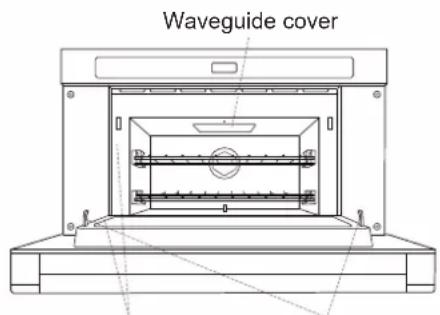
Remove all packing materials from inside the oven cavity. DO NOT REMOVE THE WAVEGUIDE COVER, which is located on the inside top of the cavity. Read enclosures and SAVE the Installation/User Manual.
Check the oven for any damage, such as misaligned or bent door, damaged door seals and sealing surfaces, broken or loose door hinges and latches and dents inside the cavity or on the door. If there is any damage, do not operate the oven and contact your local authorized service agent.
CHOOSING A LOCATION
Your oven can be built into a cabinet or wall by itself, above any electric built-in oven or warming drawer or below a cooktop or counter. If installing above an oven or warming drawer, please allow 2" (50.8 mm) of space between the products.
text_image
Waveguide coversealing surfaces
Safety door latchesDoor seals and
3
GROUNDING INSTRUCTIONS
This appliance must be grounded. This oven is equipped with a cord having a grounding wire with a grounding plug. It must be plugged into a wall receptacle that is properly installed and grounded in accordance with the National Electrical Code and local codes and ordinances. In the event of an electrical short circuit, grounding reduces risk of electric shock by providing an escape wire for the electric current.

Improper use of the grounding plug can result electric shock.
- The electrical outlet must be readily accessible so the unit can be unplugged easily in an emergency. The AC power supply must be 240V, 15 Amp, with a minimum 1.6kW distribution circuit breaker. It should be possible to isolate the appliance from the supply by incorporating a switch in the fixed wiring in accordance with electrical codes. It is recommended that a separate circuit serving only this appliance be provided. Do not store or use the oven outdoors.
- Do not operate the oven with the door open or alter the door safety latches in any way. Do not operate the oven if there is an object between the door seals and sealing surfaces.
Permanent and Correct Installation
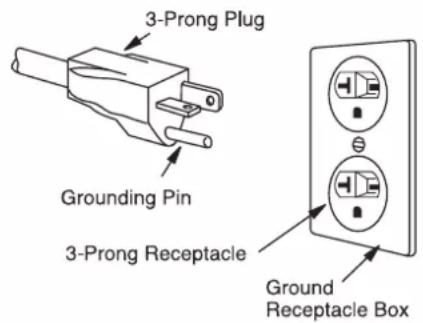
text_image
3-Prong Plug Grounding Pin 3-Prong Receptacle Ground Receptacle BoxNote:
- If you have any questions about the grounding or electrical instructions, consult a qualified electrician or service person.
- Neither Beko nor the dealer can accept any liability for damage to the oven or personal injury resulting from failure to observe the correct electrical connection procedures.
RADIO OR TV INTERFERENCE
Should there be any interference caused by the oven to your radio or TV, ensure the oven is on a different electrical circuit, relocate the radio or TV as far away from the oven as feasible or check position and signal of receiving antenna.
TO AVOID THE POSSIBILITY OF ELECTRIC SHOCK
If the power supply cord of this appliance is damaged, it must be replaced with a special cord. The exchange must be made by an authorized service agent.
TO AVOID THE POSSIBILITY OF BURNS
Hot contents can cause severe burns. Do not allow children to use the microwave oven. Use caution when removing hot items. To avoid spills and burns, anyone using the microwave oven must be able to reach it comfortably. Anyone using the microwave oven can do so safely if they understand and take safety precautions, including the following.
- Use potholders to prevent burns when handling utensils in contact with hot food. Enough heat from the food can transfer through utensils to cause skin burns.
- Direct steam away from the face and hands. Slowly lift the farthest edge of a dish covering and carefully open cooking bags and popcorn bags away from the face.
- Stay near the appliance when it is in use and check progress frequently to avoid overcooking food.
- Select, store and handle food carefully to preserve its high quality and minimize the spread of foodborne bacteria.
- NEVER use the microwave oven for storing cookbooks or other items.
4 INFORMATION YOU NEED TO KNOW
ABOUT YOUR OVEN
- This manual is valuable. Read it carefully and always save it for reference.
- A good microwave cookbook is a valuable asset. Check it for microwave cooking principles, techniques, hints and recipes.
- NEVER use the oven without the turntable and support nor turn over the turntable so a large dish could be placed in the oven. The turntable will turn both clockwise and counterclockwise.
- ALWAYS have food in the oven when it is on to absorb the microwave energy.
- When using the oven at power levels below 100%, you may hear the magnetron cycling on and off. It is normal for the exterior of the oven to be warm to the touch when cooking or reheating.
- Condensation is a normal part of microwave cooking. Room humidity and the moisture in food will influence the amount of condensation in the oven. Generally, covered foods will not cause as much condensation as uncovered ones. Vents on the oven back must not be blocked.
- After using CONVECTION, SPEED FUNCTIONS or CONVECTION MORE MENUS, you will hear the sound of the cooling fan. The fan may continue to operate for as long as 5 minutes, depending on the oven temperature.
- Unlike microwave-only ovens, convection-microwave ovens have a tendency to become hot during CONVECTION, SPEED FUNCTIONS and CONVECTION MORE MENUS cooking.
- The oven is for food preparation only. It should not be used to dry clothes or newspapers.
- Do not rest food or cooking utensils on top of the open door in excess of 15 lb. Doing so can cause damage to your door and may affect cooking performance of your oven.
- Your oven is rated 900 watts by using the IEC Test Procedure. When using recipes or package directions, check food a minute or two before the minimum time and add time accordingly.
ABOUT MICROWAVE COOKING
- Arrange food carefully. Place thickest areas toward the outside of the dish.
- Watch cooking time. Cook for the shortest amount of time indicated and add more as needed. Food severely overcooked can smoke or ignite.
- Cover foods while cooking. Check recipes or cookbooks for suggestions, such as paper, paper towels, wax paper, microwave plastic wrap or lids. Covers prevent spattering and help foods cook evenly.
- Stir foods from the outside to the center of the dish once or twice during cooking, if possible.
-
Turn foods over once during microwaving to speed cooking of such foods as chicken and hamburgers. Large items like roasts must be turned over at least once.
-
Rearrange foods such as meatballs halfway through cooking both from top to bottom and from the center of the dish to the outside.
- Add standing time. Remove food from the oven and stir, if possible. Cover for standing time to allow the food to finish cooking without overcooking.
- Check for doneness. Look for signs indicating the cooking temperatures have been reached.
-
Doneness signs include:
-
food steams throughout, not just at edges
- center of dish's underside is very hot to the touch
- poultry thigh joints move easily
- meat and poultry show no pinkness
- fish is opaque and flakes easily with a fork
ABOUT SAFETY
Cook foods to safe temperatures recommended by the United States Department of Agriculture (USDA). To check internal temperature of foods to determine doneness, insert a meat thermometer in a thick or dense area away from fat or bone.
A NEVER leave a thermometer in the food during microwave cooking unless the thermometer is approved for microwave use.
| fish 145°F (63°C) | |
| pork, ground beef/veal/lamb, egg dishes | 160°F (71°C) |
| whole, pieces and ground turkey/chicken/duck, leftover, ready-to-reheat refrigerated, deli and carry-out food | 165°F (74°C) |
4 INFORMATION YOU NEED TO KNOW
ABOUT UTENSILS AND COVERINGS
It is not necessary to buy all new cookware. Many pieces already in your kitchen can be used successfully in your new microwave-convection oven. The chart below will help you decide what utensils and coverings should be used in each mode.
| UTENSILS AND COVERINGS | MICROWAVE ONLY | CONVECTIONBAKE, ROAST, GRILL | SPEED ROAST SPEED BAKE |
| Aluminum foil NO YES, for shielding NO | |||
| Aluminum containers | NO | YES (no cover during GRILL) | NO |
| Browning dish NO NO NO | |||
| Glass ceramic (Pyroceram®) | YES, preferred YES, preferred | YES, preferred | |
| Glass, heat-resistant YES, preferred | YES, preferred YES, preferred | YES, preferred | |
| Glass, non-heat-resistant NO | NO NO | ||
| Lids, glass | YES | YES (no cover during GRILL) | YES |
| Lids, metal | NO | YES (no cover during GRILL) | NO |
| Metal cookware | NO YES NO | ||
| Silicone cookware | YES | YES | YES, preferred |
| Metal (metal twist ties or dishes with metallic trim, screws, bands or handles) | NO NO NO | ||
| Oven cooking bags | YES (no metal twist ties) | YES (no cover during GRILL) | YES (no metal twist ties) |
| Paper plates | YES NO NO | ||
| Paper towels | YES (no recycled paper towels, which may contain metal fillings) | NO NO | |
| Paper, ovenable | YES | YES (up to 400°F/204°C; do not use during GRILL) | YES (up to 400°F/204°C) |
| Microwave-safe plastic containers | YES NO NO | ||
| Plastic, Thermoset® | YES YES (up to 425°F/218°C; do not use during GRILL) | YES | YES |
| Microwave-safe plastic wrap | YES | NO | NO |
| Pottery, porcelain stoneware | YES (if marked microwave-safe) | YES YES (if marked both microwave-safe and oven-safe) | |
| Styrofoam | YES NO NO | ||
| Wax paper YES NO NO | |||
| Wicker, wood, straw | YES (only foods with low fat and sugar content) | NO NO | |
ACCESSORIES
There are many microwave accessories available for purchase. Evaluate carefully before you purchase so they meet your needs. When selecting microwave accessories, ensure they are marked or are verified as microwave-safe. A microwave-safe thermometer will assist you in determining correct doneness and assure you that foods have been cooked to safe temperatures when using microwave-only cooking. Beko is not responsible for any damage to the oven when accessories are used.
4 INFORMATION YOU NEED TO KNOW
ABOUT FOODS
| FOOD DO DON'T | ||
| Eggs, sausages, nuts, seeds, fruits & vegetables | · Puncture egg yolks before cooking to prevent bursting.· Pierce skins of potatoes, apples, squash, hot dogs and sausages so steam escapes. | · DO NOT cook eggs in shells.· DO NOT reheat whole eggs.· DO NOT dry nuts or seeds in shells. |
| Popcorn · Use popcorn | specially packaged for microwave cooking.· Listen for the popping of corn to slow to 1 or 2 seconds between pops to avoid overcooking.· Use the special Popcorn feature by touching the POPCORN pad. | · DO NOT pop corn in regular brown paper bags or glass bowls.· DO NOT exceed the maximum cooking time listed in the package instructions. |
| Baby food · Transfer baby food to a small dish and heat carefully, stirring often.· Check temperature before serving. Test temperature of bottles on your wrist before serving.· Attach nipples to bottles AFTER heating. Shake well before serving. | · DO NOT heat disposable bottles.· DO NOT heat bottles with nipples attached.· DO NOT heat baby food in original jars. | |
| General · Cut filled baked goods after heating to release steam.· Stir liquids briskly before and after heating to avoid eruption.· Use a deep bowl when cooking liquids and cereals to prevent boil-overs. Refer to the height of the side walls of the oven. | · DO NOT heat or cook in closed glass jars or airtight containers.· DO NOT use the microwave for canning, as harmful bacteria may not be destroyed.· DO NOT deep-fat fry in the microwave.· DO NOT dry wood, gourds, herbs or wet papers. | |
OVEN PARTS
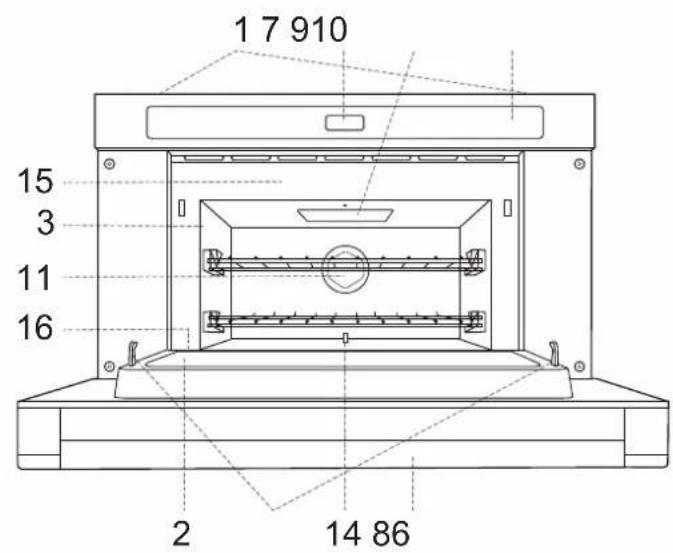
text_image
1 7 910 15 3 11 16 2 14 86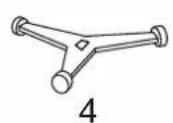
natural_image
Simple line drawing of a round table with three legs and a side arm, no text or symbols present- Ventilation openings (rear side)
- Oven door with see-through window
- Oven light (illuminates when the door is open or the oven is in operation)
- Turntable support
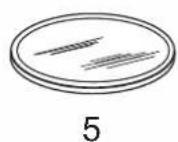
- Removable turntable (rotates clockwise or counterclockwise)
- Safety door latches (door must be closed for oven to operate)
- Waveguide cover DO NOT REMOVE
-
Handle
-
Glass control panel
- Lighted digital display
- Convection air openings
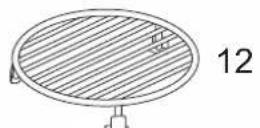
- Removable low rack (grilling rack)
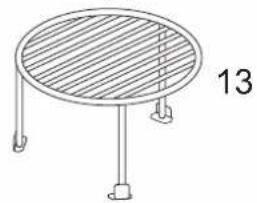
- Removable high rack (baking rack)
- Turntable motor shaft
- Menu Label
- Serial plate
ACCESSORIES
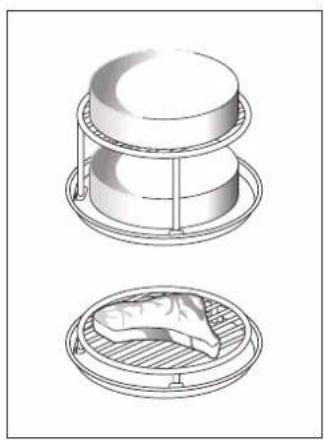
The following accessories are designed especially for use in this oven only for convection (bake, roast or grill) or speed (bake or roast) cooking. DO NOT USE FOR MICROWAVE ONLY COOKING. Do not substitute similar types of racks for these specially designed ones.
High Turntable Rack and Low Turntable Rack - See chart on pages 20–21 for instructions of when to use these racks.
Oven Racks (2) - These racks are used for baking or roasting and two level cooking.
natural_image
Technical line drawing of a two-tiered steamer with a flat lid and side view showing internal components (no text or symbols)CONTROL PANEL
text_image
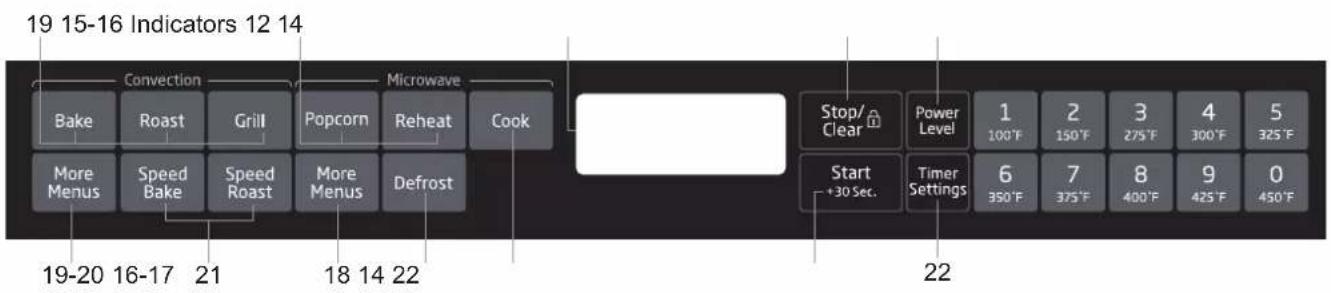
19 15-16 Indicators 12 14 Convection Bake Roast Grill Popcorn Reheat Cook More Menus Speed Bake Speed Roast More Menus Defrost 19-20 16-17 21 18 14 22 Microwave Stop/ Clear Power Level 1 2 3 4 5 Start +30 Sec. Timer Settings 6 7 8 9 0 350°F 375°F 400°F 425°F 450°FNumbers next to the keysheet illustration indicate pages containing feature descriptions and usage information.
MENU LABEL
| COOK DEFROST MICROWAVE MORE MENUS CONVECTION MORE MENUS | ||||||||
| 1 Baked Potatoes 6 Quick Fresh Vegetables2 Sweet Potatoes 7 Long Fresh Vegetables3 Fish/Seafood 8 Frozen Vegetables4 Brown Rice 9 Ground Meat5 White Rice 10 Frozen Entrée | 1 Ground Meat2 Steaks/Chops3 Boneless Poultry4 Bone-in Poultry5 Roast6 Casserole and Soup | Melt 1 Butter 2 Chocolate 3 Ice Cream Soften 4 Cream CheeseWarm 5 Syrup6 Dessert Topping | 7 Beverage Reheat8 Hot Water9 Hot Cereal | BAKE | ROAST | GRILL | ||
| 1 Biscuit2 Cookies Packaged3 Bundt Cake4 Pizza - Thin/Classic/Rising5 Breaded Shrimp6 Breaded Chicken Tenders | 7 Whole Chicken8 Pork Tenderloin9 Turkey Breast | 10 Beef Hamburgers11 Turkey Burgers12 Drummies13 Chicken Breast Boneless14 Fish Fillet15 Veggie Burger | ||||||
6
BEFORE OPERATING
- Before operating your new oven, read and understand this User Manual completely.
- Before the oven can be used, follow these procedures:
- Plug in the oven. Close the door. The oven display will show WELCOME TOUCH CLEAR.
- Touch the STOP/CLEAR pad. : will appear.
- Set the clock.
TO SET THE CLOCK
- Touch the TIMER/SETTINGS pad twice.
- Enter the correct time of day by touching the numbers in sequence. Touch the START/+30 SEC pad.
This is a 12 hour clock. If you attempt to enter an incorrect clock time, ERROR will appear in the display. Touch the STOP/CLEAR pad and re-enter the time.
- If the electrical power supply to your oven should be interrupted, the display will intermittently show WELCOME TOUCH CLEAR after the power is reinstated. If this occurs during cooking, the program will be erased. The time of day will also be erased. Simply touch the STOP/CLEAR pad and reset the clock for the correct time of day.
STOP/CLEAR
Touch the STOP/CLEAR pad to:
- erase a mistake made during programming.
- cancel the timer.
- pause the oven during cooking.
- return the time of day to the display.
- cancel a program during cooking by touching twice.
7 MANUAL OPERATION
TIME COOKING
Your oven can be programmed for 99 minutes and 99 seconds (99.99). Always enter the seconds after the minutes, even if they are both zeros.
- Suppose you want to cook for 5 minutes at 100% .
-
Enter cooking time by touching the number pads 500.
-
Touch the START/+30 SEC pad.
TO SET POWER LEVEL
There are eleven preset power levels.
Using lower power levels increases the cooking time, which is recommended for foods such as cheese and milk and long slow cooking of meats. Consult a cookbook or recipes for specific recommendations.
| TOUCH POWER LEVEL PAD ONCE THEN TOUCH | APPROXIMATE PERCENTAGE OF POWER | COMMON WORDS FOR POWER LEVELS |
| POWER LEVEL 100% High | ||
| 9 90% | ||
| 8 80% | ||
| 7 70% Medium High | ||
| 6 60% | ||
| 5 50% Medium | ||
| 4 40% | ||
| 3 30% Med Low/Defrost | ||
| 2 20% | ||
| 1 10% Low | ||
| 0 | 0% | |
- Suppose you want to defrost for 5 minutes at 30% .
- Enter defrosting time by touching the number pads 500.
- Touch the POWER LEVEL pad and number 3 pad.
- Touch the START/+30 SEC pad.
You can program up to four automatic cooking sequences. See MULTIPLE SEQUENCE COOKING on page 22.
MANUAL DEFROST
If the food you wish to defrost is not listed on the DEFROST CHART or is above or below the limits in the AMOUNT column on the DEFROST CHART, defrost manually.
You can defrost any frozen food, either raw or previously cooked, by using POWER LEVEL 3. Follow the exact 3-step procedure found under TO SET POWER LEVEL. Estimate defrosting time and touch the number 3 pad for 30% when you select the power level.
For either raw or previously cooked frozen food, the rule of thumb is approximately 5 minutes per pound. For example, defrost 5 minutes for 1 pound of frozen spaghetti sauce.
Always stop the oven periodically to remove or separate the portions that are defrosted. If food is not defrosted at the end of the estimated defrosting time, program the oven in 1 minute increments on POWER LEVEL 3 until totally defrosted.
When using plastic containers from the freezer, defrost only long enough to remove food from the plastic in order to place it in a microwave-safe dish.
DEFROST
DEFROST automatically defrosts foods shown in the DEFROST CHART.
- Suppose you want to defrost a 2.0 pound steak:
- Touch the DEFROST pad once.
- Select the desired food by touching the corresponding number pad from the menu label selection. Ex. Touch the number 1 pad for Ground Meat.
- Enter weight by touching the number pads 20.
- Touch the START/+30 SEC pad.
The oven will stop, and directions will be displayed. Follow the displayed directions.
-
After the 1st stage, open the door. Turn over steak. Close the door. Touch the START/+30 SEC pad.
-
After the 2nd stage, open the door. Turn over steak. Close the door. Touch the START/+30 SEC pad.
- After defrost cycle ends, cover and let stand as indicated in chart below.
Note:
- If you attempt to enter more or less than the allowed amount as indicated in chart, an error message will appear in the display.
- To defrost other foods or foods above or below the weights allowed on DEFROST CHART see MANUAL DEFROST on page 13.
DEFROST CHART
| FOOD AMOUNT PROCEDURE | ||
| 1. Ground Meat 0.5–2.0 lb(0.22–0.9 kg) | Remove any thawed pieces after each stage. Let stand covered for 5–10 minutes. | |
| 2. Steaks/Chops 0.5–3.0 lb(0.22–1.36 kg) | After each stage of defrost cycle, rearrange and remove any meat or fish that is nearly defrosted. Let stand covered for 10–20 minutes. | |
| 3. Boneless Poultry | 0.5–2.0 lb(0.22–0.9 kg) | Use boneless breast of chicken or turkey. After each stage, if there are warm or thawed portions, rearrange or remove. Let stand covered for 10–20 minutes. |
| 4. Bone-in Poultry | 0.5–3.0 lb(0.22–1.36 kg) | Arrange pieces with meatiest portions toward outside of glass dish or microwave safe rack. After each stage, if there are warm or thawed portions, rearrange or remove. Let stand covered for 10–20 minutes. |
| 5. Roast 2.0–4.0 lb(0.9–1.8 kg) | Start defrosting with fat side down. After each stage, turn roast over. Let stand covered for 30–60 minutes. | |
| 6. Casserole and Soup | 1–6 cups | After the audible signal, stir if possible. At the end, stir well and let stand covered for 5–10 minutes. |
Note:
Check foods when the oven signals. After the final stage of defrosting, small sections may still be icy. Do not continue to defrost. To avoid overcooking, let food stand to continue thawing.
SENSOR COOKING
The sensor is a semi-conductor device that detects the vapor (moisture and humidity) emitted from the food as it heats. The sensor adjusts the cooking times and power level for various foods and quantities.
USING SENSOR SETTINGS:
- After the oven is plugged in, wait 2 minutes before using sensor settings.
- Be sure the exterior of the cooking container and the interior of the oven are dry. Wipe off any moisture with a dry cloth or paper towel.
- REHEAT and POPCORN can only be used within 1 minute after cooking, opening and closing the door or touching the STOP/CLEAR pad.
- During the first part of sensor cooking, the food name will appear on the display. Do not open the oven door or touch the STOP/CLEAR during this part of the cooking cycle. The measurement of vapor will be interrupted. If this occurs, an error message will appear. To continue cooking, touch the STOP/CLEAR pad and select cooking time and variable power.
When the sensor detects the vapor emitted from the food, the remainder of cooking time will appear. The door may be opened when remaining cooking time appears on the display. At this time, you may stir or season food, as desired.
- Check the temperature of the food after cooking. If additional time is needed, continue to cook with variable power and time.
- If the sensor does not detect vapor properly when popping popcorn, the oven will turn off, and the correct time of day will be displayed. If the sensor does not detect vapor properly when using sensor reheat, ERROR will be displayed, and the oven will turn off.
- Each food has a cooking hint. Touch the TIMER/SETTINGS pad when the HELP indicator is lighted in the display.
SELECTING FOODS:
- The sensor works with foods at normal storage temperature. For example, food for dinner plate reheat would be at refrigerator temperature and popcorn would be at room temperature.
- Foods weighing less than 3 ounces should be reheated by time and variable power.
COVERING FOODS:
Some foods work best when covered. See ABOUT UTENSILS AND COVERINGS on page 8 for recommendations.
- Use plastic wrap only if it is recommended for microwave cooking. To use, cover the dish loosely, allowing approximately 1/2" (13 mm) to remain uncovered to allow steam to escape. Plastic wrap should not touch food.
- To use wax paper, cover the dish completely, folding excess wrap under the dish to secure. If the dish is wider than the wax paper, overlap two pieces by at least 1" (25 mm) to cover.
- Always allow steam to escape away from your face and hands when removing covering.
REHEAT
You can reheat many foods by touching just one pad. You don't need to calculate reheating time or power level.
- Suppose you want to heat prepared chili:
Touch the REHEAT pad.
When the sensor detects the vapor emitted from the food, the remainder of reheating time will appear.
POPCORN
- Suppose you want to pop a 3.5 oz bag of popcorn: Touch the POPCORN pad once, then touch the START/+30 SEC pad.
This sensor setting works well with most brands of microwave popcorn. Pop only one bag at a time. Unfold the bag and place in the oven according to directions.
SENSOR CHART
| FOOD AMOUNT PROCEDURE | ||
| Popcorn Only 1 package | at a time | Use only popcorn packaged for microwave oven use. Try several brands to decide which you like best. Do not try to pop unpopped kernels. |
| 2.85–3.5 oz bag (80–99 g) (regular size) | Touch the POPCORN pad once, then touch the START/+30 SEC pad. This setting works well with most 3.0 –3.5 oz bags of microwave popcorn. | |
| 1.2–1.75 oz bag (34–50 g) (snack size) | Touch the POPCORN pad twice, then touch the START/+30 SEC pad. | |
| Reheat | ||
| • Leftovers such as rice, potatoes, vegetables, casserole | 0.25–2.25 lb (0.11–1.0 kg) | Place leftovers in a dish or casserole slightly larger than amount to be reheated. Flatten, if possible. Cover with a lid, plastic wrap or wax paper. Use covers with larger quantities of denser foods such as stews. After reheating, stir well, if possible. Foods should be very hot. If not, continue to heat with variable power and time. After stirring, re-cover and allow to stand 2–3 minutes. |
| • Soups | 1–4 cups | After reheating, stir well, if possible. Foods should be very hot. If not, continue to heat with variable power and time. After stirring, re-cover and allow to stand 2–3 minutes. |
| • Canned entrees and vegetables | 4–36 oz After reheating, | stir well, if possible. Foods should be very hot. If not, continue to heat with variable power and time. After stirring, re-cover and allow to stand 2–3 minutes. |
COOK
- Suppose you want to cook a baked potato:
- Touch the COOK pad.
-
Select the desired sensor setting. Ex: Touch the number 1 pad to cook baked potatoes.
-
Touch the START/+30 SEC pad. When the sensor detects the vapor emitted from the food, the remainder of cooking time will appear.
COOK CHART
| FOOD AMOUNT | PROCEDURE | |||
| 1. Baked Potatoes2. Sweet Potatoes | 1–6 medium1–6 medium | Pierce potatoes and place on paper-towel-lined turntable. After cooking, remove from oven, wrap in aluminum foil and let stand for 5–10 minutes. | ||
| 3. Fish/Seafood | 0.50–2.0 lb(0.23–0.90 kg) | Arrange fish in a ring in a shallow glass dish (roll fillet with edges underneath). Cover with vented plastic wrap. After cooking, let stand covered for 3 minutes. | ||
| 4. Brown Rice5. White Rice | 0.5–4.0 cups0.5–4.0 cups | Place rice into a deep casserole and add double quantity of water.Cover with a lid or plastic wrap. After cooking, stir, cover and let stand 3–5 minutes or until all liquid has been absorbed. | ||
| Rice | Water | Size of casserole | ||
| 0.5 cup | 1 cup | 1.5 quart | ||
| 1 cup | 2 cups | 2 quart | ||
| 1.5 cups | 3 cups | 2.5 or 3 quart | ||
| 2 cups | 4 cups | 3 quart or larger | ||
| 3 cups | 6 cups | 3 quart or larger | ||
| 4 cups | 8 cups | 3 quart or larger | ||
COOK CHART
| FOOD AMOUNT PROCEDURE | ||
| 6. Quick Fresh Vegetables | Wash and place vegetables in a casserole. Add no water if vegetables have just been washed. Cover with a lid for tender vegetables. Cover with plastic wrap for tender-crisp vegetables. Stir before standing if possible. After cooking, let stand covered for 2–5 minutes. | |
| Broccoli | 0.25–3.0 lb (0.11–1.36 kg) | |
| Brussels sprouts | 0.25–3.0 lb (0.11–1.36 kg) | |
| Cabbage | 0.25–3.0 lb (0.11–1.36 kg) | |
| Cauliflower (flowerets) | 0.25–3.0 lb (0.11–1.36 kg) | |
| Cauliflower (whole) | 1 medium | |
| Spinach | 0.25–1.0 lb (0.11–0.45 kg) | |
| Zucchini | 0.25–3.0 lb (0.11–1.36 kg) | |
| Baked apples | 2–4 medium | |
| 7. Long Fresh Vegetables | Place in casserole. Add 1–4 tablespoons water. Cover with a lid for tender vegetables. Cover with plastic wrap cover for tender-crisp vegetables. Stir before standing, if possible. After cooking, let stand covered for 2–5 minutes. | |
| Carrots, sliced | 0.25–2.0 lb (0.11–0.9 kg) | |
| Corn on the cob | 2–4 pieces | |
| Green beans | 0.25–2.0 lb (0.11–0.9 kg) | |
| Winter squash: | ||
| diced | 0.25–2.0 lb (0.11–0.9 kg) | |
| halves | 1–2 | |
| 8. Frozen Vegetables | 0.25–2.0 lb (0.11–0.9 kg) | Cover with a lid or plastic wrap. After cooking, stir, cover and let stand for 3 minutes. |
| 9. Ground Meat | 0.25–2.0 lb (0.11–0.9 kg) | Use this setting to cook ground beef or turkey as patties or in bulk to be added to be added to other ingredients. Place patties on a microwave-safe rack and cover with wax paper. Place ground meat in a casserole and cover with wax paper or plastic wrap. When the oven stops, turn over patties or stir meat in casserole to break up large pieces. Re-cover and touch the START/+30 SEC pad. After cooking, let stand covered for 2–3 minutes. |
| 10. Frozen Entrées | 0.5–3.0 lb (0.22–1.36 kg) | Use for frozen convenience foods. This setting will give satisfactory results for most brands. Remove the package from outer wrapping and follow package directions for covering. After cooking, let stand covered for 1–3 minutes. |
MORE MENUS
MELT/SOFTEN/WARM
These features automatically compute the correct heating time and microwave power level for melting, softening and warming foods shown in the chart below.
- Touch the MORE MENUS pad once.
- See Menu Label. Select desired food by touching a number pad. Ex: Touch the number 2 pad for chocolate.
- Repeat touching the same number pad to select quantity. Ex: Touch the number 2 pad two more times for 1 square.
- Touch the START/+30 SEC pad.
Note:
- To melt, soften or warm other food or foods above or below the quantity allowed on the MELT/SOFTEN/WARM CHART, use manual operation.
MELT/SOFTEN/WARM CHART
| FOOD AMOUNT PROCEDURE | ||
| Melt Use a Pyrex measuring cup. Cover with plastic wrap. | ||
| 1. Butter 2 tbsp | 0.5 cup | After touching the MORE MENUS pad, touch 1 pad two times for 2 tbsp.After touching the MORE MENUS pad, touch 1 pad three times for 0.5 cup. |
| 2. Chocolate 1 cup chips | 1 square | After touching the MORE MENUS pad, touch 2 pad two times for 1 cup chips.After touching the MORE MENUS pad, touch 2 pad three times for 1 square. |
| Soften DO NOT COVER. | ||
| 3. Ice Cream 1 pint | 1.5 qt | After touching the MORE MENUS pad, touch 3 pad two times for 1 pint.After touching the MORE MENUS pad, touch 3 pad three times for 1.5 quart. |
| 4. Cream Cheese 3 oz | 8 oz | After touching the MORE MENUS pad, touch 4 pad two times for 3 oz.After touching the MORE MENUS pad, touch 4 pad three times for 8 oz. |
| Warm Use a Pyrex measuring cup. DO NOT COVER. | ||
| 5. Syrup 0.25 cup | 0.5 cup | After touching the MORE MENUS pad, touch 5 pad two times for 0.25 cup.After touching the MORE MENUS pad, touch 5 pad three times for 0.5 cup. |
| 6. Dessert Toppings 0.25 cup | 0.5 cup | After touching the MORE MENUS pad, touch 6 pad two times for 0.25 cup.After touching the MORE MENUS pad, touch 6 pad three times for 0.5 cup. |
| 7. Beverage Reheat | 0.5–2 cups | This setting is good for restoring a cooled beverage to a better drinking temperature.Touch the 7 pad for a 0.5 cup increase per touch. Stir after heating. |
| 8. Hot Water | 1–6 cups | Use this setting for heating COLD TAP WATER to a temperature somewhat belowthe boiling point to make instant coffee or tea. Touch the 8 pad for 1 cup increaseper touch. Stir liquid briskly before and after heating to avoid sudden boilover. |
| 9. Hot Cereal | 1–6 servings | Use individual packets or bulk cereal in your favorite variety: oatmeal, oat bran,farina, etc. Follow the package directions for the correct amount of water or milk.To prevent boilovers, it is very important to choose a large container becausemicrowave cooking of cereal causes high boiling. Touch the number 9 pad for 1serving increase per touch. If the oven stops, stir and touch the START/+30 SEcpad. After cooking, stir and let stand covered for 2 minutes. |
9 CONVECTION FEATURES
BAKE
During convection heating, hot air is circulated throughout the oven cavity to brown and crisp foods quickly and evenly. This oven can be programmed for ten different convection cooking temperatures for up to 99 minutes and 99 seconds.
- Suppose you want to bake at 350^ F for 20 minutes:
- Touch the BAKE pad.
- Select the temperature of 350^ F by touching the number 6 pad.
- Enter cooking time by touching the number pads 2000.
- Touch the START/+30 SEC pad.
ROAST
CONVECTION ROAST roasts chicken, turkey, turkey breast or pork.
- Suppose you want to roast at 450^ for 55 minutes:
- Touch the ROAST pad.
- Select the temperature of 450^ F by touching the number 0 pad.
- Enter cooking time by touching the number pads 5500.
- Touch the START/+30 SEC pad.
After the CONVECTION ROAST cycle ends, a long tone will sound. Follow the indicated message.
GRILL
CONVECTION GRILL grills hamburgers, chicken pieces, steaks and fish steaks.
- Touch the GRILL pad.
- Enter cooking time by touching the number pads.
- Touch the START/+30 SEC pad.
MORE MENUS
This section of the operation manual offers instructions for preparing 15 popular foods using CONVECTION BAKE, ROAST and GRILL.
After selecting the desired feature, follow the directions indicated in the display.
For helpful hints, simply touch the TIMER/SETTINGS pad anytime HELP is lighted in the display.
CAUTION The oven cabinet, cavity, door, turntable, turntable support, racks and dishes will become hot. To PREVENT BURNS, use thick oven gloves when removing the food or turntable from the oven.
CONVECTION MORE MENUS CHART
| FOOD AMOUNT RACK PROCEDURE | |||
| 1. Biscuit | 6–12 each | 1 or 2 oven racks | Place oven racks inside the oven and preheat. Evenly space biscuits on an oven tray and set on the oven rack in the lower position when preheat is complete. If using more than one oven tray, set the second pan on the oven rack in the upper position. The biscuits are done when the tops turn golden brown. |
| 2. Cookies Packaged | 10–12 | 1 or 2 oven racks | Ideal for refrigerated cookie dough. Prepare according to package or recipe directions and place on a greased and floured low turntable rack. Cookies should be approximately 13 " thick and 2" in diameter for best results. After the preheat is over, place the pan in the oven. Cool before serving. |
| 3. Bundt Cake | 1 cake | Low turntable rack | Ideal for packaged cake mix or your own recipe. Place the low turntable rack in the oven during preheat. Prepare according to package or recipe directions and place in a greased and floured bundt pan. Place the pan in the oven on the low turntable rack. Cool before frosting and serving. |
| 4. Pizza Thin/Classic/Rising | 1 frozen pizza | Low turntable rack | Place the low turntable rack in the oven during preheat. When preheat is complete, place 1 frozen 10" pizza directly onto the low turntable rack toward the center. The pizza is done when the crust is golden brown and the cheese is melted. Let stand 5 minutes before serving. |
CONVECTION MORE MENUS CHART
| FOOD AMOUNT RACK PROCEDURE | ||
| 5. Breaded Shrimp | 1–16 pieces Oven rack, lower position | Evenly space frozen breaded shrimp on a baking sheet. Place on the oven rack in the lower position after preheating. The shrimp are done when golden brown. Let stand 2–3 minutes before serving. |
| 6. Breaded Chicken Tenders | 2–6 pieces Oven rack, lower position | Evenly space frozen breaded chicken tenders on a baking sheet. Place on the oven rack in the lower position after preheating. The chicken tenders are done when golden brown. Let stand 3–5 minutes before serving. |
| 7. Whole Chicken | 2.5–7.5 lb Oven rack, lower position | Place the low turntable rack in the oven during preheat. Season chicken as desired and place the tray on top of the low turntable rack after preheating. After cooking, remove from the oven, cover with foil and allow to stand for 5–10 minutes. |
| 8. Pork Tender- loin | 1.0–3.0 lb Oven rack, lower position | Boneless pork loin is recommended because it cooks evenly. Place on a low rack. After cooking, remove from the oven, cover with foil and allow to stand 5–10 minutes. Internal temperature should be 160°F (71°C). |
| 9. Turkey Breast | 1.5–6.0 lb Oven rack, lower position | Season as desired. Place on a low rack. After the cycle ends, cover with foil and let stand 10 minutes. Internal temperature of white meat should be 170°F (77°C). |
| 10. Beef Hamburgers | 2–4 patties 6 oz each | High turntable rack Season as desired and evenly space hamburgers toward the center of the high turntable rack; no preheating is necessary. Follow the oven prompt to flip hamburgers: carefully remove turntable and rack at the same time, flip hamburgers and slide the turntable and rack back inside of the oven. Touch the START/+30SEC pad to continue. |
| 11. Turkey Burgers | 2–4 patties 6 oz each | High turntable rack Season as desired, and evenly space burgers toward the center of the high turntable rack; no preheating is necessary. Follow the oven prompt to flip burgers: carefully remove turntable and rack at the same time, flip burgers and slide the turntable and rack back inside of the oven. Touch the START/+30SEC pad to continue. |
| 12. Drummies | 1.0–2.5 lb | High turntable rack Season drummies as desired and place directly on a high turntable rack with the thick portions toward the center of the rack. |
| 13. Chicken Breast Bone- less | 2.0–4.0 lb | High turntable rack Season chicken pieces as desired and place directly on a high turntable rack, evenly spaced. Flip at 27 minutes (follow instructions on the oven display). |
| 14. Fish Fillet | 2–4 pieces 6 oz each | High turntable rack Season fillets as desired and place directly on a high turntable rack, evenly spaced. Flip at 7 minutes (follow instructions on the oven display). |
| 15. Veggie Burger | 2–4 patties 3 oz each | High turntable rack Place patties directly on a high turntable rack, evenly spaced. Flip at 7 minutes (follow instructions on the oven display). |
A DO NOT USE ALUMINUM FOIL TO COVER OR SHIELD FOOD WHEN USING SPEED BAKE OR SPEED ROAST. THE MICROWAVE IS ACTIVE DURING THESE COOKING CYCLES. THE USE OF ANY METAL OTHER THAN THE PROVIDED OVEN RACKS AND HIGH AND LOW TURNTABLE RACKS INCREASES THE RISK OF ARCING AND POSSIBLY FIRE INSIDE OF THE OVEN CAVITY.
SPEED BAKE
This cook function provides superior results for baked goods that require more than 20 minutes baking time. The SPEED BAKE cooking function cycles the oven's power between 90% convection oven and 10% microwave power to create golden brown exteriors and perfectly moist interiors for foods such as Bundt cakes, quick breads and muffins.
SPEED ROAST
This is ideal for larger, dense cuts of meat and whole poultry. The SPEED ROAST cooking function cycles the oven's power between 70% convection oven and 30% microwave power. This allows for reduced cooking time as the microwaves directly and rapidly heat the food internally while convection function circulates dry, heated air throughout the oven cavity to provide even cooking with browning for crispy exteriors while the inside retains its juicy texture.
| DEFAULT OVEN TEMPERATURE | MICROWAVE POWER | |
| SPEED BAKE 325°F (163°C) 10% | ||
| SPEED ROAST 300°F (149°C) 30% | ||
With the exception of those foods that cook best by convection heating alone, most foods are well suited to mix cooking using either SPEED BAKE or SPEED ROAST.
The marriage of these two cooking methods produces juicy meats, moist and tender cakes and fine textured breads, all with just the right amount of browning and crispness.
The temperatures can be changed, but the microwave power cannot.
The oven temperature can be changed from 100^ F ( 38^ C) to 450^ F ( 232^ C). To change the temperature, first touch the SPEED ROAST pad or the SPEED BAKE pad then touch the same pad again. When the display says SELECT TEMP, touch desired temperature pad. Ex: Touch the SPEED ROAST pad two times, then touch number 7 pad, and the temperature will automatically change to 375^ F.
TO COOK WITH SPEED FUNCTIONS
- Suppose you want to bake a cake for 25 minutes on SPEED BAKE:
- Touch the SPEED BAKE pad.
- Enter the cooking time by touching number pads 2500.
- Touch the START/+30 SEC pad.
HELPFUL HINTS FOR CONVECTION AND SPEED FUNCTIONS COOKING
Your Convection Oven can cook any food perfectly because of the number of ways it can cook: microwave only, speed functions, convection only or grill. This Operation Manual tells you how to program the oven.
The oven cannot be used without the turntable in place. Never restrict the movement of the turntable.
CONVECTION COOKING
- When preheating, the turntable can be left in or removed. When using the high rack for 2 shelf baking in a preheated oven, it is easier to remove the turntable for preheat.
Place the high rack on the turntable along with foods. When preheat is over, open the oven door and quickly place the turntable, high rack and foods to be baked inside. - Do not cover the turntable, low rack or high rack with aluminum foil. It interferes with air flow that cooks food.
- Round pizza pans are excellent cooking utensils for many convection-only items. Choose pans that do not have extended handles.
- Using a preheated low rack can give a grilled appearance to steaks, hot dogs etc.
SPEED FUNCTIONS COOKING
- Meats are best when roasted directly on the low rack. A dish can be placed below the meat if gravy is to be made from the drippings.
- Less tender cuts of meat can be roasted and tenderized using oven cooking bags.
- When baking, check for doneness after time has elapsed. If the food is not completely done, let it stand in the oven a few minutes to complete cooking.
MULTIPLE SEQUENCE COOKING
The oven can be programmed for up to 4 automatic cooking sequences for the microwave mode and 2 automatic cooking sequences with for SPEED BAKE/SPEED ROAST mode, switching from one power level setting to another automatically.
Sometimes cooking directions tell you to start on one power level and then change to a different power level. Your oven can do this automatically.
- Suppose you want to cook roast beef for 5 minutes at 100% and then continue to cook for 30 minutes at 50% .
- Touch the POWER LEVEL pad twice for 100% power. Then enter cooking time.
- Touch the POWER LEVEL pad. Touch number pad 5 for 50% power. Then enter second cooking time.
- Touch the START/+30 SEC pad.
Note:
- If the POWER LEVEL pad is touched twice, HIGH will be displayed.
- If you wish to know power level, simply touch the POWER LEVEL pad. As long as your finger is touching the POWER LEVEL pad, the power level will be displayed.
SETTINGS/TIMER
Settings provides 7 features to make using your oven easy with specific instructions provided in the interactive display.
1. CLOCK
- To set the clock:
- Touch the TIMER/SETTINGS pad twice.
- Enter the correct time of day by touching the number pads in sequence. Touch the START/+30 SEC pad.
2. TIMER
- Suppose you want to set a timer for 3 minutes.
- Touch the TIMER/SETTINGS pad 3 times.
- Enter time by touching the number pads 300.
- Touch the START/+30 SEC pad.
3. AUDIBLE SIGNAL ELIMINATION
If you wish to have the oven operate with no audible signals, touch the TIMER/SETTINGS pad 4 times and the START/+30 SEC pad once.
To cancel and restore the audible signal, touch the TIMER/ SETTINGS pad 4 times and the START/+30 SEC pad once.
4. REMIND SIGNAL
If you wish to have the oven operate with no remind signal, touch the TIMER/SETTINGS pad 5 times and the START/+30 SEC pad once.
To cancel and restore the remind signal, touch the TIMER/ SETTINGS pad 5 times and the START/+30 SEC pad once.
5. WEIGHT UNIT LBS/KGS
The oven's default temperature is set to U.S. Customary Unit-pounds.
- To change to KGS, touch the TIMER/SETTINGS pad 6 times, the number 6 pad once and the START/+30 SEC pad once.
- To change to LBS, touch the TIMER/SETTINGS pad 6 times, the number 1 pad once and the START/+30 SEC pad once.
6. TEMPERATURE SELECTIONS
The oven's default temperature setting is °F.
- To change to °C, touch the TIMER/SETTINGS pad 7 times, the number 1 pad once and the START/+30 SEC pad once.
- To change to °F, touch the TIMER/SETTINGS pad 7 times, the number 6 pad once and the START/+30 SEC pad once.
7. DEMONSTRATION MODE
To demonstrate, touch the TIMER/SETTINGS pad 8 times, then touch the START/+30 SEC pad and hold for 3 seconds. DEMO ON will appear in the display. Cooking operations and specific special features can now be demonstrated with no power in the oven. For example, touch the START/+30 SEC pad and the display will show 1.00 and count down quickly to END.
To cancel, touch the TIMER/SETTINGS pad 8 times and then touch the START/+30 SEC pad once. If easier, unplug the oven from the electrical outlet and replug.
+30 SEC
+30 SEC allows you to cook for 30 seconds at 100% by simply touching the START/+30 SEC pad. You can also extend cooking time in multiples of 30 seconds by repeatedly touching the START/+30 SEC pad during manual cooking up to 99 minutes.
Note:
- To use the +30 SEC, touch the pad within 3 minutes after cooking, close the oven door or touch the STOP/CLEAR pad.
- +30 SEC cannot be used with Sensor settings, REHEAT or DEFROST.
CONTROL LOCK
The Control Lock prevents unwanted oven operation such as by small children. The oven can be set so that the control panel is deactivated or locked. To set, touch the STOP/CLEAR pad and hold for 3 seconds. Should a pad be touched, LOCK ON will appear in the display.
To cancel, touch the STOP/CLEAR pad and hold for 3 seconds.
HELP (DISPLAY INDICATOR)
Many of the settings have cooking hints. If you wish to check, touch the TIMER/SETTINGS pad whenever HELP is lighted in the Interactive Display for these hints.
Disconnect the power cord or leave the door open to inactivate the oven during cleaning.
EXTERIOR
The outside surface is precoated metal and plastic. Clean the outside with mild soap and water, then rinse and dry with a soft cloth. Do not use any type of household or abrasive cleaner.
DOOR
Wipe the window on both sides with a damp cloth to remove any spills or spatters. Metal parts will be easier to maintain if wiped frequently with a damp cloth. Avoid the use of spray and other harsh cleaners as they may stain, streak or dull the door surface.
TOUCH CONTROL PANEL
Care should be taken in cleaning the touch control panel. If the control panel becomes soiled, open the oven door before cleaning. Wipe the panel with a cloth dampened slightly with water only. Dry with a soft cloth. Do not scrub or use any sort of chemical cleaners. Close door and touch the STOP/CLEAR pad.
INTERIOR - AFTER MICROWAVE COOKING
Cleaning is easy because little heat is generated to the interior surfaces, so there is no baking and setting of spills or spattering. To clean the interior surfaces, wipe with a soft cloth and warm water. DO NOT USE ABRASIVE OR HARSH CLEANERS OR SCOURING PADS. For heavier soil, use baking soda or a mild soap, then rinse thoroughly with hot water. NEVER SPRAY OVEN CLEANERS DIRECTLY ONTO ANY PART OF THE OVEN.
INTERIOR - AFTER CONVECTION, SPEED BAKE OR SPEED ROAST
Spatters may occur because of moisture and grease. Wash immediately after use with hot, soapy water. Rinse and polish dry. Harder to remove spatters may occur if oven is not thoroughly cleaned or if there is long time/high temperature cooking. If so, you may wish to purchase an oven cleaner pad with liquid cleaner within it—not a soap filled steel pad—for use on stainless or porcelain surfaces. Follow manufacturer's directions carefully and be especially cautious not to get any of the liquid cleaner in the perforations on the wall or ceiling or any door surfaces. Rinse thoroughly and polish dry.
After cleaning the interior thoroughly, residual grease may be removed from the interior ducts and heater by simply operating the oven on 450^ F ( 232^ C) for 20 minutes without food. Ventilate the room if necessary.
WAVEGUIDE COVER
The waveguide cover is made from mica so it requires special care. Keep the waveguide cover clean to assure good oven performance. Carefully wipe with a damp cloth any food spatters from the surface of the cover immediately after they occur. Built-up splashes may overheat and cause smoke or possibly catch fire. Do not remove the waveguide cover.
ODOR REMOVAL
Occasionally, a cooking odor may remain in the oven. To remove, combine 1 cup water, grated peel and juice of 1 lemon and several whole cloves in a 2-cup glass measuring cup. Boil for several minutes using 100% power. Allow to set in oven until cool. Wipe interior with a soft cloth.
TURNTABLE/TURNTABLE SUPPORT
The turntable, turntable support and racks can be removed for easy cleaning. Wash them in mild, sudsy water. For stubborn stains, use a mild cleanser and a non-abrasive scouring sponge. The turntable, turntable support and racks are also dishwasher-safe. Use top rack of dishwasher for turntable support.
Foods with high acidity, such as tomatoes or lemons, will cause the porcelain enamel turntable to discolor. Do not cook highly acidic foods directly on the turntable. If spills occur, wipe up immediately.
The turntable motor shaft is not sealed, so excess water or spills should not be allowed to stand in this area.
| AC Line Voltage: UL Rating–Single phase 240V, 60 Hz, AC onlyCSA Rating–Single phase 220V, 60 Hz, AC only | |
| AC Power Required: UL /CSA Rating 11.5 A, 2550W | |
| Output Power: Microwave* 900 wattsConvection Heater 1600 watts | |
| Frequency: 2450 MHz | |
| Outside Dimensions (WxHxD): 29 ^3/_4 " x 17 ^7 /8" x 24 ^7 /8" (with handle) (755.6 x 454.02 x 631.8 mm) | |
| Cavity Dimensions (WxHxD): 17 ^1/_16 " x 9 ^7 /16" x 16 ^15/_16 " (433.4 x 239.7 x 430.2 mm) | |
| Oven Capacity:** 1.6 cubic feet | |
| Cooking Uniformity: Turntable system, diameter 16" (3406.4 mm) |
* The International Electrotechnical Commission's standardized method for measuring output wattage. This test method is widely recognized.
** Internal capacity is calculated by measuring maximum width, depth and height. Actual capacity for holding food is less.
In compliance with standards set by:
FCC – Federal Communications Commission Authorized.
DHHS – Complies with Department of Health and Human Services (DHHS) rule, CFR, Title 21, Chapter I, Subchapter J.

- This symbol on the nameplate means the product is listed by Underwriters Laboratories, Inc. for use in USA or Canada.
NHW – Department of National Health and Welfare of Canada.
This oven is listed by the Canadian Standard Association as certified.
Please check the following before calling for service:
- Place one cup of water in a glass measuring cup in the oven and close the door securely.
Operate the oven for one minute at HIGH 100%.
A Does the oven light come on?
YES ____ NO ____
B Does the cooling fan work? (Put your hand over the rear ventilating openings.)
YES ____ NO ____
C Does the turntable rotate? (It is normal for the turntable to turn in either direction.)
YES ____ NO ____
D Is the water in the oven warm?
YES ____ NO ____
- Remove water from the oven and operate the oven for 5 minutes at Convection 450°F.
Operate the oven for one minute at HIGH 100%.
A Do CONV and COOK indicators light?
YES ____ NO ____
B After the oven shuts off, is inside of the oven hot?
YES ____ NO ____
If "NO" is the answer to any of the above questions, please check electrical outlet, fuse and/or circuit breaker. If they are functioning properly, CONTACT YOUR NEAREST AUTHORIZED SERVICER.
A oven should never be serviced by a "do-it-yourself" repair person.
Note:
If time appearing in the display is counting down very rapidly, check Demonstration Mode on page 23 and cancel.
AVANT D'UTILISER L'APPAREIL, VEUILLEZ LIRE CE MANUEL !
Chère cliente, cher client,
2 INSTRUCTIONS D'INSTALLATION ....30
DÉBALLAGE ET EXAMEN DE VOTRE FOUR.....30
CHOIX D'UN EMPLACEMENT ....30
3 INSTRUCTIONS DE MISE À LA TERRE......31
INTERFÉRENCES RADIO OU TÉLÉ .....31
POUR ÉVITER LA POSSIBILITÉ DE
DÉCHARGE ÉLECTRIQUE ....31
POUR ÉVITER LA POSSIBILITÉ DE BRÛLURE..31
4 CE QUE VOUS DEVEZ SAVOIR ....32
CHOIX D'UN EMPLACEMENT
natural_image
Simple line drawing of a round outdoor table with three legs and a side arm, no text or symbols present.natural_image
Technical line drawing of two types of steamed buns or containers, one with a lid and the other with a flat base (no text or symbols)PANNEAU DE COMMANDES
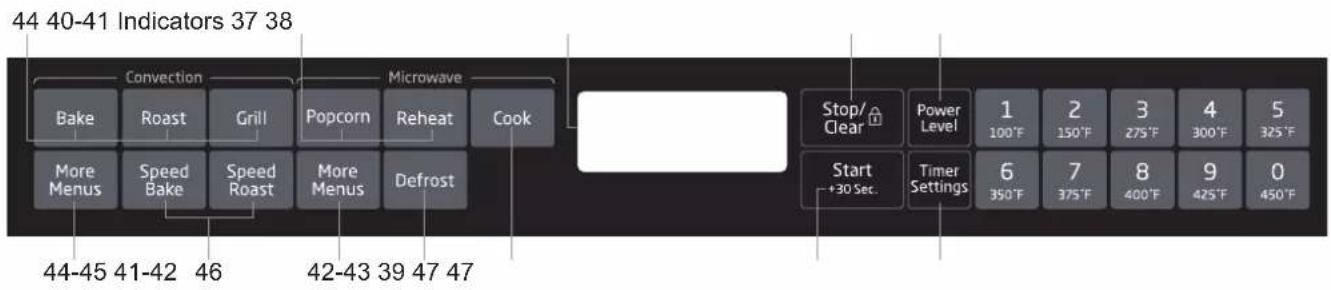
text_image
44 40-41 Indicators 37 38 Convection Bake Roast Grill Popcorn Reheat Cook More Menus Speed Bake Speed Roast More Menus Defrost Stop/ Clear Power Level 1 2 3 4 5 Start +30 Sec Timer Settings 6 7 8 9 0 350°F 375°F 400°F 425°F 450°FYour oven can be programmed for 99 minutes and 99 seconds (99.99). Always enter the seconds after the minutes, even if they are both zeros.