FODP30S - Oven Glem Gas - Free user manual and instructions
Find the device manual for free FODP30S Glem Gas in PDF.


| Product type | Electric built-in oven |
| Brand | Glem Gas |
| Model | FODP30S |
| Power supply | 120/240 V, 60 Hz |
| Cooking modes | Bake, Roast, European Convection, Convection Roast, Convection Bake, Grill, Convection Grill, Pizza, Classic Pizza, Dehydrate, Keep Warm, Defrost, Sabbath, Pyrolytic Cleaning |
| Convection type | European convection with fan and ring heating element |
| Display | Digital display with button and knob controls |
| Temperature probe | Yes, optional |
| Cleaning | Pyrolysis (self-cleaning) with adjustable duration from 2 to 4 hours |
| Door lock | Automatic in pyrolysis mode |
| Racks | 6 levels, sliding rack available |
| Lighting | Halogen bulb, replaceable |
| Timed functions | Timer, delayed cooking, automatic shut-off |
| Capacity | 4.5 cu ft (approx. 127 L) |
| Dimensions (W x H x D) | Standard 24" x 27" x 24" (approx. 61 x 69 x 61 cm) |
| Weight | Approximately 55 kg |
| Warranty | 2 years |
| Maintenance | Manual cleaning of enameled surfaces; pyrolysis for interior |
| Safety | Automatic lock, safety shut-off, cooling ventilation |
| Included accessories | Racks, drip tray, temperature probe (depending on model) |
Frequently Asked Questions - FODP30S Glem Gas
User questions about FODP30S Glem Gas
0 question about this device. Answer the ones you know or ask your own.
Ask a new question about this device
Download the instructions for your Oven in PDF format for free! Find your manual FODP30S - Glem Gas and take your electronic device back in hand. On this page are published all the documents necessary for the use of your device. FODP30S by Glem Gas.
USER MANUAL FODP30S Glem Gas
1- General Appliance and Oven Safety Precautions 4
2 - General Appliance and Oven Safety Instructions 5
Safety for the Oven 5
Safety for the Self-Cleaning Oven 5
3 - Cooking with the Convection Oven 6
Advantages of Convection Cooking 6
4-Features of your Oven 7
5 - The Control Panels 8
Command Knobs 8
6-Oven Modes 9
7 - General Oven Information 10
Error codes 10
Beeps 10
Door Lock 10
Power Failure 10
Default Settings 10
F Failure Number Codes 10
Preheat and Fast Preheat 10
Timer 10
8-General Oven Tips 11
Oven Racks 11
Oven Telescopic Racks 12
9-Instruction for Use 13
Instruction for initial switch-on 13
Oven Cavity Selection (Double Oven) 13
10-User Settings 14
Language 14
Temperature & Weight 14
Time 14
Date 15
Brightness 15
Beeper 15
12-Starting your Oven 17
Switching the oven on and off 17
Selecting the cooking mode 17
Changing the cooking mode 17
Changing temperature 17
Pre-heating phase 19
Fast Preheat 19
Using Oven Lights 19
13 - Time Oven Mode Operation 20
Cook Time 20
Stop Time 20
14- Setting the Meat Probe (if present) 21
15-Recipes 23
16 - Classic Pizza (on some models) 25
17-Bake Tips and Techniques 27
General Guidelines 27
18 - Convection Bake Tips and Techniques 28
Convection BakeChart 29
19 - Convection Roast Tips and Techniques 30
20 - Convection Broil Tips and Techniques 32
21- Dehydrate Tips and Techniques 33
22-Broil Tips and Techniques 34
23 - Sabbath Mode Instructions (on some models) 35
24-Oven Care and Cleaning 36
Self-Cleaning the Oven 36
Preparing the Oven for Self-Clean 36
25-Setting the Self-Clean Mode 37
To Set the Self-Clean Mode 37
To Change the Cleaning Time 37
To Delay the Start of Cleaning 37
26-General Oven Care 38
How to Use the Oven Cleaning Chart 38
CleaningChart 38
27-Oven Finishes/Cleaning Methods 39
28 - Do-it-Yourself Maintenance Oven Door 40 Removal
To Remove Door 40
To Replace Door 40
29 - Replacing an Oven Light 41
To Replace a Light Bulb 41
30-SolvingBakingProblems 42
31-Solving Operational Problems 43
Service Data Record 43
WARRANTY 44

IMPORTANT INSTRUCTION
General Appliance and Oven Safety Precautions Please read all instructions before using this appliance.


WARNING
When properly cared for, your new oven has been designed to be a safe, reliable appliance. Read all instructions carefully before using this oven. These precautions will reduce the risk of burns, electric shock, fire, and injury to persons. When using kitchen appliances, basic safety precautions must be followed, including the following:
This appliance must be properly installed and grounded by a qualified technician. Connect only to properly grounded outlet. See "Grounding Instructions" found in the Installation Instructions.
- This appliance should be serviced only by a qualified service technician. Contact the nearest authorized service center for examination, repair or adjustment.
- Do not repair or replace any part of the oven unless specifically recommended. Refer service to an authorized servicer.
- Do not operate this appliance if it is not working properly or if it has been damaged, until an authorized servicer has examined it.
- Install or locate this appliance only in accordance with the Installation Instructions.
- Use this oven only as intended by the manufacturer. If you have any questions, contact the manufacturer.
- Do not cover or block any openings on this appliance.
- Use this appliance only for its intended use as described in this manual. Do not use corrosive chemicals, vapors, or nonfood products in this appliance. This type of oven is specifically designed to heat or cook. It is not designed for industrial or laboratory use. The use of corrosive chemicals in heating or cleaning will damage the appliance.
- In the event that personal clothing or hair catches fire, DROP AND ROLL IMMEDIATELY to extinguish flames.
- Do not allow children to use this appliance unless closely supervised by an adult. Children and pets should not be left alone or unattended in the area where the appliance is in use. Never allow children to sit or stand on any part of the oven.

CAUTION
-
Do not store items of interest to children above the oven. If children should climb onto the appliance to reach these items, they could be seriously injured.
To reduce the risk of fire in the oven cavity: -
Do not slide oven across floor. Damage to floor covering or floor could resul.
- Do not use water on a grease fire. Smother fire or use a dry chemical or foam-type extinguisher.
- It is highly recommended that a fire extinguisher be readily available and highly visible next to any cooking appliance.
- Do not overcook food. Carefully attend oven if paper, plastic or other combustible materials are placed inside the oven.
- Do not use the cavity for storage purposes. Do not leave paper products, cooking utensils or food in the cavity when not being used.
- If materials inside the oven should ignite, keep oven door closed. Turn oven off and disconnect the circuit at the circuit breaker box.
- Do not block any vent openings.
- Be sure the blower fan runs whenever the oven is in operation. If the fan does not operate, do not use the oven. Call an authorized service center.
- Never use the oven to warm or heat a room. This can damage the oven parts.
- For personal safety, wear proper clothing. Loose fitting or garments with hanging sleeves should never be worn while using this appliance.
Safety for the Oven
- Tie long hair so that it doesn't hang loose.
- Do not touch heating elements or interior surfaces of oven.
- The heating elements may be hot even though they are dark in color. Interior surfaces of an oven become hot enough to cause burns.
- During and after use, do not touch or let clothing or other flammable materials contact the heating elements or the interior surfaces of the oven until they have had sufficient time to cool. Other surfaces of the appliance may become hot enough to cause burns - among these surfaces are (identification of surfaces - for example, oven vent openings and surfaces near these openings, oven doors, and windows of oven doors).
- The trim on the top and sides of the oven door may become hot enough to cause burns.
- Use care when opening the door. Open the door slightly to let hot air or steam escape before removing or replacing food.
- Do not heat unopened food containers. Build-up of pressure may cause the container to burst and cause injury.
- Always place oven racks in desired location while oven is cool. If a rack must be moved while oven is hot, do not let pot holder contact the hot heating elements.
- Use only dry pot holders. Moist or damp pot holders on hot surfaces may result in burns from steam. Do not let pot holder touch hot heating elements. Do not use a towel or other bulky cloth.
- Do not allow aluminum foil or meat probe to contact heating elements.
Safety for the Self-Cleaning Oven
- Confirm that the door locks and will not open once both selectors are in CLEAN position and the door lock icon appears. If the door does not lock, turn the cook mode selector to OFF and donotrun Self-Clean. Phone for Service.
- Do not clean the door gasket. It is essential for a good seal. Care should be taken not to rub, damage, move or remove the door gasket.
- Do not use commercial oven cleaners or oven liner protective coatings of any kind in or around any part of the oven.
- Clean only oven parts listed in this manual.
- Before self-cleaning the oven, remove the broiler pan, oven racks (only when not made of porcelain), other utensils and excess soft spillage.

WARNING
The California Safe Drinking Water and Toxic Enforcement Act requires businesses to warn customers of potential exposure to substances which are known by the State of California to cause cancer or reproductive harm.
The elimination of soil during self-cleaning generates some by-products which are on this list of substances.
To minimize exposure to these substances, always operate this oven according to the instructions in this manual and provide good ventilation to the room during and immediately after self-cleaning the oven.
In a conventional oven, the heat sources cycle on and off to maintain an average temperature in the oven cavity.
As the temperature gradually rises and falls, gentle air currents are produced within the oven. This natural convection tends to be inefficient because the currents are irregular and slow. In this convection system, the heat is "conveyed" by a fan that provides continuous circulation of the hot air.
This European Convection system provides state-of-the-art engineering and advanced design to create the finest convection oven. In standard convection ovens, a fan simply circulates the hot air around the food. The system is characterized by the combination of an additional heating element located around the convection fan and the venting panel that distributes heated air in three dimensions: along the sides, the top and the full depth of the oven cavity. This European Convection system aids in maintaining a more even oven temperature throughout the oven cavity.
The circulating air aids in speeding up the baking process and cooks the food more evenly. By controlling the movement of heated air, convection cooking produces evenly browned foods that are crispy on the outside yet moist inside. Convection cooking works best for breads and pastries as well as meats and poultry. Air-leavened foods like angel food cakes, soufflés and cream puffs rise higher than in a conventional oven. Meats stay juicy and tender while the outside is flavourful and crisp.
By using European Convection, foods can be cooked at a lower temperature and cooking times can be shorter.
When using this mode, the standard oven temperature should be lowered by 25^ (15^) .
Foods requiring less cooking time should be checked slightly earlier than normal. For best results, foods should be cooked uncovered, in low-sided pans to take advantage of the forced air circulation. When using the Convection Roast mode, the standard oven temperature does not need to be reduced.
Advantages of Convection Cooking
Even baking, browning and crisping are achieved.
- During roasting, juices and flavors are sealed in while the exterior is crisp.
- Yeast breads are lighter, more evenly textured, more golden and crustier.
- Air-leavened foods such as cream puffs, soufflés and meringues are higher and lighter.
- Baking on multiple racks at the same time is possible with even results.
- Multiple-rack baking saves time.
- Prepare whole meals at once with no flavor transfer.
- Dehydrates herbs, fruits and vegetables.
- Requires no specialized bake ware.
- Saves time and energy.
- Convection broiling allows for extraordinary grilling with thicker cuts of food.
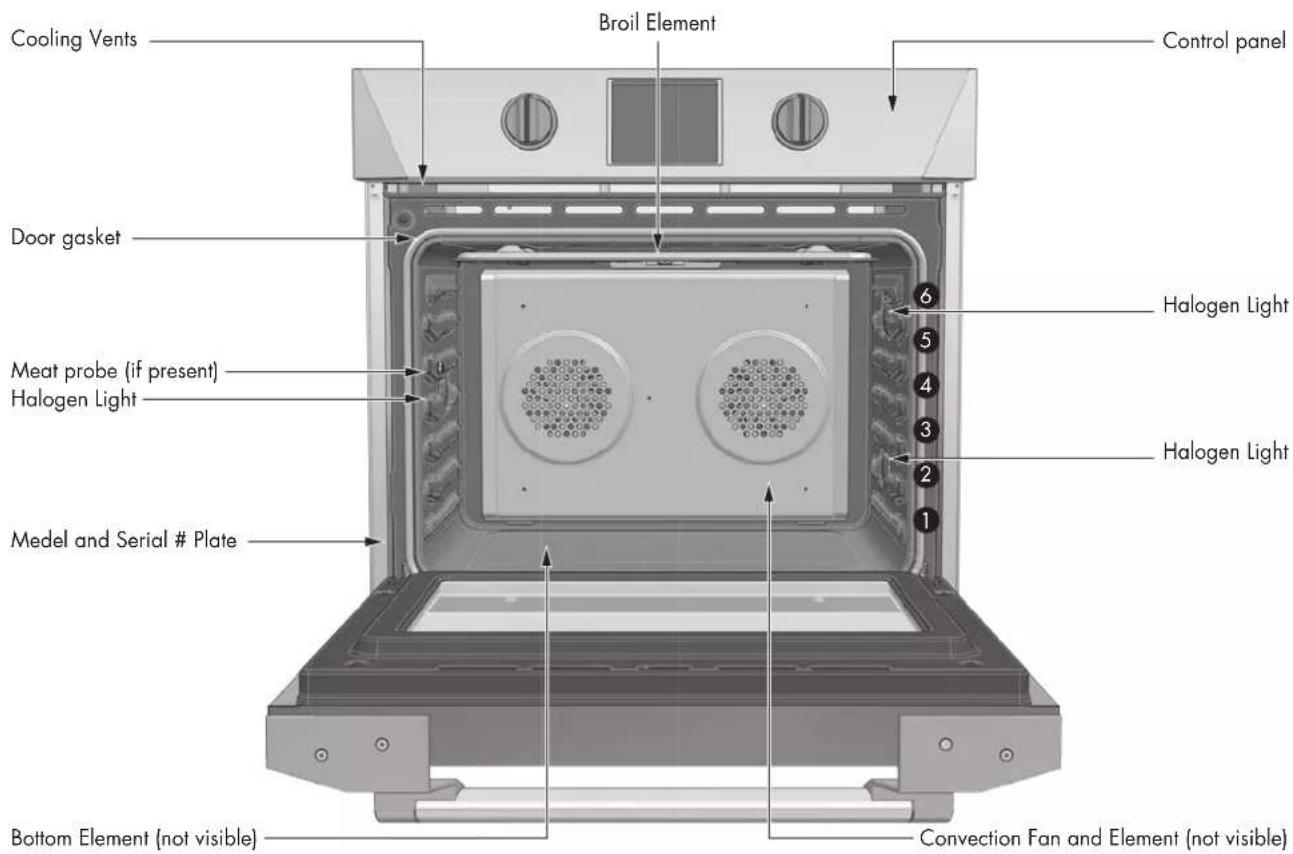
FEATURES OF YOUR OVEN
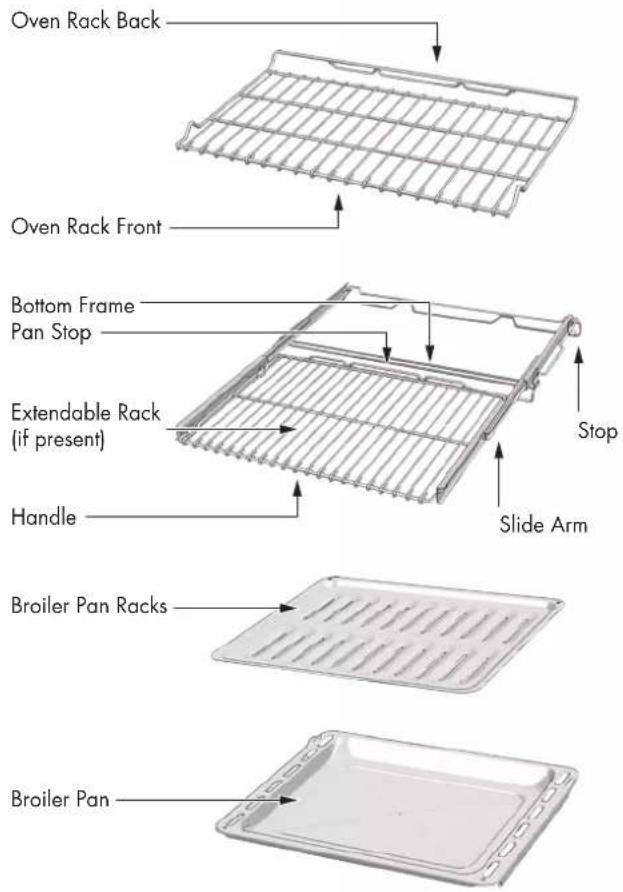
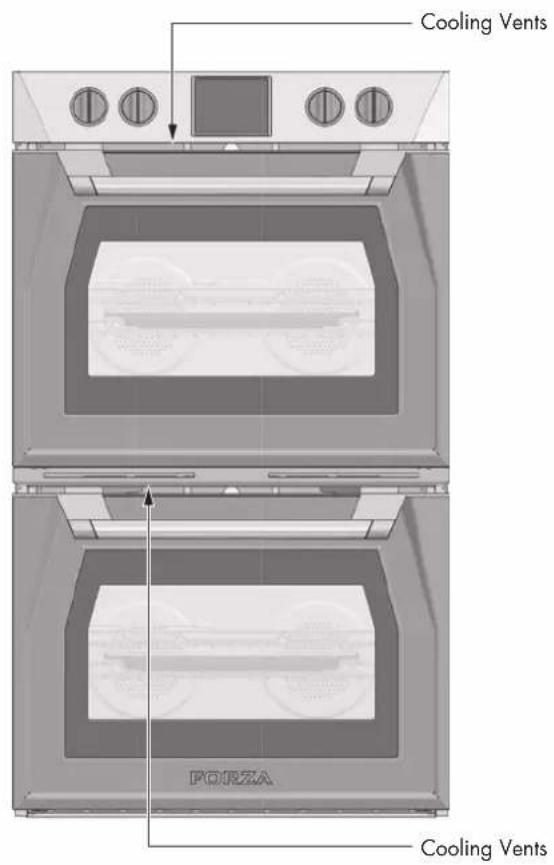
Your appliance could vary slightly compared to the illustrations below.
A - Display screen
B - Upper oven control knobs
Lower oven control knobs
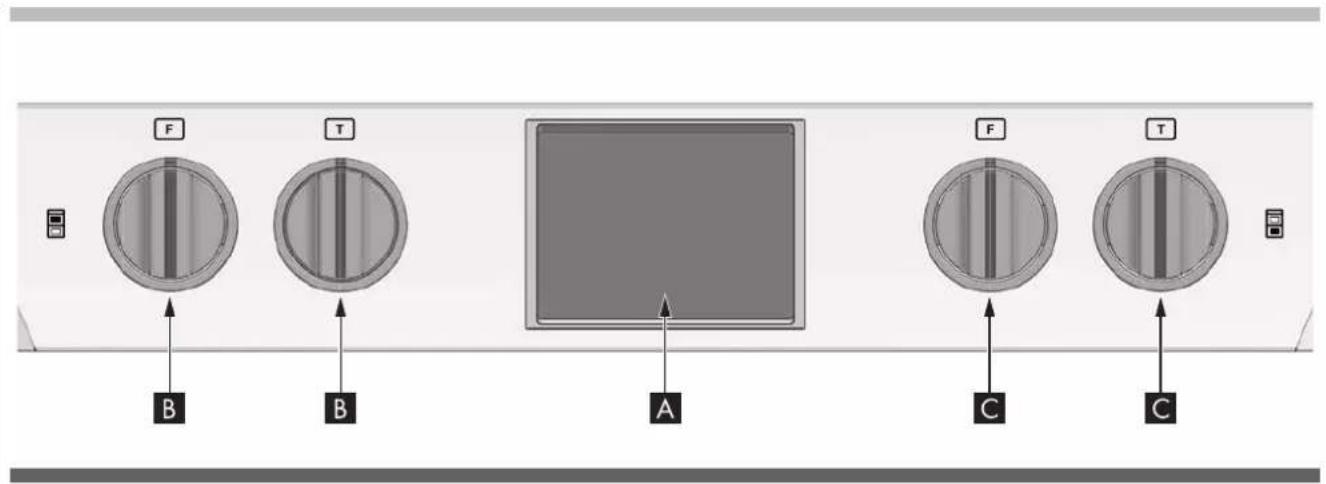
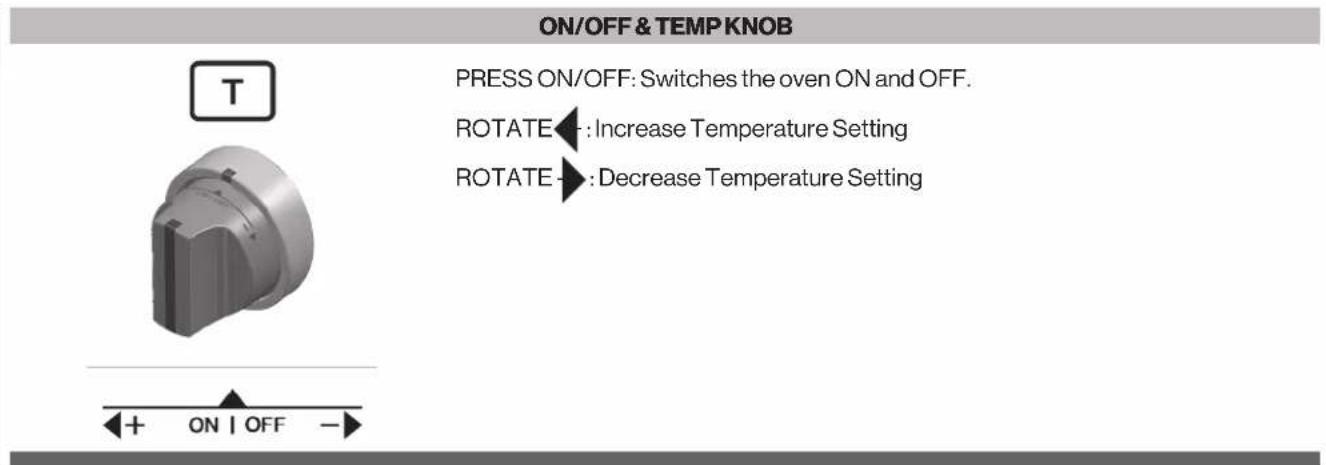
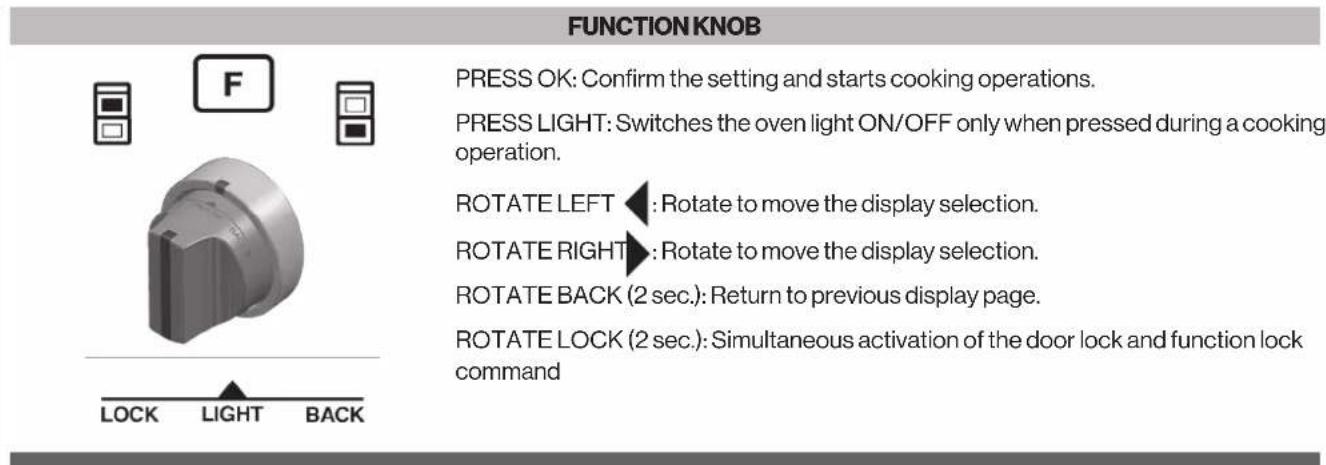
Command Knobs
To operate the control knobs, rotate them to left/right press gently. The control will not work if more than one knobs is pressed or rotate at the same time.
The following illustrations give an overview of what happens in the oven with each mode setting. The arrows represent the location of the heat sources during specific modes. The lower element is concealed under the oven floor.
| CAVITY STYLES | ||
| Convection Bake (CONV BAKE) | Bake (BAKE) | Dehydrate (CONV DEHY) |
| Set temperature: from 170 °F (75 °C) to 550 °F (290 °C) (preset position 325 °F (165 °C)) Convection Bake cooks with heat from a ring element behind the back wall of the oven. The heat is circulated throughout the oven by the convection fan. | Set temperature: from 170 °F (75 °C) to 550 °F (290 °C) (preset position 350 °F (175 °C) Is cooking with heated air. Both the upper and lower elements cycle to maintain the oven temperature. | Set temperature: from 120 °F (50 °C) to 160 °F (70 °C) (preset position 140 °F (60 °C) Dehydrating is similar to convection cooking but holds an optimum low temperature while circulating the heated air to remove moisture slowly for food preservation. |
| Convection Broil (CONV BROIL) | Broil (BROIL) | Pizza (PIZZA) |
| Set temperature: from 170 °F (75 °C) to 550 °F (290 °C) (preset position 450 °F (230 °C)) Convection Broil combines the intense heat from the upper element with the heat circulated by the convection fan. | Set temperature: from L1 to L5 (preset position L3) Broiling uses intense heat radiated from the upper element. | Set temperature: from 170 °F (75 °C) to 550 °F (290 °C) (preset position 450 °F (232 °C) Is a special cooking mode with heated air. The lower elements cycle to cook Pizza. |
| Convection Roast (CONV ROAST) Proof (WARM) | Defrost (CONV) | |
| Set temperature: from 170 °F (75 °C) to 550 °F (290 °C) (preset position 325 °F (165 °C)) Convection Roast uses the upper and lower elements and convection fan. | Set temperature: from 80 °F (25 °C) to 120 °F (50 °C) (preset position 100 °F (35 °C) Warming (WARMPLUS) Set temperature: from 130 °F (55 °C) to 210 °F (100 °C) (preset position 170 °F (75 °C) Proof and Warming use the lower elements to keep foods warm. | Does not used any heating element, only the convection fan is used to defrost foods. |
Before using your oven for the first time remove all packing and foreign materials from the oven(s). Any material of this sort left inside may melt or burn when the appliance is used.
Error codes
This code appears in the event of the electronic control indicating a fault. When the error appears, the current function is blocked. If the type of error is related to a safety function, the oven becomes unusable and every time a start attempt is made, the same error appears (in which case call in the after-sales service), while if the error relates to a minor fault, after being restarted the oven can be used for the functions that do not involve the faulty part (e.g., a heating element).
Beeps
Confirm that the command has been received after a knob has been pressed.
It also indicates that a time function has been completed (e.g. Timer or Timed Cooking). During the execution of a recipe, an acoustic signal warns the user that the oven is waiting for operation by the user (e.g., insert the dish or turn it over).
Beeps also signal an oven fault.
DoorLock
It's displayed steadily when the door is locked. The symbol flashes when the latch is moving in order to lock or unlock the door. Do not attempt to open the door at this time. Door can be opened when the symbol no longer appears. A padlock appears when the door has been locked automatically due to self-clean mode.
Power Failure
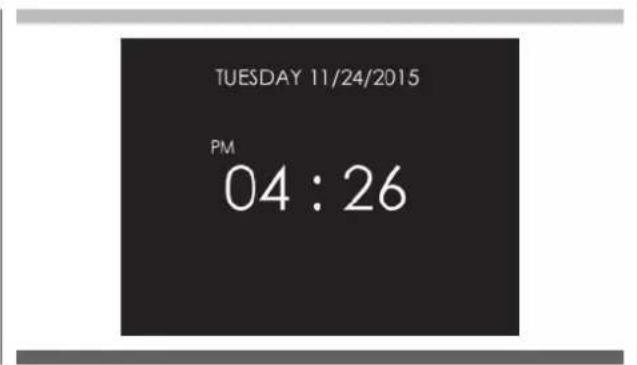
After the power returns to the oven, the door lock mechanism perform a test run then the clock time and date are displayed.
Default Settings
The cooking modes automatically select a suitable temperature when the cooking mode is selected, these can be changed when a different one is needed.
F Failure Number Codes
These codes are displayed when the electronic control detects a problem in the oven or in the electronics.
The error code is recorded in the Error Log in the Setup menu. This error can be communicated to the service technician so he/she can understand the possible cause of the problem in advance.
Preheat and Fast Preheat
Whenever a cooking made is set and the oven is heating, the preheating starts, during this period, the instantaneous temperature is displayed together with the thermometer icon.
As soon as the 100% is reached, the control sounds an "end of preheat" tone and the current temperature value disappears.
When it's necessary to heat up the oven rapidly, a Fast Preheat mode is available: it use the heating elements and the convention fan in a special way, in order to reduce the heating time as long as possible. After having set one one of the cooking functions for which the fast preheat is available and set the desired temperature value, than turn the knob to the RIGHT, after entering the functions menu, select the icon
by means of the knob and confirm by means of the pressing [FUNTIONS] knob. As soon as the set-point temperature is reached, the control sounds a and both "Fast Preheat Icon" and "current temperature" disappear. The oven switches automatically to the desired cooking mode that was previously set: put the food inside now.
Timer

WARNING
The timer on your oven does not turn the appliance on or off, its only purpose is to alert you through the buzzer.
When you want to turn off the oven automatically, use the end-of-cooking or delayed cooking function.
NOTE: Pressing the OFF knob does not reset or stop the timer.
- With the oven on, select the Ronand confirm with the function knob to enter the SETTINGS menu.
- Select the function and set the desired time using the function knob and confirm by means of the pressing function knob.
- The time can be set from 1 minute to 12 hours and 59 minutes and, when set, the remaining time is always visible in the bottom status bar until the time expires or is reset.
- To canel the time set, you must reset the timer by pressing the [FUNTION] Knob fot 2 seconds when you are in timer setting menu.
- Timer format is usually HR:MIN, switching into MIN:SEC during the last minute.
- When the time expires, the display shows 00:00 and the buzzer will sound for one minute or until the [FUNCTION] knob is pressed.
Preheating the Oven
- Preheat the oven when using the Bake, Convection Bake and Convection Roast modes.
- Use Fast Preheat mode when a shorter time is desired to preheat the oven.
- Selecting a higher temperature does not shorten the preheat time.
- Preheating is necessary for good results when baking cakes, cookies, pastry and breads.
- Preheating will help to sear roasts and seal in meat juices.
- Place oven racks in their proper position before preheating.
- During preheating, the selected cooking temperature is always displayed.
- A beep will confirm that the oven is preheated and the "PREHEAT" text will turn off.
Operational Suggestions
- Use the cooking charts included in this manual as a guide.
- Do not set pans on the open oven door.
- Use the interior oven lights to view the food through the oven door window rather than opening the door frequently.
Utensils
- Glass baking dishes absorb heat. Reduce oven temperature 25^ (15°C) when baking in glass.
- Use pans that give the desired browning. The type of finish on the pan will help determine the amount of browning that will occur.
- Shiny, smooth metal or light non-stick / anodized pans reflect heat, resulting in lighter, more delicate browning. Cakes and cookies require this type of utensil.
- Dark, rough or dull pans will absorb heat resulting in a browner, crisper crust. Use this type for pies.
- For brown, crisp crusts, use dark non-stick / anodized or dark, dull metal utensils or glass bake ware. Insulated baking pans may increase the length of cooking time.
- Do not cook with the empty broiler pan in the oven, as this could change cooking performance. Store the broil pan outside of the oven.
OvenCondensation and Temperature
- It is normal for a certain amount of moisture to evaporate from the food during any cooking process. The amount depends on the moisture content of the food. The moisture may condense on any surface cooler than the inside of the oven, such as the control panel.
- Your new oven has an electronic temperature sensor that allows maintaining an accurate temperature. Your previous oven may have had a mechanical thermostat that drifted gradually over time to a higher temperature. It is normal that you may need to adjust your favorite recipes when cooking in a new oven.
High Altitude Baking
- When cooking at high altitude, recipes and cooking time will vary from the standard.
120/240 vs. 120/208 Volt Connection
- Most oven installations will have a 120/240 voltage connection.
- If your oven is installed with 120/208 voltage, the preheat time may be slightly longer than with 120/240 voltage.
- The oven is designed to assure the same clean time at 208V. The range ships configured to operate using 120/240 voltage. Refer to the Installation Instructions for how to properly configure the electric oven for optimal performance on 120/208 voltage.
Oven Racks
- The oven has rack guides at six levels as shown in the illustration on Page 7.
- Rack positions are numbered from the bottom rack guide (#1) to the top (#6).
- Check cooking charts for best rack positions to use when cooking.
Each level guide consists of paired supports formed in the walls on each side of the oven cavity. - Always be sure to position the oven racks before turning on the oven. Make sure that the racks are level once they are in position.
Please refer to illustration on Page 7 if there is any question as to which side is the front of the rack.
The racks are designed to stop when pulled forward to their limit.

CAUTION
Never use aluminum foil to cover the oven racks or to line the oven. It can cause damage to the oven liner if heat is trapped under the foil.

CAUTION
Make sure you do not force it to avoid damage to the enamel.
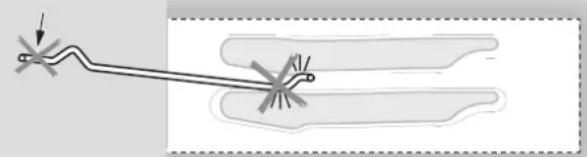
To remove oven rack from the oven:
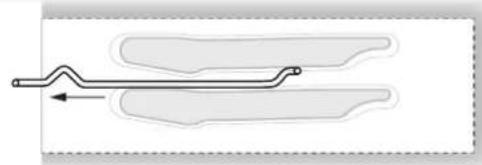
1.Pull rack forward
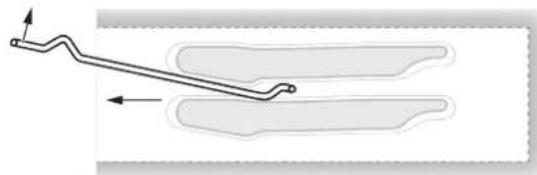
2. Lift rack up at front and then remove it
To replace an oven rack:
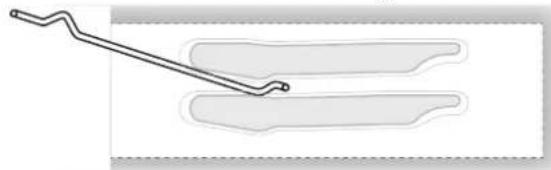
1. Place rear of rack between rack level guides
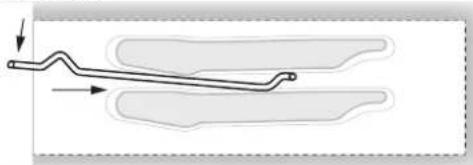
2. While lifting front of rack, slide rack in all the way while lowering the front
Oven Telescopic Racks
The extendable rack allows for easier access to cooking foods. It extends beyond the standard flat rack bringing the food closer to the user.

CAUTION
When the rack is outside of the oven, slide arms do not lock. They could unexpectedly extend if the rack is carried incorrectly. Extending slide arms could cause injury. Rack should only be held or carried by grasping the sides.
NOTE: Always remove the extendable rack before selfcleaning the oven.

CAUTION!
To avoid burns, pull rack all the way out and lift pan above handle when transferring food to and from oven.
Please refer to illustration on Page 7 if there is any question as to which side is the front of the rack.
To remove extendable rack from the oven:
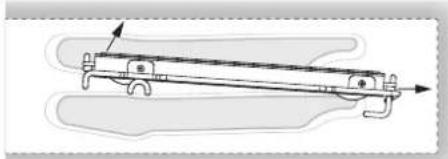
1. Lift of rack slightly and push it towards the back of the oven until the stop releases.
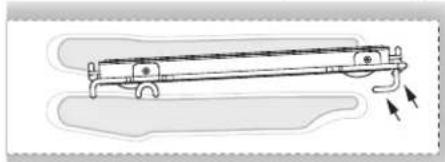
2. Raise back of rack until frame and stop clear rack guide
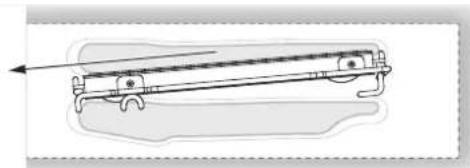
3. Pull rack down and out
To replace an extendable rack:
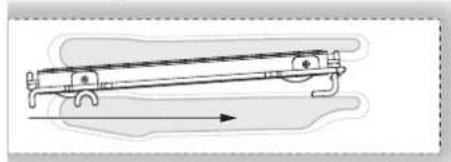
1. Grasp rack firmly on both sides. Place rack (including frame) above desired rack guide
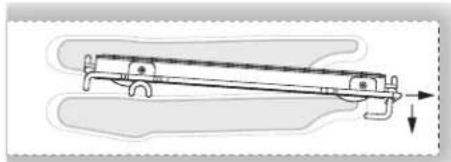
2. Push all the way in until the back of the rack drops into place
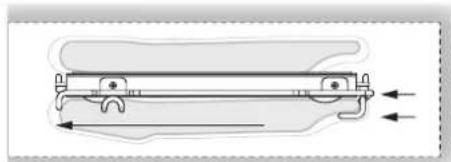
3. Pull both sections forward until stops activate. Rack should be straight and flat, not crooked
Instruction for initial switch-on
Once the range has been connected to the power supply for the first time, the control automatically prepares for setting a number of user settings, which remain stored in case of any subsequent switch-on.
NOTE: Both at the first and subsequent connections to the power supply, the door lock mechanism performs a calibration run - in this phase, always keep the door closed.
Language
- Temperature&Weight
Time
Data
Refer to the USER SETTING paragraph for setting instructions.
After making the user settings, the control moves automatically to the "Standby" display page.
Oven Cavity Selection (Double Oven)
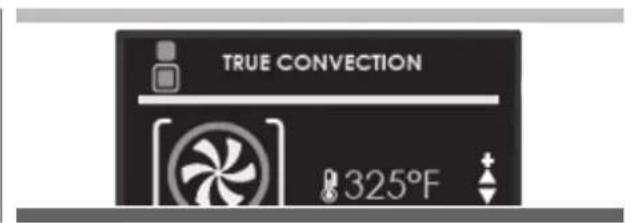
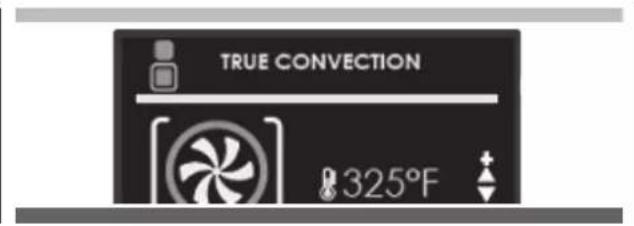
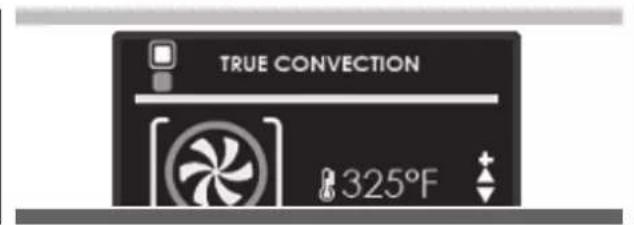
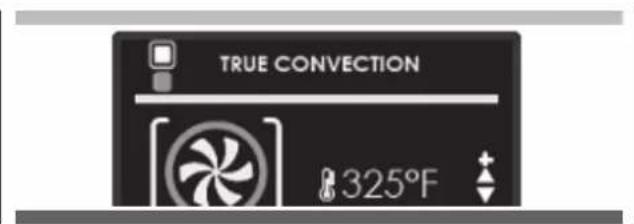
Once the appliance is switched ON two icons are showed on the top left corner in order to inform the user which cavity is selected and its condition.
The RED color identifies the oven cavity ON (ACTIVE FUNCTION).
- The WHITE color identifies the ovencavity ON (NOT ACTIVE FUNCTION).
- The GRAY color identifies the oven cavity OFF.
- The frame identifies the Oven selection (SHOWN ON THE DISPLAY).
EXAMPLE1
UPPER oven: GRAY icon-OFF (not selected)
LOWER oven: REDicon-ON(active / selected)
EXAMPLE2
UPPERoven: REDicon-ON(active/notselected) LOWERoven: REDicon-ON(active/selected)
EXAMPLE3
UPPERoven:WHITEicon-ON (not active / selected)
LOWERoven: REDicon-ON(active/not selected)
EXAMPLE4
UPPERoven:WHITEicon-ON (not active / selected)
LOWERoven: GRAYicon-OFF (not selected)
NOTE: Press the [ON/OFF] knob to switch the oven ON and press again to switch it OFF. The oven returns to standby mode.
To select the Oven Cavity press the related [FUNCTION] knob for 2 seconds.
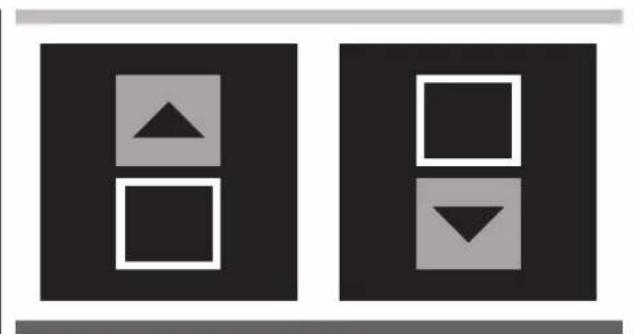
If an oven cavity is OFF and selected while the other is ON, an icon is showed on the display to advise that the cavity not selected is activated.
With the oven on, select the iconand confirm with the function knob to enter the SETTINGS menu. This menu permits personalizing the settings of your oven. To make access, no active cooking or any set time functions must be in progress.
NOTE: The Setting menu can never be set if any time function is already set: first delete all the active time functions.
- Rotate the [FUNCTION] knob to select the sub menu and confirm by means of pressing the [FUNCTION] knob.
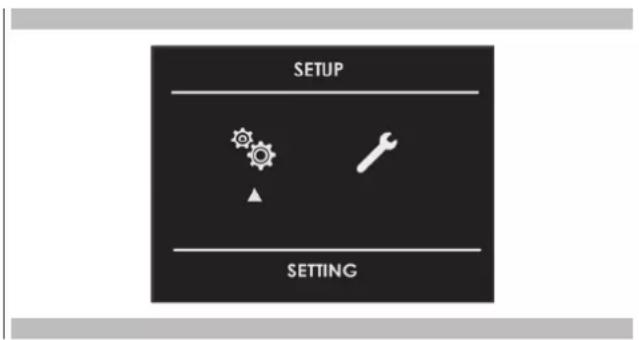
2.Use this menu to change the following settings: Rotate the [FUNCTION] knob to select the setting or change a sub menu from among the six available ones and confirm by means of pressing the [FUNCTION] knob.
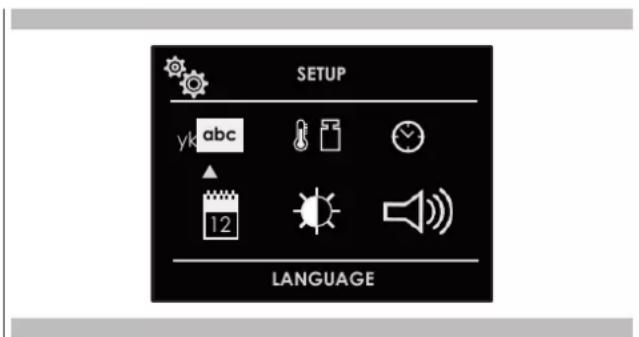
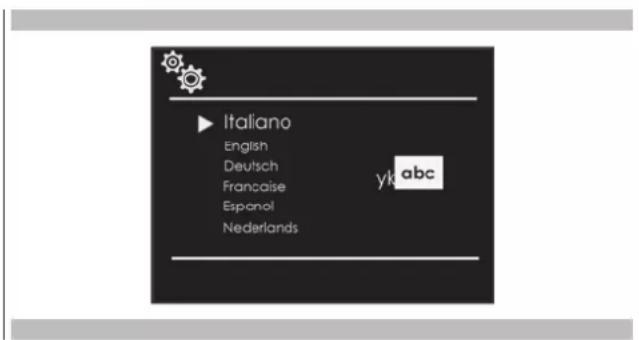
Language
Rotate the [FUNCTION] knob to select a language from among those available, and confirm by means of pressing the [FUNCTION] knob.
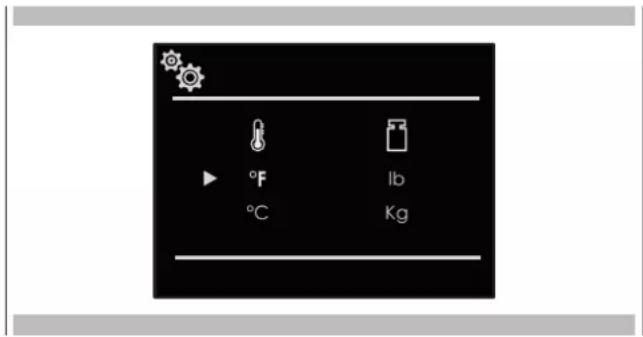
Temperature & Weight
Rotatethe [FUNCTION] knob to selectone of the two temperature options ^ C / ^ or weight options Kg/lb and confirm by means of pressing the [FUNCTION] knob.
Time
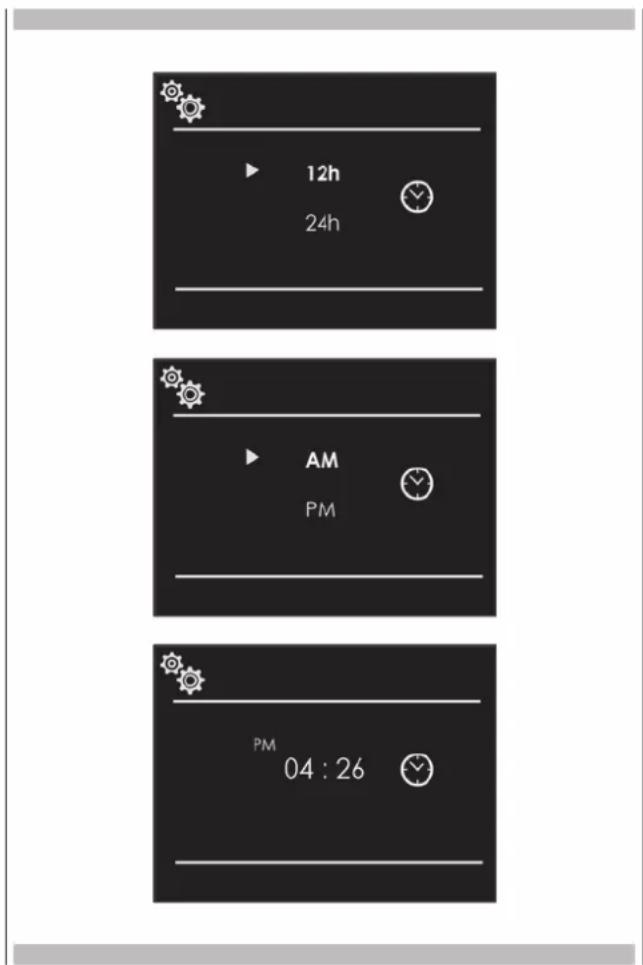
Rotate the [FUNCTION] knob to select the time format between the options "12h AM/PM or 24h" and confirm by means of pressing the [FUNCTION] knob. Subsequently, set the time of the day using the same procedure.
Date
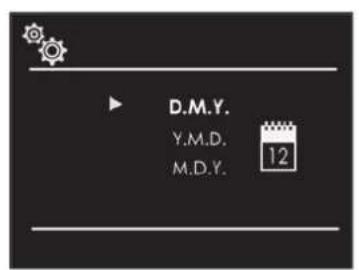
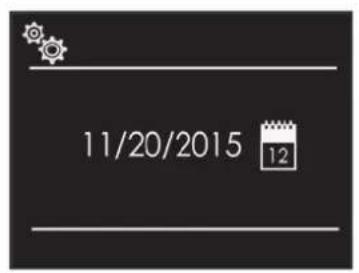
Rotate the [FUNCTION] knob to select the date format from among the options "D.M.Y. - Y.M.D. - M.D.Y." and confirm by means of pressing the [FUNCTION] knob.
Beeper
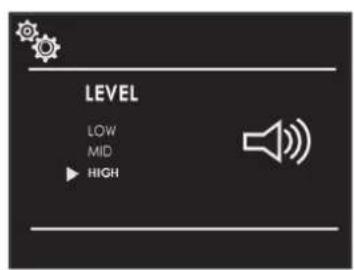
Rotate the [FUNCTION] knob to select the required beep level and confirm by means of pressing the [FUNCTION] knob.
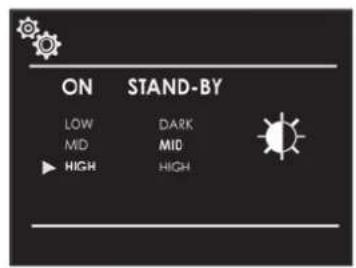
Brightness
Rotate the [FUNCTION] knob to choose which luminosity setting to change between ON or STANDBY, than by means of rotating the [FUNCTION] knob to select therequired degree of luminosity and confirm by means of pressing the [FUNCTION] knob.
With the oven on, select the icon and confirm with the [FUNCTION] knob to enter the SETTINGS menu. This menu permits setting a number of parameters or special functions. It also permits accessing the error events list.
- Press the [FUNCTION] knob to select the sub menu and confirm by means of pressing the [FUNCTION] knob.

- Use this menu to change the following settings: Press the [FUNCTION] knob to select the item to be set or to be displayed from among the three available ones and confirm by means of pressing the [FUNCTION] knob.
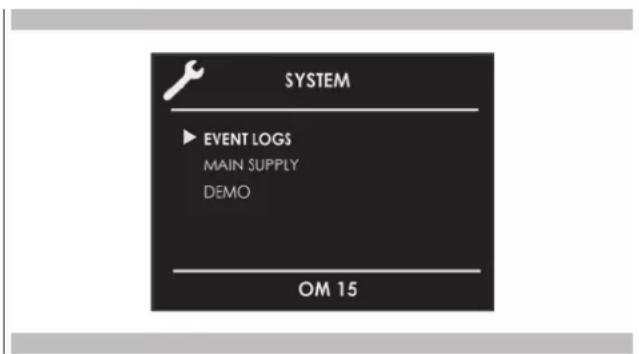
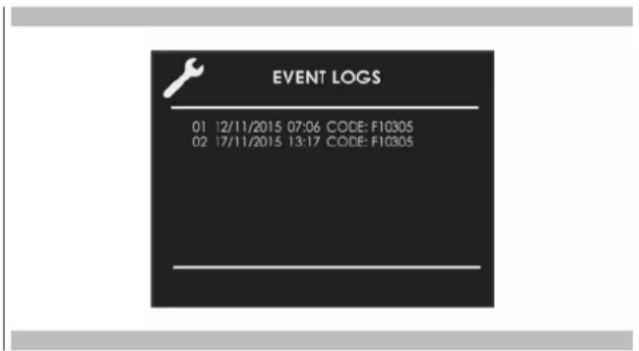
Event Log
The menu permits checking any recorded errors. These codes can be notified to the after-sales service.
Demo
The purpose of this function is to set the DEMO mode, which makes the oven useless for cooking but automatically performs a demonstration of functions.
- Press the [FUNCTION] knob to select the item ON.
- Confirm by means of pressing the [FUNCTION] knob.
- Press the [ON/OFF] knob.
After about 30 seconds, the oven starts to operate in this mode.
To temporarily stop the DEMO function, simply keep any knob pressed for a few second until the oven switches to standby.
If the DEMO function is not disabled, it restarts automatically after 30 seconds.
To disable the function, enter the DEMO display page and set OFF. Confirm by means of pressing the [FUNCTION] knob.
NOTE Once set, the function remains enabled even if the oven is disconnected from the power mains.

Switching the oven on and off

IMPORTANT
- After switching off the oven, the cooling fan could continue to operate until the inner parts of the oven have cooled down.
Press the [ON/OFF] knob to switch the oven ON and press again to switch it OFF. The oven returns to standby mode. To select the Oven Cavity press the related [FUNCTION] knob for 2 seconds.
Selecting the cooking mode

IMPORTANT
- Do not leave the door open for a long time during cooking.
- The door must be kept closed during the BROIL functions.
- Position the grill or grills on an appropriate level.
Functions

BAKE

ROAST

TRUE CONVEC.

CONVEC.ROAST

CONVEC.BAKE

BROIL

CONVEC. GRILL

CONVEC.BROIL

PIZZA

CLASSICPIZZA
(On some models)

DEFROST

DEHYDRATE
Functions

WARM

WARMPLUS

SABBATH (On some models)

SELF CLEAN
Select the appropriate cooking mode according to the food to be cooked using the [FUNCTION] knob and confirm by means of pressing the [FUNCTION] knob.
Changing the cooking mode
To change the cooking mode while the oven is working, rotate [BACK] for 2 seconds. At this point, another cooking mode can be selected from among those available in the group by means of the [FUNCTION] knob.
Changing temperature

IMPORTANT
- The BROIL function operates at levels. No temperature can be set because this works at fixed cycles according to the set level from L1 to L5.
- The maximum temperature of the BROIL function is limited according to the set level.
- In all the cooking modes where the temperature is fixed, this is not shown on the screen.
-
At the end of a function, the display screen shows the residual compartment heat temperature from the standby page.
-
From the cooking mode display page, the temperature can be changed by means of the [TEMPERATURE] knob.
- Once cooking has started, the temperature can in any case be changed, at any time, by means of the [TEMPERATURE] knob.
| COOKING MODE ICON FAST | PREHEAT | MEATPROBE | TEMPERATUREMin. Preset Max. | |||
| DEFROST | ********** | |||||
| DEHYDRATE | 120°F (50°C) 140°F (60°C) 160°F (70°C) | |||||
| WARM | 80°F (25°C) | 100°F (40°C) | 120°F (50°C) | |||
| WARM PLUS | 130°F (55°C) | 170°F (75°C) | 210°F (100°C) | |||
| BAKE | ≈ | R | 170°F (75°C) | 350°F (175°C) | 550°F (290°C) | |
| ROAST | ≈ | R | 170°F (75°C) | 350°F (175°C) | 550°F (290°C) | |
| TRUE CONVECTION | ≈ | R | 170°F (75°C) | 325°F (165°C) | 550°F (290°C) | |
| PIZZA | ≈ | R | 170°F (75°C) | 325°F (165°C) | 550°F (290°C) | |
| CONVECTION ROAST | ≈ | R | 170°F (75°C) | 325°F (165°C) | 550°F (290°C) | |
| CONVECTION GRILL | ≈ | R | 170°F (75°C) | 325°F (165°C) | 550°F (290°C) | |
| CONVECTION BAKE | ≈ | R | 170°F (75°C) | 450°F (230°C) | 550°F (290°C) | |
| CONVECTION BROIL | ≈ | R | 170°F (75°C) | 450°F (230°C) | 550°F (290°C) | |
| BROILL1 | 400°F (205°C) | |||||
| BROILL2 | 450°F (230°C) | |||||
| BROILL3 | 490°F (255°C) | |||||
| BROILL4 | 520°F (270°C) | |||||
| BROILL5 | 550°F (290°C) | |||||
| CLASSIC PIZZA (if present) | 590°F (310°C) | |||||
| SABBATH (if present) | 120°F (50°C) | 140°F (60°C) | 550°F (290°C) | |||
| SELF CLEAN | 840°F (450°C) | |||||
Pre-heating phase
While the oven is in pre-heating phase, the instantaneous temperature is displayed underneath the cooking mode icon.
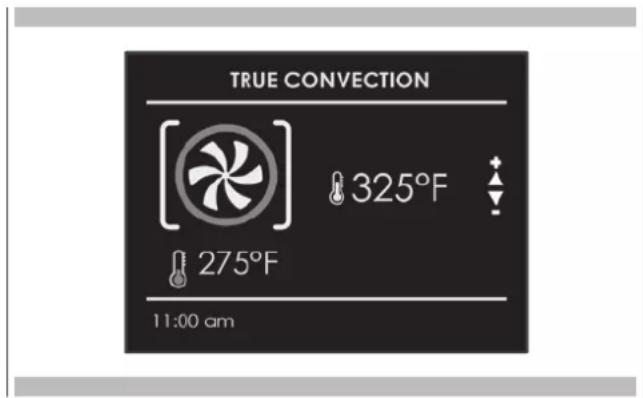
Just as soon as the set temperature is reached, an acoustic signal is heard and the instantaneous temperature indication disappears.
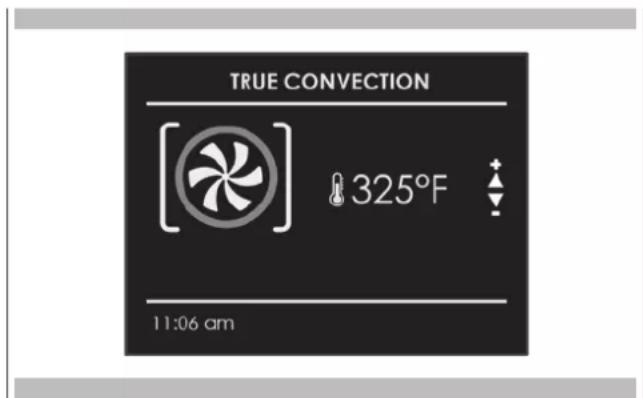
Fast Preheat
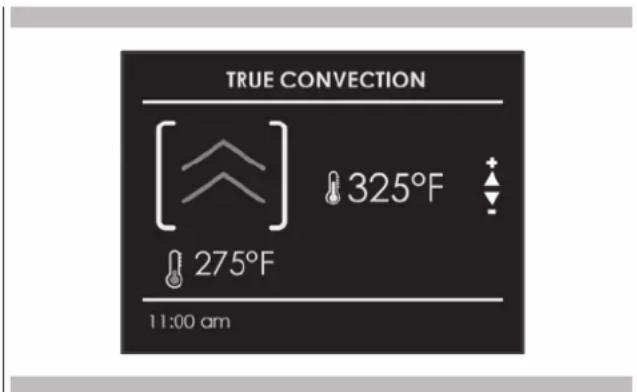
The FAST PREHEAT function permits reaching the desired temperature quicker compared to standard preheating. The function can be enabled for all the cooking modes in the BAKE (except the Sabbath and ECO), CONVECT and PIZZA groups.
To select FAST PREHEAT:
- Select and start the cooking mode and turn the knob tothe RIGHT.
- After entering the functions menu, select the icon by means of the knob and confirm by means of the pressing [FUNCTION] knob. The symbol appears in the lower part of the screen.
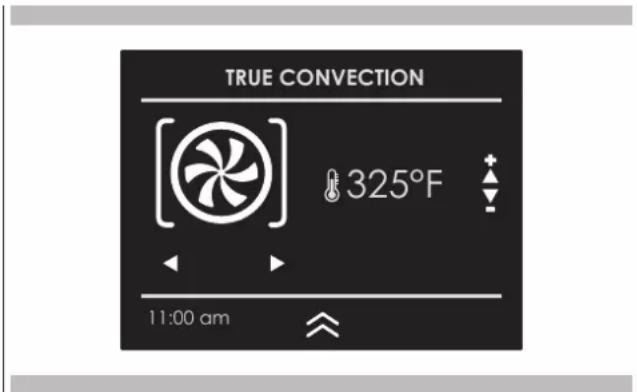
- The display page shows the icon of the active functions until the set temperature has been reached. Afterwards, the function switches to automatic in the selected cooking mode.
Using Oven Lights
A single push of the [FUNCTION] knob activates the lights only when pressed during a cooking operation.
Oven lights turn on automatically when the door is opened.
When an oven is in use, oven lights turn on automatically when a mode is started.
Oven lights will turn off automatically when the oven mode is cancelled.
NOTE: The lights do not operate in the Self-Clean mode.
NOTE: Once switched on, the lights go OFF automatically after 3 minutes. To switch them back ON, press the [FUNCTION] knob or open the door.
Be sure that the time-of-day clock is displaying the correct time.
The timed mode turns off the oven at the end of the cook time.

CAUTION
Never leave food in the oven for more than one hour before and after cooking.
This could deteriorate the properties of the food itself.
NOTE The time functions cannot be used if the meat probe is on. The maximum cooking time that can be set is 12 h.
Cook Time
Use the "Cook Time" function to operate the oven for a determinate period of time. The oven starts immediately and switches off automatically once the time has expired.
To Set a Timed Mode
- Select the cooking mode and temperature.
- There are two ways to set the function.
a) Select to set the duration and press [FUNCTION] knob.
b) Select to set the stop time and press FUNCTION] knob. - After selecting one of the two above options, set the time by means of the [FUNCTION] knob and confirm and confirm by means of the pressing [FUNCTION] knob.
-
After pressing the [FUNCTION] knob cooking starts and the time cooking information is shown on the display page.
-
Cooking mode
- Temperature
- Cooking time
End of cooking time
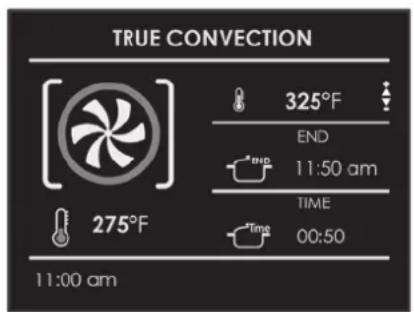
5 After cooking, the oven switches off and an acoustic signal warns that cooking has terminated.
To change the cooking time when the oven is already operating, simply rotate the [FUNCTION]knobtothe riht [LOCK] and enter the new cooking time before pressing the [FUNCTION] knob again.
Stop Time
Use the "Stop Time" function to delay the start of timed cooking. Enter the cooking stop time and the oven will automatically calculate the start time. The oven switches on and off automatically.
To Delay the Start of a Timed Mode
1 First of all set the required timed cooking as indicated in the "COOK TIME" paragraph.
2 Select to set the stop time and press [FUNCTION] knob.
3 Set the cooking stop time by means of the [FUNCTION] knob and confirm and confirm by means of the pressing [FUNCTION] knob.
4 After pressing the [FUNCTION] knob, the function positions in standby and the postponed cooking details are shown on the screen.
- Cooking mode
- Temperature
- Cooking stop time
- Cooking start time
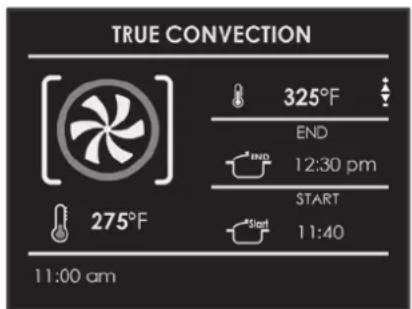
After cooking, the oven switches off and an acoustic signal warns that cooking has terminated.
Tochange the cooking time and stop time when the ovenis already operating, simply rotate the [FUNCTION] knob to the rht [LOCK] and enter the new cooking stop time before pressing the [FUNCTION] knob again.
When roasts, steaks or poultry are being cooked, this is the best way to tell when the food is correctly cooked.
This oven is optionally provided with the meat probe feature to sense the temperature inside meat and stop cooking as soon as the set value is reached.
When the probe is used, the oven automatically checks the cooking time.
NOTE: the food probe is an accessory available only in some versions of the product.
Tenderness, aroma and flavour are the result of precise, functional control.
The food probe is a thermometer which, when inserted into the food, makes it possible to check the internal temperature and use it to establish the end of cooking.
For example, meat may look like it is cooked on the outside, but still be pink on the inside!
The temperature reached by food during cooking is closely linked to problems relating to health and hygiene. Bacteria can be contained in every kind of meat, poultry and fish, as well as raw eggs.
Certain types of bacteria make food go off, while others, such as Salmonella, Campylobacter jejuni, Listeria monocytogenes, Escherichia coli and Staphylococcus aureus can be seriously harmful to human health. Bacteria multiply very quickly above a temperature of 4.4^ up to 60^ . Vince is particularly at risk from this point of view.
To prevent bacteria from multiplying, it is necessary to take the following measures:
- Do not defrost food at room temperature, always in the fridge or in the oven using the specific function. In the latter case, cook the food immediately afterwards.
- Stuff chicken just before eating it. Never buy pre-packed ready-stuffed chicken and only buy ready-cooked stuffed chicken when you intend to eat it within 2 hours.
- Marinate food in the fridge, not at room temperature.
- Use a food probe to check the temperature of meat, fish and poultry if they are more than 5cm thick, to ensure that the minimum cooking temperatures are reached.
- The greatest hazards are posed by poorly cooked chicken, particularly at risk from Salmonella.
- Avoid interrupting the cooking process, i.e., partially cooking food, storing it and completing the cooking process later. This sequence encourages the growth of bacteria due to the "warm" temperatures reached inside the food.
- Roast meat and poultry in the oven at temperatures of at least 165^ .
NB: Use only the meat probe supplied with the appliance.
In any case, we recommend that you consult the following table taken from the National Food Safety Database (USA).
Food Minimum internal temperature
Mince
Hamburger 71^
Beef, veal, lamb, pork 74^
Chicken, turkey 74^
Beef, veal, lamb
Roasts and steaks:
Rare
Medium-rare 63^
Medium 71^
Well done 77^
Pork
Chops, roasts, ribs:
Medium 71^
Well done 77^
Fresh ham 71^
Fresh sausages
Poultry
Whole chicken or chicken pieces
Duck
Whole turkey (not stuffed)
Turkey breast
The cooking temperature for rare meat is not indicated by the NFSD as it is unsafe for health reasons
71^ C

WARNING
- To avoid burns, use a kitchen glove to fit and remove the meat probe when the oven is hot.
- Always remove the probe using the grip. If it is removed by pulling the cable, it could suffer damage.
- Make sure the food is completely de-frozen when the probe is fitted. Otherwise it could suffer damage.
NOTE The meat probe is not enabled for all functions (meat probe function not available also for Recipes). If it is fitted during one of these functions, a probe removal message appears on the screen.
If the meat probe is accidentally removed during operation, a warning message appears on the screen.
The temperature of the probe can be set between 104^ and 212^ (40^ - 100^)
The oven stores the last temperature set by the user.
Insert the tip of the probe in the central and thickest part of the meat.
Make sure the probe is not in contact with the fat, bone, oven parts or dishes.
The meat probe is automatically recognised when it is inserted and the icon appears on the screen.
When a cooking mode is started with the probe inserted, the display page for setting the function appears automatically.
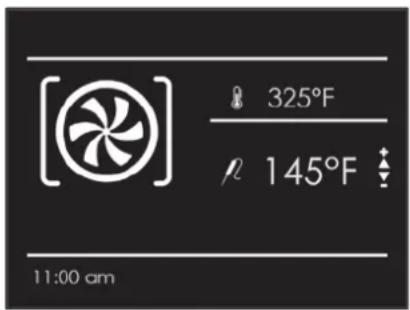
- Set the required probe temperature by means of the [TEMPERATURE] knob.
-
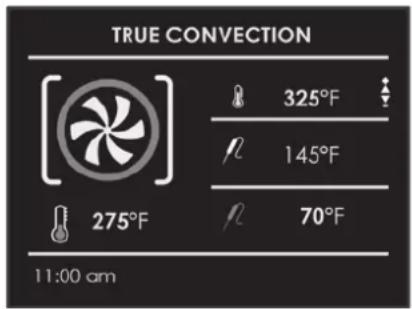
After pressing the [FUNCTION] knob the cooking starts and all probe cooking details appear on the screen.
-
Cooking mode
Oven temperature - Set probe temperature
- Instantaneous probe temperature
Once the set probe temperature is reached, the oven switches off and an acoustic signal warns that cooking has terminated.
NOTE: After cooking has started, the oven temperature can in any case be changed at any time by means of the [TEMPERATURE] knob.
To change the probe temperature, turn the [FUNCTION] knob [BACK] for 2 seconds, then select again the cooking function and change the temperature value.
The Recipe function of your oven gives you the chance to cook food without having to set the oven manually every time. By selecting a "SET" recipe, the cooking mode, the temperature and the time are automatically set according to the recipe selected from the menu.
| Recipe List Type of Food Food condition Recipes | List Information displayed | |||
| PRESET OR PERSONAL | FRESH | BREAD PIZZA FIRST | TYPE OF ACCESSORY LEVEL POSITION FOOD WEIGHT COOKING TIME PREHEAT REQUIRED (YES/NO) | |
| FROZEN | ||||
| WHOLE | MEAT | |||
| IN PEICES | ||||
| WHOLE | POULTRY | |||
| IN PEICES | ||||
| WHOLE | FISH | |||
| IN PEICES | ||||
| - | VEGETABLES | |||
| - | ||||
| - | PIES | |||
| - | ||||
Select an already-set recipe:
- Switch the oven, select the icon and press the [FUNCTION] knob.
- Using the [FUNCTION] knob select the list between "PRESET" or "PERSONAL" and confirm by means of the same knob.
- Choose the type of food to be cooked using the [FUNCTION] knob and confirm by means of the same knob.
- Using the [FUNCTION] knob choose between "FRESH" or "FROZEN" or in other cases between "WHOLE" or "IN PEICES" and confirm by means of the same knob.
- Select the required recipe by means of the [FUNCTION] knob and confirm by means of the same knob.
- When the recipe is selected, the following display page appears on the screen:
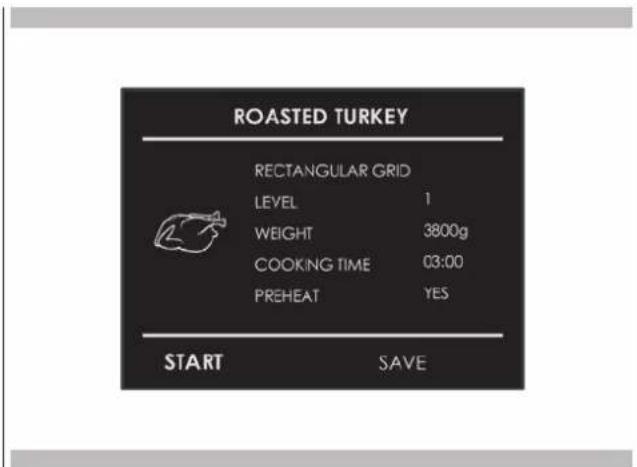
- To start the recipe, confirm by pressing the [FUNCTION] knob.
During a recipe, a number of acoustic and visual messages will ask you to perform the following operations. Simply follow the instructions on the screen. - Upon termination, the oven switches off and an acoustic and visual signal warns that the recipe has terminated.
Saving a personalized recipe:
Once a recipe has been selected, the "Time" and "Weight" setting can be changed and the recipe can be saved among the "PERSONAL" ones.
- Once a recipe has been selected, rotate the [FUNCTION] knob and and confirm by pressing the same knob.
- To change the weight, enter the desired weight by means of the [FUNCTION] knob and confirm by pressing the same knob.
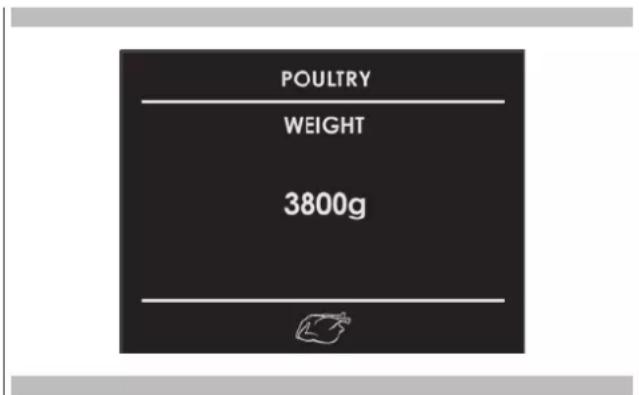
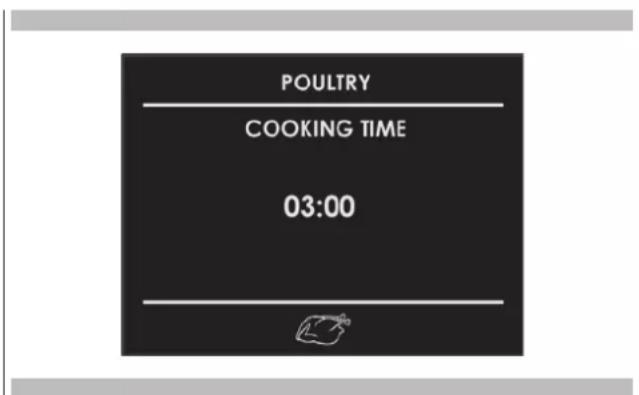
- The oven switches automatically to the cooking time. To change this time, use the [FUNCTION] knob to set the cooking time and confirm by pressing the same knob.
- At this point, the recipe can be saved in the list of "PERSONAL" recipes by selecting "SAVE" and confirming by means of the [FUNCTION] knob.
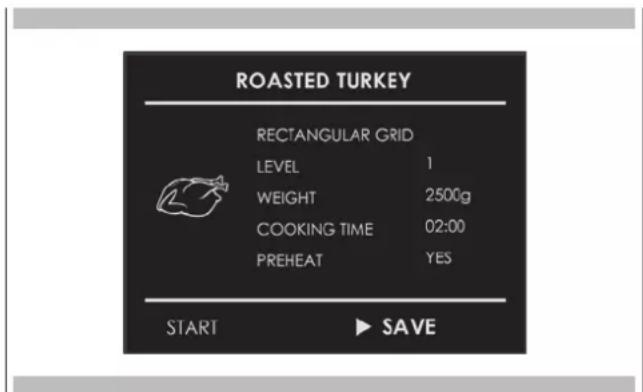
NOTE If the time and weight values are changed and not saved straight away, at the end of the recipe, a message appears which asks whether you want to save it.
5. To start the recipe press the [FUNCTION] knob.
Cancelling a Personalized recipe:
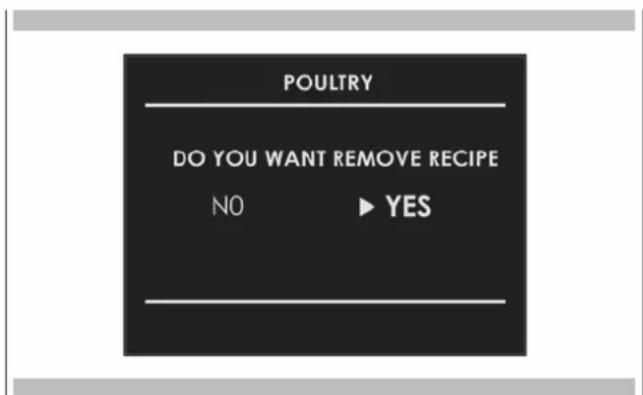
- To eliminate a recipe from the list of personalized recipes, select the recipe.
- Rotate the ON/OFF knob to the right and select the choice and confirm with the [FUNCTION] knob.
The CLASSIC PIZZA was specifically designed so you can bake perfect PIZZAS in just a few minutes.
For perfect results, select the RANING to access this special recipe. After you make your settings, Classic Pizza recipes will do the rest, reaching about 650^ (345^) by turning on the heating elements at 100% of their capacity.
At this temperature, you are guaranteed to have a crispy base and proper cooking of the toppings of your pizza, like at the pizzeria. The secret to a good pizza is in the simplicity of a well-leavened dough, prepared and cooked well: use a small quantity of good quality toppings.
Pizza Weight Leavened Dough Diameter
| Recipe List | Type of Food | Food condition | Recipes List | Information displayed |
| PRESET OR PERSONAL | PIZZA SINGLE THIN | COOKING TIME PROPOSED | TYPE OF ACCESSORY LEVEL POSITION COOKING TIME PREHEAT REQUIRED YES/NO) | |
| PIZZA SINGLE THICK | ||||
| PIZZA DOUBLE THIN | ||||
| PIZZA DOUBLE THICK | ||||
| PIZZA MULTI THICK | ||||
| PIZZA MULTI THICK |
THIN 180 gr 30 cm
THICK 260 gr 30 cm
Selecting an already-set "CLASSIC PIZZA" recipe:
- Start the oven and select the icon and confirm with the [FUNCTION] knob.
- By means of the [FUNCTION] knob, select the list between "PRESET" or "PERSONAL" and confirm with the same knob.
- Choose the type of pizza to be cooked by means of the [function] knob and confirm by pressing the same knob.
- After the recipe has been selected, the following display page appears:
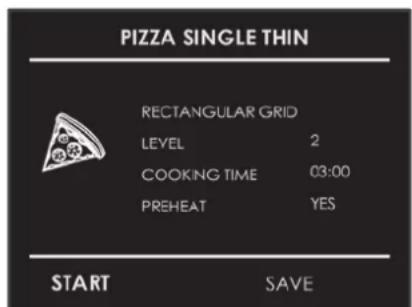
Once a recipe has been selected the "Time" setting can be changed (from 01:00 min/sec to 59:59 min/sec) and the recipe can be saved among the "PERSONAL" recipes of the special
Classic Pizza function. If so required, the saved recipe can also be cancelled.
If the time is changed and not immediately saved, at the end of the recipe, a message appears to ask whether you want to save it.
(FOR MORE DETAILS ON HOW TO PERFORM THESE STEPS, REFER TO THE INSTRUCTIONS IN THE RECIPE PARAGRAPH).
- Once confirmed with the [FUNCTION] knob, the oven preheats and when finished, it beeps and the display will tell that it's the right moment to put in the pizzas. Baking automatically starts when you close the door and, from now to the end, there are no other settings or anything turn on; you must simply follow the instructions on the display.
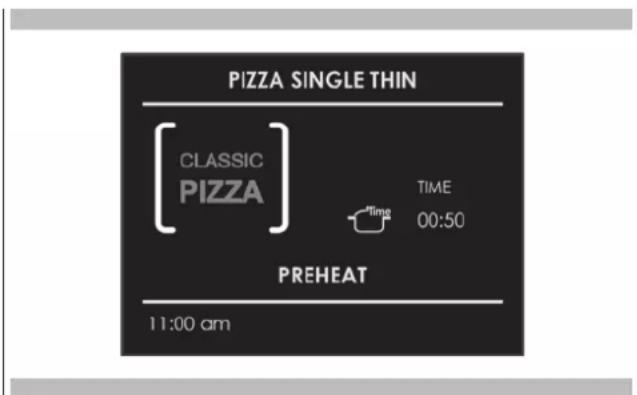
NOTE After the first pizza, you can immediately continue baking other pizzas without having to preheat. If, on request is selected, the recipe is repeated, while if OFF is pressed the recipe terminates.
16 - Classic Pizza (on some models)
Tips For A Good Pizza:
Given the high temperatures and short baking time, we recommend that you insert and remove the pizzas quickly so that the door is open for as short a time as possible and the temperature doesn't drop.
Once the beep and display indicate that baking is finished, immediately remove the pizza, since the cooking times are very short and even a few seconds can have a significant effect.
The baking time can be changed based on the type of dough and pizza; changes should be made with the +/- keys before pressing the start key.
At the end of the recipe, you will be asked if you want to save it in your personal recipes.
Baking is cooking with heated air. Both upper and lower elements in the oven are used to heat the air but no fan is used to circulate the heat.
Follow the recipe or convenience food directions for baking temperature, time and rack position. Baking time will vary with the temperature of ingredients and the size, shape and finish of the baking utensil.
General Guidelines
- For best results, bake food on a single rack with at least 1" - 1 12 " (2,5 - 3cm) space between utensils and oven walls.
- Use one rack when selecting the bake mode.
- Check for doneness at the minimum time.
- Use metal bake ware (with or without a non stick finish), heatproof glass, glass-ceramic, pottery or other utensils suitable for the oven.
- When using heatproof glass, reduce temperature by 25^ (15^) from recommended temperature.
-
Use baking sheets with or without sides or jelly roll pans.
-
Dark metal pans or nonstick coatings will cook faster with more browning. Insulated bake ware will slightly lengthen the cooking time for most foods.
- Do not use aluminum foil or disposable aluminum trays to line any part of the oven. Foil is an excellent heat insulator and heat will be trapped beneath it. This will alter the cooking performance and can damage the finish of the oven.
- Avoid using the opened door as a shelf to place pans.
- Tips for Solving Baking Problems are found on Page 42.
| BAKECHART - CONVECTION CAVITY | ||||
| FOOD ITEM RACK POSITION TEMP. °F (°C) | (PREHEATED OVEN) | TIME (MIN) | ||
| CAKE | ||||
| Cupcakes 2350 (175) 19 - 22 | ||||
| Bundt Cake 1350 (175) 40 - 45 | ||||
| Angel Food 1350 (175) 35 - 39 | ||||
| PIE | ||||
| 2 crust, fresh, 9" | 2 | 375 - 400 | (190 - 205) | 45 - 50 |
| 2 crust, frozen fruit, 9" | 2 | 375 | (190) | 68 - 78 |
| COOKIES | ||||
| Sugar | 2 | 350 - 375 | (175 - 190) | 8 - 10 |
| Chocolate Chip | 2 | 350 - 375 | (175 - 190) | 8 - 13 |
| Brownies | 2350 (175) 29 - 36 | |||
| BREADS | ||||
| Yeast bread loaf, 9x5 | 2 | 375 | (190) | 18 - 22 |
| Yeast rolls | 2 | 375 - 400 | (190 - 205) | 12 - 15 |
| Biscuits | 2 | 375 - 400 | (190 - 205) | 7 - 9 |
| Muffins | 2 | 425 | (220) | 15 - 19 |
| PIZZA | ||||
| Frozen | 2 | 400 - 450 | (205 - 235) | 23 - 26 |
| Fresh | 2 | 475 | (246) | 15 - 18 |
Reduce recipe baking temperatures by 25^ (15^)
- For best results, foods should be cooked uncovered, in low-sided pans to take advantage of the forced air circulation. Use shiny aluminum pans for best results unless otherwise specified.
- Heatproof glass or ceramic can be used. Reduce temperature by another 25^ (15^) when using heatproof glass dishes for a total reduction of 50^ (30^) .
- Dark metal pans may be used. Note that food may brown faster when using dark metal bake ware.
The number of racks used is determined by the height of the food to be cooked. - Baked items, for the most part, cook extremely well in convection. Don't try to convert recipes such as custards, quiches, pumpkin pie, or cheeses, which do not benefit from the convection-heating process. Use the regular Bake mode for these foods.
-
Multiplerack cooking for oven meals is done on rack positions 1, 2, 3, 4 and 5. All five racks can be used for cookies, biscuits and appetizers.
-
2 Rack baking: Use positions 1 and 3.
- 3 rack baking: Use positions 2, 3 and 4 or 1, 3 and 5.
-
When baking four cake layers at the same time, stagger pans so that one pan is not directly above another. For best results, place cakes on front of upper rack and back of lower rack (See graphic at right). Allow 1^ - 112 (2,5 - 3cm). air space around pans.
-
Converting your own recipe can be easy. Choose a recipe that will work well in convection.
- Reduce the temperature and cooking time if necessary. It may take some trial and error to achieve a perfect result. Keep track of your technique for the next time you want to prepare the recipe using convection.
- Tips for Solving Baking Problems are found on Page 42.
Foods recommended for Convection Bake mode:
Appetizers, Biscuits, Coffee Cakes
Cookies (2 to 4 racks), Yeast Breads
Cream Puffs
Popovers
Casseroles and One-Dish Entreés
Oven Meals (rack positions 1,2,3)
Air Leavened Foods (Souffles, Meringue, Meringue-Topped Desserts, Angel Food Cakes, Chiffon Cakes)
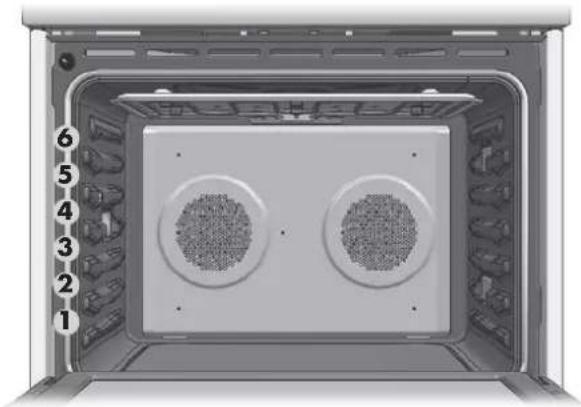
RACK POSITION
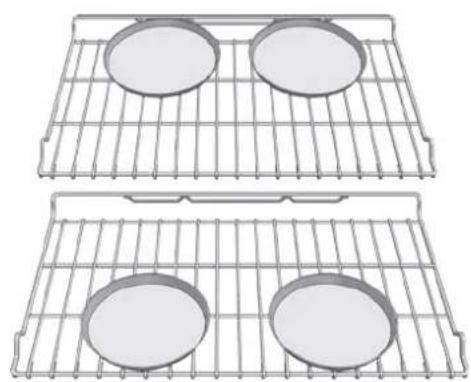
MULTIPLE RACK PAN PLACEMENT
Rack 3
Rack 1
Quick and easy recipe tips
Converting from standard BAKE to CONVECTION BAKE:
- Reduce the temperature by 25^ (15^) .
- Use the same baking time as Bake mode if under 10 to 15 minutes.
- Foods with a baking time of less than 30 minutes should be checked for doneness 5 minutes earlier than in standard bake recipes.
If food is baked for more than 40 to 45 minutes, bake time should be reduced by 25% .
Convection BakeChart
Reduce standard recipe temperature by 25^ (15^) for Convection Bake.
Temperatures have been reduced in this chart.
| Convection Bake Chart - CONVECTION CAVITY | |||
| FOOD ITEM RACK POSITION TEMP. °F (°C) | (PREHEATED OVEN) | TIME (MIN) | |
| CAKE | |||
| Cupcakes 2325 (160) 20 - 22 | |||
| Bundt Cake 1325 (160) 43 - 50 | |||
| Angel Food 1325 (160) 43 - 47 | |||
| PIE | |||
| 2 crust, fresh, 9" | 2 | 350 - 400 (175 - 205) | 40 - 52 |
| 2 crust, frozen fruit, 9" | 2 | 350 (175) | 68 - 78 |
| COOKIES | |||
| Sugar | 2 | 325 - 350 (160 - 175) | 9 - 12 |
| Chocolate Chip | 2 | 325 - 350 (160 - 175) | 8 - 13 |
| Brownies | 2325 (160) 29 - 36 | ||
| BREADS | |||
| Yeast bread loaf, 9x5 | 2 | 350 (175) | 18 - 22 |
| Yeast rolls 2350 - 375 | (175 - 190) 12 - 15 | ||
| Biscuits | 2 | 375 (190) | 8 - 10 |
| Muffins | 2 | 400 (205) | 17 - 21 |
| PIZZA | |||
| Frozen | 2 | 375 - 425 (190 - 220) | 23 - 26 |
| Fresh | 2450 | (232) 15 - 18 | |
| Convection Bake Chart - DOUBLE CONVECTION CAVITY | |||
| FOOD ITEM RACK POSITION TEMP. °F (°C) | (PREHEATED OVEN) | TIME (MIN) | |
| CAKE | |||
| Cupcakes 2325 (160) 16 - 18 | |||
| Bundt Cake 1325 (160) | 37 - 43 | ||
| Angel Food 1325 (160) 35 - 39 | |||
| PIE | |||
| 2 crust, fresh, 9" | 2 | 350 - 400 (175 - 205) | 35 - 45 |
| 2 crust, frozen fruit, 9" | 2 | 350 (175) | 68 - 78 |
| COOKIES | |||
| Sugar | 2 | 325 - 350 (160 - 175) | 6 - 9 |
| Chocolate Chip | 2 | 325 - 350 (160 - 175) | 8 - 13 |
| Brownies | 2325 (160) 29 - 36 | ||
| BREADS | |||
| Yeast breadloaf, 9x5 | 2 | 350 (175) | 18 - 22 |
| Yeast rolls | 2 | 350 - 375 (175 - 190) | 12 - 15 |
| Biscuits | 2 | 375 (190) | 6 - 8 |
| Muffins | 2400 | (205) 13 - 16 | |
| PIZZA | |||
| Frozen | 2 | 375 - 425 (190 - 220) | 23 - 26 |
| Fresh | 2450 | (232) 15 - 18 | |
This chart is a guide. Follow recipe or package directions and reduce temperatures appropriately.
- Do not preheat for Convection Roast.
- Roast in a low-sided, uncovered pan.
- When roasting whole chickens or turkey, tuck wings behind back and loosely tie legs with kitchen string.
- Use the 2-piece broil pan for roasting uncovered.
- Use the probe or a meat thermometer to determine the internal doneness on "END" temperature (see cooking chart).
- Double-check the internal temperature of meat or poultry by inserting meat thermometer into another position.
- Large birds may also need to be covered with foil (and pan roasted) during a portion of the roasting time to prevent overbrowning.
Quick and easy recipe tips
Converting from standard BAKE to CONVECTION ROAST:
- Temperature does not have to be lowered.
- Roasts, large cuts of meat and poultry generally take 10-20% less cooking time. Check doneness early.
-
Casseroles or pot roasts that are baked covered in CONVECTION ROAST will cook in about the same amount of time.
-
The minimum safe temperature for stuffing in poultry is 165^ (75^) .
After removing the item from the oven, cover loosely with foil for 10 to 15 minutes before carving if necessary to increase the final foodstuff temperature by 5^ to 10^ (3^ to 6^)
| Convection Roast Chart-CONVECTION CAVITY | |||||
| MEATSWEIGHT | (lb) | OVEN TEMP. °F (°C) | RACK POSITION | TIME(min. per lb) | INTERNALTEMP. °F (°C) |
| BEEF | |||||
| Rib Roast 4 - 6 325 (160) 2 16 - 20 145 (63) medium rare | |||||
| Rib Eye Roast, (boneless) 4 - 6 325 (160) 2 16 - 20 145 (63) medium rare | 18 - 22 160 (71) | medium | |||
| Rump, Eye, Tip, Sirloin (boneless) | 3 - 6 325 | (160) 2 16 - 20 145 | (63) medium rare | 18 - 22 160 (71) | |
| Tenderloin Roast | 2 - 3 | 400 (205) | 2 | 18 - 22 160 (71) | 145 (63) medium rare |
| PORK | |||||
| Loin Roast (boneless or bone-in) | 5 - 8 | 350 (175) | 2 16 - 20 160 (71) medium | ||
| Shoulder | 3 - 6 | 350 (175) | 2 | 20 - 25 | 160 (71) medium |
| POULTRY | |||||
| Chicken whole | 3 - 4 | 375 (190) | 2 | 18 - 21 | 180 (82) |
| Turkey, not stuffed | 12 - 15 | 325 (160) | 1 | 10 - 14 | 180 (82) |
| Turkey, not stuffed | 16 - 20 | 325 (160) | 1 | 9 - 11 | 180 (82) |
| Turkey, not stuffed | 21 - 25 | 325 (160) | 1 | 6 - 10 | 180 (82) |
| Turkey Breast | 3 - 8 325 | (160) | 1 | 15 - 20 170 (77) | |
| Cornish Hen | 1 - 1 1/2 | 350 (175) | 2 | 45 - 75 total | 180 (82) |
| LAMB | |||||
| Half Leg | 3 - 4 | 325 (160) | 2 | 22 - 27 | 160 (71) medium |
| Whole Leg | 6 - 8 | 325 (160) | 1 | 28 - 33 | 170 (77) well |
| 22 - 27 | 160 (71) medium | ||||
| 28 - 33 | 170 (77) well | ||||
| Convection Roast Chart-DOUBLE CONVECTION CAVITY | |||||
| MEATSWEIGHT | (lb) | OVEN TEMP. °F (°C) | RACK POSITION | TIME(min. per lb) | INTERNALTEMP. °F (°C) |
| BEEF | |||||
| Rib Roast 4 - 6 325 (160) 218 - 22 145 (63) medium rare | 20 - 25 160 (71) | medium | |||
| Rib Eye Roast, (boneless) 4 - 6 325 (160) 218 - 22 145 (63) medium rare | 20 - 25 160 (71) | medium | |||
| Rump,Eye, Tip,Sirloin (boneless) | 3 - 6 325 | (160) 218 - 22 145 (63) medium rare | 20 - 25 160 (71) | medium | |
| Tenderloin Roast | 2 - 3 | 425 (220) | 2 | 15 - 20 | 145 (63) medium rare |
| PORK | |||||
| Loin Roast (boneless or bone-in) | 5 - 8 | 350 (175) | 218 - 22 160 (71) medium | ||
| Shoulder | 3 - 6 | 350 (175) | 2 | 20 - 25 | 160 (71) medium |
| POULTRY | |||||
| Chicken whole | 3 - 4 | 375 (190) | 2 | 20 - 23 | 180 (82) |
| Turkey, not stuffed | 12 - 15 | 325 (160) | 1 | 10 - 14 | 180 (82) |
| Turkey, not stuffed | 16 - 20 | 325 (160) | 1 | 9 - 11 | 180 (82) |
| Turkey, not stuffed | 21 - 25 | 325 (160) | 1 | 6 - 10 | 180 (82) |
| Turkey Breast | 3 - 8 325 | (160) | 1 | 15 - 20 | 170 (77) |
| Comish Hen | 1 - 1½ | 350 (175) | 2 | 45 - 75 total | 180 (82) |
| LAMB | |||||
| Half Leg | 3 - 4 | 325 (160) | 2 | 20 - 27 | 160 (71) medium |
| 25 - 32 170 (77) | well | ||||
| Whole Leg | 6 - 8 | 325 (160) | 1 | 20 - 27 | 160 (71) medium |
| 25 - 32 170 (77) | well | ||||
Cooking times are indicative and also depend on the thickness and the starting temperature of the meat before cooking
- Place rack in the required position needed before turning on the oven.
- Use Convection Broil mode with the oven door closed.
- Don't preheat oven.
- Use the 2-piece broil pan.
- Turn meats once halfway through the cooking time (see convection broil chart).
| Convection Broil Chart - CONVECTION CAVITY | |||||
| FOOD AND THICKNESS RACK | POSITION | BROIL SETTING °F (°C) | INTERNAL TEMP. °F (°C) | TIME SIDE 1 (MIN.)* | TIME SIDE 2 (MIN.)* |
| BEEF STEAK (1-1/2" OR MORE) | |||||
| Medium rare 4 450 (235) 145 (65) 9-128-10 | |||||
| Medium 4 450 (235) 160 (71) 11-1310-12 | |||||
| Well 4 450 (235) 170 (77) | 18-20 | 16-17 | |||
| HAMBURGERS MORE THAN 1") | |||||
| Medium | 4 | 550 (290) | 160 (71) | 8-11 | 5-7 |
| Well | 4 | 550 (290) | 170 (77) | 11-13 | 8-10 |
| Poultry | |||||
| Chicken Quarters | 4 | 450 (235) | 180 (82) | 16-18 | 10-13 |
| Chicken Halves | 3 | 450 (235) | 180 (82) | 25-27 | 15-18 |
| Chicken Breasts | 4 | 450 (235) | 170 (77) | 13-15 | 9-13 |
| PORK | |||||
| Pork Chops (11/4" or more) | 4 | 450 (235) | 160 (71) | 12-14 | 11-13 |
| Sausage - fresh | 4 | 450 (235) | 160 (71) | 4-6 | 3-5 |
- Broiling and convection broiling times are approximate and may vary slightly.
Cooking times are indicative and also depend on the thickness and the starting temperature of the meat before cooking.
| Convection Broil Chart-DOUBLE CONVECTION CAVITY | |||||
| FOOD AND THICKNESS RACK | POSITION | BROIL SETTING °F (°C) | INTERNAL TEMP. °F (°C) | TIME SIDE1 (MIN.)* | TIME SIDE2 (MIN.)* |
| BEEF STEAK (1-1/2" OR MORE) | |||||
| Medium rare 4 450 (235) 145 (65) | 11- | 13 10 - 12 | |||
| Medium | 4 | 450 (235) | 160 (71) | 15 - 17 | 13 - 15 |
| Well 4 450 (235) 170 (77) | 16 - 18 | 13 - 15 | |||
| HAMBURGERS (MORE THAN 1") | |||||
| Medium | 4 | 550 (290) | 160 (71) | 9 - 11 | 5 - 8 |
| Well | 4 | 550 (290) | 170 (77) | 11 - 13 | 8 - 10 |
| Poultry | |||||
| Chicken Quarters | 4 | 450 (235) | 180 (82) | 18 - 20 | 13 - 15 |
| Chicken Halves | 3 | 450 (235) | 180 (82) | 25 - 27 | 15 - 18 |
| Chicken Breasts | 4 | 450 (235) | 170 (77) | 14 - 16 | 10 - 14 |
| PORK | |||||
| Pork Chops (1¼" or more) | 4 | 450 (235) | 160 (71) | 13 - 15 | 12 - 14 |
| Sausage - fresh | 4 | 450 (235) | 160 (71) | 4 - 6 | 3 - 5 |
-
Broiling and convection broiling times are approximate and may vary slightly.
Cooking times are indicative and also depend on the thickness and the starting temperature of the meat before cooking. -
Dehydrating can be done using the Dehydrate mode. A lower temperature is used and the circulating heated air slowly removes the moisture for food preservation.
- The Dehydrate mode temperature is pre-programmed at 140^ (60^)
- The Dehydrate mode temperatures available are 120^ (50^) to 160^ (70^) .
- Multiple racks can be used simultaneously.
- Some foods require as much as 14-15 hours of time to fully dehydrate.
- Consult a food preservation book for specific times and the handling of various foods.
- This mode is suitable for a variety of fruits, vegetables, herbs and meat strips.
- Drying screens can be purchased at specialty kitchen shops.
- By using paper towels, some food moisture can be absorbed before dehydrating begins (such as with sliced tomatoes or sliced peaches).
| Dehydrate Chart | |||
| FOOD PREPARATION APPROXIMATE | DRYING TIME* (hrs) | TEST FOR DONENESS | |
| FRUIT | |||
| Apples | Dipped in ¼ cup lemon juice and 2 cups water, ¼ slices | 11 - 15 Slightly pliable | |
| Bananas | Dipped in ¼ cup lemon juice and 2 cups water, ¼ slices | 11 - 15 Slightly pliable | |
| Cherries | Wash and towel dry. For fresh cherries, remove pits | 10 - 15 Pliable, leathery, chewy | |
| Oranges Peels and slices | ¼ slices of orange; orange part of skin thinly peeled from oranges | Peels: 2 - 4 Slices: 12 - 16 | Orange peel: dry and brittle Orange slices: skins are dry and brittle, fruit is slightly moist |
| Pineapple rings | Towel dried | Canned: 9 - 13 Fresh: 8 - 12 | Soft and pliable |
| Strawberries | Wash and towel dry. Sliced ½" thick, skin (outside) down on rack | 12 - 17 Dry, brittle | |
| VEGETABLE | |||
| Peppers | Wash and towel dry. Remove membrane of pepper, coarsely chopped about 1" pieces | 16 - 20 | Leathery with no moisture inside |
| Mushrooms | Wash and towel dry. Cut of stem end. Cut into 1/8" slices | 7 - 12 Tough and leathery, dry | |
| Tomatoes | Wash and towel dry. Cut this slices, 1/8" thick, dry well | 16 - 23 Dry, brick red color | |
| HERBS | |||
| Oregano, sage parsley and thyme, and fennel | Rinse and dry with paper towel | Dry at 120°F (60°C) 3 - 5 Crisp and brittle | |
| Basil | Use basil leaves 3 to 4 inches from top. Spray with water, shake off moisture and pat dry | Dry at 120°F (60°C) 3 - 5 Crisp and brittle | |
- Place rack in the required position needed before turning on the oven.
- Use Broil mode with the oven door closed.
- Preheat oven for 5 minutes before use.
- Use the 2-piece broil pan.
- Turn meats once halfway through the cooking time (see convection broil chart).
| Broil Chart | ||||||
| FOOD AND THICKNESS RACK | BROIL SETTING | INTERNAL TEMP. °F (°C) | TIME SIDE 1 (MIN.)* | TIME SIDE 2 (MIN.)* | ||
| BEEF | ||||||
| Steak (3/4"-1") | ||||||
| Medium rare 55145) (63) 5-74-4 | ||||||
| Medium | 5 | 5 | 160 | (71) | 6 - 8 | 5 - 7 |
| Well | 5 | 5 | 170 | (77) | 8 - 10 | 7 - 9 |
| HAMBURGERS (3/4"-1") | ||||||
| Medium | 4 | 5 | 160 | (71) | 8 - 11 | 6 - 9 |
| Well | 4 | 5 | 170 | (77) | 10 - 3 | 8 - 10 |
| Poultry | ||||||
| Breast (bone-in) | 4 | 4 | 170 | (77) | 0 - 2 | 8 - 10 |
| Thigh (very well done) | 4 | 3 | 180 | (82) | 28 - 30 | 13 - 15 |
| PORK | ||||||
| Pork Chops (1") | 5 | 5 | 160 | (71) | 7 - 9 | 5 - 7 |
| Sausage - fresh | 5 | 5 | 160 | (71) | 5 - 7 | 3 - 5 |
| Ham Slice (1/2") | 5 | 5 | 160 | (71) | 4 - 6 | 3 - 5 |
| SEAFOOD | ||||||
| Fish Filets, 1" | Cook until opaque & flakes easily with fork | 10 - 14 Do not turn | ||||
| Buttered | 4 | 4 | ||||
| LAMB | ||||||
| Chops (1") | ||||||
| Medium Rare | 5 | 5 | 145 | (63) | 5 - 7 | 4 - 6 |
| Medium | 5 | 5 | 160 | (71) | 6 - 8 | 4 - 6 |
| Well | 5 | 5 | 170 | (77) | 7 - 9 | 5 - 7 |
| BREAD | ||||||
| Garlic Bread, 1" slices | 45 | 2 - 2.30 | ||||
| Garlic Bread, 1" slices | 35 | 4 - 4 | ||||
- Broiling and convection broiling times are approximate and may vary slightly
Cooking times are indicative and also depend on the thickness and the starting temperature of the meat before cooking.
| Food Service Temperature Guidelines from FSIS (USDA food Safety & Inspection Service) | |||
| 140°F (60°C) | Ham, precooked (to Reheat) | 165°F (74°C) | Stuffing (cooked alone or in bird) |
| 145°F (63°C) | Fresh beef, Veal, Lamb (medium rare) | Leftovers & Casseroles | |
| 160°F (71°C) | Ground Meat & Meat mixtures (Beef, Pork, Veal Lamb) | 170°F (77°C) | Fresh beef, Veal, Lamb (well done) |
| Fresh beef, Veal, Lamb (medium) | Poultry breast | ||
| Fresh Pork (medium) | Fresh Pork (well done) | ||
| Fresh Ham (raw) | 180°F (82°C) | Chicken and Turkey (Whole) | |
| Egg Dishes | Poultry (thighs and wings) | ||
| 165°F (74°C) | Ground Meat & Meat mixtures (Turkey, Chicken) | Duck and Goose | |
Note: Eggs (alone, not used in a recipe) - cook until yolk & white are firm
The Sabbath Mode function of your oven complied with Jewish laws. This function allows the oven to perform only the static function.
When the Sabbath function is selected, the following functions are disabled:
Oven lights
- All the functions except ON/OFF and the temperature setting
- Meat Probe Function
- Timed cooking function
- Timer function
- The icon on the display screen is steady and not animated as in the case of traditional cooking modes.
- Display screen and key acoustic warnings.
To set the Sabbath Mode function, switch ON the oven and select the Sabbath function by means of the [FUNCTION] knob and confirm with the same knob.
The function starts by showing the icon on the display screen.
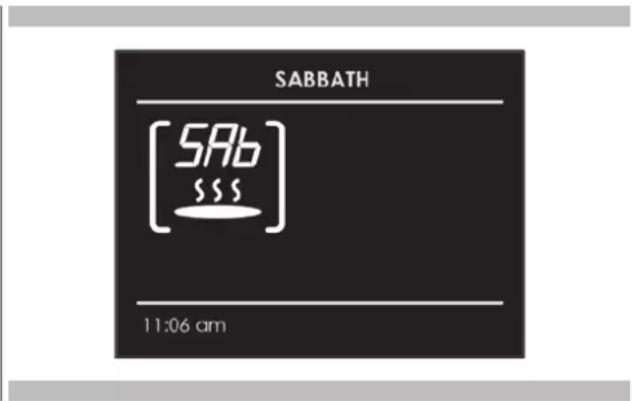
NOTE The function lasts at most 72 hours.
The temperature can be set at any time from 120^ (50^) to 550^ (290^) with a preset of 140^ (60^) . The function can be disabled at any time by pressing the OFF key.
Self-Cleaning the Oven
This oven features a pyrolytic self-cleaning function that eliminates the difficult and time consuming manual scrubbing of the oven interior. During self-cleaning, the oven uses a very high temperature (approx. 885^ / 470^ ) to burn away food soil and grease.
- Do not use the cooktop during the oven self cleaning cycle.
- Only one oven at a time can be set to Self-Clean.
- It is common to see smoke and/or an occasional flame-up during the Self-Clean cycle, depending on the content and amount of soil remaining in the oven. If a flame persists, turn off the oven and allow it to cool before opening the door to wipe up the excessive food soil.
- The door latch is automatically activated after selecting the Self-Clean cycle. The "AUTO LOCK" text will appear in the display. This ensures that the door cannot be opened while the oven interior is at cleaning temperatures.
- The oven light does not operate during this mode.
- During Self-Clean, the kitchen should be well ventilated to help eliminate odors associated with Self-Clean. Odors will lessen with use.
- Three hours is the preset length of cleaning.
- The mode automatically stops at the end of the preset time.
- When the oven heat drops to a safe temperature, the automatic door lock will release and the door can be opened.
Preparing the Oven for Self-Clean
- Remove all utensils and bake ware.
- Remove non-porcelain oven racks. If chromed racks are left in the oven during the self-clean cycle, they will permanently lose the shiny finish and change to a dull dark finish. See Oven Cleaning Chart for proper care, Page 38.
- Wipe up any soft soil spills and grease with paper towels. Excess grease will cause flames and smoke inside the oven during self-cleaning.
- Review illustration below. Some areas of the oven must be cleaned by hand before the cycle begins. They do not get hot enough during the cleaning cycle for soil to burn away. Use a soapy sponge or plastic scrubber or a detergent-filled S.O.S. pad. Hand-clean the oven door edge, oven front frame and up to 1 - 1 / 2 " (2-3 cm) inside the frame with detergent and hot water. Do not rub the gasket on oven. Clean the interior of the oven door window by hand. The Rinse all areas thoroughly then dry.
- Be sure oven interior lights are turned off and the light bulbs and lens covers are in place. See page 41.
Hand clean frame area outside gasket
DO NOT hand clean gasket
Hand clean door area outside gasket
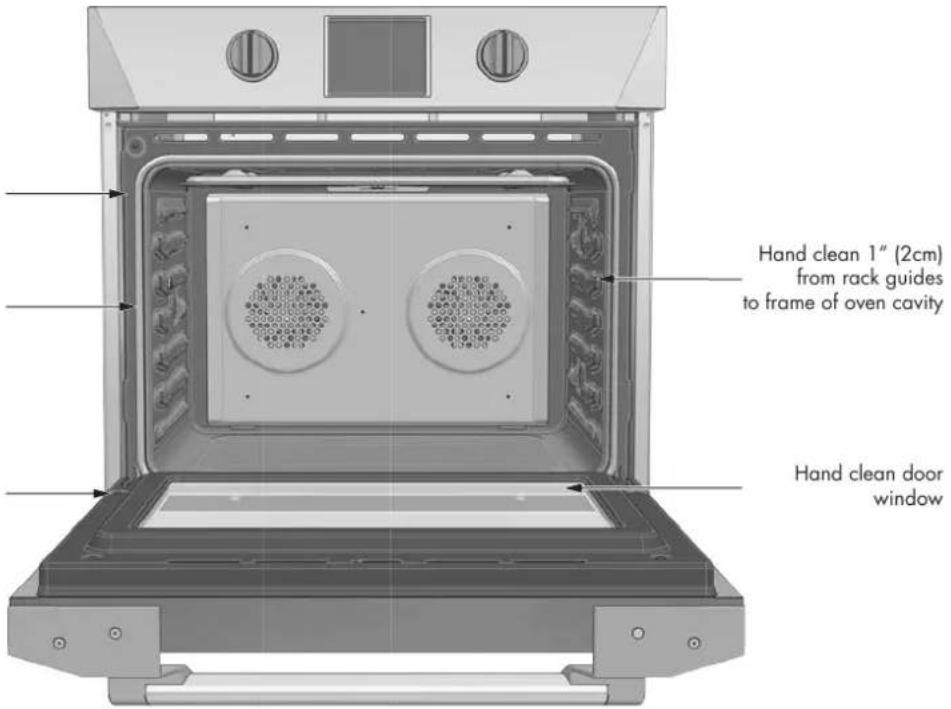
CLEANING THE OVEN
To Set the Self-Clean Mode
- Press the ON/OFF knob and select the icon [ind then confirm with the same knob.
- A message will appear on the screen prompting simultaneous rotation of the knobs followed by removal of all the objects and accessories from the compartment.
- Press the [FUNCTION] knob to start door lock and cleaning cycle.
- The clean time is displayed automatically, its standard value is 3 hours (min. 2h - max 4h).
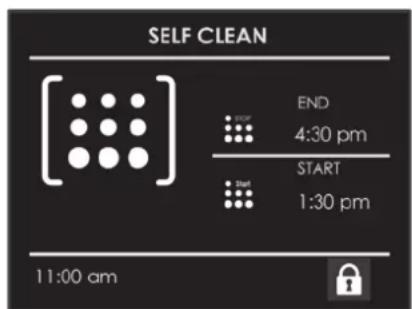
- At the end of the programmed cleaning time, the oven will automatically turn off.
- To stop the cleaning mode at any moment, press ON/OFF knob.
- The Self Cleaning cycle cannot be selected if the door is open.
- If the door is in the open position when the function has already been selected and the [FUNCTION] knob is pressed the latch doesn't move, the "PADLOCK" icon will flash until the door will be closed and the lock motor stops. When the "CLOSED PADLOCK" it is displayed, the door cannot be opened.
- Check that the door has been locked, if door does not lock, press ON/OFF knob and do not start self-clean; phone for service.
- Do not attempt to open the door while the cleaning cycle is running and the door is locked.
To Change the Cleaning Time
- To change the setting from 3 hours, select 4 either 2 hours for light soil immediately after starting.
- To change the hours, rotate the [FUNCTION] knob to the RIGHT and select icon, (the hours will flash), use the [FUNCTION] knob to change the value, than confirm by pressing the [FUNCTION] knob.
- Automatically the minutes will flash, use the [FUNCTION] knob to change the value, than confirm by pressing the [FUNCTION] knob.
To Delay the Start of Cleaning
- Follow steps 1 through 3 above.
- Touch the icon and verify that "STOP TIME" appears on the display. The hours will begin flashing, use the [FUNCTION] knob to change the value, than confirm by pressing the [FUNCTION] knob.
- Automatically the minutes will flash, use the [FUNCTION] knob to change the value, than confirm by pressing the [FUNCTION] knob.
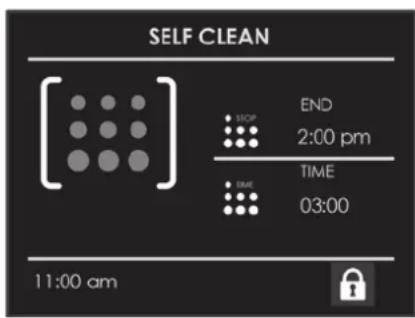
- When the delay time expires, self-cleaning will start.
- At the end of the programmed cleaning time, the oven will automatically turn off.

CAUTION
Keep in mind that the oven door will remain locked until it is safe enough to open. The lock symbol will disappear from the display when the door lock is released.
You will still need to exercise caution when the door lock is released because the inside of the oven may still be hot.
After the self-clean cycle is complete the oven control monitoring the internal temperature and the following messages will be displayed:
From the 460^ / 860^ to 270^ / 518^ = "End Self Cleaning
From the 270^ / 518^ to 50^ / 122^ = "Waiting to Clean
From the 50^ / 122^ to 25^ / 77^ = Remove Residues" (Press ON/OFF key to clear the message).
You may notice a powder ash residue in the bottom of the oven after self-cleaning. This condition is normal. Use a damp cloth or sponge to wipe up the residue after the oven cools down.
Self-cleaning Tips:
If any soil remains in the oven after the self-clean cycle is complete, you may repeat the cycle if you want.
Self-clean the oven regularly to prevent excessive soil buildup. Doing so will make the self-clean cycle work better and reduce smoke and odors.
How to Use the Oven Cleaning Chart
- Locate the number of the part to be cleaned in the illustration on this page.
-
Find the part name in the chart.
-
Use the cleaning method in the left column if the oven is black or white.
-
Use the cleaning method in the right column if the oven is stainless steel.
-
Match the letter with the cleaning method on following page.

PART LIST
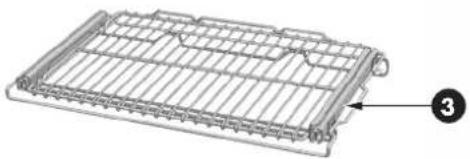
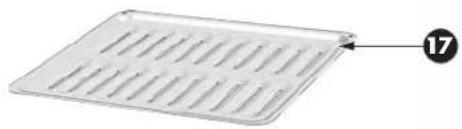
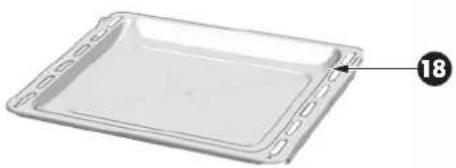
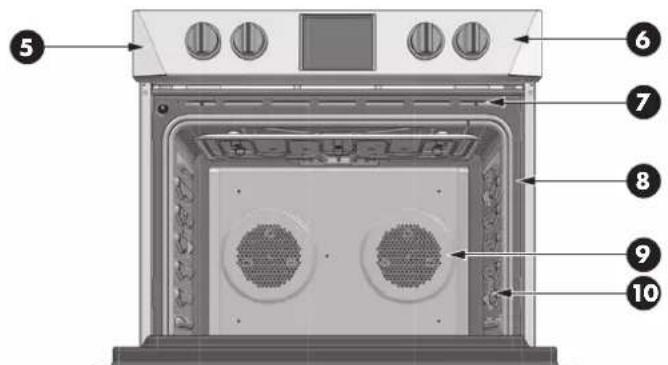
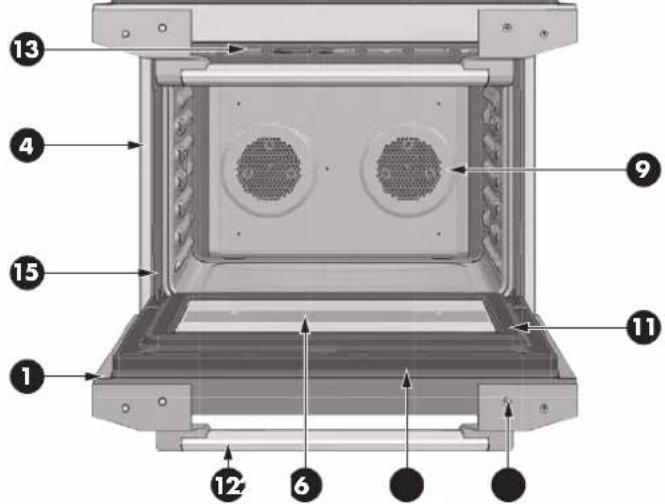
Cleaning Chart
| Part | Cleaning Method | Part | Cleaning Method | ||||
| Black & White Oven | Stainless Stell Oven | Black & White Oven | Stainless Stell Oven | ||||
| 1 Door Frame E E 11 Interior Oven Door E E | |||||||
| 2 | Interior Door Windows | F | F | 12 | Door Handle | D | D |
| 3 | Removable Oven Racks | A or E | A or E | 13 | Door Cooling Vent | E | E |
| 4 | Slide Trim | D | D | 14 | Door Front | C&D | C&G |
| 5 | Control Panel Trim | C | G | 15 | Oven Trim | D | D |
| 6 | Control Panel | C | C | 16 | End Caps | D | D |
| 7 | Oven Cooling Vents | D | D | 17 | Broil Pan Rack | E | E |
| 8 | Oven Front Frame | E | E | 18 | Broil pan Bottom | E | E |
| 9 | Oven Cavity | E | E | 19 | Extendable rack | A | A |
| 10 | Mesh Gasket | B | B | ||||
The entire oven can be safely cleaned with a soapy sponge, rinsed and dried. If stubborn soil remains, follow the recommended cleaning methods below.
Always use the mildest cleaner that will do the job.
- Rub metal finishes in the direction of the grain.
- Use clean, soft clothes, sponges or paper towels.
- Rinse thoroughly with a minimum of water so it does not drip into door slots.
- Dry to avoid water marks.
The cleaners listed below indicate types of products to use and are not being endorsed. Use all products according to package directions.
| Part Cleaning Method | |
| A Chrome Plated | Wash with hot sudsy water. Rinse thoroughly and dry. Or, gently rub with Soft Scrub®, Bon-Ami®, Comet®, Ajax®, Brillo® or S.O.S.® pads as directed. Easy Off® or Dow® Oven Cleaners (cold oven formula) can be used, but may cause darkening and discoloration. Racks may be cleaned in the oven during the self-clean mode. However, chromed racks will lose their shiny finish and permanently change to a metallic gray. |
| B Fiberglass Knit DO NOT HAND CLEAN GASKET. | |
| C Glass | Spray Windex® or Glass Plus® onto a cloth first then wipe to clean. Use Fantastik® or Formula 409® to remove grease spatters. |
| D Painted | Clean with hot sudsy water or apply Fantastik® or Formula 409® first to a clean sponge or paper towel and wipe clean. Avoid using powdered cleansers and steel wool pads. |
| E Porcelain | Immediately wipe up acidic spills like fruit juice, milk and tomatoes with a dry towel. Do not use a moistened sponge/towel on hot porcelain. When cool, clean with hot sudsy water or apply Bon-Ami® or Soft Scrub® to a damp sponge. Rinse and dry. For stubborn stains, gently use Brillo® or S.O.S.® pads. It is normal for porcelain to craze (fine lines) with age due to exposure from heat and food soil. |
| F Reflective Glass | Clean with hot sudsy water and sponge or plastic scrubber. Rub stubborn stains with vinegar, Windex®, ammonia or Bon-Ami®. DO NOT USE HARSH ABRASIVES. |
| G Stainless | Always wipe or rub with grain. Clean with a soapy sponge then rinse and dry. Or, wipe with Fantastik® or Formula 409® sprayed onto a paper towel. Protect and polish with Stainless Steel Magic® and a soft cloth. Remove water spots with a cloth dampened with white vinegar. Use Zud®, Cameo®, Bar Keeper's Friend® or RevereWare Stainless Steel Cleaner®, to remove heat discoloration. |
| H Probe (if present) | Clean probe by hand with detergent and hot water. Then rinse and dry. Do not so or clean in dishwasher. |

WARNING
- Make sure oven is cool and power to the oven has been turned off before removing the door. Failure to do so could result in electrical shock or burns.
- The oven door is substantial. Use both hands to remove the oven door. The door front is glass of which there are 4 panes.
- Handle carefully to avoid breakage.
- Grasp only the sides of the oven door. Do not grasp the handle as it may swing in your hand and cause damage or injury.
- Failure to grasp the oven door firmly and properly could result in personal injury or product damage.
To Remove Door
- Open the door completely.
- Flip the hinge security clip on each hinge towards you (1).
- Hold the door firmly on both sides using both hands and close the door until you feel it stop at the security clip.
- Hold firmly; the door is heavy. Lift and pull towards you - you may have to play with it a little to feel the hinges disengage from the oven frame.
- Place the door in a convenient location.
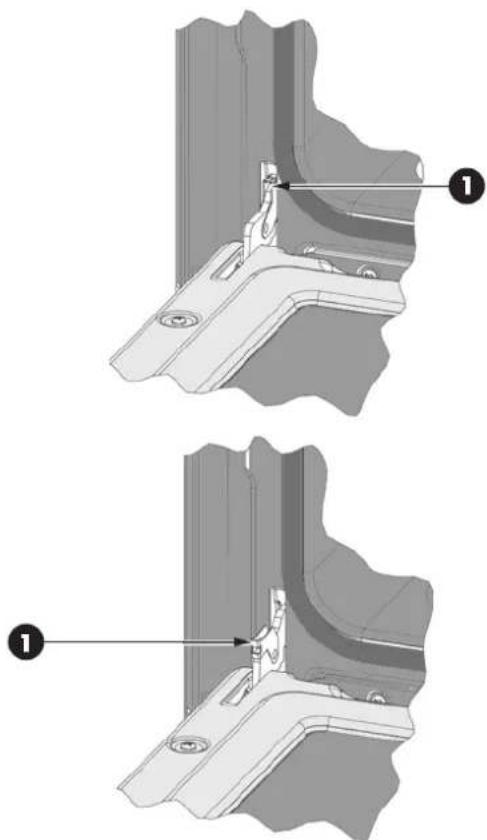
TOREMOVE THE DOOR
To Replace Door
- Insert the upper arms (2) of both hinges into the slots (3). The recesses (4) must hook on the lips (5).
- Move the hinge security clips (1) back into position. If the security clips cannot be easily moved back to their normal operating position, ie. the clips hit the frame, then the door is not correctly seated. Bring the security clips back out and try to reseat the door - you will feel it clip in / drop slightly when the hinges engage the frame correctly.
- Close and open the door slowly to assure that it is correctly and securely in place.
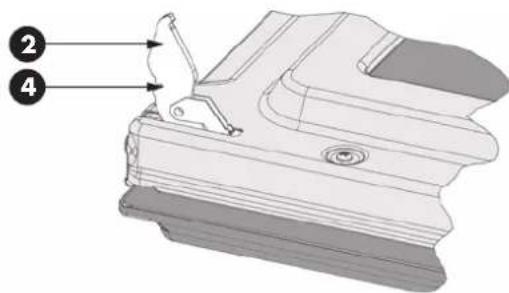
TO REPLACE DOOR
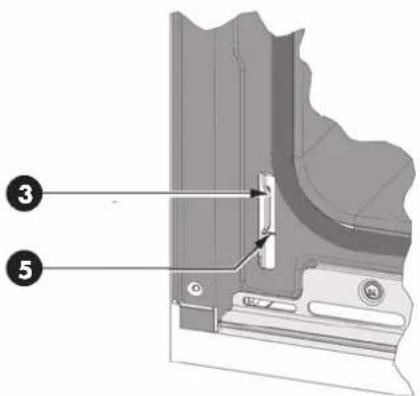
Each oven is equipped with three halogen lights (per cavity) located in the lateral walls of the oven.
- The lights are switched on when the door is opened or when the oven is in a cooking cycle
- The oven lights are not illuminated during SELF-CLEAN.
Each light assembly consists of a removable lens, a light bulb as well as a light socket housing that is fixed in place. See figure on this page.
Light bulb replacement is considered to be a routine maintenance item.
To Replace a Light Bulb
- Read WARNING on this page.
- Turn off power at the main power supply (fuse or breaker box).
- In ovens with lateral rack supports, remove them by unscrewing the four screws.
- Remove the lens between screw and glass using a screw driver.
- Remove the light bulb from its socket by pulling it.
- Replace the bulb with a new one. Avoid touching the bulb with fingers, as oils from hands can damage the bulb when it becomes hot.
- The bulb is halogen: use one with the same type checking Voltage and Wattage.
- Place the lens back on.
- Replace the rack supports if provided is provided with the oven model.
Turn power back on at the main power supply (fuse or breaker box).

WARNING
- Make sure the oven and lights are cool and power to the oven has been turned off before replacing the light bulb(s). Failure to do so could result in electrical shock or burns.
- The lenses must be in place when using the oven.
- The lenses serve to protect the light bulb from breaking.
- The lenses are made of glass. Handle carefully to avoid breakage. Broken glass could cause an injury.

OVENLIGHT
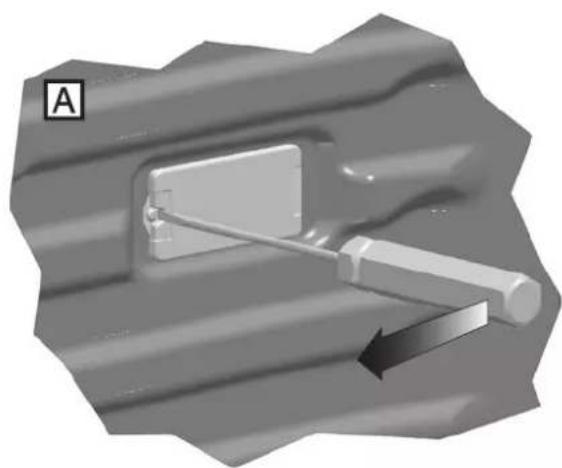
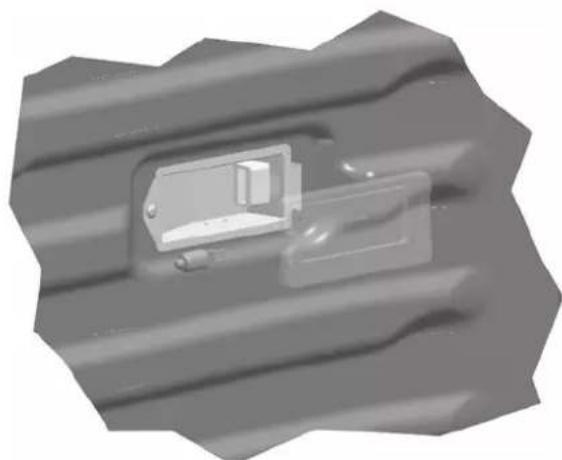
With either Bake or Convection Bake, poor results can occur for many reasons other than a malfunction of the oven. Check the chart below for causes of the most common problems. Since the size, shape and material of baking utensils directly affect the baking results, the best solution may be to replace old baking utensils that have darkened and warped with age and use. Check the Baking Charts from Page 29 to 34 for the correct rack position and baking time
| Baking Problem Cause | |
| Food browns unevenly | - Oven not preheated - Aluminum foil on oven rack or oven bottom - Baking utensil too large for recipe - Pans touching each other or oven walls |
| Food too brown on bottom | - Oven not preheated - Using glass, dull or darkened metal pans - Incorrect rack position - Pans touching each other or oven walls |
| Food is dry or has shrunk excessively | - Oven temperature too high - Baking time too long - Oven door opened frequently - Pan size too large |
| Food is baking or roasting too slowly | - Oven temperature too low - Oven not preheated - Oven door opened frequently - Tightly sealed with aluminum foil - Pan size too small |
| Pie crusts do not brown on bottom or have soggy crust | - Baking time not long enough - Using shiny steel pans - Incorrect rack position - Oven temperature is too low |
| Cakes pale, flat and may not be done inside | - Oven temperature too low - Incorrect baking time - Cake tested too soon - Oven door opened too often - Pan size may be too large |
| Cakes high in middle with crack on top | - Baking temperature too high - Baking time too long - Pans touching each other or oven walls - Incorrect rack position - Pan size too small |
| Pie crust edges too brown | - Oven temperature too high - Edges of crust too thin |
Before calling for service, check the following to avoid unnecessary service charges.
| Oven Problem Problem Solving Steps | |
| F03 or F04 Error appears in the display window. | A problem with latch mechanism occurred. Remove power and turn it back on again after a few seconds. The oven should run a latch auto-test. If condition persists, note the code number and call an authorized service. |
| Other F__Error appears in the display window. | Remove power and turn it back on again after a few seconds. If condition persists, note the code number and call an authorized service. |
| The oven display stays OFF Turn off power at the main power supply (fuse or breaker box). Turn breaker back on. If condition persists, call an authorized service center. | |
| Cooling fan continues to run after oven is turned off | The fan turns off automatically when the electronic components have cooled sufficiently. |
| Oven door is locked and will not release, even after cooling | Turn the oven off at the circuit breaker and wait a few seconds. Turn breaker back on. The oven should reset itself and will be operable. |
| Oven is not heating | Check the circuit breaker or fuse box to your house. Make sure there is proper electrical power to the oven. Make sure the oven temperature has been selected. |
| Oven is not cooking evenly | Check oven calibration. Adjust calibration if necessary (see To Set Temperature, Page 14). Refer to cook charts for recommended rack position. Always reduce recipe temperature by 25°F (15°C) when baking with Convention Bake mode. |
| Oven temperature is too hot or too cold | The oven thermostat needs adjustment. See Calibrating Oven Temperature, Page 14. |
| Oven light is not working properly | Replace or reinsert the light bulb if loose or defective. See Page 41. Touching the bulb with fingers may cause the bulb to burn out. |
| v Check for obstruction in oven door. Check to see if hinge is bent or door switch broken. | |
| Cannot remove lens cover on light | There may be a soil build-up around the lens cover. Wipe lens cover area with a clean dry towel prior to attempting to remove the lens cover. |
| Oven will not Self-Clean properly | Allow the oven to cool before running Self-Clean. Always wipe out loose soils or heavy spill-over before running Self-Clean. If oven is badly soiled, set oven for a four-hour Self-Clean. See Preparing the Oven to Self-Clean, Page 36. |
| Clock and timer are not working properly | Make sure there is proper electrical power to the oven. See the Clock and Timer sections on Page 14. |
| Excessive moisture | When using Bake mode, preheat the oven first. Convection Bake and Convection Roast will eliminate any moisture in oven (this is one of the advantages of convection). |
| Porcelain chips | When oven racks are removed and replaced, always tilt racks upward and do not force them to avoid chipping the porcelain.. |
| Is the control knob set to the proper heat level? | See “Setting the Control Knobs” section. |
Service Data Record
For authorized service or parts information see "Fulgor Warranty ..".
The location of the serial tag on the product can be seen when the oven door is opened. It is located on the left side, centered vertically just inside the oven cavity. See Page 7. Now is a good time to write this information in the space below provided. Keep your invoice for warranty validation.
Service Data Record
Model Number
Serial Number
Date of Installation or Occupancy
FORZA WARRANTY U.S.A.
FREE STANDING GAS RANGES-WALL OVENS-RANGE TOPS-DISHWASHERS-RANGE HOODS
The warranties provided by Forza in this statement apply exclusively to Forza appliances and accessories sold as new products to the original owner by aForza authorized distributor, retailer, dealer or service center and installed in the United States.
The warranties provided in this statement are not transferable and have validity from the date of original purchase.
Duration of warranty:
For twenty-four (24) months from the original date of purchase, the Forza warranty covers all parts and labor to repair or replace, under normal residential use, any part of the product proving to be defective in material or workmanship as a result of the original manufacturing process. Repair service must be performed by a Forza Authorized Service Center during normal working hours.
Responsibilities of the buyer:
When writing or calling about a service problem, please include the following information:
- Your name, address and telephone number;
- Appliance model and serial number;
Name of your dealer; - A clear description of the problem you are having;
Proof of purchase (sales receipt).
Cosmetic warranty:
Forza will cover parts showing cosmetic defects (doors, handles, glass, product frames, racking and interior, exterior surfaces) in material and workmanship for a period of seven (7) days after the delivery of the unit. This coverage will include scratches, stains, surface imperfections on stainless steel, paint and porcelain, with the exclusion of slight differences in color due to materials and painting/enameling technologies. However, slight color variation may be noticed because of the inherent differences in painted parts and porcelain parts as well as differences in kitchen lighting, product locations, and other factors. Therefore, this warranty does not apply to color variation attributable to such factors.
WHAT IS NOT COVERED:
1) The product used in any commercial application.
2) Service trips to your home, during which no fault is found.
3) Repair service provided by any service agency that is not Forza authorized.
4) Damage or repair service to correct any service provided by an unauthorized agency.
5) Damage or repair service to correct the use, addition or substitution of any original part with an unauthorized part.
6) Installation not in accordance with local electrical codes or plumbing codes.
7) Defects or damage due to improper storage of the product.
8) Damages due to failure in following the manufacturer's recommended care, cleaning and maintenance instructions; in particular, damages to the oven and/or the cooktop if they have not been cared and cleaned according to these instructions.
9) Defects, damages or missing parts on products sold out of the original factory packaging or from displays.
10) Service calls or repairs to correct the installation of the product and/or related accessories, calibrations and normal adjustments after installation and setup, including burner adjustments.
11) Service calls to connect, convert or otherwise repair the electrical wiring and/or gas line to properly use the product.
12) Service calls to provide instructions on the use of a Forza product.
13) Repair or failure of the product if it is abused, misused, used improperly, used for other than the intended purpose or if used commercially/industrially.
14) Damage or repairs caused by the use of harsh chemicals or cleaning products improperly applied.
15) Replacement of wear and tear parts.
16) Replacement of house fuses or resetting of circuit breakers.
17) Damages to anything situated next to the product, including, but not limited to, ceiling, floor or cabinetry.
18) Defects and damages arising from accidents, alterations, misuse, abuse, improper installation, or installation that does not conform to instructions given by Forza.
19) Damages occurred during transit, handling and/or installation of the product.
20) Defects and damage arising from external forces beyond the control of Forza such as fire, flood, earthquakes and other acts of God.
21) Forza cannot guarantee the availability of service in areas more than 30 miles from an authorized retailer. In such cases where travel charges are levied, those will be borne by the consumer.
22) This warranty only covers service performed at the location of product installation and will not cover costs associated with repairing off-site unless expressly authorized by Forza nor does it cover the travel costs associated with providing service to remote locations.
23) Replacement filters for ventilation hood recirculating kits are not covered by the product warranty.
24) Products with original serial numbers that have been removed.
25) Replacement light bulbs are not covered by the product warranty.
26) Damages to people or property caused by the product or through its usage.
In the case that the product is will be installed in a remote area, where certified trained technicians are not reasonably available, the customer will be responsible for the transportation costs for the delivery of the product to the nearest authorized service center or for the travel costs of a certified trained technician.
Remote locations/area: are defined as being outside of a 30 miles from any service provider.
Forza reserves the right to revise this warranty at any time.
Forza does not assume any responsibility for incidental or consequential damages. Some states do not allow the exclusion or limitation of incidental or consequential damages, so the above limitation or exclusion may not apply to you. This warranty gives you specific legal rights and you may also have other rights which may vary from state to state.
FORZA WARRANTY U.S.A.
B-STORE/ DISPLAY MODEL
FREE STANDING GAS RANGES-WALL OVENS-RANGE TOPS-DISHWASHERS-RANGE HOODS
The warranties provided by Forza in this statement apply exclusively to Forza appliances and accessories sold to the original owner by a Forza authorized distributor, retailer, dealer or service center and installed in the United States.
The warranties provided in this statement are not transferable and have validity from the date of original purchase.
B-Stock (refurbished product, product returns, 'scratch and dent' products, old stock (defined as more than one year's difference between production date and date of sale to end user, discounted product etc.) and display models (trade shows, dealer, project or distributor showroom display models, etc.) are not considered 'new', in-the- box product and are thus not covered by FORZA standard warranty.
For any functional or cosmetic issue not disclosed by the seller realized at initial inspection / commission of the product: please contact the seller.
Duration of warranty:
FULL NINETY DAY TOTAL PRODUCT WARRANTY
For ninety days from the original date of purchase, the FORZA product warranty covers all parts and labor to repair or replace, under normal residential use, any part of the product proving to be defective in material or workmanship as a result of the original manufacturing process. There is no service or cosmetic warranty of any kind of B-Stock model.
Responsibilities of the buyer: When writing or calling about a service problem, please include the following information:
- Your name, address and telephone number;
- Appliance model and serial number;
- Name of your dealer;
- A clear description of the problem you are having;
Proof of purchase (sales receipt).
WHAT IS NOT COVERED:
1) The product used in any commercial application.
2) Service trips to your home, during which no fault is found.
3) Repair service provided by any service agency that is not Forza authorized.
4) Damage or repair service to correct any service provided by an unauthorized agency.
5) Damage or repair service to correct the use, addition or substitution of any original part with an unauthorized part.
6) Installation not in accordance with local electrical codes or plumbing codes.
7) Defects or damage due to improper storage of the product.
8) Damages due to failure in following the manufacturer's recommended care, cleaning and maintenance instructions; in particular, damages to the oven and/or the cooktop if they have not been cared and cleaned according to these instructions.
9) Defects, damages or missing parts on products sold out of the original factory packaging or from displays.
10) Service calls or repairs to correct the installation of the product and/or related accessories, calibrations and normal adjustments after installation and setup, including burner adjustments.
11) Service calls to connect, convert or otherwise repair the electrical wiring and/or gas line to properly use the product.
12) Service calls to provide instructions on the use of a Forza product.
13) Repair or failure of the product if it is abused, misused, used improperly, used for other than the intended purpose or if used commercially/industrially.
14) Damage or repairs caused by the use of harsh chemicals or cleaning products improperly applied.
15) Replacement of wear and tear parts.
16) Replacement of house fuses or resetting of circuit breakers.
17) Damages to anything situated next to the product, including, but not limited to, ceiling, floor or cabinetry.
18) Defects and damages arising from accidents, alterations, misuse, abuse, improper installation, or installation that does not conform to instructions given by Forza.
19) Damages occurred during transit, handling and/or installation of the product.
20) Defects and damage arising from external forces beyond the control of Forza such as fire, flood, earthquakes and other acts of God.
21) Forza cannot guarantee the availability of service in areas more than 30 miles from an authorized retailer. In such cases where travel charges are levied, those will be borne by the consumer.
22) This warranty only covers service performed at the location of product installation and will not cover costs associated with repairing off-site unless expressly authorized by Forza nor does it cover the travel costs associated with providing service to remote locations.
23) Replacement filters for ventilation hood recirculating kits are not covered by the product warranty.
24) Products with original serial numbers that have been removed.
25) Replacement light bulbs are not covered by the product warranty.
26) Damages to people or property caused by the product or through its usage.
In the case that the product is will be installed in a remote area, where certified trained technicians are not reasonably available, the customer will be responsible for the transportation costs for the delivery of the product to the nearest authorized service center or for the travel costs of a certified trained technician.
Remote locations/area: are defined as being outside of a 30 miles from any service provider.
Forza reserves the right to revise this warranty at any time.
Forza does not assume any responsibility for incidental or consequential damages. Some states do not allow the exclusion or limitation of incidental or consequential damages, so the above limitation or exclusion may not apply to you. This warranty gives you specific legal rights and you may also have other rights which may vary from state to state.
Instruction for initial switch-on 59
Oven Cavity Selection (Double Oven) 59
Instruction for initial switch-on
CEQUINESTPASCOUVERT:
GARANTIE PRODUIT TOTALE QUATRE-VINGT-DIX JOURS
Media-inusual 63^
media 71^
hecha 77^
Cerdo
Chuletas, Asados, Costillas:
media 71^
hecha 77^
Jamón, fresco
71^
Salchichas, frescas
71^