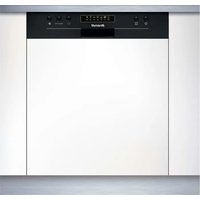
BDB424LB - Dishwasher BRANDT - Free user manual and instructions
Find the device manual for free BDB424LB BRANDT in PDF.


| Product type | Free-standing or integrated dishwasher |
| Brand | Brandt |
| Model | BDB424LB |
| Capacity | 14 place settings |
| Dimensions (H x W x D) | 815 x 598 x 570 mm (door closed) |
| Net weight | Approximately 45 kg |
| Power supply | 220-240 V ~ 50 Hz, 10 A |
| Water pressure | 0.04 - 1 MPa |
| Wash programs | Intensive, Auto, 60 min, Eco, Glasses, Quick |
| Main functions | Delayed start (3/6/9/12 h), Dual zone option (Alt), automatic door opening |
| Water softener setting | 6 levels (H1 to H6) based on water hardness |
| Water consumption (Eco program) | 10 L |
| Energy consumption (Eco program) | 0.849 kWh |
| Eco program duration | 198 min |
| Noise level | Approximately 46 dB(A) |
| Tub material | Stainless steel |
| Safety device | Child lock, overflow protection, grounding |
| Spare parts and repairability | Parts available for 10 years (EU regulation 2019/2022) |
| Maintenance and cleaning | Regular cleaning of filters, spray arms and door seals |
| Included accessories | Cutlery basket, salt funnel, hose support, fixing feet |
| Energy class | E (according to EU regulation 2019/2017) |
Frequently Asked Questions - BDB424LB BRANDT
User questions about BDB424LB BRANDT
0 question about this device. Answer the ones you know or ask your own.
Ask a new question about this device
Download the instructions for your Dishwasher in PDF format for free! Find your manual BDB424LB - BRANDT and take your electronic device back in hand. On this page are published all the documents necessary for the use of your device. BDB424LB by BRANDT.
USER MANUAL BDB424LB BRANDT
natural_image
Underwater view of a glass with bubbles rising, showing water droplets and bubbles (no text or symbols)INSTRUCTION MANUAL EN
Dishwasher
BDB424LW
BDB424LB
BDB424LX

Read this Manual
Dear Customer,
Please carefully read this manual before using the dishwasher, it will help you use and maintain the dishwasher properly.
- Keep this manual for future reference.
■ Pass it on to any subsequent owner of the appliance.
This manual contains sections on safety Instructions, Operating Instructions, Installation Instructions and Troubleshooting Tips, etc.

Before Calling for Service
To review the section on troubleshooting Tips will help you solve some common problems by yourself.
If you cannot solve the problems by yourself, please ask for help from a professional technician.

NOTE:
The manufacturer, following a policy of constant development and updating of the product, may make modifications without giving prior notice.
If lost or out-of-date, you can receive a new user manual from the manufacturer or responsible vendor.
1) Safety Instructions....1-4
2) Quick user guide....5
3) Operation Instructions....6
Control Panel....6
Dishwasher Features....6
4) Prior to first time use....7
A、Water Softener....7
B、Loading the Salt into the Softener....8
C、Filling the Rinse Aid Dispenser....8
D、Function of Detergent 9
5) Preparing and loading dishes....12
Recommendations for loading and unloading the dishwasher....12
Standard loading pattern....13
6) Starting a washing program....14
Wash Cycle Table....14
Turning on the Appliance....14
Changing the Program mid-cycle....15
At the end of the Wash Cycle....15
7) Maintenance and cleaning....16
Filter System....16
Caring for the Dishwasher....17
8) Installation instruction.....18
Installation preparation....18
Aesthetic panel's dimensions and installation.....19
Tension adjustment of the door spring....21
Connection of drain hoses....21
Dishwasher installation steps....22
About Electricity Connecting....23
Cold Water Connection....24
Start of dishwasher....24
9) Troubleshooting Tips....25
Before calling for service....25
Error codes....26
Technical information....27
Loading the baskets
1. IMPORTANT SAFETY INFORMATION

WARNING!
When using your dishwasher, follow the precautions listed below:
■ This appliance is intended to be used in household and similar applications such as:
-staff kitchen areas in shops, offices and other working environments;
-farm houses;
-by clients in hotels, motels and other residential type environments;
-bed and breakfast type environments.
■ This appliance can be used by children aged from 8 years and above and persons with reduced physical, sensory or mental capabilities or lack of experience and knowledge if they have been given supervision or instruction concerning use of the appliance in a safe way and understand the hazards involved.
Children shall not play with the appliance. Cleaning and user maintenance shall not be done by children without supervision.(For EN60335-1)
■ Packaging material could be dangerous for children!
■ This appliance is for indoor household use only.
■ To protect against the risk of electrical shock, do not immerse the unit, cord or plug in water or other liquid.
■ Please unplug before cleaning and performing maintenance on the appliance.
■ Use a soft cloth moistened with mild soap, and then use a dry cloth to wipe it again.
■ This appliance must be earthed. In the event of a malfunction or breakdown, earthing will reduce the risk of an electric shock by providing a path of least resistance of electric current. This appliance is equipped with an earthing conductor plug.
■ The plug must be plugged into an appropriate outlet that is installed and earthed in accordance with all local codes and ordinances.
■ Improper connection of the equipment-earthing conductor can result in the risk of an electric shock.
■ Check with a qualified electrician or service representative if you are in doubt whether the appliance is properly grounded.
■ Do not modify the plug provided with the appliance; If it does not fit the outlet.
■ Have a proper outlet installed by a qualified electrician.
■ Do not abuse, sit on, or stand on the door or dish rack of the dishwasher.
■ Do not operate your dishwasher unless all enclosure panels are properly in place.
■ Open the door very carefully if the dishwasher is operating, there is a risk of water squirting out.
■ Do not place any heavy objects on or stand on the door when it is open. The appliance could tip forward.
■ When loading items to be washed:
1) Locate sharp items so that they are not likely to damage the door seal;
2) Warning: Knives and other tableware with sharp points must be loaded in the basket with their points facing down or placed in a horizontal position.
■Check that the detergent powder is empty after completion of the wash cycle.
■Do not wash plastic items unless they are marked "dishwasher safe" or the equivalent.
■For unmarked plastic items not so marked, check the manufacturer's recommendations.
■Use only detergent and rinse agents recommended for use in an automatic dishwasher.
■Never use soap, laundry detergent, or hand washing detergent in your dishwasher.
■The door should not be left open, since this could increase the risk of tripping.
■If the supply cord is damaged, it must be replaced by the manufacturer or its service agent or a similarly qualified person in order to avoid a hazard.
■During installation, the power supply must not be excessively or dangerously bent or flattened.
■Do not tamper with controls.
■The appliance needs to be connected to the main water valve using new hose sets. Old sets should not be reused.
■The maximum number of place settings to be washed is 14.
■The maximum permissible inlet water pressure is 1MPa.
■The minimum permissible inlet water pressure is 0.04MPa.
Disposal
■ This appliance's packaging materials are recyclable.
Dispose of the packaging into a suitable waste collection container to recycle it.
■ It is prohibited to dispose of this appliance as household waste.
Correct Disposal of this product: this symbol on the product or in its packing indicates that this product may not be treated as household waste. Instead, it should be taken to the appropriate waste collection point for the recycling of electrical and electronic equipment. By ensuring this product is disposed of correctly, you will help prevent potential negative consequences for the environment and human health, which could otherwise be caused by the inappropriate waste handling of this product.
For more detailed information about the recycling of this product, please contact your local council your household waste disposal service, or the shop where you purchased the product.

WARNING!
■ For disposing of package and the appliance please go to a recycling centre. Therefore cut off the power supply cable and make the door closing device unusable.
■ Cardboard packaging is manufactured from recycled paper and should be disposed in the waste paper collection for recycling.
■ By ensuring this product is disposed of correctly, you will help prevent potential negative consequences for the environment and human health, which could otherwise be caused by inappropriate waste handling of this product.
■ For more detailed information about recycling of this product, please contact your local city office and your household waste disposal service.
■ DISPOSAL: Do not dispose this product as unsorted municipal waste. Collection of such waste separately for special treatment is necessary.
2. Quick user guide
For detailed operating method read the corresponding content on the instruction manual.
| Switch on the appliance | Press the On/Off button to switch on the appliance. | |
| Fill the detergent dispenser | Open the flap(marked with A), fill in the main wash detergent, and then close the flap;Pre wash detergent drop into the tank directly;(Follow the user instructions!) | 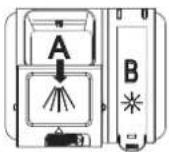 |
| Check the rinse aid level | Refill the rinse aid through the hole below the cap(marked with B)If you need . | 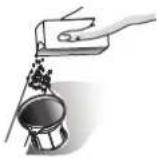 |
| Check the regeneration salt level | (On models with water softener system only.)Electric indicator on control panel (if provided).If there is no salt warning light in the control panel(for some models), you can estimate when to fill the salt intothe softener by the number of cycles the dishwasher has run. | |
| Load the baskets | Scrap off any large amount of leftover food.Soften remnants of burned food in pans, and then load the baskets.Refer to the section entitled "Preparing and Loading Dishes". | |
| Select a programme | Close the door, press the program button until the selected program lights up.(See the section entitled "Operation instruction") | |
| Running the dishwasher | Turn on the water tap. The appliance will start working after 10 seconds. | |
| Changing the programme | 1.A running cycle can only be modified if it has been running for a short time. Otherwise the detergentmay have already been released and the water already drained. If this is the case, the detergentdispenser must be refilled.2.Press the start/pause button to stop the washing, and then press the program button for more than 3seconds to cancel the sunning program.3.Select a new program.4.Restart the dishwasher. | |
| Adding forgotten dishes in the dishwasher. | 1.Press the start/pause button to stop the washing.2.Open the door a little.3.After the spray arms arm stop working, you can open the door completely.4.Add the forgotten dishes.5.Close the door.6.Press the start/pause button, the dishwasher will run after 10 seconds. |  Open the door carefully.Look out for hot steamwhen opening the door! Open the door carefully.Look out for hot steamwhen opening the door! |
| If the appliance is switched off during a wash cycle. | If the appliance is switched off during a wash cycle, when switched on again, please re-select the washingcycle and operate the dishwasher according to the original Power-on state. | |
| Switch off the appliance | When the working cycle has finished, it stops. Turn off the appliance using On/Off button. | |
| Turn off the water tap, unload the baskets | Warning: wait a few minutes (about 15 minutes) before unloading the dishwasher to avoid handling the dishes and utensils while they are still hot and more susceptible to break.The dishes will also dry better. First start unloading the lower basket. | |
3. Operation Instruction

IMPORTANT Toogetotheobestoperformanceofromoyourodishwasher,oreadoallooperatingoinstructions beforeousingoitoforotheofirstotime.
Control Panel
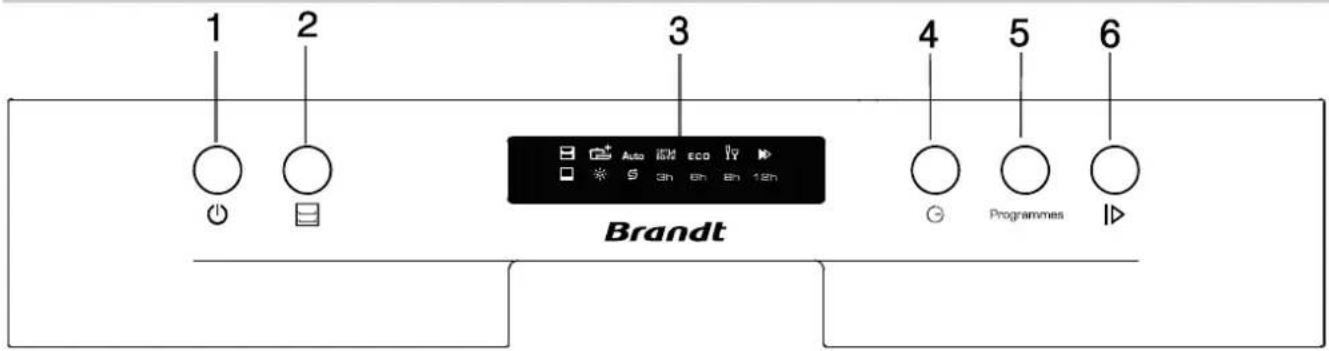
- On/Off Button: To turn on/off the power supply.
-
Alt Button: Dual zone wash function, press the button to select either upper basket or lower basket loaded, and theoresponseoindicatorowilloblink
-
Indicator introduction:
-
Programoindicators: Auto OPTI4 60min ECO
- RinseoAidoindicator Indicates when the dispenser needs to be refilled.
- Addosaltoindicator:5 Indicates when the water saftener needs to be refilled.
- Altofunctionoindicator
-
Delay time:3h 6h 9h 12h
-
DelayoButtonPressotheobuttonotoodelcycle start time.
- Program Button: Pressotheobuttonotooselectoa wash Program.
- Start / Pause button: To start the selected washing program or pause the washing program whenotheomachineoisoworking.
Warning!
- Manual pre-rinsing of tableware items leads to increased water and energy consumption and is not recommended
- Washing tableware in a household dishwasher usually consumes less energy and water in the use phase than hand dishwashing when the household dishwasher is used according to the manufacturer's instructions.
Dishwasher Features
Front view
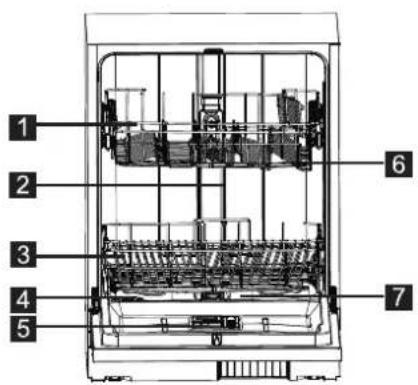
1 Upper basket
2 Inner pipe
3 Lower basket
4 Salt container
5 Dispenser
6 Spray arms
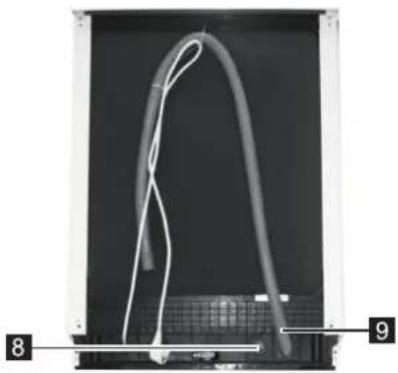
Back View
natural_image
Close-up of a flexible cable or wire wrapped in white, mounted on a dark surface with labeled parts 8 and 9 (no text or symbols on the cable itself)7 Filter assembly
8 Inlet pipe connector
9 Drain pipe
4. Prior using for the first time
Before using your dishwasher for the first time:
A. Set the water softener
B. Add 1.5 kg dishwasher salt and then full fill the salt container with water
C. Fill the rinse aid dispenser
D. Fill in detergent
A. Water Softener
The water softener must be set manually, using the water hardness dial.
The water softener is designed to remove minerals and salts from the water, which would have a detrimental or adverse effect on the operation of the appliance.
The higher the content of these minerals and salts, the harder your water is.
The softener should be adjusted according to the hardness of the water in your area. Your local Water Authority can advise you on the hardness of the water in your area.
Adjusting Salt Consumption
The dishwasher is designed to allow for adjustment in the amount of salt consumed based on the hardness of the water used. This is intended to optimise and customise the level of salt consumption.
Please follow the steps below for adjustment in salt consumption.
- Close the door and switch onothe appliance;
- Press the Program button for more than 5 seconds to start the water softener set model within 60 seconds after the appliance was switched on;
- Press the Program button to select the proper set according to your local environment, the sets will change in the following sequence: H1->H2->H3->H4->H5->H6;
- Press the On/Off button or no operation for 5 seconds to end the set up model.
| WATER HARDNESS | SelectoroPosition | Saltoconsumption (gram/cycle) | |||
| ^ dH | ^ fH | ^ Clarke | mmol/l | ||
| 0~5 | 0~9 | 0~6 | 0~0.94 | H1(Rapid) | 0 |
| 6-11 | 10-20 | 7-14 | 1.0-2.0 | H2(Glass) | 9 |
| 12-17 | 21-30 | 15-21 | 2.1-3.0 | H3(Glass、Rapid) | 12 |
| 18-22 | 31-40 | 22-28 | 3.1-4.0 | H4(ECO) | 20 |
| 23-34 | 41-60 | 29-42 | 4.1-6.0 | H5(ECO、Rapid) | 30 |
| 35-55 | 61-98 | 43-69 | 6.1-9.8 | H6(ECO、Glass) | 60 |
Note:1
1 dH=1.25 Clarke=1.78 fH=0.178 mmol/l
DH: German degree
fH: French degree
Clark: British degree
Note:2
The manufactory setting: H3
Contactoyourolocalowateroboardoforoinformationoonotheohardnessoofoyourowaterosupply.

NOTE: If your model does not have any water softener, you may skip this section.
WATER SOFTENER
The hardness of the water varies from place to place. If hard water is used in the dishwasher, deposits will formoonotheodishesoandoutensils. The appliance is equipped with a special softener that uses a salt container specifically designed to eliminate limeoandomineralsofromotheowater.
B. Loading the Salt Into the Softener
Always use salt intended for dishwasher use.
The salt container is located beneath the lower basket and should be filled as explained in the following:
Warning!
■ Only use salt specifically designed for dishwasher use! Every other type of salt not specifically designed for dishwasher use, especially table salt, will damage the water softener. In case of damages caused by the use of unsuitable salt, the manufacturer does not give any warranty and is not liable for any damages caused.
■ Only fill with salt just before starting one of the complete washing programs. This will prevent any grains of salt or salty water, which may have been spilled, remaining on the bottom of the machine for any period of time, which may cause corrosion.
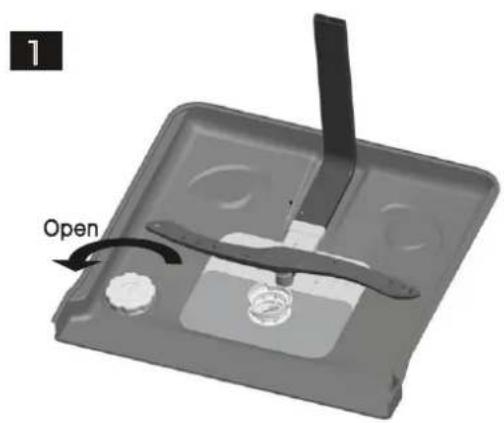
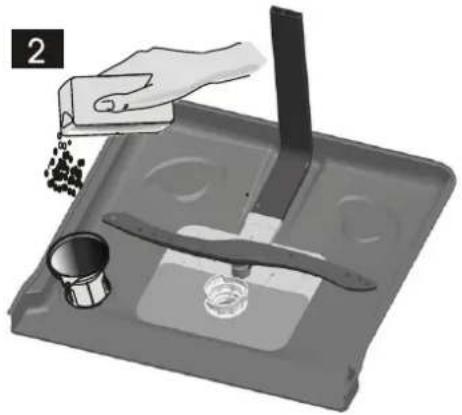
natural_image
Illustration of a hand pouring granular material into a kitchen sink with a measuring cup and bowl (no text or symbols)A After the lower basket has been removed, unscrew and remove the cap from the salt container.
B Place the end of the funnel (supplied) into the hole and pour in about 1.5kg of dishwasher salt.
C Fill the salt container to its maximum limit with water, It is normal for a small amount of water to come out of the salt container.
D After filling the container, screw back the cap tightly.
E The salt warning light will stop being after the salt container has been filled with salt.
F Immediately after filling the salt into the salt container, a washing program should be started (We suggest to use a short program). Otherwise the filter system, pump or other important parts of the machine may be damaged by salty water. This is out of warranty.

NOTE:
- The salt container must only be refilled when the salt warning light in the control panel comes on. Depending on how well the salt dissolves, the salt warning light may still be on even though the salt container is filled.
If there is no salt warning light in the control panel (for some Models), you can estimate when to fill the salt into the softener by the cycles that the dishwasher has run. - If salt has spilled, run a soak or quick program to remove it.
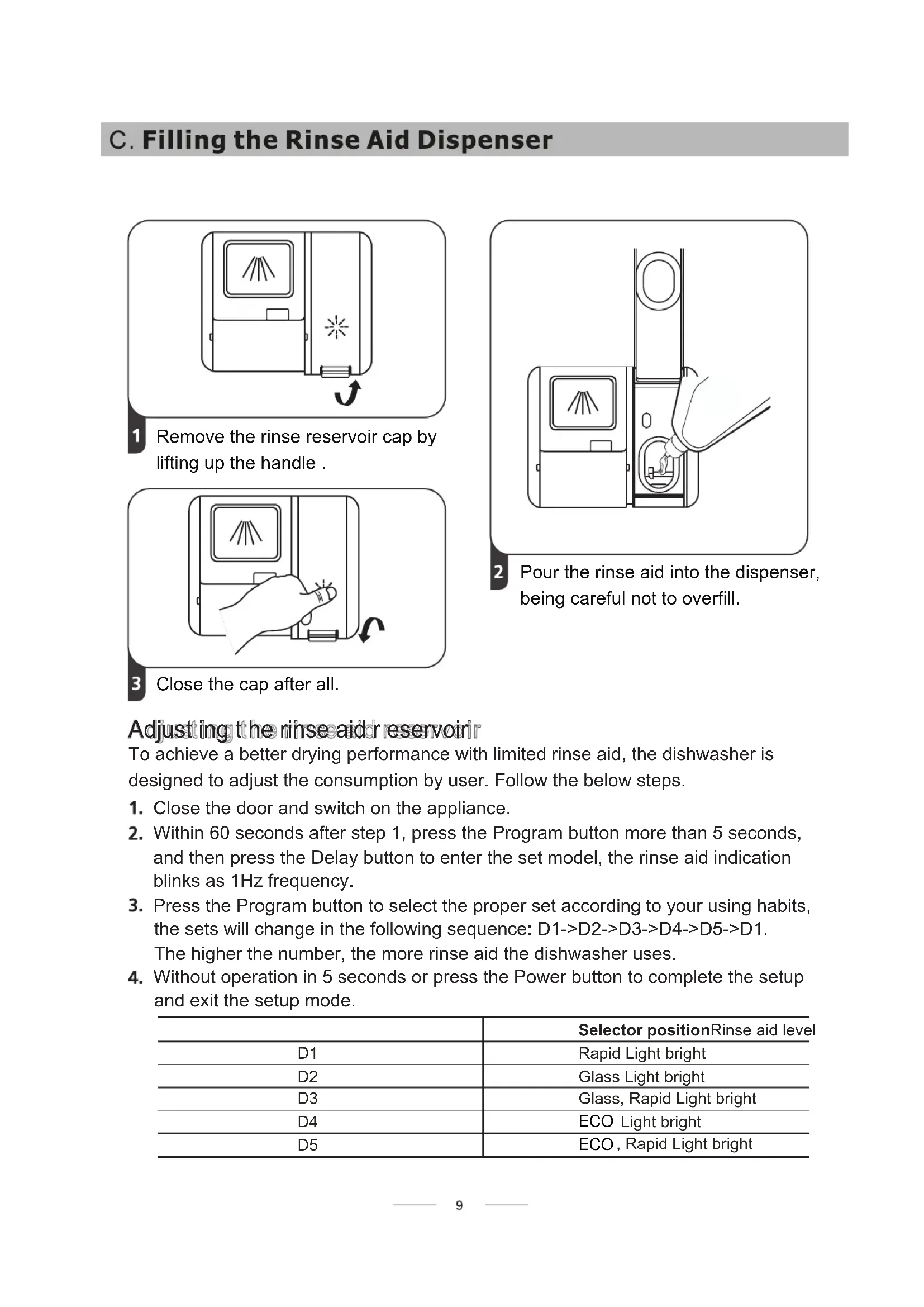
C. Filling the Rinse Aid Dispenser
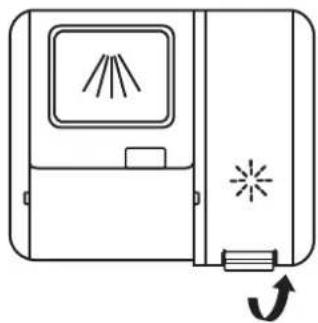
natural_image
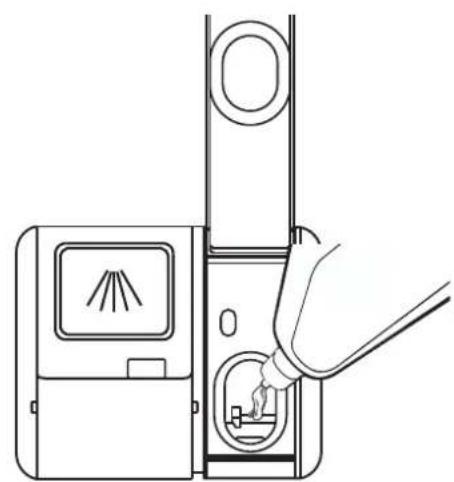
Line drawing of a device with a screen and starburst symbol, no text or labels present1 Remove the rinse reservoir cap by lifting up the handle.
natural_image
Line drawing of a hand inserting a device into a vertical panel with a fan and screen (no text or symbols)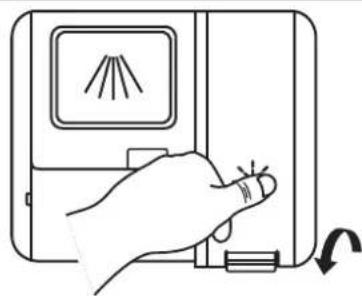
natural_image
Line drawing of a hand pressing down on a device with a slide and scroll (no text or symbols)3 Close the cap after all.
2 Pour the rinse aid into the dispenser, being careful not to overfill.
Adjusting the rinse aid reservoir
To achieve a better drying performance with limited rinse aid, the dishwasher is designed to adjust the consumption by user. Follow the below steps.
- Close the door and switch on the appliance.
- Within 60 seconds after step 1, press the Program button more than 5 seconds, and then press the Delay button to enter the set model, the rinse aid indication blinks as 1 ~Hz frequency.
-
Press the Program button to select the proper set according to your using habits, the sets will change in the following sequence: D1->D2->D3->D4->D5->D1. The higher the number, the more rinse aid the dishwasher uses.
-
Without operation in 5 seconds or press the Power button to complete the setup and exit the setup mode.
| Selector positionRinse aid level | |
| D1 | Rapid Light bright |
| D2 | Glass Light bright |
| D3 | Glass, Rapid Light bright |
| D4 | ECO Light bright |
| D5 | ECO, Rapid Light bright |
Filling The Detergent Dispenser
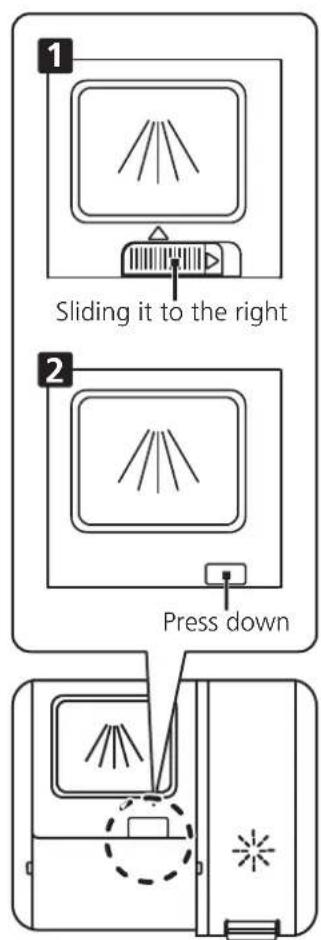
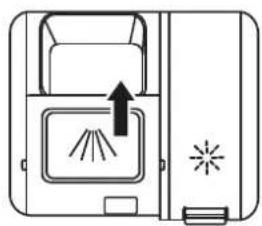
1 Please choose an open way according to the actual situation.
- Open the cap by sliding the release catch.
- Open the cap by pressing down the release catch.
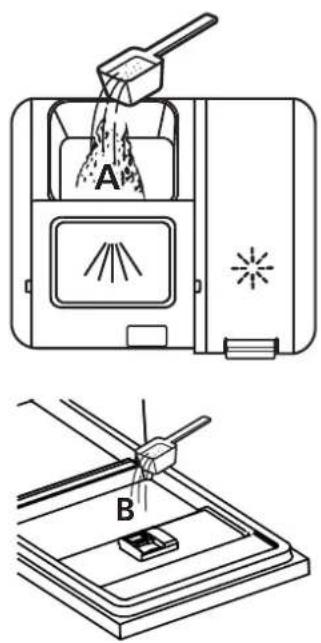
2 Add detergent into the larger cavity (A) for the main wash cycle.
For better cleaning result, especially if you have very dirt items, pour a small amount of detergent onto the door. The additional detergent will activate during the pre-wash phase.
natural_image
Diagram of a device with a screen and indicator lights, no text or symbols present3 Close the flap by sliding it to the front and then pressing it down.
NOTE:
- Be aware that depending on the soiling of water, setting may be different.
- Please observe the manufacturer's recommendations on the detergent packaging.
D. Function of Detergent
Detergents with its chemical ingredients are necessary to remove dirt, crush dirt and transport it out of the dishwasher. Most of the commercial quality detergents are suitable for this purpose.
Attention!
Proper Use of Detergent
Use only detergent specifically made for the use in dishwashers. Keep your detergent fresh and dry.
Don't put powdered detergent into the dispenser until you're ready to wash dishes.
Detergents
There are 3 sorts of detergents
- With phosphate and with chlorine
- With phosphate and without chlorine
- Without phosphate and without chlorine
Normally new pulverised detergent is without phosphate. Thus the water softener function of phosphate is not given. In this case we recommend to fill salt in the salt container even when the hardness of water is only 6 ° dH. If detergents without phosphate are used in the case of hard water often white spots appear on dishes and glasses. In this case please add more detergent to reach better results. Detergents without chlorine do only bleach a little. Strong and coloured spots will not be removed completely. In this case please choose a program with a higher temperature.
Concentrated Detergent
Based on their chemical composition, detergents can be split in two basic types:
■ conventional, alkaline detergents with caustic components
■ low alkaline concentrated detergents with natural enzymes
Detergent Tablets
Detergent tablets of different brands dissolve at different speeds. For this reason some detergent tablets cannot dissolve and develop their full cleaning power during short programs. Therefore please use long programs when using detergent tablets, to ensure the complete removal of detergent residuals.
Detergent Dispenser
The dispenser must be refilled before the start of each wash cycle following the instructions provided in the wash cycle table. Your dishwasher uses less detergent and rinse ai d than Conventional dishwasher. Generally, only one tablespoon of detergent is needed for a normal wash load. More heavily soiled items need more detergent. Always add the detergent just before starting the dishwasher, otherwise it could get damp and will not dissolve properly.
5.Preparing and loading dishes5.Pr
Recommendation Recommendation
- Consider buying tableware which is identified as diswasher-proof.
■ Use a mild detergent that is described as 'kind to dishes'. If necessary, seek further information from the detergent manufacturers.
■ For particular items, select a program with as low a temperature as possible.
■ To prevent damage, do not take glass and cutlery out of the dishwasher immediately after the programme has ended.
For washing in the dishwasher the following cutlery/dishes
Are not suitable
■ Cutlery with wooden, horn china or mother-of-pearl handles
■ Plastic items that are not heat resistant
■ Older cutlery with glued parts that are not temperature resistant
■ Bonded cutlery items or dishes
■ Pewter or copper items
■ Crystal glass
■ Steel items subject to rusting
■ Wooden platters
■ Items made from synthetic fibres
Are of limited suitability
■ Some types of glasses can become dull after a large number of washes
■ Silver and aluminum parts have a tendency to discolour during washing
■ Glazed patterns may fade if machine washed frequently
Attention before or after loading the Dishwasher Baskets
(For best performance of the dishwasher, follow these loading guidelines.
Features and appearance of baskets and cutlery baskets may vary from your model.)
Scrape off any large amounts of leftover food. Soften remnants of burnt food in pans.
It is not necessary to rinse the dishes under running water.
Place objects in the dishwasher in following way:
- Items such as cups, glasses, pots/pans, etc. are faced downwards.
- Curved items, or ones with recesses, should be loaded aslant so that water can run off.
- Tableware is stacked securely and can not tip over.
- Tableware is placed in the way that the spray arms can rotate freely during washing.

NOTE: Very small items should not be washed in the dishwasher as they could easily fall out of the basket.
- Load hollow items such as cups, glasses, pans etc. With the opening facing downwards so that water cannot collect in the container or a deep base.
■ Dishes and items of cutlery must not lie inside one another, or cover each other.
■ To avoid damage to glasses, they must not touch each other. - Load large items which are most difficult to clean into the lower basket.
The upper basket is designed to hold more delicate and lighter dishware such as glasses, coffee and tea cups
■ Long bladed knives stored in an upright position are a potential hazard!
■ Long and/or sharp items of cutlery such as carving knives must be positioned horizontally in the upper basket.
■ Please do not overload your dishwasher. This is important for good results and for reasonable consumption of energy.
Removing the DishesRemoving the Dishes
To prevent water dripping from the upper basket into the lower basket, we recommend that you empty the lower basket first and then the upper basket.
Standard Loading Pattern
Loading the Upper Basket
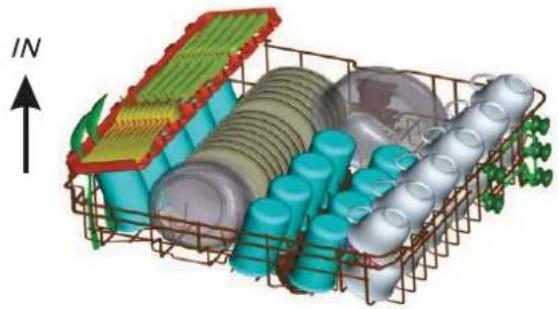
The upper basket is designed to hold more delicate and lighter dishware such as glasses, coffee and tea cups and saucers, as well as plates, small bowls and shallow pans (as long as they are not too dirty). Position the dishes and cookware so that they will not get moved by the spray of water.
natural_image
3D diagram of a multi-layered industrial or material processing unit with cylindrical and granular components, no visible text or symbols.Please be reminded that:
Pots, serving bowls, etc, must always be placed top down.
- Deep pots should be slanted to allow water to flow out.
The Bottom Basket features folding spikes so that larger or more pots and pans can be loaded.
Adjusting the Upper Basket
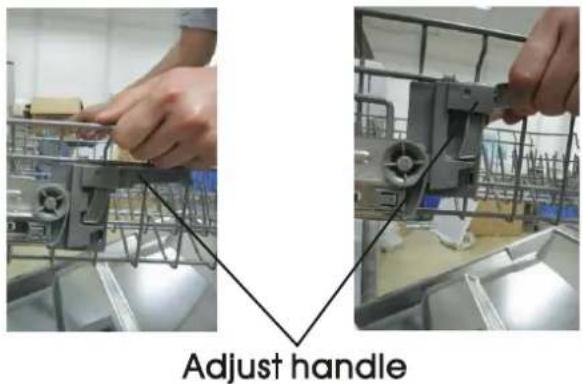
The height of the upper basket can be adjusted in order to create more space for large utensils both for the upper /lower basket. The height of the upper basket can be adjusted by placing the wheels on different height of the rails. Long items, serving cutlery, salad servers and knives should be placed on the shelf so that they do not obstruct the rotation of the spray arms..
Lift the basket for higher position
Lift the handle to lower the basket
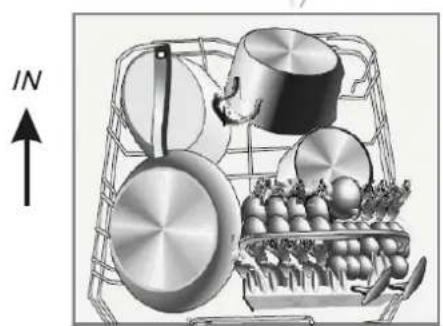
Loading the Lower Basket
We suggest that you place large items and the most difficult to clean items are to be placed into the lower basket: such as pots, pans, lids, serving dishes and bowls, as shown in the figure below. It is preferable to place serving dishes and lids on the side of the racks in order to avoid blocking the rotation of the top spray arm.
natural_image
Illustration of a kitchen basket with food items and a north arrow (no text or symbols)Folding back the cup shelves
To make room for taller items in the upper basket, raise the cup rack upwards. You can then lean the tall glasses against it. You can also remove it when it is not required for use.
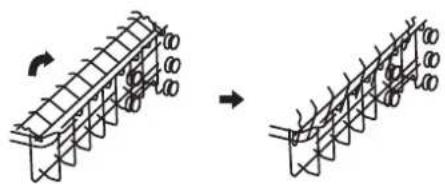
natural_image
Diagram showing structural deformation of a grid-like structure, with no text or symbols presentFolding Spikes of Lower Basket
For better stacking of pots and pans, the spikes can be folded down as shown on the picture below.
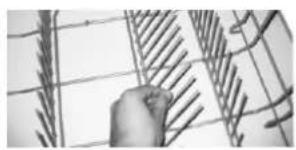
natural_image
Hand holding a hand near a grid of sticks and rods, no text or symbols visibleCutlery Basket
Cutlery should be placed in the cutlery basket with the handles at the bottom. If the rack has side baskets, the spoons should be loaded separately into the appropriate slots, especially long utensils should be placed in the horizontal position at the front of the upper basket as shown in the picture.
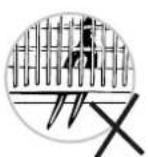
WARNING!
- Do not let any item extend through the bottom.
■ Always load sharp utensils with the sharp point down!
For personal safety and a top quality cleaning, place the silverware in the basket making sure that:
■ They do not nest together.
■ Silverware is placed with the handles-down.
■ But place knives and other potentially dangerous utensils are placed handles-up.
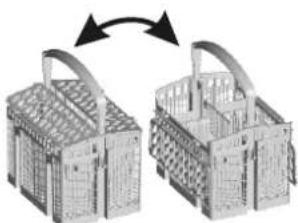
natural_image
Two identical wireframe baskets with curved handles, shown in side and top views (no text or symbols)6.Starting a washing program
Wash Cycle Table Wash Cycle Table

NOTE: (NOT) Means: need to fill rinse into the Rinse-Aid Dispenser.
| Program | Cycle Selection Information | Description of Cycle | Detergent pre/main | Running time(min) | Energy (kWh) | Water (L) | Rinse Aid |
| Intensive[4207] | For heaviest soiled crockery, and normally soiled pots, pans, dishes etc with dried on soiling. | Prewash (50°C)Wash (65°C)RinseRinseRinse (60°C)Drying | 4/18g(1or2 pieces) | 205 | 1.651 | 16.5 | |
| AutoAuto | Auto sensing wash, lightly, normally or heavily soiled crockery, with or with out dried-on food. | Prewash(45°C)Wash(55-65°C)RinseRinse (50-55°C)Drying | 4/18g(1or2 pieces) | 85-150 | 1.05-1.551 | 10.6-15.9 | |
| 60 minOPTA80min | For lightly soiled loads that do not need excellent drying efficiency. | Wash(55°C)RinseRinse (50°C)Drying | 22g(1 piece) | 60 | 0.853 | 11.5 | |
 ECO ECO (EI (EI )6 )6 | This is standard programme, it is suitable to clean normally soiled tableware and it is the most efficient programme in terms of its combined energy and water consumption for that type of tableware. | Wash(50°C)RinseRinse (50°C)Drying | 22g(1or2 pieces) | 198 | 0.849 | 10 | |
C  ; ; | For lightly soiled crockery and glass | Prewash(40°C)wash(50°C)RinseRinse(50°C)Drying | 4/18g(1or2 pieces) | 120 | 0.902 | 13.5 | |
| Rapid▶ | A shorter wash for lightly soiled loads and quick wash. | Wash (40°C)Rinse (40°C)Rinse (55°C) | 12g(1 piece) | 30 | 0.781 | 11 |

NOTE:
* EN60436: This programme is the test cycle. The information for comparability test in accordance with EN60436, as follows:
Values other than the ECO program are purely indicative.
■ Capacity: 14 settings
■ Position Upper basket: upper wheels on rails
■ Rinse aid setting: 5
Po0.49W
Turning On the Appliance Turning On the Appliance
Starting a cycle wash
1 Draw out the lower and upper basket, load the dishes and push them back. It is commended to load the lower basket first, then the upper one (see the section entitled "Preparing and loading dishes").
Pour in the detergent (see the section entitled "Prior to first time use").
3 Insert the plug into the socket. The power supply is 220-240 VAC /50 Hz, the specification of the socket is 10A 250VAC. Make sure that the water supply is turned on to full pressure.
4 Close the door, press the ON/OFF Button, and the ON/OFF light will turn on.
5 Press the program Button, the wash program will be changed as follows direction: ECO->Glass->Rapid->Intensive->Auto->60min->ECO
If a program is selected, the response light will light. Then press the Start/Pause button, the dishwasher will start the selected washing cycle.
Changing the Program Mid-Cycle
Premise:
A running cycle can only be changed if it has only been running for a short time. Otherwise, the detergent may have already been released, and the appliance may have already drained the wash water. If this is the case, the detergent dispenser must be refilled (see the section entitled filling the detergent dispenser).
Press the start/pause to stop the washing, press the Program button more than 3 seconds, the machine will be in standby state, then you can change the program to the desired cycle setting (see the section entitled "Starting a washing program").
Forgot to Add a Dish?
A forgotten dish can be added any time before the detergent cup opens.
1 Open the door a little.
4 Close the door
2 After the spray arms stop working, you can open the door completely.
5 The dishwasher will run after 10 seconds.
3 Add forgotten dishes.
At the End of the Wash Cycle
Turn off the appliance using the ON/OFF button, shut off the water supply and open the door of the dishwasher
Wait for a few minutes before unloading the dishwasher to avoid handling the dishes and utensils while they are still hot and more susceptible to break. They will also dry better.
■ Switching Off the Dishwasher
The program light is on but is not blinking, only in this case has the programme ended.
- Switch off the dishwasher by pressing the ON/OFF button.
- Turn off the water tap!
■ Open the door carefully.
Hot dishes are sensitive to shocks. The dishes should cool down for around 15 minutes before removing from the appliance.
Open the dishwasher's door, leave it ajar and wait a few minutes before removing the dishes. In this way they will be cooler and the drying will be improved.
■ Unloading the dishwasher
It is normal for the dishwasher to be wet inside.
Empty the lower basket first and then the upper one. This will avoid water dripping from the upper Basket onto the dishes in the lower one.
WARNING!
It is dangerous to open the door mid-cycle, as hot steam may scald you.
Auto Open Door
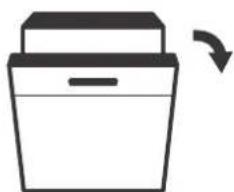
The dishwasher door opens automatically at the end of some programs.
When the door opens it does not mean that the program is finished.
There is still time to dry. At the end of this remaining time a beep sounds indicating that your program is now finished.
NOTE:
The dishwasher door must not be blocked when set to open automatically.
This can disrupt door lock functionality.
natural_image
Simple line drawing of a bin with a handle and arrow indicating rotation (no text or symbols)7. Maintenance and Cleaning
Filter System
The filter prevents larger remnants of food or other objects from getting inside the pump. The residues may block the filter, in this case they must be removed.
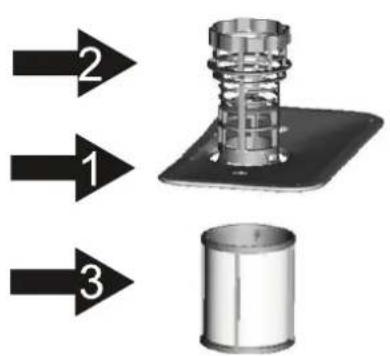
The filter system consists of a coarse filter, a flat (Main filter) And a microfilter(Fine filter).
Main filter 1
Food and soil particles trapped in this filter are pulverized by a special jet on the lower spray arm and to be drained.
Coarse filte 2
Larger items, such as pieces of bones or glass, that could block the drain are trapped in the coarse filter. To remove the items caught by the filter, gently squeeze the tap on the top of this filter and lift out.
Micro-filter 3
This filter holds soil and food residues in the sump area and them from being redeposited on the dishes during wash cycle.
Filter assembly
The filter efficiently removes food particles from the wash water, allowing it to be recycled during the cycle. For best performance and results, the filter must be cleaned regularly. For this reason, it is a good idea to remove the larger food particles trapped in the filter after each wash cycle by rinsing the semicircular filter and cup under running water. To remove the filter device, pull the cup handle in the upward direction.
WARNING!
■ The dishwasher must never be used without the filters.
■ Improper replacement of the filter may reduce the performance level of the appliance and damage dishes and utensils.
1
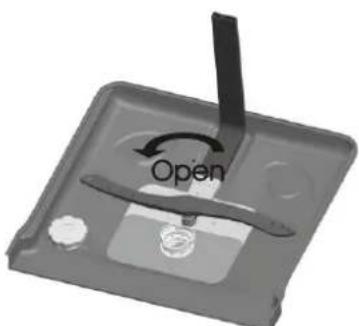
Step 1: Turn the filter counterclockwise,
2
natural_image
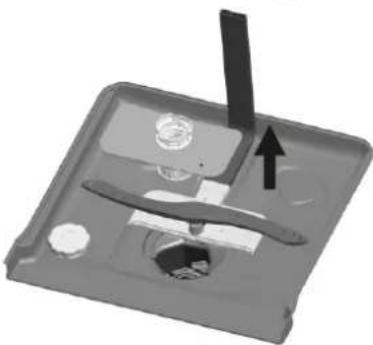
3D rendered mechanical component with a black arrow indicating direction (no text or symbols)Step 2: lift the filter assy up

NOTE: When following this procedure from step1 to step 2, the filter system will be removed; when following it from Step 2 to Step 1, the filter system will be installed.
Remarks:
- After each cycle, check for any debris in the filter to avoid future blockage.
- By unscrewing the coarse filter, you can remove the filter system. Remove any food remnants and clean the filters under running water.

NOTE: The entire filter assembly should be cleaned once a week.
Cleaning the Filter
To clean the coarse filter and the fine filter, use a cleaning brush. Reassemble the filter parts (see page 16) and reinsert them in the dishwasher, positioning them in their seat and pressing downwards.

WARNING!
When cleaning the filters, do not knock them. Otherwise, the filters could be contorted and the performance of the dishwasher could be decreased.
Caring for the Dishwasher
The control panel can be cleaned by using a lightly dampened cloth. After cleaning, make sure to dry it thoroughly.
For the exterior, use a good appliance polish wax.
Never use sharp objects, scouring pads or harsh cleaners on any part of the dishwasher.
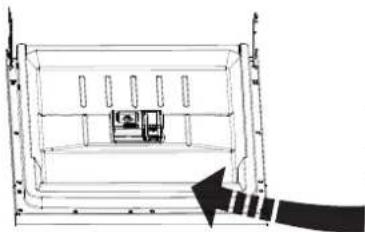
Cleaning The Door
natural_image
Diagram of a rectangular container with internal compartments and an arrow pointing to one side (no text or symbols)To clean the edge around the door, you should only use a soft, ward and damp cloth. To avoid penetration of water into the door lock and electrical components, do not use a spray cleaner of any kind.

WARNING!
■ Never use a spray cleaner to clean the door panel as it may damage the door lock and electrical components.
■ Abrasive agents or some paper towels should not be used because of the risk of scratching or leaving spots on the stainless steel surface.
Winterizing
please take frost protection measures on the dishwasher in winter. Every time after washing cycles, please operate as follows:
- Cut off the electrical power to the dishwasher at the supply source.
- Turn off the water supply and disconnect the water inlet pipe from the water valve.
- Drain the water from the inlet pipe and water valve. (Use a pan to gather the water)
- Reconnect the water inlet pipe to the water valve.
- Remove the filter at the bottom of the tub and use a sponge to soak up water in the sump.

NOTE: If your dishwasher cannot work because of the ice, please contact professional service persons.
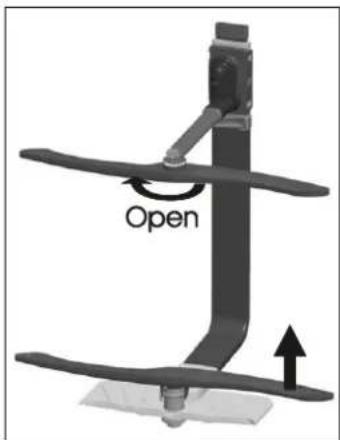
Cleaning the Spray Arms
It is necessary to clean the spray arms regularly for hard water chemicals will clog the spray arm jets and bearings.
To remove the upper spray arm, hold the nut, rotate the arm clockwise to remove it.
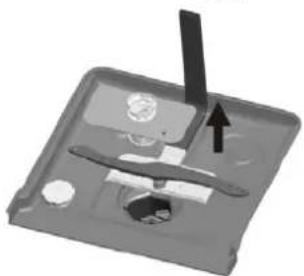
To remove the lower spray arm, pull out the spray arm upward.
Wash the arms in soapy and warm water and use a soft brush to clean the jets. Replace them after rinsing them thoroughly.
How to Keep Your Dishwasher in Shape
■ After Every Wash
After every wash, turn off the water supply to the appliance and leave the door slightly open so that moisture and odours are not trapped inside.
■ Remove the Plug
Before cleaning or performing maintenance, always remove the plug from the socket.
■ No Solvents or Abrasive Cleaning
To clean the exterior and rubber parts of the dishwasher, do not use solvents or abrasive cleaning products. Only use a cloth with warm soapy water. To remove spots or stains from the surface of the interior, use a cloth dampened with water an a little vinegar, or a cleaning product made specifically for dishwashers.
■ When not in use for a longtime
It is recommend that you run a wash cycle with the dishwasher empty and then remove the plug from the socket, turn off the water supply and leave the door of the appliance slightly open. This will help the door seals to last longer and prevent odours from forming within the appliance.
■ Moving the Appliance
If the appliance must be moved, try to keep it in the vertical position. If absolutely necessary, it can be positioned on its back.
Seals
One of the factors that cause odours to form in the dishwasher is remaining food strapped in the seals. Periodic cleaning with a damp sponge will prevent this from occurring.
8. Installation instruction
Attention:
The installation of the pipes and electrical equipments should be done by professionals.
| Warning | |
 | Electrical Shock Hazard. Disconnect electrical power before installing dishwasher.Failure to do so can result in death or electrical shock. |
• Installation preparation
The installation position of dishwasher should be near the existing inlet and drain hoses and power cord. One side of the cabinet sink should be chosen to facilitate the connection of drain hoses of the dishwasher.
Note: please check the accompanying installation accessories(hook for aesthetic panel, screw)
Please carefully read the installation instruction.
● Illustrations of cabinet dimensions and installation position of the dishwasher
Preparations should be made before moving the dishwasher to the installation place.
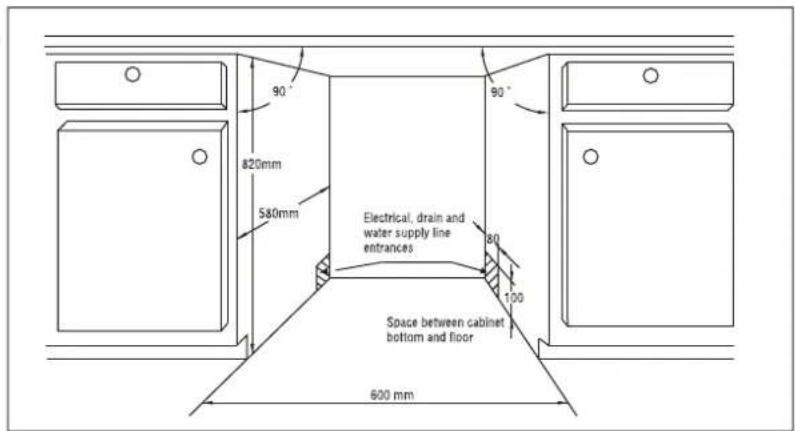
1 Choose a place near the sink to facilitate the installation of inlet and drain hoses (see figure 1).
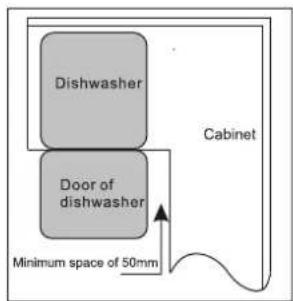
2 If dishwasher is installed at the corner of the cabinet, there should be some space (illustrated in figure 2) when the door is opened.
【Figure1】
Cabinet dimensions Less than 5mm between the top of dishwasher and cabinet and the outer door aligned to cabinet.
【Figure2】
Minimum space when the door is opened
● Aesthetic panel's dimensions and installation
1 The aesthetic wooden panel could be processed according to the Figure 3.
【Figure3】
The aesthetic panel should be processed in accordance with the illustrated dimensions
(Unit: mm)
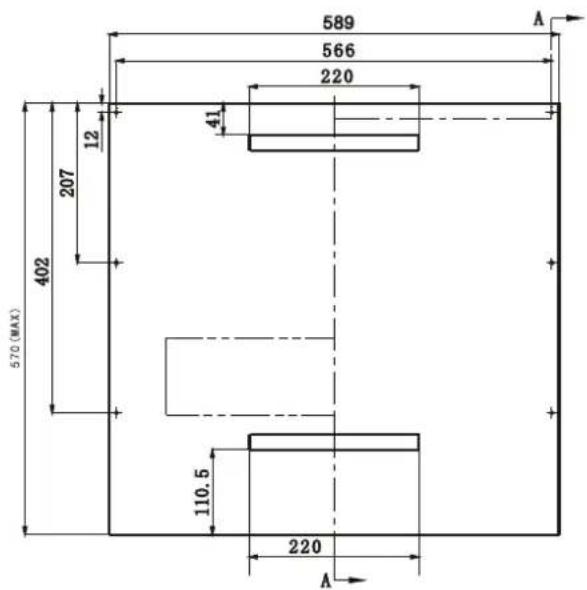
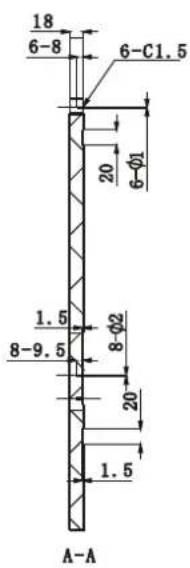
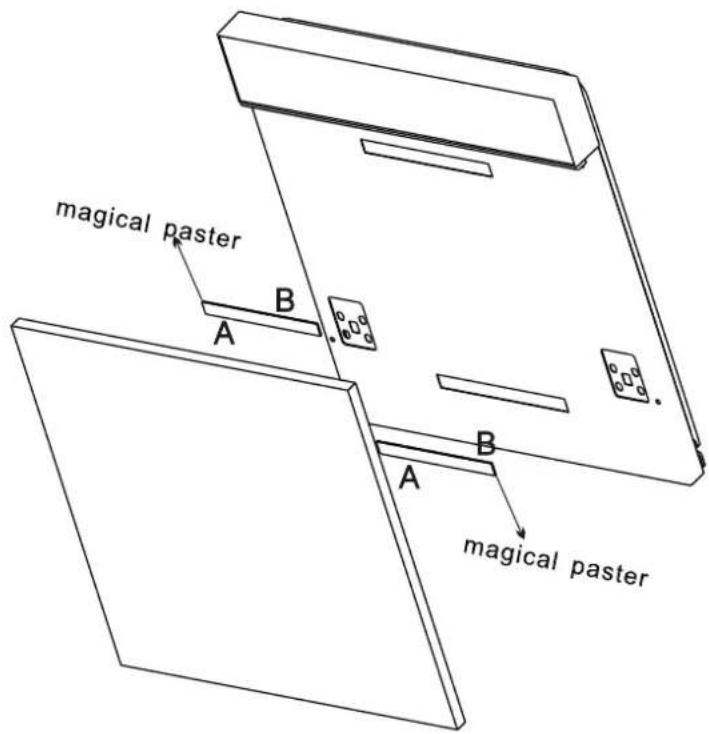
2 magical paster connect wooden part and dishwasher part, side A stick with wooden door, side B stick with dishwasher(see figure 4a). After positioning of the panel, fix the panel onto the outer door by screws and bolts (See figure 4b)
【Figure4a】
Installation of aesthetic panel
【Figure4b】
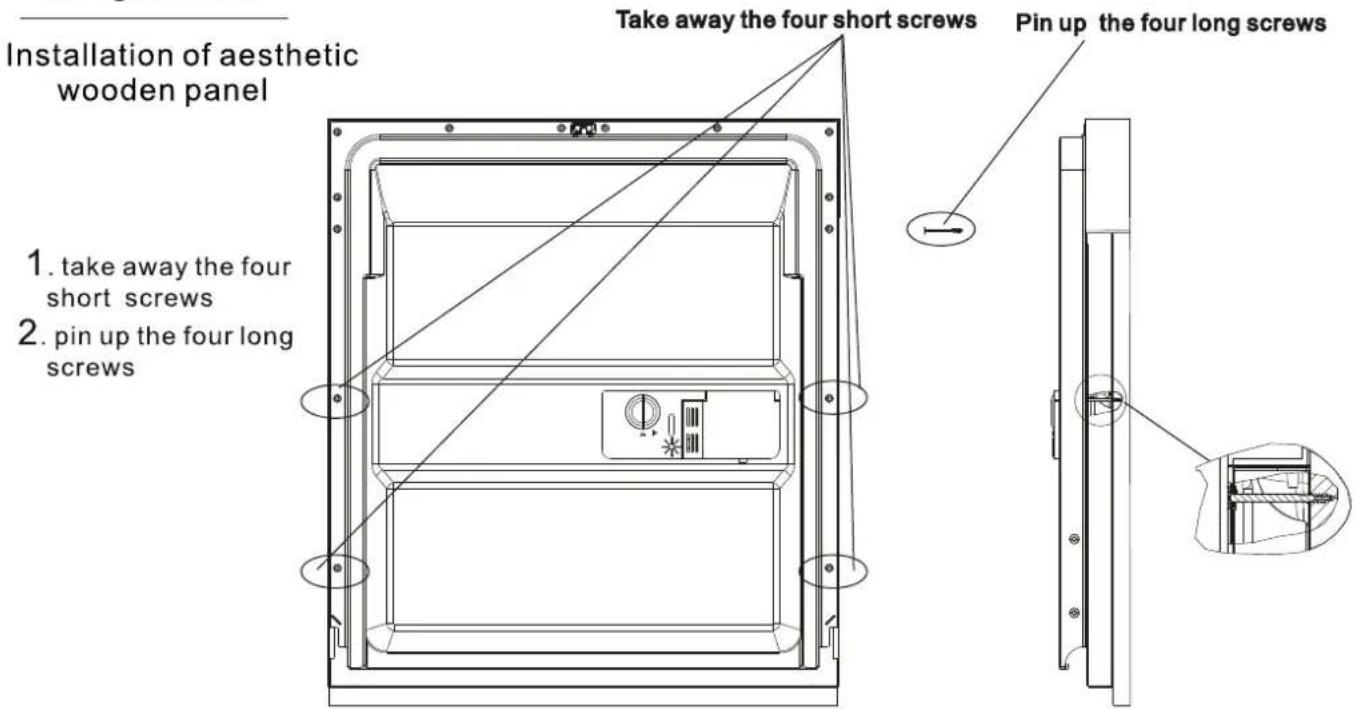
- Tension adjustment of the door spring
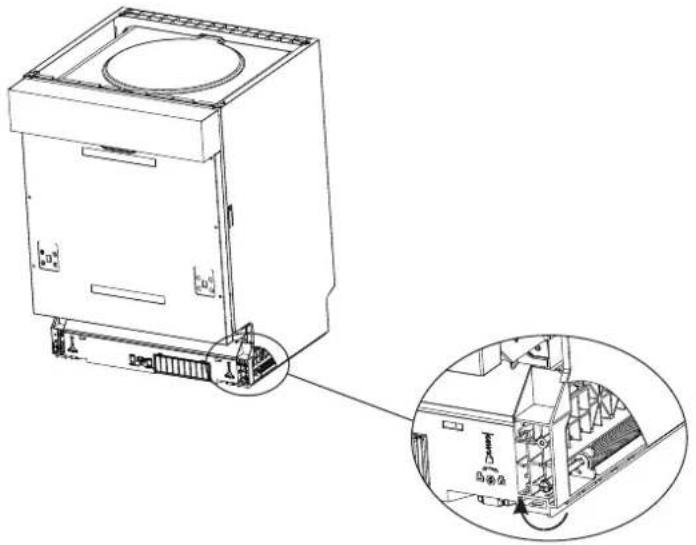
The door springs are set at the factory to the proper tension for the outer door. If aesthetic wooden panel are installed, you will have to adjust the door spring tension. Rotate the adjusting screw to drive the adjustor to strain or relax the steel cable (see figure 5).
Door spring tension is correct when the door remains horizontal in the fully opened position, yet rises to a close with the slight lift of a finger.
natural_image
Technical line drawing of a washing machine with an inset close-up showing internal components (no text or symbols)【Figure5】
Tension adjustment of the door spring
- Connection of drain hoses
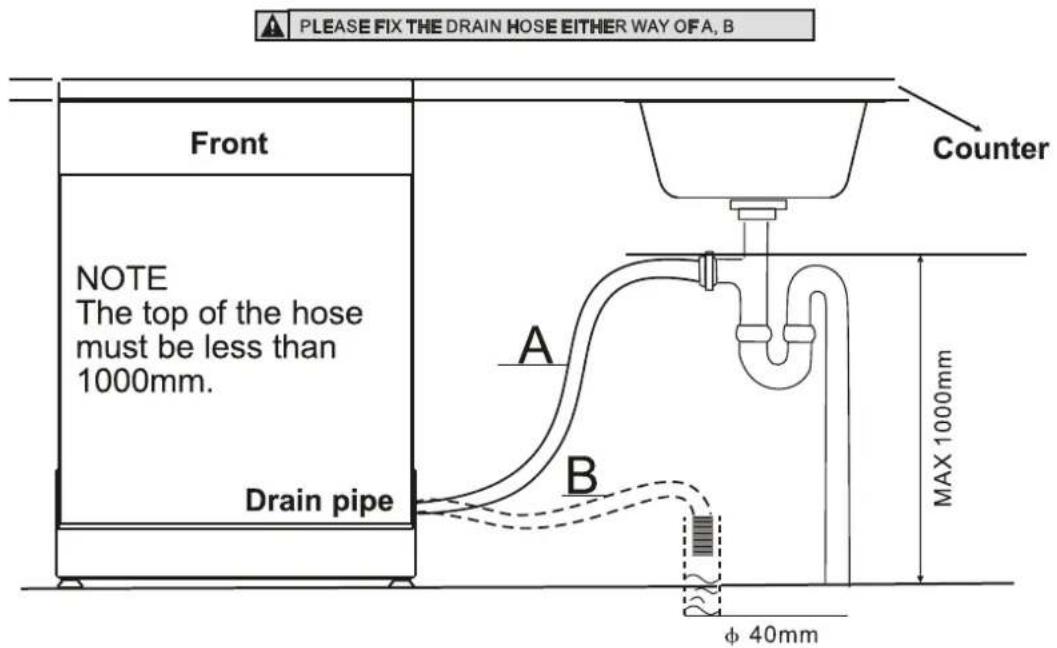
Insert the drain hose into a drain pipe with a minimum diameter of 40mm, or let it run into the sink, making sure to avoid bending or crimping it. The height of the drain pipe must be less than 1000mm.
- Dishwasher installation steps
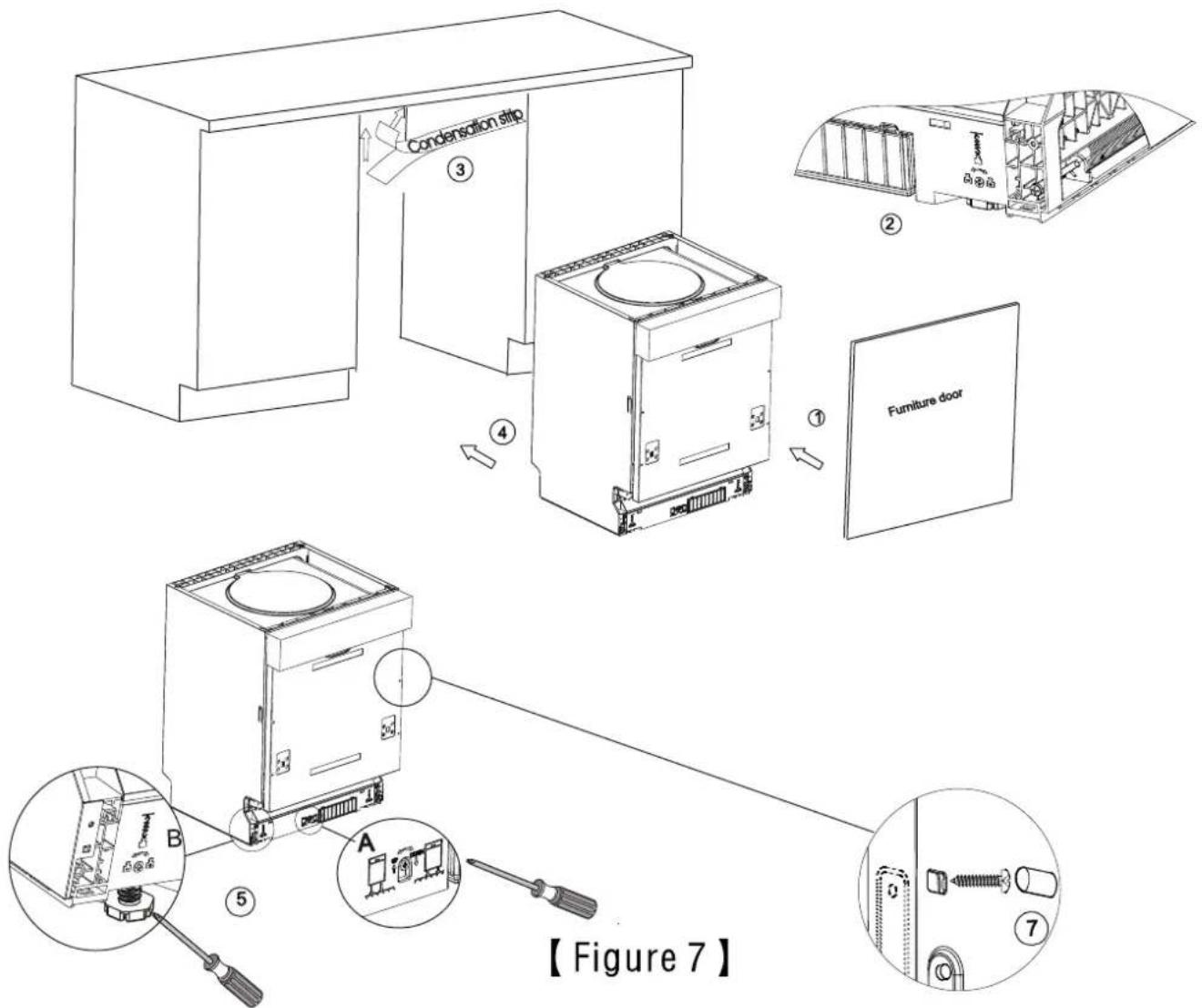
1 Install the furniture door to the outer door of the dishwasher using the brackets provided. Refer to the template for positioning of the brackets.
2 Adjust the tension of the door springs by using a cross screw driver turning in a clockwise motion to tighten the left and right door springs. Failure to do this could cause damage to your dishwasher (Illustration 2).
3 Connect the inlet hose to the cold water supply.
4 Connect the drain hose. Refer to diagram.(Figure 6)
5 Connect the power cord.
6 Affix the condensation strip under the work surface of cabinet. Please ensure the condensation strip is flush with edge of work surface.
7 Place the dishwasher into position.(Illustration 4)
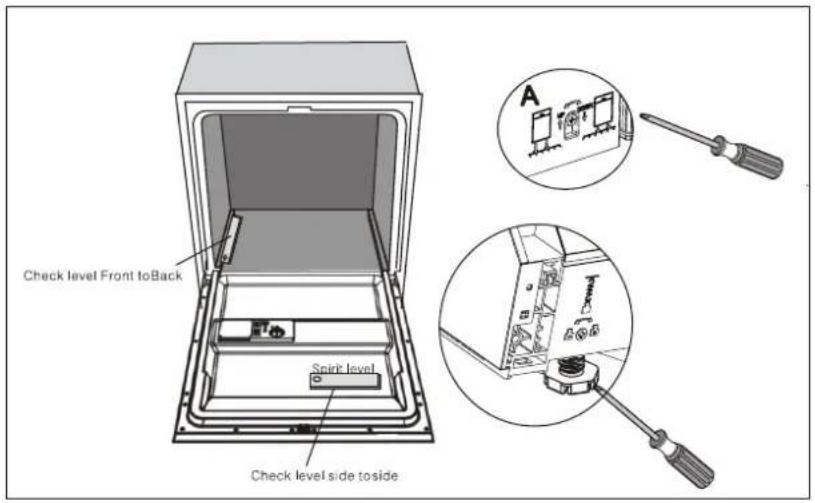
8 Level the dishwasher. The rear food can be adjusted from the front of the dishwasher by turning the cross screw in the middle of the base of dishwasher use a cross screw driver (Illustration 5A). To adjust the front feet, use a flat screw driver and turn the front feet until the dishwasher is level (Illustration 5B).
9 The dishwasher must be secured in place. There are two ways to do this:
A. Normal work surface: Put the installation hook into the slot of the side plane and secure it to the work surface with the screws (Illustration 6):
B. Marble or granite work top: Fix the side with Screw. (Illustration 7).
Dishwasher must be levelled for proper dish rack operation and wash performance.
1 Place a spirit level on door and rack track inside the tub as shown to check that the dishwasher is levelled.
2 level the dishwasher by adjusting the three levelling legs individually.
3 When level the dishwasher, please pay attention not to let the dishwasher tip over.
【Figure 8】
Illustration of feet adjustment
NOTE:
The maximum adjustment height of the feet is 50 mm.
About Power Connection

WARNING!
For personal safety:
■ Do not use an extension cord or an adapter plug with this appliance.
■ Do not, under any circumstances, cut or remove the earthing
■ Connection from the power cord.
Electrical Requirements
Please look at the rating label to know the rating voltage and connect the dishwasher to the appropriate power supply. Use the required fuse 10 amp, time delay fuse or circuit breaker recommended and provide separate circuit serving only this appliance.

Insure proper ground exists before use
Electrical Connection
Ensure the voltage and frequency of the power being corresponds to those on the rating plate. Only insert the plug into an electrical socket which is earthed properly. If the electrical socket to which the appliance must be connected is not appropriate for the plug, replace the socket, rather than using a adaptors or the like as they could cause overheating and burns.
natural_image
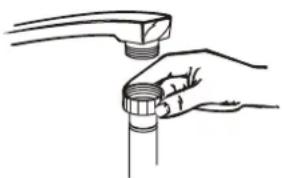
Line drawing of a hand holding a pipe fitting (no text or symbols)Connect the cold water supply hose to a threaded 3/4(inch) connector and make sure that it is fastened tightly in place.
If the water pipes are new or have not been used for an extended period of time, let the water run to make sure that the water is clear. This precaution is needed to avoid the risk of the water inlet to be blocked and damage the appliance.
⚠ WARNING! Please close the hydrant after using.
Positioning the Appliance
Position the appliance in the desired location. The back should rest against the wall behind it, and the sides, along the adjacent cabinets or walls. The dishwasher is equipped with water supply and drain hoses that can be positioned either to the right or the left sides to facilitate proper installation.
How to Drain Excess Water From Hoses
If the sink is 1000 higher from the floor, the excess water in hoses cannot be drained directly into the sink. It will be necessary to drain excess water from hoses into a bowl or suitable container that is held outside and lower than the sink.
Water Outlet
Connect the water drain hose. The drain hose must be correctly fitted to avoid water leaks. Ensure that the water inlet hose is not kinked or squashed.
Extension Hose
If you need a drain hose extension, make sure to use a similar drain hose. It must be no longer than 4 metres; otherwise the cleaning effect of the dishwasher could be reduced.
Syphon Connection
Insert the drain hose into a drain pipe with a minimum diameter of 40mm, or let it run into the sink, making sure to avoid bending or crimping it. The top of the hose must be less than 1000mm.
Start of Dishwasher Start of Dishwasher
The following things should be checked before starting the dishwasher.
1 The dishwasher is levelled and fixed properly.
2 The inlet valve is open
3 There is a leakage at the connections of the conducts
4 The wires are tightly connected
5 The power is switched on
6 The inlet and drain hoses are knotted
7 All packing materials and printings should be taken out from the dishwasher
Attention: After installation, please make sure to keep this manual. The content of this manual is very helpful to the users.
Review the charts on the following pages may save you from calling for service.

Problem Possible Causes What To Do
| Technical problems | Dishwasher doesn't start | Fuse blown, or the circuit breaker acted | Replace fuse or reset circuit breaker. Remove any other appliances sharing the same circuit with the dishwasher |
| Power supply is not turned on | Make sure the dishwasher is turned on and the door is closed securely.Make sure the power cord is properly plugged into the wall socket. | ||
| Water pressure is low | Check that the water supply is connected properly and the water is turned on. | ||
| Door of dishwasher not properly closed. | Make sure to close the door properly and latch it. | ||
| water not pumped form dishwasher | Kink in drain hose | Check drain hose. | |
| Filter clogged | Check coarse the filter(see section titled "Cleaning The Filter") | ||
| Kitchen sink clogged | Check the kitchen sink to make sure it is draining well.If the problem is the kitchen sink not draining ,you may need a plumber rather than a serviceman for dishwashers. | ||
| General problems | Suds in the tub | Improper detergent | Use only the special dishwasher detergent to avoid suds.If this occurs, open the dishwasher and let suds evaporate.Add 1 gallon of cold water to the tub. Close and latch the dishwasher, then select any cycle. Dishwasher will drain out the water at the first step.Open the door after draining is stop and check if the suds is disappeared.Repeat if necessary. |
| Spilled rinse-aid | Always wipe up rinse-aid spills immediately. | ||
| Stained tub interior | Detergent with colourant was used | Make sure that the detergent is the one without colourant. | |
| White film on inside surface | Hard water minerals | To clean the interior, use a damp sponge with dishwasher detergent and wear rubber gloves.Never use any other cleaner than dishwasher detergent for the risk of foaming or suds. | |
| There are rust stains on cutlery | The affected items are not corrosion resistant. | ||
| A programme was not run after dishwasher salt was added.Traces of salt have gotten into the wash cycle. | Always run the quick wash programme .without any crockery in the dishwasher and without selecting the Turbo function (if present),after adding dishwasher salt. | ||
| The lid of the softner is not fixed well. | Check the lid .Ensure the fixation is fine. | ||
| Noise | Knocking noise in the wash cabinet | A spray arm is knocking against an item in a basket | Interrupt the programme, and rearrange the items which are obstructing the spray arm. |
| Rattling noise in the wash cabinet | Items of crockery are loose in the wash cabinet | Interrupt the programme,and rearrange the items of crockery. | |
| Knocking noise in the water pipes | This may be caused by on-site installation or the cross-section of the piping. | This has no influence on the dishwasher function.if in doubt, contact a suitably qualified plumber. |

Problem Possible Causes What To Do
| Unsatis -factory washing result | The dishes are not clean | The dishes were not loaded correctly. | See notes in "Loading the Dishwasher Baskets". |
| The programme was not powerful enough. | Select a more intensive programme.See" Wash Cycle Table". | ||
| Not enough detergent was dispensed. | Use more detergent, or change your detergent. | ||
| Items are blocking the path of spray arms. | Rearrange the items so that the spray can rotate freely. | ||
| The filter combination in the base of wash cabinet is not clean or is not correctly fitted.This may cause the spray arm jets to get blocked. | Clean and/or fit the filter combination correctly.Clean the spray arm jets. See "Cleaning the Spray Arms". | ||
| Cloudiness on glassware | Combination of soft water and too much detergent. | Use less detergent if you have soft water and select a shyder to wash the glassware and to get them clean. | |
| Black or gray marks on dishes | Aluminum utensils have rubbed against dishes. | Use a mild abrasive cleaner to eliminate those marks. | |
| Detergent left in dispenser cups | Dishes block detergent cups. | Re-loading the dishes properly. | |
| Unsatis -factory drying result | The dishes are not drying | Improper loading | Load the dishwasher as suggested in the directions. |
| Too little rinse-aid | Increase the amount of rinse-aid/refill the rinse-aid dispenser. | ||
| Dishes are removed too soon | Do not empty your dishwasher immediately after washing. Open the door slightly so that the steam can escape. Begin unloading the dishwasher only once t he dishes are barely warm to the touch. Empty the lower basket first to prevent any water from dripping into the lower basket. | ||
| Wrong program has been selected | With a short program, the washing temperature is lower, decreasing cleaning performance.Choose a program with a long washing time. | ||
| Use of cutlery with a low-quality coating | Water drainage is more difficult with these items.Cutlery or dishes of this type are not suitable for washing in the dishwasher. |
Error Codes
When some malfunctions come on, the appliance will display error codes to warn you:
| Codes | Meanings | Possible Causes |
| E1 | Longer inlet time. | Faucet is not opened, or water intake is restricted,or water pressure is too low. |
| E4 | Overflow. | Some element of dishwasher leaks . |
| E8 | Failure of orientation of distributary valve. | Circuit is open or broken distributary valve. |

WARNING!
If overflow occurs, turn off the main water supply before calling a service. If the base pan overflows:
- Turn off the main water supply before calling for service
- Remove the excess water before restarting the dishwasher.
Technical Information
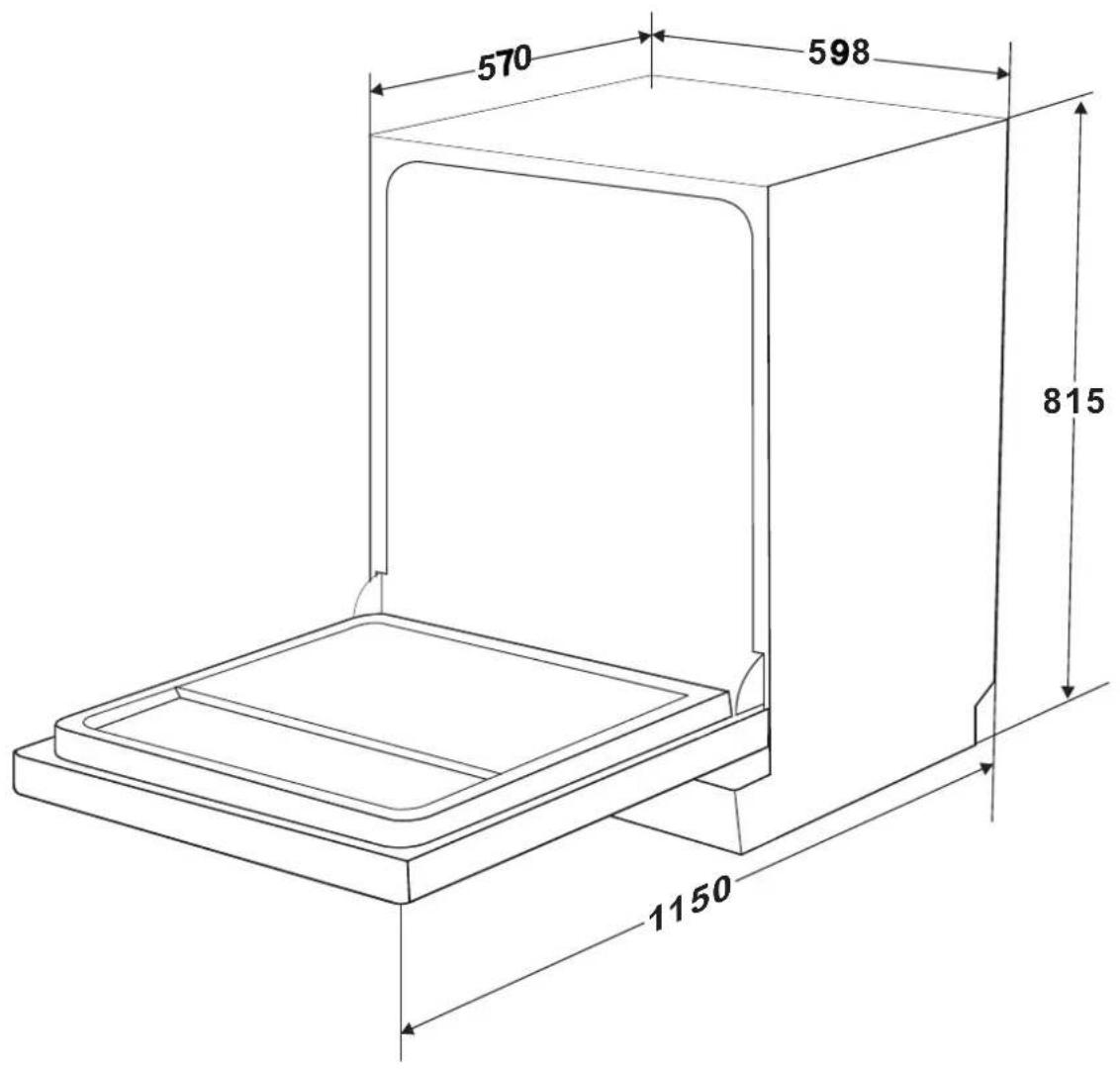
| Heighto:o815mm | |
| Widtho:o598omm | |
| Deptho:o570mm | (withthedoorclosed) |
| Wateropressure:o0.04-1.0MPa | |
| Powerosupply:oseeoratingolabel | |
| Capacity: | 14 placeosettings |
LOADING THE BASKETS ACCORDING TO EN60436:
1. Upper basket:
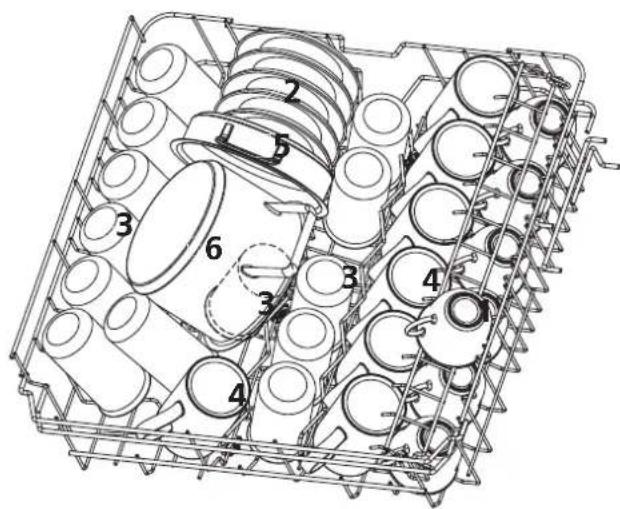
| Number | Item |
| 1 | Cups |
| 2 | Saucers |
| 3 | Glasses |
| 4 | Mugs |
| 5 | Oven pot |
| 6 | Small pot |
2. Lower basket:
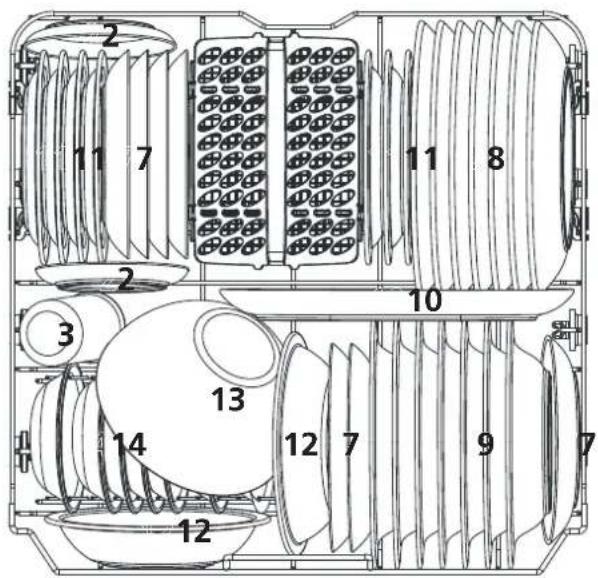
| Number | Item |
| 7 | Dessert plates |
| 8 | Dinner plates |
| 9 | Soup plates |
| 10 | Oval platter |
| 11 | Melamine dessert plates |
| 12 | Melamine bowls |
| 13 | Glass bowl |
| 14 | Dessert bowls |
| 15 | Cutlery basket |
WARNING!
Non compliance with the loading can result in poor washing quality.
3.Cutlery rack:
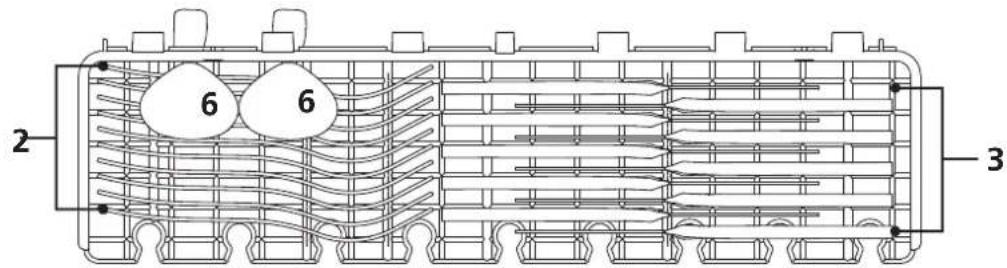

NOTE:
Please place the light flat wares on the shelf. The total weight is less than 1.5kg.
4.Cutlery basket:
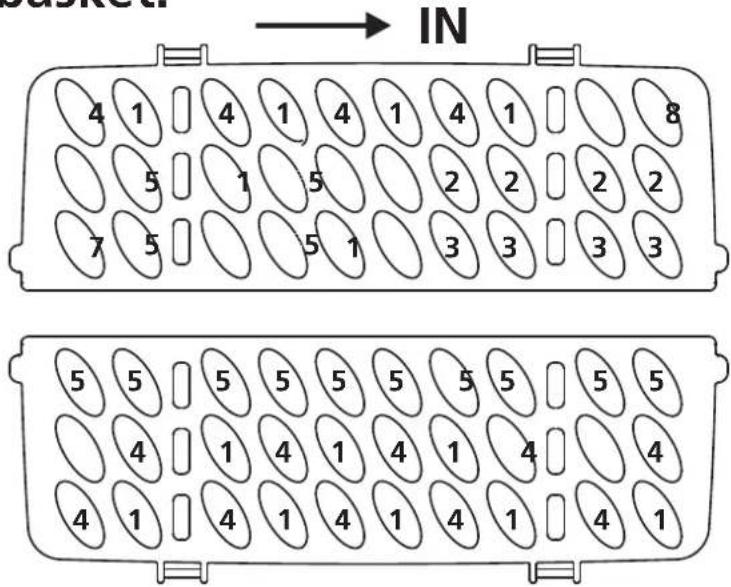
Information for comparability
tests in accordance with EN60436
Capacity: 14 place settings
Position of the upper basket: lower position
Program: ECO
Rinse aid setting: 5
Softener setting: H3
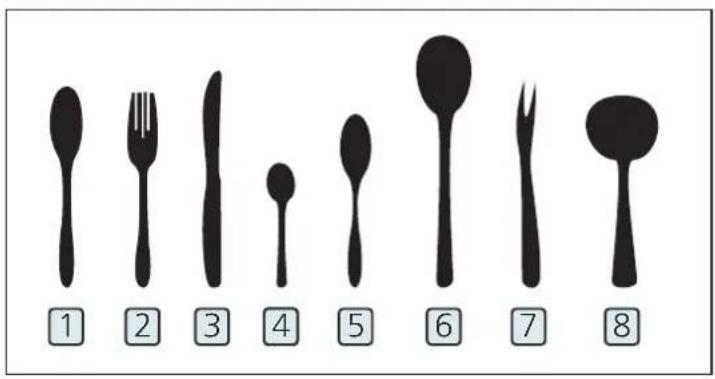
| Number | Item |
| 1 | Soup spoons |
| 2 | Forks |
| 3 | Knives |
| 4 | Tea spoons |
| 5 | Dessert spoons |
| 6 | Serving spoons |
| 7 | Serving fork |
| 8 | Gravy ladle |
DATABASE ACCESS
In order to access to your model information stored in the product database, as set out in
Regulation (EU) 2019/2017 and relating to energy labelling, please log on to the website:
https://eprel.ec.europa.eu/
Look for the reference of your product on the website by putting the service reference that is indicated on your product rating plate.
Another means to access this information is to flash the "QR" code on the energy label of your product.
EN After Sales Service:
Any maintenance on your equipment should be undertaken by:
-Either your dealer,
-Or another qualified mechanic who is an authorized agent for the brand appliances.
When making an appointment, state the full reference of your equipment (model, type and serial number). This information appears on the manufacturer's nameplate attached to your equipment.
INFORMATION:
The minimum period of availability of spare parts listed in the European Regulation 2019-2022-EU and accessible in particular to the user of the appliance, is 10 years under the conditions layed down in the same regulation.
Brandt
natural_image
Underwater view of bubbles rising from a surface with water flowing, no text or symbols visibleMANUEL D'INSTRUCTIONS FR
Lave-vaisselle
BDB424LW
BDB424LB
BDB424LX
Chère Cliente, Cher Client,
natural_image
Close-up of a flexible cable with white insulation, mounted on a grid-patterned surface (no text or symbols visible)natural_image
Illustration of a hand using a tool to lift granular material into a basin with a measuring cup and container (no text or symbols)natural_image
Simple line drawing of a device with a screen and starburst symbol, no text or labels presentnatural_image
Line drawing of a device with a handle inserting into a socket (no text or symbols)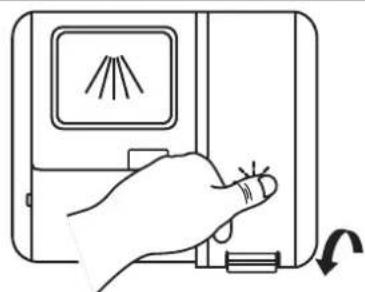
natural_image
Hand pressing a button on a device with a slide and scroll (no text or symbols visible)natural_image
Simple line drawing of a device with a screen and indicator lights, no text or symbols present.natural_image
Illustration of a kitchen setup with a basket containing plates, cutlery, and a plate (no text or symbols)Souvenez-vous que :
natural_image
Two-panel photo showing hands operating a mechanical device in a factory setting, with no visible text or symbols.Ajuster la poignée
natural_image
Diagram showing two stages of a structural assembly with arrows indicating direction (no text or symbols)natural_image
Two identical 3D architectural models of a building with curved handles, shown in side and top views (no text or symbols)ATTENTION!
natural_image
Simple line drawing of a trash bin with an arrow indicating rotation (no text or symbols)REMARQUE :
natural_image
3D rendered diagram of a mechanical component with a handle and labeled 'Open' (no other text or symbols)2
natural_image
3D rendered mechanical component with a black arrow pointing to a feature (no text or symbols visible)natural_image
Technical line drawing of a mechanical enclosure or enclosure frame with no visible text or symbolsnatural_image
Technical line drawing of a vertical mechanical component with an inset close-up showing internal structure (no text or symbols)natural_image
Line drawing of a washing machine with an inset close-up showing internal components (no text or symbols)1- RELATIONS CONSOMMATEURS FRANCE
natural_image
Diagram of a door with a cable inserted into the seat, showing no text or symbols on the main diagram area.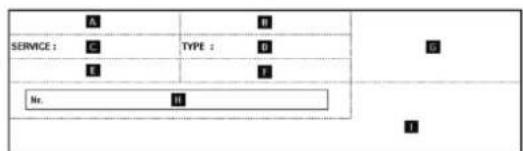
flowchart
graph TD
    A["A"] --> B["B"]
    C["C"] --> D["E"]
    E["E"] --> F["F"]
    G["SERVICE: C"] --> H["TYPE: B"]
    I["No."] --> J["H"]
    K["I"] --> L["I"]