VCA206NFWH - Freezer VEDETTE - Free user manual and instructions
Find the device manual for free VCA206NFWH VEDETTE in PDF.


| Product Type | Freezer |
| Brand | Vedette |
| Model | VCA206NFWH |
| Total Volume | 206 liters |
| Height | 1700 mm |
| Width | 540 mm |
| Depth | 590 mm |
| Energy Class | F |
| Annual Consumption | 278 kWh/year |
| Noise Level | 43 dB(A) (class D) |
| Climate Class | SN/N/ST (10 °C to 38 °C) |
| Freezing Capacity | 9.3 kg/24h |
| Defrost | Automatic (No Frost) |
| Super Freeze Function | Yes |
| Open Door Alarm | Yes |
| Refrigerant | R600a (45 g) |
| Voltage/Frequency | 220-240 V ~ 50 Hz |
| Rated Current | 0.5 A |
| Warranty | 2 years |
| Spare Parts Availability | 10 years |
| Installation Type | Free-standing |
Frequently Asked Questions - VCA206NFWH VEDETTE
User questions about VCA206NFWH VEDETTE
0 question about this device. Answer the ones you know or ask your own.
Ask a new question about this device
Download the instructions for your Freezer in PDF format for free! Find your manual VCA206NFWH - VEDETTE and take your electronic device back in hand. On this page are published all the documents necessary for the use of your device. VCA206NFWH by VEDETTE.
USER MANUAL VCA206NFWH VEDETTE
natural_image
Simple line drawing of a rectangular door or cabinet (no text or symbols)VCA206NFWH
TABLE DES MATIERES
text_image
Warning sign depicting a flame symbol in a yellow triangle with black bordertext_image
Technical diagram of a refrigerator with numbered components and decorative patternsnatural_image
Pure technical diagram showing a 40-degree angled component with no text, numbers, or symbols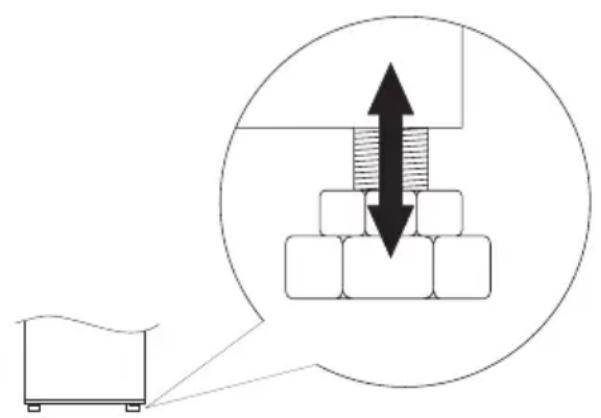
text_image
Diagram showing a mechanical or electrical component with a magnified inset highlighting a stack of cubes and directional arrows.natural_image
Technical line drawing of a mechanical component with internal structure and directional arrow (no text or symbols)natural_image
Line drawing of a wall socket and hand holding an electrical plug (no text or symbols)Classe climatique
natural_image
Recycling symbol composed of three chasing arrows forming a triangle (no text or labels)natural_image
Pure diagram of a rectangular block with curved arrows indicating direction, no text or symbols presentnatural_image
Simple line drawing of a rectangular frame with two vertical arrows pointing inward (no text or symbols)Important safety instructions - 30 -
Structure illustration - 36 -
Ating conditions of the appliance - 37 -
Unpacking -41-
Controls -42-
Operation and functions - 43 -
Using the refrigerator efficiently - 45 -
Washing and maintenance - 46 -
Energy saving tips - 47 -
Reversing the door swing - 48 -
Technical specifications - 50 -
Troubleshooting - 53 -

This product is for household use only!
Please read carefully this manuel before your first use and save it for future reference.
IMPORTANT SAFETY INSTRUCTIONS
This warning is only for EUROPEAN market only!
When using an electrical appliance, basic precautions should always be followed, including the following:
- This appliance can be used by children aged from 8 years and above and persons with reduced physical, sensory or mental capabilities or lack of experience and knowledge if they have been given supervision or instruction concerning use of the appliance in a safe way and understand the hazards involved. Children shall not play with the appliance. Cleaning and user maintenance shall not be made by children without supervision.
- Children aged from 3 to 8 years are allowed to load and unload refrigerating appliances.
- If the supply cord is damaged, it must be replaced by the manufacturer, its service agent or similarly qualified persons in order to avoid a hazard.
- WARNING: Keep ventilation openings, in the appliance enclosure or in the built-in structure, clear of obstruction.
- WARNING: Do not use mechanical devices or other means to accelerate the defrosting process,
other than those recommended by the manufacturer.
- WARNING: Do not damage the refrigerant circuit.
- WARNING: Do not use electrical appliances inside the food storage compartments of the appliance, unless they are of the type recommended by the manufacturer.
- Do not store explosive substances such as aerosol cans with a flammable propellant in this appliance.
- This appliance is intended to be used in household and similar applications such as
- staff kitchen areas in shops, offices and other working environments;
– farm houses and by clients in hotels, motels and other residential type environments;
- bed and breakfast type environments;
- catering and similar non-retail applications.
-
Placed the appliance against a wall with a free distance not exceeding 75 mm and more than 50mm
-
WARNING: When positioning the appliance, ensure the supply cord is not trapped or damaged.
-
WARNING: Do not locate multiple portable socket-outlets or portable power supplies at the rear of the appliance.
-
To avoid contamination of food, please respect the following instructions:
- Opening the door for long periods can cause a significant increase of the temperature in the compartments of the appliance.
- Clean regularly surfaces that can come in contact with food and accessible drainage systems.
- Clean water tanks if they have not been used for 48h; flush the water system connected to a water supply if water has not been drawn for 5 days.
- Store raw meat and fish in suitable containers in the refrigerator, so that it is not in contact with or drip onto other food.
- Two-star frozen-food compartments are suitable for storing pre-frozen food, storing or making ice cream and making ice cubes.
- One-, two- and three-star compartments are not suitable for the freezing of fresh food.
- If the refrigerating appliance is left empty for long periods, switch off, defrost, clean, dry, and leave the door open to prevent mould developing within the appliance.
- Unplug the appliance from outlet when not in use, before putting on or taking off parts, before cleaning.
- Make sure to place the plug all the way into socket when connecting your appliance.
- Insert the plug into a single grounded socket.
- Never use the appliance in place where combustible and inflammable materials are kept.
- For safety reason, be sure to repair or replace parts at an authorized service dealers.
- The motor is permanently lubricated and will require no oil.
- The appliance must be positioned so that the plug is accessible.
- Please according to local regulations regarding disposal of the appliance for its flammable blowing gas. Before you scrap the appliance, please take off the doors to prevent children trapped.
- Ensure the refrigerator is unplugged before cleaning or if the product is not in use.
- To clean the appliance use only mild detergents or glass cleaning products. Never use harsh
detergents or solvents.24. It is not recommended to use this refrigerator with an extension cord or power board. Please ensure that the appliance is plugged directly into the electrical outlet.
-
Do not place hot food or drink into the refrigerator before it cools down to room temperature.
-
Close the door immediately after putting in any items so the inside temperature will not rise dramatically.
-
Keep appliance away from any heat source or direct sunlight.
-
To fix stably, the appliance must be placed on a flat and solid surface. It should not be laid on any soft material.
-
Do not place any other appliance on top of the refrigerator, and do not wet it.
-
To avoid injury or death from electrical shock do not operate the appliance with wet hands, while standing on a wet surface or while standing in water.
-
Do not use outdoors or in wet conditions.
-
Never pull the cord to disconnect it from the outlet. Grasp the plug and pull it from the outlet.
-
Keep the cord away from heated surfaces.
-
Check that the voltage of the power supply in your home is the same as the voltage shown on the rating label of this product.
-
Connect your refrigerator to an independent electrical socket and use a safe ground wire.
-
When there is no electricity or when refrigerator ceases to be used, it should be cleaned in order to prevent it from smelling.
-
Children should be supervised to ensure that they do not play with the appliance.
-
The appliance is not intended to be operated by means of an external timer or a separate remote-control system.
-
This appliance has been incorporated with a grounded plug. Please ensure the wall outlet in your house is well earthed.
-
It is recommended to check regularly the supply cord for any sign of possible deterioration, and the appliance should not be used if the cable is damaged.
-
Regarding the information for replacing of the lamps of the appliance, thanks to refer to the paragraph "CLEANING AND CARE" of the manual.
-
Regarding the information pertaining to the installation, handing, maintenance, servicing and disposal of the appliance, thanks to refer to the paragraph "TRANSPORT AND HANDING" "INSTALLATION" "CLEANING AND CARE" "TROUBLESHOOTING" of the manual.
-
Disposal of the appliance: To prevent possible harm to the environment or human health from uncontrolled waste disposal, recycle it responsibly to promote the sustainable reuse of material resources. And the disposal should only be done through public collection points. Old refrigerators can contain CFC that destroy the ozone; contact the waste treatment center nearest your home for more details on the correct procedures for disposal.
text_image
Warning sign depicting a flame symbol in yellow and black, indicating hazard or caution-
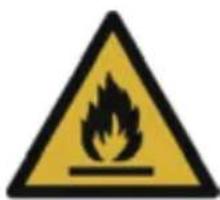
WARNING! Risk of fire – flammable material. Please keep the product far away fire source during using, service and disposal. There are flammable materials at the back of the appliance.
-
If the refrigerant circuit is damaged:
- Avoid naked flames and sources of ignition.
- Thoroughly ventilate the room in which the appliance is situated.
- If you are discarding an old freezer or refrigerator with a lock / catch fitted to the door, ensure that it is left in a disabled condition to prevent
the entrapment of young children when playing.
-
Unplug the appliance from the mains socket when when not in operation and before cleaning.
-
Extreme caution must be used when moving the appliance.
-
Do not give children ice - cream and water ices direct from the freezer as the low temperature may cause freezer burns" on the lips.
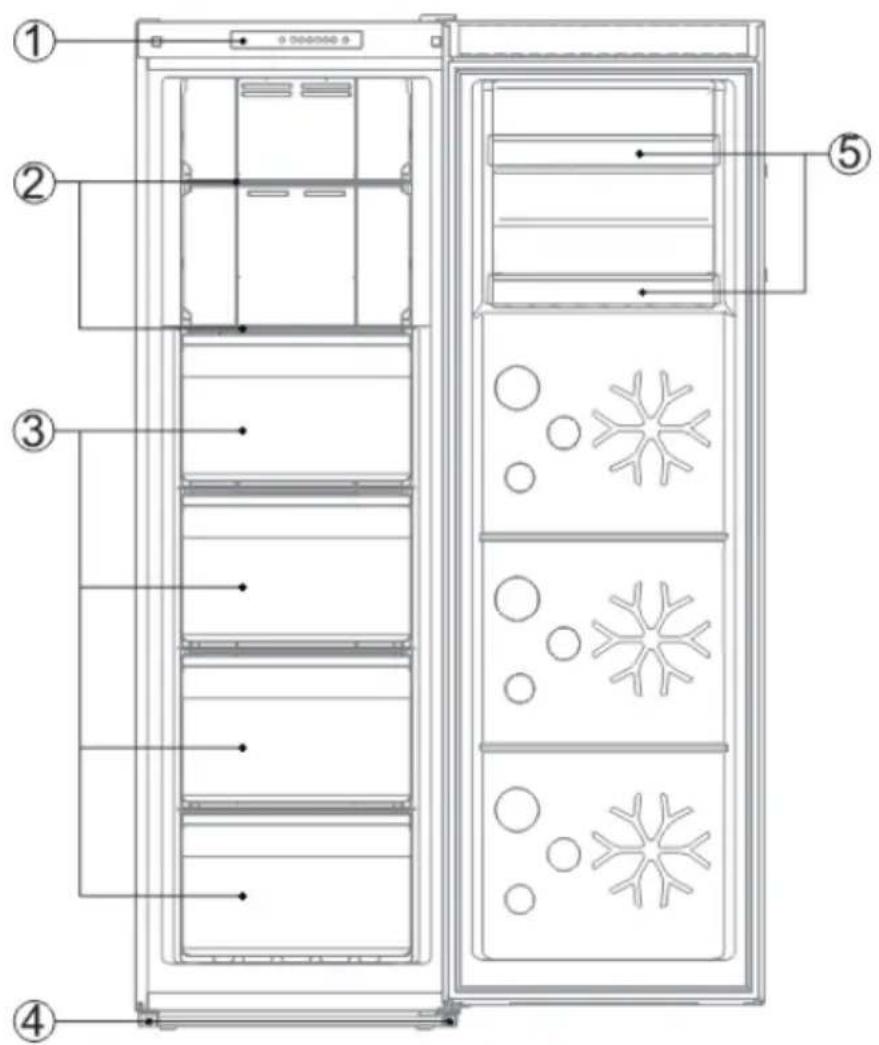
text_image
Technical diagram of a refrigerator with numbered parts and decorative patterns, likely for assembly or labeling purposes.- Control pane
- Freezer Glass Shelves
- Freezer drawers
- Adjustable Feet
- Bottle racks
Note: The glass shelves and the crisper can be removed and inserted for cleaning and storing of food according to the appliance.
ATING CONDITIONS OF THE APPLIANCE AND OPER -
This refrigeration appliance is not intended for use as a built-in appliance.
Installation before using the appliance for the first time
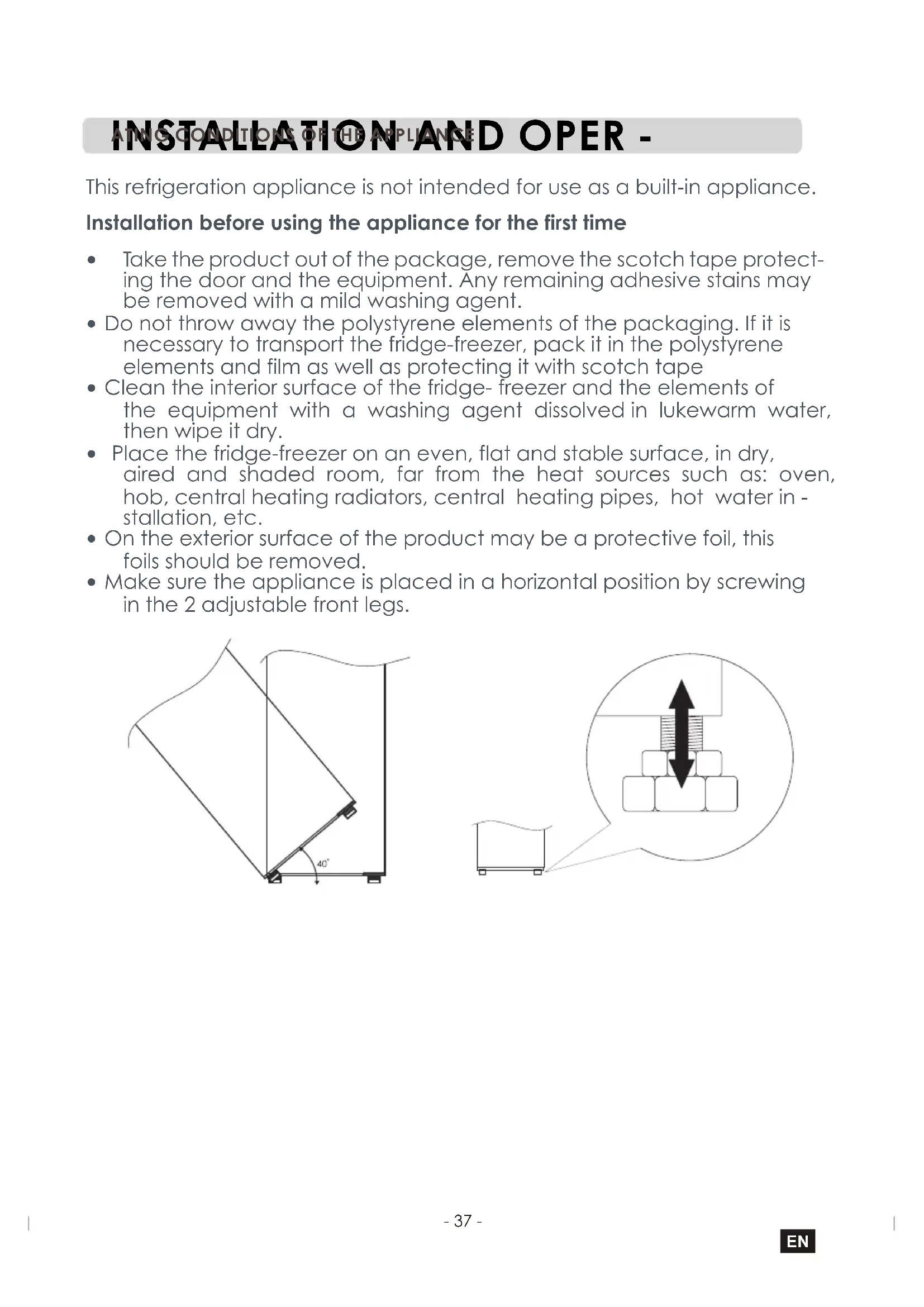
- Take the product out of the package, remove the scotch tape protecting the door and the equipment. Any remaining adhesive stains may be removed with a mild washing agent.
- Do not throw away the polystyrene elements of the packaging. If it is necessary to transport the fridge-freezer, pack it in the polystyrene elements and film as well as protecting it with scotch tape
- Clean the interior surface of the fridge- freezer and the elements of the equipment with a washing agent dissolved in lukewarm water, then wipe it dry.
- Place the fridge-freezer on an even, flat and stable surface, in dry, aired and shaded room, far from the heat sources such as: oven, hob, central heating radiators, central heating pipes, hot water installation, etc.
- On the exterior surface of the product may be a protective foil, this foils should be removed.
- Make sure the appliance is placed in a horizontal position by screwing in the 2 adjustable front legs.
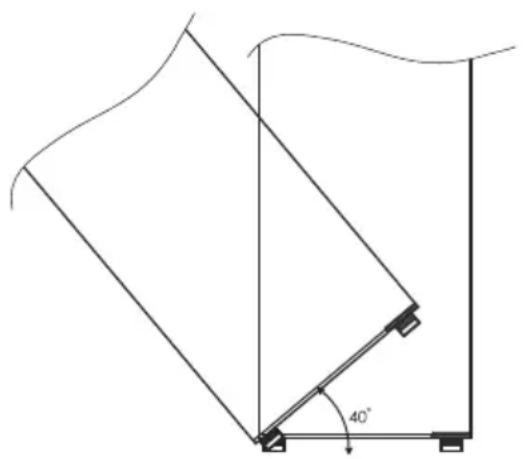
natural_image
Pure technical diagram showing a 40-degree angled component with no text, numbers, or symbols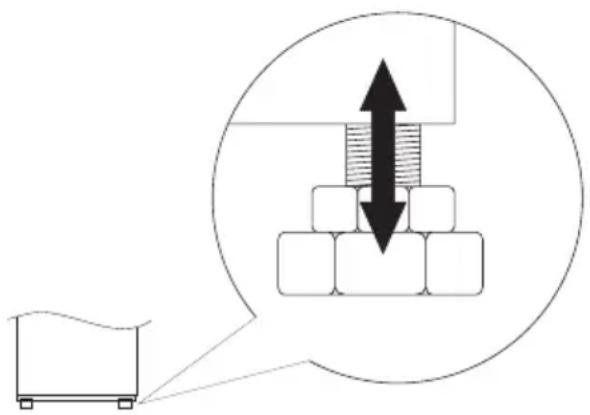
natural_image
Diagram showing a mechanical assembly with a box and a magnified inset of stacked blocks (no text or symbols)- To ensure that the door opens freely, the distance between the side of the appliance (on door hinges side) and the wall is shown on.
| W D | H A B C(°) | E F H | A | B | C(°) | E | F |
| 540 | 590 | 1700 | 890 | 1096 | 125 | 50 | 100 |
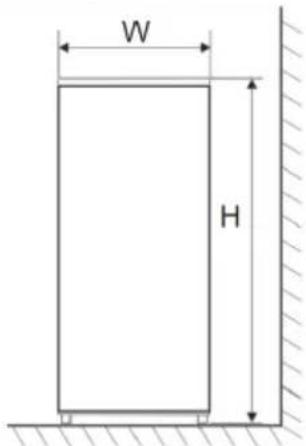
text_image
W H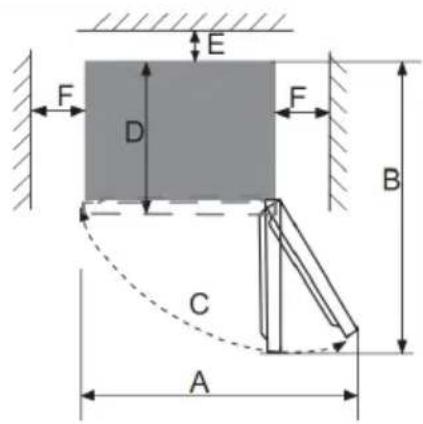
text_image
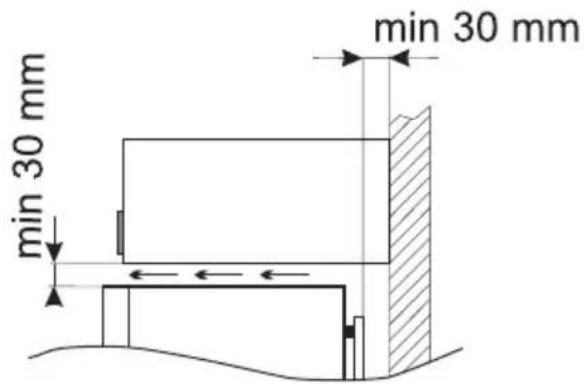
E F D F B C A- Ensure adequate ventilation of the room and free air circulation from all sides of the appliance (fg. 4).*
text_image
min 30 mm min 30 mmMinimum distances from the heat sources
• from the electric gas and other ovens - 30 mm,
• from oil or coal fried ovens - 300 mm,
• from built-in ovens - 50 mm
If there is no possibility of ensuring the above-mentioned distances, provide an appropriate insulation board.
Warning:
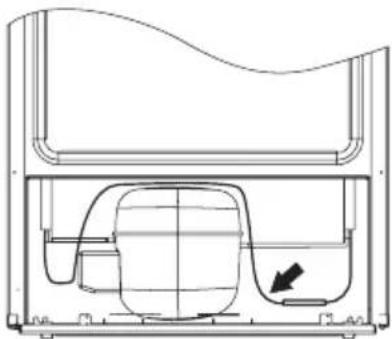
- The rear wall of the refrigerator, in particular, the condenser and other elements of the cooling system must not contact other elements, which may damage them, (e.g. central heating pipes and the water supply pipes).
- It is forbidden to readjust or modify any parts of the unit. It is crucial not to damage the capillary tube visible in the compressor recess. The tube may not be bent, straightened or wound.
- If the capillary tube is damaged by the user the guarantee will be void.
natural_image
Technical line drawing of a mechanical component with internal structure and directional arrow (no text or symbols)- In some models the handle is put into the appliance, You should screw it with Your own screwdriver,
Mains connection
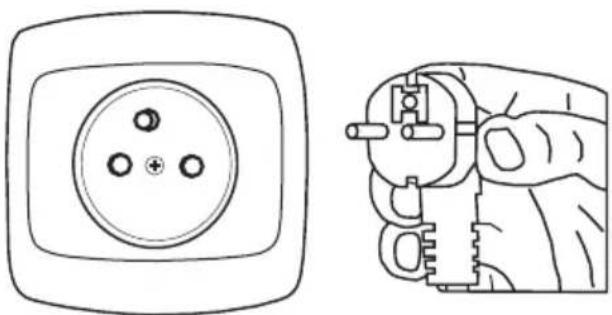
- This appliance should be connected to AC 220-240V 50Hz supply scoket. The socket must be fitted properly, and must be supplied with an earthing conduit and a 10A fuse.
- It is a legal requirement that the appliance is properly earthed. The manufacturer will not be held liable for any damage or injury which may result from the failure to fulfil this requirement.
- Do not use adapters, multiple sockets and two-wire extension leads. If it is necessary to use the extension lead, it must be equipped with a protection ring and a single socket and must have a VDE/GS safety certificate.
- If an extension lead is used (with a protection ring and safety certificate), its socket must be located at a safe distance, away from the sinks, and must not be in a place where in could be flooded by water or waste water.
- See the type plate at the lower part of the internal wall of the appliance for detailed specifications**.
Disconnecting the mains
Make sure the appliance can be easily disconnected from the mains, either by pulling the plug out of the mains socket, or by switching the two-pole switch of.
natural_image
Line drawing of a wall socket and hand holding a plug (no text or symbols)Climate range
The information about the climate range of the appliance is provided on the rated plate. It indicates at which ambient temperature (that is, room temperature, in which the appliance is working) the operation of the appliance is optimal (proper).
Climate class Allowable ambient temperature
| SN Extended Temperate | This refrigeration appliance is intended for use at an ambient temperature ranging between 10°C and 32°C |
| N Temperate | This refrigeration appliance is intended for use at an ambient temperature ranging between 16 °C and 32°C |
| ST Subtropical | This refrigeration appliance is intended for use at an ambient temperature ranging between 16 °C and 38 °C |
| T Tropical | This refrigeration appliance is intended for use at an ambient temperature ranging between 16 °C and 43 °C |
natural_image
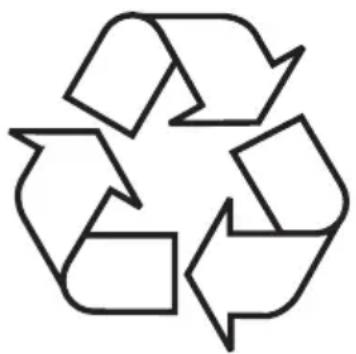
Simple line drawing of a three chasing recycling symbol (no text or labels)During transportation, protective packaging was used to protect the appliance against any damage. After unpacking, please dispose of all elements of packaging in a way that will not cause damage to the environment.
All materials used for packaging the appliance are environmentally friendly; they are 100% recyclable and are marked with the appropriate symbol.
Important! Packaging materials (bags, polyethylene, polystyrene, etc.) should be kept away from children during unpacking.
Appliance controls
The control panel is shown in figure 10, It is also shown below for your reference:
No Frost


Adjust temperature inside the appliance
The control panel is located inside the appliance on the top wall of the compartment. It allows you to adjust the temperature setting in the following sequence: “-16°C -> -18°C -> -20°C -> -22°C -> -24°C or activate the Fast Freeze function. You can change settings by consecutive pressing the SET button.
Fast Freeze function: Use this function after placing a lot of fresh food in the freezer compartment. The appliance will run continuously to quickly freeze the food. When the function is active, the indicator for this function lights up. This function will turn off automatically after 26 hours.
Open door alarm If the appliance door is open for more than 3 minutes, the alarm will sound. Close the door or press any button to silence the alarm. If the door is not closed the alarm will sound again after 3 min - utes.
Error Codes: If the alarm symbol flashes together with one of the displayed temperatures on the control panel, it indicates a malfunction. Contact a service centre.
Defrosting: The appliance features an automatic defrost function. To use the auto defrost function, touch and hold SET for about 15 seconds. All the indicators on the control panel will light up, the compressor will stop and the heater will be on. To cancel the function, touch and hold SET for 3 seconds, or wait until the function completes. If you manually deactivate the defrost function, you need wait 10 minutes before activating it again.
Freezing food
- Practically all the food products, except for vegetables consumed raw, such as lettuce can be frozen.
- Only food products of the highest quality, divided into small portions for single use, should be frozen.
- Products should be packed in materials that are odourless, resistant to air and moisture penetration, and not susceptible to fat. Plastic bags, polyethylene and aluminium sheets are the best wrapping materials.
- The packaging should be tight and should stick to the frozen products. Do not use glass containers.
- Keep fresh and warm foodstuff at ambient temperature away from the products, which have already been frozen.
• We advise you not to place more of fresh food at a time to the freezer per day (see table witch technical specification). - In order to maintain optimum quality of the frozen food, reorganise the food that is in the middle of the freezer, so that it does not touch the products that are not yet frozen.
- It is recommended that you move the already frozen products to one side and place the fresh products that are to be frozen on the opposite side, as close to the rear and side walls as possible.
• To freezing products, use space marked . * *** - Bear in mind that the temperature in the freezer is affected by several factors, including the ambient temperature and the quantity of food products in the chamber, the frequency of opening the door, the amount of frost in the freezer, and the thermostat setting.
- If you cannot open the freezer door immediately after closing it, allow 1-2 minutes for the negative pressure to compensate, and try again to open the door.
The storage time for frozen products depends on their quality before freezing when fresh, and on the storage temperature. The following storage periods are recommended when the temperature of -18^ or lower is maintained.
Products Months
| Beef 6-8 |
| Veal 3-6 |
| Giblets 1-2 |
| Pork 3-6 |
| Poultry 6-8 |
| Fish 3-6 |
Do not store frozen food in rapid cooling chamber. Ice cubes can be prepared and stored in this chamber.
Note: If the appliance does not have a freezer compartment ( ) is not suitable for freezing foodstuffs.
Practical everyday tips
- Do not place freezers next to radiators, heaters, stoves or in direct sunlight.
- Make sure that air vents are not covered up and clean the dust off them once or twice a year.
- Select the right temperature: -18^ in your freezer is sufficient.
- When on holiday, turn up the temperature in your fridge.
- Only open your fridge or freezer when necessary. It helps if you know what food each contains and where it is located. Return food to the fridge or freezer as soon as possible after you have used it so that it does not warm up too much.
- Wipe the inside of your fridge regularly with a cloth soaked in a mild detergent.
- Keep the seal around the door clean, otherwise it will not shut properly. Always replace broken seals.
Understanding the stars

Temperature is at least -6^ ; sufficient to store frozen food for about a week. Drawers or compartments marked with one star used to be a feature of (mostly) cheaper fridges.

Food can be stored at -12^ C or below for 1-2 weeks without losing its taste. Not suitable for freezing food.
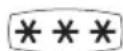
This rating is mainly used to store foods at -18^ C or below. Can also be used to freeze up to 1 kilogram of fresh food.
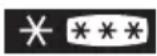
This appliance is suitable for storing foods at -18°C or be -low and freezing larger quantities of fresh foods.
Never clean the product's casing or plastic parts using solvents or strong, abrasive detergents (e.g. washing powders or creams)! Use mild liquid detergents and soft cloths only. Do not use sponges.
Automatic freezer defrosting
The freezer chamber has been equipped with an automatic defrosting function (no-frost). The food is frozen in the cooled circulation air, and the moisture from the freezer chamber is discharged outside. As a result, no ice and frost is produced in the freezer and the products do not freeze on each other.
Washing freezer chambers manually
It is recommended to wash the freezer chambers at least once a year. This prevents the formation of bacteria and bad odours. Switch of the appliance, remove the food from the chambers and wash them using water with a mild detergent. Then, wipe the chambers dry with a cloth.
WARNING! You must not put an electric heater, a heating fan or a hair dryer into the freezer by any means.
• Install the fridge or freezer in a cool place out of direct sunlight and away from cookers, heaters, dishwashers or any hot air emitting items.
- Do not set the fridge and freezer temperatures lower than necessary. Set the internal temperature within the correct range e.g.adjust the thermostat at middle position for 4^ in the fridge compartment and -18^ in the freezer respectively.
- Let pre-cooked foods cool down before placing them in the fridge or freezer. This will prevent the internal temperature of the fridge from rising.
- Keep your fridge full, but not over crowded, this helps reduce «cold» air loss. Meanwhile, avoid overloading the fridge or freezer. Try to leave about 20% free space for air circulation.
- To prevent cold air escaping, limit the frequency of opening door. When retuning from shopping, sort foods to be kept in your fridge before opening the door. Only open the door to put food in or take it out.
- Make sure the door seal is clean and in good condition. It should hold a piece of paper tightly in place when shut.
- Defrost regularly or when ice is more than 5mm thick. Thick ice covering the inner sides significantly increases energy use.
- The combination of the drawers, baskets and shelves shown in the device description is optimal for efficient energy savings. Changing the combination proposition could alter the efficiency.
REVERSING THE DOOR SWING
-
Make sure that your refrigerator is unplugged.
-
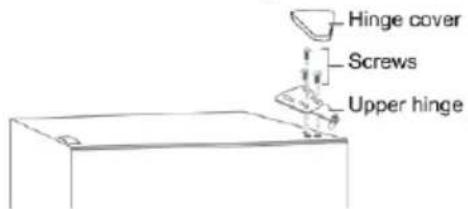
Pry the hinge cover up and off, remove the three screws that secure the upper hinge to the door, then remove the hinge.
text_image
Hinge cover Screws Upper hinge-
Remove the freezer compartment door from the cabinet.
-
Remove the screws that secure the lower hinge to the right side of the cabinet, then remove the hinge.
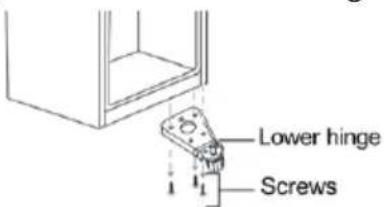
text_image
Lower hinge Screws- Remove the washer and nut that secure the pin shaft to the right hole on the lower hinge, then remove the shaft
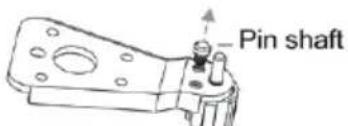
text_image
Pin shaft- Insert the pin shaft into the left hole on the lower hinge, then secure the shaft with the washer and nut.
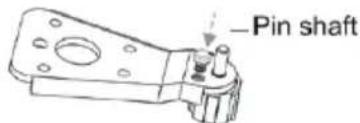
text_image
—Pin shaft-
Install the lower hinge on the left side of the cabinet.
-
Remove the screw that secures the door stop from the bottom right of the freezer compartment door, then remove the door stop and install to the bottom left side.
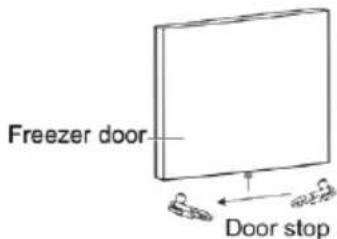
text_image
Freezer door Door stop-
Install the freezer compartment door.
-
Move the door bushing from the top right side of the freezer door to the top left side of the door. And move the left hole cover to the right side.
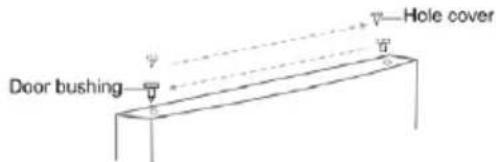
text_image
Door bushing Hole cover- Remove the hole cover from the top left side of the cabinet and secures the cover on the top right side of the cabinet.
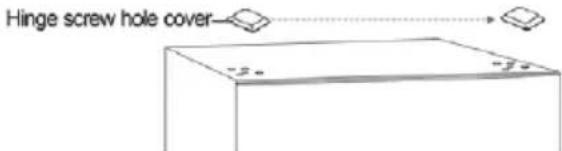
text_image
Hinge screw hole cover -2.-
Secure the upper hinge to the top left side of the cabinet with the three screws you removed previously. Before you tighten the upper hinge screws, make sure that the top of the door is level with the cabinet and that the rubber gasket makes a good seal.
-
Install the hinge cover over the hinge on the top left side of the cabinet.
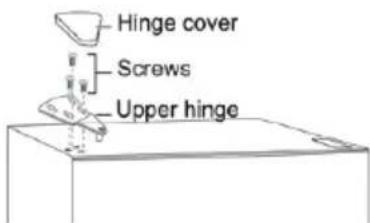
text_image
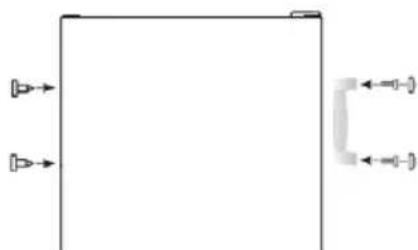
Hinge cover Screws Upper hinge- Remove the left hole plugs, screw off the bolts, and remove the right hole plugs.
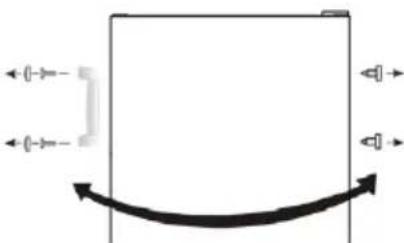
natural_image
Pure diagram of a rectangular block with curved arrows indicating direction, no text or symbols present- Install the right hole plugs on the left side of the door, on the right side of the door.
natural_image
Simple line drawing of a rectangular frame with three vertical arrows pointing inward (no text or symbols)Note: Ensure the rubber gaskets are making a good seal with the cabinet all the way around the doors before tightening the hinge screws.
TECHNICAL SPECIFICATIONS
| General information cooling | |||||
| Supplier's name or trade mark: Vedette | |||||
| Supplier's address: BUT INTERNATIONAL, 1 A VENUE SPINOZA 77184 EMERAINVILLE, FRANCE | |||||
| Model iden tifierVCA206NFWH | |||||
| Type of refrigerating appliance: | |||||
| Low-noise appliance: | no | Design type: | freestanding | ||
| Wine storage appliance: no Other refrigerator | ting appliance: | yes | |||
| General product parameters: | |||||
| Parameter | Value | Parameter | Value | ||
| Overall dimensions (millimetre) | Height | 1700 | Total volume (dm3ou l) | 206 | |
| Width | 540 | ||||
| Depth | 590 | ||||
| EEI 125 Energy e | fficiency class F | ||||
| Airborne acoustical noise emissions (dB(A) re 1 pW) | 43 | Airborne acoustical noise emission class | D | ||
| Annual energy consumption (kWh/a) Climate class: temperate/subtropical | |||||
| Minimum ambient temperature (°C), for which the refrigerating appliance is suitable | 10 | Maximum ambient temperature (°C), for which the refrigerating appliance is suitable | 38 | ||
| Winter setting | no | ||||
| Compartment Parameters: | |||||
| Compartment type | Compartment parameters and values | ||||
| Compartment Volume (dm3or l) | Recommended temperature setting for optimised food storage (°C) These setting shall not contradict the storage condition in Annex IV, Table 3 | Freezing capacity (kg/24 h) | Defrosting type (auto-defrost = A, manual defrost = M) | ||
| Pantry no | - - - - | ||||
| Wine storage no | - - - - | ||||
| Cellar no | - - - - | ||||
| Fresh food | no | - - - - | |||
| Chill no | - | - | - | - | |
| Compartment type | Compartment parameters and values | |||||
| Compartment Volume (dm3 or l) | Recommended temperature setting for optimised food storage (°C) These settings shall not contradict the storage conditions set out in Annex IV, Table 3 | Freezing capacity (kg/24 h) | Defrosting type (auto-defrost = A, manual defrost = M) | |||
| 0-star or ice-making | no | - | - | - | - | |
| 1-star | no | - | - | - | - | |
| 2-star | no | - | - | - | - | |
| 3-star | no | - | - | - | - | |
| 4-star | yes | 206 | -18 | 9.3 | A | |
| 2-star section | no | - | - | - | - | |
| Variable temperature compartment | no | - | - | - | - | |
| For 4-star compartments | ||||||
| Fast freeze facility | Yes | |||||
| Light source parameters: | ||||||
| Type of light source | N/A | |||||
| Energy efficiency class | N/A | |||||
| Minimum duration of the guarantee offered by the manufacturer: 2 years | ||||||
| Additional information: N/A | ||||||
| Weblink to the manufacturer's website, where the information in point 4(a) Annex of Commission Regulation (EU) 2019/2019 is found: www.but.fr | ||||||
| Reference: | VCA206NFWH |
| Rated voltage: | 220-240V~ |
| Ampere: | 0.5A |
| Rated frequency: | 50Hz |
| Climate class: | SN/N/ST |
| Refrigerant: | R600a(45g) |
| Protection against electrical shock: | I |
| Insulation foam: | CYCLOPENTANE |
Climate class:
- Extended temperate(SN): 'this refrigerating appliance is intended to be used at ambient temperatures ranging from 10 °C to 32 °C';
- Temperate(N): 'this refrigerating appliance is intended to be used at ambient temperatures ranging from 16 °C to 32 °C';
- Subtropical(ST): 'this refrigerating appliance is intended to be used at ambient temperatures ranging from 16 °C to 38 °C';
- Tropical(T): 'this refrigerating appliance is intended to be used at ambient temperatures ranging from 16 °C to 43 °C';
Note: More data information, please scan the QR code on the energy label.
| Symptom | Cause | Solution |
| The appliance does not work | There is no power supply | Check the plug connecting it others appliance, or verify that the appliance is connected to the plug |
| The fuse doesn't work | Replace the fuse | |
| The appliance makes a lot of noise | The appliance is too close to the wall, or is not stable, or the accessories inside the refrigerator are placed in wrong position | Stabilize the base of the refrigerator by adjusting the position of feet, take away the device of the wall, place correctly the accessories inside the refrigerator |
| The appliance doesn't cool enough | The door is too often opened or was left opened for a long time | Close the door and do not open it too much frequently |
| The refrigerator is too close to the wall | Take away the device of the wall to favor the ventilation | |
| The refrigerator is too full | Remove food of the device | |
| The appliance doesn’t cool enough | The temperature is badly, adjusted | Adjust the temperature setting: “-16°C -> -18°C -> -20°C -> -22°C -> -24°C or activate the Fast Freeze function. |
| There are smells in the appliance | Food made obsolete inside the refrigerator | Throw away obsolete food and wrap the other |
| The inside of the device at need to be cleaned | Clean the inside of the refrigerator |
If your device shows the other symptoms that those described above, please call the service after sale of the shop a retailer.
The following symptoms are not breakdowns:
- The noise of the cooling liquid which circulates in pipes can be heard, it is normal.
- The humidity on the surface outside of the device during the wet seasons is not a problem of the device; you just need to wipe it with a dry soft cloth.
- The compressor and the condenser can warm more during the periods of strong heat.
- The frame of the door is a bit hot; it means that the condenser works to evacuate the humidity of air.
Note:
We decline Liability for any damage or accident derived from any use of this product which is not in conformity with the instructions contained in thisbooklet.
| CORRECT DISPOSAL OF THIS PRODUCT | |
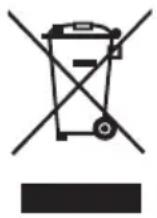 | European directive 2012/19/EU on Waste from Electrical and Electronic Equipment (WEEE), requires that used household appliances are not thrown into the normal municipal waste stream. Used appliances must be collected separately in order to optimize the rate of recovery and recycling of materials that compose them, and to reduce the impact on human health and on the environment. The crossed bin symbol is affixed to all the products to remind you of the obligations of separated collection. |
Note:
- In accordance with Article L. 217 of the Consumer Code, your product has 2 year legal guarantee of conformity.
- Period of availability of repair spare parts: 10 years.
- To contact our After-Sales Service, before going to BUT store, call 09 78 97 97 97, from Monday to Saturday from 8:00 a.m. to 8:00 p.m. (Price of a local call).