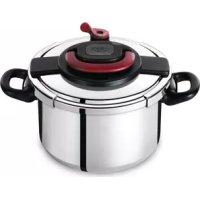
Clipso+ P43715 - Saucepan TEFAL - Free user manual and instructions
Find the device manual for free Clipso+ P43715 TEFAL in PDF.



| Product type | Pressure cooker |
| Brand | Tefal |
| Model | Clipso+ P43715 |
| Capacity | 10 litres |
| Bowl diameter | 25 cm |
| Bottom diameter | 20 cm |
| Bowl and lid material | Stainless steel |
| Compatible heat sources | Gas, electric, halogen, induction, radiant |
| Operating pressure | 80 kPa (high) |
| Maximum safety pressure | 120 kPa |
| Main functions | Pressure cooking, steam cooking, use as a stockpot |
| Safety features | Locking, opening, overpressure (safety valve + gasket) |
| Pressure indicator | Yes, prevents opening under pressure |
| Bowl cleaning | Dishwasher or warm water with dish soap |
| Lid cleaning | Dishwasher after removing the valve and gasket |
| Gasket cleaning | By hand, do not put in dishwasher |
| Spare parts available | Gasket (X10100 or X1010003), steam basket (X1030002), tripod (X1030007) |
| Bowl warranty | 10 years against metal structure defects |
| Other parts warranty | According to applicable legislation |
| Included accessories | Steam basket, tripod, stockpot lid (depending on model) |
Frequently Asked Questions - Clipso+ P43715 TEFAL
User questions about Clipso+ P43715 TEFAL
0 question about this device. Answer the ones you know or ask your own.
Ask a new question about this device
Download the instructions for your Saucepan in PDF format for free! Find your manual Clipso+ P43715 - TEFAL and take your electronic device back in hand. On this page are published all the documents necessary for the use of your device. Clipso+ P43715 by TEFAL.
USER MANUAL Clipso+ P43715 TEFAL
natural_image
Two stainless steel cooking pot containers with black lid handles, shown from different angles (no text or symbols visible)User's Guide - Guide de l'utilisateur Οδηγίες χρήσης - Kullanım kılavuzu
natural_image
Illustration of a hand pressing down on a cylindrical container with a handle, enclosed in a circular frame (no text or symbols)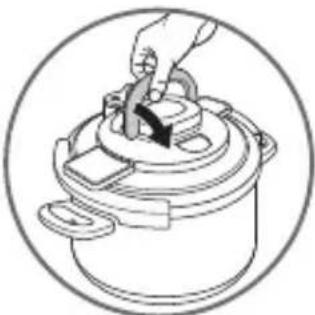
natural_image
Illustration of a hand using a tool to press or install a cylindrical component, enclosed in a circle (no text or symbols)
natural_image
Illustration of a hand holding a tool interacting with a lid and a perforated lid (no text or symbols)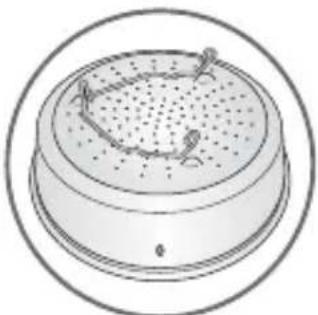
natural_image
Technical line drawing of a circular component with internal perforated structure (no text or symbols)
natural_image
Line drawing of a cooking pot with a lid and food inside, enclosed in a circle (no text or symbols)
natural_image
Illustration of a hand using a tool to press or install a mechanical component, with a downward arrow indicating compression (no text or symbols present)fig. 7*
fig. 5* fig. 6* fig. 8
natural_image
Hand holding a circular device with a knob and control buttons, enclosed in a circular arrow (no text or symbols)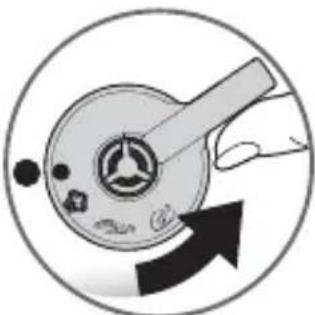
natural_image
Illustration of a hand turning a circular mechanical component with an arrow indicating rotation (no text or symbols)
natural_image
Illustration of a hand using a tool to press or install a mechanical component, with an upward arrow indicating motion (no text or symbols present)
natural_image
Diagram of a mechanical component with concentric rings and directional arrows, no text or symbols present.fig. 11 fig. 10 fig. 12
fig. 9
natural_image
Illustration of a cooking pot with steam rising and dropping liquid, enclosed in a circular frame (no text or symbols)
natural_image
Diagram of a mechanical or electrical component with directional arrows indicating flow or movement (no text or symbols)
natural_image
Illustration of a hand using a tool to clean or wash the pipe (no text or symbols present)
natural_image
Illustration of a hand pouring liquid into a small container on a circular base (no text or symbols)fig. 15 fig. 16
fig. 13
fig. 14

natural_image
Illustration of a hand pouring liquid into a circular container with a small bowl (no text or symbols)
natural_image
Line drawing of a cooking pot with lid and side handles, enclosed in a circular border (no text or symbols)
natural_image
Technical line drawing of a mechanical component with no visible text or symbols
natural_image
Technical line drawing of a mechanical component with no visible text or symbolsfig. 17 fig. 18 fig. 19 fig. 20
IMPORTANT SAFEGUARDS
For your safety, this device complies with the applicable standards and regulations:
- Pressure vessel appliance
- Materials in contact with food
- Environment
- This product has been designed for domestic use only.
- Any commercial use, inappropriate use or failure to comply with the instructions, the manufacturer accepts no responsibility and the guarantee will not apply.
- Take time to read all of the instructions and always refer back to the "User's Guide".
- As with any cooking appliance, ensure close supervision if you are using the pressure cooker with children nearby.
- Do not put your pressure cooker into a hot oven.
- When the pressure cooker is under pressure, take great care when moving it. Do not touch the hot surfaces. Use the handles and knobs. Wear gloves if necessary.
- Regularly check that the pan handles are fixed properly. Tighten if necessary.
- Do not use your pressure cooker for any purpose other than that for which it is designed.
- Your pressure cooker cooks under pressure. Burns could result from boiling over if not used properly. Make sure that the pressure cooker is properly closed before bringing it up to pressure. Refer to section “Closing”.
- Always make sure that the valve is in the decompression position before opening your pressure cooker.
- Never force the pressure cooker open. Make sure that the internal pressure has returned to normal. Refer to section “Safety”.
- Never use your pressure cooker without liquid: this could cause serious damage. Always make sure that there is enough liquid in it during cooking.
- Use heat source(s) that are compatible with your pressure cooker, in line with the instructions for use.
- Never make milk-based recipes (such as rice pudding, semolina pudding ...) in your pressure cooker.
- Do not use rock salt in your pressure cooker, but rather add table salt when the cooking is nearly finished.
- Never fill your pressure cooker more than two-thirds full (maximum fill mark).
- For food that expands during cooking, like rice or dried vegetables or stewed fruit, etc., never fill your pressure cooker more than half full. For certain soups like pumpkin or courgette, give your pressure cooker a few minutes to cool down, then cool it down fully by placing it under cold running water.
- After cooking meat which has an outer layer of skin (such as ox tongue), which could swell due to the effects of pressure, do not pierce the skin after cooking if it appears swollen: you could get burnt. Pierce it before cooking.
- When cooking food with a thick texture (chick peas, rhubarb, stewed fruit, etc.) the pressure cooker should be shaken slightly before opening to ensure that the food does not spurt out.
- Always check that valves are clear before use. Refer to section "Before cooking".
- Do not use the pressure cooker to fry under pressure using oil.
- Do not interfere with the safety systems, except for cleaning and maintenance in accordance with instructions.
- Use only original TEFAL spare parts suitable for your model. Particularly, use a TEFAL pan and lid.
- Alcohol vapours are flammable. Bring to a boil for about 2 minutes before placing the lid. Watch your appliance when preparing alcohol-based recipes.
- Do not use your pressure cooker to store acidic or salty food before and after cooking to avoid damaging your pan.
- You can use the pan to cook food without the lid. Do not use the lid if you do not intend the food to be cooked under pressure.
- If you notice that your pressure cooker is broken or cracked, do not attempt to open it under any circumstances; wait for it to cool down completely before moving it. Do not use it again and take it to a TEFAL Approved Service Centre for repair.
KEEP THESE INSTRUCTIONS
Descriptive diagram
EN
A. Operating valve
B. Steam release outlet
C. Valve positioning mark
D. Pressure indicator
E. Safety valve
F. Opening/Closing handle
G. Pressure cooker lid
H*. Pan lid*
I. Seal
J*. Steaming basket*
K*. Trivet*
L*. Fixed pan handle*
M*. Handle release button*
N*. Folding pan handle*
O. Pan
P. Maximum fill mark
Characteristics
Diameter of the base of the pressure cooker - references
| Capacity | ∅ Cooker | ∅ Base | CLIPSO®+fixed handles | CLIPSO®+folding handles | CLIPSO®+gourmet | Material body and lid |
| 4,5 L 22 | cm 18 cm | P43606 | - | - | Stainless steel | |
| 6 L | CLIPSO®+22 cm | CLIPSO®+18 cm | - | P43707 | - | |
| CLIPSO®+Gourmet25 cm | CLIPSO®+Gourmet20 cm | - | - | P43813 | ||
| 8 L | 25 cm | 20 cm | - | P43714 | - | |
| 10 L | 25 cm | 20 cm | - | P43715 | - |
Standards information
Upper operating pressure limit: 80 kPa
Maximum safety pressure limit: 120 kPa
Compatible heat sources
GAS

SEALED
PLATE
ELECTRIC

CERAMIC
HALOGEN

INDUCTION
[Non-Text]

ELECTRIC
COIL

USING
POTHOLDERS

- Your pressure cooker can be used on all heat sources including induction except Aga type cookers.
Never heat your pressure cooker when it is empty or you may damage it.
- Use a heating plate with a diameter equal to or less than that of the pressure cooker base. On ceramic and halogen hobs, make sure that the base of the pan is clean and dry.
- On gas, the flame should not extend beyond the diameter of the pan.
For all heat sources, make sure that your pressure cooker is well centered.
TEFAL Accessories
- The following pressure cooker accessories are available from shops:
| Accessories | |||
| CLIPSO® + CLIPSO | ® + gourmet | ||
| 4,5/6L 8/10L 6L | |||
| Seal X1010004 X1010003 X1010003 | |||
| Steaming basket* 792185 X1030002 X1030002 | |||
| Trivet X1030007 - | |||
- To replace other parts or have repairs performed, please call on your local TEFAL Approved Service Centre.
- Only use TEFAL genuine parts designed for your product model.
Use
Opening
- Move the Opening/Closing handle from the horizontal to the vertical position (the jaws open) - fig. 1.
- Lift the lid.
If you cannot open the lid:
- Move the Opening/Closing handle back to the horizontal position and check that the pressure indicator (D) is in low position.
The jaws must be in contact with the edge of the lid.
- Make sure that the Opening/Closing handle is in the vertical position and that the jaws are open.
- Place the lid on the pressure cooker, taking care to ensure that it is correctly positioned.
- Move the Open/Close handle from the vertical to the horizontal position - fig. 2.
- Apply a little force at the end when closing to trigger the locking mechanism.
- Once in the closed position, it is normal that the lid can turn freely on the pressure cooker pan.
If you cannot close the lid:
- Check that the seal is in place properly.
Minimum and maximum filling
• Minimum 250 ml (2 glasses) - fig. 3.
• Maximum two-thirds full (P) - fig. 4.
For some food:
- For food that expands during cooking, like rice or dried vegetables or stewed fruit, never fill the pressure cooker more than half full. For soups, we recommend you to carry out a fast pressure release (refer to section "End of cooking").
Using the steaming basket\*
Food placed in the steaming basket* must not touch the pressure cooker lid.
- Pour 750 ml of water into the base of the pan (O).
- Put the trivet* (K) under the steaming basket* (J) - fig. 5 - 6.
- Place the steaming basket into the bottom of the cooker - fig. 7.
Use of the operating valve
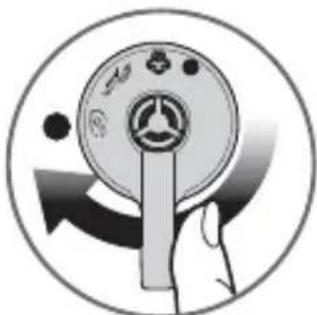
- Put the operating valve (A) on the steam release outlet (B) matching the symbol ● of the valve with the valve positioning mark (C) - fig. 8.
- Press down hard - fig. 8 and turn it to the cooking position - fig. 9.
To cook delicate food and vegetables:
- Position the symbol of the valve in front of the valve positioning mark (C).
To cook meat, fish and frozen food:
- Position the symbol of the valve in front of the valve positioning mark (C).
To remove the operating valve:
- Press the operating valve (A) and align the symbol
- with the valve positioning mark (C) - fig. 10.
- Remove the operating valve - fig. 11.
Folding handles\*
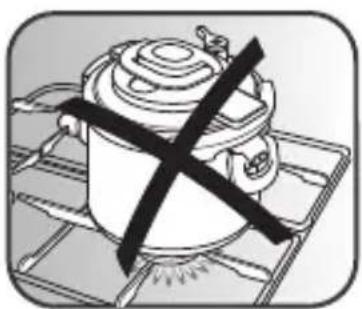
Never put the pressure cooker with folded handles on a heat source.
natural_image
Simple line drawing of a cooking pot on a stove with a crossed black X mark (no text or symbols)Before use, make sure to remove the labels from each of the handles.
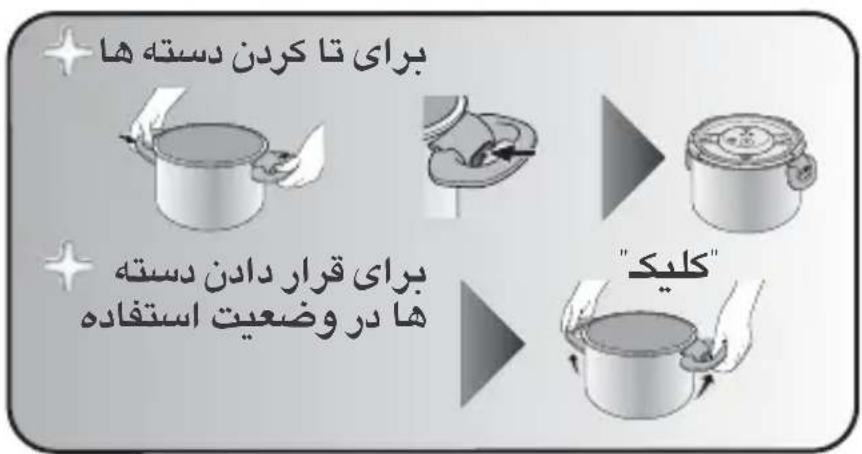
Do not try to fold the handles without pressing the release buttons.

flowchart
graph LR
    A["To fold the handles:"] --> B["To put the handles in the operating position:"]
    B --> C["CLICK"]
First use
- Put the trivet* (K) under the steaming basket* (J) - fig. 5 - 6.
- Place the steaming basket* (J) in the pressure cooker - fig. 7.
- Fill the pressure cooker to the two-thirds mark (P) with cold water.
- Close the pressure cooker.
- Place the operating valve (A) and position it on Ⓩ.
- Place the pressure cooker on a heat source set to maximum power.
- When steam starts to escape from the valve, reduce the heat source and set a timer for 20 minutes.
• After 20 minutes, turn off the heat. - Gradually turn the operating valve to the position ⏻.
- When the pressure indicator (D) drops down, the pressure cooker is no longer under pressure.
- Open the pressure cooker - fig. 1.
- Clean it.
Position your pressure cooker so that the steam is released away from you.
Before cooking
- Before each use, lift the operating valve (A) - fig. 10 - 11 and visually check, in daylight, to see that the steam release outlet (B) is not blocked - fig. 12.
- Check that the safety valve (E) can move freely: Refer to the section headed “Cleaning and Maintenance”.
- Fill the pressure cooker with the food and the necessary amount of liquid for cooking (see Minimum and Maximum filling' section).
- Close the pressure cooker - fig. 2.
- Put the operating valve (A) in its place - fig. 8.
- Press down hard and turn it to the cooking position - fig. 9.
- Make sure that the pressure cooker is properly closed before starting to use it.
- Place the pressure cooker on a heat source set to maximum power.
During cooking
- When steam escapes through the operating valve continuously, and a regular hissing sound (PSCHHHT) is heard, reduce the heat source.
- Set a timer for the cooking time stated in your recipe.
- During cooking, check that the valve murmurs regularly. If there is not enough steam, increase the heat source slightly; if there is too much steam, reduce the heat source.
The pressure indicator (D) prevents the pressure cooker from increasing in pressure if it is not properly closed.
As with any cooking appliance, watch over it carefully especially if you are using your pressure cooker around children.
Steam is very hot as it exits the steam release outlet.
Finishing cooking
The pressure indicator (D) prevents you from opening the pressure cooker if it still under pressure.
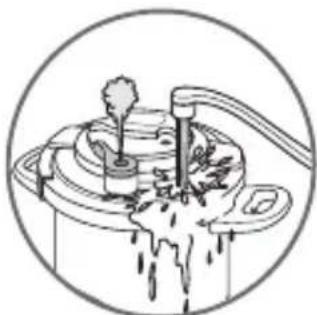
If the pressure indicator (D) does not drop, place the base of your pressure cooker into a sink filled with cold water - fig. 13.
Never interfere with the pressure indicator.
If food or liquid starts to spray out while you are releasing the steam, return the operating valve (A) to cooking position or 📋 then release the steam using the fast pressure release method described opposite.
To release the steam:
- Once the heat is turned off, you have two options:
- Slow pressure release: Turn the operating valve (A) to the position ⚙When the pressure indicator (D) drops down, the pressure cooker is no longer under pressure. Make sure that your pressure cooker is positioned so that the steam is directed away from you.
- Fast pressure release: put your pressure cooker into a sink, under cold running water. - fig. 13. When the pressure indicator (D) drops down, the pressure cooker is no longer under pressure. Turn the operating valve (A) to the position
- You can open the pressure cooker - fig. 1.
- For models with pan equipped with metal handles*, use potholders.
- When cooking frothy or starchy foods, do not release the pressure by turning the operating valve (A). Instead lift the pressure cooker away from the heat source, leave the operating valve (A) in the cooking position and let the cooker cool slowly at room temperature (takes about 15 minutes) until the pressure indicator drops down. Reduce the recommended cooking time a little.
Cleaning and maintenance
Cleaning the pressure cooker
For best operation, make sure to follow these cleaning and maintenance recommendations every time the pressure cooker is used.
- Wash the pressure cooker (pan and lid) after each use using warm water with washing-up liquid in it. Follow the same procedure for the basket*.
- Never use bleach or chlorine products.
- Do not overheat your cooker when it is empty.
To clean the inside of the pressure cooker:
- Wash with a sponge pad and washing-up liquid.
- If the interior of the steel pan has an iridescent sheen, clean it using white vinegar or a special stainless steel cleaning product.
To clean the outside of the pressure cooker:
- Clean it with a sponge and washing-up liquid.
To clean the pressure cooker lid (G):
- Clean the lid with a sponge and washing-up liquid.
To clean the lid seal (I):
- After using the pressure cooker, always clean the seal (I) and its groove using a sponge, warm water and washing-up liquid.
- To refit the lid seal, refer to the drawing - fig. 14 and make sure that the words “face côté couvercle” are against the lid.
Replace the pressure cooker seal every year or if it shows signs of splitting or damage.
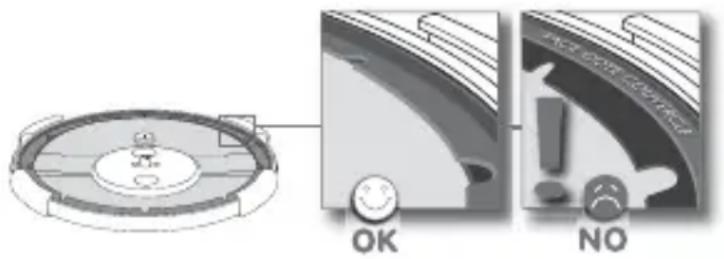
The browning and marks which may appear following long term use do not affect the operation of the pressure cooker.
You can wash the pressure cooker pan and the steaming basket in the dishwasher.
After removing the operating valve (A) and the seal (I), you can wash the lid in the dishwasher.
Never unscrew the screw and the screw nut inside the lid.
Never wash the seal in the dishwasher.
To clean the operating valve (A):
- Remove the operating valve (A) - fig. 10 - 11.
- Wash the operating valve (A) under running tap water - fig. 15.
- Check its mobility: see figure on the right.
To clean the steam release outlet (B) located on the lid:
- Remove the operating valve (A) - fig. 10 - 11.
- Visually check, in daylight, to see that the steam release outlet is round and not blocked - fig. 12. If necessary, clean with a toothpick - fig. 16 and rinse.
To clean the safety valve (E):
- Wash the part of the safety valve located inside the lid under running water.
- Check that it is moving freely by pressing hard with a cotton swab on the pin - fig. 17.
To replace the pressure cooker seal:
- Replace the pressure cooker seal every year or if it shows any signs of splitting or damage.
- Always use an original TEFAL seal suitable for your model.
To store the pressure cooker:
- Turn the lid upside down on the pressure cooker - fig. 18.
If the pressure cooker has folding handles\*:
- Press the handle release button (M). Refer to the section headed "Folding Handles."

natural_image
Diagram of a dental implant with three downward arrows indicating force or pressure (no text or symbols present)For a longer pressure cooker life, do not overheat your pressure cooker pan when it is empty.
You must have your pressure cooker checked in a TEFAL Approved Service Centre after 10 years of use.
Safety
Your pressure cooker is provided with a number of safety mechanisms:
- Closing safety:
- The jaws must be in contact with the rim of the lid. If this is not the case, there is steam leakage from the pressure indicator and the pressure cooker will not build up pressure.
- Opening safety:
- If the pressure cooker is under pressure, the Opening/Closing handle (F) cannot be operated.
- Never try to force the pressure cooker open.
- Above all do not interfere with the pressure indicator (D).
- Make sure that the internal pressure has fallen.
- If you have put the Opening/Closing handle (F) in vertical position, while the pressure cooker was still under pressure, you cannot open it.
- Move the Opening/Closing handle back to the horizontal position and wait until the pressure indicator (D) is in low position.
- Two safety devices operate to prevent overpressure:
- First device: the safety valve (E) releases the pressure - fig. 19.
- Second device: the seal allows the pressure to be released between the lid and the pan - fig. 20.
If one of the two overpressure safety systems is triggered:
- Turn off the heat.
- Allow the pressure cooker to cool down completely.
- Open it up.
- Check and clean the operating valve (A), the steam release outlet (B), the safety valve (E) and the seal (I) - fig. 15 - 16 - 17.
- If after checking and cleaning your product leaks or does not work, have your pressure cooker checked by a TEFAL Approved Service Centre.
Recommendations for use
1 - The steam is very hot when it comes out of the pressure cooker. Beware of the steam jet.
2 - When the pressure indicator rises, you cannot open the pressure cooker.
3 - As with any cooking appliance, supervise cooking closely if using the pressure cooker with children nearby.
4 - To move the pressure cooker, always use both of the carrying handles on the side. Use panholders if necessary.
5 - Never leave food in your pressure cooker.
6 - Never use bleach or chlorine products as they could affect the finish of the stainless steel.
7 - Never leave the lid to soak in water.
8 - Replace the seal every year or if it shows any splits or is damaged.
9 - Clean the pressure cooker only when it is absolutely cold, and the pressure cooker is empty.
10 - Have your pressure cooker checked by a TEFAL Approved Service Centre after ten years of use.
11 - Never carry the pressure cooker by the Opening/Closing handle.
Guarantee
- Your new TEFAL pressure cooker comes with a ten year guarantee on the pressure cooker pan provided that the appliance has been used according to these instructions. This guarantee covers:
- Any defects relating to the metal structure of the pressure cooker pan,
- Any premature deterioration of the metal base.
- All other parts of your pressure cooker are guaranteed against defects in workmanship or materials, for the period of guarantee defined in valid legislation in force in the country where the product was purchased from the date of purchase. For full details of the guarantee terms and conditions please refer to www.tefal.com
- The guarantee is only valid on presentation of a proof of purchase showing its date of purchase.
This guarantee does not cover:
- Any damage caused by misuse or improper handling of the product, especially:
- Dropping, falls, placing in an oven*...
- Only TEFAL Approved Service Centres are authorised to provide service under guarantee.
*Only pots which have a stainless steel handle and the stainless steel stew pot lid may be used in the oven.
Regulatory markings
| Marking Location | |
| Manufacturer's identification or trademark. On the top | |
| Year and lot of manufactureModel numberMaximum safe operating pressure (PS)Higher operating pressure (PF) | On the top of a jaw, visible when the cover is in the “Open” position |
| Capacity | On the outside of the pressure cooker pan |
- Let's protect the environment!
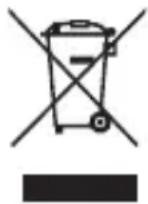
① Your appliance contains many materials which can be recovered or recycled.
Leave it at a local civic waste collection point for processing.

TEFAL answers your questions
| Problems Recommendations | |
| If you cannot close the lid: | Check that the Opening/Closing handle is in vertical position and the jaws are opened.Check that the seal is properly positioned inside the lid, refer to the section headed “Cleaning and Maintenance”. |
| If the pressure cooker has heated up under pressure with no liquid inside: | Have your pressure cooker checked by a TEFAL Approved Service Centre. |
| If the pressure indicator did not rise and nothing escapes from the valve during cooking: | This is normal for the first few minutes.If the problem persists, check that:- The heat source is sufficiently high; if not, increase it.- The quantity of liquid in the pan is sufficient.- The operating valve is on - The pressure cooker is properly closed.- The seal or the edge of the pan is not damaged.- The seal is correctly positioned in the lid, (refer to section “Cleaning and Maintenance”). |
| If the pressure indicator has risen but still nothing escapes from the valve during cooking: | This is normal for the first few minutes.If the problem persists, put the pressure cooker under cold running water until the pressure indicator drops down.Clean the operating valve - fig. 15 and the steam release outlet - fig. 16 and check that the safety valve is moving freely by pressing hard with a cotton swab on the ball - fig. 17. |
| Problems | Recommendations |
| If steam escapes from around the lid, check: | That the lid is properly closed.The position of the lid seal is the correct way up.That the seal is in good condition, and if necessary, replace it.That the lid, the seal, its seat in the lid are clean.That the edge of the pressure cooker pan is in good condition. |
| If steam escapes from around the lid together with a piercing noise: | Check that the seal is not caught between the body and the lid. |
| If you cannot open the lid: | Check that the pressure indicator is in low position.If not, decompress and cool the pressure cooker under cold running water if necessary.Never take any action on the pressure indicator. |
| If food is not cooked or has burnt, check: | The cooking time is correct.The heat level was neither too low nor too high.That the operating valve was in the right position.The amount of liquid was sufficient for the coo-king time. |
| If food has burnt in the pressure cooker: | Fill the pan with water and leave the pressure coo-ker to soak for a while before washing.Never use bleach or chlorine products. |
| If one of the overpressure safety systems is triggered: | Turn off the heat.Leave the pressure cooker to cool down without moving it.Wait for the pressure indicator to drop down and open the pressure cooker.Check and clean the operating valve, the steam re-lease outlet, the safety valve and the seal.If the problem persists, have your pressure cooker checked by a TEFAL Approved Service Centre. |
| If you cannot fix the folding handles*: | Check that:The handle release button* is mobile.If the problem persists, have your pressure cooker checked by a TEFAL Approved Service Centre. |
| If you cannot fold the folding handles*: | Do not force them to fold.Make sure that you have pressed hard the handle release button*. |
Précautions importantes
natural_image
Simple line drawing of a cooking pot on a stove with a crossed black X mark (no text or symbols)natural_image
Diagram of a finger pressing a button on a device, with three arrows indicating downward force (no text or symbols present)natural_image
Simple line drawing of a cooking pot on a stove with a crossed black diagonal line (no text or symbols)natural_image
Diagram of a finger pressing a small electronic device with three downward arrows indicating force or pressure (no text or symbols present)Ασφάλεια
natural_image
Simple line drawing of a cooking pot on a stove with a crossed black diagonal line (no text or symbols)natural_image
Diagram of a finger pressing a button with three downward arrows indicating force or pressure (no text or symbols present)Emniyet
natural_image
Diagram of a finger pressing a button on a device, with arrows indicating downward force (no text or symbols)natural_image
Illustration of a cooking pot on a stovetop with a black X mark indicating resistance (no text or symbols)
natural_image
Diagram of a foot pressing down on a device with three downward arrows indicating force or pressure (no text or symbols present)natural_image
Illustration of a cooking pot with a crossed-out black X mark on a stove (no text or symbols)* بر حسب مدل



- IMPORTANT SAFEGUARDS
- KEEP THESE INSTRUCTIONS
- Descriptive diagram
- Characteristics
- Standards information
- Compatible heat sources
- TEFAL Accessories
- Use
- Opening
- Minimum and maximum filling
- For some food:
- Using the steaming basket\*
- Use of the operating valve
- To cook delicate food and vegetables:
- To cook meat, fish and frozen food:
- To remove the operating valve:
- Folding handles\*
- First use
- Before cooking
- During cooking
- Finishing cooking
- To release the steam:
- Cleaning and maintenance
- Cleaning the pressure cooker
- To clean the inside of the pressure cooker:
- To clean the outside of the pressure cooker:
- To clean the pressure cooker lid (G):
- To clean the lid seal (I):
- To clean the operating valve (A):
- To clean the steam release outlet (B) located on the lid:
- To clean the safety valve (E):
- To replace the pressure cooker seal:
- To store the pressure cooker:
- If the pressure cooker has folding handles\*:
- Safety
- - Closing safety:
- - Opening safety:
- If one of the two overpressure safety systems is triggered:
- Recommendations for use
- Guarantee
- This guarantee does not cover:
- Regulatory markings
- - Let's protect the environment!
- TEFAL answers your questions
- Précautions importantes
- Ασφάλεια
- Emniyet
Brand : TEFAL
Model : Clipso+ P43715
Category : Saucepan