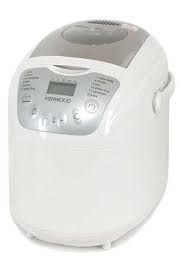
BM210, BM 210 - Bread maker KENWOOD - Free user manual and instructions
Find the device manual for free BM210, BM 210 KENWOOD in PDF.



| Product type | Bread machine |
| Brand | KENWOOD |
| Model | BM210, BM 210 |
| Dimensions (approx.) | 38 x 30 x 35 cm |
| Weight (approx.) | 6 kg |
| Power supply | 220-240 V, 50/60 Hz |
| Power | 550 W |
| Pan capacity | 700 g and 900 g of bread |
| Number of programs | 12 (Normal, French, Whole wheat, Cakes, Sweet bread, Quick 700g, Quick 900g, Dough, Jams, Gluten-free, Sandwich, Bake) |
| Main functions | Kneading, rising, baking, keep warm, delay timer up to 13 h, weight and crust color selection |
| Safety | Power failure protection (15 min), viewing window, on/off switch |
| Maintenance and cleaning | Non-stick pan, hand wash only (not dishwasher), damp cloth for exterior |
| Spare parts and repairability | Removable kneading blade, removable pan; after-sales service by Kenwood or authorized repairer |
| Included accessories | Measuring cup, double spoon (1 teaspoon and 1 tablespoon), unlocking hook |
| Warranty and general information | Household use only; read the manual carefully before use |
Frequently Asked Questions - BM210, BM 210 KENWOOD
User questions about BM210, BM 210 KENWOOD
0 question about this device. Answer the ones you know or ask your own.
Ask a new question about this device
Download the instructions for your Bread maker in PDF format for free! Find your manual BM210, BM 210 - KENWOOD and take your electronic device back in hand. On this page are published all the documents necessary for the use of your device. BM210, BM 210 by KENWOOD.
USER MANUAL BM210, BM 210 KENWOOD
before using your Kenwood appliance
- Read these instructions carefully and retain for future reference.
- Remove all packaging and any labels, including the cardboard support inside the baking chamber.
safety
- Do not touch hot surfaces. Accessible surfaces are liable to get hot during use. Always use oven gloves to remove the hot bread pan.
- To prevent spillages inside the oven chamber, always remove the bread pan from the machine before adding the ingredients. Ingredients that splash onto the heating element can burn and cause smoke.
- Do not use this appliance if there is any visible sign of damage to the supply cord or if it has been accidentally dropped.
- Do not immerse this appliance, the supply cord or the plug in water or any other liquid.
Always unplug this appliance after use, before fitting or removing parts or before cleaning. - Do not let the electrical supply cord hang over the edge of a work surface or allow it to touch hot surfaces such as a gas or electric hob.
- This appliance should only be used on a flat heat resistant surface.
- Do not place your hand inside the oven chamber after the bread pan has been removed as it will be very hot.
- Do not touch moving parts within the Bread Maker.
- Do not exceed the maximum capacities stated as this could result in over-loading the Bread Maker.
- Do not place the Bread Maker in direct sun light, near hot appliances or in a draught. All these things can affect the internal temperature of the oven, which could spoil the results.
- In the unfortunate event of a power cut occurring after the ingredients have been partly processed, you will have to start again.
- Do not use this appliance outdoors.
- Do not operate the Bread Maker when it is empty as this could cause it serious damage.
- Do not use the oven chamber for any type of storage.
-
Do not cover the steam vents in the lid and ensure there is adequate ventilation around the bread maker during operation.
-
Do not let infirm people use the appliance without supervision.
- Do not let children use or play with the appliance.
- Only use the appliance for its intended domestic use. Kenwood will not accept any liability if the appliance is subject to improper use, or failure to comply with these instructions.
before plugging in
- Make sure your electricity supply is the same as the one shown on the underside of your Bread Maker.
This machine complies with European Economic Community Directive 89/336/EEC
before using your bread maker for the first time
- Wash all parts (see cleaning).
key
① lid handle
② viewing window
③ carrying handle
(4) pan hook
⑤ heating element
(6) bread pan handle
(7) kneader
(8) drive shaft
9 drive coupling
10 measuring cup
⑪ dual measuring spoon 1 tsp & 1 tbsp
(12) on/off switch
13 control panel
14 display window
(15) crust colour indicators (light, medium, dark)
16 loaf size indicators
(17) menu pad
18 loaf size pad
delay timer pads
crust colour pad
② start/stop pad
how to measure ingredients (refer to illustrations 3 to 7)
It is extremely important to use the exact measure of ingredients for best results.
- Always measure liquid ingredients in the see-through measuring cup with graduated markings provided. Liquid should just reach marking on cup at eye level, not above or below (see 3).
Always use liquids at room temperature, 20^ / 68^ unless making bread using the rapid 1 hour cycle. Follow the instructions given in the recipe section. - Always use the measuring spoon provided to measure smaller quantities of dry and liquid ingredients. For 1 tsp or 1 tbsp, fill to the top and level off the spoon (see 6).
on/off switch
Your Kenwood breadmaker is fitted with an ON/OFF switch and will not operate until the "on" switch is pressed.
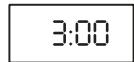
- Plug in and press the ON/OFF switch (2) situated at the back of the breadmaker - 3:00 will appear in the display window.
- Always switch off and unplug your breadmaker after use.
using your Bread Maker
(refer to illustration panel)
1 Remove the bread pan by holding the handle and turning the pan to the back of the machine.
2 Fit the kneader.
3 Pour the water into the bread pan.
4 Add the rest of the ingredients to the pan in the order listed in the recipes.
Ensure that all the ingredients are weighed accurately as incorrect measures will produce poor results.
8 Insert the bread pan into the oven chamber by positioning the bread pan at an angle towards the back of the machine. Then lock the pan by turning it towards the front.
9 Lower the handle and close the lid.
10 Plug in and switch on - the unit will beep and default to setting 1 (3:00).
11 Press the MENU pad ⑦ until the required program is selected. The breadmaker will default to 900g & medium crust colour.
12 Select the loaf size by pressing the LOAF SIZE pad 18 until the indicator moves to the required loaf size.
13 Select the crust colour by pressing the CRUST pad until the indicator moves to the required crust colour (light, medium or dark).
14 Press the START pad ② .To stop or cancel the program press the START/STOP pad for 2-3 seconds.
15 At the end of the baking cycle unplug the breadmaker
16 Use the hook supplied to lift up the pan handle.
17 Remove the bread pan by holding the handle and turning the pan to the back of the machine. Always use oven gloves as the pan handle will be hot.
18 Then turn out onto a wire rack to cool.
19 Leave the bread to cool for at least 30 minutes before slicing, to allow the steam to escape. The bread will be difficult to slice if hot.
20 Clean the bread pan and kneader immediately after use (see care and cleaning).
| bread/dough program chart | ||||||
| program | Total Program Time | Alert For Adding Ingredients * | Keep Warm ** | |||
| 900g | 700g | 900g | 700g | |||
| 1 basic | White or Brown Bread Flour recipes | 3:00 | 2:53 | 2:20 | 2:15 | 60 |
| 2 french | Produces a crisper crust and suited to loaves low in fat and sugar | 3:50 | 3:40 | 2:35 | 2:30 | 60 |
| 3 whole wheat | Whole wheat or wholemeal flour recipes | 3:40 | 3:32 | - | 60 | |
| 4 cake | Non - yeast batter breads & cakes | 1:40 | - | 60 | ||
| 5 sweet | High sugar bread recipes | 2:55 | 2:50 | 2:30 | 2:25 | 60 |
| 6 rapid 700g | Produces loaves of bread in under 1 hour. Loaves require warm water, extra yeast and less salt. | 0:58 | - | 60 | ||
| 7 rapid 900g | 0:58 | - | 60 | |||
| 8 dough | Dough for hand shaping and baking in your own oven. | 1:30 | - | - | ||
| 9 jam | For making jams | 1:20 | - | - | ||
| 10 gluten free | For use with gluten free flours and gluten free bread mixes. | 2:50 | - | 60 | ||
| 11 sandwich | Softer crust and closer texture loaves | 3:00 | 2:55 | 2:04 | 1:59 | 60 |
| 12 bake | Bake only feature. Can also be used to rewarm or crisp loaves already baked and cooled. | 1:00 | - | 60 | ||

An alert will sound before the end of the 2nd kneading cycle to add ingredients if the recipe recommends doing so.

The Bread maker will automatically go in to the keep warm mode at the end of the baking cycle. It will stay in the keep warm mode for up to 1 hour or until the machine is turned off, which ever is soonest.
delay timer ⑧
The Delay timer allows you to delay the bread making process up to 13 hours. The delayed start is not recommended for use with the dough, jam, gluten-free or rapid settings.
IMPORTANT: When using this delayed start function you must not use perishable ingredients – things that 'go off' easily at room temperature or above, such as milk, egg, cheese and yoghurt etc.
To use the DELAY TIMER simply place the ingredients in the bread pan and lock the pan into the bread maker. Then:
- Press the MENU pad to choose the required program - the program cycle time is displayed.
- Select the crust colour and size required.
- Then set the delay timer.
- Press the (+) TIMER pad and keep pressing until the total time required is displayed. If you go past the required time press the (-) TIMER pad to go back. The timer pad when pressed, moves in 10 minute increments. You do not need to work out the difference between the program time selected and the total hours required as the bread maker will automatically include the setting cycle time.
Example: Finished loaf required at 7am. If the breadmaker is set up with the required recipe ingredients at 10pm the evening before, total time to be set on the delayed timer is 9 hours.
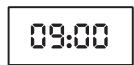
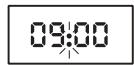
- Press the MENU pad to choose your program e.g. 1 and use the (+) timer pad to scroll the time in 10 minute increments to display '9:00'. If you go past '9:00', simply press the (-) timer pad until you return to '9:00'.
- Press the start pad and the display colon (:) will flash. The timer will start to count down.
- If you make a mistake or wish to change the time set, press the START/STOP pad until it beeps. You can then reset the time.



power interruption protection
Your breadmaker has a 15 mins power interruption protection in case the unit is accidentally unplugged during operation. The unit will continue the program if plugged back in straight away.
care and cleaning
IMPORTANT: unplug the Bread Maker and allow to cool before cleaning.
- Do not immerse either the Bread Maker body or the outside base of the bread pan in water.
- Do not use a dishwasher to clean bread pan. Dishwashing can damage the non-stick properties of the bread pan allowing bread to stick during baking.
- Do not use abrasive scouring pads or metal implements.
- Clean the bread pan and the kneader immediately after each use by partially filling the pan with warm soapy water. Leave to soak for 5 to 10 minutes. To remove the kneader, turn clockwise and lift off. Finish cleaning with a soft cloth, rinse and dry.
If the kneader cannot be removed after 10 minutes, hold the shaft from underneath the pan and twist back and forth until the kneader is released.
- Use a soft damp cloth to clean the outside and inside surfaces of the Bread Maker if necessary.
service and customer care
- If the cord is damaged it must, for safety reasons, be replaced by KENWOOD or an authorised KENWOOD repairer.
If you need help with:
- using your bread maker
servicing or repairs Contact the shop where you bought your bread maker.
Recipes (add the ingredients to the pan in the order listed in the recipes)
Basic White Bread
Program 1
| Ingredients | 900g | 700g |
| Water | 320ml | 270ml |
| Vegetable oil | 1½ tbsp | 1 tbsp |
| Unbleached white bread flour | 500g | 400g |
| Skimmed milk powder | 5 tsp | 1 tbsp |
| Salt | 1½ tsp | 1 tsp |
| Sugar | 1 tbsp | 2 tsp |
| Easy blend dried yeast | 7g (2¼ tsp) | 1½ tsp |
tsp = 5ml teaspoon
tbsp = 15m l tablespoon
Wholemeal Seeded Bread Program 3
| Ingredients | 900g | 700g |
| Water | 310mls | 250mls |
| Vegetable Oil | 1¼tbsp | 1tbsp |
| Wholemeal bread flour | 450g | 370g |
| Unbleached white bread flour | 50g | 30g |
| Skimmed milk powder | 5tsp | 3tsp |
| Salt | 1tsp | 1tsp |
| Sugar | 4tsp | 3tsp |
| Easy blend dried yeast | 1tsp | 1tsp |
| Pumpkin Seeds | 1tbsp | 2tsp |
| Sunflower seeds | 1tbsp | 2tsp |
| Poppy seeds | 2tsp | 2tsp |
| Lightly toasted sesame seeds | 2tsp | 2tsp |
- Add the seeds when the machine makes an audible sound during the 2nd kneading cycle.
Brioche Bread
Program 5
| Ingredients | 900g | 700g |
| Milk | 200ml | 160ml |
| Eggs | 2 | 1 |
| Butter, melted | 140g | 80g |
| Unbleached white bread flour | 500g | 400g |
| Salt | 1½ tsp | 1 tsp |
| Sugar | 60g | 40g |
| Easy blend dried yeast | 2 tsp | 1½ tsp |
Rapid White Bread
Program 6-7
| Ingredients | 900g | 700g |
| Water, lukewarm (32-35°C) | 320ml | 250ml |
| Unbleached white bread flour | 500g | 400g |
| Skimmed milk powder | 5tsp | 4tsp |
| Salt | 1tsp | 1tsp |
| Sugar | 4tsp | 3tsp |
| Butter | 25g | 15g |
| Easy blend dried yeast | 4tsp | 3tsp |
Bread rolls
Program 8
| Ingredients | Makes 12 |
| Water | 240ml |
| Egg | 1 |
| Unbleached white bread flour | 450g |
| Salt | 1 tsp |
| Sugar | 2 tsp |
| Butter | 25g |
| Easy blend dried yeast | 1 1/2 tsp |
| For the topping: | |
| Egg yolk beaten with 15ml (1 tbsp) water | 1 |
| Sesame seeds and poppy seeds, for sprinkling, optional |
1 At the end of the cycle, turn the dough out onto a lightly floured surface. Gently knock back the dough and divide into 12 equal pieces and hand shape.
2 After shaping, leave the dough for a final proving then bake in your conventional oven.
troubleshooting guide
Following are some typical problems that can occur when making bread in your bread maker. Please review the problems, their possible cause and the corrective action that should be taken to ensure successful bread making.
| PROBLEM | POSSIBLE CAUSE | SOLUTION |
| LOAF SIZE AND SHAPE | ||
| 1. Bread does not rise enough | ·Wholemeal breads will be lower than white breads due to less gluten forming protein in whole wheat flour. ·Not enough liquid. ·Sugar omitted or not enough added. ·Wrong type of flour used. ·Wrong type of yeast used. ·Not enough yeast added or too old. ·Rapid bread cycle chosen. ·Yeast and sugar came into contact with each other before kneading cycle. | ·Normal situation, no solution. ·Increase liquid by 15ml/3 tsp. ·Assemble ingredients as listed in recipe. ·You may have used plain white flour instead of strong bread flour which has a higher gluten content. ·Do not use all-purpose flour. ·For best results use only fast action "easy blend" yeast. ·Measure amount recommended and check expiry date on package. ·This cycle produces shorter loaves. This is normal. ·Make sure they remain separate when added to the bread pan. |
| 2. Flat loaves, no rising. | ·Yeast omitted. ·Yeast too old. ·Liquid too hot. ·Too much salt added. ·If using timer, yeast got wet before bread making process started. | ·Assemble ingredients as listed in recipe. ·Check expiry date. ·Use liquid at correct temperature for bread setting being used. ·Use amount recommended. ·Place dry ingredients into corners of pan and make slight well in centre of dry ingredients for yeast to protect it from liquids. |
| 3. Top inflated - mushroom-like in appearance. | ·Too much yeast. ·Too much sugar. ·Too much flour. ·Not enough salt. ·Warm, humid weather. | ·Reduce yeast by 1/4 tsp. ·Reduce sugar by 1 tsp. ·Reduce flour by 6 to 9 tsp. ·Use amount of salt recommended in recipe. ·Reduce liquid by 15ml/3 tsp and yeast by 1/4 tsp. |
| 4. Top and sides cave in. | ·Too much liquid. ·Too much yeast. ·High humidity and warm weather may have caused the dough to rise too fast. | ·Reduce liquid by 15ml/3 tsp next time or add a little extra flour. ·Use amount recommended in recipe or try a quicker cycle next time. ·Chill the water or add milk straight from the fridge |
| 5. Gnarly, knotted top - not smooth. | ·Not enough liquid. ·Too much flour. ·Tops of loaves may not all be perfectly shaped, however, this does not affect wonderful flavour of bread. | ·Increase liquid by 15ml/3 tsp. ·Measure flour accurately. ·Make sure dough is made under the best possible conditions. |
| 6. Collapsed while baking. | Machine was placed in a draught or may have been knocked or jolted during rising. Exceeding capacity of bread pan. Not enough salt used or omitted. (salt helps prevent the dough over proving) Too much yeast. Warm, humid weather. | Reposition bread maker. Do not use more ingredients than recommended for large loaf (max. 900g). Use amount of salt recommended in recipe. Measure yeast accurately. Reduce liquid by 15ml/3 tsp and reduce yeast by 1/4 tsp. |
| 7. Loaves uneven shorter on one end. | Dough too dry and not allowed to rise evenly in pan. | Increase liquid by 15ml/3 tsp. |
| BREAD TEXTURE | ||
| 8. Heavy dense texture. | Too much flour. Not enough yeast. Not enough sugar. | Measure accurately. Measure right amount of recommended yeast. Measure accurately. |
| 9. Open, course, holey texture. | Salt omitted. Too much yeast. Too much liquid. | Assemble ingredients as listed in recipe. Measure right amount of recommended yeast. Reduce liquid by 15ml/3 tsp. |
| 10. Centre of loaf is raw, not baked enough. | Too much liquid. Power cut during operation. Quantities were too large and machine could not cope. | Reduce liquid by 15ml/3 tsp. If power is cut during operation, the bread maker will remain off when power is restored. You will need to remove unbaked loaf from pan and start again with fresh ingredients. Reduce amounts to maximum quantities allowed. |
| 11. Bread doesn't slice well, very sticky. | Sliced while too hot. Not using proper knife. | Allow bread to cool on rack at least 30 minutes to release steam, before slicing. Use a good bread knife. |
| CRUST COLOUR AND THICKNESS | ||
| 12. Dark crust colour/ too thick. | DARK crust setting used. | Use medium of light setting the next time. |
| 13. Loaf of bread is burnt. | Bread maker malfunctioning. | Refer to "Service and customer care" section. |
| 14. Crust too light. | Bread not baked long enough. No milk powder or fresh milk in recipe. | Extend baking time. Add 15ml/3 tsp skimmed milk powder or replace 50% of water with milk to encourage browning. |
| PAN PROBLEMS | ||
| 15. Kneader cannot be removed. 16. Bread sticks to pan/ difficult to shake out. | ·You must add water to bread pan and allow kneader to soak before it can be removed. ·Can happen over prolonged use. | ·Follow cleaning instructions after use. You may need to twist kneader slightly after soaking to loosen. ·Lightly wipe the inside of bread pan with vegetable oil. ·Refer to “Service and customer care” section. |
| MACHINE MECHANICS | ||
| 17. Breadmaker not operating/Kneader not moving. | ·Breadmaker not switched on ·Pan not correctly located. ·Delay timer selected. | ·Check on/off switch ② is in the ON position. ·Check the pan is locked in place. ·Breadmaker will not start until the countdown reaches the program start time. |
| 18. Ingredients not mixed. | ·Did not start bread maker. ·Forgot to put kneader in pan. | ·After programming control panel, press start button to turn bread maker on. ·Always make sure kneader is on shaft in bottom of pan before adding ingredients. |
| 19. Burning odour noted during operation. | ·Ingredients spilled inside oven. ·Pan leaks. ·Exceeding capacity of bread pan. | ·Be careful not to spill ingredients when adding to pan. Ingredients can burn on heating unit and cause smoke. ·See “Service and Customer care” section. ·Do not use more ingredients than recommended in recipe and always measure ingredients accurately. |
| 20. Machine unplugged by mistake or power lost during use. How can I save the bread?. | ·If machine is in knead cycle, discard ingredients and start again. ·If machine is in rise cycle, remove dough from bread pan, shape and place in greased 23 x 12.5cm/9 x 5 in. loaf tin, cover and allow to rise until doubled in size. Use bake only setting 12 or bake in pre-heated conventional oven at 200℃/400°F/Gas mark 6 for 30-35 minutes or until golden brown. ·If machine is in bake cycle, use the bake only setting 12 or bake in pre-heated conventional oven at 200℃/400°F/Gas mark 6 and remove top rack. Carefully remove pan from machine and place on bottom rack in oven. Bake until golden brown. | |
| 21. H:HH appears on display and machine cannot be turned on. | ·Oven chamber too hot. | ·Unplug and allow to cool down for 30 minutes. |
| 22. E:EE appears in display and machine does not operate. | ·Bread machine is malfunctioning. Temperature sensor error | ·See “Service and Customer care” section. |
Nederlandsls
Rask Ioff
Program 6-7
| Ingredienser | 900 g | 700 g |
| Vann, lunkent (32-35 °C) | 320 ml | 250 ml |
| Hvetemel | 500 g | 400 g |
| Skummet tørmelk | 5 ts | 4 ts |
| Salt | 1 ts | 1 ts |
| Sukker | 4 ts | 3 ts |
| Smør | 25 g | 15 g |
| Tørgjaer | 4 ts | 3 ts |


- before using your Kenwood appliance
- safety
- before plugging in
- before using your bread maker for the first time
- key
- how to measure ingredients (refer to illustrations 3 to 7)
- on/off switch
- using your Bread Maker
- (refer to illustration panel)
- delay timer ⑧
- power interruption protection
- care and cleaning
- service and customer care
- Recipes (add the ingredients to the pan in the order listed in the recipes)
- Wholemeal Seeded Bread Program 3
- troubleshooting guide
- Nederlandsls
Brand : KENWOOD
Model : BM210, BM 210
Category : Bread maker