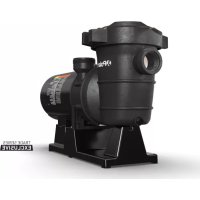
Forza - Pump POLARIS - Free user manual and instructions
Find the device manual for free Forza POLARIS in PDF.


| Product type | Pool pump |
| Brand | Polaris |
| Model | Forza (models PAG100 / PAG150) |
| Power | 1.00 HP (0.75 kW) / 1.50 HP (1.0 kW) depending on model |
| Electrical supply | 115 V, 60 Hz, 9 A (PAG100) / 12 A (PAG150) |
| Rotation speed | 3450 rpm |
| Flow rate | 60 gpm (PAG100) / 70 gpm (PAG150) |
| Motor type | Single-speed, single-phase |
| Installation | On a firm, level base, below the waterline |
| Pool safety distance | ≥ 1.8 m (U.S.) / ≥ 3 m (Canada) |
| Body material | Rigid or flexible PVC |
| Electrical protection | Ground fault circuit interrupter (GFCI / CLASS A) required |
| Suction system | Must include at least 2 suction outlets |
| Regular maintenance | Cleaning the strainer basket, lubricating the O-ring with silicone |
| Winterization | Drain water, store indoors, do not use antifreeze |
| Warranty | Void if run dry or unauthorized modification |
| Dimensions (L × W × H) | Not specified in the manual |
| Weight | Not specified in the manual |
| Replacement parts | Available from dealer, order with nameplate |
| Use | In-ground permanent above-ground pools, spas, thermal baths |
Frequently Asked Questions - Forza POLARIS
User questions about Forza POLARIS
0 question about this device. Answer the ones you know or ask your own.
Ask a new question about this device
Download the instructions for your Pump in PDF format for free! Find your manual Forza - POLARIS and take your electronic device back in hand. On this page are published all the documents necessary for the use of your device. Forza by POLARIS.
USER MANUAL Forza POLARIS
natural_image
Technical line drawing of a mechanical pump assembly (no text or symbols)Above Ground Pump
PAG100, PAG100T
PAG150, PAG150T
Owner's Manual
ENGLISH | FRANÇAIS | ESPAÑOL
WARNING
FOR YOUR SAFETY - This product must be installed and serviced by a contractor who is licensed and qualified in pool equipment by the jurisdiction in which the product will be installed where such state/provincial or local requirements exist. The maintainer must be a professional with sufficient experience in pool equipment installation and maintenance so that all of the instructions in this manual can be followed exactly. Before installing this product, read and follow all warning notices and instructions that accompany this product. Failure to follow warning notices and instructions may result in property damage, personal injury, or death. Improper installation and/or operation may void the warranty.

Improper installation and/or operation can create unwanted electrical hazard which can cause serious injury, property damage, or death.
DO NOT MODIFY THIS EQUIPMENT
ATTENTION INSTALLER - This manual contains important information about the installation, operation and safe use of this product. This information should be given to the owner/operator of this equipment.
Table of Contents
Section 1. Important Safety Instructions......3
1.1 Pool Pump Suction Entrapment Prevention Guidelines .... 5
Section 2. Installation......6
2.1 Installation Location 6
2.2 General Connections ......6
2.3 Pump Plumbing 6
2.4 Electrical Data 6
2.5 Bonding and Grounding 7
Section 3. Pump Start Up....7
3.1 Priming 7
3.2 Startup....7
3.3 Single-Speed Pumps....7
Section 4. Winterizing 8
4.1 Water Chemistry 8
4.2 Pump Maintenance 8
Section 5. Service & Repair Parts ....8
Section 6. Troubleshooting ..... 9
Section 7. Technical Data ...... 9
EQUIPMENT INFORMATION RECORD
DATE OF INSTALLATION ____
INSTALLER INFORMATION
INITIAL PRESSURE GAUGE READING (WITH CLEAN FILTER)
PUMP MODEL HORSEPOWER
NOTES:
Section 1. IMPORTANT SAFETY INSTRUCTIONS READ AND FOLLOW ALL INSTRUCTIONS
All electrical work must be performed by a licensed electrician or qualified pool service professional and conform to all national, state, and local codes. When installing and using this electrical equipment, basic safety precautions should always be followed, including the following:
WARNING
RISK OF SUCTION ENTRAPMENT HAZARD, WHICH, IF NOT AVOIDED, CAN RESULT IN SERIOUS INJURY OR DEATH. Do not block pump suction, as this can cause severe injury or death. Do not use this pump for wading pools, shallow pools, or spas containing bottom drains. Suction outlet (drain) assemblies and their covers must be certified to the latest published edition of ANSI®/ASME® A112.19.8, or its successor standard, ANSI/APSP-16.
WARNING
To reduce the risk of injury, do not permit children to use this product. All components in the system, such as pumps, filters, and heaters, etc., shall be positioned so as to prevent their being used as a means of access to the pool by young children.
WARNING
To reduce the risk of property damage or injury, do not attempt to change the backwash (multi-port, slide, or full flow) valve position with the pump running.
WARNING
Polaris pumps are powered by a high voltage electric motor and must be installed by a licensed or certified electrician or a qualified swimming pool service technician.
WARNING
RISK OF ELECTRIC SHOCK, FIRE, PERSONAL INJURY, OR DEATH. Connect only to a grounding type receptacle that is protected by a ground-fault circuit-interrupter (GFCI) (Canada: CLASS A). Contact a qualified electrician if you cannot verify that the circuit is protected by a GFCI. Make sure such a GFCI should be provided by the installer and should be tested on a routine basis. To test the GFCI, push the test button. The GFCI should interrupt power. Push the reset button. Power should be restored. If the GFCI fails to operate in this manner, the GFCI is defective. If the GFCI interrupts power to the pump without the test button being pushed, a ground current is flowing, indicating the possibility of electrical shock. Do not use the pump. Disconnect the pump and have the problem corrected by a qualified service representative before using.
Due to the potential risk of fire, electric shock, or injuries to persons, Polaris pumps must be installed in accordance with the National Electrical Code ^® (NEC ^® ), Canadian Electrical Code (CEC), all local electrical and safety codes, and the Occupational Safety and Health Act (OSHA ^® ). Copies of the NEC may be ordered from the National Fire Protection Association ^® (NFPA ^® ) online at www.nfpa.org or call 617-770-3000, or contact your local government inspection agency.
WARNING
Incorrectly installed equipment may fail, causing severe injury or property damage. DO NOT MODIFY THIS EQUIPMENT.
WARNING
To reduce the risk of electric shock, replace damaged cord immediately. If replacement of the plug or cord is needed, use only identical replacement parts. To reduce the risk of electric shock, do not use extension cord to connect unit to electric supply; provide a properly located outlet.
WARNING
- Do not connect the system to an unregulated city water system or other external source of pressurized water producing pressures greater than 35 PSI.
- Trapped air in system can cause the filter lid to be blown off, which can result in death, serious personal injury, or property damage. Be sure all air is out of the system before operating.
WARNING
To minimize the risk of severe injury or death the filter and/or pump should not be subjected to the piping system pressurization test.
Local codes may require the pool piping system to be subjected to a pressure test. These requirements are generally not intended to apply to the pool equipment such as filters or pumps.
Polaris pool equipment is pressure tested at the factory.
However, if the WARNING cannot be followed and pressure testing of the piping system must include the filter and/or pump, BE SURE TO COMPLY WITH THE FOLLOWING SAFETY INSTRUCTIONS:
- Check all clamps, bolts, lids, lock rings and system accessories to ensure they are properly installed and secured before testing.
- RELEASE ALL AIR in the system before testing.
• Water pressure for test must NOT EXCEED 35 PSI.
• Water temperature for test must NOT EXCEED 100°F (38°C). - Limit test to 24 hours. After test, visually check system to be sure it is ready for operation.
NOTICE: These parameters apply to Polaris equipment only. For non-Polaris equipment, consult the equipment manufacturer.
WARNING
Chemical spills and fumes can weaken pool/spa equipment. Corrosion can cause filters and other equipment to fail, resulting in severe injury or property damage. Do not store pool chemicals near your equipment.
CAUTION
Do not start pump dry! Running the pump dry for any length of time will cause severe damage and may void the warranty.
CAUTION
For USA only: for use with permanently installed above ground pools and may also be used with hot tubs and spas if so marked. Do not use with storable pools. A permanently installed pool is constructed in or on the ground or in a building such that it cannot be readily disassembled for storage. A storable pool is constructed so that it may be readily disassembled for storage and reassembled to its original integrity.
CAUTION
Do not install within an outdoor enclosure or beneath the skirt of a hot tub or portable spa. The pump requires adequate ventilation to maintain air temperature at less than the maximum ambient temperature rating listed on the motor rating plate.
CAUTION
In order to avoid premature failure or damage to the equipment, protect the equipment from direct water exposure from sprinklers, water runoff from rooftops and drainage, etc. Failure to comply may cause equipment failure may void the warranty.
CAUTION
To reduce the risk of electric shock the pool must be installed no closer than 6 feet (1.8 m) from any electrical outlet. Do not place portable appliances closer than 6 feet (1.8m) from the pool. In Canada, the minimum distance maintained from the edge of the pool and/or spa as noted above must be 3 meters (10 feet), as required by the Canadian Electrical Code (CEC, CSA C22.1). Swimming pool pumps located within 3 meters (10 feet) of the pool walls must be specifically approved for this purpose. Do not bury cord. Locate cord to minimize abuse from lawn mowers, hedge trimmers, and other equipment.
SAVE THESE INSTRUCTIONS
1.1 Pool Pump Suction Entrapment Prevention Guidelines

WARNING
HAZARD. Can cause serious injury or death. Do not use this pump for wading
pools, shallow pools or spas containing bottom drains, unless the pump is connected to at least two (2) functioning suction outlets.
WARNING
Pump suction is hazardous and can trap and drown or disembowel bathers. Do not use or operate swimming pools, spa, or hot tubs if a suction outlet cover is missing, broken, or loose. The following guidelines provide information for pump installation that minimizes the risk of injury to users of pools, spas, and hot tubs:
Entrapment Protection - The pump suction system must provide protection against the hazards of suction entrapment.
Suction Outlet Covers - All suction outlets must have correctly installed, screw-fastened covers in place. All suction outlet (drain) covers must be maintained. Drain covers must be listed/certified to the latest version of ANSI®/ASME® A112.19.8 or its successor standard, ANSI/APSP-16. They must be replaced if cracked, broken, or missing.
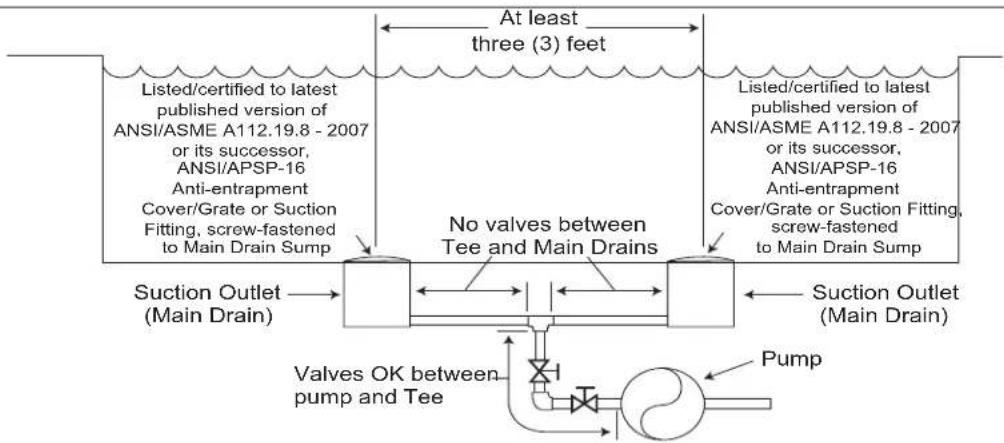
Number of Suction Outlets Per Pump - When outlets are small enough to be blocked by a person, provide at least two (2) hydraulically-balanced main drains, with covers, as suction outlets for each circulating pump suction line. The centers of the main drains (suction outlets) on any one (1) suction line must be at least three (3) feet apart, center to center. See Figure 1.
The system must be built to include at least two (2) suction outlets (drains) connected to the pump whenever the pump is running. However, if two (2) main drains run into a single suction line, the single suction line may be equipped with a valve that will shut off both main drains from the pump. The system shall be constructed such that it shall not allow for separate or independent shutoff or isolation of each drain. See Figure 1.
More than one (1) pump can be connected to a single suction line as long as the requirements above are met.
Water Velocity - The maximum water velocity through the suction fitting or cover for any suction outlet must be 1.5 feet per second unless the outlet complies with the latest version of ANSI/ASME A112.19.8 or its successor standard, ANSI/APSP-16, the standard for Suction Fittings For Use in Swimming Pools, Wading Pools, Spas, and Hot Tubs. In any case, do not exceed the suction fitting's maximum designed flow rate.
If 100% of the pump's flow comes from the main drain system, the maximum water velocity in the pump suction hydraulic system must be six (6) feet per second or less, even if one (1) main drain (suction outlet) is completely blocked. The flow through the remaining main drain(s) must comply with the latest version of ANSI/ASME A112.19.8 or its successor standard, ANSI/APSP-16, the standard for Suction Fittings For Use in Swimming Pools, Wading Pools, Spas, and Hot Tubs.
Testing and Certification - Suction outlet covers must have been tested by a nationally recognized testing laboratory and found to comply with the latest version of ANSI/ASME A112.19.8 or its successor standard, ANSI/APSP-16, the standard for Suction Fittings For Use in Swimming Pools, Wading Pools, Spas, and Hot Tubs.
Fittings - Fittings restrict flow; for best efficiency use fewest possible fittings (but at least two (2) suction outlets).
Avoid fittings which could cause an air trap.
Pool cleaner suction fittings must conform to applicable International Association of Plumbing and Mechanical Officials (IAPMO®) standards.
Section 2. Installation
2.1 Installation Location
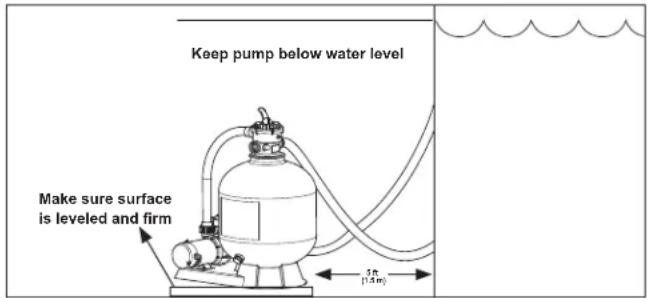
The pump should be installed on a firm, level base or pad. When using factory supplied base ensure installation is level and vibration-free. Pump must be installed below the water line.
Although the pump is designed for outdoor use it is recommended that the installation consider the following:
- Drainage – away from pump.
- Run off from eaves and sprinklers.
- Ventilation of pump motor.
- Access for future servicing and winterizing.
• Protection from the elements. - Sun exposure.
Locate the pump as close to the pool as possible to reduce friction and increase efficiency. However, the pump must be a minimum of 6 ft (1.8 m) from the edge of the pool, or be separated by a permanent barrier. Position the pump and all components of the filtration system so they can NOT be used as a means of access to the pool by young children. In Canada, the minimum distance maintained from the edge of the pool and/or spa as noted above must be 3 meters (10 feet), as required by the Canadian Electrical Code (CEC, CSA C22.1). Swimming pool pumps located within 3 meters (10 feet) of the pool walls must be specifically approved for this purpose.
WARNING
To Reduce the Risk of Fire, install pool equipment in an area where leaves or other debris will not collect on or around the equipment. Keep surrounding area clear of all debris such as paper, leaves, pine-needles and other combustible materials.
CAUTION
In order to avoid premature failure or damage to the pump motor, protect the pump from direct water exposure from sprinklers, water runoff from rooftops and drainage, etc. Failure to comply may cause pump failure, and may also void warranty.
2.2 General Connections
2.2.1 Solvent Weld Connections
Rigid or flexible PVC pipe can be used. Pipe ends should be clean and free of any flash cause by the cutting operation. Be sure that the proper adhesive is used on the type of pipe specified.
NOTE: A primer will assure that adhesive joints are superior. Suregard P-3000 has a purple tracer to qualify in areas where codes specify a primer must be used.
CAUTION
We recommend that you consider climatic conditions when applying adhesives. Certain atmospheric situations, such as high moisture content, make adhesive action of certain glues less effective. Check the manufacturer's instructions.
2.2.2 Threaded Connections
Use only Teflon tape or equivalent on threaded plumbing connections. Other pipe compounds may damage threads. We do not recommend the use of silicone or petroleum based compounds.
DO NOT OVERTIGHTEN – HAND TIGHTEN PLUS 12 TURN IS SUFFICIENT.
2.3 Pump Plumbing
Suction pipe should be as large or larger than the discharge pipe. Avoid using a suction pipe that is smaller than the pump connection.
- Keep the piping as straight and short as possible, and of suitable size.
- Avoid connecting an elbow directly into the pump inlet (use a length of straight pipe to allow a proper entry for the water).
- Support the pipe independently so that it places no strain on the pump.
- It is recommended that valves are installed on the suction and outlet lines to prevent water from draining when servicing the pump. Never run the pump with valves closed.
2.4 Electrical Data
- Refer to information on motor nameplate for electrical service data.
CAUTION
Failure to provide data plate voltage (+/- 10%) during operation will cause the motor to overheat and may void the warranty.
- All motors should have fused disconnect switch or circuit breaker.
-
Be sure wire size is sufficient for pump HP and distance from power source.
-
Wiring should be done in accordance with applicable codes by a licensed electrician.
- Connect only to a GFCI (Canada: CLASS A) protected receptacle.
• DO NOT USE EXTENSION CORD.

WARNING
Always disconnect the power source before working on a motor or its connected load.

WARNING
ELECTRICAL SHOCK HAZARD. Due to the potential risk of fire, electric shock, or injuries to persons, Polaris® Pumps and any auxiliary loads must be installed in accordance with the National Electrical Code® (NEC®), all local electrical and safety codes, and the Occupational Safety and Health Act (OSHA). Copies of the NEC may be ordered from the National Protection Association, 1 Batterymarch Park, Quincy, MA 02169, or from your local government inspection agency. In Canada, Polaris Pumps must be installed in accordance with the Canadian Electrical Code (CEC).
2.5 Bonding and Grounding
In addition to being properly grounded in accordance with the requirements of the National Electrical Code (NEC), or in Canada the Canadian Electrical Code (CEC), the pump motor must be bonded to all metal parts of the swimming pool, spa or hot tub structure and to all electrical components and equipment associated with the pool/spa water circulation system. The bonding must be accomplished by using a solid copper conductor, No. 8 AWG or larger. In Canada No. 6 AWG or larger must be used. Bond the motor using the external bonding lug provided on the motor frame. See Figure 8.
National Electrical Code ^® (NEC ^® ) requires bonding of the Pool Water. Where none of the bonded pool equipment, structures, or parts are in direct connection with the pool water; the pool water shall be in direct contact with an approved corrosion-resistant conductive surface that exposes not less than 5800 mm ^2 (9 in ^2 ) of the surface area to the pool water at all times. The conductive surface shall be located where it is not exposed to physical damage or dislodgement during usual pool activities, and it shall be bonded in accordance with the bonding requirements of NEC Article 680. Refer to locally enforced codes for any additional bonding requirements.
Section 3. Pump Start Up
3.1 Priming
STOP PUMP and CLOSE suction and outlet valves.
- Release all pressure from pump and piping system.
- Fill strainer housing with water. NEVER operate the pump without water. Running the pump "dry" for any length of time can cause severe damage to both the pump, seals, and motor, and may void the warranty.
- Inspect, clean, and only use silicone lubricant to prevent damaging the O-Ring.
- Replace strainer cover and hand-tight only.
- Open all valves before starting pump.
- Release all air from the filter and piping system. See filters operating instructions.
- With suction and outlet valves open and pump located below the pool waterline, turn on pump and allow the pump to prime.
If pump does not prime within ten minutes, stop motor and determine cause. Ensure suction and discharge valves are open. See troubleshooting guide for further instruction.
3.2 Startup
• After pump has been primed, energize motor and open all suction and discharge line valves.
NOTE: It may take some time for pump to remove air from suction lines.
- If no flow is observed in five minutes, stop the motor and re-prime. If the pump fails to operate, check for air leaks. (Refer to Troubleshooting section.)
- After about ten minutes of operation, check the return fittings for air bubbles. A continuous flow of air indicates leaks in suction line. Locate and correct any leaks immediately.
- Keep the gate valve in the suction line fully open during operation. Should it be necessary to control the output, use a valve in the return line.

CAUTION
Do not retighten strainer locking ring during operation. Do not operate pump with closed suction or discharge valves.
3.3 Single-Speed Pumps
It is strongly recommended to install an on/off switch or timer. Without one the pump will run continuously. The pump should not be unplugged while under power as safety hazards such as sparks can occur.
WARNING
Make sure that the control switch, time clock, or control system is installed in an accessible location, so that in the event of an equipment failure or a loose plumbing fitting, the equipment can be turned off. This location must not be in the same area as the pool pump, filter, and other equipment.
Section 4. Winterizing
CAUTION
The pump must be protected when freezing temperatures are expected. Allowing the pump to freeze will cause severe damage and may void the warranty.
CAUTION
Do not use antifreeze solutions in the pool, spa, or hot tub systems! Antifreeze is highly toxic and may damage the circulation system. The only exception to this is Propylene Glycol. For more information, see your local pool/spa supply store or contact a qualified swimming pool service company.
WARNING
RISK OF ELECTRIC SHOCK. Turn OFF power to pump motor by unplugging the pump.
- Drain all water from the pump, system equipment, and piping.
- Keep the motor covered and dry. Do not cover the pump with plastic, because this will create condensation that will damage the pump.
NOTE After disconnecting the power and draining all water from the pump, it is recommended that the pump is removed from the plumbing and stored indoors. - When the system is reopened for operation, have a qualified technician or electrician make sure all piping, valves, wiring and equipment are in accordance with the manufacturer's recommendations. Pay close attention to the filter and electrical connections.
- The pump must be primed prior to starting. Refer to Section 3.2, Startup.
4.1 Water Chemistry
- A proper and consistent use of chemicals is necessary to maintain clean, sanitary water, to prevent the spread of germ infection and control the growth of algae which can spoil the appearance and enjoyment of your pool or spa.
- Chlorine is the most commonly used chemical to provide clean, sanitary water. Either dry or liquid chlorine (calcium or sodium hypochlorite) can be used which should be added daily as it is dissipated by dirt and germs as well as by the sun and wind.
- It is important that the correct level of acidity or alkalinity of the pool water be maintained. A desirable range is 7.2 – 7.4, with the pH of your pool at pH 7.0 being neutral. Readings above 7.0 are alkaline and below are acidic.
4.2 Pump Maintenance
WARNING
To avoid the risk of property damage, severe personal injury, and/or death, remove power to the pump by unplugging the pump motor before servicing the pump.
- All maintenance must be performed with breaker off.
- Motors are self-lubricating – no lubrication required.
- Clean strainer basket.
- Visually inspect motor for blockage of air vents on motor shell. Remove any debris.
- Shaft seals may become worn and must be replaced if leakage is observed.
4.2.1 Strainer Basket Maintenance
To clean the pump:
- Switch power off.
- Close valves in suction and return line.
- Remove strainer locking ring counterclockwise and remove the cover from strainer basket.
- Lift out strainer basket.
- Clean and replace the basket. Take care to seat basket properly.
- Clean the O-Ring and only use silicone lubricant to prevent damaging the O-Ring.
- Clean O-Ring seats on cover and strainer.
- Refit cover and strainer – hand tighten only – and open valves.
- Put pump back into operation.
CAUTION
Do not retighten strainer during operation.
Section 5. Service & Repair Parts
Order all repair parts through your dealer. Give the following information when ordering repair parts:
- Unit nameplate data.
• Description of part.
Section 6. Troubleshooting
If the recommendations in this section do not solve your particular problem(s), please contact your local dealer for service.
| Symptom Possible Cause/Solution | |
| Motor does not start. 1. Disconnect switch or circuit breaker in OFF position2. Fuses blown or thermal overload open. Locked motor shaft3. Motor windings burned out4. Defective starting switch inside single-phase motor5. Disconnected or defective wiring6. Low voltage | |
| Motor does not reach full speed. 1. Low voltage2. Motor windings connected for wrong voltage on dual voltage model | |
| Motor overheats (protect trips). 1. Low voltage2. Motor windings connected for wrong voltage on dual voltage model3. Inadequate ventilation | |
| Pump delivers no water 1. Pump is not primed2. Closed valve in suction or discharge line3. Leakage or air into suction system4. Impeller clogged | |
| Low pump capacity. 1. Valve in suction or discharge line partly closed2. Suction or discharge line partly plugged3. Suction or discharge line too small4. Pump running at reduced speed (see above)5. Plugged basket in skimmer or hair and lint strainer6. Dirty filter7. Impeller clogged | |
| Low pump pressure 1. Pump running at reduced speed (see above)2. Discharge valve or inlet fittings closed too much | |
| High pump pressure 1. Discharge valve or inlet fittings closed too much2. Return lines too small3. Dirty filters | |
| Noisy pump and motor 1. Plugged basket in skimmer or strainer basket2. Worn motor bearings3. Valve in suction line partly closed4. Suction line partly plugged5. Vacuum hose plugged or too small6. Pump not supported properly | |
| The pump is leaking water between the motor and pump body | 1. This is caused by a damaged or failed mechanical seal. Replace the seal |
| Air bubbles at inlet fittings 1. Leakage | air into suction line at connections or valve stem2. Cover gasket of hair and lint strainer needs cleaning3. Restriction in suction line4. Low water level in pool |
Section 7. Technical Data
| Model | GPM | HP | THP | RPM | Volts/ HZ | Amps |
| PAG100PAG100T | 60 | 1.00 | 0.75 | 3450 | 115V/60HZ | 9 |
| PAG150PAG150T | 70 | 1.50 | 1.0 | 12 |
NOTES
NOTES
© 2022 Zodiac Pool Systems LLC. All rights reserved. Polaris® and the 3-wheeled cleaner design are registered trademarks of Zodiac Pool Systems LLC. All other trademarks referenced are the property of their respective owners.
Zodiac Pool Systems LLC
2882 Whiptail Loop # 100
Carlsbad, CA 92010, USA
1.800.822.7933
polarispool.com
Zodiac Pool Systems Canada, Inc.
2-3365 Mainway, Burlington,
ON L7M 1A6, Canada
1.800.822.7933
polarispool.ca
natural_image
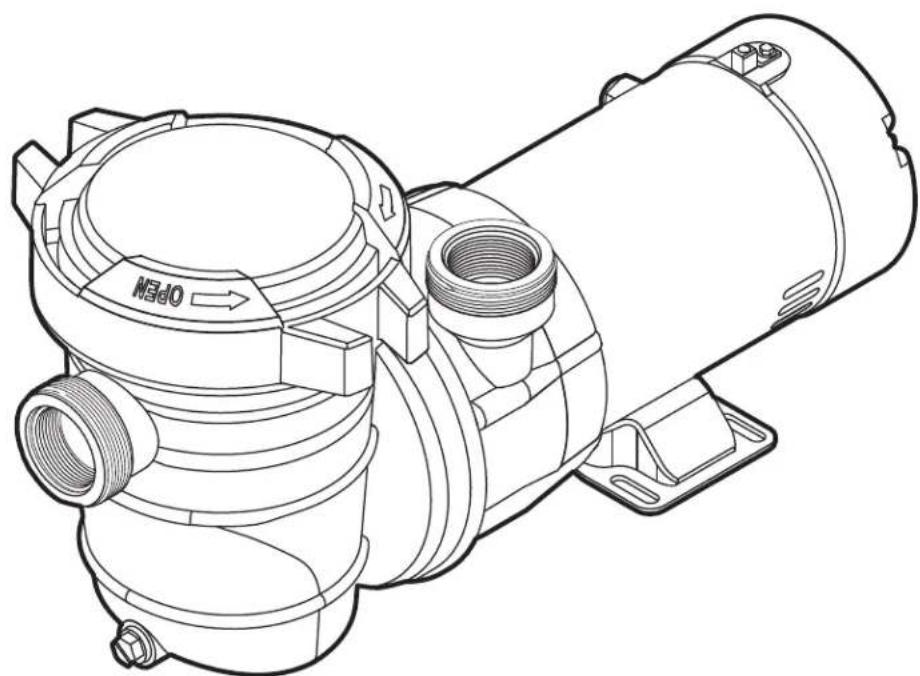
Technical line drawing of a mechanical pump assembly (no text or symbols)Pompe hors sol
PAG100, PAG100T
PAG150, PAG150T
Section 2. Installation....18
Section 2. Installation
Zodiac Pool Systems LLC
2882 Whiptail Loop # 100
Carlsbad, CA 92010, USA
1.800.822.7933
polarispool.com
Zodiac Pool Systems Canada, Inc.
2-3365 Mainway, Burlington,
ON L7M 1A6, Canada
1.800.822.7933
polarispool.ca
natural_image
Technical line drawing of a mechanical pump assembly (no text or symbols)Bomba sobre el piso
PAG100, PAG100T
PAG150, PAG150T
Zodiac Pool Systems LLC
2882 Whiptail Loop # 100
Zodiac Pool Systems Canada, Inc.
2-3365 Mainway, Burlington,
ON L7M 1A6, Canadá
1.800.822.7933
polarispool.ca
- WARNING
- Table of Contents
- Section 1. Important Safety Instructions......3
- Section 2. Installation......6
- Section 3. Pump Start Up....7
- Section 4. Winterizing 8
- Section 5. Service & Repair Parts ....8
- Section 6. Troubleshooting ..... 9
- Section 7. Technical Data ...... 9
- EQUIPMENT INFORMATION RECORD
- Section 1. IMPORTANT SAFETY INSTRUCTIONS READ AND FOLLOW ALL INSTRUCTIONS
- CAUTION
- SAVE THESE INSTRUCTIONS
- Pool Pump Suction Entrapment Prevention Guidelines
- Section 2. Installation
- Installation Location
- General Connections
- Solvent Weld Connections
- Threaded Connections
- Pump Plumbing
- Electrical Data
- Bonding and Grounding
- Section 3. Pump Start Up
- Priming
- Startup
- Single-Speed Pumps
- Section 4. Winterizing
- Water Chemistry
- Pump Maintenance
- Strainer Basket Maintenance
- Section 5. Service & Repair Parts
- Section 6. Troubleshooting
- NOTES
- Section 2. Installation....18
Brand : POLARIS
Model : Forza
Category : Pump