USER MANUAL F 26200 / F 26215 DELONGHI
A) If your appliance comes fitted with a plug, it will incorporate a 13 Amp fuse. If it does not fit your socket, the plug should be cut off from the mains lead, and on appropriate plug fitted, as below. warning: Very carefully dispose of the cut off plug after removing the fuse: do not insert in a 13 Amp socket elsewhere in the house as this could cause a shock hazard. With alternative plugs not incorporating a fuse, the circuit must be protected by a 15 Amp fuse. If the plug is a moulded-on type, the fuse cover must be re-fitted when changing the fuse using a 13 Amp Asta approved fuse to BS 1362. In the event of losing the fuse cover, the plug must NOT be used until a replacement fuse cover can be obtained from your nearest electrical dealer. The colour of the correct replacement fuse cover is that as marked on the base of the plug.
B) If your appliance is not fitted with a plug, please follow the instructins provided below:
WARNING - THIS APPLIANCE MUST BE EARTHED IMPORTANT
The wires in the mains lead are coloured in accordance with the following code:
Green and yellow Earth Blue Neutral Brown Live
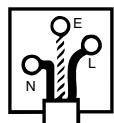
As the colours of the wires in the mains lead may not correspond with the coloured markings iden
tifying the terminals in your plug, proceed as follows:
The green and yellow wire must be connected to the terminal in the plug marked with the letter E or the earth symbol or coloured green or green and yellow.
The blue wire must be connected to the terminal marked with the letter N or coloured black.
The brown wire must be connected to the terminal marked with the letter L or coloured red.
Read this manual thoroughly before installing and using the appliance. This is the only way to ensure best results and maximum safety for the user.
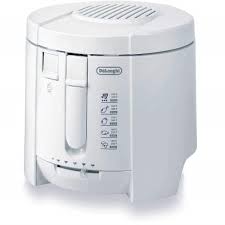
DESCRIPTION OF THE APPLIANCE (see drawing on page 2)
A. Lid
F. Thermostat pointer/Indicator light
B. Viewing window (only on some models)
G. Basket
C. Filter (removable in some models)
H. Handle slide
D. Bowl
I. Basket handle
E. Release button
IMPORTANTWARNINGS
- Before using the appliance, check that the voltage of the mains power supply corresponds to the value indicated on the appliance rating plate.
- Connect the appliance to an earthed power supply and sockets with a minimum current rating of 10 A only. (If the plug fitted to the appliance does not match the power socket, have the socket replaced with a suitable type by a qualified professional).
- Never locate the appliance near sources of heat.
- The power cable of this appliance must not be replaced by the user as this requires the use of special tools. If the power cable is damaged, it must be replaced by the manufacturer, an authorised service centre or a qualified professional in order to eliminate all risk.
- While in operation, the appliance becomes hot. DO NOT LEAVE WITHIN REACH OF CHILDREN.
- Do not move the deep fryer when the oil is hot as this may cause serious burns.
- Never use the deep fryer without oil.
- If oil leaks from the deep fryer, contact a technical service centre or personnel authorised by the manufacturer.
- Before using the deep fryer for the first time, wash the bowl, basket and lid in hot water and washing up liquid. At the end of the operation, dry everything thoroughly and remove any water left in the bottom of the bowl. This prevents dangerous splashes of hot oil during operation.
- The appliance is not intended for use by persons (including children) with reduced physical, sensory or mental capabilities, or lack of experience and knowledge, unless they have been given supervision or instruction concerning use of the appliance by a person responsible for their safety. Children should be supervised to ensure that they do not play with the appliance.
- To move the appliance, use the recesses at the bottom on all four sides. (Never move the appliance using the basket handle).
- Never leave the power cable dangling from the work surface as it could be grabbed by children or get in the way of the user.
It is normal for the appliance to give off a "new" smell when used for the first time. Ventilate the room.
- Materials and accessories coming into contact with food conform to EC regulation 1935/2004.
- When opening the lid, take great care to avoid hot steam and splashes of boiling oil.
TECHNICAL DATA
net weight 2.3kg
frequency 50 / 60Hz
absorbed power 1800 W
voltage 220-230 V
OPERATING INSTRUCTIONS
Before plugging into the mains, always make sure there is oil in the bowl.
Pour the oil into the bowl: 2,3 litres maximum capacity (2 kg of fat).
WARNING: The level of oil should always be between the maximum and minimum marks indicated inside the bowl.
Never use the deep fryer with the oil below the "min" level as this could cause the thermal cutout to trip. To replace it, contact an authorised service centre.
For best results, use good quality peanut oil.
If you are using solid fat, cut into small pieces to avoid the deep fryer heating up without liquid for the first few minutes. The temperature must be set to 150^ until the fat has melted completely. You can then set the required temperature.
STARTING FRYING
Plug into the mains socket and turn the pointer to the required temperature. When the thermostat light goes out, lower the basket (containing the food) into the oil and close the lid. Do not overfill (1 kg max. of fresh potatoes). Immediately after the basket has been lowered, it is normal for a considerable quantity of very hot steam to be given off from the filter and drops of condensation to form near the basket handgrip.
At the end of cooking, remove the basket and unplug the appliance from the mains socket.
FRYING NON-FROZEN FOOD
- The food being fried must not be immersed in the oil until the oil has reached the correct temperature and the light has gone off.
- Never over fill the basket This could cause a sudden drop in the temperature of the oil and therefore greasier and less uniform frying.
- Check that the food is cut into thin, even pieces. If the food is too thick, it will not be well cooked inside.
- When cooking food in batter, you should first immerse the basket empty. Then, when the set temperature has been reached (the light goes out), immerse the food directly in the hot oil to avoid the batter sticking to the basket.
- Dry the food thoroughly before immersing it in the oil or fat as moist foods will be less crispy after cooking (especially potatoes). Foods with a high water content (fish, meat, vegetables) should ideally be coated in breadcrumbs or flour before frying. Make sure to remove excess flour or breadcrumbs before immersing the food in the oil.
| Food | Max. quantity (g) | Temperature (°C) | Time (minutes) |
| CHIPS | half portion | 500 | 190 | 7-9 |
| whole portion | 1000 | 190 | 16-18 |
| FISH | Squid | 500 | 160 | 12-13 |
| Scampi tails | 500 | 160 | 9-10 |
| Sardines | 500 | 160 | 12-13 |
| Sole | 400 | 160 | 7-8 |
| MEAT | Breaded veal cutlet | 300 | 170 | 8-9 |
| Chicken cutlet | 300 | 180 | 7-8 |
| Meatballs | 500 | 170 | 7-8 |
| VEGETABLES | Artichokes | 250 | 150 | 11-12 |
| Cauliflower | 300 | 160 | 7-8 |
| Mushrooms | 300 | 150 | 6-7 |
| Aubergines | 100 | 170 | 7-8 |
| Courgettes | 300 | 160 | 11-12 |
Cooking times and temperatures are approximate and must be adjusted according to quantity and personal tastes.
FRYING FROZEN FOOD
Frozen foods are often covered with a layer of ice. This should be removed before cooking by shaking the basket. Immerse the basket in the oil very slowly to prevent the oil from boiling over..
| Food | Quantity (g) | Temperature (°C) | Time (minutes) |
| CHIPS | 350 (*) | 190 | 6-8 |
| CHIPS (maximum quantity) | 800 | 190 | 16-18 |
| POTATO CROQUETTES | 500 | 190 | 9-11 |
| FISH | Fish fingers | 300 | 190 | 4-5 |
| Shrimps | 300 | 190 | 3-4 |
| MEAT | Chicken cutlets | 200 | 190 | 6-8 |
Cooking times and temperatures are approximate and must be adjusted according to quantity and personal tastes.
(*) Recommended quantity for best frying results.
HOW LONG THE OIL OR FAT LASTS
Every now and then it must be completely changed. As with any deep fryer, the oil deteriorates after being heated a number of times! Even if used and filtered correctly, it should therefore be changed completely on a regular basis. You should ideally change the oil completely after frying for 5/8 times and always in the event of: Unpleasant smell; smoke during frying; the oil becomes dark.
Before cleaning or maintenance, turn the appliance off, unplug and allow to cool down. You should filter the oil or fat each time you fry, especially if you cook food in breadcrumbs or flour. Food particles left in the liquid tend to burn and may cause the oil or fat to deteriorate more rapidly. Make sure the oil is sufficiently cold (wait about two hours).
CLEANING
Before cleaning, always unplug from the mains socket. Never immerse the deep fryer in water and never place it under running tap water. If water gets into the appliance, it could cause electric shock. The lid can be washed in a dishwasher. To remove, lift upwards. Wash the bowl in hot water and washing up liquid. Rinse and dry thoroughly. The basket can be washed in a dishwasher. For models with non-stick bowl, never use abrasive objects or detergents to clean the bowl. Clean with a soft cloth and neutral detergent only.
MAINTENANCE OF THE ANTI-ODOUR FILTER
Removable filter: over time, the anti-odour filter inside the lid loses its efficiency. You are therefore recommended to replace it after every 10/15 frying sessions. To replace, remove the plastic filter grille.
Permanent filter: the permanent filter does not require replacing as it is cleaned during normal washing of the lid.
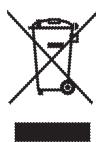
Important information for correct disposal of the product in accordance with EC Directive 2002/96/EC.
At the end of its working life, the product must not be disposed of as urban waste. It must be taken to a special local authority differentiated waste collection centre or to a dealer providing this service.
Disposing of a household appliance separately avoids possible negative consequences for the environment and health deriving from inappropriate disposal and enables the constituent materials to
be recovered to obtain significant savings in energy and resources. As a reminder of the need to dispose of household appliances separately, the product is marked with a crossed-out wheeled dustbin.