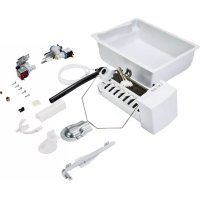
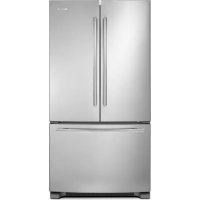
IC13B - Refrigerator JENN-AIR - Free user manual and instructions
Find the device manual for free IC13B JENN-AIR in PDF.



| Product Type | Refrigerator-Freezer |
| Brand | JENN-AIR |
| Model | IC13B |
| Power Supply | 120 V, 60 Hz, 15 A |
| Ice Maker | Automatic, with feeler arm and ice bin |
| Water Dispenser | Integrated (requires water connection) |
| Recommended Freezer Temperature | -18 °C to -17 °C |
| Required Water Pressure | 138 to 690 kPa (241 kPa minimum with filter) |
| Water Connection Type | 6 mm flexible copper tubing |
| Water Filter | Recommended, min. pressure 241 kPa |
| Ice Bin Maintenance | Wash regularly with warm water |
| Installation Safety | Unplug appliance before servicing |
| Feeler Arm | Up position = stop, down = run |
| Ice Production | Approximately 24 hours after startup, discard first ice after 12 hours |
| Troubleshooting | Check water pressure, temperature, electrical connections |
| Warranty | Refer to refrigerator user manual |
Frequently Asked Questions - IC13B JENN-AIR
User questions about IC13B JENN-AIR
0 question about this device. Answer the ones you know or ask your own.
Ask a new question about this device
Download the instructions for your Refrigerator in PDF format for free! Find your manual IC13B - JENN-AIR and take your electronic device back in hand. On this page are published all the documents necessary for the use of your device. IC13B by JENN-AIR.
USER MANUAL IC13B JENN-AIR
Installation and Operating Instructions
Bottom Freezer Refrigerator Ice Maker Kit
Ordering parts and accessories?
Questions about your features?
Refer to the owner's manual or serial plate in or on your refrigerator for questions or contact your dealer.
Keep instructions for future reference.
Keep this manual and your sales receipt together in a safe place in case warranty service is required.
Contents
Important Safety Information 2
About Your Ice Maker 3
How the Ice Maker Works 3
How to Use Your Ice Maker 3
Installing Your Ice Maker 4
How to Prepare the Freezer Compartment 5
How to Mount the Water Valve Assembly 6
How to Mount the Ice Maker Kit 7
How to Connect the Water Supply 8
Trouble Shooting 9
Warranty 11

Part No. 10527067
Important Safety Information
What You Need to Know about Safety Instructions
Warning and Important Safety Instructions appearing in this manual are not meant to cover all possible conditions and situations that may occur. Common sense, caution, and care must be exercised when installing, maintaining, or operating refrigerator.
Read entire manual before installing kit. All necessary tools and materials must be available prior to installation. Verify all listed parts are included in kit. If parts are missing, contact source from whom kit was purchased.
If unable to solve a problem during installation, refer to your refrigerators owners manual for service information.
Before Calling Service...
If something seems unusual, please check "Trouble Shooting" section, which is designed to help you solve problems before calling service.
Recognize Safety Symbols, Words, Labels

DANGER
DANGER—Immediate hazards which WILL result in severe personal injury or death.

WARNING
WARNING—Hazards or unsafe practices which COULD result in severe personal injury or death.

CAUTION
CAUTION—Hazards or unsafe practices which COULD result in minor personal injury or product or property damage.

WARNING
To avoid electrical shock which can cause severe personal injury or death, follow basic precautions, including the following:
- Unplug power cord or open household circuit breaker to refrigerator before installing kit. After installing kit, reconnect power.

CAUTION
To avoid risk of personal injury or property damage, follow basic precautions, including the following:
- Do not place fingers or hands on or around the automatic icemaking mechanism while the refrigerator is plugged in.
- REPLACE ORIGINAL ICE STORAGE BUCKET WITH ONE FROM KIT to avoid spilling ice cubes.
- Confirm water pressure to water valve is between 20 and 100 pounds per square inch. If water filter is installed, water pressure to water valve must be a minimum of 35 pounds per square inch.
- Start nuts by hand to avoid cross threading. Finish tightening nuts using a wrench. Do not overtighten.
- Check carefully for water leaks prior to returning refrigerator to normal location and 24 hours after connection.
How the Ice Maker Works
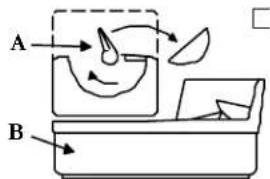
1 Water fills the empty cube mold when the freezer has cooled to freezing temperature. Cold air is forced directly over the mold.

2 When frozen, the cubes are moved up and out of the mold. The sweeper arm (A) ejects them into the ice storage bin (B) below.
How to Use Your Ice Maker
1 To start ice maker, lower feeler arm to 'on' position.
- Make sure ice storage bin is below ice maker and pushed back as far as possible.
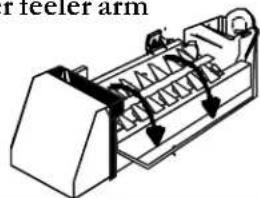
NOTE: Feeler arm must be free to move upward and outward over ice storage bin for ice production. Make sure packages in freezer compartment do not block its movement.
2 Allow approximately 24 hours after installation to receive first harvest of ice.
- Discard ice created within first 12 hours of operation to verify system is flushed of impurities.
About Your Ice Maker
Is it possible for the ice maker to overfill the storage bin?
The feeler arm (C) senses when the bin (B) is full and signals the icemaker to stop ejecting cubes. The mold refills and freezes a new supply. Once the feeler arm senses that more is needed, the ice maker resumes operation by ejecting the frozen cubes.

When is it appropriate to shut off my ice maker?
Raise the feeler arm to the STOP (up) position when:
-
Ice storage bin is removed, or is being cleaned.
-
Refrigerator is not to be used for an extended time, such as vacations. Also, turn off the water supply to the ice maker in this instance.
Water supply is to be shut off for several hours.
My ice cubes have an odor. What can I do to avoid this?
Ice is a porous material and is likely to absorb odors from surrounding areas. Ice cubes that have been in the ice storage bin for a considerable length of time may pick up off-flavor tastes, stick together, and gradually become smaller. We suggest that these cubes be thrown away.
Other ways to control ice cube odor are listed below.
- The ice storage bin should be cleaned occasionally in warm water. Be sure to put the icemaker feeler arm in the STOP (up) position when cleaning the bin. Rinse and wipe dry.
- Check for spoiled or expired items and discard. Wrap all odor-causing foods, or store foods in tightly-sealed containers to prevent odor reoccurrence.
Water filter (some models) may need to be replaced. - In some cases, household water quality may need to be checked. If a water filter is desired, a water filter may be ordered for some models. Contact your dealer for more information on your particular model.
Installing Your Ice Maker

WARNING
To reduce the risk of injury or death, follow basic precautions, including the following:
- Read all instructions before installing device.
DO NOT attempt installation if instructions are not understood or if they are beyond personal skill level. - Observe all local codes and ordinances.
DO NOT service device unless specifically recommended in owner's manual or published user-repair instructions. - Disconnect power to unit prior to installing device.

CAUTION
To avoid property damage or possible injury, follow basic precautions, including the following:
- Consult a plumber to connect copper tubing to household plumbing to assure compliance with local codes and ordinances.
- Confirm water pressure to water valve is between 20 and 100 pounds per square inch. If water filter is installed, water pressure to water valve must be a minimum of 35 pounds per square inch.
DO NOT use a self-piercing, or 3 / 10 "saddle valve! Both reduce water flow, become clogged with time, and may cause leaks if repair is attempted. - Tighten nuts by hand to prevent cross threading. Finish tightening nuts with pliers and wrenches. Do not overtighten.
Wait 24 hours before placing unit into final position to check and correct any water leaks.
Materials Needed
1/4" outer diameter flexible copper tubing
NOTE: Add 8'to tubing length needed to reach water supply for creation of service loop.
-
Shut-off valve (requires a 1/4 hole to be drilled into water supply before valve attachment)
-
Phillips screwdriver
- Needle-nosepliers
- Adjustable wrench
- Flat-blade screwdriver
dot 14 hex nut driver
Water bucket - Masking tape or small plastic bag

Installing Your Ice Maker
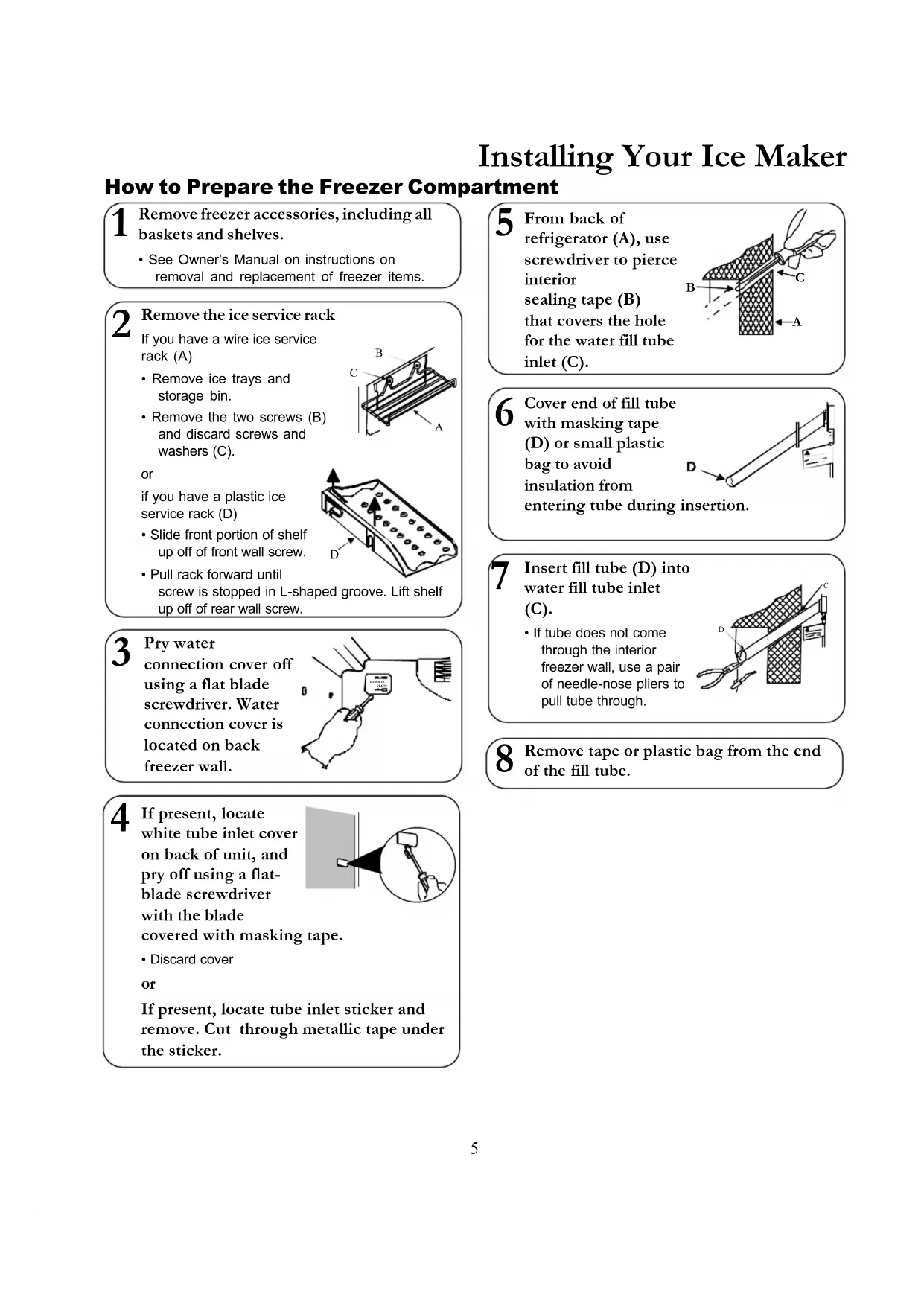
How to Prepare the Freezer Compartment
1 Remove freezer accessories, including all baskets and shelves.
- See Owner's Manual on instructions on removal and replacement of freezer items.
2 Remove the ice service rack
If you have a wire ice service rack (A)
- Remove ice trays and storage bin.
- Remove the two screws (B) and discard screws and washers (C).

or
if you have a plastic ice service rack (D)
- Slide front portion of shelf up off of front wall screw.
Pull rack forward until screw is stopped in L-shaped groove. Lift shelf up off of rear wall screw.
3 Pry water connection cover off using a flat blade screwdriver. Water connection cover is located on back freezer wall.

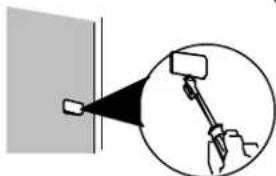
4 If present, locate white tube inlet cover on back of unit, and pry off using a flatblade screwdriver with the blade covered with masking
- Discard cover
or
If present, locate tube inlet sticker and remove. Cut through metallic tape under the sticker.
5 From back of refrigerator (A), use screwdriver to pierce interior sealing tape (B) that covers the hole for the water fill tube inlet (C).

6 Cover end of fill tube with masking tape (D) or small plastic bag to avoid insulation from entering tube during

7 Insert fill tube (D) into water fill tube inlet (C).
If tube does not come through the interior freezer wall, use a pair of needle-nose pliers to pull tube through.

8 Remove tape or plastic bag from the end of the fill tube.
Installing Your Ice Maker
9 If hole in the back of the cabinet is as illustrated to the right, then push gently on the water fill tube while twisting it slightly. Make

sure flange (E) is firmly seated in the hole
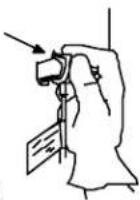
- Pull on back of fill tube to be sure that the fit is tight. If tube comes loose, repeat above instructions.

or
If hole in cabinet back is diamond shaped, then insert fill tube. Press firmly inward while rotating clockwise 30irc until water line is vertical and fill tube is locked into back wall.
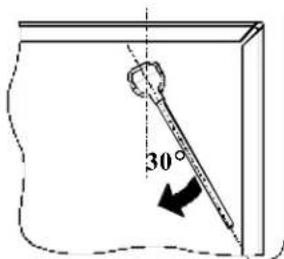
- Pull on back of fill tube to be sure that the fit is tight. If tube comes loose, repeat above instructions.
How to Mount the Water Valve Assembly
1 Locate water valve cover plate on back of unit in lower left hand corner. Remove cover plate with a 14 hex nut driver.

- Retain screw for later replacement.
- Cut wire tie holding harness to cover plate.
Take care not to cut wires. - Discard cover plate
2 Plug harness from inside machine compartment onto water valve electrical terminals.

3 Tuck bottom portion of valve inside machine compartment behind the tab (G) and fasten valve to cabinet with 14 screw (F) from step 1.

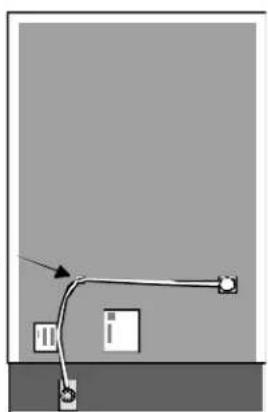
4 Position valve water line as illustrated and secure with small plastic adhesive clip (A) located in ice maker kit.
A
How to Mount the Ice Maker Kit
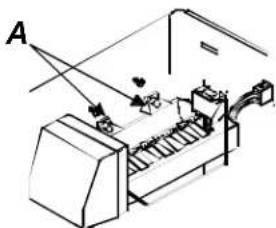
Screw 5/8" ice maker mounting screws into holes provided in left wall of freezer 3/8" section.
Leave head out approximately 3 / 8 for the slot in the icemaker hanger to slip over
- Remove phillips screw (A) if present and discard.
2 Snap ice maker cover into place onto ice maker.
- Insert tabs on top of cover into slots on top of end of ice maker.
- Snap bottom of ice maker ice maker cover into place.
3 Insert wire harness plug into connector on back wall of freezer by using a rocking motion until locking fingers on plug snap into place.
4 Slip fill tube into self-positioning fill tube opening in back of ice maker..
5 Slide ice maker hangers (A) over screws.


Installing Your Ice Maker
6 Insert remaining mounting screw into bottom of ice maker, and tighten down all mounting screws.
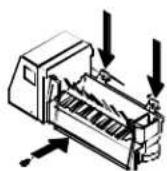
7 Raise feeler arm to the STOP (up) position until water connection is complete.

- Ice maker should feel securely mounted.
8 Replace baskets and shelves, and place ice storage bin directly under ice maker.
NOTE: Check again to make sure the icemaker wire harness is fully inserted into its outlet.
Installing Your Ice Maker How to Connect the Water Supply
1 Create service loop with 8' of tubing. Avoid kinking of tubing.

8 Monitor water connection for 24 hours. Correct leaks, if necessary.
2 Remove plastic cap (A) from water valve inlet port (B).
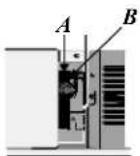
3 Locate water tubing clamp (C) in kit and install on back of refrigerator with existing 1/4'' hex head cover screw.
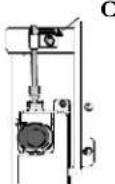
4 Place brass nut (D) and sleeve (E) on copper tube end as illustrated.

5 Place end of copper tubing into water valve inlet port. Shape tubing slightly-DO NOT KINK-so that tubing feeds straight into inlet port.
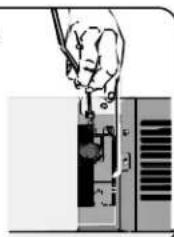
6 Slide brass nut over sleeve and screw nut into inlet port. Tighten nut with wrench.
IMPORTANT: DO NOT overtighten. Cross threading may occur.
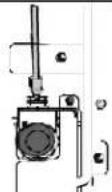
7 Pull on tubing to confirm connection is secure. Connect tubing to frame with water tubing clamp and turn on water supply. Check for leaks and correct, if present.
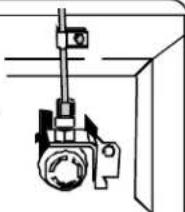
TOPIC POSSIBLE CAUSE SOLUTION
| Ice maker appears to have stopped operating | Ice maker arm is not in correct position | Confirm ice maker arm is down. See Automatic Ice Maker section in your owner's manual for details. |
| Electrical power cord may not be plugged into icemaker, or harness is not plugged into water wall outlet, or check that connection valve. | Make sure plug from power cord fits tightly into iceaker, or harness is not plugged into water wall outlet, or check that connection valve. | |
| The icemaker is not getting the necessary Make sure the water supply is connected and turned on. supply of water. Check for kinks in the 1/4" copper tubing. Remove kinks or replace tubing if there are kinks.Verify that refrigerator harness is plugged into water valve.Water filter needs to be replaced. See owners manual for replacement instructions. | ||
| Freezer temperature is too low See the controls section in your owner's manual for assistance on how to adjust your controls. Freezer must be between 0 to 2°F (-18 to -17°C) to produce ice. | ||
| The cubes are too small. | The shutoff valve connecting the refrigerator to the home water line may be clogged. Unclog it. Replace water filter. | |
| Small or hollow cubes | Water utilizing devices in use elsewhere in house | Avoid operating device such as dishwasher, washing machine or shower. |
| Water filter needs to be replaced. | See owners manual for replacement instructions. | |
| Ice cubes have odor/taste | Ice stored for an extended period may absorb odors which affect their taste. | Discard old cubes. Use icemaker regularly. |
| Ice storage bin needs to be emptied and washed. | Empty and wash ice storage bin. | |
| Unsealed packages in the refrigerator ad/or freezer compartments may be transmitting odor/taste to ice cubes. | Check seals on packages in freezer. | |
| The interior of the refrigerator needs cleaning. | See Odor Removal instructions in Care and Cleaning Section. | |
| Icemaker is not producing ice | Ice maker arm is not in correct position | Confirm ice maker arm is down. See Automatic Ice Maker section in your owner's manual for details. |
| Household water supply is not reaching water valve. | Check water connection procedure in your Installation Instructions . | |
| Copper or plastic tubing has kinks. | Turn off water supply and remove kinks. If kinks cannot be removed, replace tubing. Refer to the refrigerators owners manual, serial plate or your dealer for information . | |
| Water pressure is too low. | Water pressure must be between 20 to 100 pounds per square inch to function properly. A minimum pressure of 35 pounds per square inch is recommended for units with water filters. | |
| Freezer temperature is too low. | See the controls section in your owner's manual for assistance on how to adjust your controls. Freezer must be between 0 to 2°F (-18 to -17°C) to produce ice. | |
| Improper water valve was installed. | Check water connection procedure in your Installation Instructions . Self-piercing and "s" saddle valves cause low water pressure and may clog the line over time. The manufacturer is not responsible for property damage due to improper installation or water connection. | |
Trouble Shooting
TOPIC POSSIBLE CAUSE SOLUTION
| Icemaker is not producing ice (somemodels) (continued from previous page) | Electrical connection to water valve coil and connector block may be loose. | Check electrical connections to water valve coil and connector block on refrigerator cabinet. |
| Freezer section not operating at proper temperature. temperature. Adjust accordingly. | Confirm that freezer section is operating at proper | |
| Ice maker is not producing enough ice or ice is malformed. | Ice maker has just recently been installed or a large amount of ice has just been used. | Wait 24 hours for ice production to begin and for ice to restock after emptied. |
| Water pressure is too low. Low water pressure can cause valve to leak. Water pressure must be between 20 to 100 pounds per square inch to function properly. A minimum pressure of 35 pounds per square inch is recommended for units with water filters. | ||
| Water filter needs to be replaced. | See owners manual for replacement instructions. | |
| Freezer temperature is too low. | See the controls section in your owner's manual for assistance on how to adjust your controls. Freezer must be between 0 to 2°F (-18 to -17°C) to produce ice. | |
| Ice cubes stick together or "shrink". | Ice cubes have not been emptied. | Empty ice cube bucket or trays more frequently. If used infrequently, ice cubes may stick together or shrink. |
| Ice forms in inlet tube to ice maker (some models). | Water pressure is too low. | Check water pressure. Low water pressure will cause valve to leak. Self-piercing valves cause low water pressure. A saddle valve is recommended. Refer to the refrigerators owners manual, serial plate, or your local dealer for availability of saddle valves or servicers in your area. |
| Freezer temperature is too high | See the controls section in your owner's manual for assistance on how to adjust your controls. Freezer is recommended to be between 0 and 2°F (-18 to -17°C). | |
| Unit is leaking water | Plastic tubing was used to complete water connection. | Copper tubing is recommended for installation. Plastic is less durable and can cause leakage. The manufacturer is not responsible for property damage due to improper installation or water connection. |
| Water pressure is too low. Low water pressure can cause valve to leak. Water pressure must be between 20 to 100 pounds per square inch to function properly. A minimum pressure of 35 pounds per square inch is recommended for units with water filters. | ||
| Improper water valve was installed instructions. | Check water connection procedure in your Installation Self-piercing and 3/16" saddle valves cause low water pressure and may clog the line over time. The manufacturer is not responsible for property damage due to improper installation or water connection. | |
Warranty
Refer to refrigerators owner's manual for warranty & service information.
PROBLEMA CAUSA POSIBLE SOLUCION
PROBLEMA CAUSAPOSIBLE SOLUCION

- Installation and Operating Instructions
- Bottom Freezer Refrigerator Ice Maker Kit
- Keep instructions for future reference.
- Important Safety Information
- What You Need to Know about Safety Instructions
- Before Calling Service...
- Recognize Safety Symbols, Words, Labels
- DANGER
- WARNING
- CAUTION
- To avoid electrical shock which can cause severe personal injury or death, follow basic precautions, including the following:
- To avoid risk of personal injury or property damage, follow basic precautions, including the following:
- How the Ice Maker Works
- How to Use Your Ice Maker
- About Your Ice Maker
- Is it possible for the ice maker to overfill the storage bin?
- When is it appropriate to shut off my ice maker?
- My ice cubes have an odor. What can I do to avoid this?
- Installing Your Ice Maker
- To reduce the risk of injury or death, follow basic precautions, including the following:
- To avoid property damage or possible injury, follow basic precautions, including the following:
- How to Prepare the Freezer Compartment
- Remove freezer accessories, including all baskets and shelves.
- Remove the ice service rack
- Pry water connection cover off using a flat blade screwdriver. Water connection cover is located on back freezer wall.
- If present, locate white tube inlet cover on back of unit, and pry off using a flatblade screwdriver with the blade covered with masking
- Insert fill tube (D) into water fill tube inlet (C).
- Remove tape or plastic bag from the end of the fill tube.
- How to Mount the Water Valve Assembly
- How to Mount the Ice Maker Kit
- Installing Your Ice Maker How to Connect the Water Supply
- Trouble Shooting
- Warranty
Brand : JENN-AIR
Model : IC13B
Category : Refrigerator