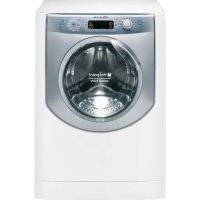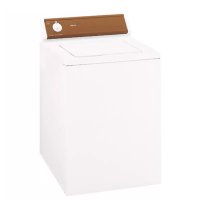
VLXR1020AWO - Washing machine HOTPOINT - Free user manual and instructions
Find the device manual for free VLXR1020AWO HOTPOINT in PDF.


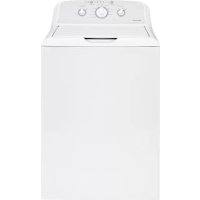
| Product Type | Top-loading washing machine |
| Brand | Hotpoint |
| Model | VLXR1020AWO |
| Category | Washing machine |
| Wash Programs | COTTONS, PERMA PRESS, KNITS, DELICATES |
| Available Temperatures | Hot, Warm, Cold |
| Adjustable Load Size | Small, Large, Super |
| Liquid fabric softener dispenser | Yes, with maximum fill line |
| Removable agitator cap | Yes |
| Lint filter | Self-cleaning, located under the agitator |
| Hose maintenance | Replace fill hoses every 5 years |
| Exterior cleaning | Wipe with a damp cloth, avoid abrasives |
| Safety | Grounding required, fire and explosion prevention instructions |
| Warranty | 1 year full (parts and labor) in the United States |
| Customer service | GE Answer Center: 800.626.2000 (USA), Camco 800-361-3400 (Canada) |
Frequently Asked Questions - VLXR1020AWO HOTPOINT
User questions about VLXR1020AWO HOTPOINT
0 question about this device. Answer the ones you know or ask your own.
Ask a new question about this device
Download the instructions for your Washing machine in PDF format for free! Find your manual VLXR1020AWO - HOTPOINT and take your electronic device back in hand. On this page are published all the documents necessary for the use of your device. VLXR1020AWO by HOTPOINT.
USER MANUAL VLXR1020AWO HOTPOINT
Operating Instructions
6
The Controls on Your Washer
Other Washer Features
Preparing to Wash
Care of Product

Helpful Information
12
Specialized Fabric Guide
Stain Removal Guide
Removing Specific Stains

If Something Goes Wrong
16
Before You Call For Service
Camco Service Numbers
Warranty
HOTPOINT
175D1807P176
39-9353
8-96 CG
Welcome
Welcome to the Hotpoint family. We're proud of our quality products and we believe in dependable service. You'll see it in this easy-to-use manual and you'll hear it in the friendly voices of our customer service department.
Best of all, you'll experience these values each time you do the laundry. That's important, because your new washer will be part of your family for a long time.
Start Here!
Before using your washer
Staple your receipt to the inside back cover of this manual.
Write down the model and serial numbers here. They are behind the top edge of the control panel.

natural_image
Simple line drawing of a bed with an arrow indicating rotation (no text or symbols)Model number
Serial number
Date of purchase
Need Help?
Help us help you In the United States 800.626.2000
Before you call for service, there are a few things you can do to help us serve you better.
Read this manual. It contains instructions to help you use and maintain your washer properly.
Save time and money. Check the section titled “If Something Goes Wrong” before calling. This section was designed to solve common problems you might encounter.
If you do need service, you can relax knowing help is only a phone call away. A list of toll-free customer service numbers is included on the inside back cover. Or call in the United States the GE Answer Center® at 800.626.2000, 24 hours a day, 7 days a week. In Canada call 800-361-3400.
Important Safety Information
Read all safety information before using
Many washers are located near a gas dryer or a water heater in the home.

WARNING: For your safety the information in this manual must be proved to minimize the risk of fire or explosion or to prevent property damage, personal injury or loss of life.
Do not store or use gasoline or other flammable vapors and liquids in the vicinity of this or any other appliance.
Installation and service must be performed by a qualified installer, service agency or the gas supplier.
IF YOU SMELL GAS
1 Do not try to light any appliance.
2 Do not touch any electrical switch; do not use any phone in your building.
3 Clear the room, building or area of all occupants.
4 Immediately call your gas supplier from a neighbor's phone. Follow the gas supplier's instructions.
5 If you cannot reach your gas supplier, call the fire department.

Water Heater Safety
Under certain conditions hydrogen gas may be produced in a water heater that has not been used for two weeks or more. HYDROGEN GAS CAN BE EXPLOSIVE UNDER THESE CIRCUMSTANCES.
If the hot water has not been used for two weeks or more, prevent the possibility of damage or injury by turning on all hot water faucets and allow them to run for several minutes before using any electrical appliance which is connected to the hot water system. This will allow any hydrogen gas to escape. Since the gas is flammable, do not smoke or use an open flame or appliance during this process.


Warning
To reduce the risk of fire, electric shock, or injury to persons when using your appliance, follow basic precautions, including the following sections.
Safety Precautions
- Use this appliance only for its intended purpose as described in this Owner's Manual.
- This washer must be properly installed and located in accordance with the Installation Instructions before it is used. If you did not receive an Installation Instructions sheet, you can obtain one by calling, toll-free, in the United States the GE Answer Center®, 800.626.2000. In Canada write to: Manager, Consumer Relations Camco Inc. 1 Factory Lane, Suite 310 Moncton, N.B. E1C 9M3
–Properly ground to conform with all governing codes and ordinances. Follow details in Installation Instructions.
— Install or store where it will not be exposed to temperatures below freezing or exposed to the weather.
- Connect to a properly rated, protected and sized power supply circuit to avoid electrical overload.
- Connect to adequate plumbing and drain facilities as described in the Installation Instructions.
- Turn off water faucets when the washer is not in use to relieve
pressure on hoses and valves and to minimize leakage if a hose or valve should break or rupture.
- Do not repair or replace any part of the appliance or attempt any servicing unless specifically recommended in this Owner's Manual or in published user-repair instructions that you understand and have the skills to carry out.
- When disconnecting this appliance pull by the plug rather than the cord to avoid damage to the cord or junction of cord and plug. Make sure that the cord is located so that it will not be stepped on, tripped over or otherwise subjected to damage or stress.
- Keep all laundry aids (such as detergents, bleaches, fabric softeners, etc.) out of the reach of children, preferably in a locked cabinet. Observe all warnings on container labels to avoid personal injury.
- Do not tamper with the controls.
- Keep the area around and underneath your appliances free from the accumulation of combustible materials, such as lint, paper, rags, chemicals, etc.
- Keep the floor around your appliances clean and dry to reduce the possibility of slipping.
- Never reach into washer while it is moving. Before loading, unloading or adding clothes, push in the Cycle Selector knob and wait until the machine has completely stopped before opening the lid.
- Close supervision is necessary if this appliance is used by or near children. Do not allow children to play inside, on or with this appliance or any discarded appliance. Dispose of discarded appliances and shipping/packing materials properly. Before discarding a washer, or removing from service, remove the washer lid.
- Do not leave washer lid up during cycle. This will stop the wash and spin action and prevent completion of the cycle.
-
Do not wash or dry articles that have been cleaned in, washed in, soaked in, or spotted with combustible or explosive substances (such as wax, oil, paint, gasoline, degreasers, dry-cleaning solvents, kerosene, etc.) which may ignite or explode. Do not add these substances to the wash water. Do not use these substances around your washer and/or dryer during operation.
-
The laundry process can reduce the flame retardancy of fabrics. To avoid such a result, the garment manufacturer's care instructions should be followed very carefully.
- Do not mix chlorine bleach with ammonia or acids such as vinegar and/or rust remover. Mixing can produce a toxic gas which may cause death.
- Never climb on or stand on the washer top.
- Do not wash fiberglass articles in your washer. Skin irritation could result from the remaining particles that may be picked up by clothing during subsequent washer use.
- To minimize the possibility of electric shock, unplug this appliance from the power supply or disconnect the washer at the household distribution panel by removing the fuse or switching off the circuit breaker before attempting any maintenance or cleaning.
- NOTE: Turning the Cycle Selector knob to an off position does NOT disconnect the appliance from the power supply.
- Do not operate this appliance if it is damaged, malfunctioning, partially disassembled, or has missing or broken parts, including a damaged cord or plug.

natural_image
Abstract black and white graphic with circular and rectangular shapes (no text or symbols)Operating Instructions
The controls on your washer

text_image
load size SMALL LARGE SUPER 1 WASH RINSE temperature WARM COLD COLD COLD HOT COLD 2
Load Size Wash/Rinse Temperature
By selecting load size, you are setting the water level. For the best results, select a size appropriate for the load you are washing.
Always follow Fabric Manufacturer's Care Label or instructions when laundering. Use this chart as a general guide.
| Fabric Care Guide | ||
| wash temperature | rinse temperature | |
| COTTON WHITE | hot | cold |
| COTTONS COLORS | warm* | cold |
| PERM PRESS | warm* | cold |
| DELICATES | cold | cold |
| WASHABLE WOOLENS | warm* | cold |
*Warm water is approximately 90°F to 110°F. (hand comfortable)
Cycle Descriptions

REGULAR
For heavily to lightly soiled cottons, linens, work and play clothes.
PERM PRESS
For synthetics and blends with normal soil.
KNITS
Specially designed for normally soiled knits.
DELICATES
For lingerie and special-care fabrics with light to normal soil.

text_image
OFF perm. press knits delicates extra rinse light soil normal heavy OFF 3 4
Selecting Cycle Starting Wa
Push in the Cycle knob to select the desired cycle. See the above Cycle Descriptions.
- Add detergent.
- Add clothes and close lid.
- Pull out the Cycle knob to start washer.
Other washer features your model may have
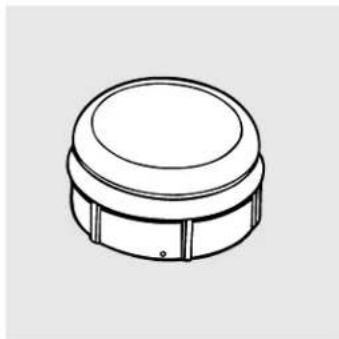
Agitator Cap
natural_image
Simple line drawing of a circular mechanical component with a flat top and side grooves (no text or symbols)This cap fits into the top of the agitator. If it accidentally comes off, simply put it back on.
natural_image
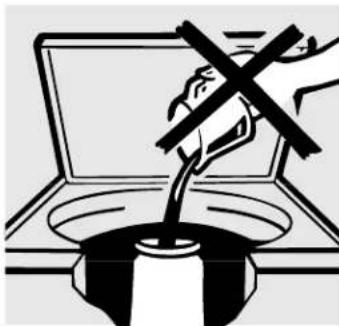
Illustration of a hand using a X-branded tool to clean or exhaust from a laptop (no text or symbols)Do not pour anything into the agitator if the top is removed
Fabric Softener Dispenser
natural_image
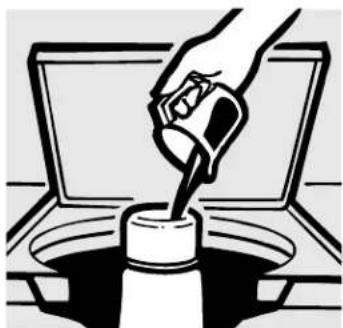
Illustration of a hand pouring liquid into a container with a lid, placed on an open base (no text or symbols)Pour liquid fabric softener and water into fabric softener dispenser
This dispenser automatically releases liquid fabric softener at the proper time during the cycle. To use, follow these steps:
1 Make sure dispenser is securely attached to agitator.
2 Pour liquid fabric softener into dispenser, using amount recommended on package.
3 Add water to dispenser until it reaches the maximum fill line.
NOTE:
- Do not stop the washer during the first spin. This will cause the dispenser to empty too soon.
- Never pour fabric softener directly on clothes. It will leave spots on clothes.
- Only use dispenser for liquid fabric softeners. If dispenser gets clogged, see Cleaning Fabric Softener Dispenser section.
natural_image
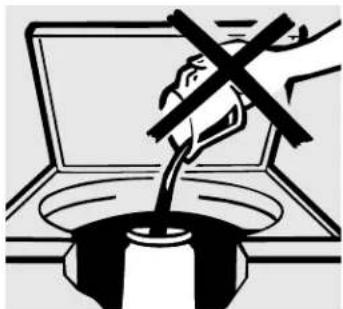
Illustration of a hand using a X-shaped tool to lift liquid into a container (no text or symbols)Do not pour anything into the agitator if the top is removed
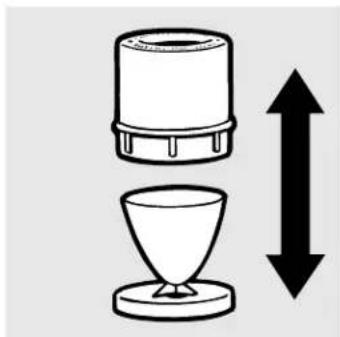
Cleaning Fabric Softener Dispenser
1 Remove the dispenser from the top of the agitator.
2 Separate the dispenser cup from the cover by grasping the top and pushing down on the inside of the cup with your fingers. Dispenser cup will pop free from the cover.
natural_image
Diagram showing a cylindrical device above a glass with an upward arrow and downward arrow, no text or symbols present.Separate for cleaning
3 To clean dispenser, soak both the dispenser cup and the dispenser cover in the following solution:
1 US gallon (3.8 liters) warm water
1/4 cup (60 ml) heavy duty liquid detergent
1 cup (240 ml) bleach
4 If necessary, loosen build-up with a clean, soft cloth after soaking. Do not use a stiff brush; you may roughen the surface of the dispenser.
5 Rinse and reassemble dispenser. Place dispenser back on the agitator.
Preparing to Wash
Prepare
Empty pockets, unroll cuffs, shake out loose dirt, zip zippers, fasten snaps, hooks and buttons.
Treat/remove stains. See Stain Removal Guide.
Turn poly knits inside-out to reduce pilling.
Do any necessary mending.
Use a net laundry bag for delicate items.
Sort
Always follow Fabric Manufacturer's Care Label when laundering.
Sort by color
(Separate colorfast from non-colorfast fabrics*)
- Whites
- Lights
- Darks
Separate by fabric type
• Cottons and linens
• Permanent press cottons and blends
- Synthetic and poly knits
- Delicates
Separate lint producers from lint collectors
- Lint producers: terry cloth and chenille
- Lint collectors: velveteen and corduroy
Sort by soil
• Light
- Medium
- Heavy
* Non-colorfast fabrics may bleed or fade. Sort by individual color.
Detergent
Always add detergent and start the washer before adding clothes so that the detergent can work effectively.
Using the correct amount of detergent is one of the most important things you can do to make sure your wash comes out clean. Always follow the detergent package directions.
Using too little detergent is a common cause of laundry problems. Use more detergent if you have hard water, large loads, greasy or oily soils or lower water temperature.
Load
Load dry items loosely, spacing evenly around agitator, and close the lid.
A typical wash load: two twin sheets, two pillow cases, three small bath towels, three wash cloths and two t-shirts.
Place large items in bottom, small items in the middle and medium items on top.
When loading wet items make sure you set the load/water level high enough to allow the items to move freely.
Wash bulky items like blankets separately.
To add items after washer has started, push in Cycle knob and submerge additional items next to the agitator. Close the lid and pull Cycle knob out to restart.
To reduce wrinkling, give permanent press items, synthetics and poly knits room to move freely in the washer.
NOTE:
- Do not wrap large items like sheets around the agitator.
- Do not wash fabrics containing flammable materials (waxes, cleaning fluids, etc.) in your washer.
Care & Cleaning
The Washer
natural_image
Line drawing of a single washing machine (no text or symbols)Leave the lid open after washing to allow moisture to evaporate. The wash basket is practically care free.
If you want to clean the basket use a clean soft cloth dampened with liquid detergent, then rinse. (Do not use harsh or gritty cleaners.) To rinse:
1 Turn the Cycle knob to any wash setting.
2 Start washer.
Fill Hoses—Hoses connecting washer to faucet should be replaced every five years.
Lint Filter—The lint filter is located under the agitator. It is self cleaning and requires no maintenance.
Exterior—Immediately wipe off any spills. Wipe with damp cloth. Try not to hit surface with sharp objects.
Moving and Storage—Ask the service technician to remove water from drain pump and hoses. Do not store the washer where it will be exposed to the weather. In the United States call the GE Answer Center® 800.626.2000 for information on how to keep the tub stationary when moving the washer. In Canada write to: Manager, Consumer Relations, Camco Inc.
1 Factory Lane, Suite 310 Moncton, N.B. E1C 9M3.
Long Vacations—Be sure water supply is shut off at faucets. Drain all water from hoses if weather will be below freezing.

Helpful Information
Specialty Care Guide
Always follow Fabric Manufacturer's Care Label or instructions when laundering.
Otherwise use the information below as a general guide.
| Item Suggested Care | |
| Down-Filled Garments Always wash down-filled garments separately from other types of garments. Wet down gives off an odor that will disappear when the down is dried. Wash down items frequently to fluff up the down and to retain down's warmth. When washing make sure the load is balanced. Add towels if necessary. Always tumble-dry down garments. | |
| Pillows Pillows are made from a variety of materials. Wash only if recommended on the Pillow Manufacturer's Care Label. Before washing check pillows for weak seams or holes, and mend. Let the washer fill with water and add detergent. Let the washer agitate for several minutes and then add pillows in pairs. This will keep the load balanced. | |
| Blankets Let the washer fill with water, add detergent, allow detergent to dissolve, then add blanket. Wash only one blanket at a time. | |
| Electric Blankets Sew a strong piece of cloth over the plug to protect the blanket and washer from damage. Wash according to pillow instructions above. | |
| Permanent Press Clothes Select a larger load/water level than normal. This will provide that are Line Dried more water to help reduce wrinkling and to allow clothes enough room to move around. Remove clothes as soon as the wash cycle is complete and hang them up immediately. |
Stain Removal Guide

General Hints
- Check Fabric Care Label.
- Remove stains as soon as possible. The fresher the stain, the easier it is to remove.
• To make sure a stain removal product is safe for your fabric test it on a hidden inside seam.
- Avoid use of hot water on unknown stains. It can set some stains.
Soaking and Pretreating
A thorough soaking with detergent or a special soaking agent is an effective way to remove heavy soils or stains.
Try one of these methods.
- Use the soak cycle. If your model does not have a soak cycle you can still soak by allowing the washer to fill and agitate for a few minutes to help loosen soils. Then push in the Cycle knob to stop the washer (keep lid closed) and allow to soak. Don't leave your laundry soaking in the washer longer than a few hours. After the soak period, pull out the Cycle knob to complete the cycle.
- Pretreat heavy soil by rubbing in a small amount of liquid detergent or a paste made of water and powdered detergent or soap. For best results, wait 1/2 hour before washing.
• To remove stains on white or bleachable fabrics, try soaking the stained area in a container for five minutes in the following solution and then launder in the washer: 1 US gallon (3.8 liters) cool water 1/4 cup (60 ml) chlorine bleach
Bleach Solution
To remove stains on white or bleachable fabrics, try soaking the stained area in a container for five minutes in the following solution and then launder in the washer:
1 US gallon (3.8 liters) cool water
1/4 cup (60 ml) chlorine bleach
Turn page for specific stain removal

Helpful Information
Removing Specific Stains
The Invisible Stain
Foods on synthetic clothes may cause stains which are virtually invisible when you put the clothes in the washer. If these stains are not completely removed in the wash, they may pick up dirt from other clothes in the washer and appear after the clothes are dried.
When They Become Visible:
- Rub the stain with undiluted liquid detergent.
- Let stand 30 minutes.
- Rewash using the hottest water that is safe for the fabric.
Preventing These Stains:
- Increase the amount of detergent used.
- Increase water temperature.
- Wash synthetics often.
Stain White and Bleachable Fabrics Other Washable Fabrics
Adhesives (Chewing Gum, etc.)
Rub with ice or immerse in very cold water. Same as white and bleachable Use dull tool to carefully scrape off as much fabrics. adhesive or gum as possible. Rub the stain with undiluted liquid detergent. Rinse well, then wash as usual.
Antiperspirants, Deodorants
Apply undiluted liquid detergent. Rinse. Same as white and bleachable If stain remains, use the Bleach Solution; fabrics except use non-chlorine launder. bleach.
Blood
Soak in cold water, then launder in warm Sponge or soak in cool water, water. If stain remains, use the Bleach then launder. Solution; launder.
Chocolate, Cream, Ice Cream and Milk
Soak in cold water. Use the Bleach Same as white and bleachable Solution; launder. fabrics except use non-chlorine bleach.
Stain White and Bleachable Fabrics Other Washable Fabrics
| Coffee and Tea | Without cream: Use the Bleach Solution;launder. stain remains, apply warmWith cream: Soak in cold water, then use stores), let stand 30 minutesthe Bleach Solution; launder. and rinse well. Wash as usual. | Sponge with warm water. Ifglycerine (available at drug |
| Cosmetics, Crayon | Use the Bleach Solution; launder. Rub the stain with undilutedliquid detergent. Rinse well,then wash as usual. | |
| Grass, Mildew,Scorch | Apply undiluted liquid detergent; launder. Sponge with warm water. Apply(Treat mildew spots while they are fresh, undiluted liquid detergent;before mold has a chance to weaken fabric.) launder. Bleach withIf either type stain remains, use the Bleach non-chlorine bleach; launder.Solution; launder. (Severe scorch stains can Old mildew cannot be removed.seldom be removed.) Scorch can seldom be removed. | |
| Ink, Ballpoint | Fresh stains: Place stain face down on anabsorbent towel and use a spray cleaner.Rinse well, then wash as usual. Old stains:Use the Bleach Solution; launder. | Same as white and bleachablefabrics except launder usingnon-chlorine bleach. |
| Juices, Wine,Food Coloring | Soak stain in cool water. If stain remains, Sponge with warm water.use the Bleach Solution; launder. Bleach remaining stain withnon-chlorine bleach. | |
| Perspiration | Apply undiluted liquid detergent and launderin warm water. If color has changed you maybe able to restore it by treating with ammoniaor vinegar. | Launder in warm water. Rinsewell. Bleach with non-chlorinebleach. |

Do not mix chlorine bleach with ammonia or acids such as vinegar and/or rust remover. Mixing can produce a toxic gas which may cause death.
?
If Something Goes Wrong
Before you call for service
Problem Possible Causes What to Do
Washer Won't Operate
Washer is unplugged • Make sure cord is plugged securely into a working outlet.
Water supply is turned off • Turn both hot and cold taps fully on.
| Controls are not set properly | • Check controls and make sure Cycle knob is pulled out to an on position. |
| Lid is open • Close lid and pull Cycle knob out to an on position. | |
| Circuit breaker/fuse is tripped/blown fuses or reset breaker. Washer should have separate outlet. | • Check house circuit breakers/fuses. Replace |
Water Temperature is Incorrect
| Control is not set properly | • Check water temperature control and adjust. |
| Water supply is turned off or improperly connected make sure | • Turn both hot and cold taps fully on and hoses are connected to correct taps. |
| Water valve screens are stopped up | • Turn off the water source and remove the water connection hoses from the upper back of the washer. Use a brush or toothpick to clean the screens in the machine. Reconnect the hoses and turn the water source back on. |
| House water heater is not set properly | • Make sure house water heater is delivering water at 48°C.-65°C. (120°F.-150°F.). |
Water Won't Drain
Drain hose is kinked or • Straighten drain hose and make sure improperly connected washer is not sitting on it.
- Top of drain outlet should be less than 1m (3 ft.) above floor.
Problem Possible Causes What to Do
Water Leaks
| Fill hoses or drain hose is improperly connected and make sure end of drain hose is correctly inserted in and secured to drain facility. | |
| Household drain may be clogged to call a plumber. | • Check household plumbing. You may need |
| Constant water pressure to the fill hoses at the water source off after each use. | • Tighten hoses at the taps and turn the water |
| • Check condition of the fill hoses; they may need replacement after 5 years. | |
Washer is Noisy
| Washer is uneven • Make sure washer is level and firm to the floor. |
| Washer load is unbalanced • Push the Cycle knob in to stop the washer, open the lid and redistribute the load evenly. Close the lid and restart. |
| Shipping rod has not been • Remove the shipping rod on the bottom removed right side of the washer just before sliding the washer in place. Do not use the washer with the shipping rod in place. |
| Water is draining • There will be a gurgling, “sucking” sound prior to the spin cycle. This is normal and will stop as soon as the machine goes into the spin cycle. |
Washer Pauses in Cycle
| The washer normally pauses between washing steps |
Clothes too Wet
| Incorrect cycle selected | • Make sure the cycle selected matches the load you are washing. |
| This is normal for some fabrics | |
Problem Possible Causes What to Do
Lint or Residue on Clothes
Incorrect sorting • Separate lint producers from lint collectors.
Washing too long • Wash small loads for a shorter time than larger loads.
Detergent not dissolving •
For best performance always add detergent before adding clothes. If you use powdered detergent, pre-dissolve detergent in hot water before adding to washer.
- Try a liquid detergent.
- Use warmer water temperature.
Overloading • Make sure load/water level setting matches load size.
Too much bleach • Check bleach package for correct amount.
Not enough detergent • Try using more detergent.
Incorrect use of fabric softener • Check fabric softener package for instructions (see Fabric Softener Dispenser section).
Wrinkling
Improper loads • Avoid mixing heavy items (like work clothes) with light items (like blouses).
- Separate permanent press from other laundry.
- Try a fabric softener.
Overloading or incorrect • Load your washer so clothes have enough water level room to move freely.
Incorrect wash and dry cycles
- Match Cycle selection to the type of fabric you are washing (especially for permanent press loads).
Repeated washing in water that is too hot
- Wash in warm or cold water with plenty of detergent.
Problem Possible Causes What to Do
Snags, Holes, Tears, Rips, or Excessive Wear
Pins, snaps, hooks, sharp • Fasten snaps, hooks, buttons, and zippers.
buttons, belt buckles, zippers, and sharp objects left in pockets
- Remove loose items like pins, objects in pockets and sharp buttons.
- Turn knits (which snag easily) inside out.
Undiluted chlorine bleach • Check bleach package instructions for proper amount.
- Never add undiluted bleach to wash or allow clothes to come in contact with undiluted bleach.
Small tears or holes • Repair tears and holes before washing. present before wash
Chemicals like hair bleach, • Rinse items that may have chemicals hair dye, permanent wave on them before washing. solution and toilet bowl cleaners
Permanent press items • While this is not caused by the washer, naturally fray (especially you can slow the fraying process by collars and cuffs) washing small permanent press loads with a higher load/water level setting.
- Avoid washing heavy items (like towels) with permanent press items.
Shrinkage
Some fabrics will naturally shrink in the wash than cold water.
- Hot water is more likely to cause shrinkage
- Follow directions on fabric care label.
Problem Possible Causes What to Do
Grayed Clothes
Not enough detergent • Try using more detergent (especially with (larger loads, heavy soil, larger loads).
and hard water might require more detergent)
- If you live in a hard water area try using a water conditioner or install a water softener.
Water is not hot enough • Make sure water heater is delivering water at 48^ C. -65^ C. ( 120^ F. -150^ F.).
- Do not use the washer when hot water is used for other needs (dishes, baths, etc.).
Washer is overloaded • Make sure load/water level setting matches load size.
Soak time is too short • Soak at least 30 minutes.
Soaking with too little detergent • Use more detergent (especially with heavy soil).
Detergent is not dissolving • Add detergent as wash basket fills with water before you load clothes.
To restore grayed clothes, try one of the following water. (Check the garment's manufacturing care label to see if hot water can be used.) Add a non-precipitating water softener. Use 2 1/2 times more than is recommended for normal water softening. Do not use detergent or soap. Allow clothes to go through a complete cycle. Repeat if necessary.
- Soak your clothes using a water softener instead of a soaking agent. Allow clothes to soak for about 20 minutes.
Problem Possible Causes What to Do
Yellowed Clothes
Not enough detergent • Always use the recommended amount of on a consistent basis detergent.
Chlorine bleach may yellow • Use non-chlorine bleach. some fabrics
Iron or manganese in water may • Use extra detergent plus a non-precipitating cause yellowing or yellow spots water softener dissolved in water and non-chlorine bleach.
- Run hot water for 2 minutes to help the pipes clean out iron buildup.
- Drain your house water heater occasionally.
- To remove spots spread stain area over a pan of boiling water and squeeze lemon juice through the stain.
Blue or Gray Spots
Incorrect use of fabric softener • Check fabric softener package for instructions (see Fabric Softener Dispenser section).
- To remove spots dampen the spots and rub with undiluted liquid detergent. Rewash, using chlorine bleach if it is safe for the fabric.
Too Many Suds
Type of detergent • Switch to a lower sudsing detergent brand and follow instructions on package.
Very soft water • Try less detergent.
Pilling
Result of normal wear on • While this is not caused by the washer, poly-cotton blends you can slow the pilling process by washing poly-cotton blends inside out.
?
Camco Service Numbers
We'll be there!
GE Answer Center®
In the United States: 800.626.2000
Whatever your question about any GE major appliance, GE Answer Center® information service is available in the United States to help. Your call—and your question—will be answered promptly and courteously. And you can call any time. GE Answer Center® service is open 24 hours a day, 7 days a week.
In Canada contact:
Manager, Consumer Relations Camco Inc.
1 Factory Lane, Suite 310
Moncton, N.B.
E1C 9M3
In-Home Repair Service
In the United States: 800-GE-CARES (800-432-2737)
In Canada: 800-361-3400
A GE consumer service professional will provide expert repair service, scheduled at a time that's convenient for you. Many GE Consumer Service company-operated locations offer you service today or tomorrow, or at your convenience (7:00 a.m. to 7:00 p.m. weekdays, 9:00 a.m. to 2:00 p.m. Saturdays).
Our factory-trained technicians know your appliance inside and out—so most repairs can be handled in just one visit.
For Customers With Special Needs
In the United States: 800.626.2000
Upon request, GE will provide Braille controls for a variety of GE appliances, and a brochure to assist in planning a barrier-free kitchen for persons with limited mobility. To obtain these items, in the United States free of charge, call 800.626.2000.
Consumers with impaired hearing or speech who have access to a TDD or a conventional teletypewriter may call in the United States 800-TDD-GEAC (800-833-4322) to request information or service.
In Canada contact:
Manager, Consumer Relations, Camco Inc.
1 Factory Lane, Suite 310
Moncton, N.B.
E1C 9M3
Service Contracts
In the United States: 800-626-2224
In Canada: 800-461-3636
You can have the secure feeling that GE Consumer Service will still be there after your warranty expires. Purchase a GE contract while your warranty is still in effect and you'll receive a substantial discount. With a multiple-year contract, you're assured of future service at today's prices.
Parts and Accessories
In the United States: 800-626-2002
In Canada: Please consult your yellow pages for your local Camco phone number.
Individuals qualified to service their own appliances can have parts or accessories sent directly to their home. The GE parts system provides access to over 47,000 parts...and all GE Genuine Renewal Parts are fully warranted. VISA, MasterCard and Discover cards are accepted.
Care and cleaning instructions contained in this manual cover procedures that can be performed by any user. Other servicing generally should be referred to qualified service personnel. Caution must be exercised, since improper servicing may cause unsafe operation.
Further Service
We're proud of our service and want you to be pleased. If for some reason you are not happy with the service you receive, here are steps to follow for further help.
In the United States:
First, contact the people who serviced your appliance. Explain why you are not pleased. In most cases, this will solve the problem.
Next, if you are still not pleased, write all the details—including your phone number—to: Manager, Consumer Relations, GE Appliances, Appliance Park, Louisville, KY 40225
Finally, if your problem is still not resolved, write to: Major Appliance Consumer Action Program 20 North Wacker Drive Chicago, IL 60606
In Canada:
First, contact the people who serviced your appliance. Explain why you are not pleased. In most cases, this will solve the problem.
Next, if you are still not pleased, write all the details—including your phone number—to: Manager, Consumer Relations, Camco Inc. 1 Factory Lane, Suite 310 Moncton, N.B. E1C 9M3
WASHER WARRANTY
Staple sales slip or cancelled check here. Proof of original purchase date is needed to obtain service under warranty.
This warranty is valid only in the United States. Warranty may vary in Canada.
What Is Covered
FULL ONE-YEAR WARRANTY
For one year from date of original purchase, we will provide, free of charge, parts and service labor in your home to repair or replace any part of the washer that fails because of a manufacturing defect.
****************************************************************************************
This warranty is extended to the original purchaser and any succeeding owner for products purchased for ordinary home use in the 48 mainland states, Hawaii and Washington, D.C. In Alaska the warranty is the same except that it is LIMITED because you must pay to ship the product to the service shop or for the service technician's travel costs to your home.
All warranty service will be provided by our Factory Service Centers or by our authorized Customer Care ^® servicers during normal working hours.
Should your appliance need service, during warranty period or beyond, call 800-GE-CARES (800-432-2737).
All warranty service will be provided by our Factory Service Centers or by our authorized Customer Care ^® servicers during normal working hours.
What Is Not Covered
- Service trips to your home to teach you how to use the product.
Read your Owner's Manual. If you then have any questions about operating the product, please contact your dealer or our Consumer Affairs office at the address below, or call, toll free:
GE Answer Center®
800.626.2000
consumer information service
- Improper installation.
If you have an installation problem, contact your dealer or installer. You are responsible for providing adequate electrical, exhausting and other connecting facilities.
- Replacement of house fuses or resetting of circuit breakers.
- Failure of the product if it is misused, or used for other than the intended purpose or used commercially.
- Damage to product caused by accident, fire, floods or acts of God.
WARRANTOR IS NOT RESPONSIBLE FOR CONSEQUENTIAL DAMAGES.
Some states do not allow the exclusion or limitation of incidental or consequential damages, so the above limitation or exclusion may not apply to you. This warranty gives you specific legal rights, and you may also have other rights which vary from state to state. To know what your legal rights are in your state, consult your local or state consumer affairs office or your state's Attorney General.
Warrantor: General Electric Company If further help is needed concerning this warranty, write: Manager—Consumer Affairs, GE Appliances, Louisville, KY 40225
Part No. 175D1807P176 Pub. No. 39-9353
8-96 CG

VLXR1020T
Printed in the United States
Laveuse
natural_image
Simple line drawing of a bed with an arrow indicating rotation (no text or symbols)Numéro de modèle
Numéro de série
Date d'achat
Besoin d'aide?
natural_image
Abstract black-and-white graphic with a white circular shape and a horizontal line, no text or symbols present.WASH RINSE temperature

text_image
WARM COLD COLD HOT COLD1
2

Type de brassée
text_image
OFF perm. press knits delicates extra rinse light soil normal heavy OFF 3 43
natural_image
Illustration of a hand pouring liquid into a container with a blue X symbol (no text or symbols present)natural_image
Illustration of a hand pouring liquid into a container on a laptop (no text or symbols)natural_image
Illustration of a hand using a tool to lift a cup into a sink, with a blue X symbol above (no text or symbols present)natural_image
Diagram showing a cylindrical component with an ascending arrow and a funnel-shaped base, no text or symbols present.Séparez pour laver
natural_image
Line drawing of a single washing machine (no text or symbols)Part No. 175D1807P176 Pub. No. 39-9353
8-96 CG