
PMA 1220124 - Polisher Güde - Free user manual and instructions
Find the device manual for free PMA 1220124 Güde in PDF.

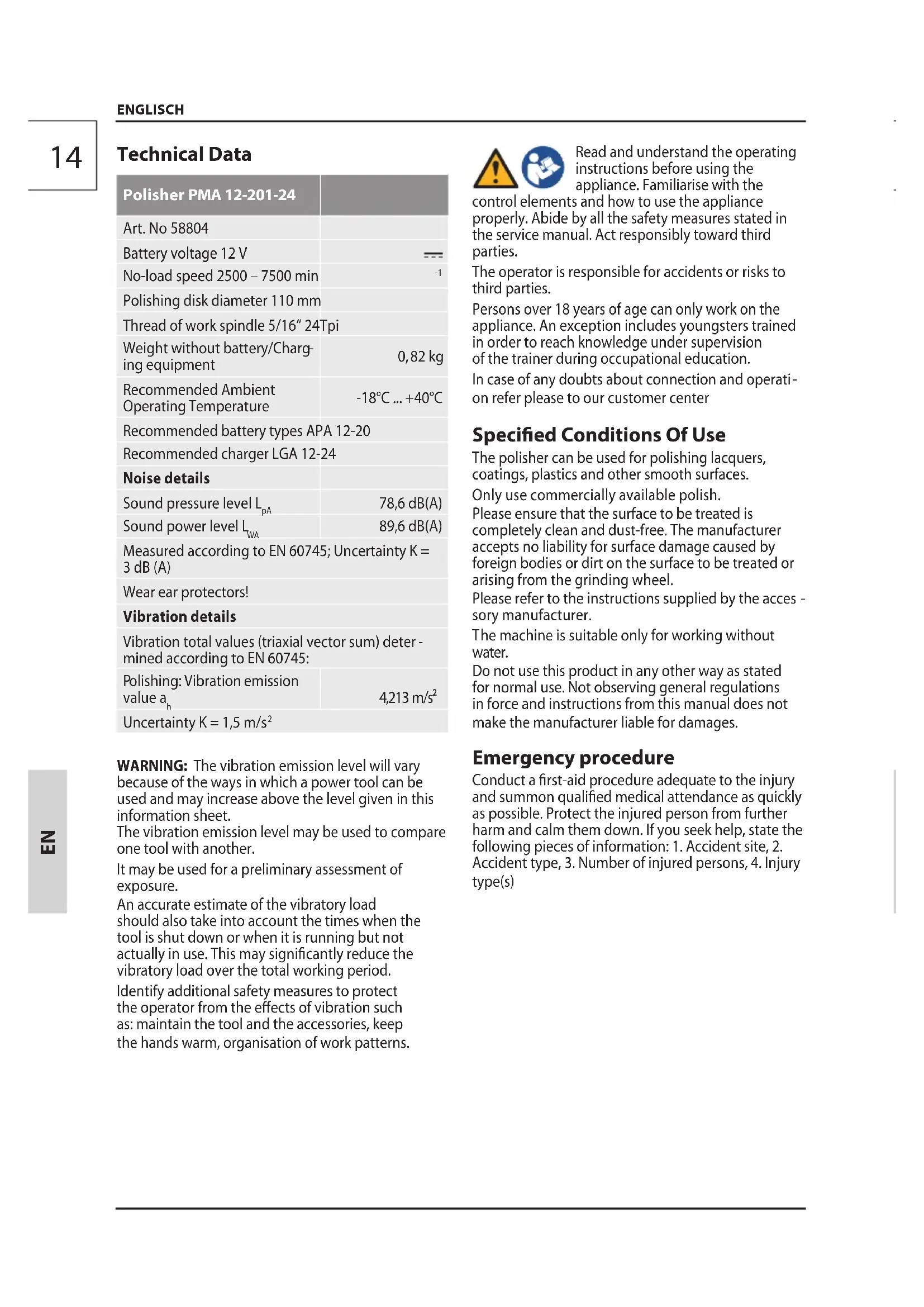


| Product type | Cordless polisher |
| Brand | Güde |
| Model | PMA 1220124 |
| Rated voltage | 12 V (interchangeable Li-Ion battery) |
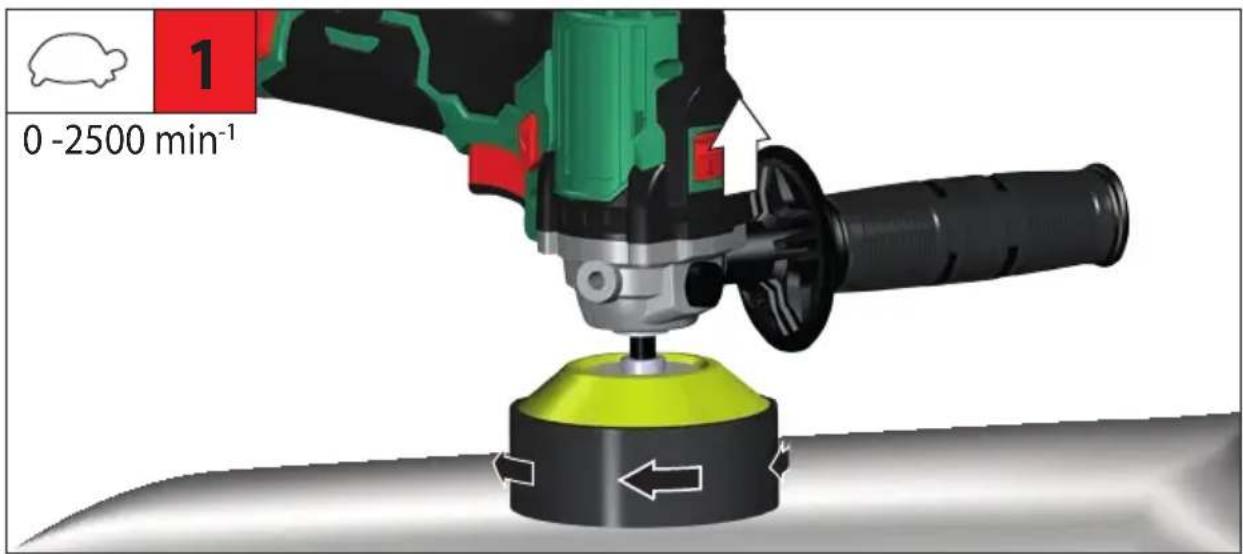
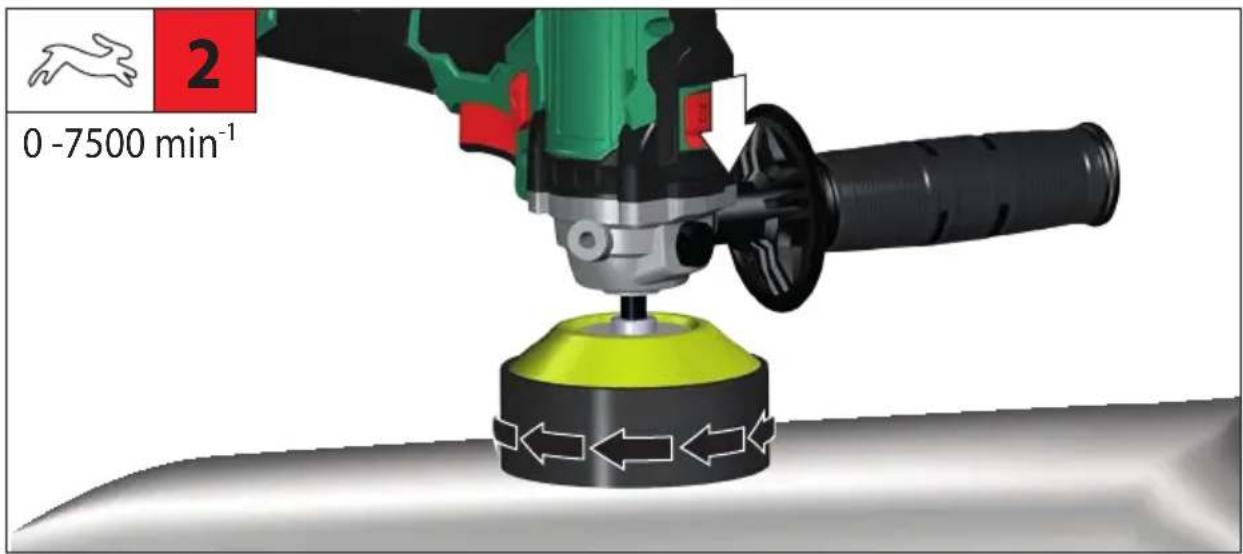
| No-load speed | 2500 – 7500 min⁻¹ |
| Polishing disc diameter | 110 mm |
| Spindle thread | 5/16\" 24Tpi |
| Weight (without battery) | 0.82 kg |
| Operating ambient temperature | -18 °C to +40 °C |
| Recommended batteries | APA 12-20 |
| Recommended chargers | LGA 12-24 |
| Sound pressure level (L_pA) | 78.6 dB(A) |
| Sound power level (L_WA) | 89.6 dB(A) |
| Vibration emission value (polishing) | 4.213 m/s² (K=1.5 m/s²) |
| Protection class | III |
| Intended use | Polishing of varnishes, coatings, synthetic materials and flat surfaces |
| Required personal protective equipment | Safety goggles, hearing protection, gloves |
| Maintenance and cleaning | Remove the battery before cleaning; clean the ventilation openings with a damp cloth; do not use solvents |
| Spare parts | Güde original accessories and parts; list at www.guede.com |
| Repairs | Have repairs carried out by qualified authorized personnel |
Frequently Asked Questions - PMA 1220124 Güde
User questions about PMA 1220124 Güde
0 question about this device. Answer the ones you know or ask your own.
Ask a new question about this device
Download the instructions for your Polisher in PDF format for free! Find your manual PMA 1220124 - Güde and take your electronic device back in hand. On this page are published all the documents necessary for the use of your device. PMA 1220124 by Güde.
USER MANUAL PMA 1220124 Güde
Translation of the original instructions Polisher
natural_image
3D rendered image of a green and black electric drill press tool with a black handle, shown without any text or symbols.PMA 12-201-24
58804
GÜDE GmbH & Co. KG
Birkichstrasse 6
74549 Wolpertshausen
Deutschland


ENGLISH Please read the instructions carefully before starting the machine.
natural_image
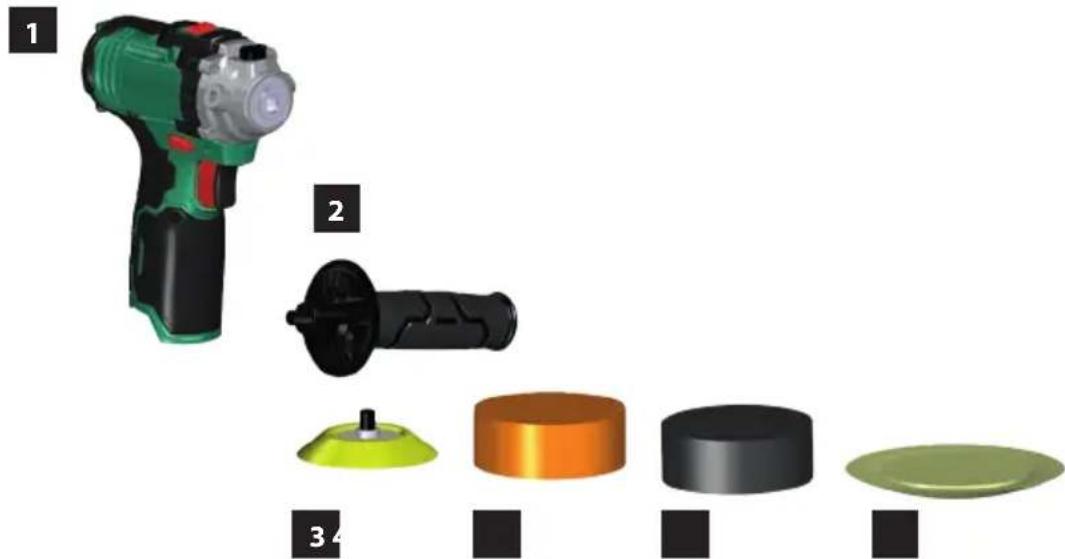
Illustration of four different cleaning tools or components, including a green-handled tool and three colored circular parts (no text or symbols)DE Inbetriebnahme
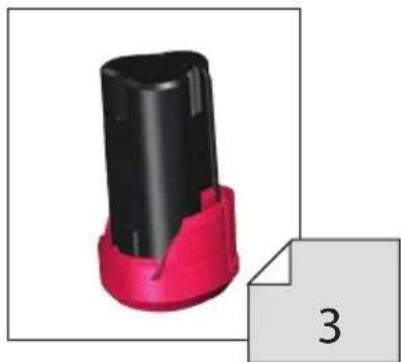
EN Starting-up the machine
FR Mise en service
natural_image
3D rendering of a handheld electric drill bit with green and red components (no text or symbols visible)2
natural_image
3D rendered image of a red and black plastic component with a label '3' on the right (no text or symbols on the object itself)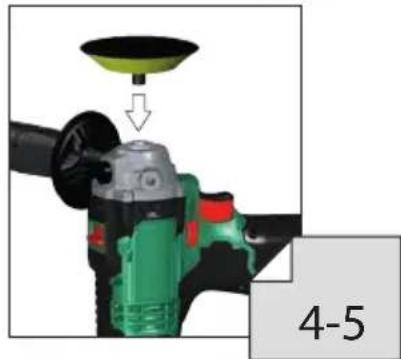
natural_image
Close-up of a green power tool with a yellow funnel above it, showing mechanical components and a downward arrow (no text or symbols)DE Betrieb
EN Operation
FR Fonctionnement
IT Esercizio
NL Gebruik
CZ Provoz
SK Prevádzka
HU Üzemeltetés
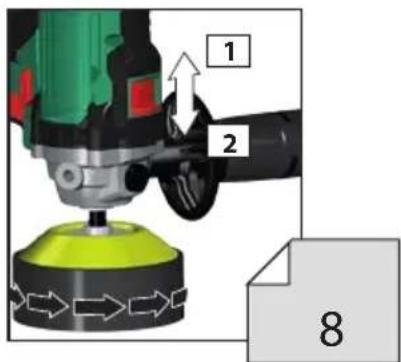
natural_image
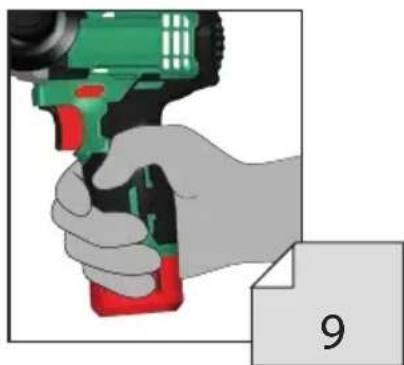
Hand holding a green and red drill bit with a paper label showing number 9 (no text or symbols on the diagram itself)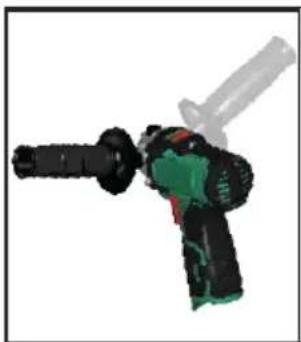
natural_image
3D rendered image of a handheld electric shaver with green and black casing (no text or symbols)DE Inbetriebnahme
EN Starting-up the machine
FR Mise en service
1
natural_image
3D rendering of a green and black electric drill putter with a black end caps, showing the tool's tip and handle (no text or symbols)2
natural_image
Close-up of a mechanical component with green and red highlighted areas, showing a presser or cutter (no text or symbols visible)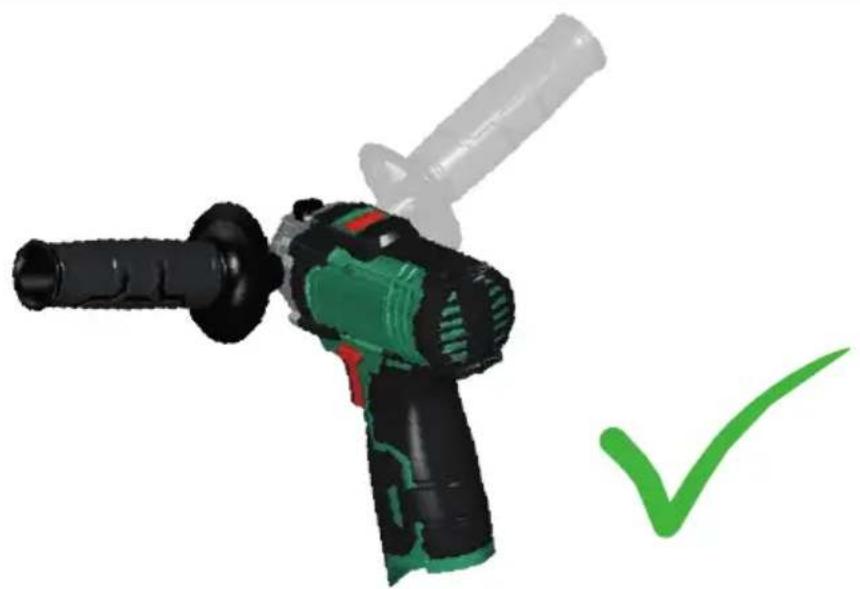
natural_image
3D rendered image of a black and green electric drill with a white plastic tube, plus a green checkmark (no text or symbols)DE Inbetriebnahme
EN Starting-up the machine
FR Mise en service
natural_image
3D illustration of a red and black battery casing with an upward arrow indicating growth (no text or symbols)2
natural_image
Close-up of a black and red electronic device with a lock icon and 'CLICK' signal icon, no readable text or symbols on the device itself.1
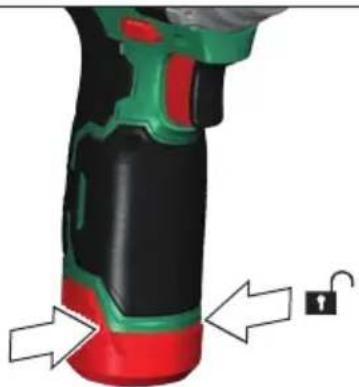
natural_image
Close-up of a mechanical component with red, green, and black sections and an open lock icon (no text or symbols)2
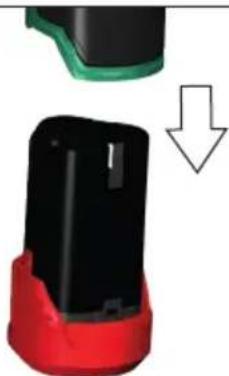
natural_image
3D illustration of a battery component with red and black casing, showing a downward arrow (no text or symbols)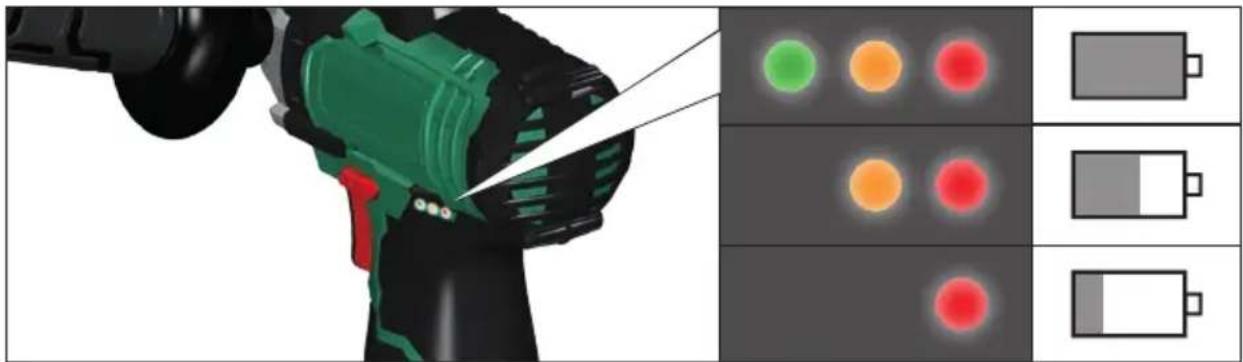
natural_image
Illustration of a robotic arm with green and red buttons, alongside three vertical indicator lights (green, orange, red) and two battery cells (gray), no text or symbols present.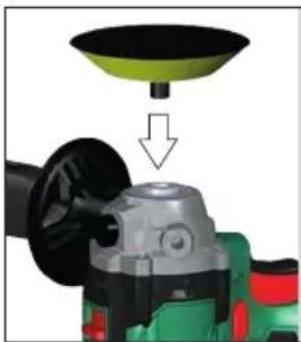
natural_image
Close-up of a mechanical device with a yellow funnel and green base, showing a downward arrow indicating a process (no text or symbols visible)DE Inbetriebnahme
EN Starting-up the machine
FR Mise en service
IT Messa in funzione
NL Inbedrijfstelling
CZ Uvedení do provozu
SK Uvedenie do prevádzky
HU Üzembe helyezés


natural_image
Close-up of a mechanical component with a yellow funnel and green base, no visible text or symbols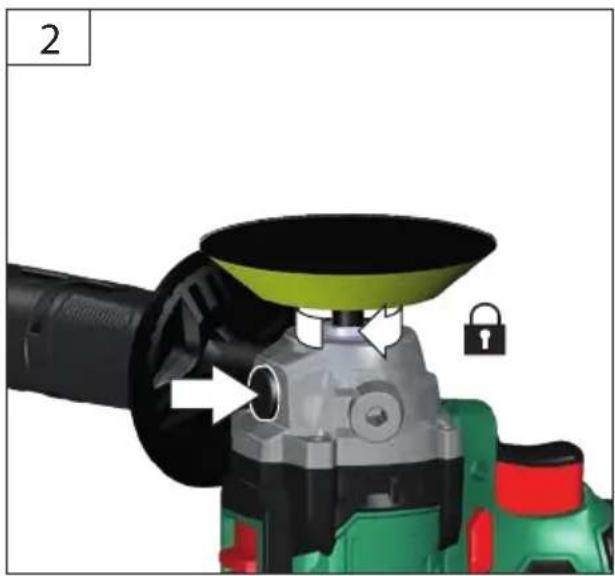
natural_image
3D rendering of a mechanical device with green and black components, showing internal structure and lock mechanism (no text or symbols)
natural_image
3D rendering of a green and black electric drill press with a yellow funnel component being inserted (no text or symbols visible)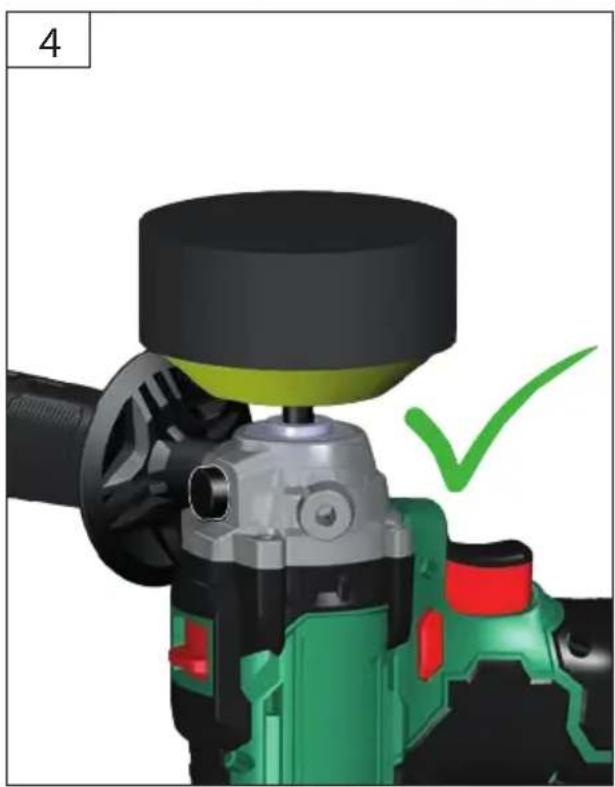
natural_image
3D rendering of a mechanical device with green and red components, no visible text or symbolsDE Inbetriebnahme
EN Starting-up the machine
FR Mise en service
IT Messa in funzione
NL Inbedrijfstelling
CZ Uvedení do provozu
SK Uvedenie do prevádzky
HU Üzembe helyezés
natural_image
Close-up of a mechanical device with a yellow funnel and black handle, showing a mechanical component (no text or symbols visible)

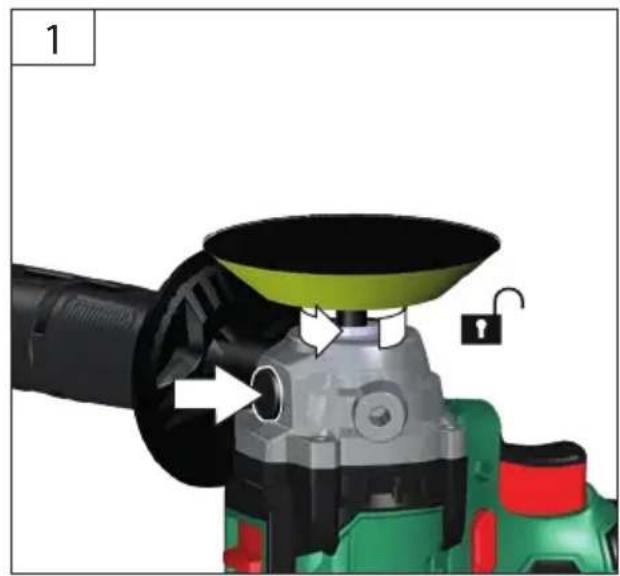
natural_image
Close-up of a mechanical device with a yellow funnel and green base, showing internal components and a lock icon (no text or symbols)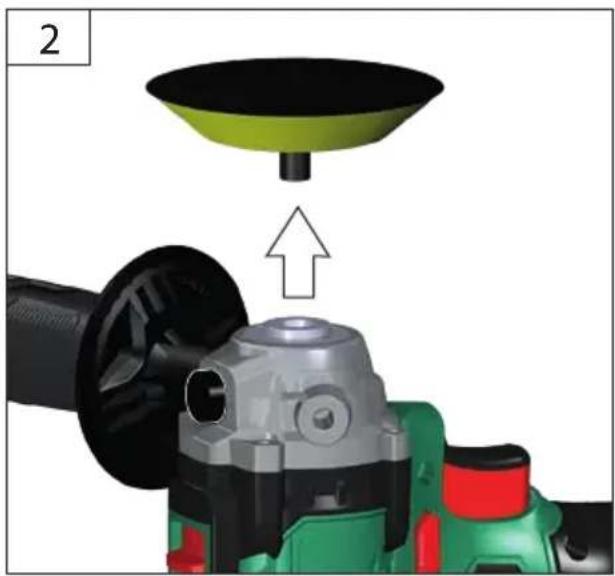
natural_image
Close-up of a mechanical device with a yellow funnel and green base, showing a mechanical assembly (no text or symbols visible)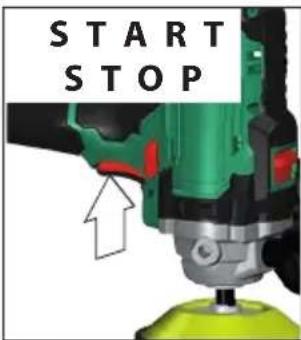
DE Betrieb
EN Operation
FR Fonctionnement
IT Esercizio
NL Gebruik
CZ Provoz
SK Prevádzka
HU Üzemeltetés


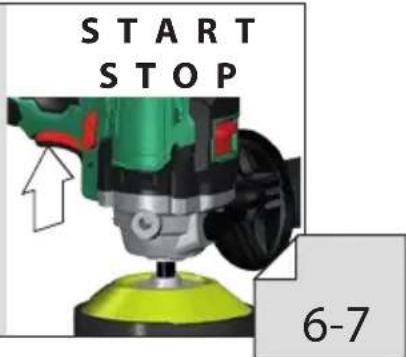
START
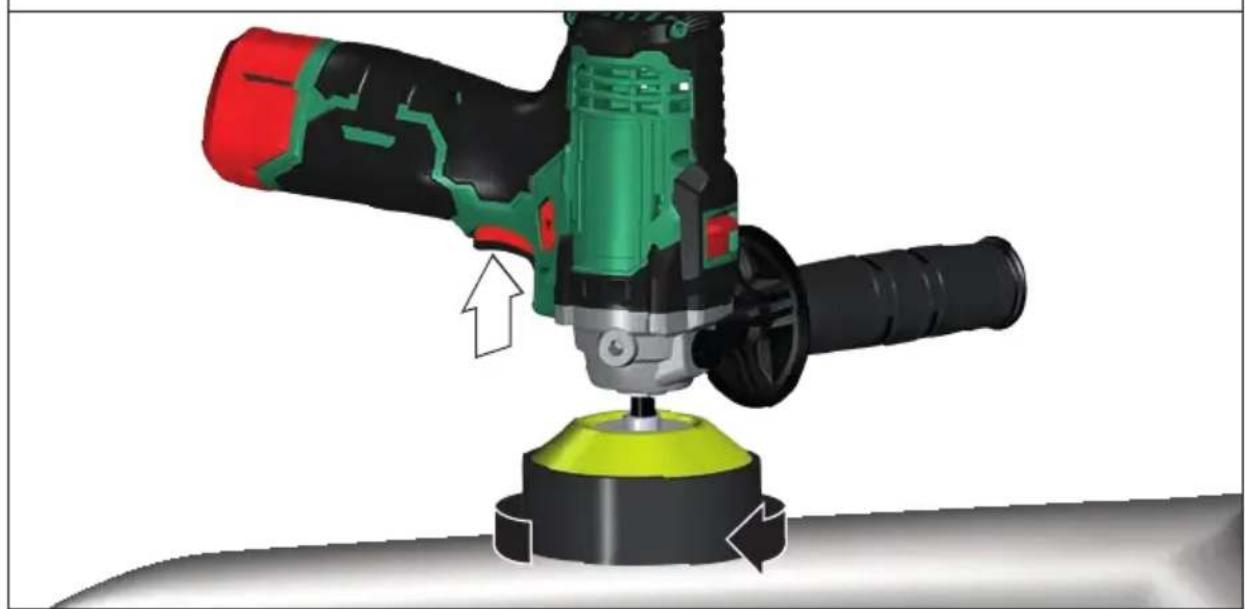
natural_image
3D rendering of a precision power tool with green and red components, mounted on a base with directional arrows indicating motion (no text or symbols)STOP
natural_image
3D rendering of a green and black power tool with a yellow base, showing mechanical components and a downward arrow indicating motion (no text or symbols present)DE Betrieb
EN Operation
FR Fonctionnement
IT Esercizio
NL Gebruik
CZ Provoz
SK Prevádzka
HU Üzemeltetés


natural_image
3D rendered mechanical device with green and red components mounted on a base, showing rotational arrows (no text or symbols)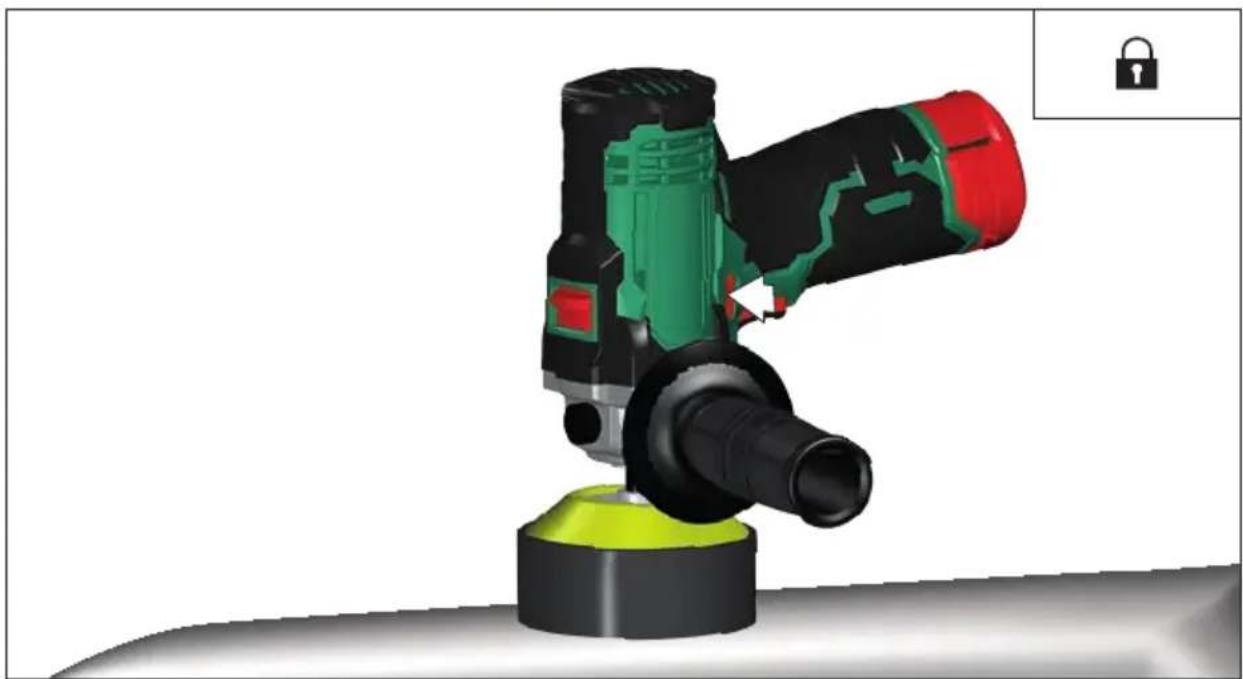
natural_image
3D rendered mechanical device with green and red components mounted on a yellow base, no visible text or symbols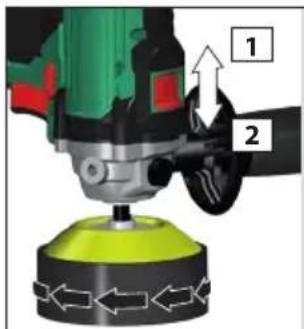
DE Betrieb
EN Operation
FR Fonctionnement
IT Esercizio
NL Gebruik
CZ Provoz
SK Prevádzka
HU Üzemeltetés


DE Betrieb
EN Operation
FR Fonctionnement
IT Esercizio
NL Gebruik
CZ Provoz
SK Prevádzka
HU Üzemeltetés
natural_image
Hand holding a green and red power drill bit, no text or symbols visible

natural_image
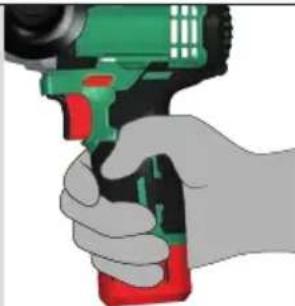
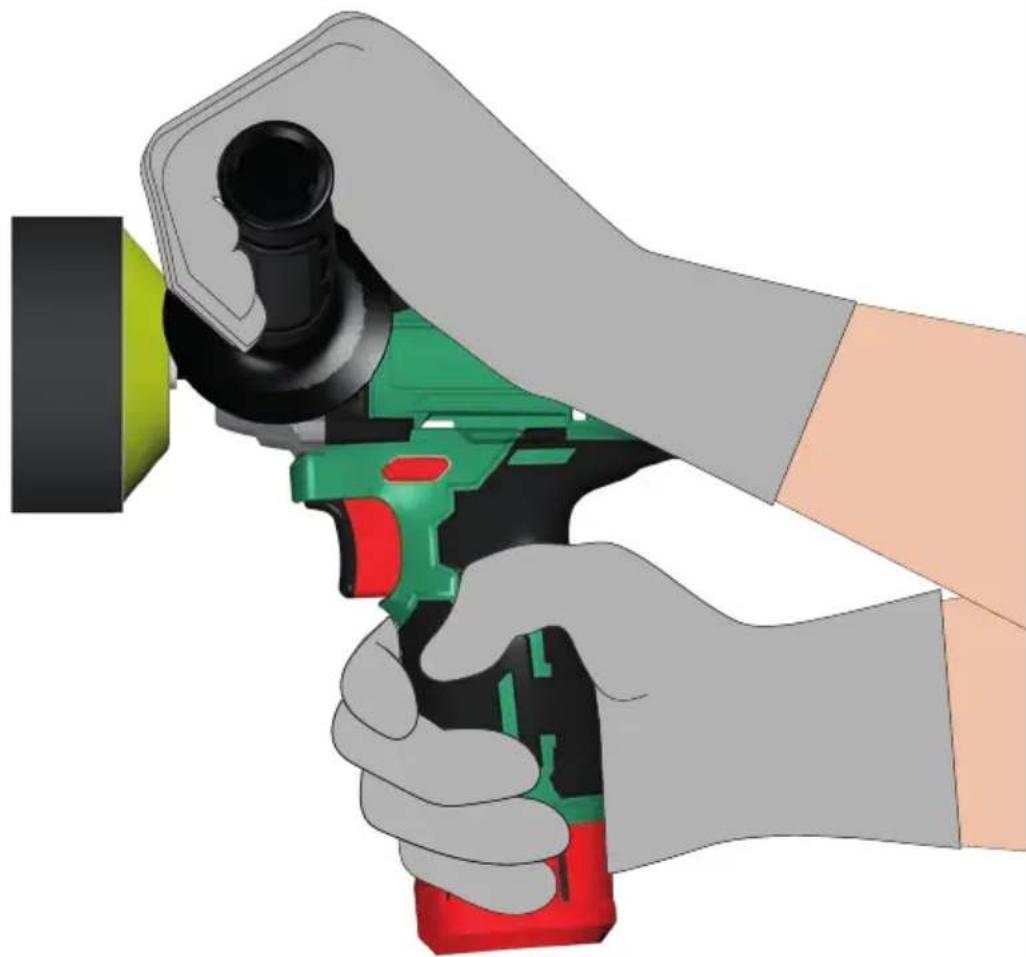
Illustration of a hand using a power tool to adjust a green and red component (no text or symbols visible)Insulated gripping surface
| Polisher PMA 12-201-24 | |
| Art. No 58804 | |
| Battery voltage 12 V | --- |
| No-load speed 2500 – 7500 min | -1 |
| Polishing disk diameter 110 mm | |
| Thread of work spindle 5/16" 24Tpi | |
| Weight without battery/Charging equipment | 0,82 kg |
| Recommended Ambient Operating Temperature | -18°C ... +40°C |
| Recommended battery types APA 12-20 | |
| Recommended charger LGA 12-24 | |
| Noise details | |
| Sound pressure level L_pA | 78,6 dB(A) |
| Sound power level L_WA | 89,6 dB(A) |
| Measured according to EN 60745; Uncertainty K = 3 dB (A) | |
| Wear ear protectors! | |
| Vibration details | |
| Vibration total values (triaxial vector sum) deter-mined according to EN 60745: | |
| Polishing: Vibration emission value a_h | 4,213 m/s2 |
| Uncertainty K = 1,5 m/s2 | |
WARNING: The vibration emission level will vary because of the ways in which a power tool can be used and may increase above the level given in this information sheet.
The vibration emission level may be used to compare one tool with another.
It may be used for a preliminary assessment of exposure.
An accurate estimate of the vibratory load should also take into account the times when the tool is shut down or when it is running but not actually in use. This may significantly reduce the vibratory load over the total working period.
Identify additional safety measures to protect the operator from the effects of vibration such as: maintain the tool and the accessories, keep the hands warm, organisation of work patterns.


Read and understand the operating instructions before using the appliance. Familiarise with the
control elements and how to use the appliance properly. Abide by all the safety measures stated in the service manual. Act responsibly toward third parties.
The operator is responsible for accidents or risks to third parties.
Persons over 18 years of age can only work on the appliance. An exception includes youngsters trained in order to reach knowledge under supervision of the trainer during occupational education.
In case of any doubts about connection and operation refer please to our customer center
Specified Conditions Of Use
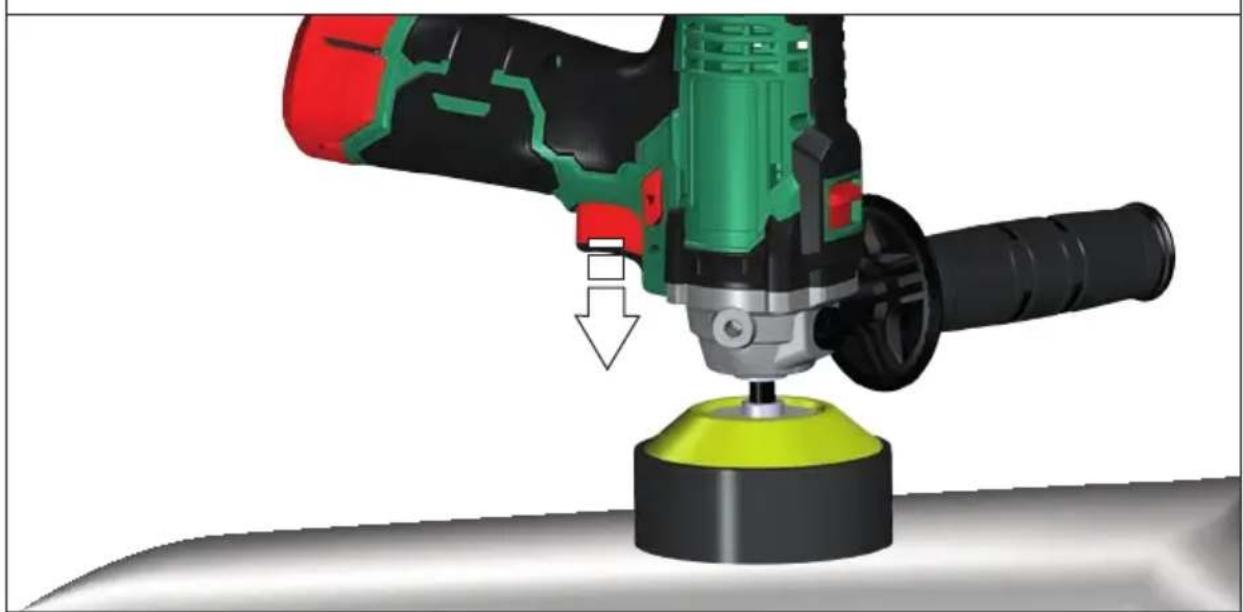
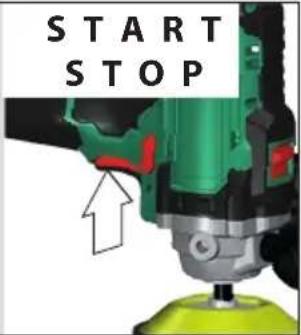
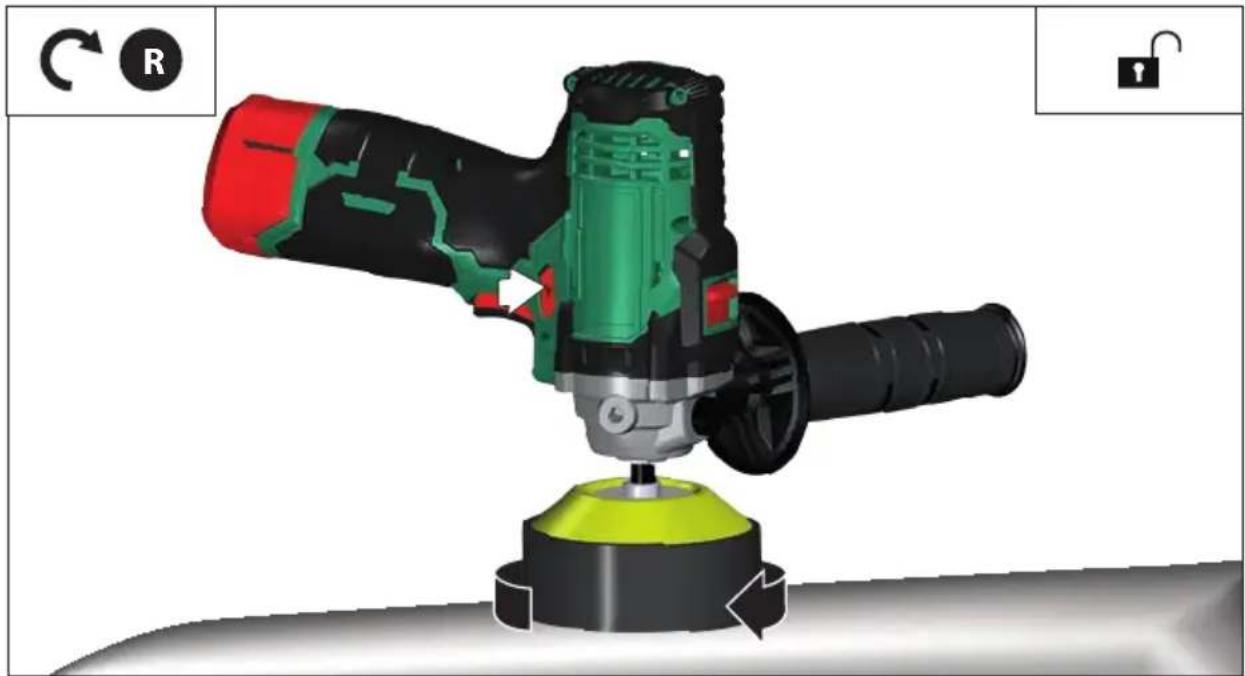
The polisher can be used for polishing lacquers, coatings, plastics and other smooth surfaces.
Only use commercially available polish.
Please ensure that the surface to be treated is completely clean and dust-free. The manufacturer accepts no liability for surface damage caused by foreign bodies or dirt on the surface to be treated or arising from the grinding wheel.
Please refer to the instructions supplied by the accessory manufacturer.
The machine is suitable only for working without water.
Do not use this product in any other way as stated for normal use. Not observing general regulations in force and instructions from this manual does not make the manufacturer liable for damages.
Emergency procedure
Conduct a first-aid procedure adequate to the injury and summon qualified medical attendance as quickly as possible. Protect the injured person from further harm and calm them down. If you seek help, state the following pieces of information: 1. Accident site, 2.
Accident type, 3. Number of injured persons, 4. Injury type(s)
Symbols

WARNING / Caution!

Read the operating instructions to reduce the risk of injury.

Wear eye protective goggles! Wear ear protectors!

Wear gloves!

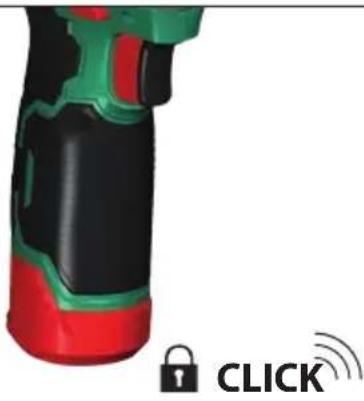
Take the replaceable battery from the appliance before any extension, cleaning and servicing works.

Class III tool.

CE marking
Any damaged or disposed electric or electronic devices must be delivered to appropriate collection centres.
V
Volts
n0
No-load speed

Direct Current
Battery

Protect the battery against heat and fire.

Protect the battery against water and moisture.

Protect the battery against temperatures above 40°C.

Li-Ion
Do not throw the batteries in household waste.

Deliver the batteries to a collection centre of old batteries where they will be recycled in an environmentally friendly way.
WARNING Read all safety warnings and all instructions. Failure to follow the warnings and instructions may result in electric shock, fire and/or serious injury.
Save all warnings and instructions for future reference.
Polisher safety warnings
Safety Warnings common for Polishing:
a) This power tool is intended to function as a polisher. Read all safety warnings, instructions, illustrations and specifications provided with this power tool. Failure to follow all instructions listed below may result in electric shock, fire and/or serious injury.
b) Operations as sanding, abrasive and rough grinding, and working with wire brushes are not recommended to be performed with this power tool. Operations for which the power tool was not designed may create a hazard and cause personal injury.
c) Do not use accessories which are not specifically designed and recommended by the tool manufacturer. Just because the accessory can be attached to your power tool, it does not assure safe operation.
d) The rated speed of the accessory must be at least equal to the maximum speed marked on the power tool. Accessories running faster than their rated speed can break and fly apart.
e) The outside diameter and the thickness of your accessory must be within the capacity rating of your power tool. Incorrectly sized accessories cannot be adequately guarded or controlled.
f) Treaded mounting of accessories must match the grinder spindle thread. For accessories mounted by flanges, the arbour hole of the accessory must fit the locating diameter of the flange. Accessories that do not match the mounting hardware of the power tool will run out of balance, vibrate excessively and may cause loss of control.
g) Do not use a damaged accessory. Before each use inspect the accessory such as abrasive wheels for chips and cracks, backing pad for cracks, tear or excess wear, wire brush for loose or cracked wires. If power tool or accessory is dropped, inspect for damage or install an undamaged accessory. After inspecting and installing an accessory, position yourself and bystanders away from the plane of the rotating accessory and run the power tool at maximum noload speed for one minute. Damaged accessories will normally break apart during this test time.
h) Wear personal protective equipment. Depending on application, use face shield, safety go ggles or safety glasses. As appropriate, wear dust mask, hearing protectors, gloves and shop apron capable of stopping small abrasive or
workpiece fragments. The eye protection must be capable of stopping flying debris generated by various operations. The dust mask or respirator must be capable of filtrating particles generated by your operation. Prolonged exposure to high intensity noise may cause hearing loss.
i) Keep bystanders a safe distance away from work area. Anyone entering the work area must wear personal protective equipment. Fragments of workpiece or of a broken accessory may fly away and cause injury beyond immediate area of operation.
j) Never lay the power tool down until the access - sory has come to a complete stop. The spinning accessory may grab the surface and pull the power tool out of your control.
k) Do not run the power tool while carrying it at your side. Accidental contact with the spinning accessory could snag your clothing, pulling the accessory into your body.
I) Regularly clean the power tool's air vents. The motor's fan will draw the dust inside the housing and excessive accumulation of powdered metal may cause electrical hazards.
m) Do not operate the power tool near flammable materials. Sparks could ignite these materials.
n) Do not use accessories that require liquid coolants. Using water or other liquid coolants may result in electrocution or shock.
Kickback and Related Warnings
Kickback is a sudden reaction to a pinched or snagged rotating wheel. Pinching or snagging causes rapid stalling of the rotating wheel which in turn causes the uncontrolled power tool to be forced in the direction opposite of the wheel's rotation at the point of the binding.
For example, if an abrasive wheel is snagged or pinched by the workpiece, the edge of the wheel that is entering into the pinch point can dig into the surface of the material causing the wheel to climb out or kick out. The wheel may either jump toward or away from the operator, depending on direction of the wheel's movement at the point of pinching. Abrasive wheels may also break under these conditions. Kickback is the result of power tool misuse and/or incorrect operating procedures or conditions and can be avoided by taking proper precautions as given below.
a) Maintain a firm grip on the power tool and position your body and arm to allow you to resist kickback forces. Always use auxiliary handle, if provided, for maximum control over kickback or torque reaction during start-up. The operator can control torque reactions or kickback forces, if proper precautions are taken.
b) Never place your hand near the rotating accessory. Accessory may kickback over your hand.
c) Do not position your body in the area where power tool will move if kickback occurs. Kickback will propel the tool in direction opposite to the wheel's movement at the point of snagging.
d) Use special care when working corners, sharp edges etc. Avoid bouncing and snagging the accessory. Corners, sharp edges or bouncing have a tendency to snag the rotating accessory and cause loss of control or kickback.
e) Do not attach a saw chain woodcarving blade or toothed saw blade. Such blades create frequent kickback and loss of control.toothed saw blade.
Safety Warnings Specific for Polishing Operations:
a) Do not allow any loose portion of the polishing bonnet or its attachment strings to spin freely. Tuck away or trim any loose attachment strings.
Loose and spinning attachment strings can entangle your fingers or snag on the workpiece.
Additional Safety and Working Instructions
Never reach into the danger area of the machine when it is running.
Immediately switch off the machine in case of considerable vibrations or if other malfunctions occur. Check the machine in order to find out the cause.
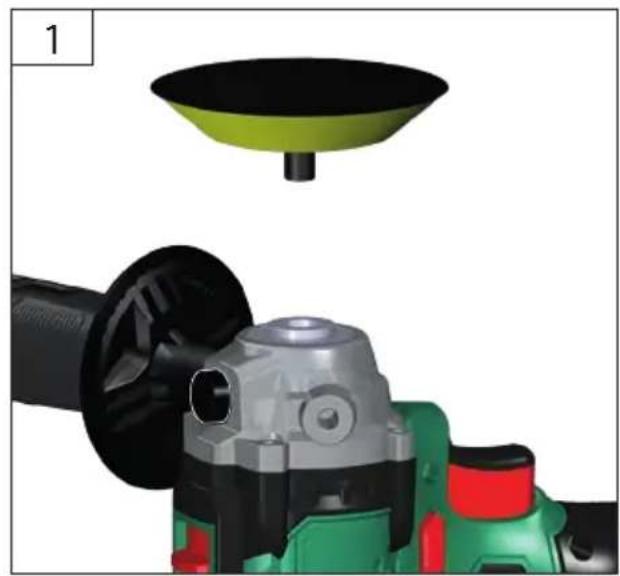
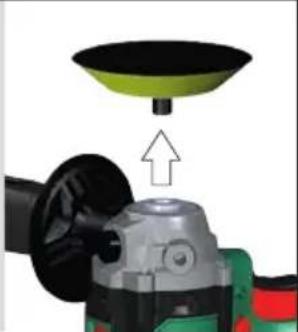
For accessories intended to be fitted with threaded hole wheel, ensure that the thread in the wheel is long enough to accept the spindle length.
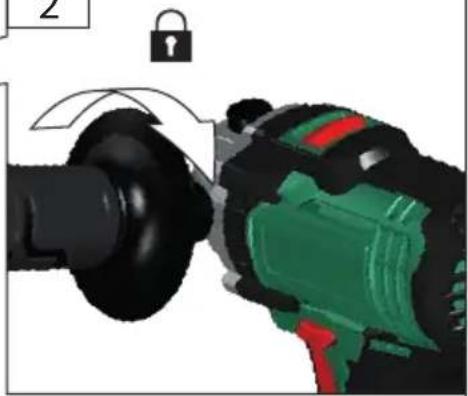
The adjusting nut must be tightened before starting to work with the machine.
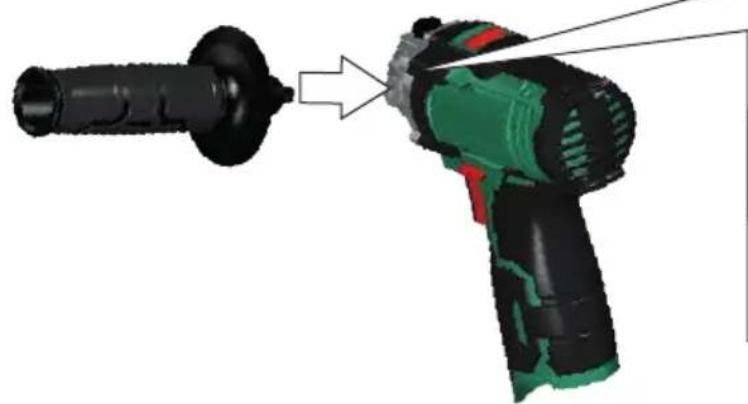
Always use the auxiliary handle.
The workpiece must be fixed if it is not heavy enough to be steady. Never move the workpiece towards the rotating disk by hand.
Electronics
In case of overload, the rotational speed is being reduced until machine stops. Please note that the machine will automatically accelerate back to its original operating speed if the load is removed from it.
Battery

Risk of fire! Risk of explosion!
Never use damaged, defective or deformed accumulators. Never open or damage the accumulator or let it fall on the ground.
Never charge the battery in an environment with acids and easily flammable materials.
Protect the battery against heat and fire.
Battery to be used at the ambient temperatures between 10^ C and +40^ C only.
Never put the battery on heaters and do not expose it to strong sunlight for a long time.
After being subject to heavy load, let the battery cool down first.
Short circuit - do not bridge the accumulator contacts with metal parts.
The accumulator must be packaged (plastic bag, box) or accumulator contacts must be sealed up for accumulator disposal, transport or storage.
The Güde charger to be used only to charge the battery. There can be malfunction or fire if different chargers are used.
Vapours may leak out in case of unauthorised use or when using a damaged accumulator. Bring fresh air and seek medical advice if experiencing difficulties. Vapours may irritate the respiratory system.
Work instructions
Accumulators are supplied partially charged and must therefore be fully charged before being used for the first time.
- Charge the accumulator when the appliance is running slowly or stops.
- A li-ion battery may be charged at any time without any shortening of its life. Charging process interruption will not damage the accumulator.
- A li-ion battery is protected by the Electronic Cell Protection against deep discharge.
- A significantly shorter operating time of a charged battery means the battery life is over and the battery must be replaced.
Dispose of the batteries in an environmentally friendly manner.
Li-ion batteries are subject to the special disposal obligation. Have any defective batteries disposed of by a specialised shop. The battery must be taken out before the appliance is scrapped. Damaged batteries may harm the environment and your health if toxic vapours or liquids leak out of such batteries. Therefore, never send a defective battery by post, etc. Please contact your local recycling centre.
Dispose of the batteries when discharged. We recommend applying an adhesive tape on the poles to protect them against short circuit. Never open the battery.
Maintenance
⚠️ Take the replaceable battery from the appliance before any extension, cleaning and servicing works.
Repairs and works specified in these Instructions may only be performed by qualified authorised staff.
Use only original accessories and original spare parts.
Keep the device, in particular the air vents, clean at all times. Never spray water on the device body!
Do not clean the plastics with solvents, flammable or toxic fluids. For cleaning, use a damp cloth only.
Only a regularly maintained and treated appliance can serve as a satisfactory aid. Insufficient maintenance and care can lead to unforeseen accidents and injuries.
If necessary, a list of spare parts can be found at www.guede.com.
Translation of the EC-Declaration of Conformity
We, hereby declare the conception and construction of the below mentioned appliances correspond - at the type of construction being launched - to appropriate basic safety and hygienic requirements of EC Directives.
In case of any change to the appliance not discussed with us the Declaration expires.

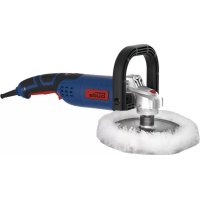



- PMA 12-201-24
- DE Inbetriebnahme
- DE Betrieb
- Specified Conditions Of Use
- Emergency procedure
- Symbols
- Battery
- Polisher safety warnings
- Kickback and Related Warnings
- Safety Warnings Specific for Polishing Operations:
- Additional Safety and Working Instructions
- Electronics
- Risk of fire! Risk of explosion!
- Work instructions
- Dispose of the batteries in an environmentally friendly manner.
- Maintenance
- Translation of the EC-Declaration of Conformity
Brand : Güde
Model : PMA 1220124
Category : Polisher