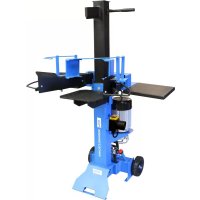
GHS 5006TE - Log splitter Güde - Free user manual and instructions
Find the device manual for free GHS 5006TE Güde in PDF.

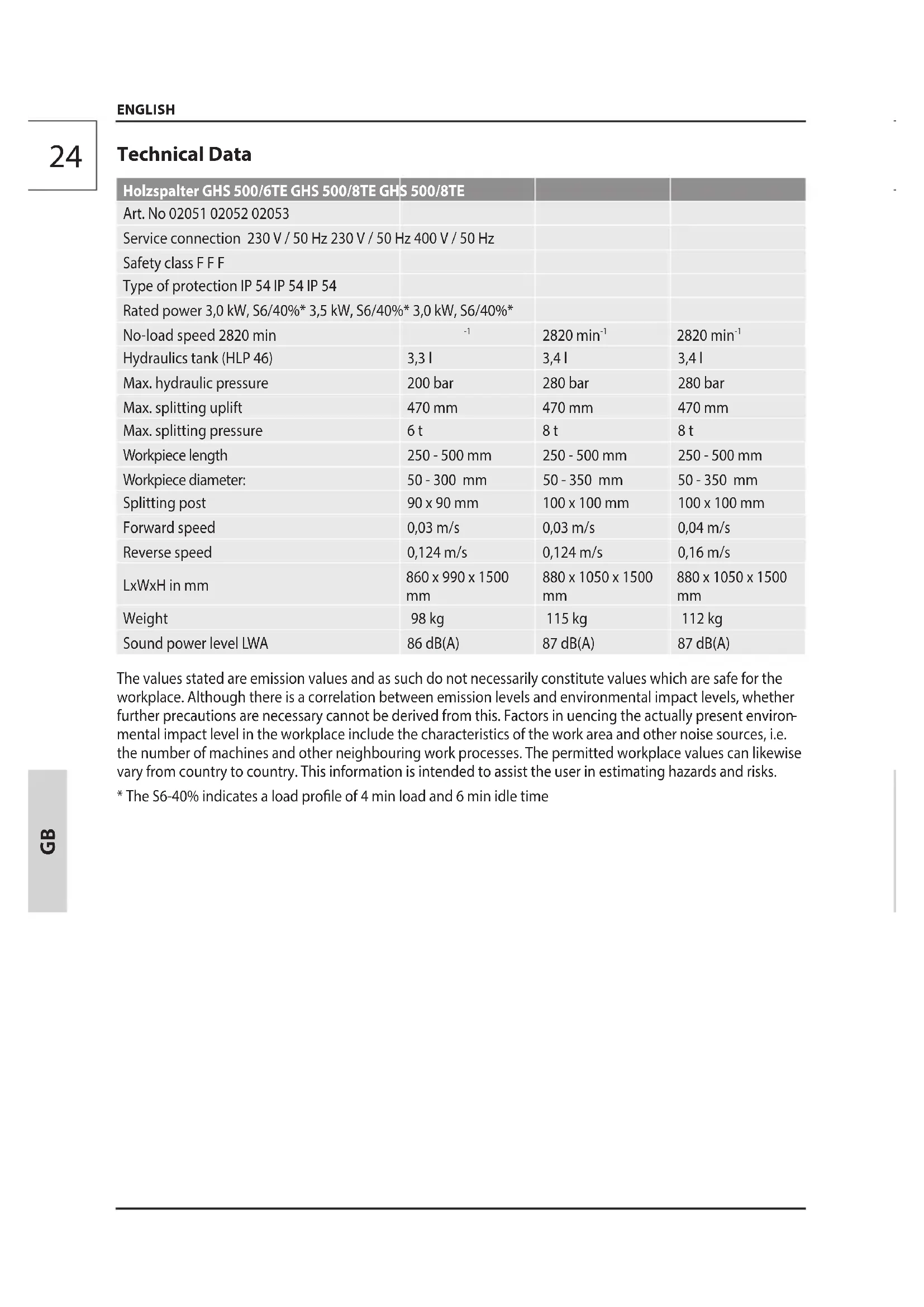


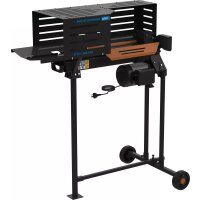
| Product type | Electric log splitter |
| Brand | Güde |
| Model | GHS 5006TE |
| Power supply | 230 V / 50 Hz |
| Rated power | 3.0 kW (S6/40%) |
| Maximum splitting force | 6 t |
| Maximum splitting stroke | 470 mm |
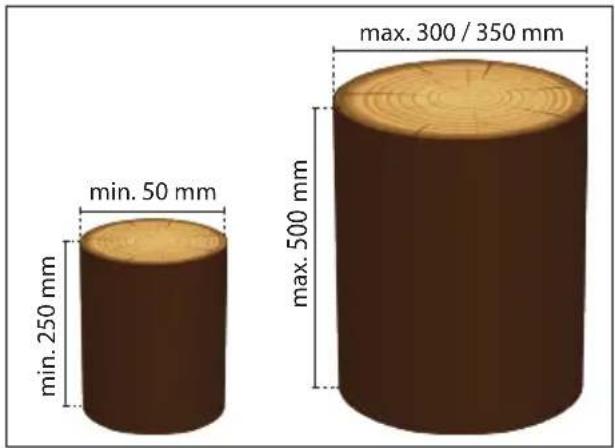
| Permissible log length | 250 - 500 mm |
| Permissible log diameter | 50 - 300 mm |
| Forward speed | 0.03 m/s |
| Reverse speed | 0.124 m/s |
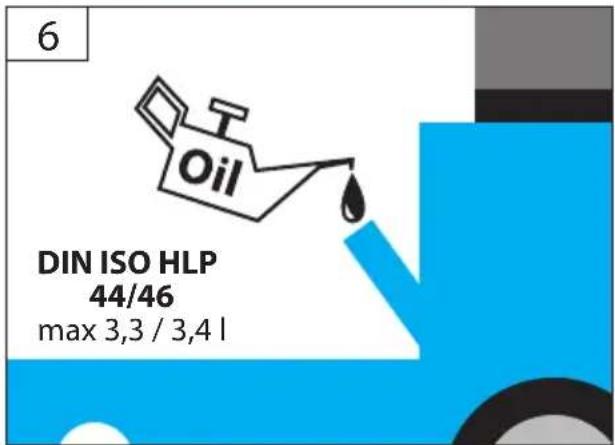
| Hydraulic oil tank | 3.3 l (HLP 46) |
| Maximum hydraulic pressure | 200 bar |
| Splitting column | 90 x 90 mm |
| Dimensions (LxWxH) | 860 x 990 x 1500 mm |
| Weight | 98 kg |
| Acoustic power level LWA | 86 dB(A) |
| Protection class | F |
| Protection type | IP 54 |
| Number of persons required | 1 person |
| Safety | Two-lever control, emergency stop, protection against automatic restart |
| Warranty | 24 months for the end consumer |
Frequently Asked Questions - GHS 5006TE Güde
User questions about GHS 5006TE Güde
0 question about this device. Answer the ones you know or ask your own.
Ask a new question about this device
Download the instructions for your Log splitter in PDF format for free! Find your manual GHS 5006TE - Güde and take your electronic device back in hand. On this page are published all the documents necessary for the use of your device. GHS 5006TE by Güde.
USER MANUAL GHS 5006TE Güde
ENGLISH Please read the instructions carefully before starting the machine.
English TECHNICAL DATA | SAFETY INSTRUCTIONS | SPECIFIED CONDITIONS OF USE | EMERGENCY PROCEDURE | CHARGING EQUIPMENT | BATTERY | WORK INSTRUCTIONS | SYMBOLS | DISPOSAL | GUARANTEE | SERVICE \_\_\_\_ 24
Français CARACTÉRISTIQUES TECHNIQUES | I NSTRUCTIONS DE SÉCURITÉ | UTILISATION CONFORME À LA DESTINATION | CONDUITE EN CAS D'URGENCE | DISPOSITIF DE CHARGE | BATTERIA | CONSIGNES DE TRAVAIL | SYMBOLES | LIQUIDATION | GARANTIE | SERVICE \_\_\_\_ 30
1
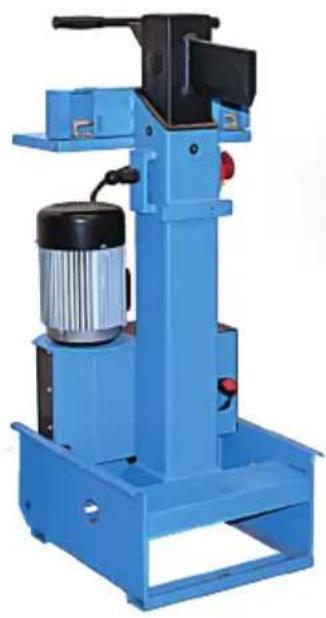
natural_image
Blue industrial machine with control panel and motor (no visible text or symbols)2
natural_image
Close-up of a car wheel rim and central hub (no text or symbols visible)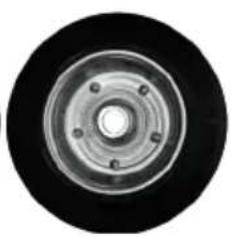
natural_image
Close-up of a mechanical component with concentric rings and central hub (no visible text or symbols)3


4

natural_image
Close-up of a dark, textured surface with two protruding rods (no visible text or symbols)5
natural_image
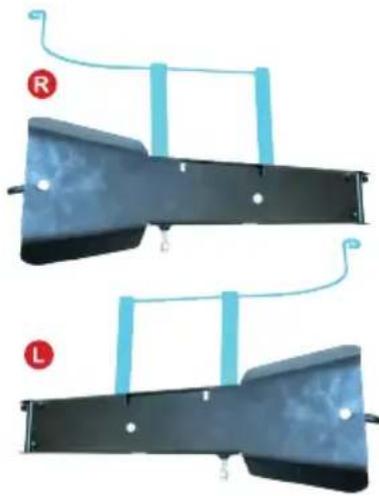
Two identical mechanical components with blue and black surfaces, each with a red circular marker labeled R and L (no text or symbols on the parts themselves)7
natural_image
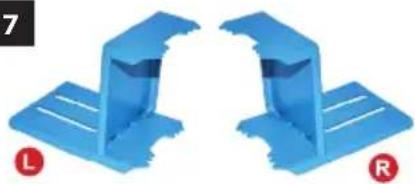
Two blue plastic mechanical brackets with side notches, labeled L and R (no text or symbols on the brackets themselves)9

natural_image
Two identical dark blue rectangular panels with no visible text, symbols, or markings.11

6
8
10

natural_image
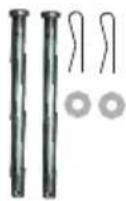
Four identical metallic cylindrical components with circular end caps, arranged horizontally (no text or symbols visible)| DE | Montage | RO | Montaj |
| GB | Assembly | PL | Montaž |
| FR | Montage | ES | Montaje |
| IT | Montaggio | ||
| NL | Montage | ||
| CZ | Montáž | ||
| SK | Montáž | ||
| HU | Szerelés |
| DE | Inbetriebnahme | RO | Punerea în funcțiune |
| GB | Starting-up the machine | PL | Uruchomienie |
| FR | mise en service | ES | Puesta en servicio |
| IT | Messa in funzione | ||
| NL | Inbedrijfstelling | ||
| CZ | Uvedení do provozu | ||
| SK | Uvedenie do prevádzky | ||
| HU | Üzembe helyezés |
| DE | Betrieb | RO | Functionare |
| GB | Operation | PL | Eksploatacja |
| FR | Fonctionnement | ES | Funcionamiento |
| IT | Esercizio | ||
| NL | Gebruik | ||
| CZ | Provoz | ||
| SK | Prevádzka | ||
| HU | Üzemeltetés |
| DE | Reinigung / Wartung | RO | Curățare / Întreținere |
| GB | Cleaning / Maintenance | PL | Czyszczenie / konserwacja |
| FR | Nettoyage / Entretien | ES | Puesta en servicio |
| IT | Pulizia / Manutenzione | ||
| NL | Schoonmaken / Onderhoud | ||
| CZ | Čištění / Údržba | ||
| SK | Čistenie / Údrzba | ||
| HU | Tisztítás / Karbantartás |
| DE | Transport / Lagerung | RO | Transport / Depozitare |
| GB | transport / storage | PL | Transport / przechowywanie |
| FR | Transport / Stockage | ES | Transporte/Almacenamiento |
| IT | Trasporto / Stoccaggio | ||
| NL | Transport / Bewaring | ||
| CZ | Přeprava / Uložení | ||
| SK | Transport / Uloženie | ||
| HU | Szállítás / Tárolás |
| 1 | DE Montage | RO Montaj |
| GB Assembly | PL Montaž | |
| FR Montage | ES Montaje | |
| IT Montaggio | ||
| NL Montage | ||
| CZ Montáž | ||
| SK Montáž | ||
| HU Szerelés |



natural_image
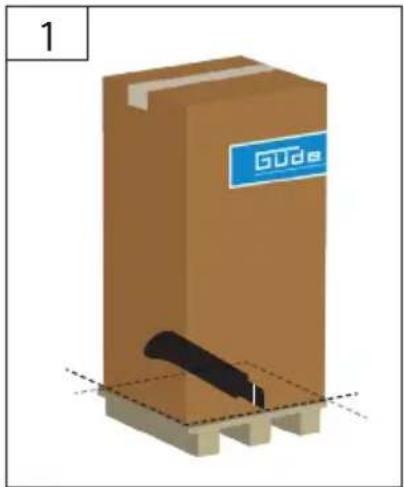
3D illustration of a brown cardboard box with a black tool inserted, labeled 'Guds' (no text or symbols on the object itself)
natural_image
Mechanical assembly diagram showing a blue base with a brown component and directional arrows indicating motion (no text or symbols)
natural_image
Blue industrial machine with a mounted motor and side-mounted base, no visible text or symbols

DE Montage
RO Montaj
GB Assembly
PL Montaż
FR Montage
ES Montaje
IT Montaggio
NL Montage
CZ Montáž
SK Montáž
HU Szerelés

1
6

natural_image
Industrial machine with blue frame and black handle, connected by wires to a metal plate (no visible text or symbols)4

natural_image
Close-up of a blue industrial component with a hexagonal bolt and circular lock icon, no visible text or symbols7
| 1 | DE Montage | RO Montaj |
| GB Assembly | PL Montaž | |
| FR Montage | ES Montaje | |
| IT Montaggio | ||
| NL Montage | ||
| CZ Montáž | ||
| SK Montáž | ||
| HU Szerelés |


natural_image
Two identical mechanical components with blue rods and a small inset image labeled '5' (no text or symbols on the components themselves)
natural_image
Blue industrial machine with motor and wheels, no visible text or symbols
DE Montage
GB Assembly
FR Montage
IT Montaggio
NL Montage
CZ Montáž
SK Montáž
HU Szerelés
RO Montaj
PL Montaż
ES Montaje


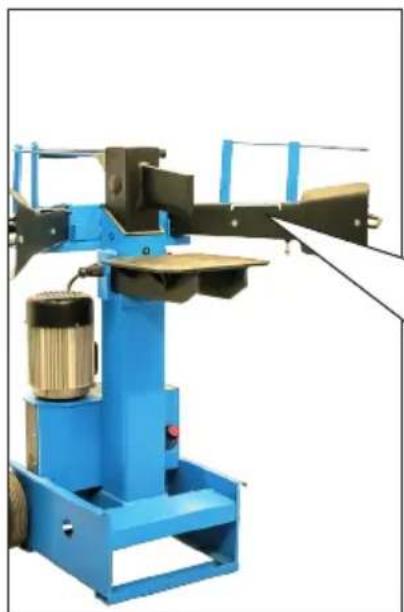
natural_image
Industrial machine with blue frame and black handle, no visible text or symbols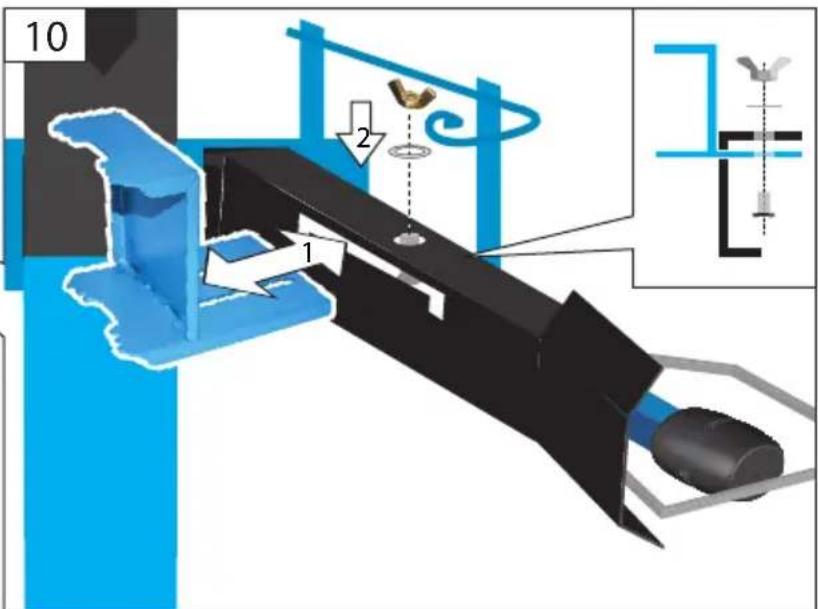
natural_image
Diagram of a mechanical or electrical component with gear-like components and a central circular structure (no text or symbols)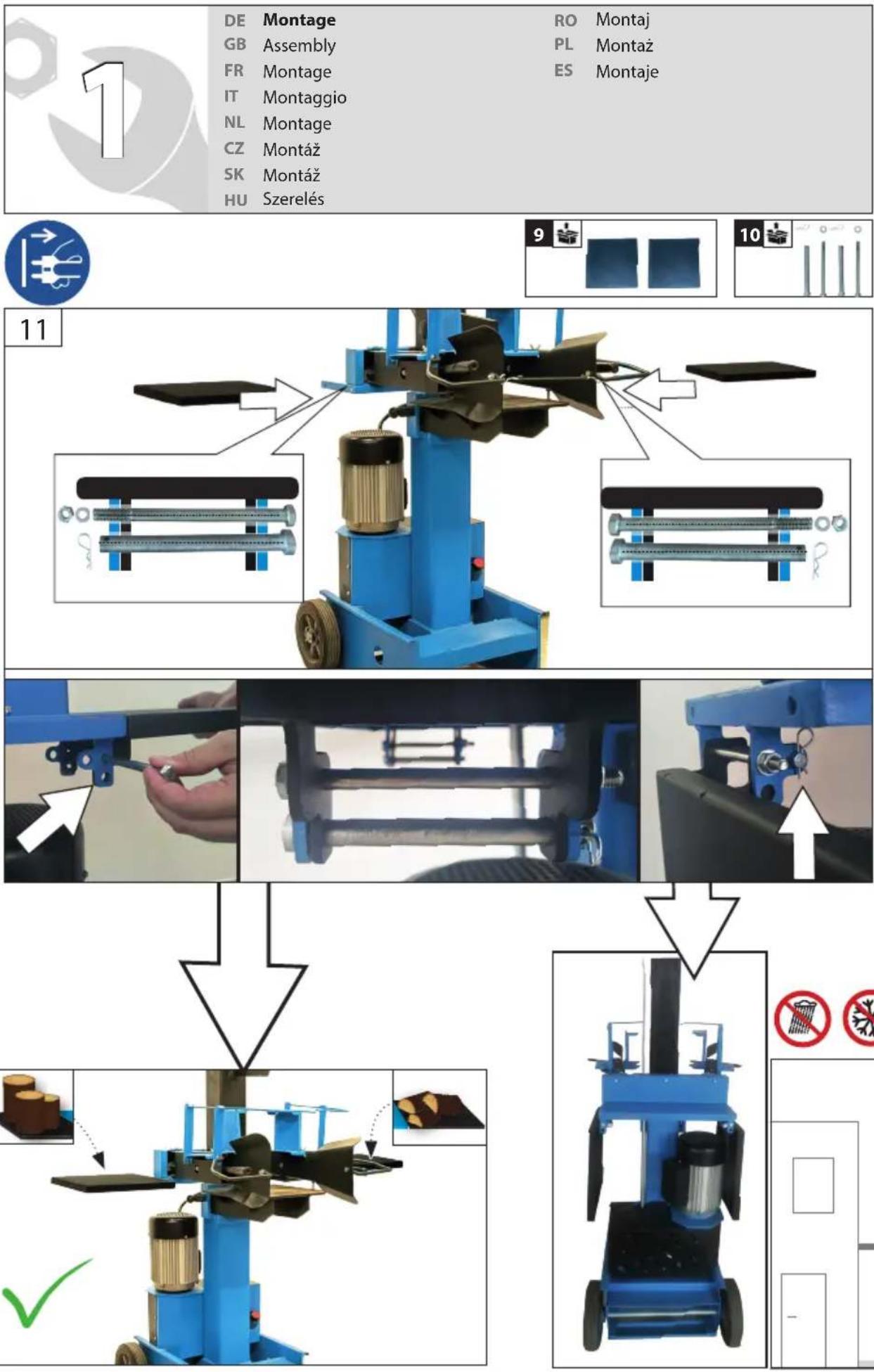

DE Ölstand kontrollieren
GB Oil level inspection
natural_image
Industrial machine with blue frame and mechanical components, no visible text or symbols

natural_image
Illustration of a hand holding a blue cloth with a black object above it, no text or symbols present| DE Ölstand kontrollierenGB Oil level inspectionFR Contrôle du niveau d'huileIT Controllo livello d'olioNL Oliepeil controlerenCZ Kontrola stavu olejeSK Kontrola stavu olejaHU Olajszint ellenőrzése | RO Verificarea stării uleiuluiPL Skontrolować stan olejuES Comprobar el nivel de aceite |


natural_image
Illustration of a blue car with a hammer and gear, showing motion lines (no text or symbols)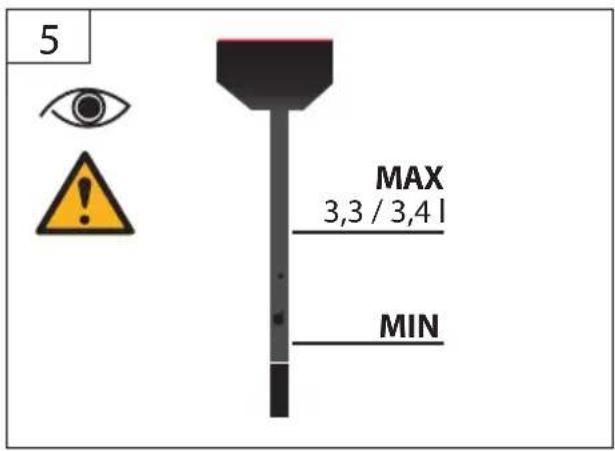

natural_image
Illustration of a blue car with a hammer and gear, no text or symbols present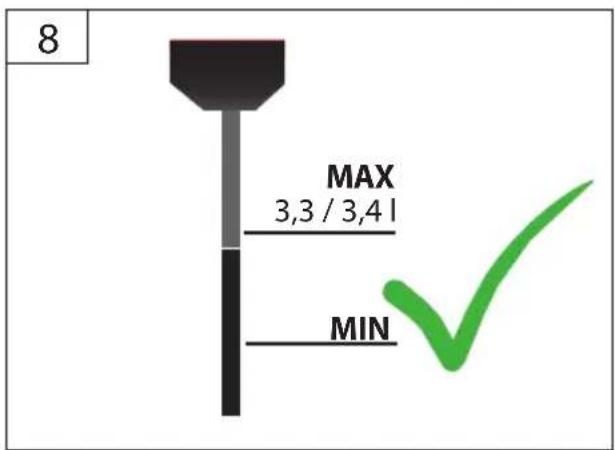
GB Gap length setting
natural_image
Cross-sectional diagram of a mechanical assembly with layered components (no text or labels)2
STOP
natural_image
Close-up of a computer control panel with green and red buttons, featuring a white arrow pointing to one button (no text or symbols)
natural_image
Pure mechanical assembly diagram without any text, numbers, or symbols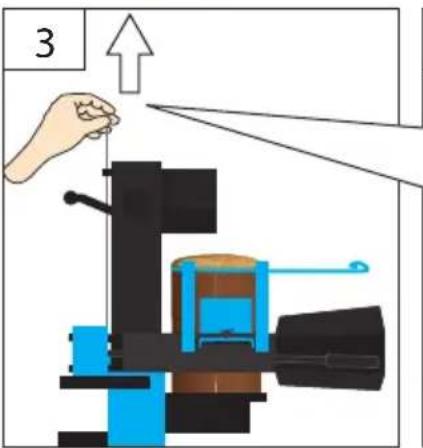
4
natural_image
Pure diagram of a mechanical component with no text, numbers, or symbols5

natural_image
Two-panel illustration showing a wooden log with a green checkmark and a cross-section of the same wood (no text or symbols)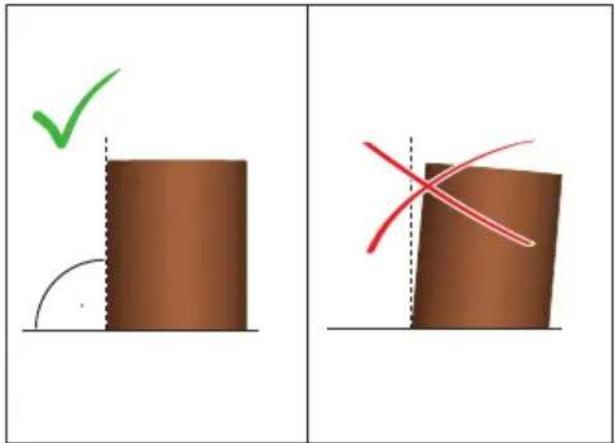

natural_image
Illustration of a blue forklift with a black handle and green checkmark indicating alignment (no text or symbols)DE Betrieb
RO Functionare
GB Operation
PL Eksploatacja
FR Fonctionnement
ES Funcionamiento
IT Esercizio
NL Gebruik
CZ Provoz
SK Prevádzka
HU Üzemeltetés

GHS 500/8TED
flowchart
graph TD
    A["START"] --> B["I"]
    B --> C["O"]


3
DE Betrieb - START
GB Operation - START
natural_image
Mechanical assembly diagram showing a central vertical component with flanged arms and blue railings, no text or symbols present.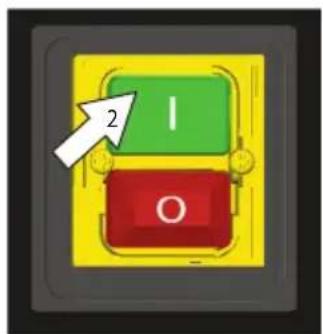


1min

natural_image
Pure mechanical assembly diagram without any text, numbers, or symbols
natural_image
Diagram of a blue forklift with mechanical components and directional arrows (no text or symbols)STOP
natural_image
Close-up of a yellow and red button with a white arrow pointing to the center (no text or symbols)DE Betrieb
GB Operation
FR Fonctionnement
IT Esercizio
NL Gebruik
CZ Provoz
SK Prevádzka
HU Üzemeltetés
RO Functionare
PL Eksploatacja
ES Funcionamiento





natural_image
Symbolic illustration of a robotic arm crossed with a red diagonal line, representing interference or rejection (no text present)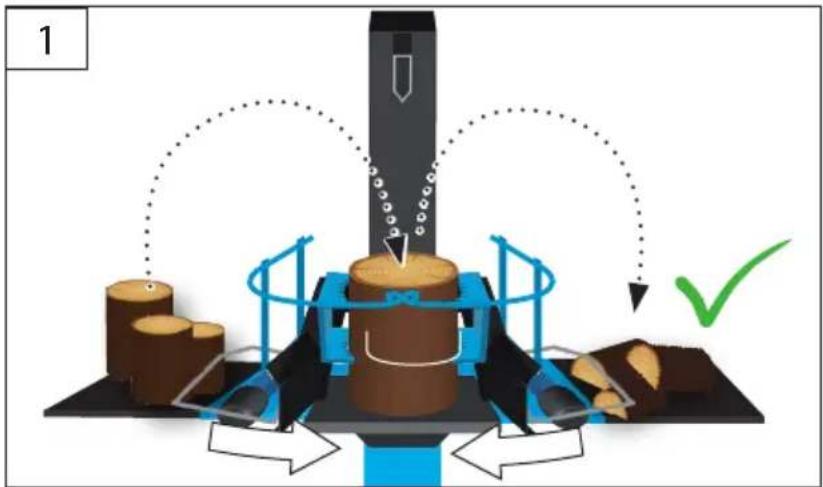
natural_image
Mechanical assembly diagram showing a cylindrical component mounted on a blue base with directional arrows indicating motion (no text or symbols)
natural_image
Mechanical assembly diagram showing a cylindrical component being processed by a valve, with no visible text or symbols.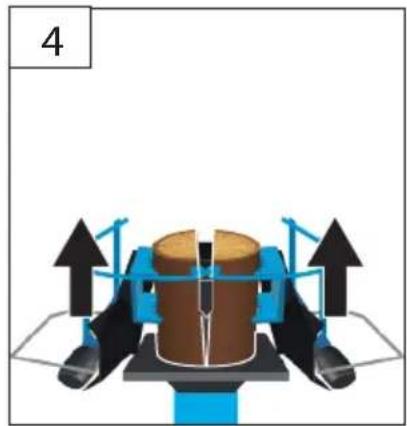
natural_image
Mechanical assembly diagram showing a rotating component with directional arrows (no text or symbols)
natural_image
Mechanical assembly diagram showing a rotating component with directional arrows and a central shaft (no text or symbols)
natural_image
Mechanical assembly diagram showing a central rotating component with surrounding blue and black components (no text or symbols)
3
natural_image
Mechanical assembly diagram showing a central cylindrical component with four arms and blue supports, no text or symbols present.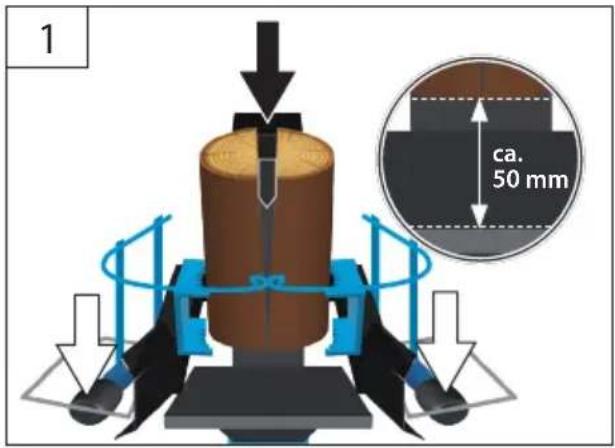
natural_image
Mechanical assembly diagram showing a cylindrical component mounted on a base with directional arrows indicating motion (no text or symbols)STOP


natural_image
Diagram of a mechanical device with multiple blades and a central cylindrical component, no text or symbols presentGB Cleaning / Maintenance
FR Nettoyage / Entretien
GB transport / storage
FR Transport / Stockage
NL Transport / Bewaring
natural_image
Technical illustration of a mechanical device with blue and gray components, showing internal structure and alignment (no text or symbols)2

natural_image
Illustration of a blue industrial machine with a green checkmark indicating approval (no text or symbols present)
natural_image
Illustration of a blue forklift with red diagonal lines indicating restriction or rejection (no text or symbols)
natural_image
Simple illustration of a blue pipe pouring liquid into black droplets (no text or symbols)3
natural_image
Silhouette of a person pushing a blue bicycle-like object with an arrow indicating direction (no text or symbols)4



Technische Daten
The values stated are emission values and as such do not necessarily constitute values which are safe for the workplace. Although there is a correlation between emission levels and environmental impact levels, whether further precautions are necessary cannot be derived from this. Factors in uencing the actually present environmental impact level in the workplace include the characteristics of the work area and other noise sources, i.e. the number of machines and other neighbouring work processes. The permitted workplace values can likewise vary from country to country. This information is intended to assist the user in estimating hazards and risks.
* The S6-40% indicates a load profile of 4 min load and 6 min idle time
Read and understand the operating instructions before using the appliance. Familiarise with the
control elements and how to use the appliance properly. Abide by all the safety measures stated in the service manual. Act responsibly toward third parties.
The operator is responsible for accidents or risks to third parties.
Persons over 16 years of age can only work on the appliance. An exception includes youngsters trained in order to reach knowledge under supervision of the trainer during occupational education.
In case of any doubts about connection and operation refer please to our customer center
The operating personnel must be adequately trained in the use, adjustment and operation of the device.
Specified Conditions Of Use
The wood splitter has only been designed to split wood in the fibre direction. Respecting technical data and safety precautions.
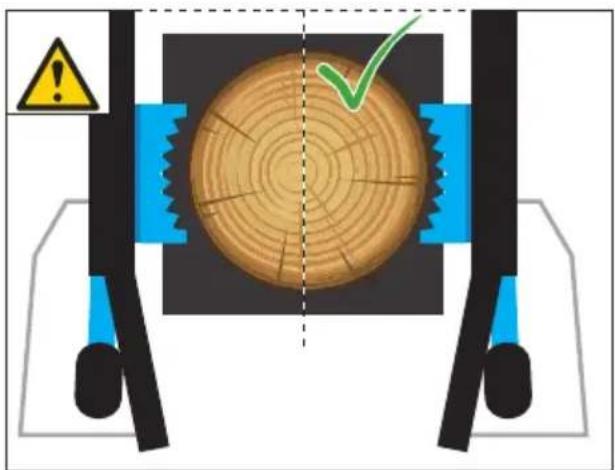
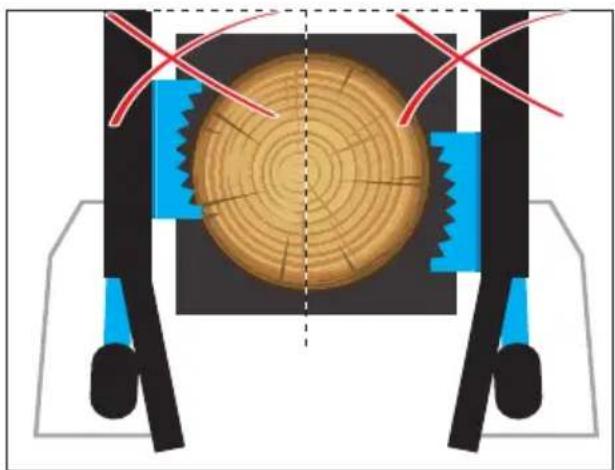
When splitting, it is essential to make sure the split wood contacts the checkered sheet of the splitting desk.
The machine may only be used if it is fully assembled.
Operation of a machine that is not fully assembled is strictly prohibited.
The device must not be used without the attachment tables.
It is essential to follow instructions for installation, operation, repairs, etc. to prevent hazards and damage.
Please do not forget that this machine, as designed, is not intended for industrial use.
Make sure there are no persons in the working area during operation or make sure such persons keep a sufficient safety distance.
This appliance is not intended for use by children.
The wood splitter has been designed to be operated by 1 person. The machine must never be operated by two or more persons.
Wood splitter being operated by two persons, with one holding a piece of wood and the other controlling the clamps is strictly prohibited.
Do not use this product in any other way as stated for normal use. Not observing general regulations in force and instructions from this manual does not make the manufacturer liable for damages.
Residual risks
Dry and dried-up wood may jump up when being split and injure the face of the operator. Adequate protective clothes to be worn!
⚠ Wooden pieces produced during splitting may fall down and injure legs of the operator.
When splitting wood, parts of body may be crushed or separated due to hydraulic knife lowering.
There is a risk of branchy wood getting stuck when being split. Please be advised that wood being separated is under heavy pressure and your fingers may get squeezed in the gap.
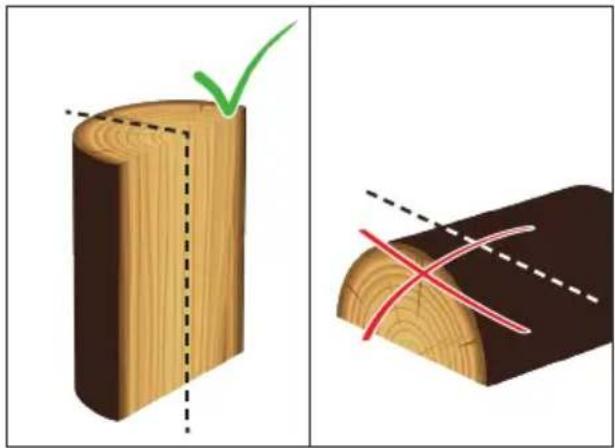
Caution! Pieces of wood cut at the right angle to be split only! Diagonally cut pieces of wood may slip when cutting!
General Power Tool Safety Warnings WARNING Read all safety warnings and all
instructions. Failure to follow the warnings and instructions may result in electric shock, fire and/or serious injury.
Save all warnings and instructions for future reference.
The term „power tool“ in the warnings refers to your mains-operated (corded) power tool or battery-operated (cordless) power tool.
1) Safety in the place of work
a) Keep work area clean and well lit. Cluttered or dark areas invite accidents.
b) Do not operate power tools in explosive atmospheres, such as in the presence of flammable liquids, gases or dust. Power tools create sparks which may ignite the dust or fumes.
c) Keep children and bystanders away while operating a power tool. Distractions can cause you to lose control.
2) Electrical safety
a) Power tool plugs must match the outlet. Never modify the plug in any way. Do not use any adapter plugs with earthed (grounded) power tools. Unmodified plugs and matching outlets will reduce risk of electric shock.
b) Avoid body contact with earthed or grounded surfaces, such as pipes, radiators, ranges and refrigerators. There is an increased risk of electric shock if your body is earthed or grounded.
c) Do not expose power tools to rain or wet conditions. Water entering a power tool will increase the risk of electric shock.
d) Do not abuse the cord. Never use the cord for carrying, pulling or unplugging the power tool. Keep cord away from heat, oil, sharp edges or moving parts. Damaged or entangled cords increase the risk of electric shock.
e) When operating a power tool outdoors, use an extension cord suitable for outdoor use. Use of a cord suitable for outdoor use reduces the risk of electric shock.
f) If operating a power tool in a damp location is unavoidable, use a residual current device (RCprotected supply. Use of an RCD reduces the risk of electric shock.
a) Stay alert, watch what you are doing and use common sense when operating a power tool. Do not use a power tool while you are tired or under the influence of drugs, alcohol or medication. A moment of inattention while operating power tools may result in serious personal injury.
b) Use personal protective equipment. Always wear eye protection. Protective equipment such as dust mask, non-skid safety shoes, hard hat, or hearing protection used for appropriate conditions will reduce personal injuries.
c) Prevent unintentional starting. Ensure the switch is in the off-position before connecting to power source and/or battery pack, picking up or carrying the tool. Carrying power tools with your finger on the switch or energising power tools that have the switch on invites accidents.
d) Remove any adjusting key or wrench before turning the power tool on. A wrench or a key left attached to a rotating part of the power tool may result in personal injury.
e) Do not overreach. Keep proper footing and balance at all times. This enables better control of the power tool in unexpected situations.
f) Dress properly. Do not wear loose clothing or jewellery. Keep your hair, clothing and gloves
3) Safety of persons
away from moving parts. Loose clothes, jewellery or long hair can be caught in moving parts.
g) If devices are provided for the connection of dust extraction and collection facilities, ensure these are connected and properly used. Use of dust collection can reduce dust-related hazards.
4) Use and treatment of electric tools
a) Do not force the power tool. Use the correct power tool for your application. The correct power tool will do the job better and safer at the rate for which it was designed.
b) Do not use the power tool if the switch does not turn it on and off. Any power tool that cannot be controlled with the switch is dangerous and must be repaired.
c) Disconnect the plug from the power source and/or the battery pack from the power tool before making any adjustments, changing accessories, or storing power tools. Such preventive safety measures reduce the risk of starting the power tool accidentally.
d) Store idle power tools out of the reach of children and do not allow persons unfamiliar with the power tool or these instructions to operate the power tool. Power tools are dangerous in the hands of untrained users.
e) Maintain power tools. Check for misalignment or binding of moving parts, breakage of parts and any other condition that may affect the power tool's operation. If damaged, have the power tool repaired before use. Many accidents are caused by poorly maintained power tools.
f) Keep cutting tools sharp and clean. Properly maintained cutting tools with sharp cutting edges are less likely to bind and are easier to control.
g) Use the power tool, accessories and tool bits etc. in accordance with these instructions, taking into account the working conditions and the work to be performed. Use of the power tool for operations different from those intended could result in a hazardous situation.
5) Service
a) Have your power tool serviced by a qualified repair person using only identical replacement parts. This will ensure that the safety of the power tool is maintained.
Safety Instructions
Using the wood splitter may lead to some hazards. Therefore, the machine may only be handled by instructed and experienced persons.
Wear suitable protective clothing such as sturdy shoes with non-slip sole, robust long trousers, gloves, safety glasses and hearing protection! Do not wear loose clothing or jewels. Hear, clothing and gloves must be out of reach of moving parts as they could get caught by the rotating parts. Do not use the appliance when barefooted or in open sandals. In the event of a blockage, switch off the machine immediately. Disconnect the power plug and remove the jammed piece of wood.
Mains Connection
⚠ WARNING! Electric shock! There is a risk of an injury caused by electric shock!
Operation is only allowed with a safety switch against stray current (RCD max. stray current of 30mA).
Check the voltage. Technical data given on the type label must correspond with electric network voltage. Insert the plug of the electrical cable in a socket of suitable shape, voltage and frequency complying with current regulations.
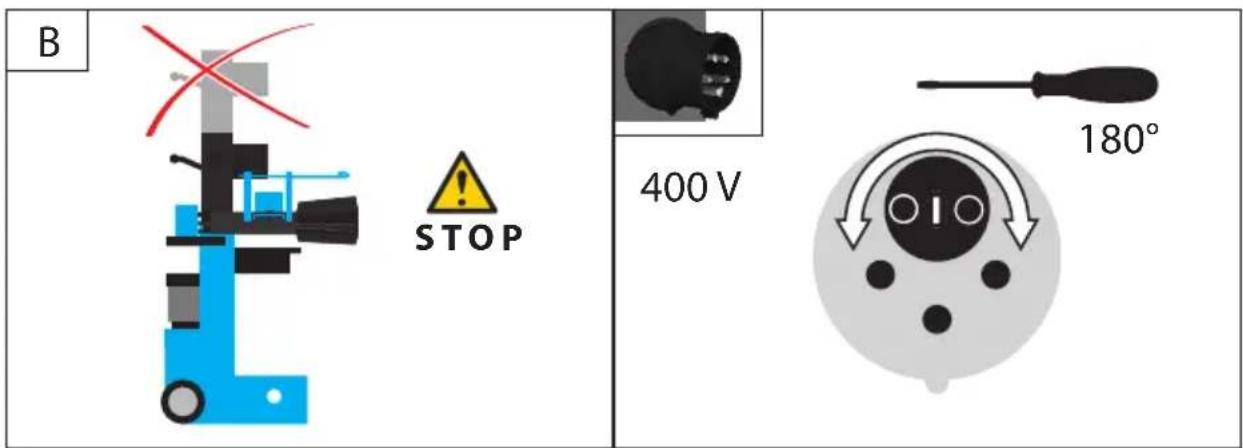
Only for 400 volt machines: It is essential to respect the engine rotation direction (see the arrow on the engine) as operation in wrong direction would damage the oil pump. Warranty claims cannot apply in such a case. Change the rotation direction by turning the connector polarity if necessary.
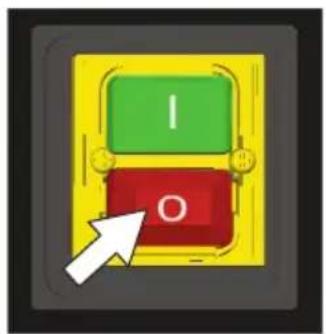
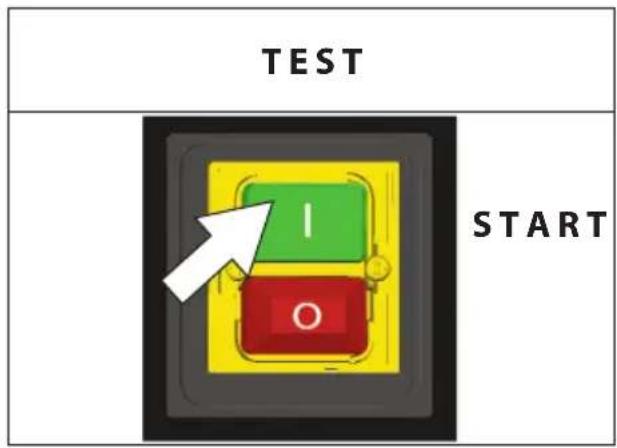
Pursuant to the provisions of „CE“ professional associations, etc., all splitters are fitted with an undervoltage release in the switch. This will prevent accidental repeated starting in case of current interruption due to power failure, accidental unplugging, defective fuse, etc. The machine must necessarily be turned on again by repeated pressing of the green switch.
Wilful holding or blocking of the switch, unless being a neutral, will automatically lead to switch failure. The warranty will not apply in such a case that must naturally be checked.
Work preparation
Before putting the machine into operation, working of the safety guards (two-lever operation system, in particular) must be checked.
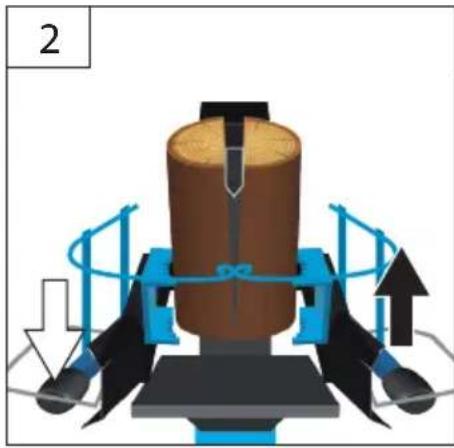
- Put both control levers down and the splitter knife down, app. 5 cm above the desk.
• One control lever to be released at all times, with the splitter knife remaining in the selected position.
Carry out a visual inspection before switching the appliance on.
• Proper function of the on and off button, incl. the emergency switch.
- Before starting work, check hydraulic lines and hoses for leaks.
- Check especially the safety equipment, electrical control elements, power lines and screw couplings for any damage and if they are tightened appropriately.
The appliance must not be used if damaged or safety equipment is defective. Replace any worn-out and damaged parts.
CAUTION! Whenever the machine is to be put into operation, make sure the splitter desk is firmly and safely fitted to the machine.
Working area
For safe wood splitting, it is essential that the working area is flat and slip-resistant and that a sufficient space for moving is provided. To take the wood splitter to your home, it is necessary there are no obstacles in the way, i.e. no risk of tripping. Adequate lighting of the working area needs to be provided.
When being operated, the machine must stand on a horizontal and flat surface and the floor around the machine must be flat, well-maintained and with no waste, such as sawdust and cuttings.
Operation
- Pick up unsplit wood from the left attachment table
- Put wood on the splitting table
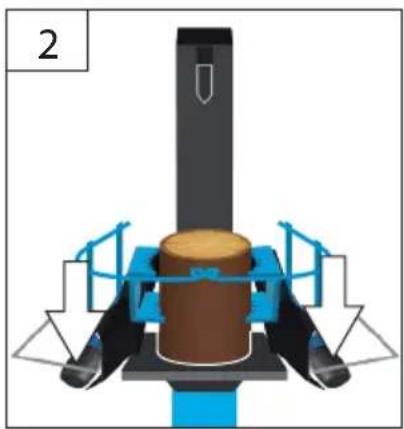
- Secure the wood with the holding claws.
- Start splitting process (operate lever)
- Split the wood once all the way through
- Place split wood on the right attachment table
- Split the wood a second time, if necessary
When splitting intergrown wood, trunk sections of irregular shape, etc., there may be risks of parts being thrown out, blocked or crushed.
Never reach into the gap area.
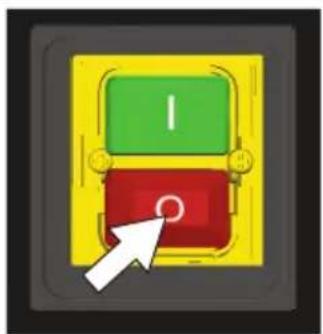
Power supply must be interrupted by pressing the red button on the switch and unplugging the machine for any repair or servicing work or when leaving the wood splitter. Turning to the Off position is not enough to interrupt the power supply.
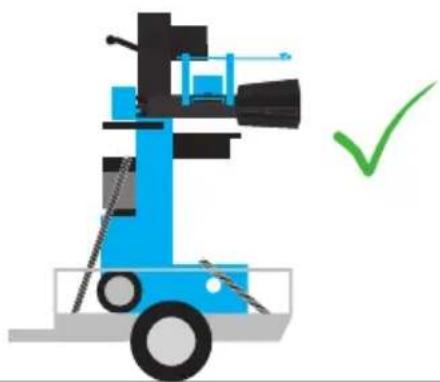
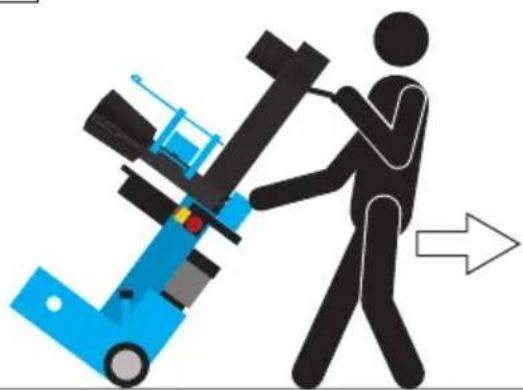
Handling equipment to be used only when handling the machine. Make sure the device cannot roll away, fall over or tip over with suitable fastening devices. The machine must be secured to the ground with suitable fasteners. (e.g. ground nails)
The machine may only be used if it is fully assembled. Operation of a machine that is not fully assembled is strictly prohibited.
Long wood must never be placed on the lower foot for splitting. Always use the splitting table for splitting.
Emergency procedure
Conduct a rst-aid procedure adequate to the injury and summon quali ed medical attendance as quickly as possible. Protect the injured person from further harm and calm them down. If you seek help, state the following pieces of information: 1. Accident site, 2. Accident type, 3. Number of injured persons, 4. Injury type(s)
Maintenance

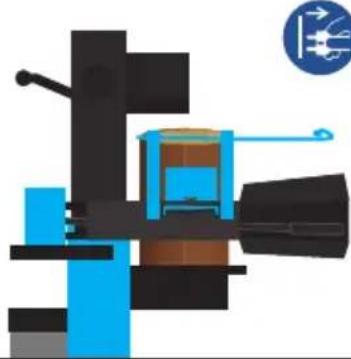
Unplug the machine before any work on it.
Switch o the apparatus, disconnect it from mains by unplugging and allow it to cool down before setting up, retrotting, cleaning, performing maintenance, storing or transporting the apparatus.
The hydraulic hoses and connections must be checked if tight enough after app. 4 hours of operation and tightened if necessary.
If the device is defective, the repair has to be made exclusively by the customer service.
Use only original accessories and original spare parts. If necessary, a list of spare parts can be found at www.guede.com.
Never clean the machine and its components with solvents, ammable or toxic liquids. Us only a damp cloth making.
Only a regularly maintained and treated appliance can serve as a satisfactory aid. Insufficient maintenance and care can lead to unforeseen accidents and injuries.
Disposal
Any damaged or disposed devices must be delivered to appropriate collection centres.
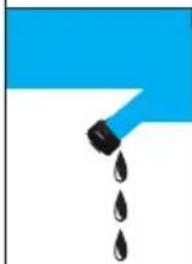
The device contains hydraulic uid. Hydraulic uids pose a hazard to groundwater. Uncontrolled draining or improper disposal is punishable by law.
Symbols

CAUTION! WARNING

WARNING! Read the Operating Instructions

Caution! Unplug the machine before any servicing or repair!

Wear eye protective goggles! Wear ear protectors!

Safety gloves to be used!

Wear safety shoes with steel reinforcement!

Use of crane

Caution! Moving parts of the machine! Danger! Keep away from moving machine parts!

To be operated by 1 person only!

Do not touch in the splitting area!

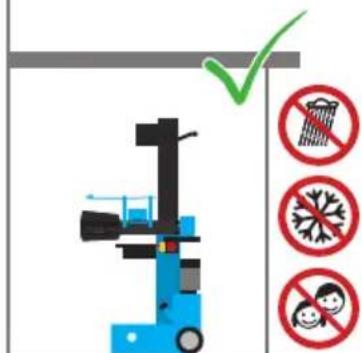
Protect against humidity. Never expose tool to rain.

Dangerous voltage

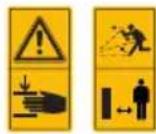
Warning against hand injuries
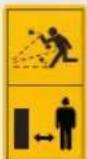
Warning against thrown-o items Keep distance of persons Observe to keep out of dangerous zone

Rotation direction

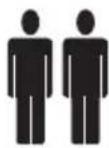
2 people are needed for implementation.

Any damaged or disposed devices must be delivered to appropriate collection centres.

Remove all undesirable items, e.g. nails and wire, before working
Guarantee
Warranty period of 12 months applies to commercial use and 24 months applies to private use and commences on the day of purchase of the device.
Warranty applies exclusively to failures due to defective material or workmanship. An original sale slip with indication of date of sale must be presented in case of claiming for the warranty rights.
Warranty does not cover unprofessional use such as device overload, violent use, damage caused by third party or foreign materials, failure to comply with operations
and assembly manual, and normal wear and tear.
Important information for the customer
Please be sure to know that returning the product in or after the warranty period must be made in the original packaging.
Service
Do you have any technical questions? Any claim? Do you need any spare parts or operating instructions? We will quickly help you and without needles bureaucracy at our web pages at www.guede.com in the Servicing part. Please help us be able to help you. In order to identify your device in case of claim we need the serial No., product No. and year of production. All this data can be found on the type label.
Tel.: +49 (0) 79 04 / 700-360
Fax: +49 (0) 79 04 / 700-51999
E-Mail: support@ts.guede.com
Failure removal
| Failures Causes | Removal | |
| Engine does not start | No power in the socket | Check the fuse |
| Defective electric extension cable | Pull the plug out, check it, replace it | |
| Wrong connecting cable | 5-wire connection at 2.5 mm2 cross section | |
| Defective condenser switch | Have the machine checked by a professional electrician | |
| Wrong engine rotation direction | Wrong connection | Use a screwdriver to turn the phase-changing switch in the power supply |
| Splitting knife is not moving | Adjust the two-hand control and starting levers | Defective control valve - to be replaced in a service centre only |
| Splitter has no power | Wrong rotation direction | Have the rotation direction changed by a professional |
| Few hydraulic oil | Hydraulic oil to be added | |
| Trigger is bent; hydraulic piston on the valve is not fully seated | Check all screws on the triggerAdjust the trigger so that the hydraulic piston on the valve is fully seated | |
| Wood has many knobs and the splitting knife is getting stuck | Lubricate the splitting knife | |
| Control arm is bent | Put the control arm back to the starting position | |
| The green supply button does not hold after being pressed | Defective fuse, etc. | Check the cable |
| 2-phase running | ||
| Hydraulic pump is whistling, splitting knife running jerkily | Oil loss, bottom contamination | Tighten the screws Replace the hose |
| Few hydraulic oil | Hydraulic oil to be added |
OPGELET! WAARSCHUWING

Translation of the EC-Declaration of Conformity
We, hereby declare the conception and construction of the below mentioned appliances correspond - at the type of construction being launched - to appropriate basic safety and hygienic requirements of EC Directives.
In case of any change to the appliance not discussed with us the Declaration expires.
Notified Body Name: No: Adress:
Type Ex. Cert.-No.:
□97/68/EC_&2016/1628/EU
Emission No.:
2000/14/EC_2005/88/EC
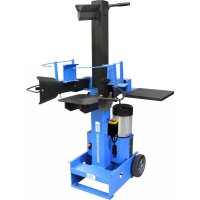
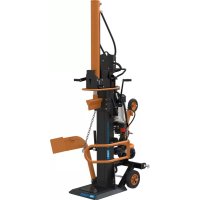
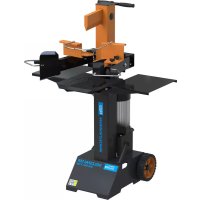
- English TECHNICAL DATA | SAFETY INSTRUCTIONS | SPECIFIED CONDITIONS OF USE | EMERGENCY PROCEDURE | CHARGING EQUIPMENT | BATTERY | WORK INSTRUCTIONS | SYMBOLS | DISPOSAL | GUARANTEE | SERVICE \_\_\_\_ 24
- Français CARACTÉRISTIQUES TECHNIQUES | I NSTRUCTIONS DE SÉCURITÉ | UTILISATION CONFORME À LA DESTINATION | CONDUITE EN CAS D'URGENCE | DISPOSITIF DE CHARGE | BATTERIA | CONSIGNES DE TRAVAIL | SYMBOLES | LIQUIDATION | GARANTIE | SERVICE \_\_\_\_ 30
- Specified Conditions Of Use
- Residual risks
- General Power Tool Safety Warnings WARNING Read all safety warnings and all
- 1) Safety in the place of work
- 2) Electrical safety
- 3) Safety of persons
- 4) Use and treatment of electric tools
- 5) Service
- Safety Instructions
- Mains Connection
- Work preparation
- Working area
- Operation
- Emergency procedure
- Maintenance
- Unplug the machine before any work on it.
- Disposal
- Symbols
- Guarantee
- Important information for the customer
- Service
- Translation of the EC-Declaration of Conformity
Brand : Güde
Model : GHS 5006TE
Category : Log splitter