ManualGo.com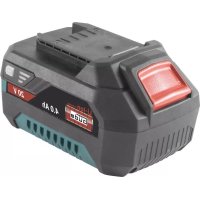
AP 2040 - Screwdriver Güde - Free user manual and instructions
Find the device manual for free AP 2040 Güde in PDF.



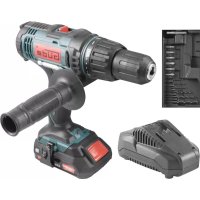
Download the instructions for your Screwdriver in PDF format for free! Find your manual AP 2040 - Güde and take your electronic device back in hand. On this page are published all the documents necessary for the use of your device. AP 2040 by Güde.
USER MANUAL AP 2040 Güde
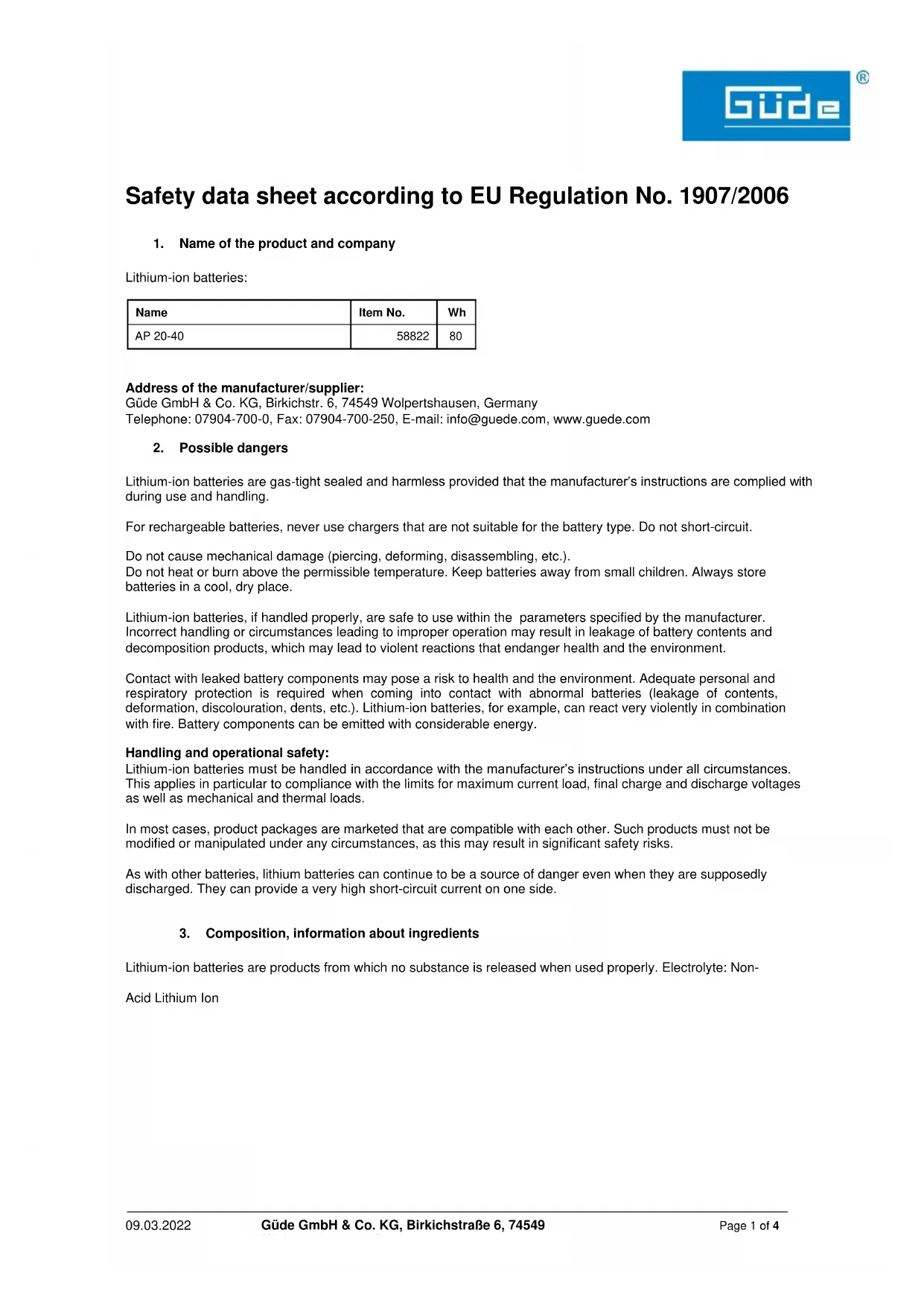
Safety data sheet according to EU Regulation No. 1907/2006
Name of the product and company Lithium-ion batteries:
Possible dangers Lithium-ion batteries are gas-tight sealed and harmless provided that the manufacturer’s instructions are complied with during use and handling. For rechargeable batteries, never use chargers that are not suitable for the battery type. Do not short-circuit. Do not cause mechanical damage (piercing, deforming, disassembling, etc.). Do not heat or burn above the permissible temperature. Keep batteries away from small children. Always store batteries in a cool, dry place. Lithium-ion batteries, if handled properly, are safe to use within the parameters specified by the manufacturer. Incorrect handling or circumstances leading to improper operation may result in leakage of battery contents and decomposition products, which may lead to violent reactions that endanger health and the environment. Contact with leaked battery components may pose a risk to health and the environment. Adequate personal and respiratory protection is required when coming into contact with abnormal batteries (leakage of contents, deformation, discolouration, dents, etc.). Lithium-ion batteries, for example, can react very violently in combination with fire. Battery components can be emitted with considerable energy. Handling and operational safety: Lithium-ion batteries must be handled in accordance with the manufacturer’s instructions under all circumstances. This applies in particular to compliance with the limits for maximum current load, final charge and discharge voltages as well as mechanical and thermal loads. In most cases, product packages are marketed that are compatible with each other. Such products must not be modified or manipulated under any circumstances, as this may result in significant safety risks. As with other batteries, lithium batteries can continue to be a source of danger even when they are supposedly discharged. They can provide a very high short-circuit current on one side.
Composition, information about ingredients Lithium-ion batteries are products from which no substance is released when used properly. Electrolyte: Non- Acid Lithium Ion Name Item No.
First aid measures Lithium cells and batteries are not a source of danger if handled and stored properly. Skin or eye contact: If contact occurs, rinse the affected areas thoroughly with water for at least 15 minutes. In case of eye contact, in addition to thorough rinsing with water, a doctor should always be contacted. Thermal burns: If burns are caused, they should be treated accordingly. Contacting a doctor is also strongly advised. Respiratory: In case of intense smoke or gas release, immediately leave the room. In case of large amounts and irritation of the respiratory tract, consult a doctor. If possible, ensure adequate ventilation. Ingestion: Rinse mouth and surrounding area with water. Seek medical help immediately.
Fire fighting measures Lithium-ion battery fires can generally be suppressed with water. Differentiation between different systems of the lithium battery is usually not possible and not necessary at the time of the fire The cooling effect of water effectively inhibits the spread of fire to battery cells that have not yet reached the critical temperature for ignition (“thermal runaway”). As with any fire, the resulting gases can cause health damage if inhaled. Therefore, care must be taken to ensure adequate ventilation
Accidental release measures Electrolyte can leak out if the battery housing is damaged. Batteries should be sealed in an airtight plastic bag, and dry sand, chalk powder (CaCO3) or vermiculite should be added. Traces of electrolyte can be absorbed with dry household paper. When doing so, avoid direct skin contact by wearing protective gloves. Rinse with plenty of water. Use appropriate personal protective equipment for the situation (protective gloves, protective clothing, face protection, respiratory protection).
Handling and storage Always pay careful attention to the warnings on batteries and the instructions for use of appliances and other applications. Use only the recommended battery types. Lithium-ion batteries should ideally be stored at room temperature and in a dry place (max. 40°C); avoid large temperature fluctuations. (e.g. do not store near heaters, do not expose to sunlight permanently). Arrangements should be made with local authorities when storing large quantities of lithium-ion batteries.
Exposure controls and monitoring/personal protective equipment Lithium-ion batteries are products (products) from which no substances are released under normal and reasonably foreseeable conditions of use.
Physical and chemical properties The lithium-ion battery is a compact battery pack with a plastic coating.09.03.2022 Güde GmbH & Co. KG, Birkichstraße 6, 74549 Wolpertshausen, Germany Page 3 of 4
Stability and reactivity There is a risk of the batteries bursting if an upper temperature limit is exceeded. When charging a rechargeable system, always observe the upper voltage limit. If the limits are exceeded, the battery may burst or even explode. If a storage temperature of 40°C is exceeded, accelerated aging and premature loss of function may occur.
Toxicological information If the product is handled properly and the generally applicable hygiene regulations are observed, there are no known health risks.
Environmental information When handled properly, no negative consequences for the environment are to be expected.
Note on disposal Lithium-ion batteries are marked with the symbol of the crossed-out dustbin. The symbol reminds end users that batteries should not be disposed of with household waste, but must be collected separately. Used batteries can be returned (free of charge) to the point of sale, recycling centre or to a disposal system (industry, trade). In order to prevent short circuits and the associated heating, lithium-ion batteries must never be stored or transported unprotected in bulk. Suitable measures against short circuits include e.g.:
Placing the batteries in their original packaging or in a plastic bag,
Embedding in dry sand
Transport details The commercial transport of lithium-ion batteries is subject to dangerous goods legislation. Transport preparations and transport must be carried out exclusively by appropriately trained persons or the process must be supervised by appropriate experts or qualified companies. Transport regulations: Lithium-ion batteries are subject to the following dangerous goods regulations and exceptions - in the currently applicable version: ≤100Wh
ADR, RID: Special provisions: SV188, SV230, SV310, SV636 Packaging instructions: P903, P903a, P903b IATA: Special provision: A88, A99, A154, A164 Packaging instructions: P965, P966, P967, P968, P969, P970 IMDG Code: Special provision: SV188, SV230, SV310 Packaging instructions: P903 EmS: F-A, S-I Stowage category A Test and inspection regulations According to the dangerous goods regulations for lithium-ion batteries, each new type of cell or battery type must have passed all the tests listed in the UN Manual Tests and Criteria, Part III, Section 38.3. This applies in particular when several cells or batteries are connected to form new batteries (battery packs or battery units). Used batteries are also subject to these regulations. The regulations for new batteries can usually be applied to intact and undamaged used batteries. Defective or damaged batteries are subject to stricter regulations, which go up to a complete ban on transportation. The transport ban applies to the mode of transport air (ICAO T.I., IATA DGR - Special provision A154).
However, for the transport of used – but not damaged - batteries, please also refer to the corresponding special regulations (636) or packaging instructions (P903a and P903b / ADR). Waste batteries and batteries sent for recycling or disposal are prohibited in air transport (IATA Special Provision A 183). Exceptions must be approved by the competent national authority of the state of departure and the state of the air carrier.
Legislation In Germany, the Act on the Sale, Return and Environmentally Friendly Disposal of Batteries and Accumulators (Battery Act - BattG) of 25 June 2009 applies.
This act is intended to implement Directive 2006/66/EC (Battery Directive).
Other information The notes provide assistance for compliance with legal requirements, but do not replace them. The above information has been compiled to the best of our knowledge and belief. They do not represent a guarantee of properties. Applicable laws and regulations are to be observed by the distributors and users of the product on their own responsibility.09.03.2022 Güde GmbH & Co. KG, Birkichstraße 6, 74549 Wolpertshausen Page 1 / 4