OM265RVS - Oven ETNA - Free user manual and instructions
Find the device manual for free OM265RVS ETNA in PDF.



| Product type | Built-in oven |
| Brand | Etna |
| Model | OM265RVS |
| Category | Oven |
| Usable volume | 65 L |
| Appliance dimensions (W x H x D) | 595 x 596 x 566 mm |
| Built-in dimensions (W x H x D) | 560 x 600 x 550 mm |
| Power supply | 220-240 V ~ 50-60 Hz |
| Energy efficiency class | A (EEI cavity 95.9) |
| Consumption in conventional mode | 0.83 kWh/cycle |
| Consumption in fan-assisted mode | 0.79 kWh/cycle |
| Number of functions | 7 (including defrost, grill, fan-assisted, etc.) |
| Main functions | Lighting, Defrost, Large grill + fan, Large grill, Grill, Top heat + bottom heat + fan, Top heat + bottom heat, Bottom heat |
| Maximum temperature | 250 °C |
| Shelf positions | 5 levels |
| Included accessories | Drip tray, oven rack |
| Interior lighting | 25 W bulb |
| Cooling type | Cooling fan |
| Removable door | Yes, for cleaning |
| Cleaning | Washable interior and exterior surfaces, removable glass pane |
| Safety | Automatic timer shut-off, cooling ventilation |
| Country of manufacture | Not specified (Dutch brand) |
| Warranty | Consult the warranty card |
Frequently Asked Questions - OM265RVS ETNA
User questions about OM265RVS ETNA
0 question about this device. Answer the ones you know or ask your own.
Ask a new question about this device
Download the instructions for your Oven in PDF format for free! Find your manual OM265RVS - ETNA and take your electronic device back in hand. On this page are published all the documents necessary for the use of your device. OM265RVS by ETNA.
USER MANUAL OM265RVS ETNA
text_image
Technical diagram of a cabinet or oven with numbered components labeled 1, 2, and 3.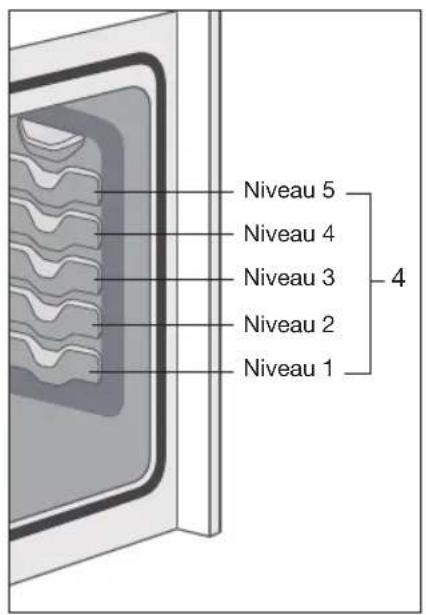
natural_image
Diagram of an oven with internal grating and two circular insets showing internal structure (no text or symbols)text_image
Three circular gauges with temperature readings and directional arrows indicating rotation or adjustment process.De oven gebruiken
natural_image
Diagram showing a kitchen appliance with a rack and a close-up of the interior (no text or symbols)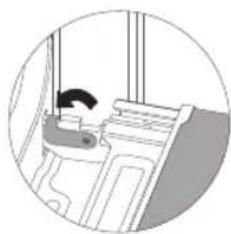
natural_image
Illustration of a person sitting at a desk near a window (no text or symbols visible)vergrendeld
natural_image
Simple line drawing of a door handle with a knob and arrow indicator (no text or symbols)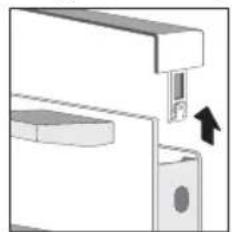
natural_image
Diagram of a door handle mechanism with an arrow indicating direction (no text or symbols present)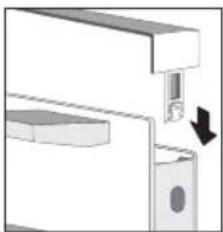
natural_image
Pure mechanical assembly diagram showing a bracket with a valve and housing (no text or symbols)natural_image
Diagram showing a mechanical component with rotational motion and a circular component with a downward arrow (no text or symbols)
natural_image
Symbol of a trash bin crossed with a diagonal line, no text or numbers presenttext_image
Technical diagram of a cabinet or oven with numbered components labeled 1, 2, and 3.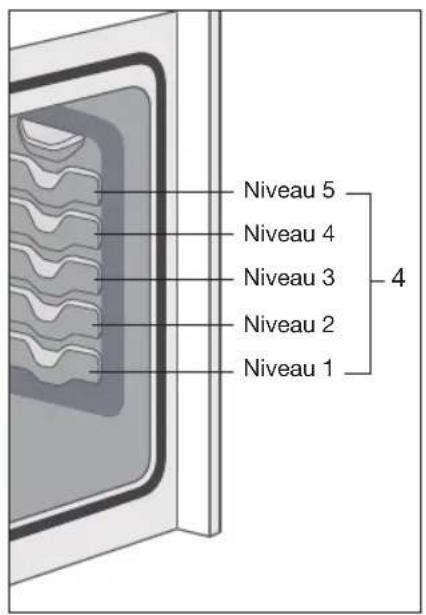
natural_image
Diagram of an oven with internal grating and two circular insets showing internal structure (no text or symbols)text_image
Three circular gauges with temperature readings and directional arrows indicating rotation or cycle behavior.Utiliser le four
natural_image
Diagram showing a kitchen appliance with a side panel and a close-up of the interior (no text or symbols)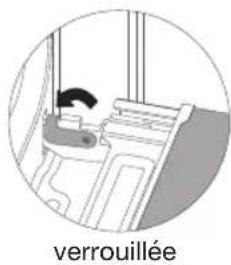
natural_image
Illustration of a person sitting in a chair with a curved arm, labeled 'verrouillée' below (no other text or symbols)natural_image
Simple line drawing of a door with a knob and arrow pointing to the side (no text or symbols)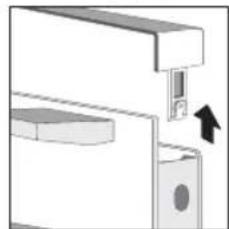
natural_image
Pure mechanical assembly diagram without any text, numbers, or symbols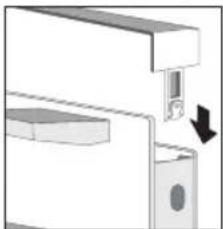
natural_image
Pure mechanical assembly diagram without any text, numbers, or symbolsnatural_image
Diagram showing a mechanical component with rotational motion and a separate circular component with a downward arrow (no text or symbols)
text_image
Prohibition sign with crossed-out trash bin and no text or symbolstext_image
Technical diagram of a cabinet or oven with numbered components labeled 1, 2, and 3.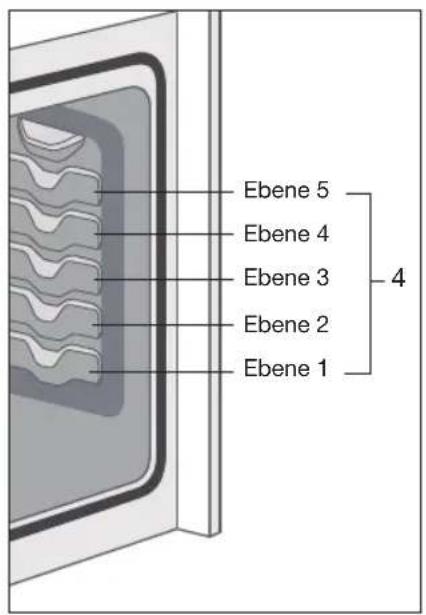
text_image
Ebene 5 Ebene 4 Ebene 3 4 Ebene 2 Ebene 1natural_image
Diagram of an oven with internal grating and a rack, showing two views of the interior (no text or symbols present)text_image
Diagram illustrating temperature and rotation of a cylindrical device with labeled degrees and directional arrowsDen Ofen benutzen
natural_image
Diagram showing a kitchen appliance with a rack and a close-up of the interior sink (no text or symbols present)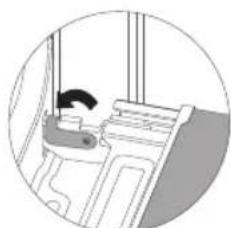
natural_image
Illustration of a person sitting at a desk with a computer, enclosed in a circular frame (no text or symbols)verriegelt
natural_image
Simple line drawing of a door handle with a knob and arrow indicator (no text or symbols)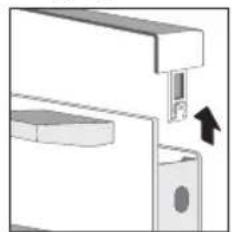
natural_image
Diagram of a mechanical or electronic component with a directional arrow indicating movement (no text or symbols present)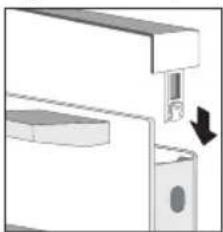
natural_image
Pure mechanical assembly diagram showing a bracket with a valve and base, no text or symbols presentnatural_image
Simple line drawing of a mechanical component with a rotating arrow (no text or symbols)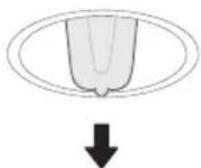

text_image
Prohibition sign with crossed-out trash bin and no text or symbolsUsing the auto shut-off timer 10
Cleaning
Cleaning the appliance 12
Removing the oven door 12
Replacing the oven light bulb 13
Troubleshooting
General 14
Technical specifications
16
Your oven and the environment
Disposal of the appliance and packaging 18
YOUR OVEN
Introduction
Congratulations on choosing this Etna oven. This product is designed with simple operation and optimum comfort in mind. The oven has a wide range of settings enabling you to select the correct cooking method every time.
This manual shows how you can best use this oven. In addition to information about operating the oven, you will also find background information that may be useful when using the appliance.

Read the separate safety instructions before using the appliance!
Read this manual before using the appliance and keep it in a safe place for future use.
Installation instructions are supplied separately.
Description
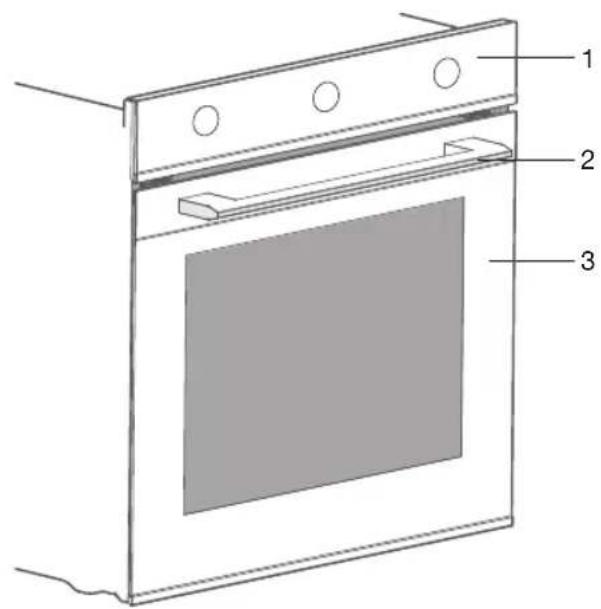
text_image
Technical diagram of a oven with numbered components labeled 1, 2, and 3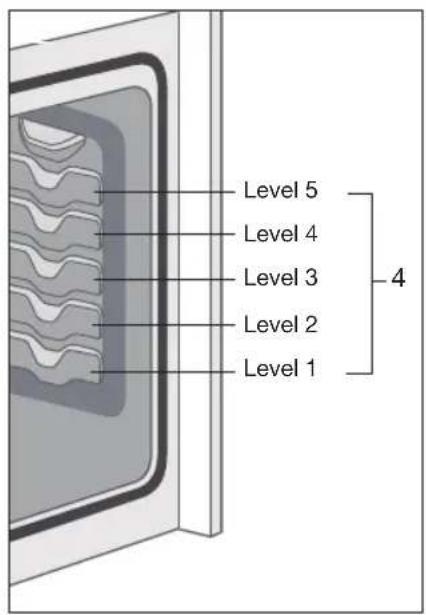
text_image
Level 5 Level 4 Level 3 Level 2 Level 1 4- Control panel
- Door handle
- Door
- Shelf levels
▶ Level 1 is mainly used in combination with bottom heat. Levels 4 and 5 are used mainly for the grill function.
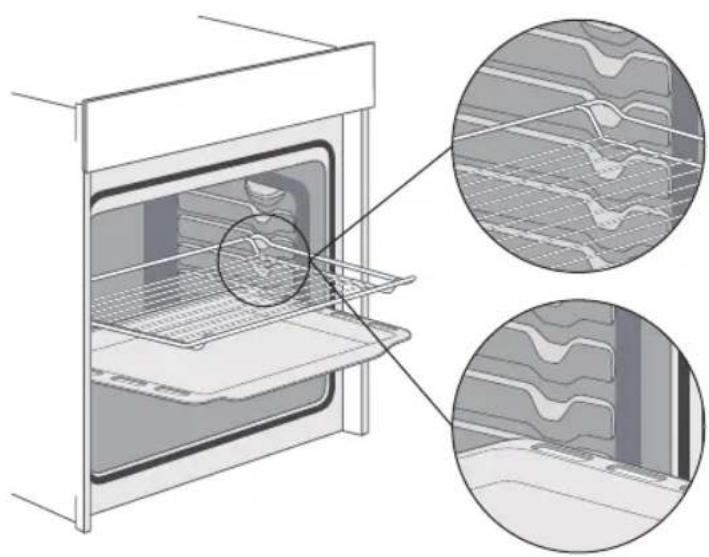
natural_image
Diagram of an oven with internal grating and two circular insets showing internal structure (no text or symbols)YOUR OVEN
The following accessories come with your oven:
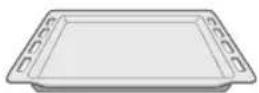
- BBaking tray; used for pastries and cakes.
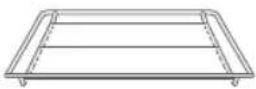
- Oven rack; primarily used for grilling. A dish or pan with food can also be placed on the oven rack.
Control panel
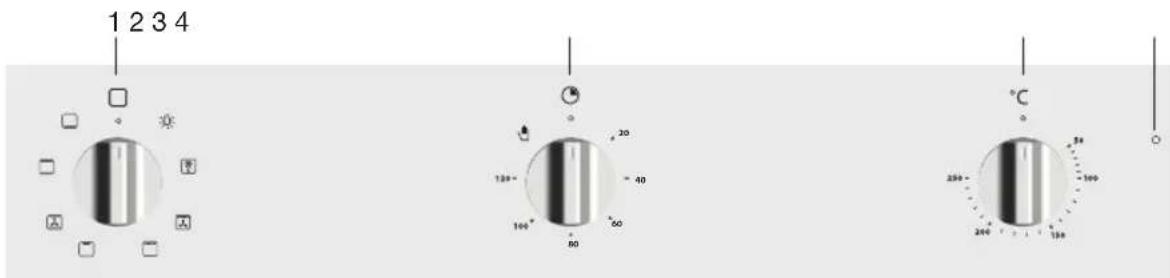
text_image
1234 1280 1300 1350 1400 1450 1500 1550 1600 1650 1700 1750 1800 1850 1900 1950 2000 2050 2100 2150 2200 2250 2300 2350 2400 2450 2500 2550 2600 2650 2700 2750 2800 2850 2900 2950 3000 3050 3100 3150 3200 3250 3300 3350 3400 3450 3500 3550 3600 3650 3700 3750 3800 3850 3900 3950 4000 4050 4100 4150 4200 4250 4300 4350 4400 4450 4500 4550 4600 4650 4700 4750 4800 4850 4900 4950 5000 5050 5100 5150 5200 5250 5300 5350 5400 5450 5500 5550 5600 5650 5700 5750 5800 5850 5900 5950 6000- Oven function knob / 'off' position
- Auto shut-off timer
- Temperatureknob
- Oven thermostat indicator light
Oven functions table
Consult the table below to choose the correct function. Also read the preparation instructions on the food packaging.

Only use oven dishes that can withstand a temperature of 250^ C.
| Function Description | |
 | Oven |
 | DefrostThis function circulates air by means of a fan.The air is heated to a temperature of 30 °C.Use this function to defrost frozen food. |
 | Large Grill + FanHeating by means of the top heating element and the grill element. The fan distributes this heat.You can use this setting for grilling meat, fish and vegetables.Place the oven rack on level 4/5 and the baking tray on level 2.Regularly keep an eye on the cooking process. At high temperatures, the dish can burn quickly.50 °C - 250 °C |
 | Large GrillHeating by means of the top heating element and the grill element.This setting is particularly useful for dishes and baked food that require a real bottom crust or browning. Use this just before the end of the baking or roasting time.Place the oven rack on level 4/5 and the baking tray on level 2.Regularly keep an eye on the cooking process. At high temperatures, the dish can burn quickly.50 °C - 250 °C |
 | GrillHeating by means of the grill element.This function can be used to grill sandwiches and sausages and to toast bread.Place the oven rack on level 4/5 and the baking tray on level 2.Regularly keep an eye on the cooking process. At high temperatures, the dish can burn quickly.50 °C - 250 °C |
 | Top Heat + Bottom Heat + Fan• Heating by means of the upper and lower heating elements. The fan distributes this heat.• This setting can be used to bake leavened pastry and to preserve fruit and vegetables.• Place a baking tray that is not too high on level 2, so that hot air can also circulate over the top of the food.• 50 °C - 250 °C |
 | Top Heat + Bottom Heat• Heating by means of the upper and lower heating elements.• This setting is used for traditional baking and roasting.• Place the baking tray or oven rack at level 2.• Preheating is recommended.• 50 °C - 250 °C |
 | Bottom Heat• Heating by means of the lowest heating element.• This setting is particularly useful for dishes and baked food that require a real bottom crust or browning.• Place the baking tray or oven rack at level 2.• Use this just before the end of the baking or roasting time.• 50 °C - 250 °C |
First use
- Open the door, remove all the packaging and check the oven for damage. Don't install the oven if it is damaged, but contact your supplier.
- Remove the protective film from the casing.
- Clean the oven interior and accessories with a damp cloth. Do not use any abrasive cleaner or strong-smelling cleaning products.
- Connect the oven to the mains.
- Switch on the oven for 1 hour at 250^ , bottom heat + top heat.
- Cool the oven with the door open so that it ventilates and no odours remain inside it.
- Once cold, clean the oven with warm water.

During this first operation, smoke and smells will be produced. The kitchen should therefore be well ventilated.
Remarks
- When heating the oven for the first time, you will notice a ‘new-oven smell’. This is normal.
- The temperature can be changed during cooking.
- Cooking times are rough estimates and can vary depending on a number of conditions.
- For certain dishes, the oven should be preheated.
- If you use baking paper, this should be able to withstand high temperatures.
- A lot of steam is released when cooking larger pieces of meat or dishes using dough, such as pies. This can cause condensation on the oven door. This is a normal occurrence and does not influence the functioning of the appliance. When the cooking process has ended, dry the door and the glass.
- Prevent condensation from forming and do not allow hot food to cool in a closed oven.
Controls

text_image
Three circular gauges with temperature readings and directional arrows indicating rotation or cycle behavior.Using the oven
The oven has 7 oven functions. Consult 'Oven functions table' to select the correct oven function to cook the dish.
-
Turn the oven function knob to select an oven function.
-
Select a temperature with the temperature knob.
-
Use the timer to set an end time or choose 'manual operation' (see 'Using the Auto shut-off timer').
The oven switches on.

For some dishes, the oven must be preheated first! Consult the information about the dish.
- When finished, turn all oven knobs to position '0'.
Using the Auto shut-off timer

Use the shut-off timer to switch off the oven as soon as the set time has elapsed.
-
Set an oven temperature and an oven function.
-
Turn the shut-off timer to the '120 minutes' setting and then back to the desired shut-off time.
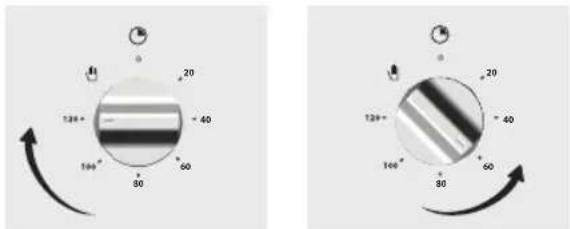
text_image
124° 100° 90 20 40 60 124° 100° 80 20 40 60The oven switches on.
USE
-
When the set cooking time has elapsed, a signal will sound and the oven will switch off automatically.
-
When finished, turn all oven knobs to position '0'.
Manual operation
-
Set an oven temperature and an oven function.
-
Turn the shut-off timer to manual operation.
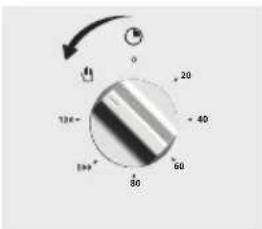
text_image
0 20 40 60 80 130° 190°The oven switches on.
-
Switch off the oven by turning the shut-off timer to the '0' setting.
-
When finished, turn all oven knobs to position '0'.
CLEANING
Cleaning the appliance
Clean your appliance regularly to prevent a build-up of grease and food particles, especially on interior and exterior surfaces, the door and door gasket.
- Clean the exterior surfaces with a soft cloth and soapy warm water.
- Wipe afterwards with a clean, damp cloth and dry the surfaces.
- Remove splashes and stains on the interior surfaces with a soapy cloth.
- Wipe afterwards with a clean, damp cloth and dry the surfaces.

Take care that no water enters the vents.
Never use abrasive cleaning agents or chemical solvents.
Ensure that the door gasket is always clean. This will prevent a build-up of dirt so that the door can close properly.
Removing the oven door

Keep your fingers away from the hinges of the oven door. The hinges are spring loaded and can cause injury if they spring back. Make sure that the hinge latches are applied correctly to lock the hinges.
- First, fully open the door (as far as it will go).
- Fold open the two locking levers on the left and right.
- Slowly close the door as far as the limit stop. With both hands, slightly lift the door and pull it out from both hinge beds on the appliance.

natural_image
Diagram showing a kitchen appliance with a side panel and a magnified inset of the interior (no text or symbols)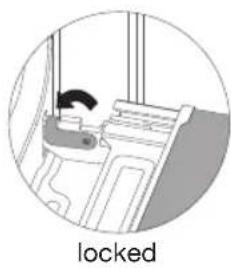
natural_image
Diagram of a locked door mechanism with no text or symbols- To replace the door repeat these actions in reverse. If the door does not open or close properly, make sure the hinges are positioned correctly in their slots.
CLEANING
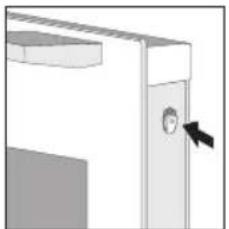
The glass in the oven door can be cleaned from the inside, but you do need to remove the glass from the door to do this. First remove the oven door.
- Press on the right and left side of the cover.
- Remove the cover. After removing the door cover, that rest parts of the appliance door can be easily taken off so that you can go on with the cleaning.
- When the cleaning of the appliance door has finished, replace the glass in the oven door in reverse order.
- Put the cover back in place and press on it until it clicks audibly into place.
natural_image
Simple line drawing of a door with a knob and arrow indicating direction (no text or symbols)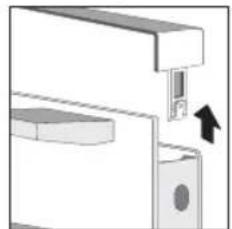
natural_image
Diagram of a door handle mechanism with an arrow indicating direction (no text or symbols present)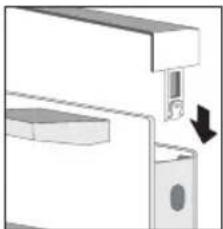
natural_image
Pure mechanical assembly diagram showing a bracket with a close-up detail and an arrow indicating direction (no text or symbols)Replacing the oven light bulb

The light bulb is a consumer item and therefore does not fall under the guarantee. Before replacing the light bulb, disconnect the appliance from electricity by unplugging it or switching off the fuse in the circuit breaker box!

The light bulb in this household appliance is designed exclusively for lighting this appliance. The light bulb is not suitable for lighting a household area.
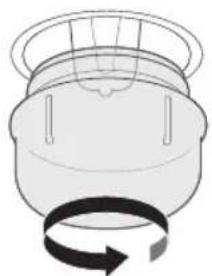
Replacing the light bulb
- Turn the cover to the left to remove it.
- Pull out the bulb from the fitting and replace it with a new original bulb.
natural_image
Simple line drawing of a mechanical component with a rotating arrow (no text or symbols)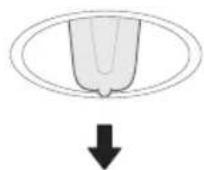

Please note: the light bulb can be very hot! Use protection to remove the light bulb.
General
Try the solutions below if you have problems with your oven. You could save yourself the time and effort of an unnecessary phone call to customer services.
The food stays raw.
- Check whether the timer has been set correctly.
- Check that the door is properly closed.
- Check that the electricity is working properly (fuse in the circuit breaker box/ plug in the socket).
The food is overcooked or undercooked.
- Check whether the correct oven function and temperature have been selected.
- Check that the correct cooking time has been set.
Condensation appears inside the oven.
- This is normal. Wipe the oven clean after use.
The fan continues to operate after the oven has been switched off.
- This is normal. The fan will keep working for a while after the oven has been switched off.
Air flow is detected around the door and outer casing.
- This is normal.
Steam escapes from around the door or vents.
- This is normal.
The main fuse in your home trips often.
- Consult a service technician.
Storing and repairing the oven.
- Repairs should only be performed by a qualified service technician. If maintenance is required, take the plug from the socket and contact the Etna customer service.
Have the following information at hand when you call:
- The model number and serial number (stated on the inside of the oven door)
- Warranty details
• A clear description of the problem
TROUBLESHOOTING

Choose a clean, dry place if you have to store the oven temporarily, as dust and moisture can damage the appliance.
TECHNICAL SPECIFICATIONS
| Model OM265RVS | |
| Power source 220-240 V ~ 50 Hz-60 HZ | |
| Energy consumption | |
| Lighting | 25 W |
| Defrost | 55 W |
| Large Grill + Fan | 2300 W |
| Large Grill | 2245 W |
| Grill | 1345 W |
| Top Heat + Bottom Heat + Fan | 1975 W |
| Top Heat + Bottom Heat | 1945 W |
| Bottom Heat | 1045 W |
| Cooling method Motor cooling fan | |
| Dimensions | |
| Appliance dimensions: | W 595 x H 596 x D 566 mm |
| Built-in dimensions: | W 560 x H 600 x D 550 mm |
| Volume 65 L |
Data determined according to standard EN 60350-1 and Commission Regulations (EU) No 65/2014 and (EU) No 66/2014.
| ETNA | |
| Model identification OM265RVS | |
| Energy Efficiency Index per cavity (EEI cavity) 95.9 | |
| Energy Efficiency Class per cavity A | |
| Energie consumption required to heat a standardised load in a cavity of an electric heated oven during a cycle in conventional mode per cavity (electric final energie / EC electric cavity | 0.83 kWh/cycle |
| Energie consumption required to heat a standardised load in a cavity of an electric heated oven during a cycle in fan-forced mode per cavity (electric final energie / EC electric cavity | 0.79 kWh/cycle |
| Number of cavities 1 | |
| Heat source per cavity Electricity | |
| Volume per cavity (V) 65 L | |
| Energy saving tipsDuring cooking, the oven door should remain closed except for turning food over.Do not open the door frequently during cooking to maintain the oven temperature and to save energy.If cooking time is more than 30 minutes, the oven may be switched off 5-10 minutes before the end of the cooking time to save energy. The residual heat will complete the cooking process.Plan oven use to avoid turning the oven off between cooking one item and the next to save energy and reduce the time for re-heating the oven.Wherever possible, cook more than one item at a time. | |
Disposal of the appliance and packaging
This product is made from sustainable materials. However, the appliance must be disposed of responsibly at the end of its useful life. The government can provide you with information about this.
The appliance packaging can be recycled. The following materials have been used:
- cardboard
• polyethylene wrap (PE)
• CFC-free polystyrene (hard PS foam)
Dispose of these materials responsibly in accordance with legal provisions.
text_image
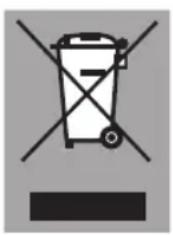
Prohibition sign with crossed-out trash bin and no text or symbolsThe product has a pictogram of a crossed-out waste container. This indicates that household appliances must be disposed of separately. This means that the appliance may not be processed via the regular waste flow at the end of its useful life. You should take it to a special municipal waste depot or a sales outlet that offers to do this for you.
Collecting household equipment separately prevents harm to the environment and public health. The materials used in manufacturing this appliance can be recycled, which provides considerable savings in energy and raw materials.

Declaration of conformity
We hereby declare that our products comply with the relevant European directives, standards and regulations as well as all requirements referred to in the standards.

The appliance identification card is located on the inside of the appliance.
When contacting the service department,
have the complete type number to hand.
You will find the addresses and phone numbers of the service organisation on the guarantee card.

text_image
Barcode image with black and white vertical bars, no visible text or symbols beyond the pattern858353