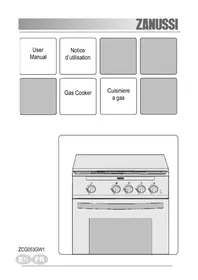
ZCG053GW1 - Cooker ZANUSSI - Free user manual and instructions
Find the device manual for free ZCG053GW1 ZANUSSI in PDF.


User questions about ZCG053GW1 ZANUSSI
0 question about this device. Answer the ones you know or ask your own.
Ask a new question about this device
Download the instructions for your Cooker in PDF format for free! Find your manual ZCG053GW1 - ZANUSSI and take your electronic device back in hand. On this page are published all the documents necessary for the use of your device. ZCG053GW1 by ZANUSSI.
USER MANUAL ZCG053GW1 ZANUSSI
Instructions for the User Instructions for the Installer
Important safety information 3 Technical features 15
Use and care 5 Advice for safety 16
Use of appliance 6 Connection to gas supply. 16
Using the Oven 6 Installation 17
Cooking in the Oven 7 Conversion of gas 18
Oven cooking 8
Mechanical timer 8
Using the hob 9
Selecting the correct burner 10
Accessories delivered with the appliance 10
Advice for use 11
Maintenance and cleaning 12
Something not working 14
How to read the instruction book?
The symbols below will guide you when reading the instruction book

Safety instructions
Description of operations step by step
Advice and recommendation
Information environment protection
Important safety information
It is most important that this instruction book should be retained with the appliance for future reference. Should the appliance be sold or transferred, always ensure that the book is left with the appliance in order that the new owner can get to know the functions of the appliance and the relevant warnings. These warnings are provided in the interest of safety. You MUST read them carefully before installing or using the appliance.
Installation
- Qualified personnel, according to the manufacturer's instructions and to the relevant Standards, must install this cooker.
- This cooker is heavy. Take care when moving it.
- A qualified electrician/competent person must carry out any electrical installation.
- Remove all packaging before using the cooker.
- This cooker must not be connected to a combustion products evacuation device. It shall be installed and connected in accordance with current installation regulations. Particular attention shall be given to the relevant requirements regarding ventilation.
- Ensure that the gas supply complies with the type stated on the rating plate, located near the gas supply pipe.
- Do not attempt to modify the cooker in any way.
Child Safety
- This cooker is designed to be operated by adults. Do not allow children to play near or with the cooker.
The cooker gets hot when it is in use. Children should be kept away until it has cooled.
Children can also injure themselves by pulling pans or pots off the cooker.
- This appliance is not intended for use by persons (including children) with reduced physical, sensory or mental capabilities, or lack of experience and knowledge, unless they have been given supervision or instruction concerning use of the appliance by a person responsible for their safety. Children should be supervised to ensure that they do not play with the appliance.
During Use
- This cooker is intended for domestic cooking only. It is not designed for commercial or industrial purposes.
- When in use a gas cooker will produce heat and moisture in the room in which it has been installed. Ensure there is a continuous air supply, by keeping air vents in good condition or installing a cooker hood with a venting hose.
- When using the cooker for a long period time, opening a window or increasing the extractor speed should improve the ventilation.
- Do not use this cooker if it is in contact with water. Do not operate the cooker with wet hands.
- The grill pan will become hot during use, always use oven gloves when removing or replacing a hot grill pan.
-
Ensure the control knobs are in the 'OFF' position when not in use.
-
When using other electrical appliances, ensure the cable does not come into contact with the hot surfaces of the cooker.
- Unstable or misshapen pans should not be used on the hob burners as unstable pans can cause an accident by tipping or spillage.
- Never leave the cooker unattended when cooking with oil and fat.
- Never pull the appliance by the oven handle.
- This cooker should be kept clean at all times. A build-up of fat or foodstuff could result in a fire.
- Never use steam or high-pressure appliances for cleaning the oven.
- Never use plastic dishes in the oven or on the hob burners. Never line any part of the oven with aluminium foil.
- Always ensure that the oven vent, which is located at the centre back of the hob, is left unobstructed to ensure ventilation of the oven cavity.
- Perishable food, plastic items and aerosols may be affected by heat and should not be stored above the cooker.
- The appliance is fitted with a lid: this is designed as a dust cover when closed, and as a splash back when open. Do not use for any other purpose.
Always remove any spillage from the surface of the lid before opening, and the appliance should be allowed to cool before closing the lid.
After using the cooker, the lid MUST NOT be closed until the hob and oven are completely cold.
Service
- This cooker should only be repaired or serviced by an authorized Service Engineer and only genuine approved spare parts should be used.

Environmental Information
After installation, please dispose of the packaging with due regard to safety and the environment.
- When disposing of an old appliance, make it unusable, by cutting off the cable.
on the product or on its
packaging indicates that this product may not be treated as household waste. Instead it should be taken to the appropriate collection point for the recycling of electrical and electronic equipment. By ensuring this product is disposed of correctly, you will help prevent potential negative consequences for the environment and human health, which could otherwise be caused by inappropriate waste handling of this product. For more detailed information about recycling of this product, please contact your local council, your household waste disposal service or the shop where you purchased the product.
Instructions for the user
Use and care
Control panel
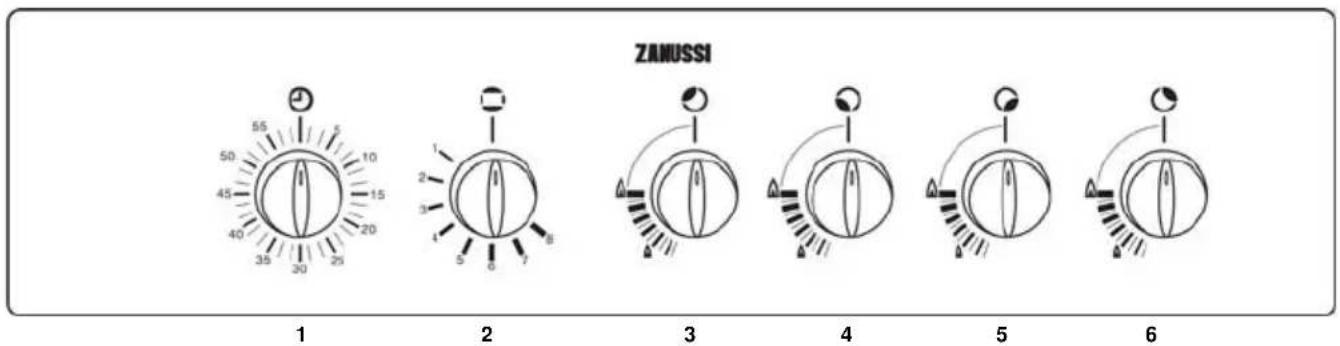
- Timer knob
- Oven burner control knob
-
Back left burner control knob
-
Front left burner control knob
- Front right burner control knob
- Back right burner control knob
Hob
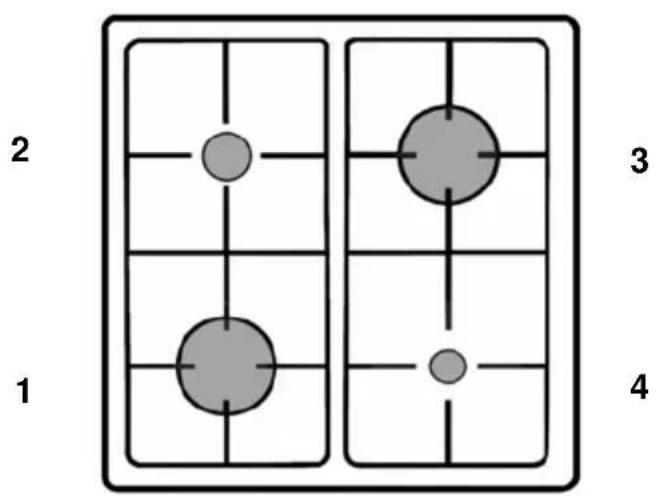
- Back left burner (semirapid)
-
Front left burner (rapid)
-
Front right burner (auxiliary)
- Back right burner (rapid)
Use of appliance
Before the First Use of the Cooker
Remove all packaging both inside and outside of the cooker, before using it. Before the first use ensure that the room is well ventilated: V.M.C. (Mechanic ventilation) or opened window.
Before first use, the oven should be heated without food. During this time, an unpleasant odour may be emitted. This is quite normal.
- Remove the oven accessories and ensure all packaging has been removed.
- Ignite the oven burner (see instructions) and turn the control knob to 8 (maximum).
- Open a window for ventilation.
- Allow the oven to run empty for approximately 45 minutes.
Using the Oven
The cooker gets hot when it is in use. Children should be kept away until it has cooled. Do not allow it to fall open - support the door using the door handle, until it is fully open. When using the oven the lid has to be opened to avoid overheating.
The oven has three shelf levels, and is supplied with one shelf. The shelf positions are counted from the bottom of the oven as shown in the diagram.
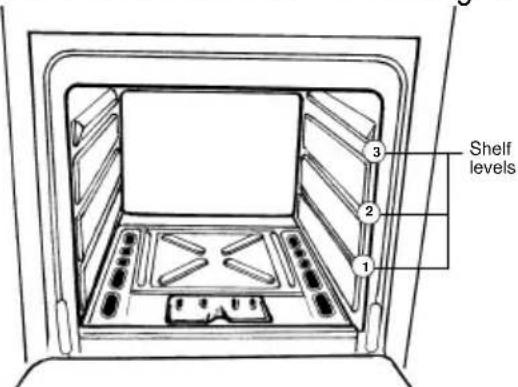
Do not place cookware or foil directly on the oven base.
Oven Safety device
The cooker features a thermocouple; if for any reason the flame should extinguish, the device will stop the gas flow.
Use
The oven can be used for traditional cooking. The symbol on the knob corresponds to the symbol on the control panel.
1 Off
8 Maximum
1 Minimum
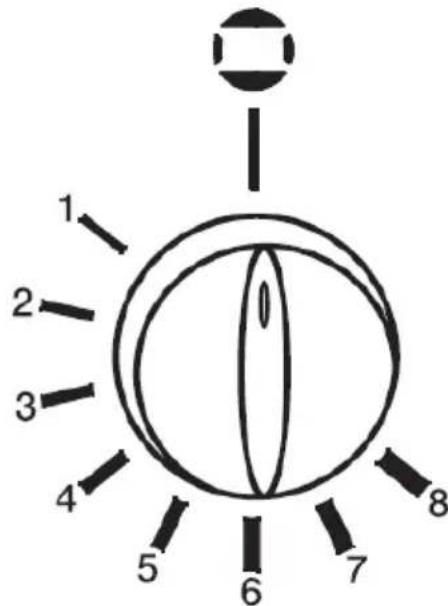
Ignition
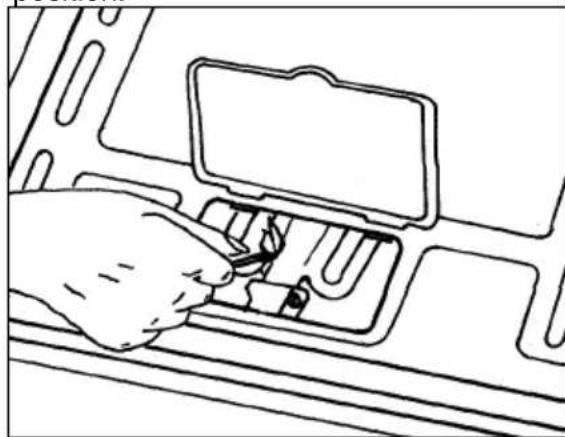
Attention: when turning on the oven burner the oven door has to be opened.
- Open the oven door,
- Lift the small lid on the bottom of the cavity
- Push and turn the control knob to the left to position 8, and hold a flame near the hole in the bottom;
- Release the knob after 10 seconds (until the safety valve automatically keeps the burner lit) and check that the burner is ignited through the holes in the burner cover. If for any reason the flame should extinguish turn control knob to the off position, after at least 1 minute, try to re-ignite the oven.
- Close the oven door
- Pre-heat the oven for 10 min. on maximum setting, than turn the knob to the desired position.

Extinguishing of oven burner
Do not place cookware or foil directly on the oven base.
Cooking in the Oven
Traditional cooking is made by natural convection; the heated air circulates on the principle of ascending and descending draughts. It is necessary to pre-heat the oven.
All cookers vary and it is important to be aware of the approximate cooking temperatures before you use the cooker.
The chart shows the gas mark temperatures together with the approximate equivalent temperatures in ^ C
It may be necessary to adjust the temperature to suit your individual requirements. Only experience will enable you to determine the correct setting for your personal requirements.
| Gas Mark Temperature ℃ | |
| 1 155°C | |
| 2 170°C | |
| 3 190°C | |
| 4 210°C | |
| 5 230°C | |
| 6 250°C | |
| 7 265°C | |
| 8 280°C | |
The data in the chart bellow are informative. Only experience will enable you to determine the correct setting for your personal requirements.
Observation: For preheating use the baking temperature indicated in the table, until the thermostat will switch off.
| Type of Cake or Pastry | Shelf position | Preheating min | Temperature °C | Time min. |
| Fatless sponge cake (in backing tray) | 2 10 170 | 15-25 | ||
| Fatless sponge cake, (in circular tray) | 2 10 170 | 30-40 | ||
| Yeast buns 2 10 210 20-30 | ||||
| Scones 2 10 210 45-50 | ||||
| Meringues 2 10 155 45-50 |
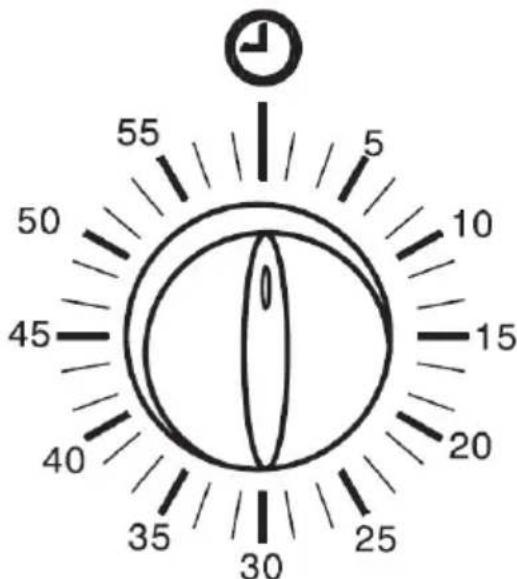
Mechanical timer
Turn the regulation knob clockwise to maximum position and then turn it back to the position corresponding to the period of time necessary for the cooking.
At the end of the time selected an acoustic signal intervenes which stops automatically.
The timer does not interrupt the operation of the oven upon action of the acoustic signal.
Using the Hob
The Hob Burners
The symbol on the knob corresponds to a symbol on the control panel (See description of appliance).
Each burner has a safety device. In case the flame dies out the safety device stops the gas supply.
1 Off
Maximum level
Minimum level
Use the maximum level for boiling and the minimum for simmering.
Always choose positions between the minimum and maximum, never between maximum and off.

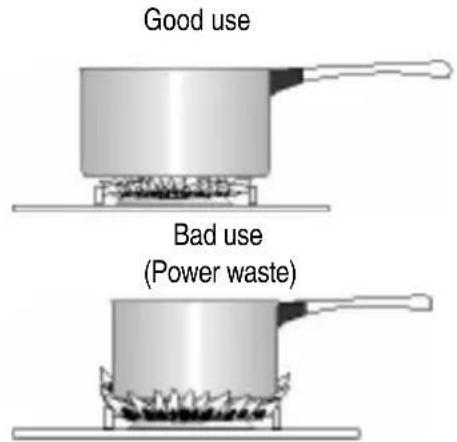
Warning: do not use cooking vessels bigger then the overlap its edges on the hotplate.

Ignition of the burners
-
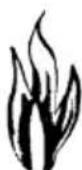
Push the corresponding knob in completely and turn it left to the symbol "large flame" symbol and ignite with a match.
-
Upon ignition, keep the knob pressed for approximately 10 seconds (until the safety valve automatically keeps the burner lit).
Upon ignition, adjust the flame as required.
If for any reason the flame should extinguish turn off the relevant control knob, leave for at least one minute and then re-ignite.
If after a few attempts the burner does not ignite, check that the burner ring and its cap are correctly positioned.

Extinguishing of burners
Do not put anything on the hob that is to melt. Always remove any edge from the surface of the lid before cutting, and the appliance should be used to cool before closing the lid. After the cooker, the lid MUST NOT be used until the hob and oven are gently cold.
Selecting the Correct burner
Above every knob there is a symbol for the corresponding burner.
For good cooking results, always choose pans, which correctly fit to the diameter of the burner used (see figs). Choose thick, flat bottom pots.
We recommend the flame is lowered as soon as the liquid starts boiling.
For a correct ignition always keep the burner ring and the spark plugs clean.
The following diameter pans can be used:
| Burner | Diameter (mm) |
| Rapid | min. |
| Semi-Rapid | min. 140 |
| Auxiliary | min. 120 |
It is forbidden to use pans with concave or convex bases on the hob.
Accessories delivered with the appliance
The following accessories are supplied with your appliance:
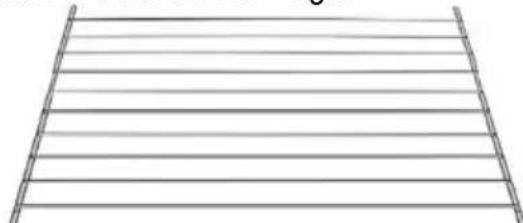
- shelf for placing dishes on
- The dish should be put in the middle of the shelf to balance the weight.
- a roasting tray
It is used to collect juice; when cooking in it, place it on the shelf 2 from low. If you do not use the roasting tray, remove it from the oven.
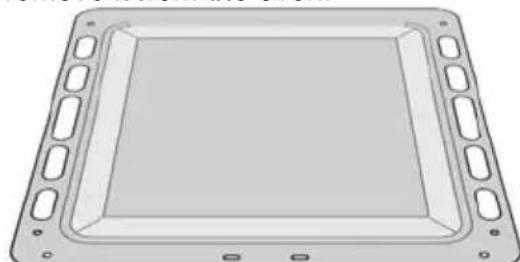
- a backing tray
Aluminized steel
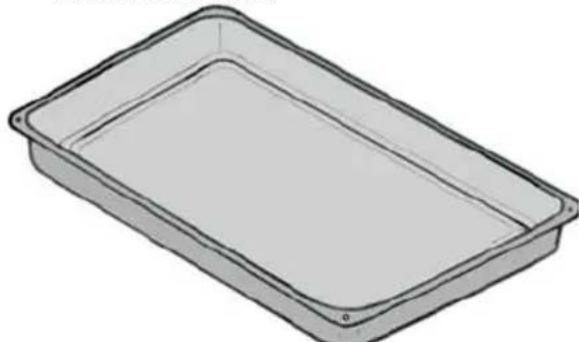
In addition to the accessories supplied we recommend you only use heatproof dishes/pans (according to the manufacturer's instructions).
Storage compartment
The storage compartment is located underneath the oven cavity.
During cooking the storage compartment may become hot if the oven is in use for a long period of time. Flammable materials such as oven gloves, tea towels, plastic aprons etc. should not be stored in the drawer.
Oven accessories such as baking sheets, will also become hot, therefore care should be taken when removing these items from the compartment whilst the oven is in use or still hot.
Advice for use
Oven cooking
- Turn off your oven 5 minutes before the foreseen cooking time you will save power, the accumulated heat will allow to end cooking;
- The thickness, the conductivity and the color of pot influences the culinary results;
- When cooking, certain dishes increase in volume, choose the pot so that above the raw mixture remain enough place;
- For preventing fat dripping when roasting use tall rim pans proportional to the piece to be roasted;
- Prick the skin of poultry and the sausage with a fork before cooking to avoid its blowing up;
- Between the dish and the oven grid could be put an aluminium foil but not covering all the grid;
- Use glass heat resisting pans for crispy and soufflés;
- Add some fat before finishing the cooking.
! Never line any part of the oven with aluminium foil. It would result in an accumulation of heat which might damage the cooking results and also damage the enamel.
The cover has to be opened when using the oven.
Influence of the pots on oven cooking results
You have to know that:
-
The aluminium, the terracotta pots diminish the browning bellow and maintains the humidity of the meals. We advice to use it for pastry, roast meat.
-
The enameled cast iron, the tinned pots, the glass and the heat-proof porcelain, the pots with non-sticky interior and colored exterior, increase the browning bellow and dries the meals. We suggest to use them for pies and all other crispy cooking that has to be colored bellow and above.
Cooking on the hob
Choose always the right pot, proportional to the burner used.
In case you use a large bottom pot, put it slight backwards on the plate, so that its bottom should not outrun the front of the enameled hob, thus avoiding flame exceeding and overheating of front panel.
Before covering make sure the hob is cooled, otherwise the cover could be damaged.
Maintenance and cleaning
The oven should be kept clean at all times. A build-up of fats or other foodstuffs could result in a fire, especially in the grill pan.
Before cleaning, ensure all control knobs are in the OFF position, and the appliance has cooled completely.
Before any maintenance or cleaning can be carried out, you must DISCONNECT the cooker from the electricity supply.
Cleaning materials
Before using any cleaning materials on your oven, check that they are suitable and that the manufacturer recommends their use.
Cleaners that contain bleach should NOT be used as they may dull the surface finishes. Do not use a steam cleaner for cleaner the oven and hobs. Harsh abrasives should also be avoided.
External cleaning
Regularly wipe over the control panel, oven door and door seal using a soft cloth well wrung out in warm water to which a little washing up liquid has been added.
In the case of stainless steel parts, you may use commercially available stainless steel cleaners with care. These also provide a protective film against finger marks.
To prevent damaging or weakening the door glass panels avoid the use of the following:
Household detergent and bleaches
- Impregnated pads unsuitable for non stick saucepans
- Brillo/Ajax pads or steel wool pads
Chemical oven pads or aerosols
Rustremovers
- Bath/Sink stain removers
Oven Cavity
The enamelled oven cavity is best cleaned whilst the oven is still warm.
Wipe the oven over with a soft cloth soaked in warm soapy water after each use. From time to time it will be necessary to do a more thorough cleaning, using a proprietary oven cleaner.
Hob
After every use wipe with a soft cloth well wrung out in warm water to which a little washing up liquid has been added, avoiding any leakage through the holes of the hob. Rinse and dry with a soft cloth.
To remove more stubborn stains, wet and leave to dissolve, do not scratch and avoid the use of abrasive or caustic products that could damage the enamel.
Burners
The burner caps and crowns can be removed for cleaning.
Wash the burners caps and crowns using hot soapy water, and remove marks with a mild paste cleaner. A well-moistened soap impregnated steel wool pad can be used with caution, if the marks are particularly difficult to remove.
After cleaning, be sure to wipe dry with a soft cloth.
Removing the Oven Door
- Open the door completely.
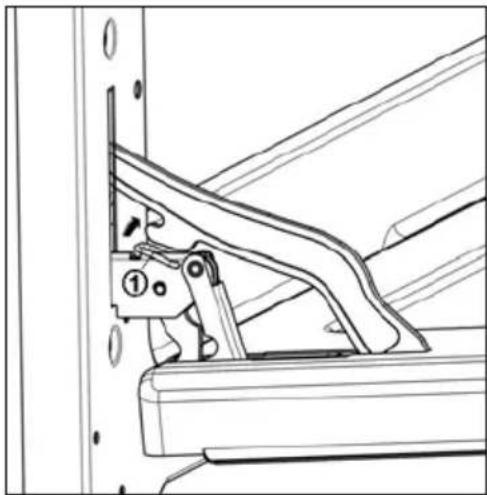
- Turn the two locking levers (1) on the hinge arms fully upwards.
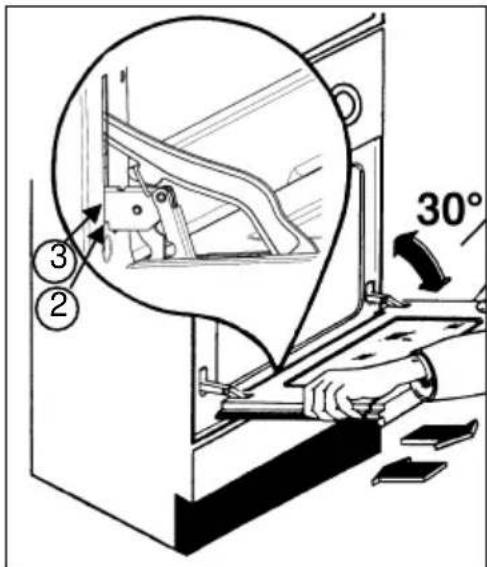
- Hold the oven door at the sides using both hands and close the door partially to a 30^ angle.
- Lift the door and pull out.
Hanging the Oven Door
- Hold the oven door at the sides using both hands and hold the door at an angle of approx 30^ .
- Introduce and then push the hinges into the cut-outs on the front of the oven, ensuring that the supports (2) of the hinge arms are correctly placed in the cut-outs (3) of the hinge support.
- Turn the locking levers (1) fully downwards.
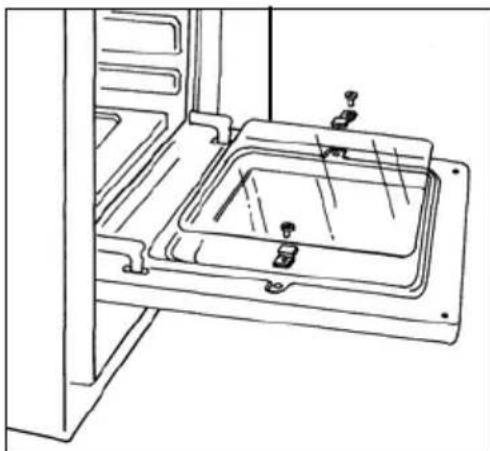
The internal oven door glass can be removed for cleaning. For this purpose remove the 2 fixing screws. Clean the outer and inner door glass using warm soapy water.
Always support the door while removing the glass panel as the door may spring closed due to its lighter weight.
DO NOT clean the oven door while the glass panels are warm. If this precaution is not observed the glass panel may shatter. If the door glass panel becomes chipped or has deep scratches, the glass will be weakened and must be replaced to prevent the possibility of the panel shattering. Contact your local Service Centre who will be pleased to advise further.
IMPORTANT: The inner door glass must be in place when using the oven.
Something not working
If the appliance is not working correctly, please carry out the following checks, before contacting your local Service Force Service Centre.
IMPORTANT: If you call out an engineer to a fault listed below, or to repair a fault caused by incorrect use or installation, a charge will be made even if the appliance is under guarantee.
| Symptoms Solutions | |
| 1. No burner ignition Check that: | ·Gas supply is completely open ·The position of gas pipe is correct ·The burner is not wet ·The burner cap and ring burner have been replaced correctly after cleaning |
| 2. The gas ring burns unevenly Check that: | ·The main jet is not blocked and the ring burner is clean of food particles ·The burner cap and ring burner have been replaced correctly after cleaning |
| 3. One of the oven or grill burners does not ignite | Check that: ·The burner is in its correct place ·The burner is not wet ·The control knob has been pressed for 10 seconds upon ignition |
| 4. Cooking results are not satisfactory Check that: | ·The correct temperature has been selected ·The cooking time is adapted ·The grill is placed correctly in the oven |
| 5. The oven smokes Check that: | ·The oven does not need cleaning ·The food does not spill over ·There is no excessive fat / juice on the oven sides |
If after these checks, the appliance still does not work, contact your local Service Force Centre.
When you contact the Service Centre, they will need the following information:
- Your name, address and post code.
- Clear and concise details of the fault
- The model and the serial number (see rating label)
- Date of purchase
Instructions for the installer
Technical features
Free standing Class 1
| ZCG053GW1 | |||
| Hob Lid | Painted Enamelled Auxiliary Rapid Rapid Semirapid | 1,00 (1,00/0,85) kW 2,50 (3,00/2,60) kW 2,50 (3,00/2,60) kW 2,00 (2,00/1,70) kW | |
| Pan support Front right burner Back right burner Front left burner Back left burner | |||
| Oven Oven | Gas Oven burner power Cleaning | 2,60 (2,60/2,30) kW Manual | |
| Accessories Shelf | Roasting tray Backing tray Storage compartment | ||
| Dimensions Height | 850±3 mm | ||
| Width | 545±3 mm | ||
| Depth | 545±3 mm | ||

This appliance complies with the following EEC Directives: 90/396 (Gas Appliance Directive) 93/68 (General Directives) and subsequent modifications.
Advice for safety
Gas connections
- Before installation ensure that the local distribution conditions (gas type and pressure) and the pre-setting of the appliance are consistent.
- This appliance must be installed only in a room with good ventilation.
- This appliance must not be installed to a chimney. It has to be installed and connected in accordance with the rules in force. Special attention should be paid to the applicable disposal concerning ventilation.
- The adjacent furniture panels have to be heat proof or protected by such material.
- The adjusting conditions of this appliance are mentioned on the rating plate.
Connection to gas supply.
Check that the gas flow and the diameter of the supply pipe is sufficient to supply all the appliances of the installation.
Gas connection must be carried out according to the rules in force.
The manufacturing company release the unit, once tested, adjusted for the kind of gas stated on the adjustment label located on the back of the range, next to connection pipe. Be sure that you are going to connect the unit to the same kind of gas written on the plate. Otherwise, follow all the instructions of the paragraph "Change of gas".
For best efficiency and lowest consumption, be sure that manifolds gas pressure respects the values in the table of "Specification nozzles".
Connection using a rigid pipe or a flexible metal pipe
To ensure higher safety, it is recommended to carry out the connection to the gas system using rigid pipes (ex. copper) or using flexible stainless steel pipes, to avoid any stress to the unit. Gas feeding pipe fitting is Gc 1/2.
For this type of installation, connection to the gas supply should be carried out using only and exclusively flexible metallic tubes in conformity with rules in force.
Connection using flexible, non metal pipes
When the connection can be easily inspected in its full extent, there is the chance to use a flexible pipe according to the rules in force.
The flexible pipe should be made ready for use in such a way that:
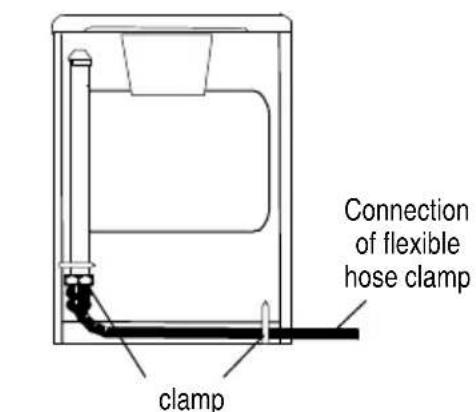
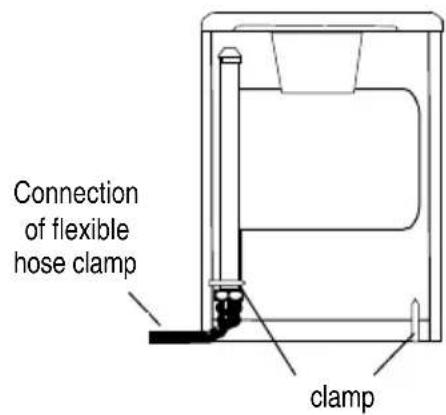
- nowhere it can reach over temperature, other than room temperature, higher than 30^ ; if the flexible pipe, to reach the cock, must run behind the range, it must be installed as shown.
- it is no longer than 1500mm
- it shows no throttles;
- it is not subject to traction or torsion;
- it doesn't get in touch with cutting edges or corners;
- it can be easily inspected in order to check its condition.
Important
Once installation is complete, check the perfect seal of every pipe fitting, using a soapy solution, never a flame.
Ensure that the rubber hose is not in contact with any part of the back of the cookers as is in the figure and that the loop of the hose when connected is not in contact with the floor when the appliance is in position.
Installation
Positioning
Remove all the packaging and install the cooker in a dry, ventilated room not near curtains, paper, alcohol, petrol etc.
The cooker should be placed only on the floor, but not on the base.
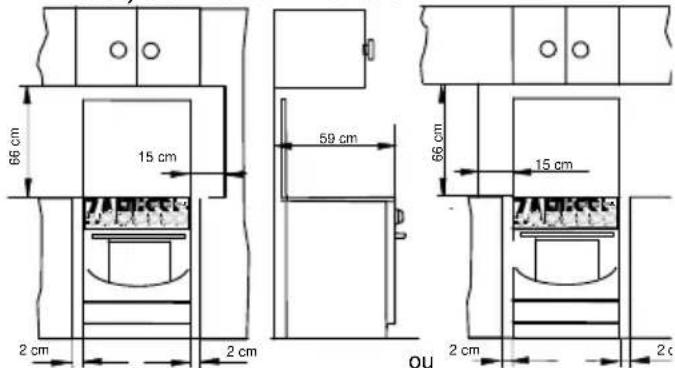
This appliance is approved to class "1" regarding overheating of surrounding surfaces.
It is mandatory to keep 2cm distance to the adjacent furniture.
Ventilation
Gas combustion is possible due to the oxygen in the air (2 m³ air/h x kW installed power - check the rating panel of the cooker).
It is necessary to renew the air and that the combustion products be discharged.
This appliance is not connected to a combustion products evacuation device. It shall be installed and connected in accordance with current installation regulations. Particular attention shall be given to the relevant requirements regarding ventilation.
The use of gas cooking appliance results in the production of heat and moisture in the room in which it is installed. Ensure that the kitchen is well ventilated; keep natural ventilation holes open or install a mechanical ventilation device (mechanical extract hood).
Prolonged intensive use of the appliance may call for additional ventilation, for example opening of a window, for example increasing the level of mechanical ventilation where present.
Gas connection must be carried out according to the rules in force.
Conversion of gas
Your cooker is designed to work with natural gas, and is convertible for use with propane or butane.
For changing the gas type it is necessary to:
- replace the nozzles (hob and oven);
- adjust the minimum level (hob and oven);
- adjust the air regulation (oven);
- check the gas connection;
The LPG conversion kit is available from your Service Force Centre and must be fitted by an authorised Service Engineer.
Replace the nozzles of the hob burners
Before any modifications or adapt the range to a kind of different gas, ensure that all control knobs are in the OFF position, and the appliance has cooled completely.

Hob burners
- Remove the pan supports;
- Remove the caps and the burner crowns;
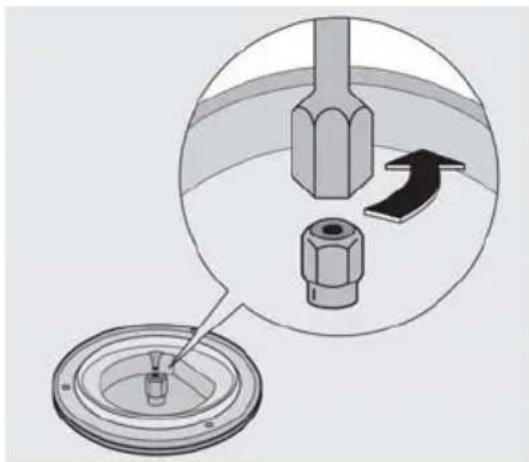
- Using a No 7 socket spanner unscrew the nozzles and replace them with those required for the type of gas in use (see table no. 1).
Reassemble the parts following the same procedure in reverse.
These burners do not need any primary air regulation.
Adjustment of minimum level for the hob burners
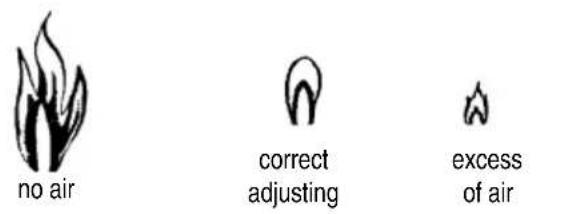
The burner is correctly adjusted when the flame is stable silent and goes out without any noise. When changing the type of gas check that the minimum level is correct. The air admission is correct when the flame is about 4mm in length. The top burners do not need adjustment of primary air.
Check that, turning the knob quickly from the maximum position to the minimum one, the flame does not go out.
Stick the label supplied with the conversion kit (in the nozzles bag) corresponding to the gas type utilized.
no air

correct adjusting

excess of air

Hob burners
To adjust the minimum level:
Light the burner
- Turn the knob to the position of the minimum flame;
- Remove the knob:
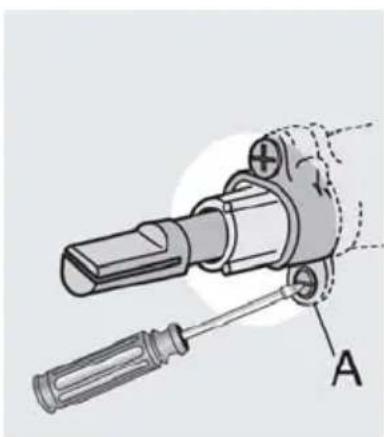
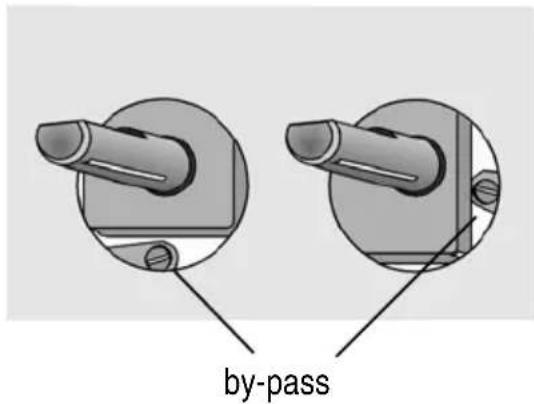
- Unscrew or screw the by-pass screw (on the right above of tap shaft or below of tap shaft) until a regular small flame is reached.
- For LPG screw completely the by-pass screw.
Reassemble the parts following the same procedure in reverse.
Check that, when turning the knob quickly from the maximum position to the minimum one, the flame does not go out.

Oven burner
To replace the gas oven nozzle, follow this procedure:
- Check the table no.1 for diameter of nozzle:
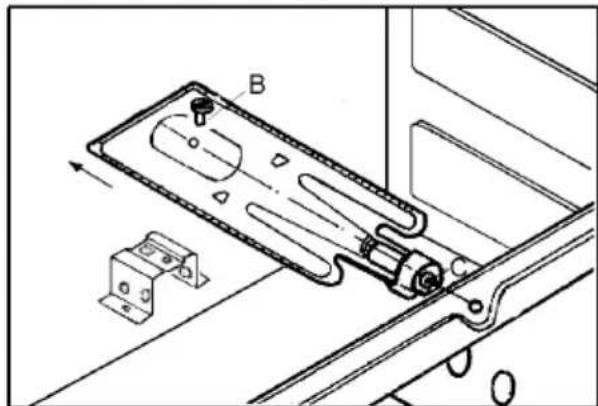
- Remove the oven removable base panel A:
- Remove the screw B on the oven burner;
- Remove the oven burner by pushing it backwards.
- Replace the nozzle "C" by means of a No 10 socket spanner;
Reassemble the parts following the same procedure in reverse.

Flame adjustment

Oven burner
The burner is correctly adjusted when the flame is stable, silent and goes out without any noise.
- When the flames are too short, the nozzle is whistling or the flames have the tendency to detach from the burner, it means that there is too much air in the valve. If there is too much air there is a risk that the flames will extinguish.
- But, if the flames are too long, soft, lighting, there is not enough air in the valves. These flames discolour the bottom of pans.
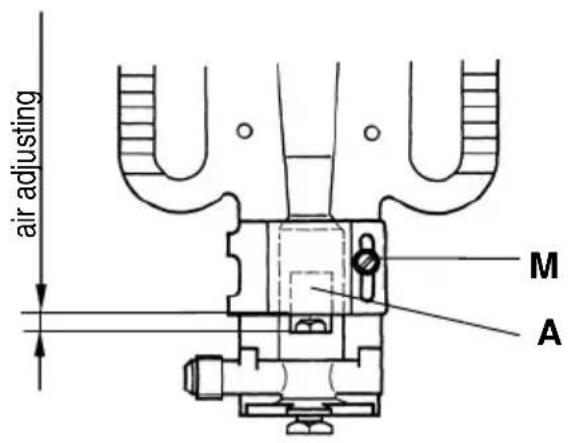
Loosen the fixing screw M. - Move the air adjuster A forward or backward until achieving the right mixture;
- Tighten the fixing screw M.
Adjustment of minimum level

Oven burner
- Remove the top pan support as well as the burner caps and the burner crowns.
Light the burner knob in the maximum position and leave the oven door closed for about 10 mins. - Turn the knob slowly to the minimum position.
- Pull off the knob to adjust minimum flow.
- Unscrew or screw the by-pass screw until a regular small flame is reached.
- For LPG completely tighten the by-pass screw.
The flame shouldn't extinguish when closing the oven door.