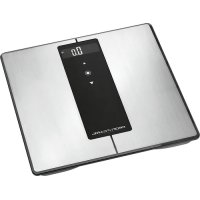
PCPW 3008 BT - Scale ProfiCare - Free user manual and instructions
Find the device manual for free PCPW 3008 BT ProfiCare in PDF.


| Product Type | Bluetooth connected impedance meter scale |
| Model | PCPW 3008 BT |
| Brand | ProfiCare |
| Power Supply | 3 AAA batteries (LR03) 1.5 V |
| Net weight of the device | Approximately 1.7 kg |
| Maximum weighing capacity | 180 kg (396.8 lb / 28 st:3½ lb) |
| Weighing accuracy | 100 g (0.2 lb / ¼ st) |
| Measurement units | kg, lb, st:lb |
| Body fat measurement range | 5% – 85% (accuracy 0.1%) |
| Body water measurement range | 7% – 75% (accuracy 0.1%) |
| Muscle mass measurement range | 13% – 82% |
| Bone mass measurement range | 0.5 kg – 8 kg |
| Calculated functions | BMR (basal metabolic rate), BMI, biological age, visceral fat |
| User memory | 10 slots |
| Connectivity | Bluetooth 4.1, range 15 m |
| Compatible app | Dr. Curve+ (iOS 8.0+, Android 4.4+) |
| User height range | 80 – 220 cm (2'7½" – 7'2½") |
| User age range | 6 – 100 years |
| Operating temperature | 0 °C – 40 °C |
| Operating relative humidity | < 85% |
| Maintenance and cleaning | Clean with a slightly damp cloth; do not immerse |
| Safety | Do not use if you have a pacemaker; do not jump; max weight 180 kg |
| Spare parts and repairability | No user-serviceable parts; contact a qualified technician |
Frequently Asked Questions - PCPW 3008 BT ProfiCare
User questions about PCPW 3008 BT ProfiCare
0 question about this device. Answer the ones you know or ask your own.
Ask a new question about this device
Download the instructions for your Scale in PDF format for free! Find your manual PCPW 3008 BT - ProfiCare and take your electronic device back in hand. On this page are published all the documents necessary for the use of your device. PCPW 3008 BT by ProfiCare.
USER MANUAL PCPW 3008 BT ProfiCare
natural_image
Digital fitness meter with digital display showing 0.0 seconds (no text or symbols on device body)Thank you for choosing our product. We hope you enjoy using the appliance.
Symbols in these Instruction Manual
Important information for your safety is specially marked. It is essential to comply with these instructions in order to avoid accidents and prevent damage to the appliance:

WARNING:
This warns you of dangers to your health and indicates possible injury risks.

CAUTION:
This refers to possible hazards to the appliance or other objects.

NOTE: This highlights tips and information.
Contents
Overview of the Components....3
General Notes......39
Special Safety Instructions for this Appliance....39 Handling of Batteries....40
Inserting the Batteries....40
Overview of the Components....40
Technical Data 40
Bluetooth 41
Notice of Directive Conformity 41
Information about the Analysis Scale ....41
Information about Bluetooth....41
Information on the App "Dr. Curve+" 41
System Requirement for Use of the App ....41
Initial Use with the App....41
Use....42
Weighing Function....42
Saving Personal Data 42
Measurement and Analysis....42
Assessment of the Results....43
Body Fat 43
The Importance of Water for our Health 43
Body Fat Percentage Guidelines (Approx. Figures).....43
Benchmarks for Body Water Level and
Muscle Mass Level in Percent (Approx. Figures)......43
Benchmarks for Bone Weight
in Kilogram (Approx. Figures) 43
BMR (Basal Metabolic Rate/Energy Expenditure) ..... 43
Reference Values of the Daily Intake of
Kilocalories without Physical Activities....44
BMI (Body Mass Index)......44
Reference Values for the BMI 44
Visceral Fat Percentage Guidelines (Approx. Figures) ... 44
Display Error Messages....44
Cleaning....44
Disposal 44
Disposal of Batteries 44
Meaning of the "Dustbin" Symbol....44
General Notes
Read the operating instructions carefully before putting the appliance into operation and keep the instructions including the warranty, the receipt and, if possible, the box with the internal packing. If you give this appliance to other people, please also pass on the operating instructions.
- The appliance is designed exclusively for private and not for commercial use.
- Only use the appliance for the intended purpose.
- Do not use a damaged appliance.
- Keep away from heat, direct sunlight, damp (never immerse in liquids) and sharp edges.
- Do not try to repair the appliance on your own. Always contact an authorized technician.
• Children should be supervised at all times in order to ensure that they do not play with the appliance. - In order to ensure your children's safety, please keep all packaging (plastic bags, boxes, polystyrene etc.) out of their reach.

WARNING:
Do not allow small children to play with the foil. There is a danger of suffocation!
Special Safety Instructions for this Appliance

WARNING:
If the weighing surface is damp or if there are water drops on it, first wipe it dry, as there is a risk of slipping.

CAUTION:
- Handle the balance with care, as it is a precise measuring instrument. Do not drop it or jump on it.
- Do not load the appliance with more than 180 kg (396.8 lb, 28: 3½ st:lb) to avoid damaging the appliance.
- If the scales are carried or not going to be used, please store them only in a horizontal position.
- The body fat analysis scale is not suitable for the following persons:
- Children under 6 years and adults over 100 years
- Persons with symptoms of fever, oedema, or osteoporosis
- Persons undergoing treatment for dialysis
- Persons who use a pacemaker
- Persons who take cardiovascular medication
-
Pregnant women
-
Sportspersons who perform over 5 hours of intensive sporting activities each day
- Persons with a heartbeat lower than 60 beats / minute
- Persons with considerable anatomic deviations of the legs in relation to total body size (length of the legs considerably shortened or lengthened).
Handling of Batteries

Do not charge!

Do not disassemble!

Insert correctly!

Do not short circuit!

Danger of explosion! Do not expose batteries to intense heat, such as sunlight, fire or similar.
Inserting the Batteries
(Batteries not included)
- Open the battery compartment on the underside.
- Insert 3 batteries of type AAA / R03. Please ensure that the polarity is correct (see the loor of the battery compartment)!
- Close the battery compartment again.
- If the message "Lappears on the display, replace the batteries.
Overview of the Components
1 Display
2 button
3 button
4 button
5 Contact surfaces
Underside (not shown)
Battery compartment
| Display Indications | Meaning |
| P0 - P9 User memory space | |
| [17A7] | Male |
| [8Y32] | Female |
| cm (ft:in) Body height | |
| age Age | |
| kg (lb / st:lb) Body weight | |
| fat Body fat display | |
 | Muscle mass display |
| TBW Body water display | |
| [25AY] | Bone weight display |
| % | Percentage - body fat / body water / muscle mass |
| KCAL | Basal metabolic rate of the daily energy requirement in kilocalories (BMR) |
| BMI Body Mass Index | |
| [19C8] | Visceral fat display (organ fat) |
| body age Biological age | |
 | Bluetooth connection with app successful |
Technical Data
Model: PC-PW 3008 BT
Power supply:....3 Batteries 1.5 V Type "AAA" / "R03"
Net weight of appliance:......approx. 1.7 kg
Memory capacity:....10
Mass alignment:....from 80 to 220 cm (2'7 1/2" - 7'2 1/2" ft:in)
Age: from 6 to 100 years
Minimum weight:....from 5.0 kg (11.0 lb / 0: 11 st:lb)
Maximum weight: 180 kg (396.8 lb/28: 3½st:lb)
Weight measurement unit:.... 100g (0.2 lb/¼st:lb) increments
Body fat measurement unit: 0.1%
Body fluid graduation: 0.1%
Recommended operating environment:
Temperature: 0 °C - 40 °C / 32 °F - 104°F
Relative air humidity:....<85%
Body fat measuring range: 5% - 85%
Body water measuring range: 7% - 75%
Muscle mass measuring range: 13% - 82%
Bone weight measuring range: 0.5 kg - 8 kg
Bluetooth
Bluetooth support: V4.1
Maximum radio-frequency power transmitted: 2.5 mW
Range: approx. 15 metres
Transmission frequency: 2.4 GHz
The right to make technical and design modifications in the course of continuous product development remains reserved.
Notice of Directive Conformity
Hereby, Clatronic International GmbH declares that the radio equipment type PC-PW 3008 BT is in compliance with Directive 2014 / 53 / EU.
Furthermore, the appliance is in compliance with the requirements of the RoHS directive 2011 / 65 / EC.
The full text of the EU declaration of conformity is available at the following internet address: www.sli24.de
In the "Download" area, please enter the model name PC-PW 3008 BT.
Tested for operation in Great Britain.
Information about the Analysis Scale

WARNING:
Do not use the scales if you use a pacemaker or another medical implant with electronic components. The function of the implant may be impaired by the measurement.
The main principle of this appliance is based on the measurement of the electric impedance within the human body. In order to determine the actual body data, the appliance leads a weak, unnoticeable electric signal through your body.
The signal is generally safe! However, please read our special safety instructions!
The method of measurement is referred to as “bioelectric impedance analysis” (BIA), a factor which is based on the relationship between body weight and associated body water percentages as well as on other biological data (age, gender, body weight).
Information about Bluetooth
Bluetooth is a technology for remote wireless connection of devices over a short distance. Devices with Bluetooth Standard transmit in the ISM-Band (Industrial, Scientific and Medical) between 2.402 and 2.480 GHz. Interference may be caused e.g. by WLAN networks, DAB radios, cordless phones, or microwave ovens that operate in the same frequency range.
These scales offer you the possibility of sending the calculated data via Bluetooth to your smartphone or tablet PC. More information can be found in the next section (Information on the App "Dr. Curve+").
Due to the many different device manufacturers, models, and software versions, full functionality cannot be guaranteed.
Information on the App "Dr. Curve+"
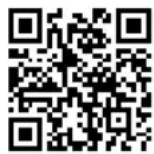
The Dr.Curve+ app is available for android and iOS. Scan the corresponding QR code to get directly to the download.

NOTE:
Depending on the provider, there may be costs involved in downloading the app.
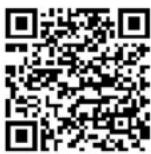
Google Play App Store
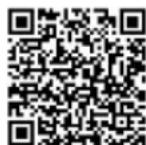
In addition, the link to download the app can be also found on our web site:
System Requirement for Use of the App
- iOS 8.0 or higher + Bluetooth 4.0 or higher
• Android 4.4 or higher + Bluetooth 4.0 or higher
Initial Use with the App
- Install the app "Dr. Curve+" from the corresponding App Store / Google Play.
- Activate Bluetooth in the settings of your appliance.
- Enter your user details in the app.
- Then select "Body fat scale" in the app.
- Turn the appliance on by using the 📄 button.

NOTE:
- In order to connect to the scale, the app on the smartphone must be opened.
- The appliance only connects to the app once it has been turned on via the @button.
- Ensure that your user is selected.
-
Make sure that the same measuring and weight unit is entered in the app and scale.
-
The symbol appears on the display once the scale is connected to the app.
- Perform the measurement as described at item 2 in section "Use Measurement and Analysis".
Use

NOTE:
- The buttons are sensor touch buttons. Touch the buttons lightly with a finger to execute the function.
- The scales are factory set with the units "kg" and "cm".
To change the settings to "lb" or "st:lb" as well as "ft:in", proceed as follows:
- Turn on the scales by light pressure with the foot onto the weighing surface.
- Press the ▼ or button repeatedly until the desired weight unit is displayed. The unit for the height also automatically changes.
Weighing Function
- Place the scale on a hard, flat surface (avoid carpets). An uneven floor contributes to inaccurate measurements.
- Stand on the scales with both feet. The appliance switches on automatically.
- Distribute your weight equally and wait for the scale to determine your weight.
- The digits on the display will flash before your exact weight will be shown.
- In order to extend the battery life, the appliance will automatically turn off 15 seconds after you have stepped off the scale.
- If there is no weight determination while "0.0" is shown, the scale will shut off automatically after 15 seconds.
Saving Personal Data

NOTE:
- The scale has default values that you can change, as described below.
- Carry out the following steps in sequence and within a few seconds. Otherwise, the appliance will automatically cancel input mode.
-
Holding one of the buttons (▲/▼) pressed for approx. 2 seconds selects fast mode.
-
Press the button ●The memory location selected last flashes on the display (for example P0). Confirm the setting by pressing ●or select another memory space by pressing the ▲/▼ button. Then press ●to go to the next setting.
- The symbol for "male" or "female" will flash. Confirm the setting by pressing Ⓞ or use the ▲/▼ button to choose the symbol for your gender. Then press Ⓡ to go to the next setting.
- The height setting will flash. Select your height by pressing ▲ or ▼ button. Confirm your entry by pressing Ⓞ.
-
The setting age will flash. Select your age by pressing ▲ or ▼button. Confirm your entry by pressing ⚙
-
The short display “--” will terminate the entry mode for this memory location. Then you will see the memory location, the symbol of the gender and the weight “0.0 kg” (0.0 lb / 0: 00 st:lb) in the display.
You now have the following options:
- Press the button repeatedly to display the settings again or to change them.
- You can set further preset locations. Proceed as described above.
- You can immediately start measuring.
Measurement and Analysis
Record your personal data in the memory.

NOTE:
- The analysis scale will only work correctly when you are standing on the contact surfaces barefoot and with slightly moistened foot soles, if possible. Completely dry foot soles can lead to unsatisfactory results as they have a conductivity that is too low.
- If necessary wipe the contact surfaces to improve results.
- Due to the significant fluctuation of body fat, it is difficult to attain a standard value. Therefore, to obtain consistent data, always measure at the same time of day.
-
Amongst other things, our body consists of body fat, body water, muscle mass and bone weight. The obtained values may differ due to individual water retention within these main components. This is normal and highly dependent on nutrition and lifestyle.
-
Press the ⬤ button. Use the ▲/▼ button to select the stored position at which your data is saved. The location flashes for approx. 3 seconds. Then you will see the memory location, the symbol of the gender and the weight "0.0 kg" (0.0 lb / 0: 00 st:lb) in the display.
- Stand on the contact surfaces (5) of the scales with both feet.
- Firstly your weight will flash on the display. The analysis starts after the display has stopped flashing. You'll see a treadmill "cod" in the display during the analysis. Remain on the scales until the last display (body age) has appeared.
The following results are displayed one after the other:
- The weight in the previously selected unit (kg / lb / st:lb)
- The body fat proportion in % (fat)
- The proportion of body fluid % (TBW)
- The proportion of muscle mass in % (♀)
- The bone weight in kg ( ⚙ )
- The basal metabolic rate of the daily energy requirement in KCAL
- The Body Mass Index (BMI)
- The visceral fat (♀)
- The biological age (body age)
Assessment of the Results
There are heavy persons with a well-balanced percentage between fat and muscle mass, and there are seemingly slim persons with significantly high body fat values. Fat is a factor that puts serious strain on the body, in particular the cardiovascular system. Therefore, controlling both values (fat and weight) is a prerequisite for health and fitness.
Body Fat
Body fat is an important component of the body. From protecting the joints as a vitamin repository to regulating the body temperature, fat plays a vital role in the body. Thus the goal is not to radically reduce the proportion of body fat, but rather to achieve and maintain a healthy balance between muscle and fat.
The Importance of Water for our Health
Approximately fifty-five to sixty percent of the human body consist of water, depending on age and gender in varying amounts.
Water has to fulfill several tasks within the body:
- It is the building block of our cells. That means that all the cells in our body, whether skin cells, gland cells, muscle cells, brain cells or others, are functional only if they contain enough water.
- It is a solvent for important substances in our body.
- It is a means of conveyance for nutrients, the body's own substances and metabolic products.
Reference values for your fitness profile can be seen in the benchmark table. It shows the dependency of body fat data on age and gender. Always pay attention to your body's water balance, which, as well as the fat level, undergoes strong fluctuations throughout the day. Therefore, to obtain consistent data, always measure at the same time of day.
The calculated results of the body fat and water level should only be considered as reference values. They are not recommended to be used for medical purposes. Please always consult a doctor if you have questions about a medical treatment or a diet in order to achieve a normal body weight.
Body Fat Percentage Guidelines (Approx. Figures)
| Age (Years) | Women Men | |||||||
| Underweight | Normal Overweight | Obese | Underweight | Normal Overweight | Obese | |||
| 6-39<21 | 21~33 | 33~39 | >39<88~19 | 19~25>25 | ||||
| 40-59 | <23 | 23~35 | 35~40 | >40 | <11 | 11~22 | 22~28 | >28 |
| 60-100 | <24 | 24~36 | 36~42 | <13 | 13~25 | 25~30>30 | ||
Benchmarks for Body Water Level and Muscle Mass Level in Percent (Approx. Figures)
| Age (Years) | Women | Men | ||||||
| Body Water | Muscle mass | Body Water | Muscle mass | |||||
| Low | Normal | High | Low | Normal | High | |||
| 6-15 | <57 | 57-67 | >67 | >34 | <5858-72 | >72 | >40 | |
| 16-30 | <47 | 47-57 | >57 | <53 | 53-67 | >67 | ||
| 31-60 | <42 | 42-52 | >52 | <47 | 47-61 | >61 | ||
| 61-100 | <37 | 37-47 | >47 | <42 | 42-56 | >56 | ||
Benchmarks for Bone Weight in Kilogram (Approx. Figures)
| Women | Men | |||||
| Body weight | <45 | 45-60 | >60 | <60 | 60-75 | >75 |
| Bone weight | -2,6 | -3,2 | -8 | -3,4 | -3,8 | -8 |
BMR (Basal Metabolic Rate / Energy Expenditure)
The Basal Metabolic Rate (BMR) characterizes the energy expenditure. The energy expenditure is used to describe the amount of energy in KCAL that the body requires per day during complete rest, at an indifference temperature (28 - 30 °C)
and on an empty stomach for the maintenance of its function (e.g. while sleeping).
Reference Values of the Daily Intake of Kilocalories without Physical Activities
| Age(Years) | Women Men | |||
| Weight (kg) | KCAL Weight (kg) KCAL | |||
| 6-1750 | 1265 60 1620 | |||
| 18-2955 | 1298 65 1560 | |||
| 30-4960 | 1416 70 1680 | |||
| 50-6960 | 1302 70 1561 | |||
| 70-10050 | 1035 65 1397 | |||
BMI (Body Mass Index)
The Body Mass Index (BMI) refers the body weight to the square of the body height.
BMI = Weight in kg: (body height in m x body height in m)
Example:
A woman weighs 55 kg and is 1.68 m tall. Her BMI is calculated as follows:
55 kg : (1.68 m x 1.68 m) ≈ 19.5 kg / m³ Normal weight
The value "square of the body height" is in no relation to the body surface. The BMI is merely a rough reference value, as it neither considers the build and gender, nor the individual composition of the body mass from the fat and muscle tissue of a human.
Reference Values for the BMI
| BMI | Underweight | Normal Overweight Obese | |
| <18.5 18.5 | -27 30 - 39>40 | ||
Please note that the interpretation of the BMI indicates excess weight with very muscular bodies (bodybuilder). The reason for this is that the far above-average muscle mass is not considered in the BMI formula.
Visceral Fat Percentage Guidelines (Approx. Figures)
| Visceral fat | Normal | Somewhat too high | Too high |
| <9 | 10-14 | >15 |
Display Error Messages
i NOTE:
If an error message appears on the display, wait until the appliance is turned off. Turn it on again to restart the operation. If the error display has not disappeared, take the batteries out of the battery compartment for 10 seconds.
| Display Indications | Meaning |
| Self test (after inserting the batteries) for perfect functioning of the display | |
| Lo | Battery is low |
| Err2 | The percentage of body fat content lies above or below the limits of the measuring scale |
| Err | The weight lies above the allowed maximum weight. |
Cleaning

CAUTION:
-
Do not immerse the balance in water: the electronic components can be damaged.
• Do not use a wire brush or any abrasive items.
• Do not use any acidic or abrasive detergents. -
Clean the appliance with a slightly moist cloth. Make sure that no humidity or waters seeps into the appliance!
• Use a commercially sold detergent or soap for cleaning. - Dry the appliance well after cleaning with a dry and soft cloth.
Disposal
Disposal of Batteries
Your appliance contains batteries. If these batteries are spent, follow the instructions below:

CAUTION:
Batteries / rechargeable batteries must not be disposed of with household waste!
• The batteries must be removed from the appliance.
• Take spent batteries to the appropriate collection point or to a dealer.
- Your town or local authority can provide information about public collection points.
Meaning of the "Dustbin" Symbol
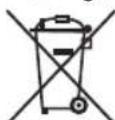
Protect our environment: do not dispose of electrical equipment in the domestic waste.
Please return any electrical equipment that you will no longer use to the collection points provided for their disposal.
This helps avoid the potential effects of incorrect disposal on the environment and human health.
This will contribute to the recycling and other forms of reutilisation of electrical and electronic equipment.
Information concerning where the equipment can be disposed of can be obtained from your local authority.
Instrukcja obsługi
CTC Clatronic Sp. zo.o.
Ul. Brzeska 1
45 - 960 Opole
Usuwanie
Usuwanie baterii
- Symbols in these Instruction Manual
- WARNING:
- CAUTION:
- Contents
- General Notes
- Special Safety Instructions for this Appliance
- Handling of Batteries
- Inserting the Batteries
- Overview of the Components
- Technical Data
- Bluetooth
- Notice of Directive Conformity
- Information about the Analysis Scale
- Information about Bluetooth
- Information on the App "Dr. Curve+"
- NOTE:
- System Requirement for Use of the App
- Initial Use with the App
- Use
- Weighing Function
- Saving Personal Data
- Measurement and Analysis
- Assessment of the Results
- Body Fat
- The Importance of Water for our Health
- BMR (Basal Metabolic Rate / Energy Expenditure)
- BMI (Body Mass Index)
- Example:
- Display Error Messages
- i NOTE:
- Cleaning
- Disposal
- Disposal of Batteries
- Meaning of the "Dustbin" Symbol
- Instrukcja obsługi
- Usuwanie
- Usuwanie baterii
Brand : ProfiCare
Model : PCPW 3008 BT
Category : Scale