HUSQVARNA 439 - Saw

439 - Saw HUSQVARNA - Free user manual and instructions

Find the device manual for free 439 HUSQVARNA in PDF.

📄 320 pages English EN Download 💬 AI Question 10 questions ⚙️ Specs
Notice HUSQVARNA 439 - page 4
Pick your language and provide your email: we'll send you a specifically translated version.
Product Type Gasoline Chainsaw
Brand Husqvarna
Model 439
Displacement 35.2 cm³
Power 1.5 kW at 10,000 rpm
Fuel Tank Capacity 0.30 L
Chain Oil Tank Capacity 0.20 L
Weight (without bar and chain) 3.9 kg
Standard Bar Length 14 inches (35 cm)
Chain Pitch 3/8 inch
Maximum Chain Speed 24.8 m/s
Guaranteed Sound Power Level 114 dB(A)
Sound Pressure Level at Ear 100 dB(A)
Vibration Front Handle 4.9 m/s²
Vibration Rear Handle 4.1 m/s²
Safety Inertia and manual chain brake, throttle lock, chain catcher
Anti-Vibration System Damping blocks between engine and handles
Oil Pump Adjustable, flow 3-9 ml/min at 8000 rpm
Maintenance Regular cleaning of air filter, spark plug, cooling system; chain sharpening
Spare Parts Bar, chain, spark plug, air filter available at authorized dealer

Frequently Asked Questions - 439 HUSQVARNA

How to start the Husqvarna 439 chainsaw?
Engage the chain brake, pump the primer bulb 6 times. For a cold engine, set the choke to closed position. Pull the cord slowly until resistance, then pull sharply. As soon as the engine coughs, push the choke back and pull again.
What fuel to use for the Husqvarna 439?
Mixture of unleaded gasoline with minimum octane 90 and HUSQVARNA two-stroke oil at 2% (1:50) or other JASO FB/ISO EGB oil at 3% (1:33). Do not use outboard motor oil.
How to adjust chain tension?
Loosen the bar nuts, lift the bar nose, turn the tensioner screw clockwise until the chain no longer sags. Tighten the nuts while keeping the nose raised. Check that the chain rotates freely by hand.
When should the chain be sharpened?
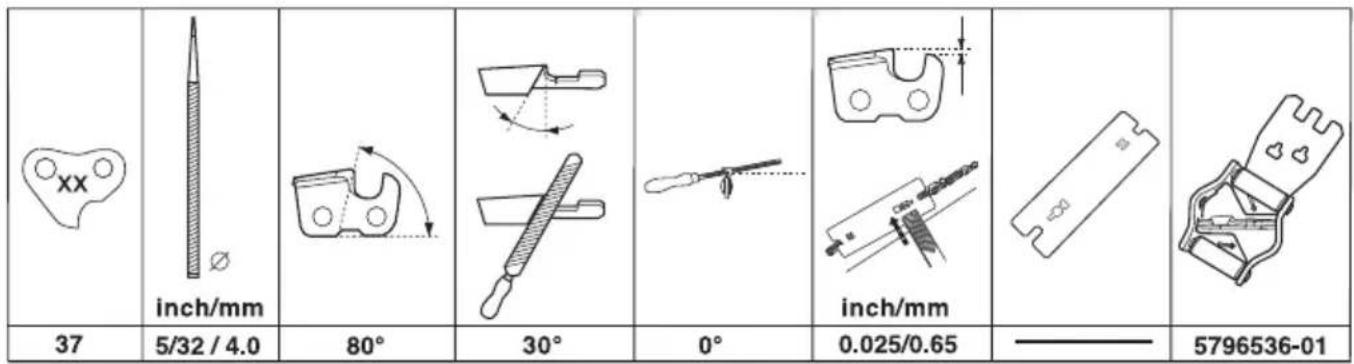
As soon as the chips become very small or powdery, or if you have to force the saw. Use a suitable round file and sharpening gauge. Maintain the correct sharpening angle (30° for the Husqvarna 437).
How to check chain lubrication?
Point the bar nose towards a clear surface 20 cm away for 1 minute at 3/4 throttle. An oil streak should appear. If not, clean the oil channel and the bar groove.
What does kickback mean and how to avoid it?
Kickback is a violent reaction when the bar nose touches an object. To avoid it, never cut with the upper quarter of the nose, hold the chainsaw firmly with both hands, and use a low-kickback chain.
What is the recommended daily maintenance?
Clean the exterior, check the chain brake, chain tension, oil and fuel levels, and the general condition of the cutting equipment.
How to use the chainsaw in winter?
Use a blue air guide plate (part no. 584 89 40-01) and open the air filter grommet to the 'Snow' position. Below -5°C, mount the special cover (part no. 584 89 47-01) on the starter.
Which oils are recommended for the chain?
Use HUSQVARNA biodegradable chain oil or a mineral oil suitable for the ambient temperature. Never use used oil, it will damage the pump and the bar.
How to replace the starter rope?
Remove the starter, pull 30 cm of rope out of the pulley, release spring tension by turning the pulley backwards. Remove the center screw, replace the rope, wind 3 turns, then reassemble by tensioning the spring two turns.

User questions about 439 HUSQVARNA

0 question about this device. Answer the ones you know or ask your own.

Ask a new question about this device

The email remains private: it is only used to notify you if someone responds to your question.

No questions yet. Be the first to ask one.

Download the instructions for your Saw in PDF format for free! Find your manual 439 - HUSQVARNA and take your electronic device back in hand. On this page are published all the documents necessary for the use of your device. 439 by HUSQVARNA.

USER MANUAL 439 HUSQVARNA

natural_image Simple line drawing of an open book enclosed in a circle (no text or symbols)

GB (2-38)

DE (39-79)

FR(80-120)

NL(121-160)

ES (161-201)

PT(202-242)

IT(243-280)

SI (281-317)

Please read the operator's manual carefully and make sure you understand the instructions before using the machine. Lesen Sie die Bedienungsanweisung sorgfältig durch und machen Sie sich mit dem Inhalt vertraut, bevor Sie das Gerät benutzen.
Lire attentivement et bien assimiler le manuel d'utilisation avant d'utiliser la machine.
Neem de gebruiksaanwijzing grondig door en gebruik de machine niet voor u alles duidelijk heeft begrepen.
Prima di usare la macchina, leggere per intero le istruzioni per l'uso e accertarsi di averne compreso il contenuto,
Lea detenidamente el manual de instrucciones y asegúrese de entender su contenido antes de utilizar la máquina.
Leia as instruções para o uso com toda a atenção e compreenda o seu conteúdo antes de fazer uso da máquina.
Natančno preberite navodila za uporabo in se prepričajte, da ste jih razumeli, predno začnete z uporabo stroja.

Symbols on the machine:

WARNING! Chain saws can be dangerous! Careless or incorrect use can result in serious or fatal injury to the operator or others.

Please read the operator's manual carefully and make sure you understand the instructions before using the machine.

Always wear:

• Approved protective helmet
• Approved hearing protection
- Protective goggles or a visor

This product is in accordance with applicable EC directives.

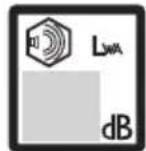
Noise emission to the environment according to the European Community's Directive. The machine's emission is specified in the Technical data chapter and on the label.


HUSQVARNA 439 - Symbols on the machine: - 1

HUSQVARNA 439 - Symbols on the machine: - 2

HUSQVARNA 439 - Symbols on the machine: - 3

HUSQVARNA 439 - Symbols on the machine: - 4

HUSQVARNA 439 - Symbols on the machine: - 5

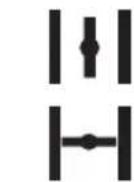
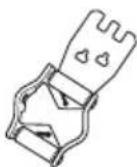
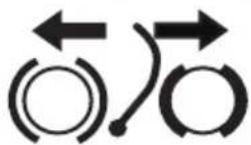
Chain brake, activated (right) Chain brake, not activated (left)

Choke lever in "open position".

Choke lever in "closed position".

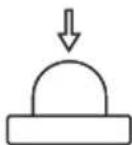
Air purge.

Refuelling.

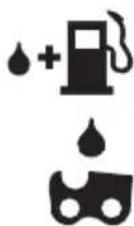
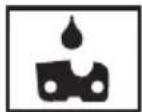
Chain oil fill.

Adjustment of the oil pump.
HUSQVARNA 439 - Symbols on the machine: - 6

HUSQVARNA 439 - Symbols on the machine: - 7

HUSQVARNA 439 - Symbols on the machine: - 8

HUSQVARNA 439 - Symbols on the machine: - 9

HUSQVARNA 439 - Symbols on the machine: - 10

Other symbols/decals on the machine refer to special certification requirements for certain markets.

Symbols in the operator's manual:

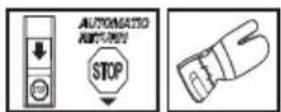
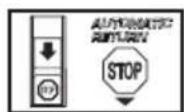
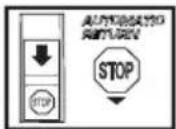
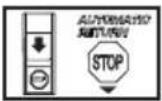
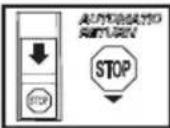
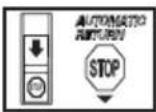
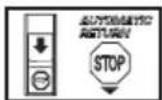
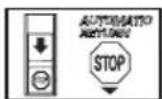
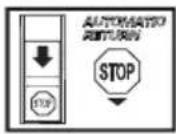
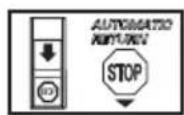
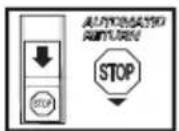
Switch off the engine by moving the stop switch to the STOP position before carrying out any checks or maintenance. CAUTION! The start/stop switch automatically returns to run position. In order to prevent unintentional starting, the spark plug cap must be removed from the spark plug when assembling, checking and/or performing maintenance.
HUSQVARNA 439 - Symbols in the operator's manual: - 1

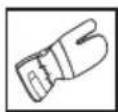
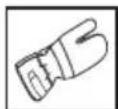
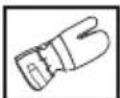
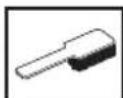
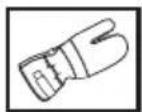
Always wear approved protective gloves.

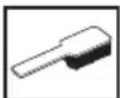
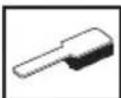
Regular cleaning is required.

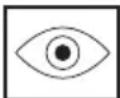
Visual check.

Protective goggles or a visor must be worn.

Refuelling.

Filling with oil and adjusting oil flow.

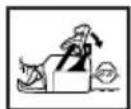
The chain brake must be engaged when the chain saw is started.

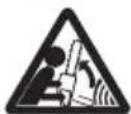
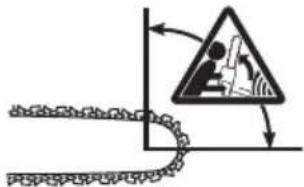
WARNING! Kickback may occur when the nose or tip of the guide bar touches an object, and cause a lightning fast reverse reaction, kicking the guide bar up and towards the operator. May cause serious personal injury.
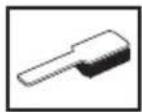
HUSQVARNA 439 - Symbols in the operator's manual: - 2

HUSQVARNA 439 - Symbols in the operator's manual: - 3

HUSQVARNA 439 - Symbols in the operator's manual: - 4

HUSQVARNA 439 - Symbols in the operator's manual: - 5

HUSQVARNA 439 - Symbols in the operator's manual: - 6

HUSQVARNA 439 - Symbols in the operator's manual: - 7

HUSQVARNA 439 - Symbols in the operator's manual: - 8

HUSQVARNA 439 - Symbols in the operator's manual: - 9

CONTENTS

Contents

KEY TO SYMBOLS

Symbols on the machine: 2

Symbols in the operator's manual: 2

CONTENTS

Contents 3

INTRODUCTION

Dear Customer, 4

WHAT IS WHAT?

What is what on the chain saw? 5

GENERAL SAFETY PRECAUTIONS

Before using a new chain saw 6

Important 6

Always use common sense 7

Personal protective equipment 7

Machine's safety equipment 7

Cutting equipment 10

ASSEMBLY

Fitting the bar and chain 16

FUEL HANDLING

Fuel 17

Fueling 18

Fuel safety 18

STARTING AND STOPPING

Starting and stopping 19

WORKING TECHNIQUES

Before use: 21

General working instructions 21

How to avoid kickback 27

MAINTENANCE

General 28

Carburettor adjustment 28

Checking, maintaining and servicing chain saw safety equipment 29

Muffler 31

Starter 32

Air filter 33

Spark plug 34

Lubricating the bar tip sprocket 34

Adjustment of the oil pump. 34

Cooling system 34

"Air Injection" centrifugal cleaning 35

Winter use 35

Maintenance schedule 36

TECHNICAL DATA

Technical data 37

Guide bar and saw chain combinations 38

Saw chain filing and file gauges 38

EC Declaration of Conformity 38

INTRODUCTION

Dear Customer,

Congratulations on your choice to buy a Husqvarna product! Husqvarna is based on a tradition that dates back to 1689, when the Swedish King Karl XI ordered the construction of a factory on the banks of the Husqvarna River, for production of muskets. The location was logical, since water power was harnessed from the Huskvarna River to create the water-powered plant. During the more than 300 years in existence, the Husqvarna factory has produced a lot of different products, from wood stoves to modern kitchen appliances, sewing machines, bicycles, motorcycles etc. In 1956, the first motor driven lawn mowers appeared, followed by chain saws in 1959, and it is within this area Husqvarna is working today.

Today Husqvarna is one of the leading manufacturers in the world of forest and garden products, with quality as our highest priority. The business concept is to develop, manufacture and market motor-driven products for forestry and gardening, as well as for the building and construction industry. Husqvarnás aim is also to be at the front edge for ergonomics, usability, security and environmental protection. That is the reason why we have developed many different features to add to our products within these areas.

We are convinced that you will appreciate with great satisfaction the quality and performance of our product for a very long time to come. The purchase of one of our products gives you access to professional help with repairs and service whenever this may be necessary. If the retailer who sells your machine is not one of our authorised dealers, ask for the address of your nearest service workshop.

It is our wish that you will be satisfied with your product and that it will be your companion for a long time. Think of this operator's manual as a valuable document. By following its content (usage, service, maintenance, etc), the life span and the second-hand value of the machine can be extended. If you sell this machine, make sure that the operator's manual is passed on to the buyer.

Thank you for using a Husqvarna product.

Husqvarna AB has a policy of continuous product development and therefore reserves the right to modify the design and appearance of products without prior notice.

WHAT IS WHAT?
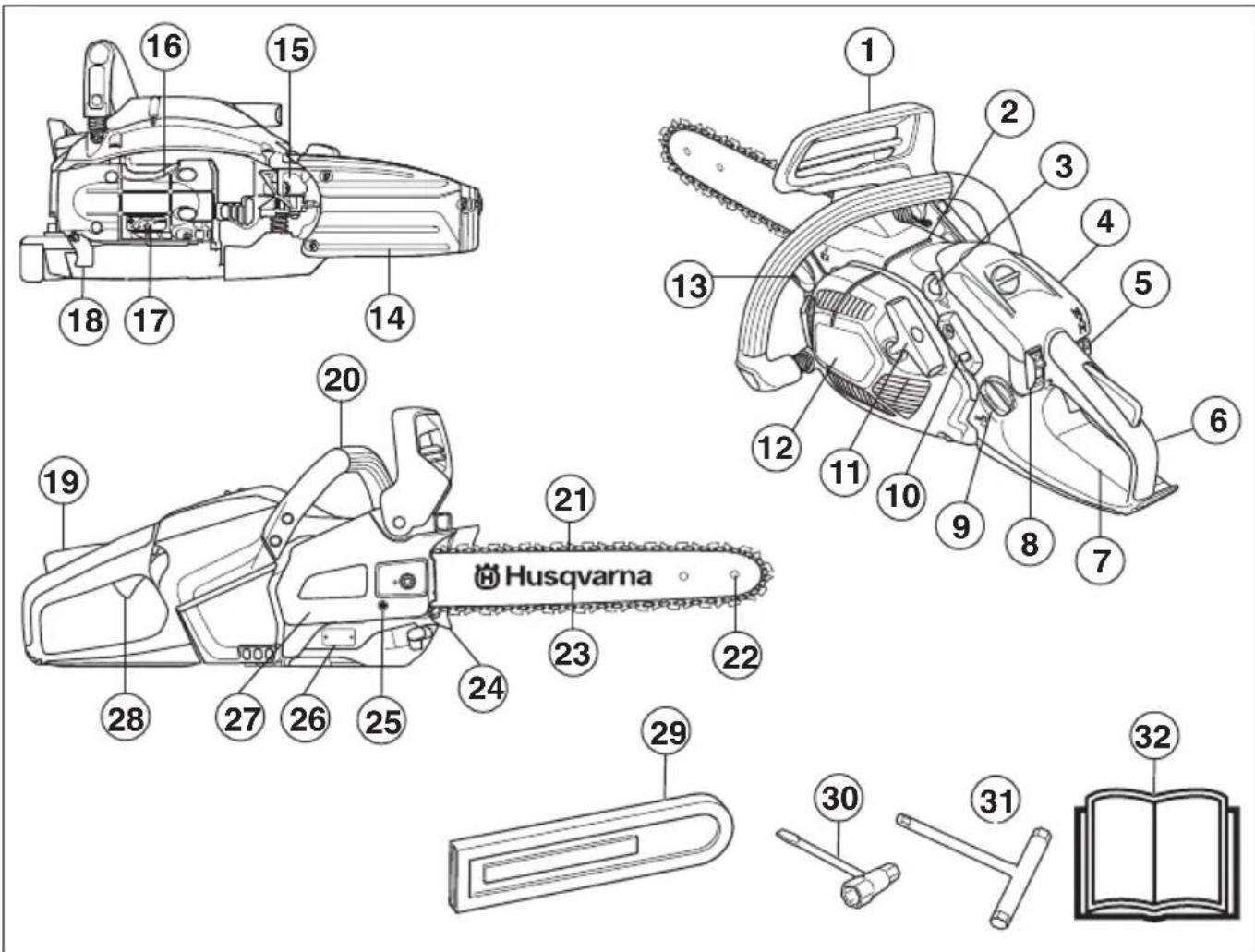
HUSQVARNA 439 - WHAT IS WHAT? - 1

text_image 16 15 18 17 14 20 19 28 27 26 25 24 23 22 21 Husqvarna 1 2 3 4 5 6 7 8 9 10 11 12 13 14 15 16 29 30 31 32

What is what on the chain saw?

1 Chain brake and front hand guard
2 Felling direction mark
3 Air purge
4 Air filter cover
5 Choke control
6 Rear handle with right hand guard
7 Information and warning decal
8 Stop switch
9 Fuel tank
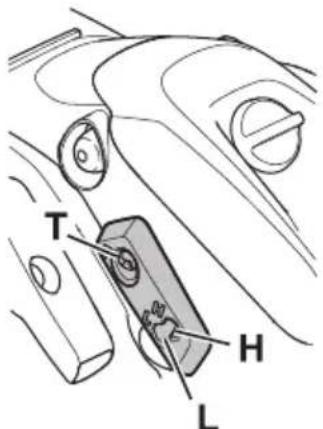
10 Adjuster screws carburettor
11 Starter handle
12 Starter
13 Chain oil tank
14 Rear handle cover
15 Spark plug cap
16 Muffler

17 Oil pump adjustment screw
18 Chain catcher
19 Throttle lockout
20 Front handle
21 Saw chain
22 Bar tip sprocket
23 Guide bar
24 Spike bumper
25 Chain tensioning screw
26 Product and serial number plate
27 Clutch cover
28 Throttle trigger
29 Guide bar cover
30 Combination spanner
31 Box spanner
32 Operator's manual

Before using a new chain saw

  • Please read this manual carefully.
  • Check that the cutting equipment is correctly fitted and adjusted. See instructions under the heading Assembly.
  • Refuel and start the chain saw. See the instructions under the headings Fuel Handling and Starting and Stopping.
  • Do not use the chain saw until sufficient chain oil has reached the chain. See instructions under the heading Lubricating cutting equipment.
  • Long-term exposure to noise can result in permanent hearing impairment. So always use approved hearing protection.

HUSQVARNA 439 - Before using a new chain saw - 1

WARNING! Under no circumstances may the design of the machine be modified without the permission of the manufacturer. Always use original accessories. Non-authorized modifications and/or accessories can result in serious personal injury or the death of the operator or others.

HUSQVARNA 439 - Before using a new chain saw - 2

WARNING! A chain saw is a dangerous tool if used carelessly or incorrectly and can cause serious, even fatal injuries. It is very important that you read and understand the contents of this operator's manual.

HUSQVARNA 439 - Before using a new chain saw - 3

WARNING! The inside of the muffler contain chemicals that may be carcinogenic. Avoid contact with these elements in the event of a damaged muffler.

HUSQVARNA 439 - Before using a new chain saw - 4

WARNING! Long term inhalation of the engine's exhaust fumes, chain oil mist and dust from sawdust can represent a health risk.

HUSQVARNA 439 - Before using a new chain saw - 5

WARNING! This machine produces an electromagnetic field during operation. This field may under some circumstances interfere with active or passive medical implants. To reduce the risk of serious or fatal injury, we recommend persons with medical implants to consult their physician and the medical implant manufacturer before operating this machine.

HUSQVARNA 439 - Before using a new chain saw - 6

WARNING! Never allow children to use or be in the vicinity of the machine. As the machine is equipped with a spring-loaded stop switch and can be started by low speed and force on the starter handle, even small children under some circumstances can produce the force necessary to start the machine. This can mean a risk of serious personal injury. Therefore remove the spark plug cap when the machine is not under close supervision.

Important

IMPORTANT!

This chain saw for forest service is designed for forest work such as felling, limbing and cutting.

National regulation can restrict the use of the machine.

You should only use the saw with the bar and chain combinations we recommend in the chapter Technical data.

Never use the machine if you are fatigued, while under the influence of alcohol or drugs, medication or anything that could affect your vision, alertness, coordination or judgement.

Wear personal protective equipment. See instructions under the "Personal protective equipment" heading.

Do not modify this product or use it if it appears to have been modified by others.

Never use a machine that is faulty. Carry out the safety checks, maintenance and service instructions described in this manual. Some maintenance and service measures must be carried out by trained and qualified specialists. See instructions under the Maintenance heading.

Never use any accessories other than those recommended in this manual. See instructions under the headings Cutting equipment and Technical data.

CAUTION! Always wear protective glasses or a face visor to reduce the risk of injury from thrown objects. A chain saw is capable of throwing objects, such as wood chips, small pieces of wood, etc, at great force. This can result in serious injury, especially to the eyes.

HUSQVARNA 439 - IMPORTANT! - 1

WARNING! Running an engine in a confined or badly ventilated area can result in death due to asphyxiation or carbon monoxide poisoning.

HUSQVARNA 439 - IMPORTANT! - 2

WARNING! Faulty cutting equipment or the wrong combination of bar and saw chain increases the risk of kickback! Only use the bar/saw chain combinations we recommend, and follow the filing instructions. See instructions under the heading Technical data.

GENERAL SAFETY PRECAUTIONS

Always use common sense

It is not possible to cover every conceivable situation you can face when using a chain saw. Always exercise care and use your common sense. Avoid all situations which you consider to be beyond your capability. If you still feel uncertain about operating procedures after reading these instructions, you should consult an expert before continuing. Do not hesitate to contact your dealer or us if you have any questions about the use of the chain saw. We will willingly be of service and provide you with advice as well as help you to use your chain saw both efficiently and safely. Attend a training course in chain saw usage if possible. Your dealer, forestry school or your library can provide information about which training materials and courses are available.
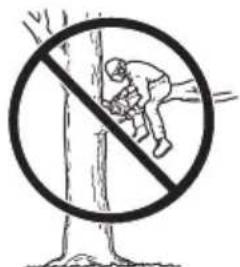
HUSQVARNA 439 - Always use common sense - 1

text_image Safety warning symbol showing a person falling off a tree with a no-smoking circle

Work is constantly in progress to improve the design and technology - improvements that increase your safety and efficiency. Visit your dealer regularly to see whether you can benefit from new features that have been introduced.

Personal protective equipment

HUSQVARNA 439 - Personal protective equipment - 1

WARNING! Most chain saw accidents happen when the chain touches the operator. You must use approved personal protective equipment whenever you use the machine. Personal protective equipment cannot eliminate the risk of injury but it will reduce the degree of injury if an accident does happen. Ask your dealer for help in choosing the right equipment.
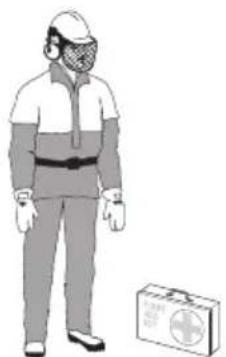
HUSQVARNA 439 - Personal protective equipment - 2

natural_image Illustration of a person wearing protective gear and a first aid kit (no text or symbols)

Always wear:

• Approved protective helmet
- Hearing protection
- Protective goggles or a visor
• Gloves with saw protection

• Trousers with saw protection
• Boots with saw protection, steel toe-cap and non-slip sole
• Always have a first aid kit nearby.
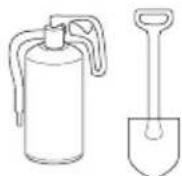
• Fire Extinguisher and Shovel
HUSQVARNA 439 - Personal protective equipment - 3

Generally clothes should be close-fitting without restricting your freedom of movement.

IMPORTANT! Sparks can come from the muffler, the bar and chain or other sources. Always have fire extinguishing tools available if you should need them. Help prevent forest fires.

Machine's safety equipment

In this section the machine's safety features and their function are explained. For inspection and maintenance see instructions under the heading Checking, maintaining and servicing chain saw safety equipment. See instructions under the heading, What is what?, to find where these parts are located on your machine.

The life span of the machine can be reduced and the risk of accidents can increase if machine maintenance is not carried out correctly and if service and/or repairs are not carried out professionally. If you need further information please contact your nearest service workshop.

HUSQVARNA 439 - Machine's safety equipment - 1

WARNING! Never use a machine with defective safety components. Safety equipment must be inspected and maintained. See instructions under the heading Checking, maintaining and servicing chain saw safety equipment. If your machine does not pass all the checks, take the saw to a servicing dealer for repair.

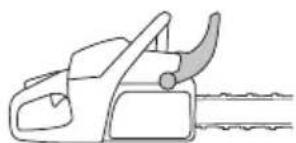
Chain brake and front hand guard

Your chain saw is equipped with a chain brake that is designed to stop the chain if you get a kickback. The chain brake reduces the risk of accidents, but only you can prevent them.
HUSQVARNA 439 - Chain brake and front hand guard - 1

natural_image Line drawing of a manual chain saw (no text or symbols)

GENERAL SAFETY PRECAUTIONS

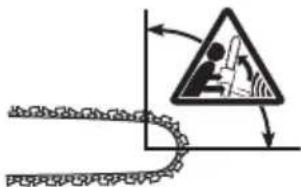
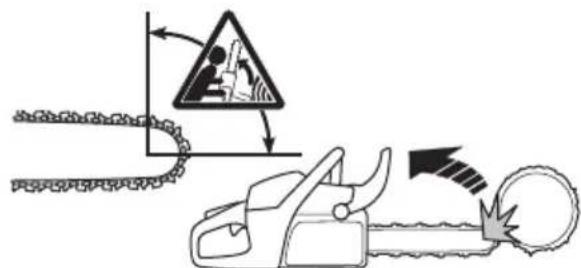
Take care when using your saw and make sure the kickback zone of the bar never touches any object.
HUSQVARNA 439 - GENERAL SAFETY PRECAUTIONS - 1

text_image Diagram illustrating a hazard warning with a person falling off a slope, showing a triangular hazard symbol and an arrow indicating direction.

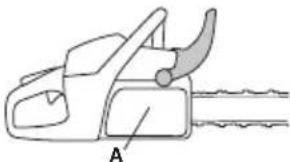
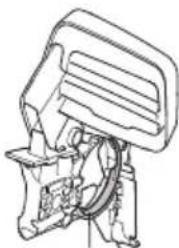
- The chain brake (A) can either be activated manually (by your left hand) or automatically by the inertia release mechanism.
HUSQVARNA 439 - GENERAL SAFETY PRECAUTIONS - 2

natural_image Line drawing of a manual chain-linker (no text or symbols)

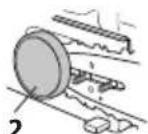
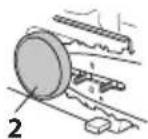
This movement activates a spring-loaded mechanism that tightens the brake band (1) around the engine drive system (2) (clutch drum).
HUSQVARNA 439 - GENERAL SAFETY PRECAUTIONS - 3

natural_image Technical line drawing of a mechanical device with no visible text or symbols

1

HUSQVARNA 439 - GENERAL SAFETY PRECAUTIONS - 4

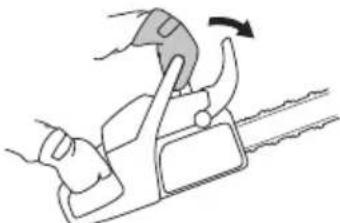
- The front hand guard is not designed solely to activate the chain brake. Another important feature is that it reduces the risk of your left hand hitting the chain if you lose grip of the front handle.
HUSQVARNA 439 - GENERAL SAFETY PRECAUTIONS - 5

natural_image Illustration of a hand using a tool to lift a car, showing motion direction (no text or symbols)

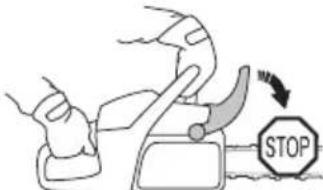
- The chain brake must be engaged when the chain saw is started to prevent the saw chain from rotating.
HUSQVARNA 439 - GENERAL SAFETY PRECAUTIONS - 6

text_image STOP

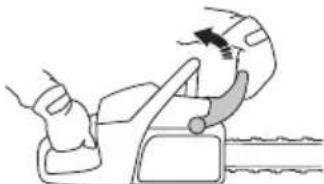
- Use the chain brake as a "parking brake" when starting and when moving over short distances, to reduce the risk of moving chain accidentally hitting your leg or anyone or anything close by.

• To release the chain brake pull the front hand guard backwards, towards the front handle.
HUSQVARNA 439 - GENERAL SAFETY PRECAUTIONS - 7

natural_image Line drawing of a hand using a car seatbelt to lift a vehicle (no text or symbols)

- Kickback can be very sudden and violent. Most kickbacks are minor and do not always activate the chain brake. If this happens you should hold the chain saw firmly and not let go.
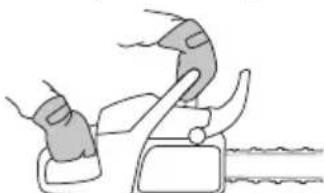
HUSQVARNA 439 - GENERAL SAFETY PRECAUTIONS - 8

natural_image Illustration of two hands operating a mechanical device with a handle (no text or symbols)

- The way the chain brake is activated, either manually or automatically by the inertia release mechanism, depends on the force of the kickback and the position of the chain saw in relation to the object that the kickback zone of the bar strikes.

If you get a violent kickback while the kickback zone of the bar is farthest away from you the chain brake is designed to be activated by the inertia in the kickback direction.
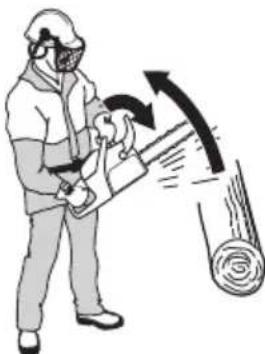
HUSQVARNA 439 - GENERAL SAFETY PRECAUTIONS - 9

natural_image Illustration of a worker in protective gear using a tool to lift a rolled paper or cable (no text or symbols)

If the kickback is less violent or the kickback zone of the bar is closer to you the chain brake will be activated manually by the movement of your left hand.
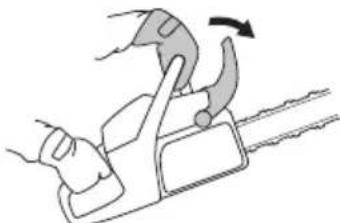
HUSQVARNA 439 - GENERAL SAFETY PRECAUTIONS - 10

natural_image Illustration of a hand turning a car with an arrow indicating rotation (no text or symbols)

- In the felling position the left hand is in a position that makes manual activation of the chain brake impossible. With this type of grip, that is when the left hand is placed so that it cannot affect the movement

GENERAL SAFETY PRECAUTIONS

of the front hand guard, the chain brake can only be activated by the inertia action.
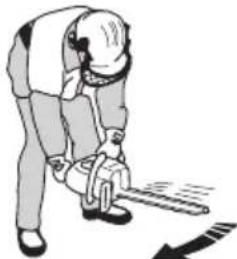
HUSQVARNA 439 - GENERAL SAFETY PRECAUTIONS - 1

natural_image Illustration of a person in a suit performing a physical maneuver or motion exercise (no text or symbols)

Will my hand always activate the chain brake during a kickback?

No. It takes a certain force to move the hand guard forward. If your hand only lightly touches the front guard or slips over it, the force may not be enough to trigger the chain brake. You should also maintain a firm grip of the chain saw handles while working. If you do and experience a kickback, your hand may never leave the front handle and will not activate the chain brake, or the chain brake will only activate after the saw has swung around a considerable distance. In such instances, the chain brake might not have enough time to stop the saw chain before it touches you.

There are also certain positions in which your hand cannot reach the front hand guard to activate the chain brake; for example, when the saw chain is held in felling position.

Will my inertia activated chain brake always activate during kickback in the event of a kickback?

No. First your brake must be in working order. Testing the brake is simple, see instructions under the heading Checking, maintaining and servicing chain saw safety equipment. We recommend you do before you begin each work session. Second the kickback must be strong enough to activate the chain brake. If the chain brake is too sensitive it would activate all the time which would be a nuisance.

Will my chain brake always protect me from injury in the event of a kickback?

No. First, the chain brake must be in working order to provide the intended protection. Second, it must be activated during the kickback as described above to stop the saw chain. Third, the chain brake may be activated but if the bar is too close to you the brake might not have enough time to slow down and stop the chain before the chain saw hits you.

Only you and proper working technique can eliminate kickback and its danger.

Throttle lockout

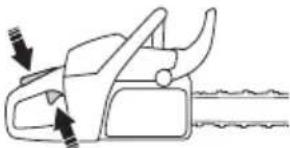
The throttle lockout is designed to prevent accidental operation of the throttle control. When you press the lock (A) (i.e. when you grasp the handle) it releases the throttle control (B). When you release the handle the throttle control and the throttle lockout both move back to their original positions. This arrangement means that the throttle control is automatically locked at the idle setting.
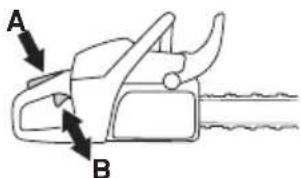
HUSQVARNA 439 - Throttle lockout - 1

natural_image Line drawing of a chainocenter with labeled parts A and B (no text or symbols beyond labels)

Chain catcher

The chain catcher is designed to catch the chain if it snaps or jumps off. This should not happen if the chain is properly tensioned (see instructions under the heading Assembly) and if the bar and chain are properly serviced and maintained (see instructions under the heading General working instructions).
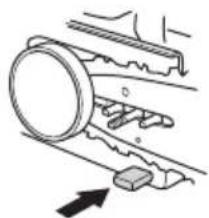
HUSQVARNA 439 - Chain catcher - 1

natural_image Mechanical assembly diagram showing a rotating component with a base and directional arrow (no text or labels)

Right hand guard

Apart from protecting your hand if the chain jumps or snaps, the right hand guard stops branches and twigs from interfering with your grip on the rear handle.
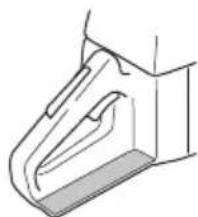
HUSQVARNA 439 - Right hand guard - 1

natural_image Technical line drawing of a mechanical component or bracket (no text or symbols)

Vibration damping system

Your machine is equipped with a vibration damping system that is designed to minimize vibration and make operation easier.

The machine's vibration damping system reduces the transfer of vibration between the engine unit/cutting equipment and the machine's handle unit. The body of the chain saw, including the cutting equipment, is insulated from the handles by vibration damping units.
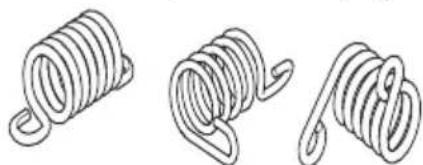
HUSQVARNA 439 - Vibration damping system - 1

natural_image Three line drawings of coiled springs, no text or symbols present

Cutting hardwoods (most broadleaf trees) creates more vibration than cutting softwoods (most conifers). Cutting with cutting equipment that is blunt or faulty (wrong type or badly sharpened) will increase the vibration level.

GENERAL SAFETY PRECAUTIONS

HUSQVARNA 439 - GENERAL SAFETY PRECAUTIONS - 1

WARNING! Overexposure to vibration can lead to circulatory damage or nerve damage in people who have impaired circulation. Contact your doctor if you experience symptoms of overexposure to vibration. Such symptoms include numbness, loss of feeling, tingling, pricking, pain, loss of strength, changes in skin colour or condition. These symptoms normally appear in the fingers, hands or wrists. These symptoms may be increased in cold temperatures.

Stop switch

Use the stop switch to switch off the engine.
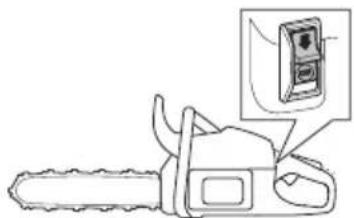
HUSQVARNA 439 - Stop switch - 1

natural_image Line drawing of a chainsaw with an inset showing a close-up of its blade (no text or symbols)

Muffler

The muffler is designed to keep noise levels to a minimum and to direct exhaust fumes away from the user.

HUSQVARNA 439 - Muffler - 1

WARNING! The exhaust fumes from the engine are hot and may contain sparks which can start a fire. Never start the machine indoors or near combustible material!

In areas with a hot, dry climate there is a high risk of fires. These areas are sometimes subject to government rules requiring among other things the muffler must be equipped with an approved type of spark arrestor mesh.
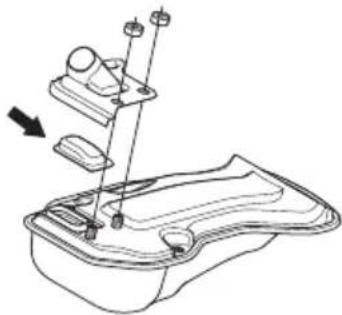
HUSQVARNA 439 - Muffler - 2

natural_image Line drawing of a mechanical assembly with no visible text or symbols

CAUTION! The muffler gets very hot during and after use. This also applies during idling. Be aware of the fire hazard, especially when working near flammable substances and/or vapours.

HUSQVARNA 439 - Muffler - 3

WARNING! Never use a saw without a muffler, or with a damaged muffler. A damaged muffler may substantially increase the noise level and the fire hazard. Keep fire fighting equipment handy. If a spark arrestor screen is required in your area, never use the saw without or with a broken spark arrestor screen.

Cutting equipment

This section describes how to choose and maintain your cutting equipment in order to:

  • Reduce the risk of kickback.
  • Reduce the risk of the saw chain breaking or jumping off the bar.
  • Obtain optimal cutting performance.
  • Extend the life of cutting equipment.
  • Avoid increasing vibration levels.

General rules

• Only use cutting equipment recommended by us! See instructions under the heading Technical data.
- Keep the chain's cutting teeth properly sharpened! Follow our instructions and use the recommended file gauge. A damaged or badly sharpened chain increases the risk of accidents.
- Maintain the correct depth gauge setting! Follow our instructions and use the recommended depth gauge clearance. Too large a clearance increases the risk of kickback.
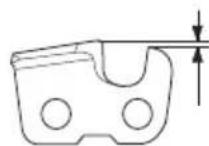
HUSQVARNA 439 - General rules - 1

- Keep the chain properly tensioned! If the chain is slack it is more likely to jump off and lead to increased wear on the bar, chain and drive sprocket.
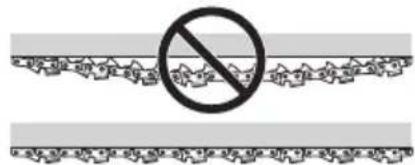
HUSQVARNA 439 - General rules - 2

text_image Diagram showing a prohibition symbol crossed over layered structures with numerical labels on each layer.

- Keep cutting equipment well lubricated and properly maintained! A poorly lubricated chain is more likely to break and lead to increased wear on the bar, chain and drive sprocket.

GENERAL SAFETY PRECAUTIONS

Cutting equipment designed to reduce kickback

HUSQVARNA 439 - Cutting equipment designed to reduce kickback - 1

WARNING! Faulty cutting equipment or the wrong combination of bar and saw chain increases the risk of kickback! Only use the bar/saw chain combinations we recommend, and follow the filing instructions. See instructions under the heading Technical data.

The only way to avoid kickback is to make sure that the kickback zone of the bar never touches anything.

By using cutting equipment with "built-in" kickback reduction and keeping the chain sharp and well-maintained you can reduce the effects of kickback.

Guide bar

The smaller the tip radius the lower the chance of kickback.

Saw chain

A chain is made up of a number of links, which are available in standard and low-kickback versions.

IMPORTANT! No saw chain design eliminates the danger of kickback.

HUSQVARNA 439 - Saw chain - 1

WARNING! Any contact with a rotating saw chain can cause extremely serious injuries.

Some terms that describe the bar and chain

To maintain the safety features of the cutting equipment, you should replace a worn or damaged bar or chain with a bar and chain combinations recommended by Husqvarna. See instructions under the heading Technical Data for a list of replacement bar and chain combinations we recommend.

Guide bar

- Length (inches/cm)
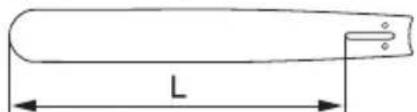
HUSQVARNA 439 - Guide bar - 1

text_image L

• Number of teeth on bar tip sprocket (T).
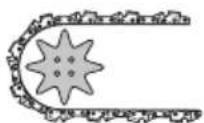
HUSQVARNA 439 - Guide bar - 2

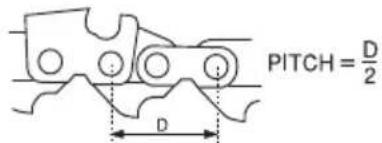
- Chain pitch (inches). The spacing between the drive links of the chain must match the spacing of the teeth on the bar tip sprocket and drive sprocket.
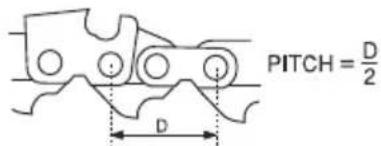
HUSQVARNA 439 - Guide bar - 3

text_image PITCH = D/2 D

- Number of drive links. The number of drive links is determined by the length of the bar, the chain pitch and the number of teeth on the bar tip sprocket.
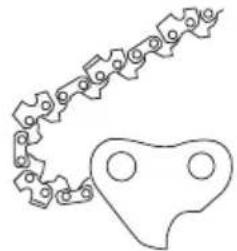
HUSQVARNA 439 - Guide bar - 4

natural_image Pure mechanical linkage diagram without any text, numbers, or symbols

- Bar groove width (inches/mm). The groove in the bar must match the width of the chain drive links.
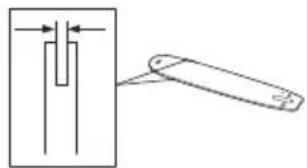
HUSQVARNA 439 - Guide bar - 5

natural_image Pure mechanical diagram showing a lever and handle without any text, numbers, or symbols

- Chain oil hole and hole for chain tensioner. The bar must be matched to the chain saw design.
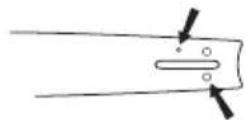
HUSQVARNA 439 - Guide bar - 6

Saw chain

- Chain pitch (inches)

HUSQVARNA 439 - Saw chain - 1

text_image PITCH = D/2 D

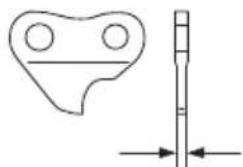
- Drive link width (mm/inches)

HUSQVARNA 439 - Saw chain - 2

natural_image Pure technical diagram showing a mechanical part and a vertical scale with arrows (no text or symbols)

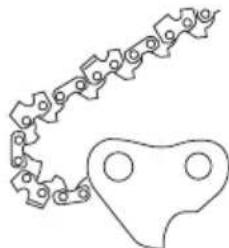
• Number of drive links.

HUSQVARNA 439 - Saw chain - 3

natural_image Pure mechanical linkage diagram without any text, numbers, or symbols

Sharpening your chain and adjusting depth gauge setting

General information on sharpening cutting teeth

- Never use a blunt chain. When the chain is blunt you have to exert more pressure to force the bar through the wood and the chips will be very small. If the chain is very blunt it will produce wood powder and no chips or shavings.

- A sharp chain eats its way through the wood and produces long, thick chips or shavings.

GENERAL SAFETY PRECAUTIONS

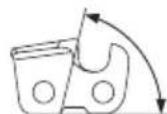
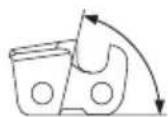
- The cutting part of the chain is called the cutter and consists of a cutting tooth (A) and the depth gauge (B). The cutters cutting depth is determined by the difference in height between the two (depth gauge setting).
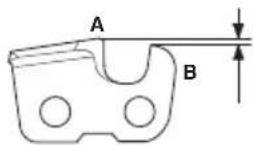
HUSQVARNA 439 - GENERAL SAFETY PRECAUTIONS - 1

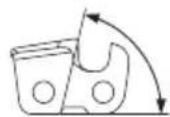
When you sharpen a cutting tooth there are four important factors to remember.

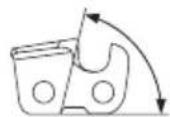
1 Filing angle
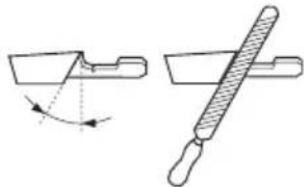
HUSQVARNA 439 - GENERAL SAFETY PRECAUTIONS - 2

natural_image Technical line drawing of a mechanical tool with an arrow indicating rotation (no text or symbols)

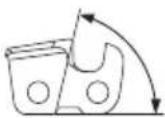
2 Cutting angle

HUSQVARNA 439 - GENERAL SAFETY PRECAUTIONS - 3

3 File position

HUSQVARNA 439 - GENERAL SAFETY PRECAUTIONS - 4

natural_image Line drawing of a tool with a handle and central shaft (no text or symbols)

4 Round file diameter

HUSQVARNA 439 - GENERAL SAFETY PRECAUTIONS - 5

It is very difficult to sharpen a chain correctly without the right equipment. We recommend that you use our file gauge. This will help you obtain the maximum kickback reduction and cutting performance from your chain.

See instructions under the heading Technical data for information about sharpening your chain.

HUSQVARNA 439 - GENERAL SAFETY PRECAUTIONS - 6

WARNING! Departure from the sharpening instructions considerably increases the risk of kickback.

Sharpening cutting teeth
HUSQVARNA 439 - Sharpening cutting teeth - 1

HUSQVARNA 439 - Sharpening cutting teeth - 2

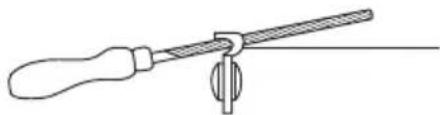
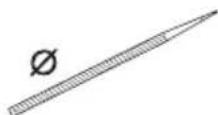
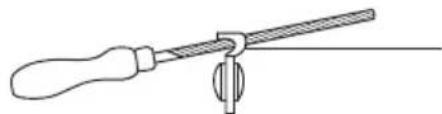
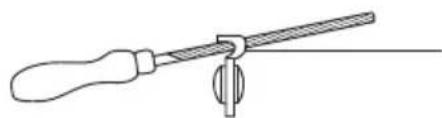
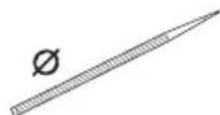
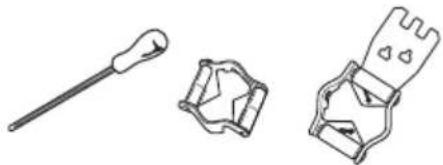
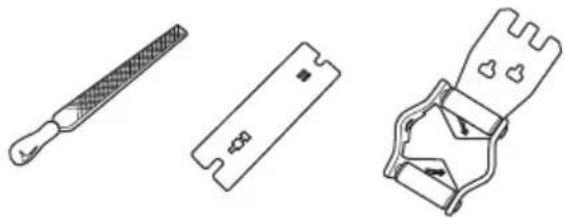
To sharpen cutting teeth you will need a round file and a file gauge. See instructions under the heading Technical data for information on the size of file and gauge that are recommended for the chain fitted to your chain saw.
HUSQVARNA 439 - Sharpening cutting teeth - 3

natural_image Three technical illustrations of screwdriver tools: a handle, a bracket with cutouts, and a clamp (no text or symbols)

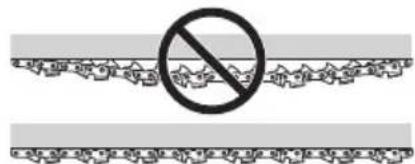
- Check that the chain is correctly tensioned. A slack chain will move sideways, making it more difficult to sharpen correctly.
HUSQVARNA 439 - Sharpening cutting teeth - 4

text_image Diagram showing a prohibition symbol over a chain of stars, likely indicating restrictions on the chain.

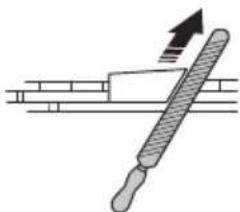
• Always file cutting teeth from the inside face. Reduce the pressure on the return stroke. File all the teeth on one side first, then turn the chain saw over and file the teeth on the other side.
HUSQVARNA 439 - Sharpening cutting teeth - 5

natural_image Diagram of a tool interacting with a surface, showing an upward arrow and textured grip (no text or symbols)

- File all the teeth to the same length. When the length of the cutting teeth is reduced to 4 mm (5/32") the chain is worn out and should be replaced.
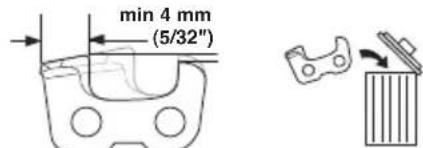
HUSQVARNA 439 - Sharpening cutting teeth - 6

text_image min 4 mm (5/32")

General advice on adjusting depth gauge setting

- When you sharpen the cutting tooth (A) the depth gauge setting (C) will decrease. To maintain optimal cutting performance the depth gauge (B) has to be filed down to achieve the recommended depth gauge setting. See instructions under the heading Technical data to find the correct depth gauge setting for your particular chain.
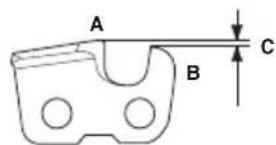

HUSQVARNA 439 - General advice on adjusting depth gauge setting - 1

text_image A B C

HUSQVARNA 439 - General advice on adjusting depth gauge setting - 2

WARNING! The risk of kickback is increased if the depth gauge setting is too large!

Adjustment of depth gauge setting
HUSQVARNA 439 - Adjustment of depth gauge setting - 1

- The cutting teeth should be newly sharpened before adjusting the depth gauge setting. We recommend that you adjust the depth gauge setting every third time you sharpen the cutting teeth. NOTE! This recommendation assumes that the length of the cutting teeth is not reduced excessively.

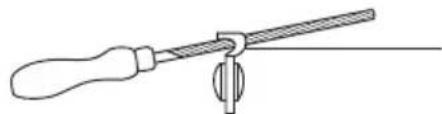
- You will need a flat file and a depth gauge tool. We recommend that you use our depth gauge tool to

GENERAL SAFETY PRECAUTIONS

achieve the correct depth gauge setting and bevel for the depth gauge.
HUSQVARNA 439 - GENERAL SAFETY PRECAUTIONS - 1

natural_image Three technical line drawings of mechanical components: a radial tool, a rectangular part with holes, and a bracket-like structure (no text or symbols)

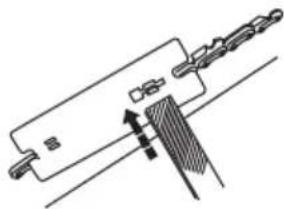
- Place the depth gauge tool over the chain. Detailed information regarding the use of the depth gauge tool, will be found on the package for the depth gauge tool. Use the flat file to file off the tip of the depth gauge that protrudes through the depth gauge tool. The depth gauge setting is correct when you no longer feel resistance as you draw the file along the depth gauge tool.
HUSQVARNA 439 - GENERAL SAFETY PRECAUTIONS - 2

natural_image Pure mechanical diagram showing a lever and shaft assembly without any text, numbers, or symbols

Tensioning the chain

HUSQVARNA 439 - Tensioning the chain - 1

HUSQVARNA 439 - Tensioning the chain - 2

WARNING! A slack chain may jump off and cause serious or even fatal injury.

The more you use a chain the longer it becomes. It is therefore important to adjust the chain regularly to take up the slack.

Check the chain tension every time you refuel. NOTE! A new chain has a running-in period during which you should check the tension more frequently.

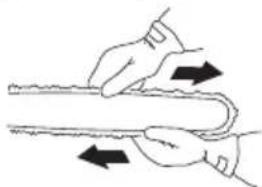
Tension the chain as tightly as possible, but not so tight that you cannot pull it round freely by hand.
HUSQVARNA 439 - Tensioning the chain - 3

natural_image Illustration of two hands holding a cylindrical object with directional arrows indicating motion (no text or symbols)

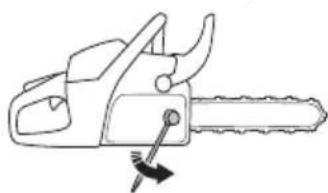
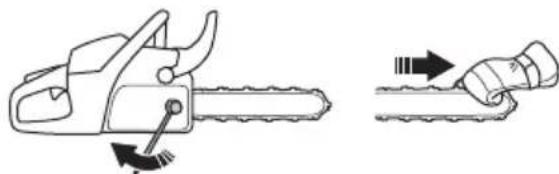
- Undo the bar nuts that hold the clutch cover/chain brake. Use the combination spanner. Then tighten the bar nuts by hand as tight as you can.
HUSQVARNA 439 - Tensioning the chain - 4

natural_image Line drawing of a chainociper with a screwdriver (no text or symbols)

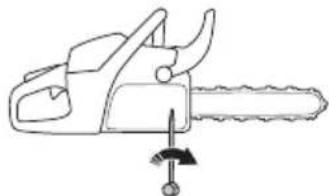
- Raise the tip of the bar and stretch the chain by tightening the chain tensioning screw using the

combination spanner. Tighten the chain until it does not sag from the underside of the bar.
HUSQVARNA 439 - Tensioning the chain - 5

natural_image Line drawing of a chain saw with a hammer and scale indicator (no text or symbols)

- Use the combination spanner to tighten the bar nuts while lifting the tip of the bar at the same time. Check that you can pull the chain round freely by hand and that it does not sag from the underside of the bar.
HUSQVARNA 439 - Tensioning the chain - 6

natural_image Diagram showing a chain saw being adjusted to a tool, with no text or symbols present.

The position of the chain tensioning screw on our chain saws varies from model to model. See instructions under the heading What is what? to find out where it is on your model.

Lubricating cutting equipment

HUSQVARNA 439 - Lubricating cutting equipment - 1

WARNING! Poor lubrication of cutting equipment may cause the chain to snap, which could lead to serious, even fatal injuries.

Chain oil

Chain oil must demonstrate good adhesion to the chain and also maintain its flow characteristics regardless of whether it is warm summer or cold winter weather.

As a chain saw manufacturer we have developed an optimal chain oil which, with its vegetable oil base, is also biodegradable. We recommend the use of our own oil for both maximum chain life and to minimise environmental damage. If our own chain oil is not available, standard chain oil is recommended.

Never use waste oil! Using waste oil can be dangerous to you and damage the machine and environment.

IMPORTANT! When using vegetable based saw chain oil, dismantle and clean the groove in the bar and saw chain before long-term storage. Otherwise there is a risk of the saw chain oil oxidizing, which will result in the saw chain becoming stiff and the bar tip sprocket jamming.

Filling with chain oil

  • All our chain saws have an automatic chain lubrication system. On some models the oil flow is also adjustable.
  • The saw chain oil tank and the fuel tank are designed so that the fuel runs out before the saw chain oil. However, this safety feature requires that you use the right sort of chain oil (if the oil is too thin it will run out before the fuel) and that you also use the

GENERAL SAFETY PRECAUTIONS

recommended cutting equipment (a bar that is too long will use more chain oil).

Checking chain lubrication

- Check the chain lubrication each time you refuel. See instructions under the heading Lubricating the bar tip sprocket.

Aim the tip of the bar at a light coloured surface about 20 cm (8 inches) away. After 1 minute running at 3/4 throttle you should see a distinct line of oil on the light surface.

HUSQVARNA 439 - Checking chain lubrication - 1

natural_image Illustration of a person in protective gear using a power saw to cut tree bark (no text or symbols)

If the chain lubrication is not working:

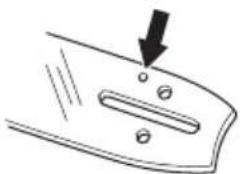
- Check that the oil channel in the bar is not obstructed. Clean if necessary.
HUSQVARNA 439 - Checking chain lubrication - 2

natural_image Simple line drawing of a mechanical component with a downward arrow and circular holes (no text or symbols)

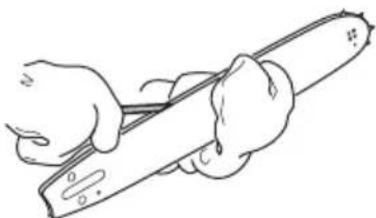
- Check that the groove in the edge of the bar is clean. Clean if necessary.
HUSQVARNA 439 - Checking chain lubrication - 3

natural_image Line drawing of a hand holding a ruler, no text or symbols present

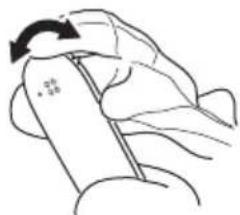
- Check that the bar tip sprocket turns freely and that the lubricating hole in the tip sprocket is not blocked. Clean and lubricate if necessary.
HUSQVARNA 439 - Checking chain lubrication - 4

natural_image Illustration of a hand holding a wrist with a curved arrow indicating rotation (no text or symbols)

If the chain lubrication system is still not working after carrying out the above checks and associated measures you should contact your service agent.

Chain drive sprocket
HUSQVARNA 439 - Chain drive sprocket - 1

HUSQVARNA 439 - Chain drive sprocket - 2

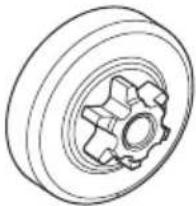
The clutch drum is fitted with a Spur sprocket (the chain sprocket is welded on the drum).
HUSQVARNA 439 - Chain drive sprocket - 3

natural_image Technical line drawing of a mechanical gear assembly (no text or symbols)

Regularly check the degree of wear on the drive sprocket. Replace if wear is excessive. Replace the drive sprocket whenever you replace the chain.

Needle bearing lubrication
HUSQVARNA 439 - Needle bearing lubrication - 1

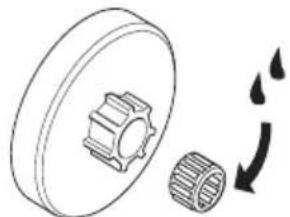
The sprockets has a needle bearing on the drive shaft, which has to be greased regularly (once a week).

CAUTION! Use a high-quality bearing grease or engine oil.
HUSQVARNA 439 - Needle bearing lubrication - 2

natural_image Technical illustration of a gear and rotor assembly (no text or symbols)

Checking wear on cutting equipment

HUSQVARNA 439 - Checking wear on cutting equipment - 1

HUSQVARNA 439 - Checking wear on cutting equipment - 2

Check the chain daily for:

• Visible cracks in rivets and links.

• Whether the chain is stiff.

- Whether rivets and links are badly worn.

Replace the saw chain if it exhibits any of the points above.

We recommend you compare the existing chain with a new chain to decide how badly the existing chain is worn.

When the length of the cutting teeth has worn down to only 4 mm the chain must be replaced.

GENERAL SAFETY PRECAUTIONS

Guide bar
HUSQVARNA 439 - Guide bar - 1

text_image STOP

Check regularly:

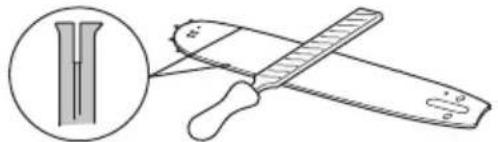
- Whether there are burrs on the edges of the bar. Remove these with a file if necessary.
HUSQVARNA 439 - Guide bar - 2

natural_image Diagram showing a tool interacting with a blade and handle, with an inset magnified view of a cylindrical object (no text or symbols)

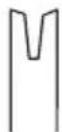
- Whether the groove in the bar has become badly worn. Replace the bar if necessary.
HUSQVARNA 439 - Guide bar - 3

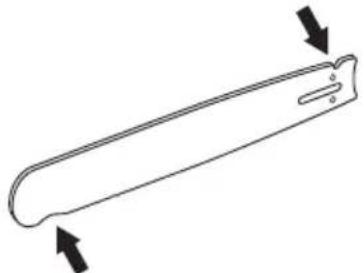
- Whether the tip of the bar is uneven or badly worn. If a hollow forms on the underside of the bar tip this is due to running with a slack chain.
HUSQVARNA 439 - Guide bar - 4

natural_image Simple line drawing of a tool handle with two arrows indicating direction (no text or symbols)

• To prolong the life of the bar you should turn it over daily.
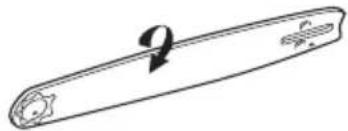
HUSQVARNA 439 - Guide bar - 5

natural_image Simple line drawing of a cylindrical object with a curved arrow indicating rotation (no text or symbols)

HUSQVARNA 439 - Guide bar - 6

WARNING! Most chain saw accidents happen when the chain touches the operator.

Wear personal protective equipment. See instructions under the "Personal protective equipment" heading.

Do not tackle any job that you feel you are not adequately trained for. See instructions under the headings Personal protective equipment, How to avoid kickback, Cutting equipment and General working instructions.

Avoid situations where there is a risk of kickback. See instructions under the heading Machine's safety equipment.

Use the recommended protective equipment and check its condition. See instructions under the heading General working instructions.

Check that all the chain saw safety features are working. See instructions under the headings General working instructions and General safety precautions.

ASSEMBLY

Fitting the bar and chain
HUSQVARNA 439 - Fitting the bar and chain - 1

HUSQVARNA 439 - Fitting the bar and chain - 2

HUSQVARNA 439 - Fitting the bar and chain - 3

WARNING! Always wear gloves, when working with the chain.

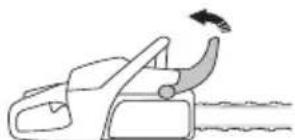
- Check that the chain brake is in disengaged position by moving the front hand guard towards the front handle.
HUSQVARNA 439 - Fitting the bar and chain - 4

natural_image Line drawing of a manual tool with a handle and blade, no text or symbols present

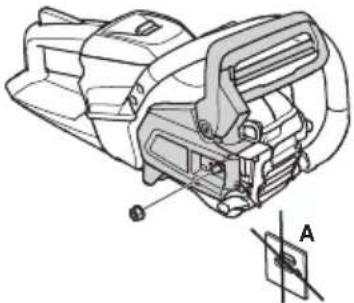
- Unscrew the bar nut and remove the clutch cover (chain brake). Take off the transportation guard (A).
HUSQVARNA 439 - Fitting the bar and chain - 5

natural_image Technical line drawing of a mechanical assembly with labeled component A (no text or symbols present)

- Fit the bar over the bar bolt. Place the bar in its rearmost position. Place the chain over the drive sprocket and in the groove on the bar. Begin on the top side of the bar.

- Make sure that the edges of the cutting links are facing forward on the top edge of the bar.
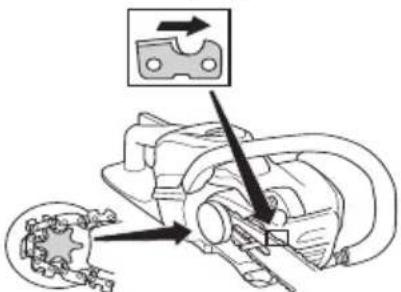
HUSQVARNA 439 - Fitting the bar and chain - 6

text_image Technical diagram showing mechanical assembly with labeled components and directional arrow indicating motion

- Fit the clutch cover (chain brake) and locate the chain adjuster pin in the cut-out in the bar. Check that the drive links of the chain fit correctly on the drive sprocket and that the chain is in the groove on the bar. Tighten the bar nut finger-tight.
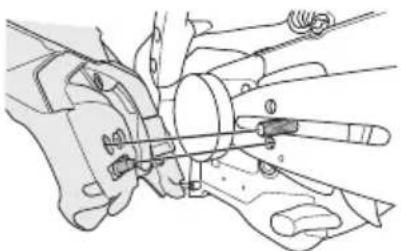
HUSQVARNA 439 - Fitting the bar and chain - 7

natural_image Mechanical assembly diagram showing hands operating a component (no text or labels visible)

- Tension the chain by turning the chain tensioning screw clockwise using the combination spanner. The chain should be tensioned until it does not sag from the underside of the bar. See instructions under the heading Tensioning the chain.
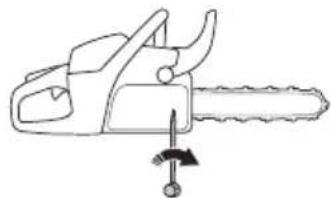
HUSQVARNA 439 - Fitting the bar and chain - 8

natural_image Line drawing of a chainsaw with a hammer and fulcrum (no text or symbols)

- The chain is correctly tensioned when there is no slack on the underside of the bar, and it can still be turned easily by hand. Tighten the bar nut with the combination spanner while holding up the tip of the bar.
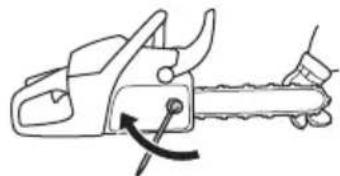
HUSQVARNA 439 - Fitting the bar and chain - 9

natural_image Line drawing of a chainsaw with a hand operating it, showing blade and handle (no text or symbols)

- When fitting a new chain, the chain tension has to be checked frequently until the chain is run-in. Check the chain tension regularly. A correctly tensioned chain ensures good cutting performance and long life.
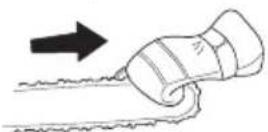
HUSQVARNA 439 - Fitting the bar and chain - 10

Fitting a spike bumper

- To fit a spike bumper – contact your service agent.
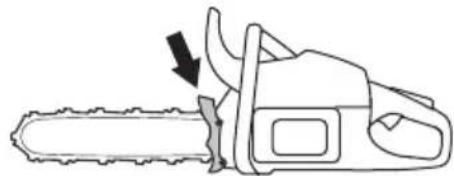
HUSQVARNA 439 - Fitting a spike bumper - 1

natural_image Line drawing of a chainsaw with a downward arrow indicating compression or disassembly (no text or symbols)

FUEL HANDLING

Fuel

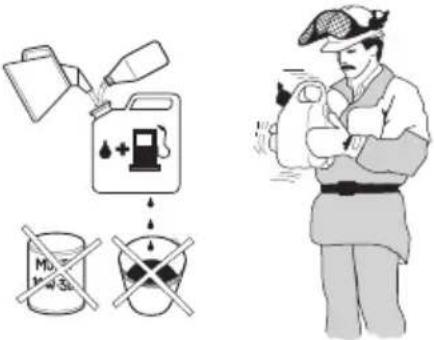
Note! The machine is equipped with a two-stroke engine and must always be run using a mixture of petrol and two-stroke oil. It is important to accurately measure the amount of oil to be mixed to ensure that the correct mixture is obtained. When mixing small amounts of fuel, even small inaccuracies can drastically affect the ratio of the mixture.

HUSQVARNA 439 - Fuel - 1

WARNING! Always ensure there is adequate ventilation when handling fuel.

Petrol
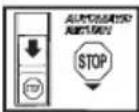
HUSQVARNA 439 - Petrol - 1

  • Use good quality unleaded or leaded petrol.
  • The lowest recommended octane grade is 90 (RON). If you run the engine on a lower octane grade than 90 so-called knocking can occur. This gives rise to a high engine temperature and increased bearing load, which can result in serious engine damage.
  • When working with continuous high revs (e.g. limbing) a higher octane is recommended.

Environment fuel

HUSQVARNA recommends the use of alkylate fuel, either Aspen two-stroke fuel or environmental fuel for four-stroke engines blended with two-stroke oil as set out below. Note that carburettor adjustment may be necessary when changing the type of fuel (see the instructions under the heading Carburettor).

Ethanol fuel

HUSQVARNA recommends commercial available fuel with maximum 10% ethanol content.

Running-in

Avoid running at a too high speed for extended periods during the first 10 hours.

Two-stroke oil

  • For best results and performance use HUSQVARNA two-stroke engine oil, which is specially formulated for our air-cooled two-stroke engines.
  • Never use two-stroke oil intended for water-cooled engines, sometimes referred to as outboard oil (rated TCW).
  • Never use oil intended for four-stroke engines.
  • A poor oil quality and/or too high oil/fuel ratio may jeopardise function and decrease the life time of catalytic converters.

Mixing ratio

1:50 (2%) with HUSQVARNA two-stroke oil.
1:33 (3%) with oils class JASO FB or ISO EGB formulated for air-cooled, two-stroke engines.

Petrol, litre Two-stroke oil, litre
2% (1:50) 3% (1:33)
5 0,10 0,15
10 0,20 0,30
15 0,30 0,45
20 0,40 0,60

Mixing

HUSQVARNA 439 - Mixing - 1

text_image Illustration showing a person in uniform using a pump bag to prevent water discharge, with no visible text or symbols.

• Always mix the petrol and oil in a clean container intended for fuel.
• Always start by filling half the amount of the petrol to be used. Then add the entire amount of oil. Mix (shake) the fuel mixture. Add the remaining amount of petrol.
- Mix (shake) the fuel mixture thoroughly before filling the machine's fuel tank.
- Do not mix more than one month's supply of fuel at a time.
- If the machine is not used for some time the fuel tank should be emptied and cleaned.

Chain oil

- We recommend the use of special oil (chain oil) with good adhesion characteristics.
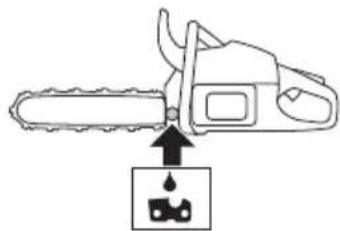
HUSQVARNA 439 - Chain oil - 1

natural_image Line drawing of a chainsaw with a downward arrow and a small inset showing a gear (no text or symbols)
  • Never use waste oil. This results in damage to the oil pump, the bar and the chain.
  • It is important to use oil of the right grade (suitable viscosity range) to suit the air temperature.
  • In temperatures below 0°C (32°F) some oils become too viscous. This can overload the oil pump and result in damage to the oil pump components.
  • Contact your service agent when choosing chain oil.

FUEL HANDLING

Fueling
HUSQVARNA 439 - Fueling - 1

HUSQVARNA 439 - Fueling - 2

WARNING! Taking the following precautions, will lessen the risk of fire:

Do not smoke and do not place any hot objects in the vicinity of fuel.

Always stop the engine and let it cool for a few minutes before refuelling.

When refuelling, open the fuel cap slowly so that any excess pressure is released gently.

Tighten the fuel cap carefully after refuelling.

Always move the machine away from the refuelling area and source before starting.

Clean the area around the fuel cap. Clean the fuel and chain oil tanks regularly. The fuel filter must be replaced at least once a year. Contamination in the tanks causes malfunction. Make sure the fuel is well mixed by shaking the container before refuelling. The capacities of the chain oil tank and fuel tank are carefully matched. You should therefore always fill the chain oil tank and fuel tank at the same time.
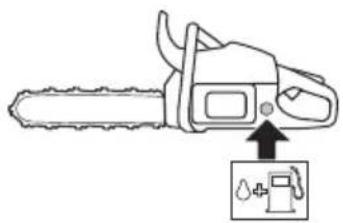

HUSQVARNA 439 - Fueling - 3

natural_image Line drawing of a chainsaw with an arrow pointing to a water drop symbol (no text or labels)

HUSQVARNA 439 - Fueling - 4

WARNING! Fuel and fuel vapour are highly flammable. Take care when handling fuel and chain oil. Be aware of the risks of fire, explosion and those associated with inhalation.

Fuel safety

  • Never refuel the machine while the engine is running.
  • Make sure there is plenty of ventilation when refuelling or mixing fuel (petrol and 2-stroke oil).

- Move the machine at least 3 m from the refuelling point before starting it.
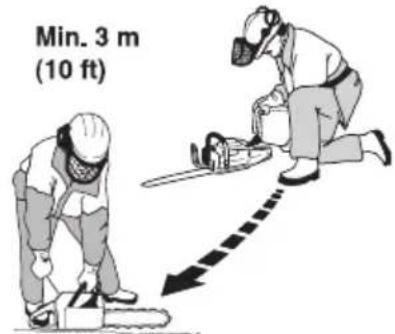
HUSQVARNA 439 - Fuel safety - 1

text_image Min. 3 m (10 ft)

- Never start the machine:

1 If you have spilt fuel or chain oil on the machine. Wipe off the spillage and allow remaining fuel to evaporate.
2 If you have spilled fuel on yourself or your clothes, change your clothes. Wash any part of your body that has come in contact with fuel. Use soap and water.
3 If the machine is leaking fuel. Check regularly for leaks from the fuel cap and fuel lines.

HUSQVARNA 439 - Fuel safety - 2

WARNING! Never use a machine with visible damage to the spark plug guard and ignition cable. A risk of sparking arises, which can cause a fire.

Transport and storage

• Always store the chain saw and fuel so that there is no risk of leakages or fumes coming into contact with sparks or naked flames from electrical equipment, electric motors, relays/switches, boilers and the like.
• Always store fuel in an approved container designed for that purpose.
- For longer periods of storage or for transport of the chain saw, the fuel and chain oil tanks should be emptied. Ask where you can dispose of waste fuel and chain oil at your local petrol station.
- The guide bar cover must always be fitted to the cutting attachment when the machine is being transported or in storage, in order to prevent accident contact with the sharp chain. Even a non-moving chain can cause serious cuts to yourself or persons you bump into with an exposed chain.
- Remove the spark plug cap from the spark plug. Activate the chain brake.
- Secure the machine during transport.

Long-term storage

Empty the fuel/oil tanks in a well ventilated area. Store the fuel in approved cans in a safe place. Fit the guide bar cover. Clean the machine. See instructions under the heading Maintenance schedule.

Ensure the machine is cleaned and that a complete service is carried out before long-term storage.

STARTING AND STOPPING

Starting and stopping

HUSQVARNA 439 - Starting and stopping - 1

WARNING! Note the following before starting:

The chain brake must be engaged when the chain saw is started to reduce the chance of contact with the moving chain during starting.

Never start a chain saw unless the bar, chain and all covers are fitted correctly. Otherwise the clutch can come loose and cause personal injuries.

Place the machine on firm ground. Make sure you have a secure footing and that the chain cannot touch anything.

Keep people and animals well away from the working area.

Never twist the starter cord around your hand.

Cold engine

Starting: The chain brake must be engaged when the chain saw is started. Activate the brake by moving the front hand guard forwards.
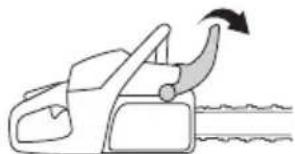
HUSQVARNA 439 - Cold engine - 1

natural_image Line drawing of a manual power shaver mechanism with motion arrow (no text or symbols)

Air purge: Press the air purge diaphragm repeatedly until fuel begins to fill the diaphragm (about 6 times). The diaphragm need not be completely filled.
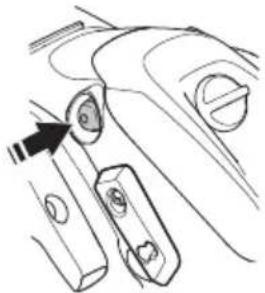
HUSQVARNA 439 - Cold engine - 2

natural_image Technical line drawing of a mechanical component with adjustment knobs and a black arrow indicating a specific part (no text or symbols present)

Choke: Set the choke control in the choke position.
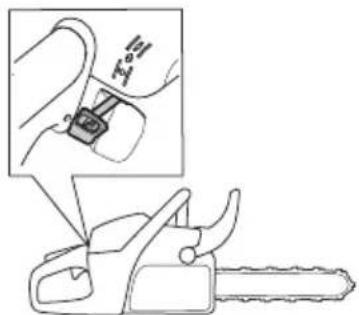
HUSQVARNA 439 - Cold engine - 3

natural_image Line drawing of a chain saw tool with a magnified inset showing the grip detail (no text or symbols)

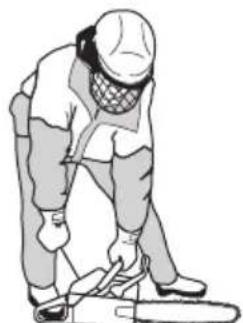
- Grip the front handle with your left hand. Put your right foot on the lower section of the rear handle pressing the machine against the ground. - Pull the starter handle with your right hand and pull out the starter cord slowly until you feel a resistance (as the starter pawls engage) then pull firmly and rapidly until the engine starts.
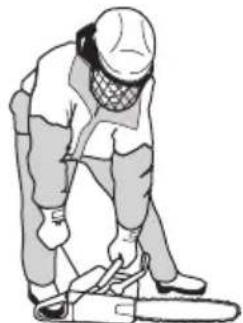
HUSQVARNA 439 - Cold engine - 4

natural_image Illustration of a person in a hard hat and gloves handling a large object (no text or symbols visible)

- Push in the choke control as soon as the engine fires which can be heard through a "puff" sound. Keep on pulling the cord powerfully until the engine starts.

Warm engine

Use the same starting procedure as for a cold engine but without setting the choke control in the choke position.
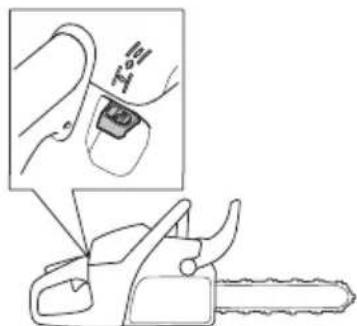
HUSQVARNA 439 - Warm engine - 1

text_image Diagram showing a chain saw tool with a magnified inset highlighting the grip area and hand positioning.

- Grip the front handle with your left hand. Put your right foot on the lower section of the rear handle pressing the machine against the ground.

- Pull the starter handle with your right hand and pull out the starter cord slowly until you feel a resistance (as the starter pawls engage) then pull firmly and rapidly until the engine starts.
HUSQVARNA 439 - Warm engine - 2

natural_image Illustration of a person using a power tool to cut a chain (no text or symbols present)

NOTE! Do not pull the starter cord all the way out and do not let go of the starter handle when the cord is fully extended. This can damage the machine.

As the chain brake is still engaged the speed of the engine must be set to idling as soon as possible, this is achieved by quickly pressing the throttle trigger once. This prevents

STARTING AND STOPPING

unnecessary wear to the clutch, clutch drum and brake band.
HUSQVARNA 439 - STARTING AND STOPPING - 1

natural_image Line drawing of a chain saw with arrows indicating motion direction (no text or symbols)

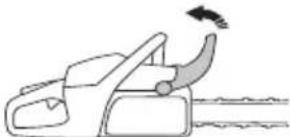
Note! Reset the chain brake by pulling the front hand guard back (marked "PULL BACK TO RESET") towards the front handle. The chain saw is now ready for use.

HUSQVARNA 439 - STARTING AND STOPPING - 2

natural_image Line drawing of a manual tool with a curved handle and arrow, no text or symbols present

HUSQVARNA 439 - STARTING AND STOPPING - 3

WARNING! Long term inhalation of the engine's exhaust fumes, chain oil mist and dust from sawdust can represent a health risk.

- Never start a chain saw unless the bar, chain and all covers are fitted correctly. See instructions under the heading Assembly. Without a bar and chain attached to the chain saw the clutch can come loose and cause serious injury.
HUSQVARNA 439 - STARTING AND STOPPING - 4

natural_image Simple line drawing of a crossed-out saw with a diagonal line and smoke, no text or symbols present.

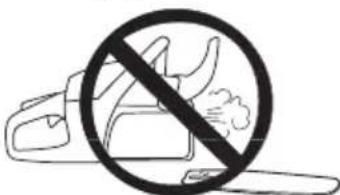
- The chain brake should be activated when starting. Se instructions under the heading Start and stop. Do not drop start. This method is very dangerous because you may lose control of the saw.
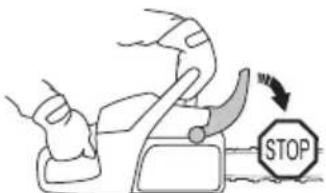
HUSQVARNA 439 - STARTING AND STOPPING - 5

text_image STOP

- Never start the machine indoors. Exhaust fumes can be dangerous if inhaled.

- Observe your surroundings and make sure that there is no risk of people or animals coming into contact with the cutting equipment.
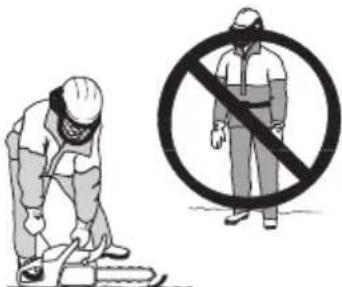
HUSQVARNA 439 - STARTING AND STOPPING - 6

natural_image Illustration of two workers: one using a tool and another with a no-smoking symbol (no text or labels)

• Always hold the saw with both hands. The right hand should be on the rear handle, and the left hand on the

front handle. All people, whether right or left handed, should use this grip. Use a firm grip with thumbs and fingers encircling the chain saw handles.
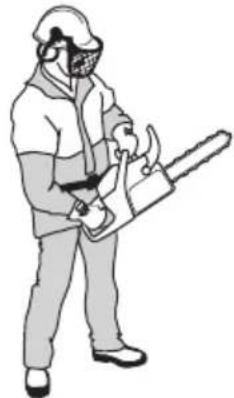
HUSQVARNA 439 - STARTING AND STOPPING - 7

natural_image Illustration of a person wearing protective gear and holding a chainsaw (no text or symbols)

Stopping

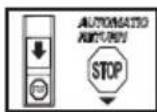
Stop the engine by pushing the start/stop switch down.
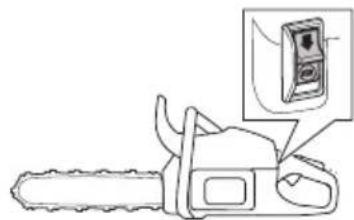
HUSQVARNA 439 - Stopping - 1

natural_image Line drawing of a chainsaw with a close-up inset showing its internal components (no text or symbols)

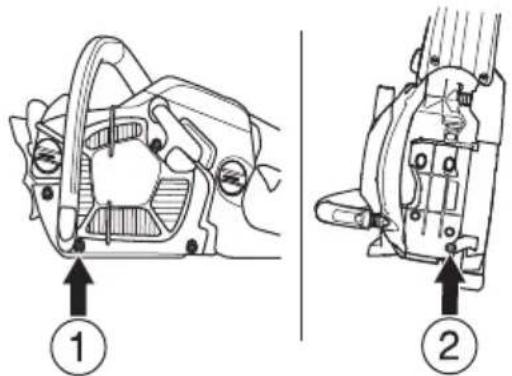
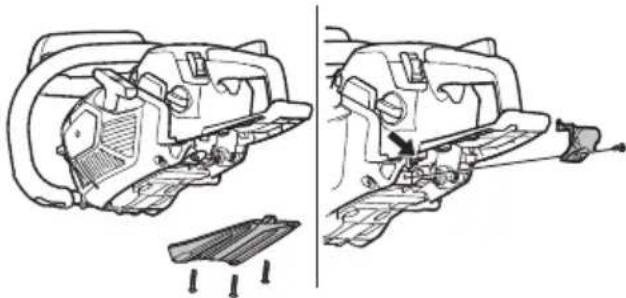
NOTE! The start/stop switch automatically returns to run position. To avoid involuntary start up, the spark plug cap must always be removed from the spark plug when the machine is unsupervised.
HUSQVARNA 439 - Stopping - 2

natural_image Technical line drawing of a mechanical assembly with two views (front and side), showing internal components and mounting brackets (no text or symbols)

Before use:

HUSQVARNA 439 - Before use: - 1

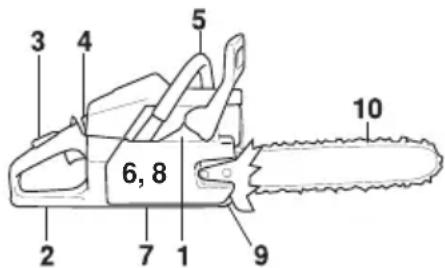
text_image 3 4 5 6, 8 2 7 1 9 10

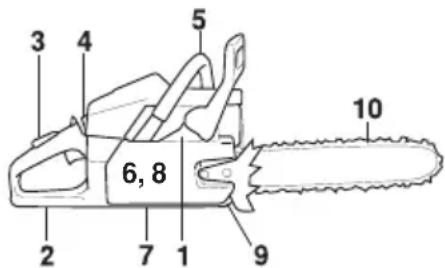
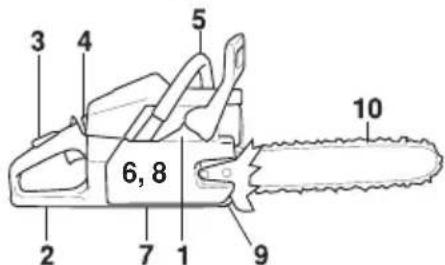
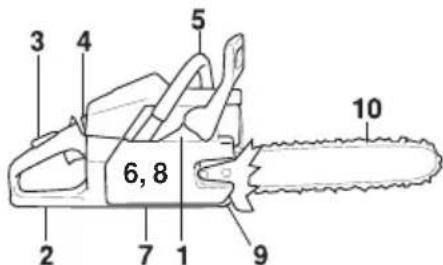
1 Check that the chain brake works correctly and is not damaged.
2 Check that the rear right hand guard is not damaged.
3 Check that the throttle lockout works correctly and is not damaged.
4 Check that the stop switch works correctly and is not damaged.
5 Check that all handles are free from oil.
6 Check that the anti vibration system works and is not damaged.
7 Check that the muffler is securely attached and not damaged.
8 Check that all parts of the chain saw are tightened correctly and that they are not damaged or missing.
9 Check that the chain catcher is in place and not damaged.
10 Check the chain tension.

General working instructions

IMPORTANT!

This section describes basic safety rules for using a chain saw. This information is never a substitute for professional skills and experience. If you get into a situation where you feel unsafe, stop and seek expert advice. Contact your chain saw dealer, service agent or an experienced chain saw user. Do not attempt any task that you feel unsure of!

Before using a chain saw you must understand the effects of kickback and how to avoid them. See instructions under the heading How to avoid kickback.

Before using a chain saw you must understand the difference between cutting with the top and bottom edges of the bar. See instructions under the headings How to avoid kickback and Machine's safety equipment.

Wear personal protective equipment. See instructions under the "Personal protective equipment" heading.

Basic safety rules

1 Look around you:
- To ensure that people, animals or other things cannot affect your control of the machine.
• To make sure that none of the above might come within reach of your saw or be injured by falling trees.

CAUTION! Follow the instructions above, but do not use a chain saw in a situation where you cannot call for help in case of an accident.

2 Do not use the machine in bad weather, such as dense fog, heavy rain, strong wind, intense cold, etc. Working in bad weather is tiring and often brings added risks, such as icy ground, unpredictable felling direction, etc.

3 Take great care when removing small branches and avoid cutting bushes (i.e. cutting many small branches at the same time). Small branches can be grabbed by the chain and thrown back at you, causing serious injury.

4 Make sure you can move and stand safely. Check the area around you for possible obstacles (roots, rocks, branches, ditches, etc.) in case you have to move suddenly. Take great care when working on sloping ground.

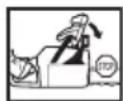
5 Take great care when cutting a tree that is in tension. A tree that is in tension may spring back to its normal position before or after being cut. If you position yourself incorrectly or make the cut in the wrong place the tree may hit you or the machine and cause you to lose control. Both situations can cause serious personal injury.
HUSQVARNA 439 - Basic safety rules - 1

HUSQVARNA 439 - Basic safety rules - 2

6 Before moving your chain saw switch off the engine and lock the chain using the chain brake. Carry the chain saw with the bar and chain pointing backwards. Fit a guard to the bar before transporting the chain saw or carrying it for any distance.

7 When you put the chain saw on the ground, lock the saw chain using the chain brake and ensure you have a constant view of the machine. Switch the engine off before leaving your chain saw for any length of time.

HUSQVARNA 439 - Basic safety rules - 3

WARNING! Sometimes chips get stuck in the clutch cover causing the chain to jam. Always stop the engine before cleaning.

General rules

1 If you understand what kickback is and how it happens then you can reduce or eliminate the element of surprise. By being prepared you reduce the risk. Kickback is usually quite mild, but it can sometimes be very sudden and violent.
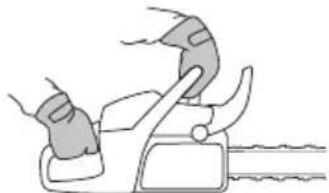
2 Always hold the chain saw firmly with your right hand on the rear handle and your left hand on the front handle. Wrap your fingers and thumbs around the handles. You should use this grip whether you are right-handed or left-handed. This grip minimises the

WORKING TECHNIQUES

effect of kickback and lets you keep the chain saw under control. Do not let go of the handles!
HUSQVARNA 439 - WORKING TECHNIQUES - 1

natural_image Illustration of two hands operating a mechanical device with a handle (no text or symbols)

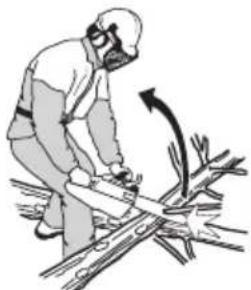
3 Most kickback accidents happen during limbing. Make sure you are standing firmly and that there is nothing in the way that might make you trip or lose your balance.

Lack of concentration can lead to kickback if the kickback zone of the bar accidentally touches a branch, nearby tree or some other object.
HUSQVARNA 439 - WORKING TECHNIQUES - 2

natural_image Illustration of a worker in protective gear using a tool on wooden beams, with an arrow indicating motion (no text or symbols)

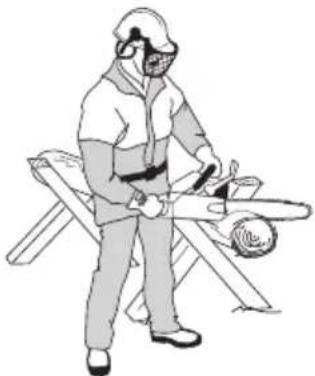
Have control over the workpiece. If the pieces you intend to cut are small and light, they can jam in the saw chain and be thrown towards you. Even if this does not need to be a danger, you may be surprised and lose control of the saw. Never saw stacked logs or branches without first separating them. Only saw one log or one piece at a time. Remove the cut pieces to keep your working area safe.
HUSQVARNA 439 - WORKING TECHNIQUES - 3

natural_image Illustration of a worker in protective gear using a manual tool on a wooden board (no text or symbols)

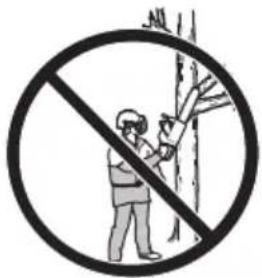
4 Never use the chain saw above shoulder height and try not to cut with the tip of the bar. Never use the chain saw one-handed!
HUSQVARNA 439 - WORKING TECHNIQUES - 4

text_image Prohibition sign showing a worker without welding, indicating no welding or safety hazard

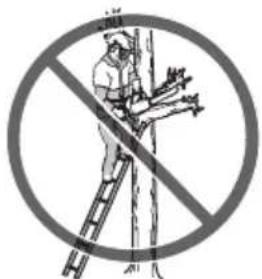
5 You must have a steady stance in order to have full control over the chain saw. Never work standing on a ladder, in a tree or where you do not have firm ground to stand on.
HUSQVARNA 439 - WORKING TECHNIQUES - 5

text_image Prohibition sign showing a worker climbing a rope with a diagonal line, indicating no labor or safety restrictions.

6 Always use a fast cutting speed, i.e. full throttle.

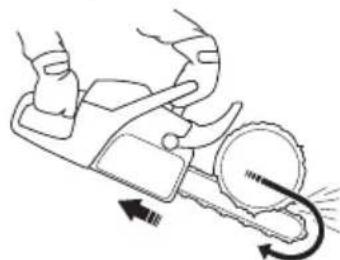
7 Take great care when you cut with the top edge of the bar, i.e. when cutting from the underside of the object. This is known as cutting on the push stroke. The chain tries to push the chain saw back towards the user. If the saw chain is jamming, the saw may be pushed back at you.
HUSQVARNA 439 - WORKING TECHNIQUES - 6

natural_image Line drawing of a manual saw cutting a blade with motion arrows indicating direction (no text or symbols)

8 Unless the user resists this pushing force there is a risk that the chain saw will move so far backwards that only the kickback zone of the bar is in contact with the tree, which will lead to a kickback.
HUSQVARNA 439 - WORKING TECHNIQUES - 7

text_image Diagram illustrating a chain-linking tool and warning sign with Chinese text, showing mechanical hazard and safety instructions.

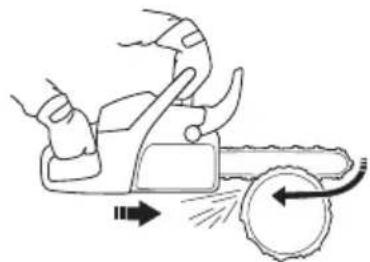
Cutting with the bottom edge of the bar, i.e. from the top of the object downwards, is known as cutting on the pull stroke. In this case the chain saw pulls itself towards the tree and the front edge of the chain saw body rests naturally on the trunk when cutting. Cutting on the pull stroke gives the operator better control over the chain saw and the position of the kickback zone.
HUSQVARNA 439 - WORKING TECHNIQUES - 8

natural_image Illustration of a chain saw cutting a circular object with motion arrows (no text or symbols)

9 Follow the instructions on sharpening and maintaining your bar and chain. When you replace the bar and

WORKING TECHNIQUES

chain use only combinations that are recommended by us. See instructions under the headings Cutting equipment and Technical data.

Basic cutting technique

HUSQVARNA 439 - Basic cutting technique - 1

WARNING! Never use a chain saw by holding it with one hand. A chain saw is not safely controlled with one hand. Always have a secure, firm grip around the handles with both hands.

General

• Always use full throttle when cutting!
- Reduce the speed to idle after every cut (running the engine for too long at full throttle without any load, i.e. without any resistance from the chain during cutting, can lead to serious engine damage).
- Cutting from above = Cutting on the pull stroke.
- Cutting from below = Cutting on the push stroke.
Cutting on the push stroke increases the risk of kickback. See instructions under the heading How to avoid kickback.

Terms

Cutting = General term for cutting through wood.

Limbing = Cutting branches off a felled tree.

Splitting = When the object you are cutting breaks off before the cut is complete.

There are five important factors you should consider before making a cut:

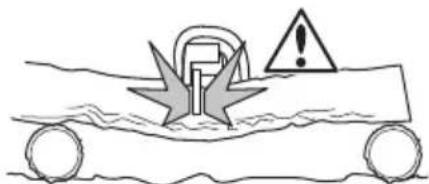
1 Make sure the cutting equipment will not jam in the cut.
HUSQVARNA 439 - There are five important factors you should consider before making a cut: - 1

natural_image Simple line drawing of a car with a warning sign and explosion symbol (no text or labels)

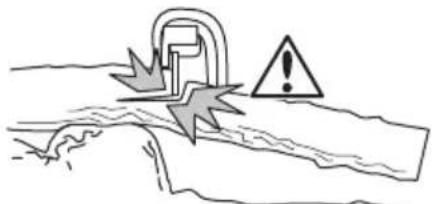
2 Make sure the object you are cutting will not split.
HUSQVARNA 439 - There are five important factors you should consider before making a cut: - 2

natural_image Illustration of a warning sign and abstract shapes on a surface (no text or symbols)

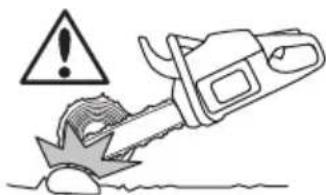
3 Make sure the chain will not strike the ground or any other object during or after cutting.
HUSQVARNA 439 - There are five important factors you should consider before making a cut: - 3

text_image Warning symbol showing a chainsaw with a warning triangle and explosion, indicating hazard or caution.

4 Is there a risk of kickback?

HUSQVARNA 439 - There are five important factors you should consider before making a cut: - 4

text_image Diagram illustrating a hazard warning mechanism with a person falling off a wall and a gear mesh below, showing traffic flow.

5 Do the conditions and surrounding terrain affect how safely you can stand and move about?

Two factors decide whether the chain will jam or the object that you are cutting will split: the first is how the object is supported before and after cutting, and the second is whether it is in tension.

In most cases you can avoid these problems by cutting in two stages; from the top and from the bottom. You need to support the object so that it will not trap the chain or split during cutting.

IMPORTANT! If the chain jams in the cut: stop the engine! Don't try to pull the chain saw free. If you do you may be injured by the chain when the chain saw suddenly breaks free. Use a lever to open up the cut and free the chain saw.

The following instructions describe how to handle the commonest situations you are likely to encounter when using a chain saw.

Limbing

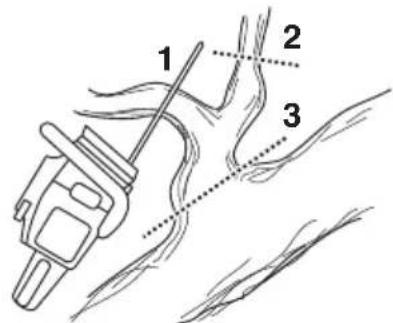
When limbing thick branches you should use the same approach as for cutting.

Cut difficult branches piece by piece.
HUSQVARNA 439 - Limbing - 1

text_image 1 2 3

Cutting

HUSQVARNA 439 - Cutting - 1

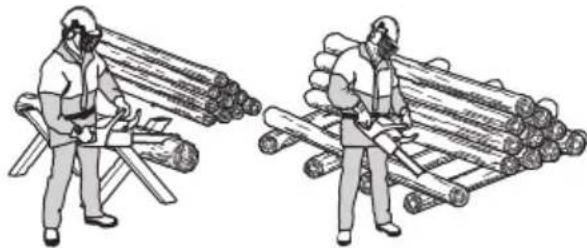
WARNING! Never attempt to cut logs while they are in a pile or when a couple of logs are lying together. Such procedures drastically increase the risk of kickback which can result in a serious or fatal injury.

If you have a pile of logs, each log you attempt to cut should be removed from the pile, placed on a saw horse or runners and cut individually.

Remove the cut pieces from the cutting area. By leaving them in the cutting area, you increase the risk for

WORKING TECHNIQUES

inadvertently getting a kickback, as well as increasing the risk of losing your balance while working.
HUSQVARNA 439 - WORKING TECHNIQUES - 1

natural_image Illustration of two workers handling stacked logs, one holding a log and the other holding a wooden log (no text or symbols present)

The log is lying on the ground. There is little risk of the chain jamming or the object splitting. However there is a risk that the chain will touch the ground when you finish the cut.
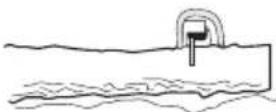
HUSQVARNA 439 - WORKING TECHNIQUES - 2

Cut all the way through the log from above. Avoid letting the chain touch the ground as you finish the cut. Maintain full throttle but be prepared for what might happen.
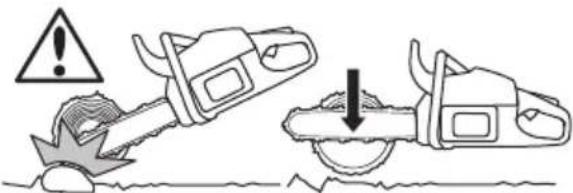
HUSQVARNA 439 - WORKING TECHNIQUES - 3

text_image Safety warning illustration showing a chainsaw cutting a blade with a warning symbol and an arrow indicating damage.

If it is possible (can you turn the log?) stop cutting about 2/3 of the way through the log.

Turn the log and finish the cut from the opposite side.
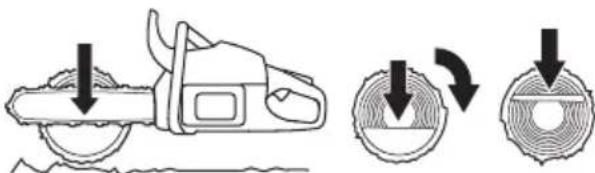
HUSQVARNA 439 - WORKING TECHNIQUES - 4

text_image Diagram illustrating the process of a chain saw cutting into a circular cutter, with arrows indicating the step and direction.

The log is supported at one end. There is a high risk that it will split.
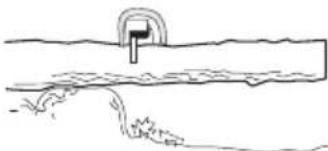
HUSQVARNA 439 - WORKING TECHNIQUES - 5

natural_image Simple line drawing of a pipe or channel with a wavy bottom surface and a curved top structure (no text or symbols)

Start by cutting from below (about 1/3 of the way through). Finish by cutting from above so that the two cuts meet.
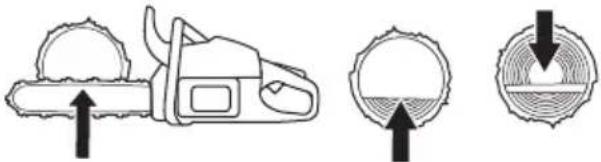
HUSQVARNA 439 - WORKING TECHNIQUES - 6

natural_image Diagram showing a chain mill with arrows indicating movement, and two circular cross-sections with downward arrows (no text or symbols)

The log is supported at both ends. There is a high risk that the chain will jam.
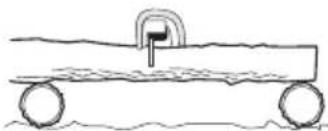
HUSQVARNA 439 - WORKING TECHNIQUES - 7

natural_image Simple line drawing of a boat with wheels and a handle, no text or symbols present

Start by cutting from above (about 1/3 of the way through). Finish by cutting from below so that the two cuts meet.
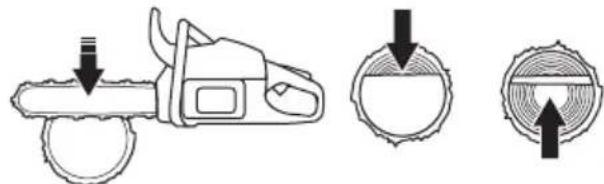
HUSQVARNA 439 - WORKING TECHNIQUES - 8

text_image Diagram illustrating a chain mill tool with three stages: cutting, forming a circular cross-section, and expanding a tree.

Tree felling technique

IMPORTANT! It takes a lot of experience to fell a tree. Inexperienced users of chain saws should not fell trees. Do not attempt any task that you feel unsure of!

Safe distance

The safe distance between a tree that is to be felled and anyone else working nearby is at least 2 1/2 tree lengths. Make sure that no-one else is in this "risk zone" before or during felling.

HUSQVARNA 439 - Safe distance - 1

flowchart
graph TD
    A["Tree"] --> B["Human Figure"]
    B --> C["Tree"]
    style A fill:#f9f,stroke:#333
    style C fill:#bbf,stroke:#333

Felling direction

The aim is to fell the tree in a position where you can limb and cross-cut the log as easily as possible. You want it to fall in a location where you can stand and move about safely.

Once you have decided which way you want the tree to fall you must judge which way the tree would fall naturally.

Several factors affect this:

  • Lean of the tree
    • Bend
  • Wind direction
  • Arrangement of branches

- Weight of snow

- Obstacles within the reach of the tree: for example, other trees, power lines, roads and buildings.

- Look for signs of damage and rot in the stem, this makes it more probably that the tree will break and start to fall before you expect it to.

You may find you are forced to let the tree fall in its natural direction because it is impossible or dangerous to try to make it fall in the direction you first intended.

Another very important factor, which does not affect the felling direction but does affect your safety, is to make sure the tree has no damaged or dead branches that might break off and hit you during felling.

The main point to avoid is letting the tree fall onto another tree. It is very dangerous to remove a trapped tree and

WORKING TECHNIQUES

there is high accident risk. See instructions under the heading Freeing a tree that has fallen badly.

IMPORTANT! During critical felling operations, hearing protectors should be lifted immediately when sawing is completed so that sounds and warning signals can be heard.

Clearing the trunk and preparing your retreat

Delimb the stem up to shoulder height. It is safer to work from the top down and to have the tree between you and the saw.
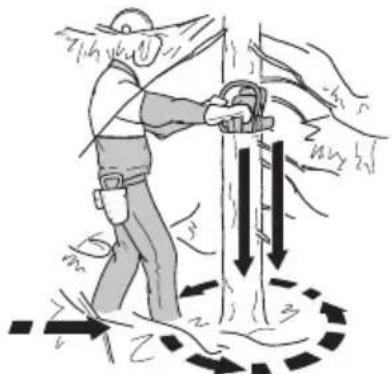
HUSQVARNA 439 - Clearing the trunk and preparing your retreat - 1

text_image Diagram illustrating a person using a tool to lift a vertical pole, with directional arrows indicating motion or force.

Remove any undergrowth from the base of the tree and check the area for obstacles (stones, branches, holes, etc.) so that you have a clear path of retreat when the tree starts to fall. Your path of retreat should be roughly 135 degrees away from the intended felling direction.

HUSQVARNA 439 - Clearing the trunk and preparing your retreat - 2

flowchart
graph TD
    A["1"] --> B["2"]
    B --> C["1"]
    C --> D["2"]
    D --> E["3"]

1 Danger zone
2 Retreat path
3 Felling direction

Felling

HUSQVARNA 439 - Felling - 1

WARNING! Unless you have special training we advise you not to fell trees with a diameter larger than the bar length of your saw!

Felling is done using three cuts. First you make the directional cuts, which consist of the top cut and the bottom cut, then you finish with the felling cut. By placing these cuts correctly you can control the felling direction very accurately.

Directional cuts

To make the directional cut you begin with the top cut. Aim using to the saw's felling direction mark (1) toward a goal further forward in the terrain, where you would like the tree to fall (2). Stand on the right-hand side of the tree, behind the saw, and cut with a pull stroke.

Next make the bottom cut so that it finishes exactly at the end of the top cut.
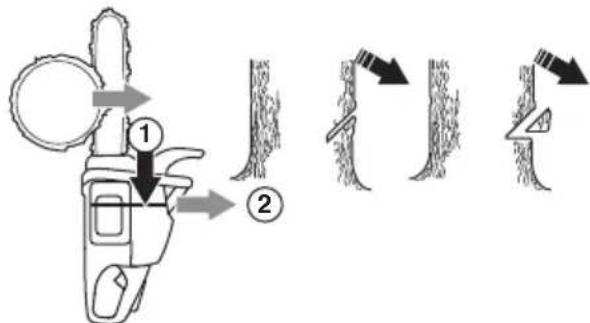
HUSQVARNA 439 - Directional cuts - 1

text_image Diagram illustrating the step-by-step reduction of a chain from a circular object to tree stumps, with labeled arrows and structural changes.

The directional cuts should run 1/4 of the diameter through the trunk and the angle between the top cut and bottom cut should be 45^ .

The line where the two cuts meet is called the directional cut line. This line should be perfectly horizontal and at right angles (90°) to the chosen felling direction.
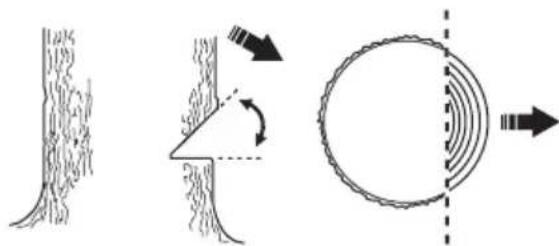
HUSQVARNA 439 - Directional cuts - 2

natural_image Diagram illustrating tree root structure, angle measurement, and circular cross-section with directional arrows (no text or labels)

Felling cut

The felling cut is made from the opposite side of the tree and it must be perfectly horizontal. Stand on the left side of the tree and cut on the pull stroke.

Make the felling cut about 3-5 cm (1.5-2 inches) above the bottom directional cut.
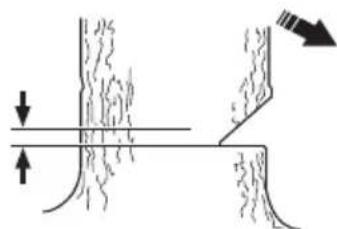
HUSQVARNA 439 - Felling cut - 1

natural_image Diagram showing a tree with roots and branches, including directional arrows indicating movement or force (no text or labels)

Set the spike bumper (if one is fitted) just behind the felling hinge. Use full throttle and advance the chain/bar slowly into the tree. Make sure the tree does not start to move in the opposite direction to your intended felling direction. Drive a wedge or breaking bar into the cut as soon as it is deep enough.
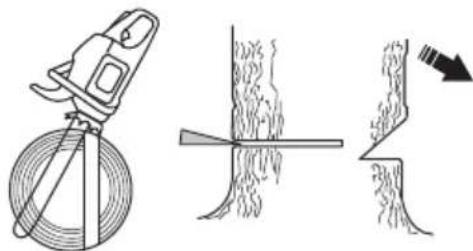
HUSQVARNA 439 - Felling cut - 2

natural_image Diagram showing a hand holding a circular object, a cross-section of tree bark with a tool, and a broken crack with an arrow indicating direction (no text or symbols)

Finish the felling cut parallel with the directional cut line so that the distance between them is at least 1/10 of the

WORKING TECHNIQUES

trunk diameter. The uncut section of the trunk is called the felling hinge.

The felling hinge controls the direction that the tree falls in.
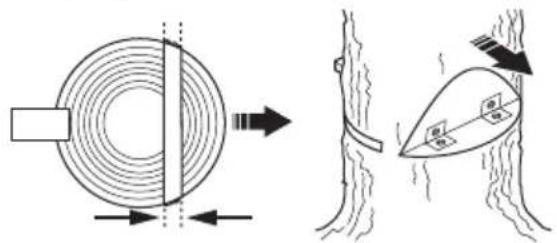
HUSQVARNA 439 - WORKING TECHNIQUES - 1

text_image Diagram illustrating a mechanical or structural process with labeled components and directional arrows, including a circular component and a triangular structure.

All control over the felling direction is lost if the felling hinge is too narrow or non-existent, or if the directional cuts and felling cut are badly placed.
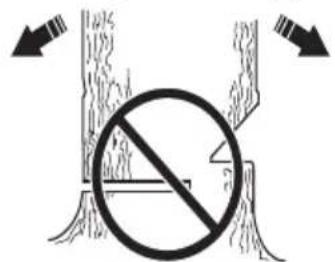
HUSQVARNA 439 - WORKING TECHNIQUES - 2

text_image Diagram showing a prohibition symbol with arrows pointing to tree branches, indicating environmental or safety restrictions.

When the felling cut and directional cut are complete the tree should start to fall by itself or with the aid of a felling wedge or breaking bar.
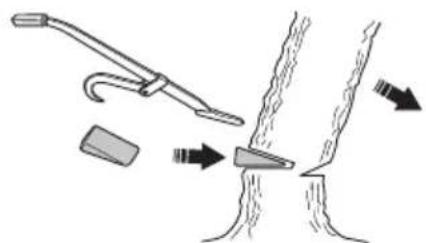
HUSQVARNA 439 - WORKING TECHNIQUES - 3

natural_image Illustration of a manual tool interacting with a tree trunk, showing motion arrows (no text or symbols)

We recommend that you use a bar that is longer than the diameter of the tree, so that you can make the felling cut and directional cuts with single cutting strokes. See instructions under the heading Technical data section to find out which lengths of bar are recommended for your saw.
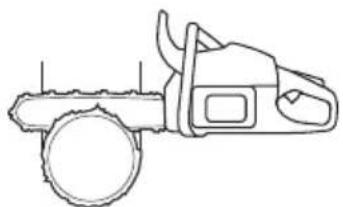
HUSQVARNA 439 - WORKING TECHNIQUES - 4

natural_image Line drawing of a chain-linking tool with a circular base and blade (no text or symbols)

There are methods for felling trees with a diameter larger than the bar length. However these methods involve a much greater risk that the kickback zone of the bar will come into contact with the tree.
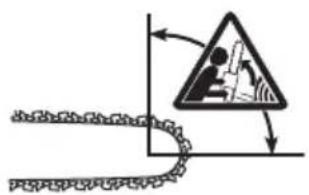
HUSQVARNA 439 - WORKING TECHNIQUES - 5

text_image Diagram illustrating a hazard warning symbol with a person falling off a chain, indicating safety risk.

Freeing a tree that has fallen badly

Freeing a "trapped tree"

It is very dangerous to remove a trapped tree and there is high accident risk.

Never try to fell the tree that is trapped.

Never work in the risk zone of the hanging trapped tree.
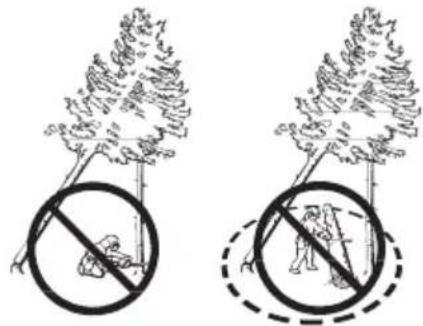
HUSQVARNA 439 - Freeing a "trapped tree" - 1

text_image Diagram illustrating two scenarios of a person walking under a tree, with one scenario marked by a prohibition symbol.

The safest method is to use a winch.

- Tractor-mounted

- Portable

Cutting trees and branches that are in tension

Preparations: Work out which side is in tension and where the point of maximum tension is (i.e. where it would break if it was bent even more).

Decide which is the safest way to release the tension and whether you are able to do it safely. In complicated situations the only safe method is to put aside your chain saw and use a winch.

General advice:

Position yourself so that you will be clear of the tree or branch when the tension is released.
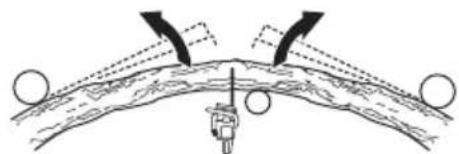
HUSQVARNA 439 - General advice: - 1

natural_image Diagram of a mechanical or fluidic system with two circular components and dashed lines indicating flow or movement (no text or symbols)

Make one or more cuts at or near the point of maximum tension. Make as many cuts of sufficient depth as necessary to reduce the tension and make the tree or branch break at the point of maximum tension.
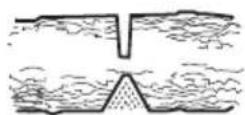
HUSQVARNA 439 - General advice: - 2

Never cut straight through a tree or branch that is in tension!

If you must cut across tree/limb, make two to three cuts, one inch apart, one to two inches deep.
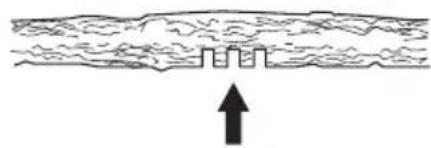
HUSQVARNA 439 - Never cut straight through a tree or branch that is in tension! - 1

natural_image Cross-sectional diagram of a geological or structural layer with an upward arrow indicating a specific feature (no text or symbols present)

WORKING TECHNIQUES

Continue to cut deeper until tree/limb bends and tension is released.
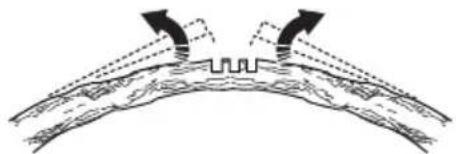
HUSQVARNA 439 - WORKING TECHNIQUES - 1

natural_image Diagram of a curved structure with arrows indicating direction, no text or symbols present

Cut tree/limb from outside the bend, after tension has been released.

How to avoid kickback

HUSQVARNA 439 - How to avoid kickback - 1

WARNING! Kickback can happen very suddenly and violently; kicking the chain saw, bar and chain back at the user. If this happens when the chain is moving it can cause very serious, even fatal injuries. It is vital you understand what causes kickback and that you can avoid it by taking care and using the right working technique.

What is kickback?

The word kickback is used to describe the sudden reaction that causes the chain saw and bar to jump off an object when the upper quadrant of the tip of the bar, known as the kickback zone, touches an object.
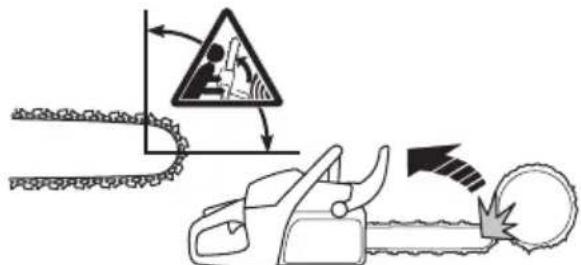
HUSQVARNA 439 - What is kickback? - 1

text_image Diagram illustrating a chain-linking process with warning sign and chain attachment mechanism

Kickback always occurs in the cutting plane of the bar. Normally the chain saw and bar are thrown backwards and upwards towards the user. However, the chain saw may move in a different direction depending on the way it was being used when the kickback zone of the bar touched the object.
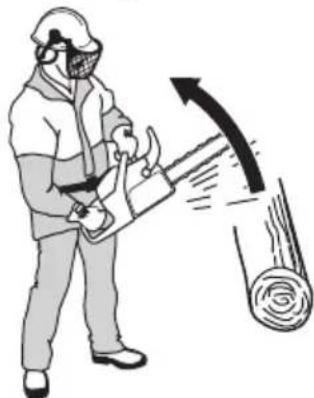
HUSQVARNA 439 - What is kickback? - 2

natural_image Illustration of a worker in protective gear spraying water with a rolled paper roll (no text or symbols)

Kickback only occurs if the kickback zone of the bar touches an object.
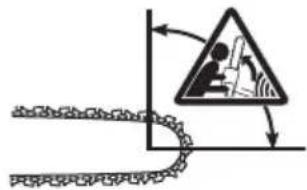
HUSQVARNA 439 - What is kickback? - 3

text_image Diagram illustrating a hazard warning mechanism with a person falling off a chain and a triangular warning symbol.

Limbing

HUSQVARNA 439 - What is kickback? - 4

WARNING! A majority of kickback accidents occur during limbing. Do not use the kickback zone of the guide bar. Be extremely cautious and avoid contacting the log, other limbs or objects with the nose of the guide bar. Be extremely cautious of limbs under tension. They can spring back toward you and cause loss of control resulting in injury.

Make sure that you can stand and move about safely. Work on the left side of the trunk. Work as close as possible to the chain saw for maximum control. If possible, let the weight of the chain saw rest on the trunk.

Keep the trunk between you and the chain saw as you move along the trunk.

Cutting the trunk into logs

See instructions under the heading Basic cutting technique.

MAINTENANCE

General

The user must only carry out the maintenance and service work described in this manual.

IMPORTANT! Any maintenance other than that described in this manual must be carried out by your servicing dealer (retailer).

Carburettor adjustment

Due to existing environmental and emissions legislation your chain saw is equipped with movement limiters on the carburettor adjuster screws. These limit the adjustment possibilities to a maximum of a 1/2 turn.
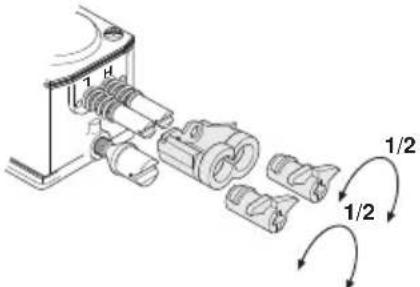
HUSQVARNA 439 - Carburettor adjustment - 1

text_image 1 H 1/2 1/2

Your Husqvarna product has been designed and manufactured to specifications that reduce harmful emissions.

Function

  • The carburettor governs the engine's speed via the throttle control. Air and fuel are mixed in the carburettor. The air/fuel mixture is adjustable. Correct adjustment is essential to get the best performance from the machine.
  • Adjusting the carburettor means that the engine is adapted to local operating conditions, e.g. climate, altitude, petrol and the type of 2-stroke oil.
    • The carburettor has three adjustment controls:
  • L = Low speed jet
  • H = High speed jet
  • T = Idle adjustment screw

HUSQVARNA 439 - Function - 1

text_image T H L

- The L and H-jets are used to adjust the supply of fuel to match the rate that air is admitted, which is controlled with the throttle. If they are screwed

clockwise the air/fuel ratio becomes leaner (less fuel) and if they are turned anti-clockwise the ratio becomes richer (more fuel). A lean mixture gives a higher engine speed and a rich mixture gives a lower engine speed.

- The T-screw regulates the throttle setting at idle speed. If the T-screw is turned clockwise this gives a higher idle speed; turning it anti-clockwise gives a lower idle speed.

Basic settings and running in

The basic carburettor settings are adjusted during testing at the factory. Avoid running at a too high speed during the first 10 hours.

CAUTION! If the chain rotates while idling the T-screw must be turned anti-clockwise until the chain stops.

Rec. idle speed: 2900 rpm

Fine adjustment

When the machine has been "run-in" the carburettor should be finely adjusted. The fine adjustment should be carried out by a qualified person. First adjust the L-jet, then the idling screw T and then the H-jet.

Changing the type of fuel

Fine tuning may be required if the chain saw, after changing the type of fuel, performs differently with regard to starting, acceleration, maximum speed, etc.

Conditions

  • Before any adjustments are made the air filter should be clean and the cylinder cover fitted. Adjusting the carburettor while a dirty air filter is in use will result in a leaner mixture next time the filter is cleaned. This can give rise to serious engine damage.
  • Do not attempt to adjust the L and H jets beyond either stop as this could cause damage.
  • Now start the machine according to the starting instructions and let it warm up for 10 minutes.
  • Place the machine on a flat surface so that the bar points away from you and so that the bar and chain do not come into contact with the surface or other objects.

Low speed jet L

Turn the low speed jet L clockwise until it stops. If the engine accelerates poorly or idles unevenly, turn the low speed jet L anticlockwise until good acceleration and idling are achieved.

Fine adjustment of the idle speed T

Adjust the idle speed with the T-screw. If it is necessary to re-adjust, turn the T-screw clockwise while the engine is running, until the chain starts to rotate. Then turn anti-clockwise until the chain stops. When the idle speed is correctly adjusted the engine should run smoothly in every position and the engine speed should be safely below the speed at which the chain starts to rotate.

HUSQVARNA 439 - Fine adjustment of the idle speed T - 1

WARNING! Contact your servicing dealer, if the idle speed setting cannot be adjusted so that the chain stops. Do not use the chain saw until it has been properly adjusted or repaired.

High speed jet H

At the factory the engine is adjusted at sea level. When working at a high altitude or in different weather conditions, temperatures and atmospheric humidity, it may be necessary to make minor adjustments to the high speed jet.

CAUTION! If the high speed jet is screwed in too far, it may damage the piston/cylinder.

When test run at the factory, the high speed jet is set so that the engine satisfies the applicable legal requirements at the same time as achieving maximum performance. The carburettor's high speed jet is then locked using a limiter cap in the fully screwed out position. The limiter cap limits the potential to adjust the high speed jet to at most half a turn.

Correctly adjusted carburettor

When the carburettor is correctly adjusted the machine accelerates without hesitation and 4-cycles a little at full throttle. It is also important that the chain does not rotate at idle. If the L-jet is set too lean it may cause starting difficulties and poor acceleration. If the H-jet is set too lean the machine will have less power, poor acceleration and could suffer damage to the engine.

Checking, maintaining and servicing chain saw safety equipment

Note! All service and repair work on the machine demands special training. This is especially true of the machine's safety equipment. If your machine fails any of the checks described below we recommend that you take it to your service workshop.

Chain brake and front hand guard

Checking brake band wear
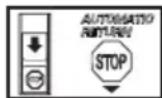
HUSQVARNA 439 - Chain brake and front hand guard - 1

HUSQVARNA 439 - Chain brake and front hand guard - 2

- Brush off any wood dust, resin and dirt from the chain brake and clutch drum. Dirt and wear can impair operation of the brake.
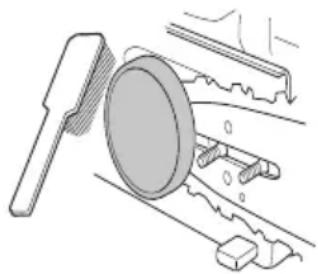
HUSQVARNA 439 - Chain brake and front hand guard - 3

natural_image Technical illustration of mechanical components including a hammer, magnifying glass, and tools (no text or symbols)

- Regularly check that the brake band is at least 0,6 mm thick at its thinnest point.

Checking the front hand guard
HUSQVARNA 439 - Chain brake and front hand guard - 4

HUSQVARNA 439 - Chain brake and front hand guard - 5

- Make sure the front hand guard is not damaged and that there are no visible defects such as cracks.
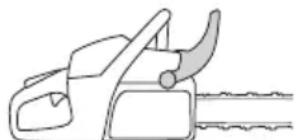
HUSQVARNA 439 - Chain brake and front hand guard - 6

natural_image Line drawing of a manual chain-linking device (no text or symbols)

- Move the front hand guard forwards and back to make sure it moves freely and that it is securely anchored to the clutch cover.
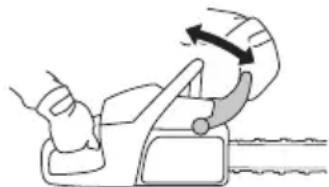
HUSQVARNA 439 - Chain brake and front hand guard - 7

natural_image Illustration of a hand using a tool to lift a car, showing motion direction (no text or symbols)

MAINTENANCE

Checking the inertia brake release
HUSQVARNA 439 - Checking the inertia brake release - 1

- Place the chain saw, with the engine switched off, on a stump or other stable surface. Release the front handle and let the saw fall by its own weight, rotating around the rear handle towards the stump.
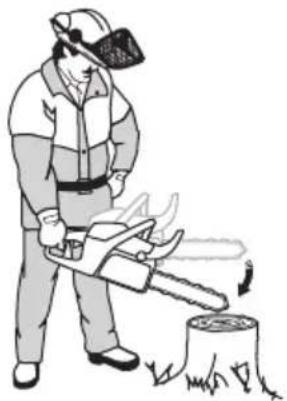
HUSQVARNA 439 - Checking the inertia brake release - 2

natural_image Illustration of a person using a power saw to cut tree bark (no text or symbols)

When the bar hits the stump the brake should be activated.

Checking the brake trigger

- Place the chain saw on firm ground and start it. Make sure the chain does not touch the ground or any other object. See the instructions under the heading Start and stop.
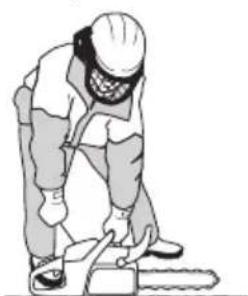
HUSQVARNA 439 - Checking the brake trigger - 1

natural_image Illustration of a worker in protective gear using a chainsaw (no text or symbols)

- Grasp the chain saw firmly, wrapping your fingers and thumbs around the handles.
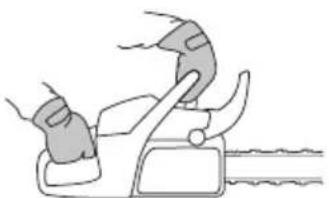
HUSQVARNA 439 - Checking the brake trigger - 2

natural_image Simple line drawing of a mechanical clamp or bracket with two hands operating it (no text or symbols)

- Apply full throttle and activate the chain brake by tilting your left wrist forward onto the front hand guard. Do not let go of the front handle. The chain should stop immediately.
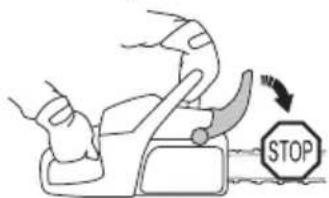
HUSQVARNA 439 - Checking the brake trigger - 3

text_image STOP

Throttle lockout

HUSQVARNA 439 - Throttle lockout - 1

- Make sure the throttle control is locked at the idle setting when the throttle lockout is released.
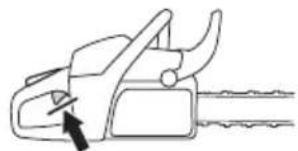
HUSQVARNA 439 - Throttle lockout - 2

natural_image Line drawing of a chain-linking device with a black arrow pointing to the handle (no text or symbols)

- Press the throttle lockout and make sure it returns to its original position when you release it.
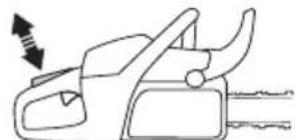
HUSQVARNA 439 - Throttle lockout - 3

natural_image Line drawing of a mechanical tool or bracket with an arrow indicating direction (no text or symbols)

- Check that the throttle trigger and throttle lockout move freely and that the return springs work properly.
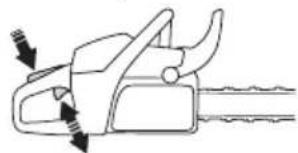
HUSQVARNA 439 - Throttle lockout - 4

natural_image Line drawing of a chain-linking device with arrows indicating motion direction (no text or symbols)

- Start the chain saw and apply full throttle. Release the throttle control and check that the chain stops and remains stationary.

Chain catcher
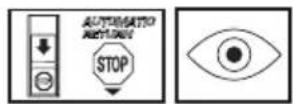
HUSQVARNA 439 - Chain catcher - 1

- Check that the chain catcher is not damaged and is firmly attached to the body of the chain saw.
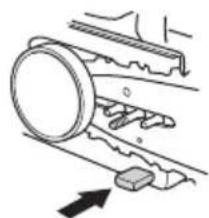
HUSQVARNA 439 - Chain catcher - 2

natural_image Diagram of a mechanical device with a magnifying glass and tool, showing internal components (no text or symbols)

MAINTENANCE

Right hand guard

HUSQVARNA 439 - Right hand guard - 1

HUSQVARNA 439 - Right hand guard - 2

- Check that the right hand guard is not damaged and that there are no visible defects, such as cracks.
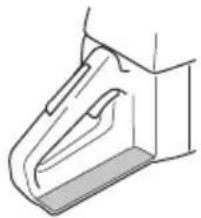
HUSQVARNA 439 - Right hand guard - 3

natural_image Pure technical line drawing of a mechanical component (no text or symbols)

Vibration damping system

HUSQVARNA 439 - Vibration damping system - 1

HUSQVARNA 439 - Vibration damping system - 2

- Regularly check the vibration damping units for cracks or deformation. - Make sure the vibration damping units are securely attached to the engine unit and handle unit.
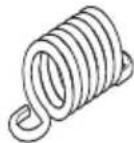
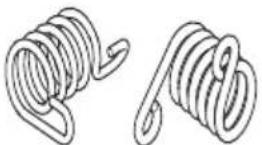
HUSQVARNA 439 - Vibration damping system - 3

HUSQVARNA 439 - Vibration damping system - 4

Stop switch

HUSQVARNA 439 - Stop switch - 1

- Start the engine and make sure the engine stops when you move the stop switch to the stop setting.
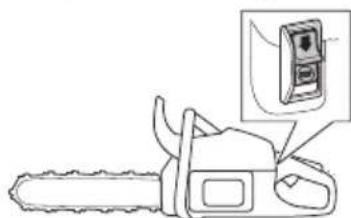
HUSQVARNA 439 - Stop switch - 2

natural_image Line drawing of a chainsaw with an inset showing a close-up of its blade (no text or symbols)

NOTE! The start/stop switch automatically returns to run position. In order to prevent unintentional starting, the spark plug cap must be removed from the spark plug

when assembling, checking and/or performing maintenance.
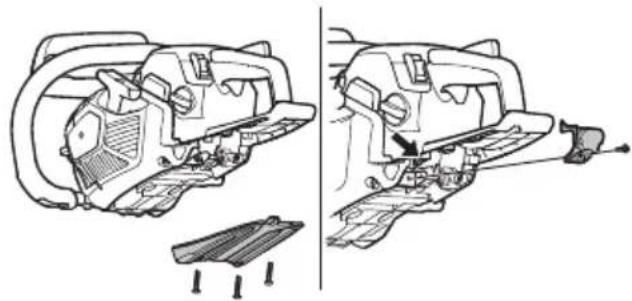
HUSQVARNA 439 - Stop switch - 3

natural_image Technical line drawing of a mechanical assembly with two views (front and side), showing internal components and mounting brackets (no text or symbols)

Muffler

HUSQVARNA 439 - Muffler - 1

HUSQVARNA 439 - Muffler - 2

- Never use a machine that has a faulty muffler.
HUSQVARNA 439 - Muffler - 3

text_image Prohibition sign with crossed-out robot icon and prohibition symbol

- Regularly check that the muffler is securely attached to the machine.
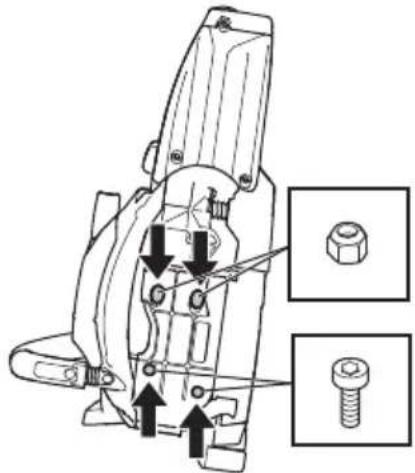
HUSQVARNA 439 - Muffler - 4

text_image Technical diagram of a mechanical assembly with labeled parts and directional arrows indicating movement or force

- Loosen the screws (1 and 2).

HUSQVARNA 439 - Muffler - 5

text_image Technical diagram showing mechanical assembly with labeled parts, including component 1 and component 2 with arrows indicating assembly steps.

MAINTENANCE

- Push the muffler cover as shown in the picture.
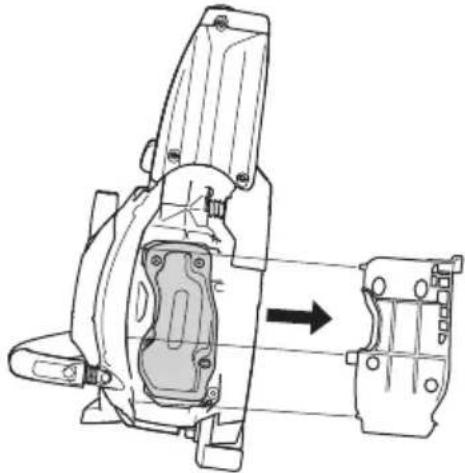
HUSQVARNA 439 - MAINTENANCE - 1

natural_image Technical line drawing of a mechanical assembly with internal components and an arrow indicating direction (no text or symbols)

- Loosen the screws and nuts. Remove and check that the muffler is ok.
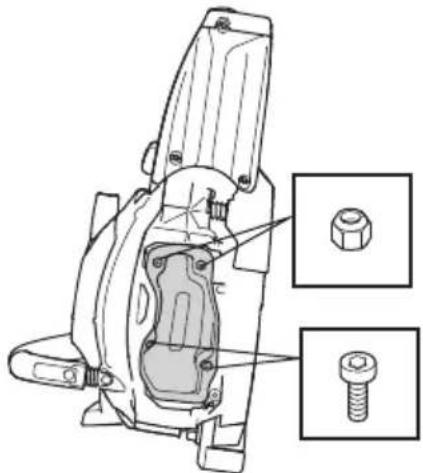
HUSQVARNA 439 - MAINTENANCE - 2

text_image Technical diagram of a mechanical assembly with labeled parts and close-ups of two bolts

Some mufflers are equipped with a special spark arrestor mesh. If your machine has this type of muffler, you should clean the mesh at least once a week. This is best done with a wire brush. A blocked mesh will cause the engine to overheat and may lead to serious damage.

Note! The mesh must be replaced if it is damaged. If the mesh is blocked the machine will overheat and this will cause damage to the cylinder and piston. Never use a machine with a muffler that is in poor condition. Never use a muffler if the spark arrestor mesh is missing or defective.
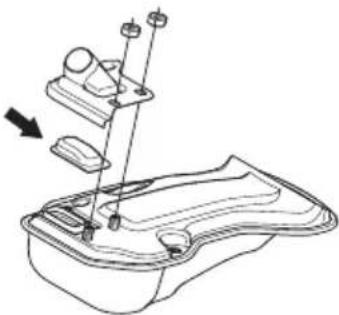
HUSQVARNA 439 - MAINTENANCE - 3

natural_image Technical line drawing of a mechanical assembly with no visible text or symbols

The muffler is designed to reduce the noise level and to direct the exhaust gases away from the operator. The exhaust gases are hot and can contain sparks, which may cause fire if directed against dry and combustible material.

Starter

HUSQVARNA 439 - Starter - 1

WARNING! When the recoil spring is wound up in the starter housing it is under tension and can, if handled carelessly, pop out and cause personal injury.

Care must be exercised when replacing the return spring or the starter cord. Wear protective glasses and protective gloves.

Changing a broken or worn starter cord
HUSQVARNA 439 - Changing a broken or worn starter cord - 1

text_image AUTOMATIC FUNCTION STOP

- Loosen the screws on the front handle and detach it from its mounting.
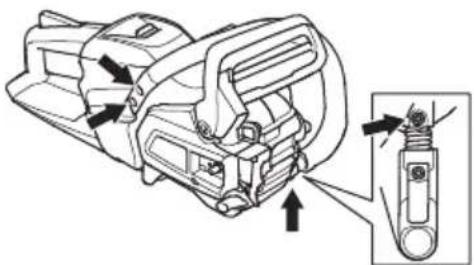
HUSQVARNA 439 - Changing a broken or worn starter cord - 2

natural_image Technical diagram of a mechanical assembly with arrows indicating motion or force direction (no text or symbols present)

- Loosen the screws that hold the starter against the crankcase and remove the starter.
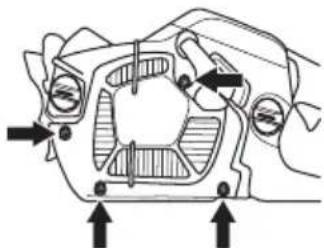
HUSQVARNA 439 - Changing a broken or worn starter cord - 3

natural_image Mechanical component diagram showing internal parts with arrows indicating movement (no text or symbols)

- Pull out the cord approx. 30 cm and hook it into the notch in the rim of the pulley. Release the recoil spring by letting the pulley rotate slowly backwards.
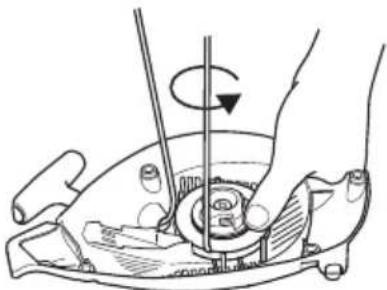
HUSQVARNA 439 - Changing a broken or worn starter cord - 4

natural_image Mechanical assembly diagram showing hands operating a gear with rotating shaft (no text or symbols)

- Undo the screw in the centre of the pulley and remove the pulley. Insert and fasten a new starter cord to the pulley. Wind approx. 3 turns of the starter cord onto the pulley. Connect the pulley to the recoil spring so that the end of the spring engages in the pulley. Fit the screw in the centre of the pulley. Insert the starter cord through the hole in the starter housing and the starter

MAINTENANCE

handle. Make a secure knot in the end of the starter cord.
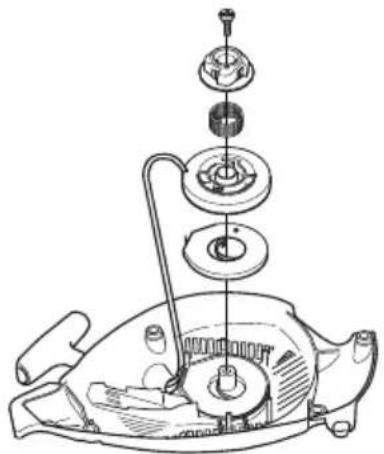
HUSQVARNA 439 - MAINTENANCE - 1

natural_image Technical line drawing of a mechanical assembly with multiple components and no visible text or symbols

Tensioning the recoil spring

- Hook the starter cord in the notch in the pulley and turn the starter pulley about 2 turns clockwise.

Note! Check that the pulley can be turned at least a further 1/2 turn when the starter cord is pulled all the way out.
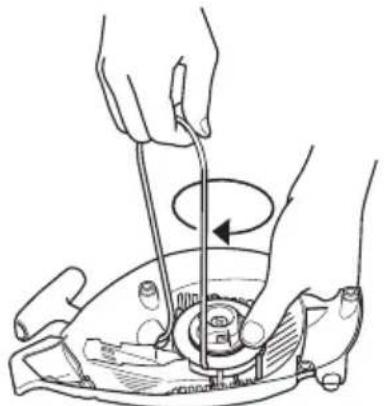
HUSQVARNA 439 - Tensioning the recoil spring - 1

natural_image Illustration of hands using a tool to adjust or install a mechanical component, with no visible text or symbols.

Changing a broken recoil spring

HUSQVARNA 439 - Changing a broken recoil spring - 1

text_image AUTOMATIC RETURN STOP
  • Lift up the starter pulley. See instructions under the heading Changing a broken or worn starter cord. Remember that the recoil spring is coiled under tension in the starter housing.
  • Remove the cassette with the recoil spring from the starter.
  • Lubricate the recoil spring with light oil. Fit the cassette with recoil spring in the starter. Fit the starter pulley and tension the recoil spring.

Fitting the starter

• To fit the starter, first pull out the starter cord and place the starter in position against the crankcase. Then

slowly release the starter cord so that the pulley engages with the pawls.
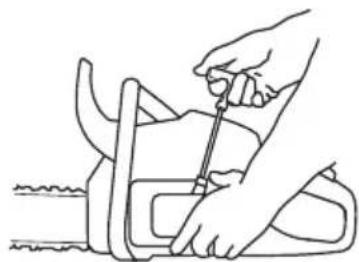
HUSQVARNA 439 - Fitting the starter - 1

natural_image Line drawing of a hand using a tool to cut a mechanical component (no text or symbols)

• Fit and tighten the screws that hold the starter.

Air filter
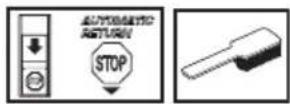
HUSQVARNA 439 - Air filter - 1

The air filter must be regularly cleaned to remove dust and dirt in order to avoid:

• Carburettor malfunctions
- Starting problems
- Loss of engine power
- Unnecessary wear to engine parts.
• Excessive fuel consumption.
- Remove the air filter after taking off the air filter cover. When refitting make sure that the air filter seals tightly against the filter holder. Clean the filter by brushing or shaking it.
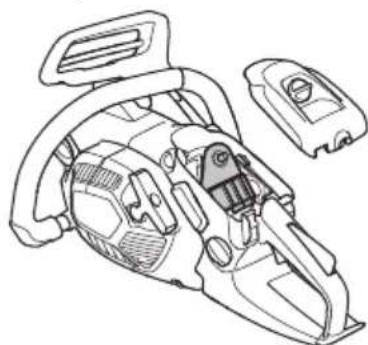
HUSQVARNA 439 - Air filter - 2

natural_image Technical line drawing of a chain-linker device showing internal components and housing (no text or labels)

The filter can be cleaned more thoroughly by washing it in water and detergent.

An air filter that has been in use for a long time cannot be cleaned completely. The filter must therefore be replaced with a new one at regular intervals. A damaged air filter must always be replaced.
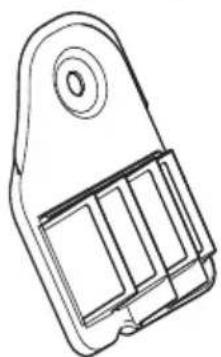
HUSQVARNA 439 - Air filter - 3

natural_image Technical line drawing of a mechanical bracket component (no text or symbols)

MAINTENANCE

A HUSQVARNA chain saw can be equipped with different types of air filter according to working conditions, weather, season, etc. Contact your dealer for advice.

Spark plug
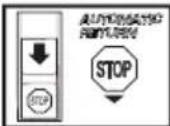
HUSQVARNA 439 - Spark plug - 1

The spark plug condition is influenced by:

  • An incorrect fuel mixture (too much or incorrect type of oil).
  • A dirty air filter.

These factors cause deposits on the spark plug electrodes, which may result in operating problems and starting difficulties.

If the machine is low on power, difficult to start or runs poorly at idle speed: always check the spark plug first before taking any further action. If the spark plug is dirty, clean it and check that the electrode gap is 0.65 mm.
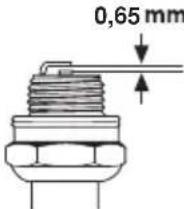
HUSQVARNA 439 - Spark plug - 2

The spark plug should be replaced after about a month in operation or earlier if necessary.
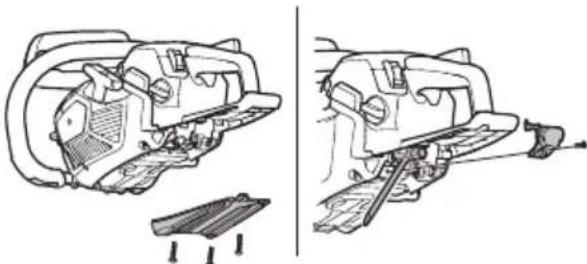
HUSQVARNA 439 - Spark plug - 3

natural_image Technical line drawing of a mechanical assembly with no visible text or symbols

Note! Always use the recommended spark plug type! Use of the wrong spark plug can damage the piston/cylinder. Check that the spark plug is fitted with a suppressor.

Lubricating the bar tip sprocket
HUSQVARNA 439 - Lubricating the bar tip sprocket - 1

HUSQVARNA 439 - Lubricating the bar tip sprocket - 2

Lubricate the bar tip sprocket each time you refuel. Use the special grease gun and a good quality bearing grease.
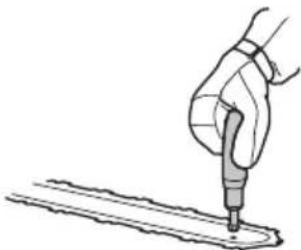
HUSQVARNA 439 - Lubricating the bar tip sprocket - 3

natural_image Line drawing of a hand holding a tool, poised to write or mark (no text or symbols present)

Adjustment of the oil pump.

HUSQVARNA 439 - Adjustment of the oil pump. - 1

The oil pump is adjustable. Adjustments are made by turning the screw using a screwdriver. The machine is supplied from the factory with the screw set to middle position. Turning the screw clockwise will reduce the oil flow and turning the screw anti-clockwise will increase the oil flow.
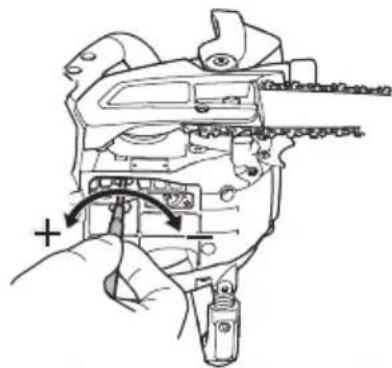
HUSQVARNA 439 - Adjustment of the oil pump. - 2

text_image Technical diagram showing a hand operating a mechanical device with an arrow indicating the process step and polarity indicator.

HUSQVARNA 439 - Adjustment of the oil pump. - 3

WARNING! The engine must not be running when making adjustments.

Cooling system
HUSQVARNA 439 - Cooling system - 1

HUSQVARNA 439 - Cooling system - 2

HUSQVARNA 439 - Cooling system - 3

To keep the working temperature as low as possible the machine is equipped with a cooling system.

The cooling system consists of:

1 Air intake on the starter.
2 Air guide plate.
3 Fins on the flywheel.
4 Cooling fins on the cylinder.
5 Clutch cover
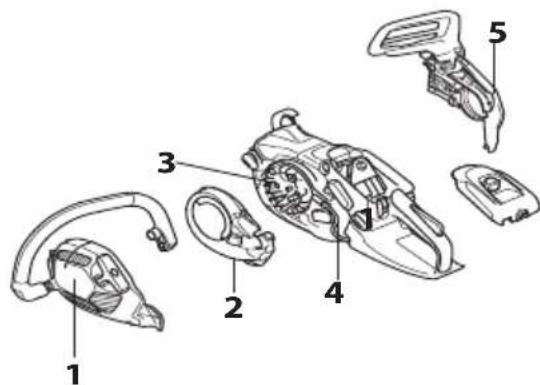
HUSQVARNA 439 - Cooling system - 4

text_image Exploded view diagram of a mechanical device with numbered parts for identification

Clean the cooling system with a brush once a week, more often in demanding conditions. A dirty or blocked cooling system results in the machine overheating which causes damage to the piston and cylinder.

MAINTENANCE

"Air Injection" centrifugal cleaning

Centrifugal cleaning means the following: All air to the carburettor passes through the starter. Dirt and dust is centrifuged out by the cooling fan.
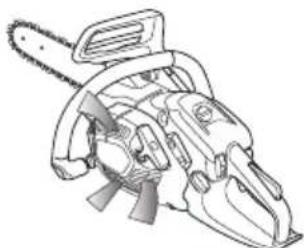
HUSQVARNA 439 - "Air Injection" centrifugal cleaning - 1

natural_image Technical line drawing of a chain-linking device (no text or symbols)

IMPORTANT! In order to maintain operation of the centrifugal cleaning system it must be regularly maintained. Clean the air intake to the starter, the fins on the flywheel, the space around the flywheel, inlet pipe and carburettor compartment.

Winter use

Running problems can occur when using the machine in the cold and snowy conditions caused by:

• Too low engine temperature.
- Icing of the air filter and carburettor.

Special measures are therefore often required:

  • Partly mask the air inlet on the starter to increase the working temperature of the engine.
  • Preheat the intake air to the carburettor by using the heat from the cylinder.

Temperature 0°C or colder:
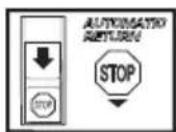
HUSQVARNA 439 - Temperature 0°C or colder: - 1

The intermediate wall is designed so it can be adjusted for running in cold weather, so that preheated air from the cylinder can pass into the carburettor space preventing icing of the air filter, etc.

  • Loosen the screws on the front handle and detach it from its mounting.
  • Loosen the screws that hold the starter against the crankcase and remove the starter.
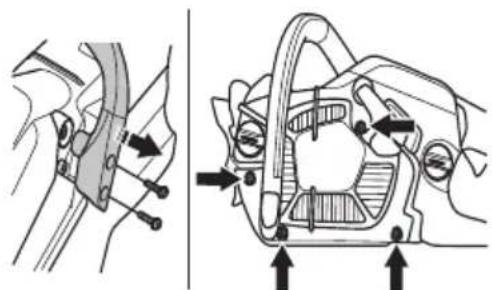
HUSQVARNA 439 - Temperature 0°C or colder: - 2

natural_image Technical diagram showing mechanical assembly with arrows indicating force or movement (no text or symbols present)

- Detach and replace the air guide plate (black) with the air guide plate (blue) for winter use. Part number: 584 89 40-01.

- Detach the DF guide from the black air guide plate and mount it on the blue air guide plate.
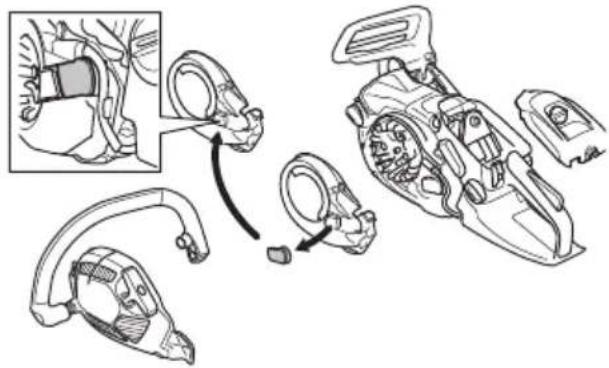
HUSQVARNA 439 - Temperature 0°C or colder: - 3

natural_image Technical line drawing of a mechanical assembly with exploded view and close-up views (no text or symbols)
  • Remove the air filter cover.
  • Slide the grommet (blue) upwards from the closed position to the open position. Use a screw driver.
  • Make sure the rib of the grommet is aligned with the snow mark.
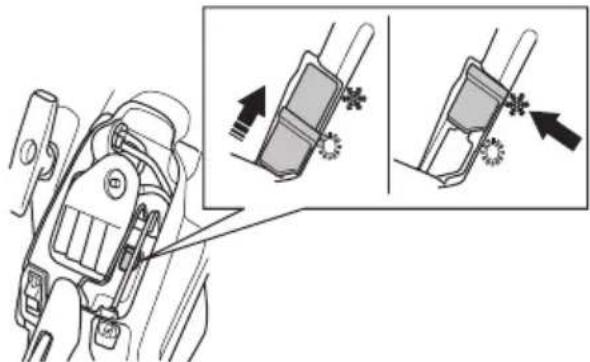
HUSQVARNA 439 - Temperature 0°C or colder: - 4

text_image Technical diagram showing mechanical assembly with labeled parts and directional arrows indicating motion or movement.

For temperatures below -5°C and/or in snow conditions a special cover is available, which is mounted on the starter housing. These reduce the flow of cooling air and prevent large amounts of snow from being sucked into the carburettor space.
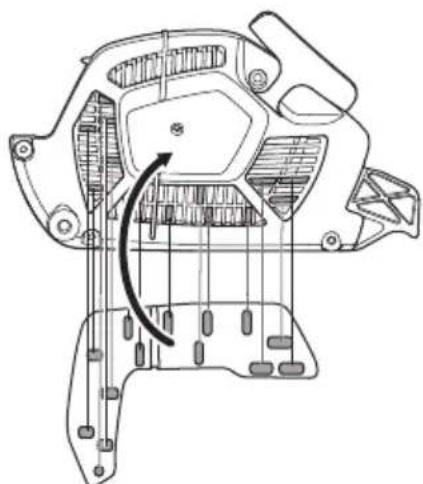
HUSQVARNA 439 - Temperature 0°C or colder: - 5

natural_image Technical line drawing of a mechanical device with internal components and a curved arrow indicating motion (no text or symbols)

Part number: 584 89 47-01.

IMPORTANT! If the special winterising kit has been fitted or any measures have been taken to increase the temperature these changes must be reversed before the machine is used in normal temperature conditions. Otherwise there is a risk of overheating, resulting in severe damage to the engine.

MAINTENANCE

Maintenance schedule

The following is a list of the maintenance steps that must be performed on the machine. Most of the items are described in the Maintenance section.

Daily maintenance Weekly maintenance Monthly maintenance
Clean the outside of the machine. Check the cooling system weekly.Check the brake band on the chain brake for wear. Replace when less than 0.6 mm (0,024 inch) remains at the most worn point.
Check that the components of the throttle trigger work safely. (Throttle lockout and throttle trigger.)Check the starter, starter cord and return spring.Check the clutch centre, clutch drum and clutch spring for wear.
Clean the chain brake and check that it operates safely. Make sure that the chain catcher is undamaged, and replace it if necessary.Check that the vibration damping elements are not damaged.Clean the spark plug. Check that the electrode gap is 0.65 mm.
The bar should be turned daily for more even wear. Check the lubrication hole in the bar, to be sure it is not clogged. Clean the bar groove. If the bar has a sprocket tip, this should be lubricated.Lubricate the clutch drum bearing. Clean the outside of the carburettor.
Check that the bar and chain are getting sufficient oil.File off any burrs from the edges of the bar.Check the fuel filter and the fuel hose. Replace if necessary.
Check the saw chain with regard to visible cracks in the rivets and links, whether the saw chain is stiff or whether the rivets and links are abnormally worn. Replace if necessary.Clean the carburettor compartment.Empty the fuel tank and clean the inside.
Sharpen the chain and check its tension and condition. Check the drive sprocket for excessive wear and replace if necessary.Clean the air filter. Replace if necessary.Empty the oil tank and clean the inside.
Clean the starter units air intake. Check all cables and connections.
Check that nuts and screws are tight.Clean or replace the spark arrestor mesh on the muffler.
Check that the stop switch works correctly.
Check that there are no fuel leaks from the engine, tank or fuel lines.
Check that the chain does not rotate when the engine is idling.

TECHNICAL DATA

Technical data

439

Engine

Cylinder displacement, cm ^3 35,2

Cylinder bore, mm 40

Stroke, mm 28

Idle speed, rpm 2900

Power, kW/ rpm 1,5/10000

Ignition system

Spark plug NGK CMR6H

Electrode gap, mm 0,65

Fuel and lubrication system

Fuel tank capacity, litre 0,30

Oil pump capacity at 8,000 rpm, ml/min 3-9

Oil tank capacity, litre 0,20

Type of oil pump Adjustable

Weight

Chain saw without bar or chain, empty tanks, kg 3,9

Noise emissions (see note 1)

Sound power level, measured dB (A) 112

Sound power level, guaranteed L_WA dB (A) 114

Sound levels (see note 2)

Equivalent sound pressure level at the operator's ear, dB(A) 100

Equivalent vibration levels, a_hveq (see note 3)

Front handle, m/s ^2 4,9

Rear handle, m/s ^2 4,1

Chain/bar

Standard bar length, inch/cm 14/35

Recommended bar lengths, inch/cm 12-16 / 30-40

Usable cutting length, inch/cm 11-15 / 28-38

Pitch, inch/mm 3/8 / 9,52

Thickness of drive links, inch/mm 0.050/1,3

Type of drive sprocket/number of teeth Spur/6

Maximum chain speed, m/sec 24,8

Note 1: Noise emissions in the environment measured as sound power ( L_WA ) in conformity with EC directive 2000/14/EC.

Note 2: Equivalent sound pressure level, according to ISO 22868, is calculated as the time-weighted energy total for different sound pressure levels under various working conditions. Typical statistical dispersion for equivalent sound pressure level is a standard deviation of 1 dB (A).

Note 3: Equivalent vibration level, according to ISO 22867, is calculated as the time-weighted energy total for vibration levels under various working conditions. Reported data for equivalent vibration level has a typical statistical dispersion (standard deviation) of 1 m/s^2 .

TECHNICAL DATA

Guide bar and saw chain combinations

The following cutting attachments are approved for the model Husqvarna 439.

Guide bar Saw chain
Length, inch Pitch, inch Gauge, mmMax. nose radiusTypeLength, drive links (no.)
123/8 1,3 7T Husqvarna H3745
14 52
16 56

Saw chain filing and file gauges

HUSQVARNA 439 - Saw chain filing and file gauges - 1

text_image xx inch/mm 37 5/32 / 4.0 80° 30° 0° inch/mm 0.025/0.65 5796536-01

EC Declaration of Conformity

(Applies to Europe only)

Husqvarna AB, SE-561 82 Huskvarna, Sweden, tel: +46-36-146500, declares under sole responsibility that the chain saws for forest service Husqvarna 439 from 2013's serial numbers and onwards (the year is clearly stated in plain text on the type plate with subsequent serial number), are in conformity with the requirements of the COUNCIL'S DIRECTIVES:

  • of May 17, 2006 "relating to machinery" 2006/42/EC
  • of December 15, 2004 "relating to electromagnetic compatibility" 2004/108/EC.
  • of May 8, 2000 "relating to the noise emissions in the environment" 2000/14/EC.

For information relating to noise emissions, see the Technical data chapter. The following standards have been applied: EN ISO 12100:2010, ISO 14982:2009, EN ISO 11681-1:2011.

Notified body: 0404, SMP Svensk Maskinprovning AB, Box 7035, SE-750 07 Uppsala, Sweden, has carried out EC type examination in accordance with the machinery directive's (2006/42/EC) article 12, point 3b. The certificates for EC type examination in accordance with annex VI, have the numbers: 0404/13/2379 – 439.

The supplied chain saw conforms to the example that underwent EC type examination.

Huskvarna October 31, 2013
HUSQVARNA 439 - (Applies to Europe only) - 1

text_image Peu Guusleptan

Per Gustafsson, Development manager

(Authorized representative for Husqvarna AB and responsible for technical documentation.)

SYMBOLERKLÄRUNG

Symbole am Gerät:

text_image Safety warning symbol showing a person climbing a tree with a no-smoking circle
natural_image Illustration of a person wearing protective gear and a first aid kit (no text or symbols)

Benutzen Sie immer:

natural_image Line drawing of a manual saw blade and handle (no text or symbols)
text_image Diagram illustrating a hazard warning symbol with a person inside a triangle and a chain, indicating occupational hazard.
natural_image Line drawing of a mechanical tool or device with labeled point A (no text or symbols beyond label)
natural_image Technical line drawing of a mechanical device with two views (1 and 2), no visible text or symbols
natural_image Illustration of a hand pressing down on a mechanical component with motion arrows indicating rotation (no text or symbols)
natural_image Line drawing of a hand using a manual lever to lift a car (no text or symbols)
natural_image Illustration of a hand operating a mechanical device with a tool (no text or symbols visible)
natural_image Illustration of a person in protective gear using a tool to lift a rolled-up cable (no text or symbols)
natural_image Illustration of a hand pressing down on a mechanical component with motion arrows indicating rotation (no text or symbols)
natural_image Illustration of a person using a power tool to cut a saw (no text or symbols present)
natural_image Mechanical assembly diagram showing a rotating component with a magnified view (no text or symbols)

Rechtshandschutz

natural_image Pure technical line drawing of a mechanical component without any text, numbers, or symbols
natural_image Three types of coiled springs shown in line drawings (no text or symbols)
natural_image Line drawing of a chainsaw with an inset showing a small device (no text or symbols)

Schalldämpfer

natural_image Technical line drawing of a mechanical assembly with no visible text or symbols
text_image Prohibition symbol with crossed-out stars and Chinese text, likely indicating a prohibition or restriction in a document.
natural_image Technical line drawing of a cylindrical object with length labeled 'L' (no other text or symbols)
text_image PITCH = D/2 D
natural_image Pure mechanical diagram showing a lever and handle without any text, numbers, or symbols
text_image PITCH = D/2 D
natural_image Pure mechanical part diagram with no text, numbers, or symbols
natural_image Illustration of a person in protective gear using a power tool to cut tree bark (no text or symbols)
natural_image Simple line drawing of a mechanical component with a downward arrow and screw holes (no text or symbols)
natural_image Line drawing of a hand holding a ruler or measuring tool (no text or symbols present)
natural_image Illustration of a hand holding a tool with an arrow indicating rotation (no text or symbols)
natural_image Technical line drawing of a mechanical gear assembly (no text or symbols)
natural_image Technical illustration of a gear and rotor assembly (no text or symbols)
natural_image Diagram showing a tool with a cross-section view of a mechanical part, no text or symbols present
natural_image Simple line drawing of a tool or plunger with two arrows indicating direction (no text or symbols)
natural_image Simple line drawing of a rectangular object with a curved arrow and decorative elements, no text or symbols present.

HUSQVARNA 439 - Schalldämpfer - 1

natural_image Line drawing of a mechanical tool or device with a curved handle and arrow, no text or symbols present
natural_image Technical line drawing of a mechanical assembly with labeled component A (no text or symbols present)
text_image Technical diagram showing mechanical assembly with labeled components and directional arrow indicating motion or movement
natural_image Mechanical assembly diagram showing a motor and gear assembly (no text or labels)
natural_image Line drawing of a chain saw with a hammer indicating the blade (no text or symbols)
natural_image Line drawing of a chainsaw with a curved arrow indicating motion (no text or symbols)
natural_image Line drawing of a chainsaw with a downward arrow indicating compression or disassembly (no text or symbols)

UMGANG MIT KRAFTSTOFF

Kraftstoff

text_image Safety warning illustration showing fuel injection, nozzles, and a worker holding a pump bag
natural_image Diagram of a chainsaw with a downward arrow and a small inset showing a gear (no text or symbols)
text_image Diagram of a chainsaw with an upward arrow and a warning symbol indicating fuel efficiency or safety.

HUSQVARNA 439 - Kraftstoff - 1

text_image Min. 3 m (10 ft)
natural_image Diagram of a manual tool emitting exhaust smoke from a pipe (no text or symbols)
natural_image Technical line drawing of a mechanical component with arrows indicating direction (no text or symbols)

Choke: Den Chokehebel in Choke-Lage führen.
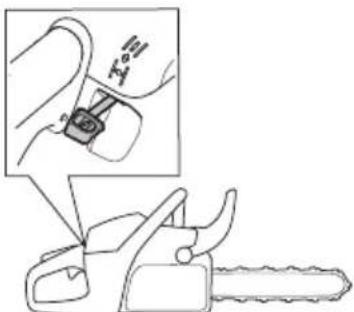
HUSQVARNA 439 - Kraftstoff - 2

natural_image Line drawing of a chainsaw being adjusted for a tool, showing the blade and handle (no text or symbols)
natural_image Illustration of a person in a hard hat and pants handling a large object (no text or symbols visible)
natural_image Line drawing of a chainsaw with a hand holding a small object, showing a close-up inset (no text or symbols)
natural_image Illustration of a person using a power tool to cut a saw (no text or symbols present)
natural_image Line drawing of a mechanical device with arrows indicating motion or force (no text or symbols)
natural_image Illustration of a manual tool with a handle and blade, no text or symbols present

HUSQVARNA 439 - Kraftstoff - 3

text_image Safety warning symbol showing a hand holding a cigarette next to a trash can, indicating no smoking or fire.
text_image Safety warning illustration showing a worker using a tool to clean debris and a person with a no-smoking symbol.
natural_image Illustration of a person in protective gear holding a chainsaw (no text or symbols)

Stoppen

natural_image Line drawing of a chainsaw with an inset showing a close-up of its blade (no text or symbols)
natural_image Technical line drawing of a vehicle's front and side views showing engine components and structural elements (no text or labels)
natural_image Line drawing of a mechanical device with hands operating it (no text or symbols)
natural_image Illustration of a person in protective gear using a saw to cut wood or debris (no text or symbols visible)
natural_image Illustration of a worker in safety gear using a manual tool on a wooden board (no text or symbols)
text_image Prohibition sign with pictogram of a person using a tree, crossed out by a circle and diagonal line
natural_image Prohibition sign showing a worker climbing a rope with a diagonal line, enclosed in a circle (no text or symbols)
natural_image Illustration of a hand using a power tool to cut a circular saw (no text or symbols present)

ARBEITSTECHNIK

text_image Diagram illustrating a chain-linking device with warning sign and gear mechanism, showing safety hazard and motion arrows.
natural_image Illustration of a person using a chainsaw to cut a circular object with motion arrows (no text or symbols)
natural_image Illustration of a person standing on water with a lock and warning symbol (no text or labels)
natural_image Illustration of a landslide with a lightning bolt and warning symbol (no text or labels)
text_image Warning symbol showing a chainsaw crushing a hole with an exclamation mark
text_image Diagram illustrating a hazard warning symbol with arrows and labels, showing a person falling into a gear-like structure.
natural_image Illustration of two workers handling stacked logs, one holding a tool and the other holding a tool (no text or symbols present)
text_image Diagram illustrating a mechanical process with chains and a warning symbol, showing a collision and cutting process.
natural_image Diagram showing a chainocenter cutting into a circular saw blade, with arrows indicating the process (no text or symbols present)
natural_image Simple line drawing of a pipe or channel with a curved pipe above it, no text or symbols present.
natural_image Diagram showing a chain saw cutting into a circular cutter head, with arrows indicating direction of movement (no text or symbols)
natural_image Simple line drawing of a boat with wheels and a handle, no text or symbols present
text_image Diagram showing a chain saw cutting process with three stages: before cutting, mid-cutting, and post-cutting.
flowchart
graph TD
    A["Person inside circle"] --> B{Decision}
    B -->|Yes| C["Tree with tree"]
    B -->|No| D["Tree with tree"]
    C --> E["Tree with tree"]
    D --> F["Tree with tree"]

Fällrichtung

text_image Diagram illustrating a person using a tool to lift a vertical pole, with directional arrows indicating motion or force.
text_image Diagram illustrating a tree clearing operation with labeled steps and directional arrows indicating process flow.
natural_image Diagram illustrating tree root structure, angle measurement, and circular cross-section with directional arrows (no text or labels)

Fällschnitt

natural_image Diagram showing a geological or structural interaction with arrows indicating direction of movement (no text or symbols present)
natural_image Diagram illustrating a tree knotting technique with a tool and directional arrow (no text or symbols)
natural_image Diagram illustrating a circular structure with internal flow and a triangular object on tree bark (no text or symbols)
text_image Diagram showing a prohibition symbol inside a tree with arrows indicating direction, likely for environmental protection or fire resistance.

ARBEITSTECHNIK

natural_image Illustration of a tool interacting with tree bark, showing cutting and dissection steps (no text or symbols)
natural_image Line drawing of a chain-linking tool with a circular base and blade (no text or symbols)
text_image Diagram illustrating a hazard warning with a person falling off a chain, showing incident and death directions.
natural_image Two diagrams showing a person with a tree and a circle with a crosshair, both without any text or symbols.
natural_image Diagram of a mechanical or fluid system with two curved surfaces and directional arrows, no text or symbols present.
natural_image Simple line drawing of a geological cross-section with an upward arrow indicating flow or pressure (no text or symbols)
natural_image Diagram of a curved structure with arrows indicating direction, no text or symbols present
text_image Diagram illustrating a chain-linking mechanism with warning sign and gear mechanism, showing mechanical components and force vectors.
natural_image Illustration of a worker in protective gear spraying water with a rolled paper roll (no text or symbols)
text_image Diagram illustrating a hazard warning symbol with a person falling off a slope, indicating safety risk.

Entasten

HUSQVARNA 439 - ARBEITSTECHNIK - 1

natural_image Technical illustration of mechanical components and tools (no text or symbols)
natural_image Line drawing of a manual power tool with blade and handle (no text or symbols)
natural_image Illustration of a hand using a tool to lift a car (no text or symbols present)

WARTUNG

natural_image Illustration of a person using a power saw to cut tree bark (no text or symbols)
natural_image Illustration of a person wearing a hard hat and safety gear, handling a chainsaw (no text or symbols present)
natural_image Illustration of a hand operating a mechanical device with motion lines indicating movement (no text or symbols)
natural_image Line drawing of a chain-linking device with a handle and gear (no text or symbols)
natural_image Line drawing of a mechanical tool with an arrow indicating direction (no text or symbols)
natural_image Line drawing of a chain-linker with arrows indicating motion direction (no text or symbols)
natural_image Mechanical diagram showing a magnifying glass interacting with a gear and a block, with an arrow indicating motion direction (no text or symbols)

WARTUNG

Rechtshandschutz

HUSQVARNA 439 - Rechtshandschutz - 1

HUSQVARNA 439 - Rechtshandschutz - 2

natural_image Pure technical line drawing of a mechanical component (no text or symbols)
natural_image Line drawing of a chainsaw with an inset showing a close-up of its blade (no text or symbols)
natural_image Technical line drawing of a mechanical assembly with no visible text or symbols

Schalldämpfer

HUSQVARNA 439 - Schalldämpfer - 1

HUSQVARNA 439 - Schalldämpfer - 2

text_image Prohibition sign with crossed-out battery icon and prohibition symbol
text_image Technical diagram of a mechanical assembly with labeled parts and directional arrows indicating motion or force directions.

WARTUNG

text_image Technical diagram showing two mechanical assembly steps with numbered annotations
natural_image Technical line drawing of a mechanical assembly with internal components and an arrow indicating direction (no text or symbols)
text_image Technical diagram of a mechanical assembly with labeled parts and close-ups of two bolts
natural_image Technical line drawing of a mechanical assembly with no visible text or symbols
text_image Technical diagram of a mechanical device with directional arrows indicating assembly or movement, including a magnified inset detail.
natural_image Mechanical component diagram showing internal parts with arrows indicating movement or force (no text or symbols)

WARTUNG

natural_image Mechanical assembly diagram showing a rotating shaft and base components (no text or labels)
natural_image Exploded view diagram of a mechanical assembly showing internal components like gears and springs (no text or labels)
natural_image Illustration of hands using a tool to adjust or install a mechanical component, with no visible text or symbols.
natural_image Line drawing of a hand using a tool to cut a mechanical component (no text or symbols)
natural_image Technical line drawing of a mechanical device with no visible text or symbols
natural_image Technical line drawing of a mechanical bracket or housing component (no text or symbols)
natural_image Technical line drawing of a mechanical assembly with no visible text or symbols
natural_image Line drawing of a hand holding a tool with a screwdriver, resting on a surface (no text or symbols)
natural_image Technical line drawing of a hand operating a mechanical tool with a plus button indicating rotation (no text or symbols present)

HUSQVARNA 439 - WARTUNG - 1

text_image Exploded view diagram of a mechanical device with numbered parts for identification
natural_image Line drawing of a chain-linking gear with visible blades and handle (no text or symbols)
natural_image Technical diagram showing mechanical assembly with arrows indicating force or movement (no text or symbols present)

WARTUNG

natural_image Technical illustration of a mechanical assembly with exploded view and close-up views (no text or symbols)
text_image Technical diagram showing mechanical assembly with labeled parts and directional arrows indicating motion or force vectors
natural_image Technical line drawing of a mechanical component with internal parts and a curved arrow indicating motion (no text or symbols)
text_image Pe Gustef

Épuration centrifuge "Air Injection" 116

text_image Safety warning symbol showing a person falling off a tree with a no-smoking circle
natural_image Illustration of a person in full protective gear and first aid kit (no text or symbols)

Toujours utiliser:

natural_image Line drawing of a manual power tool with blade and handle (no text or symbols)
text_image Diagram illustrating a hazard warning with a person falling off a slope, showing traffic flow and safety symbols.
natural_image Line drawing of a mechanical tool or clamp with labeled point A (no text or symbols beyond label)
natural_image Technical line drawing of a mechanical device with two views (labeled 1 and 2), no text or symbols present.
natural_image Illustration of a hand pressing down on a mechanical component with motion arrows indicating movement (no text or symbols)
natural_image Illustration of a hand using a tool to lift a car (no text or symbols present)
natural_image Line drawing of a mechanical device with hands operating it (no text or symbols)
natural_image Illustration of a person in protective gear using a tool to lift a cylindrical object with motion arrows (no text or symbols)
natural_image Illustration of a hand pressing down on a device with motion arrows indicating rotation (no text or symbols)
natural_image Illustration of a person in motion, possibly cleaning or holding a tool, with no visible text or symbols
natural_image Diagram of a mechanical assembly with gears and a block, no text or symbols present
natural_image Pure technical line drawing of a mechanical component (no text or symbols)
natural_image Three line drawings of coiled springs, no text or symbols present
natural_image Line drawing of a chainsaw with an inset showing its internal components (no text or symbols)

Silencieux

natural_image Technical line drawing of a mechanical assembly with no visible text or symbols
text_image Prohibition symbol with crossed-out circles and repeated 'No' text, likely indicating absence of a violation or restriction.
natural_image Simple line drawing of a cylindrical object with labeled length L (no text or symbols beyond the label)
text_image PITCH = D/2 D
natural_image Pure mechanical diagram showing a lever mechanism and a tool, without any text or symbols
text_image PITCH = D/2 D
natural_image Pure mechanical part diagram with no text, numbers, or symbols
natural_image Technical line drawing of a mechanical tool with an arrow indicating rotation (no text or symbols)

2 Angle d'impact

HUSQVARNA 439 - Silencieux - 1

3 Position de la lime

HUSQVARNA 439 - Silencieux - 2

natural_image Line drawing of a screwdriver with a handle and lever (no text or symbols)

INSTRUCTIONS GÉNÉRALES DE SÉCURITÉ

natural_image Three technical illustrations of screwdriver tools: a handle, a bracket with hexagonal hole, and a clamp tool (no text or symbols)
text_image Diagram showing a prohibition symbol crossed over a line with repeated '0' marks, likely indicating a restriction or prohibition in a technical or educational context.
natural_image Diagram of a tool interacting with a block, showing an upward arrow and textured grip (no text or symbols)
natural_image Three technical line drawings of mechanical components: a radial tool, a rectangular part with holes, and a bracket with arrows indicating motion (no text or symbols)
natural_image Pure mechanical diagram showing a lever and shaft assembly without any text, numbers, or symbols
natural_image Illustration of two hands holding a cylindrical object with directional arrows indicating motion (no text or symbols)
natural_image Line drawing of a chain saw with a hammer and screwdriver (no text or symbols)
natural_image Line drawing of a chain saw with a hammer and screw (no text or symbols)
natural_image Illustration of a chain saw being cut with motion arrows (no text or symbols)
natural_image Illustration of a person in protective gear using a power saw to cut tree bark (no text or symbols)
natural_image Simple line drawing of a mechanical component with a downward arrow and bolt holes (no text or symbols)
natural_image Line drawing of hands using a tool to cut a cylindrical object (no text or symbols)
natural_image Illustration of a hand holding a device with a curved arrow indicating rotation (no text or symbols)
natural_image Technical line drawing of a mechanical gear assembly (no text or symbols)
natural_image Technical illustration of a gear and worm gear assembly (no text or symbols)
text_image Diagram showing a tool interacting with a blade, with an inset magnified view of the blade's cross-section.
natural_image Simple line drawing of a tool or plunger with two arrows indicating direction (no text or symbols)
natural_image Simple line drawing of a cylindrical object with a curved top and side features, no text or symbols present.

HUSQVARNA 439 - INSTRUCTIONS GÉNÉRALES DE SÉCURITÉ - 1

natural_image Simple line drawing of a manual tool with a curved handle and arrow indicating motion (no text or symbols)
natural_image Technical line drawing of a mechanical device with labeled component A (no text or symbols present)
text_image Technical diagram showing mechanical assembly with labeled components and directional arrows indicating motion or flow
natural_image Mechanical assembly diagram showing a lever mechanism with no visible text or symbols
natural_image Line drawing of a chainsaw with a downward arrow indicating force or direction (no text or symbols)
natural_image Line drawing of a chain mill tool with a curved arrow indicating motion (no text or symbols)
natural_image Line drawing of a chainsaw with a downward arrow indicating force or motion (no text or symbols)

MANIPULATION DU CARBURANT

Carburant

text_image Illustration showing a fuel pump and a worker carrying a bag, with symbols indicating chemical inputs or disposal.
natural_image Line drawing of a chainsaw with an arrow pointing to a small inset image (no text or symbols)
text_image Diagram of a chainsaw with an icon indicating fuel and water symbols

HUSQVARNA 439 - Carburant - 1

text_image Min. 3 m (10 ft)
natural_image Line drawing of a manual chain saw with motion arrow indicating speed (no text or symbols)
natural_image Diagram of a hand holding a tool with a black arrow pointing to a circular component (no text or symbols present)

Starter: Tirer la commande de starter.
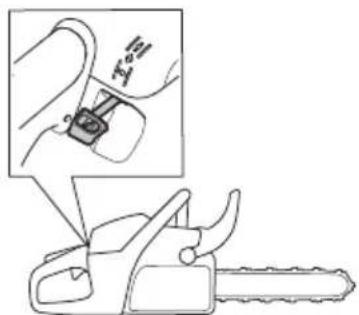
HUSQVARNA 439 - Carburant - 2

natural_image Line drawing of a chain saw with a close-up inset showing the handle (no text or symbols)
natural_image Illustration of a person in winter gear handling a tool or device (no text or symbols visible)
natural_image Line drawing of a chainsaw with a close-up inset showing the grip detail (no text or symbols)
natural_image Illustration of a person using a power tool to cut a chain (no text or symbols present)
natural_image Line drawing of a chain-linking device with arrows indicating motion (no text or symbols)
natural_image Line drawing of a manual tool with a curved handle and arrow indicating motion (no text or symbols)

HUSQVARNA 439 - Carburant - 3

text_image Safety warning symbol showing a hand holding a cigarette next to a trash can, indicating no hazard or caution.
natural_image Illustration of a worker in protective gear handling equipment next to a prohibition symbol (no text or labels)
natural_image Illustration of a person wearing a hard hat and safety gear, holding a chainsaw (no text or symbols present)

Arrêt

natural_image Line drawing of a chainsaw with an inset showing a close-up of its handle (no text or symbols)
natural_image Technical line drawing of a car brake system showing front and side views (no text or labels)
natural_image Line drawing of a mechanical clamp or bracket device (no text or symbols)
natural_image Illustration of a worker in safety gear using a tool on wooden beams, with an arrow indicating motion (no text or symbols)
natural_image Illustration of a person wearing protective gear and using a manual tool on a wooden board (no text or symbols)
text_image Prohibition sign with pictogram of a worker climbing a rope, crossed out by a diagonal line, indicating no labor or construction restrictions.
natural_image Line drawing of a manual saw cutting a blade with motion arrows indicating direction (no text or symbols)
text_image Diagram illustrating a chain-linking tool with warning sign and gear mechanism, showing safety hazard and motion arrows.
natural_image Illustration of a chain saw cutting a circular cutter with motion arrows indicating motion (no text or symbols)
natural_image Simple line drawing of a car with a lock and warning symbol (no text or labels)
natural_image Illustration of a landslide with a lightning bolt and warning triangle (no text or symbols)
text_image Warning symbol and instruction illustration showing a chainsaw crushing debris with an exclamation mark
text_image Diagram illustrating a hazard warning with a person falling off a slope, showing a warning symbol and directional arrows.
natural_image Illustration of two workers handling stacked logs, one wearing a hard hat and the other in uniform (no text or symbols)
text_image Safety warning illustration showing a chainsaw cutting a blade with a warning symbol and a downward arrow indicating damage or hazard.
natural_image Diagram showing a chain saw cutting through a circular cutter into a ring, with arrows indicating the process (no text or symbols present)
natural_image Simple line drawing of a pipe or channel with a submerged object, no text or symbols present
natural_image Diagram showing a chain saw cutting into a circular cutter head, with arrows indicating direction (no text or symbols)
natural_image Simple line drawing of a boat with wheels and a handle, no text or symbols present
natural_image Diagram showing a chain saw with three views: top view, front view, and side view (no text or symbols)
text_image Diagram illustrating a person using a tool to lift a vertical pole, with arrows indicating force or movement and numbered annotations.
flowchart
graph TD
    A["1"] --> B["2"]
    B --> C["1"]
    C --> D["3"]
    D --> A
text_image Diagram illustrating a tree clearing operation with labeled steps and directional arrows
natural_image Diagram illustrating tree root damage, triangular load on trunk, circular impact with wave pattern, and directional arrows (no text or symbols)

Trait de chute

natural_image Diagram showing a geological or structural interaction with arrows indicating direction of movement (no text or symbols present)
natural_image Diagram showing a chain-linking device and two separate views of tree bark with a directional arrow (no text or symbols)
natural_image Diagram illustrating a circular structure with arrows indicating direction and a triangular cutout showing internal damage (no text or symbols)
text_image Diagram showing a prohibition symbol crossed out by tree trunks, with arrows indicating direction of movement or restriction.
natural_image Illustration of a manual tool cutting tree bark with arrows indicating direction (no text or symbols)
natural_image Line drawing of a chain saw with a circular base and blade (no text or symbols)
text_image Diagram illustrating a hazard warning with a person falling off a wall, showing hazard symbol and safety instructions.
natural_image Two diagrams showing a person sitting on a tree with a prohibition symbol, enclosed in dashed circles (no text or labels)
natural_image Diagram of a mechanical or fluidic system with curved surfaces and circular components, no visible text or symbols
natural_image Simple line drawing of a geological cross-section with an upward arrow indicating a feature (no text or symbols)
natural_image Diagram of a curved structure with arrows indicating direction, no text or symbols present
text_image Diagram illustrating a chain-linking mechanism with warning sign and cable attachment, showing mechanical components and force vectors.
natural_image Illustration of a worker spraying wood with a roller, no text or symbols present
text_image Diagram illustrating a hazard warning symbol with a person inside a triangle and chains below, indicating safety or hazard.

Élagage

HUSQVARNA 439 - Élagage - 1

natural_image Technical illustration of mechanical components and tools (no text or symbols)
natural_image Line drawing of a mechanical tool or bracket with no visible text or symbols
natural_image Illustration of a hand using a manual lever mechanism to lift a curved object (no text or symbols present)

ENTRETIEN

natural_image Illustration of a person using a power saw to cut tree bark (no text or symbols)
natural_image Illustration of a person in protective gear using a power tool (no text or symbols)
natural_image Illustration of two hands operating a mechanical device with a tool (no text or symbols)
natural_image Line drawing of a mechanical tool with a handle and blade (no text or symbols)
natural_image Line drawing of a mechanical tool or bracket with an arrow indicating direction (no text or symbols)
natural_image Line drawing of a chain saw with arrows indicating motion direction (no text or symbols)
natural_image Diagram of a mechanical device with a magnified circular component and a block, showing motion direction (no text or symbols)

ENTRETIEN

natural_image Technical line drawing of a mechanical component or bracket (no text or symbols)
natural_image Line drawing of a chainsaw with a magnified inset showing a small device (no text or symbols)
natural_image Technical line drawing of a mechanical assembly with two views (front and side), showing internal components and mounting brackets (no text or symbols)

Silencieux

HUSQVARNA 439 - Silencieux - 1

HUSQVARNA 439 - Silencieux - 2

text_image Prohibition sign with crossed-out battery icon and prohibition symbol
text_image Technical diagram of a mechanical assembly with labeled parts and directional arrows indicating movement or force

ENTRETIEN

text_image Technical diagram showing two mechanical assembly steps with numbered annotations
natural_image Technical line drawing of a mechanical assembly with internal components and an arrow indicating direction (no text or symbols)
text_image Technical diagram of a mechanical assembly with labeled parts and close-ups of bolts
natural_image Technical line drawing of a mechanical assembly with no visible text or symbols
natural_image Technical diagram of a mechanical assembly with arrows indicating motion or force direction (no text or labels)
natural_image Technical diagram of a mechanical component with arrows indicating assembly or force direction (no text or symbols present)

ENTRETIEN

natural_image Mechanical assembly diagram showing hands operating a motor with rotating shaft (no text or symbols)
natural_image Technical line drawing of a mechanical assembly with multiple components and no visible text or symbols
natural_image Illustration of hands using a tool to adjust or install a mechanical component, showing a rotating arrow (no text or symbols)
natural_image Line drawing of a hand using a tool to cut a saw blade (no text or symbols)
natural_image Technical line drawing of a mechanical device with internal components (no text or symbols)
natural_image Technical line drawing of a mechanical component with mounting holes and internal brackets (no text or symbols)
natural_image Technical line drawing of a mechanical assembly with no visible text or symbols
natural_image Line drawing of a hand holding a tool, poised to write on a surface (no text or symbols)
natural_image Technical line drawing of a mechanical tool with a hand operating the component (no text or symbols present)

HUSQVARNA 439 - ENTRETIEN - 1

text_image Exploded view diagram of a mechanical device with numbered parts for identification

Épuration centrifuge "Air Injection"

natural_image Line drawing of a chain-linking device with gear and blade (no text or symbols)
natural_image Technical diagram showing mechanical assembly with arrows indicating force or movement (no text or symbols present)
natural_image Technical illustration of a mechanical assembly with exploded view and close-up views (no text or symbols)
natural_image Mechanical assembly diagram showing a component with arrows indicating motion or force direction (no text or symbols present)
natural_image Technical line drawing of a mechanical device with internal components and a curved arrow indicating motion (no text or symbols)

Pas, pouces/mm 3/8 / 9,52

text_image Safety warning symbol showing a person climbing a tree with a diagonal line indicating no obstruction
natural_image Illustration of a person wearing protective gear and a first aid kit (no text or symbols)

Draag altijd:

• Goedgekeurde veiligheidshelm

ALGEMENE VEILIGHEIDSINSTRUCTIES

natural_image Line drawing of a manual power shaver with blade and handle (no text or symbols)
text_image Diagram illustrating a hazard warning symbol with a person inside a triangle and a chain, indicating occupational hazard.
natural_image Line drawing of a mechanical tool or clamp with labeled point A (no text or symbols beyond label)
natural_image Technical line drawing of a mechanical device with two views (labeled 1 and 2), no text or symbols present.
natural_image Illustration of a hand using a tool to lift a car (no text or symbols)
natural_image Illustration of a person using a seatbelt to lift a car, with no visible text or symbols
natural_image Illustration of a hand gripping a mechanical component (no text or symbols)
natural_image Illustration of a person in protective gear using a tool to lift a rolled paper or cable (no text or symbols)
natural_image Illustration of a hand pressing down on a mechanical component with motion arrows indicating rotation (no text or symbols)
natural_image Illustration of a person using a power tool to cut a saw (no text or symbols present)
natural_image Mechanical assembly diagram showing a rotating component with a moving block and directional arrow (no text or labels)
natural_image Technical line drawing of a mechanical component or bracket (no text or symbols)

Trillingdempingssysteem

natural_image Three line drawings of coiled springs, no text or symbols present
natural_image Line drawing of a chainsaw with an inset showing its exterior blade (no text or symbols)

Geluiddemper

natural_image Technical line drawing of a mechanical assembly with no visible text or symbols
text_image Diagram showing a prohibition symbol crossed over a chain of chains with Chinese text labels
text_image PITCH = D/2 D
natural_image Diagram showing a mechanical component with arrows indicating direction, alongside a separate view of a flat object (no text or symbols)
text_image PITCH = D/2 D
natural_image Pure mechanical part diagram with no text, numbers, or symbols
natural_image Technical line drawing of a tool with a curved arrow indicating rotation (no text or symbols)

2 Snijhoek

HUSQVARNA 439 - Geluiddemper - 1

ALGEMENE VEILIGHEIDSINSTRUCTIES

3 Vijlpositie
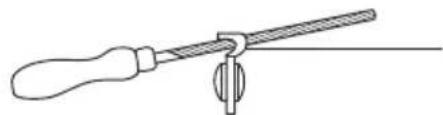
HUSQVARNA 439 - Vijlpositie - 1

natural_image Line drawing of a hand holding a screwdriver with a central knob (no text or symbols)
natural_image Three technical illustrations of screwdriver tools: a handle, a bracket with hexagonal cutout, and a clamp-like tool (no text or symbols)
text_image 0.49 2.50 3.72 4.16 5.28 6.54 7.76 8.98 9.98 10.98 11.98 12.98 13.98 14.98 15.98 16.98 17.98 18.98 19.98 20.98 21.98 22.98 23.98 24.98 25.98 26.98 27.98 28.98 29.98 30.98 31.98 32.98 33.98 34.98 35.98 36.98 37.98 38.98 39.98 40.98 41.98 42.98 43.98 44.98 45.98 46.98 47.98 48.98 49.98 50.98 51.98 52.98 53.98 54.98 55.98 56.98 57.98 58.98 59.98 60.98 61.98 62.98 63.98 64.98 65.98 66.98 67.98 68.98 69.98 70.98 71.98 72.98 73.98 74.98 75.98 76.98 77.98 78.98 79.98 80.98 81.98 82.98 83.98 84.98 85.98 86.98 87.98 88.98 89.98 90.98 91.98 92.98 93.98 94.98 95.98 96.98 97.98 98.98 No Prohibition No Prohibition No Prohibition No Prohibition No Prohibition No Prohibition No Prohibition No Prohibition No Prohibition No Prohibition No Prohibition No Prohibition No Prohibition No Prohibition No Prohibition No Prohibition No Prohibition No Prohibition No Prohibition No Prohibition No Prohibition No Prohibition No Prohibition No Prohibition No Prohibition No Pro inhibition No Proinhibition No Proinhibition No Proinhibition No Proinhibition No Proinhibition No Proinhibition No Proinhibition No Proinhibition No Proinhibition No Proinhibition No Proinhibition No Proinhibition No Proinhibition No Proinhibition No Proinhibition No Proinhibition No Proinhibition No Proinhibition No Proinhibition No Proinhibition No Proinposition No Proinposition No Proinposition No Proinposition No Proinposition No Proinposition No Proinposition No Proinposition No Proinposition No Proinposition No Proinposition No Proinposition No Proinposition No Proinposition No Proinposition No Proinposition No Proinposition No Proinposition No Proinposition No Proinposition No Proinition No Proinition No Proinition No Proinition No Proinition No Proinition No Proinition No Proinition No Proinition No Proinition No Proinition No Proinition No Proinition No Proinition No Proinition No Proinition No Proinition No Proinition
natural_image Diagram of a tool pressing down on a surface with an arrow indicating motion (no text or symbols)
natural_image Pure mechanical component diagram without any text, numbers, or symbols
natural_image Pure mechanical diagram showing a tool interacting with a block, no text or symbols present

Ketting strekken

HUSQVARNA 439 - Ketting strekken - 1

HUSQVARNA 439 - Ketting strekken - 2

HUSQVARNA 439 - Ketting strekken - 3

natural_image Illustration of two hands holding a curved object with directional arrows indicating motion (no text or symbols)
natural_image Line drawing of a chainsaw with a hammer and screwdriver (no text or symbols)
natural_image Line drawing of a chain saw with a hammer and screw, no text or symbols present
natural_image Illustration of a chain saw being adjusted for a tool (no text or symbols present)
natural_image Illustration of a person in protective gear using a power saw to cut tree bark (no text or symbols)
natural_image Simple line drawing of a mechanical component with a downward arrow and circular holes (no text or symbols)
natural_image Line drawing of a hand holding a ruler or measuring tool (no text or symbols present)
natural_image Illustration of a hand holding a device with a circular arrow indicating rotation (no text or symbols)
natural_image Technical line drawing of a mechanical gear assembly (no text or symbols)
natural_image Technical illustration of a gear and rotor assembly (no text or symbols)

Slijtagecontrole van de snijuitrusting
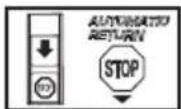
HUSQVARNA 439 - Slijtagecontrole van de snijuitrusting - 1
HUSQVARNA 439 - Slijtagecontrole van de snijuitrusting - 2

text_image Diagram showing a tool with a cross-section view and a magnified inset of the tool's tip, likely illustrating a mechanical or architectural concept.
natural_image Simple line drawing of a test tube with two arrows indicating direction (no text or symbols)
natural_image Simple line drawing of a cylindrical object with a curved handle and circular ends, no text or symbols present.

HUSQVARNA 439 - Slijtagecontrole van de snijuitrusting - 3

natural_image Simple line drawing of a manual tool with a handle and blade (no text or symbols)
natural_image Technical line drawing of a mechanical assembly with labeled component A (no text or symbols present)
text_image Technical diagram showing mechanical assembly with labeled components and directional arrow indicating motion
natural_image Mechanical assembly diagram showing a motor and gear assembly (no text or labels)
natural_image Line drawing of a chain saw with a hammer and fulcrum (no text or symbols)
natural_image Line drawing of a chain saw with a curved arrow indicating motion (no text or symbols)
natural_image Line drawing of a chainsaw with a downward arrow indicating force or motion (no text or symbols)

BRANDSTOFHANTERING

Brandstof

text_image Illustration showing a fuel pump with chemical reaction and two labeled containers, alongside a worker in uniform.
natural_image Diagram of a chainsaw with a downward arrow and a small inset showing a gear (no text or symbols)
text_image Diagram of a chainsaw with an icon indicating fuel level and power source, showing a warning symbol.

HUSQVARNA 439 - Brandstof - 1

text_image Min. 3 m (10 ft)
natural_image Line drawing of a manual power shaver with blade and blade blades (no text or symbols)
natural_image Diagram of a hand holding a device with two buttons and a black arrow pointing to the left side (no text or symbols present)

Choke: Zet de choke-hendel in de choke-positie.
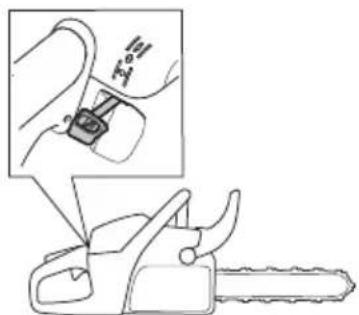
HUSQVARNA 439 - Brandstof - 2

natural_image Line drawing of a chain saw tool with a magnified inset showing the handle (no text or symbols)
natural_image Illustration of a person using a power tool to cut a saw (no text or symbols present)
text_image Diagram showing a chain saw with a magnified inset highlighting the grip area and hand positioning.
natural_image Illustration of a person using a power tool to cut a chain (no text or symbols present)
natural_image Line drawing of a manual chain saw with arrows indicating motion direction (no text or symbols)
natural_image Simple line drawing of a manual tool with a handle and blade, no text or symbols present

HUSQVARNA 439 - Brandstof - 3

text_image Safety warning symbol showing a crossed-out hand holding a cigarette with smoke, indicating no smoking or fire.
text_image Safety warning illustration showing a worker using a tool to clean a road safety device while another person holds a 'No' sign.
natural_image Illustration of a person in protective gear holding a saw and bar, no text or symbols present

Stoppen

natural_image Line drawing of a chainsaw with an inset showing a close-up of its blade (no text or symbols)
natural_image Technical line drawing of a mechanical assembly with no visible text or symbols

ARBEIDSTECHNIEK

Voor ieder gebruik:

HUSQVARNA 439 - Voor ieder gebruik: - 1

text_image 3 4 5 6, 8 2 7 1 9 10
natural_image Simple line drawing of a mechanical clamp or bracket with two hands operating it (no text or symbols)
natural_image Illustration of a person in protective gear using a tool on wooden beams, with an arrow indicating motion (no text or symbols)
natural_image Illustration of a worker in protective gear operating a manual cutting machine (no text or symbols)
natural_image Prohibition sign showing a worker climbing a rope with a diagonal line, enclosed in a circle (no text or symbols)
natural_image Illustration of a hand using a power saw to cut a circular blade with motion arrows (no text or symbols)
text_image Diagram illustrating a chain-linking tool with warning sign and gear mechanism, showing mechanical deformation.

ARBEIDSTECHNIEK

natural_image Illustration of a chain saw cutting a circular cutter with motion arrows (no text or symbols)
natural_image Simple line drawing of a car with a warning sign and explosion symbol (no text or labels)
natural_image Illustration of a warning sign with an exclamation mark, no text or symbols present
text_image Warning symbol showing a chainsaw crushing debris with an exclamation mark
text_image Diagram illustrating a hazard warning symbol with a person inside a triangular warning triangle and a chain attached below, indicating safety or hazard.
natural_image Illustration of two workers handling stacked logs, no text or symbols present
text_image Diagram illustrating a chain saw cutting process with warning symbol and labeled components
natural_image Diagram showing a chain saw cutting into a circular cutter head, with arrows indicating the process (no text or symbols present)
natural_image Simple line drawing of a pipe or channel with a submerged object, no text or symbols present
natural_image Diagram showing a chain saw cutting into a circular cutter head, with arrows indicating direction of movement (no text or symbols)
natural_image Simple line drawing of a boat with wheels and a handle, no text or symbols present
text_image Diagram illustrating three steps of a chain saw tool: cutting, opening, and cutting through a circular opening.

ARBEIDSTECHNIEK

Veltechniek

flowchart
graph TD
    A["Person with circle"] --> B["Trees"]
    B --> C["Distance measurement"]
    C --> D["Tree with arrow"]

Velrichting

text_image Diagram illustrating a person using a tool to lift a vertical pole, with arrows indicating force or movement and numbered annotations.
text_image Diagram illustrating a tree clearing operation with labeled steps and directional arrows indicating process flow.
natural_image Diagram illustrating tree root structure, angle measurement, and circular cross-section with directional arrows (no text or labels)

Zaagsnede

natural_image Diagram showing a geological or structural cross-section with arrows indicating direction (no text or symbols present)
natural_image Illustration showing a hand holding a chain with a rope tied to a circular object, alongside a tree stump and a broken trunk (no text or symbols)
text_image Diagram illustrating tree ring structure and tree trunk bending process with labeled angles and directional arrows
text_image Diagram showing a prohibition symbol with arrows pointing to tree branches, indicating environmental or safety restrictions.
natural_image Illustration of a tool interacting with tree bark, showing arrows indicating movement (no text or symbols)
natural_image Line drawing of a mechanical tool with a circular base and blade, no text or symbols present
text_image Diagram illustrating a hazard warning with a person falling off a slope, showing a warning symbol and directional arrows.
natural_image Two diagrams showing a person in a circle with a prohibition symbol, surrounded by trees (no text or labels)
natural_image Diagram of a mechanical or fluidic system with two circular components and dashed lines indicating flow or movement (no text or symbols)
natural_image Diagram showing a cross-section of a layered structure with an upward arrow, no text or symbols present.
natural_image Diagram of a curved surface with two directional arrows indicating flow or movement (no text or symbols)
text_image Diagram illustrating a chain-linking tool with warning sign and mechanical components, showing process flow.
natural_image Illustration of a worker in protective gear spraying water with a roller, no text or symbols present
text_image Diagram illustrating a hazard warning with a person falling off a slope, showing a triangular hazard symbol and an arrow indicating direction.

Snoeien

HUSQVARNA 439 - Zaagsnede - 1

natural_image Technical illustration of mechanical components and tools (no text or symbols)
natural_image Line drawing of a manual tool or bracket with a handle and blade, no text or symbols present
natural_image Illustration of a hand using a tool to lift a car, showing motion arrows (no text or symbols)

ONDERHOUD

natural_image Illustration of a person using a power saw to cut tree bark (no text or symbols)
natural_image Illustration of a person wearing a hard hat and using a power manual to cut a saw (no text or symbols present)
natural_image Illustration of two hands operating a mechanical device with a tool (no text or symbols visible)
natural_image Line drawing of a mechanical tool with a handle and blade (no text or symbols)
natural_image Line drawing of a mechanical tool or bracket with an arrow indicating direction (no text or symbols)
natural_image Line drawing of a chain saw with arrows indicating motion direction (no text or symbols)
natural_image Diagram of a mechanical device with a magnifying glass and a block, showing motion lines without any text or symbols.

ONDERHOUD

natural_image Technical line drawing of a mechanical bracket or bracket (no text or symbols)

Trillingdempingssysteem

HUSQVARNA 439 - Trillingdempingssysteem - 1

HUSQVARNA 439 - Trillingdempingssysteem - 2

natural_image Line drawing of a chainsaw with a close-up inset showing its blade (no text or symbols)
natural_image Technical line drawing of a car front panel assembly showing internal components and mounting brackets (no text or labels)

Geluiddemper

HUSQVARNA 439 - Geluiddemper - 1

HUSQVARNA 439 - Geluiddemper - 2

text_image Prohibition sign with crossed-out battery icon and prohibition symbol

- Controleer regelmatig of de geluiddemper vastzit in de machine.
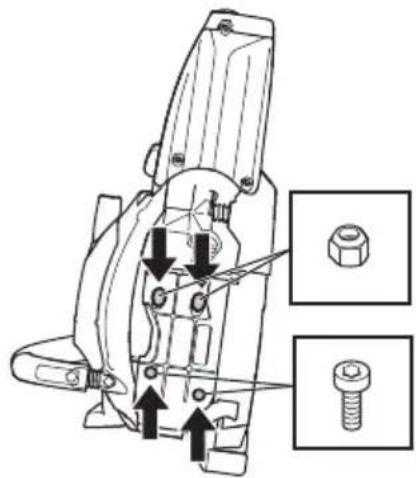
HUSQVARNA 439 - Geluiddemper - 3

text_image Technical diagram of a mechanical assembly with labeled parts and directional arrows indicating motion or movement.

ONDERHOUD

text_image Technical diagram showing two mechanical assembly steps with numbered annotations
natural_image Technical line drawing of a mechanical assembly with internal components and an arrow indicating direction (no text or symbols)
natural_image Technical diagram of a mechanical assembly with two views of a bolt (no text or labels)
natural_image Technical line drawing of a mechanical assembly with no visible text or symbols
natural_image Mechanical assembly diagram showing internal components with arrows indicating motion (no text or labels)
natural_image Mechanical component diagram showing internal structure with arrows indicating assembly or movement (no text or symbols)

ONDERHOUD

natural_image Mechanical assembly diagram showing hands operating a gear with rotating shaft (no text or symbols)
natural_image Technical line drawing of a mechanical assembly with multiple components and no visible text or symbols
natural_image Illustration of hands using a tool to adjust or install a mechanical component, showing a rotating arrow (no text or symbols)
natural_image Line drawing of a hand using a tool to cut a saw blade (no text or symbols)
natural_image Technical line drawing of a mechanical device with internal components (no text or symbols)
natural_image Technical line drawing of a mechanical bracket or housing component (no text or symbols)
natural_image Technical line drawing of a mechanical assembly with no visible text or symbols
natural_image Illustration of a hand holding a tool with a circular object, no text or symbols present
natural_image Technical line drawing of a mechanical tool with a hand operating it, showing no text or symbols

HUSQVARNA 439 - ONDERHOUD - 1

text_image Exploded view diagram of a chain hood with numbered parts labeled 1 to 5
natural_image Line drawing of a chain-linking device with gear and lever (no text or symbols)
natural_image Technical illustration of mechanical components with arrows indicating assembly or force direction (no text or symbols present)
natural_image Technical illustration of a mechanical assembly with exploded view and close-up views (no text or symbols)
text_image Technical diagram showing mechanical assembly with labeled parts and directional arrows indicating motion or movement.
natural_image Technical line drawing of a mechanical component with internal channels and a curved arrow indicating motion (no text or symbols)
text_image Safety warning symbol showing a person climbing a tree with a diagonal line indicating no obstruction
natural_image Illustration of a person in full gear and face mask next to a first aid kit (no text or symbols)

Utilice siempre:

natural_image Line drawing of a manual chain saw with blade and handle (no text or symbols)
text_image Diagram illustrating a hazard warning symbol with a person inside a triangle and a chain, indicating occupational hazard.
natural_image Line drawing of a mechanical tool or clamp device with labeled point A (no text or symbols beyond label)
natural_image Technical line drawing of a mechanical device with no visible text or symbols

1

HUSQVARNA 439 - Utilice siempre: - 1

natural_image Illustration of a hand pressing down on a mechanical component with motion arrows indicating movement (no text or symbols)
natural_image Line drawing of a person using a car seatbelt, no text or symbols present
natural_image Illustration of a hand gripping a mechanical component (no text or symbols)
natural_image Illustration of a person in protective gear using a tool to lift a rolled paper or cable (no text or symbols)
natural_image Illustration of a hand pressing down on a car's side panel with motion arrows indicating rotation (no text or symbols)
natural_image Illustration of a person in motion, possibly cleaning or cutting a tool, with no visible text or symbols.
natural_image Diagram of a mechanical assembly with a rotating component and a block, showing motion direction (no text or symbols)
natural_image Pure technical line drawing of a mechanical component (no text or symbols)
natural_image Three line drawings of coiled springs, no text or symbols present
natural_image Line drawing of a chainsaw with an inset showing a small device (no text or symbols)

Silenciador

natural_image Technical line drawing of a mechanical assembly with no visible text or symbols
text_image Diagram showing a prohibition symbol crossed over a chain of chains, indicating restrictions on a chain.
natural_image Simple line drawing of a cylindrical object with length labeled 'L' (no text or symbols beyond the label)
text_image PITCH = D/2 D
natural_image Diagram showing a mechanical component with arrows indicating direction, alongside a separate view of a flat object (no text or symbols)
text_image PITCH = D/2 D
natural_image Technical diagram showing a mechanical part with a vertical dimension line and directional arrow (no text or labels)
natural_image Technical line drawing of a mechanical tool with a curved handle and a diagonal bar, showing motion direction (no text or symbols)
natural_image Line drawing of a tool with a handle and screwdriver (no text or symbols)
natural_image Two mechanical tools: a straight rod and a hexagonal nut (no text or symbols)

HUSQVARNA 439 - Silenciador - 1

text_image Diagram showing a prohibition symbol crossed over a chain of chains, with numerical labels above each bar.
natural_image Diagram of a tool pressing down on a surface with an arrow indicating motion (no text or symbols)
natural_image Three technical line drawings of mechanical components: a saw, a cutaway view, and a bracket (no text or symbols)
natural_image Pure mechanical diagram showing a tool interacting with a spring-loaded component (no text or symbols)
natural_image Illustration of two hands holding a cylindrical object with directional arrows indicating motion (no text or symbols)
natural_image Line drawing of a chainsaw with a screwdriver inserted (no text or symbols)
natural_image Line drawing of a chain saw with a hammer and scale indicator (no text or symbols)
natural_image Illustration of a chain saw being adjusted for a tool (no text or symbols present)
natural_image Illustration of a person in protective gear using a saw to cut tree bark (no text or symbols)
natural_image Simple line drawing of a mechanical component with a downward arrow and circular holes (no text or symbols)
natural_image Line drawing of a hand using a tool to cut a cylindrical object (no text or symbols)
natural_image Illustration of a hand holding a chair with a curved arrow indicating rotation (no text or symbols)
natural_image Technical line drawing of a mechanical gear assembly (no text or symbols)
natural_image Mechanical gear assembly diagram showing a shaft and gear with motion arrows (no text or labels)
natural_image Illustration of a pair of scissors cutting a blade, with a magnified inset showing the blade's tip (no text or symbols)
natural_image Simple line drawing of a tool handle with two arrows indicating direction (no text or symbols)
natural_image Simple line drawing of a cylindrical object with a labeled arrow (no text or symbols)

HUSQVARNA 439 - Silenciador - 2

natural_image Illustration of a manual power tool with lever and handle (no text or symbols)
natural_image Technical line drawing of a mechanical assembly with labeled component A (no text or symbols present)
text_image Technical diagram showing mechanical assembly with labeled components and directional arrow indicating motion or movement
natural_image Technical line drawing of a mechanical assembly with no visible text or symbols
natural_image Line drawing of a chain saw with a hammer and fulcrum (no text or symbols)
natural_image Line drawing of a manual chain saw with a curved arrow indicating rotation (no text or symbols)
natural_image Line drawing of a chainsaw with a downward arrow indicating compression or disassembly (no text or symbols)
text_image Illustration showing fuel injection and discharge process with labeled components and a worker in uniform.
natural_image Line drawing of a chainsaw with a downward arrow and a small inset showing a gear (no text or symbols)
natural_image Line drawing of a chainsaw with an arrow pointing to a fuel pump icon (no text or symbols)

HUSQVARNA 439 - Silenciador - 3

text_image Min. 3 m (10 ft)
natural_image Line drawing of a manual manual tool with motion arrow indicating flow or movement (no text or symbols)
natural_image Technical line drawing of a mechanical component with arrows indicating direction (no text or symbols)
natural_image Line drawing of a chain saw tool with a magnified inset showing the handle (no text or symbols)
natural_image Illustration of a person using a power tool to cut a chain (no text or symbols present)
text_image Diagram showing a hand holding a chainsaw with a magnified inset highlighting the grip area.
natural_image Illustration of a person using a power tool to cut a chain (no text or symbols present)

ARRANQUE Y PARADA

natural_image Line drawing of a chain-linking device with arrows indicating motion (no text or symbols)
natural_image Line drawing of a manual tool emitting exhaust smoke (no text or symbols)

HUSQVARNA 439 - ARRANQUE Y PARADA - 1

natural_image Simple line drawing of a person using a showerhead to smoke, no text or symbols present
text_image Safety warning illustration showing a worker using a tool to clean a device while another person with a no-smoking symbol is behind.
natural_image Illustration of a person in protective gear holding a chainsaw (no text or symbols)

Parada

natural_image Line drawing of a chainsaw with an inset showing a close-up of its blade (no text or symbols)
natural_image Technical line drawing of a mechanical assembly showing two views of a component with bolts and a tool (no text or symbols)
natural_image Illustration of two people using a mechanical device with motion lines (no text or symbols)
natural_image Illustration of a person using a saw to cut metal beams, with an arrow indicating the motion (no text or symbols present)
natural_image Illustration of a worker in protective gear using a manual tool on a wooden structure (no text or symbols)
text_image Prohibition sign showing a worker without a tree, crossed out by a diagonal line
text_image Prohibition sign showing a worker climbing a rope with a diagonal line, indicating no labor or safety restrictions.
natural_image Line drawing of a manual saw cutting a tool with a circular cutter (no text or symbols)
text_image Diagram illustrating a chain-linking mechanism with warning sign and gear mechanism
natural_image Illustration of a chain saw cutting a circular object with motion arrows (no text or symbols)
natural_image Simple line drawing of a car with a lock and warning symbol (no text or labels)
natural_image Illustration of a landslide with a warning triangle and lightning bolt, no text or symbols present
text_image Warning symbol and instruction illustration showing a chainsaw with a warning sign

TÉCNICA DE TRABAJO

text_image Diagram illustrating a hazard warning symbol with a person falling off a rope, indicating safety or hazard.
natural_image Illustration of two workers handling stacked logs, one holding a tool and the other standing with tools (no text or symbols)
text_image Diagram illustrating a power switch and its impact on a blade, with warning symbols and labels
natural_image Diagram showing a chain saw cutting into a circular cutter with arrows indicating process flow (no text or symbols)
natural_image Simple line drawing of a pipe or channel with a valve inserted, showing fluid flow (no text or symbols)
natural_image Diagram showing a chain saw cutting into a circular cutter head, with arrows indicating direction of movement (no text or symbols)

TÉCNICA DE TRABAJO

natural_image Simple line drawing of a boat with wheels and a curved handle (no text or symbols)
text_image Diagram illustrating three stages of a chain saw tool: cutting, forming a circular cross-section, and expanding a tree.

Técnica de tala

flowchart
graph TD
    A["Tree"] --> B["Person"]
    B --> C["Figure: circled person inside circle"]
text_image Diagram illustrating a person using a tool to lift a vertical pole, with directional arrows indicating motion or force.
text_image Diagram illustrating tree gear cutting process with labeled steps and directional arrows
natural_image Diagram illustrating tree root structure, angle measurement, and circular cross-section with directional arrows (no text or labels)

Corte de derribo

natural_image Diagram showing a geological or structural interaction with arrows indicating direction of movement (no text or symbols present)
natural_image Diagram illustrating a mechanical tool interacting with tree bark, showing a blade and cutting edge (no text or symbols)
natural_image Diagram showing a circular structure with arrows indicating direction and a triangular structure with a base, both without any text or symbols.
text_image Diagram showing a prohibition symbol crossed out by tree trunks, with arrows indicating direction of movement or restriction.
natural_image Illustration of a tool interacting with a tree trunk, showing movement arrows (no text or symbols)
natural_image Line drawing of a chain-linking tool with a circular base and blade (no text or symbols)
text_image Diagram illustrating a hazard warning symbol with a person falling on a chain, indicating workplace safety risk.
natural_image Two diagrams showing a person sitting on a tree with a prohibition symbol, no text or labels present.
natural_image Diagram of a mechanical or fluidic system with two circular components and dashed lines indicating flow or movement (no text or symbols)
natural_image Cross-sectional diagram of a layered structure with an upward arrow indicating growth (no text or symbols)
natural_image Diagram of a curved surface with directional arrows indicating flow or movement (no text or symbols)
text_image Diagram illustrating a chain-linking mechanism with warning sign and chain attachment mechanism
natural_image Illustration of a worker in protective gear spraying water with a roller, no text or symbols present
text_image Diagram showing a hazard warning sign with arrows and a chain, indicating safety risk or hazard.

Desramado

HUSQVARNA 439 - Desramado - 1

natural_image Technical illustration of mechanical components and tools (no text or symbols)
natural_image Line drawing of a manual power tool with blade and handle (no text or symbols)
natural_image Illustration of a hand using a tool to lift a car, showing motion arrows (no text or symbols)
natural_image Illustration of a person using a power saw to cut tree bark (no text or symbols)
natural_image Illustration of a person wearing a hard hat and safety vest, handling a chainsaw (no text or symbols present)
natural_image Illustration of a hand gripping a mechanical device with a curved handle (no text or symbols)
natural_image Line drawing of a manual chain saw with a black arrow indicating motion (no text or symbols)
natural_image Simple line drawing of a mechanical device with an arrow indicating motion (no text or symbols)
natural_image Line drawing of a chain-linking device with arrows indicating motion direction (no text or symbols)
natural_image Diagram of a mechanical device with a magnifying glass and tool, showing motion direction (no text or symbols)

MANTENIMIENTO

natural_image Pure technical line drawing of a mechanical component (no text or symbols)
natural_image Line drawing of a chainsaw with an inset showing a small device (no text or symbols)
natural_image Technical line drawing of a mechanical assembly with no visible text or symbols

Silenciador

HUSQVARNA 439 - Silenciador - 1

HUSQVARNA 439 - Silenciador - 2

text_image Prohibition sign with crossed-out battery icon and prohibition symbol
text_image Technical diagram of a mechanical assembly with labeled parts and directional arrows indicating movement or force

MANTENIMIENTO

text_image Technical diagram showing two mechanical assembly steps with numbered annotations
natural_image Technical line drawing of a mechanical assembly with internal components and an arrow indicating direction (no text or symbols)
text_image Technical diagram of a mechanical assembly with labeled parts and close-ups of two bolts
natural_image Technical line drawing of a mechanical assembly with no visible text or symbols
natural_image Technical diagram of a mechanical assembly with directional arrows indicating motion or force (no text or labels present)
natural_image Mechanical component diagram showing internal structure with arrows indicating assembly or force (no text or symbols)

MANTENIMIENTO

natural_image Mechanical assembly diagram showing a rotating component with shaft and base (no text or symbols)
natural_image Exploded view diagram of a mechanical assembly showing internal components (no text or labels)
natural_image Illustration of hands using a tool to adjust or install a mechanical component, with no visible text or symbols.
natural_image Line drawing of a hand using a tool to cut a saw blade (no text or symbols)
natural_image Technical line drawing of a chain-linker device showing internal components and housing (no text or labels)

MANTENIMIENTO

natural_image Technical line drawing of a mechanical bracket component (no text or symbols)
natural_image Technical line drawing of a mechanical assembly with no visible text or symbols
natural_image Illustration of a hand holding a tool with a screwdriver, poised to write on a surface (no text or symbols present)
text_image Technical diagram of a mechanical device with labeled parts and directional arrows indicating movement or assembly.

HUSQVARNA 439 - MANTENIMIENTO - 1

text_image Exploded view diagram of a mechanical device with numbered parts for identification
natural_image Line drawing of a chain-linking device with lever and gear (no text or symbols)
natural_image Technical diagram showing mechanical assembly with arrows indicating force or movement (no text or symbols present)
natural_image Technical illustration of a chainmail device with internal components and a close-up view of the component (no text or symbols)

- Saque la tapa del filtro de aire.

text_image Diagram showing mechanical assembly with labeled parts and directional arrows indicating motion or movement
natural_image Technical line drawing of a mechanical device with internal components and a curved arrow indicating motion (no text or symbols)
text_image Pe Guslept
text_image Diagram showing a person climbing a tree with a diagonal line and a circle, indicating no movement or prohibition.
natural_image Illustration of a person wearing full protective gear and a first aid kit (no text or symbols)

Use sempre:

natural_image Line drawing of a manual hairpin or saw blade (no text or symbols)
text_image Diagram illustrating a hazard warning symbol with a person falling off a slope, indicating safety risk.
natural_image Line drawing of a manual chain-linking device with labeled component A (no text or symbols beyond label)
natural_image Technical line drawing of a mechanical device with labeled parts (1 and 2), no readable text or symbols present.
natural_image Illustration of a hand gripping a mechanical component with an arrow indicating motion (no text or symbols)
natural_image Illustration of a person using a manual lift presser to lift a seat (no text or symbols present)
natural_image Illustration of a hand operating a mechanical device with a curved handle (no text or symbols)
natural_image Illustration of a worker in protective gear using a tool to lift a cylindrical object with an arrow indicating motion (no text or symbols)
natural_image Illustration of a hand pressing down on a mechanical component with motion arrows indicating rotation (no text or symbols)
natural_image Illustration of a person in a suit cutting a knife with a knife, no text or symbols present
natural_image Diagram of a mechanical device with a magnified circular component and a block, showing motion lines without any text or symbols.
natural_image Technical line drawing of a mechanical component or bracket (no text or symbols)
natural_image Three line drawings of coiled springs, no text or symbols present
natural_image Line drawing of a chainsaw with an inset showing a close-up of its blade (no text or symbols)

Silenciador

natural_image Technical line drawing of a mechanical assembly with no visible text or symbols
text_image Prohibition sign with prohibition symbol over a chain of stars, likely indicating restriction or anti-protection measures.
text_image PITCH = D/2 D
natural_image Pure technical diagram showing a mechanical component with arrows indicating direction, no text or symbols present
text_image PITCH = D/2 D
natural_image Pure mechanical part diagram showing a slot and a vertical shaft with dimension arrows (no text or symbols)
natural_image Technical line drawing of a mechanical tool with an arrow indicating rotation (no text or symbols)

2 Ângulo de ataque

HUSQVARNA 439 - Silenciador - 1

3 Posição da lima

HUSQVARNA 439 - Silenciador - 2

natural_image Simple line drawing of a screwdriver holding a flat screwdriver (no text or symbols)

INSTRUÇÕES GERAIS DE SEGURANÇA

natural_image Three technical illustrations of screwdriver tools: a wrench, a bracket with internal gear, and a clamp tool (no text or symbols present)
text_image Safety warning symbol with crossed-out circle and Chinese text indicating no protection
natural_image Diagram of a tool pressing down on a surface with an arrow indicating motion (no text or symbols)
natural_image Three technical line drawings of mechanical components: a radial tool, a flat plate with holes, and a bracket with cutouts (no text or symbols)
natural_image Pure mechanical diagram showing a lever and shaft assembly without any text, numbers, or symbols
natural_image Illustration of two hands holding a curved object with directional arrows indicating motion (no text or symbols)
natural_image Line drawing of a chain saw with a hammer and screw (no text or symbols)
natural_image Illustration of a chain saw being adjusted for a tool (no text or symbols present)
natural_image Illustration of a person using a power saw to cut tree bark (no text or symbols)
natural_image Simple line drawing of a mechanical component with a downward arrow indicating a point of interest (no text or symbols)
natural_image Line drawing of hands holding a tool, no text or symbols present
natural_image Illustration of a person holding a device with an arrow indicating rotation (no text or symbols)
natural_image Technical line drawing of a mechanical gear assembly (no text or symbols)
natural_image Mechanical gear and rotor assembly diagram (no text or labels)

Controlo de desgaste no equipamento de corte
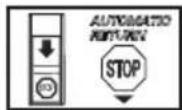
HUSQVARNA 439 - Controlo de desgaste no equipamento de corte - 1
HUSQVARNA 439 - Controlo de desgaste no equipamento de corte - 2

Controle diariamente a corrente, verificando se:

natural_image Diagram showing a tool with a V-shaped component and a blade, no text or symbols present
natural_image Simple line drawing of a tool handle with two arrows indicating direction (no text or symbols)
natural_image Simple line drawing of a cylindrical object with a curved arrow indicating rotation (no text or symbols)

HUSQVARNA 439 - Controlo de desgaste no equipamento de corte - 3

natural_image Line drawing of a manual tool emitting smoke or vapor (no text or symbols)
natural_image Technical line drawing of a mechanical assembly with labeled component A (no text or symbols present)
text_image Technical diagram showing mechanical assembly with labeled components and directional arrow indicating motion
natural_image Mechanical assembly diagram showing a motor and gear assembly (no text or labels)
natural_image Line drawing of a chain saw with a downward arrow indicating motion (no text or symbols)
natural_image Line drawing of a manual chain mill tool with a hand operating it (no text or symbols)
natural_image Line drawing of a chainsaw with a downward arrow indicating compression or disassembly (no text or symbols)
natural_image Diagram of a chainsaw with a downward arrow and a small inset showing a gear (no text or symbols)
natural_image Line drawing of a manual manual tool with a curved blade and handle, showing motion direction (no text or symbols)
natural_image Diagram of a hand holding a tool with two circular components, one pointing to a specific area (no text or symbols present)
natural_image Line drawing of a chain saw with a magnified inset showing the handle (no text or symbols)
natural_image Illustration of a person in winter gear handling a tool or device (no text or symbols visible)
natural_image Line drawing of a chainsaw with a close-up inset showing the grip detail (no text or symbols)
natural_image Illustration of a person in a hard hat and gloves handling a chain-link device (no text or symbols)
natural_image Line drawing of a chain-linking device with arrows indicating motion (no text or symbols)
natural_image Simple line drawing of a manual tool with a handle and blade, no text or symbols present

HUSQVARNA 439 - Controlo de desgaste no equipamento de corte - 4

natural_image Simple line drawing of a crossed-out saw with a diagonal slash through it (no text or symbols)
natural_image Illustration of a worker in protective gear using a tool and another figure with a no-smoking symbol (no text or labels)
natural_image Illustration of a person wearing protective gear and holding a saw (no text or symbols)

Paragem

natural_image Line drawing of a chain saw with a close-up inset showing a small device (no text or symbols)
natural_image Technical line drawing of a mechanical assembly showing two views of a device with no visible text or symbols

TÉCNICA DE TRABALHO

Sempre, antes de usar:
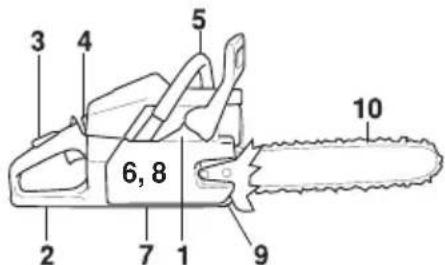
HUSQVARNA 439 - Sempre, antes de usar: - 1

text_image 3 4 5 6, 8 10 2 7 1 9
natural_image Illustration of a hand operating a mechanical device with a tool (no text or symbols)
natural_image Illustration of a person wearing a hard hat and safety gear, handling wood with a saw (no text or symbols)
natural_image Illustration of a worker in protective gear using a manual tool on a wooden board (no text or symbols)
text_image Prohibition sign showing a worker without a tree, crossed out by a diagonal line
text_image Prohibition sign with pictogram of a worker climbing a rope, crossed out by a diagonal line
natural_image Illustration of a manual saw cutting a blade with motion arrows indicating direction (no text or symbols)
text_image Diagram illustrating a chain-linking process with warning sign and chain-linking tool, showing mechanical components and directional arrows.
natural_image Illustration of a person using a chainsaw to cut a circular object with motion arrows (no text or symbols)
natural_image Simple line drawing of a car with a parking lot, warning sign, and explosion symbol (no text or labels)
natural_image Illustration of a warning sign with an exclamation mark, no text or symbols present
text_image Warning symbol and instruction illustration showing a chainsaw crushing a hole with warning sign
text_image Diagram illustrating a hazard warning with a person falling off a wall, showing hazard symbol and safety instructions.
natural_image Illustration of two workers handling stacked logs, one holding a log and the other carrying a log (no text or symbols present)
text_image Diagram illustrating a chain saw cutting process with warning symbol and downward arrow indicating process flow
text_image Diagram illustrating the process of a chain saw cutting into a circular cutter, with arrows indicating direction of cutting.
natural_image Simple line drawing of a pipe or channel with a submerged object, no text or symbols present
natural_image Diagram showing a chain saw cutting into a circular cutter head with arrows indicating direction (no text or symbols)
natural_image Simple line drawing of a boat with wheels and a handle, no text or symbols present
natural_image Diagram showing a chain saw cutting into a circular cutter, with three views of the cutter's blade (no text or symbols present)
text_image Diagram illustrating a person using a power saw to lift a vertical pole, with directional arrows indicating motion or force.
flowchart
graph TD
    A["1"] --> B["2"]
    B --> C["1"]
    C --> D["3"]
    D --> A
text_image Diagram illustrating a tree clearing operation with labeled steps and directional arrows indicating process flow.
natural_image Diagram illustrating tree root structure, angle measurement, and circular cross-section with directional arrows (no text or labels)

Corte de abate

natural_image Diagram showing a geological or structural cross-section with arrows indicating direction (no text or symbols present)
natural_image Diagram illustrating a mechanical tool interacting with tree bark, showing a cutting edge and a directional arrow (no text or symbols)
natural_image Diagram illustrating a circular structure with internal flow and a tree trunk, showing structural change (no text or symbols)
text_image Diagram showing a prohibition symbol inside a tree with arrows indicating direction or force, likely illustrating environmental protection or fire resistance.
natural_image Illustration of a manual tool interacting with tree bark, showing cutting and surface treatment (no text or symbols)
natural_image Line drawing of a chain-linking tool with a circular base and blade (no text or symbols)
text_image Diagram illustrating a hazard warning with a person falling off a slope, showing a warning triangle and chain.
text_image Diagram illustrating two scenarios of a person walking under a tree with a prohibition symbol, showing no movement or habitat.
natural_image Diagram of a curved surface with two circular objects and dashed lines indicating paths or forces, no text or symbols present.
natural_image Simple line drawing of a geological cross-section with an upward arrow indicating flow or pressure (no text or symbols)
natural_image Diagram showing two curved structures with arrows indicating direction, no text or symbols present
text_image Diagram illustrating a chain-linking process with warning sign and mechanical components
natural_image Illustration of a person in protective gear spraying water with a hose (no text or symbols)
text_image Diagram illustrating a hazard warning symbol with a person falling on a slope, indicating workplace hazard or safety hazard.

Desrama

HUSQVARNA 439 - Desrama - 1

natural_image Technical illustration of mechanical components and tools (no text or symbols)
natural_image Line drawing of a manual power tool with blade and handle (no text or symbols)
natural_image Diagram of a hand using a tool to lift a car, showing motion arrows (no text or symbols)

MANUTENÇÃO

natural_image Illustration of a person using a power saw to cut tree bark (no text or symbols)
natural_image Illustration of a person wearing a hard hat and using a power saw (no text or symbols)
natural_image Illustration of two hands operating a mechanical device with a tool (no text or symbols)
natural_image Line drawing of a manual chain saw with a handle and blade (no text or symbols)
natural_image Line drawing of a mechanical tool or device with an arrow indicating direction (no text or symbols present)
natural_image Line drawing of a chain-linking tool with arrows indicating motion (no text or symbols)
natural_image Diagram of a mechanical device with a magnifying glass and directional arrow (no text or symbols)

MANUTENÇÃO

natural_image Technical line drawing of a mechanical bracket or bracket (no text or symbols)
natural_image Line drawing of a chainsaw with an inset showing a small device (no text or symbols)
natural_image Technical line drawing of a car front panel assembly with mounting brackets and a tool (no text or symbols)

Silenciador

HUSQVARNA 439 - Silenciador - 1

HUSQVARNA 439 - Silenciador - 2

text_image Prohibition sign with crossed-out battery icon and prohibition symbol
text_image Technical diagram of a mechanical assembly with labeled parts and directional arrows indicating movement or force directions.

- Solte os parafusos (1 e 2).

HUSQVARNA 439 - Silenciador - 3

text_image Technical diagram showing mechanical assembly with labeled parts 1 and 2, likely illustrating a gear or motor mechanism.

MANUTENÇÃO

natural_image Technical line drawing of a mechanical assembly with internal components and an arrow indicating direction (no text or symbols)
natural_image Technical diagram of a mechanical assembly with two views of a bolt (no text or labels)
natural_image Mechanical assembly diagram showing a lever mechanism with no visible text or symbols
natural_image Mechanical assembly diagram showing internal components with arrows indicating motion (no text or labels)
natural_image Mechanical component diagram showing internal parts with arrows indicating movement or force (no text or symbols)
natural_image Mechanical assembly diagram showing a rotating component with arrows indicating rotation (no text or symbols)
natural_image Exploded view diagram of a mechanical assembly showing internal components (no text or labels)
natural_image Illustration of hands using a tool to adjust or install a mechanical component, with no visible text or symbols.

Troca de mola de retorno partida

HUSQVARNA 439 - Troca de mola de retorno partida - 1

HUSQVARNA 439 - Troca de mola de retorno partida - 2

HUSQVARNA 439 - Troca de mola de retorno partida - 3

natural_image Line drawing of a hand using a tool to cut a saw (no text or symbols present)

- Monte e aperte os parafusos que prendem o dispositivo de arranque.

Filtro de ar
HUSQVARNA 439 - Filtro de ar - 1

HUSQVARNA 439 - Filtro de ar - 2

natural_image Technical line drawing of a chain-linker device showing internal components and housing (no text or labels)
natural_image Technical line drawing of a mechanical bracket or housing component (no text or symbols)
natural_image Technical line drawing of a mechanical assembly with two views (top and side), showing internal components and mounting brackets (no text or symbols)
natural_image Simple line drawing of a hand holding a tool, with no text or symbols present

Ajuste da bomba de óleo.

HUSQVARNA 439 - Ajuste da bomba de óleo. - 1

text_image Technical diagram showing a hand operating a mechanical device with an arrow indicating the process direction.

HUSQVARNA 439 - Ajuste da bomba de óleo. - 2

text_image Exploded view diagram of a mechanical device with numbered parts for identification
natural_image Line drawing of a chain-linking device with magazine and gear (no text or symbols)
natural_image Technical diagram showing mechanical assembly with arrows indicating force or movement (no text or symbols present)
natural_image Technical illustration of a mechanical assembly with labeled parts, showing exploded and assembled views (no text or symbols present)
text_image Technical diagram showing mechanical assembly with labeled parts and directional arrows indicating motion or movement.
natural_image Technical line drawing of a mechanical component with internal channels and a curved arrow indicating motion (no text or symbols)
text_image Pe Guslept
text_image Safety warning symbol showing a person falling off a tree with a diagonal line indicating no obstruction
natural_image Illustration of a person wearing full protective gear and a first aid kit (no text or symbols)

Usare sempre:

natural_image Line drawing of a manual tool or saw blade with no text or symbols
text_image Diagram illustrating a hazard warning symbol with a person falling on a slope, surrounded by chains and a barrier.
natural_image Line drawing of a mechanical tool or clamp device with labeled point A (no text or symbols beyond label)
natural_image Technical line drawing of a mechanical device with labeled component (1), no readable text or symbols present.

HUSQVARNA 439 - Ajuste da bomba de óleo. - 3

natural_image Illustration of a hand gripping a device with motion lines indicating speed (no text or symbols)
natural_image Line drawing of a person using a car seatbelt device (no text or symbols)
natural_image Illustration of two hands operating a mechanical device with a tool (no text or symbols visible)
natural_image Illustration of a worker in protective gear handling equipment with arrows indicating motion (no text or symbols)
natural_image Illustration of a hand gripping a mechanical component with an arrow indicating rotation (no text or symbols)
natural_image Illustration of a person using a tool to clean or wear a surface, with no visible text or symbols
natural_image Mechanical assembly diagram showing a rotating component with a moving guide and directional arrow (no text or labels)
natural_image Pure technical line drawing of a mechanical component (no text or symbols)
natural_image Three line drawings of coiled springs, no text or symbols present
natural_image Line drawing of a chainsaw with an inset showing a small device (no text or symbols)

Marmitta

natural_image Technical line drawing of a mechanical assembly with no visible text or symbols
text_image Diagram showing a prohibition symbol crossed over a chain of chains, with Chinese text indicating restrictions.
natural_image Simple line drawing of a cylindrical object with labeled length L (no text or symbols beyond the label)
text_image PITCH = D/2 D
natural_image Diagram showing a mechanical component with arrows indicating direction, alongside a separate view of a tool or bracket (no text or symbols present)
text_image PITCH = D/2 D
natural_image Pure mechanical part diagram with no text, numbers, or symbols
natural_image Technical line drawing of a mechanical tool with an arrow indicating rotation (no text or symbols)
natural_image Simple line drawing of a screwdriver holding a flat screwdriver (no text or symbols)
natural_image Three technical line drawings of screwdriver, a mechanical bracket, and a clamp tool (no text or symbols)
text_image Prohibition symbol with crossed-out circle and repeated 'No' text, likely indicating absence of prohibition or restriction.
natural_image Diagram of a tool with a hammer and pliers, showing an upward arrow (no text or symbols present)
natural_image Three technical line drawings of mechanical components: a checkered tool, a rectangular bracket with holes, and a clamped bracket (no text or symbols)
natural_image Pure mechanical diagram showing a lever and gear assembly without any text, numbers, or symbols
natural_image Illustration of two hands holding a curved object with directional arrows indicating motion (no text or symbols)
natural_image Line drawing of a chain saw with a hammer and screw (no text or symbols)
natural_image Line drawing of a chain saw with a downward arrow indicating force or direction (no text or symbols)
natural_image Illustration of a chain saw tool and its corresponding blade, showing motion direction (no text or symbols)
natural_image Illustration of a person using a power saw to cut tree bark (no text or symbols)
natural_image Simple line drawing of a mechanical component with a downward arrow and circular holes (no text or symbols)
natural_image Line drawing of a hand holding a ruler or measuring tool (no text or symbols present)
natural_image Illustration of a hand holding a device with an arrow indicating rotation (no text or symbols)
natural_image Technical line drawing of a mechanical pulley or wheel assembly (no text or symbols)
natural_image Technical illustration of a gear and rotor assembly (no text or symbols)

NORME GENERALI DI SICUREZZA

natural_image Diagram showing a tool interacting with a blade, with an inset magnified view of a vertical bar (no text or symbols)
natural_image Simple line drawing of a test tube with two arrows indicating direction (no text or symbols)
natural_image Simple line drawing of a cylindrical object with a curved handle and a small inset showing internal features (no text or symbols)

HUSQVARNA 439 - NORME GENERALI DI SICUREZZA - 1

natural_image Line drawing of a manual tool emitting smoke or vapor (no text or symbols)
natural_image Technical line drawing of a mechanical component with labeled parts (no readable text or symbols)
text_image Technical diagram showing mechanical assembly with labeled components and directional arrow indicating motion or assembly direction.
natural_image Mechanical assembly diagram showing a motor or gear mechanism with no visible text or symbols
natural_image Line drawing of a chainsaw with a hammer and scale indicator (no text or symbols)
natural_image Line drawing of a chain mill tool with a curved arrow indicating motion (no text or symbols)
natural_image Line drawing of a chainsaw with a downward arrow indicating compression or disassembly (no text or symbols)
natural_image Diagram of a chainsaw with a downward arrow and a small inset showing a gear (no text or symbols)
natural_image Line drawing of a chainsaw with an arrow pointing to a fuel pump icon (no text or symbols)

HUSQVARNA 439 - NORME GENERALI DI SICUREZZA - 2

text_image Min. 3 m (10 ft)
natural_image Simple line drawing of a manual tool with an arrow indicating motion (no text or symbols)
natural_image Technical line drawing of a mechanical component with two ports and a directional arrow (no text or symbols)
natural_image Line drawing of a chainsaw being adjusted for a hook, with an inset showing the hook being inserted (no text or symbols present)
natural_image Illustration of a person in protective gear handling a large object (no text or symbols visible)
natural_image Line drawing of a chainsaw with a close-up inset showing the grip detail (no text or symbols)
natural_image Illustration of a person wearing a hard hat and holding a tool, kneeling with one hand extended (no text or symbols)
natural_image Line drawing of a mechanical tool with arrows indicating motion or force (no text or symbols)
natural_image Simple line drawing of a manual tool emitting smoke or vapor (no text or symbols)

HUSQVARNA 439 - NORME GENERALI DI SICUREZZA - 3

text_image Warning symbol showing a person using a power tool to smoke or exhaust, with no text present.
natural_image Illustration of a worker using a tool and another figure with a no-smoking symbol (no text or labels)
natural_image Illustration of a person wearing a hard hat and holding a chainsaw (no text or symbols)

Arresto

natural_image Line drawing of a chainsaw with a magnified inset showing a small device (no text or symbols)
natural_image Technical line drawing of a mechanical assembly showing two views (top and side), no text or symbols present.

Ad ogni utilizzo:

HUSQVARNA 439 - Ad ogni utilizzo: - 1

text_image 3 4 5 6, 8 10 2 7 1 9
natural_image Illustration of a hand operating a mechanical device with a curved handle (no text or symbols)
natural_image Illustration of a person in protective gear using a tool on wooden beams, with an arrow indicating motion (no text or symbols)
natural_image Illustration of a person wearing safety gear and holding a saw, standing beside a wooden structure (no text or symbols)
text_image Prohibition sign with pictogram of a worker climbing a pole, crossed out by a diagonal line, indicating no labor or safety restrictions.
natural_image Illustration of a manual saw cutting a blade with motion arrows indicating direction (no text or symbols)
text_image Diagram illustrating a hazard warning on a chain-linking tool, showing hazard symbol and safety instructions.
natural_image Illustration of a chain saw cutting a circular object with motion arrows indicating motion (no text or symbols)

TECNICA DI LAVORO

natural_image Illustration of a car with a padlock and warning symbol (no text or labels)
natural_image Illustration of a landslide with a lightning bolt and warning symbol (no text or labels)
text_image Warning symbol and instruction illustration showing a chainsaw with warning sign
text_image Diagram illustrating a hazard warning with a person falling off a slope, showing a triangular hazard symbol and an arrow indicating direction.
natural_image Illustration of two workers handling stacked logs, one holding a wooden log and the other carrying a loaded log (no text or symbols present)
text_image Diagram illustrating a mechanical collision or damage scenario with labeled components and warning symbols
text_image Diagram illustrating the process of a chain mill tool with downward arrows indicating motion and ring closure.
natural_image Simple line drawing of a pipe or channel with a water surface and a small object, no text or symbols present.
natural_image Diagram showing a chain saw cutting into a circular cutter head with arrows indicating direction (no text or symbols)
natural_image Simple line drawing of a boat with a handle and wheels, no text or symbols present
natural_image Diagram showing a chain mill with three views of the blade and a circular cross-section (no text or symbols)
flowchart
graph TD
    A["Tree"] --> B["Person with Circle Symbol"]
    B --> C["Tree"]
    style A fill:#f9f,stroke:#333
    style C fill:#bbf,stroke:#333
text_image Diagram illustrating a worker using a tool to lift a vertical pole, with directional arrows indicating motion or force.
text_image Diagram illustrating tree grafting process with labeled steps and directional arrows
natural_image Diagram illustrating tree root structure, angle measurement, and circular field with directional arrows (no text or symbols)
natural_image Diagram showing tree bark structure with arrows indicating direction of movement (no text or labels)

TECNICA DI LAVORO

natural_image Diagram illustrating a tree stumping technique with a tool, showing blade, trunk, and tree collapse (no text or symbols)
natural_image Diagram illustrating a circular structure with directional arrows and a tree trunk, alongside a close-up of a tree trunk with a shaded canopy (no text or symbols)
text_image Diagram showing a prohibition symbol with arrows pointing to tree branches, indicating environmental or safety restrictions.
natural_image Illustration of a manual tool cutting tree bark with arrows indicating process (no text or symbols)
natural_image Line drawing of a chain-linking tool with a circular base and blade (no text or symbols)
text_image Diagram illustrating a hazard warning with a person falling off a slope, showing hazard symbol and safety instructions.
text_image Diagram showing two scenarios of a person walking under a tree with a prohibition symbol, one marked with a cross and the other with a circle.
natural_image Diagram of a curved surface with two shaded regions and circular markers, no text or symbols present
natural_image Cross-sectional diagram of a geological or structural layer with an upward arrow indicating direction (no text or symbols)
natural_image Diagram of a curved structure with arrows indicating direction, no text or symbols present
text_image Diagram illustrating a chain-linking device with warning sign and mechanical components, showing safety hazard and force vectors.
natural_image Illustration of a worker spraying water with a hose, no text or symbols present
text_image Diagram illustrating a hazard warning symbol with a person falling on a chain, indicating occupational hazard.

Diramatura

HUSQVARNA 439 - TECNICA DI LAVORO - 1

natural_image Technical illustration of mechanical components and tools (no text or symbols)
natural_image Line drawing of a manual chain-linking device (no text or symbols)
natural_image Illustration of a hand using a tool to lift a curved mechanical component (no text or symbols)

MANUTENZIONE

natural_image Illustration of a person using a power saw to cut tree bark (no text or symbols)
natural_image Illustration of a person wearing a hard hat and using a power manual to cut a saw (no text or symbols present)
natural_image Illustration of two hands operating a mechanical device with a spring (no text or symbols)
natural_image Line drawing of a chain-linker with a black arrow pointing to the handle (no text or symbols)
natural_image Line drawing of a mechanical device with an arrow indicating motion (no text or symbols)
natural_image Line drawing of a chain-linker with arrows indicating motion (no text or symbols)
natural_image Diagram of a mechanical device with a magnifying glass and a block, showing motion or assembly (no text or symbols)

MANUTENZIONE

natural_image Technical line drawing of a mechanical bracket or bracket (no text or symbols)
natural_image Line drawing of a chainsaw with a close-up inset showing its blade (no text or symbols)
natural_image Technical line drawing of a car front panel assembly showing internal components and mounting brackets (no text or labels)

Marmitta

HUSQVARNA 439 - Marmitta - 1

HUSQVARNA 439 - Marmitta - 2

text_image Prohibition sign with crossed-out battery icon and prohibition symbol
text_image Technical diagram of a mechanical assembly with labeled parts and directional arrows indicating motion or movement.

MANUTENZIONE

- Allentare le viti 1 e 2.
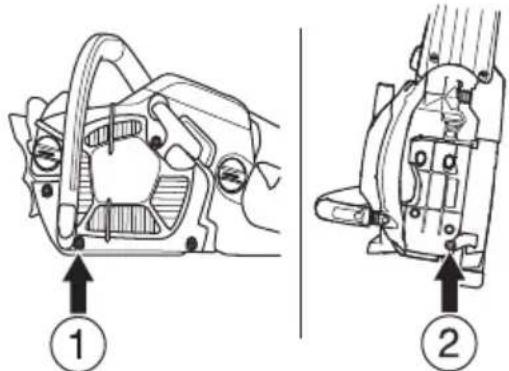
HUSQVARNA 439 - MANUTENZIONE - 1

text_image Technical diagram showing two mechanical assembly steps with numbered annotations
natural_image Technical line drawing of a mechanical assembly with internal components and an arrow indicating direction (no text or symbols)
text_image Technical diagram of a mechanical assembly with labeled parts and close-ups of two bolts
natural_image Technical line drawing of a mechanical assembly with no visible text or symbols
natural_image Mechanical assembly diagram showing internal components with arrows indicating motion (no text or labels)
natural_image Mechanical component diagram showing internal structure with arrows indicating assembly or force (no text or symbols)

MANUTENZIONE

natural_image Diagram of hands operating a mechanical component with rotating shaft and adjustment knob (no text or symbols)
natural_image Technical line drawing of a mechanical assembly with multiple components and no visible text or symbols
natural_image Illustration of hands using a tool to adjust or install a mechanical component, with no visible text or symbols.
natural_image Line drawing of a hand using a tool to cut a saw blade (no text or symbols)
natural_image Technical line drawing of a chain-linker device showing internal components and housing (no text or labels)

MANUTENZIONE

natural_image Technical line drawing of a mechanical bracket component (no text or symbols)
natural_image Technical line drawing of a mechanical assembly with no visible text or symbols
natural_image Illustration of a hand holding a tool with a screwdriver, resting on a surface (no text or symbols)
text_image Technical diagram showing a hand using a tool to adjust or install a mechanical component with an arrow indicating the process.

HUSQVARNA 439 - MANUTENZIONE - 1

text_image Exploded view diagram of a chainmail device with numbered parts labeled 1 through 5
natural_image Line drawing of a chain-linking gear with visible blades and handle (no text or symbols)
natural_image Technical diagram showing mechanical assembly with arrows indicating force or movement (no text or symbols present)
natural_image Technical illustration of a mechanical assembly with exploded view and close-up views (no text or symbols)
natural_image Mechanical component diagram showing a lever mechanism with two views of the lever assembly (no text or labels)
natural_image Technical line drawing of a mechanical assembly with internal components and a curved arrow indicating motion (no text or symbols)
text_image Pe Guslept
text_image Safety warning symbol showing a person falling from a tree with a diagonal line indicating no obstruction
natural_image Illustration of a person wearing protective gear and a first aid kit (no text or symbols)
natural_image Line drawing of a manual hairpin with handle and blade (no text or symbols)
text_image Diagram showing a hazard warning sign with arrows indicating safety or hazard, and a chain of chains below.

SPLOŠNA NAVODILA ZA VARNOST

natural_image Line drawing of a mechanical tool with labeled component A (no text or symbols beyond label)
natural_image Technical line drawing of a mechanical device with labeled component (1), no readable text or symbols present.

HUSQVARNA 439 - SPLOŠNA NAVODILA ZA VARNOST - 1

natural_image Illustration of a hand pressing down on a mechanical component with motion arrows indicating movement (no text or symbols)

- Zavora za žago mora biti pred zagonom naprave aktivirana, da se prepreči rotiranje.
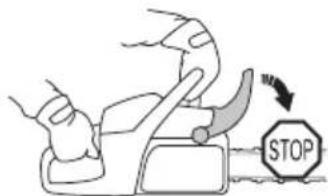
HUSQVARNA 439 - SPLOŠNA NAVODILA ZA VARNOST - 2

text_image STOP
natural_image Line drawing of a person using a seatbelt device (no text or symbols)
natural_image Illustration of a hand gripping a mechanical component (no text or symbols)
natural_image Illustration of a worker in protective gear cutting a rolled-up sheet with an arrow indicating motion (no text or symbols)
natural_image Illustration of a hand turning a car with motion arrows indicating rotation (no text or symbols)
natural_image Illustration of a person using a power tool to cut a saw (no text or symbols present)

Ali bo moja roka v primeru odsunka zmeraj aktivirala zavoro za žago?

natural_image Mechanical diagram showing a rotating component with an arrow indicating motion (no text or symbols)

Ščitnik desne roke

natural_image Pure technical line drawing of a mechanical component (no text or symbols)

Sistem dušenja tresljajev

natural_image Three line drawings of coiled springs, no text or symbols present
natural_image Line drawing of a chainsaw with an inset showing a small device (no text or symbols)

SPLOŠNA NAVODILA ZA VARNOST

Dušilec

natural_image Mechanical assembly diagram showing a lever mechanism with no text or symbols
text_image Diagram showing a prohibition symbol over a chain of chains with Chinese text labels
text_image PITCH = D/2 D
natural_image Pure mechanical diagram showing a lever mechanism with no text or symbols
text_image PITCH = D/2 D
natural_image Pure technical diagram showing a mechanical part and a vertical scale with arrows (no text or symbols)
natural_image Technical line drawing of a mechanical tool with an arrow indicating rotation (no text or symbols)

2 Kot rezanja

HUSQVARNA 439 - Dušilec - 1

3 Položaj pile

HUSQVARNA 439 - Dušilec - 2

natural_image Line drawing of a tool with a handle and lever, no text or symbols present

4 Premer okrogle pile

HUSQVARNA 439 - Dušilec - 3

natural_image Three technical illustrations of screwdriver tools: a handle, a bracket with cutouts, and a clamp (no text or symbols)
natural_image Diagram of a tool pressing down on a surface with an arrow indicating motion (no text or symbols)
natural_image Three technical line drawings of mechanical components: a radial tool, a rectangular part with holes, and a bracket-like structure (no text or symbols)
natural_image Pure mechanical diagram showing a lever and shaft assembly without any text, numbers, or symbols

Napenjanje verige

HUSQVARNA 439 - Napenjanje verige - 1

HUSQVARNA 439 - Napenjanje verige - 2

natural_image Illustration of two hands holding a curved object with directional arrows indicating motion (no text or symbols)

SPLOŠNA NAVODILA ZA VARNOST

- S kombiniranim ključem odvijte matice vijakov, s katerimi sta pritrjena pokrov sklopke/zavora verige. Uporabite kombinirani ključ. Za tem matice ročno trdno zategnite.
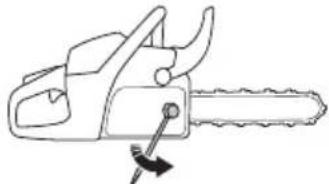
HUSQVARNA 439 - SPLOŠNA NAVODILA ZA VARNOST - 1

natural_image Line drawing of a chain saw with a hammer and screw (no text or symbols)

- Dvignite konico meča in napnite verigo tako, da s kombiniranim ključem zategujete vijak za napenjanje verige. Verigo napenjajte, dokler se ne prilega tudi ob spodnji rob meča.
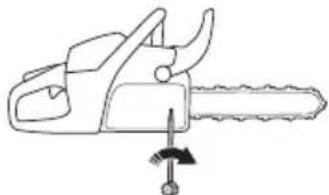
HUSQVARNA 439 - SPLOŠNA NAVODILA ZA VARNOST - 2

natural_image Line drawing of a chainsaw with a hammer and fulcrum, showing blade geometry and mounting point (no text or symbols)

- S kombiniranim ključem zategnite matice meča in istočasno dvignite konico meča. Preverite, će lahko verigo brez težav vlečete z roko, istočasno ko se ta tesno prilega spodnjemu robu meča.
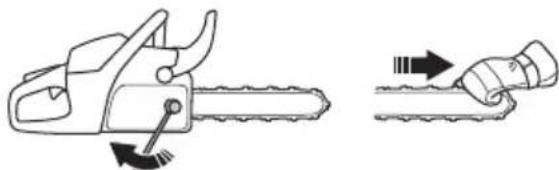
HUSQVARNA 439 - SPLOŠNA NAVODILA ZA VARNOST - 3

natural_image Illustration of a chain saw being adjusted to a wire, showing blade and grip (no text or symbols)
natural_image Illustration of a worker using a power tool to cut tree bark (no text or symbols)

Če mazanje verige ne deluje:

- Preverite, će je oljni kanal v meču zamašen. Po potrebi ga očistite.
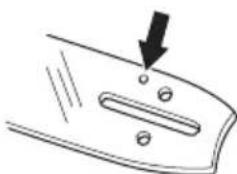
HUSQVARNA 439 - SPLOŠNA NAVODILA ZA VARNOST - 4

natural_image Simple line drawing of a door handle with a downward arrow indicating force or point (no text or symbols)

- Preverite, če se je v žlebu meča nabrala nesnaga. Po potrebi ga očistite.
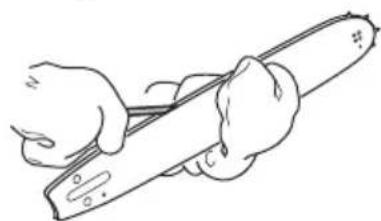
HUSQVARNA 439 - SPLOŠNA NAVODILA ZA VARNOST - 5

natural_image Line drawing of hands holding a tool, no text or symbols present
natural_image Illustration of a hand holding a device with an arrow indicating rotation (no text or symbols)

SPLOŠNA NAVODILA ZA VARNOST

natural_image Technical line drawing of a mechanical component with concentric rings and central gear (no text or symbols)
natural_image Technical illustration of a gear and rotor assembly (no text or symbols)

Pregled obrabljenosti rezil

HUSQVARNA 439 - Pregled obrabljenosti rezil - 1

Verigo preglejte vsak dan in bodite pozorni na:

natural_image Diagram of a cutting tool with a magnified inset showing a cross-section (no text or symbols)
natural_image Simple line drawing of a tool or plunger with two arrows indicating direction (no text or symbols)

- Da bo življenjska doba meča kar se da dolga, ga je potrebno vsak dan obrniti.
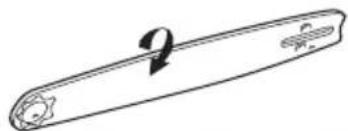
HUSQVARNA 439 - Pregled obrabljenosti rezil - 2

natural_image Simple line drawing of a rectangular object with a curved arrow and circular features, no text or symbols present.

HUSQVARNA 439 - Pregled obrabljenosti rezil - 3

natural_image Line drawing of a car hood with a curved handle and arrow indicating motion (no text or symbols)

- Odvijte matico meča in odstranite pokrov sklopke (zavoro verige). Snemite obroč za prenašanje (A).
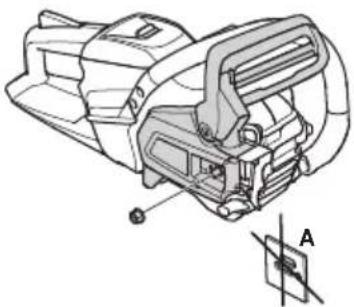
HUSQVARNA 439 - Pregled obrabljenosti rezil - 4

natural_image Technical line drawing of a mechanical device with internal components and a labeled section A (no text or symbols present)

- Meč namestite preko sornika za meč. Meč namestite v krajni zadnji položaj. Verigo namestite preko pogonskega zobnika in v utor na meču. Začnite na gornji strani meča.

text_image Technical diagram showing mechanical assembly with labeled components and directional arrow indicating motion
natural_image Technical line drawing of a mechanical assembly with hands operating a tool (no text or symbols present)

- Verigo napnite s kombiniranim ključem tako, da obračate vijak za napenjanje verige v smeri urinega kazalca. Verigo

natural_image Line drawing of a chain saw with a hammer and fulcrum, no text or symbols present
natural_image Line drawing of a chain saw with a curved arrow indicating motion (no text or symbols)

- Ko je veriga nova, je potrebno njeno napetost preverjati pogosteje, dokler se veriga ne uteče. Napetost verige preverjajte redno. Pravilno napeta veriga zagotavlja dober rez in ima dolgo življenjsko dobo.
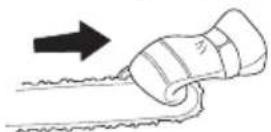
HUSQVARNA 439 - Pregled obrabljenosti rezil - 5

Namestitev opore

natural_image Line drawing of a chainsaw with a downward arrow indicating compression or disassembly (no text or symbols)

RAVNANJE Z GORIVOM

Pogonsko gorivo

text_image Illustration showing a person pouring liquid into a container with a 'Mn2O3' label, and another marked with a crossed-out bottle and bucket.
  • Mešanico bencina in olja vedno pripravljajte v čisti posodi, atestirani za gorivo.
  • Vedno začnite tako, da v posodo najprej natočite polovico potrebne količine bencina. Nato dodajte celotno količino olja. Dobro premešajte (s tresenjem). Dodajte preostalo količino bencina.
  • Predno vlijete mešanico v posodo za gorivo, jo (s tresenjem) temeljito premešajte.
  • Pripravite samo toliko mešanice, kolikor jo porabite v enem mesecu.
  • Če stroja dalj časa ne boste uporabljali, izpraznite posodo za gorivo in jo očistite.

Olje za verigo

natural_image Diagram of a chainsaw with a warning symbol (no text or labels)
natural_image Line drawing of a chainsaw with an inset showing a fuel pump (no text or symbols)

HUSQVARNA 439 - Olje za verigo - 1

OPOZORILO! Gorivo in hlapi so zelo vnetljivi. Pri delu z gorivom in oljem za verigo bodite previdni. Zavedajte se nevarnosti požara, eksplozije in vdihovanja strupenih hlapov.

Varna uporaba goriva

text_image Min. 3 m (10 ft)
natural_image Simple line drawing of a manual pushpin with motion arrows indicating motion (no text or symbols)
natural_image Technical line drawing of a mechanical component with adjustment knobs and a black arrow indicating direction (no text or symbols)

Čok: Ročico čoka premaknite v položaj za čok.
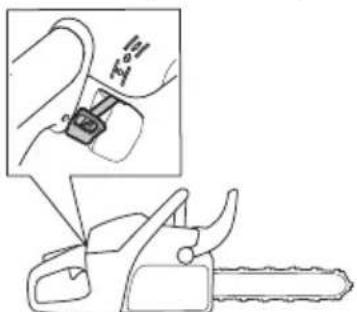
HUSQVARNA 439 - Varna uporaba goriva - 1

natural_image Line drawing of a chain saw tool with a magnified inset showing the handle (no text or symbols)

- Z levo roko primite sprednjo ročico. Desno nogo postavite na levi del zadnje ročice tako da pritisnete stroj proti tlom.

- Povlecite zaganjalno ročico z desno roko in potegnite zaganjalno vrvico počasi navzven, tako dolgo da začutite odpor (ko začne vžig prijemati), potem pa potegnite hitro in močno, dokler motor ne vžge.
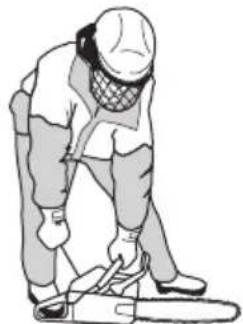
HUSQVARNA 439 - Varna uporaba goriva - 2

natural_image Illustration of a person wearing a hard hat and using a power tool (no text or symbols visible)

- Potisnite noter regulator lopute za hladen zagon, takoj ko motor vžge in se zasliši zvok "puf". Še naprej močno vlecite vrvico, dokler motor ne vžge.

Topel motor

natural_image Line drawing of a chainsaw with a close-up inset showing the grip detail (no text or symbols)

- Z levo roko primite sprednjo ročico. Desno nogo postavite na levi del zadnje ročice tako da pritisnete stroj proti tlom.

- Povlecite zaganjalno ročico z desno roko in potegnite zaganjalno vrvico počasi navzven, tako dolgo da začutite odpor (ko začne vžig prijemati), potem pa potegnite hitro in močno, dokler motor ne vžge.
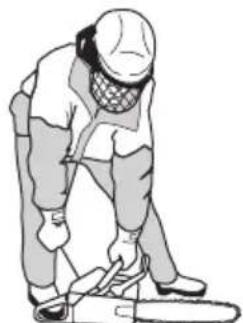

HUSQVARNA 439 - Topel motor - 1

natural_image Illustration of a person in winter gear handling a large object (no text or symbols visible)
natural_image Line drawing of a chain-linking device with arrows indicating motion (no text or symbols)
natural_image Line drawing of a manual tool with a handle and blade, no text or symbols present

HUSQVARNA 439 - Topel motor - 2

natural_image Simple line drawing of a crossed-out saw and blade with a diagonal no-smoking symbol (no text or labels)
natural_image Illustration of a worker using a tool and another figure with a no-smoking symbol (no text or labels)

- Žago zmeraj držite z obema rokama. Desno roko položite na zadnjo ročico in levo roko na sprednjo ročico. Vsi

natural_image Illustration of a person wearing a hooded shirt and face mask, holding a chainsaw (no text or symbols present)

Izklop

natural_image Line drawing of a chainsaw with an inset showing its internal components (no text or symbols)
natural_image Technical line drawing of a car front bumper assembly showing internal components and mounting brackets (no text or labels)

DELOVNA TEHNIKA

Pred vsako uporabo:

HUSQVARNA 439 - Pred vsako uporabo: - 1

text_image 3 4 5 6, 8 10 2 7 1 9
natural_image Illustration of a hand operating a mechanical device with a tool (no text or symbols visible)
natural_image Illustration of a person in protective gear using a tool on wooden beams, with an arrow indicating motion (no text or symbols)
natural_image Illustration of a worker in protective gear holding a saw and cutting a wooden board (no text or symbols)

4 Nikoli ne žagajte nad višino ramen, ali samo s konico meča. Pri žaganju vedno držite žago z obema rokama!
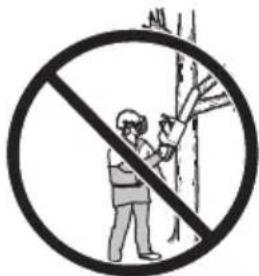
HUSQVARNA 439 - Pred vsako uporabo: - 2

text_image Prohibition sign showing a worker without a tool, indicating no intervention or absence of protection.

5 Za popolni nadzor nad motorno žago, morate stati stabilno. Nikoli ne delajte stoje na lestvi, drevesu, oziroma će podlaga, na kateri stojite, ni stabilna.
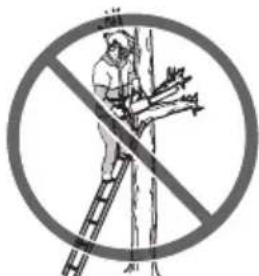
HUSQVARNA 439 - Pred vsako uporabo: - 3

natural_image Prohibition sign showing a worker climbing a rope using a ladder, enclosed in a circle (no text or symbols)
natural_image Line drawing of a manual saw cutting a blade with motion arrows indicating direction (no text or symbols)
text_image Diagram illustrating a chain-linking mechanism with warning sign and mechanical components
natural_image Illustration of a hand using a chain-linking tool to lift a circular object (no text or symbols)
natural_image Illustration of a vehicle with a warning symbol and explosion, no text or labels present

2 Poskrbite, da se deblo med žaganjem ne razcepi.
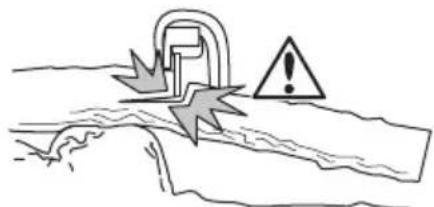
HUSQVARNA 439 - Pred vsako uporabo: - 4

natural_image Illustration of a landslide with a lightning bolt and warning symbol (no text or labels)

3 Poskrbite, da veriga med žaganjem ali po njem ne udari ob tla ali kak drug predmet.
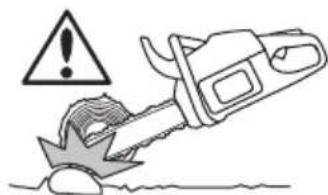
HUSQVARNA 439 - Pred vsako uporabo: - 5

text_image Warning symbol showing a chainsaw crushing a hole with an exclamation mark, indicating hazard or caution.
text_image Diagram illustrating a hazard warning symbol with a person falling on a slope, surrounded by a chain and directional arrows.
natural_image Illustration of two workers handling stacked logs, one holding a log and the other holding a log (no text or symbols present)

Deblo leži na tleh. Nobene nevarnosti ni, da se veriga zagozdi in da se deblo razcepi. Obstaja pa velika nevarnost, da veriga ob koncu reza udari ob tla.
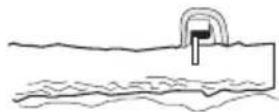
HUSQVARNA 439 - Pred vsako uporabo: - 6

text_image Diagram illustrating a chain saw cutting process with warning symbol and downward arrow indicating process flow

DELOVNA TEHNIKA

text_image Diagram illustrating the process of a chain mill with arrows indicating downward motion and circular components.
natural_image Simple line drawing of a pipe or channel with a water surface and a small object, no text or symbols present.

Začnite žagati s spodnje strani (približno do 1/3 premera debla).

Nadaljujte z žaganjem z zgornje strani, dokler se reza ne srečata.
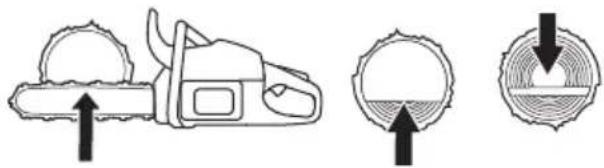
HUSQVARNA 439 - DELOVNA TEHNIKA - 1

natural_image Diagram showing a chain saw cutting into a circular cutter head, with arrows indicating direction of movement (no text or symbols)
natural_image Simple line drawing of a boat with wheels and a handle, no text or symbols present

Začnite žagati s zgornje strani (približno do 1/3 premera debla).

Nadaljujte z žaganjem z spodnje strani, dokler se reza ne srečata.
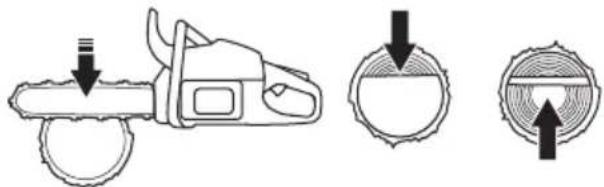
HUSQVARNA 439 - DELOVNA TEHNIKA - 2

natural_image Diagram showing a chain saw cutting into a circular cutter, with three views of the cutter's head (no text or symbols present)

Tehnika podiranja dreves

text_image Diagram illustrating a person using a power tool to lift a vertical pole, with directional arrows indicating force or movement.

DELOVNA TEHNIKA

flowchart
graph TD
    A["1"] --> B["2"]
    B --> C["1"]
    C --> D["3"]
    D --> A
text_image Diagram illustrating a tree clearing operation with labeled steps and directional arrows indicating process flow.
natural_image Diagram illustrating tree root damage, triangular load distribution, and circular impact with arrows (no text or symbols)

Podiralni rez

Tudi podiralni rez, ki ga naredite z nasprotne strani drevesa, naj bo popolnoma vodoraven. Postavite se levo od drevesa in žagajte s spodnjim robom meča.

Podiralni rez naj bo 3–5 cm (1,5–2 coli) nad vodoravno linijo smernega reza.
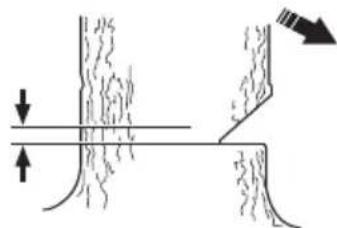
HUSQVARNA 439 - Podiralni rez - 1

natural_image Diagram showing two curved structures with arrows indicating direction of movement or force, no text or symbols present.

Opora naj bo (če je montirana), za prelomnim pasom. Žagajte s polnim plinom in počasi vodite verigo/meč v deblo. Bodite pozorni, će se drevo začne premikati v nasprotno smer od izbrane. Takoj ko je rez dovolj globok, zabijte vanj klin ali lomilko.
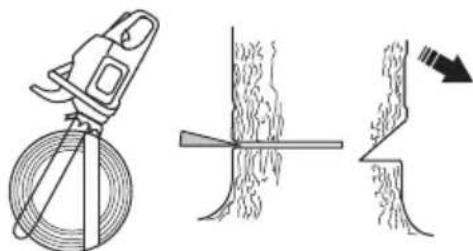
HUSQVARNA 439 - Podiralni rez - 2

natural_image Diagram showing a chain-linking device and two tree root branches with arrows indicating direction (no text or symbols)
natural_image Diagram illustrating a circular structure with arrows and a tree trunk, showing structural deformation (no text or symbols)

Če je prelomni pas preozek ali prežagan, ali će sta smerni izsek in podiralni rez na napačnem mestu, je smer padca nemogoče nadzorovati.
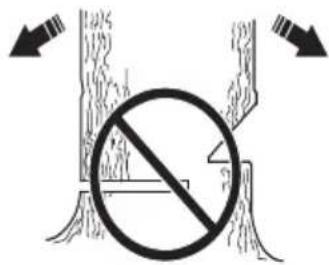
HUSQVARNA 439 - Podiralni rez - 3

text_image Diagram showing a prohibition symbol crossed out by tree branches, with arrows indicating direction of movement.

DELOVNA TEHNIKA

natural_image Illustration of a tool interacting with a tree trunk, showing motion arrows (no text or symbols)
natural_image Line drawing of a chain-linking tool with a circular base and blade (no text or symbols)
text_image Diagram illustrating a hazard warning with a person falling off a slope, showing a warning symbol and directional arrows.
natural_image Two diagrams showing a person walking under a tree with a circle and another figure in a circle, both without any text or symbols.
natural_image Diagram of a mechanical or optical setup with two circular components and dashed lines indicating paths (no text or symbols)
natural_image Simple line drawing of a layered structure with an upward arrow at the base (no text or symbols)

Nadaljujte žaganje dokler se ne sprosti napetost in upogib drevesa/veje.
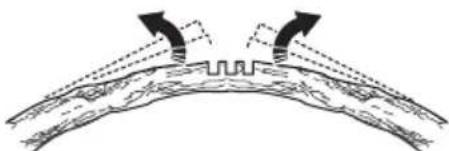
HUSQVARNA 439 - DELOVNA TEHNIKA - 1

natural_image Diagram of a curved structure with two arrows indicating direction, no text or symbols present

Ko se napetost sprosti odžagajte drevo/vejo iz nasprotne strani.

DELOVNA TEHNIKA

Preprečevanje odsunka

HUSQVARNA 439 - Preprečevanje odsunka - 1

text_image Diagram illustrating a chain-linking process with warning sign and mechanical components
natural_image Illustration of a worker spraying water with a hose, no text or symbols present
text_image Diagram illustrating a hazard warning symbol with a person falling off a chain, indicating safety risk.

Žaganje vej

HUSQVARNA 439 - Preprečevanje odsunka - 2

natural_image Illustration of mechanical components including a hammer, gear, and tools (no text or symbols)
natural_image Line drawing of a manual chain saw (no text or symbols)
natural_image Illustration of a hand using a car seatbelt to lift a vehicle (no text or symbols visible)

Preverjanje samodejnega delovanja zavore
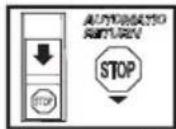
HUSQVARNA 439 - Preprečevanje odsunka - 3

- Ugasnjeno žago postavite na panj ali drugo stabilno površino. Sprostite sprednjo ročico in pustite, da žaga sama pade tako, da se obrne na zadnji ročici proti panju.
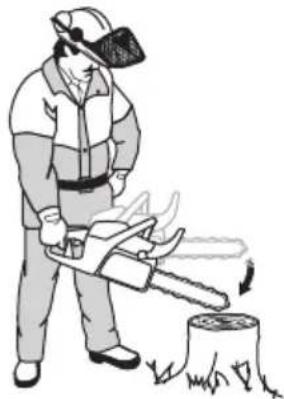
HUSQVARNA 439 - Preprečevanje odsunka - 4

natural_image Illustration of a person using a power saw to cut tree bark (no text or symbols)

Ko konica meča zadene ob panj, se mora zavora sprožiti.

Preverjanje delovanja zavore

natural_image Illustration of a person using a chain-linking power tool (no text or symbols)

VZDRŽEVANJE

- S palcem in prsti čvrsto objemite ročaja žage.
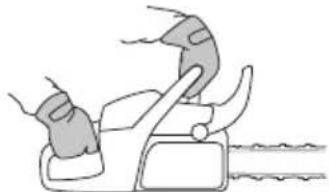
HUSQVARNA 439 - VZDRŽEVANJE - 1

natural_image Illustration of a hand operating a mechanical device with a curved handle (no text or symbols)
natural_image Line drawing of a chain-linking tool with a black arrow indicating the handle (no text or symbols present)

- Stisnite zaporo plina in se prepričajte, da se povrne v svoj prvotni položaj, ko jo izpustite.
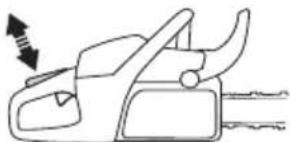
HUSQVARNA 439 - VZDRŽEVANJE - 2

natural_image Line drawing of a mechanical device with an arrow indicating direction (no text or symbols)

- Preverite, će se ročica za plin in zapora plina premikata neovirano in ali njuni povratni vzmeti delujeta pravilno.
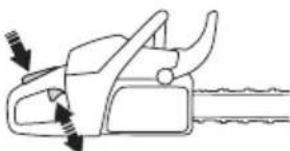
HUSQVARNA 439 - VZDRŽEVANJE - 3

natural_image Line drawing of a chain saw with arrows indicating motion direction (no text or symbols)

- Poženite žago in nastavite polni plin. Spustite ročico za uravnavanje plina in se prepričajte, da se veriga ustavi in da nato popolnoma miruje.

Lovilec verige
HUSQVARNA 439 - Lovilec verige - 1

HUSQVARNA 439 - Lovilec verige - 2

natural_image Mechanical assembly diagram showing a rotating component with labeled parts (no text or symbols present)

Ščitnik desne roke

HUSQVARNA 439 - Ščitnik desne roke - 1

HUSQVARNA 439 - Ščitnik desne roke - 2

natural_image Technical line drawing of a mechanical component or bracket (no text or symbols)

Sistem dušenja tresljajev

HUSQVARNA 439 - Sistem dušenja tresljajev - 1

HUSQVARNA 439 - Sistem dušenja tresljajev - 2

- Redno preverjajte stanje elementov za dušenje vibracij. Bodite pozorni na morebitne razpoke in druge deformacije.

natural_image Line drawing of a chainsaw with an inset showing a small device (no text or symbols)

VZDRŽEVANJE

natural_image Technical line drawing of two mechanical components with mounting holes and a tool, no text or symbols present

Dušilec

HUSQVARNA 439 - Dušilec - 1

text_image Prohibition sign with crossed-out battery icon and prohibition symbol
text_image Technical diagram of a mechanical assembly with labeled parts and directional arrows indicating motion or force directions.

• Zrahljajte vijaka (1 in 2).

HUSQVARNA 439 - Dušilec - 2

text_image Technical diagram showing mechanical assembly with numbered parts and directional arrows indicating assembly steps

- Potisnite pokrov dušilca, kot prikazuje slika.
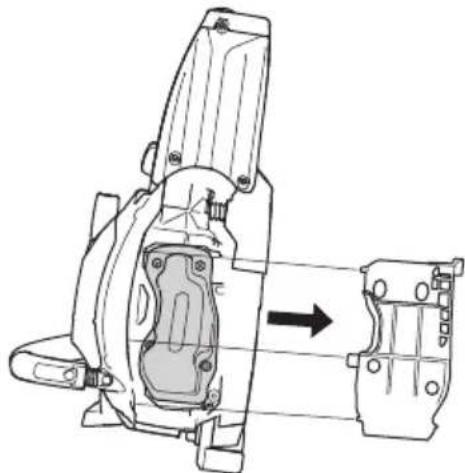
HUSQVARNA 439 - Dušilec - 3

natural_image Technical line drawing of a mechanical assembly with internal components and an arrow indicating direction (no text or symbols)

- Zrahljajte vijake in matice. Odstranite dušilec in preverite ali je v redu.
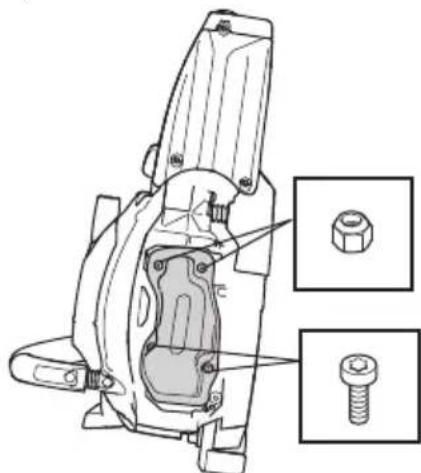
HUSQVARNA 439 - Dušilec - 4

natural_image Technical diagram of a mechanical assembly with two views of a bolt and nut (no text or labels)
natural_image Technical line drawing of a mechanical assembly with no visible text or symbols
natural_image Mechanical assembly diagram showing internal components and a close-up of a component (no text or labels)
natural_image Technical diagram of a mechanical component with arrows indicating assembly or force direction (no text or symbols present)

- Izvlecite približno 30 cm vrvice in jo dvignite iz zareze na vretenu. Nastavite povratno vzmet v začetni položaj tako, da pustite, da se vreteno počasi odvija nazaj.
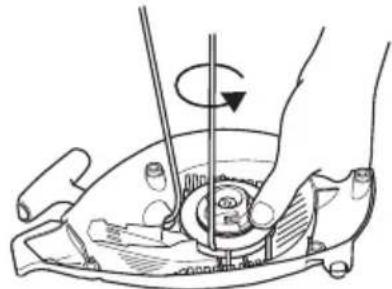
HUSQVARNA 439 - Dušilec - 5

natural_image Mechanical assembly diagram showing hands operating a rotating shaft and housing (no text or symbols)
natural_image Exploded view diagram of a mechanical assembly showing internal components like gears and shafts (no text or labels)

Napenjanje povratne vzmeti

- Dvignite vžigalno vrvico v zarezo na vretenu, vreteno pa za 2 obrata zasučite v smeri urinega kazalca.

natural_image Illustration of hands using a tool to adjust or install a mechanical component, with no visible text or symbols.

VZDRŽEVANJE

natural_image Line drawing of a hand using a tool to cut a saw (no text or symbols present)
natural_image Technical line drawing of a chain-link robotic device (no text or symbols)
natural_image Technical line drawing of a mechanical bracket or housing component (no text or symbols)
natural_image Technical line drawing of a mechanical assembly showing front and side views (no text or symbols)

VZDRŽEVANJE

natural_image Line drawing of a hand holding a tool, with no visible text or symbols
text_image Technical diagram showing a hand operating a mechanical device with labeled components and directional arrows indicating movement or assembly.

HUSQVARNA 439 - VZDRŽEVANJE - 1

OPOZORILO! Pri uravnavanju mora biti motor ugasnjen.

Hladilni sistem
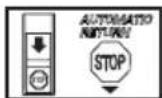
HUSQVARNA 439 - Hladilni sistem - 1

HUSQVARNA 439 - Hladilni sistem - 2

HUSQVARNA 439 - Hladilni sistem - 3

text_image Exploded view diagram of a chain hood assembly with numbered parts labeled 1 through 7
natural_image Line drawing of a chain-linking gear with visible blades and handle (no text or symbols)
natural_image Technical illustration of a mechanical assembly with arrows indicating force or movement (no text or symbols present)
natural_image Technical illustration of a mechanical assembly with exploded view and close-up views (no text or symbols)
text_image Technical diagram showing mechanical component assembly with labeled parts and directional arrows indicating motion or movement.
natural_image Technical line drawing of a mechanical device with internal components and a curved arrow indicating motion (no text or symbols)

Številka dela: 584 89 47-01.

text_image Pe Gustef

Per Gustafsson, šef razvoja

Table of contents Click a title to access it
Manual assistant
Powered by Anthropic
Waiting for your message
Product information

Brand : HUSQVARNA

Model : 439

Category : Saw