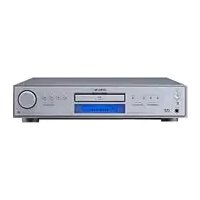
AVDS500ES - AV receiver SONY - Free user manual and instructions
Find the device manual for free AVDS500ES SONY in PDF.


| Product Type | Super Audio CD/DVD Receiver |
| Brand | Sony |
| Model | AVDS500ES |
| Power Supply | 120 V AC, 60 Hz |
| Power Consumption | 180 W (1 W in standby) |
| Output Power (Front) | 100 W + 100 W (8/4 ohms, 20-20,000 Hz, 0.7% THD) |
| Output Power (Center) | 100 W |
| Output Power (Surround) | 100 W + 100 W |
| Supported Audio Formats | Dolby Digital, Dolby Pro Logic II, DTS, DTS-ES, PCM |
| Compatible Disc Formats | DVD Video, Super Audio CD, CD, Video CD, MP3, JPEG (CD-R/RW) |
| FM Tuner | 87.5 - 108.0 MHz (100 kHz steps) |
| AM Tuner | 530 - 1,710 kHz (10 kHz steps) / 531 - 1,710 kHz (9 kHz steps) |
| Video Inputs | Composite (1 Vp-p 75 ohms), S-Video (Y: 1 Vp-p, C: 0.286 Vp-p) |
| Video Outputs | Composite, S-Video, Component (Y, Pb/Cb, Pr/Cr) |
| Digital Audio Inputs | Optical (2), Coaxial (1) |
| Digital Audio Output | Optical |
| Number of Connectable Speakers | Up to 6 (front L/R, center, surround L/R, surround back) + active subwoofer |
| Special Features | Digital Cinema Sound (DCS), Cinema Studio EX modes, Virtual Multi Dimension, programmed and random playback, parental control |
| Maintenance | Clean with a soft cloth moistened with a neutral detergent solution. Do not use alcohol or benzene. |
| Safety | Unplug in case of object or liquid intrusion. Do not obstruct ventilation openings. |
| Supplied Accessories | Remote control RM-SP500, R6 (AA) batteries, AM loop antenna, FM antenna wire, S-video cable, instruction manual |
Frequently Asked Questions - AVDS500ES SONY
User questions about AVDS500ES SONY
0 question about this device. Answer the ones you know or ask your own.
Ask a new question about this device
Download the instructions for your AV receiver in PDF format for free! Find your manual AVDS500ES - SONY and take your electronic device back in hand. On this page are published all the documents necessary for the use of your device. AVDS500ES by SONY.
USER MANUAL AVDS500ES SONY
Super Audio CD/DVD RECEIVER
Caution - The use of optical instruments with this product will increase eye hazard.
For the customers in the U.S.A To prevent fire or shock hazard, do not expose the unit to rain or moisture.
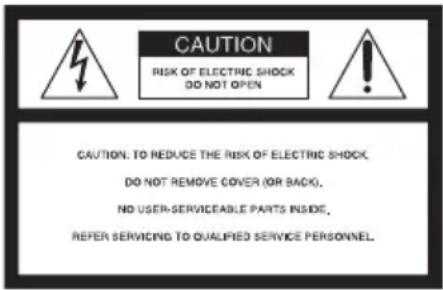

This symbol is intended to alert the user to the presence of uninsulated "dangerous voltage" within the product's enclosure th
may be of sufficient magnitude to constitute a risk of electric shock to persons.

This symbol is intended to alert the user to the presence of important operating and maintenance (servicing) instructions in the
literature accompanying the appliance.
Owner's Record
The model and serial numbers are located at the rear of the unit. Record the serial number in the space provided below. Refer to them whenever you call upon your Sony dealer regarding this product.
Model No. AVD-S500ES
Serial No.
WARNING
This equipment has been tested and found to comply with the limits for a Class B digital device, pursuant to Part 15 of the FCC Rules. These limits are designed to provide reasonable protection against harmful interference in a residential installation. This equipment generates, uses, and can radiate radio frequency energy and, if not installed and used in accordance with the instructions, may cause harmful interference to radio communications. However, there is no guarantee that interference will not occur in a particular installation. If this equipment does cause harmful interference to radio or television reception, which can be determined by turning the equipment off and on, the user is encouraged to try to correct the interference by one or more of the following measures:
- Reorient or relocate the receiving antenna.
- Increase the separation between the equipment and receiver.
- Connect the equipment into an outlet on a circuit different from that to which the receiver is connected.
- Consult the dealer or an experienced radio/TV technician for help.
CAUTION
You are cautioned that any changes or modifications not expressly approved in this manual could void your authority to operate this equipment.
Note to CATV system installer:
This reminder is provided to call the CATV system installer's attention to Article 820-40 of the NEC that provides guidelines for proper grounding and, in particular, specifies that the cable ground shall be connected to the grounding system of the building, as close to the point of cable entry as practical.
For the customers in Canada CAUTION
TO PREVENT ELECTRIC SHOCK, MATCH WIDE BLADE OF PLUG TO WIDE SLOT, FULLY INSERT.

ENERGY STAR® is a U.S. registered mark.
As an ENERGY STAR® partner, Sony Corporation has determined that this product meets the ENERGY STAR® guidelines for energy efficiency.
Precautions
Safety
- If anything falls into the cabinet, unplug the unit and have it checked by qualified personnel before operating it any further.
- The unit is not disconnected from the mains as long as it is connected to the mains outlet, even if the unit itself has been turned off.
- Unplug the unit from the wall outlet if you do not intend to use it for an extended period of time. To disconnect the cord, pull it out by the plug, never by the cord.
Installing
- Do not install the appliance in a confined space, such as a bookcase or built-in cabinet.
- Allow adequate air circulation to prevent internal heat buildup.
- Do not place the unit on surfaces (rugs, blankets, etc.) or near materials (curtains, draperies) that may block the ventilation slots.
- Do not install the unit near heat sources such as radiators, or air ducts, or in a place subject to direct sunlight, excessive dust, mechanical vibration, or shock.
- Do not install the unit in an inclined position. It is designed to be operated in a horizontal position only.
- Keep the unit and discs away from equipment with strong magnets, such as microwave ovens, or large loudspeakers.
- Do not place heavy objects on the unit.
- If the unit is brought directly from a cold to a warm location, moisture may condense inside the receiver and cause damage to the lenses. When you first install the unit, or when you move it from a cold to a warm location, wait for about 30 minutes before operating the unit.
Welcome!
Thank you for purchasing this Sony Super Audio CD/DVD RECEIVER. Before operating this system, please read this manual thoroughly and retain it for future reference.
Precautions
On safety
Should any solid object or liquid fall into the cabinet, unplug the receiver and have it checked by qualified personnel before operating it any further.
On placement
- Place the receiver in a location with adequate ventilation to prevent heat build-up in the receiver.
- At high volume, over long periods of time, the cabinet becomes hot to the touch. This is not a malfunction. However, touching the cabinet should be avoided. Do not place the unit in a confined space where ventilation is poor as this may cause overheating.
- Do not block the ventilation slots by putting anything on the receiver. The receiver is equipped with a high power amplifier. If the ventilation slots on the top surface are blocked, the unit can overheat and malfunction.
- Do not place the receiver on a soft surface such as a rug that might block the ventilation holes on the bottom.
- Do not place the receiver in a location near heat sources, or in a place subject to direct sunlight, excessive dust, or mechanical shock.
On operation
- If the receiver is brought directly from a cold to a warm location, or is placed in a very damp room, moisture may condense on the lenses inside the receiver. Should this occur, the receiver may not operate properly. In this case, remove the disc and leave the receiver turned on for about half an hour until the moisture evaporates.
- When you move the receiver, take out any disc. If you don't, the disc may be damaged.
- For power saving purposes, the receiver can be completely turned off by the POWER button on the main unit. Though the LED remains lit for a while, the receiver is completely off.
On adjusting volume
Do not turn up the volume while listening to a section with very low level inputs or no audio signals. If you do, the speakers may be damaged when a peak level section is played.
On cleaning
Clean the cabinet, panel, and controls with a soft cloth slightly moistened with a mild detergent solution. Do not use any type of abrasive pad, scouring powder or solvent such as alcohol or benzine.
If you have any questions or problems concerning your receiver, please consult your nearest Sony dealer.
On cleaning discs
Do not use a commercially available CD/DVD cleaning disc. It may cause a malfunction.
On your TV's color
If the speakers should cause the TV screen to have color irregularity, turn off the TV at once then turn it on after 15 to 30 minutes. If color irregularity should persist, place the speakers farther away from the set.
The nameplate is located on the rear of the unit.
IMPORTANT NOTICE
Caution: This receiver is capable of holding a still video image or on-screen display image on your television screen indefinitely. If you leave the still video image or on-screen display image displayed on your TV for an extended period of time you risk permanent damage to your television screen.
Projection televisions are especially susceptible to this.
On moving the receiver
When you carry the receiver, use the following procedure to protect the inner mechanism.
Remove the disc. "NO DISC" is displayed in the front panel display. Turn off the receiver and remove the AC power cord from a wall outlet.
Table of Contents
Welcome! 3
Precautions. 3
About this Manual. 7
This receiver Can Play the Following Discs 7
Terms for discs. 7
Notes about Discs 9
Guide to the Control Menu Display.....11
Getting Started
Unpacking. 13
Inserting Batteries into the Remote.....13
Step 1: Speaker System Hookup. 14
Step 2: Antenna Hookups 17
Step 3: TV and Video Component Hookups. 19
Step 4: Connecting the AC Power Cord (mains lead) 21
Speaker Setup. 22
Playing Discs
Playing Discs 23
Resuming Playback from the Point Where You Stopped the Disc. 25 (Resume Play)
Using the DVD's Menu 26
PlayingVIDEOCDswithPBCFunctions (Ver.2.0). 26 (PBCPlayback)
Playing an MP3 Audio Track 27
Playing JPEG Image Files 29
Creating Your Own Program. 31 (Program Play)
Playing in Random Order 32 (Shuffle Play)
Playing Repeatedly 33 (Repeat Play)
Searching for a Particular Point on a Disc. 34 (Scan, Slow-motion Play)
Searching for a Title/Chapter/Track/ Index/Album/File. 35
Viewing Disc Information 37
Sound Adjustments
Changing the Sound. 42
Enjoying Surround Sound 44
Selecting the Surround Back Decoding Mode. 48
Selecting the DecodePriority 49
Changing the Speaker Impedance Value 50
Using Various Additional Functions
Changing the Angles 51
Displaying Subtitles. 52
Adjusting the Playback Picture. 53 (PICTURE MODE)
Locking Discs. 54
(CUSTOM PARENTAL CONTROL, PARENTAL CONTROL)
Other Operations
Controlling Other Units with the Supplied Remote 59
Using Other Units. 62
Enjoying the Radio. 62
Changing the Brightness of the Front Panel 65
Settings and Adjustments
Using the Setup Display. 66
Setting the Display or Sound Track Language. 67 (LANGUAGE SETUP)
Settings for the Display 68 (SCREEN SETUP)
Custom Settings.. 69 (CUSTOM SETUP)
Settings for the Speakers 70 (SPEAKER SETUP)
Additional Information
Troubleshooting. 74
Specifications. 77
Glossary 78
Index to Parts and Controls. 81
Language Code List. 85
DVD Setup Menu List. 86
Index 88
About this Manual
- The instructions in this manual describe the controls on the remote. You can also use the controls on the receiver if they have the same or similar names as those on the remote.
- The following symbols are used in this manual.
| Symbol Meaning | |
| DVD | Functions available for DVD VIDEOS and DVD-Rs/DVD-RWs in video mode or DVD+Rs/ DVD+RWs in video mode |
| VIDEO CD | Functions available in VIDEO CD mode |
| CD | Functions available in CD mode |
| SA-CD CD | Functions available in Super Audio CD and Audio CD mode |
| MP3 | Functions available for MP3* audio tracks |
| JPEG | Functions available for JPEG files |
- MP3 (MPEG1 Audio Layer 3) is a standard format defined by ISO/MPEG which compresses audio data.
This receiver Can Play the Following Discs
| Format of discs | Disc logo |
| DVD VIDEO | DVD VIDEO |
| Super Audio CD | SUPER AUDIO CD |
| VIDEO CD | COMPACT DISC DIGITAL VIDEO |
| Format of discs | Disc logo | |
| Audio CD | COMPACT DISC DIGITAL AUDIO TEXT | |
| CD-R/CD-RW (audio data) (MP3 files) (JPEG files) | COMPACT DISC DIGITAL AUDIO Recordable | COMPACT DISC DIGITAL AUDIO ReWritable |
| COMPACT DISC Recordable | COMPACT DISC ReWritable | |
The "DVDVIDEO" logo is a trademark.
Terms for discs
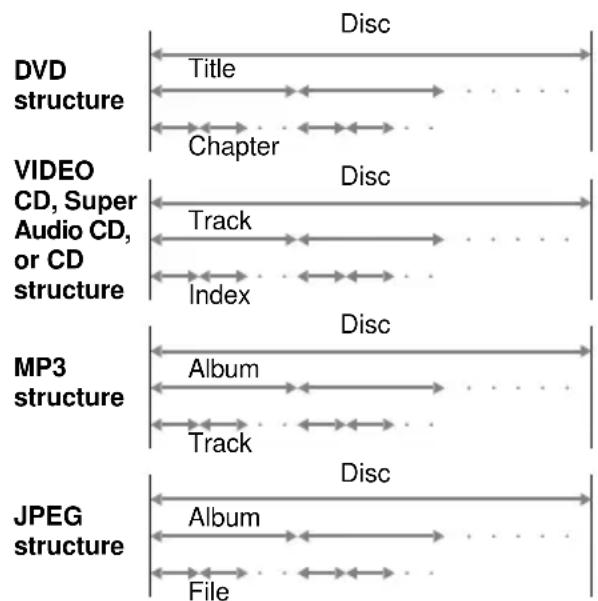
- Title
The longest section of a picture or music feature on a DVD, movie, etc., in video software, or the entire album in audio software.
Chapter
Section of a picture or a music piece that is smaller than titles. A title is composed of several chapters. Depending on the disc, no chapters may be recorded.
- Album
Section of a music piece or an image on a data CD containing MP3 audio tracks or JPEG files.
Track
Section of a picture or a music piece on a VIDEO CD, Super Audio CD, CD, or MP3.
- Index (Super Audio CD, CD) / Video Index (VIDEO CD)
A number that divides a track into sections to easily locate the point you want on aVIDEO CD, Super Audio CD or CD. Depending on the disc, no indexes may be recorded.
- Scene
On a VIDEO CD with PBC functions (page 26), the menu screens, moving pictures and still pictures are divided into sections called "scenes."
- File
Section of a picture on a data CD containing JPEG image files.
Note on PBC (Playback Control) (VIDEO CDs)
This receiver conforms to Ver. 1.1 and Ver. 2.0 of VIDEO CD standards. You can enjoy two kinds of playback depending on the disc type.
Disc type You can
| VIDEO CDs without PBC functions (Ver. 1.1 discs) | Enjoy video playback (moving pictures) as well as music. |
| VIDEO CDs with PBC functions (Ver. 2.0 discs) | Play interactive software using menu screens displayed on the TV screen (PBC Playback), in addition to the video playback functions of Ver. 1.1 discs. Moreover, you can play high-resolution still pictures, if they are included on the disc. |
About Multi Session CD
- This receiver can play Multi Session CDs when an MP3 audio track is contained in the first session. Any subsequent MP3 audio tracks recorded in later sessions can also be played back.
-
This receiver can play Multi Session CDs when a JPEG image file is contained in the first session. Any subsequent JPEG image files recorded in later sessions can also be played back.
-
If audio tracks and images in music CD format or video CD format are recorded in the first session, only the first session will be played back.
Region code
Your receiver has a region code printed on the back of the unit and will only play DVDs labelled with the same region code.
DVDs labelled will also play on this receiver.
If you try to play any other DVD, the message "Playback prohibited by area limitations." will appear on the TV screen. Depending on the DVD, no region code indication may be given even though playing the DVD is prohibited by area restrictions.
Examples of discs that the receiver cannot play
The receiver cannot play the following discs:
- CD-ROMs (except for extension ".MP3", ".JPG," or ".JPEG")
- CD-Rs/CD-RWs other than those recorded in the following formats:
music CD format
video CD format
- MP3/JPEG format that conforms to ISO9660* Level 1/Level 2, or its extended format, Joliet
Data part of CD-Extras
DVD-ROMs
DVD Audio discs
DVD-RAMs
DVD-RWs in VR (Video Recording) mode
DVD+RWs in VR (Video Recording) mode
- Progressive JPEG file
* A logical format of files and folders on CD-ROMs, defined by ISO (International Standard Organization)
Do not load the following discs:
- A DVD with a different region code (page 8, 79).
- A disc that is neither standard nor circular (e.g., card, heart, or star shape).
- A disc with paper or stickers on it.
- A disc that has adhesive or cellophane tape still left on it.
Notes about CD-R/CD-RW/DVD-R/DVD-RW (Video mode)/DVD+R/DVD+RW (Video mode)
In some cases, CD-R/CD-RW/DVD-R/DVD-RW (Video mode)/DVD+R/DVD+RW (Video mode) cannot be played on this player due to the recording quality or physical condition of the disc, or the characteristics of the recording device and authoring software.
The disc will not play if it has not been correctly finalized. For more information, see the operating instructions for the recording device.
Note that discs created in the Packet Write format cannot be played.
Music discs encoded with copyright protection technologies
This product is designed to play back discs that conform to the Compact Disc (CD) standard.
Recently, various music discs encoded with copyright protection technologies are marketed by some record companies. Please be aware that among those discs, there are some that do not conform to the CD standard and may not be playable by this product.
Note on playback operations of DVDs andVIDEO CDs
Some playback operations of DVDs andVIDEO CDs may be intentionally set by software producers. Since this receiver plays DVDs andVIDEO CDs according to the disc contents the software producers designed, some playback features may not be available. Also, refer to the instructions supplied with the DVDs orVIDEO CDs.
Copyrights
This product incorporates copyright protection technology that is protected by U.S. patents and other intellectual property rights. Use of this copyright protection technology must be authorized by Macrovision, and is intended for
home and other limited viewing uses only unless otherwise authorized by Macrovision. Reverse engineering or disassembly is prohibited.
This system incorporates with Dolby Digital and Dolby Pro Logic (II) adaptive matrix surround decoder and the DTS* Digital Surround System.
- Manufactured under license from Dolby Laboratories.
"Dolby", "Pro Logic" and the double-D symbol are trademarks of Dolby Laboratories.
**Manufactured under license from Digital Theater Systems, Inc.
"DTS", "DTS-ES" and "Neo:6" are trademarks of Digital Theater Systems, Inc.
Notes about Discs
On handling discs
- To keep the disc clean, handle the disc by its edge. Do not touch the surface.
- Do not stick paper or tape on the disc.
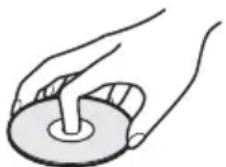
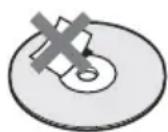
- Do not expose the disc to direct sunlight or heat sources such as hot air ducts, or leave it in a car parked in direct sunlight as the temperature may rise considerably inside the car.
After playing, store the disc in its case.
On cleaning
- Before playing, clean the disc with a cleaning cloth.
Wipe the disc from the center out.
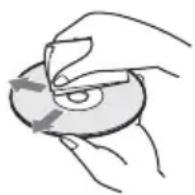
- Do not use solvents such as benzine, thinner, commercially available cleaners, or anti-static spray intended for vinyl LPs.
This receiver can only play back a standard circular disc. Using neither standard nor circular discs (e.g., card, heart, or star shape) may cause a malfunction.
Do not use a disc that has a commercially available accessory attached, such as a label or ring.
Guide to the Control Menu Display
Use the Control Menu to select a function that you would like to use. The Control Menu display appears when the DVD DISPLAY button is pressed. For details, refer to the page in parentheses.
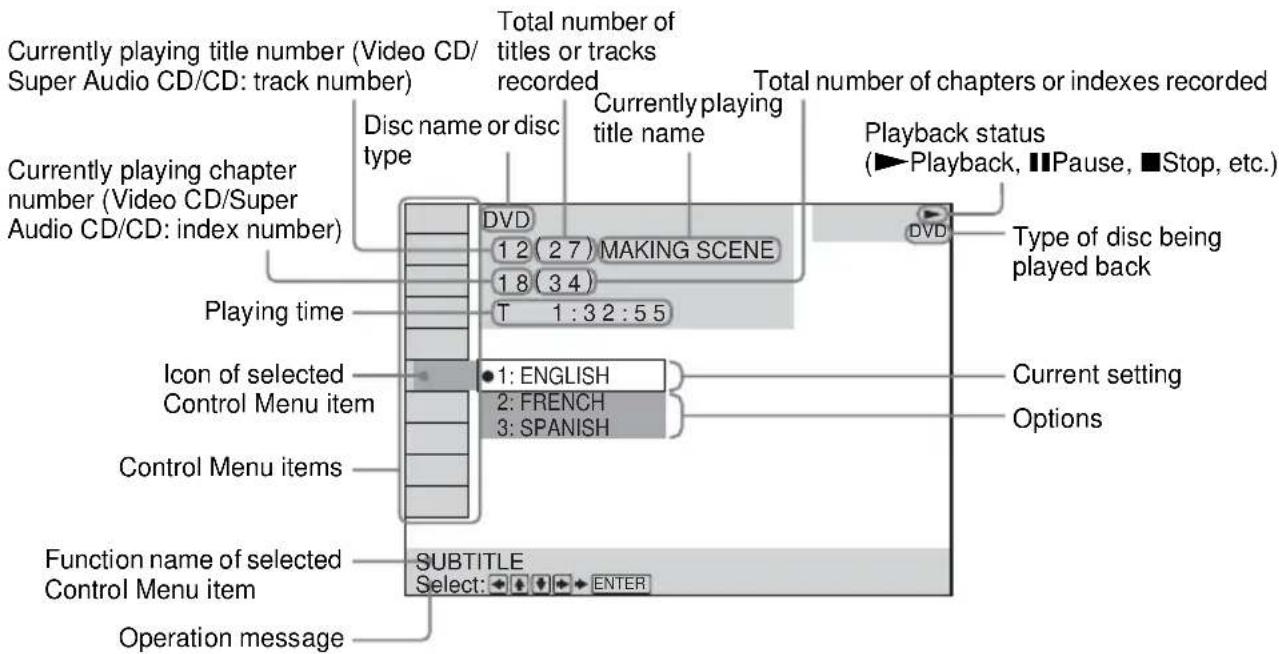
List of Control Menu Items
| DISC | Displays the disc name or the disc type inserted into the receiver. |
| TITLE (DVD only) (page 35)/SCENE (only VIDEO CD in PBC playback) / TRACK (VIDEO CD only) (page 35) | Selects the title (DVD), or the track (VIDEO CD) to be played. Displays the scene (VIDEO CD in PBC playback). |
| CHAPTER (DVD only) (page 36)/INDEX (VIDEO CD only) (page 36) | Selects the chapter (DVD) or the index (VIDEO CD) to be played. |
| ALBUM (MP3 only) (page 28, 35) | Selects the album (MP3) to be played. |
| TRACK (Super Audio CD/CD/MP3 only) (page 28, 35) | Selects the track (Super Audio CD/CD/MP3) to be played. |
| INDEX (Super Audio CD/CD only) (page 36) | Displays the index and selects the index (Super Audio CD) to be played. |
| TIME (page 37) | Checks the elapsed time and the remaining playback time. Inputs the time code for picture and music searching. |
| AUDIO (DVD/VIDEO CD/Super Audio CD/CD/MP3 only) (page 42) | Changes the audio setting. |
| SUBTITLE (DVD only) (page 52) | Displays the subtitles. Changes the subtitle language. |
| ALBUM (JPEG only) (page 29, 35) | Selects the album (JPEG) to be played. |
| FILE (JPEG only) (page 29, 35) | Selects the file (JPEG) to be played. |
| DATE (JPEG only) (page 41) Displays the date information. | |
| ANGLE (DVD only) (page 51) Changes the angle. | |
| PLAYMODE (VIDEO CD/Supper Audio CD/CD/MP3/JPEG only) (page 32) | Selects the play mode. |
| REPEAT (page 33) | Plays the entire disc (all titles/all tracks), one title/chapter/ track/album, or contents of program repeatedly. |
| PICTURE MODE (DVD/VIDEO CD/JPEG only) (page 53) | Adjusts the video signal from the receiver in various ways. Selects the setting that suits the program you are watching. |
| CUSTOM PARENTAL CONTROL (page 54) | Sets the disc to prohibit playing. |
Tips
Each time you press DVD DISPLAY, the Control Menu display changes as follows:
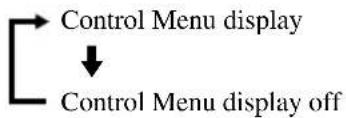
The Control Menu items vary, depending on the disc.
The Control Menu icon indicator lights up in green unless you set the REPEAT setting to OFF.
- The "ANGLE" indicator lights up in green only when multiple angles are recorded on the disc.
- The "PICTURE MODE" indicator lights up in green if "STANDARD" is not selected.
Getting Started
Unpacking
Check that you have the following items:
AM loop antenna (1)
FM wire antenna (1)
S Video cord (1)
- Remote Commander (remote) RM-SP500 (1)
R6 (size AA) batteries (2)
- Operating instructions (1)
Inserting Batteries into the Remote
You can control the receiver using the supplied remote. Insert two R6 (size AA) batteries by matching the and ends on the batteries to the markings inside the compartment. When using the remote, point it at the remote sensor R on the receiver.
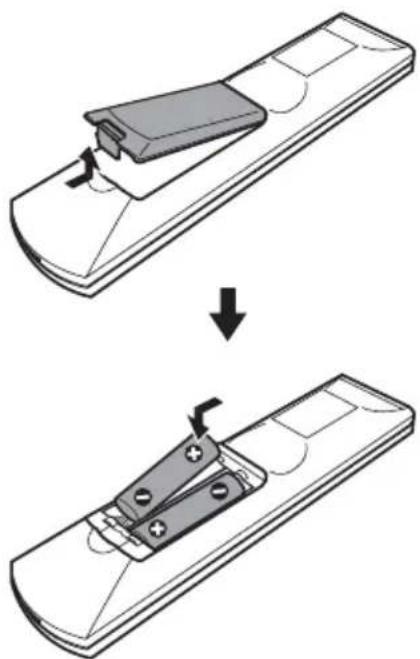
Notes
- Do not leave the remote in an extremely hot or humid place.
- Do not use a new battery with an old one.
- Do not drop any foreign object into the remote casing, particularly when replacing the batteries.
- Do not expose the remote sensor to direct light from the sun or lighting apparatus. Doing so may cause a malfunction.
- If you do not use the remote for an extended period of time, remove the batteries to avoid possible damage from battery leakage and corrosion.
- When you operate the receiver, select DVD or TUNER function.
Step 1: Speaker System Hookup
You can enjoy surround sound by connecting 6 speakers (front L/R speakers, center speaker, surround L/R speakers, surround back speaker) and active subwoofer to the receiver. If you do not connect 6 speakers and active subwoofer to the receiver, the receiver offers the means to optimize the signal depending on the number of connected speakers. When you connect 2 speakers to the receiver, connect the speakers to the SPEAKERS FRONT L/R jacks.
Notes
- Be sure to match the speaker cords to their appropriate terminal: to , to , L to L, and R to R jack.
- Use high performance speakers.
- Use suitable sized speakers of similar performance for the front, center, surround and surround back speakers.
To obtain the best possible surround sound, specify the speaker parameters (size, distance, level, etc.) on page 70.
Terminals for connecting the speakers
| Connect To the |
| Front speakers SPEAKERS FRONT L and R terminals |
| Surround speakers SPEAKERS SURROUND L and R terminals |
| Surround back speaker SPEAKERS SURROUND BACK terminal |
| Center speaker SPEAKERS CENTER terminal |
| Subwoofer SUBWOOFER AUDIO OUT jack |
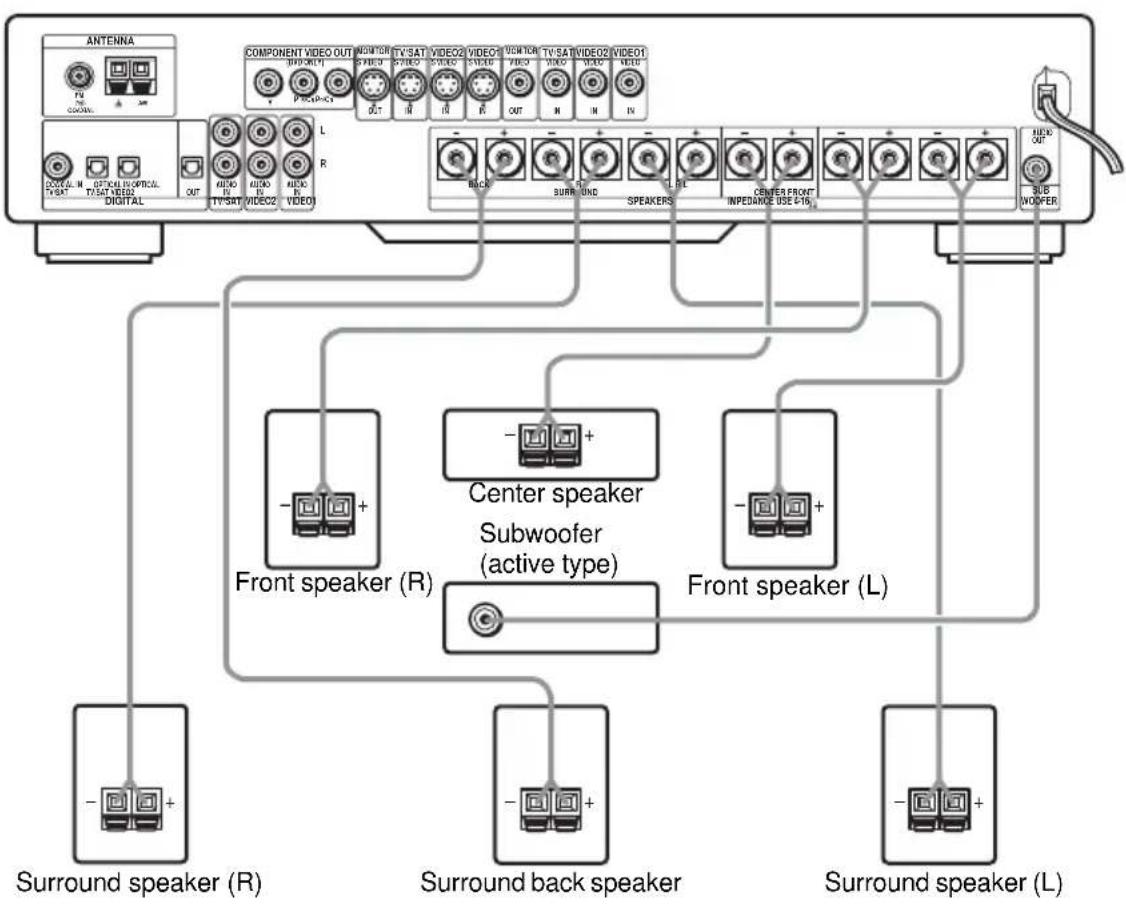
Note for connecting the speaker cords to the receiver
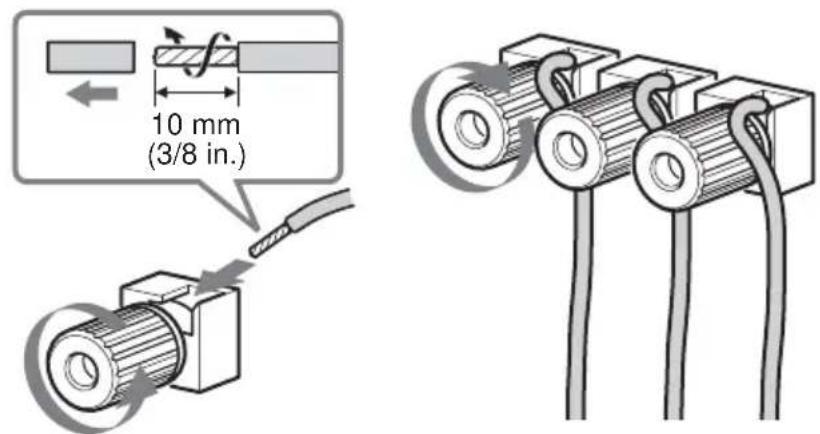
Remove about 10mm ( ^3 /8 inch) of insulation at the end of the cord, then twist the exposed wires. Connect the stripped ends of the cords to the terminals, taking care to avoid contact between the cords. Make sure the cords are firmly connected to the speaker and receiver terminals.
To avoid short-circuiting the speakers
Short-circuiting of the speakers may damage the receiver. To prevent this, be sure to follow these precautions when connecting the speakers. Make sure the bare wire of each speaker cord does not touch another speaker terminal or the bare wire of another speaker cord.
Examples of poor speaker cord connection
Stripped speaker cord is touching another speaker terminal.
Stripped cords are touching each other due to excessive removal of insulation.
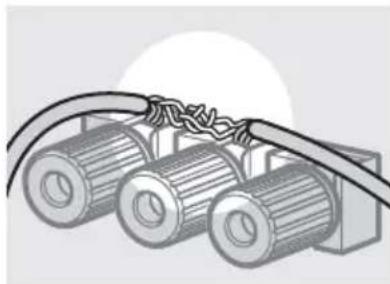
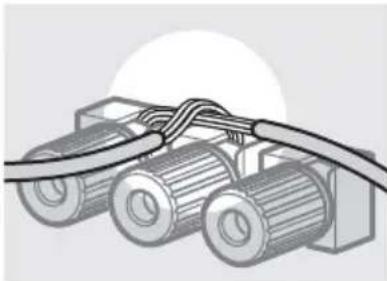
After connecting all the components, speakers, and AC power cord (mains lead), output a test tone to check that all the speakers are connected correctly. For details on outputting a test tone, see page 72. If no sound is heard from a speaker while outputting a test tone, or a test tone is output from a speaker other than the one currently displayed in the front panel display, the speaker may be short-circuited. If this happens, check the speaker connection again.
Notes
-
Be sure to match the speaker cord to the appropriate terminal on the components: to , and to . If the cords are reversed, the sound will be distorted and will lack bass.
-
If you use front speakers with low maximum input rating, adjust the volume carefully to avoid excessive output on the speakers.
-
When connecting the stripped ends of the speaker cords, make sure the ends do not touch each other or neighbouring terminals.
Step 2: Antenna Hookups
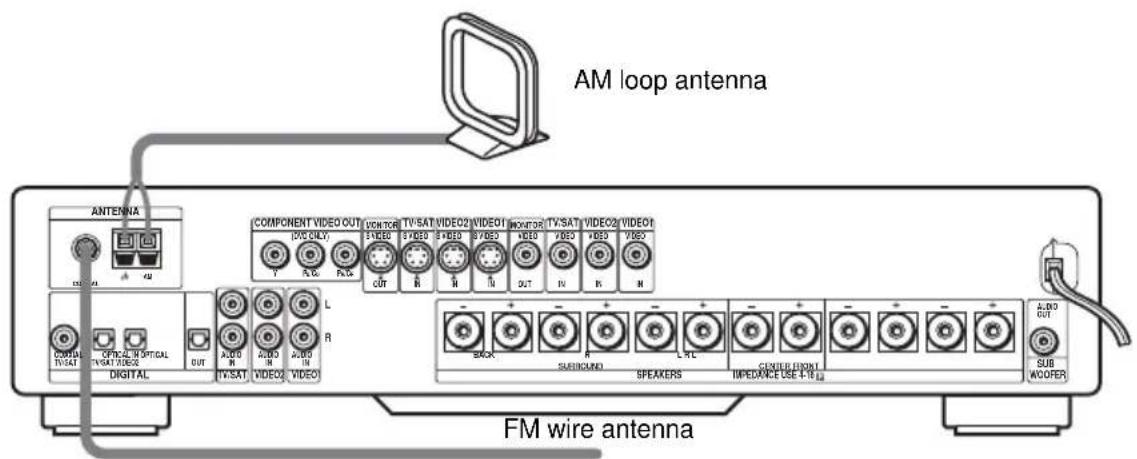
Connect the supplied AM/FM antennas for listening to the radio.
Terminals for connecting the antennas
Connect the To the
AM loop antenna AM terminals
FM wire antenna FM 75Ω COAXIAL jack
Notes
- To prevent noise pickup, keep the AM loop antenna away from the receiver and other components.
- Be sure to fully extend the FM wire antenna.
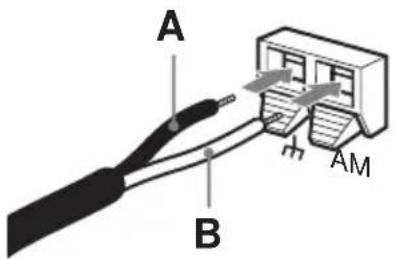
After connecting the FM wire antenna, keep it as horizontal as possible. - When you connect the supplied AM loop antenna, connect the black cord (A) to the terminal, and the white cord (B) to the other terminal.
If you have poor FM reception
Use a 75-ohms coaxial cable (not supplied) to connect the receiver to an outdoor FM antenna as shown below.
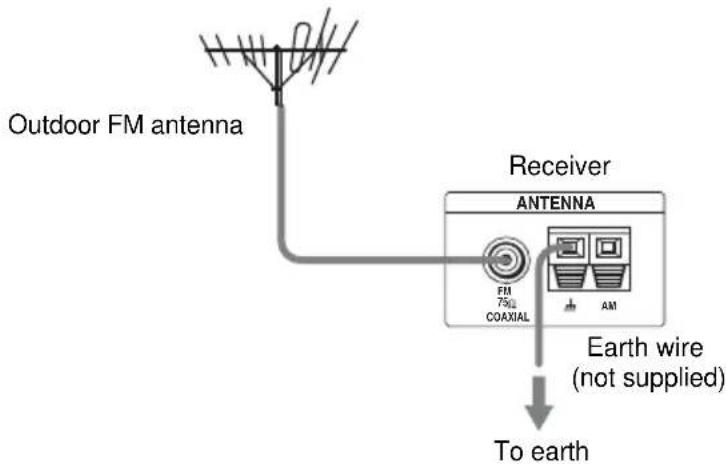
Note
If you connect the receiver to an outdoor antenna, ground it to protect against lightning. To prevent a gas explosion, do not connect the earth wire to a gas pipe.
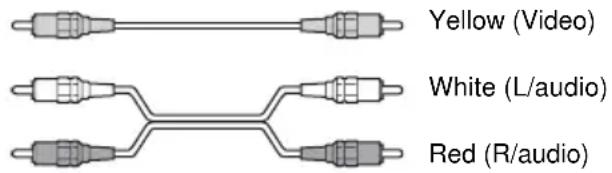
Required cords
S Video cord for connecting a TV monitor

Audio/Video cords (not supplied)
When connecting a cord, be sure to match the color-coded pins to the appropriate jacks on the components.
Jacks for connecting video components
Connect a To the
TV monitor MONITOR (SVIDEO OUT orVIDEO OUT) jack
VCRVIDEO1 orVIDEO2 (SVIDEOIN orVIDEOIN/AUDIO L/R IN) jacks
Digital satellite receiver TV/SAT (SVIDEO IN orVIDEO IN/AUDIO L/R IN) jacks
Note
When the receiver is not set to "DVD" mode, no signal is output from the COMPONENT VIDEO OUT jacks.
Tip
When using the COMPONENT Video OUT jacks (Y, P_B / C_B , P_R / C_R ) instead of the S Video jacks or the Video jacks, your TV monitor must also be connected via COMPONENT Video OUT jacks (Y, P_B / C_B , P_R / C_R ). If your TV accepts progressive format signals, you must use this connection and set "COMPONENT OUT" to "PROGRESSIVE" in "SCREEN SETUP" (page 69).
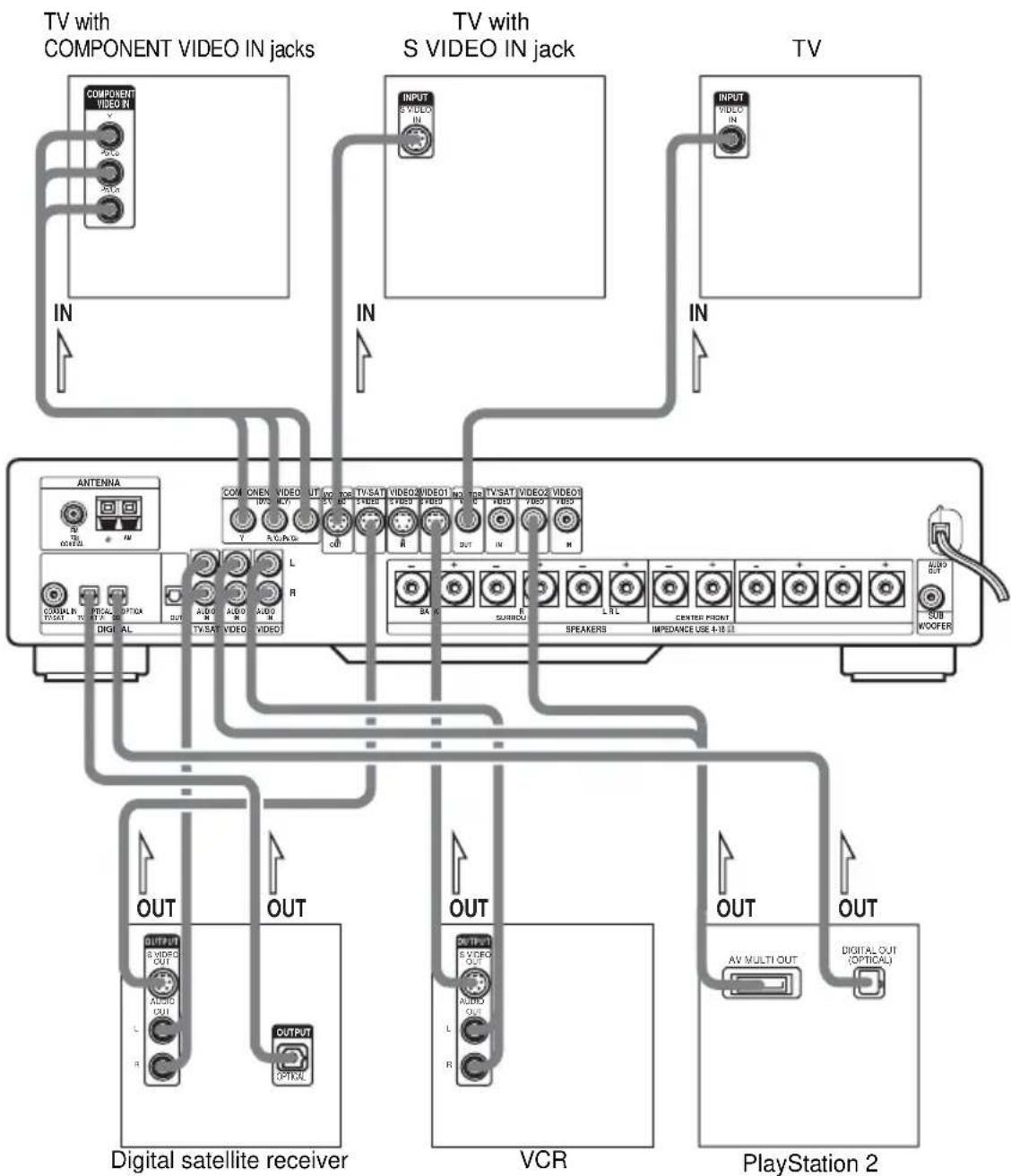
If you connect a digital satellite receiver with an OPTICAL OUT jack or a COAXIAL OUT jack
The digital satellite receiver can be connected to the TV/SAT (OPTICAL or COAXIAL) INPUT jack instead of the AUDIO IN L/R jacks of the receiver.
The receiver can accept both the digital and analogue signals. Digital signals have priority over analogue signals. If the digital signal ceases, the analogue signal will be processed after 2 seconds.
If you connect a digital satellite receiver without an OPTICAL OUT jack
Connect the digital satellite receiver to the SVIDEO IN orVIDEO IN and AUDIO IN L/R jacks only of the receiver.
To listen to the TV or game machine (ex: PlayStation 2) sound by using the receiver
Connect the audio output jacks of the TV or game machine to the VIDEO 2 (AUDIO L/R IN or OPTICAL IN) jacks of the receiver.
Step 4: Connecting the AC Power Cord (mains lead)
Before connecting the AC power cord (mains lead) of this receiver to a wall outlet (mains), connect the speakers to the receiver (see page 14).
Speaker Setup
For the best possible surround sound, all the speakers other than the subwoofer should be the same distance from the listening position (A). However, this receiver allows you to place the center speaker up to 1.5 metres a) closer (B) and the surround and the surround back speakers up to 4.5 metres b) closer (C, D) to the listening position.
The front speakers can be placed from 0.9 to 6.9 metres c) (A) from the listening position.
Canadian numerical equivalents:
a) 5 feet (1.5 metres)
b) 15 feet (4.5 metres)
c) 3 to 23 feet (0.9 to 6.9 metres)
Place speakers as illustrated below
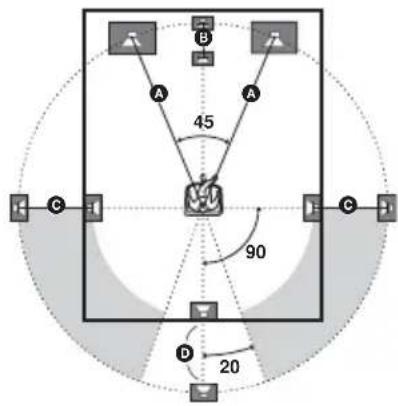
Note
Do not place the center, surround and the surround back speakers farther away from the listening position than the front speakers.
When color irregularity occurs on the TV
If speakers are installed too close, color irregularity may occur on the screen. If color irregularity occurs, turn off the TV set once, then turn it on after 15 to 30 minutes. If color irregularity occurs again, place the subwoofer farther away from the TV set. If color irregularity still occurs after performing the above, make sure that no magnetic object is placed near the subwoofer. Color irregularity may occur as a result of interaction between the subwoofer and the magnetic object. Examples of possible sources of magnetic interference include: magnetic latches on a TV stand, etc., healthcare devices, toys, etc.
Specifying the speaker parameters
To obtain the best possible surround sound, first specify the size and the distance of the speakers from your listening position, then set the level and balance. Use the test tone to adjust the speaker level and balance to the same level.
Select "SPEAKER SETUP" in the setup display. For details, see "Settings for the Speakers" (page 70).
Also change the impedance value depending on your speaker's impedance. For details, see "Changing the Speaker Impedance Value" (page 50).
Playing Discs
Playing Discs
DVD VIDEO SA-CD MP3 JPEG CD
Depending on the DVD or VIDEO CD, some operations may be different or restricted.
Refer to the operation details supplied with your disc.
STANDBY indicator
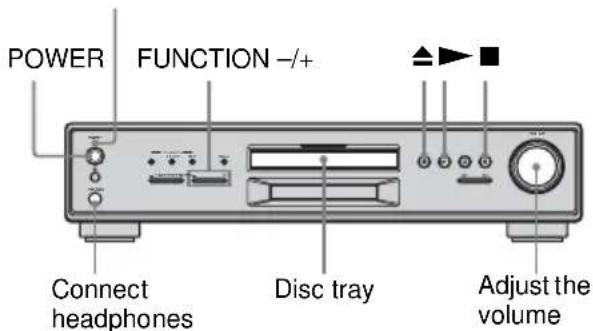
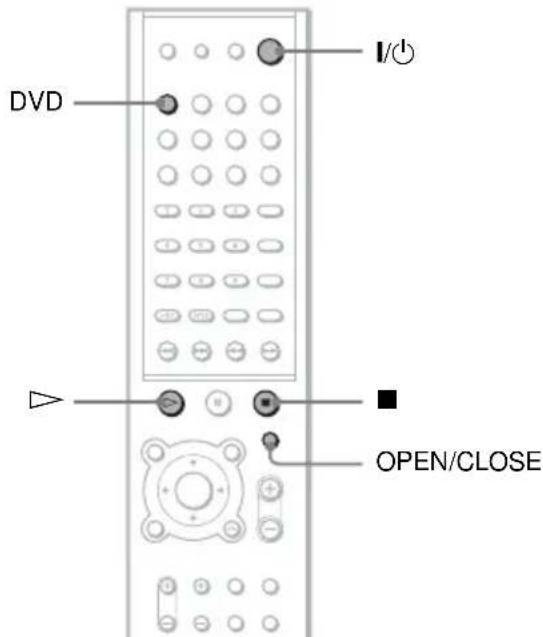
1 Turn on your TV.
2 Switch the input selector on the TV to this receiver.
3 Press POWER on the receiver.
The receiver enters standby mode and the STANDBY indicator lights up in red.
4 Press on the receiver or OPEN/ CLOSE on the remote, and place a disc with the label side up on the disc tray.
The receiver automatically turns on and the STANDBY indicator turns off.
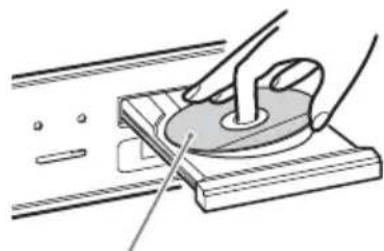
When you play an 8 cm disc, place it on the inner circle of the tray
5 Press
The disc tray closes, and the receiver starts playback (continuous play). Adjust the volume on the receiver.
After following Step 5
Depending on the disc, a menu may appear on the TV screen. You can play the disc interactively by following the instructions on the menu. (DVD: page 26), (VIDEO CD: page 26).
To remove the disc
Press on the receiver or OPEN/CLOSE on the remote. "OPEN" appears in the front panel display. Remove the disc after the disc tray slides out from the receiver.
To turn on the receiver
Press POWER on the receiver. The receiver enters standby mode and the STANDBY indicator lights up in red. Press / on the remote. The receiver turns on and the STANDBY indicator turns off. In standby mode, the receiver also turns on by pressing , FUNCTION -/+ or on the receiver or by pressing DVD, OPEN/CLOSE or on the remote.
To turn off the receiver
Press I/O on the remote. The receiver enters standby mode and the STANDBY indicator lights up in red. To turn off the receiver completely, press POWER on the receiver.
While playing a disc, do not turn off the receiver by pressing POWER. Doing so may cancel the menu settings. When you turn off the receiver, first press to stop playback and then press on the remote.
Saving power in standby mode
Press / on the remote once.
Tip
While the receiver is in standby mode, the STANDBY indicator on the receiver lights up.
To cancel standby mode
Press / on the remote once.
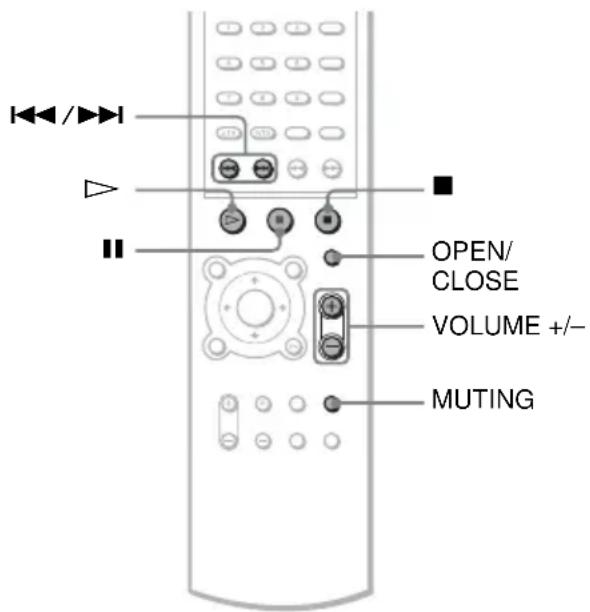
Additional operations
To Press
Stop
Pause*
Resume play from pause I or
Go to the next chapter, track, scene, or file in continuous play mode
Go back to the preceding chapter, track, scene, or file in continuous play mode

To Press
Stop play and remove the disc
on the receiver or OPEN/CLOSE on the remote.
Mute the sound MUTING. To cancel
muting; press it again or VOLUME + to adjust the sound volume.
- You cannot pause during JPEG playback.
Notes
- Do not push the disc tray when closing it. Press on the receiver or OPEN/CLOSE on the remote to close the disc tray.
- If DVD playback is paused for approximately one hour, the receiver automatically turns off.
ResumingPlayback from the Point Where You Stopped the Disc
(Resume Play)



When you stop the disc, the receiver remembers the point where you pressed and "RESUME" appears in the front panel display. As long as you do not remove the disc, Resume Play will work even if the receiver enters standby mode by pressing I/O.
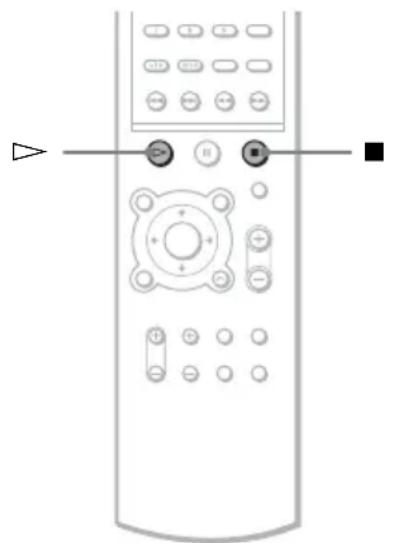
1 While playing a disc, press to stop playback.
"RESUME" appears in the front panel display, so you can restart the disc from the point where you stopped the disc.
If "RESUME" does not appear, Resume Play is not available.
2 Press ▷.
The receiver starts playback from the point where you stopped the disc in Step 1.
Notes
- Depending on where you stop the disc, the receiver may not resume playback from exactly the same point.
- The point where you stopped playing is cleared if: - you change the play mode.
you change the setting on the Setup Menu.
Tip
To play from the beginning of the disc, press twice, then press
Using the DVD's Menu
DVD
A DVD is divided into long sections, which make up a picture or music feature. These sections are called "titles." When you play a DVD which contains several titles, you can select the title you want using TOP MENU/GUIDE.
When you play DVDs that allow you to select items such as the language for the subtitles and the language for the sound, select these items using AV MENU.
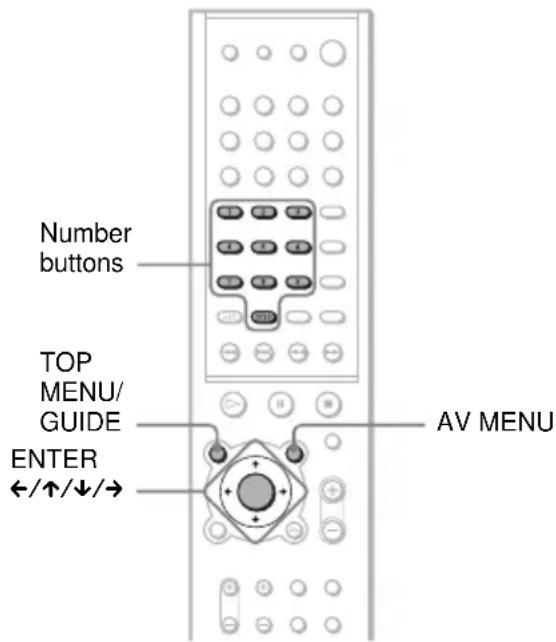
1 Press TOP MENU/GUIDE or AV MENU.
The disc's menu appears on the TV screen. The contents of the menu vary from disc to disc.
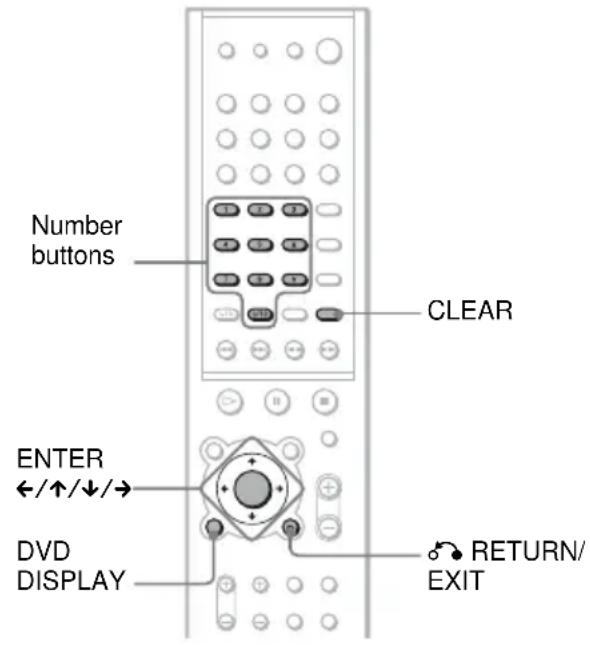
2 Press / / / or the number buttons to select the item you want to play or change.
3 Press ENTER.
Note
If the DVD top menu or a DVD menu is displayed during DVD playback for approximately one hour, the receiver automatically turns off.
Playing VIDEO CDs with PBC Functions (Ver. 2.0)
(PBCPlayback)
VIDEO CD
With PBC (Playback Control) functions, you can enjoy simple interactive operations, search functions, and other such operations.
PBC playback allows you to play VIDEO CDs interactively by following the menu on the TV screen.
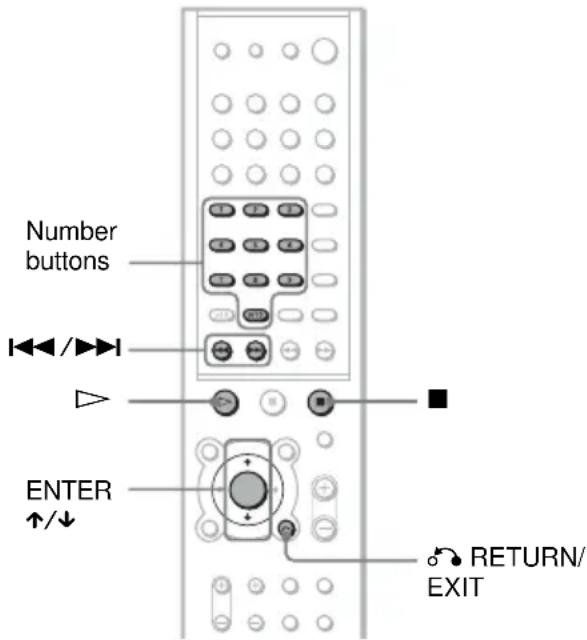
1 Start playing a VIDEO CD with PBC functions.
The menu for your selection appears.
2 Select the item number you want by pressing / or the number buttons.
3 Press ENTER.
4 Follow the instructions in the menu for interactive operations.
Refer to the operation details supplied with the disc, as the operating procedure may differ, depending on the VIDEO CD.
To go back to the menu
Press RETURN/EXIT.
Notes
Depending on the VIDEO CD, the menu does not appear in Step 1.
- Depending on the VIDEO CD, "Press ENTER" in Step 3 may appear as "Press SELECT" in the instructions supplied with the disc. In this case, press
Tip
To play without using PBC, press or the number buttons while the receiver is stopped to select a track, then press or ENTER.
"Play without PBC" appears on the TV screen and the receiver starts continuous play. You cannot play still pictures such as a menu. To return to PBC playback, press twice, then press
Playing an MP3 Audio Track
MP3
You can play MP3 audio tracks on CD-ROMs, CD-Rs, or CD-RWs. However, the discs must be recorded according to ISO9660 level 1, level 2, or Joliet format for the receiver to recognize the tracks. You can also play discs recorded in Multi Session. See the instructions of the CD-R/RW device or recording software (not supplied) for details on the recording format.
1 Load a data disc recorded in MP3 into the receiver.
2 Press ▷.
The receiver starts to play the first MP3 audio track in the first album on the disc.
Notes
- The receiver can play MP3 (MPEG1 Audio Layer3) audio. The receiver cannot play audio tracks in MP3PRO format.
- This receiver can play Multi Session CDs when an MP3 audio track is located in the first session. Any subsequent MP3 audio tracks, recorded in the later sessions, can also be played back.
Maximum number of albums on a disc: 99 (The maximum number of MP3 audio tracks that can be contained in an album is 250.) - An album that does not include an MP3 audio track is skipped.
- If you put the extension ".MP3" to data not in MP3 format, the receiver cannot recognize the data properly and will generate a loud noise which could damage your speaker system.
- If the receiver cannot play MP3, remove the disc and select "CUSTOM SETUP" from the setup items. Then select "DATA CD PRIORITY" and set to "MP3" (page 70) and insert the disc again.
The receiver can play to a depth of 8 directories.
Selecting an album and track
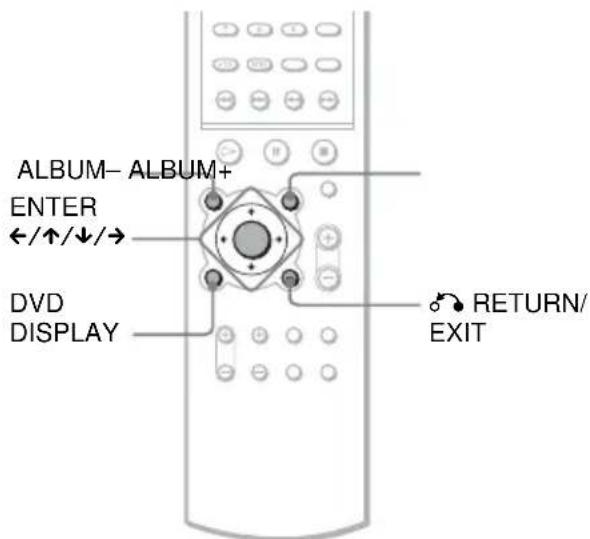
1 Press DVD DISPLAY.
The Control Menu and name of the MP3 data disc appear.
2 Press / to select (ALBUM) then press ENTER or .
The list of albums contained in the disc appears.
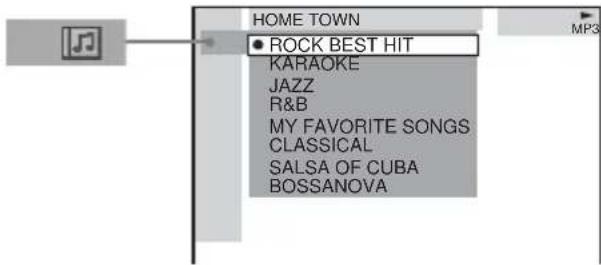
3 Select an album you want to play using / and press ENTER.
4 Select (TRACK) using / and press ENTER.
The list of tracks contained in the current album appears.
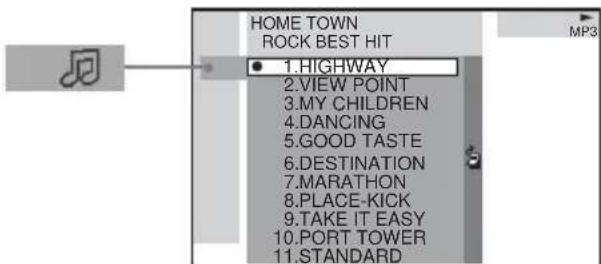
When the list of all tracks or albums cannot be displayed on the window, the jump bar appears. Press to select the jump bar icon, and then scroll the jump bar to display the rest of the list using / . Press or RETURN/EXIT to return to the track or the album list.
5 Select a track using / and press ENTER.
The selected track starts playing.
To return to the previous display
Press o RETURN/EXIT or
To turn off the Control Menu
Press DVD DISPLAY.
Notes
Only alphabetical letters and numbers can be used for album or track names. Anything else is displayed as "".
- If the MP3 file you play back has an ID3 tag, the ID3 tag information is displayed as a track name.
- ID3 tag applies only to version 1.
- If an MP3 file of VBR (variable bit rate) is played, indicated elapsed time may be different from the actual time.
Tip
When an MP3 data disc is inserted, you can select an album using the ALBUM- or ALBUM+ on the remote.
Playing JPEG Image Files
JPEG
You can play JPEG image files on CD-ROMs, CD-Rs, or CD-RWs. However, the discs must be recorded according to ISO9660 level 1, level 2 or Joliet format for the receiver to recognize the files. You can also play discs recorded in Multi Session. See the instructions of the CD-R/RW device or recording software (not supplied) for details on the recording format.
1 Load a data disc recorded in JPEG into the receiver.
2 Press ▷.
The receiver starts to play the first JPEG image file in the first album on the disc.
Notes
The receiver can play the extension“.JPG” or“.JPEG.”
The receiver can play Multi Session CDs.
Maximum number of albums on a disc: 99 (The maximum number of JPEG image files that can be contained in an album is 250.)
- An album that does not include a JPEG file is skipped.
- When the receiver cannot play JPEG, remove the disc and select "CUSTOM SETUP" from the setup items. Then select "DATA CD PRIORITY" and set to "JPEG" (page 70) and insert the disc again.
- A JPEG image file of a length or width of more than 4,720 dots cannot be played.
- Some CD-Rs or CD-RWs cannot be played on this receiver depending on file format.
- The receiver can play to a depth of 8 directories.
- Progressive JPEG image files cannot be played on this receiver.
Selecting an album and file
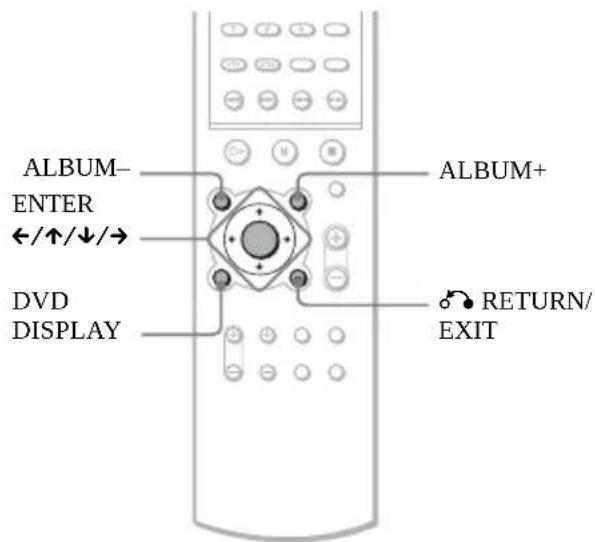
1 Press DVD DISPLAY.
The Control Menu and name of the JPEG data disc appear.
2 Press / to select (ALBUM) then press ENTER or .
The list of albums contained in the disc appears.
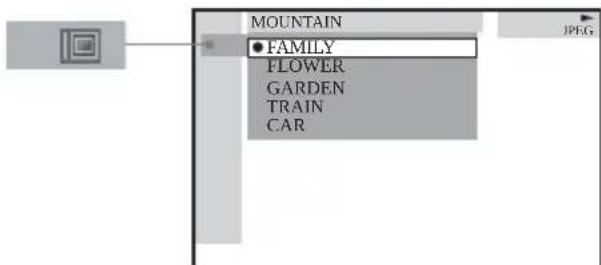
3 Select an album you want to play using / and press ENTER.
4 Select (FILE) using / and press ENTER.
The list of files contained in the current album appears.
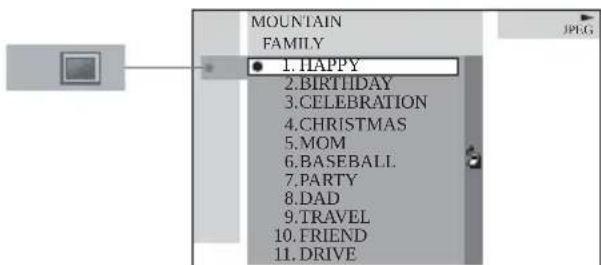
When the list of all files or albums cannot be displayed on the window, the jump bar appears. Press to select the jump bar icon, and then scroll the jump bar to display the rest of the list using / . Press or RETURN/EXIT to return to the file or the album list.
5 Select a file using / and press ENTER.
The selected file starts playing.
To return to the previous display
Press RETURN/EXIT or
To turn off the Control Menu
Press DVD DISPLAY.
Note
Only alphabetical letters and numbers can be used for album or file names. Anything else is displayed as " "
Tip
When a JPEG data disc is inserted, you can select an album using the ALBUM- or ALBUM+ on the remote.
Enjoying Slide Show on a JPEG data disc
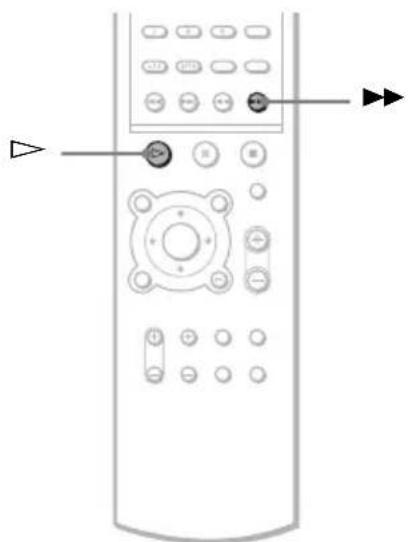
1 Press▶ while displaying a JPEG image.
Slide Show starts from the current image.
2 Press when you want to exit Slide Show.
Return to normal play from the current image.
To change the interval time of Slide Show
Each time you press during Slide Show, the interval time changes. With each press, the indication changes as follows:
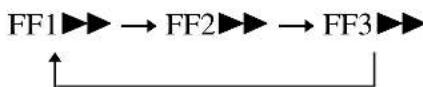
FF3 interval time is faster than FF2
Note
Slide Show can play in only one direction.
To rotate the current image
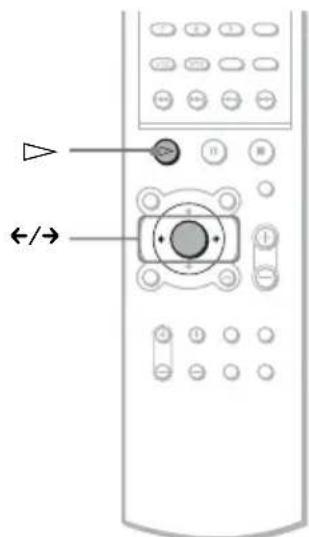
Rotate the current image using /
Each time you press , the image turns clockwise by 90^ .
Each time you press , the image turns counterclockwise by 90^ .
Note
You cannot rotate an image during Slide Show. Press to return to normal play before this operation.
Creating Your Own Program
(Program Play)


You can play the contents of a disc in the order you want by arranging the order of the tracks on the disc to create your own Program. You can program up to 25 steps.
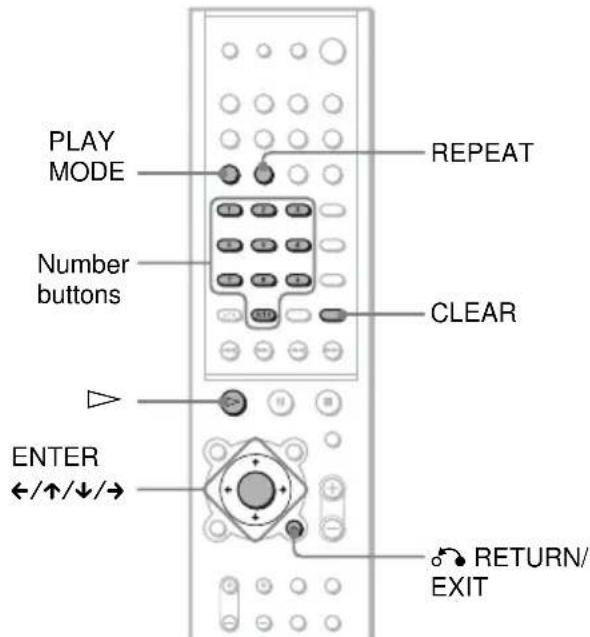
1 In stop mode, press PLAY MODE repeatedly until "PROGRAM" appears in the front panel display.
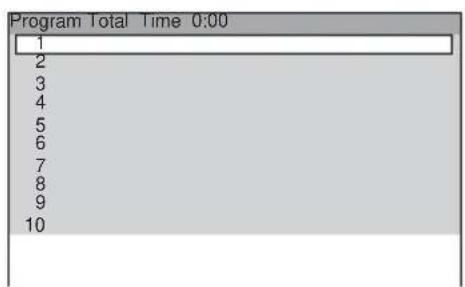
The program menu appears on the TV screen.
2 Press
The cursor moves to the track (in this case, "1"). Before programming the MP3 tracks, it is required to select the album.
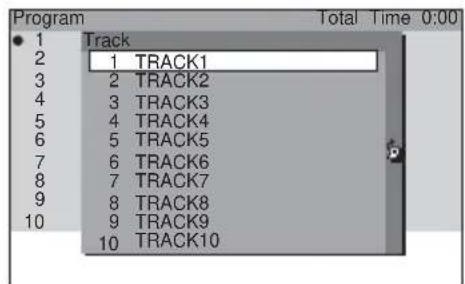
When the list of all tracks cannot be displayed on the window, the jump bar appears. Press to select the jump bar icon, and then scroll the jump bar to display the rest of the list using / . Press or RETURN/EXIT to return to the track list.
3 Select the track you want to program.
For example, select track "7."
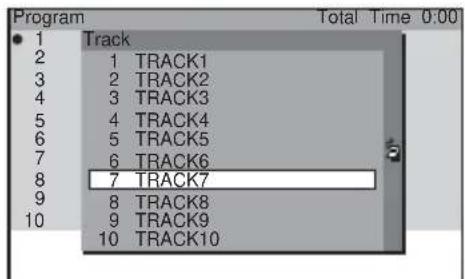
4 Press / or the number buttons to select "7" then press ENTER.
Total time of the programmed tracks (except MP3)
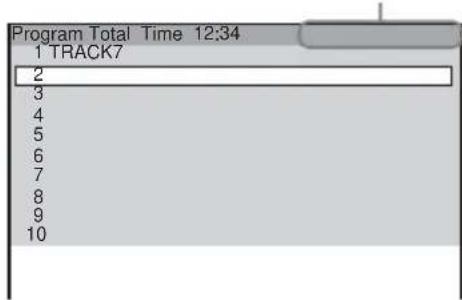
5 To program other tracks, repeat Steps 2 to 4.
The programmed tracks are displayed in the selected order.
6 Press to start Program Play.
Program Play begins.
When the program ends, you can restart the same program again by pressing
Other Operations
| To | Do | this |
| Return to normal play | Press CLEAR during playback. | |
| Turn off the program menu | In stop mode, press PLAY MODE to turn off the program menu. | |
| Cancel the programmed order | Press CLEAR while the program window is displayed and the last program is cancelled. | |
Notes
The Program Play function is not available for DVDs and JPEG.
- When you Program MP3 tracks, "---" is displayed as the total time of the programmed tracks.
- When you remove the disc, Program Play is cancelled and the program you created is cleared.
Tip
You can perform Repeat Play of programmed tracks. Press REPEAT, or set "REPEAT" to "ALL" in the Control Menu display during program Play (page 33).
Playing in Random Order
(Shuffle Play)


You can have the receiver "shuffle" tracks and play them in random order. Subsequent "shuffling" will produce a different playing order.
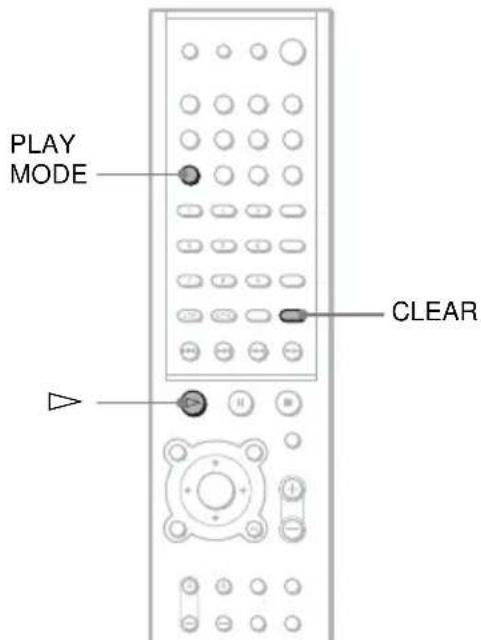
1 In stop mode, press PLAY MODE repeatedly until "SHUFFLE" appears in the front panel display.
When you play an MP3 disc, you can play all tracks in albums in random order.
For details on album shuffle, see page 33.
2 Press ▷.
To return to normal play
In stop mode, press PLAY MODE three times to cancel SHUFFLE or twice to cancel SHUFFLE (ALBUM). Or during playback, press CLEAR to return to normal play.
Setting the shuffle mode in the Control Menu
You can select either normal shuffle or album shuffle (MP3 only).
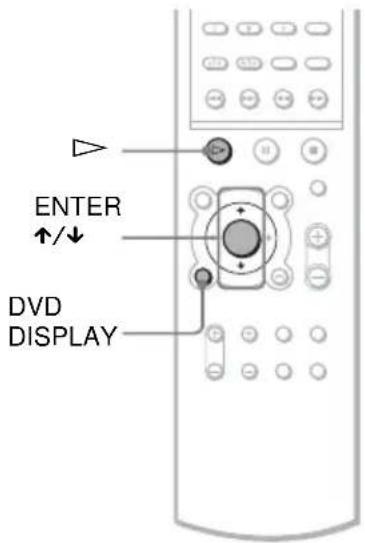
1 Press DVD DISPLAY.
The Control Menu appears.
2 Press / to select PLAY (PLAY MODE), then press ENTER.
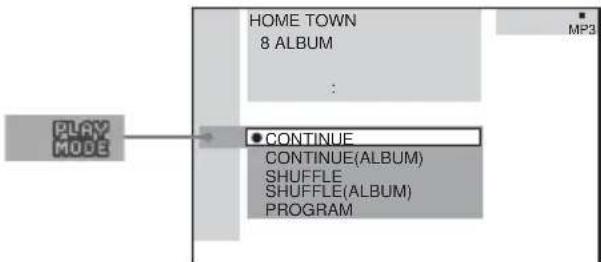
3 Select SHUFFLE or SHUFFLE (ALBUM) using / and press ENTER.
SHUFFLE: Plays tracks on the disc in random order.
SHUFFLE (ALBUM): Plays tracks from a selected album in random order.
4 Press. The selected Shuffle Play begins.
Note
Shuffle Play is cancelled when you eject the disc. The play mode changes in the following sequence:
SHUFFLE CONTINUE
SHUFFLE (ALBUM) CONTINUE (ALBUM)
Playing Repeatedly
(Repeat Play)




You can play all the titles/tracks/files or a single title/chapter/track/album on a disc.
In Shuffle or Program Play mode, the receiver repeats tracks in shuffled or programmed order. You cannot perform Repeat Play during PBC playback of VIDEO CDs (page 26).
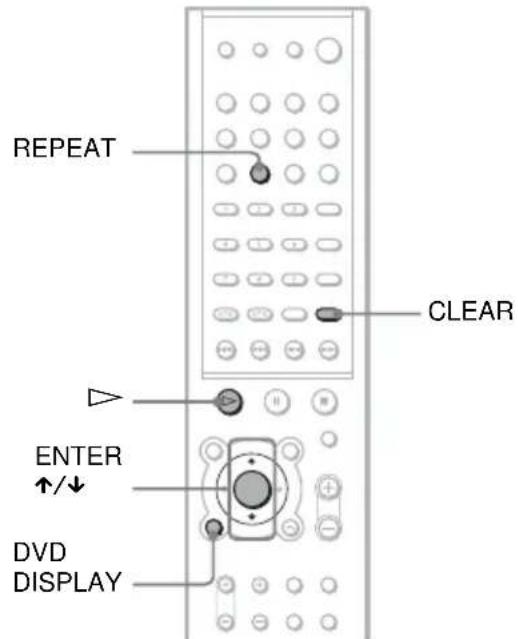
1 Press DVD DISPLAY.
The Control Menu appears.
2 Press / to select (REPEAT), then press ENTER.
If you do not select "OFF," the "REPEAT" indicator lights up in green.
3 Select the Repeat Play setting, then press ENTER.
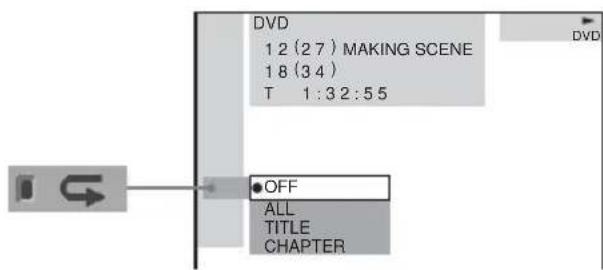
■When playing a DVD
- : does not play repeatedly.
- ALL: repeats all the titles.
- TITLE: repeats the current title on a disc.
- CHAPTER: repeats the current chapter.
■When playing a VIDEO CD/Super Audio CD/CD/MP3, and when Program Play is set to OFF
- O F : does not play repeatedly.
- ALL: repeats all the tracks on the disc, or repeats the current album (only when CONTINUE (ALBUM) or SHUFFLE (ALBUM) in the play mode is selected).
- TRACK: repeats the current track.
■When playing a JPEG
- O F : does not play repeatedly.
- ALL: repeats all the files on the disc (when CONTINUE is selected in the play mode), or repeats the current album (when CONTINUE (ALBUM) is selected in the play mode).
■When Program Play is set to ON
- OFF : does not play repeatedly.
- ALL: repeats Program Play.
To cancel Repeat Play
Press CLEAR.
Notes
- Depending on the DVD disc, repeat play does not work.
- Repeat Play is cancelled when you eject the disc.
- If "ALL" is selected, repeat play is limited to 5 times.
Tips
- You can set Repeat Play during stop mode. After selecting the "REPEAT" item, press The receiver starts Repeat Play.
- You can quickly display the "REPEAT" status. Press REPEAT on the remote.
- You can perform Repeat Play for DVD titles that contain chapters.
Searching for a Particular Point on a Disc
(Scan, Slow-motion Play)


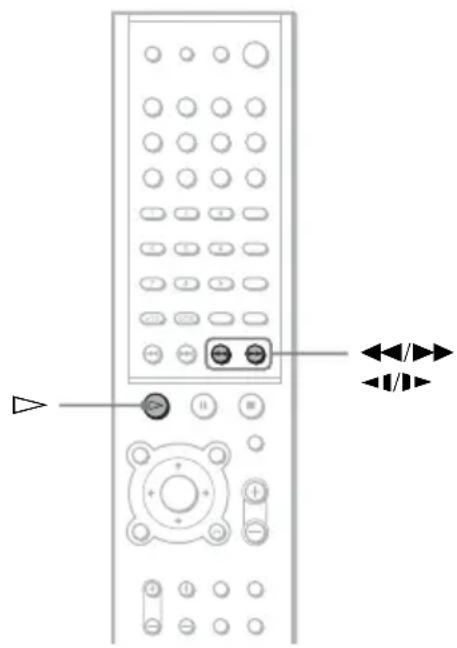
You can locate a particular point on a disc quickly by monitoring the picture or by playing back slowly.
Notes
Depending on the DVD/VIDEO CD, you may not be able to perform some of the operations described.
- During scan or slow-motion play, no sound is output.
Locating a point quickly by playing a disc in fast forward or fast reverse (Scan)
1 Press or while playing a disc.
2 When you find the point you want, press to return to normal speed.
To change the scan speed (DVD/VIDEO CD only)
Each time you press or during scan, the playback speed changes. Two speeds are available. With each press, the indication changes as follows:
Playback direction

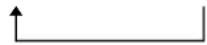
Opposite direction


FF2▶FR2▶ playback speed is faster than
FF1FR1
Watching frame by frame (Slow-motion play) (DVD/VIDEO CD only)
Press or when the receiver is in the pause mode.
To return to normal speed, press
To change the speed of Slow-motion play
Each time you press during Slow-motion play, the playback speed changes. Two speeds are available. With each press, the indication changes as follows:
Playback direction


Opposite direction (DVD only)


SLOW 2▶/SLOW 2▶playback speed is slower than SLOW 1▶/SLOW 1▶
Searching for a Title/ Chapter/Track/Index/ Album/File
DVD



You can search a title (DVD), chapter (DVD), track (CD,VIDEO CD, Super Audio CD, MP3), index (VIDEO CD, Super Audio CD), album (MP3, JPEG), and file (JPEG). As titles, tracks, albums and files are assigned individual names on the disc, you can select the desired one from the Control Menu. Also chapters and indexes are assigned individual numbers on the disc, so you select the desired one by entering its number. Or you can search a particular point using the time code (TIME SEARCH).
Searching for a title/track/ album/file
1 Press DVD DISPLAY.
The Control Menu appears.
2 Press / to select the search method, then press ENTER.
When playing a DVD
(TITLE)
When playing aVIDEO CD
(TRACK)
When playing a Super Audio CD

(TRACK)
When playing a CD

(TRACK)
When playing an MP3

(ALBUM) or

(TRACK)
When displaying a JPEG file

(ALBUM) or
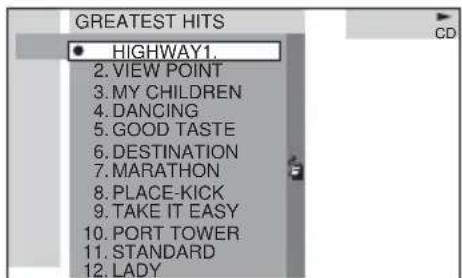
Example: when you select (TRACK)

The list of tracks contained in the disc appears.
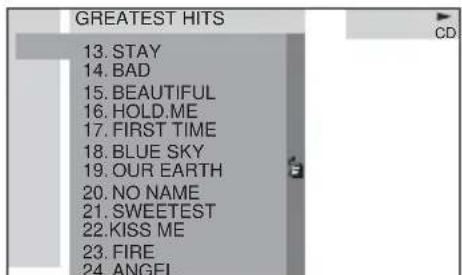
When the list of all tracks cannot be displayed on the window, the jump bar appears. Press to select the jump bar icon, and then scroll the jump bar to display the rest of the list using / . Press or RETURN/EXIT to return to the track list.
3 Press / to select the desired track, then press ENTER.
The receiver starts playback from the selected track.
Searching for a chapter/index
1 Press DVD DISPLAY.
The Control Menu appears.
2 Press / to select the search method.
When playing a DVD
(CHAPTER)
When playing aVIDEO CD

(INDEX)
When playing a Super Audio CD

(INDEX)
Example: when you select
(CHAPTER)
*** (^**) is selected ** refers to a number).
The number in parentheses indicates the total number of titles, chapters, tracks, or indexes.
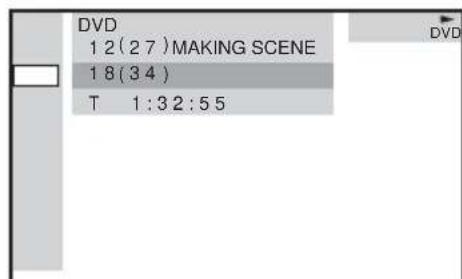
3 Press ENTER.
** (^) changes to " -- (^)
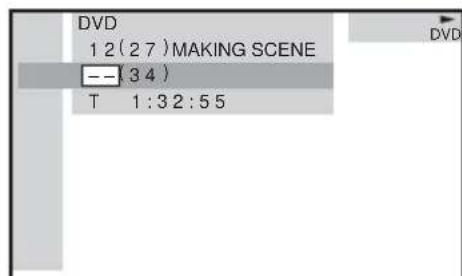
4 Press / or the number buttons to select the chapter or index number you want to search.
If you make a mistake
Cancel the number by pressing CLEAR, then select another number.
5 Press ENTER.
The receiver starts playback from the selected number.
To turn off the Control Menu
Press DVD DISPLAY repeatedly until the Control Menu is turned off.
To search for a particular point using the time code (TIME SEARCH)
Example: If you search for the playing time of the current title on a DVD.
1 In Step 2, select (TIME).
"T:*:*" (playing time of the current title) is selected.
2 Press ENTER.
"T---:---:" appears above "T::*."
3 Input the time code using the number buttons, then press ENTER.
For example, to find a desired point at 2 hours, 10 minutes, and 20 seconds after the beginning, just enter "2:10:20."
Notes
- The title, chapter or track number displayed on the TV screen is recorded data in the disc.
- You cannot search a scene of a VIDEO CD.
- If you play a DVD, input the playing time of the current title using the time code. If you play a CD, Super Audio CD, VIDEO CD, or MP3, input the playing time of the current track using the time code.
Tip
You can change the display to show playing time or remaining time. For details, see "Checking the Playing Time and Remaining Time in the Control Menu" (page 40).
Viewing Disc Information




Viewing the Playing Time and Remaining Time in the Front Panel Display
You can check disc information, such as the remaining time, total number of titles in a DVD, or tracks in a Super Audio CD, CD, VIDEO CD or MP3, using the front panel display (page 82).
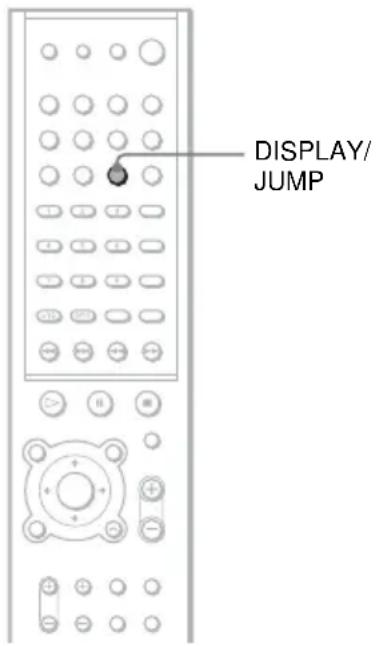
Press DISPLAY/JUMP.
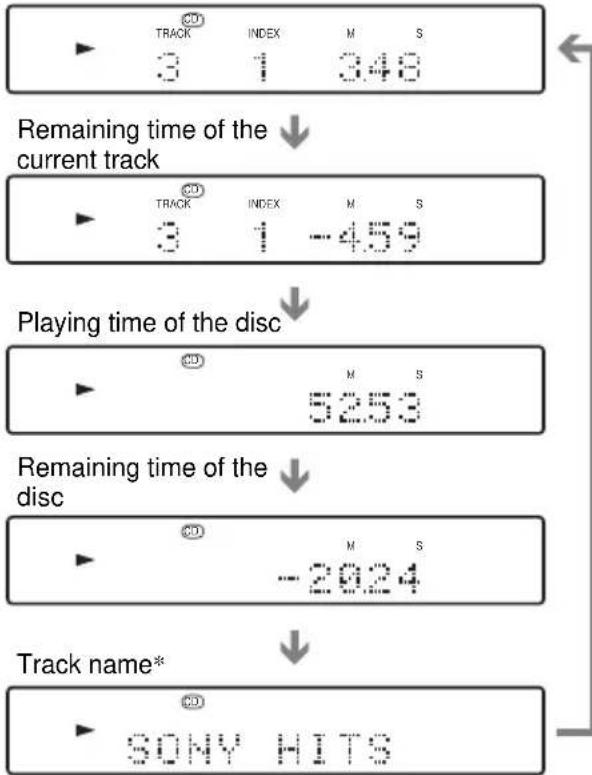
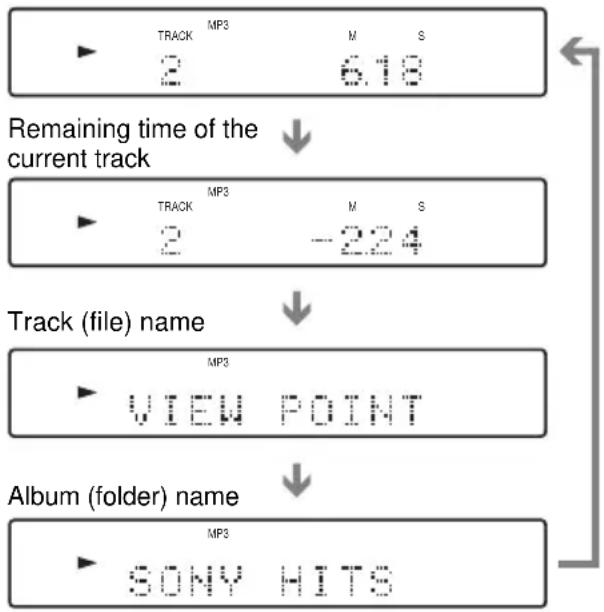
Each time you press DISPLAY/JUMP while playing the disc, the display changes as shown in the charts.
When playing a DVD When playing a VIDEO CD
Playing time and number of the current title
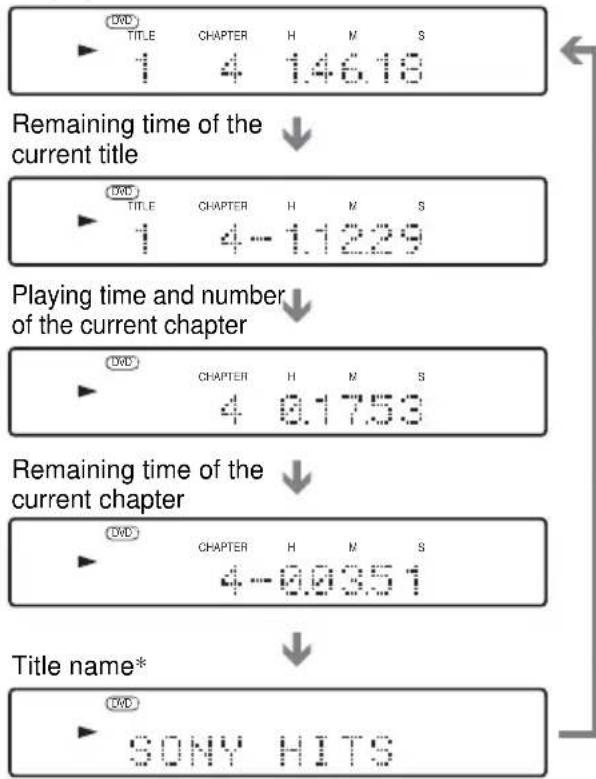
(without PBC functions), Super Audio CD or CD
Playing time and current track number (When playing a CD)
When playing an MP3
Playing time and current track number
When playing a JPEG
Current file number
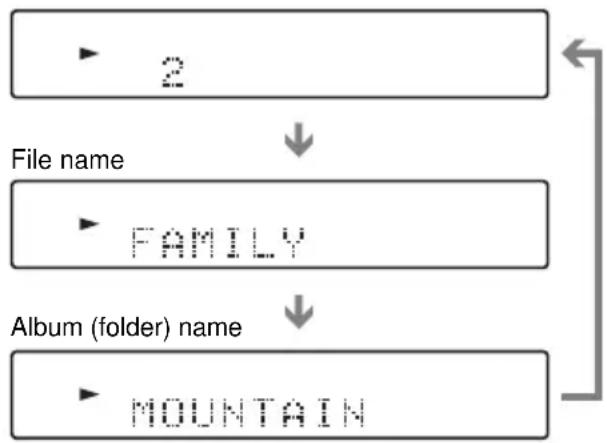
- "NO TEXT" appears if name information does not exist.
Notes
- Depending on the type of disc being played and the playing mode, the disc information may not be displayed.
- ID3 tag applies only to version 1.
- If the MP3 file you play back has an ID3 tag, the ID3 tag information is displayed as a track name.
- Only alphabetical letters and numbers can be used for album or track names. Anything else is displayed as " "
-
In the following cases, elapsed playing time and current track remaining time may not be displayed accurately.
-
when an MP3 file of VBR (variable bit rate) is played.
Tips
- When playing VIDEO CDs with PBC functions, only the playing time of the scene is displayed.
- The playing time and remaining time of the current chapter, title, track, scene, or disc will also appear on your TV screen. See the following section "Checking the Playing Time and Remaining Time" for details on how to read this information.
Checking the Playing Time and Remaining Time in the Control Menu
You can check the playing time and remaining time of the current title, chapter, or track, and the total playing time or remaining time of the disc. You can also check the DVD/CD/Super Audio CD text and MP3 folder name/file name/ID3 tag (only song title) recorded on the disc.
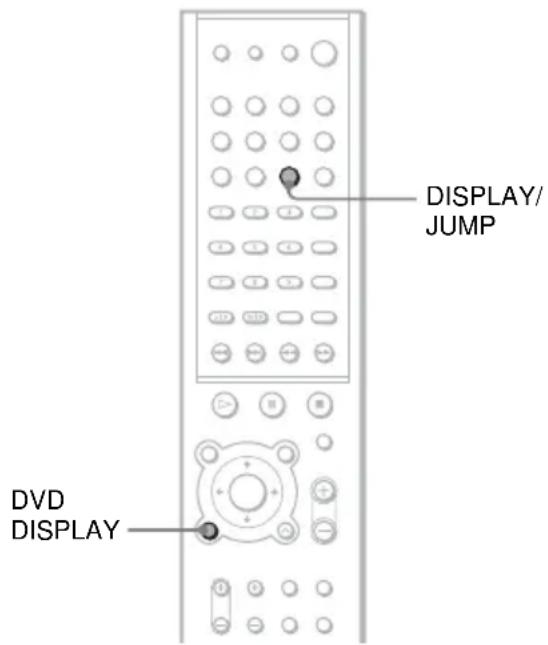
Press DVD DISPLAY during playback. The Control Menu appears.
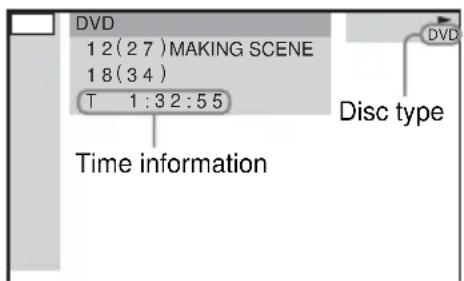
2 Press DISPLAY/JUMP repeatedly to change the time information.
The display and the kinds of time that you can check depend on the disc you are playing.
When playing a DVD
T^;^;^**
Playing time of the current title
T - ^::**
Remaining time of the current title
C**::
Playing time of the current chapter
C-::*
Remaining time of the current chapter
******
Playing time of the menu or current title without a chapter
When playing a VIDEO CD (with PBC functions)
****
Playing time of the current scene
When playing a VIDEO CD (without PBC functions), Super Audio CD or CD
· T^:^
Playing time of the current track
T - ^:^
Remaining time of the current track
· D^:^
Playing time of the current disc
D-:
Remaining time of the current disc
When playing an MP3
· T^:^
Playing time of the current track
T - ^·^
Remaining time of the current track
To turn off the Control Menu
Press DVD DISPLAY repeatedly until the Control Menu is turned off.
Notes
- Only alphabetical letters and numbers can be displayed.
- Depending on the type of disc being played, the receiver can only display a limited number of characters. Also, depending on the disc, not all text characters will be displayed.
Checking the date information (JPEG only)
You can check the date information during playback when the Exif* tag is recorded in the JPEG image data.
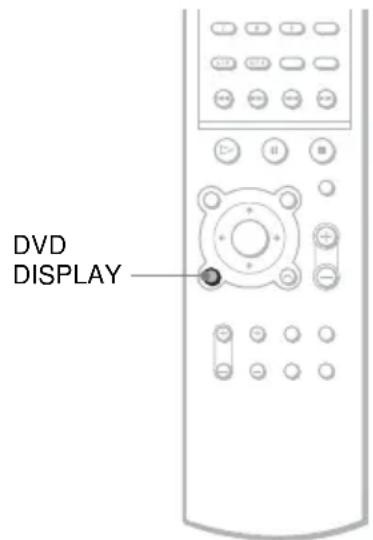
Press DVD DISPLAY during playback.
The Control Menu appears.
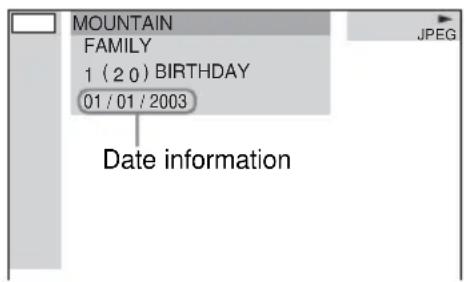
- "Exchangeable Image File Format" is a digital camera image format defined by the Japan Electronics & Information Technology Industries Association.
Note
If there is no date information or data is damaged on the disc, the receiver cannot display the date information.
Tip
You can change the date information order in JPEG DATE of CUSTOM SETUP (page 70).
Sound Adjustments
Changing the Sound



If a DVD is recorded with multilingual tracks, you can select the language you want while playing the DVD.
If the DVD is recorded in multiple audio formats (PCM, Dolby Digital, MPEG audio, or DTS), you can select the audio format you want while playing the DVD.
With stereo CDs,VIDEO CDs or MP3, you can select the sound from the left and right channel and listen to the sound of the selected channel through both the left and right speakers (in this case, the sound loses its stereo effect). For example, when playing a disc containing a song with the vocals on the right channel and the instruments on the left channel, you can select the left channel and hear only the instruments from both speakers.
1 Press DVD DISPLAY during playback. The Control Menu is displayed.
2
Press / to select then press ENTER.
The options for AUDIO appear.
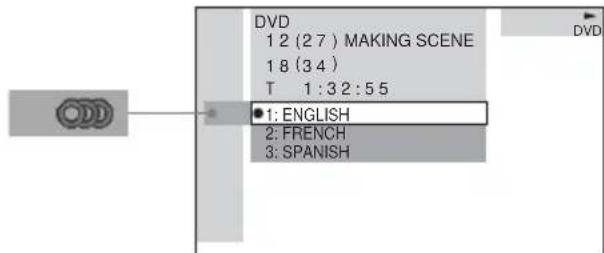
3 Press / to select the desired audio signal.
When playing a DVD
Depending on the DVD, the choice of language varies.
When 4 digits are displayed, they represent the language code. Refer to the language code list on page 85 to see which language the code represents. When the same language is displayed two or more times, the DVD is recorded in multiple audio formats.
■ When playing a VIDEO CD, CD, or MP3
The default setting is underlined.
STEREO: The standard stereo sound
- 1/L: The sound of the left channel (monaural)
- 2/R: The sound of the right channel (monaural)
■ When playing a Super Audio CD
In stop mode, depending on the Super Audio CD, the choice of settings varies.
- MULTI: The disc has a multi-channel playback area.
- 2CH: The disc has a 2 channel playback area.
- CD: When you want to play the disc as a conventional CD.
Note
Not all discs give you the three choices above when in Super Audio CD playback. It all depends on the layer configuration of the Super Audio CD to be played.
4 Press ENTER.
To turn off the Control Menu
Press DVD DISPLAY repeatedly until the Control Menu is turned off.
Notes
- For discs not in multiple audio format, you cannot change the sound.
- During DVD playback, the sound may change automatically.
Tip
You can select "AUDIO" directly by pressing AUDIO. Each time you press the button, the item changes.
Displaying the audio information of the disc (DVD only)
When you select "AUDIO," the channels being played are displayed on the screen. For example, in Dolby Digital format, multiple signals ranging from monaural to 5.1 channel signals can be recorded on a DVD. Depending on the DVD, the number of recorded channels may differ.
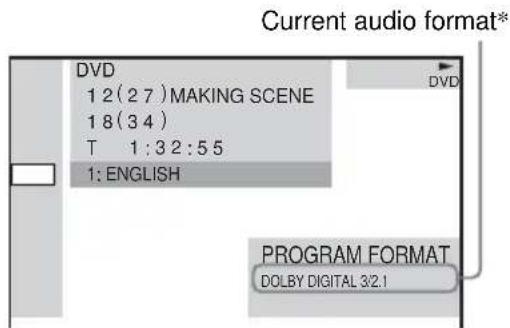
*“PCM,”“MPEG,”“DTS,” or “DOLBY DIGITAL” is displayed.
For "DOLBY DIGITAL," the channels in the playing track are displayed numerically as follows:
For Dolby Digital 5.1 ch:
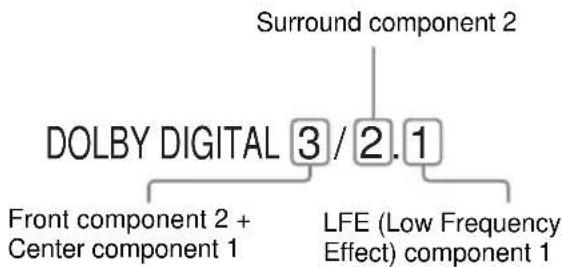
The display examples are as follows:
- PCM (stereo)
PROGRAM FORMAT PCM 48kHz 24bit
- Dolby Surround
PROGRAM FORMAT
DOLBY DIGITAL 2/0
DOLBY SURROUND
Dolby Digital 5.1ch
PROGRAM FORMAT DOLBY DIGITAL 3/2.1
DTS
PROGRAM FORMAT DTS 3/2.1
Tips
- When the signal contains surround signal components such as LS, RS, or S, the surround effect is enhanced.
- If you play MPEG AUDIO sound tracks, the receiver outputs PCM (stereo) signals.
Even though the audio stream contains a surround back component, the surround back channel is not displayed.
Dolby Digital-EX or DTS-ES source is displayed as "3/2.1" on the screen
Enjoying Surround Sound




You can take advantage of surround sound simply by selecting one of receiver's preprogrammed sound fields. They bring the exciting and powerful sound of movie theatres into your home.
To select sound field, press A.F.D., 2CH, or MODE on the remote repeatedly until the sound field you want appears in the front panel display.
Automatic decoding of the audio input signal (AUTO FORMAT DIRECT AUTO)
The auto decoding function automatically detects the type of audio signal being input (Dolby Digital, DTS, or standard 2 channel stereo) and performs the proper decoding if necessary. This mode presents the sound as it was recorded/encoded, without adding any effects (e.g. reverberation).
However, if there are no low frequency signals (Dolby Digital LFE, etc.), it will generate a low frequency signal for output to the subwoofer.
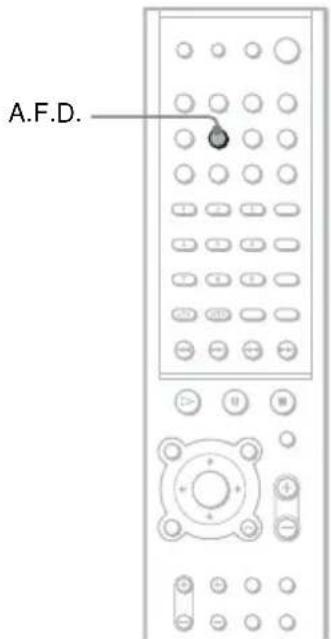
Press A.F.D. on the remote repeatedly until "A.F.D. AUTO" appears in the front panel display.
Sound field Display
AUTO FORMAT DIRECT AUTO
A.F.D.AUTO
Using only the front speaker (2 CHANNEL STEREO)
This mode outputs the sound from the front left and right speakers. Standard two channel (stereo) sources completely bypass the sound field processing. Multi channel surround formats are downmixed to two channels. This allows you to play any source using only the front left and right speakers.
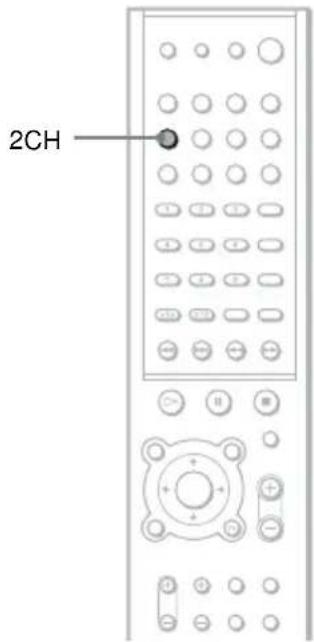
Press 2CH on the remote.
"2CH STEREO" appears in the front panel display.
Sound field Display
2CHANNEL STEREO 2CH STEREO
Selecting a sound field (A.F.D.button)
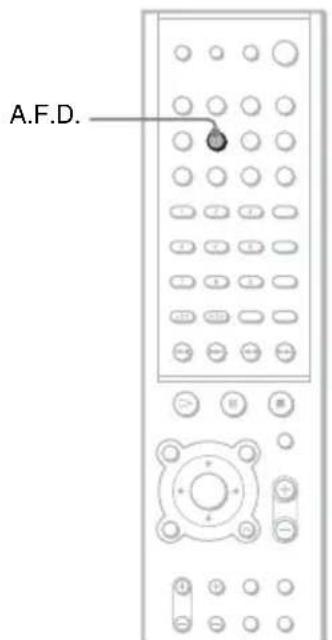
Press A.F.D. on the remote repeatedly until the sound field you want appears in the front panel display.
| Sound field Display |
| PRO LOGIC PRO LOGIC |
| PRO LOGIC II MOVIE PLII MOVIE |
| PRO LOGIC II MUSIC PLII MUSIC |
| Neo:6 Cinema NEO:6 CIN |
| Neo:6 Music NEO:6 MUS |
PROLOGIC
Performs Dolby Pro Logic decoding. A source recorded in 2 channels is decoded into 4 channels.
■PRO LOGIC II MOVIE
Performs Dolby Pro Logic II Movie mode decoding. This setting is ideal for movies encoded in Dolby Surround. In addition, this mode can reproduce sound in 5.1 channel when watching videos of old movies or with dubbed language.
■PRO LOGIC II MUSIC
Performs Dolby Pro Logic II Music mode decoding. This setting is ideal for standard stereo sources, such as CDs.
Neo:6 Cinema
Performs the DTS Neo:6 Cinema mode decoding.
Neo:6 Music
Performs the DTS Neo:6 Music mode decoding. This setting is ideal for standard stereo sources, such as CDs.
Advanced setting
When a DTS 96/24 signal is input, you can change the sampling frequency.
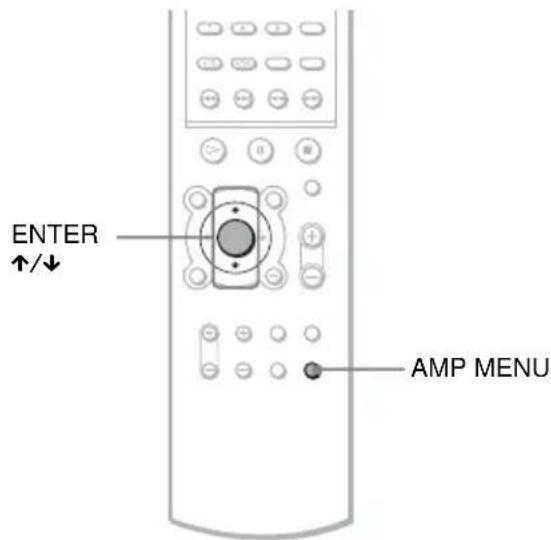
1 Press AMP MENU.
Set the function of the remote to DVD, and then press AMP MENU.
2 Press / repeatedly until "dts 96/24" appears in the front panel display, then press ENTER.
3 Press / to select "96/24 AUTO" then press ENTER or AMP MENU.
- AUTO: When a DTS 96/24 signal is input, it is played back at the 96kHz sampling frequency.
- OFF: Even when a DTS 96/24 signal is input, it is played back at the 48kHz sampling frequency.
Notes
- When the input signal is a multi-channel source, PRO LOGIC, PRO LOGIC II MOVIE/MUSIC, and Neo:6 Cinema/Music are cancelled and the multi channel source is output directly.
- Neo:6 Cinema/Music mode decoding is not available for DTS 2channel signal.
- When decoding by DTS 96/24 (except A.F.D. mode) in the sound field, output signals will be converted to 48kHz (sampling frequency).
- When any speaker is set to "SMALL" or subwoofer is set to "NONE" in the speaker setting, output signals will be converted to 48kHz (sampling frequency).
continued
Selecting a sound field (MODE button)
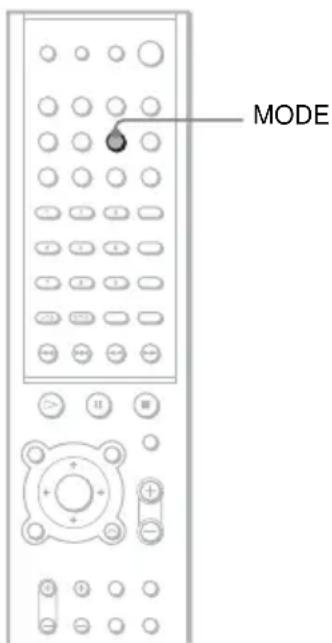
Press MODE on the remote repeatedly until the sound field you want appears in the front panel display.
FOR MOVIE
| Sound field Display |
| CINEMA STUDIO EX A C.ST.EX A* |
| CINEMA STUDIO EX B C.ST.EX B* |
| CINEMA STUDIO EX C C.ST.EX C* |
| V.MULTI DIMENSION V.M.DIM |
- Use DCS Technology
About DCS (Digital Cinema Sound)
In collaboration with Sony Pictures Entertainment, Sony measured the sound environment of their studios and integrated the data of the measurement and Sony's own DSP (Digital Signal Processor) technology to develop "Digital Cinema Sound." "Digital Cinema Sound" simulates in a home theatre an ideal movie theatre sound environment based on the preference of the movie director.
C.ST.EX A (Cinema Studio EX A)
Reproduces the sound characteristics of the Sony Pictures Entertainment "Cary Grant Theater" cinema production studio. This is a standard mode, great for watching most any type of movie.
C.ST.EX B (Cinema Studio EX B)
Reproduces the sound characteristics of the Sony Pictures Entertainment "Kim Novak Theater" cinema production studio. This mode is ideal for watching science-fiction or action movies with lots of sound effects.
C.ST.EX C (Cinema Studio EX C)
Reproduces the sound characteristics of the Sony Pictures Entertainment scoring stage. This mode is ideal for watching musicals or classic films where music is featured in the soundtrack.
V.M.DIM (VIRTUAL MULTI DIMENSION) *
Uses 3D sound imaging to create an array of virtual surround speakers positioned higher than listener from a single pair of actual surround speakers. This mode creates 5 sets of virtual speakers surrounding the listener at approximately a 30^ angle of elevation.
- "VIRTUAL" sound field: Sound field with virtual speakers.
About Cinema Studio EX
Cinema Studio EX is ideal for enjoying the movie software encoded with multi channel format, such as the Dolby Digital DVD. This mode reproduces the sound characteristics of Sony Pictures Entertainment's studios. Cinema Studio EX consists of the following three elements.
- Virtual Multi Dimension Creates 5 sets of virtual speakers surrounding the listener from a single pair of actual surround speakers.
- Screen Depth Matching In a movie theatre, sound seems to come from inside the image reflected on the movie screen. This element creates the same sensation in your listening room by shifting the sound of the front speakers "into" the screen.
- Cinema Studio Reverberation Reproduces the reverberations peculiar to a movie theatre.
Cinema Studio EX is the integrated mode which operates these elements simultaneously.
Notes
- The virtual speaker effect may cause increased noise in the playback signal.
- When listening with sound fields that employ virtual speakers, you will not be able to hear any sound coming directly from the surround speakers.
FOR MUSIC
Sound field Display
HALL HALL
JAZZ CLUB JAZZ CLUB
LIVE CONCERT L.CONCERT
HALL
Reproduces the acoustics of a rectangular concert hall.
JAZZCLUB
Reproduces the acoustics of a jazz club.
L. CONCERT (Live Concert)
Reproduces the acoustics of a 300-seat live concert.
When using headphones
Sound field Display
HEADPHONE THEATER HP.THEATER
HEADPHONE 2CH HP.[2CH]
HP. THEATER (HEADPHONE THEATER)
This mode is very effective with 5.1 ch discrete signal sources like Dolby Digital and DTS.
HP.[2CH] (HEADPHONE 2CH)
This mode outputs the sound from the headphone L/R. Standard 2 channel (stereo) sources completely bypass the sound field processing. Multi channel surround formats are downmixed to two channels.
To turn the surround effect off
Press A.F.D. on the remote repeatedly until "A.F.D AUTO" appears in the front panel display, or press 2CH on the remote to display "2CH STEREO."
Notes
- This function is unavailable when playing Super Audio CDs.
- When you play a Super Audio CD (Direct Stream Digital), the sound field changes to "AUTO FORMAT DIRECT AUTO" automatically.
- For PCM96 kHz sources, 2CH, A.F.D. and MODE is not available.
Tips
- When you want to output the TV sound or stereo sound of a 2 channel source from the 7 speakers, select any sound field other than "AUTO FORMAT DIRECT AUTO" or "2CH STEREO."
- Whenever you select a function such as DVD or TUNER, the sound field that was last applied to that function is automatically applied again. For example, if you listen to DVD with HALL as the sound field, then change to another function, and then return to DVD, HALL will be applied again. With the tuner, sound fields are memorized separately for all preset stations.
-
You can identify the encoding format of program software by looking at its packaging.
-
Dolby Digital discs are labelled with the DOLSY logo.
- DTS-ES or DTS 96/24 encoded programs are marked with DTS-ES or DTS 96/24.
- Dolby Surround encoded programs are labelled with the 100000000000000000000000000000000000000000000000000000000000
- DTS Digital Surround discs are marked with DTS.
Selecting the Surround Back Decoding Mode
DVD
This function lets you select the decoding mode for the surround back signals of the multi channel input stream.
By decoding the surround back signal of DVD software, etc., recorded in Dolby Digital EX, DTS-ES Matrix, DTS-ES Discrete 6.1 format, etc., you can enjoy the kind of surround sound originally intended for the film (page 78).
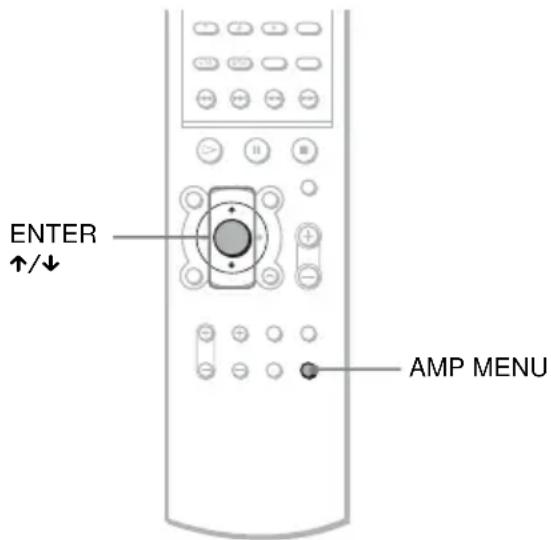
1 Press AMP MENU.
Set the function of the remote to DVD, and then press AMP MENU.
2 Press / repeatedly until "SurrB DEC." appears in the front panel display, then press ENTER.
3 Press / to select the surround back mode you want according to the input stream, then press ENTER or AMP MENU.
The default setting is "SB AUTO."
When selecting "SB AUTO"
When you input stream contains the 6.1 channel decoding flag a), the appropriate decoder is applied to decode the surround back signal.
| Input stream | Output channel | Applied surround back decoder |
| Dolby Digital 5.1 | 5.1 — | |
| DTS 5.1 5.1 — | ||
| Dolby Digital EXb) | 6.1 Matrix decoder conforms to Dolby Digital EX | |
| DTS-ES Matrix 6.1c) | 6.1 DTS Matrix decoder | |
| DTS-ES Discrete 6.1d) | 6.1 DTS Discrete decoder |
When selecting "SB MATRIX"
Dolby Digital EX is applied to decode the surround back signal regardless of the 6.1 channel decode flag ^a) in the input stream. This decoder conforms to Dolby Digital EX, and functions the same as the decoders ^e) used in movie theatres.
| Input stream | Output channel | Applied surround back decoder |
| Dolby Digital 5.1 | 6.1 Matrix decoder conforms to Dolby Digital EX | |
| DTS 5.1 6.1 Matrix decoder conforms to Dolby Digital EX | ||
| Dolby Digital EXb) | 6.1 Matrix decoder conforms to Dolby Digital EX | |
| DTS-ES Matrix 6.1c) | 6.1 Matrix decoder conforms to Dolby Digital EX | |
| DTS-ES Discrete 6.1d) | 6.1 Matrix decoder conforms to Dolby Digital EX | |
When selecting "SB OFF"
Surround back decoding is not performed.
a) 6.1 channel decode flag is information recorded in software like DVD.
b) Dolby Digital DVD that includes a Surround EX flag. Check the Dolby Corporation web page help for information about Surround EX films.
c) Software encoded with a flag to denote it has both Surround EX and 5.1 channel signals.
d) Software encoded with both 5.1 channel signals and an extension stream designed for returning those signals to 6.1 discrete channels. Discrete 6.1 channel signals are DVD specific signals, not used in movie theatres.
e) This decoder can be used for all 6.1 formats (Dolby Digital EX, DTS-ES Matrix 6.1, and DTS-ES Discrete 6.1).
Notes
- You can select the surround back decoding only when A.F.D. mode is selected (page 45). In other sound fields, this function is bypassed internally.
- Some discs have no Dolby Digital EX flag, even though their packaging may contain a Dolby Digital Surround EX logo. In this case, select "SB MATRIX."
Selecting the Decode Priority




This function lets you select the decode priority when digital signals are input from the DIGITAL IN (OPTICAL IN/COAXIAL IN) jack, or digital signals are processed in DVD mode.
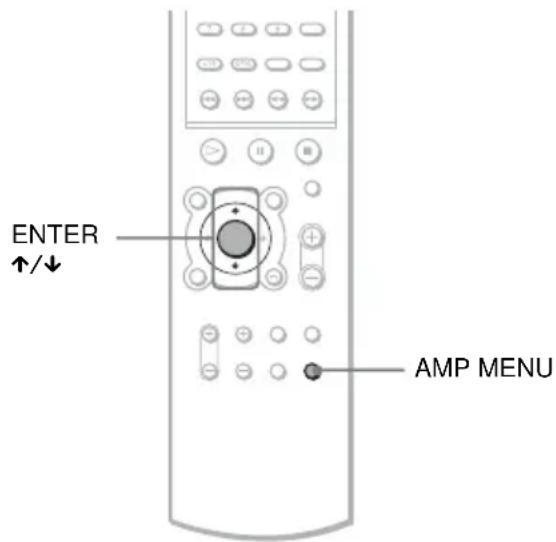
1 Press AMP MENU.
Set the function of the remote to DVD, and then press AMP MENU.
2 Press / repeatedly until "DEC. PRI." appears in the front panel display, then press ENTER.
3 Press / to select the decode priority you want, then press ENTER or AMP MENU.
The default setting is "PCM."
When selecting "PCM"
PCM signals are given priority (to prevent the interruption when playback starts). Even when other signals are input, the sound will be output. However, when DTS-CD signals are output, no sound or noise will be heard. In this case, select "AUTO."
When selecting "AUTO"
The most suitable decode method is automatically selected from DTS, Dolby Digital, or PCM. However, when PCM signal playback starts, sound will not be output initially.
Tip
As long as DVD mode is selected, you can play DTS-CD even if "PCM" is selected.
Changing the Speaker Impedance Value
You can change the impedance value in accordance with your speaker's impedance. The default settings are underlined.
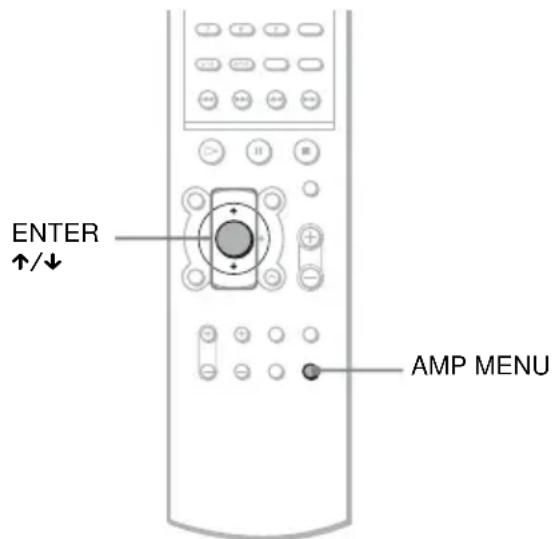
1 Press AMP MENU.
Set the function of the remote to DVD, and then press AMP MENU.
2 Press / repeatedly until "SP. IMP. () " appears in the front panel display, then press ENTER.
3 Press / to select "SP 4 / 6 or "SP 8 in accordance with impedance, then press ENTER or AMP MENU.
| SP 8Ω | Select this if the speaker impedance value is 8 ohms or higher. |
| SP 4Ω/6Ω | Select this if the speaker impedance value is under 8 ohms. |
Notes
- Use high performance speakers.
- Use suitably sized speakers of similar performance for the front, center, surround, and surround back speakers.
Speaker impedance
To enjoy the best possible multi channel surround, connect speakers with a nominal impedance of 8 ohms or higher to the FRONT, CENTER, SURROUND and SURROUND BACK terminals, and set the value to "SP 8 Refer to the operating instructions supplied with your speakers if you are not sure of their impedance. (This information is often on the back of the speaker.) Alternatively, you may connect speakers of nominal impedance between 4 and 8 ohms to any or all of the speaker terminals. In this case, be sure to set the value to "SP 4 /6 even if you connect just one speaker of nominal impedance between 4 and 8 ohms.
Using Various Additional Functions
Changing the Angles
DVD
If various angles (multi-angles) for a scene are recorded on a DVD, you can change the viewing angle.
For example, while playing a scene of a train in motion, you can display the view from either the front of the train, the left window of the train, or from the right window without having the train's movement interrupted.
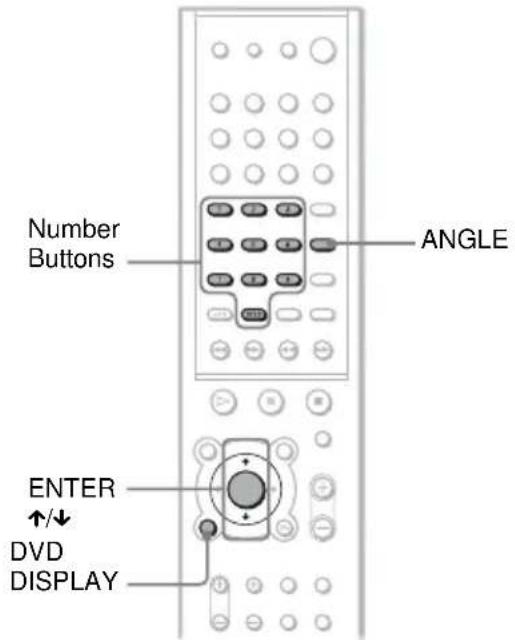
1 Press DVD DISPLAY during playback.
The Control Menu appears.
2 Press / to select (ANGLE).
The angle number appears.
The number in parentheses indicates the total number of angles. The "ANGLE" indicator lights up in green when angles are recorded on the disc.
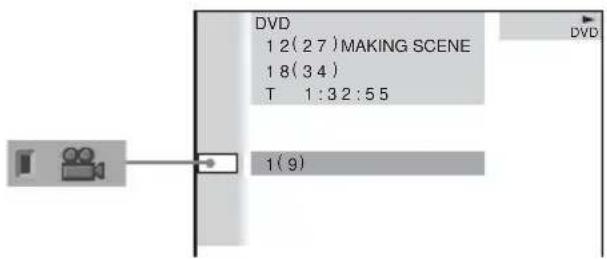
3 Press ENTER.
The angle number changes to - .
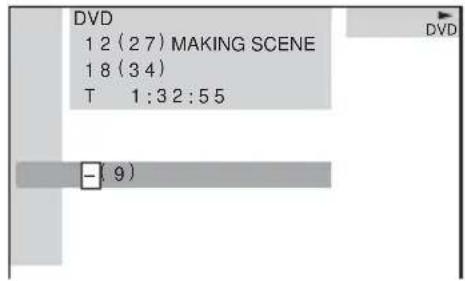
4 Select the angle number using the number buttons or / , then press ENTER.
The angle is changed to the selected angle.
To turn off the Control Menu
Press DVD DISPLAY repeatedly until the Control Menu is turned off.
Note
Depending on the DVD, you may not be able to change the angles, even if multi-angles are recorded on the DVD.
Tip
You can select the angle directly by pressing ANGLE. Each time you press the button, the angle changes.
Displaying Subtitles
DVD
If subtitles are recorded on a disc, you can turn the subtitles on or off while playing. If multilingual subtitles are recorded on the disc, you can change the subtitle language while playing, or turn the subtitles on or off whenever you want. You can select the language you want to practice, for example, turn on the subtitles for better understanding.
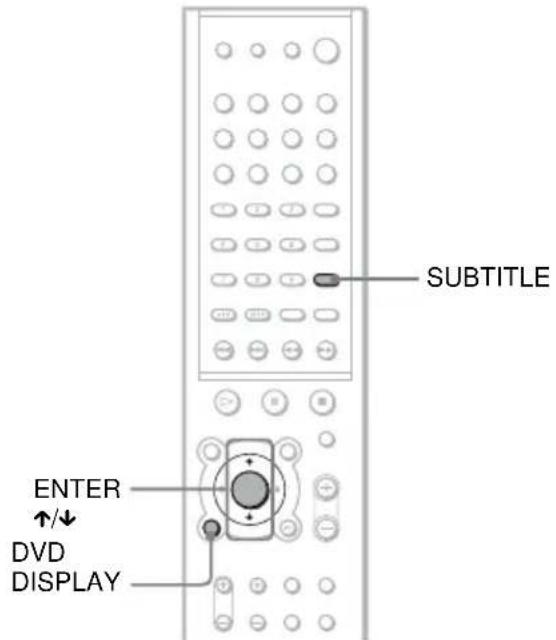
1 Press DVD DISPLAY during playback.
The Control Menu appears.
2 Press / to select (SUBTITLE), then press ENTER.
The options for SUBTITLE appear.
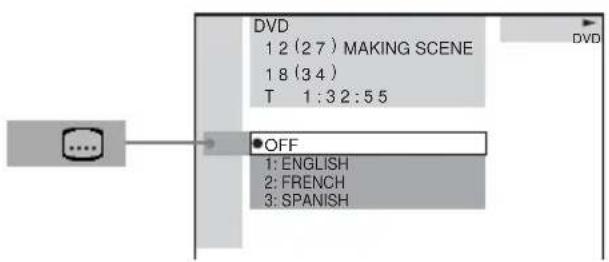
3 Press / to select the language.
Depending on the DVD, the choice of language varies.
When 4 digits are displayed, they indicate the language code. Refer to the language code list on page 85 to see which language the code represents.
4 Press ENTER.
To cancel the SUBTITLE setting
Select "OFF" in Step 3.
To turn off the Control Menu
Press DVD DISPLAY repeatedly until the Control Menu is turned off.
Note
Depending on the DVD, you may not be able to change the subtitles, even if multilingual subtitles are recorded on it.
Tip
You can select SUBTITLE directly by pressing SUBTITLE. Each time you press the button, the item changes.
Adjusting the Playback Picture
(PICTURE MODE)



You can adjust the video signal of the DVD,VIDEO CD or JPEG from the receiver to obtain the picture quality you want. Choose the setting that best suits the program you are watching.
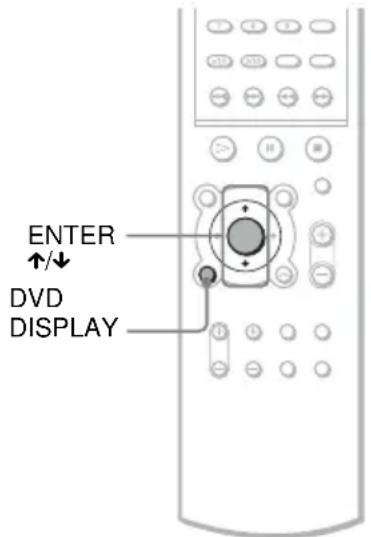
1 In stop mode, press DVD DISPLAY.
The Control Menu appears.
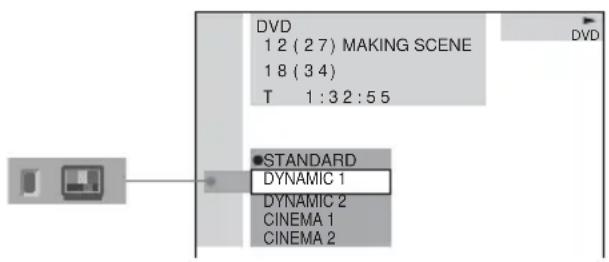
2 Press / to select (PICTURE MODE), then press ENTER.
The options for PICTURE MODE appear.
STANDARD: Displays a standard picture.
DYNAMIC 1: Produces a bold dynamic picture by increasing the picture contrast and the color intensity.
DYNAMIC 2: Produces a more dynamic picture than DYNAMIC 1 by further increasing the picture contrast and the color intensity.
CINEMA 1: Enhances detail in dark areas by increasing the black level.
CINEMA 2: Bright colors become brighter and dark colors become richer, and color contrast is increased.
3 Select the PICTURE MODE you want using / , then press ENTER.
To turn off the Control Menu
Press DVD DISPLAY repeatedly until the Control Menu is turned off.
Tip
When you watch a movie, "CINEMA 1" or "CINEMA 2" is recommended.
Note
The setting you select in PICTURE MODE is reflected in all screen displays.
Locking Discs
(CUSTOM PARENTAL CONTROL, PARENTAL CONTROL)




You can set two kinds of playback restrictions for a disc.
- Custom Parental Control
You can set the playback restrictions so that the receiver will not play inappropriate discs.
- Parental Control
Playback of some DVDs can be limited according to a predetermined level, such as the age of the viewer.
The same password is used for both Parental Control and Custom Parental Control.
Custom Parental Control
You can set the same Custom Parental Control password for up to 25 discs. If you set a 26th disc, the playback restriction of the disc for which you first set the password is cancelled.
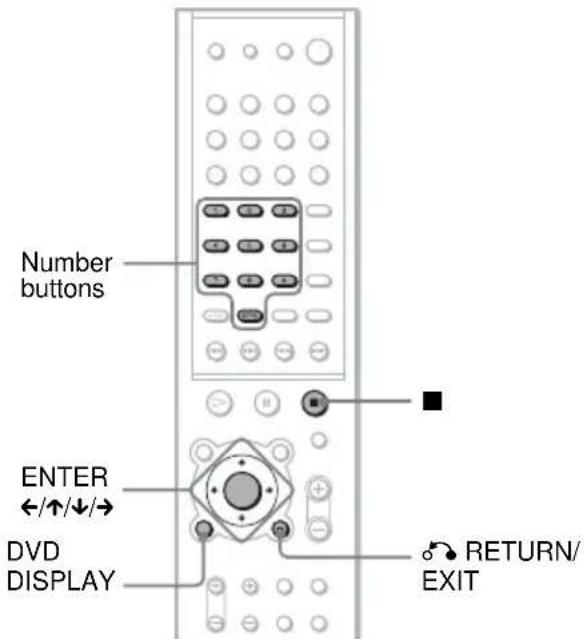
1 Insert the disc you want to lock.
If the disc is playing, press to stop playback.
2 In stop mode, press DVD DISPLAY.
The Control Menu appears.
3 Press / to select (CUSTOM PARENTAL CONTROL), then press ENTER.
"CUSTOM PARENTAL CONTROL" is selected.
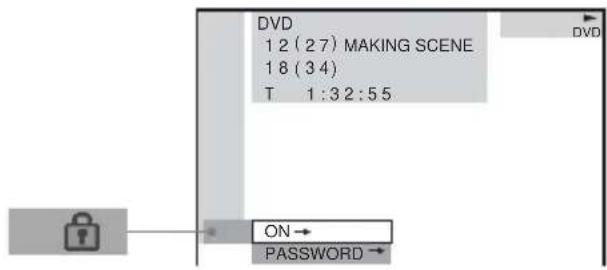
4 Press / to select "ON ," then press ENTER.
If you have not entered a password yet
The display for registering a new password appears.
CUSTOM PARENTAL CONTROL
Enter a new 4-digit password, then press ENTER.

Enter a 4-digit password by using the number buttons, then press ENTER.
The display for confirming the password appears.
If you have already registered a password
The display for entering the password appears.
CUSTOM PARENTAL CONTROL
Enter password, then press ENTER.

5 Enter your 4-digit password by using the number buttons, then press ENTER.
"Custom parental control is set." appears and the screen returns to the Control Menu display.
If you make a mistake entering your password
Press before you press ENTER and input the correct number.
If you make a mistake
Press RETURN/EXIT, then start from Step 3 again.
To turn off the Control Menu
Press DVD DISPLAY repeatedly until the Control Menu is turned off.
To turn off the Custom Parental Control function
1 In Step 4, select "OFF , then press ENTER.
2 Enter your 4-digit password using the number buttons, then press ENTER.
To change the password
1 In Step 4, press / to select "password ," then press ENTER. The display for entering the password appears.
2 Enter your 4-digit password using the number buttons, then press ENTER.
3 Enter a new 4-digit password using the number buttons, then press ENTER.
4 To confirm your password, re-enter it using the number buttons, then press ENTER.
Playing the disc for which Custom Parental Control is set
1 Insert the disc for which Custom Parental Control is set.
The CUSTOM PARENTAL CONTROL display appears.
CUSTOM PARENTAL CONTROL
Custom parental control is already set. To play, enter your password and press ENTER.

2 Enter your 4-digit password using the number buttons, then press ENTER.
The receiver is ready for playback.
Notes
- When you change the layer or area in a Super Audio CD which has Custom Parental Control set, the display for entering the password may appear.
- When you set the Custom Parental Control password for a Hybrid Super Audio CD, the Custom Parental Control setting only works for the current layer.
Tip
If you forget your password, enter the 6-digit number "199703" using the number buttons when the CUSTOM PARENTAL CONTROL display asks you for your password, then press ENTER. The display will ask you to enter a new 4-digit password.
Limiting playback for children (Parental Control) (DVD only)
Playback of some DVDs can be limited according to a predetermined level, such as the age of the viewer. The "Parental Control" function allows you to set a playback limitation level.
A scene that is limited is not played, or it is replaced by a different scene.
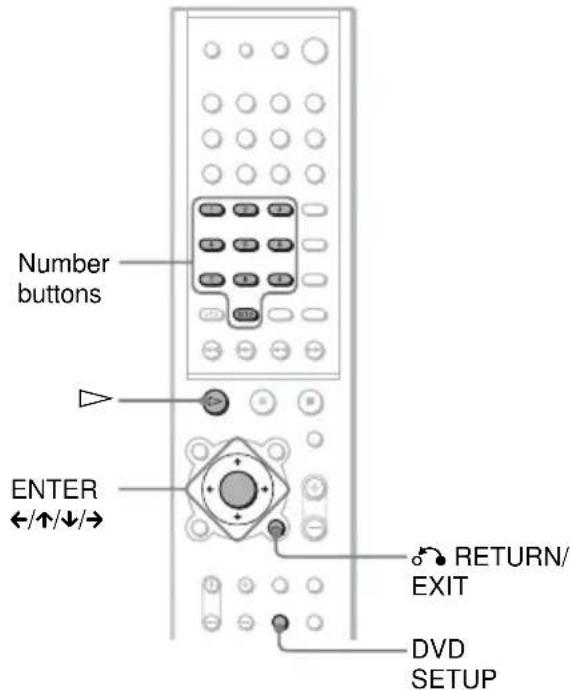
1 In stop mode, press DVD SETUP.
The Setup Display appears.
2 Press / to select "CUSTOM SETUP," then press ENTER.
"CUSTOM SETUP" is displayed.
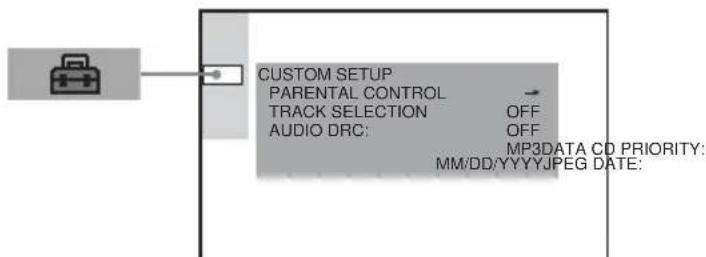
3 Press / to select "PARENTAL CONTROL ," then press ENTER.
If you have not entered a password The display for registering a new password appears.
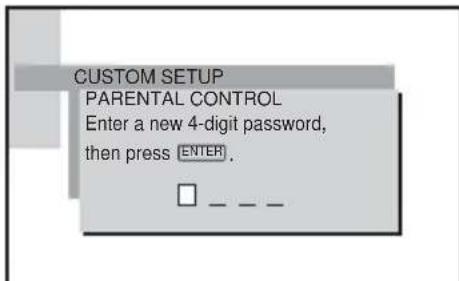
Enter a 4-digit password using the number buttons, then press ENTER.
The display for confirming the password appears.
When you have already registered a password
The display for entering the password appears.
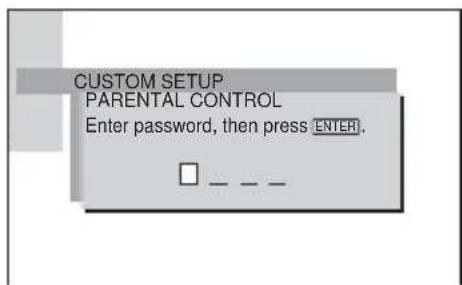
4 Enter your password using the number buttons, then press ENTER.
The display for setting the playback limitation level and changing the password appears.
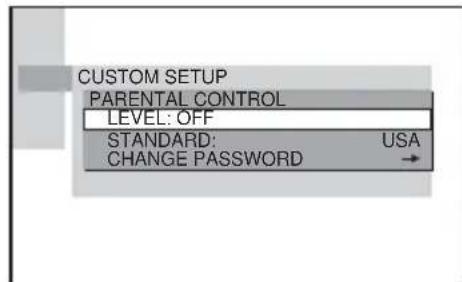
5 Press / to select "STANDARD," then press ENTER.
The selection items for "STANDARD" are displayed.
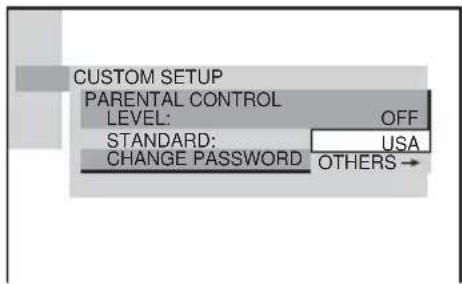
6 Press / to select a geographic area as the playback limitation level, then press ENTER.
The area is selected.
If you select "OTHERS ",select and enter the standard code in the table on page 58 using the number buttons.
7 Press / to select "LEVEL," then press ENTER.
The selection items for "LEVEL" are displayed.
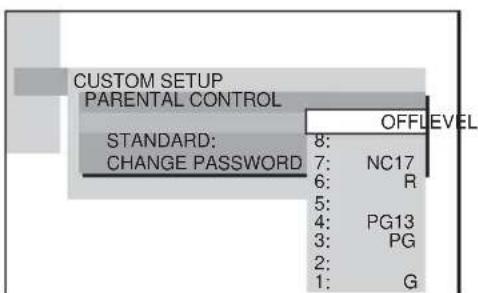
8 Select the level you want using / , then press ENTER.
The Parental Control setting is complete.
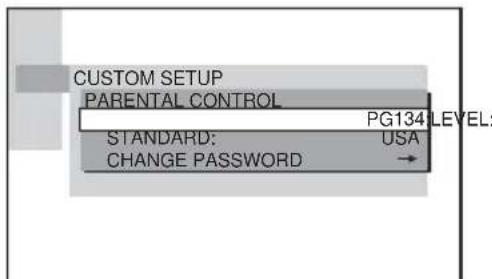
The lower the value, the more strict the limitation.
If you make a mistake
Press RETURN/EXIT to go back to the previous screen.
To turn off the Setup Display
Press DVD SETUP repeatedly until the Setup Display is turned off.
To turn off the Parental Control function and play the DVD after entering your password
Set "LEVEL" to "OFF" in Step 8.
To change the password
1 In Step 5, select "CHANGE PASSWORD " using , then press ENTER. The display for entering the password appears.
2 Follow Step 3 to enter a new password.
Playing the disc for which Parental Control is set
1 Insert the disc and press
The PARENTAL CONTROL display appears.
2 Enter your 4-digit password using the number buttons, then press ENTER.
The receiver starts playback.
Notes
- If you play a DVD which does not have the Parental Control function, playback cannot be limited on this receiver.
- Depending on the DVD, you may be asked to change the parental control level while playing the disc. In this case, enter your password, then change the level. If the Resume Play mode is cancelled, the level returns to the original level.
Tip
If you forget your password, remove the disc and repeat Step 1 to 3 of "Limiting playback for children." When you are asked to enter your password, enter "199703" using the number buttons, then press ENTER. The display will ask you to enter a new 4-digit password. After you enter a new 4-digit password in Step 3, replace the disc in the receiver and press When the PARENTAL CONTROL display appears, enter your new password.
Area Code
| Standard Code number | |
| Argentina 2044 | |
| Australia 2047 | |
| Austria 2046 | |
| Belgium 2057 | |
| Brazil 2070 | |
| Canada 2079 | |
| Chile 2090 | |
| China 2092 | |
| Denmark 2115 | |
| Finland 2165 | |
| France 2174 | |
| Germany 2109 | |
| Hong Kong 2219 | |
| India | 2248 |
| Indonesia | 2238 |
| Italy | 2254 |
| Japan | 2276 |
| Korea 2304 | |
| Malaysia 2363 | |
| Mexico 2362 | |
| Netherlands | 2376 |
| New Zealand | 2390 |
| Norway | 2379 |
| Pakistan | 2427 |
| Philippines | 2424 |
| Portugal | 2436 |
| Russia | 2489 |
| Singapore 2501 | |
| Spain | 2149 |
| Sweden | 2499 |
| Switzerland | 2086 |
| Taiwan 2543 | |
| Thailand | 2528 |
| United Kingdom | 2184 |
Other Operations
Controlling Other Units with the Supplied Remote
By adjusting the remote signal, you can control your TV, satellite receiver or VCR with the supplied remote.
Notes
- If you enter a new code number, the code number previously entered will be erased.
- When you replace the batteries of the remote, the code number may reset itself to the default (SONY) setting. Reset the appropriate code number.
Tip
You can set the code number for your TV or satellite receiver separately.
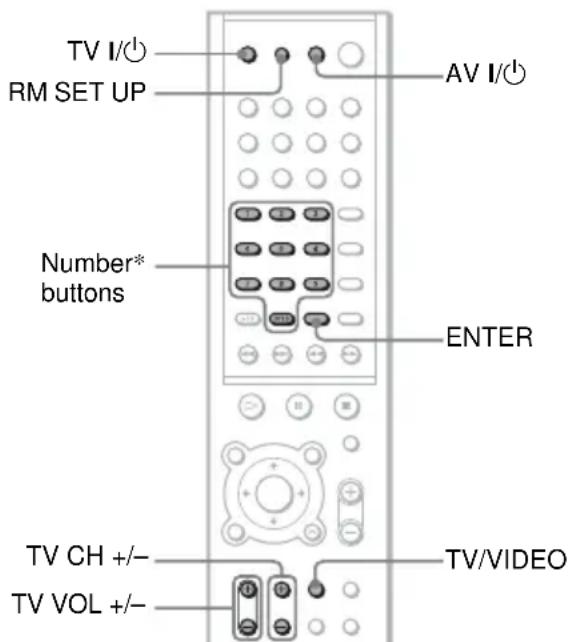
Controlling TVs with the remote
1 Press RM SET UP and AV I/O simultaneously.
The RM SET UP indicator lights up.
2 Press TV I/O.
The RM SET UP indicator flashes once.
3 Enter your TV manufacturer code (see the table) using the number buttons.
4 Press ENTER.
When registration is completed, the RM SET UP indicator flashes twice. If registration is incomplete, the RM SET UP indicator rapidly flashes 4 times.
- Use the number buttons only to enter the code number of controllable TVs.
Code numbers of controllable TVs
If more than one code number is listed, try entering them one at a time until you find the one that works with your TV.
| Manufacturer Code number | |
| SONY 501,502 | |
| AIWA 501,502 | |
| DAEWOO 504,505,506,507,515,544 | |
| FISHER 508 | |
| GOLDSTAR 503,511,512,515,534,544 | |
| GRUNDIG 517,534 | |
| HITACHI 513,514,515,544 | |
| ITT/NOKIA 521,522 | |
| JVC 516 | |
| MAGNAVOX 503,518,544 | |
| MITSUBISHI/MGA 503,519,544 | |
| NEC 503,520,544 | |
| PANASONIC | 509,524 |
| PHILIPS | 515,518 |
| PIONEER | 509,525,526,540 |
| RCA/PROSCAN | 510,527,528,529,544 |
| SAMSUNG | 503,515,531,532,533,534,544 |
| SANYO 508,545,546,547 | |
| SHARP | 535 |
| TELEFUNKEN | 523,536,537,538 |
| THOMSON | 530,537,539 |
| TOSHIBA | 535,540,541 |
| ZENITH | 542,543 |
Controlling the TV
You can control your TV using the buttons below.
| By pressing | You can |
| TV I/® Turn the TV on or off. | |
| TV/VIDEO | Switch the TV's input source between the TV and other input sources. |
continued
By pressing You can
TV VOL + / - adjust the TV volume.
TV CH + / - change the TV channel.
Note
Depending on the TV, you may not be able to control your TV or to use some of the buttons above.
Controlling satellite receivers with the remote
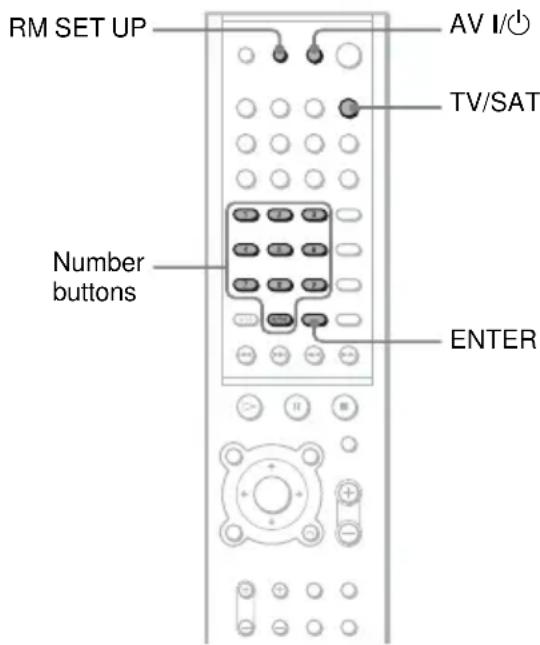
1 Press RM SET UP and AV I/ simultaneously.
The RM SET UP indicator lights up.
2 Press TV/SAT.
3 Enter your Satellite receiver's manufacturer code (see the table) using the number buttons.
4 Press ENTER. When registration is completed, the RM SET UP indicator flashes twice.
Code numbers of controllable satellite receivers
If more than one code number is listed, try entering them one at a time until you find the one that works with your satellite receiver.
Manufacturer Code number
SONY 801,802,803,804
JERROLD/G.I.806,807,808,809,810,811 812,813,814
PANASONIC 818
RCA 805,819
Controlling the satellite receiver
Press TV/SAT.
Sources that can be controlled by the remote change depending on the setting of TV/SAT.
You can control your satellite receiver using the buttons below.
By pressing You can
| AV I/0 | Turn the satellite receiver on or off. |
| JUMP Jump | |
| Number buttons Select a channel. | |
| ENTER | Confirm the selected channel. |
| AUDIO | Change the audio. |
| CH +/- | Change channels. |
| TOP MENU/Guide | Display the program guide. |
| AV MENU | Display the menu. |
| DVD DISPLAY | Turn the display on or off. |
| RETURN/EXIT | Return to the previous display in the program guide or menu. |
| ←/↑/↓/→/ ENTER | Select the item in the program guide or menu. |
Notes
Depending on the satellite receiver, you may not be able to control your satellite receiver or to use some of the buttons above.
- To operate a DVD player, press DVD, and then change the mode of the receiver to DVD.
Controlling the VCR with the remote
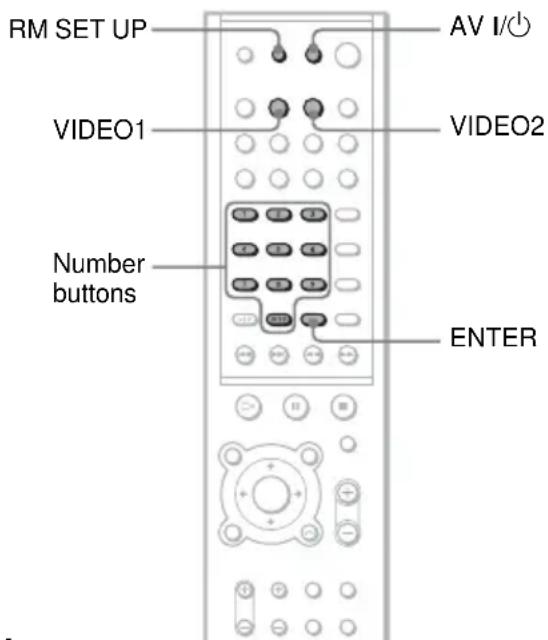
1 Press RM SET UP and AV I/ simultaneously.
The RM SET UP indicator lights up.
2 PressVIDEO1 orVIDEO2.
3 Enter your VCR's manufacturer code (see the table) using the number buttons.
4 Press ENTER.
When the registration is completed, the RM SET UP indicator flashes twice.
Code numbers of controllable VCR
PressVIDEO1 orVIDEO2.
If more than one code number is listed, try entering them one at a time until you find the one that works with your VCR.
| Manufacturer Code number |
| SONY 701,702,703,704,705,706 |
| AIWA 710,750,757,758 |
| AKAI 707,708,709,759 |
| BLAUPUNKT 740 |
| EMERSON 711,712,713,714,715,716,750 |
| FISHER 717,718,719,720 |
| GENERAL 721,722,730 ELECTRIC |
| GOLDSTAR 723,753 |
| Manufacturer | Code number |
| GRUNDIG 724 | |
| HITACHI 722,725,729,741 | |
| ITT/NOKIA 717 | |
| JVC 726,727,728,736 | |
| MAGNAVOX 730,731,738 | |
| MITSUBISHI/MGA 732,733,734,735 | |
| NEC 736' | |
| PANASONIC | 729,730,737,738,739,740 |
| PHILIPS | 729,730,731 |
| PIONEER | 729 |
| RCA/PROSCAN | 722,729,730,731,741,747 |
| SAMSUNG | 742,743,744,745 |
| SANYO 717,720,746 | |
| SHARP | 748,749 |
| TELEFUNKEN | 751,752 |
| TOSHIBA | 747,755,756 |
| ZENITH | 754 |
Controlling the VCR
Press the button "VIDEO1," or "VIDEO2."
Sources that can be controlled by the remote change depending on the setting ofVIDEO1 orVIDEO2.
You can control your VCR using the buttons below.
| By pressing | You can |
| AV/ | Turn the VCR on or off. |
| Number buttons | Select a channel. |
| ENTER | Confirm the selected channel. |
| AUDIO | Change the audio. |
| CH +/- | Change VCR channels. |
| <▲/▲> | Fast Forward or fast Reverse. |
| ▷ | Play. |
| || | Pause. |
| ■ | Stop. |
| AV MENU | Display the menu. |
| DVD DISPLAY | The display is on or off. |
| ←/↑/↓/→/ ENTER | Select the item in the program guide or menu. |
Notes
- Depending on the VCR, you may not be able to control your VCR, or use some of the buttons above.
- To operate a DVD player, press DVD, and then change the mode of the receiver to DVD.
Using Other Units
You can use VCRs or other units connected to the VIDEO1, TV/SAT, or VIDEO2 jacks. Refer to the operation manual supplied with the other unit for further information on its operation.
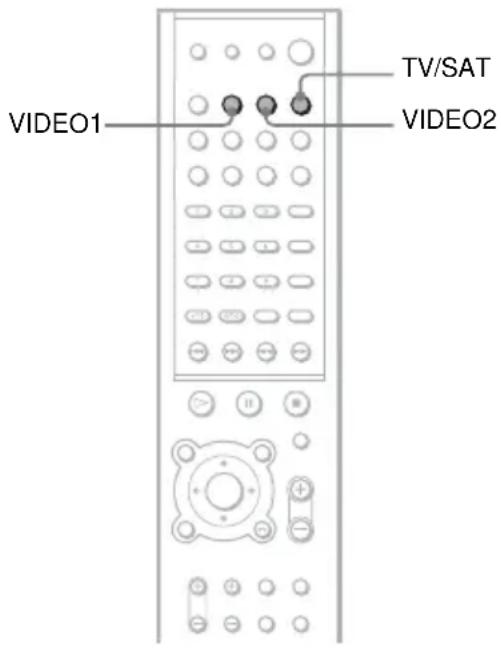
Press the button "VIDEO1," "VIDEO2," or "TV/SAT" you want to use.
When you press the button you want to use, the mode of the receiver changes and the currently selected unit name appears in the front panel display.
Tip
You can also select the mode using FUNCTION - / + on the receiver. Each time you press FUNCTION - / + ,the mode of the receiver changes in the following sequence.
$$ \begin{array}{l}\text {D V D} \rightarrow \text {V I D E O 1} \rightarrow \text {V I D E O 2} \rightarrow \text {T V / S A T} \rightarrow\\text {T U N E R} \rightarrow \text {D V D} \dots\end{array} $$
Enjoying the Radio
Presetting Radio Stations
You can preset 20 stations for FM and 10 stations for AM. Before tuning, make sure to turn down the volume to minimum.
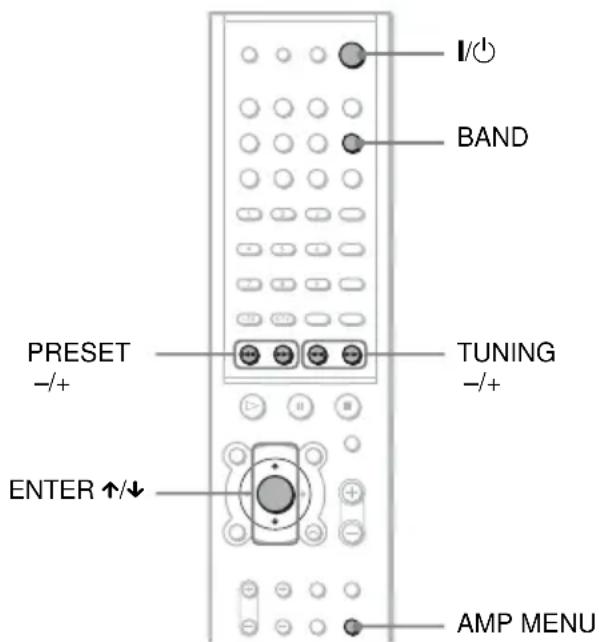
1 Press BAND repeatedly until the band you want appears in the front panel display.
Each time you press BAND, the band toggles between AM and FM.
The BAND button is available only the DVD function is selected on the remote.
2 Press and hold TUNING + or -, then release.
Scanning stops when the receiver tunes in a station. "TUNED" and "ST" (for stereo program) appear in the front panel display.

3 Press AMP MENU.
4 Press or repeatedly until "MEMORY" appears in the front panel display.
5 Press ENTER.
A preset number appears in the front panel display. The preset number blinks on and off.
| FM | TUNED ST |
| 91.40 MHz |
6 Press PRESET + or - to select the preset number you want.
| FM | TUNED ST 91.4Hz |
7 Press ENTER.
The station is stored.
| FM | TUNED COMPLETE | ST |
| FM | TUNED 61.40 MHz | ST |
8 Repeat 1 to 7 to store other stations.
To change the preset number
Restart from step 1.
To change the AM tuning interval
The AM tuning interval can be set to either 9kHz or 10kHz (default).
To change the AM tuning interval, turn off the receiver by pressing / on the remote. While holding down (on the receiver), press / on the remote to turn on the power. If you change the interval, the AM preset stations will be erased.
To reset the interval, repeat the same procedure.
Listening to the Radio
Preset radio stations in the receiver's memory first (see "Presetting Radio Stations" on page 62).
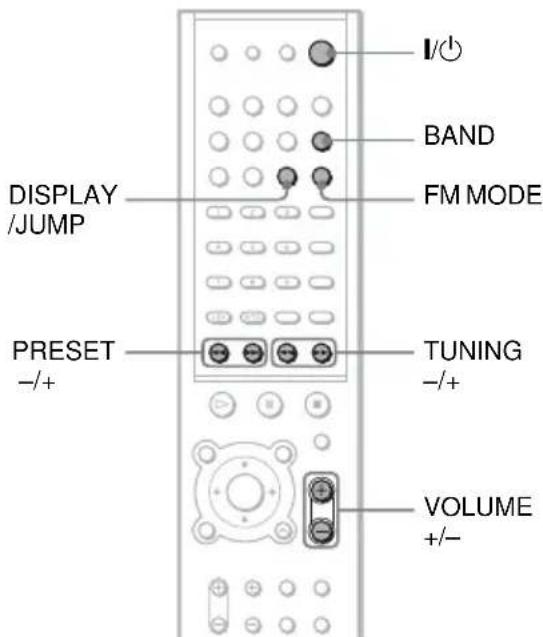
1 Press BAND repeatedly until FM or AM appears in the front panel display.
The last received station is tuned in. The Band button is available only the DVD function is selected on the remote.
| TUNED ST FM TUNER |
| ↓ |
| TUNED ST FM 875G MHz |
2 Press PRESET + or - repeatedly to select the preset station you want.
Each time you press the button, the receiver tunes in one preset station. Every time you press BAND, the band toggles between AM or FM.
3 Adjust the volume by pressing VOLUME + / -
To turn off the radio
Press / on the remote or POWER on the receiver.
To listen to non-preset radio stations
Use manual or automatic tuning in Step 2.
For manual tuning, press TUNING + or - on the remote repeatedly.
For automatic tuning, press and hold TUNING + or - on the remote.
Tips
- If an FM program is noisy, press FM MODE on the remote so that "MONO" appears in the front panel display. There will be no stereo effect, but the reception will improve. Press the button again to restore the stereo effect.
- To improve reception, reorient the supplied antennas.
To check the frequency
Press DISPLAY/JUMP repeatedly.
Each time you press DISPLAY/JUMP, the front panel display changes as follows:
index name of the station* frequency index name of the station...
- This is displayed if you have entered a name for a preset station, see "Naming Preset Stations" (page 64).
Naming Preset Stations
You can enter a name of up to 8 characters for preset stations. These names (for example, "XYZ") appear in the receiver's front panel display when a station is selected.
Note that no more than one name can be entered for each preset station.
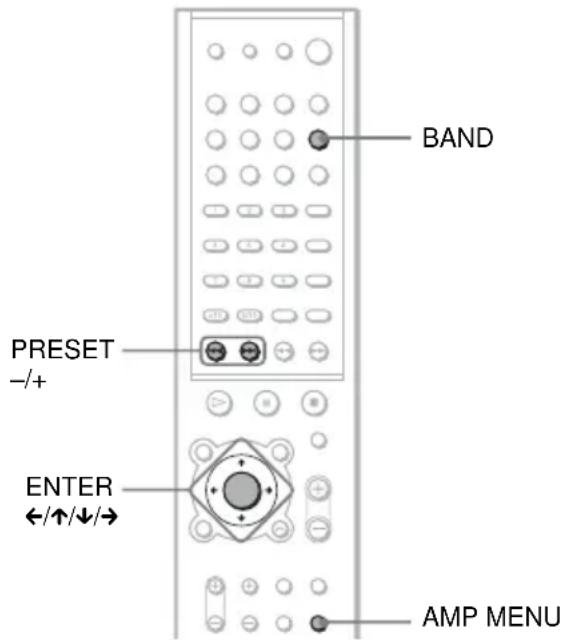
1 Press BAND repeatedly until FM or AM appears in the front panel display.
The last station you received is tuned in. Each time you press BAND, the band toggles between AM or FM.
The Band button is available only the DVD function is selected on the remote.
2 Press PRESET + or - repeatedly to select the preset station you want to create an index name for.
3 Press AMP MENU.
4 Press or repeatedly until "NAME INPUT" appears.
TUNED ST FM NAME INPUT
5 Press ENTER.
6 Create an index name by using the cursor buttons:
Press / to select a character, then press to move the cursor to the next position.
If you make a mistake
Press or repeatedly until the character to be changed flashes, then press / to select the desired character.
7 Press ENTER.
The station name is stored.

Note
You cannot input the name during manual tuning. ("Not in Use" appears in the front panel display.)
Changing the Brightness of the Front Panel
There are four levels of brightness for the front panel display.
Adjust the brightness according to your room's lighting conditions.
The default setting is "DIMMER OFF."
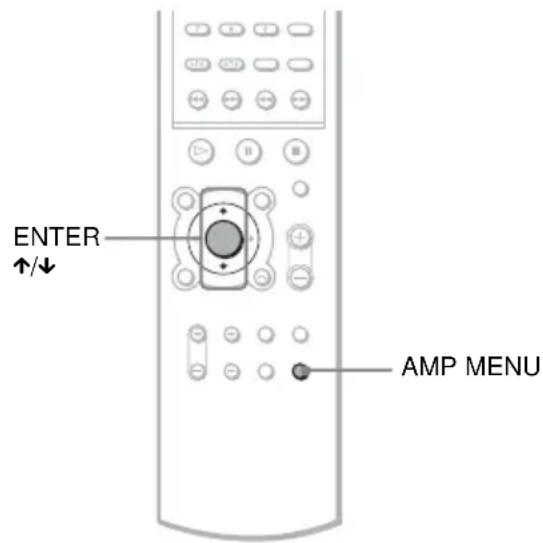
1 Press AMP MENU.
Set the function of the remote to DVD, and then press AMP MENU.
2 Press / repeatedly until "DIMMER" appears in the front panel display, then press ENTER.
3 Press / to change the brightness, then press ENTER or AMP MENU.
DIMMER OFF
The front panel display and the MULTI
CHANNEL DECODING indicator are brightly lit.
DIMMER1
The front panel display and the MULTI
CHANNEL DECODING indicator are half lit.
■DIMMER2
The front panel display and the MULTI
CHANNEL DECODING indicator are dimly lit.
DISP OFF
Turns off the front panel display and the MULTI CHANNEL DECODING indicator. When the receiver accepts an incoming remote signal, it lights for 5 seconds at DIMMER 2 brightness.
Each time you change the setting, the brightness of the front panel display changes as follows:
DIMMER OFF DIMMER 1 DIMMER 2 DISP OFF DIMMER OFF...
Settings and Adjustments
Using the Setup Display




By using the Setup Display, you can make various adjustments to items, such as picture and sound. You can also set the subtitle language and the Setup Display, among other things. For details on each Setup Display item, see page 67-73. For an overall list of Setup Display items, see page 86, 87.
How to use the Setup Display
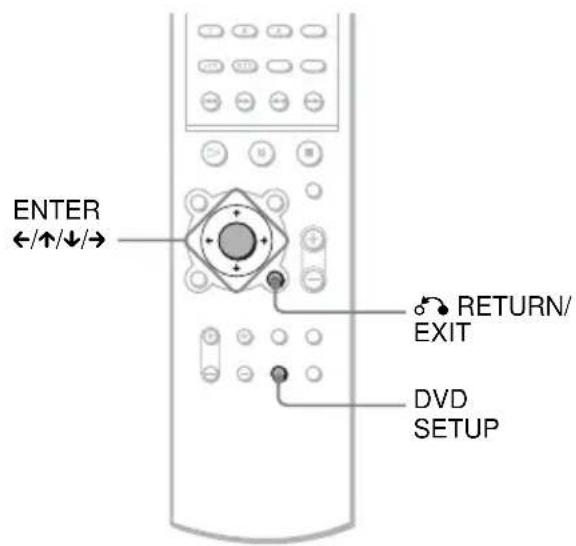
1 In stop mode, press DVD SETUP.
The Setup Display appears.
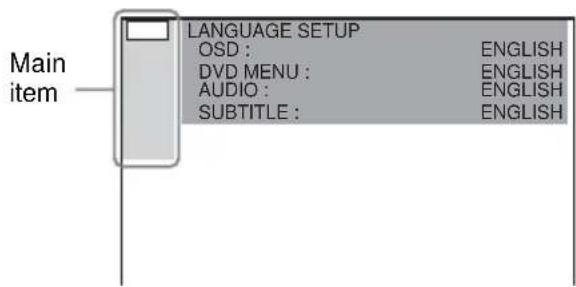
2 Press / to select the setup item from the displayed list: "LANGUAGE SETUP," "SCREEN SETUP," "CUSTOM SETUP," "SPEAKER SETUP," and "RESET." Then press ENTER or .
The selected Setup item appears.
Example: "SCREEN SETUP"
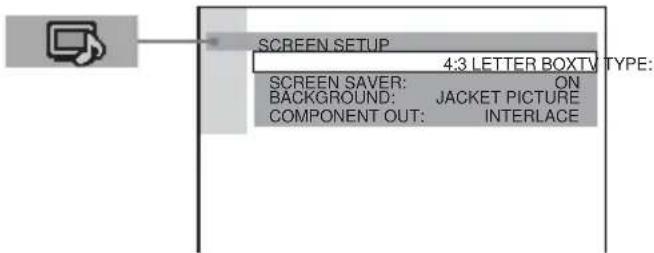
3 Select an item using / , then press ENTER or .
The options for the selected item appear.
Example: "TV TYPE"
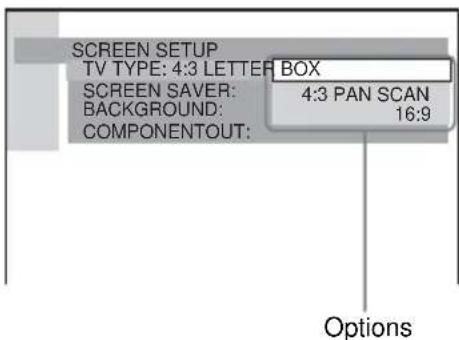
Press or RETURN/EXIT to return to setup items.
4 Select a setting using / , then press ENTER.
The setting is selected and setup is complete.
Example: "4:3 PAN SCAN"
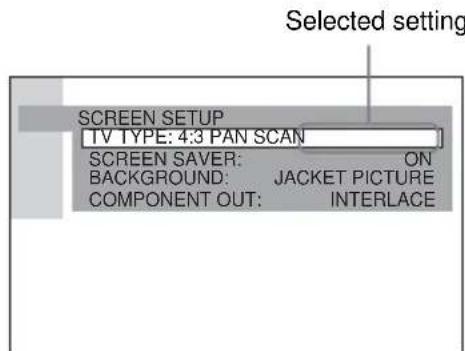
To turn off the Setup Display
Press DVD SETUP repeatedly until the Setup Display is turned off.
- When you select "RESET" in step2, the
following items are returned to the default settings.
- Setup Menu (except for the PARENTAL
After you select "RESET" and press ENTER, select "YES" to reset the settings (it takes a few seconds to complete). Select "NO" and press ENTER to cancel.
Do not press POWER on the receiver, when resetting the receiver.
Setting the Display or Sound Track Language
(Language SETUP)




"LANGUAGE SETUP" allows you to set various languages for the on-screen display or sound track.
Select "LANGUAGE SETUP" in the Setup Display. For details on using the display, see "Using the Setup Display" (page 66).
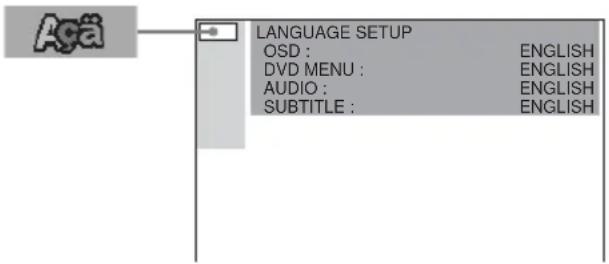
OSD (On-Screen Display)
Selects the display language on the screen. Selects the language from the displayed list.
DVD MENU (DVD only)
Selects the desired language for the DVD menu.
■ AUDIO (DVD only)
Selects the language of the sound track.
Selects the language from the displayed list.
SUBTITLE (DVD only)
Selects the language of the subtitle.
Selects the language from the displayed list.
Note
If you select a language that is not recorded on the DVD, one of the recorded languages will be automatically selected (except for "OSD").
Tip
If you select "OTHERS " in "DVD MENU,"
"SUBTITLE," or "AUDIO," select and enter the language code from the list using the number butt (page 85).
After you have made a selection, the language code (4 digits) is displayed the next time you select
"OTHERS "
Settings for the Display
(SCREEN SETUP)




Choose settings according to the TV to be connected.
Select "SCREEN SETUP" in the Setup Display. For details on using the display, see "Using the Setup Display" (page 66).
The default settings are underlined.
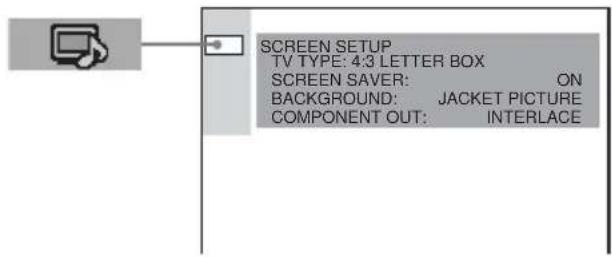
TV TYPE (DVD only)
Selects the aspect ratio of the connected TV (4:3 standard or wide).
| 4:3 LETTER BOX | Select this if you connect a 4:3 screen TV. Displays a wide picture with bands on the upper and lower portions of the screen. |
| 4:3 PAN SCAN | Select this if you connect a 4:3 screen TV. Automatically displays the wide picture on the entire screen and cuts off the portions that do not fit. |
| 16:9 | Select this if you connect a wide-screen TV or a TV with a wide mode function. |
4:3 LETTER BOX
4:3 PAN SCAN
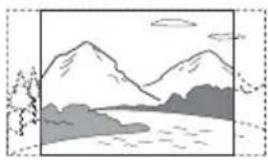
16:9
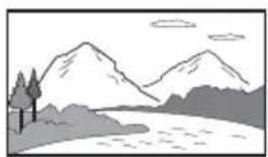
Note
Depending on the DVD, "4:3 LETTER BOX" may be selected automatically instead of "4:3 PAN SCAN" or vice versa.
SCREENSAVER
Turns the screen saver on and off so that the screen saver image appears when you leave the receiver in pause or stop mode for 15 minutes, or when you playback a CD, a Super Audio CD, an MP3 or a JPEG file (except during the slide show) for more than 15 minutes. The screen saver will help prevent your display device from becoming damaged (afterimage). Press to turn off the screen saver.
| ON | Turns on the screen saver. |
| OFF | Turns off the screen saver. |
BACKGROUND
Selects the background color or picture on the TV screen in stop mode or while playing a CD.
| JACKET PICTURE | The jacket picture (still picture) appears in the background, but only if a jacket picture is already recorded on the disc (CD-EXTRA, etc.). If the disc does not contain a jacket picture, the “GRAPHICS” picture appears. |
| GRAPHICS | A preset picture stored in the receiver appears in the background. |
| BLUE | The background color is blue. |
| BLACK | The background color is black. |
COMPONENT OUT
This will change the type of signal output from the COMPONENTVIDEO OUT jacks on the receiver. See page 79 for more information about the different types.
| INTERLACE | Select this when you are connected to a standard (interlace format) TV. |
| PROGRESSIVE | Select this when you have a TV that can accept progressive signals. |
Note
If you set "COMPONENT OUT" in "SCREEN SETUP" to "PROGRESSIVE" even though your TV cannot accept the signal in progressive format, press and hold and simultaneously for a few seconds. The "COMPONENT OUT" setting returns to "INTERLACE."
Custom Settings
(CUSTOM SETUP)



Allows setting up Parental Control and other settings.
Select "CUSTOM SETUP" in the Setup Display. For details on using the display, see "Using the Setup Display" (page 66). The default settings are underlined.
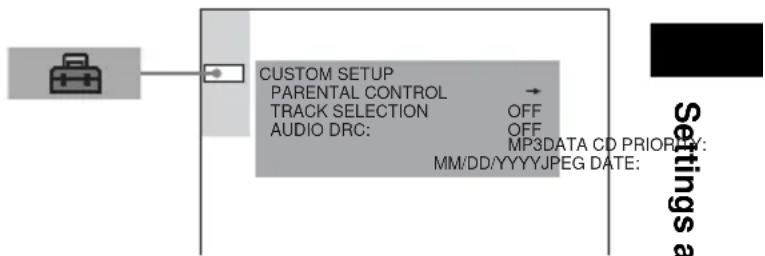
PARENTAL CONTROL (DVD only)
Sets a password and playback limitation level for DVDs with playback limitation for children. For details, see "Limiting playback for children (Parental Control)" (page 56).
■ TRACK SELECTION (DVD only)
Gives the sound track having the highest number of channels priority when you play a DVD on which multiple audio formats (PCM, MPEG audio, DTS, or Dolby Digital format) are recorded.
| OFF | No priority given. |
| AUTO | Priority given. |
Notes
- When you set the item to "AUTO," the language may change. The "TRACK SELECTION" setting has higher priority than the "AUDIO" settings in "LANGUAGE SETUP" (page 67).
- If PCM, DTS, MPEG audio, and Dolby Digital sound tracks have the same number of channels, the receiver selects PCM, DTS, Dolby Digital, and MPEG audio sound tracks in this order.
- Depending on the DVD, the audio channel with priority may be predetermined. In this case, you cannot give priority to the DTS, Dolby Digital, or MPEG audio format by selecting "AUTO."
■ AUDIO DRC (AUDIO DYNAMIC RANGE COMPRESSION)
Narrows the DYNAMIC range of the sound track.
Useful for watching movies at low volume late at night.
| OFF | No compression of DYNAMIC range. |
| STANDARD | Reproduces the sound track with the kind of DYNAMIC range that the recording engineer intended. |
| MAX | Narrows the DYNAMIC range fully. |
Note
DYNAMIC range compression only applies to Dolby Digital sources.
DATA CD PRIORITY (MP3, JPEG only)
Set priority data you want to play, when you play a DATA CD (CD-ROM/CD-R/CD-RW) containing MP3 audio tracks and JPEG image files.
| MP3 | If an MP3 file exists on a disc, the receiver recognises the disc as an “MP3 Disc.” If only JPEG files exist on the disc, the receiver recognises the disc as a “JPEG Disc.” |
| JPEG | If a JPEG file exists on the disc, the receiver recognises the disc as a “JPEG Disc.” If only MP3 files exist on the disc, the receiver recognises the disc as an “MP3 Disc.” |
Notes
- When you play multi-session CDs, the receiver decides a target to play for the last session or session linked with the last session.
- If you change this setting, reinsert the disc.
JPEG DATE
Change the date information order of a JPEG image in the Control Menu.
| MM/DD/YYYY |
| YYYY/MM/DD |
| DD/MM/YYYY |
| YYYY/DD/MM |
YYYY:Year
MM: Month
DD: Day
Settings for the Speakers
(SPEAKER SETUP)
To obtain the best possible surround sound, set for the size of the speakers you have connected and their distance from your listening position. Then use the test tone to adjust the level and the balance of the speakers to the same level.
Select "SPEAKER SETUP" in the setup display. For details, see "Using the Setup Display" (page 66).
The default settings are underlined.
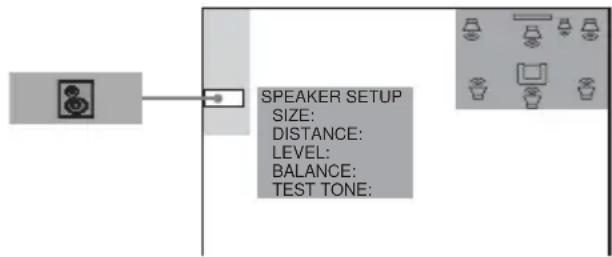
To return to the default setting when changing a setting
Select the item, then press CLEAR.
Only the selected item is returned to the default setting.
SIZE
If you use small speakers, do not connect a center, surround speakers, or surround back speaker, or move the surround speakers, set the parameters for FRONT, CENTER, SURROUND, SURROUND BACK, and SUBWOOFER.
| FRONT | LARGE: Normally select this. SMALL: Select this if small speakers are used for the front speaker. |
| CENTER | LARGE: Normally select this. SMALL: Select this if small speakers are used for the center speaker. NONE: Select this if no center speaker is used. |
| SURROUND | LARGE (BEHIND, LOW), LARGE (BEHIND, HIGH), LARGE (SIDE, LOW), LARGE (SIDE, HIGH), SMALL (BEHIND, LOW), SMALL (BEHIND, HIGH), SMALL (SIDE, LOW), SMALL (SIDE, HIGH): Specify the size, position, and height to implement the Digital Cinema Surround modes in the sound field (page 46) properly. For details, see “Specifying the surround position and height” as below. NONE: Select this if no surround speaker is used. |
| SURROUND BACK | LARGE: Normally select this. SMALL: Select this if small speakers are used for the surround back speaker. NONE: Select this if no surround back speaker is used. |
| SUBWOOFER | YES: Select this if a subwoofer is used. NONE: Select this if no subwoofer is used. |
Setting restrictions
Size setup has some restrictions. Some settings are changed automatically.
If "FRONT" is set to "SMALL"
"CENTER," "SURROUND," and "SURROUND BACK" must be set to either "SMALL" or "NONE."
If "SURROUND" is set to either "LARGE" or "SMALL"
"SURROUND BACK" must be set to the same setting or "NONE."
If "SUBWOOFER" is set to "NONE"
"FRONT" must be set to "LARGE."
Notes
- When you select an item, the sound cuts off for a moment.
- Depending on the settings, subwoofer output may be excessive.
Specifying the surround speaker position and height
If you select anything other than "NONE" in "SURROUND," specify the size, position, and height of the surround speakers.
| BEHIND (LOW): | Select this if the surround speakers are located in section B and D. |
| BEHIND (HIGH): | Select this if the surround speakers are located in section B and C. |
| SIDE (LOW): | Select this if the surround speakers are located in section A and D. |
| SIDE (HIGH): | Select this if the surround speakers are located in section A and C. |
These parameters are not available when "SURROUND" is set to "NONE."
Position diagram
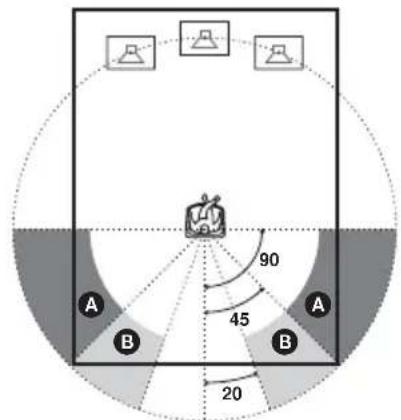
Height diagram
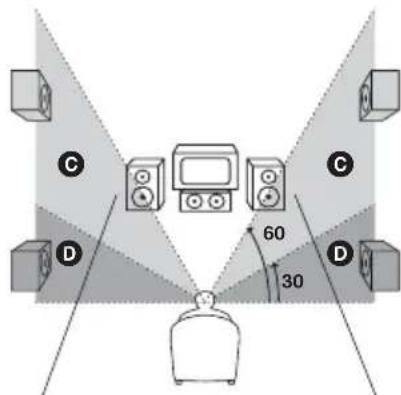
Tip
Surround speaker position and height is designed specifically for CINEMA STUDIO EX mode.
DISTANCE
The default distance setting for the speakers in relation to the listening position is shown below.
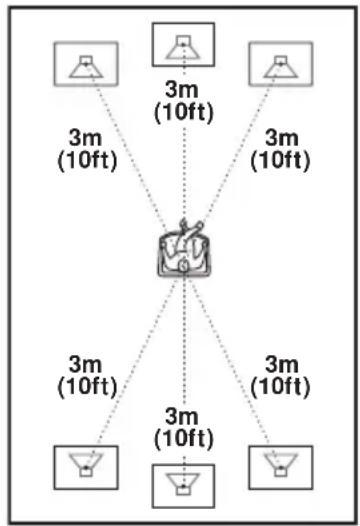
Be sure to change the value in the Setup Display when you move the speakers.
| FRONT 3 m/10 ft | Front speaker distance from the listening position can be set in 0.3 metre (1 ft) increments from 0.9 to 6.9 metres (3 to 23 ft). |
| CENTER 3 m/10 ft | Center speaker distance can be moved up to 1.5 metres (5 ft) forward closer to your listening position from the front speaker position, in 0.3 metre (1 ft) increments. |
| SURROUND 3 m/10 ft | Surround speaker distance can be moved up to 4.5 metres (15 ft) closer to your listening position from the front speaker position, in 0.3 metre (1 ft) increments. |
| SURROUND BACK 3m/10ft | Surround back speaker distance can be moved up to 4.5 metres (15 ft) closer to your listening position from the front speaker position, in 0.3 metre (1 ft) increments. |
Notes
- When you set the distance, the sound cuts off for a moment.
- If all front and surround speakers are not placed at an equal distance from your listening position, set the distance according to the closest speaker.
- Do not place the surround speakers farther away from your listening position than the front speakers.
LEVEL
You can vary the level of each speaker as follows. Be sure to set "TEST TONE" to "ON" for easy adjustment.
| CENTER 0 dB | Adjusts the level of the center speaker (-10 dB to +10 dB, 1 dB steps). |
| SURROUND LEFT 0 dB SURROUND RIGHT 0 dB | Adjusts the level of the surround speakers (-10 dB to +10 dB, 1 dB steps). |
| SURROUND BACK 0 dB | Adjusts the level of the surround back speaker (-10 dB to +10 dB, 1 dB steps). |
| SUBWOOFER 0 dB | Adjusts the level of the subwoofer (-10 dB to +10 dB, 1 dB steps). |
BALANCE
You can vary the balance of the left and right speakers as follows. Be sure to set "TEST TONE" to "ON" for easy adjustment.
| FRONT | Adjusts the balance between the front left |
| CENTER | and right speakers. The center position is shown as “---”. (You can adjust from the center, 6 steps left or right.) |
To adjust the volume of all the speakers at one time
Use the VOLUME control on the receiver, or press VOLUME + / - on the remote.
TEST TONE
The speakers will emit a test tone to adjust "LEVEL" and "BALANCE."
| OFF | The test tone is not emitted from the speakers. |
| ON | The test tone is emitted from each speaker in sequence. When “BALANCE” is selected, the test tone is emitted from both left and right speakers simultaneously. When “LEVEL” is selected, the test tone is emitted from only the speaker that you are adjusting. |
Adjusting the speaker balance and level by using the test tone
1 Press DVD SETUP in stop mode. The Setup Display appears.
2 Press or repeatedly to select "SPEAKER SETUP," then press ENTER.
3 Press or repeatedly to select "TEST TONE," then press ENTER.
4 Press or repeatedly to select "ON," then press ENTER. You will hear the test tone from each speaker in sequence.
5 From your listening position, adjust the value of "BALANCE" and "LEVEL" using / / / .
When selecting "BALANCE," the test tone is emitted from both left and right speakers simultaneously.
When selecting "LEVEL," the test tone is emitted from only the speaker which you are adjusting.
6 Press ENTER when you have finished making adjustments.
7 Press or repeatedly to select "TEST TONE," then press ENTER.
8 Press or repeatedly to select "OFF," then press ENTER.
Note
When you adjust the speaker settings, the sound cuts off for a moment.
Tip
To adjust the balance or the level without listening to the test tone, select "BALANCE" or "LEVEL" in step 3 and press ENTER. Then adjust the balance or level using / and press ENTER.
Additional Information
Troubleshooting
If you experience any of the following difficulties while using the receiver, use this troubleshooting guide to help remedy the problem before requesting repairs. Should any problem persist, consult your nearest Sony dealer.
Power
The power is not turned on.
- Check that the AC power cord is connected securely.
Picture
There is no picture.
- The video connecting cords are not connected securely.
- The video connecting cords are damaged.
- The receiver is not connected to the correct TV input jack (page 19).
- The video input on the TV is not set so that you can view pictures from the receiver.
- You have set "COMPONENT OUT" in "SCREEN SETUP" to "PROGRESSIVE" even though your TV cannot accept the signal in progressive format. In this case, press and hold and simultaneously for a few seconds. The "COMPONENT OUT" setting returns to "INTERLACE."
- Even if your TV is compatible with progressive format (480p) signals, the image may be affected when you set "COMPONENT OUT" to "PROGRESSIVE." In this case, set "COMPONENT OUT" to "INTERLACE."
Picture noise appears.
The disc is dirty or flawed.
- If the picture output from your receiver goes through your VCR to get to your TV, the copy-protection signal applied to some DVD programs could affect picture quality. If you still experience problems even when you connect your receiver directly to your TV, try connecting your receiver to your TV's S video input (page 19).
Even though you set the aspect ratio in "TV TYPE" of "SCREEN SETUP," the picture does not fill the screen.
- The aspect ratio on the disc is fixed.
The picture is black and white.
- Depending on the TV, the picture on the screen becomes black and white when you play a disc recorded in the NTSC color system.
Sound
There is no sound.
- The speaker cord is not connected securely.
- Check the speaker settings (pages 22, 70).
- The connecting cord is damaged. Replace it with a new one.
- Press MUTING on the remote if "MUTING ON" is displayed in the front panel display.
- The receiver is in pause mode or in Slow-motion Play mode. Press to return to normal play mode.
- Fast forward or fast reverse is performed. Press to return to normal play mode.
- Select "DEC. PRI." from AMP MENU and set "AUTO" when playing DTS-CD signals from external equipment using the DIGITAL IN (OPTICAL IN/COAXIAL IN) jack (page 49).
The left and right sounds are unbalanced or reversed.
- Check that the speakers and components are connected correctly and securely.
- Adjust the balance parameter in the BALANCE menu (page 72).
There is no sound from the subwoofer.
- Check the speaker connections and settings (pages 15, 70).
- Set the sound field to "AUTO FORMAT DIRECT AUTO" (page 44).
Severe hum or noise is heard.
- Check that the speakers and components are connected securely.
- Check that the connecting cords are away from a transformer or motor, and at least 3 metres (10 feet) away from your TV set or a fluorescent light.
- Move your TV away from the audio components.
- The plugs and jacks are dirty. Wipe them with a cloth slightly moistened with alcohol.
- Select "DEC. PRI." from AMP MENU and set "AUTO" when playing DTS-CD signals from external equipment using the DIGITAL IN (OPTICAL IN/COAXIAL IN) jack (page 49).
Clean the disc.
When CD (PCM signal) playback starts, sound is not output initially.
- Select "DEC. PRI." from AMP MENU and set "PCM" (page 49).
The sound loses stereo effect when you play a VIDEO CD, a CD, or an MP3.
- Set "AUDIO" to "STEREO" in the Control Menu display (page 42).
- Make sure the receiver is connected appropriately.
The surround effect is difficult to hear when you are playing a Dolby Digital or MPEG audio sound track.
Make sure the sound field function is on (page 44).
- Check the speaker connections and settings (pages 15, 70).
- Depending on the DVD, the output signal may not be the entire 5.1 channel or 6.1 channel. It may be monaural or stereo even if the sound track is recorded in Dolby Digital or MPEG audio format.
The sound comes from the center speaker only.
- Depending on the disc, the sound may come from the center speaker only.
No sound is heard from the center speaker.
- Check the speaker connections and settings.
Make sure the sound field function is on (page 44).
No sound or only a very low-level sound is heard from the surround/surround back speakers.
- Check the speaker connections and settings.
- Make sure the surround speakers are set to either "SMALL" or "LARGE."
Make sure the sound field function is on (page 44). - Select a sound field containing the word "C.ST.EX" (page 46).
- Depending on the source, the effect of the surround/surround back speakers may be less noticeable.
Operation
Radio stations cannot be tuned in.
- Check that the antennas are connected securely. Adjust the antennas or connect an external antenna if necessary.
- The signal strength of the stations is too weak (when tuning in with automatic tuning). Use manual tuning.
- No stations have been preset or the preset stations have been cleared (when tuning by scanning preset stations). Preset the stations (page 62).
- Press DISPLAY/JUMP so that the frequency appears in the display.
The remote does not function.
- The controllable source on the remote is another unit(s). Press DVD,VIDEO1,VIDEO 2, or TV/SAT on the remote (page 62).
- There are obstacles between the remote and the receiver.
- The distance between the remote and the receiver is too far.
- The remote is not pointed at the remote sensor on the receiver.
- The batteries in the remote are weak.
The disc does not play.
- There is no disc inserted.
- The disc is upside down. Insert the disc with the playback side facing down on the disc tray.
- The disc is skewed on the disc tray.
The receiver cannot play CD-ROMs, etc. (page 8). - The region code on the DVD does not match the receiver.
- Moisture has condensed inside the receiver. Remove the disc and leave the receiver turned on for about half an hour (page 3).
The MP3 audio track cannot be played.
- The DATA CD is not recorded in an MP3 format that conforms to ISO9660 Level 1/ Level 2 or Joliet.
The MP3 audio track does not have the extension ".MP3."
The data is not formatted in MP3 even though it has the extension“.MP3.”
The receiver can only play MP3 (MPEG1 Audio Layer3) audio. - Remove the disc and select "CUSTOM SETUP" from the setup items. Then select "DATA CD PRIORITY" and set to "MP3" again (page 70).
- There are more than 8 directory levels.
The title of the MP3 audio album or track is not correctly displayed.
The receiver can only display alphabetical letters and numbers. Other characters are displayed as "".
The JPEG image file cannot be played
- The DATA CD is not recorded in a JPEG format that conforms to ISO9660 Level1/Level 2 or Joliet.
- The JPEG image file does not have the extension ".JPG" or ".JPEG."
- The data is not formatted in JPEG even though it has the extension ".JPG" or "JPEG."
- Image length or width is more than 4720 dots.
- Remove the disc and select "CUSTOM SETUP" from the setup items. Then select "DATA CD PRIORITY" and set to "JPEG" again (page 70).
- There are more than 8 directory levels.
- You cannot play the Progressive JPEG files.
The title of a JPEG album or file is not correctly displayed.
The receiver can only display alphabetical letters and numbers. Other characters are displayed as
The display for entering the password does not appear for Super Audio CD, even though Custom Parental Control is set.
- Custom Parental Control is set for different layers of a Super Audio CD.
A disc does not start playing from the beginning.
- Program Play, Shuffle Play, or Repeat Play has been selected (pages 31, 32, 33). Press CLEAR to cancel these functions before playing a disc.
- Resume Play has been selected. During stop, press on the receiver or the remote and then start playback (page 25).
- The title, DVD or PBC menu automatically appears on the TV screen.
The receiver starts playing the disc automatically.
- The DVD features an auto playback function.
Playback stops automatically.
- Some discs may contain an auto pause signal. While playing such a disc, the receiver stops playback at the auto pause signal.
The receiver turns off during DVD playback.
- If approximately one hour passes with DVD playback paused or with the DVD top menu or a DVD menu displayed during DVD playback, the receiver automatically turns off.
You cannot perform some functions such as Stop, Search, Slow-motion Play, Repeat Play, Shuffle Play, or Program Play.
- Depending on the disc, you may not be able to perform some of the operations above. See the operating manual that came with the disc.
Messages do not appear on the screen in the language you want.
- In the Setup Display, select the desired language for the on-screen display in "OSD" under "LANGUAGE SETUP" (page 67).
The language for the sound track cannot be changed.
- Multilingual tracks are not recorded on the DVD being played.
- The DVD prohibits changing the language for the sound track.
The subtitle language cannot be changed.
- Multilingual subtitles are not recorded on the DVD being played.
- The DVD prohibits changing the subtitles.
The subtitle cannot be turned off.
The DVD prohibits turning off subtitles.
The angles cannot be changed.
- Multi-angles are not recorded on the DVD being played (page 51).
- The DVD prohibits changing the angles.
A disc cannot be ejected and "LOCKED" appears in the front panel display.
- Contact your Sony dealer or local authorized Sony service facility.
"PROTECT" appears in the front panel display.
- The speaker protection circuit is functioning.
- Check the speaker connections.
The receiver does not work normally.
- If the receiver's operation becomes effected, press POWER on the receiver to turn off the power, then turn on the power again.
Specifications
AUDIO POWER SPECIFICATIONS
POWER OUTPUT AND
TOTAL HARMONIC
DISTORTION: With 8 ohm loads, both
channels driven, from
20 - 20,000Hz rated
100 watts per channel
minimum RMS power,
with no more than 0.7%
total harmonic distortion
from 250 milli watts to
rated output.
Amplifier section
Stereo mode 100W + 100W (8/4 ohms,
20 - 20,000 Hz, THD 0.7
%)
Surround mode Front: 100W + 100W
Center*: 100 W
Surround*: 100 W + 100 W
Surround back*: 100 W
(8/4 ohms, 20 - 20,000 Hz,
THD 0.7%
- Depending on the sound field settings and the source, there may be no sound output.
Inputs (Analogue) ANALOG IN:
Sensitivity: 150mV
Impedance: 50 kilohms
Inputs (Digital) DIGITAL IN OPTICAL:
DIGITAL IN
COAXIAL:
Impedance: 75 ohms
Outputs (Analogue) SUB WOOFER OUT:
Voltage: 3V
Impedance: 100 ohms
PHONES:
Accepts low- and high
impedance headphones
Outputs (Digital) DIGITAL OUT
OPTICAL
Super Audio CD/DVD system
Laser
Semiconductor
(Super Audio CD/DVD:
= 650 ~nm
(CD: = 780nm
Emission duration:
continuous
Signal format system NTSC
FM tuner section
System PLL quartz-locked digital
synthesizer system
Tuning range 87.5 - 108.0 MHz (100
kHz step)
Antenna
FM wire antenna
Antenna terminals
75 ohms, unbalanced
Intermediate frequency
10.7 MHz
AM tuner section
System PLL quartz-locked digital
synthesizer system
Tuning range 530 - 1710kHz (with the
interval set at 10kHz
531 - 1710 kHz (with the
interval set at 9kHz
Antenna
Loop antenna
Intermediate frequency
450 kHz
Video section
Inputs
Video:
1 Vp-p 75 ohms
S-video:
Y:1 Vp-p 75 ohms
C: 0.286 Vp-p 75 ohms
Outputs
Video:
1 Vp-p 75 ohms
S-video:
Y:1 Vp-p 75 ohms
C: 0.286 Vp-p 75 ohms
Component:
Y: 1 Vp-p 75 ohms
P_B / C_B .. 0.7Vp - p
P_R / C_R .. 0.7Vp - p
General
Power requirements
120 V AC, 60 Hz
Power consumption
180W
1 W (at the Power Saving Mode)
Dimensions (approx.)
430× 100× 450mm (17×
4× 17^3 / 4 inches (w / h / d)
incl. projecting parts
Mass (approx.)
7.0kg (15 lb 7 oz)
Operating temperature
5^ to 35^ (41^ to 95^)
Operating humidity
5% to 90%
Supplied accessories
See page 13.
laser
Design and specifications are subject to change
without notice.
Glossary
Album
Section of a music piece or an image on a data CD containing MP3 audio tracks or JPEG files.
Chapter
Subdivision of a title on a DVD. A title is composed of several chapters.
Digital Cinema Sound (DCS)
This is the generic name of the surround sound produced by digital signal processing technology developed by Sony. Unlike previous surround sound fields mainly directed at the reproduction of music, Digital Cinema Sound is designed specifically for the enjoyment of movies.
Dolby Digital
This movie theatre sound format is more advanced than Dolby Surround Pro Logic. In this format, the surround speakers output stereo sound with an expanded frequency range, and a subwoofer channel for deep bass is independently provided. This format is also called "5.1," with the subwoofer channel designated as the 0.1 channel (since it functions only when a deep bass effect is needed). All six channels in this format are recorded separately for superior channel separation. Furthermore, since all the signals are processed digitally, less signal degradation occurs.
Dolby Digital EX
An enhanced compatible format of Dolby Digital 5.1, developed by Dolby Laboratories and Lucasfilm THX, which adds an extra surround back channel, and can be used for 6.1 (three surround speakers) channel playback, using matrix encoding.
Dolby Pro Logic II
Dolby Pro Logic II creates five full-bandwidth output channels from two-channel sources. This is done using an advanced, high-purity matrix surround decoder that extracts the spatial properties of the original recording without adding any new sounds or tonal colorations.
■ Movie mode
The Movie mode is for use with stereo television shows and all programs encoded in Dolby Surround. The result is enhanced soundfield directionality that approaches the quality of discrete 5.1-channel sound.
■ Music mode
The Music mode is for use with any stereo music recordings, and provides a wide and deep sound space.
Dolby Surround Pro Logic
As one method of decoding Dolby Surround, Dolby Surround Pro Logic produces four channels from two-channel sound. Compared with the former Dolby Surround system, Dolby Surround Pro Logic reproduces left-to-right panning more naturally and localizes sounds more precisely. To take full advantage of Dolby Surround Pro Logic, you should have one pair of surround speakers and a center speaker. The surround speakers output monaural sound.
DTS
Digital audio compression technology developed by Digital Theater Systems, Inc. This technology conforms to 5.1-channel surround. This format comprises of stereo surround channels and a discrete subwoofer channel. DTS provides the same 5.1 discrete channels of high quality digital audio. Superior channel separation is realized due to all channel data being recorded discretely and processed digitally.
DTS-ES
An enhanced compatible format of 5.1 channel, which adds an extra surround back channel. There are two formats: Discrete 6.1, which processes the surround back signal independently, and Matrix 6.1, which processes it along with the Surround (L/R) channels.
DVD
A disc that contains up to 8 hours of moving pictures even though its diameter is the same as a CD.
The data capacity of a single-layer and single-sided DVD, at 4.7 GB (Giga Byte), is 7 times that of a CD. Furthermore, the data capacity of a dual-layer and single-sided DVD is 8.5 GB, a
single-layer and double-sided DVD 9.4 GB, and a dual-layer and double-sided DVD 17 GB.
The picture data uses the MPEG 2 format, a worldwide standard of digital compression technology. The picture data is compressed to about 1/40 of its original size. DVD also uses variable rate coding technology that processes allocated data according to the status of the picture.
The audio data is recorded in Dolby Digital as well as in PCM, allowing you to enjoy more realistic audio presence.
Furthermore, various advanced functions such as the multi-angle, multilingual, and Parental Control functions are provided with the DVD.
File
Section of a picture on a data CD containing JPEG image files.
Film based software, Video based software
DVDs can be classified as Film based or Video based software. Film based DVDs contain the same images (24 frames per second) that are shown at movie theatres. Video based DVDs, such as television dramas or sit-coms, displays images at 30 frames (or 60 fields) per second.
Interlace format (Interlaced scanning)
The Interlace format is the NTSC standard method for displaying TV images at 30 frames per second. Each frame is scanned twice - alternately between the even numbered scanning lines and then odd numbered scanning lines, at 60 times per second.
Multi-angle function
Various angles of a scene, or viewpoints of the video camera are recorded on some DVDs.
Multilingual function
Several languages for the sound or subtitles in a picture are recorded on some DVDs.
Neo:6
Developed by Digital Theater Systems, Inc., applies a conventional 2-channel or Dolby Digital source signal to a high-precision, digital matrix decoder to achieve 6.1 channel surround playback.
CINEMA mode allows for more separation of
channels to enhance the 6.1 channel effect, and is best suited for movies.
MUSIC mode allows the front L and R channels to go unprocessed for optimum stereo, with the addition of the surround components adding a special quality to the sound.
Parental Control
A function of the DVD to limit playback of the disc by the age of the viewer according to the limitation level in each country. The limitation varies from disc to disc; when it is activated, playback is completely prohibited, violent scenes are skipped or replaced with other scenes and so on.
Playback Control (PBC)
Signals encoded on VIDEO CDs (Version 2.0) to control playback.
By using menu screens recorded on VIDEO CDs with PBC functions, you can enjoy playing simple interactive programs, programs with search functions, and so on.
Progressive format (sequential scanning)
In contrast to the Interlace format, the progressive format can reproduce 60 frames per second by reproducing all scanning lines (525 lines for the NTSC system). The overall picture quality increases and still images, text and horizontal lines appear sharper. This format is compatible with the 525 progressive format.
Region Code
This receiver is used to protect copyrights. A region number is allocated on each DVD system or DVD disc according to the sales region. Each region code is shown on the receiver as well as on the disc packaging. The receiver can play the discs that match its region code. The receiver can also play discs with the mark. Even when the region code is not shown on the DVD, the region limit may still be activated.
Scene
On a VIDEO CD with PBC (playback control) functions, the menu screens, moving pictures and still pictures are divided into sections called "scenes."
Super Audio CD
A Super Audio CD disc can reproduce sounds that are extremely faithful to the original sound by use of DSD (Direct Stream Digital) technology. This technology utilizes a sampling frequency of 2.8224MHz , which is 64 times that of a conventional CD, and 1-bit quantization that enables the disc to hold 4 times the amount of information that a standard PCM format CD can hold. Super Audio CDs are divided into the following types.
Super Audio CD (single layer disc)
This disc consists of a single HD layer*.
- High density signal layer for the Super Audio CD
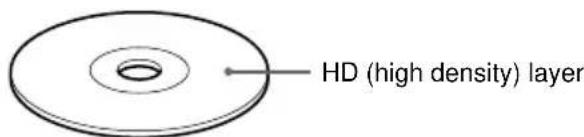
Super Audio CD (dual layer disc)
This disc consists of dual HD layers and is capable of extended play over long periods. Also, as the dual layer disc consists of dual HD layers on one side only, you do not have to turn the disc over during playback.
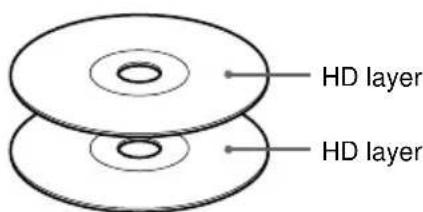
Super Audio CD + CD (Hybrid disc)
This disc consists of an HD layer and a CD layer. Also, as the dual layers are on one side only, you do not have to turn the disc over during playback. You can play this CD layer using a conventional CD player.
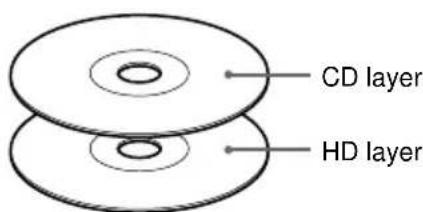
- 2 channel + Multi-channel Super Audio CD This disc consists of a 2 channel playback area and a multi-channel playback area.
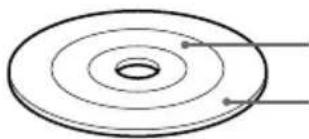
2 channel playback area Multi-channel playback area
Title
The longest section of a picture or music feature on a DVD, movie, etc., in video software, or the entire album in audio software.
Track
Section of a picture or a music piece on a Super Audio CD, CD, VIDEO CD or MP3. An album is composed of several tracks (MP3 only).
VIDEO CD
A compact disc that contains moving pictures. The picture data uses the MPEG 1 format, a worldwide standard of digital compression technology. The picture data is compressed to about 1/140 of its original size. Consequently, a 12cm VIDEO CD can contain up to 74 minutes of moving pictures.
VIDEO CDs also contain compact audio data. Sounds outside the range of human hearing are compressed while sounds we can hear are not compressed.VIDEO CDs can hold 6 times the audio information of conventional audio CDs. There are 2 versions of VIDEO CDs.
- Version 1.1: You can play only moving pictures and sounds.
- Version 2.0: You can play high-resolution still pictures and enjoy PBC functions.
This receiver conforms to both versions.
Index to Parts and Controls
For more information, refer to the pages indicated in parentheses.
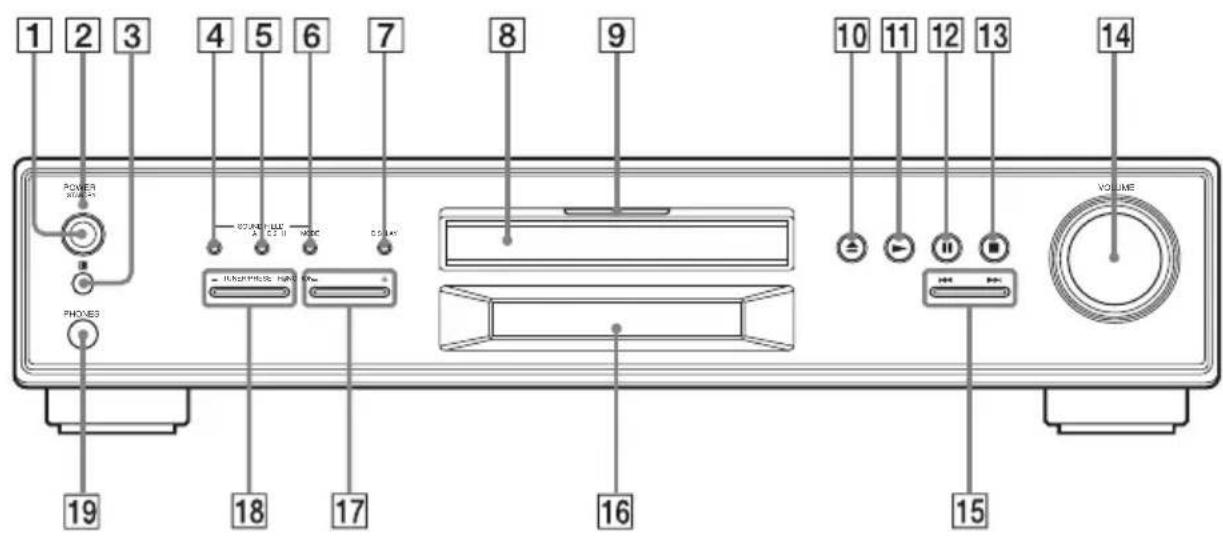
Front Panel
1Power switch (23)
2STANDBYindicator(23)
3 (mote sensor) (13)
42CH (44)
5A.F.D.(44)
MODE (46)
7DISPLAY(37,63)
Disc Tray (23)
9MULTI CHANNEL DECODING indicator (65)
10 (open/close) (23)
11 play (23)
12 (pause) (24)
13 (stop) (23)
14VOLUME control (23)
15|A/(24)
16Front Panel Display (82)
17FUNCTION-/+ (62)
18TUNER/PRESET-/+ (62)
19PHONES jack (23)
Front Panel Display
When playing back a DVD
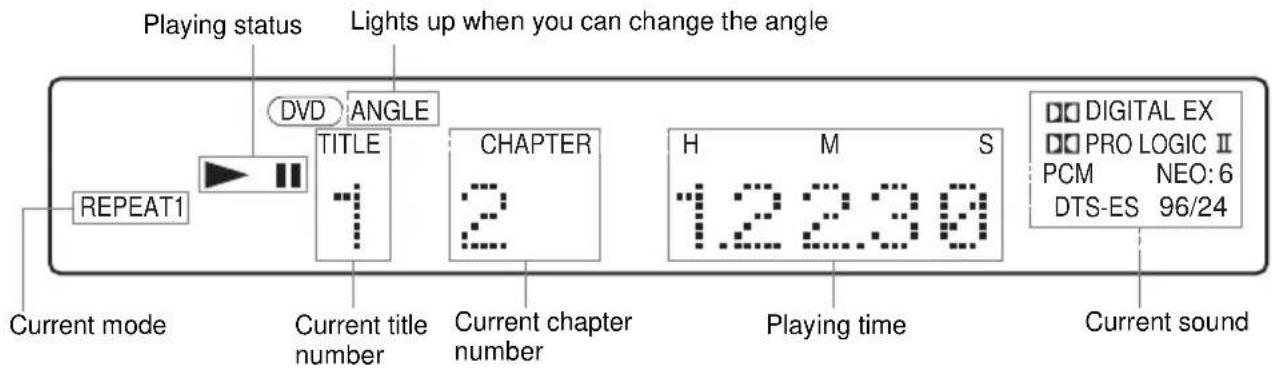
When playing back a Super Audio CD, CD, VIDEO CD, or MP3
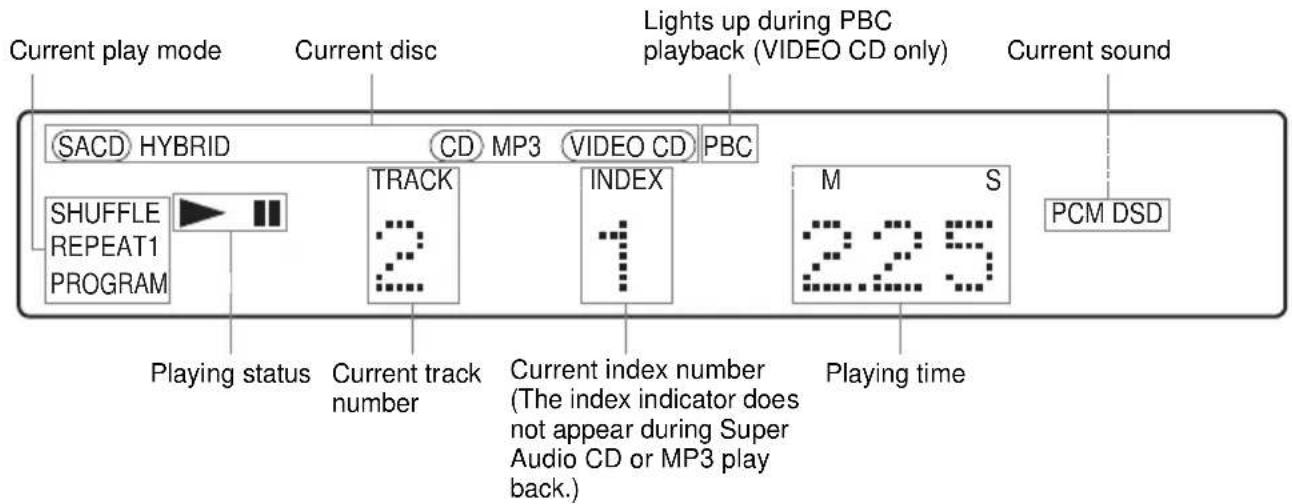
When listening to the radio
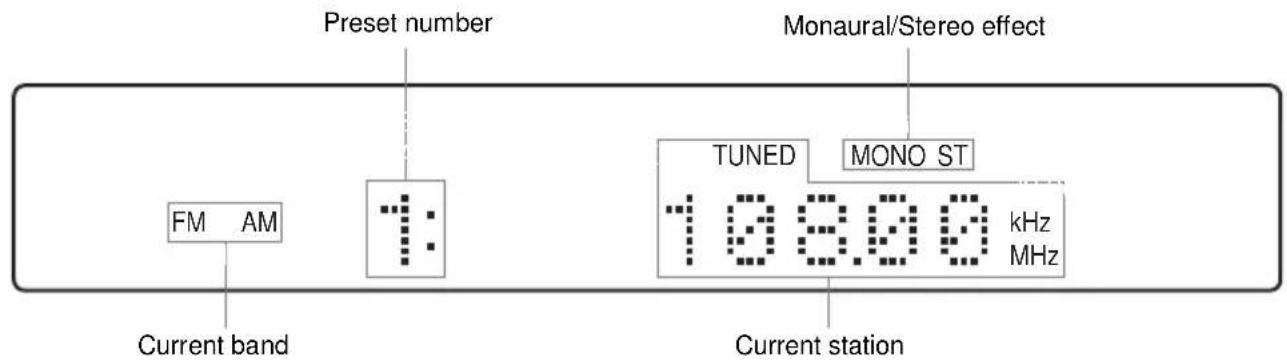
When playing back a JPEG file
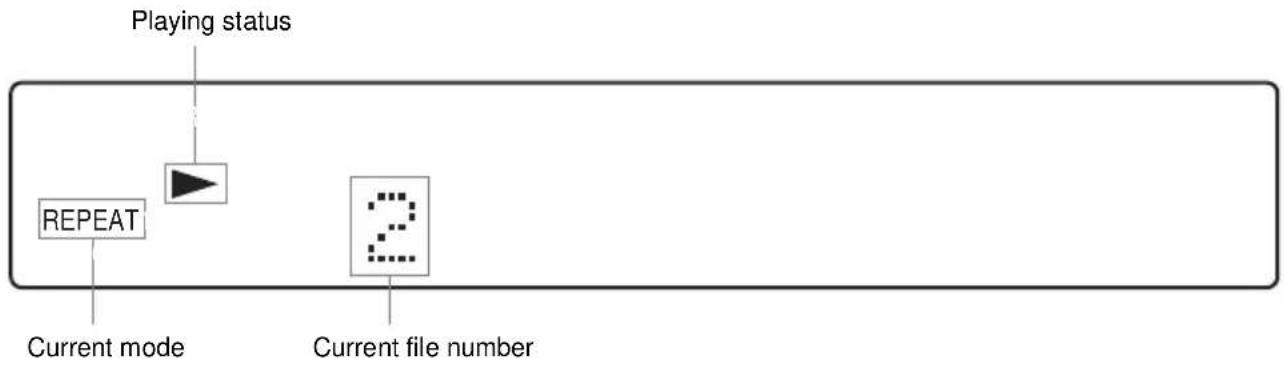
Rear Panel
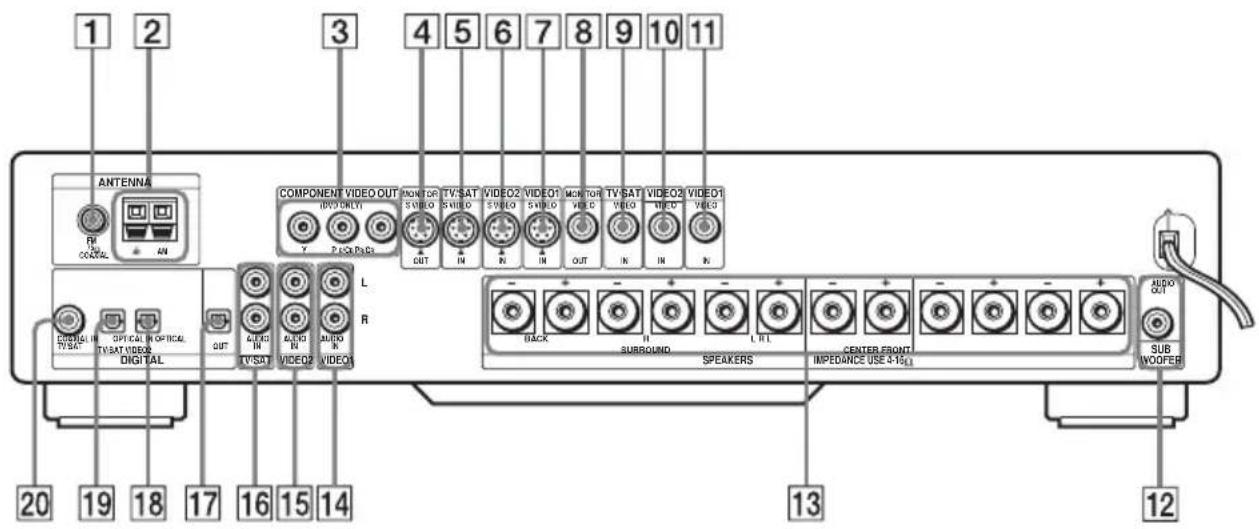
FM 75Ω COAXIAL jack (17)
2AM terminals (17)
3COMPONENTVIDEOOUTjacks(19)
4MONITOR (SVIDEO OUT) jack (19)
5TV/SAT (SVIDEO IN) jack (19)
6VIDEO2 (SVIDEO IN) jack (19)
VIDEO1 (SVIDEO IN) jack (19)
8MONITOR (VIDEO OUT) jack (19)
9TV/SAT (VIDEO IN) jack (19)
VIDEO2 (VIDEO IN) Jack (19)
VIDEO1 (VIDEO IN) jack (19)
12SUB WOOFER (ANALOG OUT) jack (14)
13 SPEAKER terminals (14)
VIDEO1 (AUDIO L/R IN) jack (19)
15VIDEO2 (AUDIO L/R IN) jack (19)
16TV/SAT (AUDIO L/R IN) jack (19)
17 DIGITAL (OPTICAL OUT) jack (20)
18 DIGITAL (OPTICAL IN VIDEO2) jack (20)
19 DIGITAL (OPTICAL IN TV/SAT) jack (20)
20 DIGITAL (COAXIAL IN TV/SAT) jack (20)
Remote
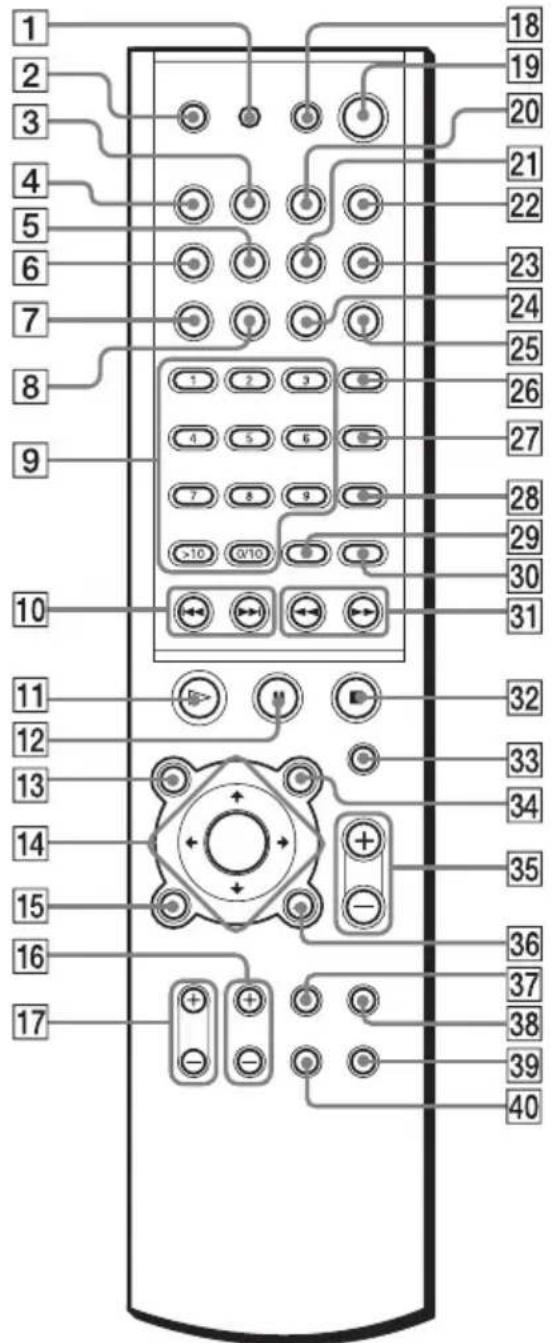
Notes
- This remote control glows in the dark. However, before glowing, the remote must be exposed to light for a while.
- When you operate a DVD player, press DVD 4, and then change the mode of the receiver to DVD.
1RM SET UP (59, 60, 61)
2 TVI/on/standby) (59)
VIDEO1 (61, 62)
4DVD (23)
5A.F.D.(44,45)
62CH (44)
7PLAY MODE (31, 32)
REPEAT (31, 33)
9Number buttons (26, 31, 35, 51, 54, 56, 59, 60, 61)
10 I/CH-/+,PRESET-/+ (24,26, 61,62,63,64)
11 (play) (23, 24, 25, 26, 30, 31, 32, 33, 34, 56)
12 III (pause) (24)
13TOP MENU/GUIDE ALBUM- (26, 28, 29, 60)
14 / / / ENTER (26, 28, 29, 31, 33, 35, 42, 45, 48, 49, 50, 51, 52, 53, 54, 56, 62, 64, 65, 66)
15 DVD DISPLAY (28, 29, 33, 35, 40, 41, 42, 51, 52, 53, 54)
16TVCH+/-(59)
TVVOL+/- (59)
18 AVI/on/standby) (59, 60, 61)
19I/O (on/standby) (23, 62)
20VIDEO2 (61, 62)
21MODE (46)
22TV/SAT (60, 62)
23BAND (62, 63)
24 DISPLAY/JUMP (37, 63)
25FM MODE (63)
26 AUDIO (42)
27 ANGLE (51)
28SUBTITLE (52)
29ENTER (59, 60, 61)
30CLEAR (31, 32, 33, 35)
31 一 / 一 > SLOW/,TUMHNG-/+ (30,34,62,63)
stop)23,24,25,26,54
33 OPEN/CLOSE (23)
34AV MENU ALBUM+ (26, 28, 29, 60)
35VOLUME + / - (24,63)
36 RETURN/EXIT (26, 28, 29, 31, 35, 56, 66)
37TV/VIDEO (59)
38 MUTING (24)
39AMP MENU (45, 48, 49, 50, 62, 64, 65)
40DVD SETUP (56, 66)
The language spellings conform to the ISO 639: 1988 (E/F) standard.
| Code Language Code Language Code Language | |||||
| 1027 | Afar | 1245 | Inupiak | 1489 | Russian |
| 1028 | Abkhazian | 1248 | Indonesian | 1491 | Kinyarwanda |
| 1032 | Afrikaans | 1253 | Icelandic | 1495 | Sanskrit |
| 1039 | Amharic | 1254 | Italian | 1498 | Sindhi |
| 1044 | Arabic | 1257 | Hebrew | 1501 | Sangho |
| 1045 | Assamese | 1261 | Japanese | 1502 | Serbo-Croatian |
| 1051 | Aymara | 1269 | Yiddish | 1503 | Singhalese |
| 1052 | Azerbaijani | 1283 | Javanese | 1505 | Slovak |
| 1053 | Bashkir | 1287 | Georgian | 1506 | Slovenian |
| 1057 | Byelorussian | 1297 | Kazakh | 1507 | Samoan |
| 1059 | Bulgarian | 1298 | Greenlandic | 1508 | Shona |
| 1060 | Bihari | 1299 | Cambodian | 1509 | Somali |
| 1061 | Bislama | 1300 | Kannada | 1511 | Albanian |
| 1066 | Bengali; Bangladeshi | 1301 | Korean | 1512 | Serbian |
| 1067 | Tibetan | 1305 | Kashmiri | 1513 | Siswati |
| 1070 | Breton | 1307 | Kurdish | 1514 | Sesotho |
| 1079 | Catalan | 1311 | Kirghiz | 1515 | Sundanese |
| 1093 | Corsican | 1313 | Latin | 1516 | Swedish |
| 1097 | Czech | 1326 | Lingala | 1517 | Swahili |
| 1103 | Welsh | 1327 | Laothian | 1521 | Tamil |
| 1105 | Danish | 1332 | Lithuanian | 1525 | Telugu |
| 1109 | German | 1334 | Latvian; Lettish | 1527 | Tajik |
| 1130 | Bhutani | 1345 | Malagasy | 1528 | Thai |
| 1142 | Greek | 1347 | Maori | 1529 | Tigrinya |
| 1144 | English | 1349 | Macedonian | 1531 | Turkmen |
| 1145 | Esperanto | 1350 | Malayalam | 1532 | Tagalog |
| 1149 | Spanish | 1352 | Mongolian | 1534 | Setswana |
| 1150 | Estonian | 1353 | Moldavian | 1535 | Tonga |
| 1151 | Basque | 1356 | Marathi | 1538 | Turkish |
| 1157 | Persian | 1357 | Malay | 1539 | Tsonga |
| 1165 | Finnish | 1358 | Maltese | 1540 | Tatar |
| 1166 | Fiji | 1363 | Burmese | 1543 | Twi |
| 1171 | Faroeese | 1365 | Nauru | 1557 | Ukrainian |
| 1174 | French | 1369 | Nepali | 1564 | Urdu |
| 1181 | Frisian | 1376 | Dutch | 1572 | Uzbek |
| 1183 | Irish | 1379 | Norwegian | 1581 | Vietnamese |
| 1186 | Scotts Gaelic | 1393 | Occitan | 1587 Volap k ü | |
| 1194 | Galician | 1403 | (Afan) Oromo | 1613 | Wolof |
| 1196 | Guarani | 1408 | Oriya | 1632 | Xhosa |
| 1203 | Gujarati | 1417 | Punjabi | 1665 | Yoruba |
| 1209 | Hausa | 1428 | Polish | 1684 | Chinese |
| 1217 | Hindi | 1435 | Pashto; Pushtd | 697 | Zulu |
| 1226 | Croatian | 1436 | Portuguese | 1703 | Not specified |
| 1229 | Hungarian | 1463 | Quechua | ||
| 1233 | Armenian | 1481 | Rhaeto-Romance | ||
| 1235 | Interlingua | 1482 | Kirundi | ||
| 1239 | Interlingue | 1483 | Romanian | ||
DVD Setup Menu List
You can set the following items with the DVD Setup menu.
The default settings are underlined.
LANGUAGE SETUP
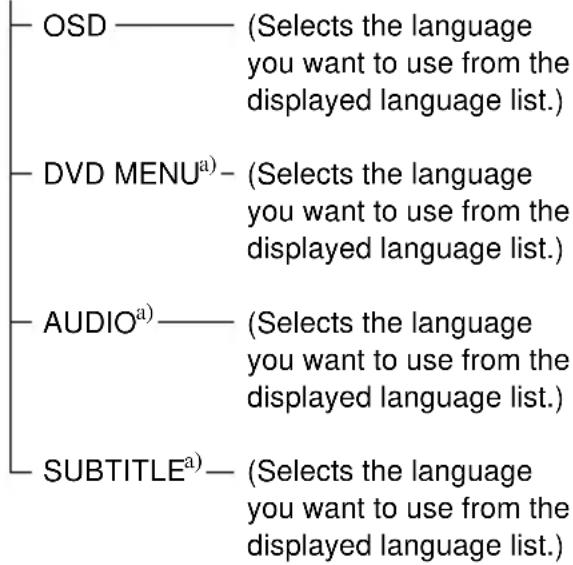
SCREEN SETUP
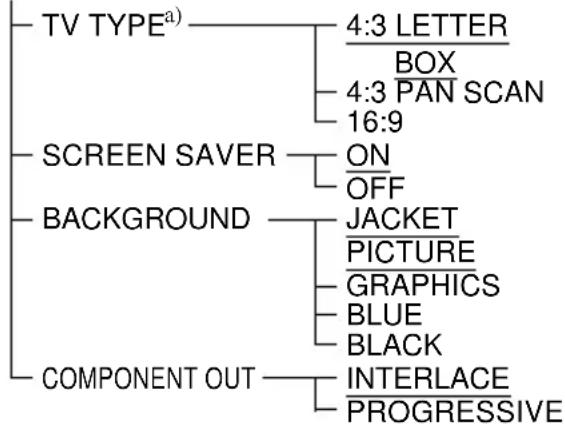
CUSTOM SETUP
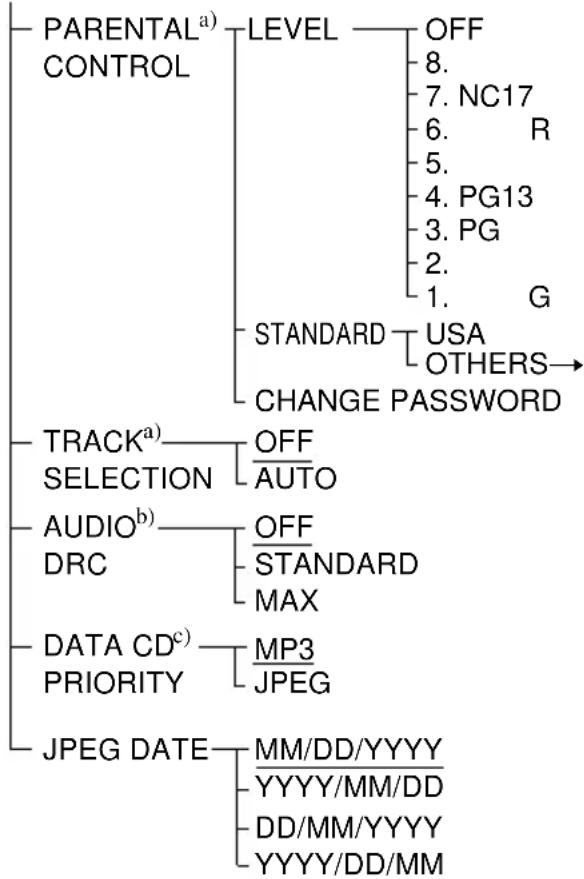
a) DVD only
b) Dolby Digital sources only
c) MP3, JPEG only
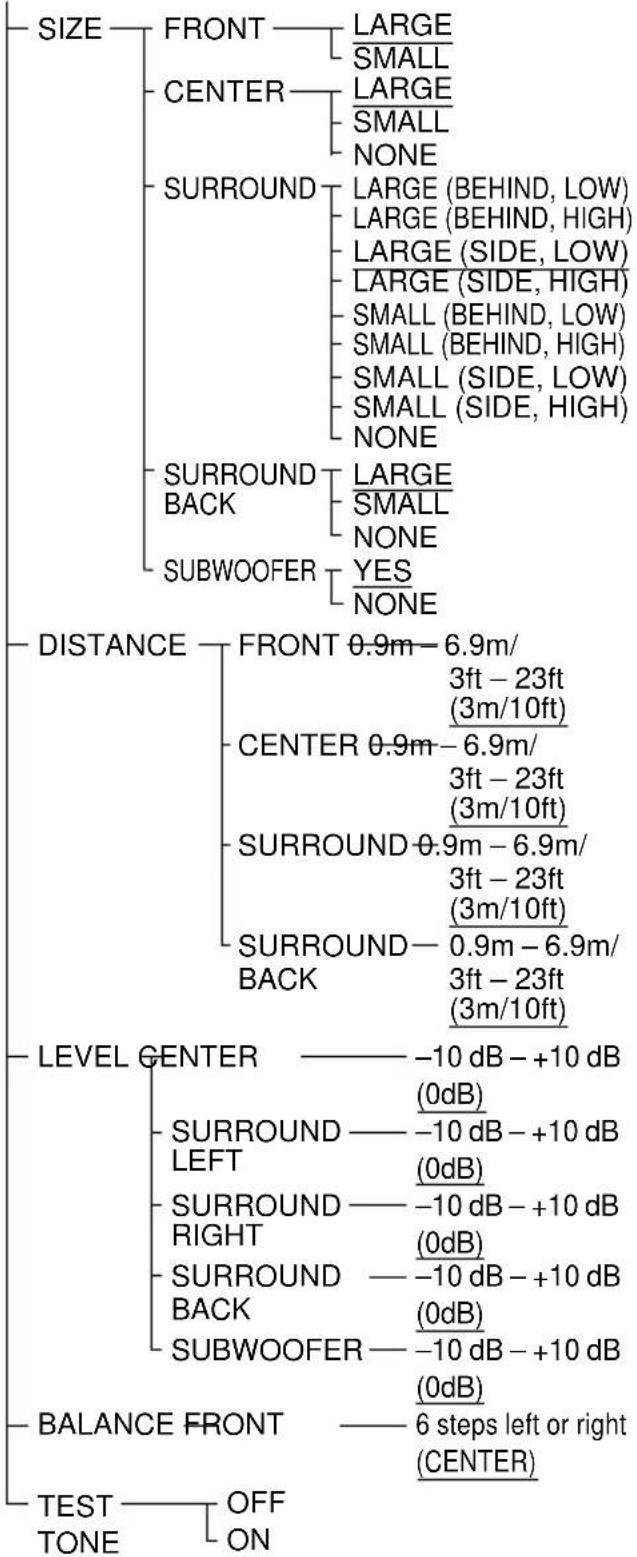
SPEAKER SETUP
RESET
Index
Numerics
16:9 68
4:3 LETTER BOX 68
4:3 PAN SCAN 68
A
ALBUM 28,35
Album 7, 78
ANGLE 51
Antenna Hookups 17
AUDIO 42,67
AUDIO DRC 70
B
BACKGROUND 68
BALANCE 72
Batteries 13
C
CHAPTER 36
Chapter 7, 78
COMPONENT OUT 69
Continuous play
CD/VIDEO CD/Super Audio
CD/DVD/MP3 23
Control Menu 11
CUSTOM PARENTAL
CONTROL 54
CUSTOM SETUP 69
D
DATA CD PRIORITY 70
Decode Priority 49
Digital Cinema Sound 78
DIMMER 65
DISPLAY 37
DISTANCE 72
Dolby Digital 78
Dolby Digital EX 78
Dolby Surround Pro Logic 78
DTS 78
DTS-ES 78
DVD 78
DVD MENU 26, 67
F
Fast forward 34
Fast reverse 34
File 7, 79
FM MODE 63
Front Panel 81
Front panel display 82
H
Handling discs 9
1
INDEX 36
Index 7
J
JPEG 29
JPEG DATE 70
L
LANGUAGE SETUP 67
LEVEL 72
Listening to the Radio 63
M
MP3 27
Multi-angle function 51, 79
Multilingual function 42, 79
MUTING 24
N
Neo:6 79
0
On-screen display
Control Menu display 11
OSD 67
P
PARENTAL CONTROL 56, 69
79
PBCPlayback26,79
PICTURE MODE 53
PLAY MODE 31, 32
Power Saving 24
Program Play 31
R
Radio 63
Rear Panel 83
Region Code 8, 79
Remote 59, 84
REPEAT 33
RESET 67
Resume Play 25
s
SVIDEO 19
Scan 34
SCENE 11
Scene 7, 79
SCREENSAVER68
SCREEN SETUP 68
Setup Display 66
SHUFFLE 32
Shuffle Play 32
SIZE 70
Slide Show 30
Slow-motion 34
Sound Field 44
Speaker Impedance 50
SPEAKER SETUP 70
Speaker System Hookup 14
SUBTITLE 67
Super Audio CD 80
Surround Back Decoding Mode
48, 49
T
TEST TONE 72
TIME SEARCH 35
TITLE 35
Title 7, 80
TRACK 35
Track 7, 80
TRACK SELECTION 69
Troubleshooting 74
TV and Video Component
Hookups 19
TV TYPE 68
U
Usable discs 7
V
VIDEO CD 80
AVERTISSEMENT
Lecture repeteee. 33 (Lecture repeteee)
La lecture programme commence.
A propos de DCS (Digital Cinema Sound)
C.ST.EX A (Cinema Studio EX A)
C.ST.EX C (Cinema Studio EX C)
HEADPHONE THEATER HP.THEATER
HEADPHONE 2CH HP.[2CH]
HP. THEATER (HEADPHONE THEATER)
| MM/JJ/AAAA |
| AAAA/MM/JJ |
| JJ/MM/AAAA |
| AAAA/JJ/MM |
AAAA:Annec
MM:Mois
JJ:Jour
Surround arriere*: 100 W
(8/4 ohms, 20 - 20 000 Hz,
THD 0,7%
Poids (approx.) 7,0 kg (15 lb 7 oz)
Partie tuner FM
Mode film (Movie mode)
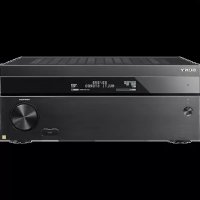
- Super Audio CD/DVD RECEIVER
- Owner's Record
- WARNING
- CAUTION
- Note to CATV system installer:
- For the customers in Canada CAUTION
- Precautions
- Safety
- Installing
- Welcome!
- On safety
- On placement
- On operation
- On adjusting volume
- On cleaning
- On cleaning discs
- On your TV's color
- IMPORTANT NOTICE
- On moving the receiver
- Table of Contents
- Getting Started
- Playing Discs
- Sound Adjustments
- Using Various Additional Functions
- Other Operations
- Settings and Adjustments
- Additional Information
- About this Manual
- This receiver Can Play the Following Discs
- Terms for discs
- - Title
- Chapter
- - Album
- Track
- - Index (Super Audio CD, CD) / Video Index (VIDEO CD)
- - Scene
- - File
- Note on PBC (Playback Control) (VIDEO CDs)
- About Multi Session CD
- Region code
- Examples of discs that the receiver cannot play
- Notes about CD-R/CD-RW/DVD-R/DVD-RW (Video mode)/DVD+R/DVD+RW (Video mode)
- Music discs encoded with copyright protection technologies
- Note on playback operations of DVDs andVIDEO CDs
- Copyrights
- Notes about Discs
- On handling discs
- Guide to the Control Menu Display
- Tips
- Unpacking
- Inserting Batteries into the Remote
- Notes
- Step 1: Speaker System Hookup
- Terminals for connecting the speakers
- Note for connecting the speaker cords to the receiver
- To avoid short-circuiting the speakers
- Examples of poor speaker cord connection
- Step 2: Antenna Hookups
- Terminals for connecting the antennas
- Connect the To the
- If you have poor FM reception
- Note
- Required cords
- S Video cord for connecting a TV monitor
- Audio/Video cords (not supplied)
- Jacks for connecting video components
- Connect a To the
- Tip
- If you connect a digital satellite receiver with an OPTICAL OUT jack or a COAXIAL OUT jack
- If you connect a digital satellite receiver without an OPTICAL OUT jack
- To listen to the TV or game machine (ex: PlayStation 2) sound by using the receiver
- Step 4: Connecting the AC Power Cord (mains lead)
- Speaker Setup
- When color irregularity occurs on the TV
- Specifying the speaker parameters
- DVD VIDEO SA-CD MP3 JPEG CD
- Press
- After following Step 5
- To remove the disc
- To turn on the receiver
- To turn off the receiver
- Saving power in standby mode
- To cancel standby mode
- To Press
- ResumingPlayback from the Point Where You Stopped the Disc
- (Resume Play)
- While playing a disc, press to stop playback.
- Press ▷.
- Using the DVD's Menu
- DVD
- Press TOP MENU/GUIDE or AV MENU.
- Press ← / / / → or the number buttons to select the item you want to play or change.
- Press ENTER.
- Playing VIDEO CDs with PBC Functions (Ver. 2.0)
- (PBCPlayback)
- VIDEO CD
- Start playing a VIDEO CD with PBC functions.
- Select the item number you want by pressing / or the number buttons.
- Follow the instructions in the menu for interactive operations.
- To go back to the menu
- Playing an MP3 Audio Track
- MP3
- Load a data disc recorded in MP3 into the receiver.
- Selecting an album and track
- Press DVD DISPLAY.
- Press / to select (ALBUM) then press ENTER or → .
- Select an album you want to play using / and press ENTER.
- Select (TRACK) using / and press ENTER.
- Select a track using / and press ENTER.
- To return to the previous display
- To turn off the Control Menu
- Playing JPEG Image Files
- JPEG
- Selecting an album and file
- Select a file using / and press ENTER.
- Enjoying Slide Show on a JPEG data disc
- Press▶ while displaying a JPEG image.
- Press when you want to exit Slide Show.
- To change the interval time of Slide Show
- To rotate the current image
- Rotate the current image using ← / →
- Creating Your Own Program
- (Program Play)
- Press →
- Select the track you want to program.
- Press / or the number buttons to select "7" then press ENTER.
- To program other tracks, repeat Steps 2 to 4.
- Press to start Program Play.
- Playing in Random Order
- (Shuffle Play)
- To return to normal play
- Setting the shuffle mode in the Control Menu
- Playing Repeatedly
- (Repeat Play)
- ■When playing a DVD
- ■When playing a VIDEO CD/Super Audio CD/CD/MP3, and when Program Play is set to OFF
- ■When playing a JPEG
- ■When Program Play is set to ON
- To cancel Repeat Play
- Searching for a Particular Point on a Disc
- (Scan, Slow-motion Play)
- Locating a point quickly by playing a disc in fast forward or fast reverse (Scan)
- To change the scan speed (DVD/VIDEO CD only)
- Watching frame by frame (Slow-motion play) (DVD/VIDEO CD only)
- To change the speed of Slow-motion play
- Searching for a Title/ Chapter/Track/Index/ Album/File
- Searching for a title/track/ album/file
- Press / to select the desired track, then press ENTER.
- Searching for a chapter/index
- Press / to select the search method.
- Press / or the number buttons to select the chapter or index number you want to search.
- Press ENTER.
- To search for a particular point using the time code (TIME SEARCH)
- Viewing Disc Information
- Viewing the Playing Time and Remaining Time in the Front Panel Display
- Press DISPLAY/JUMP.
- When playing a DVD When playing a VIDEO CD
- (without PBC functions), Super Audio CD or CD
- When playing an MP3
- When playing a JPEG
- Checking the Playing Time and Remaining Time in the Control Menu
- Checking the date information (JPEG only)
- Press DVD DISPLAY during playback.
- Changing the Sound
- Press / to select the desired audio signal.
- When playing a DVD
- ■ When playing a VIDEO CD, CD, or MP3
- ■ When playing a Super Audio CD
- Press ENTER.
- Displaying the audio information of the disc (DVD only)
- The display examples are as follows:
- Enjoying Surround Sound
- Automatic decoding of the audio input signal (AUTO FORMAT DIRECT AUTO)
- Sound field Display
- Using only the front speaker (2 CHANNEL STEREO)
- Press 2CH on the remote.
- Selecting a sound field (A.F.D.button)
- PROLOGIC
- ■PRO LOGIC II MOVIE
- ■PRO LOGIC II MUSIC
- Neo:6 Cinema
- Neo:6 Music
- Advanced setting
- Press AMP MENU.
- Press / repeatedly until "dts 96/24" appears in the front panel display, then press ENTER.
- Press / to select "96/24 AUTO" then press ENTER or AMP MENU.
- Selecting a sound field (MODE button)
- About DCS (Digital Cinema Sound)
- C.ST.EX A (Cinema Studio EX A)
- C.ST.EX B (Cinema Studio EX B)
- C.ST.EX C (Cinema Studio EX C)
- V.M.DIM (VIRTUAL MULTI DIMENSION) *
- About Cinema Studio EX
- FOR MUSIC
- HALL
- JAZZCLUB
- CONCERT (Live Concert)
- When using headphones
- THEATER (HEADPHONE THEATER)
- HP.[2CH] (HEADPHONE 2CH)
- To turn the surround effect off
- Selecting the Surround Back Decoding Mode
- Press / repeatedly until "SurrB DEC." appears in the front panel display, then press ENTER.
- Press / to select the surround back mode you want according to the input stream, then press ENTER or AMP MENU.
- When selecting "SB AUTO"
- When selecting "SB MATRIX"
- When selecting "SB OFF"
- Selecting the Decode Priority
- Press / repeatedly until "DEC. PRI." appears in the front panel display, then press ENTER.
- Press / to select the decode priority you want, then press ENTER or AMP MENU.
- When selecting "PCM"
- When selecting "AUTO"
- Changing the Speaker Impedance Value
- Press / repeatedly until "SP. IMP. () " appears in the front panel display, then press ENTER.
- Press / to select "SP 4 / 6 or "SP 8 in accordance with impedance, then press ENTER or AMP MENU.
- Speaker impedance
- Changing the Angles
- Press DVD DISPLAY during playback.
- Press / to select (ANGLE).
- Select the angle number using the number buttons or / , then press ENTER.
- Displaying Subtitles
- Press / to select (SUBTITLE), then press ENTER.
- Press / to select the language.
- To cancel the SUBTITLE setting
- Adjusting the Playback Picture
- (PICTURE MODE)
- In stop mode, press DVD DISPLAY.
- Press / to select (PICTURE MODE), then press ENTER.
- Select the PICTURE MODE you want using / , then press ENTER.
- Locking Discs
- (CUSTOM PARENTAL CONTROL, PARENTAL CONTROL)
- Custom Parental Control
- Playing the disc for which Custom Parental Control is set
- Limiting playback for children (Parental Control) (DVD only)
- Press / to select "STANDARD," then press ENTER.
- Press / to select a geographic area as the playback limitation level, then press ENTER.
- Press / to select "LEVEL," then press ENTER.
- Select the level you want using / , then press ENTER.
- If you make a mistake
- To turn off the Setup Display
- To turn off the Parental Control function and play the DVD after entering your password
- To change the password
- Playing the disc for which Parental Control is set
- Area Code
- Controlling Other Units with the Supplied Remote
- Press RM SET UP and AV I/O simultaneously.
- Press TV I/O.
- Enter your TV manufacturer code (see the table) using the number buttons.
- Code numbers of controllable TVs
- Controlling the TV
- By pressing You can
- Controlling satellite receivers with the remote
- Press RM SET UP and AV I/ simultaneously.
- Press TV/SAT.
- Enter your Satellite receiver's manufacturer code (see the table) using the number buttons.
- Code numbers of controllable satellite receivers
- Manufacturer Code number
- Controlling the satellite receiver
- Press TV/SAT.
- Controlling the VCR with the remote
- Code numbers of controllable VCR
- Controlling the VCR
- Using Other Units
- Enjoying the Radio
- Presetting Radio Stations
- Press PRESET + or - to select the preset number you want.
- Press ENTER.
- Repeat 1 to 7 to store other stations.
- To change the preset number
- To change the AM tuning interval
- Listening to the Radio
- Press BAND repeatedly until FM or AM appears in the front panel display.
- Press PRESET + or - repeatedly to select the preset station you want.
- Adjust the volume by pressing VOLUME + / -
- To turn off the radio
- To listen to non-preset radio stations
- To check the frequency
- Naming Preset Stations
- Changing the Brightness of the Front Panel
- DIMMER OFF
- DIMMER1
- ■DIMMER2
- DISP OFF
- Using the Setup Display
- How to use the Setup Display
- In stop mode, press DVD SETUP.
- Select an item using / , then press ENTER or → .
- Select a setting using / , then press ENTER.
- Setting the Display or Sound Track Language
- (Language SETUP)
- OSD (On-Screen Display)
- DVD MENU (DVD only)
- ■ AUDIO (DVD only)
- SUBTITLE (DVD only)
- Settings for the Display
- (SCREEN SETUP)
- TV TYPE (DVD only)
- SCREENSAVER
- BACKGROUND
- COMPONENT OUT
- Custom Settings
- (CUSTOM SETUP)
- PARENTAL CONTROL → (DVD only)
- ■ TRACK SELECTION (DVD only)
- ■ AUDIO DRC (AUDIO DYNAMIC RANGE COMPRESSION)
- DATA CD PRIORITY (MP3, JPEG only)
- JPEG DATE
- Settings for the Speakers
- (SPEAKER SETUP)
- To return to the default setting when changing a setting
- SIZE
- Setting restrictions
- If "FRONT" is set to "SMALL"
- If "SURROUND" is set to either "LARGE" or "SMALL"
- If "SUBWOOFER" is set to "NONE"
- Specifying the surround speaker position and height
- DISTANCE
- LEVEL
- BALANCE
- To adjust the volume of all the speakers at one time
- TEST TONE
- Adjusting the speaker balance and level by using the test tone
- Troubleshooting
- Power
- The power is not turned on.
- Picture
- There is no picture.
- Picture noise appears.
- Even though you set the aspect ratio in "TV TYPE" of "SCREEN SETUP," the picture does not fill the screen.
- The picture is black and white.
- Sound
- There is no sound.
- The left and right sounds are unbalanced or reversed.
- There is no sound from the subwoofer.
- Severe hum or noise is heard.
- When CD (PCM signal) playback starts, sound is not output initially.
- The sound loses stereo effect when you play a VIDEO CD, a CD, or an MP3.
- The surround effect is difficult to hear when you are playing a Dolby Digital or MPEG audio sound track.
- The sound comes from the center speaker only.
- No sound is heard from the center speaker.
- No sound or only a very low-level sound is heard from the surround/surround back speakers.
- Operation
- Radio stations cannot be tuned in.
- The remote does not function.
- The disc does not play.
- The MP3 audio track cannot be played.
- The title of the MP3 audio album or track is not correctly displayed.
- The JPEG image file cannot be played
- The title of a JPEG album or file is not correctly displayed.
- The display for entering the password does not appear for Super Audio CD, even though Custom Parental Control is set.
- A disc does not start playing from the beginning.
- The receiver starts playing the disc automatically.
- Playback stops automatically.
- The receiver turns off during DVD playback.
- You cannot perform some functions such as Stop, Search, Slow-motion Play, Repeat Play, Shuffle Play, or Program Play.
- Messages do not appear on the screen in the language you want.
- The language for the sound track cannot be changed.
- The subtitle language cannot be changed.
- The subtitle cannot be turned off.
- The angles cannot be changed.
- A disc cannot be ejected and "LOCKED" appears in the front panel display.
- "PROTECT" appears in the front panel display.
- The receiver does not work normally.
- Specifications
- AUDIO POWER SPECIFICATIONS
- Amplifier section
- Super Audio CD/DVD system
- FM tuner section
- AM tuner section
- Video section
- General
- Glossary
- Album
- Digital Cinema Sound (DCS)
- Dolby Digital
- Dolby Digital EX
- Dolby Pro Logic II
- ■ Movie mode
- ■ Music mode
- Dolby Surround Pro Logic
- DTS
- DTS-ES
- File
- Film based software, Video based software
- Interlace format (Interlaced scanning)
- Multi-angle function
- Multilingual function
- Neo:6
- Parental Control
- Playback Control (PBC)
- Progressive format (sequential scanning)
- Scene
- Super Audio CD
- Title
- Index to Parts and Controls
- Front Panel Display
- When playing back a DVD
- When playing back a Super Audio CD, CD, VIDEO CD, or MP3
- When listening to the radio
- When playing back a JPEG file
- Rear Panel
- Remote
- DVD Setup Menu List
- LANGUAGE SETUP
- SCREEN SETUP
- CUSTOM SETUP
- Index
- Numerics
- A
- B
- C
- D
- F
- H
- 1
- J
- L
- M
- N
- 0
- P
- R
- s
- T
- U
- V
- AVERTISSEMENT
- A propos de DCS (Digital Cinema Sound)
- Partie tuner FM
- Mode film (Movie mode)
Brand : SONY
Model : AVDS500ES
Category : AV receiver