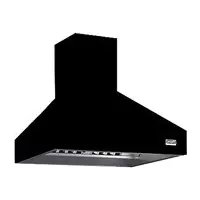
VCWH53648BK - Basket VIKING - Free user manual and instructions
Find the device manual for free VCWH53648BK VIKING in PDF.



| Product Type | Range Hood |
| Brand | Viking |
| Model | VCWH53648BK |
| Dimensions (W x D x H) | 71.8 x 62.9 x 18.2 cm |
| Approximate Weight | 10 kg |
| Power Supply | 120 V, 60 Hz, 5.7 A |
| Maximum Airflow | 900 CFM (cubic feet per minute) |
| Duct Diameter | 25.4 cm (10 in) |
| Installation Type | On roof or on exterior wall |
| Material | Metal (steel) |
| Motor | Permanently lubricated, maintenance-free |
| Main Functions | Ventilation and air extraction |
| Sound Level | Not specified |
| Controls | Not specified (likely switch) |
| Lighting | Not specified |
| Maintenance and Cleaning | Clean with vacuum; do not bend the wheel |
| Safety | Grounding mandatory; cut power before maintenance |
| Spare parts and repairability | Contact the manufacturer or distributor for parts |
| Warranty | Not specified |
Frequently Asked Questions - VCWH53648BK VIKING
User questions about VCWH53648BK VIKING
0 question about this device. Answer the ones you know or ask your own.
Ask a new question about this device
Download the instructions for your Basket in PDF format for free! Find your manual VCWH53648BK - VIKING and take your electronic device back in hand. On this page are published all the documents necessary for the use of your device. VCWH53648BK by VIKING.
USER MANUAL VCWH53648BK VIKING
FOR USE WITH VCWH, VICH, DBCV, DICV, DCWH, DCWL, DCWN, DTWS AND
DCIH : -/ -2 + □RANGE□00' HOODS. 30" TO 42" WIDE, 9" TO 18" HIGH.
natural_image
Simple line drawing of a two-layered book or document (no text or symbols)READ AND SAVE THESE INSTRUCTIONS
WARNING
TO REDUCE THE RISK OF FIRE, ELECTRIC SHOCK, OR INJURY TO PERSONS, OBSERVE THE FOLLOWING:
- Use this unit only in the manner intended by the manufacturer. If you have questions, contact the manufacturer or your distributor.
- Before servicing or cleaning unit, switch power off at service panel and lock the service disconnecting means to prevent power from being switched on accidentally. When the service disconnecting means cannot be locked, securely fasten a prominent warning device, such as a tag, to the service panel.
- Installation work and electrical wiring must be done by a qualified person(s) in accordance with all applicable codes and standards, including fire-rated construction codes and standards.
- Sufficient air is needed for proper combustion and exhausting of gases through the flue (chimney) of fuel burning equipment to prevent backdrafting. Follow the heating equipment manufacturer's guideline and safety standards such as those published by the National Fire Protection Association (NFPA), and the American Society for Heating, Refrigeration and Air Conditioning Engineers (ASHRAE), and the local code authorities.
WARNING
- When cutting or drilling into wall, or ceiling, do not damage electrical wiring or other hidden utilities.
- Ducted fans must always be vented to the outdoors.
- To reduce risk of fire, use only metal ductwork.
- This unit must be grounded.
CAUTION
- For general ventilating use only. Do not use to exhaust hazardous or explosive material and vapors.
- To avoid motor bearing damage and noisy and/or unbalanced impellers, keep drywall spray, construction dust, etc. off power unit.
- Please read specification label on product for further information and requirements.
- Electrical circuit, including speed control, (if used), must be rated 6 AMPS minimum.
Blower Dimensions
28.25 × 24.75 × 7.17
SPECIFICATIONS
| MODEL | VOLTS | A | MPS | CFM | DUCT SIZE |
| DEV900 | 120 | 5.7 | 900 | 10" DIA. |
PLAN THE INSTALLATION
ALL INSTALLATIONS
- Locate the ventilator so the length of the duct run and number of elbows needed are kept to a minimum.
- Where possible, ventilator should be centered between wall studs or roof rafters.
- Avoid pipes, wires, or other ductwork that may be running through the wall.
PREPARE THE INSTALLATION LOCATION
ROOF INSTALLATIONS
- Locate the ventilator on the rear slope of the roof. Place it in a location to minimize duct run. The location should be free of obstacles (T.V. leads, electrical lines, etc.). Bear in mind, if the ventilator top is level with the roof peak, it will not be seen from the street. Keep this approximate location in mind as you work from within the attic.
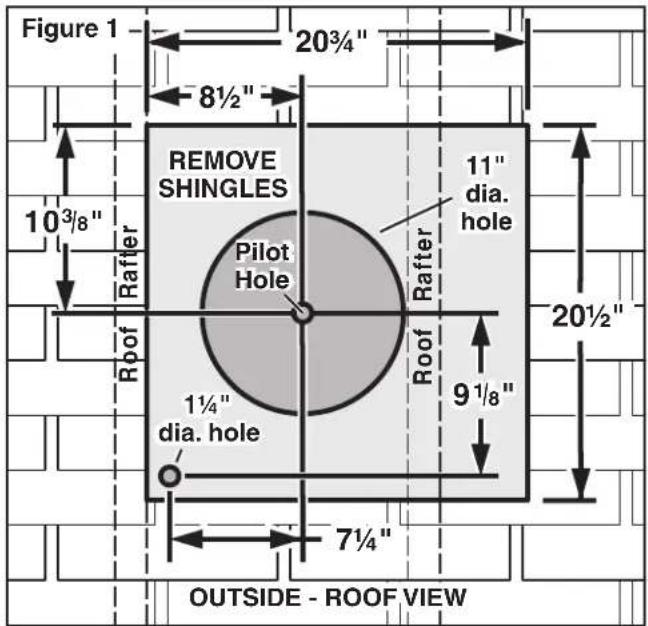
From inside the attic space:
- Drill a PILOT HOLE up through the roof, 8½" from the inside edge of a ROOF RAFTER.
From outside - on the roof:
3. Measure and mark the 20^3/4 " x 20^1/2 " rectangle. Cut and remove only the shingles inside this rectangle.
4. Measure and mark the 11" DIAMETER HOLE and the 1¼" DIAMETER HOLE. Cut these holes all the way through the roof.
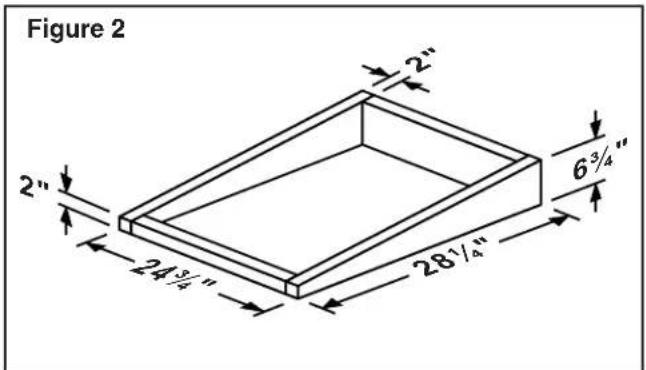
- For flat roof installations, build a curb that will mount the ventilator at a minimum pitch of 2/12. See Figure 2. Discharge end of the ventilator should be pointed away from prevailing winds.
PREPARE THE INSTALLATION LOCATION
WALL INSTALLATIONS
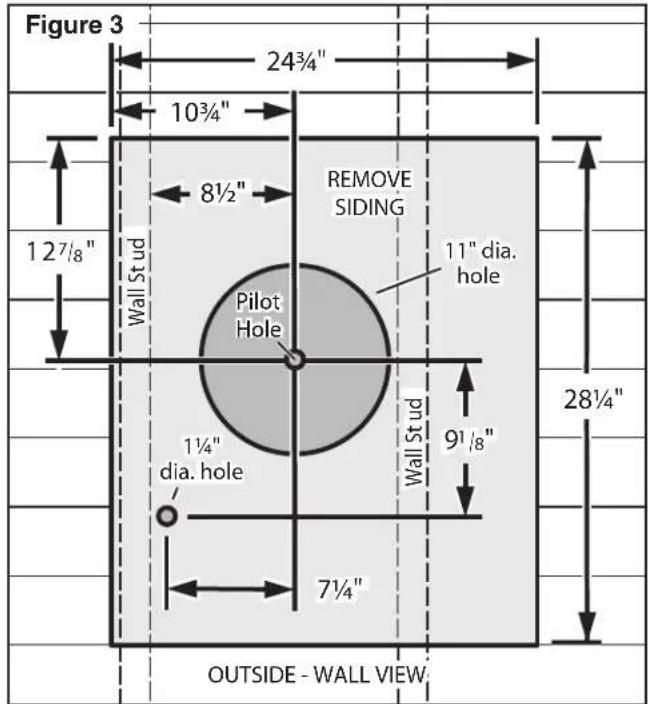
- Choose a position on the outside wall. Make sure that no wall studs, pipes or wires run through the opening area.
From inside the wall:
- Drill a PILOT HOLE through the wall, 8 ^1/2 " from the inside edge of a WALL STUD.
From outside - on the wall: - Measure and mark the 25" x 29 ^1/2 " rectangle. Cut and remove only the siding inside this rectangle.
- Measure and mark the 11" DIAMETER HOLE and the 1¼" DIAMETER HOLE. Cut these holes
PREPARE THE VENTILATOR
ALL INSTALLATIONS
- Unpack the ventilator assembly.
- Remove the cover and screws.
- Remove and discard cardboard from ventilator wheel.
- Remove the wiring box cover and screws.
- Attach an appropriate U.L. approved cable connector in the hole at the rear of the wiring box.
INSTALL THE VENTILATOR
ROOF INSTALLATIONS
- Remove roofing nails from the upper 2/3 of the shingles around the cutout area and carefully lift the shingles to allow the back flashing sheet on the ventilator housing to fit under them.
- Center the ventilator ring in the 11" diameter hole, making sure that the 1-1/4" diameter electrical wiring hole aligns with the hole in the wiring box.
- Attach the ventilator to the roof with the six screws provided. All six holes in the back panel must be filled, or any moisture that may get inside the ventilator housing could leak into the house.
- Using a good grade of roofing cement, seal all of the shingles around the housing and flashing sheet as well as the mounting screw heads.
- Bring electrical wiring through the hole in the wiring box and secure it according to local codes.
Figure 4
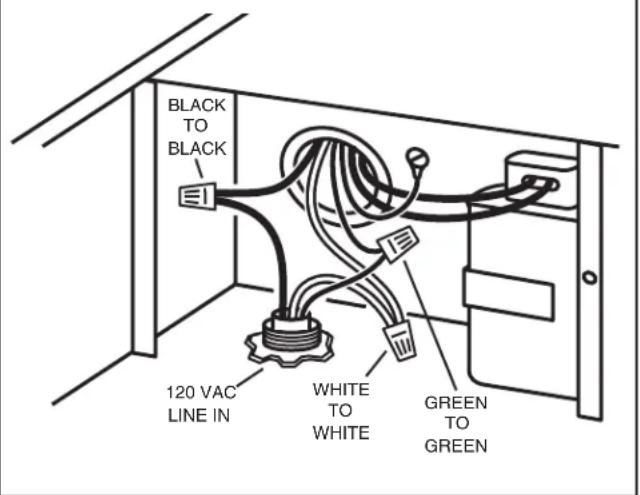
- Make the electrical connections with the proper connector for the type of wiring being used. Connect white to white, black to black, and the green or bare wire to green. See Figure 4.
- Replace wiring box cover and screws. Do not pinch wiring under the cover.
- Check for free movement of the damper before installing housing cover and screws.
INSTALL THE VENTILATOR
WALL INSTALLATIONS
- Place a large bead of caulk on the back side of the housing along the outer edge.
- Center the ventilator ring in the 11" diameter hole, making sure that the 1-1/4" diameter electrical wiring hole aligns with the hole in the wiring box.
- Attach ventilator to the wall with the six screws provided. All six holes in the back panel must be filled, or any moisture that may get inside the ventilator housing could leak into the house.
- Using a good grade of caulk, seal all around the mounting screw heads.
- Bring electrical wiring through the hole in the wiring box and secure it according to local codes.
- Make the electrical connections with the proper connector for the type of wire being used. Connect white to white, black to black, and green or bare wire to green. See Figure 4.
- Replace wiring box cover and screws. Do not pinch wiring under cover.
- Check for free movement of the damper before installing housing cover and screws.
- Top and side flanges of the back plate may be covered with trim strips. Do not block grille opening at bottom with trim. It will adversely affect performance of the ventilator.
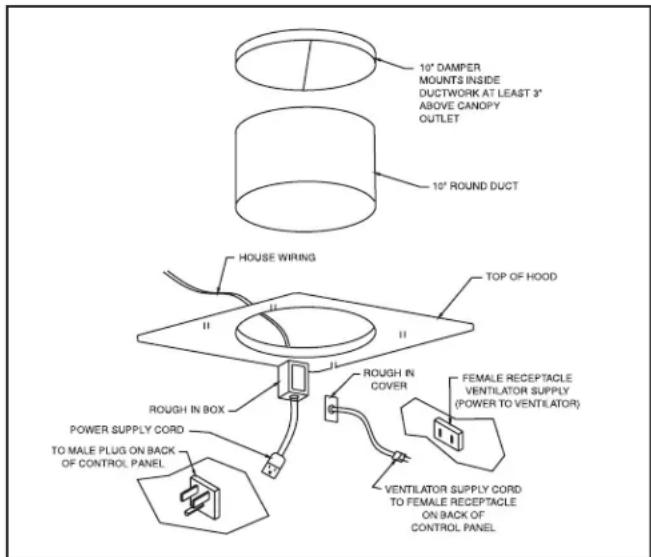
INSTALL THE ROUGH-IN PLATE
- Run 10" round steel ductwork, from exterior ventilator to the installation location. For best performance, use the straightest possible duct run and the fewest number of elbows. Tape all joints.
- Run 120 VAC electrical power cable from service panel and from remote ventilator to installation location.
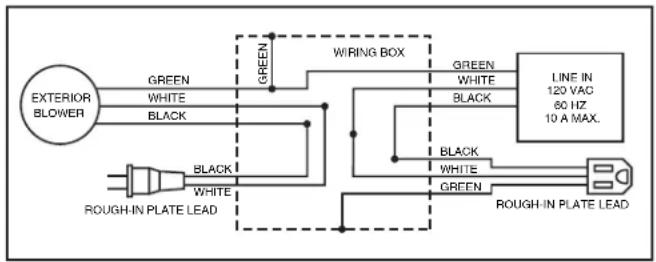
- Remove wiring box cover. Remove knockouts from the wiring box. Feed 6" of power cable through openings and attach cables to wiring box with appropriate connectors.
flowchart
graph TD
    A["EXTERIOR BLOWER"] -->|GREEN| B["WIRING BOX"]
    A -->|WHITE| B
    A -->|BLACK| B
    B -->|GREEN| C["LINE IN 120 VAC 60 HZ 10 A MAX."]
    B -->|WHITE| D["ROUGH-IN PLATE LEAD"]
    B -->|BLACK| E["ROUGH-IN PLATE LEAD"]
    D --> F["Black"]
    D --> G["White"]
    D --> H["GREEN"]
- Wire black to black, white to white, and green or bare wire beneath green ground screw. Replace wiring box cover.
-
Connect ductwork to transition and tape joint.
-
Turn on power and check ventilator operation.
USE AND CARE
Disconnect electrical power supply and lock out service panel before cleaning or servicing this unit.
CLEANING
Remove cover and carefully vacuum ventilator and inside of housing. Be careful not to bend or otherwise damage ventilator wheel.
MOTOR LUBRICATION
The motor is permanently lubricated. Do not oil or disassemble motor.
VIKING MODÈLE DEV900 VENTILATEUR MONTÉ À L'EXTÉRIEUR
natural_image
Simple line drawing of a two-layered rectangular book (no text or symbols)POUR UTILISATION AVEC LES HOTTES DE CUISINE VIKING 6%2+) ☐00' ☐VCWH, VICH, DBCV, DICV, DCWH, DCWL, DCWN, DTWS ET DCIH, DE 30" À 42" (76,2 CM À 106,7 CM) DE LARGEUR, 9" À 18" (22,9 CM À 45,7 CM) DE HAUTEUR.
VEUILLEZ LIRE CES DIRECTIVES ET LES CONSERVER
AVERTISSEMENT
OBSERVEZ LES DIRECTIVES CI-DESSOUS DE MANIÈRE À RÉDUIRE LES RISQUES D'INCENDIE, DE CHOC ÉLECTRIQUE OU DE BLESSURES CORPORELLES.
natural_image
Simple line drawing of a two-tiered rectangular book (no text or symbols)PARA USAR CON LAS CAMPANAS PARA ESTUFA VIKING 6%2+) ☐00' ☐VCWH, VICH, DBCV, DICV, DCWH, DCWL, DCWN, DTWS Y DCIH. DE 30 A 42 pulg. (76 a 106.6 cm) DE ANCHO Y 9 A 18 pulg. (22.8 a 45.7 cm) DE ALTO.
LEA Y CONSERVE ESTAS INSTRUCCIONES
ADVERTENCIA
PARA REDUCIR EL RIESGO DE INCENDIOS, DESCARGAS ELÉCTRICAS O LESIONES PERSONALES, OBSERVE LAS SIGUIENTES PRECAUCIONES:

- READ AND SAVE THESE INSTRUCTIONS
- WARNING
- TO REDUCE THE RISK OF FIRE, ELECTRIC SHOCK, OR INJURY TO PERSONS, OBSERVE THE FOLLOWING:
- CAUTION
- Blower Dimensions
- PLAN THE INSTALLATION
- ALL INSTALLATIONS
- PREPARE THE INSTALLATION LOCATION
- ROOF INSTALLATIONS
- WALL INSTALLATIONS
- PREPARE THE VENTILATOR
- INSTALL THE VENTILATOR
- INSTALL THE ROUGH-IN PLATE
- USE AND CARE
- CLEANING
- MOTOR LUBRICATION
- VIKING MODÈLE DEV900 VENTILATEUR MONTÉ À L'EXTÉRIEUR
- VEUILLEZ LIRE CES DIRECTIVES ET LES CONSERVER
- AVERTISSEMENT
- OBSERVEZ LES DIRECTIVES CI-DESSOUS DE MANIÈRE À RÉDUIRE LES RISQUES D'INCENDIE, DE CHOC ÉLECTRIQUE OU DE BLESSURES CORPORELLES.
- LEA Y CONSERVE ESTAS INSTRUCCIONES
- ADVERTENCIA
Brand : VIKING
Model : VCWH53648BK
Category : Basket