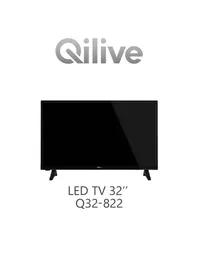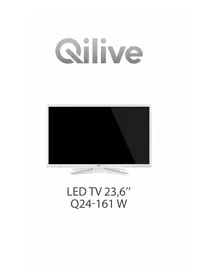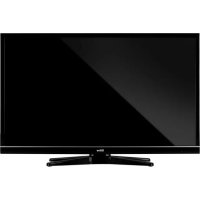
Q.1638 - TV Qilive - Free user manual and instructions
Find the device manual for free Q.1638 Qilive in PDF.



| Product type | Color TV with built-in DVD player |
| Brand | Qilive |
| Model | Q.1638 |
| Dimensions with stand (W x H x D) | 516 x 353 x 134 mm |
| Dimensions without stand (W x H x D) | 516 x 317 x 56 mm |
| Weight | 3.70 kg |
| Power supply | 220-240 V ~ 50 Hz |
| Max power consumption | 45 W |
| Standby power consumption | 0.5 W max |
| Tuner | Digital terrestrial (DVB-T) and cable (DVB-C), analog |
| Number of storable channels | 1000 |
| Audio output power | 2 x 2.5 W RMS |
| Audio formats | NICAM Stereo, MPEG-1/2, MP3 |
| Connectivity | 2x HDMI, 1x USB, 1x SCART, 1x VGA, 1x YPbPr, 1x CI, 1x headphone, 1x SPDIF, RF antenna input |
| Main features | USB recording (PVR), Time Shift, Media player (photo, music, video), Teletext, EPG, Parental lock, Software update, Game mode, Programmable timer |
| Supported file formats (USB) | Video: MPEG1/2/4, H.264, Xvid, VC-1; Audio: MP3; Image: JPEG, BMP |
| Maximum resolution (PC/HDMI) | 1920 x 1080 (Full HD) |
| Remote control batteries | 2 AAA batteries (not included) |
| Safety instructions | Ventilation space of at least 10 cm; do not expose to water, heat or flames; unplug before cleaning |
| Cleaning | Unplug the TV and use a soft dry cloth |
| Included accessories | Remote control, user manual |
Frequently Asked Questions - Q.1638 Qilive
User questions about Q.1638 Qilive
0 question about this device. Answer the ones you know or ask your own.
Ask a new question about this device
Download the instructions for your TV in PDF format for free! Find your manual Q.1638 - Qilive and take your electronic device back in hand. On this page are published all the documents necessary for the use of your device. Q.1638 by Qilive.
USER MANUAL Q.1638 Qilive
natural_image
Modern black Sony TV displaying on a stand, no visible text or symbols on screen or backgroundCombo DVD LED TV 21.5"
Q.1638
Table des matières
Connexions (Connections)....6
Mise sous/hors tension....7
RISQUE D'ELECTROCUTION NE PAS OUVRIR

ATTENTION: POUR EVITER TOUT RISQUE D'ELECTROCUTION NE RETIREZ PAS LE COUVERCLE.L'ENTRETIEN DES PIÈCES INTERNES EST INTERDIT AUX UTILISATEURS. VEUILLEZ CONFIER L'ENTRETIEN A UN PERSONNEL QUALIFIE.
natural_image
Line drawing of a flat-screen monitor with blank screen (no text or symbols)natural_image
Close-up of two cylindrical batteries with positive and negative terminals, no visible text or symbolsConnexions (Connections)
PRODUIT LASER DE CLASSE 1
RISQUE D'ELECTROCUTION
natural_image
Illustration of a hand holding a circular object with a cross mark, next to a circular ring (no text or symbols)natural_image
Illustration of two hands performing a circular motion or maneuvering operation, one with directional arrows and the other with a cross (no text or symbols)natural_image
Illustration of a computer monitor with an open CD and a hand holding a mouse (no text or symbols)natural_image
Line drawing of a flat-screen computer monitor with blank screen (no text or symbols)natural_image
Close-up of a cylindrical electronic component with two leads and a base, no visible text or symbolsnatural_image
Illustration of two hand positioning a circular object with a cross mark, no text or symbols presentnatural_image
Illustration of hands holding a circular object with arrows indicating direction (no text or symbols)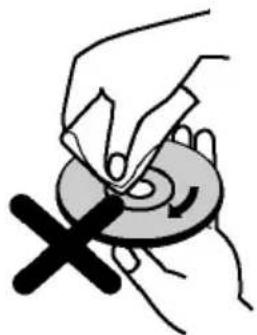
natural_image
Illustration of a hand using a tool to press a circular component with an X mark, no text or symbols present.natural_image
Illustration of a hand holding a CD to move from a computer monitor to a mouse, with no text or symbols present.natural_image
Line drawing of a flat-screen computer monitor with blank screen (no text or symbols)natural_image
Close-up of a cylindrical battery with glowing internal components and positive charge indicators (no text or symbols visible)CLASS 1 LASER PRODUCT
natural_image
Illustration of a hand holding a circular object with a cross mark, next to a circular ring (no text or symbols)natural_image
Illustration of two hands performing a circular motion or maneuvering operation, one with directional arrows and the other with a cross (no text or symbols)natural_image
Illustration of a mouse blowing a CD into a screen (no text or symbols)natural_image
Line drawing of a flat-screen monitor with blank screen (no text or symbols)Colocar as pilhas no controlo remoto
natural_image
Diagram of a battery cell with electrodes and polarity indicators (no text or symbols)natural_image
Illustration showing a hand holding a circular object and a cross mark on a ring (no text or symbols)natural_image
Illustration of hands performing a circular motion or maneuver on a disc (no text or symbols)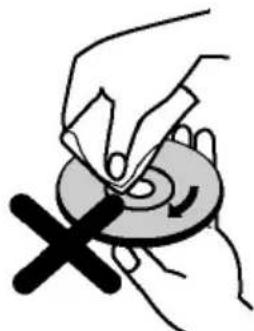
natural_image
Illustration of a hand holding a circular object with a cross mark, no text or symbols presentnatural_image
Illustration of a person holding a CD with an arrow pointing to it, next to a computer monitor (no text or symbols present)Security instructions 85

Please read all the instructions before
installation or operation. 86
Getting started 87
Notifications & Characteristics & Accessories .....87
Functions 87
Television's command buttons....87
Connecting the power cord ....88
Remote control 89
Connections....90
Turning the TV on/off....91
First time installation....91
Reading media through the USB input....91
Recording a programme....92
Time shift recording 92
Instant Recording 92
Watching recorded programmes .....92
Media browser menu....93
Quick Menu 93
Options and functions of the TV menu .....94
Channel list 96
Use of the channel list....96
Setting of parental control settings 96
Electronic Program Guide (EPG) 97
Software update 97
Troubleshooting and tips 97
Typical PC Input Display Modes .....99
Formats of files supported in USB mode....99
AV and HDMI Signal Compatibility .....99
DVD Mode....100
Notes on using discs ....100
Licence notice....100
How to watch a DVD 100
DVD control panel buttons....101
Overview of the remote control....101
General operation....102
General reading....104
Troubleshooting the DVD 104
Compatible Discs....105
Specifications 105
Security instructions
To operate your TV in extreme ambient conditions may cause the damage of the device.

In case of storm or lightening, or if you are not going to use the TV for some time, (during holidays for example) disconnect the power cord from the wall outlet. The electricity plug is used to disconnect the television from the main power and should therefore always be easy to operate.

The exclamation mark inside the equilateral triangle is used in the documentation provided with this device, to indicate to users instructions that are important for the proper operation and maintenance of the device.
Note : Please follow the instructions that appear on your screen concerning the activation of related functionalities.

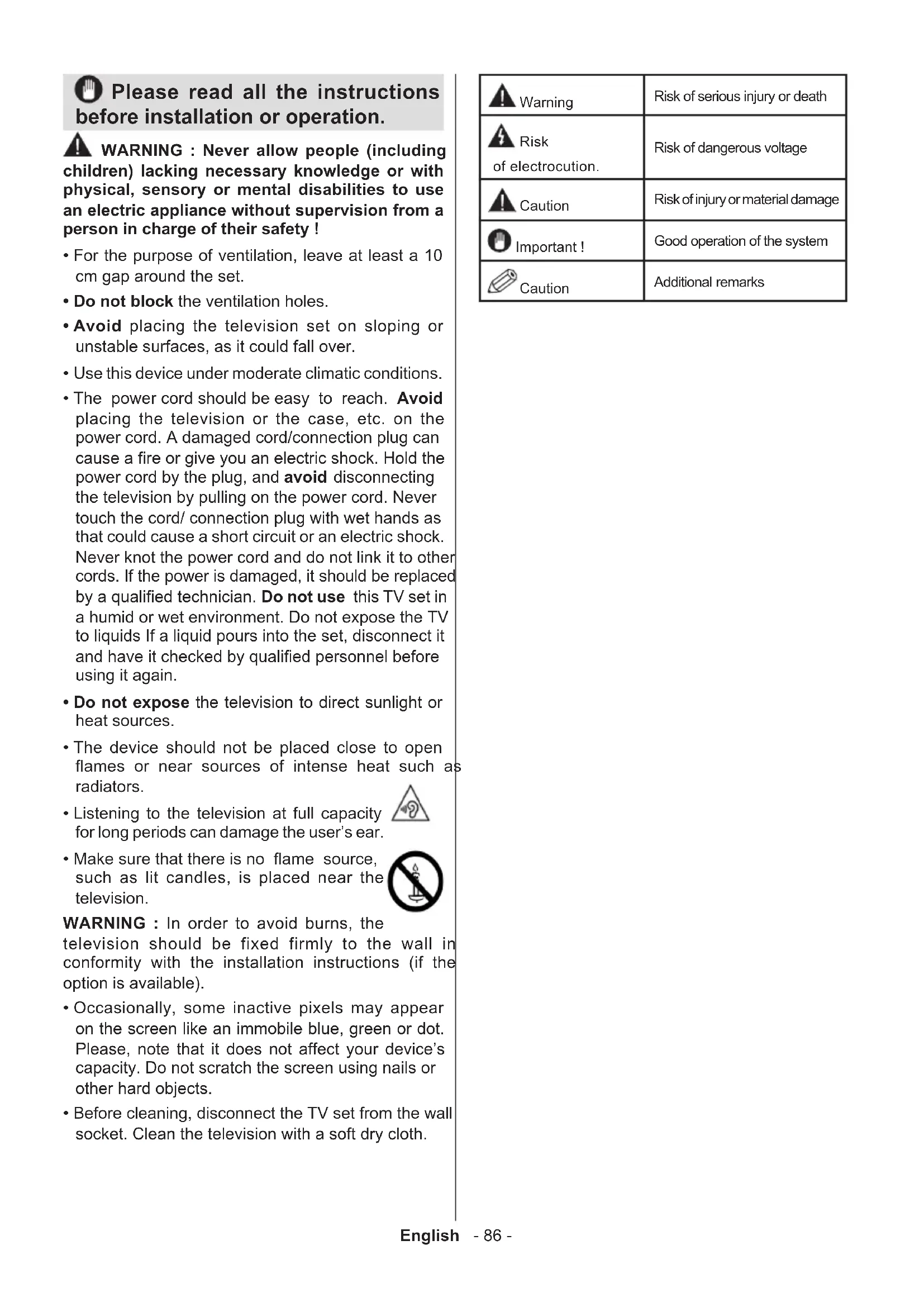
Please read all the instructions ore installation or operation.

WARNING : Never allow people (including dren) lacking necessary knowledge or with sical, sensory or mental disabilities to use electric appliance without supervision from a on in charge of their safety !
- For the purpose of ventilation, leave at least a 10 cm gap around the set.
- Do not block the ventilation holes.
- Avoid placing the television set on sloping or unstable surfaces, as it could fall over.
- Use this device under moderate climatic conditions.
- The power cord should be easy to reach. Avoid placing the television or the case, etc. on the power cord. A damaged cord/connection plug can cause a fire or give you an electric shock. Hold the power cord by the plug, and avoid disconnecting the television by pulling on the power cord. Never touch the cord/ connection plug with wet hands as that could cause a short circuit or an electric shock. Never knot the power cord and do not link it to other cords. If the power is damaged, it should be replaced by a qualified technician. Do not use this TV set in a humid or wet environment. Do not expose the TV to liquids If a liquid pours into the set, disconnect it and have it checked by qualified personnel before using it again.
- Do not expose the television to direct sunlight or heat sources.
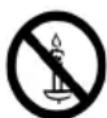
- The device should not be placed close to open flames or near sources of intense heat such as radiators.
- Listening to the television at full capacity for long periods can damage the user's ear.
- Make sure that there is no flame source, such as lit candles, is placed near the television.
WARNING : In order to avoid burns, the
television should be fixed firmly to the wall in conformity with the installation instructions (if the option is available).
- Occasionally, some inactive pixels may appear on the screen like an immobile blue, green or dot. Please, note that it does not affect your device's capacity. Do not scratch the screen using nails or other hard objects.
- Before cleaning, disconnect the TV set from the wall socket. Clean the television with a soft dry cloth.
| Warning | Risk of serious injury or death |
| Risk of electrocution. | Risk of dangerous voltage |
| Caution | Risk of injury or material damage |
| Important ! | Good operation of the system |
| Caution | Additional remarks |

Getting started
Notifications & Characteristics & Accessories
Information relating to the environment
This television is designed to consume less power in a bid to protect the environment. In order to effectively reduce your electric energy consumption, you have to follow the steps below:
If you set the energy economy mode to Eco, TV will enter energy economy mode. The energy economy mode can be found at the level of the 'Image' submenu under the main menu. Note that some image settings cannot be changed.
If the option "disabled Image" is selected, the message "the screen will turn off in 15 seconds" will appear on the screen. Select the CONTINUE option and press OK to continue. The screen will turn off automatically.
Turn the television of and disconnect it when not in use. This good practice will also help you to economise energy.
Standby notifications
-
If the television does not receive any incoming signal (an antenna or an HDMI source for example) for 5 minutes, it will go on standby. The next time it is turned on, the following message will appear: "Standby mode if no signal" Press OK to continue.
-
If the television stays inactive for 4 hours, it will enter standby mode. The next time it is turned on, the following message will appear: "Standby mode if no signal" Press OK to continue.
Functions
• Colour television with remote control.
- Digital tuner cable and High definition TNT (DVB-T/C)
- The HDMI ports are meant for devices with HDMI plugs.
- USB ports.(with digital video tape-recorder function)
- OSD Settings Menu.
- Jack socket for external devices (video camera, video game, audio player, etc.)
- Stereo sound system.
- Teletext.
- Headphone jack.
• Automatic settings system.
- Manual setting.
• Automatic shutdown which can be set between 2 to 6 hours maximum without using the remote control.
- Programmable shutdown.
- Parental control lock
- Automatic sound-off when there's no transmission.
- NTSC Video.
• AVL (Automatic Volume Limitation) - PLL Tuner (Frequency scanning).
• PC port with Plug & Play function. - Instant Plug&Play for Windows 98,) ME, 2000, XP, Vista.
• Gaming mode (optional)
Accessories included
- Remote control
- User manual
- Batteries not included
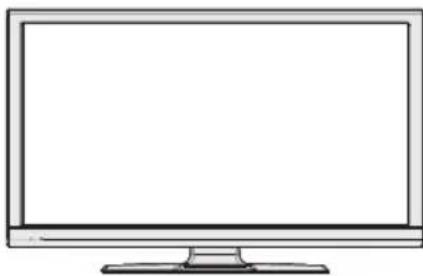
Television's command buttons
natural_image
Line drawing of a flat-screen computer monitor with blank screen (no text or symbols)The control button & the Functioning of the TV
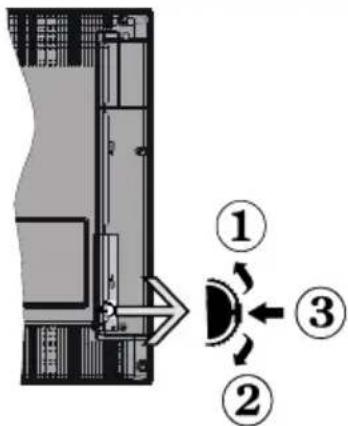
- Previous
- Next
- Program / Volume / AV / Standby command selection
The button makes it possible to control the "Volume" / "Program" / "Source" functions and to Enable Standby Mode on your television.
To adjust the volume: Increase the volume by pressing the Up button. Reduce the volume by pressing the Down button.
To change channels: Press the centre of the button for information on the channel to appear on the screen. Browse through stored channels by pressing the Up or Down button.
To change source: Press the centre of the button for the list of sources to appear on the screen. Browse through stored channels by pressing the Up or Down button.
To turn off the television : Press and hold down the centre of the Down button for a few seconds until the television enters Standby mode.
Putting batteries in the remote control
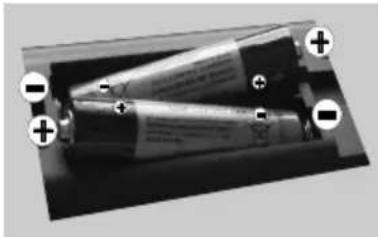
Lift the cover at the back of the remote control. Insert two AAAsize batteries. Make sure that the + and - ends of the batteries match the in the battery compartment (respect the right polarity). Put the cover back in place.
natural_image
Close-up of two cylindrical batteries with positive and negative terminals, no visible text or symbolsConnecting the power cord
IMPORTANT: This television is designed to operate solely with a 220-240V \~ 50 Hz. power supply. After taking the television out of its package, wait a bit for the TV to reach ambient temperature before connecting it to the electricity plug. Connect the power cord to the main plug.
Connecting the antenna/Cable
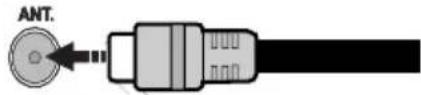
Connect the antenna or the SDSq antenna cable to the ANTENNA INPUT (ANT) found at the back of the TV set.
natural_image
Pure electrical connector diagram without any text or symbolsNotification
Manufactured under licence from Dolby Laboratories MANUFACTURED UNDER LICENCE
"Dolby" and the double D symbol are trademarks of Dolby Laboratories.
HDMI, the HDMI logo and the high definition multimedia interface are marks or registered trademarks of HDMI Licensing LLC.

Information applicable to users in relation to disposal of old devices and batteries
[European Union only]
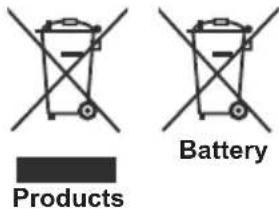
This symbol indicates that the equipment should not be disposed of as household waste. If you have to discard the TV set or the batteries, consider using collection systems or infrastructure for appropriate recycling.
Note: The Pb sign inscribed on the batteries indicates that the battery contains lead.
Technical details
| TV Frequency (tuner) | VHF (BAND I/III) - UHF (BAND U) - HYPERBAND |
| Number of memorable channels | 1000 |
| Audio standard German | +Nicam Stereo |
| On screen display On Screen Display | |
| RF Input Socket 75 Ohms | (unbalanced) |
| Operating voltage: 220-240V ~, 50HZ | |
| AUDIO OUTPUT POWER (WRMS.) (10% THD) | 2 x 2,5 WRMS |
| Power consumption 45W (max) | |
| st-by power consumption | 0,5 W (max) |
| Weight Stand 3,70 kg | |
| TV Dimensions DxLxH (with foot) | 134 x 516 x 353 mm |
| TV Dimensions DxLxH (without foot) | 56 x 516 x 317 mm |
| Operating temperature and humidity | 0°C up to 40°C, 85% humidity max |
Remote control
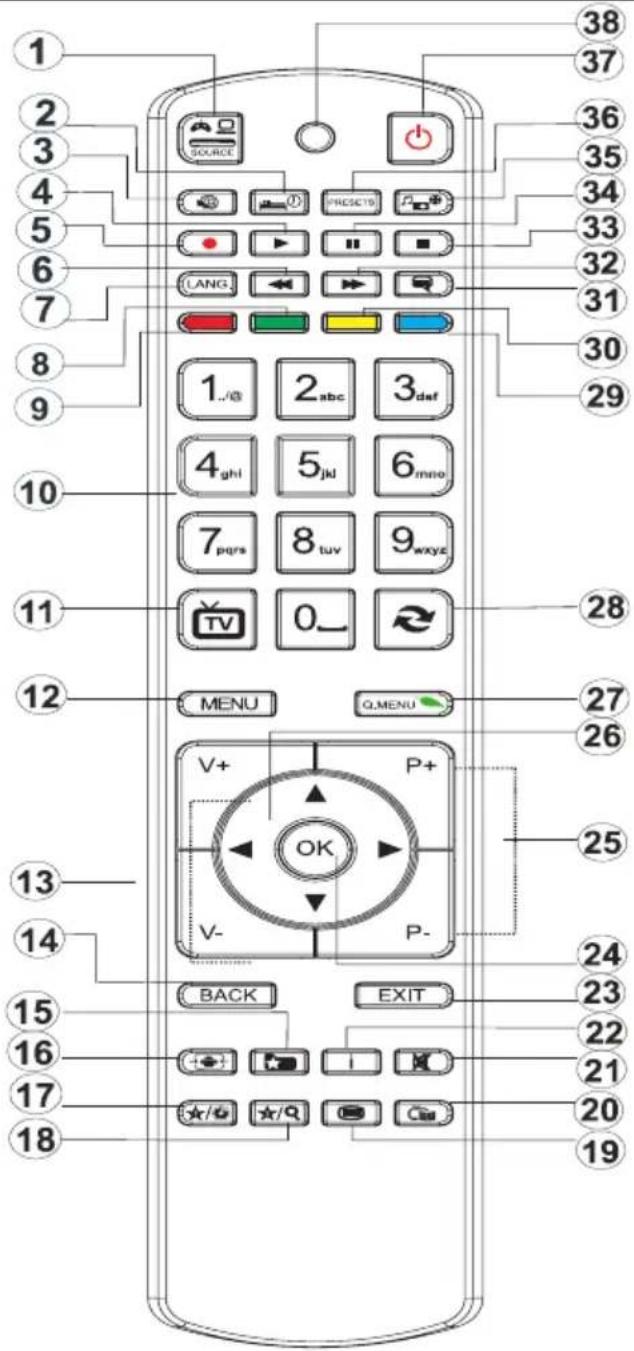
How to use My button 1
Browse to the desired source, channel, or link, press and hold MY BUTTON 1 for five seconds, until this message "MY BUTTON HAS BEEN SET" appears on the screen. This message confirms that the MY BUTTON option selected is now associated to the selected function.
How to use My button 2
Browse to the desired source, channel, or link, press and hold MY BUTTON 2 for five seconds, until this message "MY BUTTON HAS BEEN SET" appears on the screen. This message confirms that the MY BUTTON option selected is now associated to the selected function.
- Selection of Source
- Standby timer (SLEEP)
- No function
- Play (in multimedia browser video mode)
- Programme recording
- Quick return (in multimedia browser video mode)
- Language selection
- No function
- No function
- Digital buttons
- Back to TV Mode
- Menu
- Increase / Reduce volume
- Back
- Favourites
- Picture Format
- My button 1 :
- My button 2 :
- Teletext.
- Electronic Programme Guide (EPG)
- Mute
- Info
- Exit (Back)
- Ok (confirm)
- Next / Previous Program
- Browsing buttons
- Main Menu
- Back to previous channel
- No function
- No function
- Subtitle
- Fast forward
- STOP (in multimedia browser video mode)
- Pause (in multimedia browser video mode) / timeshift recording
- Multimedia browser
- Image mode selection
- Standby
- LED
Connections
| Connector Type | No cable or accessory provided Device | ||
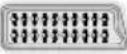 | External device Connection (behind) |  | 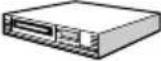 |
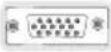
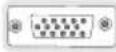 | VGA Connection (behind) |  | 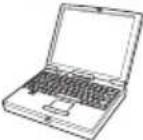 |
AV ON THE SIDE | PC/YPbPr Audio Connection (side) | 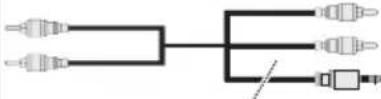 YPbPr audio connection cable (not supplied) YPbPr audio connection cable (not supplied) |  |
| [RK20] | HDMI Connection (behind) | [SZX6] |  |
 SPDIF SPDIF | SPDIFF Connection (behind) |  | [TX72] |
AV ON THE SIDE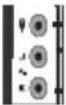 | Lateral AV Audio / Video Connection (side) | 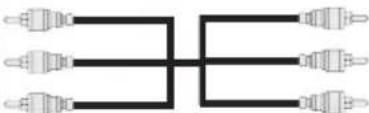 (not supplied) (not supplied) | 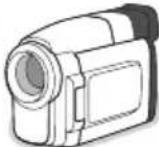 |
HEADPHONE | Headphone Connection (side) |  | |
 | YPbPr Video Connection (behind) | [666A] | 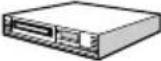 |
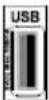 | USB Connection (side) |  | 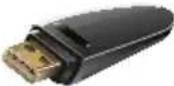 |
 | CI Connection (side) |  | 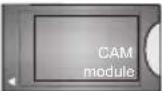 |

You may use a VGA-compatible YPbPr cable (not provided) to enable the YPbPr signal via the VGA port. | You will no longer be able to use the VGA and YPbPr simultaneously. | For the YPBR or PC port, you have to connect the audio output of your device to the television's audio AV input. | When an external device is connected to the jack socket of your TV, the TV will enter AV mode automatically when you turn on the external device. | When you are in digital mode (tuner, usb, hdmi) you will not have audio-video signal output through the jack socket. | If you use a wall-mounted kit, un, it is advisable to connect all your cables before fixing your TV to the kit. | Insert or delete the CI module CI only when the television is off. Consult the module's instruction manual for more information on its settings.
First time installation - USB connections
Turning the TV on/off
Turning the TV on/off
Connect the power cord to a 220-240V \~ 50 Hz socket To turn on the TV from standby mode, you can either
- Press the “○”, P+ / P- button or a digital button on the remote control,
- Press the side-function button until the TV leaves standby mode.
Putting the TV on standby
Press the "button" on the remote control or the multi-function button on the side of the TV until the TV enters standby mode.
To turn off the television completely, unplug the power cord from the power socket.
Note: When the television is in standby mode, the indicator light flashes to indicate that options such as Standby search mode, automatic download or Timer are enabled. The LED may also flash when you turn on the television from standby mode.
First time installation
When you turn on the television for the first time the language selection menu appears. Select the language you want and press OK.
The First time installation (FTI) screen appears during first installation. Set your preferences using the browsing buttons. When you are through, press OK to continue.
IMPORTANT : If you chose France or Italy as an alternative, the PIN code menu will appear and you will have to enter 4-digit code. You will not be able to use 0000 as code (you are advised to write down this code on your instruction manual so that you can remember it when you need to use it). Enter a PIN code and confirm by entering it again. Press the OK button to continue.
WARNING : When prompted to enter a PIN code to access a menu item, you have to use the code you set during first installation. If you forget the said code, use the main code 4725.
Demo Mode
If you want to use your television inside a home, you are advised to select the home mode.
If you choose the shop mode, you will have to confirm your choice.
Choosing TV receiver mode
You will have to choose your reception mode, antenna or cable. If you choose the ANTENNA option from the Type of search screen, the digital television will search for digital terrestrial broadcasts.

NOTE: You can press the MENU button to cancel.
Once all the available channels have been saved, the list of the channels will appear on the screen. If you find the said channels interesting, depending on the LCN(*) , select Yes, then press OK.
Press the MENU button to exit the list of channels and watch the television.
(*) LCN Channel number system which displays channels in the order established by government agencies.
Installing the cable
If you choose the CABLE option and press the OK button on the remote control. You can set the frequencies manually or press OK to start an automatic search.
Note: The duration of the search will depend on the search zone selected.
Reading media through the USB input
You can connect external hard drives (hard drives with or without external power cables, depending on their voltage) or a USB port to your TV through your TV's USB ports.
IMPORTANT! Backup your files before making any connection to the TV. Note that the manufacturer shall not be held accountable if files are damaged or data lost. Some types of USB devices (MP3 players for example) or USB “hard drives / memory cards” “may be incompatible with this television. This television supports FAT32 and NTFS disk formatting. However, you will not be able to record with NTFS formatted disks.
If your hard drive's capacity is above 1TO, you may experience some issues with formatting. Avoid disconnecting your reader quickly after inserting it in the television's USB port. This can physically damage the USB reader and the USB device itself. Never remove the USB while a file is being read.
Recording a programme
IMPORTANT: When using a new USB hard drive reader, it is advisable to first format the disk using the "Format disk" option of your television.
Note: To record a programme, you first have to connect a 2.0 compatible USB device at least, if not an error message will appear, to your television which you would have turned off before this. Then turn on the TV set in order to enable the record function.
To use the record function, you have to connect a USB key or an external hard drive to the television. The USB key connected should have a capacity of 1 GB at least. A 4 Go key is recommended.
Note: Programmes recorded are saved on your USB device. You can "copy" these recordings on a computer if you want. However, they can be read only on your television.
Note: You cannot record radio broadcasts. The maximum duration of a recording is unlimited. During simultaneous recording (time shift) an image-sound gap may occur.
Programmes recorded are divided into 4 GB partitions. If the write speed of the USB device connected is insufficient, the recording may fail and the time shift option may not be available.
As such, it is advisable to use USB devices that are HD compatible.
Avoid disconnecting your USB device during recording. If you do, you may damage the device.
It is possible to have multiple partitions on your device (maximum of 2). The television can support a maximum of two different partitions. The first partition of the USB disk will be used for the recording function (PVR).
Due to some antenna issues, it will not be possible to record some signal data. Also, the images may be blurry during playback.
The Record, Play, Pause, Display buttons (for PlayListDialog) are not active in Teletext mode. If a recording starts from the timer when the teletext is active, the latter will be disabled automatically. Teletext does not function in multimedia mode.
Time shift recording
Press the ⌘(PAUSE) button while watching a programme to switch to delayed replay mode. When you use this mode, the programme pauses and the recording continues.
Press the ▶(PLAY) button again to watch the paused programme. Press the STOP button to stop recording and return to real time broadcast
Note: This function is not available in radio mode. You may use the fast forward /fast rewind buttons to browse.
Note: You cannot use the fast rewind and fast forward buttons if you are not in play mode.
Instant Recording
Press the (RECORD) button to start instant recording of a programme while you're watching it. The recording will be done based on the EPG. You can press the (RECORD) button on the remote control again to record the next programme on the EPG (Electronic Programme Guide). In this case, the programmes scheduled for recording will be displayed on the screen. Press the (STOP) button to cancel instant recording.
Note: In instant recording mode, you cannot change channels or watch a source other than that being recorded. When recording a programme during a time shifting, a warning message will appear on the screen if your USB device's speed is not sufficient.
Watching recorded programmes
Select the Recordings in library option under the media browser menu. Select one of the recordings in the list. Press the OK button to display the play options. Select an option and press the OK
Note: The display of the main menu and the submenus are not available when playing recordings.
Press the STOP) button to stop playing and return to the recordings in the Library.
Slow forward
If you press the (PAUSE) button while watching a recorded programme, the slow forward option will be available. You can use the button for the slow forward. To modify the slow forward speed, press the button.
Record settings
Select Record settings option in the Settings menu to configure recording parameters.
Format the disc : You can use the disk formatting option to format the connected USB disc. Your PIN code will then be asked.
The default PIN code can change depending on the country selected.
If a PIN code is required to display a menu option, enter one of the following codes: 4725.0000 or 1234.
IMPORTANT : Note that all the data contained in the USB device will be lost and the device will be formatted using FAT32. Also, if your USB device does not function properly, you can try to format it. In most cases, formatting the USB device solves the problem, however, ALL the data contained in the USB disc are lost in the same situation.
Note: If the message "USB too slow" appears on the screen at the start of a recording, try starting the recording again. If the same error message appears, it is possible that your USB disk does not have the required speed. Try to connect another USB disc.
Media browser menu
You can view picture, music and video files stored in a USB device by connecting this device to your TV set. Connect a USB stick to one of the USB ports located on the side of the TV set. For video, photo and music files, you can access a settings sub menu (image, sound and others) by pressing the MENU button. This function does not work with recordings done on the TV set. By pressing the MENU button again the display disappears. You can set the preferences of your media browser through your settings menu.
| Functioning of the Random / Repeat mode | |
| Launch playback with ▶ and enable 📄 | The TV set reads the next file and closes the list. |
| Launch playback with ▶ and enable 📄 | The same folder will be read repeatedly. |
| Launch playback with OK ▶ and enable 📄 | The folders concerned will be read randomly. |
Quick Menu
The quick parameters menu ensures quick access to certain options. This menu includes Power economy mode, Picture mode, equalizer settings, favorites and Programmed shutdown options. Press the Q.MENU button of the remote control to display the quick menu. See subsequent chapters for details of listed functions.
Options and functions of the TV menu
| Content of the image menu | |
| Mode | You can edit the image mode according to your preferences and demands. The Image mode can be set on one of these options : Cinema , Game, Dynamic and Natural. |
| Contrast | Adjusts the brightness and darkness of the screen. |
| Brightness | Adjusts the brightness of the screen. |
| Sharpness | Defines the sharpness of objects displayed on the screen. |
| Colour | Adjusts the colour value, adjusts colours. |
| Power Saving Mode | If you choose the Power saving mode set to Eco, you can enable or disable the screen . (When the mode is Dynamic, the Power saving mode set to Eco is automatically disabled.) |
| Back-lighting (optional) | This parameter controls the back-light level. The back-light function will be inactive if the Power saving mode is set to Eco. The Back-light mode cannot be enabled in VGA mode Multimedia navigator or when Image mode is defined on the Game. |
| Noise reduction | If the broadcasting signal is weak and the image noisy, use the noise reduction functionality to reduce the intensity of the noise. |
| Advanced settings | |
| Dynamic contrast | You can adjust the dynamic contrast ratio at your convenience. |
| Colour temperature | Adjusts the desired colour tone. |
| Image zoom | Adjusts the size of images in the images zoom menu.Note: Auto (Available only in Scart mode with SCART PIN8 high/low voltage switch) |
| HDMI True Black (optional) | When you watch the television from the HDMI source, this option is visible in the Image setting menu. You can use this option to increase image darkness. |
| Film Mode | Films are recorded at a number of frames per second different from normal television programs. Enable this function when you are watching films so as to better visualize the accelerated images. |
| Skin tone | The skin tone function can be edited between -5 and 5. |
| Colour editing | Adjusts the desired colour tone. |
| RGB gain | You can configure the colour temperature values using the RGB Gain functionality. |
| Reset | Resets the image settings to the default values (except Game mode). |
| Auto-position (in PC mode) | Automatically optimises display. Press OK to optimise. |
| Position H (in PC mode) | This section changes the image horizontally towards the right or left side of the screen. |
| Position V (in PC mode) | This element moves the image vertically towards the upper or lower part of the screen. |
| Frequency guide (in PC mode) | The pilot frequency settings correct interferences which appear as vertical lines in the image for displays such as worksheets, paragraphs or texts in smaller font sizes. |
| Phase (in PC mode) | Depending on the resolution and the scanning frequency you enter for the television, you can see a fogged or sound image on the screen. In such a case you can use this element to get a clear image through trial and error. |
| In VGA mode (PC), certain elements of the image menu will be unavailable. On the contrary, the parameters of the VGA mode will be added to the Image parameters in PC mode. | |
Options and functions of the TV menu
| Content of Sound menu | |
| Volume | Adjusts the volume level. |
| Equaliser | You can choose from 4 pre-set modes or make your own settings by selecting the user mode. |
| Balance | This parameter is used to highlight the balance of the left or right loudspeakers. |
| Headphone | Adjusts the volume of the headphone. |
| Sound mode | You can choose stereo or select language in dual -I or dual -II mode if the transmission includes this option. . |
| AVL (Automatic Volume Limitation) | This function is used to limit the volume differences between programmes. |
| Digital output | To be adjusted depending on the type of appliance attached to this plug. |
| Content of the Settings menu | |
| Conditional access | Controls the conditional access modules when they are available. |
| Language | Configures language parameters (can vary depending on the country chosen). The favourite parameters and current ones will be available. The current settings can only be edited if the broadcaster takes charge of them. |
| Parental control | Enter the correct password to edit parental control settings. You can easily adjust menu lock and parental control from this menu. You can also enter a new pin code (See the chapter on setting of parental parameters on page 12). |
| Timer | This function is used to set sleep mode and to program recordings made on your USB device. |
| Record settings | Displays the record settings menu, accessible if your (USB device is connected. |
| Date/Time | Selects the date and time. |
| Sources | Enables or disables selected Source options. |
| Other settings: Displays other television setting options: | |
| OSD display time | Defines the menu display time. |
| Encoded channels search | When this parameter is enabled, the search process locates scrambled channels as well. |
| Blue Screen | In Active mode, it displays a blue screen when there is no signal. |
| Software update | Updates the software package of your television. |
| Application version: | Displays the software version of your television. |
| Hearing-impaired | Enables specific functions for the hearing-impaired broadcast by the channels. |
| Audio description | Audio description refers to an extra narration path reserved for the visually and hearing impaired. You can only use this option if the broadcaster takes it in charge.Note:The audio sound description functionality cannot be available during recording or when the time-lag mode is active. |
| TV Automatic shutdown | When this function is enabled, it defines the time at which your television automatically stops (between one and six hours). |
| Standby search mode (optional) | If the Standby search mode is enabled, available channels will be searched when the television is on standby. If the television finds missing or new channels, a menu screen is displayed, asking if you wish to apply these changes or not. The channels list is updated and edited after this process. |
| Options and functions of the TV menu | |
| Storage Mode (optional) | Enables or disables the Demo mode.. |
| Turn on mode | This parameter configures preferences of the power on mode.Always enabled : the television comes on when the main power on/off button is presseStandby: the television always comes on in standby mode. / Last view : the television comes on on the last channel/source selected. |
| Installation | |
| Automatic channel search | If you wish to install or update new channels, you can use this menu. It displays automatic setting options.Digital antenna : Searches and stores DVB channels.Digital cable : Searches and stores DVB cable television channels Analogue : Searches and stores analogue stations.Analogue and digital antenna : Search and store DVB and analogue channels.Analogue and digital cable : Search and store analogue and DVB stations.. |
| Automatic channel search | Used to search or directly store a channel if the frequency is known. |
| Network channel search | Searches channels related to the transmission system. |
| Fine tune (analogue) | You can use this option to fine-tune analogue channels. It is only available if analogue channels are stored. |
| Initial Installation | Deletes all television settings and takes you back to the first installation. |
Channel list
Use of the channel list
You can configure the channel list by moving, deleting, renaming and locking them to your liking.
Setting of parental control settings
To prevent certain programs from being watched, channels and menus can be locked through the parental control system.
To display lock menu option, enter the PIN code. By default, the set factory code is 0000. After entering the appropriate PIN code, the Parental control settings menu will be displayed :
Menu lock: The Menu lock option enables or disables access to the menu.
Maturity lock: After installation, this option searches information related to parental programs and if this parental level has been disabled, access to broadcast is not enabled.
Parental control lock: When the Parental lock option is selected, the television can only be controlled with a remote control. In this case, the control panel buttons will not be active.
PIN code setting: Defines a new PIN code.
The default PIN code can change depending on the country selected.
If a PIN code is required to display a menu option, enter one of the following codes: 4725, 0000 or 1234.
Electronic Program Guide (EPG)
Some channels, not all, display information concerning the on-going program and the next one. Press the button to get access to the EPG menu.
Through this menu, you will have access to the following information: Channels program, and summary of selected program. Press the INFO button of the remote control, reserve or record a selected program.
Red button (Previous day) displays the previous day's programs.
Green button (Next day) : displays the next day's programs.
Yellow button (Zoom): Displays more information concerning the program.
Blue button (filter : Displays filter options.
SUBTITLE : Press the button to see menu of the type selected. By using this functionality, you can check the program guide database depending on the type selected. Information available in the program guide will be searched and the results corresponding to your criteria will be listed.
INFO: Displays detailed information on the selected program.
Digital buttons (Skip): Go straight to your favourite channel by using digital buttons.
OK : After selecting a program, if you press the OK button, you access the following functions : View channel, Store, and / or Reserve the selected program.
Text (Search): Displays the EPG search menu. (Search guide).
(Info) : Displays information related to ongoingprograms.
(RECORDING): The television starts to record the selected program. You can press again to stop recording.
P+P- : More info on the events
IMPORTANT : Connect your USB device only when your television is turned off. Then turn on the TV set in order to enable the record function.
Note: During recording, it is not possible to change the channel or Source.
Note: It is impossible to record two channels at the same time.
Software update
Your television can, through the antenna or cable, search and provide updates.
Software update search via the user interface
Simply go through the main menu. Choose Settings and select other settings menu. In the Other settingsmenu, select Software update and press the OK button to open the Update options menu.
3 Search and update mode
When the TV set receives signal from the antenna. If the Automatic search option in the Update options menu is active, the television automatically turns on at 3:00 a.m. and launches the search for broadcasting channels in order to update the new software. If new software is found and downloaded successfully, the television begins to work with the new software version when next it is turned on.
Note: If the television does not come on after the update, disconnect it for two minutes, then connect it again.
Troubleshooting and tips
The TV is not coming on
Check to ensure that the electricity plug is safely connected to the wall socket or that the batteries of the remote control are functional.
Poor picture quality
- Check if your antenna is properly connected. A poor signal level can negatively affect image quality.
- If you carried out manual settings, verify that you entered the right channel frequency.
- Image quality may be affected negatively when two devices are connected to the television set at the same time. If such is the case, disconnect one of the devices.
No image
- No image indicates that your TV is not receiving a signal. Have you selected the correct buttons on the remote control? Try once more. Also make sure that you have selected the right input source.
• Is the antenna connected properly?
• Is the antenna cable damaged? - Are suitable plugs used to connect the antenna?
- If you are not sure, please consult your supplier.
No sound
- Has the mute button been pressed? If that is the case, press the "button, or increase the volume.
- Only one speaker is producing sound. Is the balance well placed in the middle? Consult the Sound menu.
The remote control is not working
- The batteries may be down. Replace the batteries.
Input sources cannot be selected.
- If you cannot select an input source, it is possible that no device is connected.
- Check the AV cables and connections if you have tried to connect a device.
Recording not available
To record a programme, you first have to connect your USB device to your television which you have to shut down first. Then turn on the TV set in order to enable the record function. If you are unable to record, try turning off the television and inserting the USB device again.
The USB device is too slow
If the message "USB too slow" appears on the screen at the start of a recording, try starting the recording again. If the same error message appears, it is possible that your USB device does not have the required speed. Try to connect another USB device.
Teletext
Press the button to enter teletext mode. Press again to enable the Mix mode. Press one more time to exit. Follow the instructions displayed on the digital teletext screen.
Digital teletext (United Kingdom only)
Press on the button to display information related to the digital teletext. Use the coloured buttons, the cursor buttons and the OK button to adjust. The operating method may differ, depending on the content of the digital teletext. Follow the instructions displayed on the digital teletext screen. When the button is pressed, TV switches back to television broadcast.
Typical PC Input Display Modes
The following table is an illustration of some of the typical video display modes. Your TV cannot support all resolutions. It can support up to 1920x1080.
| Index Resolution Frequency | ||
| 1 800x600 56 Hz | ||
| 2 800x600 60 Hz | ||
| 3 1024x768 | 60 Hz | |
| 4 1024x768 | 66 Hz | |
| 5 1280x768 | 60 Hz | |
| 6 1360x768 | 60 Hz | |
| 7 1280x960 | 60 Hz | |
| 8 1280x1024 | 60 Hz | |
| 9 1400x1050 | 60 Hz | |
| 10 | 1600x1200 60 Hz | |
| 11 | 1920x1080 60 Hz | |
AV and HDMI Signal Compatibility
| Source Supported Signals Available | |||
| EXT SCART | PAL 50/60 O | ||
| NTSC 60 O | |||
| RGB 50 O | |||
| RGB 60 O | |||
| Lateral AV | PAL 50/60 O | ||
| NTSC 60 O | |||
| PC/YPBPR) | 480I, 480P 60Hz O | ||
| 576I, 576P 50Hz O | |||
| 720P | 50Hz0,60Hz | O | |
| 1080I | 50Hz0,60Hz | O | |
| 1080P | 50Hz0,60Hz | O | |
| HDMI1 | 480I 60Hz O | ||
| 480P 60Hz O | |||
| 576I, 576P 50Hz O | |||
| 720P | 50Hz0,60Hz | O | |
| 1080I | 50Hz0,60Hz | O | |
| 1080P | 24Hz,25Hz30Hz,50Hz,60Hz | O | |
(X: Not Available, O: Available)
In some cases, the images on the television's screen may fail to display properly. It might be an issue of incompatibility with the standards of the source equipment (DVD, decoder, etc.). If you do experience such a problem please contact your dealer and also the manufacturer of the source equipment.
Formats of files supported in USB mode
| Media | File extension | Format | Remarks | |
| Video | Audio | (Maximum resolution/Bit rate, etc.) | ||
| Movie | mpg, mpeg | MPEG1, MPEG2 | MPEG1: 768x576 @30PMPEG2: 1920x1080 @ 30P | |
| vob | MPEG2 | 1920x1080 @ 30P | ||
| mp4 | MPEG4, Xvid , H.264 | |||
| mkv | H.264, MPEG4, VC-1 | |||
| avi | MPEG2, MPEG4, Xvid , H.264 | |||
| flv H.264/VP6/Sorenson | H.264/VP6: 1920x1080 @ 30PSorenson: 352x288 @30P | |||
| 3gp | MPEG4, H.264 | 1920x1080 @ 30P | ||
| Music | .mp3 | - | MPEG 1 Layer 1 / 2 (MP3) | 32Kbps ~ 320Kbps (Bit rate)32K, 44.1k, 48k Hz,16K, 22.05K, 24K Hz,8K, 11.025K, 12K Hz (Sampling rate) |
| Photo | .jpg .jpeg | Basic JPEG - | max WxH = 17,000x10,000 4,147,200 bytes | |
| . | Progressive JPEG | - | max WxH = 4,000x4,000 3,840,000octets | |
| .bmp | - | - | max WxH = 9,600x6,400 3,840,000 bytes | |
| Subtitle | .sub .srt | - | - | - |
DVD Mode
Security instructions WARNING
This DVD player is a Class 1 laser product. However, it uses a visible laser beam which may expose you to dangerous radiation. Use this player appropriately by following the instructions provided.
CLASS 1 LASER PRODUCT
RISK OF ELECTROCUTION
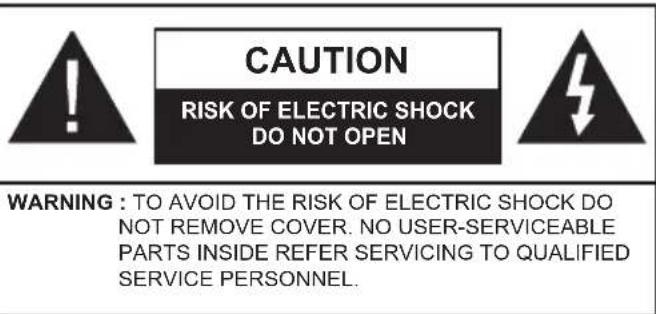
The lightning flash with arrowhead symbol, within an equilateral triangle, is intended to alert the user to the presence of uninsulated dangerous voltage within the product's enclosure that may be of sufficient magnitude to constitute a risk of electric shock of persons.
The exclamation point within an equilateral triangle is intended to alert the user to the presence of important operating and maintenance (servicing) instructions in the literature accompanying the appliance.
Notes on using discs
How to handle your discs
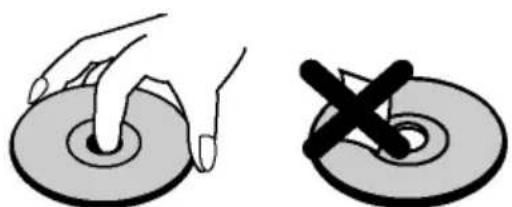
- To keep a disc clean, hold it by the edges. Do not touch its surface.
- Do not stick paper or adhesive tape on the disc.
- If the disc is made dirty by whichever susbance, glue for example, remove it before using the disc.
natural_image
Illustration of a hand holding a circular object with a cross mark, next to a circular disc (no text or symbols)- Do not expose the disc to direct sunlight or heat sources such as hot air ducts, and do not leave the disc in a car parked under sunlight, where the temperature can rise quickly and damage the disc.
• After use, place the disc in its case.
Cleaning
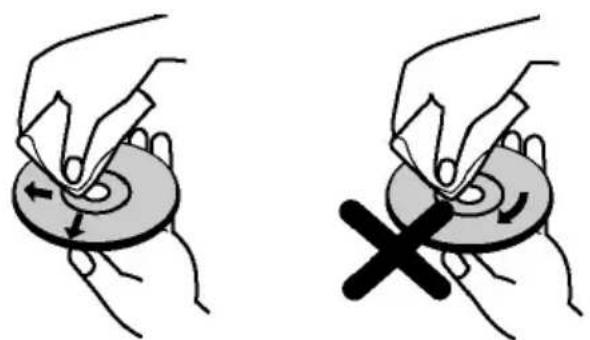
- Before using a disc, clean it with a cloth. Wipe the disc, from the centre towards the edge.
natural_image
Illustration of two hands performing a circular motion or maneuvering operation, one with directional arrows and the other with a cross (no text or symbols)- Do not use solvents such as benzene or thinners. Also avoid using cleaning products available in shops and antistatic sprays meant for vinyl records.
Licence notice
- This product includes copyright protection technology which is protected by patents of the UNITED STATES and other intellectual property rights. Provided an exceptional authorisation is issued by Rovi Corporation, this technology is meant for personal use only and its use should be subject to authorisation from Rovi Corporation. It is forbidden to strip it down or dismantle it.
How to watch a DVD
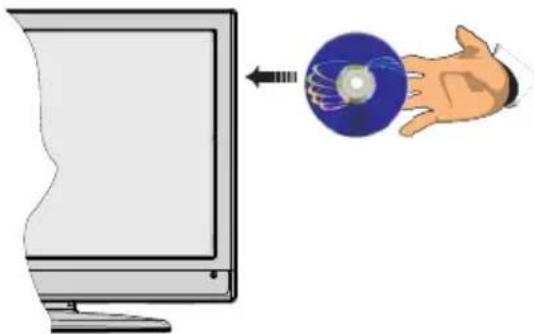
When you insert a disc in the loader, make sure that the side bearing the label is facing upwards.
natural_image
Illustration of a computer monitor with an arrow pointing to a CD/DVD disc, and a cartoon mouse pulling it (no text or symbols)When your television is turned on, first switch its source to DVD by using the SOURCE button on the remote control. Press the Play button on the remote control or directly press the Play button on the front panel of the device. If there is no disc in the loader, insert one and press Play.
Note: If you switch to another source by pressing SOURCE or using the P+/P- buttons on the remote control, the DVD stops playing automatically. You will have to press PLAY and manually restart the playing when you return to DVD mode.
DVD control panel buttons
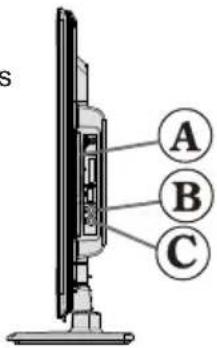
A. Disc loader
B. Play / Pause
Plays/Pauses the disc. When the DVD menu (main menu) is enabled, this button functions as the "Select button" (Selects the highlighted item in the menu) if the disc supports this functionality.
C. Stop / Eject
Stops the disc playing / Ejects or loads a disc:
- You cannot eject a disc using the remote control.
- When a file is being read, you have to press the STOP button three times before you can eject the disc.
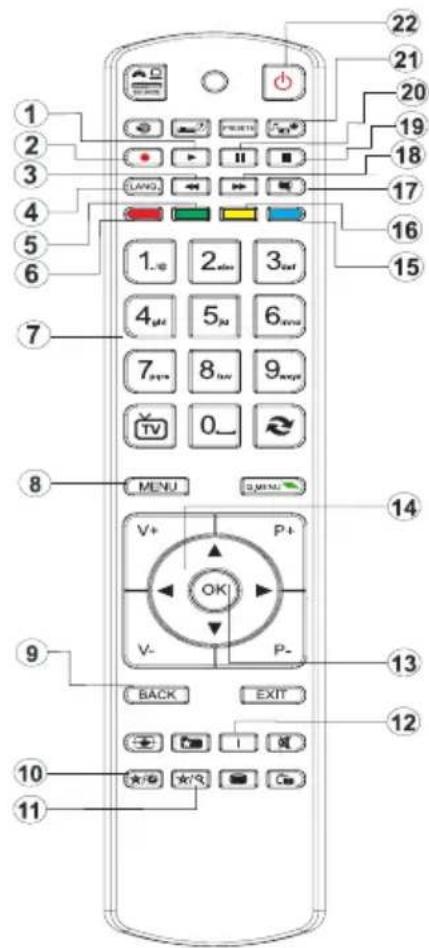
Overview of the remote control
- Read
- No function
- Quickrewind
- Language Selection
- Repeat mode
- Zoom
- Digital buttons
- Television menu
- Back
- DVD Display / Menu
- Search Mode
- Info
- OK / Select
- Browsing buttons
- Title Menu
- Root Menu
- Subtitle
- Fast forward
- STOP
- Pause
- Angle
- Standby
Note: Buttons that have not been assigned a number are not operational in DVD mode.
General operation
You can read the contents of film, music, or picture DVDs and CDs by using the appropriate buttons on the remote control. The main functions below are those of commonly used remote control buttons.
| Remote control buttons | Reading a DVD | Movie Pictures | Music | |
| ▶ | Read Read Read Read | |||
| II | Pause Pause Pause | Pause | ||
| ■ | Stop Stop Stop Stop | |||
| ◀/▶ | Skip backward/forward | Skip backward/forward | Turn around | Skip backward/forward |
| ▲/▼ | Selects a menu item / Moves zoomed image towards the top or bottom (if available). | |||
| ◀◀/▶▶ | Fast rewind / Fast forward | |||
| Displays the image from different angles (if available) | Changes cursor action effect (depending on the content) | X | ||
| MY BUTTON 1 | Displays time / displays the main settings menu | |||
| INFO | Select timer mode (when reading). Press successively to move from one mode to the next. | |||
| LANG. | Audio Language. inactive inactive | |||
| MENU | Displays the television's menu. | |||
| OK / SELECT | Enter / Display / Read | |||
| GREEN | Displays repeat options. | |||
| BACK | Return to previous menu (if possible) | |||
| YELLOW | Return to root menu of the disc (if available) | |||
| SEARCH MODE (*) | Direct selection of scene or time. | Selects the file wanted. | Selects the file wanted. | |
| MY BUTTON 2 | Start-Stop Subtitle Press successively to move from one subtitle option to another. | inactive inactive | ||
| EXCHANGE | Select source media. | |||
| BLUE | Displays the disc's menu (if available). | Displays the disc's menu (if available). | inactive inactive | |
| RED | Enlarges image. Press successively to move from one zoom option to another. | |||
| Other functions – Button combinations (During play) | |
| || ▶▶ | Slow forward |
| [|| ]▶▶ ◀◀ ▶▶ | Reduces forward speed |
| ▶▶ ▶▶ | Adjusts fast forward speed. |
| ◀◀ ◀◀ | Adjusts fast rewind speed. |
| ■ ■ | Confirm Stop button. |
(*) You can move to the title by pressing directly on the digital buttons. You will have to press 0, and then another digital button to get the number you want (for example: to select 5, press 0 and 5.)
General reading
Basic reading
- Turn on your television.
- Insert a disc inside the slot provided.
The disc loads automatically and starts playing if it has no menu.
A menu may appear on the television screen after a few moments, or the film may start immediately after the introduction of the film company. It all depends on the disc content given that it may vary.
Note: Steps 3 and 4 are available only when the disc includes a menu.
- Press “▼” / “▲” / ◀ / ▶ or the digital buttons to select the title you want.
- Press OK.
The item selected will start playing. The said item may be a film, an image, or another submenu depending on the disc.
Note that:
If an action related to a button is not authorised, the symbol will appear.

Notes on reading:
- Sound disappears during Fast Forward/Rewind.
- There is no sound in slow motion mode.
- Backward slow motion is not available.
- In some cases, the subtitle language does not change immediately according to the language selected.
- If the preferred language is not selected even after you press the button several times, it means that the language is not available on that disc.
- When you turn the player back on or when the disc is changed, the subtitle selection automatically changes to the initial settings.
- If a language not supported by the disc is selected, the subtitle language will automatically be the main language of the disc.
- There is a switch when you change the language. You can disable the subtitle by pressing the button several times until the message "Subtitle disabled" appears on the screen.
- When you turn the player on, or when you change the disc, the language you hear is that which was selected during the initial setup. If this language is not recorded on the disc, only the language available on the disc will be heard.
- Some DVDs do not have main titles and/or menus.
- Backward play is not available.
- For your convenience:
If you try to enter a digit higher than the total duration of the current title, the time-seek box will disappear and the message "Input Invalid" will appear on the screen.
- You cannot view pictures when the ZOOM is active.
Troubleshooting the DVD
Poor picture quality (DVD)
- Make sure that the surface of the DVD is not damaged. (Scratches, finger traces, etc.)
- Clean the DVD disc and try again.
Refer to the instructions under "Notes on discs" to clean the disc appropriately.
- Make sure that the disc is well inserted in the slot with the label facing upwards.
- If a DVD disc is wet or the device is in a wet place, image quality may deteriorate. Wipe your disc and wait for the condensation to disappear.
The disc does not play
- There is no disc in the player. Insert a disc in the loader.
• The disc is not properly inserted.
Make sure that the disc is well inserted in the slot with the label facing upwards.
- Wrong type of disc. CD-ROMs, etc. cannot be read. The disc has no region code, a DVD's BR must correspond to that of the player.
Wrong OSD Language
- Select the language in the settings menu.
• The DVD's audio language or subtitle cannot be changed. - The audio and / or multi-lingual subtitles were not recorded on the DVD.
- Try changing the audio and or subtitles using the DVD disc's title menus. Some DVDs do not allow the user to change these settings without using the disc's menu.
• These options are not available on the DVD disc.
No image
- Have you pressed the right buttons? Try once more.
No sound
- Make sure that the volume is set to an audible level.
- Make sure that the mute button has not been pressed by accident.
Distorted audio
- Check your audio settings.
Nothing is working
If you have tried all the above solutions without success, try turning the TV-DVD off and turning it back on. If that does not solve the problem, contact the dealer or technician authorised for TV-DVD players. Do not try to repair a faulty TV-DVD yourself.
Compatible Discs
| Disc Types (Logos) | Recording Types | Disc Size | Max. Playing Time | Characteristics |
Lecture du DVD  VIDEO VIDEO | Audio+Video | 12 cm | Single-sided; 240 min.Double-sided; 480 min. | ·DVD contains excellent sound and video due to Dolby Digital and MPEG-2 System.·Various screen and audio functions can be easily selected through the on screen menu. |
| AUDIO-CDCOMPACTDISCDIGITAL AUDIO | Audio 12 cm 74 min. | ·An LP is recorded as an analog signal with more distortion. CD is recorded as a Digital Signal with better audio quality, less distortion and less deterioration of audio quality over time. | ||
| MP3-CDMP3READABLE | Audio (xxxx.mp3) | 12 cm | It depends on MP3 quality. | ·MP3 is recorded as a Digital Signal with better audio quality, less distortion and less deterioration of audio quality over time. |
| PICTURE-CDJPEGREADABLE | Video (still picture) | 12 cm | It depends on JPEG quality. | ·JPEG is recorded as a Digital Signal with better picture quality over time. |
For the device to function correctly, use only 12 cm discs.
Specifications
| Types of Discs Supported | DVD: SS/SL 4.7" (DVD-5)SS/DL 4.7" (DVD-9)DS/SL 4.7" (DVD-10)DS/DL 4.7" (DVD-18) | CD-DACD-RCD-RWMP-3/JPEG |
| Video Type | MPEG-2 Video Standard Decoding (MPEG-1 supported)Full-Screen Video Display of 720 x 576 (PAL) & 720 x 480 (NTSC) pixels50 and 60 Hz frame refresh rates (PAL & NTSC)Digital bit-stream processing rate up to 108Mbits/secLine resolution more than 500 lines | |
| Audio Type | MPEG Multichannel DecodingLPCM | |
| Audio Output | Analog Outputs:24 bit /48, 44.1kHz down-sampling DAC | |
FICHE PRODUIT
| MARQUE QILIVE | ||
| REFERENCE Q.1638 | ||
| CLASSE D'EFFICACITE ENERGETIQUE A | ||
| DIAGONALE VISIBLE ECRAN 56 CM 22 POUCES | ||
| CONSOMMATION ELECTRIQUE EN MODE MARCHE | 22 | |
| CONSOMMATION D'ENERGIE ANNUELLE | 32 | |
| CONSOMMATION ELECTRIQUE EN MODE VEILLE | 0,5 | |
| CONSOMMATION ELECTRIQUE EN MODE ARRET | - | |
| RESOLUTION DE L'ECRAN 1920 x 1080 | ||
22168COMBO