T 5 FNF P (EX) - Fridge INDESIT - Free user manual and instructions
Find the device manual for free T 5 FNF P (EX) INDESIT in PDF.



| Product type | Combined refrigerator-freezer |
| Brand | Indesit |
| Model | T 5 FNF P (EX) |
| Special compartment | Cool Box for fresh meat and fish (up to one week) |
| Temperature adjustment | Separate thermostats for refrigerator and freezer (min/max positions) |
| Shelves | Sliding and height-adjustable |
| Door bins | Removable, including one with lid and one for cans |
| Vegetable drawers | Boxes for fruits and vegetables |
| Interior lighting | Replaceable lamp (max 10 W) |
| Freezing capacity | Maximum quantity per day indicated on the rating plate (not specified in the manual) |
| Installation | Minimum distance: 10 cm at the top, 5 cm on the sides; avoid heat sources and direct light |
| Electrical connection | 230 V ~ 50 Hz, socket with mandatory grounding |
| Wait after transport | 3 hours before plugging in |
| Interior cleaning | Warm water and baking soda; do not use abrasive products or solvents |
| Back cleaning | Vacuum cleaner with long attachment, medium power |
| Seal maintenance | Clean and in good condition to ensure sealing |
| Defrosting | Not specified (likely automatic or manual depending on model) |
| Door reversibility | Possible (mentioned at the end of the manual) |
| Spare parts | Use only original parts |
| After-sales service | Authorized technical assistance centers |
| Energy consumption | Not specified (refer to the energy label) |
Frequently Asked Questions - T 5 FNF P (EX) INDESIT
User questions about T 5 FNF P (EX) INDESIT
0 question about this device. Answer the ones you know or ask your own.
Ask a new question about this device
Download the instructions for your Fridge in PDF format for free! Find your manual T 5 FNF P (EX) - INDESIT and take your electronic device back in hand. On this page are published all the documents necessary for the use of your device. T 5 FNF P (EX) by INDESIT.
USER MANUAL T 5 FNF P (EX) INDESIT
T 5 FNF P (EX) O - T 5 FNF P (EX)
Refrigerator Installation and use
Fridge-freezer combined Instructions for installation and use

To maintain the EFFICIENCY and SAFETY of this appliance, we recommend:
- call only the Service Centers authorized by the manufacturer
- always use original Spare Parts
Safety - a good habit to get into.
ATTENTION
Read your manual carefully since it contains instructions which will ensure safe installation, use and maintenance of your appliance.
Your Refrigerator is built to International safety standards (EN60) ans has been awarded the European approval mark (IMQ) for compliance with UK electrical safety requirements. It also meets the EC standards on the prevention and elimination of radio interference (EC directive 87/308 - 02.06.89).
- This appliance is designed to be used indoors and under no circumstances should it be installed outside even if protected by a roof. Leaving the appliance exposed to the rain and whether is exceedingly dangerous.
- The appliance should be used only by adults and exclusively for storing foodstuffs in compliance with the instructions provided in this manual. Under no circumstances should children be allowed to operate, or tamper with, this product.
- Do not attempt to operate or handle this appliance when barefoot, or with wet hands or feet.
- It is highly recommended that you do not operate this appliance by connecting it to the power supply with extensions or multiple socket plugs. If the refrigerator has been installed between two cabinets, make sure that the supply chord is not dangerously crimped or trapped beneath a heavy object.
-
Never pull the cable or the appliance to remove the plug from the socket; this is exceedingly dangerous.
-
Do not touch the internal cooling elements, especially if your hands are wet, since you could burn or hurt yourself.
- Before doing any cleaning, disconnect the appliance from the electricity (by pulling out the plug or turning off the general switch in your home).
- Before disposing of your old appliance, remember to break or remove the lock as a safety measure to protect children who might lock themselves inside the appliance when playing. In addition, if the appliance is a new one with a lock, keeo the key out of the reach of small children.
- If your appliance is not operating properly, read the chapter entitled, "Trouble Shooting", which might help you resolve the problem, before calling an after-sales service centre. Do not attempt to repair the appliance by tampering with the internal components.
- If the power supply cord must be replaced, please contact one of our Customer Service Centers. In some cases, the connections are made using special terminals and in others a special tool must be used to access the connections.
- Do not use electric appliances inside the compartment for food storage, if these are not those recommended by the manufacturer.
- At the end of the functional life of your appliance - containing cyclopentane gas in the insulation foam and perhaps gas R600a (isobutane) in the refrigeration circuit - the latter should made safe before being sent to the dump. For this operation, please contact your dealer or the Local Organisation in charge of waste disposal.
Installation
Proper installation of the appliance is essential to ensure the best and most efficient performance of your appliance.
Ventilation
The compressor and condenser generate heat and, therefore, need to be ventilated properly. Rooms with less than perfect ventilation are not very suited for installation of the appliance. Therefore, it should be installed in a room with an opening (window or French window) that provide the appropriate amount of air re-circulation. It is also important that the room not be too humid.
During installation, make sure not to cover or obstruct the grates that allow for proper ventilation of the appliance.
For proper ventilation of the appliance, you must leave:
- a space of at least 10cm between the top part and any cabinets above it;
- a space of at least 5cm between the sides of the appliance and any adjacent cabinets/walls.
Away from Heat
Avoid positioning the appliance in a place where it is directly exposed to sunlight or near an oven, cook top or the like.
Levelling
The floor should be perfectly level; if not, you can adjust the feet at the front of the appliance.
Earthing
Before making the electrical connection, check that the voltage shown on the data plate, that you will find on the bottom left hand side of the appliance next to the risper, corresponds to that of your home and that the socket is earthed in compliance with all current electrical regulations. If the system is not earthed, the manufacturer declines all liability for consequent damages or losses. Do not use adapters or multiple sockets. Position the appliance in such a way that you can access the socket where it is plugged in.
Check the power load
The electrical socket must support the maximum power load of the appliance shown on the data plate (on the bottom left hand side of the appliance next to the risper).
Before plugging the appliance to the mains
Stand the appliance upright and wait at least 3 hours before plugging the appliance into the mains to ensure proper performance.
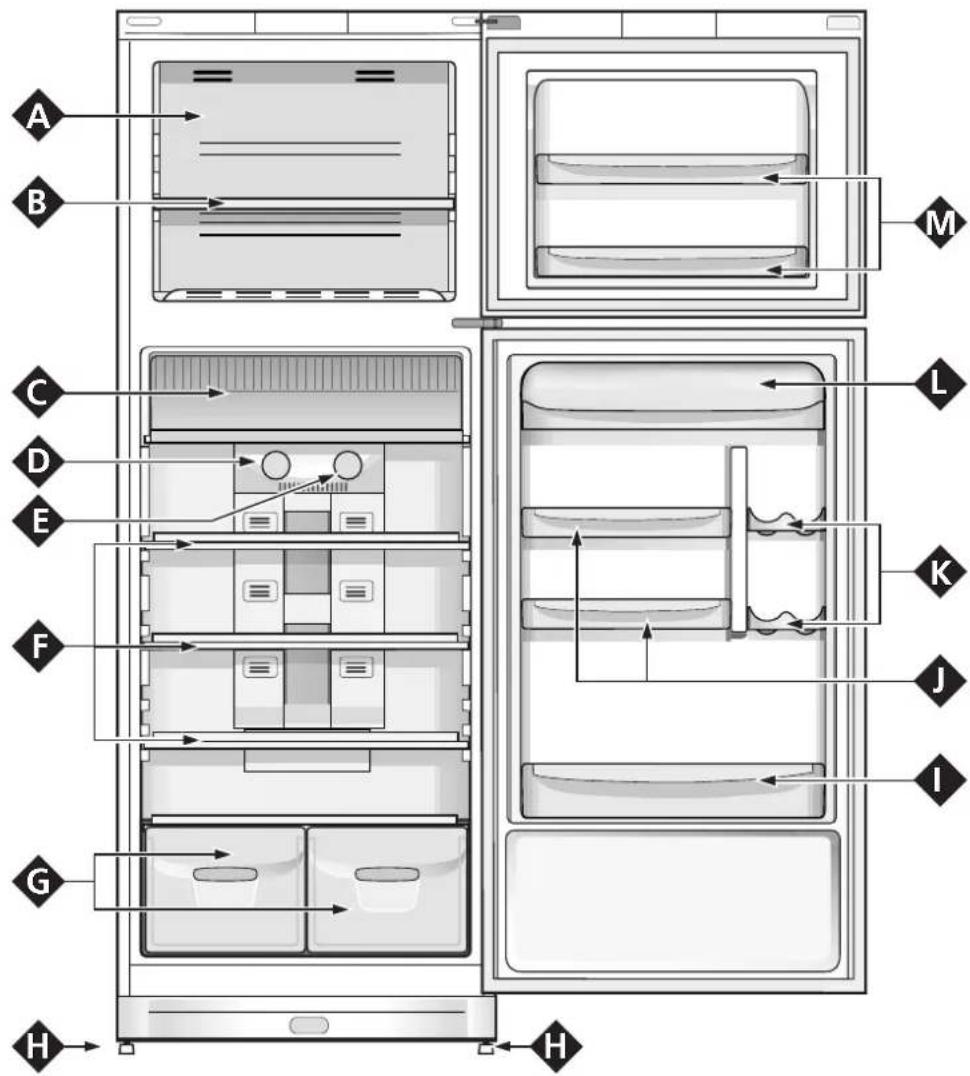
A closer look

Compartment for storing frozen foods, freezing fresh foods and making ice

Freezer shelf

"Cool Box" compartment for meat and fish

Fridge compartment temperature adjustment knob

Freezer compartment temperature adjustment knob

Removable height adjustable shelves

Fruit and vegetable drawer

Adjustable feet

Removable door shelf for bottles

Removable door shelf for food products

Beverage can shelves

Removable shelf with lid and egg compartment

Freezer door shelf
How to Start the Appliance
NOTICE
After the appliance has been delivered, stand it in the upright position and wait approximately 3 hours before connecting it to the electrical outlet to guarantee that it operates properly.
Before placing foodstuffs in the refrigerator or freezer, clean the interior well with warm water and baking soda.
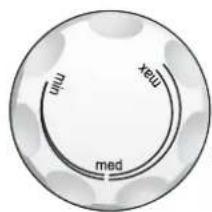
After putting the plug in the socket, make sure that the light is on inside the appliance and then turn the thermostat knob (D and E) to the "med" setting. After a few hours have passed, you can place fresh food in the refrigerator compartment and frozen foods into the freezer.
How to use the refrigerator compartment…
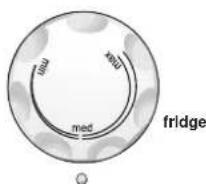
The thermostat automatically regulates the temperature inside the refrigerator compartment.
min = less cold
max = colder
It is recommended that a medium setting be used (med).
- Contrary to popular belief, cooked foods do not store any longer than raw food.
- Do not place liquids in containers without covering them because this will lead to an increase in the level of moisture within the refrigerator, causing the formation of frost.
- Remember to cool hot food before storing otherwise the temperature inside the appliance will increase, causing the compressor to work harder and use more energy.
WARNING: Do not place any food in direct contact with the air windows in order not to obstruct air flow.
The can rack
The can rack (Fig. 1) on the inner door allows you to store not only cans, but also yoghurt, butter and other containers, according to your requirements.
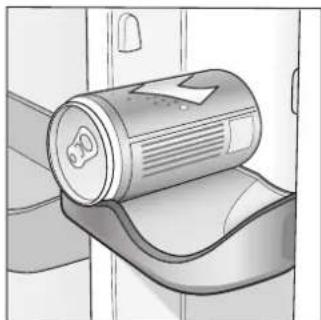
Fig. 1
Using the "Cool Box" compartment for meat and fish
This compartment was designed to allow for longer preservation times for fresh meat and fish (for as long as a week). This is possible as the coldest temperature of the
entire fridge is available inside this specific compartment.
Moreover, the "Cool Box" compartment can also be used to cool dishes that are normally eaten "cold".
The cover of the "Cool Box" is opened towards to the basement of the same compartment (Fig. 2).
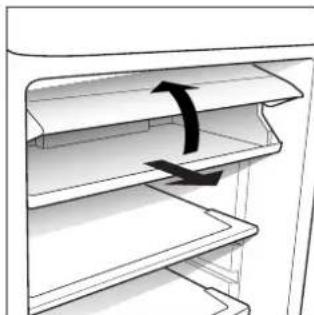
Fig. 2
What Not to Store in the Refrigerator
Garlic (transmits odour), onions and leeks.
Bananas (they will turn black).
Citrus fruits.
Potatoes and root vegetables (store in dark, dry places).
How to use the freezer compartment...
The thermostat automatically regulates the temperature inside the freezer compartment.
min = less cold
max = colder
It is recommended that a medium setting be used (med).
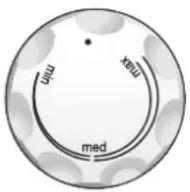
freezer
0
Freezing fresh foods
To freeze foods when the freezer is running follow these steps: set knob to "max" when you store the food.
After 24 hours have passed and the fresh food has been frozen, turn the knob back to one of the normal settings.
Attention: Do not forget to change the temperature setting if you want to avoid useless wastes of energy.
-
For the preparation of food to be frozen, please consult a specialized manual.
-
Food that has been thawed, even partially, must not be refrozen: you must cook it in order to consume it (within 24 hours) or to freeze it once again.
- Fresh foods that you intend to freeze must not be placed in contact with those that are already frozen or those that have been fast-frozen.
-
During the freezing process, avoid opening the door of the freezer.
-
The maximum daily quantity of food that can be frozen is indicated on the rating plate located to the left of the vegetable crisper.
- In order to freeze and then thaw foods optimally, it is recommended that you divide food into small portions so that they freeze quickly and uniformly. The packages should be clearly marked with the content and the date they were frozen.
- Do not open the freezer door in the event of a power failure or malfunction. This precaution will slow the rise in temperature within the compartment. If the door is not opened, frozen and fast-frozen foods will remain in their current state for approximately 9-14 hours.
- Do not place full bottles in the freezer: they could easily burst because all liquids increase in volume when they freeze.
- Fill the ice cube trays about 3/4 full.
WARNING: Do not place any food in direct contact with the all air windows in the freezer and fast freezer compartment in order not to obstruct air flow.
Tips on Saving Energy
- Install the Appliance Properly
In other words, away from sources of heat and direct sunlight, in a well ventilated room complying with the minimum distances indicated in the paragraph entitled, "Installation/Ventilation."
- Use the Right Temperature Setting
A setting which is too cold increases energy consumption.
- Do not Overfill
To conserve food properly, the cold air must circulate freely within the refrigerator. If it is overfilled, this will prevent proper air circulation, forcing the compressor to work continuously.
- Close the Doors
Open your refrigerator as little as possible because each time you do so you lose much of the cold air. To raise the temperature to the proper level again, the motor must work for a long time, consuming energy.
- Keep an Eye on the Seals
Keep the seals clean and make sure that they adhere well to the door. This alone will ensure that no cold air escapes.
- No Hot Foods
A hot pot or pan placed in the refrigerator immediately raises the temperature several degrees. Let hot cookware and food cool to ambient temperature before placing them in the refrigerator.
Guide to Using the Freezer
Meat and Fish
| Food Wrapping | Tenderising(days) | Storage(months) | Thawing Time | |
| Beef Roast Tinfoil 2 / 3 9 / 10 Not required. | ||||
| Lamb Tinfoil 1 / 2 6 Not required. | ||||
| Pork Roast Tinfoil 1 6 Not required. | ||||
| Veal Roast Tinfoil 1 8 Not required. | ||||
| Veal/Pork Chops | Each piece wrapped in cling wrap and then in tinfoil (4 to 6 slices) | 6 Not required. | ||
| Veal/Lamb Cutlets | Each piece wrapped in cling wrap and then in tinfoil (4 to 6 slices) | 6 Not required. | ||
| Minced Meat | In aluminium containers covered with cling wrap. | Freshlyminced | 2 Slowly in refrigerator. | |
| Heart and Liver Plastic Baggies 3 Not required. | ||||
| Sausages | Cling Wrap or Tinfoil | 2 | As necessary. | |
| Chicken and Turkey | Tinfoil 1 / 3 9 Very slowly in refrigerator. | |||
| Duck and Goose | Tinfoil 1 / 4 6 Very slowly in refrigerator. | |||
| Pheasant, Partridge and Wild Duck | Tinfoil 1 / 3 9 Very slowly in refrigerator. | |||
| Hare and Rabbit | Tinfoil | 3 / 4 | 6 | Very slowly in refrigerator. |
| Venison | Tinfoil or Cling Wrap | 5 / 6 | 9 | Very slowly in refrigerator. |
| Large Fish | Tinfoil or Cling Wrap | 4 / 6 | Very slowly in refrigerator. | |
| Small Fish Plastic Baggies | 2 / 3 | Not required. | ||
| Crustaceans | Plastic Baggies | 3 / 6 | Not required. | |
| Shellfish | Store in salted water in aluminiumcontainers or plastic containers. | 3 | Very slowly in refrigerator. | |
| Boiled Fish | Tinfoil or Cling Wrap | 12 | In hot water. | |
| Fried Fish | Plastic Baggies | 4 / 6 | Directly in pan. |
Fruits and Vegetables
| Food Preparation | Blanching Time | Wrapping | Storage (months) | Thawing Time | |
| Apples and Pears Peel and cut into slices. 2' | In Containers (cover with syrup) | 12 | In refrigerator very slowly. | ||
| Apricots, Peaches, Cherries and Plums | Peel and pit. 1' / 2' | In Containers (cover with syrup) | 12 | In refrigerator very slowly. | |
| Strawberries Blackberries and Raspberries | Rinse and fry. | In Containers (cover with sugar) | 10 / 12 | In refrigerator very slowly. | |
| Cooked Fruit Cut, cook and strain. | In Containers (add 10% sugar) | 12 | In refrigerator very slowly. | ||
| Fruit Juice Wash, cut and crush. | In Containers (sugar to taste) | 10 / 12 | In refrigerator very slowly. | ||
| Cauliflower | Remove leaves, cut head into small pieces and blanch in water and a little lemon juice. | 2' Plastic Baggies 12 Not required. | |||
| Cabbage and Brussel Sprouts | Wash and cut into small pieces. | 1' / 2' Plastic Baggies 10 / 12 At room temperature. | |||
| Peas | Shell and wash. | 2' Plastic Baggies 12 Not required. | |||
| French Beans | Wash and slice if required. | 2 | Plastic Baggies | 10 / 12 | Not required. |
| Carrots, Peppers and Turnips | Peel, wash and slice if necessary. | 3' / 4' | Plastic Baggies 12 Not required. | ||
| Mushrooms and Asparagus | Wash, peel and cut up. | 3' / 4' | Plastic Baggies or Containers | 6 | At room temperature. |
| Spinach | Wash and mince. | 2' | Plastic Baggies | 12 | At room temperature. |
| Vegetable for Soups | Wash and cut up in small pieces. | 3' | Plastic Baggies or Containers | 6 / 7 | Not required. |
| Various Foods | Preparation | Blanching Time | Wrapping | Storage (months) | Thawing time |
| Bread | Plastic Baggies | 4 | At room temperature and in the oven. | ||
| Cakes | Plastic Baggies | 6 | About 10 minutes at room temperature, cook at 100/200°C. | ||
| Cream | Plastic Containers | 6 | At room temperature or in refrigerator. | ||
| Butter | In original wrapping or tinfoil | 6 | In refrigerator. | ||
| Boiled Food or Vegetable Soup | Plastic or Glass Containers | 3 / 6 | At room temperature or in hot water. | ||
| Eggs | Freeze without shells in small containers | 10 | At room temperature or in refrigerator. | ||
Keeping Your Appliance in Shape
Cleaning and maintenance
Always unplug the appliance from the mains before cleaning.
- Your appliance is manufactured with hygienic odourless materials. To preserve these characteristics, always use sealed containers for strong smelling foods to avoid the formation of odours that are difficult to remove.
- Use only a water and bicarbonate solution: Clean the internal and exterior of your appliance with a sponge soaked with a warm water and sodium bicarbonate solution, which is also a good disinfectant. If you do not have any sodium bicarbonate at home, use neutral detergent.
- What not to use: Do not use abrasive detergents, bleach or detergents containing ammonia. Never use solvent based products.
-
Dishwashable: All the removable parts can be cleaned by soaking in hot soapy water or detergent. If you own a dishwasher, you may wash these parts in the dishwasher. Remember to dry thoroughly before replacing them.
-
What about the back panel? Dust may deposit on the back panel and affect the proper running of the appliance. To remove dust, vacuum away the dust very carefully using the appropriate vacuum cleaner accessory.
-
Discontinued use of the appliance: If the appliance is not in use for any length of time, remember to clean the interior and dry thoroughly, leaving the doors open to prevent the formation of bad odours and mould.
-
How to replace the internal lamp. The lamp for the internal light is situated at the rear of the thermostat box. To replace it, disconnect the appliance from the electricity mains, unscrew the burned out bulb and replace it with another bulb with a wattage no higher than 10 Watt, follow the instructions illustrated in fig. 3.
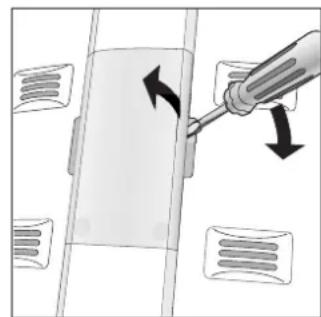
Fig. 3
Is There a Problem?
The refrigerator does not function.
Have you checked whether:
The main switch for the electricity to the apartment or home has been turned off;
- The plug is properly inserted in the outlet;
- The outlet is adequate; try inserting the plug into another outlet in the room.
The refrigerator and the freezer do not cool properly.
Have you checked whether:
The doors do not close well or the seals are faulty;
- The doors are left open too long;
- The thermostat knob is not on the proper setting;
- The refrigerator or freezer is overfilled.
The food in the refrigerator becomes too cold.
Have you checked whether:
- The thermostat knob is on the proper setting.
The motor runs continuously.
Have you checked whether
- The doors are not closed well or have remained open too long;
The ambient temperature is too high; - The thermostat knob is not on the proper setting.
The appliance makes too much noise.
The gas refrigerant produces a slight noise even when the compressor is not running (this is not a defect).
Have you checked whether:
- The refrigerator is level.
- The appliance was installed between cabinets or objects that vibrate and make noise.
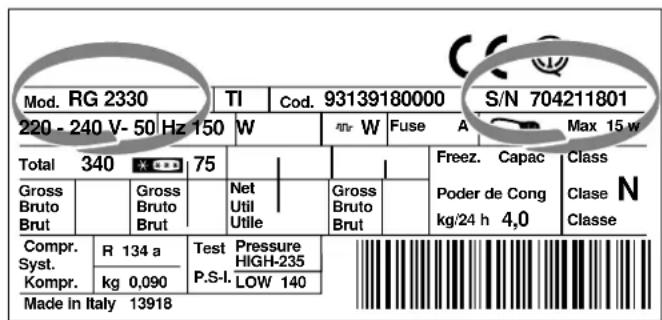
If after all the checks, the appliance still does not operate or the problem persists, call the nearest Service Centre and inform them of: the type of problem, the abbreviation of the model name (Mod.) and the relative numbers (S/N) written on the rating plate located at the bottom left next to the vegetable crisper (see examples in the figures below).
Never call on unauthorized technicians and always refuse spare parts which are not originals.
- Attention aux joints
J 10
A
A
A
A
A
A
A
A
A
A
A
A
A
A
A
A
A
A
A
A
A
A
A
A
A
A
A
A
A
aaglll lal y 150 g aegy jgall lgln lgl n 1234567890123456789012345678901234567890123456789012345678901234567890123456789012345678901234567890123456789

Cool" a jlll 150 s J
Jy Jn Jn Jn Jn Jn Jn Jn Jn Jn Jn Jn Jn Jn Jn Jn Jn Jn Jn Jn Jn Jn Jn Jn Jn Jn Jn Jn Jn Jn Jn Jn Jn Jn Jn Jn Jn Jn Jn Jn Jn Jn Jn Jn Jn Jn Jn Jn Jn Jn Jn Jnn Jnn Jnn Jnn Jnn Jnn Jnn Jnn Jnn Jnn Jnn Jnn Jnn Jnn Jnn Jnn Jnn Jnn Jnn Jnn Jnn Jnn Jnn Jnn Jnn Jnn Jnn
fridge