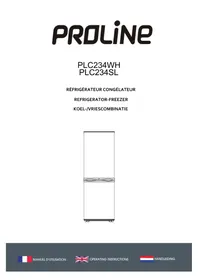
PLC234WH - Refrigerator PROLINE - Free user manual and instructions
Find the device manual for free PLC234WH PROLINE in PDF.



| Product type | Refrigerator-freezer |
| Brand | PROLINE |
| Model | PLC234WH |
| Energy class | A+ (scale A+++ to D) |
| Total net volume | 235 L |
| Net refrigerator volume | 161 L |
| Net freezer volume | 74 L (4 stars) |
| Dimensions (W x D x H) | 545 x 560 x 1600 mm |
| Net weight | 47 kg |
| Power supply | 220-240 V ~ 50 Hz, 1.2 A |
| Annual consumption | 252 kWh/year |
| Climate class | N (16°C-32°C), ST (16°C-38°C), T (18°C-43°C) |
| Refrigerant | R600a (isobutane), 70 g |
| Noise level | 42 dB(A) |
| Freezing capacity | 3.5 kg/24h |
| Power failure autonomy | 18 hours |
| Temperature control | Mechanical dial (0 = off, 1-7) |
| Lighting | LED (not user-replaceable) |
| Refrigerator defrost | Automatic |
| Freezer defrost | Manual |
| Door reversal | Possible (call a technician) |
| Coldest zone | Built-in temperature indicator |
| Cleaning | Soft cloth, warm water and mild detergent |
| Accessories | Ice cube tray (not supplied), shelves, vegetable drawer |
Frequently Asked Questions - PLC234WH PROLINE
User questions about PLC234WH PROLINE
0 question about this device. Answer the ones you know or ask your own.
Ask a new question about this device
Download the instructions for your Refrigerator in PDF format for free! Find your manual PLC234WH - PROLINE and take your electronic device back in hand. On this page are published all the documents necessary for the use of your device. PLC234WH by PROLINE.
USER MANUAL PLC234WH PROLINE
MOVING YOUR APPLIANCE 4
STORING FOOD IN THE FRIDGE COMPARTMENT 4
FREEZING AND STORING FOOD IN THE FREEZER COMPARTMENT 5
MAKING ICE CUBES 6
DEFROSTING-6
DOOR CONVERSION- 6
TIPS FOR SAVING ENERGY-7
OPERATING NOISES 7
CLEANING AND MAINTENANCE 7
TROUBLESHOOTING 7
SPECIFICATIONS 8
DISPOSAL-8
THE COLDEST PART OF THE REFRIGERATOR 9
PLEASE READTHE FOLLOWINGINSTRUCTIONSSCAREFULLYBEFORE USINGTHEAPPLIANCEANDKEEPFORFUTUREREFERENCE.
WARNING
Thisapplianceisintendedtobeusedinhouseholdandsimilarapplications suchas
- staffkitchenareasinshops, officesandotherworkingenvironments;
- farm housesandbyclientsinhotels,motelsandotherresidential typeenvironments;
- bed and breakfast type environments;
-
cateringandsimilarnon-retailapplications.
-
Ifthesupplycordisdamaged, it must be replaced by the manufacturer, its service agents similarly qualified persons in order to avoid hazard.
- Thisappliancecanbeusedbychildrenagedfrom8yearsandaboveand personswithreducedphysical,sensoryormentalcapabilitiesorlackof experienceandknowledgeiftheyhavebeengivensupervisionor instructionconcerninguseoftheapplianceinasafewayandunderstand thehazardsinvolved.Childrenshallnotplaywiththeappliance.Cleaning andusermaintenanceshallnotbemadebychildrenwithoutsupervision.
- Regardingtheinstructionsforcleaningsurfacesincontactwithfood, refertothesection"CleaningandMaintenance"onpageofth manual.
- Theapplianceshallnotbeexposedtorain.
- WARNING:Keepventilationopenings, intheapplianceenclosureorinthebuilt-instructure,clearofobstruction.
-
WARNING: Donotusemechanicaldevicesorothermeanstoaccelerate thedefrostingprocess, otherthanhoserecommendedbythe manufacturer.
-
WARNING: Donotdamagethefrigerantcircuit.
- WARNING: Donotuselectrical appliancesinsidethefoodstorage compartments of the appliance, unless they are of the type recommended by the manufacturer.
- Do notstoreexplosivesubstancessuchaserosolcanswithaflammable propellantinthisappliance.
- CAUTION: The coolingsystemisunderhighpressure.Donottouchit. Contactqualifiedmaintenanceservicesbeforedisposal.
- INSTALLATION: DONOTINSTALL THIS APPLIANCE IN AREASTATARETOO HUMIDORTOOCOLD, SUCHASTHEOUTBUILDINGS,GARAGESORWINE CELLARS.
- Fordisposalo f the appliance:
Topreventpossibleharmtotheenvironmentalhealthfrom uncontrolledwastedisposal,recycletheapplianceresponsibly to promotethesustainablereuseofmaterialresources,therefrigerantsand theflammableinsulationblowinggases.Thedisposalshouldonly bedonethroughpubliccollectionpoints;contactthewastetreatment centrenearestyourhomeformoredetailsonthecorrectproceduresfor disposal.
- Forinstallation,servicing:
Appliance shouldbeplacedonahorizontalsurfaceandkeepthe ventilationfreely.Don'ttrytoreplaceorrepairanycomponentsby yourself,asktheserviceagencyforhelpnecessary.
- Forhandling:
Alwayshandle the appliance to avoid any damage.
- WARNING: Formaking ice (icecubes), use potable water only.
- Neverfreezedefrostedfoodexceptiftheyhavebeencookedbefore,in
ordertoeliminateharmfulbacteria.Neverrefreezeseafoodthathasbeendefrosted.
- WARNING:Toavoidahazardduetoinstabilityoftheappliance, itmustbefixedinaccordancewiththeinstructions.
IMPORTANTSAFETYINSTRUCTIONS
If you are discarding an old fridge freezer with a lock / catch fitted to the door, ensure that it is left in a disabled condition to prevent the entrapment of youngchildrenwhenplaying.
- Unplug the appliance from the mains socket when not in operation and before cleaning. Remove food before cleaning the appliance.
- Do not insertoversizedfoodsthiscouldcauseincorrectoperation.
- Extremecationmustbeusedwhenmovingtheappliance.
- Do not give children ice-cream and water ices direct from the freezer compartment as the low temperature may cause 'freeze burns' on the lips.
- Do notstandorsupportyourselfonthebasedoor,etc.
- Effervescentdrinkssshouldnotbestoredinthefreezercompartment.
Disposeofyouoldappliance
Fridgefreezerscontainrefrigerantandgasesintheinsulation.
Refrigerant and blowing gases must be disposed of professionally. Ensure that tubing of the refrigerant circuit is not damaged prior to proper disposal.
NAMESOFPARTS
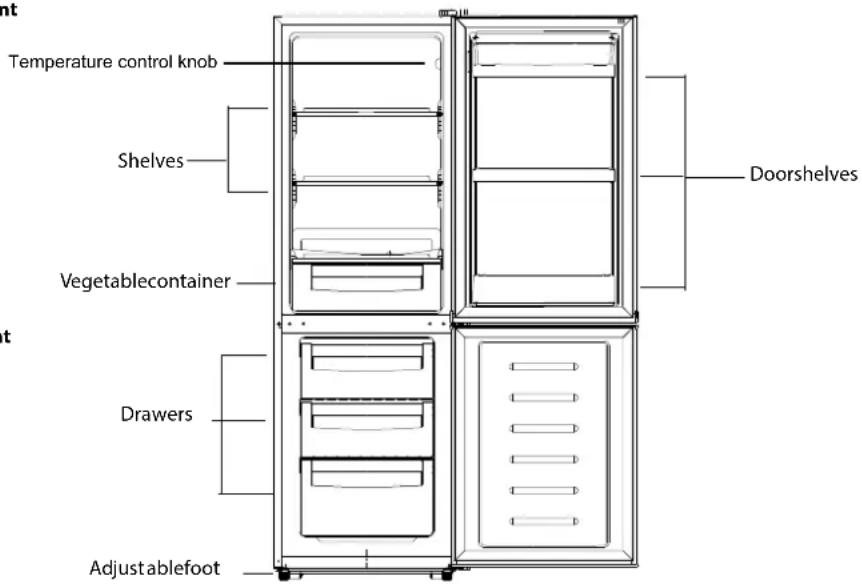
FridgeCompartment
FreezerCompartment
BEFOREINSTALLINGTHEAPPLIANCE
Before connecting your fridge freezer to the power supply, check that the voltage stated on the rating label of your appliance corresponds to the voltage in your home. Adifferentvoltagecoulddamagetheappliance.
The plug is the only way to unplug the appliance and should therefore be accessible at all times. To turn off main power to the appliance, turn it off and thenetachtheplugfromtheoutlet.
The appliance must be grounded. The manufacturer is not responsible for damages that may occur as a result of usage without grounding.
INSTALLATION
Install the appliance in a dry, well ventilated room. The installation location should neither be exposed to direct sunlight nor near a heat source, e.g. a cooker, radiator, etc.
To ensure adequate ventilation for the appliance, allow a minimum of 10cm of airspace on each side of the cabinet.
For unevensurfaces,frontfeetcanbealigned.
AMBIENT EMPERATURE
Thisap plance is designed to operate in ambient temperature between 16^ and 43^ If these temperatures are exceeded, i.e. colder or warmer, the appliance will not operate correctly. If the ambient temperatures are exceeded for long periods, the temperature in the freezer compartment will rise above- 18^ and food spoil may occur.
BEFOREPLA CINGFOODINTHEAPPLIANCE
- Removeallpackaging.
- Allow the appliance to be empty for 2-3 hours so the components can cool to the appropriate temperature.
- Clean the inside of the appliance with warm water and a little liquid detergent to remove manufacturing and transportation dust.
POWERFA ILURE
If there is a power failure, do not open the door. Frozen food should not be affected if the power failure lasts for less than 18 hours. Do notrefreezefrozenfoodsthathavethawedcompletely.Thefoodmaybedangeroustoeat.
TEMPERATURECONTROL
There is a temperature control knob located inside the fridge compartment. Adjust the control knob as desired to suit your individual preference.
Oisoffsetting-stopcooling
1iscoldsetting
7iscoldestsetting
- Theru nning time and temperature are affected by where the fridge freezer is located, how often the door is opened and the temperature of the room thefridgefreezerislocatedin.
- When you use the appliance for the first time or after defrosting, adjust the control knob to the coldest setting for at least 2 hours before introducing foodtobestored, and then readjusttothemiddlesetting.
MOVINGYO URAPPLIANCE
If the appliance is turned off for any reason, wait for 10 minutes before turning it back on. This will allow the refrigeration system pressures to equalise before starting.
- Turn off the appliance and unplug it from the mains socket. Remove all food. Also remove all mobile parts (shelves, accessories, etc.) or fix them into the appliancetoavoidanyshock.
- Relocate and install. If the appliance has been left on its side for any length of time, leave it standing upright for at least 10 minutes before turning on.
Your appliance uses isobutane (R600a) as a refrigerant. Although R600a is an environmentally friendly and natural gas, it is explosive. Therefore you should be careful during shipment and installation to prevent your appliance's cooler elements from being damaged. In the event of a leak caused by damage to the cooler elements, move your appliance from open flame or heat sources and ventilate the room where the appliance is located for a few minutes.
STORINGFOODINTHEFRIDGEGCOMPARTMENT
Thefridge compartmenthelpstoextendthestoragetimesoffreshperishablefoods.
Freshfoodcare
For bestresults:
- Storefoodsthatareveryfreshhandofgoodquality.
- Ensuretha t food is well wrapped or covered before it is stored. This will prevent food from dehydrating, deteriorating in colour or losing taste and will helpmaintainfreshness.Itwillsopreventodourtransfer.
Make sure that strong smelling foods are wrapped or covered and stored away from foods such as butter, milk and cream which can be tainted by strong odours.
Coolho tfoodsdownbeforeplacingtheminthefridgecompartment.
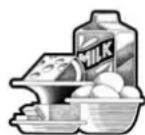
Dairyfoodsandeggs
- Mostpre-packed dairy foods have a recommended 'use by /best before/best by/' date stamped on them. Store them in the fridge compartmentandusewithinthererecommendedtime.
- Butter canbecometaintedbystrongsmellingfoodssoitisbeststoredinasealedcontainer.
- Eggscan bestowedintheeggtrayofthefridgecompartment.
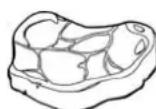
Redm eat
- Placefreshredmeatonaplateandlooselycoverwithwaxedpaper,plasticwraporfoil.
- Storec ooked and raw meat on separate plates. This will prevent any juice lost from the raw meat from contaminating the cooked product.
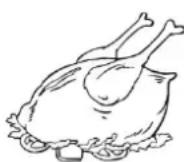
Poultry
- Freshwholebirdssshouldberinsedinsideandoutwithcoldrunningwater,driedandplacedonaplate.Coverlooselywith plasticwraporfoil.
- Poultrypiece should also be stored this way. Wholepoultry should never be stuffed until just before cooking, otherwise food poisoning may result.
Fish andseafood
Wholefshandfilletsshouldbeusedonthedayofpurchase.Untilrequired,refrigeratednaplatelooselycoveredwith
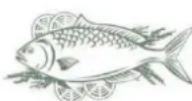
plasticwrap, waxedpaperorfoil.
- If storing overnight or longer, take particular care to select very fresh fish. Whole fish should be rinsed in cold water to remove loose scales and dirt and thenpattedrywithpapertowels. Placewholefishorfilletsinasealedplasticbag.
- Keepshellfishchilledatatimess.Usewithin1-2days.
Precookedfoodsandleftovers
- Theseshouldbestoredinsuitablecoveredcontainerssothathefoodwillnotdryout.
- Keepforonly1-2days.
- Reheatleftoversonlyonceanduntilsteaminghot.
Vegetableandfreshfruit
The vegetablecontaineristheoptimumstoragelocationforfreshfruitandvegetabies.
Takecarenottostotrethefollowattemperaturesoflessthan 7^ forlongperiods:
Citrus fruit, melons, aubergines, pineapple, papaya, courgettes, passion fruit, cucumber, peppers, tomatoes.
- Undesirable changes will occur at low temperatures such as softening of the flesh, browning and/or accelerated decaying.
- Do not refrigerate avocados (until they are ripe), bananas, mangoes.
FREEZINGANDSTORINGFOODINTHFREEZERCOMPARTMENT
Using the freezer compartment
- Tostoredeep-frozenfood.
To makeicecubes.
To freezefood.
Note: Ensurethatthefreezercompartmentdoorhasbeenclosedproperly.
Purchasingfrozenfood
- Packagingmustnotbedamaged.
- Use bythe'useby/bestbefore/bestby/'date.
- If possible, transport deep-frozen food in an insulated bag and place quickly in the freezer compartment.
Storingfrozenfood
Store at-18°Corcolder.Avoidopeningthefreezercompartmentdoorunnecessarily.
Freezingfreshfood
Freezefreshandundamagedfoodonly.
To retain the best possible nutritional value, flavour and colour, vegetables should be blanched before freezing.
Aubergines,peppers,zucchiinandasparagusdonotrequireblanching.
Note:Keep foodtobefrozenawayfromfoodwhichisalreadyfrozen.
The followingfoodsaresuitableforfreezing:
Cakes and pastries, fish and seafood, meat, game, poultry, vegetables, fruit, herbs, eggs without shells, dairy products such as cheese and butter, ready mealsandleftoversuchassoups,stews,cookedmeatandfish,potatodishes,soufflesanddesserts.
The followingfoodsarenotsuitableforfreezing:
Types of vegetables, which are usually consumed raw, such as lettuce or radishes, eggs in shells, grapes, whole apples, pears and peaches, hard-boiled eggs, yoghurt, soured milk, sour cream, and mayonnaise.
Packingfrozenfood
Topreventfoodfromlosingitsflavourordryingout,placefoodinairtightpackaging.
1. Placefoodinpackaging.
2.Removeair.
3.Sealthewrapping.
4.Labelpackagingwithcontentsanddatesoffreezing.
Suitablepackaging:
Plasticfilm,tubularfilmmadeofpolyethylene,aluminiumfoil.
These products are available from specialist outlets.
Recommendedstoragetimesoffrozenfoodinthefreezercompartment
These times vary depending on the type of food. The food that you freeze can be preserved from 1 to 12 months (minimum at -18°C).
| FoodStoragetime | |
| Bacon, casseroles,milk1 month | |
| Bread, ice cream, sausages, pies, prepared shellfish, oily fish 2 months | |
| Non-oily fish, shellfish, pizza, scones and muffins 3 months | |
| Ham, cakes, biscuits, beef and lamb chops, poultry pieces 4 months | |
| Butter, vegetables (blanched), eggswhole andyolks, cooked crayfish, minced meat (raw), pork (raw) | 6 months |
| Fruit (dryorinsyrup), eggwhites, beef (raw), whole chicken, lamb (raw), fruit cakes 12 months |
Neverforget:
- Whenyoufreezefreshfoodswitha'useby/bestbefore/bestby/'date,youmustfreezethembeforethisdateexpires.
-
Check that the food was not already frozen. Indeed, frozen food that has thawed completely must not be refrozen.
-
Oncedefrosted,foodshouldbeconsumedquickly.
MAKING ICECUBES
Filltheicecubetray(notsupplied)with 1 / 4 fullofdrinkingwaterandplaceinthefreezercompartment. Iftheicecubetrayisstucktothecompartment,loosenwithablunttoolonly. Toloosentheicecubes,twisttheicecubetrayslightlyorholdbrieflyunderflowingwater.
DEFROSTING
Refrigeratorcompartmentdefrostsfullyautomatically
While the refrigerating unit is running, beads of condensation or hoarfrost from at the back of the refrigerator compartment. This is normal. It is not necessary to wipe off the condensation or frost. The rear panel defrosts automatically. The condensation runs into the condensation channel and disconveyed to therefrigerating unit where it evaporates. Note:Keep the condensation channel and drainage hole clean, so that the condensation can run out.
Defrostingthefreezercompartment
The freezer compartment does not defrost automatically, otherwise the frozen food would start thawing. A layer of frost in the freezer compartment impairs refrigeration of the frozen food and increases power consumption. Remove the layer of hoar frost regularly.

Do not scrapeoffhoarfrostoricewithaknifeorpointedobject.Doingthismaydamagethefrigeranttubes.
1.Removethefrozenfoodandplacetemporarilyinacoollocation.
2.Setthe temperaturecontrolknobtothe0positionanddisconnectthemainsplugfromthemainssocket.
3.Toacceleratedefrostingprocess,placeapanofhotwateronastandinthefreezercompartment.
4.Wipeupcondensationwithaclothorsponge.
5.Wipedrythefreezercompartment.
6. Pluginthe appliance and adjust the temperature control knob as desired.
7.Putthefrozenfoodbackinthefreezercompartment.
DOOR CONVERSION
If you need to hinge your fridge and freezer doors on the opposite side it is recommended that you call your local authorised service agent to make this conversionoraskatechnician.Thebelowdrawingsareonlyforreference.
Before you reverse the doors, you should ensure the appliance is unplugged and empty. It is recommended to use a crosshead screwdriver and a spanner (both not supplied).
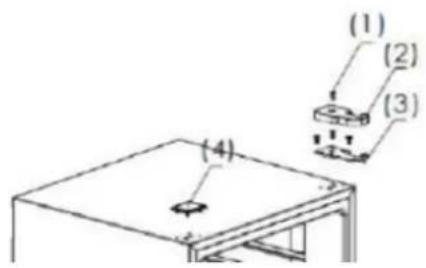
- Remove the screw (1) that fixes the upper hinge cover (2) and remove the upper hinge cover.
Remove the screws that hold the upper hinge and remove the upper hinge.
Remove the upper hinge hole cover (4). Lift the door and place it on a padded surface to prevent it from being scratched.
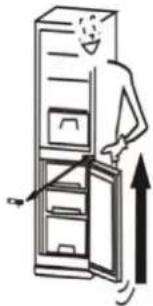
2. Removethemmiddlehinge.Liftthefreezerdooroutofthe bottomhingeandsetitaside.
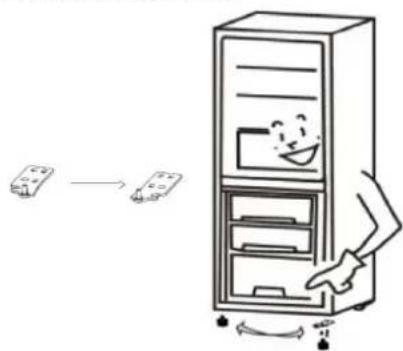
3. Unscrewtheaxisfromthelowerhingeandreversethelowerhinge.Screwthe axisonthelowerhingeagain.Removetheadjustablefootandfitttothe oppositeside.Fitthelowerhingetotheoppositeside.
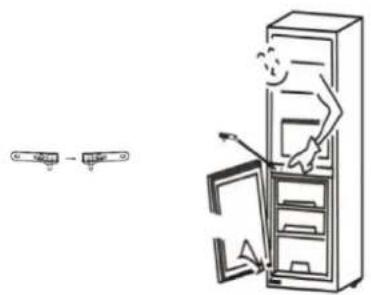
4.Reversethemmiddlehingeandfitittotheoppositeside.Fit thefreezerdoor.
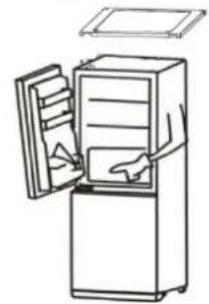
5.Fit the fridge door and secure the upper hinge in the top frame with screws. Secure the upper hinge cover onto the upper hinge with the screw. Attach the upper hinge hole cover to the top of the appliance.
TIPS FORSAVINGENERGY
Forthemostenergyefficientuseofyourappliance:
- Ensure yourfridgefreezerhasadequateventilationasrecommendedintheinstallationinstructions.
- Allowwarmfoodanddrinkstocooldownbeforeplacingintheappliance.
- Thawfrozenfoodintherefrigeratorcompartmentandusetheleowtemperatureofthefrozenfoodtocoolefrigeratedfood.
- Keepdooropeningstoaminimum.
- Opentheapplianceasbrieflyaspossible.
- Ensurethatthefridgeandfreezerdoorsarealwaysclosedproperly.
OPERATINGNOISES
Normalnoises
Motorsarerunning.
- Refrigerantisflowingthroughetubing.
CLEANINGANDMAINTENANCE

Do notuseabrasivecleaningagentsorsolvents.
1.Disconnectthemainsplugfromthemainsssocket.
2.Takeutthefoodandstoreinacoollocation.
3.Cleantheappliancewithasoftcloth,warmwateranddetergent.
4.Wipethedoorsealwithclearwateronlyandthenwipedrythoroughly.
5. After cleaning reconnects et the temperatureasdesired.
6.Putthefoodbacktotheappliance.
TheLEDlightinthefridgecompartmentcannotbereplacedbytheuser.Ifthe
LEDlightstopsworking,pleasecontactthelocalauthorisedserviceagen t.
TROUBLESHOOTING
If there is a problem with your appliance, please check the following points before contacting customer service.
| Problem | Possiblecauses | Possiblesolution |
| Appliance does not operate. | No electricity at power outlet. | Check that the plug is correctly connected and power switched on. |
| NoisesCabinetnotstableorlevel | Seeinstallationsection. | |
| Appliancenotcool | Temperaturesettingsnotcorrect. | Seetemperaturecontrolsection. |
| Frequentdooropenings. | Minimisedooropeningstoallowtemperaturesstostabilise. | |
| Largeamountoffoodrecentlyadded. |
SPECIFICATIONS
| Brand | PROLINE |
| Model | PLC234WH/PLC234SL |
| Appliancetype | Refrigeratorfreezer |
| Energyeff iencyclass ➀ | A+ |
| Annualener gyconsumption ➁ | 252kWh/annu m |
| Refrigerator storagevolume | 161L |
| Freezerstoragevolume | 74L |
| Totalhenvolume | 235L |
| Totalgrossvolume | 240L |
| Starring | * * * * |
| Temperaturerisetime | Power cut safe18h |
| Freezingcapacity | 35kg/24h |
| Climate class+Ambientrange | N(+16°C~+32°C) T(+18°C~+43°C) ST(+16°C~+38°C) |
| Noisee mission | 42dB(A)re1pW |
| Electricshockprotectionclass | I |
| Rated voltageandfrequency | 220-240V~,50Hz |
| Ratedcurrent | 1.2A |
| Energyconsumption | 0.69kWh/24h |
| Insulation blowinggas | Cyclopentane |
| Refrigerant/Amount | R600a/70g |
| Built-in appliance | No |
| Netweig ht | 47kg |
| Product dimension(WxDxHmm) | 545x560x1610 |
| ➂Energyclass:A +++(moste effcient)....D(leastefficient) | |
| ➂Therea lpowerconsumptiondependsonusingconditionsandappliancelocation. | |
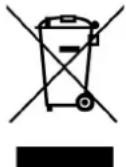
DISPOSAL
As a responsible retailer we care about the environment. As such we urge you to follow the correct disposal procedure for the appliance
and packaging materials. This will help conserve natural resources and ensure that it is recycled in a manner that protects health and the environment.
You must dispose of this appliance and its packaging according to local laws and regulations.
Because this appliance contains electronic components, the appliance and its accessories must be disposed of separately from household waste when the appliance reaches its endoflife.
Contact your local authority to learn about disposal and recycling.
The appliance should be taken to your local collection point for recycling. Some collection points accept appliance free of charge.
We apologise for any inconvenience caused by minor inconsistencies in these instructions, which may occur as a result of product improvement and development.
EtsDarty&filsSAS14,rounded'Aulnay93140BondyFrance 24
/1/2019
THE COLDEST PART OF THE REFRIGERATOR

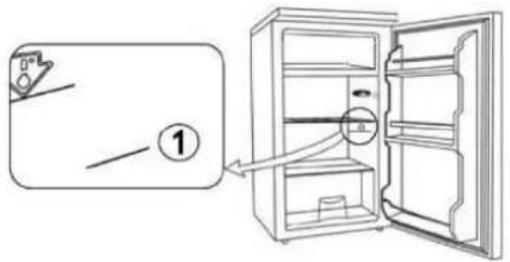
The symbol indicates the location of the coldest part of your refrigerator. This area is in between the vegetable compartment at the bottom and the symbol at the top, or the shelf at the same height. In order to maintain the temperature in this area, make sure not to change the position of this shelf.
In pulsed air refrigerators (equipped with a fan) or No Frost models, the coldest area symbol is not shown because the temperature is uniform throughout the interior.
INSTALLING THE TEMPERATURE INDICATOR
To help you adjust your refrigerator correctly, it is equipped with a temperature indicator that you can use to control the average temperature in the coldest area.
WARNING: This indicator is only intended for use in your refrigerator. Do not use it in another refrigerator (as the coldest area will not be the same) or for any other purpose.
TEMPERATURE INDICATOR: THE COLDEST PART OF YOUR REFRIGERATOR
CHECKING THE TEMPERATURE IN THE COLDEST AREA
- Using the temperature indicator, you should regularly check that the temperature is correct in the coldest part of your refrigerator. The temperature inside your refrigerator depends on a number of factors, such as the outside room temperature, how full your refrigerator is, and how often you open the door. Take these factors into consideration when adjusting your appliance.
When the indicator shows "OK", it means your thermostat is set properly and the temperature inside your refrigerator is correct.
If the indicator is white it means the temperature is too high, so you should increase the thermostat and wait for 12 hours before checking the indicator.
again.
After loading the refrigerator or opening the door, the indicator may turn white for a few seconds.

Correct setting
Temperature too high -adjust the thermostat
Inhoudsopgave
WAARSCHUWINGEN
BELANGRIJKE VEILIGHEIDSINSTRUCTIES 3
BESCHRIJVING VAN DE ONDERDELEN 4
VOOR INSTALLATIE VAN HET APPARAAT 4
INSTALLATIE 4
OMGEVINGSTEMPERATUUR 4
ALVORENS LEVENSMIDDELEN IN HET APPARAAT TE PLAATSEN
STROOMUITVAL 4
TEMPERATUURREGELING 4
UW APPARAAT VERPLAATSEN 5
LEVENSMIDDELEN IN HET KOELVAK BEWAREN
LEVENSMIDDELEN IN HET VRIESVAK INVRIEZEN EN BEWAREN-5
IJSBLOKJESMAKEN 6
ONTDOOIER- 6
UW APPARAATVERPLAATSEN

- PLEASE READTHE FOLLOWINGINSTRUCTIONSSCAREFULLYBEFORE USINGTHEAPPLIANCEANDKEEPFORFUTUREREFERENCE.
- WARNING
- IMPORTANTSAFETYINSTRUCTIONS
- Disposeofyouoldappliance
- NAMESOFPARTS
- BEFOREINSTALLINGTHEAPPLIANCE
- INSTALLATION
- AMBIENT EMPERATURE
- BEFOREPLA CINGFOODINTHEAPPLIANCE
- POWERFA ILURE
- TEMPERATURECONTROL
- MOVINGYO URAPPLIANCE
- STORINGFOODINTHEFRIDGEGCOMPARTMENT
- Freshfoodcare
- Dairyfoodsandeggs
- Redm eat
- Poultry
- Fish andseafood
- Precookedfoodsandleftovers
- Vegetableandfreshfruit
- FREEZINGANDSTORINGFOODINTHFREEZERCOMPARTMENT
- Using the freezer compartment
- Purchasingfrozenfood
- Storingfrozenfood
- Freezingfreshfood
- Packingfrozenfood
- Recommendedstoragetimesoffrozenfoodinthefreezercompartment
- Neverforget:
- MAKING ICECUBES
- DEFROSTING
- Refrigeratorcompartmentdefrostsfullyautomatically
- Defrostingthefreezercompartment
- DOOR CONVERSION
- TIPS FORSAVINGENERGY
- OPERATINGNOISES
- CLEANINGANDMAINTENANCE
- Do notuseabrasivecleaningagentsorsolvents.
- TROUBLESHOOTING
- THE COLDEST PART OF THE REFRIGERATOR
- INSTALLING THE TEMPERATURE INDICATOR
- CHECKING THE TEMPERATURE IN THE COLDEST AREA
- Inhoudsopgave
- UW APPARAATVERPLAATSEN
Brand : PROLINE
Model : PLC234WH
Category : Refrigerator