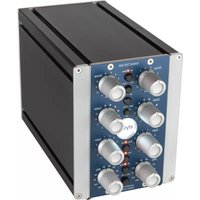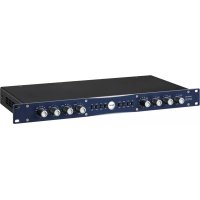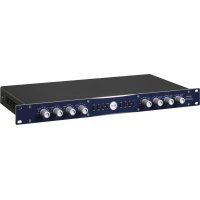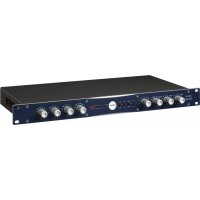
xpressor - Processor Elysia - Free user manual and instructions
Find the device manual for free xpressor Elysia in PDF.



| Technical Features | Audio dynamics processor, stereo compressor, analog signal processing. |
|---|---|
| Usage | Ideal for mixing and mastering, allows control of audio track dynamics. |
| Maintenance and Repair | Regularly check connections and cables, clean contacts to avoid interference. |
| Safety | Use in a dry environment, avoid electric shocks, do not expose to extreme temperatures. |
| General Information | Compatible with various audio systems, robust design, manufacturer warranty included. |
Frequently Asked Questions - xpressor Elysia
User questions about xpressor Elysia
0 question about this device. Answer the ones you know or ask your own.
Ask a new question about this device
Download the instructions for your Processor in PDF format for free! Find your manual xpressor - Elysia and take your electronic device back in hand. On this page are published all the documents necessary for the use of your device. xpressor by Elysia.
USER MANUAL xpressor Elysia
WARNING: High Voltage
- Risk of electric shock.
- Do not open chassis.
Refer service to qualified service staff only. - Before connecting the device to the main power supply, check if the right voltage is selected.
- Replace fuse with the same type and value only.
- This device must be connected to ground.
- Do not use a damaged power cord.
- Never place containers with liquid, e.g. beverages or a vase, on the unit.
- Do not expose this device to rain or moisture.
- Do not use this device near water, e.g. swimming pool, bathtub or wet basement.

CAUTION: Temperature
- Surfaces of the device may become hot during operation.
- Do not install this device near any heat source such as radiators, stoves or other heat sources.
- Always allow enough ventilation space around the unit for air circulation.
- Do not cover circulation vents.

CAUTION: Connecting & Mounting
- Never connect the output of a power amplifier to this device.
- Place the unit on a rigid board or place it in an appropriate rack.
- Use the device according to this manual only.

CAUTION: Humidity
- If this device is moved from a cold place to a warm room, condensation can occur inside the device. To avoid damaging the unit, please allow it to reach room temperature before switching it on.
elysia
Welcome to Compressor Wonderland!
First of all, we would like to thank you for picking the xpressor as your new dynamics tool - a very good choice indeed.
This extremely versatile stereo compressor will make your day in terms of dynamics time and again. With its many unique features taken from our flagship products, you not only get great compression, but an amount of control on processing which has yet to be experienced elsewhere.
No matter if you want to set and forget or plunge deep into the secrets of compression, the xpressor is for you. Its discrete audio path running in constant class-A mode provides a superior audio quality which combines a clear and open sound with a good lot of punch.
Stereo buss compression, processing single signals, approaching dynamics in creative ways – the xpressor shines in many different applications. Best of elysia? You got it!
Index
Controls 4
Connectors 6
Auto Fast 7
Log Release. 8
Warm Mode 9
Negative Ratios 10
Gain Reduction Limiter. 11
External Sidechain 12
Technical Details 13
CE Conformity 13
Warranty Info 14
Legal Info. 15
Deutsches Handbuch. 16
Manuel François. 30
Controls

Threshold (Thresh): The operating point of the compressor. If the input level exceeds the value set with this controller, the compression process will start.
Attack: The transient response of the compressor. It determines the time the xpressor needs to reach 10 dB of gain reduction.
3 Release: The return phase of the compressor. It controls the period of time between the input signal falling below the threshold and the xpressor's return to unity gain.
Ratio: The relation between the input level and the output level. As a specialty of the xpressor, even negative ratios can be set here. (p. 10)
5 Hit It! Activates the xpressor (LED on) or deactivates it with a hardwire bypass (GR meter remains active).
Warm Mode: The xpressor offers a second switchable sound flavor by altering its frequency spectrum, harmonics and transient response. (p. 9)
Log Release (Log Rel): This alternative release curve follows a logarithmic course instead of the standard linear progress and results in a very gentle kind of compression. (p. 8)
Auto Fast: A semi-automation. This function shortens the attack time automatically on fast and loud signal impulses and then returns to the value set with the controller. (p. 7)
elysia

GRL LED: Indicates Gain Reduction Limiter activity. If this LED is on, incoming signals will be held at the GR limit instead of being compressed any further. (p. 11)
10 Gain Reduction Meter: The display for the gain reduction process. Shows the amount of compression measured in dB as an visual support for the acoustic events.
Sidechain Filter (SCF): A tunable low cut filter in the sidechain of the xpressor avoids overcompression and pumping when there is a lot of low end energy in the mix.
12 Gain Reduction Limiter (GRL): Restricts the control voltage. This innovative limiter is not placed in the audio path as usual, but in the control circuit of the compressor. (p. 11)
13 Gain: The make-up gain of the xpressor. This controller compensates for the loss in gain caused by the compression process.
14 Mix: The direct and the compressed signal can be blended in any desired relation by simply turning the mix controller. Onboard parallel compression!
Please note that in stereo operation both channels are always processed by one single control voltage generated from a mix of both signals. This means you should only compress adequate stereo material like sum signals in this mode - dissimilar signals like a bass drum in one channel and a synth pad in the other will not give you the intended 'dual mono' results.
Connectors

Audio inputs (XLR and 1/4'' phone jack)
2 Audio outputs (XLR and 1 / 4'' phone jack)
3 Sidechain send:EXT2 (1 / 4^ phone jack)
Sidechain return:EXT1 (1 / 4^ phone jack
5 Mains connector/power switch/fuse holder
Voltage selector
Mono operation: Connect either input and output 1 or 2 - both will work identically.
Stereo operation: Connect both inputs and outputs 1 and 2 - the choice which channel is left and which is right is up to you.
Inputs (+4dBu)
XLR balanced:
Pin 1: ground
Pin 2: hot (+)
Pin 3: cold (-)
XLR unbalanced:
Pin 1: ground
Pin 2: hot (+)
Pin 3: ground
Jack balanced:
Sleeve: ground
Tip: hot (+)
Ring: cold (-)
Jack unbalanced:
Sleeve: ground
Tip: hot (+)
Ring: ground
Outputs (+4dBu)
XLR balanced:
Pin 1: ground
Pin 2: hot (+)
Pin 3: ground
XLR unbalanced:
Pin 1: ground
Pin 2: hot (+)
Pin 3: idle
Jack balanced:
Sleeve: ground
Tip: hot (+)
Ring: ground
Jack unbalanced:
Sleeve: ground
Tip: hot (+)
Ring: idle
Fuses (2 pieces)
230V operation: 100mA slo-blo
115V operation: 200mA slo-blo
elysia
Auto Fast

The attack parameter is a crucial factor for the operation of a compressor. Choosing the right time setting is very important, but depending on the dynamic progress of the source material
this is a difficult task – no matter if single tracks or complete mixes are processed.
If a very short attack time is chosen, the compressor is able to catch the short peaks, but on the other hand the sustaining signal will also be processed, which might result in audible distortion. Longer settings reduce distortion significantly, but then the compressor is too slow for catching fast impulses.
This is where the Auto Fast function comes into play. If you set a longer attack and engage the Auto Fast mode, the attack time will be shortened automatically on fast and loud signal impulses. The compressor reduces the signal quickly and prevents it from slipping through.
Then the attack time directly and automatically returns to its original setting. In Auto Fast mode the compressor can be very fast, but only when it is really needed.
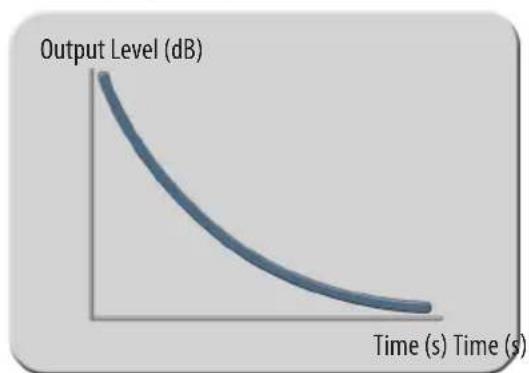
Attack phase without Auto Fast Attack phase with Auto Fast
Log Release

It is the time constants and especially the release parameter that decide if the processing of a compressor is obvious or unobtrusive to the ear. As it is difficult to achieve perfect results for all
kinds of different material with only one type of release curve, the xpressor offers two different options to choose from: logarithmic and linear.
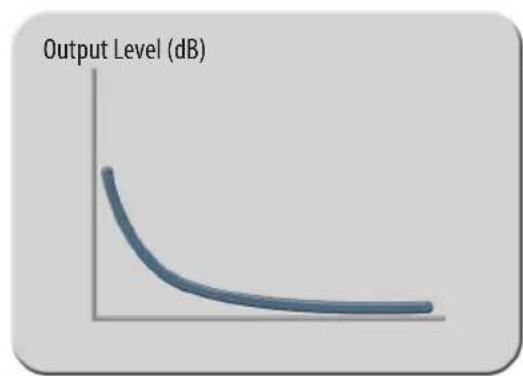
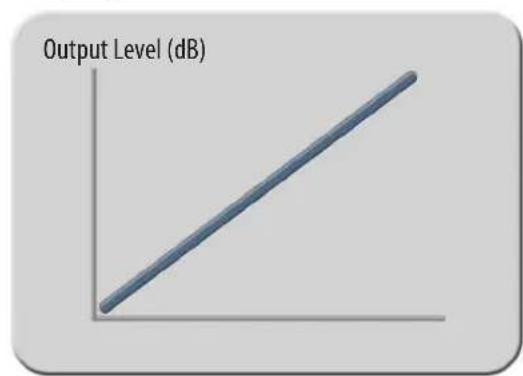
It is characteristic of a logarithmic release that the time constant shortens when the amount of gain reduction increases. The advantage of this behavior is that short and loud peaks (e.g. drums) have a fast release time, while the remaining material is processed with a slower release. Its smooth performance makes the Log Release especially useful for mastering and stereo buss compression.
The linear mode, however, has a straight release profile, without the slower tapering release characteristic of the Log mode. The linear mode is a good choice for more aggressive dynamics control of dry signals, and it is especially useful when you want to process signals which do not have a long decay period.
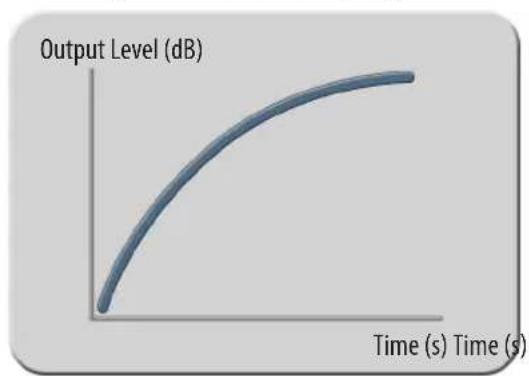
Logarithmic release progress Linear release progress
elysia
Warm Mode

This function is basically a slew rate limiter that reduces the speed of the output amplifier stages. This affects the frequency spectrum, the harmonics and the transient response at the same
time.
Fast transients are slowed down a bit and the overall sound appears more round and merged. As this function influences the behavior of the output stages, the effect it creates has an impact on the complete processing results of the compressor.
This way the xpressor offers two different sound characters at the push of a button: the powerful transparency of the discrete class-A circuitry and the saturated richness of the Warm Mode.
Now the choice is really up to you: For transparent compression and an even frequency response, just use the xpressor in standard mode. For a little bit more fat and juicy sound, hit the Warm Mode button and you are there!
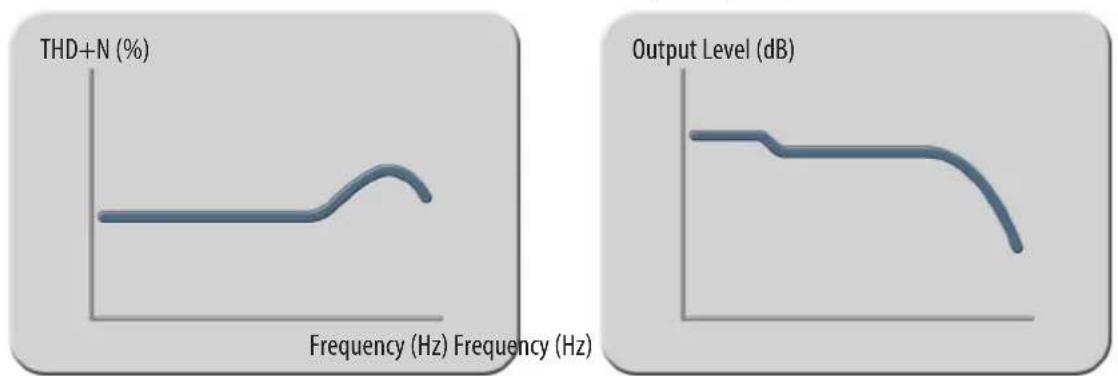
Added total harmonic distortion Modified frequency response
Negative Ratios

Negative ratios – what exactly does this mean? To get a better understanding of this function, it makes sense to realize what the ratio control of a 'normal' compressor does:
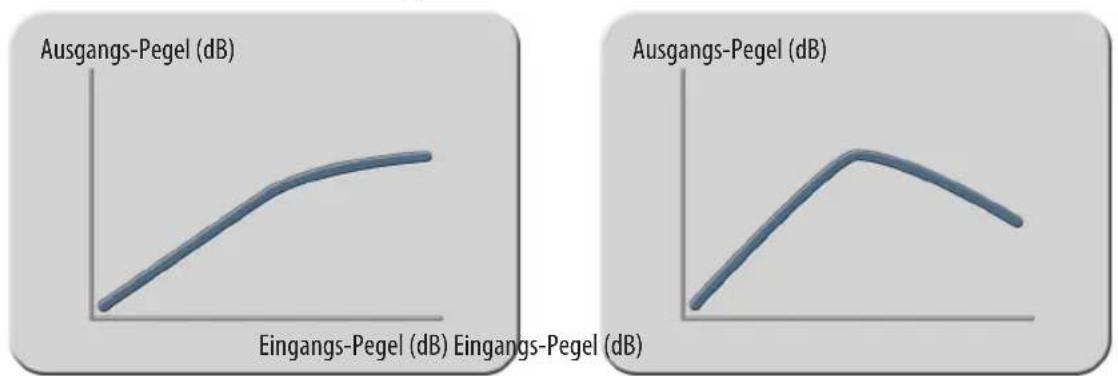
- 1:1 The signal remains linear, there is no compression process going on.
- 1:2 After crossing the threshold, an increase of 2dB at the input will be compressed to an increase of 1dB at the output.
- 1: After crossing the threshold, the output signal is constantly held at the threshold level without reacting to further increases at the input (limiter).
At a negative ratio, the characteristic curve bends and returns back down after crossing the threshold. The louder the input signal, the lower the output signal – perfect for groovy compression effects.
To get a grip on the extreme 'destruction' this can cause, engaging the Gain Reduction Limiter is just the right idea.
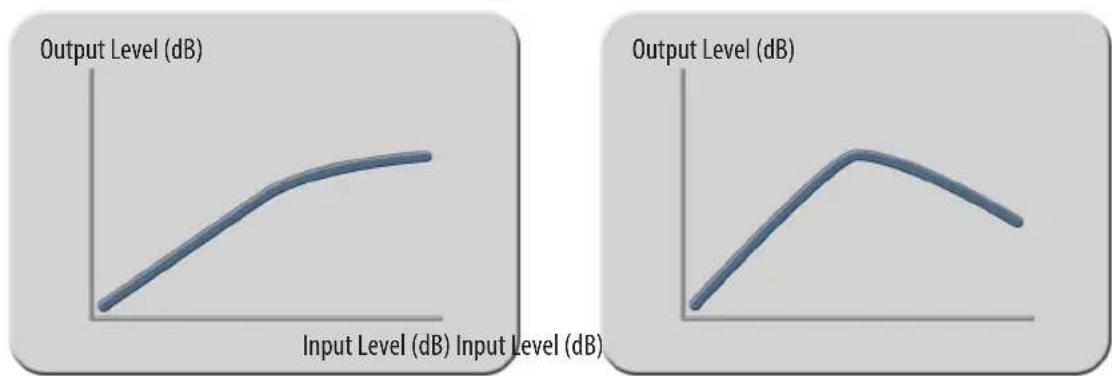
Standard compression ratio Negative compression ratio
elysia
Gain Reduction Limiter

A specialty of the xpressor is the Gain Reduction Limiter for the control voltage. This limiter is not placed in the audio path where you would usually find it, but in the control path of the compres
sor instead.
When activated, it limits the control voltage according to the setting of the GR Limit controller. This means: No matter how high the input level might become – the amount of gain reduction will never exceed the value you have set.
Just think about the GRL as a second threshold controller: While the 'regular' threshold controller tells the compressor when to start working, the GRL controller tells it when to compress no further.
Loud parts in an arrangement can keep their dynamics, as they will not be compressed beyond the limit of the Gain Reduction Limiter.
Note: This function of the xpressor is always active and does not need a switch of its own.
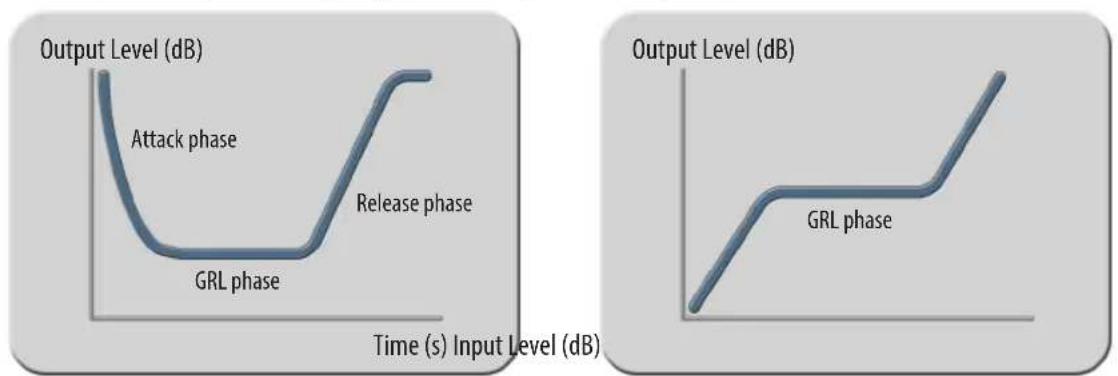
GRL compression progress GRL input to output ratio
External Sidechain

The external sidechain enables the compressor to control its processing totally independent from the audio material running through it. If an additional audio source is connected to the ex
ternal sidechain input of the xpressor, compression will not be triggered by the signals from the regular audio inputs anymore, but by a different signal which is fed into the sidechain input.
If, for example, a duplicate of the input signal is processed with an equalizer and then fed into the sidechain input, the result will be frequency-dependent compression. Another example is to send the bass drum of a drum machine into the sidechain input in order to achieve nice groovy compression that is pumping in sync with the music.
The creative options are almost infinite. Compression can be exactly on time or totally against it, which can of course be varied on the fly. Single instruments can be given more space in a mix according to its rhythm. All of a sudden, static sounds become vivid and sound really interesting!
In addition to the external sidechain input the xpressor features a send output, which can be used to feed a summed copy of the input signals e.g. to an EQ and then into the sidechain input - additional sends from the DAW or the console are no longer needed.
Note: The sidechain send output (EXT 2) carries a buffered mono signal which is generated from summing the left and right input signals.
Note: The external sidechain feature is activated by inserting a 14 " phone jack into the sidechain return input (EXT 1). To deactivate it, just remove the jack from the EXT 1 connector.
elysia
Technical Details
Frequency response: < 10 Hz - 400kHz( -3.0 dB)
THD+N @ 0 dBu, 20 Hz - 22 kHz, Mix 0%: 0.002%
THD+N @ 0 dBu, 20 Hz - 22 kHz, Mix 100%: 0.006%
THD+N @ +10 dBu, 20 Hz - 22 kHz, Mix 0%: 0.003 %
THD+N @ +10 dBu, 20 Hz - 22 kHz, Mix 100%: 0.056%
Noise floor, 20Hz - 20kHz (A-weighted): -94.0 dBu
Dynamic range, 20Hz - 22kHz : 115 dB
Maximum input level: +21 dBu
Maximum output level: +21 dBu
Input impedance: 10 kOhm
Output impedance: 68 Ohm
CE Conformity

The conformity of this device to the EU directives is confirmed by the CE mark on the device.
This declaration becomes invalid by any unapproved modification of the device.
Nettetal, 01.07.2011 - Ruben Tilgner
Warranty Info
The xpressor is covered by a limited warranty for a period of 2 years against defects in parts and labor from the date of purchase. Natural wear is not covered by this warranty. Repairs or replacements will not extend the warranty period.
The warranty is given to the original purchaser only and is not transferable. elysia will only give warranty on products purchased through authorized elysia dealers. The warranty will only be valid in the country of the original purchase unless otherwise pre-authorized by elysia.
All warranties become void when the product has been damaged by misuse, accident, neglect, modification, tampering or unauthorized alteration by anyone other than elysia authorized service personnel.
The warrantor assumes no liability for property damage or any other incidental or consequential damage whatsoever which may result from failure of this product. Any and all guarantees of merchantability and fitness implied by law are limited to the duration of the expressed warranty.
elysia will not pay for express or overnight freight service or pay for shipments to locations outside Germany. All damages caused by transport are not covered by this warranty.
This warranty gives you specific legal rights and you may also have other rights which vary from state to state. Some of the above limitations may not apply to you.
elysia
Legal Info
The information in this document is subject to change without further notice and shall not be deemed as an obligation or warranty of any kind by the manufacturer. No warranties, express or implied, are made with regard to the quality, suitability or accuracy of this document.
The manufacturer reserves the right to change the contents of this document and/or the associated products at any time without the provision of prior notice. The manufacturer shall not be held liable for damages of any kind arising from the use, or the inability to use this product or its documentation.
The information in this document is subject to copyright. All rights, technical changes and errata are reserved. No part of this manual may be reproduced or transmitted in any form or for any purpose without the explicitly written permission of the copyright holders.
elysia and xpressor are registered trademarks of elysia GmbH. Other product and brand names contained in this document are used for identification purposes only. All registered trademarks, product designations or brand names used in this document are the property of their respective owners.

The product has been manufactured in compliance with the RoHS directive. The purpose of this directive of the European Union is the Restriction of Hazardous
Substances (RoHS) in electronic equipment in order to protect health and nature. Dispose separately!
Version 1.3 © 2019 elysia GmbH
Vorsichtsmaßnahmen

Standard Ratio Negative Ratio
Gain Reduction Limiter

ATTENTION: Haute Tension
Gain Reduction Limiter. 39
Sidechain externe. 40
Gain Reduction Limiter

Niveau de bruit, 20 Hz - 20 kHz (A-weighted): -94,0 dBu
Plage dynamique, 20Hz - 22kHz :115 dB