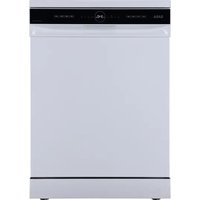
LVS13C45GZ17IX - Dishwasher SABA - Free user manual and instructions
Find the device manual for free LVS13C45GZ17IX SABA in PDF.

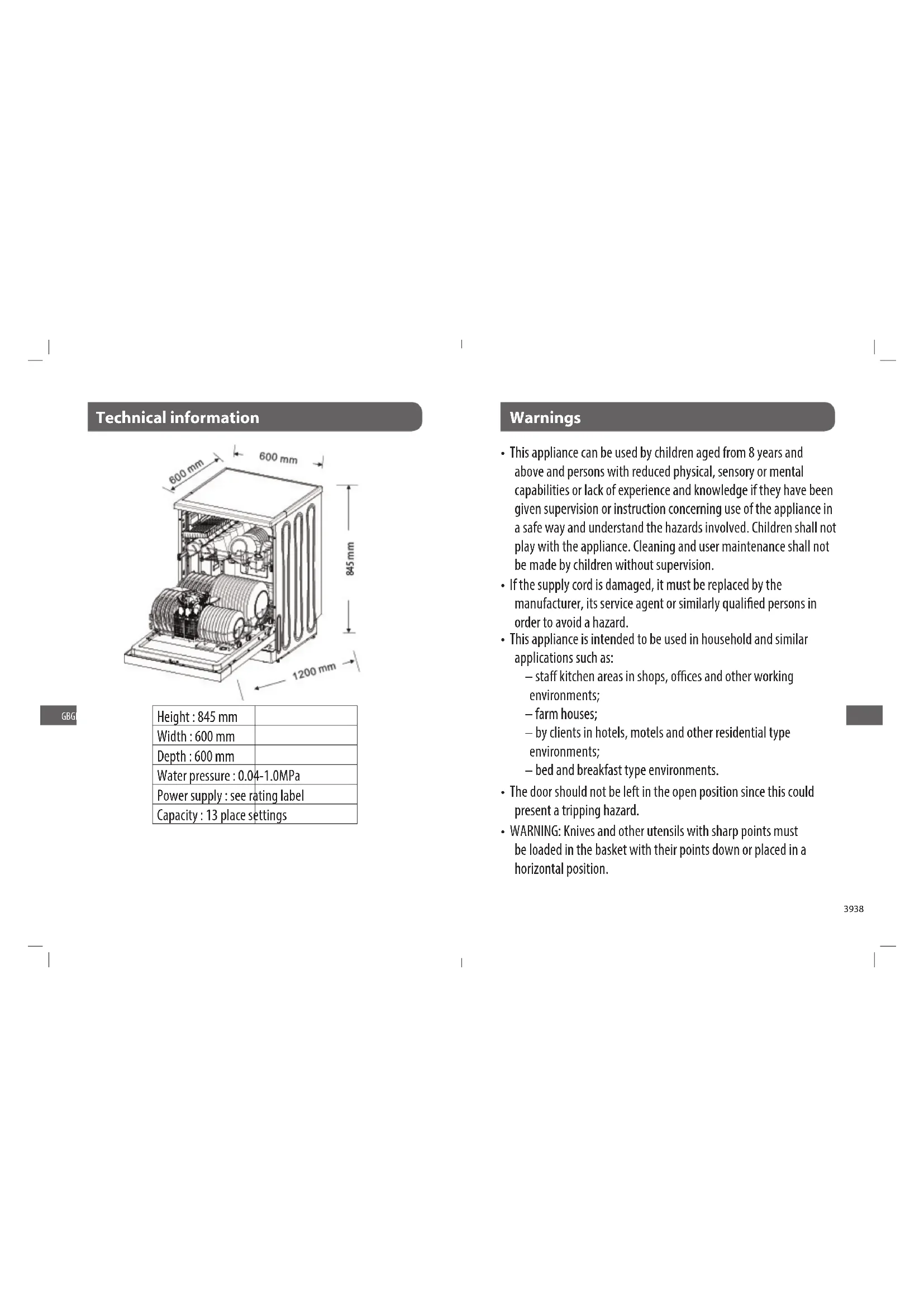

| Product type | Freestanding dishwasher |
| Brand | SABA |
| Model | LVS13C45GZ17IX |
| Capacity | 13 place settings |
| Height | 845 mm |
| Width | 600 mm |
| Depth | 600 mm |
| Energy class | A++ |
| Annual energy consumption | 262 kWh/year |
| Annual water consumption | 3080 L/year |
| Noise level | 45 dB(A) |
| Water pressure | 0.04 - 1.0 MPa |
| Power supply | 220-240 V ~ 50 Hz, 1850 W |
| Wash programs | Intensive, Eco, Delicate, 60 min, Quick, Soak |
| Special functions | Delayed start (1-24 h), 3 in 1, Child lock |
| Water softener | Salt reservoir, hardness setting H0 to H7 |
| Rinse aid | Dispenser with setting (1-6) |
| Tub material | Stainless steel |
| Baskets | Adjustable height upper basket, lower basket, cutlery rack |
| Number of spray arms | 2 (upper and lower) |
| Filter cleaning | Removable main filter, central filter and micro-filter |
| Safety | Child lock, automatic stop at end of cycle |
| Country of manufacture | France (headquarters) |
Frequently Asked Questions - LVS13C45GZ17IX SABA
User questions about LVS13C45GZ17IX SABA
0 question about this device. Answer the ones you know or ask your own.
Ask a new question about this device
Download the instructions for your Dishwasher in PDF format for free! Find your manual LVS13C45GZ17IX - SABA and take your electronic device back in hand. On this page are published all the documents necessary for the use of your device. LVS13C45GZ17IX by SABA.
USER MANUAL LVS13C45GZ17IX SABA
natural_image
Curved grid pattern with no text or symbols, showing a grid of intersecting lines (no labels or symbols)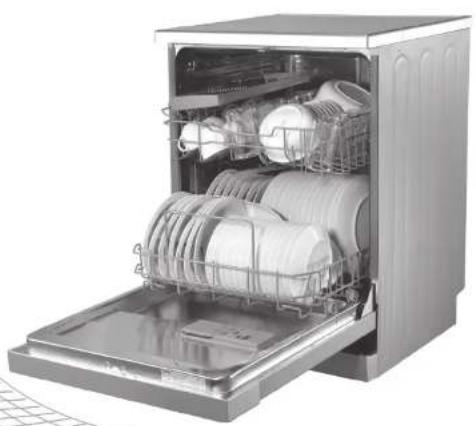
natural_image
Interior view of a stainless steel multi-level kitchen appliance with open door and rack (no visible text or labels)SABA
LVS13C45GZ17IX
LVS13C45GZ17W
LVS13C45GZ17BK
FR
GB
CONFORAMA France SA
Accessoire
9
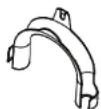
10
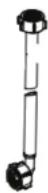
1112

A. Tasses
B. Verres
C. Soucoupes
D. Saladier
E. Grand bol
F. Petit bol
G. Assiettes creuses
H. Grandes assiettes
I. Assiettes dessert
J. Assiette ovale
natural_image
Two technical line drawings of a mechanical assembly with no visible text or symbolsnatural_image
Isometric technical diagram of a structural framework with labeled components and directional arrows (no readable text or symbols)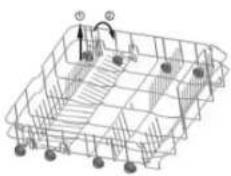
natural_image
3D wireframe diagram of a shopping cart with wheels and stairs, no text or symbols presentnatural_image
Close-up of a mechanical component with a curved handle and circular base (no visible text or symbols)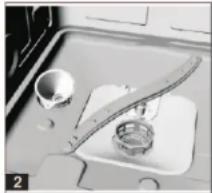
natural_image
Close-up of a kitchen tray with a glass bowl and a small bowl, no visible text or symbolsnatural_image
Close-up of a kitchen sink with a hand tool and bowl (no visible text or symbols)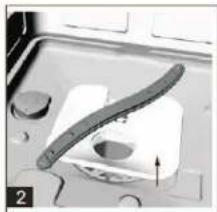
natural_image
Close-up of a mechanical component with a curved blade and circular features, no visible text or symbolsThank you for choosing SABA quality. This product has been developed by our team of professional and according to European regulations. In order to get the most out of your new appliance, we recommend that you read this instruction manual carefully and keep it for future reference.
TABLE OF CONTENTS
GB
Technical information. 38
Warnings 39
Description 41
Before installing your dishwasher. 43
Installation instructions 43
Operation. 45
Cleaning and maintenance. 59
Troubleshooting....62
Product fiche. 66
Disposal of old electrical appliances 68
Technical information
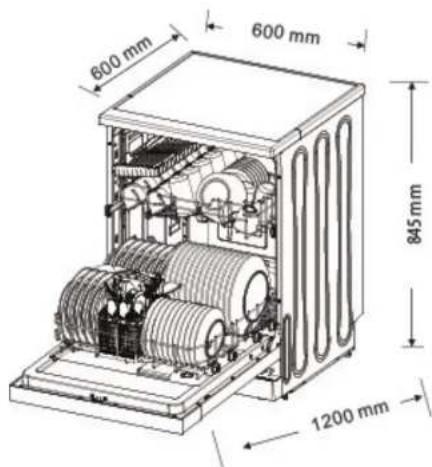
| Height:845mm | |
| Width:600mm | |
| Depth:600mm | |
| Water pressure:0.04-1.0MPa | |
| Power supply:see rating label | |
| Capacity:13 place settings | |
Warnings
- This appliance can be used by children aged from 8 years and above and persons with reduced physical, sensory or mental capabilities or lack of experience and knowledge if they have been given supervision or instruction concerning use of the appliance in a safe way and understand the hazards involved. Children shall not play with the appliance. Cleaning and user maintenance shall not be made by children without supervision.
- If the supply cord is damaged, it must be replaced by the manufacturer, its service agent or similarly qualified persons in order to avoid a hazard.
-
This appliance is intended to be used in household and similar applications such as:
-
staff kitchen areas in shops, offices and other working environments;
-farm houses;
– by clients in hotels, motels and other residential type environments;
— bed and breakfast type environments. -
The door should not be left in the open position since this could present a tripping hazard.
-
WARNING: Knives and other utensils with sharp points must be loaded in the basket with their points down or placed in a horizontal position.
-
The ventilation openings must not be obstructed by a carpet.
- The appliance should be connected to the water mains using new hose-sets supplied with the appliance, old hose-sets should be reused.
• The maximum number of place settings to be washed: 13
• The inlet water pressure is 0,04-1 MPa. - Use only connections conformed to the standard EN61770 recommended in your country.
- Regarding the instructions for installation and electric connection of the appliance, pls refer to page:43-45.
- For loading the dishes, please refer to page: 47-49
- For cleaning instruction, please refer to page: 59-61.
Description
Front View (interior)
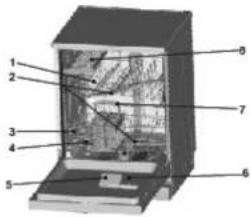
Accessory
9
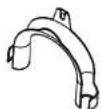
10
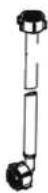
1112

- Upper basket
- Spray arms
- Lower basket
- Salt container
- Detergent dispenser
-
Rinse aid dispenser
-
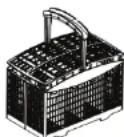
Cutlery basket
- Cutlery rack
- Cutlery basket
- Drain hose holder
- Inlet hose
- Funnel
Control Panel
Overview
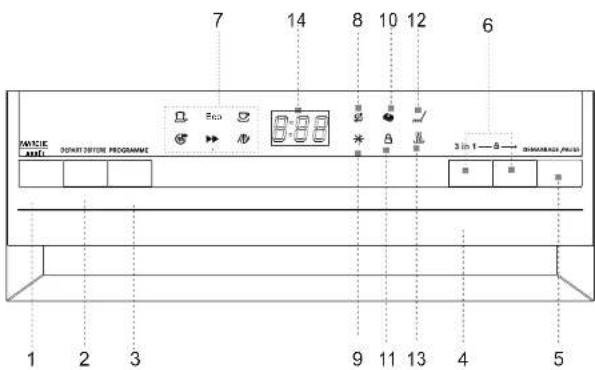
- Power button
- Delayed start button
- Washing programme
- 3 in 1 button
- Start/pause button
4+6. Child lock button - Programme indicator light
- Refill salt indicator light
-
Refill rinse aid indicator light
-
3 in 1 indicator
- Child lock indicator
- Washing indicator
- Drying indicator
- Display
• To show the washing time, delayed start time or error codes.
Before installing your dishwasher
Before connecting your dishwasher to the power supply, check that the voltage stated on the rating label of your appliance corresponds to the voltage in your home.
The appliance must be grounded. The manufacturer is not responsible for damages that may occur as a result of usage without grounding.
WARNING: Disconnect electrical power before installing your dishwasher.
Installation instructions
Your dishwasher can be installed in various locations in your kitchen as long as there is space and accessibility to connect your dishwasher to the water/drainage and electrical supply.
Do not connect an extension lead to the appliance to avoid potential safety hazards.
Connecting to the Mains Water Supply
Inlet hose (Cold water supply)
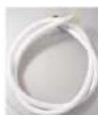
The water inlet hose from the machine terminates in a 3/4" female connector. The water supply should therefore terminate in a similar male connector and should have a stopcock close by in the pipe.
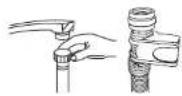
Connect the straight connector of the inlet hose to the water supply securely ensuring that the washers are securely in place at both ends of the hose.
Water Pressure
For best operating results, incoming water pressure should be between 0.04 MPa and 1MPa. Incoming water supply for the dishwasher is controlled by a 'pressure switch', so if the household water pressure is low, dishwasher fill time will increase or may not operate.
WARNING: Please close the hydrant after using.
Connecting to the water outlet
Insert the drain hose into a drainage pipe.
Attach the drain hose to the wall using the supplied U-bend fitting.
The end of the hose should be dropped into a drainage pipe, the height of which should be from 500mm to 1100 mm above the base of the dishwasher.
To allow for an air gap around the end of the drain hose, the diameter of the drainage pipe should be at least 40 mm.
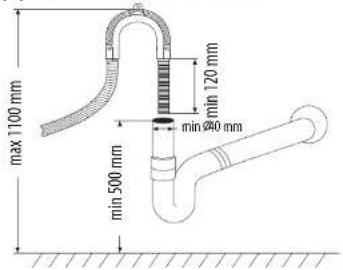
If leaks are detected, immediately shut the water supply and check the hose connections fully.
Re-tighten the connections if necessary.
If for any reason you are unable to stop the leak yourself please seek advice from a qualified plumber.
Levelling
Place the dishwasher on an even, stable surface.
It is very important that the dishwasher is perfectly levelled in order to avoid it to malfunction. You can level the dishwasher by adjusting the feet at the base of the appliance.
Operation
Your dishwasher cleans by spraying a mixture of clean water and detergent (under pressure) against the soiled surface of dishes. The water is pumped through a rotating spray arm, drained through a filter removing food and soiled particles and pumped back through the spray arm.
Soiled water is pumped out and replaced with clean water at the end of each cycle (how many times depends on the cycle being used).
NOTE:
Hard water conditions will adversely affect washability performance of your dishwasher.
Hard water conditions will also contribute to "Lime" (white film substance) deposits and/or "Scaling" on the stainless steel surface of the dishwasher tub and heater element located in the sump underneath the removable filter screen.
To minimise these conditions, it is recommended to periodically operate/rinse the inside of the dishwasher (empty) using 1 cup of white vinegar (at least once a week).
General Warnings and Recommendations
Before using the dishwasher for the first time, it is advisable to read the following recommendations concerning dish types to be washed and their loading.
Before loading the dishes into the baskets it is necessary to:
- Remove coarse food remains, e.g. bones, which may clog the filter or damage the wash pump.
- Soak any pots or pans with burnt-on food remains on the bottom then load them into the basket.
There is no need to pre-wash the dishes under running water before loading them into the basket.
WARNINGS:
- Make sure that the dishes are securely in place so that they cannot tip over or obstruct the rotation of the spray arms during the washing cycle.
- Containers such as cups, bowls, glasses and pots should always be loaded with the opening facing downwards and with any cavities at an angle, to allow the water to drain out.
- Do not stack dishes.
- Do not place glasses too close together because they may knock against each other and break.
- Load large items which are most difficult to clean into the lower basket.
- Make sure that the items being washed are dishwasher-safe.
Items which are not dishwasher-safe:
- Wooden dishes, pots or pans
- Handcrafted items
- Plastic dishes (except when marked dishwasher-safe)
- Dishes and objects in copper, tin, zinc or brass
- Aluminium dishes
• Silverware - Glass and crystal
- Decorated items
Loading the Baskets
Loading the upper and lower baskets
The upper basket is designed to hold delicate and light items such as glasses, cups, saucers, serving bowls and shallow pans.
The lower basket is designed to take saucepans, lids, plates, salad bowls, cutlery etc.
Serving dishes and large lids should be arranged around the edge of the basket, ensuring that the upper spray arm can turn freely.
Arrange items so that water can reach all surfaces.
Upper Basket Lower Basket
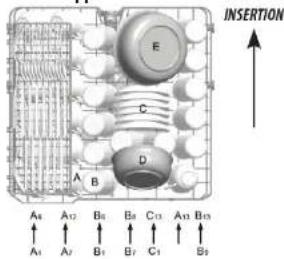
A. Cups
B. Glasses
C. Saucers
D. Medium serving bowl
E. large serving bowl
F. Small serving bowl
G. Soup plates
H. Dinner plates
I. Dessert plates
J. Oval plate
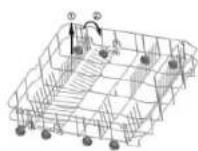
The height of the upper basket can be adjusted. To raise your basket, hold it from both sides and pull it upwards, the basket will be lock automatically. To lower it, hold it from both sides again, pull it a little bit upwards and pull it downwards.
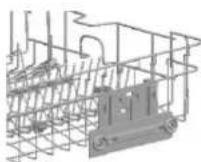
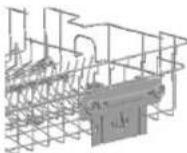
Folding racks consisting of three/ two parts in the upper/ lower basket of your machine are designed in order to let you place big items easier as pots, pans, etc.
Upper basket

Lower basket
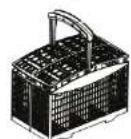
Loading the cutlery rack and basket
The cutlery should be arranged in a specific way inside the rack and basket, with the handles pointing downwards. Knives and forks should be placed with handles up for safety.
Take care during loading to avoid injury from the knife blades.
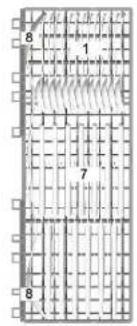
Cutlery rack (assembled on the upper basket)
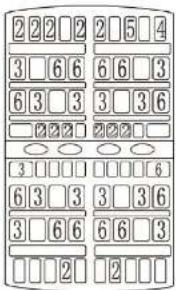
Cutlery basket
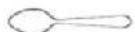
1. Teaspoons
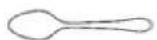
2. Dessert spoons
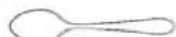
3. Soup spoons
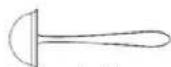
4. Gravy ladle

5. Serving fork

6. Forks

7. Knives

8. Serving spoons
Using the Water Softener
The hardness of the water varies from place to place. If hard water is used in the dishwasher, deposits will be formed on the utensils. This appliance is equipped with a water softener which uses a salt specifically designed to eliminate the minerals from the water.
CAUTION:
- Only use salt specially formulated for domestic dishwashers.
- Do not use table salt as it contains insoluble substances which may damage the water softening system.
- Fill the salt container before starting the washing programme. In this way, the excess saline solution will be immediately removed by the water; the prolonged presence of salt water inside the tank may lead to corrosion.
- If you plan to use dishwasher tablets for your washing needs, then you do not require to use salt or rinse agent but please note that the refill salt indicator light will remain illuminated on the control panel. This is quite normal and will not affect the operation of your dishwasher.
Adjusting the salt consumption
- After the dishwasher is switched on, enter the status of adjusting the salt consumption by holding down □ and □□□□□□□□□□□□□□□□□□□□□□□□□□□□□□□□□□□□□□□□□□□□□□□□□□□□□□□□□□□□□□□□□□□□□□□□□□□□□□□□□□□□□□□□□□□□□□□□□□□□□
- While the value is flashing repeatedly press to adjust the setting from H0 to H7 to suit the water hardness.
- Press to confirm the setting.
| WATER HARDNESS | Display | ||||
| °FH °Clarke mmol/l | |||||
| 0~11 0 | 8 0~1.1 H0 | ||||
| 12~14 9 | 10 1.2~1.4 H1 | ||||
| 15~18 1 | 1~12 1.5~1.8 H2 | ||||
| 19~21 1 | 3~15 1.9~2.1 H3 | ||||
| 22~29 1 | 6~20 2.2~2.9 H4 | ||||
| 30~37 2 | 21~26 3.0~3.7 H5 | ||||
| 38~54 2 | 27~38 3.8~5.4 H6 | ||||
| 55~89 3 | 39~62 5.5~8.9 H7 | ||||
NOTE:
°Clarkes: British degree
°fH: French degree
Filling with salt
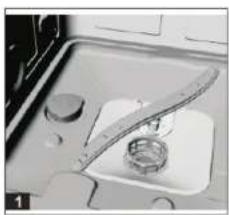
- Unscrew the cap from the salt container by turning it anticlockwise.
- Place the supplied funnel so the end fits into the opening of the salt container. Load about 2kg of salt into the salt container.
natural_image
Close-up of a mechanical component with a curved handle and circular features (no visible text or symbols)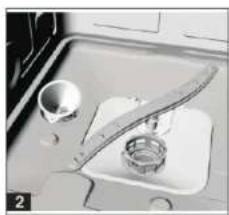
natural_image
Close-up of a kitchen utensil with a glass stand and a small bowl, no visible text or symbolsScrew the cap back clockwise.
NOTE: The salt container must only be refilled when the refill salt indicator light illuminates. Depending on how fully the salt dissolves, the refill salt indicator light may still be on even though the salt container is filled.
Using the Rinse Aid and Detergent Dispensers
The rinse aid helps the dishes dry faster and prevents the formation of scale deposits and staining. It is automatically added to the water during the final rinse cycle.
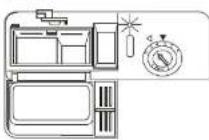
The detergent and rinse aid dispensers are located on the inner part of the door: the detergent dispenser is on the left, and the rinse aid dispenser is on the right.
Adding the rinse aid
- Rotate the dispenser cap anticlockwise and remove it.
- Add the rinse aid until the container is full.
- The optical level indicator on the side of the cap should be completely dark.
- Replace the cap and turn it clockwise.
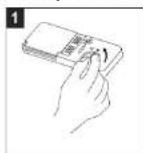
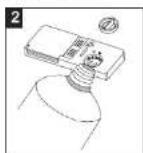
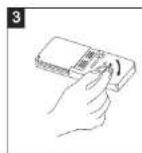
NOTE: Refill the rinse aid when the optical level indicator becomes clear again, or when the rinse aid indicator light illuminates.
Adjusting the rinse aid dispenser setting
The factory setting for the dishwasher is 5 and you can choose among 6 settings.
The amount of rinse aid dispensed is proportional to the selector position.
- To adjust the rinse aid setting, remove the dispenser cap.
- Rotate the rinse aid selector to the desired position.
- Replace the cap and turn it clockwise.
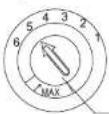
Adjust lever (Rinse)
NOTE: The amount of rinse aid must be increased if the washed dishes appear dull or feature circular stains. If the dishes are sticky or have white streaks, it is necessary to reduce the rinse aid setting.
Adding the detergent
- To open the detergent dispenser cap, gently press the release button.
- Add the detergent and close the cap.
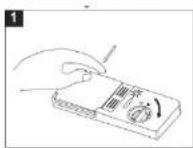
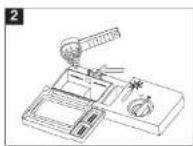
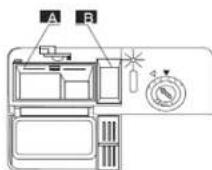
A detergent for main wash cycle
B detergent for pre-wash cycle
NOTE: Use only detergent specifically formulated for dishwashers. For optimal washing results it is important to use a good quality detergent.
* Testing programme for EN 50242
The information for comparability test in accordance with EN 50242 is as follows:
• Capacity: 13 settings
• Position of upper basket: Low position
- Rinse aid setting: 5 (or 4 for four setting dispenser)
Washing Programmes
| Programme Degree of soil Cycle Description | Recommended quantity of detergent pre-wash / main wash | Washing time (min.) | Energy (Kwh) | Water (L) | Rinse Aid needed? | ||
 Intensive Intensive | For extremely soiled crockery and normally soiled pots, pans, dishes, etc. | Pre-wash Main wash (60°C) rinse 1 rinse 2 Hot rinse Drying | 5/27.5 g (or 3 in 1) | 180 | 1.30 16 | Yes | |
| *Eco | Standard daily cycle for normal soiled loads, such as pots, plates and glasses | Pre-wash Main wash (46°C) Hot rinse Drying | 5/27.5 g (or 3 in 1) | 199 | 0.92 11 | Yes | |
 Light Light | For lightly soiled loads that need no excellent drying efficiency | Pre-wash Main wash (45°C) Hot rinse Drying | 5/20 g (or 3 in 1) | 137 | 0.85 14 | Yes | |
| Programme | Degree of soil Cycle | Description | Recommended quantity of detergent pre-wash / main wash | Washing time (min.) | Energy (Kwh) | Water (L) | Rinse Aid needed? |
| 60 min | For lightly soiled loads that need no excellent drying efficiency | Hot rinse 1 Hot rinse 2 Hot rinse (60°C) Drying | 5/20 g 60 | 0.95 10 | Yes | ||
| Rapid | A shorter wash for lightly soiled loads and quick wash | Main wash (40°C) Hot rinse | 15 g 39 | 0.50 7 | No | ||
| Pre-rinse | To rinse out loosen soil particles from the dishes | Pre-wash NA | 11 0.01 4 | NA | |||
NOTE:
- The washing time may vary depending on the incoming water temperature and the ambient temperature.
- The power consumption in left-on mode is 0.9W (door open), in off-mode it is 0.35W.
Starting the Dishwasher
- Turn the water tap on.
- Open the dishwasher door.
- Check the filters.
- Ensure they are clean and properly positioned. See "Cleaning and maintenance" section.
- Check that there is rinse aid and salt.
- Load the dishes.
- Ensure that the spray arms can rotate freely.
- Add the required amount of detergent into the dispenser according to the "Washing Programmes" chart.
- Close the dishwasher door securely.
- Press to switch on the dishwasher.
-
Select the desired washing programme by repeatedly pressing PROGRAMME
-
The corresponding washing programme indicator light will flash.
- Delay: The delay start function allows you to delay the start of a washing programme from 1 hour to a maximum of 24 hours.
Repeatedly press DEPART DIFFERE until the desired start delay time flashes on the display, e.g. 3H for a 3-hour delay.
Once the delay timer has been set, press DEMARRAGE PAUSE to activate the function.
The corresponding start delay time will stop flashing.
- If you use 3-in-1 tablet, press 3-in-1 to select the 3 in 1-tab
function.
• The corresponding indicator light will flash.
- The function is available only when you select the intensive, ECO or light programme.
- Start the washing programme by pressing
- At the end of the washing programme, the dishwasher will buzz and automatically stop.
- Wait for about 15 minutes before you open the dishwasher door in order to avoid burns.

- Unload the dishes
The washing cycle will not start if the dishwasher door is left open or not properly closed.
Do not open the door when the dishwasher is working since hot water may be ejected, which could cause scalding.
Adding extra crockery
- Without switching off the appliance, press to pause.
- Open the door, taking care to avoid the escaping steam.
- Place the crockery inside the dishwasher.
- Close the door and press . The cycle will start from the point at which it was interrupted.

Modifying a washing programme in progress
If a mistake was made during the washing programme selection process it is possible to change the programme.
- Press to turn off the appliance and then press again to turn it on.
- Repeatedly press to select a new programme.
• The new programme indicator light will flash.
- Press to start the programme.
Child lock function
The child lock function is designed to prevent children from operating the dishwasher.
To activate this function:
Press and hold for about 3 seconds until a beep is heard.
The corresponding indicator light ⏻ will flash. This function can only be activated when the machine is in operation.
When child lock is activated, no button can work except the power button.
To deactivate this function:
Press and hold for 3 seconds until a beep is heard.
The corresponding indicator light ⏻ will go out.
This function will also be deactivated when the dishwasher is turned off by pressing
Cleaning and maintenance
Always switch off and unplug the appliance before cleaning.
Do not use chemical solvents or strong detergents as these may damage the cosmetic finish.
Clean the outer surfaces and the tank of the dishwasher with a damp cloth.
Cleaning the Filter Unit
The filter unit consists of a main filter (1), central filter (2) and micro filter (3).
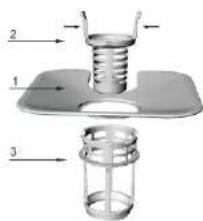
To disassemble the filters
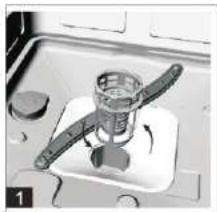
natural_image
Close-up of a mechanical device with a lever and handle, no visible text or symbols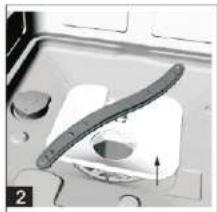
natural_image
Close-up of a mechanical component with a curved blade and circular features, no visible text or symbolsTurn the assembled central and micro filters anticlockwise to unlock them from the appliance. Separate the filters.
Lift up the main filter.
Rinse them under running water using a soft brush.
Clean the filters regularly. Replace the filter unit by turning them clockwise until they lock into position.
CAUTION: Never operate the dishwasher without the filters.
Cleaning the Door
Use a damp cloth to clean the edge around the door.
To avoid penetration of water into the door lock and electrical components, do not use a spray cleaner.
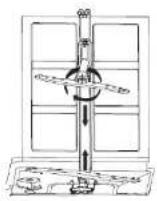
Cleaning the Spray Arms
The spray arms can be easily removed for periodic cleaning of the nozzles, to prevent possible clogging.
To remove the upper and lower spray arms, hold and unscrew or pull them out.
Wash the spray arms under running water and attach them back in place, checking that the rotary movement is in no way impeded.
Frost Precautions
Avoid placing the dishwasher in a location where the temperature is below 0^ C. If this is unavoidable, empty the dishwasher, close the door, disconnect the water inlet pipe and empty it.
Troubleshooting
| Problem Possible Causes Solutions | ||
| Dishwasher will not start. | Fuse blown, or the circuit breaker tripped | Replace fuse or reset circuit breaker. Remove any other appliance sharing the same circuit with the dishwasher. |
| Power supply is not turned on. | Make sure the dishwasher is turned on and the door is closed securely.Make sure the power cord is properly plugged into the wall socket. | |
| The door has not been properly closed. | Close the door securely. | |
| Water not pumped from dishwasher | Kink in drain hose Check drain hose. | |
| Filter clogged Check the filters (see “Cleaning the Filter Unit”). | ||
| Kitchen sink clogged | Check kitchen sink to make sure it is draining well. If kitchen sink is not draining, you may ask a plumber to check it. | |
Problem Possible Causes Solutions
| Suds in the tub | Improper detergent | Use only the detergent special for dishwasher to avoid suds. If this occurs, open the door and let the suds evaporate. Close the door securely then start the soak wash cycle to drain the water out. Repeat if necessary. |
| Spilled rinse aid Always wipe up rinse aid spills immediately. | ||
| Stained tub interior | Detergent with colourant is used. | Make sure the detergent does not contain any colourant. |
| White film over the inside surface | Hard water minerals | To clean the interior, use a damp sponge with dishwasher detergent and wear rubber gloves. Never use any other cleaner than dishwasher detergent for the risk of foaming or suds. |
| Problem Possible Causes Solutions | ||
| There are rust stains on the cutlery. | The cutlery is not corrosion resistant. | |
| No programme has run after dishwasher salt was added. Traces of salt have got into the wash cycle. | Always run the rapid washing programme.Add dishwasher salt with no crockery in the dishwasher. | |
| The dishwasher is noisy. | Dishes are rattling against each other.The spray arm is knocking against the dishes. | Refer to “Loading the Basket” to rearrange the dishes. |
| The dishes are not clean. | The dishes have not been arranged properly. | Refer to “Loading the Baskets”. |
| Problem Possible Causes Solutions | ||
| The dishes are not clean. | The washing programme selected is too gentle. | Select a more intensive programme. Refer to “Washing Programmes”. |
| Not enough detergent has been used or it is unsuitable. | Use more detergent or change the detergent. | |
| The spray arms are clogged. | Rearrange the items so that the spray arms can rotate freely | |
| The filters are not clean or not in the correct position. | Clean and/or position the filters correctly. | |
| Streaking and straining on the dishes | The rinse aid dispenser setting is not high enough. | Adjust the rinse aid dispenser setting. |
| The dishes are not quite dry. | Improper loading | Refer to “Loading the Baskets”. |
| The rinse aid has run out or too little is being used. | Increase or refill the amount of rinse aid. | |
| Wrong programme selection | Choose a programme with long washing time. | |
Error codes
| Error codes | Meaning |
| E1 Door is not closed. | |
| E2 Water inlet malfunction | |
| E3 Drainage malfunction | |
| E4 Temperature sensor malfunction | |
| E5 Overflow/leakage | |
| E6 Water leakage | |
| E7 Abnormal heating | |
Product fiche
This dishwasher's product fiche has been setup in conformity with EU Regulation No 1059/2010.
GB
| Brand SABA | |
| Model | LVS13C45GZ17IXLVS13C45GZ17WLVS13C45GZ17IBK |
| Standard place settings 13 | |
| Energy efficiency class ⬆++ | |
| Annual energy consumption ⬆62 kWh | /annum |
| Energy consumption of the standard cleaning cycle | 0.92 kWh/cycle |
| Power consumption of off-mode 0.35W | |
| Power consumption of left-on mode (door open) | 0.9W |
| ‘Left-on mode’ duration N/A | |
| Annual water consumption 3080 litres | |
| Drying efficiency class A | |
| Standard cleaning cycle Eco | |
| Programme duration of the standard cleaning cycle | 199 minutes |
| Noise level 45 dB(A) re 1 pW | |
| Mounting Freestanding | |
| Height | 84.5 cm |
| Width | 60 cm |
| Depth (with connectors) | 60 cm |
| Power consumption | 1850W |
| Rated voltage / frequency | 220-240V~ 50Hz |
| Water pressure (flow pressure) | 0.4-10 bar = 0.04-1 Mpa |
NOTE:
A+++ (highest efficiency) to D (lowest efficiency)
Energy consumption "262" kWh per year, based on 280 standard cleaning cycles using cold water fill and the consumption of the low power modes. Actual energy consumption will depend on how the appliance is used.
- Water consumption "3080" litres per year, based on 280 standard cleaning cycles. Actual water consumption will depend on how the appliance is used.
- A (highest efficiency) to G (lowest efficiency)
⑤ This programme is suitable for cleaning normally soiled tableware
GB
and it is the most efficient programme in terms of combined energy and water consumption for that type of tableware.
The device meets the European standards and the directives in the current version at delivery:
- LVD 2014/35/EU
- EMC 2014/30/EU
- ERP 2009/125/EC
- RoHS 2011/65/EU
The above values have been measured in accordance with standards under specified operating conditions, amount of detergents, etc.
The manual is based on the European Union's standards and rules.
Disposal of old electrical appliances
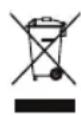
The European directive 2012/19/EU on Waste Electrical and Electronic Equipment (WEEE), requires that old household electrical appliances must not be disposed of in the normal unsorted municipal waste stream. Old appliances must be collected separately in order to optimize the recovery and recycling of the materials they contain, and reduce the impact on human health and the environment.
The crossed out “wheeled bin” symbol on the product reminds you of your obligation, that when you dispose of the appliance, it must be separately collected.
Consumers should contact their local authority or retailer for information concerning the correct disposal of their old appliance.

- SABA
- TABLE OF CONTENTS
- Technical information
- Warnings
- Description
- Control Panel
- Before installing your dishwasher
- Installation instructions
- Connecting to the Mains Water Supply
- Water Pressure
- Connecting to the water outlet
- Levelling
- Operation
- NOTE:
- General Warnings and Recommendations
- Before loading the dishes into the baskets it is necessary to:
- WARNINGS:
- Items which are not dishwasher-safe:
- Loading the Baskets
- Loading the upper and lower baskets
- Loading the cutlery rack and basket
- Using the Water Softener
- CAUTION:
- Adjusting the salt consumption
- Filling with salt
- Using the Rinse Aid and Detergent Dispensers
- Adding the rinse aid
- Adjusting the rinse aid dispenser setting
- Adding the detergent
- Starting the Dishwasher
- Adding extra crockery
- Modifying a washing programme in progress
- Child lock function
- Cleaning and maintenance
- Cleaning the Filter Unit
- Cleaning the Door
- Cleaning the Spray Arms
- Frost Precautions
- Product fiche
- Disposal of old electrical appliances
Brand : SABA
Model : LVS13C45GZ17IX
Category : Dishwasher