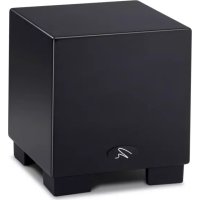
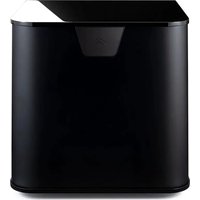
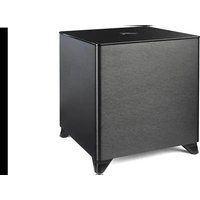
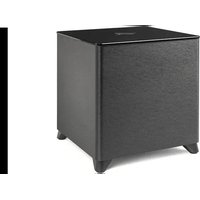
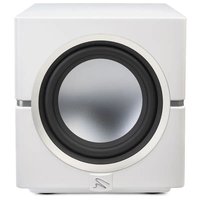
USER MANUAL Dynamo 300 Martin Logan
In accordance with the European Union WEEE (Waste Electrical and Electronic Equipment) directive effective August 13, 2005, we would like to notify you that this product may contain regulated materials which upon dis
posal, according to the WEEE directive, require special reuse and recycling processing.
For this reason MartinLogan has arranged with our distributors in European Union member nations to collect and recycle this product at no
cost to you. To find your local distributor please contact the dealer from whom you purchased this product, email info@martinlogan.com or visit the distributor locator at www.martinlogan.com.
Please note, only this product itself falls under the WEEE directive. When disposing of packaging and other related shipping materials we encourage you to recycle these items through the normal channels.

The lightning bolt flash with arrowhead symbol, within an equilateral triangle, is intended to alert the user to the presence of uninsulated "dangerous voltage" within the product's enclosure that may be of sufficient magnitude to constitute a risk of electric shock.

The exclamation point within an equilateral triangle is intended to alert the user to the presence of important operating and maintenance (servicing) instructions in the literature accompanying the appliance.
IMPORTANT SAFETY INSTRUCTIONS
1 Read these instructions.
2 Keep these instructions,
3 Heed all warnings.
4 Follow all instructions.
5 Do not use this apparatus near water.
6 Clean only with dry cloth.
7 Do not block any ventilation openings. Install in accordance with the manufacturer's instructions.
8 Do not install near any heat sources such as radiators, heat registers, stoves, or other apparatus [including amplifiers] that produce heat.
9 Do not defeat the safety purpose of the polarized or grounding-type plug. A polarized plug has two blades with one wider than the other. A grounding type plug has two blades and a third grounding prong. The wide blade or the third prong are provided for your safety. If the provided plug does not fit into your outlet, consult an electrician for replacement of the obsolete outlet.
10 Protect the power cord from being walked on or pinched particu- larily at plugs, convenience receptacles, and the point where they exit from the apparatus.
11 Only use attachments/accessories specified by the manufacturer.

12 Use only with the cart, stand, tripod, bracket, or table specified by the manufacturer, or sold with the apparatus. When a cart is used use caution when moving the cart/ apparatus combination to avoid injury from tip-over.
13. Unplug this apparatus during lightning storms or when unused for long periods of time.
14. Refer all servicing to qualified service personnel. Servicing is required when the apparatus has been damaged in any way, such as power-supply cord or plug is damaged, liquid has been spilled or objects have fallen into the apparatus, the apparatus has been exposed to rain or moisture, does not operate normally, or has been dropped.
15. WARNING: To reduce the risk of fire or electric shock, this apparatus should not be exposed to rain or moisture and objects filled with liquids, such as vases, should not be placed on this apparatus.
16. To completely disconnect this equipment from the mains, disconnect the power supply cord plug from the receptacle.
17. The mains plug of the power supply cord shall remain readily operable.
18 Do not expose this equipment to dripping or splashing and ensure that no objects filled with liquids, such as vases, are placed on the equipment.
Thank you—the MartinLogan owner,
for loving what we do,
and
making it possible for us to do what we love.
Serial Numbers:
Record your serial numbers here for easy reference. You will need this information when filling out your warranty registration. Dynamo 300's serial number is located near the bottom of the backplate and on the shipping container.
Contents 3
Introduction & Installation in Brief 4
Introduction
Installation in Brief
About the Controls. 5
Connections and Control Settings 6
Before Connecting the Dynamo 300
2-Channel Mode
Multi-Channel/LFE Mode 7
AC Power Connection 8
Break-In
Placement 9
Listening Position
Ask Your Dealer
Enjoy Yourself
Room Acoustics 10
Your Room
Terminology
Home Theater 11
FAQ and Troubleshooting. 12
Frequently Asked Questions
Troubleshooting
General Information 13
Specifications
Warranty and Registration
Service
Dimensional Drawings 14
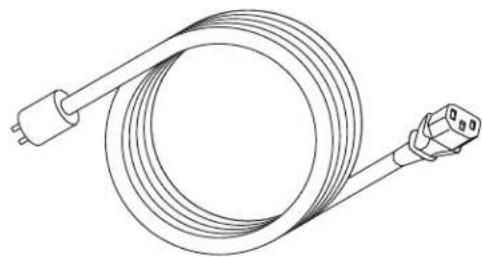
x1
C E

WARNING! Do not use your Dynamo 300 subwoofer outside of the country of original sale—voltage requirements vary by country. Improper voltage can cause damage that will be potentially expensive to repair. The Dynamo 300 is shipped to authorized MartinLogan distributors with the correct power supply for use in the country of intended sale. A list of authorized distributors can be accessed at www.martinlogan.com or by emailing info@martinlogan.
Introduction Installation in Brief
Congratulations! You have invested in one of the world's premier subwoofoers.
The MartinLogan Dynamo 300 represents the extension of an intensive, dedicated team research program directed toward establishing a world class line of reference subwoofoers using leading-edge technology, without compromising durability, reliability, craftsmanship or aesthetics.
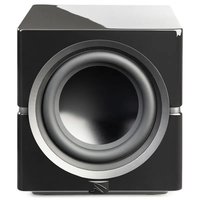
The Dynamo 300 subwoofer uses an 8-inch high-excursion driver to achieve deep, tight, well-defined bass. A proprietary amplifier is used to drive the output stage with precision and extremely high efficiency. Low-pass filtering and phase control have been designed to make integrating the Dynamo 300 subwoofer with MartinLogan and non-MartinLogan products both seamless and simple.
The materials in your new Dynamo 300 subwoofer are of the highest quality and will provide years of enduring enjoyment and deepening respect. The cabinet is constructed from the finest composite material for acoustical integrity and is finished with an attractive custom coating.
This User's Manual will explain in detail the operation of your Dynamo 300 subwoofer and the philosophy applied to its design. A clear understanding will insure that you obtain maximum performance and pleasure from this most exacting subwoofer.
We know that you are eager to hear your new Dynamo 300 subwoofer, so this section is provided to allow fast and easy set up. Once you have it operational, please take the time to read, in depth, the rest of the information in this manual. It will give you perspective on how to attain the greatest possible performance from this most exacting subwoofer system.
If you experience any difficulties in setup or operation of the Dynamo 300, please refer to the Placement, Room Acoustics and Connections and Control Settings sections.
Should you encounter a persistent problem that cannot be resolved, please contact your authorized MartinLogan dealer. They will provide you with the appropriate technical analysis to alleviate the situation.
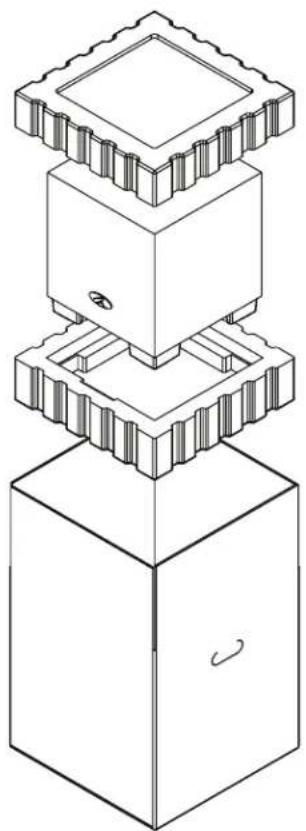
Step 1: Unpacking
Remove your new subwoofer from its packing.
Step 2: Placement
Ideally, place the Dynamo 300 in a corner near the front of the room. This is a good place to start. Please see the Placement section (page 9) of this manual for more details.
Step 3: Signal Connection
Use the best cables you can. High quality cables, available from your specialty dealer, are recommended and will give you superior performance.
Attach your preamplifier/processor outputs through cables to the signal input area located on the Dynamo 300's rear panel. Please see the Connections and Control Settings section (pages 6-8) of this manual for more details.
Step 4: Power Connection (AC) (see warning)
Make sure the level knob is set at 'Min'. Plug the Dynamo 300 subwoofer into a wall outlet. Review the AC Power Connection section (page 8) of this manual for more details.
Step 5: Setting the Controls
Set the level knob to a medium volume position (12 o'clock).
Set the power switch to 'Auto'.
Step 6: Listen and Enjoy
Now, you may adjust your system and enjoy!
Level Knob
Setting the level too high will cause the bass to seem bloated and is the single most common cause of bad sounding subwoofoers. A rule of thumb is that the subwoofer should not draw attention to itself, but should simply make the systems low end seem more extended and accurate.
Low Pass Filter Knob
When the Dynamo 300 is connected in multi-channel mode (via its LFE input), the low pass filter is not active and your processor handles the bass management. When connected in 2-channel mode via its line level left/right input, the low-pass filter is active.
As a general rule the low pass filter should be set equal to approximately 70% of your speaker's lowest frequency response. Remember, this is a general rule. We advise that once you try the recommended setting using the formula above, you should try the surrounding settings to see which sounds best.
Phase Control Switch
The phase control is entirely dependent on the size and configuration of your listening environment, the placement of the unit, and your seating arrangement. Due to the way bass sound waves develop in different rooms, there is no rule of thumb for setting phase. For instance, if your room has a peak at the subwoofer crossover area, you may wish to set the phase so the actual acoustic outputs of the subwoofer and main speakers are out of phase. Experiment, try different settings and be patient.
Status LED
When the status LED is green, the subwoofer is on. When the status LED is off the subwoofer is in standby mode.
Power
The Master Power switch must be set to 'Auto' or 'On' for the subwoofer to operate. When set to 'Auto' the subwoofer will automatically enter a power saving mode when no audio signal is detected. The subwoofer will automatically come out of power saving mode when a signal is detected.
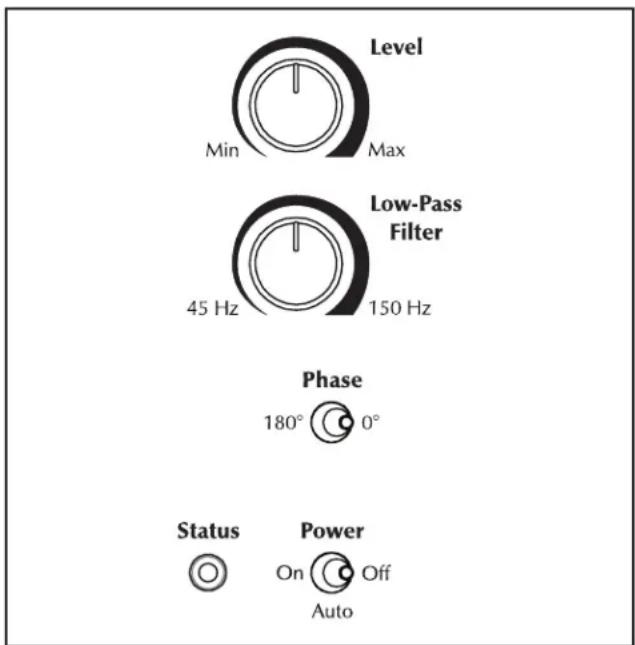
Figure 1. Dynamo 300 controls.
Before Connecting the Dynamo

WARNING! If the Dynamo is attached in LFE mode (using the Right/LFE Line Level Input) do not attach the Left Line Level In or Speaker Level Inputs.
WARNING! Do not simultaneously attach Speaker Level inputs and Line Level Inputs.
WARNING! Turn your Dynamo 300 subwoofer to 'Off' before making or breaking any signal connections!
MartinLogan's engineering and design team developed the Dynamo 300 for easy setup and integration. Before connecting your Dynamo 300, please review the controls discussed in the last section. An understanding of these will help speed you along as you connect and integrate your Dynamo 300. All signal connections are done on the rear connections panel of the Dynamo 300. Make certain that all of your connections are tight.
2-Channel Mode
This setup is recommended if your Dynamo 300 will be used in a 2-channel system. If you will be using your system for both 2-channel and multi-channel listening we recommend connecting the Dynamo 300 as recommended in 'Multi-Channel/LFE Mode'. Some modern receivers and processors allow users to route left and right channel low-frequency information, in addition to discrete LFE information, through the LFE output.
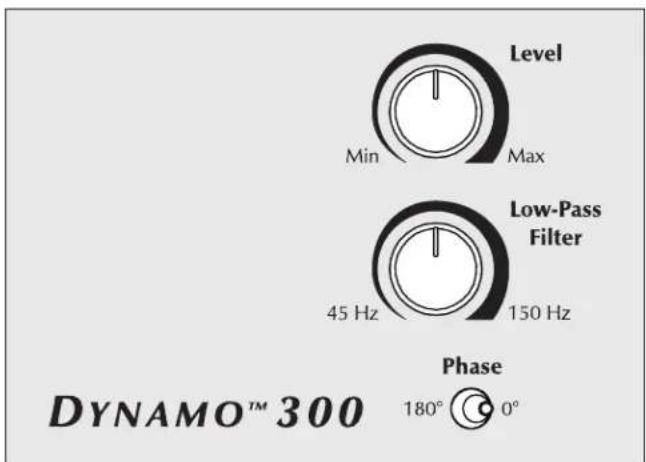
Figure 2. For 2-channel mode adjust Level, LowPass Filter, & Phase controls.
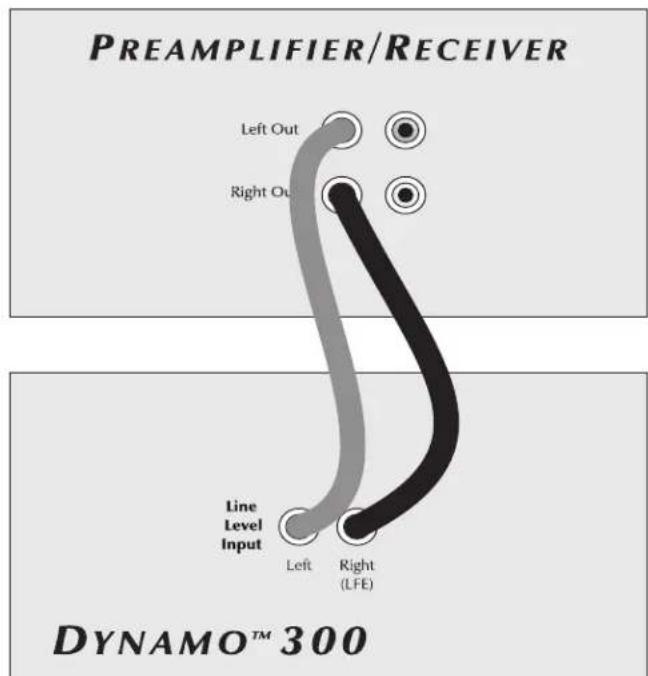
Figure 3. Signal connection for 2-channel mode via line leve input.
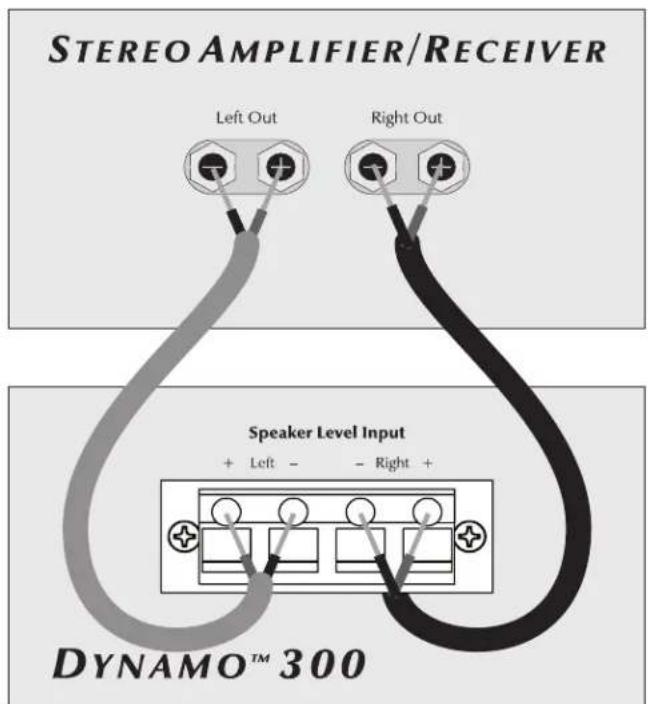
Figure 4. Signal connection for 2-channel mode via speaker level input.
Connect the left and right line level outputs of your preamplifier to the left and right 'Line Level Input' connections of the Dynamo 300 using quality RCA interconnects. If your preamplifier only has one set of outputs you may need to obtain Y adapters from your dealer.
Connect the left and right outputs of your amplifier to the subwoofer's left and right 'Speaker Level Input' binding posts. Use quality speaker cable.
If your amplifier only has one set of outputs you may connect your amplifier to your speakers as normal and run an additional set of cables from your speakers to the subwoofer's 'Speaker Level Input' binding posts.
It is also possible to connect the left and right outputs of your amp to the left and right 'Speaker Level Input' of the subwoofer and run additional cables from your subwoofer to the speakers.
1 Set the 'Low Pass Filter' knob to approximately 70% of your loudspeakers lowest frequency response.
3 While playing music with bass content, turn the 'Level' control up until the music has deep extended bass, being careful to avoid levels that become overwhelming.
4 Try the 'Phase' control in different settings until the best blending is obtained.
Multi-Channel/LFE Mode
This setup is recommended if your Dynamo 300 will be used in a dedicated home theater or multi-channel system. When a signal is connected to the subwoofer's LFE input, and the crossover switch is set to 'Bypass (LFE In)' the internal low pass filter is not active. By following this setup, you will allow your processor to handle most of the bass management.
If you will be using your system for both 2-channel and multi-channel listening we recommend using this setup
and connection method. Some modern receivers and processors allow users to route left and right channel low-frequency information, in addition to discrete LFE information, through the LFE output.
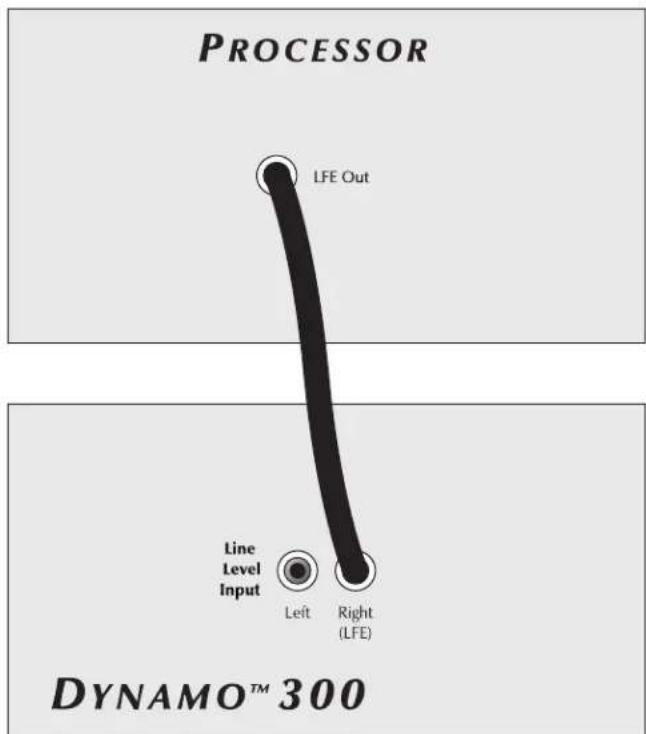
Figure 5. Signal connection for multi-channel mode.
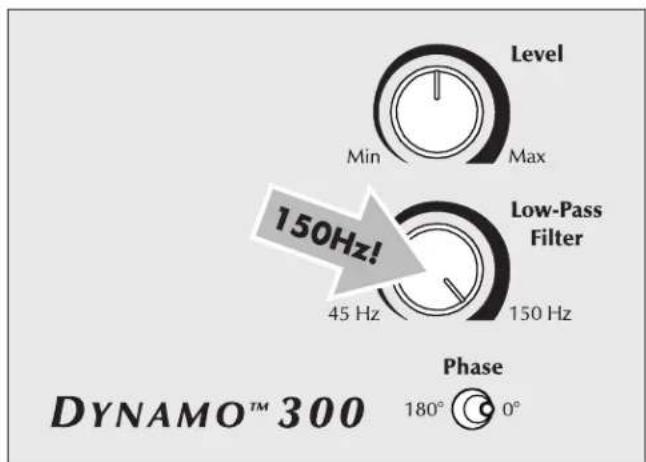
Figure 6. For Multi-channel/LFE mode set the Low-Pass Filter at 150Hz . Adjust Level and Phase controls.
1 Connect the LFE output of the processor to the LFE input using a quality RCA interconnect.

WARNING!
Based on the performance of most processors, it is recommended that MartinLogan center and effects type speakers not be run in large, wide, or full range mode. Doing so may potentially damage the speaker if the processor attempts to drive the speaker beyond its rated frequency range. This warning also applies to products from other manufacturers.
It is recommended to run center and effects type speakers in limited or narrow mode. Some processors have an option to route the LFE channel to your main and/or surround speakers. We recommend that you do not use this option.
1 Set the 'Low Pass Filter' knob to 150 Hz.
2 Use the bass management section of your processor's speaker level setup option to set the subwoofer level at an appropriate level. Follow the instructions in your processor manual to fine-tune the subwoofer level.
3 If your processor offers the option to setup crossovers for a subwoofer, we recommend that you start with the following settings—Crossover: 70Hz, High-Pass: 12dB, and Low-Pass: 24dB. The optimal setting for these options may vary depending on your room and listening preferences.
4 Adjust the phase control until ideal blending is obtained. If you hear no discernible difference leave the phase at 0irc
5 Follow the instructions in your processor manual to finetune the subwoofer level
AC Power Connection

WARNING! The power cord should not be installed, removed, or left detached from the subwoofer while the other end is connected to an AC power source.
The IEC cord should be firmly inserted into the AC power receptacle on the rear connection panel of the subwoofer, then to any convenient AC wall outlet. Directly adjacent to the AC power receptacle on the rear connection panel of the subwoofer is a master power switch. This switch is wired directly to the AC main and turns on/off all power going to the subwoofer. The Dynamo 300 also integrates a signal sensing power supply that will go to Standby mode after a few minutes of no music signal if the front-panel power switch is set to 'Auto'.
Your subwoofer is wired for the power service supplied in the country of original consumer sale. The AC power rating applicable to a particular unit is specified both on the packing carton and on the serial number plate attached to the subwoofer.
If you remove your subwoofer from the country of original sale, be certain that AC power supplied in any subsequent location is suitable before connecting and operating the subwoofer. Substantially impaired performance or severe damage may occur to the subwoofer if operation is attempted from an incorrect AC power source.
Break-In
Our custom made woofers require approximately 50 hours of break-in at moderate listening levels before their optimal performance occurs. This will factor in on any critical listening and judgment.
Listening Position
Generally, subwoofoers have the most output when placed in the corner of a room. However, this can also exaggerate the subwoofoers output making blending difficult. We recommend starting by placing the Dynamo 300 in a corner. If, after the full range of tuning techniques have been employed, the subwoofer sounds like it has too much upper bass energy try pulling it away from the wall, toward the listening position. This will lessen the reinforcement of these problematic frequencies from the wall and likely smooth out the response. Repeat the tuning techniques with the woofer controls after you move it (see figure 7).
Ask Your Dealer
Your MartinLogan dealer can suggest many options for optimal subwoofer placement. They also have many tools at their disposal, such as experience, familiarity with the associated equipment, and even sound analysis equipment which may make the task of determining optimal subwoofer placement easier.
Enjoy Yourself
The Dynamo 300 is a very refined subwoofer and will benefit from care in setup. With the above placement tips in mind you will find, over months of listening, that small changes can result in measurable differences. As you live with your subwoofer, do not be afraid to experiment with positioning until you find the optimal relationship between your room, settings and subwoofer that gives you the best results. Your efforts will be rewarded.
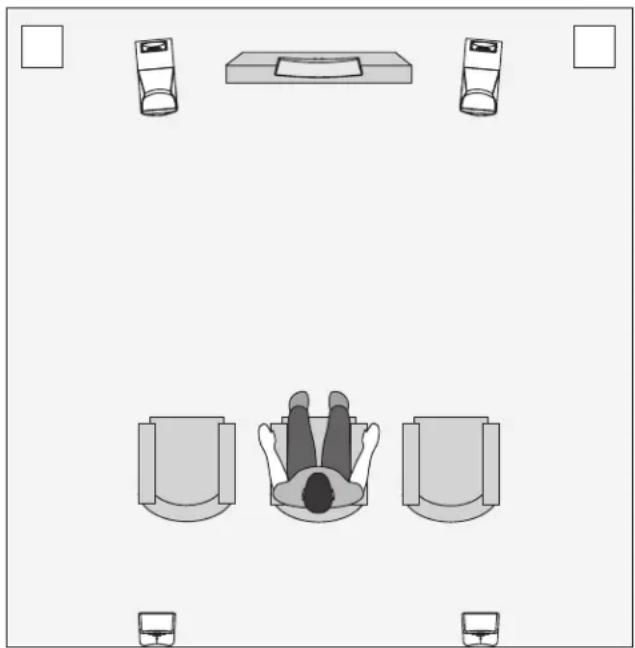
Figure 7. Dynamo 300 Subwoofer as the LFE (effects) channels, MartinLogan Motion 12 speakers as front channels, and Motion 4 speakers as surround (effects) channel and Motion 8 as the center channel. Note the corner placement of the Dynamo 300 at the front of the listening room.
Your Room
This is an area that requires both a little background to understand and some time and experimentation to attain the best performance from your system.
Your room is actually a component and an important part of your system. This component is a large variable and can dramatically add to or subtract from a great sonic experience.
All sound is composed of waves. Each frequency has its own wave size, with the lower, or bass frequencies literally encompassing from 10 feet to as much as 40 feet. Your room participates in this wave experience like a swimming pool with waves reflecting and becoming enhanced depending on the size and shape of the room and the types of surfaces in the room.
Remember that your audio system can actually generate all of the information required to recreate a sonic event in time, space, and tonal balance. Acoustically, the role of an ideal room would be to neither delete nor contribute to that information. However, nearly every room does to some degree.
Terminology
Standing Waves
Sound coming from a speaker bounces around in a room until a pattern emerges—this is called a standing wave. Typically, this is only a problem with frequencies below 100Hz. When this happens different parts of your room experience either an excess or a lack of bass.
Some people believe that having a room without parallel walls will eliminate this effect. The truth is that non-parallel walls only generate different standing wave patterns than those that occur in rectangular rooms.
Usually, you can excite most of the standing waves in a room by putting the Dynamo 300 in a corner. Listening position determines which standing waves you will experience. For instance, if you sit in a corner you will hear most of the standing waves. This can be an overpowering experience. Sitting next to a wall can also intensify the levels of the standing waves that are experienced.
Resonant Surfaces and Objects
All of the surfaces and objects in your room are subject to the frequencies generated by your system. Much like an instrument, they will vibrate and "carry on" in syncopation with the music, and may contribute in a negative way to the sound. Ringing, boominess, and even brightness can occur simply because surfaces and objects are "singing along" with your speakers.
Resonant Cavities
Small alcoves or closet type areas in your room can be chambers that create their own "standing waves" and can drum their own "one note" sounds.
It had long been the practice of stereo buffers to connect their television to a stereo system. The advantage was the use of the larger speakers and more powerful amplifier of the stereo system. Even though the sound was greatly improved, it was still mono and limited by the broadcast signal.
In the late 1970's and early 1980's two new home movie formats became widely available to the public: VCR and laser disc.
By 1985, both formats had developed into very high quality audio/video sources. In fact, the sonic performance of some video formats exceeded audio-only formats. Now, with theater-quality sound available at home, the only element missing was the "surround sound" presentation found in movie houses.
Fortunately, Dolby and DTS encoded DVD's emerged with the same surround sound information encoded on home releases as the theatrical release. Additionally, new high-resolution home-viewing formats such as Bluray as well as high-definition content provided via cable or satellite have evolved which include multi-channel encoded audio that is virtually master tape quality. All that is required to retrieve this information is a decoder and additional speakers and amps to reproduce it.
Home theater is a complex purchase and we recommend that you consult your local MartinLogan dealer, as they are well versed in this subject.
Each piece of a surround system can be purchased separately. Take your time and buy quality. No one has ever complained that the movie was too real. The following list and descriptions will give you only a brief outline of the responsibilities and demands placed on each speaker.
Front Left and Front Right
If these speakers will be the same two used for your stereo playback, they should be of very high quality and able to play loudly (over 102 dB) and reproduce bass below 80Hz .
Center Channel
This is the most important speaker in a home theater system, as almost all of the dialogue and a large portion of the front speaker information is reproduced by the center channel. It is important that the center speaker be extremely accurate and mate well with the front
speaker, and that it is recommended for use as a center speaker. This is not the place to cut corners.
Surround Speakers
We recommend (along with the film industry) that the surround speakers play down to at least 80Hz . Surround speakers contain the information that makes it appear that planes are flying over your head. Some may suggest that this is the place to save money and purchase small, inexpensive speakers. If you choose to do so, be prepared to upgrade in the future as discrete multi-channel digital encoding is proliferating rapidly and the demands on surround speakers have increased.
Subwoofer
With any good surround system you will need one or more high-quality subwoofoers (the .1 in a 5.1, 6.1, or 7.1 channel surround system). Most movie soundtracks contain large amounts of bass information as part of the special effects. Good subwoofoers will provide a foundation for the rest of the system.
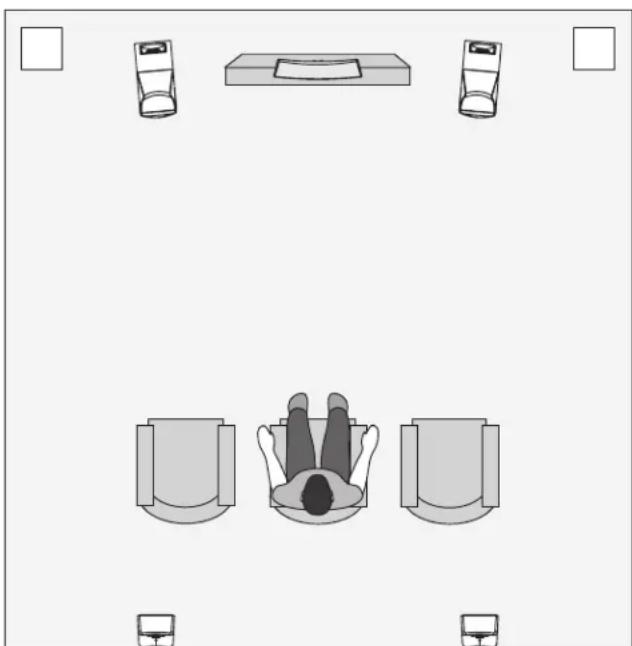
Figure 8. Dynama 300 subwoofer as the LFE (effects) channels, MartinLogan Motion 12 speakers as front channels, and Motion 4 speakers as surround (effects) channel and Motion 8 as the center channel.
Frequently Asked Questions Troubleshooting
How do I clean my subwoofer?
Use a dust free cloth or a soft brush to clean your subwoofer. We recommend a specialty cloth (available through the Xtatic shop at www.martinlogan.com) that cleans better than anything else we have tried.
Is it safe to set things on my subwoofer?
While your Dynamo 300 is designed with a durable, stainresistant surface, we advise you not to set anything on your Dynamo 300—especially containers holding liquids.
Is there likely to be any interaction between my subwoofer and the television in my Audio/ Video system?
Yes. The Dynamo 300 subwoofer doesn't use a shielded driver. We recommend 3 feet between the Dynamo 300 subwoofer and video components that are susceptible to magnetic fields.
Will my electric bill go 'sky high' by leaving my subwoofer plugged in all the time?
No. The Dynamo 300, when the power switch is set to 'Auto On', will draw about 7 watts when idle and only 7 watts in standby mode.
Should I unplug my subwoofer during a thunderstorm?
Yes, or before. It's a good idea to disconnect all of your audio/video components during stormy weather.
No Output
- Check that all your system components are turned on.
- Check that the master power switch adjacent to the AC receptacle is set to 'Auto On'.
- Check your wires and connections.
- Check all interconnecting cables.
Make sure the level control is not turned down.
- If the problem persists, contact your dealer.
Muddy Bass
- Check placement. Try moving the subwoofer closer to the front and side walls.
Decrease the level.
- Check your processor setup.
- If the problem persists, contact your dealer.
Hums or Unusual Sounds
- Turn the Dynamo 300 off, unplug all signal inputs, turn the Dynamo 300 back on and turn up the level. If the problem disappears, the hum is originating elsewhere in your system.
- Connect the Dynamo 300's AC connection to the same AC circuit as the pre amp.
- If the problem persists, contact your dealer.
The Dynamo 300 subwoofer system consists of a single woofer for high SPL output with minimal distortion. The equalization used is specifically designed to counteract the response of the woofers sealed box response. This equalization leads to minimal group delay and proper transient response.
System Frequency Response
32-150 Hz ± 3 dB. Anechoic in the LFE mode.
Low Pass Filter Frequencies
45Hz-150Hz
Phase
8" [25.4cm] high-excursion, polypropylene cone with extended throw driver assembly; ported
Amplifier
75 watts RMS [150 watts peak]
Impedance
Left & Right/LFE RCA - 10,000 Ohms
Left & Right Speaker Level - 10,000 Ohms
Left & Right/LFE RCA Line Level, Left & Right Speaker Level
Mains Power Draw
Standby: 7.3W
Idle: 7.15W
Max:130W
Weight
21.5 lbs. each (9.8 kg)
Size
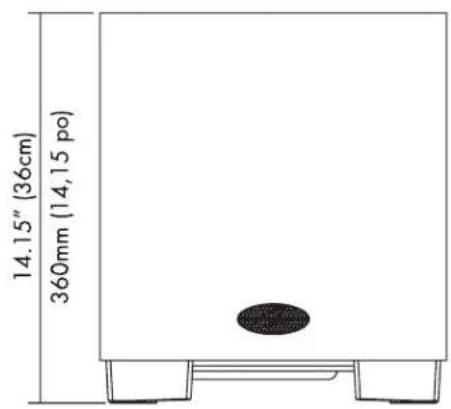
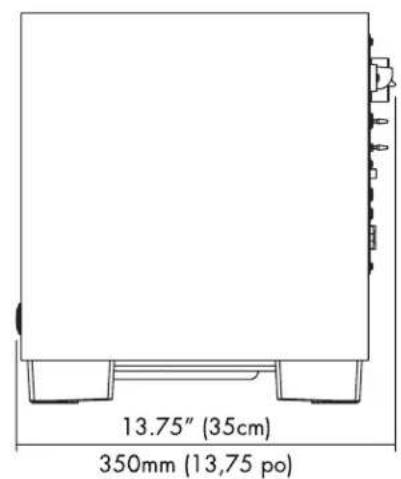
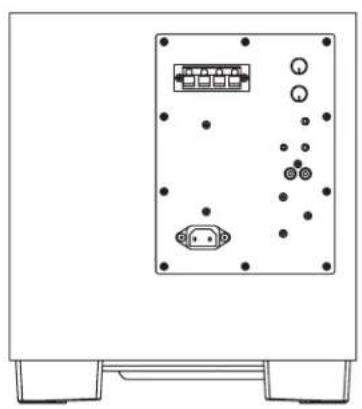
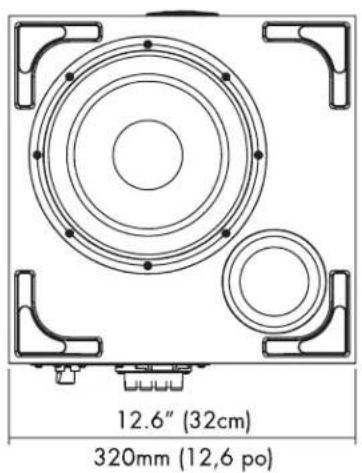
12.6 inches W x 13.75 inches D x 14.15 inches H
32cmW× 35cmD× 36cmH
Warranty and RegistrationSpecificati
Your Dynamo 300 subwoofer is provided with an automatic limited 90 Day Warranty coverage.
You have the option, at no additional charge, to receive Limited 3-Year Warranty coverage. To obtain the Limited 3-Year Warranty coverage you need to complete and return the Certificate of Registration, included with your subwoofer, and provide a copy of your dealer receipt, to MartinLogan within 30 days of purchase.
For your convenience MartinLogan also offers online warranty registration at www.martinlogan.com.
MartinLogan may not honor warranty service claims unless we have a completed Warranty Registration card on file!
If you did not receive a Certificate of Registration with your new Dynamo 300 subwoofer you cannot be assured of having received a new unit. If this is the case, please contact your authorized MartinLogan dealer.
Service
Should you be using your MartinLogan product in a country other than the one in which it was originally purchased, we ask that you note the following:
1 The appointed MartinLogan distributor for any given country is responsible for warranty servicing only on units distributed by or through it in that country in accordance with its applicable warranty.
2 Should a MartinLogan product require servicing in a country other than the one in which it was originally purchased, the end user may seek to have repairs performed by the nearest MartinLogan distributor, subject to that distributor's local servicing policies, but all cost of repairs (parts, labor, transportation) must be born by the owner of the MartinLogan product.
3 If, after owning your subwoofer for six months, you relocate to a country other than the one in which you purchased your subwoofer, your warranty may be transferable. Contact MartinLogan for details.

WARNING! Do not use your Dynamo 300 subwoofer outside of the country of original sale—voltage requirements vary by country. Improper voltage can cause damage that will be potentially expensive to repair. The Dynamo 300 is shipped to authorized MartinLogan distributors with the correct power supply for use in the country of intended sale. A list of authorized distributors can be accessed at www.martinlogan.com or by emailing info@martinlogan.com.

MARTIN LOGAN
lawrence, Kansas, USA tel 785.749.0133 fax 785.749.5320 www.martinlogan.com
DYNAMO
Power = Alimentation
Avant de raccorder le Dynamo

75 watts RMS (crete 150 watts)
Impedance
Gauge et droit/LFE RCA - 10 000 Ohms