Tix 16612 - Juicer Vice Versa - Free user manual and instructions
Find the device manual for free Tix 16612 Vice Versa in PDF.



| Product Type | Electric citrus juicer |
| Brand | Vice Versa |
| Model | Tix 16612 |
| Power Supply | AC 220-240 V, 50 Hz |
| Power | 90 W |
| Main Functions | Citrus juice extraction; automatic start/stop by pressure; two cones (large and small) |
| Capacity | Juice receptacle with swivel spout |
| Filter | Built-in filter to retain seeds and pulp |
| Safety | Automatic stop when pressure is released; automatic disconnection in case of overload; cord with cord winder |
| Care and Cleaning | Removable parts (cones, filter, receptacle, lid) dishwasher safe or washable in warm soapy water; wipe motor unit with a damp cloth |
| Spare Parts | Available via retailer or manufacturer |
| Repairability | 2-year warranty; repairs by an authorized service center |
| General Information | Household use; made in China; dimensions and weight not specified |
Frequently Asked Questions - Tix 16612 Vice Versa
User questions about Tix 16612 Vice Versa
0 question about this device. Answer the ones you know or ask your own.
Ask a new question about this device
Download the instructions for your Juicer in PDF format for free! Find your manual Tix 16612 - Vice Versa and take your electronic device back in hand. On this page are published all the documents necessary for the use of your device. Tix 16612 by Vice Versa.
USER MANUAL Tix 16612 Vice Versa
text_image
VEER VICETIX
SPREMIAGRUMI
CITRUS JUICER
PRESSE AGRUMES
ZITRUSPRESSE
EXPRIMIDOR DE CÍTRICOS
natural_image
Diagram of a container with a tube inserted into a slot, showing liquid level and an arrow indicating direction (no text or symbols)fig. 2
natural_image
Line drawing of a mechanical component with three downward arrows indicating downward motion (no text or symbols)fig. 3
natural_image
Illustration of a bucket with a straw and a small container (no text or symbols)fig. 4
3. Spremere I frutti
natural_image
Diagram of a container with a label and arrow pointing to it, no readable text or symbols present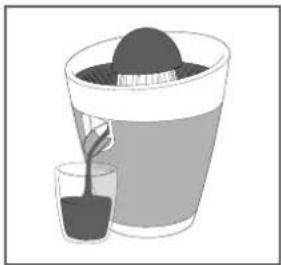
natural_image
Illustration of a potted plant with a seedling inside, no text or symbols presentfig. 7
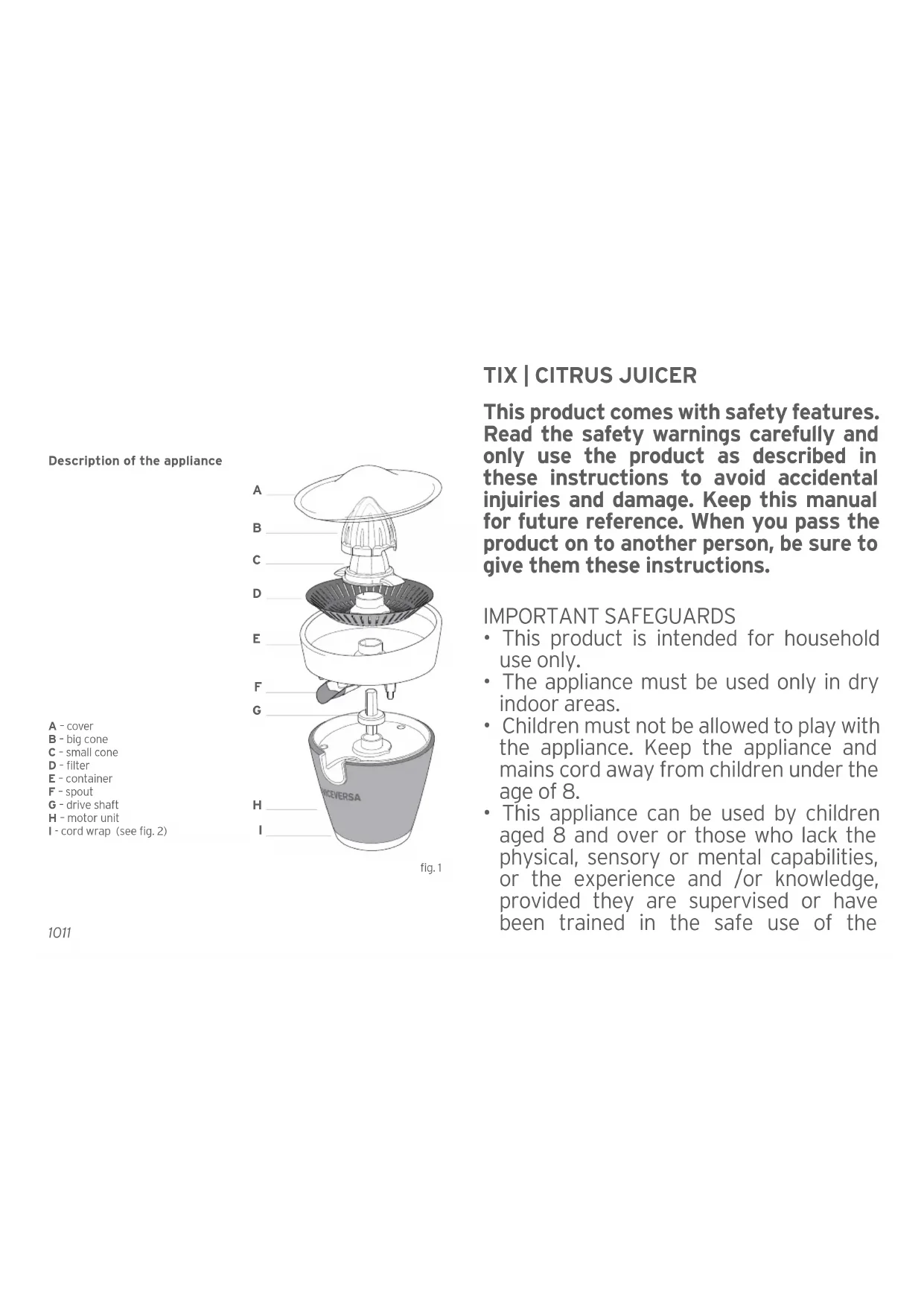
Description of the appliance
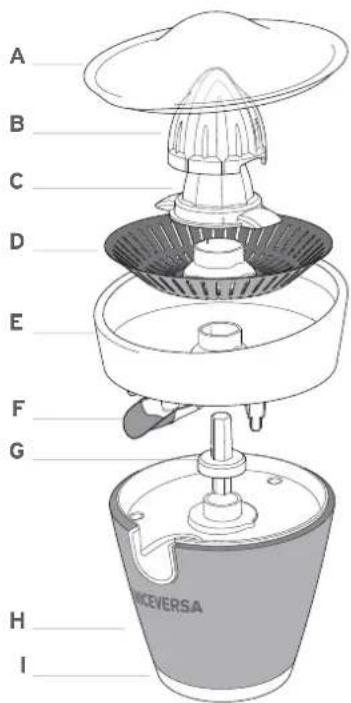
A - cover
B - big cone
C - small cone
D - filter
E - container
F - spout
G - drive shaft
H - motor unit
I - cord wrap (see fig. 2)
text_image
A B C D E F G H I ICEVERSAfig.1
TIX | CITRUS JUICER
This product comes with safety features. Read the safety warnings carefully and only use the product as described in these instructions to avoid accidental injuries and damage. Keep this manual for future reference. When you pass the product on to another person, be sure to give them these instructions.
IMPORTANT SAFEGUARDS
- This product is intended for household use only.
- The appliance must be used only in dry indoor areas.
• Children must not be allowed to play with the appliance. Keep the appliance and mains cord away from children under the age of 8. - This appliance can be used by children aged 8 and over or those who lack the physical, sensory or mental capabilities, or the experience and /or knowledge, provided they are supervised or have been trained in the safe use of the
appliance and understand the potential dangers.
• Children must not be allowed to clean the appliance unless they are over 8 years old and supervised by an adult.
- Set up the appliance in a place where children cannot reach it.
- Keep packaging material out of children's reach. Risk of suffocation!
- Do not submerge the motor block in water or other liquids and do not hold it under running water or it could cause an electric shock.
- Do not operate it outdoors or in rooms with high humidity.
- Unplug the appliance in the following cases: in the event of faulty operation, if the appliance won't being used or if it will be left unattended, before disassembling or assembling the appliance, after use, during thunderstorms and before cleaning. Always pull the plug and not the mains cord.
- Do not use adapters or extensions that do not comply with the safety regulations in force or which exceed the voltage limits _1213
of the appliance.
- The mains cord must not be kinked or squeezed. Keep the mains cord away from hot surfaces and sharp edges.
- Ensure a sufficient distance from heat sources, such as the hob or oven.
- Do not use the juicer if the appliance or the mains cord show visible signs of damage or the appliance has been dropped.
- Place the appliance on a solid, even surface that is easily accessible and easy to clean.
- Never use abrasive or caustic products or hard brushes, etc. for cleaning.
• DANGER to children and adults with restricted capability of operating appliances - No liability is assumed for any damage arising in the event of:
- incorrect use or that not complying with the intended purpose;
- repairs carried out by unauthorised people.
- Making technical changes which may cause risks is to be strictly avoided.
INSTRUCTIONS:
First-time use
Before using, read all the installation, use and maintenance instructions carefully and also the safety warnings.
- Remove all packing material.
- Check the appliance has no visible damage and that there are all parts of it. Finally, check that they are not damaged.
- Clean the appliance as described in the section "Cleaning".
Squeezing fruit
natural_image
Diagram of a bucket with a wire inserted into a container, showing liquid level and a small object inside (no text or symbols)fig. 2
1. Setting up the appliance
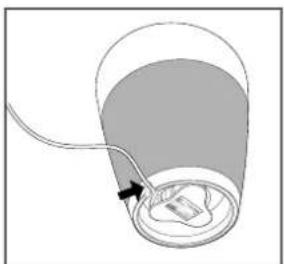
- Unwind the mains cord as necessary from the base of the appliance (Fig. 2). Make sure that the mains cord is securely fitted in the cord guide, so that the press stands steadily.
- Place the appliance on an even and easy to clean surface.
natural_image
Simple line drawing of a mechanical component with three downward arrows indicating downward motion (no text or symbols)fig. 3
2. Choosing a cone
- Choosing the most suitable cone for the size of your citrus fruit:
Small cone - for small fruits, e.g. lemons, limes, etc.
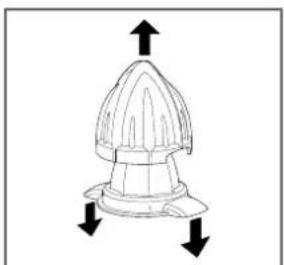
Large cone - for large fruits, e.g. grapefruits, oranges, etc. - Place the small cone directly on the drive shaft. If you would like to use the large cone, first place the small cone on the drive shaft. Now place the large cone on top of the small cone. The gaps in the large cone must click into place on the small cone's stirring blades. To separate the cones, hold the stirring blades and pull the large cone upwards.
natural_image
Illustration of a hand washing a cup with a straw, no text or symbols presentfig. 4
3. Squeezing juice
- Remove the lid.
- Place a cone on the drive shaft.
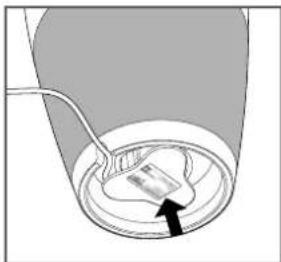
- Plug the appliance into the mains socket. Ensure that your mains supply voltage is the same as marked on the type-plate of your appliance (Fig. 6).
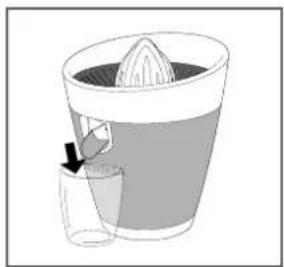
- Press the spout downwards to open it and place a glass beneath it (Fig. 4).
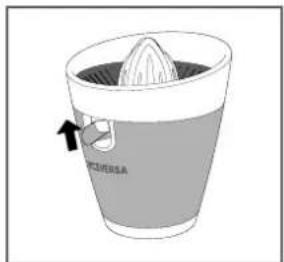
- For changing a glass, or after you have finished squeezing, press the spout upwards to close it (Fig. 5).
text_image
BEVERSAfig. 5 fig. 6
natural_image
Diagram of a container with a handle and an arrow pointing to a small object inside (no text or symbols)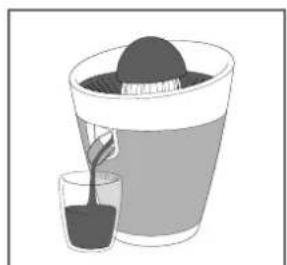
natural_image
Illustration of a bucket pouring liquid into a glass (no text or symbols)fig. 7
- Cut the citrus fruit in half and place the cut side on the cone. Do not press down too hard. Too much pressure on the cone can damage the motor. The appliance and cone switch on automatically once the fruit is pushed down. As soon as pressure on the cone subsides the appliance switches off automatically.
-
The cone squeezes the juice out. The juice flows through the sieve into the container and from there into a glass. (Fig. 7) For this to happen, the spout must be open (Fig. 4). Seeds and large pieces of pulp remain in the sieve.
-
If after all, the spout gets blocked by pulp, remove the container from the motor unit and wash it.
- To get as much juice as possible out of the fruit, press each half down on the cone more than once.
After use
- Unplug the appliance from the mains.
- Remove the cone, sieve, juice container and drive shaft and clean all parts as described in the section "Cleaning".
- Make sure all parts are thoroughly dry before reassembling the citrus press.
- Place the lid back on the citrus press.
Cleaning
- Unplug the appliance before cleaning.
- Wipe the motor block with a damp cloth.
- Rinse the cone, sieve, juice basin, lid and drive shaft with warm water and a little bit of washing-up liquid.
- Make sure all parts are thoroughly dry before reassembling the appliance. This will stop any humidity finding its way into the motor. If you use the spout frequently, pulp will collect there. Rinse the spout each time you use the juicer.
Note: The cones, filter and container can be washed in the dishwasher but remember that the detergents and additives used, and also the temperatures reached during the washing cycle can damage the surface finish of the product.
DISPOSAL
At the end of its life, the appliance must be correctly disposed of to prevent pollution of the environment; disassemble its components so that they can be eliminated in compliance with the disposal regulations in force in your country.
GUARANTEE
We grant a two-year guarantee from the date of purchase.
This product was manufactured using the latest production techniques and has undergone thorough quality control inspection. We guarantee that the product is in perfect condition. We will remedy all defects in workman-ship or materials within the guarantee period. In order for the guarantee to be granted, all warranty claims must be accompanied by proof.
In the event of malfunctioning, and in particular if the cord gets damaged, contact your Viceversa dealer and in the meantime do not use the citrus juicer.
Technical specifications

tix juicer
model n° 166XX
AC 220-240V 50Hz
90W
made in China

VICEVERSA
via isonzo 10
22078 turate (CO) ITALY
www.viceversa.com
In the course of product improvement, we reserve the right to make technical and optical modifications to the product.
natural_image
Diagram of a container with a wire and a small object inside, no text or symbols presentfig. 2
2223
natural_image
Line drawing of a mechanical component with three downward arrows indicating downward motion (no text or symbols)fig. 3
2. Choix du cône
natural_image
Illustration of a bucket with a straw and a small container (no text or symbols)fig. 4
natural_image
Diagram of a container with a handle and a small object inside, no visible text or symbols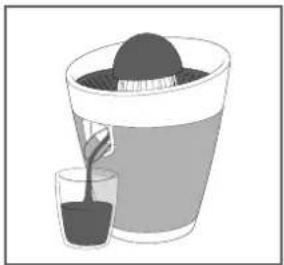
natural_image
Illustration of a coffee cup pouring dark liquid into a glass (no text or symbols)fig. 7
natural_image
Diagram of a container with a wire and a small object inside, no text or symbols presentfig. 2
natural_image
Line drawing of a mechanical component with three directional arrows indicating upward and downward motion (no text or symbols)fig. 3
natural_image
Illustration of a bucket with a lid and a small container, no text or symbols presentfig. 4
natural_image
Diagram of a container with a label and arrow pointing to it, no readable text or symbols present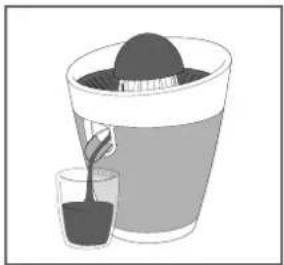
natural_image
Illustration of a coffee cup with a lid and a glass of dark liquid, no text or symbols present.fig. 7
natural_image
Diagram of a container with a tube inserted into a container, showing liquid level (no text or symbols)fig. 2
1. Instalar el electrodoméstico
natural_image
Line drawing of a mechanical component with three downward arrows indicating force or movement (no text or symbols)fig. 3
2. Elegir un cono
natural_image
Illustration of a bucket with a straw and a cup holding a small object, no text or symbols present.fig. 4
natural_image
Diagram of a container with a handle and an arrow pointing to it, no text or symbols present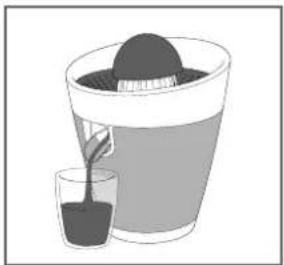
natural_image
Illustration of a coffee maker pouring milk into a glass (no text or symbols)fig. 7