S900C - Motorcycle helmet SHARK - Free user manual and instructions
Find the device manual for free S900C SHARK in PDF.


| Product type | Motorcycle helmet |
| Brand | SHARK |
| Model | S900C |
| Available sizes | XS to XL |
| Chinstrap | Double-D ring |
| Visor | Visor with Total Vision anti-fog treatment |
| Sun visor | Integrated, external control |
| Upper ventilation | Yes, sliding button control |
| Lower ventilation | Yes, push button control |
| Venturi (air extraction) | Yes, at the rear |
| Cheek pad adjustment system | Air Pump System (inflation/deflation) |
| Interior | Removable, hand-washable cheek pads and liner |
| Anti-fog mask | Removable |
| Chin curtain | Removable |
| Care | Hand wash at 30°C with mild soap, dry at room temperature |
| Recommended lifespan | 5 years after purchase or after an impact |
| Safety standard | Approved according to current standards |
Frequently Asked Questions - S900C SHARK
User questions about S900C SHARK
0 question about this device. Answer the ones you know or ask your own.
Ask a new question about this device
Download the instructions for your Motorcycle helmet in PDF format for free! Find your manual S900C - SHARK and take your electronic device back in hand. On this page are published all the documents necessary for the use of your device. S900C by SHARK.
USER MANUAL S900C SHARK
Carefully read, understand and follow the instructions provided in this manual, and keep it in a safe place for future reference. If you have any doubt whatsoever regarding the use or care of your helmet, please see your retailer for assistance or advice. Failure to follow the warnings and instructions provided herein can result in the failure of the helmet to protect you in an accident, resulting in a head injury or death.

ATTENTION
Anatomy of the helmet 3
- Choose your size 4 - 5
- Use of chinstrap. 6 - 7
Aerodynamics and acoustics 12
- Putting on and removing your helmet 13
Visor 14-15
- Cleaning the comfort padding 16
Textile parts 17-21
Air pump system 22
The sun shield 23-25
- Ventilations 26 - 27
- Nose mask / chin cover 28
-Warnings and instructions 29
ANATOMIE DU CASQUE · ANATOMY OF THE HELMET
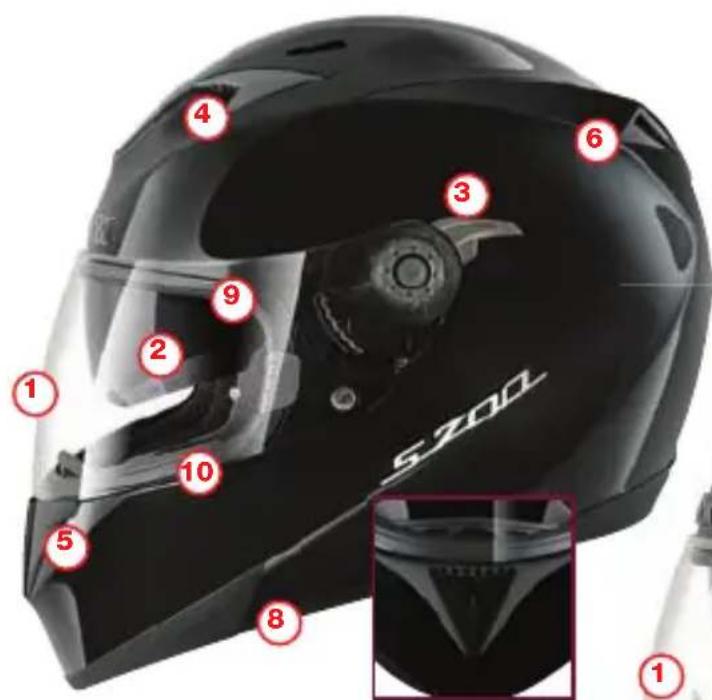
S 700 S
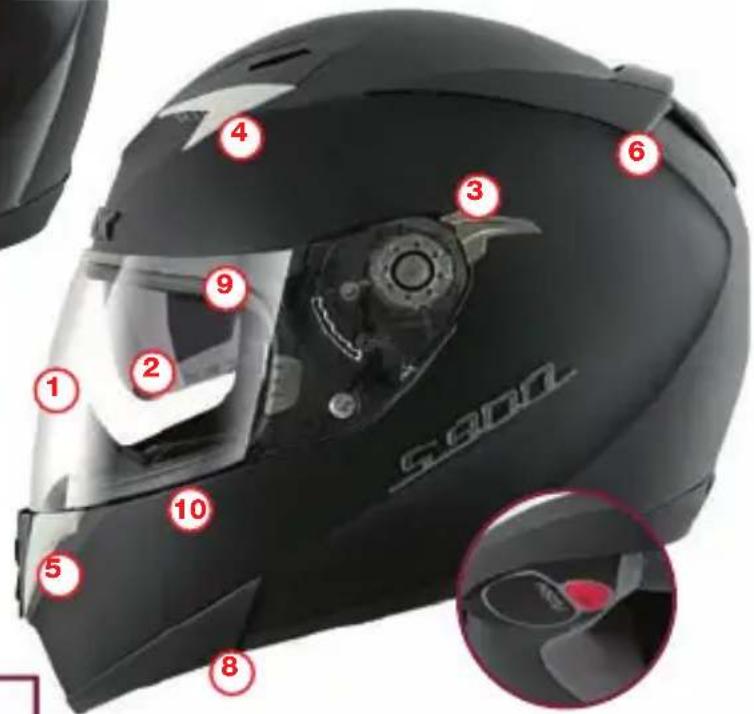
S 900 C

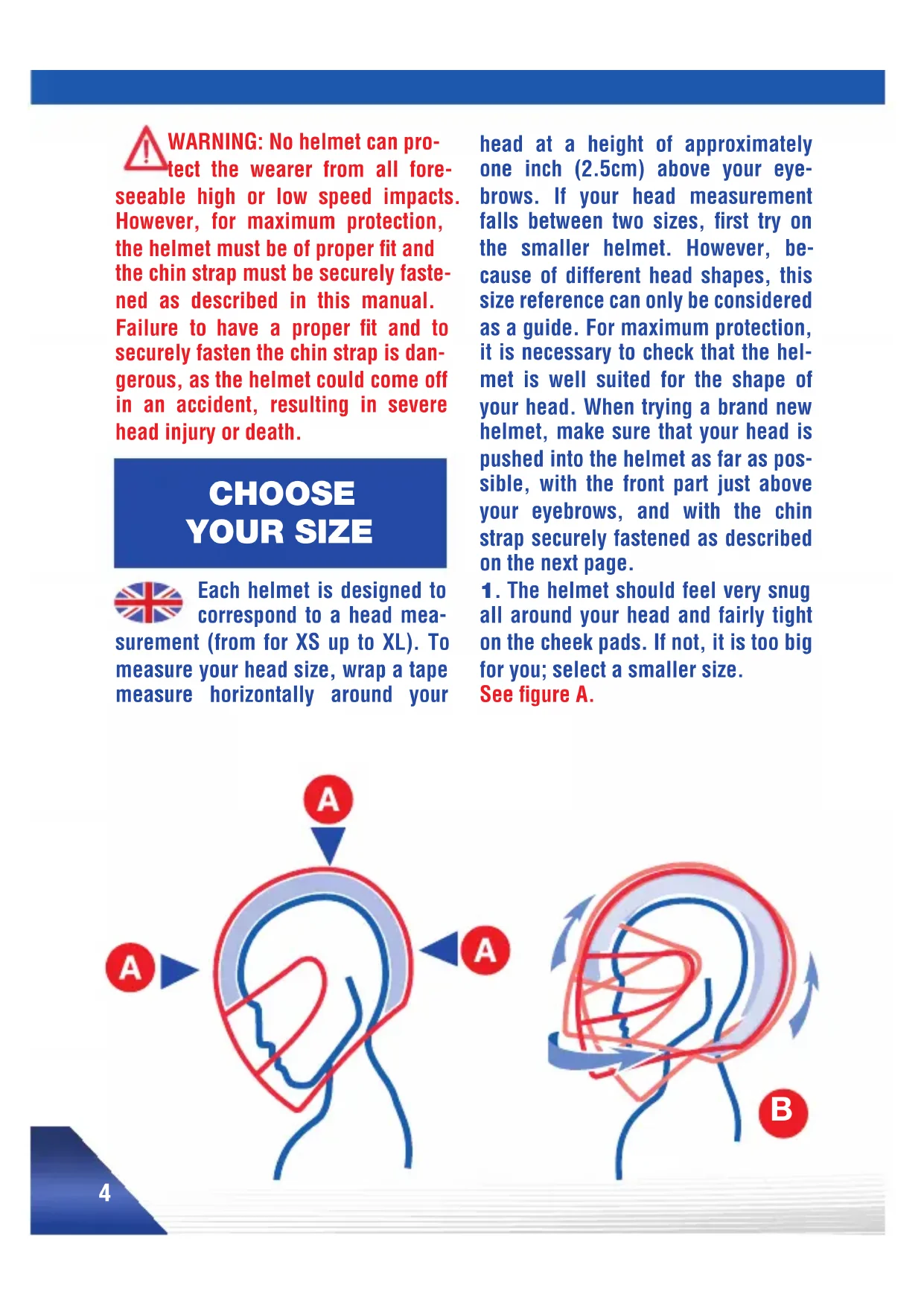
WARNING: No helmet can protect the wearer from all foreseeable high or low speed impacts. However, for maximum protection, the helmet must be of proper fit and the chin strap must be securely fastened as described in this manual. Failure to have a proper fit and to securely fasten the chin strap is dangerous, as the helmet could come off in an accident, resulting in severe head injury or death.
CHOOSE YOUR SIZE
Each helmet is designed to correspond to a head measurement (from for XS up to XL). To measure your head size, wrap a tape measure horizontally around your
head at a height of approximately one inch (2.5cm) above your eyebrows. If your head measurement falls between two sizes, first try on the smaller helmet. However, because of different head shapes, this size reference can only be considered as a guide. For maximum protection, it is necessary to check that the helmet is well suited for the shape of your head. When trying a brand new helmet, make sure that your head is pushed into the helmet as far as possible, with the front part just above your eyebrows, and with the chin strap securely fastened as described on the next page.
- The helmet should feel very snug all around your head and fairly tight on the cheek pads. If not, it is too big for you; select a smaller size. See figure A.
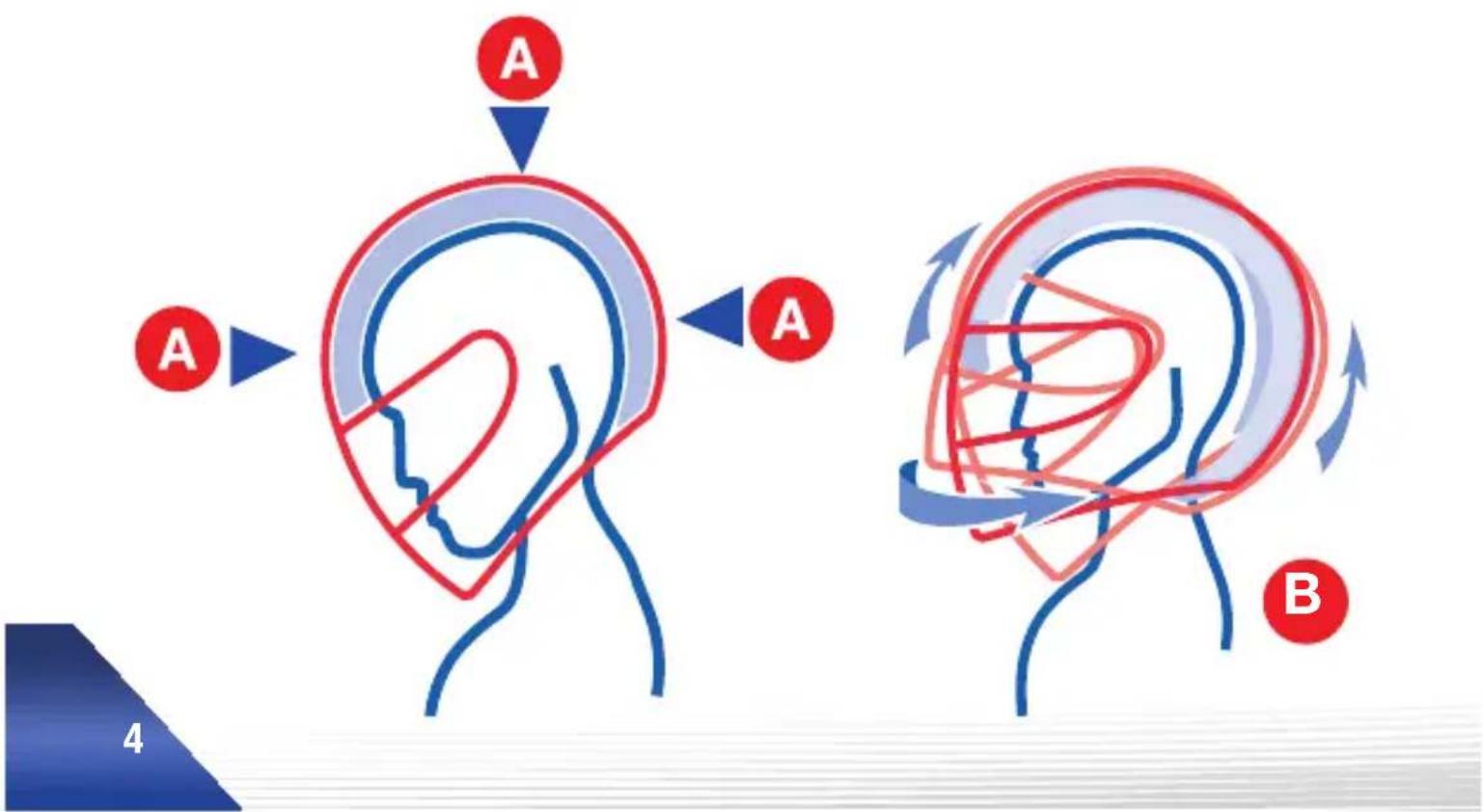
- With the chin strap properly fastened (see page 6), be sure that the helmet cannot be moved excessively from side to side or up and down. You should feel the skin of your head and face being pulled as you move the helmet. If not, the helmet is too big for you; select a smaller size. See figure B.
- Grasp the back of the helmet at the base and attempt to pull the helmet off your head. Next, push the helmet upwards from beneath the chin guard. You should push and pull with relatively significant force. If the helmet starts to come off, the helmet is too big for you; select a smaller size.
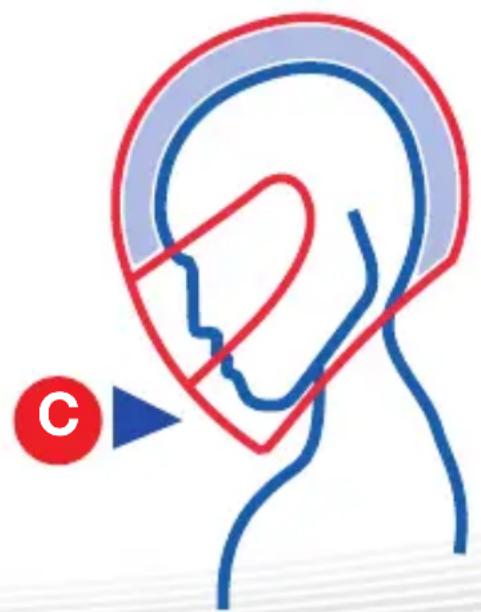
- Bend your head forward as far as possible. The chin guard must not touch your chest. See figure C.
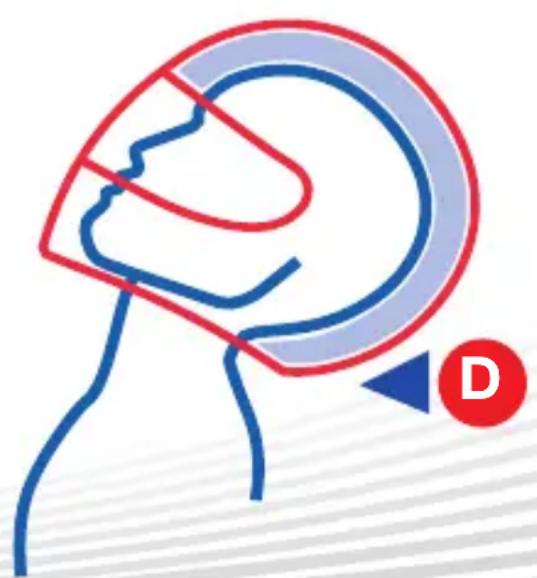
- Bend your head backwards as far as possible. The helmet shell must not touch your back. See figure D.
Never wrap your hair inside the helmet, or place anything in or on your hair inside the helmet. Never insert padding to modify the position of the helmet on the head.
If you have any questions about properly sizing your helmet, see your retailer for assistance.
Each of these tests must be repeated throughout the life of the helmet, as the comfort padding may wear or change over time. If, during the life of your helmet, your helmet does not maintain the correct fit, you must replace the helmet.
Never lend your helmet to others without insuring a proper fit in accordance with these instructions.
WARNING: If you cannot obtain a proper fit in accordance with these instructions, DO NOT USE THE HELMET. Select a different helmet size or model.
WARNING: No helmet can protect the wearer from all foreseeable high or low speed impacts. However, for maximum protection, the helmet must be of proper fit and the chin strap must be securely fastened as described in this manual. Failure to have a proper fit and to securely fasten the chin strap is dangerous, as the helmet could come off in an accident, resulting in severe head injury or death.
CHIN STRAP

Your helmet is equipped
with a double-D-ring chin strap. Proper use of the chin strap is critical for proper performance of the helmet. Never alter your chin strap in any way. For example, never cut it or add holes, or apply buttons, studs or other items to your chin strap. During the life of your helmet, be sure that the chin strap never suffers any type of abrasion or cut, and that its total length does not change. If it does, replace your helmet.
We strongly recommend that you fasten your chin strap before putting on your gloves, in order to make sure that the fastening within the double-D-ring is correct.
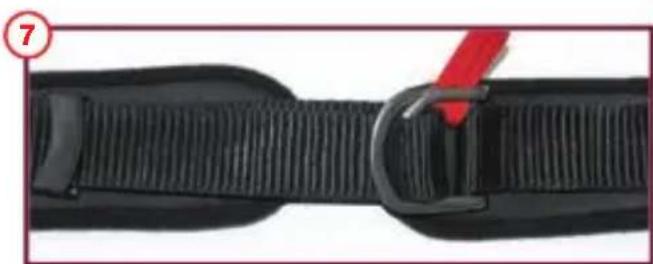
- Slide the longest part of the strap through both rings, while checking that the comfort padding is positioned between the strap and your neck. See figure A.
- Loop the end of the chin strap back over the end of the outer D-ring and pass it back through the inner D-ring. See figure B.
- Pull the end of the strap until the chin strap is tight. The chin strap should be positioned against your neck, not under your chin, and should be as tight as possible while not causing pain or interference with your breathing. See figure C.
- Slide the free end of the chin strap into the plastic strap loop on the comfort padding, in order to prevent the strap from fluttering in the wind.
See figure D.
Never lend your helmet to others without insuring proper use of the double-D-ring chin strap in accordance with these instructions.
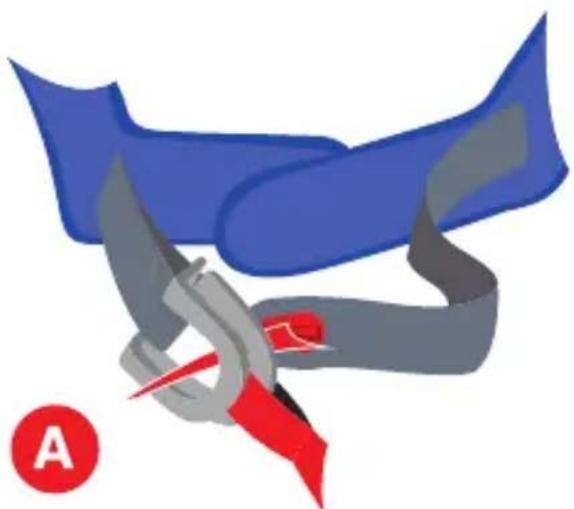
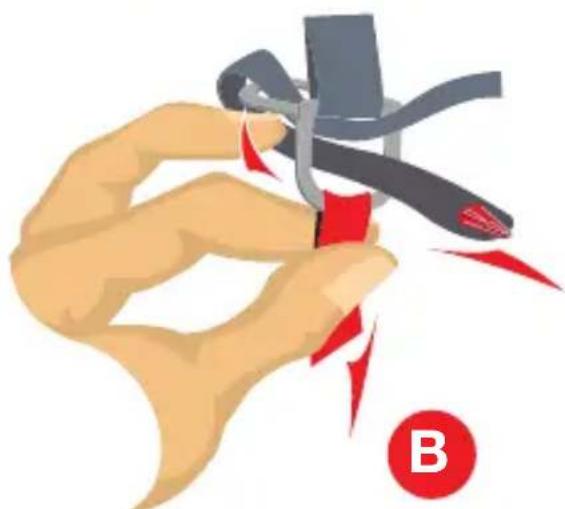
WARNING: Never use the strap loop to secure your helmet to your head. In order to be properly fastened, you must thread the strap through the double-D-rings. Failure to properly use the double-D-rings will cause your helmet to become dislodged during an accident, leaving your head completely unprotected and resulting in severe head injury or death.
Try to pull down on the chin strap with your fingers. If the strap loosens in any way, you have not properly tightened the chin strap with the double-D-rings. Repeat the steps above. If you have any doubt concerning the fastening system of your helmet, do not use the helmet. Contact your dealer for assistance
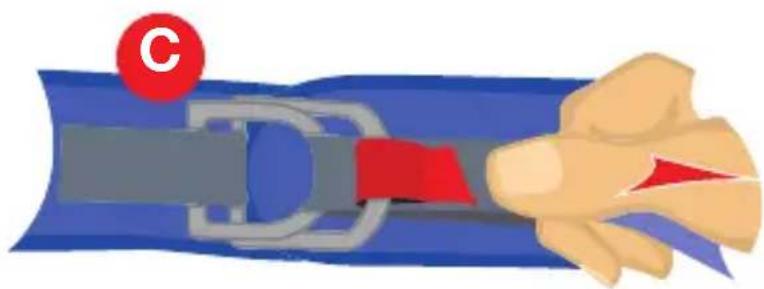
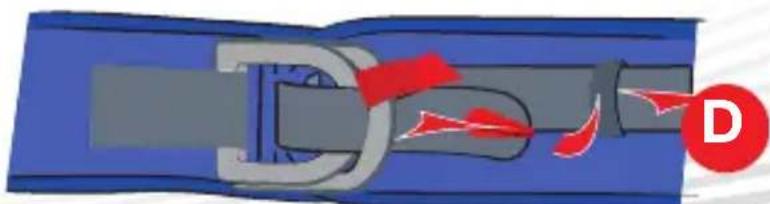

The S 700 S/S 900 C has been carefully designed to offer you the greatest pleasure in use.
The profile of the helmet, its impermeability and the quality of the materials used enable air noise on the crown of the head and aerodynamic turbulence to be filtered as far as possible.
In order for the use of your helmet to be as pleasant as possible, it is important for turbulence or air eddies created by the fairings not to impair the aerodynamic qualities of your S 700 S/S 900 Chelmet. The shape of the fairings of your motorcycle and/or your size should not cause air eddies to reach the lower part of your helmet.
CONSEILS D'UTILISATION • ADVICE FOR USE
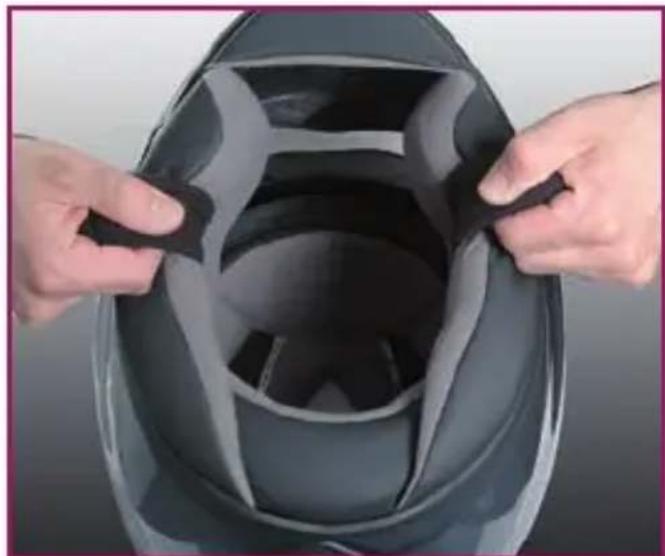
POUR ENFILER LE CASQUE
Grasp the two halves of the chin strap with your thumbs positioned as shown and pull the chin strap slightly apart to facilitate the passage of your head. After pushing the helmet down on your head completely, fasten the chin strap as discussed on page 6. Once the chin strap is secure, check the fit of the helmet as discussed on page 4.
WARNING: If you cannot properly fasten your chin strap or obtain the correct fit of your helmet on your head, DO NOT USE THE HELMET! See your retailer for assistance.
REMOVING THE HELMET
Release the chin strap; pull the two halves of the chin strap slightly apart and remove the helmet.
VISOR · ECRAN
DÉMONTAGE·REMOVAL
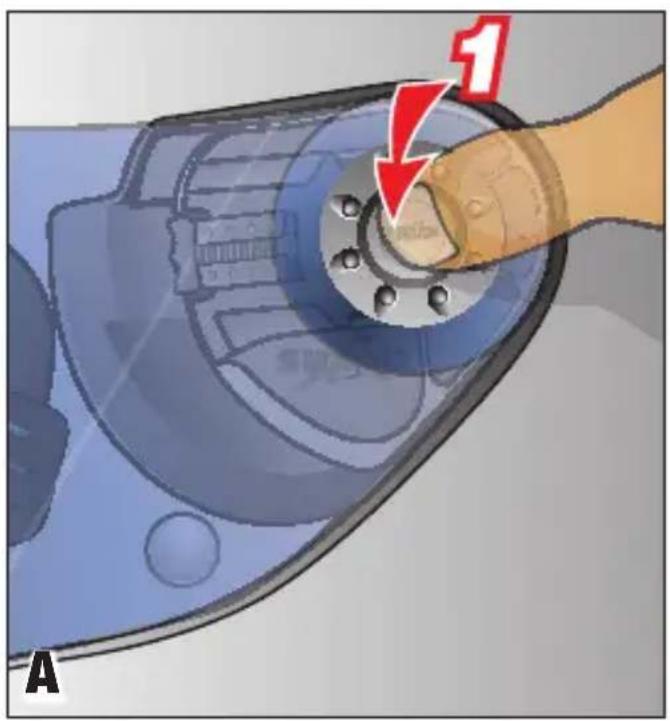
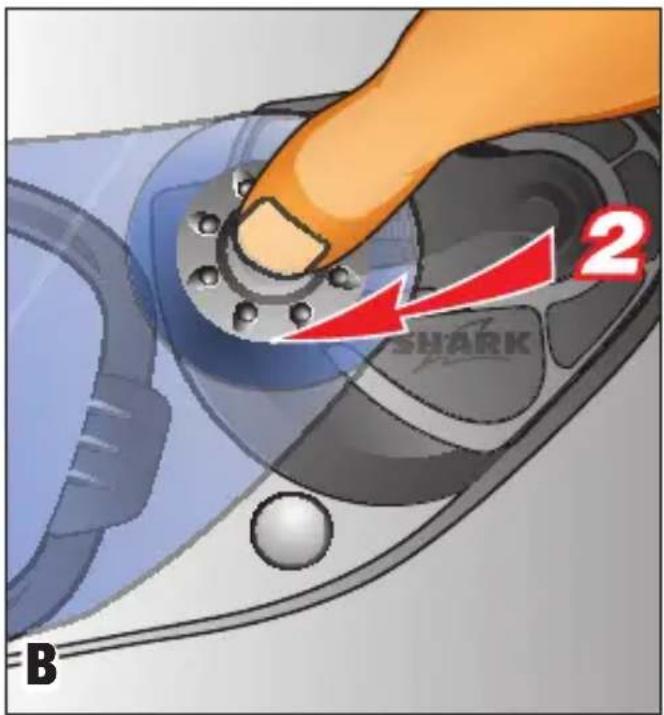
DEPOSE DE L'ECRAN:
Press on the centre of the button (A)
and then push the visor to the front of
the helmet (B). Repeat the operation on
the other side.
Place the visor buttons in the slides provided on the plate (C). With your hand flat on the visor push until it clicks into place (D). You must hear the click, or else your visor is not properly installed.
WARNING! Tinted or dark visors should never be used at night or under poor visibility conditions as they reduce your ability to see. Never ride with a fogged visor.
WARNING! If you are not sure that you properly replaced the visor, do not use the helmet. The visor could suddenly and without warning become detached from the helmet while riding, causing you to lose control of your motorcycle, resulting in an accident, personal injury, or death. Contact your retailer for any assistance or advice.
WARNING: While riding at highway speeds, do not ride with an open visor and do not try to open the visor. The visor could become dislodged, leaving your eyes and face unprotected. In addition, your head could be pulled to the side. These events could cause you to lose control of your motorcycle, resulting in an accident, personal injury or death.
WARNING! If your visor no longer provides you with clear visibility after a period of service, you must immediately replace it. Never ride if your visor is scratched, dirty, foggy or with your vision obscured in any way. Always ride with perfect visibility.
TEXTILES · TEXTILE PARTS
NETTOYAGE DE L'INTÉRIEUR
CLEANING THE INTERIOR
The interior textile parts are washable; it is important to strictly follow the instructions below to avoid damaging them: The cheek pads and head section must be hand washed in warm, soapy water
about 30^ .Do not use aggressive detergents but either a product for delicate materials in low dilution or household soap.
It is essential to dry textile and foam parts completely before reinstalling them in the helmet. They must be air dried at room temperature. Never use a clothes dryer or other heat source.
Never iron textile parts. For parts with a leather appearance or textiles attached to safety elements, use a slightly damp sponge or cloth and household soap and rinse with can water. Do not allow much water to come into contact with polystyrene parts.
You must insure that all interior parts are perfectly dry before using the helmet.
WARNING: Damaged interior padding will compromise the fit of your helmet on your head and could allow the helmet to come off your head in an accident, resulting in a head injury or death.
LES TEXTILES
You will appreciate the performances of your helmet at its best thanks to the comfort padding liner and foams of the SHARK S700S/S900C.
The comfort padding is made in one part only to make it easier to clean.
NOTE: even if selected for high resistance and longevity, every single part of the comfort padding is subjected to a normal wear and tear. The acidity of your perspiration can accelerate wear. Excessive wear of the comfort padding will eventually change the fit of your helmet on your head. If that occurs, you must immediately replace the comfort padding.
Your SHARK retailer will be able to supply the replacement parts.
WARNING: Each time you put on your helmet, check the fit as discussed on page 4.
TEXTILES · TEXTILE PARTS
DÉMONTAGE • REMOVAL
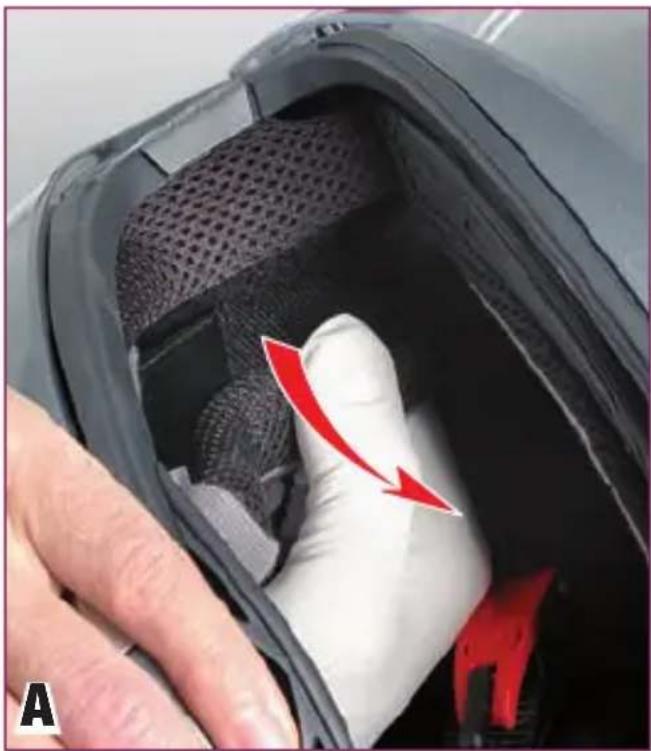
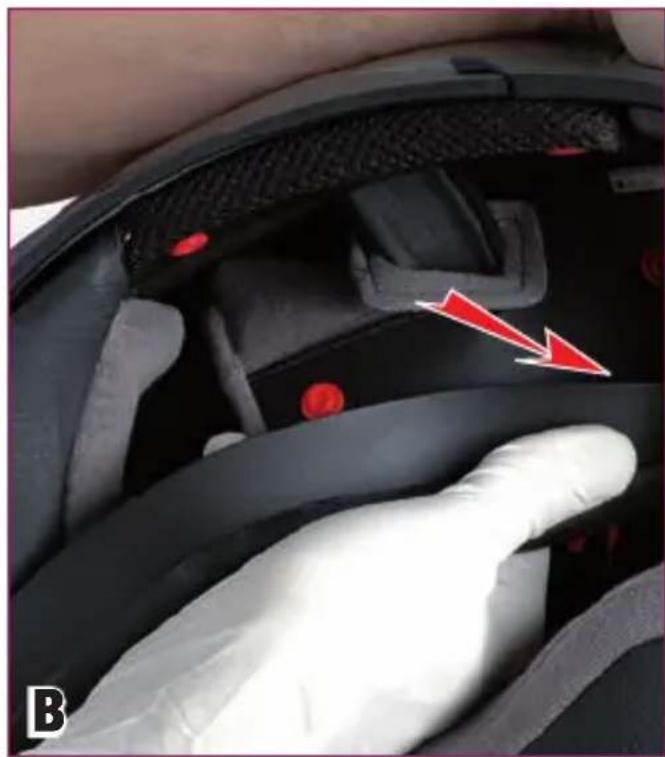
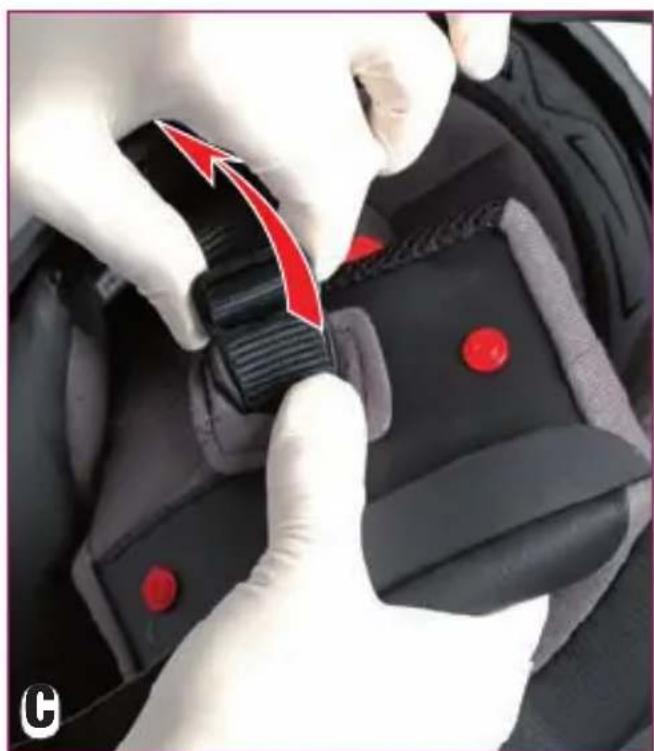
1/ Ensure that the 2 sides of the chin strap are not joined by the fastening buckle;
2/ Remove the cheek pads from their support by detaching the snaps and release the 2 sides of the chin strap from these cheek pads (A-B-C);
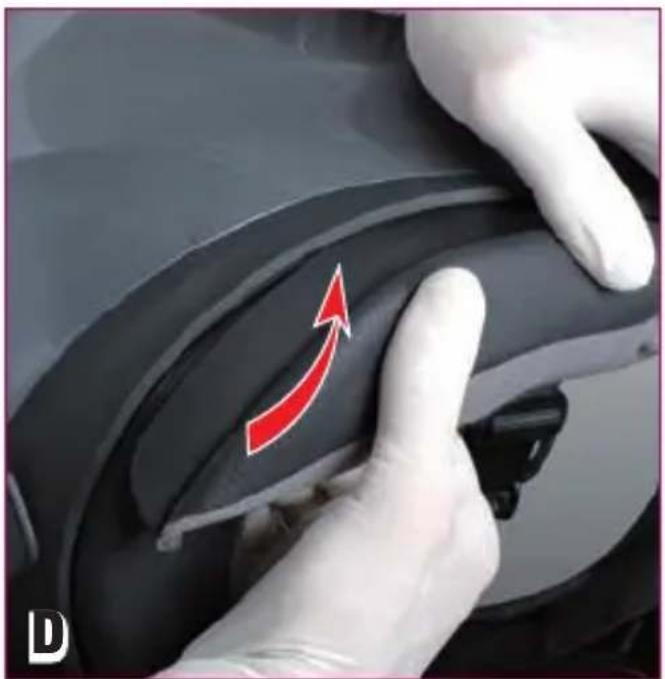
3/ Extract the support of the front lining applying a pressure towards the rear (D).
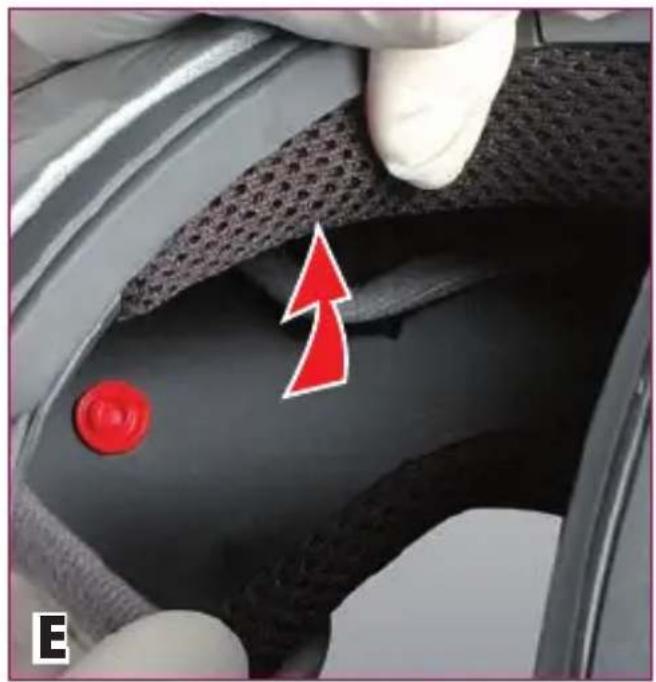
4/ Remove the nape shield from its seat, the entire lining is now detached from the helmet (E).
TEXTILES · TEXTILE PARTS
MISE EN PLACE · REPLACE
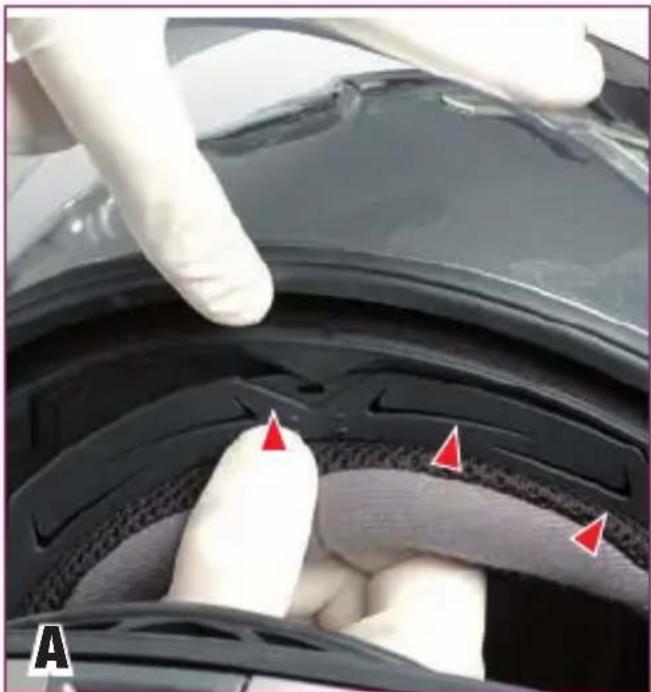
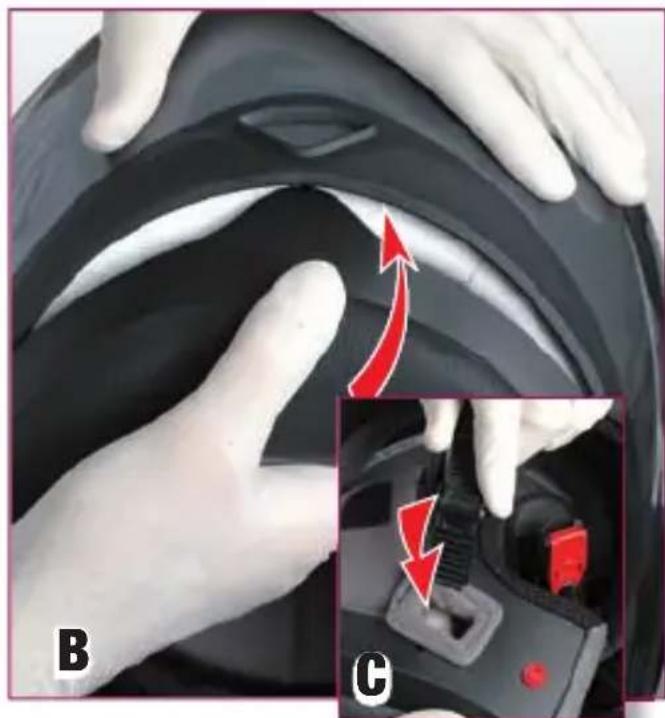
Follow the instructions for the removal, starting from the end:
1/ Insert the front part in its base, make you sure that the 3 clips are properly grasped (A);
2/ Place the nape shield in its seat, centring it correctly in the helmet (B); 2bis / Place the lining on the Velcro parts of the EPS.
3/ Thread each side of the chin strap in the proper seat in the cheek pads (C);
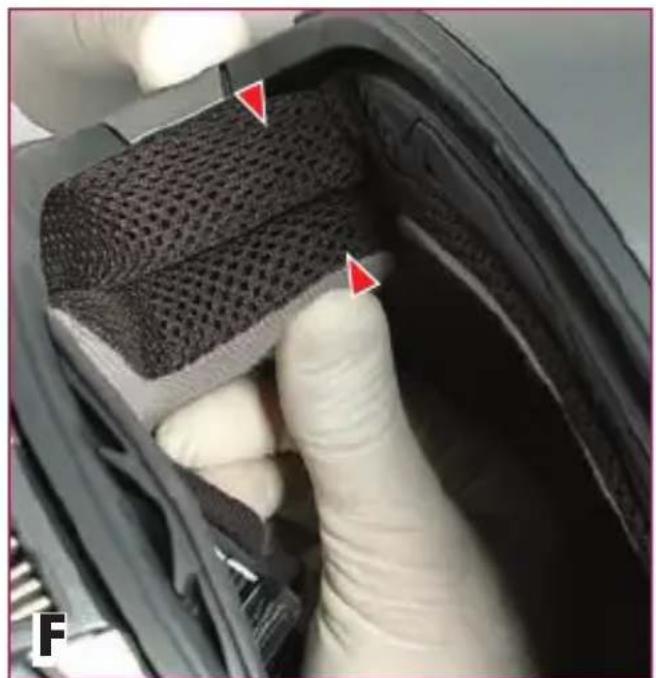
4/ Press the cheek pads until you hear the click of the snaps, ensure that the bracket of the nape shield is correctly positioned (D-E-F);
5/ Always make sure that there is no crease of the chin straps under the cheek pads.
TEXTILES · TEXTILE PARTS
MISE EN PLACE · REPLACE
WARNING! If you have any doubt whatsoever regarding the removal or replacement of the interior padding, DO NOT USE YOUR HELMET. Contact your retailer for assistance or advise. NEVER use your helmet with any part of the interior padding removed. The helmet will not protect you in an accident.
AIR PUMP SYSTEM (S 900 C)
To perfectly adapt the fitting of your helmet, use the Air Pump system
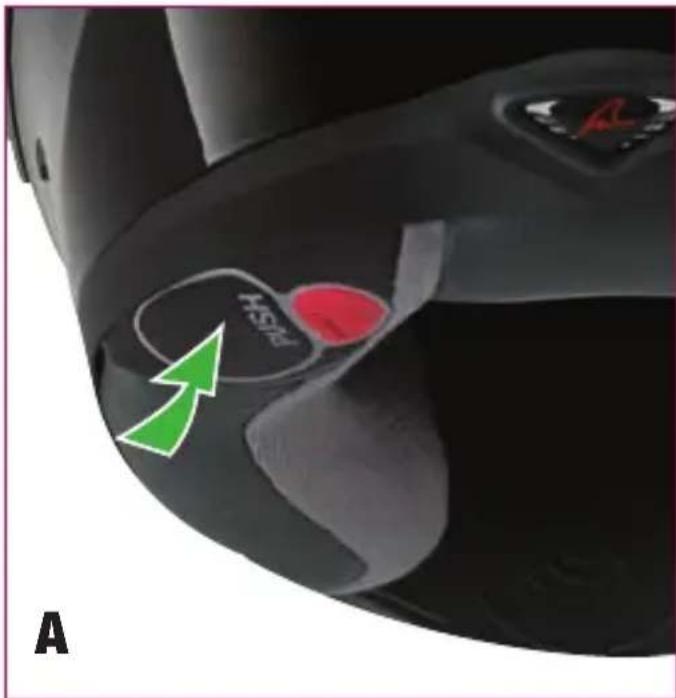
Inflating : for a tight fit on the cheeks, press the pump system on the “push” button, on the black part of the cheek padding (drawing “A”)
Defl ating : to release the cheeks pressure, press the red part of the cheek padding, on the "reset" button (drawing “B”)
Care Instruction for the cheek padding part : deflate completely before washing the cheek padding (follow general instructions).
WARNING! Do not inflate the system before the part is completely dry.
WARNING: Do not use the Air pump system while operating your motorcycle. You could lose control of your motorcycle, resulting in an accident, personal injury or death.
PARE-SOLEIL · SUN SHIELD
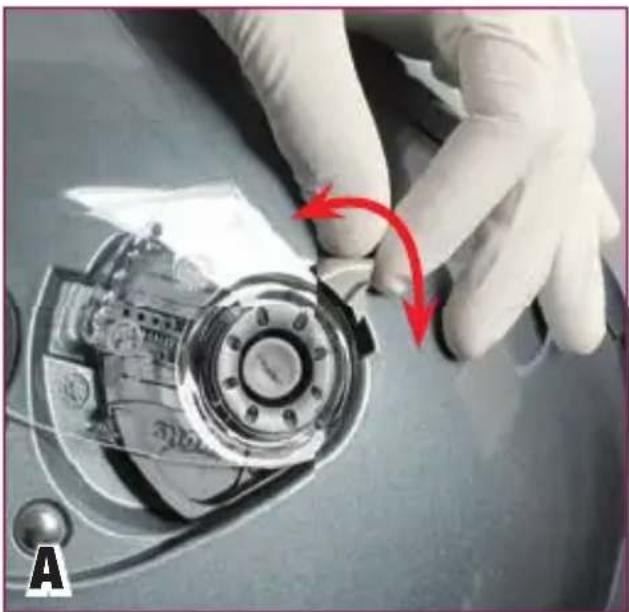
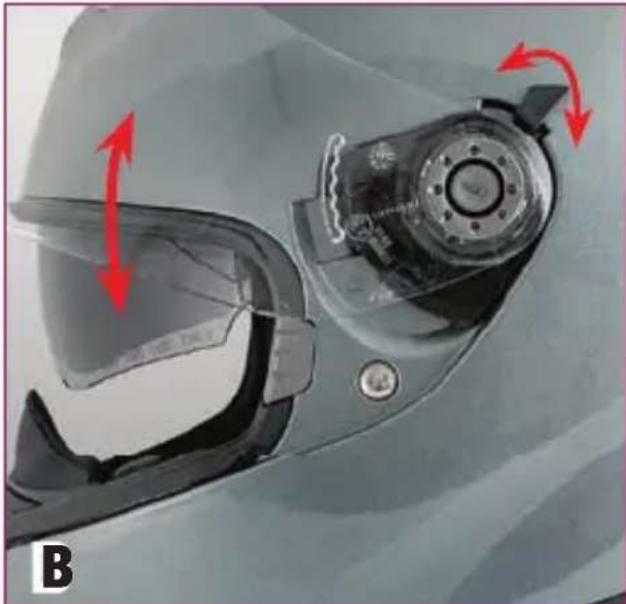
MANIPULATION DU PARE-SOLEIL
lever or handle as shown by the arrow (Fig.A-B).
Warning: if your visor and/or sun shield no longer provide you with excellent visibility after a period of service, it is absolutely essential for you to replace them. We advise you always to ride with perfect visibility. Never use sunshield as unique protection, without the main visor. You must always ride with visor down as described in previous section.
Warning: Even if the handling of the sunshield is easy, for safety reason, we advise you to pull it up or down ONLY WHEN YOU AND YOUR VEHICLE ARE STOPPED.
PARE-SOLEIL · SUN SHIELD
DÉMONTAGE • REMOVAL
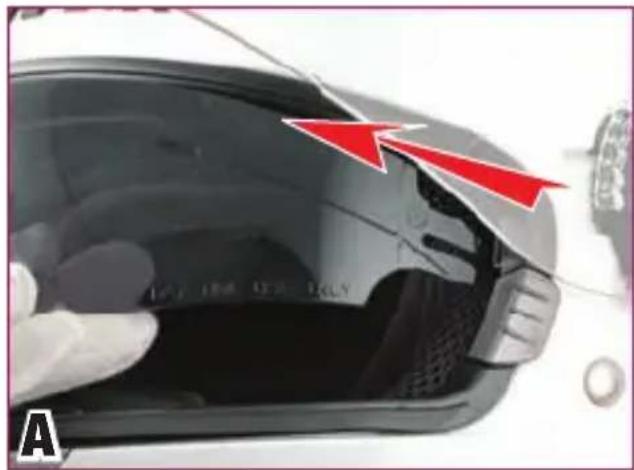

REMOVAL
A/Removal
- Move the sun shield to the lower position
- Pull the sun shield delicately downward and unclip the sun shield at the sides on each side (Fig. A-B).
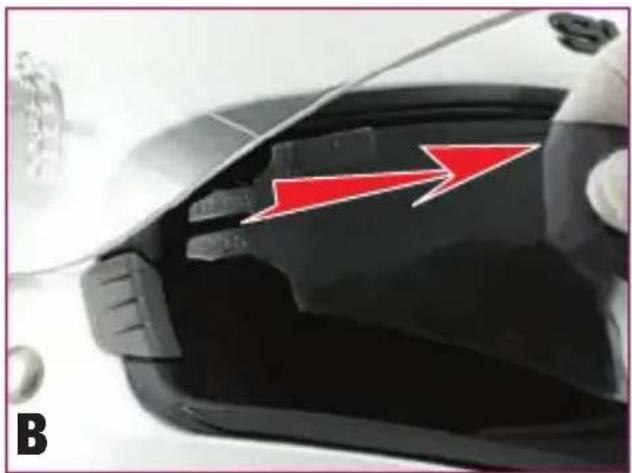
MISE EN PLACE · REPLACE
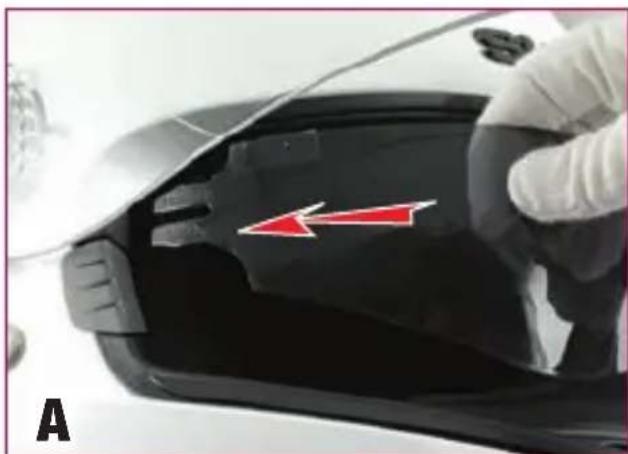
DÉMONTAGE
Carry out the previous operation in reverse order:
- Move the handling button to the lower position;
-Clip the sun shield on at one side and then the other (Figs. A-B).
WARNING! If you are not sure that you properly replaced the sun shield, do not use the helmet. The sun shield could suddenly and without warning become detached from the helmet while riding, causing you to lose control of your motorcycle, resulting in an accident, personal injury, or death. Contact your retailer for any assistance or advice.
ATTENTION · WARNING
LE PARE-SOLEIL
The SHARK helmet S 900 C is equipped with an Integral sun shield with external controls.
WARNING: This sun shield can be used only in bright glare and when you are not riding in an area in which you risk having a sudden change in visibility (a tunnel, for example). In all situations of reduced visibility, at the beginning or end of the day, at night, when it is raining or foggy, etc. the sun shield must be kept in the high position so that your vision is not impaired.
WARNING: Never use sunshield as unique protection, without the main visor. You must always ride with visor down.
VENTILATIONS • VENTILATIONS
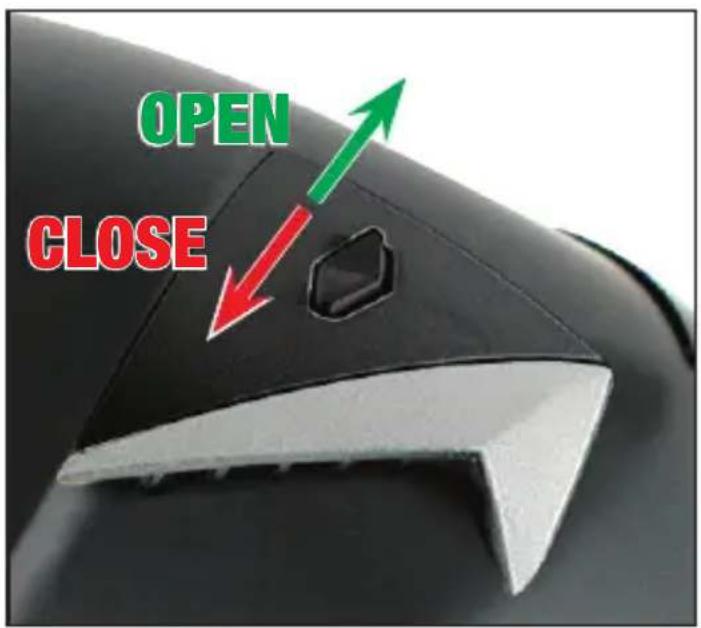
To open or close the upper ventilation, press the button as indicated in the above illustration.
To open or close the lower ventilation, press the button as indicated in the above illustration.
WARNING: Do not open or close any vents while operating your motorcycle. You could lose control of your motorcycle, resulting in an accident, personal injury or death.
VENTILATIONS • VENTILATIONS
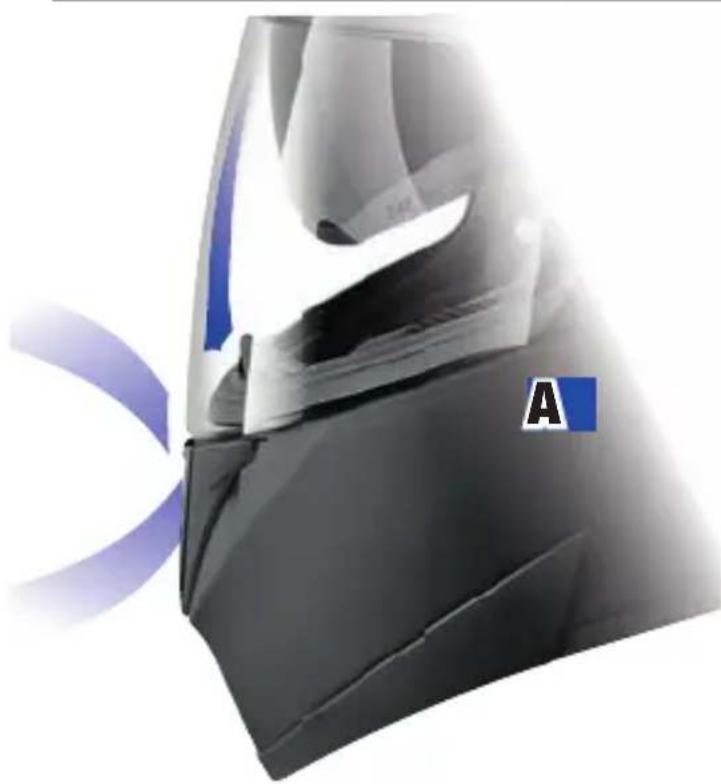
Demist ventilation feature. The lower ventilation drives an air flow to the visor. This air flow combined with the visor's Total Vision process makes it possible to quickly prevent mist from forming (A).
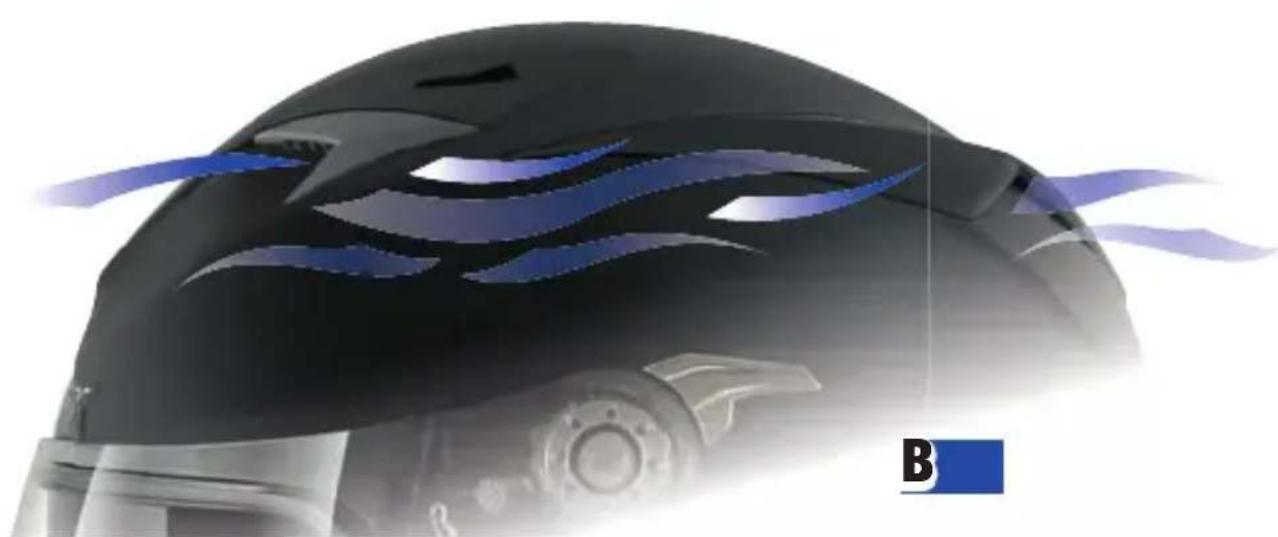
Ventilation inside the helmet. The upper ventilation provides an organised air flow over the surface of the head (B).
MASQUE ANTI BUÉE • NOSE MASK
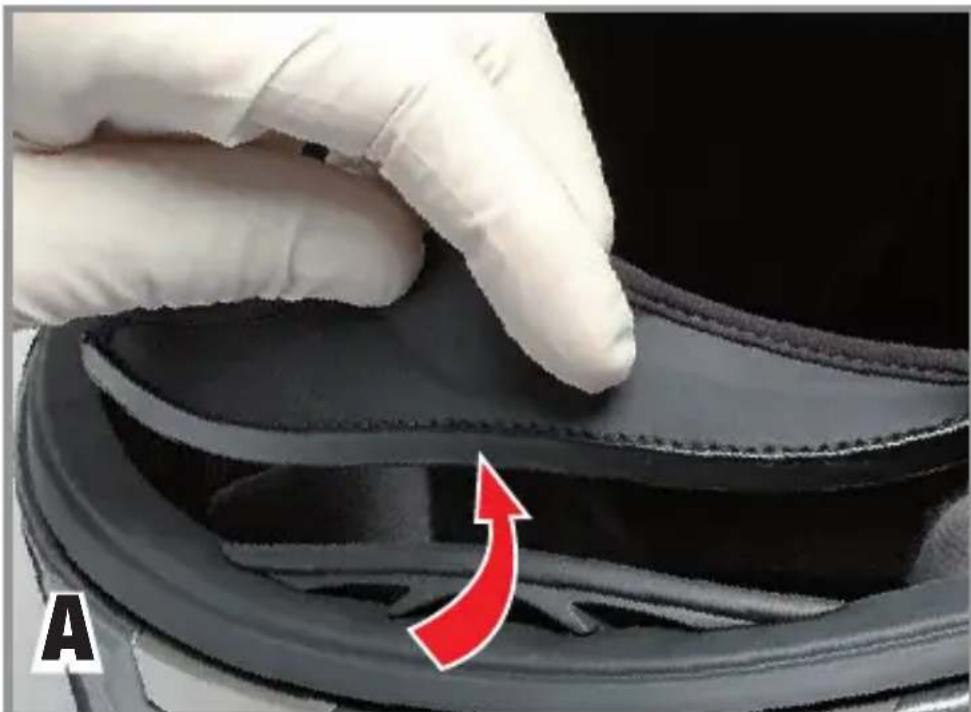
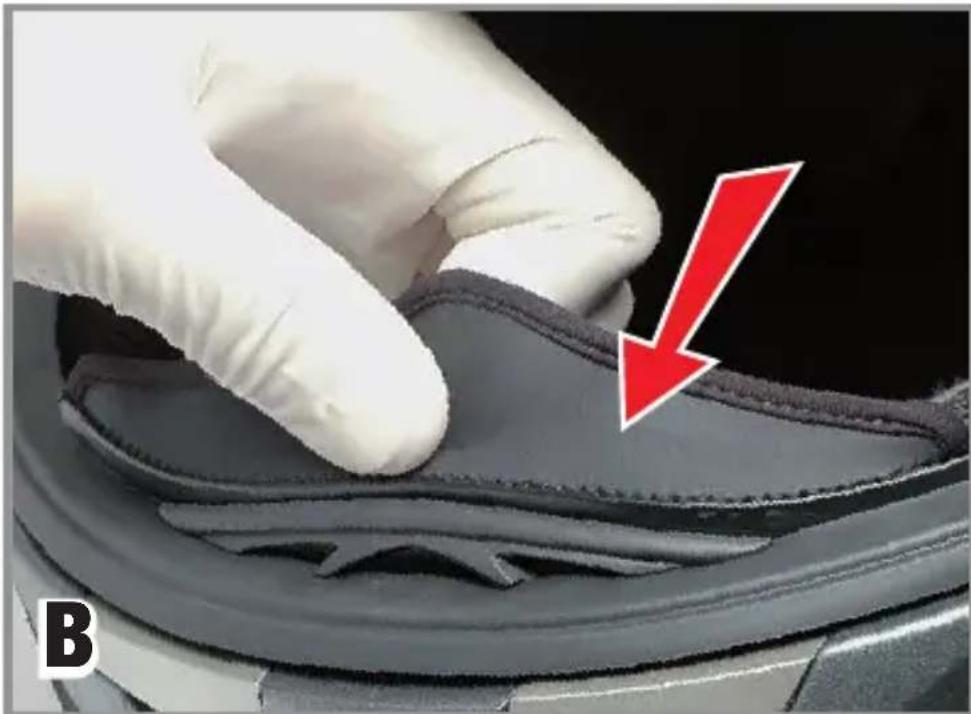
BAVETTE ANTI-REMOUS · CHIN COVER
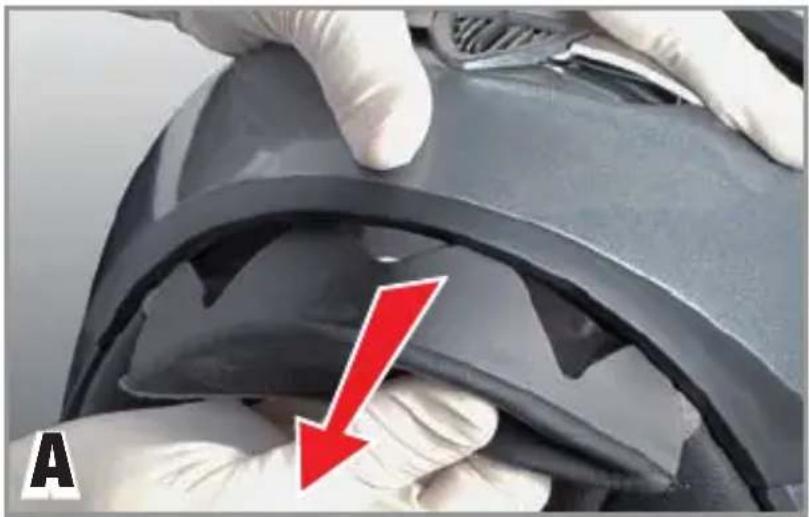
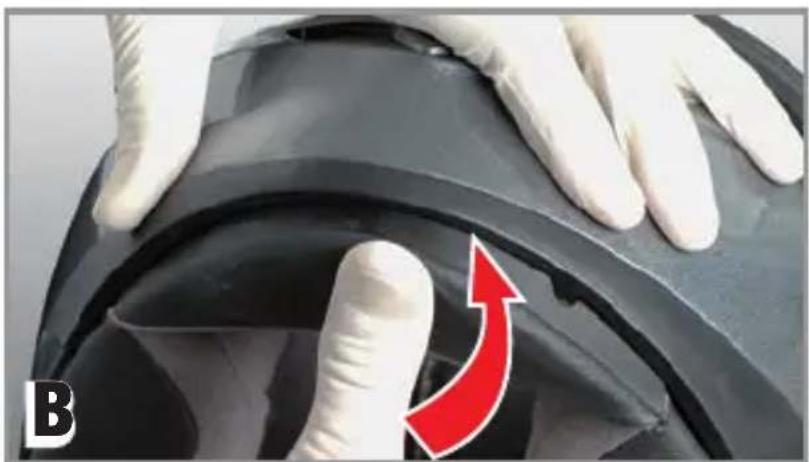
Your S 900 C is fitted with a removable breath guard and a chin cover.

SHARK
110, Route de la Valentine
13396 Marseille Cedex 11 - FRANCE
Tél.: +33 (0)4 91 18 23 23
Fax: +33 (0)4 91 35 29 23
E-mail: contact@shark-helmets.com
www.shark-helmets.com

WARNINGs and INSTRUCTIONS
- This helmet is for use only with motorcycles ridden on the street or other paved surfaces. Never use this helmet off road, on snowmobiles, in automobiles, etc.
- Always ride with care. Even though this helmet meets or exceeds many of the world's most demanding standards for helmet production, no helmet can protect the wearer from all foreseeable high or low speed impacts. All safety equipment have limits, and you could still sustain a head injury in an accident even if you are wearing a helmet. However, for maximum protection against death or permanent impairment from a head injury, the helmet must fit firmly on your head and the chinstrap must be securely fastened as described in this manual.
- The helmet is designed to absorb only one impact by partial destruction of the shell and/or liner. This damage may not be visible to you. Therefore, if your helmet is subjected to any impact, even if it is only dropped to the ground, the helmet should be returned for inspection or replaced and destroyed even if it is apparently undamaged. If you have any doubts, and you are not sure whether this "one impact" rule applies, consult your dealer before you use your helmet again.
- A helmet, like all products, may wear out over time depending on the conditions of use. Please check your helmet every time you use it for evidence of damage or wear. The helmet should always fit snugly all around your head. If it is not snug, it has become too big for you and should be replaced. Never wear a damaged helmet. Even if the helmet does not show any evidence of damage or wear, we recommended the helmet to be replaced five years after it is first purchased.
- Make no modifications whatsoever to your helmet. Never drill or cut any component of the helmet. Modifications can significantly weaken your helmet, thereby eliminating its ability to protect you from an impact.
- Handle your helmet carefully. Never sit on it or drop it to the ground. Never ride with
the helmet hanging from any part of your motorcycle.
- Never use petroleum or petroleum products, chemicals or any other solvents to clean the helmet, shell or visor. In addition, never expose your helmet to the fumes of these solvents (for example by leaving it on top of the fuel tank cap on your motorcycle). Your helmet could be seriously damaged by these agents, without this damage being visible to you, thereby eliminating its ability to protect you. Use only mild soap, warm water, and a soft cloth to wipe your helmet and visor clean.
- Never apply any paint, stickers or adhesive tape to any part of your shell or visor. They could significantly weaken your helmet, without this damage being visible to you, thereby eliminating the helmet's ability to protect you.
- You will experience some reduction in hearing, peripheral vision and head movements while you are wearing your helmet. Please ride accordingly.
- Dry your helmet at room temperature. Never subject it to heat in excess of 160^ / 70^ , which can occur if your helmet is stored in the passenger compartment or trunk of a car.
- If you ever have any comments or questions about this helmet, please contact Shark or your nearest dealer.
No warranty or representation is made as to this product's ability to protect the user from all foreseeable high or low speed impacts or from any injury or death; The user of this helmet recognizes and agrees that there are risks inherent in motorcycle riding, including but not limited to the risk that your helmet cannot protect against all foreseeable high or low speed impacts. By his/her purchase and use of this helmet, the user expressly, voluntarily and knowingly accepts and assumes these risks and agrees to hold Shark harmless to the fullest extent permitted by law against any resulting damages.