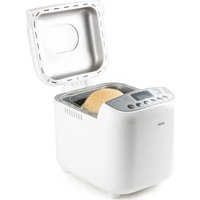
USER MANUAL B3960 DOMO
CONDITIONS DE GARANTIE
This appliance has a two year warranty period. During this period the manufacturer is responsible for any failures which are the direct result of material- or construction failure. When these failures occur the appliance will be repaired or replaced if necessary. The warranty won't be valid when the damage to the appliance is caused by wrong use, not following the instructions or repairs executed by a third party. The warranty is only valid when the warranty application was filled in by your dealer at the moment of purchase.
Type nr. Apparaat
N^o de modulo de l'appareil B3960 L
Type nr des Gerätes
Type nr. Of appliance
Naam
Nom
Name
Name
Adres
Adresse
Adressc
Address
Aankoopdatum
Date d'achat
Kaufdatum
Date of purchase
VEILIGHEIDSVOORSCHRIFTEN
LEES EERST DE GEBRUIKSAANWIJZING AANDACHTIG EN GEHEEL DOOR VOORDAT U HET APPARAAT GAAT GEBRUIKEN EN BEWAAR DEZE ZORGVULDIG VOOR LATERE RAADPLEGING
QUESTIONS FREQUEMENT POSÉES
-
You should only use this appliance for its intended use and as indicated in these instructions.
-
CAUTION: avoid contact with hot surfaces when the appliance is activated.
-
Connect the appliance to alternating current, an earth-connected wall socket with mains voltage corresponding with the data marked on the appliance label.
-
Never sharply bend the supply cord and never let it touch hot surfaces.
-
Always fully straighten the power cord in order to prevent overheating.
-
Never place the appliance near objects that generate heat, such as ovens, stoves, cooking plates, etc.
-
Keep the appliance at a safe distance from walls or other flammable objects such as curtains, towels (cotton or paper), etc.
-
Always ensure the appliance is placed on a level flat surface.
-
If you want to move the appliance, please ensure it has been disconnected and it has sufficiently cooled down. Use both hands to move the appliance.
-
Do not use the appliance if the plug, power cord or appliance itself has been damaged or if the appliance malfunctions. Do not ever try to mend your appliance yourself. Repairs on electrical appliances must only be carried out by qualified technicians.
-
Repairs that are carried out in a wrong way, may cause serious hazards for the user.
-
Do not use parts that are not supplied or recommended by the manufacturer.
-
Please remove the plug from the socket when you want to clean the appliance or when it is not in use.
-
Do not pull the cord or the appliance to remove the plug from the socket. Never touch the appliance when your hands are wet.
-
Keep the appliance away from children. Children do not realise the hazards which the use of electrical appliances may involve. Do not allow children to use the appliance in your absence. Please ensure the appliance is safely stored out of children's reach.
-
You can only use an extension cord when the electrical rating (check on label) is higher than or equal to that of the appliance. You should always use a tested and approved extension cord.
-
In case you no longer wish to use the appliance, because of a defect, we recommend that you cut the cord, after having removed the plug from the socket.
-
We recommend that you do not use the time delay function at night.
-
In case of disturbance, do not try to mend the appliance yourself. If the temperature cut-out with him the appliance blows, this may indicate a fault in the heating system which is not solved by merely removing or changing this part. It is very important that only original parts are used.
-
This appliance complies with EC regulation 76/889/EEC for tv and radio disturbance - addition al rule 82/499.
BEFORE THE FIRST USE
-
The packaging should contain the bread maker, the bread pan, the kneading paddle, measuring cup, measuring spoon and the instruction manual.
-
Remove all packaging materials and keep them away from children. Check if all additional parts are there and whether you have removed them all from the packaging. Please verify if your bread maker has not suffered any damage during the transport.
-
Clean your bread maker, bread pan and kneading paddle with a damp cloth. The bread pan and the kneading paddle both have a non-stick coating to prevent dough from sticking to it. You must therefore never clean these parts with cleaning products, a sponge or a dishwashing brush. A damp cloth will do to clean them. When you activate your appliance for the first time, you will hear a loud beeping signal and the numbers "3:00" will appear on the screen. The colon between "3" and "00" will start flashing. This indicates your appliance is ready for use and has automatically chosen program 1 (normal). It is perfectly common and harmless for your appliance to emit a bit of smoke when you use it for the first time.
- The quality of the baked bread will depend on a whole range of factors. Please make sure all ingredients are at room temperature and that you keep to the correct amount of each ingredient, as indicated in the recipes.
INGREDIENTS
Baking a great bread will largely depend on 3 main factors: quality, freshness and correct measurement of quantities.
Flour
Flour is the basic component of bread. The weight of the flour varies, depending on the type of flour used. It is therefore absolutely necessary that you weigh the right quantity on a pair of scales. Please make sure you buy a variety of flour which is suitable for bread making. Check the packing
Gluten
Gluten is a natural ingredient of flour and stimulates the bread to rise.
Yeast
Yeast is a micro-organism found on several vegetable foodstuffs. Yeast converts sugars into alcohol and carbon dioxide. This ability is ideal for the bread to rise and to make it lighter and easier to digest. We recommend the use of dry yeast for this bread maker. This (granular) yeast is easier to work with, keeps for a longer time than fresh yeast and generally gives you a better result as well.
Salt
Salt does not only lend the bread a certain flavour but equally regulates the activity of the yeast, strengthens the dough and prevents the bread from rising too hard.
Butter / oil
Butter and oil improve the general taste of the bread and equally soften it. Butter or oil should both be at room temperature when you add them to the other ingredients.
Sugar
Sugar is the nutrient that the yeast feeds itself on and is of great importance for the bread's rising process. You can use plain white sugar, brown sugar, syrup or honey. Sugar lends the bread a certain soft and delicate flavour, increases its nutritional value and also renders the bread less perishable. Look out: you should not use unrefined sugar or sugar lumps, when you want to make e.g. cinnamon bread, for they can damage the non-stick coating of the bread pan.
Water
When the flour mixes with the water, the gluten will form and air can no longer enter, thus enabling
the bread to rise. At normal temperature you should use tepid water to make bread: cold water will not activate the yeast and warm water will achieve the opposite result.
Milk
Milk adds greatly to the colour of the bread (brown for the crust, creamy on the inside), improves the overall taste of the bread and increases its nutritional value. Should you choose to use fresh milk, do not forget to reduce the amount of water, in order to maintain the right level of humidity.
CAREFUL: do not use fresh milk if you are going to choose the baking program with the time delay function, for the milk could turn sour.
Other ingredients
In some cookery books you may come across recipes requiring the use of herbs, nuts, currants, fruit or vegetables. Always use fresh ingredients. When you want to use nuts, sunflower seeds, dried fruit or similar ingredients, we recommend that they be soaked in water and dried before adding them to the dough. Always ensure these ingredients are not too large, for they may damage the non-stick coating.
DISPLAY
This button is used to select the desired baking program. With every touch of this button, you will hear a bleeping signal, thus indicating a change in the selected type. You can see which program you select on the display. This bread maker allows you to choose from 11 different types of baking programs.
You use this button to determine whether you want a light, medium or dark crust. For recipes you try out for the first time, we advise you to choose the medium crust colour.
You use this button to select the weight of the bread you wish to make, either 750 or 1000gr . Do bear in mind that the added sum of the ingredients listed in the recipe is the weight of the bread you are about to make.
This button enables you to start and stop the program. If you have accidentally selected the wrong program, you can change your selection by pressing down the "stop" button for a few seconds, after which you can reprogram your appliance, selecting the right baking type.
"Start": to start a program, press this button until you hear a short bleep. The colon in the time indication on your display will start flashing, the machine will start the countdown and activate the program you have selected.
"Stop": in order to stop the program, please press this button for a few seconds until you hear a beep. The signal confirms the program has ceased.
ON/OFF
How can you tell whether the machine is working and the program is actually running? If the colon
on the display flashes, this indicates that the program is active. If the colon is lit constantly and no longer flashes, the programme has stopped.
Time delay function “+timer set-”
These buttons allow you to determine when your bread will be ready. If you press "+" the total time will increase 10 minutes with each press. If you press " - " you will decrease the total baking time with 10 minutes.
PROGRAMS
Program 1: Normal: this is the program most commonly used to make a regular white loaf of bread.
Program 2: Quick select this program if you need to bake a loaf of white bread within a smaller amount of time. Due to the faster process, your bread will be smaller than the bread that results from the "normal" program. Duration of the programme 2.20.
Program 3: French: With this type of baking program, the time to knead and to rise will be longer than this of the first program.
Program 4: Rapid this baking program allows you to make a white loaf of bread within 1.50.
Program 5: Whole Wheat: this program is most suitable for the confection of heavier types of bread, such as wholemeal bread or multi-grain bread. Generally, these types of bread tend to be slightly smaller than regular white bread, due to the bigger weight of the flour.
Program 6: Cake: This program allows you to make bread that is confected with e.g. baking powder. With this type of baking program, your loaf of bread will be less high and more solid. You can not use the time delay function with this program, because the baking powder starts working immediately. If you use this program to bake a cake, we recommend that you put the ingredients in the bread pan, program the bread maker and briefly stir the ingredients with a wooden spoon before pressing the "start" button.
Program 7: Dough: select this program if you just want the bread maker to make dough and let it rise.
Program 8: Baking: for ready-made dough which you perhaps had already made in advance. This program can only be used for the final stage of the baking process. Using the time delay function, you can select a time ranging from 5 minutes up to 1 hour. Program 12 also allows you to reheat bread that you had already baked.
Program 9: Jam: for the confection of delicious jam. Caution! Make sure you have stoned all ingredients before putting them into the bread pan. Sharp pips and stones could damage the non-stick coating of your bread maker.
HOW TO PROCEED: Put all ingredients into the bread pan and select the program "Jam". Press start. The appliance will now preheat the ingredients. Next, the bread maker will mix all ingredients and let the jam cool down. When the process is fully completed, you will hear a bleeping signal. If you wish, you can pour the jam into a jar and allow it to cool down some more. When the jam has sufficiently cooled down, close the jar and keep it refrigerated.
Program 10: Sandwich: select this program to make a very light white dough suitable for e.g. little bread rolls. This program does not allow you to select the degree of colour for your crust, as it is programmed automatically.
Program 11: Mix, stir: for mixing dough that you can bake in a traditional oven later on.
OPERATING INSTRUCTIONS
The enclosed recipe book is a general guideline. It is possible that you need to make some minor changes to the recipe to get the desired result with your breadmaker.
Step 1: take the bread pan out of the bread maker, by turning it a quarter of a turn to the right. You can lift the bread pan out, straight up, by pulling the handle.
Step 2: Place the kneading paddle on the axle in the centre of the bread pan. Please position the kneading paddle carefully and appropriately, so all ingredients can be sufficiently mixed and kneaded.
Step 3: When putting the ingredients into the bread pan, please do so in the following manner and order:
-
Yeast (concentrate the yeast in a little hole in the middle)
-
Half of the required flour.
- Water / milk
- Butter / oil
- Eggs (optional)
- The rest of the flour
- Sugar (put the sugar on one side)
- Salt (salt on the opposite side)
Make sure the yeast is kept away from the water, for the water might activate the yeast before all ingredients have been properly blended and kneaded.
Step 4: Remove all remnants of the ingredients on the outside of the bread pan. Put the bread pan back in the bread maker: if you turn it a quarter of a turn to the left, the bread pan will be firmly repositioned.
Step 5: Close the lid.
Step 6: Plug in the appliance.
Step 7: Select the program you require, using the "menu" button.
Step 8: Select the colour of the crust (light, medium or dark) with the "crust" button.
Step 9: Program the time delay function, if so desired.
Step 10: Press the start button. The colon will start flashing, which indicates the bread maker has started the process.
Program times:
| Program 750 gr 1000 gr | | |
| 1. normal 2.53 3.00 | | |
| 2. quick* 2.20 2.20 | | |
| 3. French 3.40 3.50 | | |
| 4. rapid* 1.50 1.50 | | |
| 5. whole wheat 3.35 3.40 | | |
| 6. cake* 2.50 2.50 | | |
| 7. dough* 1.30 1.30 | | |
| 8. bake* 1.00 1.00 | | |
| 9. jam 1.20* 1.20* | | |
| 10. sandwich | 3.00 3.00 | |
| 11. mix stir | 0.20 0.20 | |
*Programmes that do not allow you to choose the weight of the bread.
The time on the display is indicated in hours and minutes. Example: program 1, normal, making a bread of 750g should take 2 hours and 53 minutes.
Step 11: When your bread is ready, you will hear a few bleeping signals. Keep the "stop" button pressed down for a few seconds. The appliance will bleep again to confirm the baking process has been terminated. Disconnect the plug from the power socket and open the lid of the bread maker. Put on oven mitts in order to remove the bread pan from the bread maker. Allow the bread to cool down for approximately 10 minutes. Turn the bread pan upside down above the sink and gently shake it to remove the bread.
During the kneading process of the programs 1 (Normal), 2 (French), 3 (Whole Wheat), 5 (Sweet) and 11 (Bread rolls), you will hear a beep. This beep means it is the right time to add extra ingredients such as nuts, raisins, etc. You just open the lid, add the ingredients, close the lid again and the kneading process will be continued. Please make sure that raisins and nuts are left to soak beforehand and are subsequently wiped dry with a cloth or paper towels. These ingredients must never be too big or too sharp, for they may cause damage to the non-stick coating of the bread pan.
Please make sure the bread and the bread pan are never placed on the exterior of the appliance. Nor must they ever be placed directly on a plastic table-cloth. Should you have difficulty removing the bread from the bread pan, carefully turn the kneading paddle at the bottom of the bread pan until the bread comes loose. If the kneading paddle should get stuck in the bread, try and remove it as gently as you can. If necessary, you can allow the bread to cool down a little more so you can remove the kneading paddle with your hands afterwards. Beware that you only touch the kneading paddle with your hands if it has sufficiently cooled down. We recommend that you wait 15 to 20 minutes before cutting the bread.
EXTRA: in case you should not make it home in time, the bread maker will continue to heat the bread for another 60 minutes. This additional time is not included in the program time.
HOW TO USE THE TIME DELAY FUNCTION
When you want to use the time delay function, you should program it before you press the start button.
IMPORTANT: never use the time delay function with easily perishable ingredients.
- Please carry out the first 8 steps, as described in the chapter "Operating instructions". Next, after having selected the program and the crust colour of your choice, you press the arrow buttons in order to adjust (decrease or increase) the time set on the display. Cf. chapter "display".
Example: the time is 9 am and you want your bread to be ready by 5pm
- Put all ingredients in the bread pan. Place the bread pan in your bread maker. Close the lid and select the program and the crust colour of your choice, using the respective buttons. Keep pressing the button with the arrow pointing up until you see "8.00" on the display. For, evidently, 8 hours will pass between the time you press the start button and the time you want your bread to be ready (in this case 5pm ).
- Press the start button. The colon on your display will start to flash and the bread maker will start the countdown, until it is time for the bread maker to begin the kneading. The bread maker will let the program run entirely, ensuring the bread will be ready at the desired time.
HOW TO CLEAN YOUR BREADMAKER
Before cleaning your bread maker, please ensure it is no longer activated, it has sufficiently cooled down and the plug has been disconnected from the power socket.
EXTERIOR
Clean the outside of your appliance and its viewing window with a damp cloth or a sponge. Take out the bread pan before you start cleaning. If necessary, you can clean the exterior of the appliance with a mild detergent.
INTERIOR
Gently clean the inside of the appliance with a lightly damp cloth. Be careful when cleaning the heating element.
BREAD PAN
You can clean the bread pan with warm water. Be careful not to damage the non-stick coating. In case the kneading paddle gets stuck, allow the bread pan to cool down completely. Next, gently pour a little bit of warm water into the bread pan until the kneading paddle is under water. The sticky bits will dissolve and you will be able to remove the kneading paddle easily.
Never use cleaning products or dishwashing brushes, for they may damage the non-stick coating of the bread pan. The bread pan must not be cleaned in the dishwasher.
HOW TO BAKE A DELICIOUS BREAD: A FEW PRACTICAL SUGGESTIONS
Please make sure your ingredients are at room temperature and that they are carefully weighed. Add the ingredients in the right order. You should only use fresh ingredients.
The yeast needs to be the last ingredient you put in the bread pan. Put the yeast into a little hole in the flour, thus ensuring it does not come in contact with the added salt, sugar, water or milk. You can verify the freshness of your yeast by submitting it to the following test: dissolve 1 teaspoonful of sugar in half a cup of lukewarm water and subsequently add the yeast to this mixture. If the substance starts sparkling and boiling after a few minutes, you can be sure that you are using fresh yeast.
Approximately 5 to 10 minutes after your bread maker has been activated, you can equally test the quality of the dough. The dough should look like a smooth and elastic round ball. Open the lid and gently touch the top of the dough with your fingers. Be careful and make sure the kneading paddle remains in action. If the dough somewhat sticks to your fingers, this implies the dough is going to be fine. Should the dough however stick to the bread pan, then it is probably too moist. If the dough does not stick to your fingers at all, the pastry you are making is too dry.
Salt brakes the effect of the yeast and sugar exactly does the opposite. If you are not allowed to use either sugar or salt for dietary reasons, you must not add the other ingredient either. Your bread will not contain sugar or salt.
If you want to start baking another bread straight away, you will first have to allow the bread maker to cool down for 10 to 20 minutes.
Different types of bread will have different structures and sizes, due to the different nature of the ingredients used. These differences are completely normal and need not to worry you.
For some recipes, you may need to adjust the quantities, i.e. the amount of yeast, flour or water. Never adjust all these quantities at the same time, for it will not have any effect. Adjusting a quantity may be necessary because of the quality and specific gravity of the flour, differences in ambient temperature or freshness of the ingredients. Home-made bread, made with this bread maker, does not contain any preservatives and is therefore perishable. If you wrap the bread in a vacuum package after cooling down, you will be able to keep it for a few days. Of course you can also freeze the bread.
PROBLEMS WHICH MIGHT OCCUR
Several factors can cause your bread to fail. In the following list you will find a series of problems and possible solutions.
The bread has caved in
If your bread looks caved in, this means the dough you made was too moist. Try adding a smaller quantity of water. When you use preserved fruits or vegetables, please make sure they have been soaked and thoroughly dried beforehand. You could also try using a lighter variety of flour. If your bread caves in, this could also be the result of over-rising. The dough has risen to an extent it could not cope with. In this case, try adding a little less yeast, 1 or 2 grammes.
The centre of the bread is not sufficiently baked
This may be due to the type of flour you used, often too heavy varieties such as rye flour or wholemeal flour. Try to program an extra kneading process when using these types of flour. As soon as the bread maker has terminated the first kneading process, you press stop. Next, you reprogram the bread maker and press start: the appliance will start kneading again, a larger quantity of air has now been absorbed by the dough. You could also try selecting the dark crust colour, because this slightly increases the baking temperature.
The bread has risen too much
If your bread rises higher than it ought to, you have used too much yeast. Please check whether you have used the right quantity and the right type of yeast. Too much sugar can overactivate the yeast. Try reducing the dose of sugar and do not use too much dried fruits or honey, which equally contain a lot of sugar. Try using 10 to 20ml less water. Do bear in mind that a lower degree of humidity could brake the activity of the yeast. Sometimes over-rising can also be caused by flour that was grinded too fine. These varieties of flour do not require an equally active yeast as heavier varieties do.
The bread is too dry
Try using less flour or add a tablespoonful of liquid. While your bread maker is kneading fairly heavy dough or when you have programmed longer kneading times, the appliance may occasionally tremble a bit. Therefore you must make sure your bread maker is always positioned on a stable surface, not too near to another object and not too close to the edge of the kitchen sink unit.
The bread is flat
If you are using grinded flour or wholemeal flour, your bread tends to be somewhat flatter. If your bread does not rise at all, you need to check the yeast. Have you thought of adding the yeast? If the bread has only risen a little bit, the yeast you used may have been too old. Too hot or too cold water also brakes the yeast's activity. Please also verify whether you have not used too much salt.
Error on the display
If you see the indication "H:HH" appearing on the display after you have pressed the start button, this means that your bread maker has not sufficiently cooled down yet. It is necessary to allow your appliance to cool down for another 10 to 20 minutes, with its lid open. If the error "E:EE" appears
on the display after you have pressed the start button, your bread maker needs to be serviced by a qualified technician. Please contact your store.
FREQUENTLY ASKED QUESTIONS
Why is the height of the bread different on every occasion?
The shape and the height of the bread depend on the ambient temperature, the quality and the quantity of the used ingredients.
Why doesn't the bread rise?
You have forgotten to add the yeast or you have added an insufficient quantity, or the yeast you have used is too old.
How does the time delay function work?
You must not program this function for a period of time under 3 hours or over 13 hours. The time delay function requires minimum 58 minutes to deal with all the necessary stages of the process. You can use the program "fast", but not with the time delay function. Ingredients may go bad if they are kept in the bread maker for more than 13 hours without being baked.
For the dough or the bread to have the right shape and to rise in the appropriate manner, dried raisins and similar ingredients need to be added at a later stage. Moreover, such ingredients may be damaged in the kneading process. They could also get sticky or get distributed unevenly throughout the dough. You should not add these ingredients until you have heard the first bleep. Do not add any ingredients when you are using the "fast" or "speed" programs. You can not program the time delay function when you have selected the "dough" program.
Can I use fresh milk instead of water?
Yes, as long as you do not alter the total quantity of liquid. For example: if the recipe says you need 210ml of water, you could replace this quantity by 210ml of milk or, equally, by 105ml of water and 105ml of milk. The total quantity of liquid has to be maintained.
- Sometimes the crust has a light colour, sometimes it is darker:
You can adjust the crust colour yourself, by using the "crust" button. This button allows you to select a "light", "medium" or "dark" crust colour.
- Why has my bread risen as high as the lid of the breadmaker?
You have used either too much sugar or too much yeast or both. This has caused a larger amount of gas bubbles within the bread.
- Why doesn't the program "fast" allow me to bake a bread with fruits?
With this program, the time for fermenting is shorter. When you add more ingredients, this will also effect the baking time and the result will be disappointing.
- When making heavier types of bread, the appliance seems to knead slower.
This is perfectly normal and does in no way damage your bread maker. We do however advise you to add a tablespoonful of liquid, when baking heavier bread.
BEFORE TAKING YOUR APPLIANCE BACK TO THE STORE
Your bread keeps turning out bad
We recommend that you try and bake one bread on the basis of a ready-made bread mix. These types of mixtures only require that you add some water and butter. If that works and the result is to your liking, this means there is nothing wrong with your bread maker. Please check the freshness of the ingredients used.
The appliance doesn't work
Is your bread maker activated and have you plugged it in properly? The temperature may be too high.
Sometimes smoke comes out of the holes
Perhaps you spilled some of the ingredients on the heating element.
The bread has caved in / the centre of the bread is too moist
You have left the bread in the bread pan for too long after the baking was finished. Or you have used too much water or too much yeast.
The top of the bread is cracked and has a brownish colour
You used too much flour, yeast or sugar.
The top layer of the bread is still covered with flour
You didn't use enough water.
My bread is too small.
You didn't use enough flour, yeast, sugar or water.
You used wholemeal flour or a type of flour containing chemical yeast.
You used the wrong type of yeast.
You used flour or yeast that had already gone bad.
Your bread is not sufficiently baked
You accidentally pressed the "stop" button after activating the bread maker.
You left the lid open during the baking process.
Your bread is baked too hard
You used too much sugar.
You selected the crust colour "dark".
Your bread is the wrong shape.
You didn't use enough flour.
You didn't use enough water.