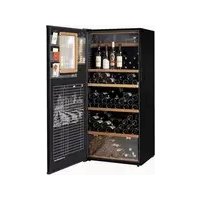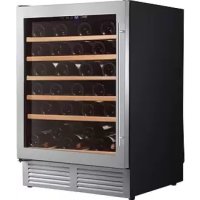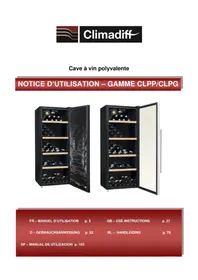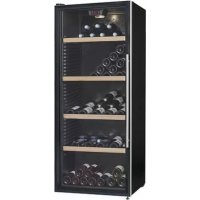
CLP170N - Fridge CLIMADIFF - Free user manual and instructions
Find the device manual for free CLP170N CLIMADIFF in PDF.



| Product type | Refrigerated wine cellar |
| Brand | Climadiff |
| Model | CLP170N |
| Bottle capacity | Up to 170 bottles (75 cl Bordeaux type) |
| Serving temperatures | Upper zone: 18°C (reds), central zone: 10-14°C (storage), lower zone: 8°C (whites, champagne) |
| Thermostat | Adjustable from position 0 (off) to 3 (coldest); position 2 corresponds to ~12°C at 25°C ambient |
| Refrigerant type | R600a (isobutane) |
| Power supply | 220-240 V, 50 Hz (check rating plate) |
| Dimensions (approx.) | Height: ~140 cm, Width: ~60 cm, Depth: ~70 cm (estimate for 170 bottles) |
| Weight (empty) | Approximately 60-80 kg (estimate) |
| Noise level | Low thanks to slow-cycle compressor and anti-vibration mounts |
| Main features | Multitemperatures, anti-vibration system, charcoal filter, lava stone for humidity, winter system (optional), anti-UV (glass doors) |
| Maintenance and cleaning | Unplug before cleaning; use a soft cloth and warm water with mild detergent; rinse and dry; do not use solvents or abrasives |
| Safety | Grounding mandatory; do not use extension cord; automatic defrost; cut power before maintenance; do not obstruct ventilation grilles |
| Spare parts and repairability | Charcoal filter (annual replacement), lava stones, additional shelves, lock (keys provided); repair by qualified professional |
| Installation | Free-standing; flat and sturdy surface; 10 cm space at the back; do not expose to heat source or sunlight; let stand upright for 24 hours before plugging in |
| Ambient operating temperature | +16°C to +32°C (standard); with winter kit: 0°C to +32°C |
Frequently Asked Questions - CLP170N CLIMADIFF
User questions about CLP170N CLIMADIFF
0 question about this device. Answer the ones you know or ask your own.
Ask a new question about this device
Download the instructions for your Fridge in PDF format for free! Find your manual CLP170N - CLIMADIFF and take your electronic device back in hand. On this page are published all the documents necessary for the use of your device. CLP170N by CLIMADIFF.
USER MANUAL CLP170N CLIMADIFF
5^ EQUIPEMENTS
Before use, please read and follow the safety rules and operating instructions in this manual.
Firstly, we would like to thank you for purchasing a CLIMADIFF product and hope that this appliance fully lives up to your expectations.
This appliance will enable you to store your bottles and bring them to service temperature, using its multi-temperature compartment(s).
1 DESCRIPTION OF THE APPLIANCE
Single compartment wine cellar:
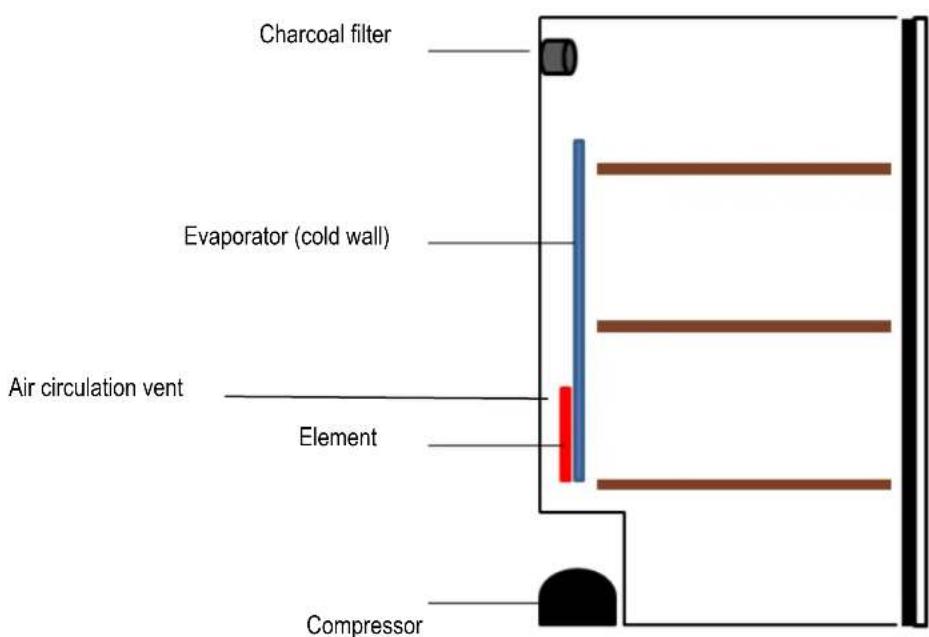
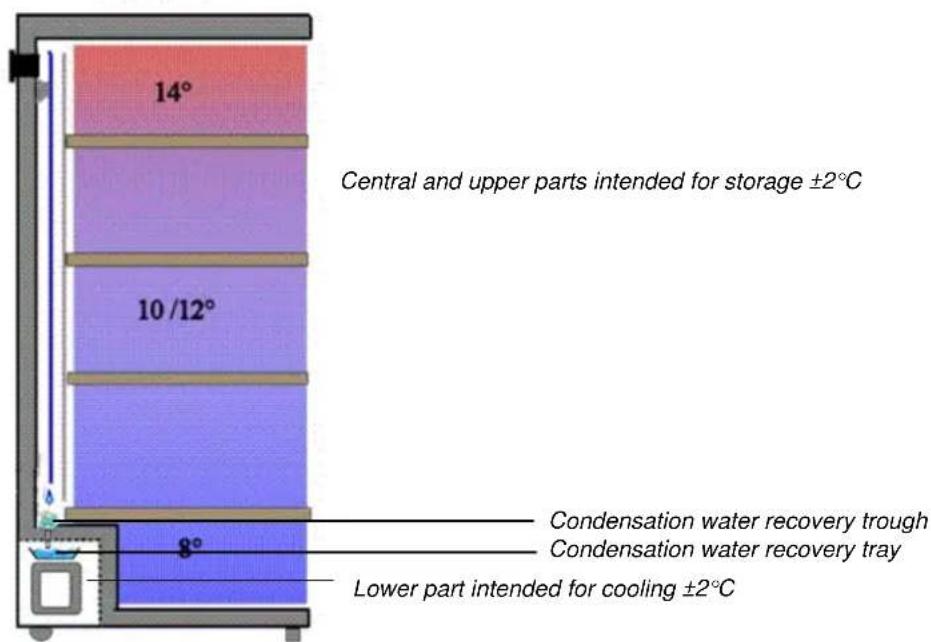
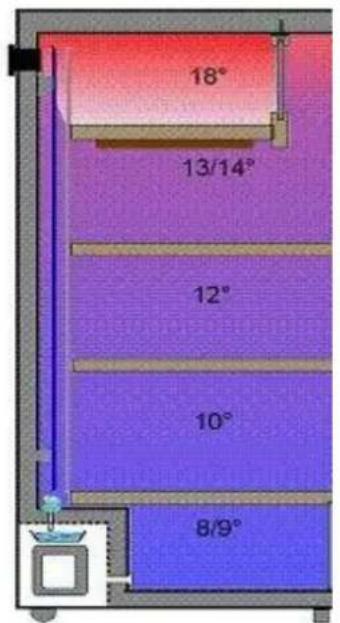
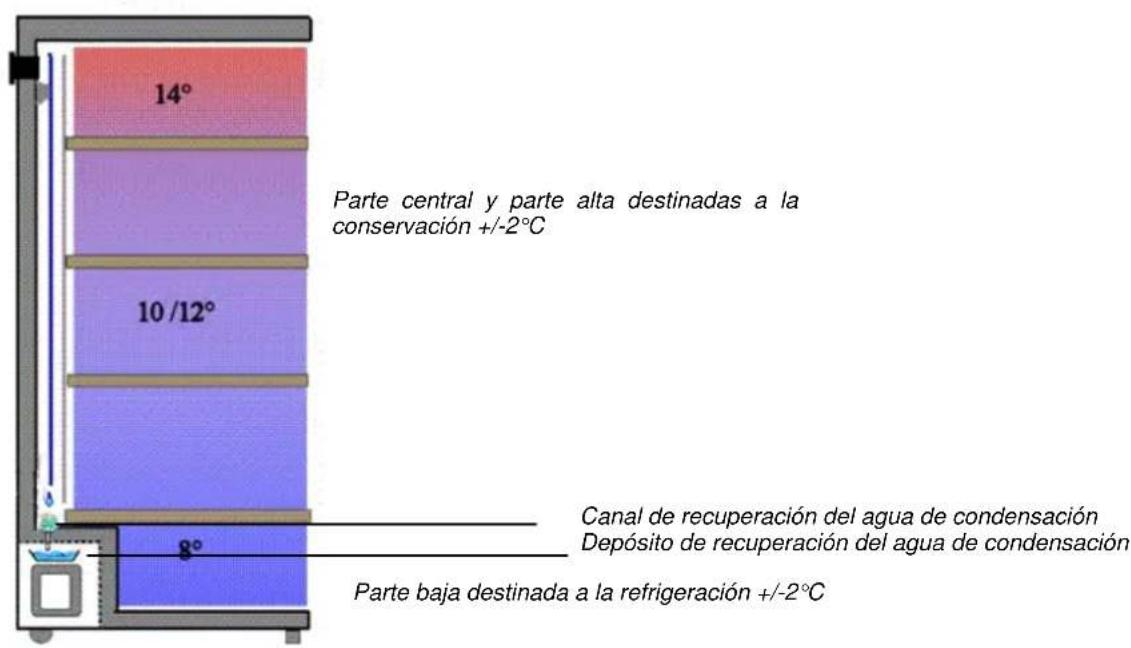
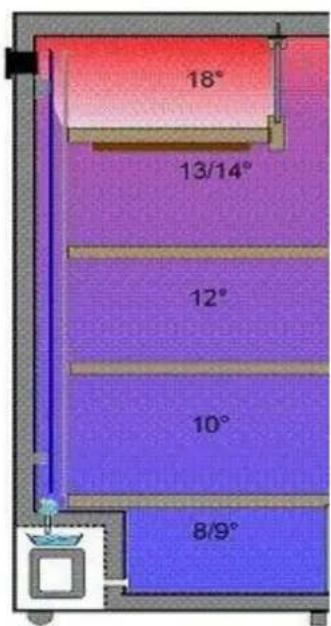
Upper section, 18^ (± 2) for bringing red wine to room temperature.
Central section, from 14 to 10^ , ideal for storage
Lower section, 8^ (± 2) for sweet white and champagne tasting temperature.
2. TECHNICAL CHARACTERISTICS
Below is an example of the nameplate:
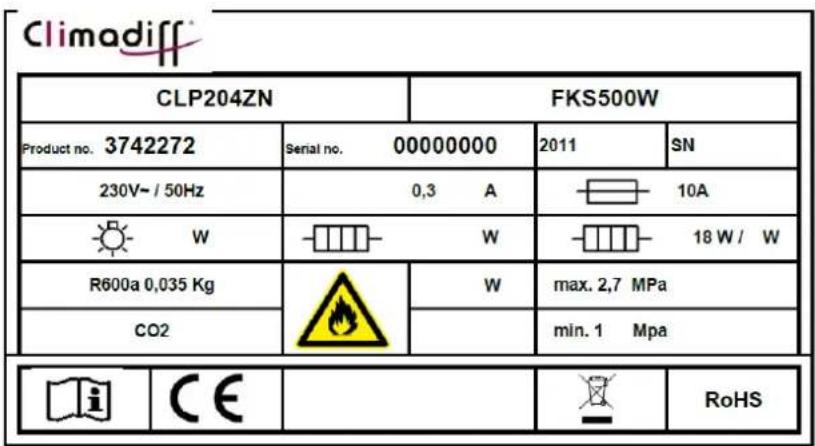
The name plate attached to the inside or rear of the appliance (depending on the model) includes all the information specific to your wine cellar.
We recommend that you make a note of its serial number in this booklet prior to installation, so that you can refer to it later (technical work, request for assistance, etc.)

Once it is installed and loaded, access to it is not so easy.
CAUTION: No assistance can be provided without this information.
3. GENERAL SAFETY INSTRUCTIONS
Before you use your wine cellar for the first time, please read this user manual carefully. Store it carefully so that you can refer to it in future, if necessary.
Generally speaking, your appliance must be maintained by a qualified professional.
This appliance is intended exclusively for domestic use and controlling the temperature of wine, or other drinks, if you so choose. Under no circumstances is it intended for the storage of food.
Make sure that your electrical installation's voltage corresponds to that on the appliance's nameplate; the appliance must be connected to an approved, earthed system. Incorrect repairs or connections can cause safety hazards. Have your electrical installation checked by a professional, if you are in any doubt.
This unit must be correctly connected to an earthed socket for your protection. Do not cut off or remove the earth wire on the mains cable supplied.
For safety reasons, do not use an electrical extension cable.
If your appliance is damaged (e.g. a major impact) or suffers harm (power surge due to lightning, flood, fire), it may be dangerous to use. Disconnect the mains plug and have the appliance checked by an approved professional repairer.
To prevent any danger, do not replace a damaged mains cable yourself. Contact your retailer, an approved service centre or professional repairer.
This appliance must be positioned such that the mains socket is accessible. Do not move the appliance once it is full: you might distort its body beyond repair. The electrical parts must not be directly accessible.
- Keep children away from the appliance.
- Do not use this appliance outdoors.
In the event that liquid is accidentally spilled (broken bottle, etc.) on electrical components (motor, etc.), disconnect the mains plug immediately.
To prevent any risk of fire, electrocution or injury, do not immerse the mains cable, plug or the appliance itself in water or any other liquid. Do not handle the appliance with wet hands.
Keep the appliance away from any source of heat and out of direct sunlight.
Do not allow the mains cable to hang from a table or be in contact with sharp edges or hot surfaces.
Do not pull on the mains cable - take hold of the plug to disconnect the appliance.
Ensure that the area where your appliance is positioned can support its weight when loaded (a 75 cl bottle weighs approximately 1.3kg ).
Your cellar must be placed on a flat surface. If you have to position it on a rug or carpet, place a support underneath.
This appliance is not intended for use by people (particularly children) with diminished physical, sensory or mental capacities, or by people lacking experience or knowledge of such appliances, unless they are supervised by or have received instruction regarding use of the appliance from a person who is responsible for their safety.
Do not allow children to play with the appliance. Abandoned appliances are always dangerous.
Disconnect the device before performing any servicing or cleaning operation (disconnect the mains plug or trip the corresponding circuit breaker, depending on the model).
Never clean the appliance with inflammable products.
Do not store or spray any gas or inflammable liquid close to the appliance.
Prior to disposing of your wine cellar at a specific recycling site, remove the door but leave the shelves in place in such a way as to make it difficult for children to climb inside.
Climadiff disclaims any liability for damage resulting from failure to comply with connection or use instructions.

R600a
Safety regulation

Warning: Do not use mechanical devices or other means to accelerate the defrosting process, other than those recommended by the manufacturer.

Warning: Keep ventilation openings in the appliance enclosure or in the structure clear of obstruction.

Do not store explosive substances such as aerosol cans with a flammable propellant in this appliance.

Warning: Do not damage the refrigerant circuit.

Refrigerating units operating on Isobutane (R600a) may not be placed in an area with sources of ignition (e.g. unsealed electrical contacts) or where the refrigerant could gather in the event of a leak. The type of refrigerant is indicated on the cabinet's type plate.

Warning: Do not use electrical appliances inside the food storage compartments of the appliance, unless they are of the type recommended by the manufacturer.
The appliance meets the requirements of the following European Directives:
4. INSTALLATION INSTRUCTIONS
Before using your wine cellar
- Remove the inner and outer packaging.
- Before connecting the cellar to the electrical socket, leave it in position for 24 hours. This will reduce the possibility of malfunction of the refrigeration circuit due to transport.
- Clean the inside using a soft cloth and lukewarm water.
Using your wine cellar:
Your wine cellar must be positioned in a room with an ambient temperature between 16 and 32^ . Alternatively, if the cellar is fitted with the winter system, the range is extended to 0 to 32^
Installing your wine cellar
- This wine cellar is designed for free-standing installation.
- Position it in a place with sufficient strength to support its weight when loaded.
- To get the best from your appliance with the lowest energy consumption, do not place the appliance close to a heat source (heater, cooker, etc.), do not expose it to direct sunlight, and do not place it in a room which is too cold.
- Connect the cellar to a single socket, leaving a 10cm gap between the back of the cellar and the wall. Ensure that your wine cellar is perfectly horizontal, then slightly raise the two front feet. (Use of a spirit level is recommended). This will prevent any movement due to instability, causing noise and vibration, and will ensure that the door seals perfectly.
Adjusting the thermostat
Important note: All temperatures shown in this manual are temperatures read in the wine, inside the bottle.
Tip: immerse a suitable thermometer in a clear glass bottle filled with water and place it in the middle of the cellar. Wait at least 24 hours before checking the temperature. Then adjust the thermostat in the light of the temperature read and that required.
Position 0: Thermostat off
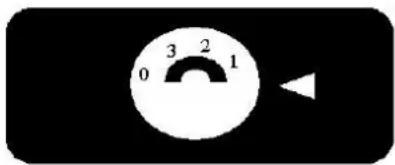
Position 3: Colder temperature in the cellar
Position 1: Warmer temperature in the cellar
The thermostat in your wine cellar only controls the production of cold air. If your wine cellar is equipped with the winter system and is intended for use in an unheated area, the heating circuit is factory preset and you do not need to adjust it.
Thermostat Position 2 (recommended, for a room temperature of 25^ ) usually means an average temperature of around 12^ ± 2 in the middle of the liquid in a bottle placed in the middle of the cabinet.
5. EQUIPMENT
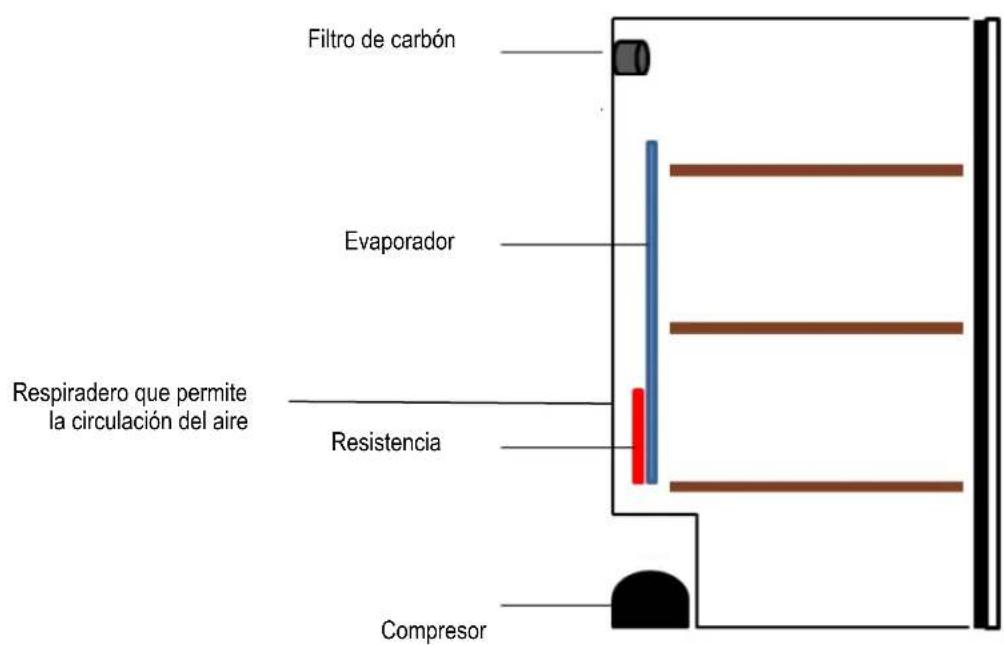
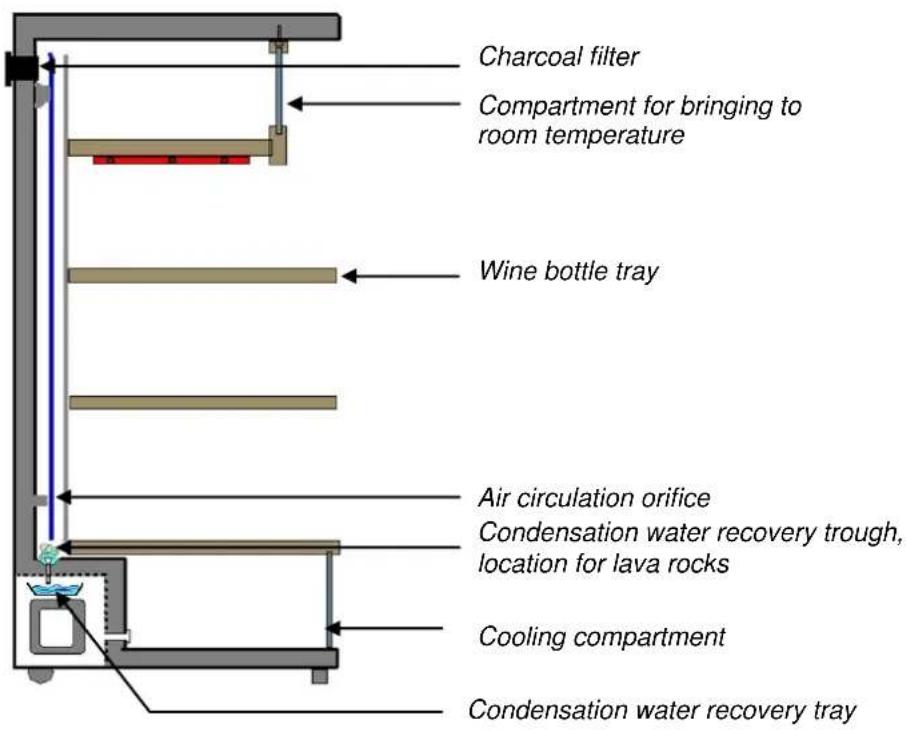
The ventilation system: Charcoal filter
PURE AIR continually changed and filtered.
Your Climadiff wine cellar is equipped with a continuous fresh air system, filtered by a charcoal filter.
This is a 5 cm diameter black plastic washer in the top left of the cellar at the back. It should be replaced annually and can be bought from the accessories section of our web site at www.climadiff.com
To remove it, push it inwards and do not be afraid to tap it a little to break its seal with the insulation. Finish removing it by putting your hand behind the evaporator cover.
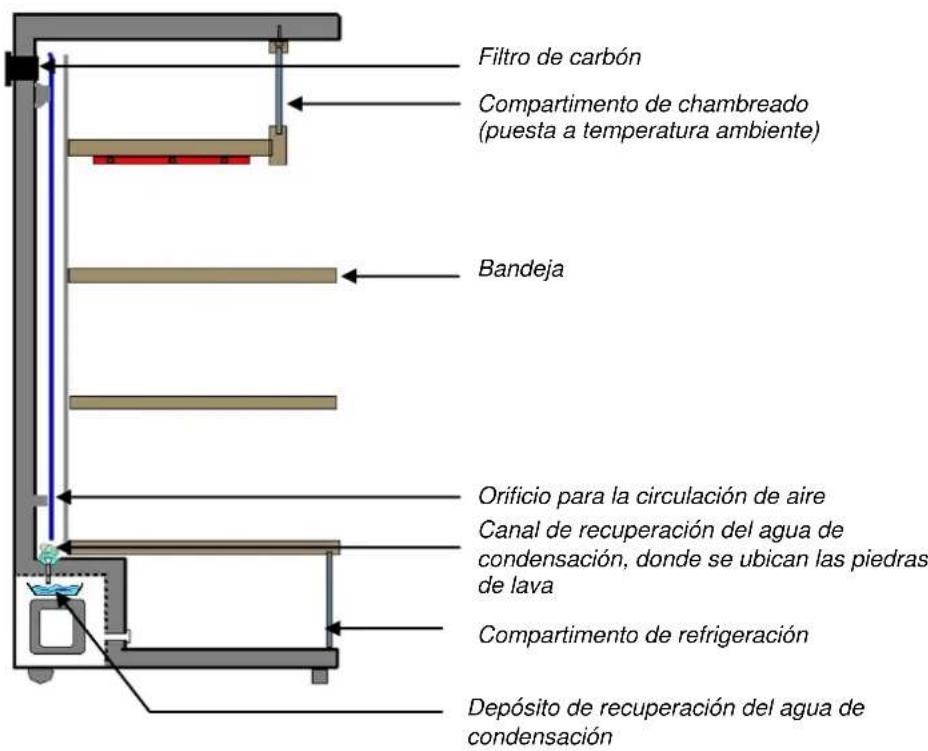
The hole visible in the rear lower section is normal and provides negative pressure, to ensure internal air circulation.
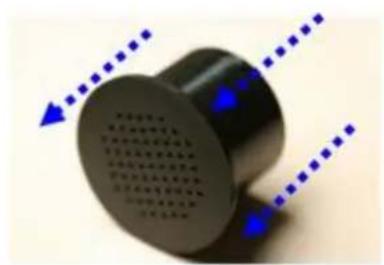
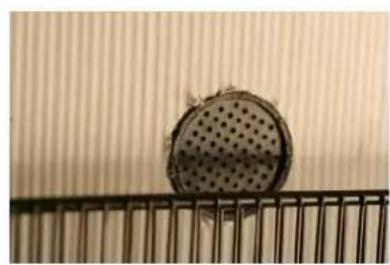
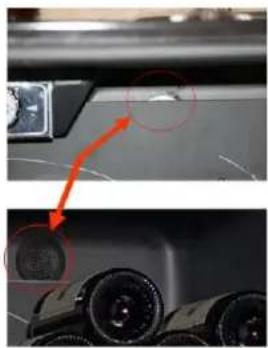
Direction for removal
View from the back of the cellar View from inside
The anti-vibration system:
Wine does not like to be disturbed. It especially dislikes vibration.
This is why your wine cellar's slow-cycle compressor is mounted on special shock absorbers called "silent blocks".
Likewise, the inner container is insulated from the body by a thick layer of polyurethane foam which also has the particular feature of absorbing vibration.
Depending on the model, the wine bottle shelves are made of solid wood and absorb vibration better than metal.
On some models, the shelf supports are also equipped with rubber pads.
Your bottles are enjoying perfect peace!
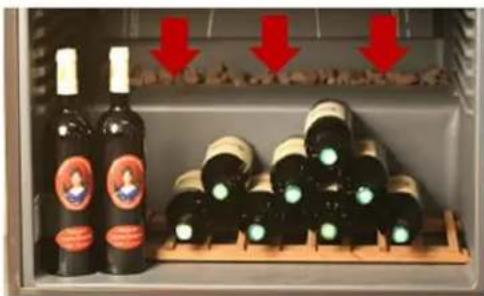
The humidification system: Lava rock
Humidity fluctuates around 55% (± 10) ; this is the average relative humidity range recommended to keep the corks in your bottles sufficiently moist to maintain the flexibility and elasticity required to seal them hermetically against liquids, while allowing your wines to breathe.
The lava rocks serve to regulate the humidity within the cellar. They should be dampened and placed in the condensation water recovery trough, above the compressor and below the evaporator. Care should be taken not to obstruct the water evacuation hole at the centre of the trough.
To better direct the running water to the trough, it is recommended that you slightly raise the cellar's front feet while keeping it horizontally level.
The winter system (optional on some models):
The winter kit is a frost protection system which enables the cellar to operate in an environment where the temperature is between 0 and 32^ . A sensor located outside the appliance triggers a low power electrical element when the ambient temperature in the room falls to around 10^ + / - 2^ in case of single compartment wine cellars and 8^ + / - 2^ in case of multi compartment wine cellars. This is a low power element to avoid sudden rises in the temperature of the wine and so avoid thermal shocks that are damaging to the preservation of the wine. The kit is intended to raise the cellar's internal temperature even before there is a thermal exchange with the bottles.
CAUTION! Operation of the winter kit temporarily overrides the thermal layering in the wine cabinet.
IMPORTANT: If the temperature in the room where your wine cellar is located is about 12^ (± 2) , no production of warm or cold air will be observed. The appliance is then completely silent and this is quite normal. It should not be considered as a malfunction.
The anti-UV system:
Light accelerates the aging of wine. In our solid door cellars, your wines are naturally protected, on condition, of course, that the door is not opened too often. Models with a glass door are UV treated, thus filtering out damaging ultraviolet rays: your wines are therefore protected.
Defrosting:
Your appliance is equipped with an automatic defrost cycle. When a cooling cycle finishes, the appliance's refrigerated surfaces are defrosted automatically. The defrost water is channelled into a condensates evaporation tray which is located in the back of the appliance near the compressor. The heat produced by the compressor then evaporates the condensates collected in the tray.
Lock
For cellars fitted with a lock, the keys can be found in the bag along with the manual. To open the cellar, turn the key anti clockwise.
Lighting
Some models have a door fitted with an unsilvered mirror window. An infrared movement detector lights the contents of the cabinet using LEDs. The light goes off after approximately 30 seconds.
Reversing the door (depending on model)
Our wine cabinets are delivered with the door opening from left to right. To reverse the opening direction:
- Remove the top hinge cover
- Unscrew the mounting plate
- Remove the door
- Reverse the handle
- Unscrew the lower pivot and reattach in the opposite corner
- Replace the door
- Reattach the upper mounting plate on the opposite corner
- Replace the hinge cover
- Place the cover caps over the holes.
IMPORTANT: ADJUSTING THE FEET OR DOOR OR REVERSING THE DOOR IS NOT COVERED BY THE WARRANTY AND WILL BE CHARGED FOR BY YOUR RETAILER.
Shelves
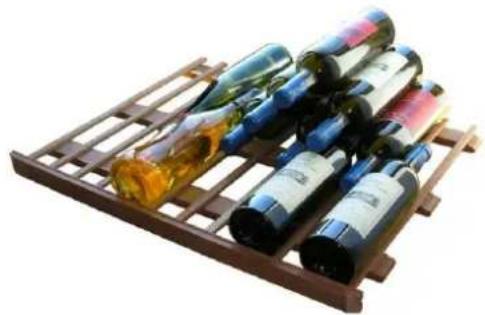
Each cellar has its own type of bottle shelf.
Note that there is no ideal storage arrangement. A collection of bottles of wine is rich when it is varied. It is up to you to arrange the storage capacity of your wine cellar according to your collection.
Additional shelves may be ordered as a chargeable option from your retailer or after-sales service, or from our web site www.climadiff.com
Tip: To prevent damage to the door seal, ensure that the door is fully open before pulling out the shelves to add or remove bottles.
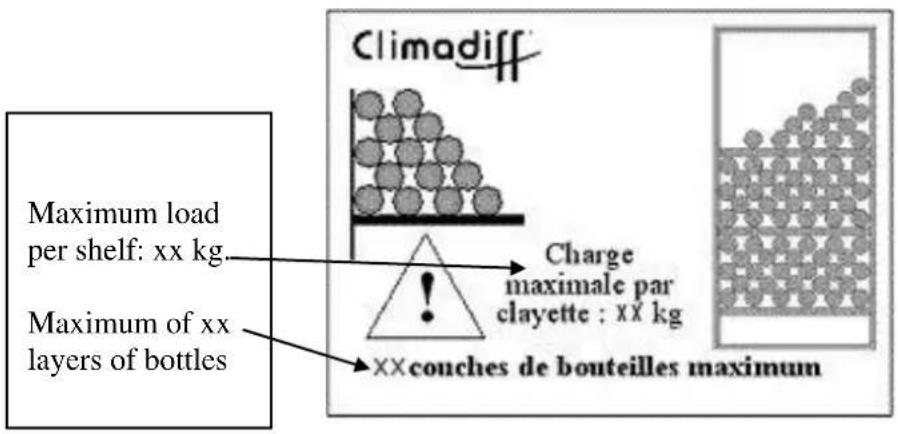
Maximum loading:
Do not exceed maximum loads, which you will find in the cellar on a label (similar to the one shown below).
Enhanced safety:
Since this range of appliances is intended for storing items of value, we have been careful to select quality components and to design suitable manufacturing techniques to ensure optimum safety in operation.
6. LOADING
The maximum recommended bottle loading quantities are guidelines and are not contractually binding; they provide a quick estimate of the size of the appliance (similar to the litre capacities of refrigerators). They relate to tests conducted with a standard bottle: the "75 cl traditional Bordeaux" bottle.
How to fill and maintain your wine cellar:
Your wine cellar is delivered with one or more wine bottle trays made of metal or wood.
Start by loading the lower part of your wine cellar. Then simply stack the bottles with their bases facing backward in the back row and conversely for the front row. The bottle shelves should be arranged according to the size of your wine cellar and the shapes of your wine bottles. It is very important not to exceed the load limit for each shelf (refer to the load written inside your cellar). Do not exceed the designated maximum capacity (warning: do not obstruct the charcoal filter).
The shelves should be arranged according to the size of your wine cellar and the shape of your wine bottles. In reality and in extreme cases, you could store more bottles by stacking the same type of bottle without using shelves, but a "varied cellar" comprises a wide variety of bottles and the "practical" aspect of everyday cellar management limits its capacity. You will therefore probably load to a little less capacity than the nominal maximum capacity.
Types of bottle:
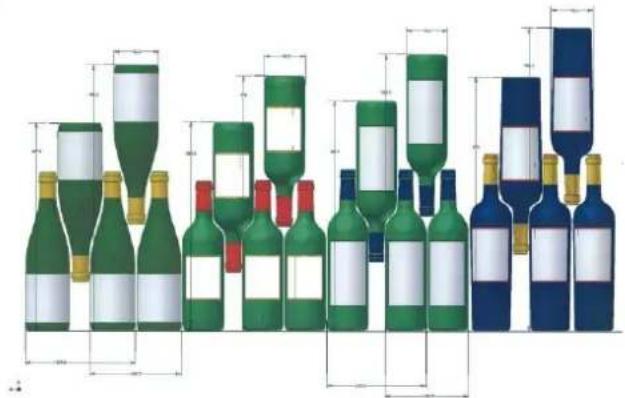
We see here 4 kinds of 75 cl wine bottles: Burgundy and Bordeaux wine bottles of different dimensions.
There are many others of all shapes and sizes.
You will note the storage differences depending on bottle heights, diameters and alternating position method.
For example, if a wine cellar is loaded only with Burgundy wine bottles, there will be approximately 30% fewer bottles than the initial quantity calculated for Bordeaux bottles.
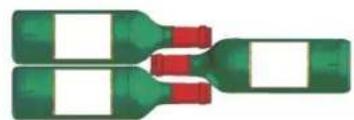
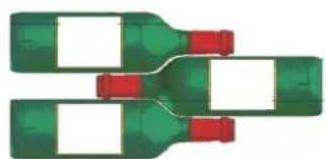
Types of staggered storage:
Top-to-bottom neck-to-neck:
Note the difference in depth.
Top-to-bottom neck between bottle bodies:
7. MAINTENANCE
Before cleaning your appliance (something that should be done regularly), disconnect it by removing the plug or by pulling the fuse on the circuit.
Before using your appliance for the first time and regularly thereafter, we recommend that you clean the inside and outside (front, sides and top) with warm water mixed with a gentle cleaning product. Rinse with clean water and allow to dry before reconnecting. Do not use solvents or abrasives.
Wash the plastic coating on the steel shelves with a mild detergent solution and then dry with a soft cloth. Wooden shelves require no particular maintenance.
When the appliance is switched on for the first time, there may be a residual odour. In that case, run the appliance empty for a few hours at the coldest possible temperature. The cold will kill any odours.
8. STORING YOUR WINE CELLAR
If you will not be using your appliance for short periods, leave the control panel with its usual settings.
During an extended shutdown:
- Remove all bottles from the appliance
- Unplug the appliance
- Thoroughly clean the inside and outside of the appliance
- Leave the door open to prevent condensation, unpleasant odours and mould.
9. WHAT TO DO IN THE EVENT OF A POWER CUT
Most power cuts are resolved within a short time. A power cut of 1 or 2 hours will not affect the temperature in your cabinet. To protect your wines during a power cut, avoid opening the door as much as possible. During very long power cuts, take the necessary measures to protect your wine.
- If the appliance is disconnected or if there is a power cut, you must wait three to five minutes before re-starting. If you try to re-start before this time, the compressor will only re-start after 3 to 5 minutes (if the temperature requires).
- When switching on for the first time or following a prolonged shutdown, it is possible that when restarting, the temperatures selected and those displayed are not the same. This is normal. It will take a few hours before they stabilise.
10. IF YOU NEED TO MOVE YOUR WINE CELLAR
First, disconnect your cellar.
Remove all the bottles from the cellar and secure moving parts.
To avoid damaging the levelling screws on the feet, screw them tightly into the base.
Move the appliance in an upright position (preferably) or take note of the direction in which the appliance may be laid down by looking at its packaging.
11. IN THE EVENT OF A BREAKDOWN
Despite the care we take during production, a breakdown can never be totally ruled out. Before contacting your retailer's after-sales department, please check that:
- the appliance is properly plugged in;
- there is not a power cut in progress;
- the breakdown is not one of those described in the table at the end of this manual.
IMPORTANT:
If the power cable supplied is damaged, it must be replaced by the manufacturer, a service centre approved by the brand or the retailer. In all events, it must be replaced by qualified personnel in order to avoid any risk of injury.
IF THESE CHECKS REVEAL NOTHING, THEN CONTACT YOUR RETAILER'S AFTER-SALES DEPARTMENT.
CAUTION!
Unplug the appliance before carrying out any maintenance or repair work.
12. PROBLEMS AND SOLUTIONS
You can solve many simple problems with your wine cellar yourself, thus avoiding having to contact your after-sales department. Try the following suggestions.
| PROBLEM | POSSIBLE CAUSES |
| The cellar will not start | The cellar is not plugged in. If your wine cellar is in an unbeated room, refer to the section "Winter Kit". The fuse in your electrical installation has blown. |
| The cellar does not cool sufficiently | The thermostat position is set to provide insufficient cooling: adjust it. The external temperature is beyond the cellar's operating temperature. The cellar is opened too often. The door is not properly closed. The door seal is not sealing correctly. |
| The cellar is too cold | The thermostat is set to provide excessive cooling: adjust it. |
| The humidity level is too high | Humidity is regulated by the principle of thermodynamics. During a cooling period, a frost forms (cold air dries the air), humidity will fall to 40%. During a heating period, the frost melts and humidity may reach 70%. |
| Bottle labels are coming unstuck | Taking an average of these two values, we obtain an average humidity of 55%. It is essential to calculate an average value over several cycles and not from a single reading. There are three alternatives for reducing the cellar's humidity: - Replace the charcoal filters - Dry the lava rocks - Decrease the temperature slightly inside the cellar. |
| The humidity level is too low | Humidity is regulated by the principle of thermodynamics. During a cooling period, a frost forms (cold air dries the air), humidity will fall to 40%. During a heating period, the frost melts and humidity may reach 70%. Taking an average of these two values, we obtain an average humidity of 55%. It is essential to calculate an average value over several cycles and not from a single reading. To increase the humidity in the cellar, there are two alternatives: - Place a jar of water in the upper part of the cellar. - Dampen the lava rocks. - Raise the temperature slightly inside the cellar. |
| The temperature in the cellar is not consistent | 3. The actual temperature to take into account is the temperature in the bottle. The temporary variations which you observe correspond to the compressor's operating cycles. It is through this principle of a series of small variations in the air inside your wine cellar that a suitable average temperature is obtained, ensuring the best conditions for maturing your wine. |
| 4. If the temperature noted in your wine cellar is different from that usually seen and it does not change continuously (over several hours and except when located in a non-heated room with a temperature of between 10 and 12°C), please contact your retailer's after-sales service. | |
| The cellar's compressor runs continuously | If no cold is being produced, call your retailer's after-sales service. |
| Vibration | Check to ensure that the cellar is indeed level and that all the feet are resting on the ground. |
| The cellar makes a lot of noise | 3. The compressor is noisy: check that it is fixed to the rubber shock absorbers (silent blocks) and whether it is in contact with another element. 4. Small rattling sounds are heard: they result from the circulation of gas in the pipes and are part of the normal operation of your wine cellar. |
| There are unpleasant smells in the cellar | 3. Clean the cellar and ventilate it for several days 4. Replace the charcoal filters, |
| The bottle shelves sag when loaded | Check that you are not exceeding the load capacity and that the shelves are correctly positioned. |
| There is water in the bottom of the cellar | This is not detrimental to your wine and is a normal phenomenon during the first few days of use. 4. Ensure that the two front feet are slightly raised. 5. Ensure that the lava rocks do not obstruct the condensation water evacuation hole. 6. Ensure that the condensation water evacuation pipe is not blocked. |
| The door does not close correctly | The cellar is not level. The door seal is dirty or damaged. The shelves are not positioned correctly. A part of the contents is preventing the door from closing. |
13. SOME USEFUL INFORMATION
Examples of serving temperatures: (to be followed when tasting, to avoid missing out on the rich aromas of your wines!)
Opinions vary, and the ambient temperature too, but many people agree on the following:
| Prestigious Bordeaux wines – Reds | 16 – 17°C | |
| Prestigious Burgundy wines – Reds | 15 – 16°C | |
| Prestigious dry white vintages | 14 – 16°C | |
| Light, young, fruity reds | 11 – 12°C | |
| Provence rosés, primeur wines | 10 – 12°C | |
| Dry whites and vin de pays reds | 10 – 12°C | |
| Vin de pays whites | 8 – 10°C | |
| Champagnes | 7 – 8°C | |
| Sweet wines | 6°C | |
Maturity table in years:
| APPELLATION | White - Rosé | Red |
| Alsace | 1 - 4 | |
| Alsace Grands Crus | 8 - 12 | |
| Beaujolais (crus) | 1 - 4 | |
| Beaujolais primeur | 1 - 2 | |
| Bergerac | 2 - 3 | 3 - 4 |
| Bordeaux | 2 - 3 | 3 - 4 |
| Burgundy | 5 | 7 |
| Cahors | 5 - 10 | |
| Cotes de Provence | 1 - 2 | 2 - 5 |
| Cote Rotie, Hermitage | 8 | 8 - 15 |
| Burgundy grand crus | 8 - 10 | 10 -15 |
| Bordeaux grand crus | 8 -10 | 10 - 15 |
| Jurancon mellow, liquoreux | 6 -10 | |
| Jurancon dry | 2 - 4 | |
| Languedoc | 1 - 2 | 2 - 4 |
| Loire | 5 - 10 | 5 - 12 |
| Loire mellow, liquoreux | 10 - 15 | |
| Mâcon | 2 - 3 | 1 - 2 |
| Montbazillac | 6 - 8 | |
| Savoie | 1 - 2 | 2 - 4 |
| Rhone Valley | 2 | 4 - 8 |
| Yellow wine | 20 |
How to manage your collection:
The wine cellar register (the original, a Climadiff innovation) will help you with this.
THE WINE CELLAR REGISTER or prestigious "grand cru" wine table (depending on model and excluding those with glass doors). The inside of the wine cellar's door is specifically designed so that you can write on the wine cellar register in chalk information about the characteristics of your collection or make a list of your prestigious "grand crus".
Use only chalk to write on the wine cellar register.
To limit the handling of your wines, position those crus likely to spend a long time in the cellar at the bottom.
To erase information, use a slightly moistened cloth or sponge. Never use detergent or abrasive materials.
14. ENVIRONMENT
This product complies with EU WEEE Directive 2002/96/EC.
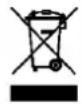
The crossed-out waste bin symbol on this appliance means that, at the end of its life, it should be recycled separately from other domestic waste.
It should therefore be disposed of at a selective collection centre for electrical and or electronic appliances or, if you are buying an equivalent product, by the retailer of the new product.
The user is responsible for taking the appliance to the appropriate collection centre at the end of its useful life. Selective and appropriate collection for the recycling of no longer used appliances and their disposal and destruction in an environmentally friendly manner, helps to prevent potential negative effects on the environment and health, and encourages the recycling of materials used to make the product.
For more detailed information about available collection systems, contact your local waste collection organisation or the retail outlet where you bought the appliance.
15. NOTICE
As we continuously improve our products, we reserve the right to modify technical characteristics without notice.
Warranties for CLIMADIFF brand products are offered exclusively by selected retailers. No part of these instructions may be considered as a supplementary guarantee.
CLIMADIFF cannot be held liable for errors or technical or editorial omissions in this document.
Non-binding document.
15^ WARNHINWEIS
1^ BESCHRIJVING VAN HET APPARAAT
Vinotecamonocompartimental: